EP1134189A1 - Formkörper amorpher, poröser (Metall-)Silikate - Google Patents
Formkörper amorpher, poröser (Metall-)Silikate Download PDFInfo
- Publication number
- EP1134189A1 EP1134189A1 EP00105391A EP00105391A EP1134189A1 EP 1134189 A1 EP1134189 A1 EP 1134189A1 EP 00105391 A EP00105391 A EP 00105391A EP 00105391 A EP00105391 A EP 00105391A EP 1134189 A1 EP1134189 A1 EP 1134189A1
- Authority
- EP
- European Patent Office
- Prior art keywords
- metal
- silicates
- mesopore
- shaped bodies
- acid
- Prior art date
- Legal status (The legal status is an assumption and is not a legal conclusion. Google has not performed a legal analysis and makes no representation as to the accuracy of the status listed.)
- Withdrawn
Links
- 229910052914 metal silicate Inorganic materials 0.000 title claims description 18
- 229910052751 metal Inorganic materials 0.000 claims abstract description 27
- 239000002184 metal Substances 0.000 claims abstract description 27
- 150000004760 silicates Chemical class 0.000 claims abstract description 17
- 238000009826 distribution Methods 0.000 claims abstract description 10
- 238000004519 manufacturing process Methods 0.000 claims abstract description 9
- 239000002253 acid Substances 0.000 claims description 14
- 238000000034 method Methods 0.000 claims description 14
- 238000007493 shaping process Methods 0.000 claims description 9
- 239000007787 solid Substances 0.000 claims description 7
- 239000003054 catalyst Substances 0.000 claims description 6
- 239000002736 nonionic surfactant Substances 0.000 claims description 5
- 239000003463 adsorbent Substances 0.000 claims description 3
- 230000004048 modification Effects 0.000 claims description 3
- 238000012986 modification Methods 0.000 claims description 3
- 238000000465 moulding Methods 0.000 abstract description 13
- BPQQTUXANYXVAA-UHFFFAOYSA-N Orthosilicate Chemical compound [O-][Si]([O-])([O-])[O-] BPQQTUXANYXVAA-UHFFFAOYSA-N 0.000 abstract description 4
- VYPSYNLAJGMNEJ-UHFFFAOYSA-N Silicium dioxide Chemical compound O=[Si]=O VYPSYNLAJGMNEJ-UHFFFAOYSA-N 0.000 description 29
- 239000000243 solution Substances 0.000 description 27
- 239000011148 porous material Substances 0.000 description 26
- XLYOFNOQVPJJNP-UHFFFAOYSA-N water Substances O XLYOFNOQVPJJNP-UHFFFAOYSA-N 0.000 description 25
- 239000000463 material Substances 0.000 description 18
- 239000004094 surface-active agent Substances 0.000 description 16
- QAOWNCQODCNURD-UHFFFAOYSA-N Sulfuric acid Chemical compound OS(O)(=O)=O QAOWNCQODCNURD-UHFFFAOYSA-N 0.000 description 12
- 238000001556 precipitation Methods 0.000 description 12
- 239000000843 powder Substances 0.000 description 11
- 239000000377 silicon dioxide Substances 0.000 description 11
- 239000000203 mixture Substances 0.000 description 10
- 239000000047 product Substances 0.000 description 10
- 229910004298 SiO 2 Inorganic materials 0.000 description 9
- 229910044991 metal oxide Inorganic materials 0.000 description 9
- 150000004706 metal oxides Chemical class 0.000 description 9
- QTBSBXVTEAMEQO-UHFFFAOYSA-N Acetic acid Chemical compound CC(O)=O QTBSBXVTEAMEQO-UHFFFAOYSA-N 0.000 description 8
- 238000002003 electron diffraction Methods 0.000 description 8
- NTHWMYGWWRZVTN-UHFFFAOYSA-N sodium silicate Chemical compound [Na+].[Na+].[O-][Si]([O-])=O NTHWMYGWWRZVTN-UHFFFAOYSA-N 0.000 description 8
- 238000003756 stirring Methods 0.000 description 7
- 239000000126 substance Substances 0.000 description 7
- 239000010936 titanium Substances 0.000 description 7
- 102220500397 Neutral and basic amino acid transport protein rBAT_M41T_mutation Human genes 0.000 description 6
- 239000011230 binding agent Substances 0.000 description 6
- 238000001035 drying Methods 0.000 description 6
- 230000011514 reflex Effects 0.000 description 6
- 235000012239 silicon dioxide Nutrition 0.000 description 6
- -1 titanium silicates Chemical class 0.000 description 6
- BOTDANWDWHJENH-UHFFFAOYSA-N Tetraethyl orthosilicate Chemical compound CCO[Si](OCC)(OCC)OCC BOTDANWDWHJENH-UHFFFAOYSA-N 0.000 description 5
- 239000000654 additive Substances 0.000 description 5
- 229910052782 aluminium Inorganic materials 0.000 description 5
- 230000015572 biosynthetic process Effects 0.000 description 5
- 238000001354 calcination Methods 0.000 description 5
- YLGXILFCIXHCMC-JHGZEJCSSA-N methyl cellulose Chemical compound COC1C(OC)C(OC)C(COC)O[C@H]1O[C@H]1C(OC)C(OC)C(OC)OC1COC YLGXILFCIXHCMC-JHGZEJCSSA-N 0.000 description 5
- 229910052719 titanium Inorganic materials 0.000 description 5
- VEXZGXHMUGYJMC-UHFFFAOYSA-N Hydrochloric acid Chemical compound Cl VEXZGXHMUGYJMC-UHFFFAOYSA-N 0.000 description 4
- XEEYBQQBJWHFJM-UHFFFAOYSA-N Iron Chemical compound [Fe] XEEYBQQBJWHFJM-UHFFFAOYSA-N 0.000 description 4
- 238000003917 TEM image Methods 0.000 description 4
- GWEVSGVZZGPLCZ-UHFFFAOYSA-N Titan oxide Chemical compound O=[Ti]=O GWEVSGVZZGPLCZ-UHFFFAOYSA-N 0.000 description 4
- 238000005903 acid hydrolysis reaction Methods 0.000 description 4
- 150000001298 alcohols Chemical class 0.000 description 4
- 239000008367 deionised water Substances 0.000 description 4
- 229910021641 deionized water Inorganic materials 0.000 description 4
- 238000001125 extrusion Methods 0.000 description 4
- 150000002739 metals Chemical class 0.000 description 4
- BDAGIHXWWSANSR-UHFFFAOYSA-N methanoic acid Natural products OC=O BDAGIHXWWSANSR-UHFFFAOYSA-N 0.000 description 4
- VLKZOEOYAKHREP-UHFFFAOYSA-N n-Hexane Chemical compound CCCCCC VLKZOEOYAKHREP-UHFFFAOYSA-N 0.000 description 4
- 239000002245 particle Substances 0.000 description 4
- 150000003839 salts Chemical class 0.000 description 4
- 239000007858 starting material Substances 0.000 description 4
- 238000003786 synthesis reaction Methods 0.000 description 4
- 238000004627 transmission electron microscopy Methods 0.000 description 4
- LFQSCWFLJHTTHZ-UHFFFAOYSA-N Ethanol Chemical compound CCO LFQSCWFLJHTTHZ-UHFFFAOYSA-N 0.000 description 3
- OKKJLVBELUTLKV-UHFFFAOYSA-N Methanol Chemical compound OC OKKJLVBELUTLKV-UHFFFAOYSA-N 0.000 description 3
- MWUXSHHQAYIFBG-UHFFFAOYSA-N Nitric oxide Chemical compound O=[N] MWUXSHHQAYIFBG-UHFFFAOYSA-N 0.000 description 3
- 125000000217 alkyl group Chemical group 0.000 description 3
- XAGFODPZIPBFFR-UHFFFAOYSA-N aluminium Chemical compound [Al] XAGFODPZIPBFFR-UHFFFAOYSA-N 0.000 description 3
- 229910052796 boron Inorganic materials 0.000 description 3
- 239000002734 clay mineral Substances 0.000 description 3
- 238000004898 kneading Methods 0.000 description 3
- 238000002156 mixing Methods 0.000 description 3
- 239000002243 precursor Substances 0.000 description 3
- 239000002994 raw material Substances 0.000 description 3
- 239000011541 reaction mixture Substances 0.000 description 3
- 239000011734 sodium Substances 0.000 description 3
- 239000000725 suspension Substances 0.000 description 3
- 229910052726 zirconium Inorganic materials 0.000 description 3
- OSWFIVFLDKOXQC-UHFFFAOYSA-N 4-(3-methoxyphenyl)aniline Chemical compound COC1=CC=CC(C=2C=CC(N)=CC=2)=C1 OSWFIVFLDKOXQC-UHFFFAOYSA-N 0.000 description 2
- RZVAJINKPMORJF-UHFFFAOYSA-N Acetaminophen Chemical compound CC(=O)NC1=CC=C(O)C=C1 RZVAJINKPMORJF-UHFFFAOYSA-N 0.000 description 2
- QGZKDVFQNNGYKY-UHFFFAOYSA-N Ammonia Chemical compound N QGZKDVFQNNGYKY-UHFFFAOYSA-N 0.000 description 2
- RTZKZFJDLAIYFH-UHFFFAOYSA-N Diethyl ether Chemical compound CCOCC RTZKZFJDLAIYFH-UHFFFAOYSA-N 0.000 description 2
- MHAJPDPJQMAIIY-UHFFFAOYSA-N Hydrogen peroxide Chemical compound OO MHAJPDPJQMAIIY-UHFFFAOYSA-N 0.000 description 2
- NBIIXXVUZAFLBC-UHFFFAOYSA-N Phosphoric acid Chemical compound OP(O)(O)=O NBIIXXVUZAFLBC-UHFFFAOYSA-N 0.000 description 2
- 229920003171 Poly (ethylene oxide) Polymers 0.000 description 2
- 229910020175 SiOH Inorganic materials 0.000 description 2
- RTAQQCXQSZGOHL-UHFFFAOYSA-N Titanium Chemical compound [Ti] RTAQQCXQSZGOHL-UHFFFAOYSA-N 0.000 description 2
- 229960000583 acetic acid Drugs 0.000 description 2
- 150000007513 acids Chemical class 0.000 description 2
- 229910052784 alkaline earth metal Inorganic materials 0.000 description 2
- 239000012298 atmosphere Substances 0.000 description 2
- QVGXLLKOCUKJST-UHFFFAOYSA-N atomic oxygen Chemical compound [O] QVGXLLKOCUKJST-UHFFFAOYSA-N 0.000 description 2
- 238000006555 catalytic reaction Methods 0.000 description 2
- 150000001768 cations Chemical class 0.000 description 2
- 239000001913 cellulose Substances 0.000 description 2
- 229920002678 cellulose Polymers 0.000 description 2
- 238000006243 chemical reaction Methods 0.000 description 2
- 239000003795 chemical substances by application Substances 0.000 description 2
- 229910052804 chromium Inorganic materials 0.000 description 2
- 238000002425 crystallisation Methods 0.000 description 2
- 230000008025 crystallization Effects 0.000 description 2
- 238000003795 desorption Methods 0.000 description 2
- XBDQKXXYIPTUBI-UHFFFAOYSA-N dimethylselenoniopropionate Natural products CCC(O)=O XBDQKXXYIPTUBI-UHFFFAOYSA-N 0.000 description 2
- 239000000839 emulsion Substances 0.000 description 2
- 239000012065 filter cake Substances 0.000 description 2
- 229910052733 gallium Inorganic materials 0.000 description 2
- 229910052732 germanium Inorganic materials 0.000 description 2
- 239000008187 granular material Substances 0.000 description 2
- 238000000227 grinding Methods 0.000 description 2
- 238000010438 heat treatment Methods 0.000 description 2
- 238000010348 incorporation Methods 0.000 description 2
- 229910052742 iron Inorganic materials 0.000 description 2
- 239000011572 manganese Substances 0.000 description 2
- 239000013335 mesoporous material Substances 0.000 description 2
- 239000012229 microporous material Substances 0.000 description 2
- 229910052750 molybdenum Inorganic materials 0.000 description 2
- 239000003960 organic solvent Substances 0.000 description 2
- TWNQGVIAIRXVLR-UHFFFAOYSA-N oxo(oxoalumanyloxy)alumane Chemical compound O=[Al]O[Al]=O TWNQGVIAIRXVLR-UHFFFAOYSA-N 0.000 description 2
- 239000001301 oxygen Substances 0.000 description 2
- 229910052760 oxygen Inorganic materials 0.000 description 2
- 239000010970 precious metal Substances 0.000 description 2
- 239000011164 primary particle Substances 0.000 description 2
- 150000003242 quaternary ammonium salts Chemical class 0.000 description 2
- 238000001878 scanning electron micrograph Methods 0.000 description 2
- RMAQACBXLXPBSY-UHFFFAOYSA-N silicic acid Chemical class O[Si](O)(O)O RMAQACBXLXPBSY-UHFFFAOYSA-N 0.000 description 2
- 239000002904 solvent Substances 0.000 description 2
- 239000012258 stirred mixture Substances 0.000 description 2
- 229910052718 tin Inorganic materials 0.000 description 2
- 229910052721 tungsten Inorganic materials 0.000 description 2
- 229910052720 vanadium Inorganic materials 0.000 description 2
- 239000010457 zeolite Substances 0.000 description 2
- 229910052725 zinc Inorganic materials 0.000 description 2
- ZKDUWLCFEJYNMU-UHFFFAOYSA-N 1,3,5-trimethylbenzene hydrate Chemical compound O.Cc1cc(C)cc(C)c1 ZKDUWLCFEJYNMU-UHFFFAOYSA-N 0.000 description 1
- AKUNSTOMHUXJOZ-UHFFFAOYSA-N 1-hydroperoxybutane Chemical compound CCCCOO AKUNSTOMHUXJOZ-UHFFFAOYSA-N 0.000 description 1
- VZQOBPXGQJXYGY-UHFFFAOYSA-N 2-hydroperoxyethylbenzene Chemical compound OOCCC1=CC=CC=C1 VZQOBPXGQJXYGY-UHFFFAOYSA-N 0.000 description 1
- IGFHQQFPSIBGKE-UHFFFAOYSA-N 4-nonylphenol Chemical compound CCCCCCCCCC1=CC=C(O)C=C1 IGFHQQFPSIBGKE-UHFFFAOYSA-N 0.000 description 1
- ZZBAGJPKGRJIJH-UHFFFAOYSA-N 7h-purine-2-carbaldehyde Chemical compound O=CC1=NC=C2NC=NC2=N1 ZZBAGJPKGRJIJH-UHFFFAOYSA-N 0.000 description 1
- ZOXJGFHDIHLPTG-UHFFFAOYSA-N Boron Chemical compound [B] ZOXJGFHDIHLPTG-UHFFFAOYSA-N 0.000 description 1
- 0 C*B[C@](C=**)N[C@](C)*C(C)(C)*(C)C Chemical compound C*B[C@](C=**)N[C@](C)*C(C)(C)*(C)C 0.000 description 1
- LZZYPRNAOMGNLH-UHFFFAOYSA-M Cetrimonium bromide Chemical compound [Br-].CCCCCCCCCCCCCCCC[N+](C)(C)C LZZYPRNAOMGNLH-UHFFFAOYSA-M 0.000 description 1
- 241000640882 Condea Species 0.000 description 1
- 208000005156 Dehydration Diseases 0.000 description 1
- 206010013786 Dry skin Diseases 0.000 description 1
- 239000004593 Epoxy Substances 0.000 description 1
- IAYPIBMASNFSPL-UHFFFAOYSA-N Ethylene oxide Chemical group C1CO1 IAYPIBMASNFSPL-UHFFFAOYSA-N 0.000 description 1
- 229910017147 Fe(CO)5 Inorganic materials 0.000 description 1
- 229930091371 Fructose Natural products 0.000 description 1
- RFSUNEUAIZKAJO-ARQDHWQXSA-N Fructose Chemical compound OC[C@H]1O[C@](O)(CO)[C@@H](O)[C@@H]1O RFSUNEUAIZKAJO-ARQDHWQXSA-N 0.000 description 1
- 239000005715 Fructose Substances 0.000 description 1
- 101500021084 Locusta migratoria 5 kDa peptide Proteins 0.000 description 1
- FYYHWMGAXLPEAU-UHFFFAOYSA-N Magnesium Chemical compound [Mg] FYYHWMGAXLPEAU-UHFFFAOYSA-N 0.000 description 1
- 229910016660 Mn2(CO)10 Inorganic materials 0.000 description 1
- GRYLNZFGIOXLOG-UHFFFAOYSA-N Nitric acid Chemical compound O[N+]([O-])=O GRYLNZFGIOXLOG-UHFFFAOYSA-N 0.000 description 1
- OAICVXFJPJFONN-UHFFFAOYSA-N Phosphorus Chemical compound [P] OAICVXFJPJFONN-UHFFFAOYSA-N 0.000 description 1
- 229920002367 Polyisobutene Polymers 0.000 description 1
- 239000004372 Polyvinyl alcohol Substances 0.000 description 1
- 229910006069 SO3H Inorganic materials 0.000 description 1
- XUIMIQQOPSSXEZ-UHFFFAOYSA-N Silicon Chemical compound [Si] XUIMIQQOPSSXEZ-UHFFFAOYSA-N 0.000 description 1
- 239000004115 Sodium Silicate Substances 0.000 description 1
- 229920002472 Starch Polymers 0.000 description 1
- 229910003074 TiCl4 Inorganic materials 0.000 description 1
- QCWXUUIWCKQGHC-UHFFFAOYSA-N Zirconium Chemical compound [Zr] QCWXUUIWCKQGHC-UHFFFAOYSA-N 0.000 description 1
- 239000004480 active ingredient Substances 0.000 description 1
- 239000008186 active pharmaceutical agent Substances 0.000 description 1
- 238000007259 addition reaction Methods 0.000 description 1
- 230000032683 aging Effects 0.000 description 1
- 239000003570 air Substances 0.000 description 1
- 239000003513 alkali Substances 0.000 description 1
- 229910052910 alkali metal silicate Inorganic materials 0.000 description 1
- 150000001342 alkaline earth metals Chemical class 0.000 description 1
- 150000001336 alkenes Chemical class 0.000 description 1
- 230000029936 alkylation Effects 0.000 description 1
- 238000005804 alkylation reaction Methods 0.000 description 1
- 229910000147 aluminium phosphate Inorganic materials 0.000 description 1
- VXAUWWUXCIMFIM-UHFFFAOYSA-M aluminum;oxygen(2-);hydroxide Chemical compound [OH-].[O-2].[Al+3] VXAUWWUXCIMFIM-UHFFFAOYSA-M 0.000 description 1
- 150000001412 amines Chemical class 0.000 description 1
- 229910021529 ammonia Inorganic materials 0.000 description 1
- 239000003945 anionic surfactant Substances 0.000 description 1
- 150000001450 anions Chemical class 0.000 description 1
- 125000003118 aryl group Chemical group 0.000 description 1
- 150000005840 aryl radicals Chemical group 0.000 description 1
- 239000002585 base Substances 0.000 description 1
- 235000012216 bentonite Nutrition 0.000 description 1
- 230000005540 biological transmission Effects 0.000 description 1
- 229910001593 boehmite Inorganic materials 0.000 description 1
- 238000009835 boiling Methods 0.000 description 1
- 229910052791 calcium Inorganic materials 0.000 description 1
- 239000011575 calcium Substances 0.000 description 1
- 235000012241 calcium silicate Nutrition 0.000 description 1
- 150000001735 carboxylic acids Chemical class 0.000 description 1
- 239000000969 carrier Substances 0.000 description 1
- 125000002091 cationic group Chemical group 0.000 description 1
- 239000003093 cationic surfactant Substances 0.000 description 1
- RLGQACBPNDBWTB-UHFFFAOYSA-N cetyltrimethylammonium ion Chemical class CCCCCCCCCCCCCCCC[N+](C)(C)C RLGQACBPNDBWTB-UHFFFAOYSA-N 0.000 description 1
- 150000001875 compounds Chemical class 0.000 description 1
- 238000001816 cooling Methods 0.000 description 1
- 229910052802 copper Inorganic materials 0.000 description 1
- 239000013078 crystal Substances 0.000 description 1
- 230000018044 dehydration Effects 0.000 description 1
- 238000006297 dehydration reaction Methods 0.000 description 1
- 238000006356 dehydrogenation reaction Methods 0.000 description 1
- GUJOJGAPFQRJSV-UHFFFAOYSA-N dialuminum;dioxosilane;oxygen(2-);hydrate Chemical compound O.[O-2].[O-2].[O-2].[Al+3].[Al+3].O=[Si]=O.O=[Si]=O.O=[Si]=O.O=[Si]=O GUJOJGAPFQRJSV-UHFFFAOYSA-N 0.000 description 1
- 235000014113 dietary fatty acids Nutrition 0.000 description 1
- 238000002050 diffraction method Methods 0.000 description 1
- 229940079920 digestives acid preparations Drugs 0.000 description 1
- QFEOTYVTTQCYAZ-UHFFFAOYSA-N dimanganese decacarbonyl Chemical compound [Mn].[Mn].[O+]#[C-].[O+]#[C-].[O+]#[C-].[O+]#[C-].[O+]#[C-].[O+]#[C-].[O+]#[C-].[O+]#[C-].[O+]#[C-].[O+]#[C-] QFEOTYVTTQCYAZ-UHFFFAOYSA-N 0.000 description 1
- 238000010894 electron beam technology Methods 0.000 description 1
- 238000007336 electrophilic substitution reaction Methods 0.000 description 1
- 238000003379 elimination reaction Methods 0.000 description 1
- 230000032050 esterification Effects 0.000 description 1
- 238000005886 esterification reaction Methods 0.000 description 1
- 150000002148 esters Chemical class 0.000 description 1
- 238000006266 etherification reaction Methods 0.000 description 1
- 150000002170 ethers Chemical class 0.000 description 1
- 238000000605 extraction Methods 0.000 description 1
- 239000000194 fatty acid Substances 0.000 description 1
- 229930195729 fatty acid Natural products 0.000 description 1
- 150000004665 fatty acids Chemical class 0.000 description 1
- 238000001914 filtration Methods 0.000 description 1
- 239000003546 flue gas Substances 0.000 description 1
- 239000012530 fluid Substances 0.000 description 1
- 235000019253 formic acid Nutrition 0.000 description 1
- 125000002485 formyl group Chemical group [H]C(*)=O 0.000 description 1
- 229910021485 fumed silica Inorganic materials 0.000 description 1
- 238000007306 functionalization reaction Methods 0.000 description 1
- 239000007789 gas Substances 0.000 description 1
- 239000012362 glacial acetic acid Substances 0.000 description 1
- 230000036571 hydration Effects 0.000 description 1
- 238000006703 hydration reaction Methods 0.000 description 1
- 229930195733 hydrocarbon Natural products 0.000 description 1
- 150000002430 hydrocarbons Chemical class 0.000 description 1
- 238000005984 hydrogenation reaction Methods 0.000 description 1
- FAHBNUUHRFUEAI-UHFFFAOYSA-M hydroxidooxidoaluminium Chemical compound O[Al]=O FAHBNUUHRFUEAI-UHFFFAOYSA-M 0.000 description 1
- 125000002887 hydroxy group Chemical group [H]O* 0.000 description 1
- 230000033444 hydroxylation Effects 0.000 description 1
- 238000005805 hydroxylation reaction Methods 0.000 description 1
- 238000005470 impregnation Methods 0.000 description 1
- 239000011261 inert gas Substances 0.000 description 1
- 238000009434 installation Methods 0.000 description 1
- 238000006317 isomerization reaction Methods 0.000 description 1
- 150000002576 ketones Chemical class 0.000 description 1
- 239000007788 liquid Substances 0.000 description 1
- 238000011068 loading method Methods 0.000 description 1
- 229910052749 magnesium Inorganic materials 0.000 description 1
- 239000011777 magnesium Substances 0.000 description 1
- 229910052748 manganese Inorganic materials 0.000 description 1
- WPBNNNQJVZRUHP-UHFFFAOYSA-L manganese(2+);methyl n-[[2-(methoxycarbonylcarbamothioylamino)phenyl]carbamothioyl]carbamate;n-[2-(sulfidocarbothioylamino)ethyl]carbamodithioate Chemical compound [Mn+2].[S-]C(=S)NCCNC([S-])=S.COC(=O)NC(=S)NC1=CC=CC=C1NC(=S)NC(=O)OC WPBNNNQJVZRUHP-UHFFFAOYSA-L 0.000 description 1
- 239000011159 matrix material Substances 0.000 description 1
- 239000012528 membrane Substances 0.000 description 1
- QSHDDOUJBYECFT-UHFFFAOYSA-N mercury Chemical compound [Hg] QSHDDOUJBYECFT-UHFFFAOYSA-N 0.000 description 1
- 229910052753 mercury Inorganic materials 0.000 description 1
- 229910052752 metalloid Inorganic materials 0.000 description 1
- 150000002738 metalloids Chemical class 0.000 description 1
- 229910052901 montmorillonite Inorganic materials 0.000 description 1
- 229910052759 nickel Inorganic materials 0.000 description 1
- 229910017604 nitric acid Inorganic materials 0.000 description 1
- 229910000510 noble metal Inorganic materials 0.000 description 1
- 230000000269 nucleophilic effect Effects 0.000 description 1
- 238000010534 nucleophilic substitution reaction Methods 0.000 description 1
- 229920000620 organic polymer Polymers 0.000 description 1
- 150000003961 organosilicon compounds Chemical class 0.000 description 1
- 230000003647 oxidation Effects 0.000 description 1
- 238000007254 oxidation reaction Methods 0.000 description 1
- 150000002924 oxiranes Chemical class 0.000 description 1
- SOQBVABWOPYFQZ-UHFFFAOYSA-N oxygen(2-);titanium(4+) Chemical class [O-2].[O-2].[Ti+4] SOQBVABWOPYFQZ-UHFFFAOYSA-N 0.000 description 1
- 125000000913 palmityl group Chemical group [H]C([*])([H])C([H])([H])C([H])([H])C([H])([H])C([H])([H])C([H])([H])C([H])([H])C([H])([H])C([H])([H])C([H])([H])C([H])([H])C([H])([H])C([H])([H])C([H])([H])C([H])([H])C([H])([H])[H] 0.000 description 1
- WXZMFSXDPGVJKK-UHFFFAOYSA-N pentaerythritol Chemical compound OCC(CO)(CO)CO WXZMFSXDPGVJKK-UHFFFAOYSA-N 0.000 description 1
- 229910052698 phosphorus Inorganic materials 0.000 description 1
- 239000011574 phosphorus Substances 0.000 description 1
- 229920003023 plastic Polymers 0.000 description 1
- 239000004033 plastic Substances 0.000 description 1
- 239000004014 plasticizer Substances 0.000 description 1
- 229920000058 polyacrylate Polymers 0.000 description 1
- 229920000151 polyglycol Polymers 0.000 description 1
- 239000010695 polyglycol Substances 0.000 description 1
- 238000006116 polymerization reaction Methods 0.000 description 1
- 229920000193 polymethacrylate Polymers 0.000 description 1
- 229920001296 polysiloxane Polymers 0.000 description 1
- 229920000909 polytetrahydrofuran Polymers 0.000 description 1
- 229920002451 polyvinyl alcohol Polymers 0.000 description 1
- 229920000036 polyvinylpyrrolidone Polymers 0.000 description 1
- 239000001267 polyvinylpyrrolidone Substances 0.000 description 1
- 235000013855 polyvinylpyrrolidone Nutrition 0.000 description 1
- 229910021426 porous silicon Inorganic materials 0.000 description 1
- 229910052700 potassium Inorganic materials 0.000 description 1
- 235000019353 potassium silicate Nutrition 0.000 description 1
- 238000002360 preparation method Methods 0.000 description 1
- 238000003825 pressing Methods 0.000 description 1
- 150000003141 primary amines Chemical class 0.000 description 1
- 235000019260 propionic acid Nutrition 0.000 description 1
- 239000002510 pyrogen Substances 0.000 description 1
- 230000001698 pyrogenic effect Effects 0.000 description 1
- IUVKMZGDUIUOCP-BTNSXGMBSA-N quinbolone Chemical compound O([C@H]1CC[C@H]2[C@H]3[C@@H]([C@]4(C=CC(=O)C=C4CC3)C)CC[C@@]21C)C1=CCCC1 IUVKMZGDUIUOCP-BTNSXGMBSA-N 0.000 description 1
- 229910052761 rare earth metal Inorganic materials 0.000 description 1
- 150000002910 rare earth metals Chemical class 0.000 description 1
- 239000012429 reaction media Substances 0.000 description 1
- 239000012266 salt solution Substances 0.000 description 1
- 238000000926 separation method Methods 0.000 description 1
- 235000019355 sepiolite Nutrition 0.000 description 1
- 125000005372 silanol group Chemical group 0.000 description 1
- 229910052710 silicon Inorganic materials 0.000 description 1
- 239000010703 silicon Substances 0.000 description 1
- 229910052708 sodium Inorganic materials 0.000 description 1
- 229910052911 sodium silicate Inorganic materials 0.000 description 1
- 238000003980 solgel method Methods 0.000 description 1
- 239000012798 spherical particle Substances 0.000 description 1
- 239000007921 spray Substances 0.000 description 1
- 239000008107 starch Substances 0.000 description 1
- 235000019698 starch Nutrition 0.000 description 1
- 150000005846 sugar alcohols Polymers 0.000 description 1
- 230000002194 synthesizing effect Effects 0.000 description 1
- APSPVJKFJYTCTN-UHFFFAOYSA-N tetramethylazanium;silicate Chemical compound C[N+](C)(C)C.C[N+](C)(C)C.C[N+](C)(C)C.C[N+](C)(C)C.[O-][Si]([O-])([O-])[O-] APSPVJKFJYTCTN-UHFFFAOYSA-N 0.000 description 1
- 238000007669 thermal treatment Methods 0.000 description 1
- 239000004408 titanium dioxide Substances 0.000 description 1
- OGIDPMRJRNCKJF-UHFFFAOYSA-N titanium oxide Inorganic materials [Ti]=O OGIDPMRJRNCKJF-UHFFFAOYSA-N 0.000 description 1
- UBZYKBZMAMTNKW-UHFFFAOYSA-J titanium tetrabromide Chemical compound Br[Ti](Br)(Br)Br UBZYKBZMAMTNKW-UHFFFAOYSA-J 0.000 description 1
- XJDNKRIXUMDJCW-UHFFFAOYSA-J titanium tetrachloride Chemical compound Cl[Ti](Cl)(Cl)Cl XJDNKRIXUMDJCW-UHFFFAOYSA-J 0.000 description 1
- 238000001291 vacuum drying Methods 0.000 description 1
- 238000005406 washing Methods 0.000 description 1
Images



Classifications
-
- B—PERFORMING OPERATIONS; TRANSPORTING
- B01—PHYSICAL OR CHEMICAL PROCESSES OR APPARATUS IN GENERAL
- B01J—CHEMICAL OR PHYSICAL PROCESSES, e.g. CATALYSIS OR COLLOID CHEMISTRY; THEIR RELEVANT APPARATUS
- B01J29/00—Catalysts comprising molecular sieves
- B01J29/03—Catalysts comprising molecular sieves not having base-exchange properties
- B01J29/0308—Mesoporous materials not having base exchange properties, e.g. Si-MCM-41
-
- B—PERFORMING OPERATIONS; TRANSPORTING
- B01—PHYSICAL OR CHEMICAL PROCESSES OR APPARATUS IN GENERAL
- B01J—CHEMICAL OR PHYSICAL PROCESSES, e.g. CATALYSIS OR COLLOID CHEMISTRY; THEIR RELEVANT APPARATUS
- B01J20/00—Solid sorbent compositions or filter aid compositions; Sorbents for chromatography; Processes for preparing, regenerating or reactivating thereof
- B01J20/02—Solid sorbent compositions or filter aid compositions; Sorbents for chromatography; Processes for preparing, regenerating or reactivating thereof comprising inorganic material
- B01J20/10—Solid sorbent compositions or filter aid compositions; Sorbents for chromatography; Processes for preparing, regenerating or reactivating thereof comprising inorganic material comprising silica or silicate
-
- B—PERFORMING OPERATIONS; TRANSPORTING
- B01—PHYSICAL OR CHEMICAL PROCESSES OR APPARATUS IN GENERAL
- B01J—CHEMICAL OR PHYSICAL PROCESSES, e.g. CATALYSIS OR COLLOID CHEMISTRY; THEIR RELEVANT APPARATUS
- B01J20/00—Solid sorbent compositions or filter aid compositions; Sorbents for chromatography; Processes for preparing, regenerating or reactivating thereof
- B01J20/02—Solid sorbent compositions or filter aid compositions; Sorbents for chromatography; Processes for preparing, regenerating or reactivating thereof comprising inorganic material
- B01J20/10—Solid sorbent compositions or filter aid compositions; Sorbents for chromatography; Processes for preparing, regenerating or reactivating thereof comprising inorganic material comprising silica or silicate
- B01J20/103—Solid sorbent compositions or filter aid compositions; Sorbents for chromatography; Processes for preparing, regenerating or reactivating thereof comprising inorganic material comprising silica or silicate comprising silica
-
- B—PERFORMING OPERATIONS; TRANSPORTING
- B01—PHYSICAL OR CHEMICAL PROCESSES OR APPARATUS IN GENERAL
- B01J—CHEMICAL OR PHYSICAL PROCESSES, e.g. CATALYSIS OR COLLOID CHEMISTRY; THEIR RELEVANT APPARATUS
- B01J20/00—Solid sorbent compositions or filter aid compositions; Sorbents for chromatography; Processes for preparing, regenerating or reactivating thereof
- B01J20/28—Solid sorbent compositions or filter aid compositions; Sorbents for chromatography; Processes for preparing, regenerating or reactivating thereof characterised by their form or physical properties
- B01J20/28014—Solid sorbent compositions or filter aid compositions; Sorbents for chromatography; Processes for preparing, regenerating or reactivating thereof characterised by their form or physical properties characterised by their form
- B01J20/28042—Shaped bodies; Monolithic structures
-
- B—PERFORMING OPERATIONS; TRANSPORTING
- B01—PHYSICAL OR CHEMICAL PROCESSES OR APPARATUS IN GENERAL
- B01J—CHEMICAL OR PHYSICAL PROCESSES, e.g. CATALYSIS OR COLLOID CHEMISTRY; THEIR RELEVANT APPARATUS
- B01J20/00—Solid sorbent compositions or filter aid compositions; Sorbents for chromatography; Processes for preparing, regenerating or reactivating thereof
- B01J20/28—Solid sorbent compositions or filter aid compositions; Sorbents for chromatography; Processes for preparing, regenerating or reactivating thereof characterised by their form or physical properties
- B01J20/28054—Solid sorbent compositions or filter aid compositions; Sorbents for chromatography; Processes for preparing, regenerating or reactivating thereof characterised by their form or physical properties characterised by their surface properties or porosity
- B01J20/28057—Surface area, e.g. B.E.T specific surface area
-
- B—PERFORMING OPERATIONS; TRANSPORTING
- B01—PHYSICAL OR CHEMICAL PROCESSES OR APPARATUS IN GENERAL
- B01J—CHEMICAL OR PHYSICAL PROCESSES, e.g. CATALYSIS OR COLLOID CHEMISTRY; THEIR RELEVANT APPARATUS
- B01J20/00—Solid sorbent compositions or filter aid compositions; Sorbents for chromatography; Processes for preparing, regenerating or reactivating thereof
- B01J20/28—Solid sorbent compositions or filter aid compositions; Sorbents for chromatography; Processes for preparing, regenerating or reactivating thereof characterised by their form or physical properties
- B01J20/28054—Solid sorbent compositions or filter aid compositions; Sorbents for chromatography; Processes for preparing, regenerating or reactivating thereof characterised by their form or physical properties characterised by their surface properties or porosity
- B01J20/28069—Pore volume, e.g. total pore volume, mesopore volume, micropore volume
-
- B—PERFORMING OPERATIONS; TRANSPORTING
- B01—PHYSICAL OR CHEMICAL PROCESSES OR APPARATUS IN GENERAL
- B01J—CHEMICAL OR PHYSICAL PROCESSES, e.g. CATALYSIS OR COLLOID CHEMISTRY; THEIR RELEVANT APPARATUS
- B01J20/00—Solid sorbent compositions or filter aid compositions; Sorbents for chromatography; Processes for preparing, regenerating or reactivating thereof
- B01J20/28—Solid sorbent compositions or filter aid compositions; Sorbents for chromatography; Processes for preparing, regenerating or reactivating thereof characterised by their form or physical properties
- B01J20/28054—Solid sorbent compositions or filter aid compositions; Sorbents for chromatography; Processes for preparing, regenerating or reactivating thereof characterised by their form or physical properties characterised by their surface properties or porosity
- B01J20/28078—Pore diameter
- B01J20/28083—Pore diameter being in the range 2-50 nm, i.e. mesopores
-
- B—PERFORMING OPERATIONS; TRANSPORTING
- B01—PHYSICAL OR CHEMICAL PROCESSES OR APPARATUS IN GENERAL
- B01J—CHEMICAL OR PHYSICAL PROCESSES, e.g. CATALYSIS OR COLLOID CHEMISTRY; THEIR RELEVANT APPARATUS
- B01J20/00—Solid sorbent compositions or filter aid compositions; Sorbents for chromatography; Processes for preparing, regenerating or reactivating thereof
- B01J20/28—Solid sorbent compositions or filter aid compositions; Sorbents for chromatography; Processes for preparing, regenerating or reactivating thereof characterised by their form or physical properties
- B01J20/28054—Solid sorbent compositions or filter aid compositions; Sorbents for chromatography; Processes for preparing, regenerating or reactivating thereof characterised by their form or physical properties characterised by their surface properties or porosity
- B01J20/28088—Pore-size distribution
- B01J20/2809—Monomodal or narrow distribution, uniform pores
-
- B—PERFORMING OPERATIONS; TRANSPORTING
- B01—PHYSICAL OR CHEMICAL PROCESSES OR APPARATUS IN GENERAL
- B01J—CHEMICAL OR PHYSICAL PROCESSES, e.g. CATALYSIS OR COLLOID CHEMISTRY; THEIR RELEVANT APPARATUS
- B01J20/00—Solid sorbent compositions or filter aid compositions; Sorbents for chromatography; Processes for preparing, regenerating or reactivating thereof
- B01J20/30—Processes for preparing, regenerating, or reactivating
- B01J20/3014—Kneading
-
- B—PERFORMING OPERATIONS; TRANSPORTING
- B01—PHYSICAL OR CHEMICAL PROCESSES OR APPARATUS IN GENERAL
- B01J—CHEMICAL OR PHYSICAL PROCESSES, e.g. CATALYSIS OR COLLOID CHEMISTRY; THEIR RELEVANT APPARATUS
- B01J20/00—Solid sorbent compositions or filter aid compositions; Sorbents for chromatography; Processes for preparing, regenerating or reactivating thereof
- B01J20/30—Processes for preparing, regenerating, or reactivating
- B01J20/305—Addition of material, later completely removed, e.g. as result of heat treatment, leaching or washing, e.g. for forming pores
- B01J20/3057—Use of a templating or imprinting material ; filling pores of a substrate or matrix followed by the removal of the substrate or matrix
-
- B—PERFORMING OPERATIONS; TRANSPORTING
- B01—PHYSICAL OR CHEMICAL PROCESSES OR APPARATUS IN GENERAL
- B01J—CHEMICAL OR PHYSICAL PROCESSES, e.g. CATALYSIS OR COLLOID CHEMISTRY; THEIR RELEVANT APPARATUS
- B01J37/00—Processes, in general, for preparing catalysts; Processes, in general, for activation of catalysts
- B01J37/0009—Use of binding agents; Moulding; Pressing; Powdering; Granulating; Addition of materials ameliorating the mechanical properties of the product catalyst
-
- C—CHEMISTRY; METALLURGY
- C01—INORGANIC CHEMISTRY
- C01B—NON-METALLIC ELEMENTS; COMPOUNDS THEREOF; METALLOIDS OR COMPOUNDS THEREOF NOT COVERED BY SUBCLASS C01C
- C01B37/00—Compounds having molecular sieve properties but not having base-exchange properties
- C01B37/005—Silicates, i.e. so-called metallosilicalites or metallozeosilites
-
- C—CHEMISTRY; METALLURGY
- C01—INORGANIC CHEMISTRY
- C01B—NON-METALLIC ELEMENTS; COMPOUNDS THEREOF; METALLOIDS OR COMPOUNDS THEREOF NOT COVERED BY SUBCLASS C01C
- C01B37/00—Compounds having molecular sieve properties but not having base-exchange properties
- C01B37/02—Crystalline silica-polymorphs, e.g. silicalites dealuminated aluminosilicate zeolites
-
- B—PERFORMING OPERATIONS; TRANSPORTING
- B01—PHYSICAL OR CHEMICAL PROCESSES OR APPARATUS IN GENERAL
- B01J—CHEMICAL OR PHYSICAL PROCESSES, e.g. CATALYSIS OR COLLOID CHEMISTRY; THEIR RELEVANT APPARATUS
- B01J2229/00—Aspects of molecular sieve catalysts not covered by B01J29/00
- B01J2229/30—After treatment, characterised by the means used
- B01J2229/42—Addition of matrix or binder particles
Definitions
- the invention relates to molded articles of amorphous, porous (Metal) silicates with a uniform mesopore diameter, a process for their manufacture and their use.
- Porous, crystalline silicates with regular Mesopore structures have been known since the early 1990s (for example EP-B 0 512 026).
- the best known connection from this group carries the Designation MCM-41 and is arranged by hexagonal, cylindrical mesopores with a diameter between 1.6 and 10 nm.
- the hexagonal structure shows Transmission electron microscopy and Electron diffraction images. The latter show punctiform Reflexes assuming a hexagonal unit cell can be indexed (see Figure 1 in C.T. Kresge et al., Nature 359 (1992) 710).
- MCM-48 with one three-dimensional pore structure is characterized by a cubic Unit cell characterized. (Beck et al., J. Am. Chem. Soc. 114 (1992) 10834).
- M41S materials show powder X-ray diffractograms with several reflections in the small angle scattering range at 2 ⁇ angles ⁇ 8 °.
- the specific surface area is between 700 and 1,400 m 2 / g, the mesopore volume between 0.7 and 1.2 ml / g.
- Characteristic for the production of materials with MCM-41 and MCM-48 structure is the use of surfactants of the type Me 3 N (C n H 2n + 1 ) + X - with n> 8 as structure-forming agent.
- X - is generally an anion from the series OH - , Cl - , Br - .
- Sodium water glass, Tetramethylammonium silicate solutions, silica sols, pyrogenes Silicon dioxide or tetraalkoxysilanes can be used.
- the syntheses of M41S materials are commonly used in pH values greater than 9 and at temperatures of or above 100 ° C (Chen et al., Microp. Mat. 2 (1993) 17; Beck et al., J. Am. Chem. Soc. 114 (1992) 10834).
- the Crystallization time depends on the Crystallization temperature, between one and twelve days.
- HMS hexagonal, mesoporous (metal) silicates
- Such materials are produced by acid hydrolysis of tetraalkoxysilanes in the presence of long-chain primary amines of the formula (C n H 2n + 1 ) NH 2 with n> 8.
- Silicates with a disordered but hexagonal-like channel structure are described by SA Badshaw et al., Science, 269 (1995) 1242 (abbreviated as MSU materials). They are characterized by cylindrical to hexagonal pores with a uniform pore diameter between 2.5 and 4.8 nm (depending on the choice of surfactant). The specific surface is between 605 and 1190 m 2 / g.
- the X-ray powder diffractogram generally also shows only a broad reflection at d ⁇ 4.6 nm.
- our own attempts to reproduce this synthesis have shown that the yield is low.
- the synthesis is carried out by acid hydrolysis of tetraethyl orthosilicate in the presence of non-ionic surfactants.
- the use of para-nonylphenol is described which is ethoxylated with 15 ethylene oxide units (C 9 H 19 -C 6 H 4 -O- (CH 2 -CH 2 -O) 15 H).
- the known methods have the disadvantage that the Products are obtained as fine powder.
- moldings must be used. It extrudates, tablets or granules with a Diameters of at least 0.5 mm are generally preferred.
- oxide precursors are produced in a reaction medium from at least two immiscible fluids in the presence of surfactants.
- Mesoporous silicon dioxide is obtained, for example, by acid hydrolysis of tetraethylorthosilicate in a mesitylene-water emulsion in the presence of cetyltrimethylammonium bromide at 45 ° C. and a stirring speed of 250 min -1 .
- the diameter of the spherical particles thus obtained is between 15 and 20 ⁇ m.
- the materials are also crystalline and have a hexagonal unit cell with P6 or P6 3 / mmc symmetry.
- Another object of the invention is a method for Production of molded articles from amorphous, porous (metal) silicates, which is characterized in that one a (metal) silicate solution with an acid in the presence an organic template, preferably a non-ionic one Surfactant converts the solid formed either directly or after a further procedural or Modification step in a shaping process uses, the molded body thermally treated and modified if necessary.
- any silicate solution can be preferred as the metal silicate solution Alkali metal silicate solution, especially sodium silicate solution (Water glass solution).
- Steps (3) and (4) are essentially the same as for Variant A described.
- nonionic or anionic surfactants are used.
- non-ionic surfactants based on polyethylene oxide for Example ethoxylated alcohols or alkylphenols, used.
- Further suitable surfactants are in DE 198 41 142.1 or in Ullmann's Encylopedia of Industrial Chemistry, 5th edition, volume 25A, p. 751 (1994) described.
- the only requirement for use of a certain surfactant for the production of materials according to the invention is the solubility, Miscibility or dispersibility in water the desired concentration, pH and temperature range.
- the concentration of the surfactant in the mixture with water can be chosen in a wide range, but is before all of the properties of the surfactant used and depending on the fall temperature.
- the precipitation parameters in step (2) in particular the total amount used and concentration of Metal silicate solution and the acid solution that Feed rate, the pH before and during the Precipitation, the duration of the precipitation, the temperature of the fall and the type and intensity of stirring during the precipitation preferably in the range of known Standard silica precipitation (for example according to EP 0 789 266) can be complied with, however within the Limits that can be achieved chemically, physically and in terms of equipment can be varied.
- the Metal silicate and acid solution are metered in in such a way that the pH of the reaction mixture during the precipitation is between 2 and 8, but preferably between 5 and 7.
- the pH can then be adjusted by adding more acid be lowered further.
- the preferred fall temperature can between 20 and 70 ° C, especially between 30 and 50 ° C lie.
- a sodium water glass with a modulus of 3.4-3.5, an SiO 2 content of 26.6-27.0% and an Na 2 O content of 7.8-8.2% can preferably be used.
- acids which can be used are sulfuric acid, hydrochloric acid, nitric acid, phosphoric acid, acetic acid or formic acid. Sulfuric or hydrochloric acid can preferably be used.
- the total amount of the metal silicate and acid solution can be chosen so that the molar surfactant / SiO 2 ratio after the addition of the starting materials is between 0.01 and 2.0, preferably between 0.1 and 1.0 and in particular between 0. 15 and 0.5.
- Metal silicates such as calcium silicates, boro-, Aluminum, manganese, iron or titanium silicates can be prepared by making suitable other Metal salts in (1) are added to the water / surfactant mixture or dosed in (2) with the metal silicate and acid solution. Some or all of the acid used be omitted. Salts can be used as further metal salts of the elements B, Al, Ga, Ge, Sn, Ti, Zr, V, Cr, Mo, W, Mn Fe, Co, Cu Ni or Zn can be used. The metals and / or metal oxides can also be applied subsequently become.
- metal salt solution can the resulting Suspension in step (3) at a temperature of 0 ° C to 100 ° C, preferably between room temperature and Falling temperature, if necessary aged with stirring 12 h is generally sufficient.
- the solid formed in (4) can be separated off preferably by filtration, for example by means of Chamber, membrane filter press, band filter, rotary filter or a combination of these filters.
- For drying can be a circulation, storey, flash, spin flash, spray, Fluidized bed, current dryer or any other suitable Drying unit can be used.
- the filter cake can also be mill-dried be subjected. It is possible the reaction mixture from (3) directly into one of the drying steps mentioned to use.
- the organic template Before shaping, the organic template can be made from the Pore system of porous, amorphous (metal) silicates through Extraction with a suitable organic solvent, such as ketones, alcohols, esters or ethers and / or thermal treatment are removed. Moreover can be preceded by a grinding, respectively the product can undergo further chemical reactions be modified.
- a suitable organic solvent such as ketones, alcohols, esters or ethers and / or thermal treatment
- the template-containing product directly for the shaping used.
- the porous, amorphous (metal) silicates produced by precipitation can have specific surfaces greater than 500 m 2 / g, preferably greater than 700 m 2 / g, and mesopore volumes greater than 0.5 ml / g, preferably 0.8 ml / g.
- the (metal) silicates have a narrow mesopore radius distribution. This can already be seen from the generally pronounced level in the N 2 -Ad and desorption isotherms.
- the average mesopore diameter can be between 1.5 and 10 nm, in particular between 2 and 5 nm. It can be set, for example, by the choice of the surfactant, the length of the longest C chain being of particular importance.
- the narrow mesopore distribution is expressed in the small half-width of the pore radius distribution curve. Micropores are generally not observed.
- the macroporous volumes of the powdery, undeformed materials, in general intermediate particle volumes can be from at least 2.5 ml / g to 5.0 ml / g.
- the silanol group density can be less than 3 OH groups per nm 2 .
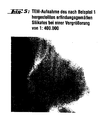
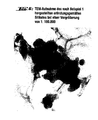
- the Materials according to the invention can completely X-ray amorphous, it can only be a broad reflex - due to the uniform pore diameter - in Small angle scattering range can be observed. Bragg reflexes higher order cannot be observed. While the Discrete electron diffraction on M41S materials Diffraction reflexes delivers, assuming a hexagonal or cubic crystal lattice can, can only on the materials of the invention or several wide diffraction rings at d distances> 18 Angstroms can be observed.
- the SiO 2 content of the silicates can be at least 95% by weight, preferably over 98% by weight, based on the dry substance of the powder.
- the metal silicates can be one or more (semi) Contain metal oxides. It can be metal or Semi-metals (metalloids) from the 1st - 5th main group or Act 2nd - 8th subgroup. Metal oxides are preferred Metals from the series B, Al, Ga, Ge, Sn, Ti, Zr, V, Cr, Mo, W, Mn, Fe, Co, Cu, Ni or Zn, especially titanium and / or Aluminum.
- the ratio SiO 2 to metal oxide SiO 2 / [M m O n ] 5-10,000 mol / mol, preferably 10-100 mol / mol, and in particular 20-60 mol / mol, where [ M m O n ] is the sum of the mole numbers of all metal oxides contained M m O n .
- the SiO 2 content is then correspondingly lower, based on the dry substance of the powder.
- the metal oxides can be completely dispersed in the SiO 2 matrix or can also form separate phases.
- the molding process can consist of several Assemble individual steps: For example, this can be done Porous, amorphous (metal) silicate produced by precipitation with uniform mesopore diameter with the binder and optionally mixed with other additives and if necessary after adding water or other Liquids are processed to a homogeneous mass.
- Porous, amorphous (metal) silicate produced by precipitation with uniform mesopore diameter with the binder and optionally mixed with other additives and if necessary after adding water or other Liquids are processed to a homogeneous mass.
- Plasticine is defined with appropriate aggregates Shapes, such as cylinders, hollow cylinders, with tubular or cylindrical extrusions differently shaped outer surfaces, pressed.
- binders for such Purpose known substances.
- Oxides of are preferred Silicon, aluminum, boron, phosphorus, titanium, zirconium and / or magnesium used.
- Particularly preferred Binders are silicon dioxide, aluminum oxide, Titanium oxides and clay minerals. Examples of silicon dioxide or silicon dioxide precursors are precipitated or pyrogenic silicas, silica sols, tetraalkoxysilanes, partially condensed silicic acid esters or polysiloxanes, for Aluminum oxide (pseudo) boehmite, for titanium dioxide or anatase Brookite and for clay minerals Montmorillonite, Kaoline, Bentonites and sepiolites.
- the binder content based on that at 1,000 ° C calcined amorphous, porous (metal) silicates can be found in any range can be varied. It is preferably located however between 5 and 70% by weight.
- organic Polymers such as cellulose, starch, polyacrylates, Polymethacrylates, polyvinyl alcohol, polyvinyl pyrrolidone, Polyisobutene, polytetrahydrofuran, polyglycol ether and / or Fatty acid preparations and wax emulsions used become.
- These substances primarily promote the Formation of a plastic mass during kneading, Deformation and drying step by bridging the Primary particles and also ensure the mechanical stability of the molded body during deformation and Dry. These substances are used again when calcining removed from the molded body.
- Bases or acids can be added as further additives become.
- Pore formers such as Polyalcohols, such as fructose, pentaerythritol, Cellulose or sawdust can be used. These burn when calcining out and leave additional ones Meso- and macropores in the molded body. Can continue any components, such as zeolites, pyrogens or precipitated oxides, metals etc. are added.
- the green bodies thus obtained can then be added Room temperature or elevated temperatures, possibly in Presence of water vapor.
- the moldings are then in the presence of air, Inert gas or oxygen at temperatures up to 1,100 ° C calcined.
- the time course of the temperature that is Heating rate, holding times at intermediate and final temperature, and the cooling rate must be optimized in individual cases become.
- the calcination serves to remove the template and the additives from the green body and influenced in crucial mechanical stability that Pore volume or specific surface area.
- the strands or extrudates obtained can be crushed. They preferably become one Granules or grit with a particle diameter of 0.1 crushed up to 5 mm, in particular 0.5 to 2 mm.
- the moldings can be made in different ways be modified.
- the amorphous, porous silicas and Metal silicates with regular mesopores are also available the shape can be modified.
- Amorphous, porous metal silicates with uniform Mesopore diameters can be determined by the invention Deform the process very easily.
- the invention Shaped bodies are characterized by a considerable mechanical stability.
- the specific surface of the Shaped body essentially does not correspond to the contribution of deformed raw material. This also applies to that Mesopore volume.
- the bulk density of the moldings can be between 50 and 1000 g / l, preferably between 300 and 450 g / l be.
- the moldings according to the invention can be used in a large number of applications. They are particularly suitable as catalysts and catalyst supports and as adsorbents. Examples of suitable catalytic reactions are the oxyfunctionalization of hydrocarbons, the oxidation of olefins to epoxides with hydrogen peroxide, alkyl or aryl hydroperoxides, such as tert.
- extrudates are also used as carriers for color, odor and active ingredients.
- Neodol 91-6E Shell company, formula nC 9-10 H 19-21 (CH 2 CH 2 O) 6 H
- 21.55 kg of deionized water is placed in a heated stirred container and the pH -Value adjusted to pH 6.0 by adding sodium water glass solution.
- a falling temperature of 40 ° C. 4.84 kg of the abovementioned sodium water glass solution and 1.24 kg of a 50% strength by weight sulfuric acid are then metered in at two opposite points within 60 minutes with vigorous stirring.
- further sulfuric acid is added up to a pH of 3.0 and the suspension is left overnight at 40 ° C. without stirring.
- the solid is then separated off on a suction filter, washed with deionized water and dried at 110 ° C.
- part of the solid is calcined in an air atmosphere at 540 ° C. for two hours.
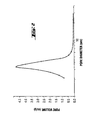
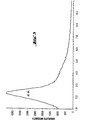
- the maximum of the pore radius distribution (calculated using the BJH method; cf. FIG. 2) is 2.9 nm. At high N 2 partial pressures, only a slight further increase in the N 2 isotherms is observed.
- the BET surface area is 1145 m 2 / g.
- the pore volume of the pores is between 2 and 30 nm 0.85 ml / g.
- the macro-pore radius distribution determined by mercury intrusion is characterized by a maximum at 20 ⁇ m (presumably inter-particle volumes see the SEM image in FIG. 4).
- the pore volume for all pores larger than 30 nm is determined to be 4.33 ml / g.
- the macropore volume is significantly influenced by grinding or shaping.
- a short-range porous silica that provides comparable electron diffraction images describes US 5,840,271.
- the material is made using a sol-gel process manufactured and is considerable by a characterized smaller pore volume (0.3 ml / g).
- SiO 2 content (% by weight) 99.6 Na 2 O content (% by weight) 0.1 SiOH density (1 / nm 2 ) 1.87 SiOH concentration (mmol / g) 3.08 pH value (5% by weight solution) 4.45 Sears number (ml) 44.5 Bulk density (g / l) 180 Ramming density (g / l) 230
- Neodol 91-6E Shell, formula nC 9-10 H 19-21 (CH 2 CH 2 O) 6 H
- deionized water is placed in a heated 2000 l stirred container.
- the pH is adjusted to 6.0 by adding sodium water glass solution.
- 276.4 kg of the sodium water glass solution mentioned above and 69.4 kg of a 50% strength by weight sulfuric acid are then metered in at two opposite points within 60 minutes with vigorous stirring.
- further sulfuric acid is added up to a pH of 3.0 and the suspension is left overnight at 40 ° C. without stirring.
- the solid is then separated on a filter press, washed with deionized water and blown dry with air.
- the moist filter cake is dried in a vacuum drying cabinet at 70 ° C. for 30 hours.
- the green bodies obtained are blown dried, 15 hours at room temperature and 6 hours dried at 70 ° C.
- the calcination takes place in Air atmosphere at 550 C ° in a chamber furnace (heating time 100 k / h, holding time 3 hours).
- the analytical data are in Table 1 summarized.
- the bulk density is 351 g / l Tamped density 362 g / l.
- the plasticine is described as in Example 3 extruded, dried and calcined.
- the analytical data are in Table 1 summarized.
- the bulk density is 370 g / l Tamped density 384 g / l.
- 582.5 g of dried powder according to Example 4 and 28.2 g of methylhydroxycellulose (Tylose MH 1000 from Hoechst) are weighed into a 2.5 l kneader with a discharge screw and mixed for ten minutes. A mixture of 187.5 g of silica sol (Ludox HS-40 from DuPont, SiO 2 content 40% by weight) and 200 g of water is then added. So much water and Tylose MH 1000 are added within one hour until an extrudable plasticine is formed.
- the kneading compound as in Example 5 extruded, dried and calcined.
- the analytical data are in Table 1 summarized.
- the bulk density is 376 g / l, the Tamped density 403 g / l.
- the plasticine is as described in Example 3 extruded, dried and calcined.
Landscapes
- Chemical & Material Sciences (AREA)
- Organic Chemistry (AREA)
- Chemical Kinetics & Catalysis (AREA)
- Analytical Chemistry (AREA)
- Inorganic Chemistry (AREA)
- Engineering & Computer Science (AREA)
- Materials Engineering (AREA)
- Dispersion Chemistry (AREA)
- Physics & Mathematics (AREA)
- Thermal Sciences (AREA)
- Nanotechnology (AREA)
- Life Sciences & Earth Sciences (AREA)
- General Life Sciences & Earth Sciences (AREA)
- Geology (AREA)
- Silicates, Zeolites, And Molecular Sieves (AREA)
Abstract
Formkörper von amorphen, porösen (Metall-) Silikate, welche einen einheitlichen Mesoporendurchmesser beziehungsweise eine enge Mesoporenradienverteilung ein Mesoporenvolumen größer als 0,5 ml/g, eine spezifische Oberfläche größer als 500 m<2>/g, bevorzugt größer als 700 m<2>/g sowie keine ausgeprägte Fernordnung aufweisen, werden hergestellt, indem man eine Metallsilikatlösung mit einer Säure in Gegenwart eines organischen Templats umsetzt, den gebildeten Feststoff in einem formgebenden Verfahren einsetzt und die Formkörper thermisch behandelt und gegebenenfalls weiter modifiziert. Die Formkörper werden als Katalysatoren, Katalysatorträger und/oder Adsorbentien verwendet. <IMAGE>
Description
Die Erfindung betrifft Formkörper von amorphen, porösen
(Metall-)Silikaten mit einheitlichem Mesoporendurchmesser,
ein Verfahren zu ihrer Herstellung und ihre Verwendung.
Poröse, kristalline Silikate mit regelmäßiger
Mesoporenstruktur sind seit Beginn der 90er Jahre bekannt
(zum Beispiel EP-B 0 512 026). Sie werden mit der Abkürzung
M41S bezeichnet und weisen neben der regelmäßigen
Mesoporenstruktur eine enge Mesoporenradienverteilung auf.
Die bekannteste Verbindung aus dieser Gruppe trägt die
Bezeichnung MCM-41 und ist durch hexagonal angeordnete,
zylindrische Mesoporen mit einem Durchmesser zwischen 1,6
und 10 nm gekennzeichnet. Die hexagonale Struktur belegen
Transmissionselektronenmikroskopie- und
Elektronenbeugungsaufnahmen. Letztere zeigen punktförmige
Reflexe, die unter Annahme einer hexagonalen Einheitszelle
indiziert werden können (vgl. Figur 1 in C.T. Kresge et
al., Nature 359 (1992) 710). MCM-48 mit einer
dreidimensionalen Porenstruktur ist durch eine kubische
Elementarzelle charakterisiert. (Beck et al., J. Am. Chem.
Soc. 114 (1992) 10834).
M41S-Materialien zeigen Pulverröntgendiffraktogramme mit
mehreren Reflexen im Kleinwinkelstreubereich bei 2Θ-Winkeln
< 8°. Die spezifische Oberfläche beträgt zwischen
700 bis 1.400 m2/g, das Mesoporenvolumen zwischen 0,7 und
1,2 ml/g.
Charakteristisch für die Herstellung von Materialien mit
MCM-41- und MCM-48-Struktur ist der Einsatz von Tensiden
vom Typ Me3N(CnH2n+1)+X- mit n > 8 als strukturbildendes
Agens. Häufig eingesetzt werden beispielsweise
Cetyltrimethylammonium-Verbindungen (Cetyl = C16H33). X- ist
im Allgemeinen ein Anion aus der Reihe OH-, Cl-, Br-.
Als Siliziumquellen können Natriumwasserglas,
Tetramethylammoniumsilikatlösungen, Kieselsole, pyrogenes
Siliziumdioxid oder Tetraalkoxysilane eingesetzt werden.
Die Synthesen von M41S-Materialien werden üblicherweise bei
pH-Werten größer als 9 und bei Temperaturen von oder über
100 °C durchgeführt (Chen et al., Microp. Mat. 2 (1993) 17;
Beck et al., J. Am. Chem. Soc. 114 (1992) 10834). Die
Kristallisationsdauer beträgt, abhängig von der
Kristallisationstemperatur, zwischen einem und zwölf Tagen.
US-A 5,840,264, WO 96/29297 und P.T. Tanev, T.J. Pinnavaia,
Science 267 (1995) 865 beschreiben hexagonale, mesoporöse
(Metall-)Silikate (abgekürzt als HMS). Dieses zeichnen sich
ebenfalls durch regelmäßig angeordnete Poren mit
Durchmesser zwischen 1,6 und 3,1 nm und spezifischen
Oberflächen bis zu 1.150 m2/g aus. Das
Röntgenpulverdiffraktogramm zeigt einen breiten Reflex bei
einem Netzebenenabstand d von ∼ 1.8 nm. Beugungsreflexe
höherer Ordnung werden nicht beobachtet. Dennoch belegen
Elektronenbeugungs- und TEM-Aufnahmen auch hier eine lokale
hexagonale Symetrie (P.T. Tanev et al., Chem. Mater.
8(1996) 2068). Das Auftreten von nur einem breiten Reflex
im Röntgendiffraktogramm wird auf starke
Linienverbreiterung infolge der geringen Größe der
"scattering domains" (11 - 15 nm) zurückgeführt. Außerdem
beobachtet man zusätzlich erheblich größere Poren, die als
"textural mesopores" im Unterschied zu den oben genannten
"framework-confined-mesopores" bezeichnet werden.
Die Herstellung solcher Materialien erfolgt durch saure
Hydrolyse von Tetraalkoxysilanen in Gegenwart von
langkettigen primären Aminen der Formel (CnH2n+1)NH2 mit n >
8.
Silikate mit einer ungeordneten, aber hexagonal-ähnlichen
Kanalstruktur beschreiben S.A. Badshaw et al., Science, 269
(1995) 1242 (abgekürzt als MSU-Materialien). Sie sind durch
zylindrische bis hexagonale Poren mit einem einheitlichen
Porendurchmesser zwischen 2,5 und 4,8 nm (abhängig von der
Wahl des Tensids) charakterisiert. Die spezifische
Oberfläche liegt zwischen 605 und 1190 m2/g. Das
Röntgenpulverdiffraktogramm zeigt im Allgemeinen ebenfalls
nur einen breiten Reflex bei d ≈ 4,6 nm.
MSU-Materialien werden durch saure Hydrolyse von
Tetraalkoxysilane in Gegenwart von Alkylpolyethylenoxid-Alkoholen
(C11-15H23-26)O(CH2CHO2)nH mit n = 9-30 hergestellt.
Eigene Versuche, diese Synthese nachzustellen, haben jedoch
gezeigt, dass die Ausbeute gering ist.
US 5,840,271 beschreibt poröses Siliziumdioxid mit enger
Mesoporenradienverteilung, das nicht kristallin ist und nur
eine "Nahordnungsstruktur" besitzt. Die
Elektronenbeugungsaufnahmen zeigen im Unterschied zu denen
von M41S-Materialien, keine punktförmigen Beugungsreflexe
sondern nur diffuse Beugungsringe deren Radius einem
Netzebenenabstand von etwa 3,0 nm entspricht. Das
Mesoporenvolumen des dort beschriebenen Produktes (Beispiel
1) beträgt 0,36 ml/g. Der Durchmesser der Poren liegt
überwiegend unter 2,5 nm, Poren mit einem Durchmesser
größer 10 nm treten nicht auf.
Die Synthese erfolgt durch saure Hydrolyse von
Tetraethylortosilikat in Gegenwart nicht-ionischer Tenside.
Beschrieben wird die Verwendung von para-Nonylphenol, dass
mit 15 Ethylenoxideinheiten ethoxiliert ist (C9H19-C6H4-O-(CH2-CH2-O)15H).
Die Synthese kann jedoch nur bei pH-Werten
≤ 2 durchgeführt werden. Bei pH=4,5 entstehen die
gewünschten Produkte bereits nicht mehr.
Die bekannten Verfahren haben den Nachteil, dass die
Produkte als feinteilige Pulver anfallen. Für viele
Anwendungen, zum Beispiel als Katalysatoren oder
Adsorbenzien, müssen jedoch Formkörper eingesetzt werden.
Dabei werden Extrudate, Tabletten oder Granulate mit einem
Durchmesser von mindestens 0,5 mm im Allgemeinen bevorzugt.
Von besonderer Bedeutung jedoch ist, dass durch die
Formgebung weder das Mesoporenvolumen noch die spezifische
Oberfläche des Ausgangsmaterials wesentlich reduziert
werden. Außerdem müssen die Formkörper eine ausreichende
mechanische Stabilität besitzen.
Obwohl in der Literatur zahlreiche Verfahren zur Formgebung
von mikroporösen Materialien (vor allem Zeolithen)
beschrieben werden (zum Beispiel DE 42 02 671), gibt es nur
wenige Beispiele zur Verformung mesoporöser Materialien. Es
war außerdem zu erwarten, dass mesoporöse Materialien
aufgrund ihres hohen Templatgehalts (> 40 Gew.-%, wenn
unkalziniert), beziehungsweise ihres hohen
Gesamtporenvolumens (mehrere ml/g, wenn kalziniert) nicht
wie mikroporöse Materialien verformt werden können. Der
Templatgehalt letzterer beträgt im allgemeinen zwischen 10
und 20 Gew.-%. Das Gesamtporenvolumen ist im allgemeinen
deutlich kleiner als 1 ml/g. Es ist weiterhin bekannt, dass
die mechanische Stabilität von Materialien mit regelmäßigen
Mesoporen im allgemeinen nicht sehr hoch ist, insbesondere
in Gegenwart von Wasser (T. Tatsumi et al. J. Porous
Materials 6, (1999) 13). Formgebungsverfahren unter
Aufwendung von Druck, wie sie die Extrusion, Tablettierung
oder Kompaktierung darstellen, sollten daher zu einer
Schädigung der Porenstruktur führen.
Mesoporöse Oxidformkörper beschreibt DE 196 24 862. Dazu
werden Oxidvorläufer in einem Reaktionsmedium aus
mindestens zwei nicht mischbaren Fluiden in Gegenwart von
Tensiden hergestellt. Mesoporöses Siliziumdioxid erhält man
bespielsweise durch saure Hydrolyse von
Tetraethylorthosilicat in einer Mesitylen-Wasser-Emulsion
in Gegenwart von Cetyltrimethylammoniumbromid bei 45°C und
einer Rührgeschwindigkeit von 250 min-1. Der Durchmesser
der so erhaltenen spährischen Partikel liegt zwischen 15
bis 20 µm. Die Materialien sind ebenfalls kristallin und
besitzen eine hexagonale Einheitszelle mit P6 oder P63/mmc-Symmetrie.
Die Herstellung von Monolithen wird in Gölther et al, Adv.
Mat. 1997, 431-436 dargestellt. Dazu wird
Tetraethylorthosilikat in Gegenwart von Tensiden langsam in
einem offenen Gefäß hydrolisiert. Auf diese Weise können
die verwendeten Lösungsmittel, insbesondere Wasser und
gebildete Alkohole entweichen. Problematisch ist jedoch vor
allem die Bildung von Rissen bei Trocknen und Kalzinieren.
Die allgemeine Verwendung von Extrudaten von Al-MCM-41 mit
γ-Aluminiumoxid als Binder als Katalysatorträger beschreibt
M. Cheng et al., Appl. Catal. A 183 (1999) 199-208.
Die bekannten Verfahren beziehungsweise die bekannten
pulverförmigen Ausgangsstoffe sind demnach nicht geeignet,
um Fomkörper mit hoher spezifischer Oberfläche, hohem
Mesoporenvolumen und ausreichender mechanischer Stabilität
herzustellen. Die bekannten Verfahren zur Herstellung der
pulverförmigen Ausgangsmaterialien weisen außerdem alle
eine Reihe von weiteren Nachteilen auf:
- Verwendung teurer Rohstoffe, wie zum Beispiel Tetraalkoxysilane oder Aerosile (pyrogene Kieselsäure), quarternäre Ammoniumsalze
- Einsatz druckfester oder ex-geschützter Reaktoren, zum Beispiel bei Verwendung von Tetraethylorthosilicat und/oder brennbaren Lösungsmitteln
- teilweise geringe Ausbeuten.
Es besteht daher die Aufgabe, einfache, kostengünstige und
technisch realisierbare Verfahren zu entwickeln, mit denen
mechanisch stabile Formkörper von (Metall-)Silikaten mit
einheitlichem Mesoporendurchmesser, hohem Mesoporenvolumen
und hoher spezifischer Oberfläche hergestellt werden
können. Eine weitere Aufgabe ist die Bereitstellung der
entsprechenden Formkörper.
Gegenstand der Erfindung sind Formkörper von amorphen,
porösen (Metall-)Silikaten, welche dadurch gekennzeichnet
sind, daß die (Metall-)Silikate
Ein weiterer Gegenstand der Erfindung ist ein Verfahren zur
Herstellung der Formkörpern von amorphen, porösen (Metall)Silikaten,
welches dadurch gekennzeichnet ist, dass man
eine (Metall-)Silikatlösung mit einer Säure in Gegenwart
eines organischen Templats, bevorzugt einem nicht-ionischen
Tensid, umsetzt, den gebildeten Feststoff entweder direkt
oder nach einem weiterem Verfahrens- oder
Modifizierungsschritt in einem formgebenden Verfahren
einsetzt, die Formkörper thermisch behandelt und
gegebenenfalls weiter modifiziert.
Ein Verfahren zur Synthese von durch Fällung hergestellten
porösen, amorphen (Metall-)Silikaten ist in DE 198 41 142.1
beschrieben.
Die bevorzugte Ausführungsformen des Verfahrens umfasst die
folgende Schritte:
Als Metallsilikat-Lösung kann jede Silikatlösung, bevorzugt
Alkalimetallsilikat-Lösung, insbesondere Natriumsilikat-Lösung
(Wasserglaslösung), eingesetzt werden.
Das Herstellverfahren nach Variante A kann folgendermaßen
abgewandelt werden (Variante B und C):
Die Schritte (3) und (4) werden im wesentlichen wie bei
Variante A beschrieben durchgeführt.
Als Tenside können kationische, nichtionische oder
anionische Tenside eingesetzt werden. Bevorzugt werden
nichtionische Tenside auf Polyethylenoxidbasis, zum
Beispiel ethoxilierte Alkohole oder Alkylphenole,
verwendet. Weitere in Frage kommende Tenside sind in DE 198
41 142.1 beziehungsweise in Ullmann's Encylopedia of
Industrial Chemistry, 5. Auflage, Band 25A, S. 751 (1994)
beschrieben. Die einzige Voraussetzung für die Verwendung
eines bestimmten Tensids zur Herstellung der
erfindungsgemäßen Materialien ist die Löslichkeit,
Mischbarkeit beziehungsweise Dispergierbarkeit in Wasser in
dem gewünschten Konzentrations-, pH- und Temperaturbereich.
Die Konzentration des Tensids in der Mischung mit Wasser
kann in einem weiten Bereich gewählt werden, ist aber vor
allem von den Eigenschaften des eingesetzten Tensids und
der Fälltemperatur abhängig.
Die Fällparameter in Schritt (2) insbesondere die
eingesetzte Gesamtmenge und Konzentration der
Metallsilikatlösung und der Säurelösung, die
Zulaufgeschwindigkeit, der pH-Wert vor und während der
Fällung, die Fälldauer, die Fälltemperatur sowie die Art
und Intensität der Rührung während der Fällung können
bevorzugt im Bereich von bekannten
Standardkieselsäurefällungen (zum Beispiel gemäß EP 0 789
266) eingehalten werden, können jedoch innerhalb der
chemisch, physikalisch und apparativ realisierbaren Grenzen
variiert werden.
Bei Verwendung von nichtionischen Tensiden können die
Metallsilikat- und Säurelösung derart zudosiert werden,
dass der pH-Wert der Reaktionsmischung während der Fällung
zwischen 2 und 8, bevorzugt aber zwischen 5 und 7 liegt.
Anschließend kann der pH-Wert durch weitere Säurezugabe
weiter abgesenkt werden. Die bevorzugte Fälltemperatur kann
zwischen 20 und 70 °C, insbesondere zwischen 30 und 50 °C
liegen.
Bevorzugt kann ein Natriumwasserglas mit einem Modul von
3,4 - 3,5, einem SiO2-Gehalt von 26,6 - 27,0 % und einem
Na2O-Gehalt von 7,8 - 8,2 % eingesetzt werden. Als Säuren
können beispielsweise Schwefelsäure, Salzsäure,
Salpetersäure, Phosphorsäure, Essigsäure oder Ameisensäure
eingesetzt werden. Bevorzugt können Schwefel- oder
Salzsäure eingesetzt werden.
Die Gesamtmenge der Metallsilikat- und Säurelösung kann so
gewählt werden, dass das molare Tensid/SiO2-Verhältnis nach
der vollständigen Zugabe der Edukte zwischen 0,01 und 2,0,
bevorzugt zwischen 0,1 und 1,0 und insbesondere zwischen
0,15 und 0,5 liegt.
Metallsilikate, wie zum Beispiel Calciumsilikate, Boro-,
Alumo-, Mangan-, Eisen- oder Titansilikate können
hergestellt werden, in dem man geeignete weitere
Metallsalze in (1) zu der Wasser-Tensid-Mischung gibt oder
in (2) mit der Metallsilikat- und Säurelösung zudosiert.
Dabei kann die verwendete Säure teilweise oder ganz
weggelassen werden. Als weitere Metallsalze können Salze
der Elemente B, Al, Ga, Ge, Sn, Ti, Zr, V, Cr, Mo, W, Mn
Fe, Co, Cu Ni oder Zn eingesetzt werden. Die Metalle
und/oder Metalloxide können auch nachträglich aufgebracht
werden.
Nach vollständiger Zugabe der Metallsilikat-, Säure- und
gebenenfalls Metallsalzlösung kann die entstandene
Suspension in Schritt (3) bei einer Temperatur von 0 °C bis
100 °C, bevorzugt zwischen Raumtemperatur und der
Fälltemperatur, gegebenenfalls unter Rühren gealtert
werden, wobei 12 h im Allgemeinen ausreichend sind.
Die Abtrennung des gebildeten Feststoffes in (4) kann
vorzugsweise durch Filtration, beispielsweise mittels
Kammer-, Membranfilterpresse, Bandfilter, Drehfilter oder
einer Kombination dieser Filter erfolgen. Zur Trocknung
kann ein Umlauf-, Etagen-, Flash-, Spin-flash-, Sprüh-,
Wirbelschicht, Stromtrockner oder jedes andere geeignete
Trocknungsaggregat verwendet werden.
Der Filterkuchen kann weiterhin einer Mahltrocknung
unterworfen werden. Es ist möglich, die Reaktionsmischung
aus (3) direkt in einen der genannten Trocknungsschritte
einzusetzen.
Vor der Formgebung kann das organische Templat aus dem
Porensystem der porösen, amorphen ( Metall-)Silikate durch
Extraktion mit einem geeigneten organischen Lösungsmittel,
wie zum Beispiel Ketone, Alkohole, Ester oder Ether
und/oder thermische Behandlung entfernt werden. Außerdem
kann eine Vermahlung vorgeschaltet werden, beziehungsweise
das Produkt kann durch weitere chemische Reaktionen
modifiziert werden.
In einer bevorzugten Ausführungsform der Erfindung wird
jedoch das templathaltige Produkt direkt für die Formgebung
eingesetzt.
Die durch Fällung hergestellten porösen, amorphen (Metall-)
Silikate können spezifische Oberflächen größer als 500 m2/g
bevorzugt größer als 700 m2/g und Mesoporenvolumina größer
als 0,5 ml/g, bevorzugt 0,8 ml/g aufweisen. Die (Metall-)
Silikate weisen eine enge Mesoporenradienverteilung auf.
Dies ist bereits an der im allgemeinen deutlich
ausgeprägten Stufe in den N2-Ad- und Desorptionsisothermen
zu erkennen. Der mittlere Mesoporendurchmesser kann
zwischen 1,5 und 10 nm, insbesondere zwischen 2 und 5 nm,
liegen. Er kann beispielsweise durch die Wahl des Tensids
eingestellt werden, wobei der Länge der längsten C-Kette
eine besondere Bedeutung zukommt. Die enge
Mesoporenverteilung kommt in der geringen Halbwertsbreite
der Porenradienverteilungskurve zum Ausdruck. Mikroporen
werden im Allgemeinen nicht beobachtet. Die
Makroporenvolumina der pulverförmigen, unverformten
Materialien, i.a. Zwischenpartikelvolumina, können von
mindestens 2,5 ml/g bis 5,0 ml/g betragen.
Die Silanolgruppendichte kann kleiner als 3 OH-Gruppen pro
nm2 sein.
Die Abwesenheit kristalliner Phasen, das heißt, die
fehlende Fernordnung der hier beschriebenen Materialien,
kann durch die Transmissionselektronenmikroskopie (TEM),
Röntgenpulverdiffraktometrie und Elektronenbeugung
nachgewiesen werden. Während die TEM-Aufnahme von MCM-41
(vgl. Seite 10837 von J.S. Beck et al. J. Am. Chem. Soc.
114 (1992) 10834) eine hexagonale Struktur zeigt, kann hier
eine wenig geordnete, dreidimensionale Struktur zu
beobachtet werden. Außerdem ist das Röntgendiffraktogramm
von MCM-41 durch mehrere scharfe Reflexe charakterisiert
(vgl. Seite 10836 von J.S. Beck et al.). Die
erfindungsgemäßen Materialien können dagegen völlig
röntgenamorph sein, es kann nur ein breiter Reflex -
infolge des einheitlichen Porendurchmessers - im
Kleinwinkelstreubereich beobachtet werden. Bragg-Reflexe
höherer Ordnung können nicht beobachtet werden. Während die
Elektronenbeugung an M41S-Materialien diskrete
Beugungsreflexe liefert, die unter Annahme eines
hexagonalen oder kubischen Kristallgitters indiziert werden
können, können an den erfindungsgemäßen Materialien nur ein
oder mehrere breite Beugungsringe bei d-Abständen > 18
Angström beobachtet werden.
Der SiO2-Gehalt der Silikate kann mindesten 95 Gew.-%,
bevorzugt über 98 Gew.-%, bezogen auf die Trockensubstanz
des Pulvers, betragen. Der Metalloxid-Gehalt (MeO, wobei Me
= Alkali- oder Erdalkalimetall, bevorzugt Na, K oder Ca
ist) kann zwischen 0,0001 und 5,0 Gew.-%, bevorzugt
zwischen 0,1 und 1,0 Gew.-% betragen.
Die Metallsilikalite können ein oder mehrere (Halb-)
Metall-Oxide enthalten. Dabei kann es sich um Metall- oder
Halbmetalle (Metalloide) aus der 1. - 5. Hauptgruppe oder
2. - 8. Nebengruppe handeln. Bevorzugt sind Metalloxide der
Metalle aus der Reihe B, Al, Ga, Ge, Sn, Ti, Zr, V, Cr, Mo,
W, Mn, Fe, Co, Cu, Ni oder Zn, insbesondere Titan und/oder
Aluminium.
In der Zusammensetzung der Metallsilikate kann das
Verhältnis SiO2 zu Metalloxid SiO2/[MmOn] = 5 -
10.000 mol/mol, bevorzugt 10 - 100 mol/mol, und
insbesondere 20 - 60 mol/mol, sein, wobei [MmOn] die Summe
der Molzahlen aller enthaltenen Metalloxide MmOn ist.
Entsprechend niedriger ist dann der SiO2-Gehalt bezogen auf
die Trockensubstanz des Pulvers. Die Metalloxide können
vollständig in der SiO2-Matrix dispergiert sein oder auch
separate Phasen bilden.
Der Formgebungsprozess kann sich aus mehreren
Einzelschritten zusammensetzen: Beispielsweise kann das
durch Fällung hergestellte poröse, amorphe (Metall-)Silikat
mit einheitlichem Mesoporendurchmesser mit dem Binder und
gegebenenfalls weiteren Zusatzstoffen gemischt und
gegebenfalls nach Zusatz von Wasser oder anderen
Flüssigkeiten zu einer homogenen Masse verarbeitet werden.
Die trockene oder leicht feuchte Mischung beziehungsweise
Knetmasse wird mit entsprechenden Aggregaten in definierte
Formen, wie zum Beispiel Zylinder, Hohlzylinder,
röhrenförmige oder zylinderartige Strangpresslinge mit
unterschiedlich geformten Mantelflächen, verpresst.
Als Bindemittel eignen sich im Prinzip alle für derartige
Zwecke bekannten Stoffe. Bevorzugt werden Oxide des
Siliziums, Aluminiums, Bors, Phosphors, Titans, Zirkoniums
und/oder Magnesiums verwendet. Besonders bevorzugte
Bindemittel sind Siliziumdioxide, Aluminiumoxide,
Titanoxide und Tonmineralien. Beispiele für Siliziumdioxide
beziehungsweise Siliziumdioxid-Vorstufen sind gefällte oder
pyrogene Kieselsäuren, Kieselsole, Tetraalkoxysilane,
teilkondensierte Kieselsäureester oder Polysiloxane, für
Aluminiumoxid (Pseudo-)Boehmit, für Titandioxid Anatas oder
Brookit und für Tonmineralien Montmorillonite, Kaoline,
Bentonite und Sepiolithe.
Der Gehalt an Bindemittel, bezogen auf die bei 1.000 °C
kalzinierte amorphen, porösen (Metall-)Silikate kann in
beliebigen Bereichen variiert werden. Bevorzugt liegt er
jedoch zwischen 5 und 70 Gew.-%.
Als weitere Zusatzstoffe können alle organische Substanzen,
die dafür geeignet und nach dem Stand der Technik bekannt
sind, verwendet werden. Vorzugsweise können organische
Polymere, wie zum Beispiel Cellulose, Stärke, Polyacrylate,
Polymethacrylate, Polyviniylalkohol, Polyviniylpyrrolidon,
Polyisobuten, Polytetrahydrofuran, Polyglykolether und/oder
Fettsäurezubereitungen und Wachsemulsionen eingesetzt
werden. Diese Substanzen fördern in erster Linie die
Bildung einer plastischen Masse während des Knet-,
Verformungs- und Trocknungsschritts durch Verbrücken der
Primärpartikel und gewährleisten darüber hinaus die
mechanische Stabilität des Formkörpers beim Verformen und
Trocknen. Diese Substanzen werden beim Kalzinieren wieder
aus dem Formkörper entfernt.
Als weitere Zusatzstoffe können Basen oder Säuren zugesetzt
werden. Geeignet sind beispielsweise Ammoniak, Amine oder
quarternäre Ammoniumsalze sowie Carbonsäuren wie zum
Beispiel Ameisen-, Essig- oder Propionsäure.
Selbstverständlich können auch Gemische aus zwei oder mehr
der oben genannten Zusatzstoffe verwendet werden.
Als weitere Zusatzstoffe können Porenbildner wie
Polyalkohole, wie zum Beispiel Fructose, Pentaerythrit,
Cellulose oder Sägemehl eingesetzt werden. Diese brennen
bei der Kalzinierung heraus und hinterlassen zusätzliche
Meso- und Makroporen im Formkörper. Weiterhin können
beliebige Komponenten, wie zum Beispiel Zeolithe, pyrogene
oder gefällte Oxide, Metalle etc. zugesetzt werden.
Zum Anteigen der Masse können Wasser und/oder organische
Lösungsmittel, wie zum Methanol oder Ethanol verwendet
werden. Die Reihenfolge, in der die Bestandteile der zu
verformenden Masse zugegeben werden, hängt von den
eingesetzten Stoffen ab und muss im Einzelfall ermittelt
werden.
Nach der Zugabe des Bindemittels zum pulverförmigen
Ausgangsmaterial, dem gegebenenfalls die Zusatzstoffe
zugegeben worden sind, wird die in der Regel noch
pulverförmige Masse 10 bis 180 Minuten im Mischer, zum
Beispiel Eirich-Mischer, Kneter oder Extruder
homogenisiert. Dabei kann bei Temperaturen im Bereich von
ungefähr 10 °C bis zum Siedepunkt des Anteigungsmittel
gearbeitet werden. Danach kann die Zugabe der restlichen
Bestandteile erfolgen, und das so erhaltene Gemisch wird
solange weiter gemischt, bis eine verstrangbare oder
extrudierfähige Masse entstanden ist.
Es können für die Mischung und Verformung alle bekannten
Misch- und Verformungsvorrichtungen beziehungsweise -
verfahren verwendet werden. Derartige bekannt
Extrusionsvorrichtungen werden beispielsweise in Ullmann's
Enzyklopedie der Technischen Chemie, 4. Auflage, Band 2, S.
295 ff., 1972 beschrieben. Bevorzugt werden Ein-, und
Zweischneckenextruder oder eine Strangpresse eingesetzt.
Möglich ist jedoch auch die Herstellung um Wabenkörpern.
Die so erhaltenen Grünkörper, deren Durchmesser bevorzugt
zwischen 1 und 10 mm liegt, können anschließend bei
Raumtemperatur oder erhöhten Temperaturen, gegebenfalls in
Gegenwart von Wasserdampf, getrocknet werden.
Anschließend werden die Formkörper in Gegenwart von Luft,
Inertgas oder Sauerstoff bei Temperaturen bis zu 1.100 °C
kalziniert. Der zeitliche Verlauf der Temperatur, das heißt
Aufheizrate, Haltezeiten bei Zwischen- und Endtemperatur,
sowie Abkühlrate müssen dabei im Einzelfall optimiert
werden. Die Kalzinierung dient zur Entfernung des Templats
und der Zusatzstoffe aus dem Grünkörper und beeinflusst in
entscheidender Weise die mechanische Stabilität, das
Porenvolumen oder die spezifische Oberfläche.
Die erhaltenen Stränge beziehungsweise Extrudate können
zerkleinert werden. Sie werden dabei vorzugsweise zu einem
Granulat oder Splitt mit einem Partikeldurchmesser von 0,1
bis 5 mm, insbesondere 0,5 bis 2 mm zerkleinert.
Die Formkörper können auf verschiedene Art und Weise
modifiziert werden. Die amorphen, porösen Kieselsäuren und
Metallsilikate mit regelmäßigen Mesoporen auch bereits vor
der Formgebung modifiziert werden.
Beispiele für die Modifizierung sind:
- Der Einbau von Kationen, wie zum Beispiel H+, Cs+, Seltenerdmetall- oder Edelmetallkationen.
- Die Hydrophobierung oder Funktionalisierung durch Behandeln mit Siliziumorganische Verbindungen, wie zum Beispiel X4-SinRn mit X = Cl, Br, I, OH, O-Alkyl oder O-Aryl, R = Alkyl- oder Arylrest oder organofunktionelle Gruppen, wie zum Beispiel (CH2)3SO3H; (CH2)3NH2; (CH2)3N+Me3Cl-; (CH2)2PPh2.
- Einbau von Metallen oder Metalloxiden durch Umsetzung mit geeigneten Precursormolekülen, wie zum Beispiel TiCl4, TiBr4, Ti(OEt)4, TiCp2Cl2 (Cp = Cyclpentadienyl), Mn2(CO)10, Fe(CO)5.
- Einbau von Edelmetallen oder Metall-Oxiden durch Imprägnierung mit Lösungen der Metall- oder Edelmetallsalze.
Amorphe, poröse Metallsilikate mit einheitlichem
Mesoporendurchmesser lassen sich durch das erfindungsgemäße
Verfahren sehr leicht verformen. Die erfindungsgemäßen
Formkörper zeichnen sich durch eine beträchtliche
mechanische Stabilität aus. Die spezifische Oberfläche der
Formkörper entspricht im wesentlichen dem Beitrag des nicht
verformten Ausgangsmaterials. Dies gilt ebenso für das
Mesoporenvolumen. Auf der anderen Seite kann man jedoch
eine beträchtliche Abnahme des Makroporenvolumens, das
heißt der Zwischenkornvolumina des unverformten Materials
beobachten. Die Schüttdichte der Formkörper kann zwischen
50 und 1000 g/l, bevorzugt zwischen 300 und 450 g/l
betragen.
Die erfindungsgemäßen Formkörper können in einer Vielzahl
von Anwendungen eingesetzt werden. Sie sind insbesondere
als Katalysatoren und Katalysatorträger sowie als
Adsorbentien geeignet. Beispiele geeigneter katalytischer
Umsetzungen sind die Oxifunktionalisierung von
Kohlenwasserstoffen, die Oxidation von Olefinen zu Epoxiden
mit Wasserstoffperoxid, Alkyl- oder Aryl-Hydroperoxiden,
wie zum Beispiel tert. Butylhydroperoxid oder
Phenylethylhydroperoxid (C6H5CH2CH2OOH) und/oder Sauerstoff,
Aromatenalkylierungen, Hydrierungen, Dehydrierungen,
Hydratisierungen, Dehydratisierungen, Isomerisierungen,
Additions- und Eliminierungsreaktionen, nukleophile und
elektrophile Substituitionsreaktionen, Hydroxilierungen von
Aromaten und Heteroaromaten, Epoxid-Aldehyd-Umlagerungen,
Amminierungen, Ammoximierungen, Polymerisationsreaktionen,
Veresterungs- und Veretherungsreaktionen, wie auch
katalytische Umsetzungen von Abgasen und Rauchgasen,
beziehungsweise Stickoxidentfernung.
Die Extrudate sind außerdem als Träger für Farb-, Geruchs-
und Wirkstoffe geeignet.
In einem beheizbaren Rührbehälter wird eine Lösung von 1,32
kg Neodol 91-6E (Firma Shell, Formel n-C9-10H19-21(CH2CH2O)6H)
in 21,55 kg entionisiertem Wasser vorgelegt und der pH-Wert
durch Zugabe von Natriumwasserglaslösung auf einen pH-Wert
von 6,0 eingestellt. Bei einer Fälltemperatur von 40°C
werden dann unter kräftigem Rühren 4,84 kg der
obengenannten Natriumwasserglaslösung und 1,24 kg einer 50
Gew.-%igen Schwefelsäure an zwei gegenüberliegenden Stellen
innerhalb von 60 Minuten zudosiert. Nach beendeter Fällung
wird weitere Schwefelsäure bis zu einem pH-Wert von 3,0
zugegeben und die Suspension über Nacht bei 40°C ohne
Rührung stehen gelassen. Der Feststoff wird dann über eine
Nutsche abgetrennt, mit entionisiertem Wasser gewaschen und
bei 110°C getrocknet. Um das Tensid zu entfernen, wird ein
Teil des Feststoffes zwei Stunden bei 540°C in
Luftatmosphäre kalziniert.
Die N2-Ad- und Desorptionsisotherme zeigen eine ausgeprägte
Stufe zwischen den relativen N2-Partialdrucken p/p=0,3 bis
0,7 mit ausgeprägter Hysterese (Isotherme vom Typ VI; Figur
1). Das Maximum der Porenradienverteilung (berechnet nach
der BJH-Methode; vgl. Figur 2) liegt bei 2,9 nm. Bei hohen
N2-Partialdrucken beobachtet man nur einen geringen
weiteren Anstieg der N2-Isothermen.
Die BET-Oberfläche beträgt 1145 m2/g. Das Porenvolumen der
Poren liegt zwischen 2 und 30 nm 0,85 ml/g. Die mittels Hg-Intrusion
ermittelte Makroporenradienververteilung ist
durch ein Maximum bei 20 µm gekennzeichnet (vermutlich
Zwischenpartikelvolumina vgl. dazu die REM-Aufnahme in
Figur 4). Das Porenvolumen für alle Poren größer als 30 nm
wird zu 4,33 ml/g bestimmt. Erfahrungsgemäß wird das
Makroporenvolumen jedoch wesentlich durch eine Vermahlung
oder Formgebung beeinflußt.
Das Röntgenpulverdiffraktogramm zeigt einen intensiven,
breiten Reflex mit einem Maximum bei 2Θ = 2,3° (Figur 3),
dies entspricht einem Netzebenenabstand d100 = 4,5 nm.
Aufgelöste Bragg-Reflexe höherer Ordnung, die
beispielsweise bei M41S-Materialien auf eine ausgeprägte
Fernordnung hinweisen, werden nicht beobachtet.
Die Transmissions- und Rasterelektronenmikroskopieaufnahmen
(TEM und REM) zeigen 0,5 bis 7 µm große unregelmäßige
geformte, aber abgerundete Partikel, die zu 5 bis 200 µm
großen, porösen Körnern aggregiert sind (Figuren 4 und 5).
TEM-Aufnahmen höherer Vergrößerung offenbaren eine
Porenstruktur mit 3 bis 5 nm großen Poren (Figur 6). Eine
Fernordnung, zum Beispiel eine hexagonale Anordnung
zylindrischer Poren wie bei dem bekannten MCM-41, ist
jedoch nicht vorhanden. Elektronenbeugung an diesen
Strukturen oder äquivalent dazu Laserbeugung an den
Negativen von TEM-Aufnahmen liefern einen breiten, diffusen
Beugungsring bei einem diffusen d-Abstand zwischen 30 und
45 Å (Figur 7). Die Abwesenheit punktförmiger Reflexe in
den Elektronenbeugungsaufnahmen (vgl. Figur 8) und von
Bragg-Reflexen höherer Ordnung in den
Pulverdiffraktogrammen belegen somit, das hier nur eine
Nahordung vorliegt: Gekrümmte Kanäle einheitlichen
Durchmessers (die beugende Struktureinheit) sind isotrop
über die Primärpartikel "verteilt". Im Unterschied zu MCM-41
ist es daher auch nicht notwendig, die Probe in eine
bestimmte Orientierung zum Elektronenstrahl zu bringen, da
all drei Raumrichtungen äquivalent sind. Daher benötigt man
auch keine Dünnschnitte.
Ein poröses Siliziumdioxid mit Nahordnung, das
vergleichbare Elektronenbeugungsaufnahmen liefert,
beschreibt US 5,840,271. Das Material wird über einen Sol-Gel-Prozess
hergestellt und ist durch ein beträchtlich
kleineres Porenvolumen charakterisiert (0,3 ml/g).
Weitere analytische Daten sind im folgenden
zusammengefasst:
| SiO2-Gehalt (Gew.-%) | 99.6 |
| Na2O-Gehalt (Gew.-%) | 0.1 |
| SiOH-Dichte (1/nm2) | 1,87 |
| SiOH-Konzentration (mmol/g) | 3,08 |
| pH-Wert (5 Gew.-%ige Lösung) | 4,45 |
| Sears-Zahl (ml) | 44,5 |
| Schüttdichte (g/l) | 180 |
| Stampfdichte (g/l) | 230 |
In einem beheizbaren 2000 l Rührbehälter wird eine Lösung
von 70,23 kg Neodol 91-6E (Firma Shell, Formel n-C9-10H19-21(CH2CH2O)6H)
in 1223,0 kg entionisiertem Wasser vorgelegt.
Der pH-Wert wird durch Zugabe von Natriumwasserglaslösung
auf einen pH-Wert von 6,0 eingestellt. Bei einer
Fälltemperatur von 40°C werden dann unter kräftigem Rühren
276,4 kg der obengenannten Natriumwasserglaslösung und 69,4
kg einer 50 Gew.-%igen Schwefelsäure an zwei
gegenüberliegenden Stellen innerhalb von 60 Minuten
zudosiert. Nach beendeter Fällung wird weitere
Schwefelsäure bis zu einem pH-Wert von 3,0 zugegeben und
die Suspension über Nacht bei 40°C ohne Rührung stehen
gelassen. Der Feststoff wird dann über eine Filterpresse
abgetrennt, mit entionisiertem Wasser gewaschen und mit
Luft trocken geblasen. Der feuchte Filterkuchen wird in
einem Vacuumtrockenschrank bei 70°C 30 Stunden getrocknet.
Die analytischen Daten einer bei 550°C kalzinierten Probe
des Produktes sind in der unten folgenden Tabelle 1
zusammengefaßt.
In einem 2,5-1-Kneter mit Austragschnecke werden 582,5 g
des getrockneten, templathaltigen Produktes aus Bespiel 4
(Glühverlust 48,5 Gew.-%), 88,2 g Tonmineral WestoneL
(Firma ECC, Glühverlust 25 Gew.-%) und 18,8 g
Methylhydroxycellulose (Tylose MH 1000, Firma Hoechst)
eingewogen und zehn Minuten gemischt. Anschließend wird im
Laufe von 1,5 Stunden soviel Wasser zugegeben, bis eine
extrudierbare Knetmassen entsteht. Diese wird mit einer
Förderschnecke unter Verwendung eines Extruders mit einem
Mundstückes mit zwölf 2 mm Bohrungen extrudiert.
Die erhaltenen Grünkörper werden mit einem Gebläse
angetrocknet, 15 Stunden bei Raumtemperatur und 6 Stunden
bei 70 C° getrocknet. Die Kalzinierung erfolgt in
Luftatmosphäre bei 550 C° in einem Kammerofen (Aufheizzeit
100 k/h, Haltezeit 3 Stunden).
Die analytischen Daten sind in der Tabelle 1
zusammengefasst. Die Schüttdichte beträgt 351 g/l, die
Stampfdichte 362 g/l.
In einem 2,5-1-Kneter mit Austragschnecke werden 582,5 g
getrocknetes Produkt aus Beispiel 4 , 102,3 g Pseudoboehmit
(Pural SB der Firma Condea; Glühverlust 25 Gew.-%) und 18,8
g Methylhydroxycellulose (Tylose MH 1000 der Firma Hoechst)
als Plastifizierer eingewogen und zehn Minuten gemischt.
Dann wird eine Lösung von 11,3 g Eisessig (100 Gew.-% p.a.,
Firma Merck ) in 100 g Wasser zugesetzt. Im Laufe einer
Stunde wird dann soviel Wasser zugegeben, bis eine knetbare
Masse entsteht und anschließend nochmals 45 Minuten
geknetet.
Die Knetmasse wird wie in Beispiel 3 beschrieben
extrudiert, getrocknet und kalziniert.
Die analytischen Daten sind in der Tabelle 1
zusammengefaßt. Die Schüttdichte beträgt 370 g/l, die
Stampfdichte 384 g/l.
In einem 2,5 l Kneter mit Austragschnecke werden 582,5 g
getrocknetes Pulver gemäß Beispiel 4 und 28,2 g
Methylhydroxycellulose (Tylose MH 1000 der Firma Hoechst)
eingewogen und zehn Minuten gemischt. Dann wird eine
Mischung von 187,5 g Kieselsol (Ludox HS-40 der Firma DuPont,
SiO2-Gehalt 40 Gew.-%) und 200g Wasser zugesetzt.
Innerhalb von einer Stunde werden soviel Wasser und Tylose
MH 1000 zugegeben, bis eine extrudierbare Knetmasse
entsteht.
Nach weiteren 30 min Knetzeit wird die Knetmasse, wie in
Beispiel 5 beschrieben extrudiert, getrocknet und
kalziniert.
Die analytischen Daten sind in der Tabelle 1
zusammengefaßt. Die Schüttdichte beträgt 376 g/l, die
Stampfdichte 403 g/l.
In einem 2,5 l Kneter mit Austragschnecke werden 582,5 g
getrocknetes Produkt gemäß Beispiel 4, 79,0 g
Fällungskieselsäure (Sipernat 500 DS der Firma Degussa-Hüls;
Glühverlust 5 Gew.-%) und 28,2 g Tylose MH 1000
eingewogen. Nach zehnminütigem Mischen werden 250 g Wasser
zugesetzt. Innerhalb von 1,5 Stunden wird dann
portionsweise so viel Wasser zugegeben, bis eine
extrudierbare Knetmasse entsteht.
Die Knetmasse wird, wie in Beispiel 3 beschrieben
extrudiert, getrocknet und kalziniert.
Die analytischen Daten sind in der Tabelle 1
zusammengefaßt. Die Schüttdichte beträgt 318 g/l, die
Stampfdichte 338 g/l.
| Analytische Daten der Produkte aus den Beispielen 2 bis 6 | |||||
| Probe aus | BET-Oberfläche (m2/g) | Mesoporen - volumen (ml/g) | Makroporen volumen (ml/g) | n-Hexan-Beladung (g/100 g)* | Bruchhärte (N)** |
| Beispiel 2 | 1000 | 1,00 | 4,49 | 59,8 | - |
| Beispiel 3 | 915 | 0,80 | 0,57 | 47,7 | 9,4 |
| Beispiel 4 | 910 | 0,85 | 0,48 | 49,1 | 8,9 |
| Beispiel 5 | 500 | 0,54 | 0,60 | 33,2 | 5,7 |
| Beispiel 6 | 790 | 0,69 | 0,74 | 38,7 | 3,0 |
| • Bei einem relativen n-Hexan-Partialdruck p/p0 = 0,7 und 20C° Temperatur |
Claims (3)
- Formkörper von amorphen, porösen (Metall-) Silikaten, dadurch gekennzeichnet, daß die (Metall-) Silikate einen einheitlichen Mesoporendurchmesser beziehungsweise eine enge Mesoporenradienverteilung, ein Mesoporenvolumen größer als 0,5 ml/g, eine spezifische Oberfläche größer als 500 m2/g, bevorzugt größer als 700 m2/g und keine ausgeprägte Fernordnung aufweisen.
- Verfahren zur Herstellung der Formkörpern von amorphen, porösen Kieselsäuren und Metallsilikaten gemäß Anspruch 1, dadurch gekennzeichnet, daß man eine Metallsilikatlösung mit einer Säure in Gegenwart eines organischen Templats, bevorzugt einem nichtionischen Tensid, umsetzt, den gebildeten Feststoff entweder direkt oder nach einem weiterem Verfahrens- oder Modifizierungsschritt in einem formgebenden Verfahren einsetzt, die Formkörper thermisch behandelt und gegebenenfalls weiter modifiziert.
- Verwendung der Formkörper gemäß Anspruch 1. als Katalysator, Katalysatorträger und/oder Adsorbentien.
Priority Applications (3)
| Application Number | Priority Date | Filing Date | Title |
|---|---|---|---|
| EP00105391A EP1134189A1 (de) | 2000-03-16 | 2000-03-16 | Formkörper amorpher, poröser (Metall-)Silikate |
| PCT/EP2001/001929 WO2001068527A1 (de) | 2000-03-16 | 2001-02-21 | Formkörper amorpher, poröser (metall-)silikate |
| AU52137/01A AU5213701A (en) | 2000-03-16 | 2001-02-21 | Moulded bodies of amorphous porous (metal) silicates |
Applications Claiming Priority (1)
| Application Number | Priority Date | Filing Date | Title |
|---|---|---|---|
| EP00105391A EP1134189A1 (de) | 2000-03-16 | 2000-03-16 | Formkörper amorpher, poröser (Metall-)Silikate |
Publications (1)
| Publication Number | Publication Date |
|---|---|
| EP1134189A1 true EP1134189A1 (de) | 2001-09-19 |
Family
ID=8168095
Family Applications (1)
| Application Number | Title | Priority Date | Filing Date |
|---|---|---|---|
| EP00105391A Withdrawn EP1134189A1 (de) | 2000-03-16 | 2000-03-16 | Formkörper amorpher, poröser (Metall-)Silikate |
Country Status (3)
| Country | Link |
|---|---|
| EP (1) | EP1134189A1 (de) |
| AU (1) | AU5213701A (de) |
| WO (1) | WO2001068527A1 (de) |
Cited By (3)
| Publication number | Priority date | Publication date | Assignee | Title |
|---|---|---|---|---|
| WO2004026473A1 (en) * | 2002-09-18 | 2004-04-01 | Abb Lummus Global Inc. | Mesoporous material and use thereof for the selective oxidation of organic compounds |
| WO2006068797A1 (en) * | 2004-12-20 | 2006-06-29 | Varian, Inc. | Ultraporous sol gel monoliths |
| US7608747B2 (en) | 1999-09-07 | 2009-10-27 | Lummus Technology Inc. | Aromatics hydrogenolysis using novel mesoporous catalyst system |
Families Citing this family (1)
| Publication number | Priority date | Publication date | Assignee | Title |
|---|---|---|---|---|
| CN112978741B (zh) * | 2021-02-02 | 2022-10-14 | 中国科学院上海硅酸盐研究所 | 一种可免疫调节血管化的硅酸锰空心纳米球及其制备方法和应用 |
Citations (6)
| Publication number | Priority date | Publication date | Assignee | Title |
|---|---|---|---|---|
| US5316993A (en) * | 1991-05-27 | 1994-05-31 | Degussa Aktiengesellschaft | Molded bodies containing dealuminated zeolite Y and the process for their production |
| EP0831059A1 (de) * | 1996-09-23 | 1998-03-25 | Basf Aktiengesellschaft | Mesoporöses Siliciumdioxid, Verfahren zu seiner Herstellung und seine Verwendung |
| US5840271A (en) * | 1996-02-09 | 1998-11-24 | Intevep, S.A. | Synthetic material with high void volume associated with mesoporous tortuous channels having a narrow size distribution |
| JPH1149511A (ja) * | 1997-07-31 | 1999-02-23 | Nippon Chem Ind Co Ltd | メソポーラスシリカおよびその製造方法 |
| JP2000053413A (ja) * | 1998-08-05 | 2000-02-22 | Mizusawa Ind Chem Ltd | 高耐熱性メソポーラスシリカ及びその製造方法 |
| EP0985636A1 (de) * | 1998-09-09 | 2000-03-15 | Degussa-Hüls Aktiengesellschaft | Kieselsäuren und Metallsilikate mit regelmässiger Mesoporenstruktur |
-
2000
- 2000-03-16 EP EP00105391A patent/EP1134189A1/de not_active Withdrawn
-
2001
- 2001-02-21 WO PCT/EP2001/001929 patent/WO2001068527A1/de not_active Ceased
- 2001-02-21 AU AU52137/01A patent/AU5213701A/en not_active Withdrawn
Patent Citations (6)
| Publication number | Priority date | Publication date | Assignee | Title |
|---|---|---|---|---|
| US5316993A (en) * | 1991-05-27 | 1994-05-31 | Degussa Aktiengesellschaft | Molded bodies containing dealuminated zeolite Y and the process for their production |
| US5840271A (en) * | 1996-02-09 | 1998-11-24 | Intevep, S.A. | Synthetic material with high void volume associated with mesoporous tortuous channels having a narrow size distribution |
| EP0831059A1 (de) * | 1996-09-23 | 1998-03-25 | Basf Aktiengesellschaft | Mesoporöses Siliciumdioxid, Verfahren zu seiner Herstellung und seine Verwendung |
| JPH1149511A (ja) * | 1997-07-31 | 1999-02-23 | Nippon Chem Ind Co Ltd | メソポーラスシリカおよびその製造方法 |
| JP2000053413A (ja) * | 1998-08-05 | 2000-02-22 | Mizusawa Ind Chem Ltd | 高耐熱性メソポーラスシリカ及びその製造方法 |
| EP0985636A1 (de) * | 1998-09-09 | 2000-03-15 | Degussa-Hüls Aktiengesellschaft | Kieselsäuren und Metallsilikate mit regelmässiger Mesoporenstruktur |
Non-Patent Citations (4)
| Title |
|---|
| DATABASE WPI Section Ch Week 200020, Derwent World Patents Index; Class A60, AN 2000-232854, XP002141950 * |
| PATENT ABSTRACTS OF JAPAN vol. 1999, no. 05 31 May 1999 (1999-05-31) * |
| SIERRA L ET AL: "Synthesis of mesoporous silica with tunable pore size from sodium silicate solutions and a polyethylene oxide surfactant", MICROPOROUS AND MESOPOROUS MATERIALS,US,ELSEVIER SCIENCE PUBLISHING, NEW YORK, vol. 27, no. 2-3, February 1999 (1999-02-01), pages 243 - 253, XP004163637, ISSN: 1387-1811 * |
| WANG LIWEI ET AL: "Preparation of mesoporous silica by co-precipitation in the presence of non-ionic surfactant", MATERIALS CHEMISTRY AND PHYSICS,CH,LAUSANNE, vol. 59, no. 2, 25 May 1999 (1999-05-25), pages 171 - 174-174, XP002121521 * |
Cited By (6)
| Publication number | Priority date | Publication date | Assignee | Title |
|---|---|---|---|---|
| US6906208B2 (en) | 1999-09-07 | 2005-06-14 | Abb Lummus Global Inc. | Mesoporous material and use thereof for the selective oxidation of organic compounds |
| US7608747B2 (en) | 1999-09-07 | 2009-10-27 | Lummus Technology Inc. | Aromatics hydrogenolysis using novel mesoporous catalyst system |
| WO2004026473A1 (en) * | 2002-09-18 | 2004-04-01 | Abb Lummus Global Inc. | Mesoporous material and use thereof for the selective oxidation of organic compounds |
| WO2006068797A1 (en) * | 2004-12-20 | 2006-06-29 | Varian, Inc. | Ultraporous sol gel monoliths |
| US7439272B2 (en) | 2004-12-20 | 2008-10-21 | Varian, Inc. | Ultraporous sol gel monoliths |
| AU2005319513B2 (en) * | 2004-12-20 | 2010-05-13 | Agilent Technologies, Inc. | Ultraporous sol gel monoliths |
Also Published As
| Publication number | Publication date |
|---|---|
| WO2001068527A1 (de) | 2001-09-20 |
| AU5213701A (en) | 2001-09-24 |
Similar Documents
| Publication | Publication Date | Title |
|---|---|---|
| EP0991469B2 (de) | Formkörper und verfahren zu dessen herstellung | |
| DE3201311C2 (de) | Verfahren zur Herstellung eines porösen, feuerfesten Erzeugnisses aus einem anorganischen Oxid | |
| DE60106891T2 (de) | Verfahren zur herstellung eines titansilicalitformkörpers | |
| JP4977851B2 (ja) | メソ細孔性またはメソ細孔性およびミクロ細孔性の組み合わせの無機酸化物を製造する方法 | |
| US6762143B2 (en) | Catalyst containing microporous zeolite in mesoporous support | |
| KR101851542B1 (ko) | 수소화 분해 촉매, 그의 제조 방법 및 용도 | |
| JP6598789B2 (ja) | Bea骨格構造を有するスズ含有ゼオライト材料 | |
| US11192794B2 (en) | Production of pulverulent, porous crystalline metal silicates by means of flame spray pyrolysis | |
| DE69306828T2 (de) | Verfahren zur Herstellung von anionischen Ton enthaltenden Katalysatoren, damit hergestellte Katalysatoren und Verfahren zur Herstellung von Isophorone | |
| EP2620214A2 (de) | Verfahren zur Herstellung eines Katalysators, so erhältlicher Katalysator und Verfahren zur Herstellung von Isoolefinen | |
| DE60116355T2 (de) | Verfahren zur hydration von olefinen | |
| DE69708723T2 (de) | Kugelförmiges Kieselsäure-Zeolith-Verbundmaterial und Verfahren zu seiner Herstellung | |
| EP2906341B1 (de) | Bindemittelfreie kompakte zeolithische formkörper und verfahren zu deren herstellung | |
| DE69705264T2 (de) | Verfahren zur Herstellung von einem Mikro-mesoporösen Material mit hoher spezifischer Oberfläche und kontrollierter Porositätsverteilung | |
| EP0634361B1 (de) | Hohlkugelartig agglomerierte Pentasilzeolithe | |
| EP1737791A1 (de) | Mikroporöses gerüstsilikat und verfahren zu seiner herstellung | |
| EP0985636B1 (de) | Kieselsäuren und Metallsilikate mit regelmässiger Mesoporenstruktur | |
| DE60116275T2 (de) | Verfahren zur herstellung eines titansilicalitformkörpers | |
| EP2686289B1 (de) | Mischoxidzusammensetzungen und verfahren zur herstellung von isoolefinen | |
| EP1134189A1 (de) | Formkörper amorpher, poröser (Metall-)Silikate | |
| EP0309048A1 (de) | Silica-Extrudate | |
| EP0997193A1 (de) | Formkörper, bestehend aus pyrogenem Mischoxid und deren Verwendung | |
| WO2011061196A1 (de) | Kugelförmiger, zeolithischer katalysator zur umsetzung von methanol zu olefinen | |
| EP0699653B1 (de) | Verfahren zur Herstellung von Aminen | |
| WO2009071654A1 (de) | Katalysator mit erhöhter olefinselektivität zur umsetzung von oxygenaten zu olefinen |
Legal Events
| Date | Code | Title | Description |
|---|---|---|---|
| PUAI | Public reference made under article 153(3) epc to a published international application that has entered the european phase |
Free format text: ORIGINAL CODE: 0009012 |
|
| AK | Designated contracting states |
Kind code of ref document: A1 Designated state(s): AT BE CH CY DE DK ES FI FR GB GR IE IT LI LU MC NL PT SE |
|
| AX | Request for extension of the european patent |
Free format text: AL;LT;LV;MK;RO;SI |
|
| STAA | Information on the status of an ep patent application or granted ep patent |
Free format text: STATUS: THE APPLICATION HAS BEEN WITHDRAWN |
|
| 18W | Application withdrawn |
Withdrawal date: 20011010 |