EP1131024B1 - Wundverband - Google Patents
Wundverband Download PDFInfo
- Publication number
- EP1131024B1 EP1131024B1 EP99943167A EP99943167A EP1131024B1 EP 1131024 B1 EP1131024 B1 EP 1131024B1 EP 99943167 A EP99943167 A EP 99943167A EP 99943167 A EP99943167 A EP 99943167A EP 1131024 B1 EP1131024 B1 EP 1131024B1
- Authority
- EP
- European Patent Office
- Prior art keywords
- wound dressing
- screen
- inclusive
- needle
- fibre
- Prior art date
- Legal status (The legal status is an assumption and is not a legal conclusion. Google has not performed a legal analysis and makes no representation as to the accuracy of the status listed.)
- Revoked
Links
Images
Classifications
-
- D—TEXTILES; PAPER
- D04—BRAIDING; LACE-MAKING; KNITTING; TRIMMINGS; NON-WOVEN FABRICS
- D04H—MAKING TEXTILE FABRICS, e.g. FROM FIBRES OR FILAMENTARY MATERIAL; FABRICS MADE BY SUCH PROCESSES OR APPARATUS, e.g. FELTS, NON-WOVEN FABRICS; COTTON-WOOL; WADDING ; NON-WOVEN FABRICS FROM STAPLE FIBRES, FILAMENTS OR YARNS, BONDED WITH AT LEAST ONE WEB-LIKE MATERIAL DURING THEIR CONSOLIDATION
- D04H1/00—Non-woven fabrics formed wholly or mainly of staple fibres or like relatively short fibres
- D04H1/40—Non-woven fabrics formed wholly or mainly of staple fibres or like relatively short fibres from fleeces or layers composed of fibres without existing or potential cohesive properties
- D04H1/44—Non-woven fabrics formed wholly or mainly of staple fibres or like relatively short fibres from fleeces or layers composed of fibres without existing or potential cohesive properties the fleeces or layers being consolidated by mechanical means, e.g. by rolling
- D04H1/46—Non-woven fabrics formed wholly or mainly of staple fibres or like relatively short fibres from fleeces or layers composed of fibres without existing or potential cohesive properties the fleeces or layers being consolidated by mechanical means, e.g. by rolling by needling or like operations to cause entanglement of fibres
- D04H1/498—Non-woven fabrics formed wholly or mainly of staple fibres or like relatively short fibres from fleeces or layers composed of fibres without existing or potential cohesive properties the fleeces or layers being consolidated by mechanical means, e.g. by rolling by needling or like operations to cause entanglement of fibres entanglement of layered webs
-
- A—HUMAN NECESSITIES
- A61—MEDICAL OR VETERINARY SCIENCE; HYGIENE
- A61F—FILTERS IMPLANTABLE INTO BLOOD VESSELS; PROSTHESES; DEVICES PROVIDING PATENCY TO, OR PREVENTING COLLAPSING OF, TUBULAR STRUCTURES OF THE BODY, e.g. STENTS; ORTHOPAEDIC, NURSING OR CONTRACEPTIVE DEVICES; FOMENTATION; TREATMENT OR PROTECTION OF EYES OR EARS; BANDAGES, DRESSINGS OR ABSORBENT PADS; FIRST-AID KITS
- A61F13/00—Bandages or dressings; Absorbent pads
- A61F13/00987—Apparatus or processes for manufacturing non-adhesive dressings or bandages
- A61F13/00991—Apparatus or processes for manufacturing non-adhesive dressings or bandages for treating webs, e.g. for moisturising, coating, impregnating or applying powder
- A61F13/00995—Apparatus or processes for manufacturing non-adhesive dressings or bandages for treating webs, e.g. for moisturising, coating, impregnating or applying powder for mechanical treatments
-
- A—HUMAN NECESSITIES
- A61—MEDICAL OR VETERINARY SCIENCE; HYGIENE
- A61F—FILTERS IMPLANTABLE INTO BLOOD VESSELS; PROSTHESES; DEVICES PROVIDING PATENCY TO, OR PREVENTING COLLAPSING OF, TUBULAR STRUCTURES OF THE BODY, e.g. STENTS; ORTHOPAEDIC, NURSING OR CONTRACEPTIVE DEVICES; FOMENTATION; TREATMENT OR PROTECTION OF EYES OR EARS; BANDAGES, DRESSINGS OR ABSORBENT PADS; FIRST-AID KITS
- A61F13/00—Bandages or dressings; Absorbent pads
- A61F13/01—Non-adhesive bandages or dressings
- A61F13/01008—Non-adhesive bandages or dressings characterised by the material
-
- B—PERFORMING OPERATIONS; TRANSPORTING
- B32—LAYERED PRODUCTS
- B32B—LAYERED PRODUCTS, i.e. PRODUCTS BUILT-UP OF STRATA OF FLAT OR NON-FLAT, e.g. CELLULAR OR HONEYCOMB, FORM
- B32B5/00—Layered products characterised by the non- homogeneity or physical structure, i.e. comprising a fibrous, filamentary, particulate or foam layer; Layered products characterised by having a layer differing constitutionally or physically in different parts
- B32B5/02—Layered products characterised by the non- homogeneity or physical structure, i.e. comprising a fibrous, filamentary, particulate or foam layer; Layered products characterised by having a layer differing constitutionally or physically in different parts characterised by structural features of a fibrous or filamentary layer
- B32B5/06—Layered products characterised by the non- homogeneity or physical structure, i.e. comprising a fibrous, filamentary, particulate or foam layer; Layered products characterised by having a layer differing constitutionally or physically in different parts characterised by structural features of a fibrous or filamentary layer characterised by a fibrous or filamentary layer mechanically connected, e.g. by needling to another layer, e.g. of fibres, of paper
-
- B—PERFORMING OPERATIONS; TRANSPORTING
- B32—LAYERED PRODUCTS
- B32B—LAYERED PRODUCTS, i.e. PRODUCTS BUILT-UP OF STRATA OF FLAT OR NON-FLAT, e.g. CELLULAR OR HONEYCOMB, FORM
- B32B5/00—Layered products characterised by the non- homogeneity or physical structure, i.e. comprising a fibrous, filamentary, particulate or foam layer; Layered products characterised by having a layer differing constitutionally or physically in different parts
- B32B5/22—Layered products characterised by the non- homogeneity or physical structure, i.e. comprising a fibrous, filamentary, particulate or foam layer; Layered products characterised by having a layer differing constitutionally or physically in different parts characterised by the presence of two or more layers which are next to each other and are fibrous, filamentary, formed of particles or foamed
- B32B5/24—Layered products characterised by the non- homogeneity or physical structure, i.e. comprising a fibrous, filamentary, particulate or foam layer; Layered products characterised by having a layer differing constitutionally or physically in different parts characterised by the presence of two or more layers which are next to each other and are fibrous, filamentary, formed of particles or foamed one layer being a fibrous or filamentary layer
- B32B5/26—Layered products characterised by the non- homogeneity or physical structure, i.e. comprising a fibrous, filamentary, particulate or foam layer; Layered products characterised by having a layer differing constitutionally or physically in different parts characterised by the presence of two or more layers which are next to each other and are fibrous, filamentary, formed of particles or foamed one layer being a fibrous or filamentary layer another layer next to it also being fibrous or filamentary
-
- D—TEXTILES; PAPER
- D04—BRAIDING; LACE-MAKING; KNITTING; TRIMMINGS; NON-WOVEN FABRICS
- D04H—MAKING TEXTILE FABRICS, e.g. FROM FIBRES OR FILAMENTARY MATERIAL; FABRICS MADE BY SUCH PROCESSES OR APPARATUS, e.g. FELTS, NON-WOVEN FABRICS; COTTON-WOOL; WADDING ; NON-WOVEN FABRICS FROM STAPLE FIBRES, FILAMENTS OR YARNS, BONDED WITH AT LEAST ONE WEB-LIKE MATERIAL DURING THEIR CONSOLIDATION
- D04H1/00—Non-woven fabrics formed wholly or mainly of staple fibres or like relatively short fibres
- D04H1/40—Non-woven fabrics formed wholly or mainly of staple fibres or like relatively short fibres from fleeces or layers composed of fibres without existing or potential cohesive properties
- D04H1/42—Non-woven fabrics formed wholly or mainly of staple fibres or like relatively short fibres from fleeces or layers composed of fibres without existing or potential cohesive properties characterised by the use of certain kinds of fibres insofar as this use has no preponderant influence on the consolidation of the fleece
- D04H1/4326—Condensation or reaction polymers
- D04H1/435—Polyesters
-
- D—TEXTILES; PAPER
- D04—BRAIDING; LACE-MAKING; KNITTING; TRIMMINGS; NON-WOVEN FABRICS
- D04H—MAKING TEXTILE FABRICS, e.g. FROM FIBRES OR FILAMENTARY MATERIAL; FABRICS MADE BY SUCH PROCESSES OR APPARATUS, e.g. FELTS, NON-WOVEN FABRICS; COTTON-WOOL; WADDING ; NON-WOVEN FABRICS FROM STAPLE FIBRES, FILAMENTS OR YARNS, BONDED WITH AT LEAST ONE WEB-LIKE MATERIAL DURING THEIR CONSOLIDATION
- D04H1/00—Non-woven fabrics formed wholly or mainly of staple fibres or like relatively short fibres
- D04H1/40—Non-woven fabrics formed wholly or mainly of staple fibres or like relatively short fibres from fleeces or layers composed of fibres without existing or potential cohesive properties
- D04H1/44—Non-woven fabrics formed wholly or mainly of staple fibres or like relatively short fibres from fleeces or layers composed of fibres without existing or potential cohesive properties the fleeces or layers being consolidated by mechanical means, e.g. by rolling
- D04H1/46—Non-woven fabrics formed wholly or mainly of staple fibres or like relatively short fibres from fleeces or layers composed of fibres without existing or potential cohesive properties the fleeces or layers being consolidated by mechanical means, e.g. by rolling by needling or like operations to cause entanglement of fibres
-
- D—TEXTILES; PAPER
- D04—BRAIDING; LACE-MAKING; KNITTING; TRIMMINGS; NON-WOVEN FABRICS
- D04H—MAKING TEXTILE FABRICS, e.g. FROM FIBRES OR FILAMENTARY MATERIAL; FABRICS MADE BY SUCH PROCESSES OR APPARATUS, e.g. FELTS, NON-WOVEN FABRICS; COTTON-WOOL; WADDING ; NON-WOVEN FABRICS FROM STAPLE FIBRES, FILAMENTS OR YARNS, BONDED WITH AT LEAST ONE WEB-LIKE MATERIAL DURING THEIR CONSOLIDATION
- D04H1/00—Non-woven fabrics formed wholly or mainly of staple fibres or like relatively short fibres
- D04H1/40—Non-woven fabrics formed wholly or mainly of staple fibres or like relatively short fibres from fleeces or layers composed of fibres without existing or potential cohesive properties
- D04H1/54—Non-woven fabrics formed wholly or mainly of staple fibres or like relatively short fibres from fleeces or layers composed of fibres without existing or potential cohesive properties by welding together the fibres, e.g. by partially melting or dissolving
- D04H1/559—Non-woven fabrics formed wholly or mainly of staple fibres or like relatively short fibres from fleeces or layers composed of fibres without existing or potential cohesive properties by welding together the fibres, e.g. by partially melting or dissolving the fibres being within layered webs
-
- D—TEXTILES; PAPER
- D04—BRAIDING; LACE-MAKING; KNITTING; TRIMMINGS; NON-WOVEN FABRICS
- D04H—MAKING TEXTILE FABRICS, e.g. FROM FIBRES OR FILAMENTARY MATERIAL; FABRICS MADE BY SUCH PROCESSES OR APPARATUS, e.g. FELTS, NON-WOVEN FABRICS; COTTON-WOOL; WADDING ; NON-WOVEN FABRICS FROM STAPLE FIBRES, FILAMENTS OR YARNS, BONDED WITH AT LEAST ONE WEB-LIKE MATERIAL DURING THEIR CONSOLIDATION
- D04H13/00—Other non-woven fabrics
-
- D—TEXTILES; PAPER
- D04—BRAIDING; LACE-MAKING; KNITTING; TRIMMINGS; NON-WOVEN FABRICS
- D04H—MAKING TEXTILE FABRICS, e.g. FROM FIBRES OR FILAMENTARY MATERIAL; FABRICS MADE BY SUCH PROCESSES OR APPARATUS, e.g. FELTS, NON-WOVEN FABRICS; COTTON-WOOL; WADDING ; NON-WOVEN FABRICS FROM STAPLE FIBRES, FILAMENTS OR YARNS, BONDED WITH AT LEAST ONE WEB-LIKE MATERIAL DURING THEIR CONSOLIDATION
- D04H18/00—Needling machines
- D04H18/02—Needling machines with needles
-
- A—HUMAN NECESSITIES
- A61—MEDICAL OR VETERINARY SCIENCE; HYGIENE
- A61F—FILTERS IMPLANTABLE INTO BLOOD VESSELS; PROSTHESES; DEVICES PROVIDING PATENCY TO, OR PREVENTING COLLAPSING OF, TUBULAR STRUCTURES OF THE BODY, e.g. STENTS; ORTHOPAEDIC, NURSING OR CONTRACEPTIVE DEVICES; FOMENTATION; TREATMENT OR PROTECTION OF EYES OR EARS; BANDAGES, DRESSINGS OR ABSORBENT PADS; FIRST-AID KITS
- A61F13/00—Bandages or dressings; Absorbent pads
- A61F13/06—Bandages or dressings; Absorbent pads specially adapted for feet or legs; Corn-pads; Corn-rings
- A61F13/064—Bandages or dressings; Absorbent pads specially adapted for feet or legs; Corn-pads; Corn-rings for feet
- A61F13/069—Decubitus ulcer bandages
-
- A—HUMAN NECESSITIES
- A61—MEDICAL OR VETERINARY SCIENCE; HYGIENE
- A61F—FILTERS IMPLANTABLE INTO BLOOD VESSELS; PROSTHESES; DEVICES PROVIDING PATENCY TO, OR PREVENTING COLLAPSING OF, TUBULAR STRUCTURES OF THE BODY, e.g. STENTS; ORTHOPAEDIC, NURSING OR CONTRACEPTIVE DEVICES; FOMENTATION; TREATMENT OR PROTECTION OF EYES OR EARS; BANDAGES, DRESSINGS OR ABSORBENT PADS; FIRST-AID KITS
- A61F13/00—Bandages or dressings; Absorbent pads
- A61F2013/00089—Wound bandages
- A61F2013/00157—Wound bandages for burns or skin transplants
-
- A—HUMAN NECESSITIES
- A61—MEDICAL OR VETERINARY SCIENCE; HYGIENE
- A61F—FILTERS IMPLANTABLE INTO BLOOD VESSELS; PROSTHESES; DEVICES PROVIDING PATENCY TO, OR PREVENTING COLLAPSING OF, TUBULAR STRUCTURES OF THE BODY, e.g. STENTS; ORTHOPAEDIC, NURSING OR CONTRACEPTIVE DEVICES; FOMENTATION; TREATMENT OR PROTECTION OF EYES OR EARS; BANDAGES, DRESSINGS OR ABSORBENT PADS; FIRST-AID KITS
- A61F13/00—Bandages or dressings; Absorbent pads
- A61F2013/00089—Wound bandages
- A61F2013/00246—Wound bandages in a special way pervious to air or vapours
- A61F2013/00251—Wound bandages in a special way pervious to air or vapours with macroscopic openings
-
- A—HUMAN NECESSITIES
- A61—MEDICAL OR VETERINARY SCIENCE; HYGIENE
- A61F—FILTERS IMPLANTABLE INTO BLOOD VESSELS; PROSTHESES; DEVICES PROVIDING PATENCY TO, OR PREVENTING COLLAPSING OF, TUBULAR STRUCTURES OF THE BODY, e.g. STENTS; ORTHOPAEDIC, NURSING OR CONTRACEPTIVE DEVICES; FOMENTATION; TREATMENT OR PROTECTION OF EYES OR EARS; BANDAGES, DRESSINGS OR ABSORBENT PADS; FIRST-AID KITS
- A61F13/00—Bandages or dressings; Absorbent pads
- A61F2013/00361—Plasters
- A61F2013/00365—Plasters use
- A61F2013/00519—Plasters use for treating burn
-
- A—HUMAN NECESSITIES
- A61—MEDICAL OR VETERINARY SCIENCE; HYGIENE
- A61F—FILTERS IMPLANTABLE INTO BLOOD VESSELS; PROSTHESES; DEVICES PROVIDING PATENCY TO, OR PREVENTING COLLAPSING OF, TUBULAR STRUCTURES OF THE BODY, e.g. STENTS; ORTHOPAEDIC, NURSING OR CONTRACEPTIVE DEVICES; FOMENTATION; TREATMENT OR PROTECTION OF EYES OR EARS; BANDAGES, DRESSINGS OR ABSORBENT PADS; FIRST-AID KITS
- A61F13/00—Bandages or dressings; Absorbent pads
- A61F2013/00361—Plasters
- A61F2013/00365—Plasters use
- A61F2013/00536—Plasters use for draining or irrigating wounds
-
- A—HUMAN NECESSITIES
- A61—MEDICAL OR VETERINARY SCIENCE; HYGIENE
- A61F—FILTERS IMPLANTABLE INTO BLOOD VESSELS; PROSTHESES; DEVICES PROVIDING PATENCY TO, OR PREVENTING COLLAPSING OF, TUBULAR STRUCTURES OF THE BODY, e.g. STENTS; ORTHOPAEDIC, NURSING OR CONTRACEPTIVE DEVICES; FOMENTATION; TREATMENT OR PROTECTION OF EYES OR EARS; BANDAGES, DRESSINGS OR ABSORBENT PADS; FIRST-AID KITS
- A61F13/00—Bandages or dressings; Absorbent pads
- A61F2013/00361—Plasters
- A61F2013/00365—Plasters use
- A61F2013/0054—Plasters use for deep wounds
-
- A—HUMAN NECESSITIES
- A61—MEDICAL OR VETERINARY SCIENCE; HYGIENE
- A61F—FILTERS IMPLANTABLE INTO BLOOD VESSELS; PROSTHESES; DEVICES PROVIDING PATENCY TO, OR PREVENTING COLLAPSING OF, TUBULAR STRUCTURES OF THE BODY, e.g. STENTS; ORTHOPAEDIC, NURSING OR CONTRACEPTIVE DEVICES; FOMENTATION; TREATMENT OR PROTECTION OF EYES OR EARS; BANDAGES, DRESSINGS OR ABSORBENT PADS; FIRST-AID KITS
- A61F13/00—Bandages or dressings; Absorbent pads
- A61F2013/00361—Plasters
- A61F2013/00544—Plasters form or structure
- A61F2013/00604—Multilayer
-
- A—HUMAN NECESSITIES
- A61—MEDICAL OR VETERINARY SCIENCE; HYGIENE
- A61F—FILTERS IMPLANTABLE INTO BLOOD VESSELS; PROSTHESES; DEVICES PROVIDING PATENCY TO, OR PREVENTING COLLAPSING OF, TUBULAR STRUCTURES OF THE BODY, e.g. STENTS; ORTHOPAEDIC, NURSING OR CONTRACEPTIVE DEVICES; FOMENTATION; TREATMENT OR PROTECTION OF EYES OR EARS; BANDAGES, DRESSINGS OR ABSORBENT PADS; FIRST-AID KITS
- A61F13/00—Bandages or dressings; Absorbent pads
- A61F2013/00361—Plasters
- A61F2013/00727—Plasters means for wound humidity control
- A61F2013/00748—Plasters means for wound humidity control with hydrocolloids or superabsorbers
-
- A—HUMAN NECESSITIES
- A61—MEDICAL OR VETERINARY SCIENCE; HYGIENE
- A61F—FILTERS IMPLANTABLE INTO BLOOD VESSELS; PROSTHESES; DEVICES PROVIDING PATENCY TO, OR PREVENTING COLLAPSING OF, TUBULAR STRUCTURES OF THE BODY, e.g. STENTS; ORTHOPAEDIC, NURSING OR CONTRACEPTIVE DEVICES; FOMENTATION; TREATMENT OR PROTECTION OF EYES OR EARS; BANDAGES, DRESSINGS OR ABSORBENT PADS; FIRST-AID KITS
- A61F13/00—Bandages or dressings; Absorbent pads
- A61F2013/00361—Plasters
- A61F2013/00855—Plasters pervious to air or vapours
- A61F2013/00859—Plasters pervious to air or vapours with macroscopic openings
Definitions
- THIS INVENTION relates to wound dressings.
- a wound dressing comprising a first and a second absorbent layer, each absorbent layer being of a non-woven fabric of fibres, and each being able to absorb liquid; and a screen comprising polyester and cotton fibres between, and bonded to, the two absorbent layers, so that the two absorbent layers and the screen form essentially a single, layered fabric body, the bonding between the first and second absorbent layers and the screen being brought about by a needle-punching process in which the punching density is about 1700 - 1900 punches per square cm.
- punching density is meant the number of times a needle perforates the absorbent layers and the screen per square cm in order to bond them together. This is typically conducted on a needleloom which has a needle board with about 30 000 needles and about 6 000 needles per linear metre, at a punching rate of about 300 punches per square cm.
- the bonding between the first and second absorbent layers may be brought about by a needle-punching process in which the punching density is about 1800 punches per square cm.
- the fibres may be porous fibres.
- the wound dressing may include at least one liquid permeable layer which is substantially non-adherent to human or animal tissue overlaying, and bonded to, at least one of the absorbent layers.
- the wound dressing may include a further liquid permeable layer disposed such that the single, layered fabric body is sandwiched between the two liquid permeable layers.
- Each absorbent layer may be of porous polyester fibres.
- the screen may comprise 80% polyester and 20% cotton fibres. It may have a thread density of about (120 to 150 threads per square inch) 18.6 to 23.2 threads/cm 2 . It may have a yarn count of about 32 to 40. It may have a weight per unit area of approximately 100 g/m 2 .
- the absorbent layers of non-woven fabric may be in the form of two fibre batts fabricated on a needleloom, each being made of 100% polyester fibre.
- the fibre batts may have a fineness of about 1.5 denier and a fibre length of about 7 - 8 cm, preferably about 7,62 cm (i.e. about 3 inches). They may have a weight per unit area of approximately 300 g/m 2 .
- the single, layered fabric body may have a mass of about 700 - 750 g/m 2 . It may have a thickness of not more than about 3 mm.
- the liquid permeable layer may be of a foraminous or perforated synthetic polymeric material.
- the synthetic polymeric material may be selected from "MYLAR” (trade name) and "TELFA” (trade name).
- the bonding between the or each liquid permeable layer and the or each absorbent layer may be achieved by heat treatment under pressure.
- a method of making a wound dressing including the steps of fabricating two needle-punched fibre batts of fibres on a needleloom; fabricating a tightly woven screen of polyester and cotton fibres; locating the screen between the needle-punched fibre batts to form a composite structure in which the screen forms an inner layer between the two fibre batts; and needle-punching the composite structure on a needleloom to produce a single, layered fabric body in a needle-punching process in which the punching density is about 1700 - 1900 punches per square cm.
- the punching density will be about 1800 punches per square cm.
- the method may include the further step of securing a liquid permeable layer, which is substantially non-adherent to human or animal tissue, to at least one side of the layered fabric body.
- the needle-punched fibre batts may be of porous polyester.
- the screen may be fabricated of 80% polyester and 20% cotton yarns. It may be fabricated to have a thread density of about (120 to 150 threads per square inch) 18.6 to 23.2 threads/cm 2 . It may be fabricated to have a yarn count of about 32 to 40. It may be fabricated to have a weight per unit area of approximately 100 g/m 2 .
- the composite structure may be needle-punched to produce a single layered fabric body having a mass of about 700 - 750 g/m 2 .
- the needle punching process may be repeated according to the thickness or effect desired.
- the composite structure may be needle-punched so that the thickness of the single layered fabric body will typically be not more than about 3 mm.
- the fibre batts may have a fineness of about 1.5 denier. They may be fabricated to have a weight per unit area of approximately 300 g/m 2 .
- the liquid permeable layer may be of foraminous or perforated synthetic polymeric material. It may be selected from "MYLAR” (trade name) and "TELFA” (trade name).
- Securing the liquid permeable layer to the at least one side of the layered fabric body may be achieved by heat treatment under pressure.
- the invention extends to a method of removing exudate from a wound, the method including the step of applying to an exudating wound at least one wound dressing as hereinbefore described.
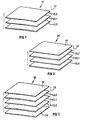
- reference numeral 10 generally indicates a wound dressing in accordance with the invention.
- the wound dressing 10 is shown in exploded view in the drawing.
- the dressing 10 includes a first absorbent layer in the form of a fibre batt 12.2 and a second absorbent layer in the form of a fibre batt 12.3.
- the fibre batts 12.2 and 12.3 are made of non-woven fabric comprising porous polyester fibres.
- the dressing 10 includes a tightly woven screen 12.1 comprising polyester and cotton fibres sandwiched between the two fibre batts 12.2 and 12.3.
- the screen 12.1 is of a woven fabric comprising 80% polyester and 20% cotton yarns and has a thread density of about (120 to 150 threads per square inch) 18.6 to 23.2 threads/cm 2 , a yarn count of about 32 to 40 and a weight of about 100 g/m 2 .
- the two absorbent layers 12.2 and 12.3 and the screen form essentially a single, layered fabric body, indicated in the drawing by reference numeral 12.
- reference numeral 20 generally indicates another embodiment of a wound dressing in accordance with the invention.
- the wound dressing 20 resembles the wound dressing 10 and the same numbers have been used to indicate the same or similar features of the dressings 20 and 10.
- the dressing 20 differs from the dressing 10 only in that an outer liquid permeable layer 14 is secured to the fibre batt 12.2 so that the wound dressing 20 comprises four separate layers rather than three as in the wound dressing 10.
- reference numeral 30 generally indicates another embodiment of a wound dressing in accordance with the invention.
- the wound dressing 30 resembles the wound dressing 20 and the same numbers have been used to indicate the same or similar features of the dressings 30 and 20.
- the dressing 30 differs from the dressing 20 only in that a further outer liquid permeable layer 14 is secured to the fibre batt 12.3 so that the wound dressing 30 comprises five separate layers rather than four as in the wound dressing 20.
- the liquid permeable layer 14 is bonded to the composite layer 12 by heat treatment under pressure.
- the liquid permeable layers are of the material manufactured by Kendall (Pty) Limited and sold under the name "MYLAR” or the material manufactured by Macmed Healthcare Limited and sold under the trade name "TELFA”.
- the fibre batts 12.2 and 12.3 are fabricated on a needleloom. Each fibre batt 12.2, 12.3 is made of 100% polyester fibre, with a fineness of about 1.5 denier, a fibre length of about 7,62 cm (about 3 inches) and each has a weight of about 300 g/m 2 .
- the two fibre batts 12.2 and 12.3 are needle-punched onto each side of the screen 12.1 thus making one completed fibre batt or single, layered fabric body with a middle screen 12.1 and which weighs about 700 g/cm 2 .
- the thickness of the single, layered fabric body 12 is not more than about 3 mm.
- the needle-punching process by which the fibre batts 12.2 and 12.3 and the screen 12.1 are bonded together is conducted on a needleloom which has 30 000 needles on the needle board and 6 000 needles per linear metre.
- the needle-punching is conducted at a punching rate of 300 punches per square cm so that the resulting punching density is 18 000 punches per square cm.
- This process pushes fibres from the fibre batts 12.2 and 12.3 through the screen 12.1, thereby bonding the fibre batts 12.2 and 12.3 to the screen 12.1 and to each other.
- the needle-punching process is conducted once or several times, on either side depending on the thickness required.
- the average thickness of the completed fibre batt is not more than about 3 mm.
- the Applicant has found that, if the material is much thicker than 3 mm, absorption by the wound dressing is slower and the ability of the wound dressing to "hold and lift" exudate from a wound becomes less effective.
- the Applicant has found that, if the wound dressing is thicker than about 3 mm, transfer of the fluid through successive layers of the wound dressing is less effective.
- the wound dressing of the invention may be used in several layers. It may also be folded or rolled for insertion into a wound cavity.
- Tests Results SABS samples No. R2455A & R2455B Requirements as stated in CKS464:1993 (as amended) Methods of test, CKS 464:1993 (as amended) subclause reference Construction
- the dressing consists of 3 layers and a woven inner layer sandwiched between the 2 outer layers. The dressing has been needle-punched to create adhesion between the 3 layers.
- test samples No. R2455A and R2455B refer to test samples for properties specified in The South African Department of Trade and Industry specification: CKS 464 : 1993 (as amended) for non-woven surgical dressings published by the SABS.
- the wound dressing of the invention is a dispersion, high-absorbent, low adherent, disposable wound dressing.
- the wound dressing can be used for a wide variety of wounds including high exudating wounds, deep cavity wounds, superficial wounds (with ointments), burn wounds (where the low adherence properties of the wound dressing of the invention are important), transudating wounds, abscesses, ulcers, diabetic foot wounds, external cancer wounds, non-healing wounds, sinus wounds, and the like in both humans and animals. It is a further advantage of the invention illustrated that the wound dressing can be used as a surgical drain.
- both body fluids and bacteria can be dispersed from, or carried away from, the inside of a wound or cavity by a number of the wound dressings of the invention to the dressings on the outside of the wound or cavity. This enables wounds to heal from the inside and not from the outside. There is no breakdown in the material of the wound dressing after it has made contact with bodily fluids.
- non-adherent absorbent dressings are made of gauze and porous fibres, including natural fibres such as cotton and synthetic fibres such as rayon and combinations thereof.
- a problem associated with such absorbent dressings is that the porous fibres absorb moisture or fluid from the wound. This leads to a phenomenon known as "strike through”.
- Such wound dressings also to a certain extent, depending upon the type of dressing, tend to adhere to an exudating or transudating wound. Removal of such dressings from the wound often results in reopening of the wound and damage to newly formed granulating tissue.
- the tightly woven screen which forms a discreet layer within the non-woven batt, serves to cause the exudate absorbed by the non-woven fabric part of the dressing to be dispersed along the screen. This serves to prevent or inhibit "strike through” and results in transport of the fluid away from the site of the wound.
- the advantage of this is that both fluid and bacteria are carried away from the wound thereby encouraging healing of the wound.
- the liquid permeable layer does not produce lint, fluff or the like, which are often associated with prior art wound dressings of which the Applicant is aware, and essentially does not adhere to the wound. This reduces both the trauma associated with changing dressings particularly in the case of serious wounds and prevents or inhibits damage to the healing wound caused by the removal of the dressing.
- the Applicant believes that the needle-punching process by which the wound dressing of the invention is fabricated and which involves a punching density of about 18 00 ⁇ per square cm results in the dispersion action inside the dressing which distinguishes it from prior art absorbent dressings. It is the unique dispersion action inside the dressing which enables the dressing to "hold and lift" exudate or body fluids. Because of the dispersion action of the wound dressing of the invention, even once a dressing is saturated, a successive layer of the wound dressing will cause the fluids to be drawn away from the site of the wound so that healing can take place because of the removal of the fluids and associated bacteria from the wound. The success of the wound dressing of the invention, as a result of the dispersion action of the dressing, appears to be brought about by the choice of fibres and the needle-punching procedure used to fabricate the dressing.
Landscapes
- Engineering & Computer Science (AREA)
- Textile Engineering (AREA)
- Health & Medical Sciences (AREA)
- Life Sciences & Earth Sciences (AREA)
- General Health & Medical Sciences (AREA)
- Biomedical Technology (AREA)
- Heart & Thoracic Surgery (AREA)
- Vascular Medicine (AREA)
- Mechanical Engineering (AREA)
- Animal Behavior & Ethology (AREA)
- Veterinary Medicine (AREA)
- Public Health (AREA)
- Manufacturing & Machinery (AREA)
- Chemical & Material Sciences (AREA)
- Chemical Kinetics & Catalysis (AREA)
- Materials For Medical Uses (AREA)
- Nonwoven Fabrics (AREA)
- Laminated Bodies (AREA)
Claims (31)
- Wundverband, umfassend:eine erste und eine zweite Absorptionsschicht, wobei jede Absorptionsschicht aus einem Vliesgewebe aus Fasern hergestellt und in der Lage ist, Flüssigkeit zu absorbieren; undeine Polyester und Baumwollfasern enthaltende Abschirmung, die zwischen den zwei Absorptionsschichten angeordnet und mit ihnen verbunden ist, derart, dass die zwei Absorptionsschichten und die Abschirmung im Wesentlichen einen einzigen Gewebeschichtkörper bilden, dadurch gekennzeichnet, dass die Abschirmung und die Absorptionsschichten eine Nadelstichdichte von ungefähr 1700 bis 1900 Stichen pro cm2 aufweisen, um hierdurch die Abschirmung und die Absorptionschichten zu verbinden.
- Wundverband nach Anspruch 1, bei dem die Nadelstichdichte ungefähr 1800 Stiche pro cm2 beträgt.
- Wundverband nach Anspruch 1 oder 2, bei dem wenigstens eine flüssigkeitsdurchlässige Schicht, die im Wesentlichen nicht an menschlichen oder tierischen Gewebelagen haftet, mit wenigstens einer der Absorptionsschichten verbunden ist.
- Wundverband nach einem der vorhergehenden Ansprüche, bei dem jede Absorptionsschicht aus porösen Polyesterfasern besteht.
- Wundverband nach einem der vorhergehenden Ansprüche, bei dem die Abschirmung 80 % Polyester und 20 % Baumwollfasern enthält.
- Wundverband nach einem der vorhergehenden Ansprüche, bei dem die Abschirmung eine Fadendichte von ungefähr 18,6 bis 23,2 Faden/cm2 (120 bis 150 Faden pro Quadratinch) aufweist.
- Wundverband nach einem der vorhergehenden Ansprüche, bei dem die Abschirmung eine Garnnummer von ungefähr 32 bis 40 aufweist.
- Wundverband nach einem der vorhergehenden Ansprüche, bei dem die Abschirmung ein Gewicht pro Einheitsfläche von ungefähr 100 g/m2 aufweist.
- Wundverband nach einem der vorhergehenden Ansprüche, bei dem die Absorptionsschichten aus Vliesgewebe in der Form von zwei auf einem Nadelwebstuhl hergestellten Faserpelzen sind, die jeweils aus 100 % Polyesterfasern hergestellt sind.
- Wundverband nach Anspruch 9, bei dem die Faserpelze eine Feinheit von ungefähr 1,5 Denier haben.
- Wundverband nach Anspruch 10, bei dem die Faserpelze ein Gewicht pro Einheitsfläche von ungefähr 300 g/m2 haben.
- Wundverband nach einem der Ansprüche 9 bis 11, bei dem die Faserpelze eine Faserlänge von 7 bis 8 cm haben.
- Wundverband nach einem der vorhergehenden Ansprüche, bei dem der einzige Gewebeschichtkörper eine Masse von ungefähr 700 bis 750 g/m2 hat.
- Wundverband nach einem der vorhergehenden Ansprüche, bei dem der einzige Gewebeschichtkörper eine Dicke von nicht mehr als 3 mm hat.
- Wundverband nach einem der Ansprüche 3 bis 14, bei dem die flüssigkeitsdurchlässige Schicht aus foraminösem oder perforiertem Kunststoffpolymermaterial gebildet ist.
- Wundverband nach Anspruch 15, bei dem das Kunststoffpolymermaterial ausgewählt ist aus "MYLAR" (Markenname) und "TELFA" (Markenname).
- Wundverband nach einem der vorhergehenden Ansprüche, bei dem die Verbindung zwischen der oder jeder flüssigkeitsdurchlässigen Schicht und der oder jeder Absorptionsschicht durch eine Heizbehandlung unter Druck erzielt ist.
- Verfahren zur Herstellung eines Wundverbands, wobei das Verfahren die Schritte umfasst:Herstellen von zwei Nadelstich-Faserpelzen aus Fasern auf einem Nadelwebstuhl;Herstellen einer dicht gewebten Abschirmung aus Polyester und Baumwollfasern;Anordnen der Abschirmung zwischen den Nadelstich-Faserpelzen zur Bildung einer Verbundstruktur, bei der die Abschirmung eine innere Schicht zwischen den zwei Faserpelzen bildet; undNadeln der Verbundstruktur auf einem Nadelwebstuhl zur Herstellung eines einzigen Gewebeschichtkörpers in einem Nadelstichverfahren, bei dem die Stichdichte ungefähr 1700 bis 1900 Stiche pro cm2 beträgt.
- Verfahren nach Anspruch 18, ferner umfassend den weiteren Schritt des Anbringens einer flüssigkeitsdurchlässigen Schicht, die im Wesentlichen nicht an menschlichem oder tierischem Gewebe haftet, an wenigstens einer Seite des einzigen Gewebeschichtkörpers.
- Verfahren nach Anspruch 18 oder 19, bei dem die Nadelstich-Faserpelze aus Polyester sind.
- Verfahren nach einem der Ansprüche 18 bis 20, bei dem die Abschirmung aus 80 % Polyester und 20 % Baumwollgamen hergestellt ist.
- Verfahren nach einem der Ansprüche 18 bis 21, bei dem die Abschirmung derart hergestellt ist, dass sie eine Fadendichte von ungefähr 18,6 bis 23,3 Faden/cm2 (120 bis 150 Faden pro Quadratinch) aufweist.
- Verfahren nach einem der Ansprüche 18 bis 22, bei dem die Abschirmung derart hergestellt ist, dass sie eine Garnnummer von ungefähr 32 bis 40 hat.
- Verfahren nach einem der Ansprüche 18 bis 23, bei dem die Abschirmung derart hergestellt ist, dass sie ein Gewicht pro Einheitsfläche von ungefähr 100 g/m2 aufweist.
- Verfahren nach einem der Ansprüche 18 bis 24, bei dem die Verbundstruktur genadelt wird, um den einzigen Gewebeschichtkörper mit einer Masse von 700 bis 750 g/m2 herzustellen.
- Verfahren nach Anspruch 25, bei dem die Verbundstruktur derart genadelt wird, dass der einzige Gewebeschichtkörper eine Dicke von nicht mehr als 3 mm aufweist.
- Verfahren nach einem der Ansprüche 18 bis 26, bei dem die Faserpelze eine Feinheit von ungefähr 1,5 Denier aufweisen.
- Verfahren nach einem der Ansprüche 18 bis 27, bei dem die Faserpelze derart hergestellt sind, dass sie ein Gewicht pro Einheitsfläche von ungefähr 300 g/m2 aufweisen.
- Verfahren nach einem der Ansprüche 19 bis 28, bei dem die flüssigkeitsdurchlässige Schicht aus foraminösem oder perforiertem Kunststoffpolymermaterial besteht.
- Verfahren nach einem der Ansprüche 19 bis 29, bei dem das Kunststoffpolymermaterial ausgewählt ist aus "MYLAR" (Markenname) und "TELFA" (Markenname).
- Verfahren nach einem der Ansprüche 19 bis 30, bei dem eine Anbringung der flüssigkeitsdurchlässigen Schicht an wenigstens einer Seite des Gewebeschichtkörpers durch eine Heizbehandlung unter Druck erzielt wird.
Priority Applications (1)
| Application Number | Priority Date | Filing Date | Title |
|---|---|---|---|
| EP04014441A EP1457183A2 (de) | 1998-09-28 | 1999-09-23 | Wundauflage |
Applications Claiming Priority (3)
| Application Number | Priority Date | Filing Date | Title |
|---|---|---|---|
| ZA988838 | 1998-09-28 | ||
| ZA9808838 | 1998-09-28 | ||
| PCT/IB1999/001570 WO2000018343A1 (en) | 1998-09-28 | 1999-09-23 | A wound dressing |
Related Child Applications (1)
| Application Number | Title | Priority Date | Filing Date |
|---|---|---|---|
| EP04014441A Division EP1457183A2 (de) | 1998-09-28 | 1999-09-23 | Wundauflage |
Publications (2)
| Publication Number | Publication Date |
|---|---|
| EP1131024A1 EP1131024A1 (de) | 2001-09-12 |
| EP1131024B1 true EP1131024B1 (de) | 2004-09-15 |
Family
ID=25587303
Family Applications (2)
| Application Number | Title | Priority Date | Filing Date |
|---|---|---|---|
| EP99943167A Revoked EP1131024B1 (de) | 1998-09-28 | 1999-09-23 | Wundverband |
| EP04014441A Withdrawn EP1457183A2 (de) | 1998-09-28 | 1999-09-23 | Wundauflage |
Family Applications After (1)
| Application Number | Title | Priority Date | Filing Date |
|---|---|---|---|
| EP04014441A Withdrawn EP1457183A2 (de) | 1998-09-28 | 1999-09-23 | Wundauflage |
Country Status (8)
| Country | Link |
|---|---|
| EP (2) | EP1131024B1 (de) |
| AT (1) | ATE275907T1 (de) |
| AU (1) | AU761861B2 (de) |
| CA (1) | CA2345417A1 (de) |
| DE (1) | DE69920256T2 (de) |
| ES (1) | ES2229762T3 (de) |
| GB (1) | GB2357977B (de) |
| WO (1) | WO2000018343A1 (de) |
Cited By (2)
| Publication number | Priority date | Publication date | Assignee | Title |
|---|---|---|---|---|
| US10194909B2 (en) | 2010-12-15 | 2019-02-05 | Wilhelm Fleischmann | Instrument for stretching the skin |
| US10206755B2 (en) | 2007-03-08 | 2019-02-19 | Wilhelm Fleischmann | Method for stretching the skin |
Families Citing this family (10)
| Publication number | Priority date | Publication date | Assignee | Title |
|---|---|---|---|---|
| US7112712B1 (en) | 1999-11-10 | 2006-09-26 | Protex Healthcare (Uk) Limited | Dressing |
| DE102005007016A1 (de) | 2005-02-15 | 2006-08-24 | Fleischmann, Wilhelm, Dr.med. | Vorrichtung zur Behandlung von Wunden |
| ZA200600686B (en) * | 2006-01-24 | 2006-04-26 | Jacobus F Mouton | A wound dressing |
| AR063987A1 (es) * | 2007-11-27 | 2009-03-04 | Segundo Mariano | Aposito utilizable como cobertura temporal para el tratamiento de heridas y procesos para su fabricacion |
| GB2489947B (en) * | 2011-04-11 | 2018-12-12 | Adv Med Solutions Ltd | Wound dressing |
| DE102011106393A1 (de) * | 2011-07-02 | 2013-01-03 | Steffen Herr | Doppellagiges textiles Flächengebilde mit einstellbaren, festem Lagenabstand in der Verwendung als Wundauflage |
| DE102016010733A1 (de) | 2015-09-22 | 2017-03-23 | Mann + Hummel Gmbh | Ein Mehrkomponentenmedium zur Verwendung in einer Befeuchtungseinrichtung bekannter Ausführung |
| DE102016122593A1 (de) | 2016-11-23 | 2018-05-24 | Biowim Products Gmbh | Instrument zum Dehnen der Haut |
| GB2579800B (en) * | 2018-12-13 | 2021-11-03 | Adv Med Solutions Ltd | Resilient wound dressing |
| GB2585769B (en) * | 2018-12-13 | 2022-01-12 | Adv Med Solutions Ltd | Resilient wound dressing |
Family Cites Families (4)
| Publication number | Priority date | Publication date | Assignee | Title |
|---|---|---|---|---|
| GB8402095D0 (en) * | 1984-01-26 | 1984-02-29 | Johnson & Johnson | Absorbent laminates |
| GB9209463D0 (en) * | 1992-05-01 | 1992-06-17 | British United Shoe Machinery | Absorbent material and a method of making same |
| GB9509943D0 (en) * | 1995-05-17 | 1995-07-12 | British United Shoe Machinery | Wound dressing |
| GB2302669B (en) | 1995-06-27 | 1997-07-23 | Marilyn Olga Jeffcoat | Fabrication process for nonwoven fabric and products thus fabricated for use as non-adherent absorbent medical and veterinary dressings |
-
1999
- 1999-09-23 ES ES99943167T patent/ES2229762T3/es not_active Expired - Lifetime
- 1999-09-23 AT AT99943167T patent/ATE275907T1/de not_active IP Right Cessation
- 1999-09-23 CA CA002345417A patent/CA2345417A1/en not_active Abandoned
- 1999-09-23 AU AU56435/99A patent/AU761861B2/en not_active Ceased
- 1999-09-23 WO PCT/IB1999/001570 patent/WO2000018343A1/en not_active Ceased
- 1999-09-23 EP EP99943167A patent/EP1131024B1/de not_active Revoked
- 1999-09-23 DE DE69920256T patent/DE69920256T2/de not_active Expired - Fee Related
- 1999-09-23 EP EP04014441A patent/EP1457183A2/de not_active Withdrawn
- 1999-09-23 GB GB0104404A patent/GB2357977B/en not_active Expired - Fee Related
Cited By (3)
| Publication number | Priority date | Publication date | Assignee | Title |
|---|---|---|---|---|
| US10206755B2 (en) | 2007-03-08 | 2019-02-19 | Wilhelm Fleischmann | Method for stretching the skin |
| US10231797B2 (en) | 2007-03-08 | 2019-03-19 | Wilhelm Fleischmann | Device for stretching the skin |
| US10194909B2 (en) | 2010-12-15 | 2019-02-05 | Wilhelm Fleischmann | Instrument for stretching the skin |
Also Published As
| Publication number | Publication date |
|---|---|
| GB2357977B (en) | 2002-01-09 |
| GB0104404D0 (en) | 2001-04-11 |
| DE69920256T2 (de) | 2005-09-22 |
| DE69920256D1 (de) | 2004-10-21 |
| WO2000018343A1 (en) | 2000-04-06 |
| AU761861B2 (en) | 2003-06-12 |
| EP1457183A2 (de) | 2004-09-15 |
| CA2345417A1 (en) | 2000-04-06 |
| GB2357977A (en) | 2001-07-11 |
| ES2229762T3 (es) | 2005-04-16 |
| EP1131024A1 (de) | 2001-09-12 |
| ATE275907T1 (de) | 2004-10-15 |
| AU5643599A (en) | 2000-04-17 |
Similar Documents
| Publication | Publication Date | Title |
|---|---|---|
| US6653520B1 (en) | Wound dressing | |
| KR101328792B1 (ko) | 붕대 | |
| EP1095179B1 (de) | Vliesstoffe, herstellung und verwendung | |
| JP2710497B2 (ja) | 改善された吸収力のあるアルギネート織布、外傷及び火傷の手当用品としての使用、及びその調製法 | |
| EP1131024B1 (de) | Wundverband | |
| AU651900B2 (en) | Method of making alginate wound dressing of good integrity | |
| US20160317353A1 (en) | Wound dressing | |
| US20130066250A1 (en) | Wound care product made from bulked filament tow | |
| CN1008546B (zh) | 带有可被x射线检识成分的非织造外科用纱布 | |
| DE10045462A1 (de) | Wundauflage und/oder Kompresse aus mehreren Lagen Vliesstoff | |
| EP0963745B1 (de) | Absorbierende Vliesstoffmaterialien mit Klebebändern | |
| KR101974873B1 (ko) | 카르복시메틸 셀룰로오스 복합 부직포 | |
| KR100226567B1 (ko) | 알기네이트 직물,이의 제조방법 및 이를 포함하는 상처용 드레싱 및 외과용 지혈재 | |
| CN212439060U (zh) | 一种医用纤维敷料 | |
| RU2502524C1 (ru) | Многослойный антимикробный нетканый материал | |
| EP4568625A1 (de) | Wundkontaktschicht und wundauflage umfassend einen sterilen vliesstoff | |
| CZ281012B6 (cs) | Textilní zdravotnický materiál vysoké sorpční mohutnosti | |
| JPS62129053A (ja) | 傷口手当材料 |
Legal Events
| Date | Code | Title | Description |
|---|---|---|---|
| PUAI | Public reference made under article 153(3) epc to a published international application that has entered the european phase |
Free format text: ORIGINAL CODE: 0009012 |
|
| 17P | Request for examination filed |
Effective date: 20010425 |
|
| AK | Designated contracting states |
Kind code of ref document: A1 Designated state(s): AT BE CH CY DE DK ES FI FR GB GR IE IT LI LU MC NL PT SE |
|
| AX | Request for extension of the european patent |
Free format text: AL PAYMENT 20010425;LT PAYMENT 20010425;LV PAYMENT 20010425;MK PAYMENT 20010425;RO PAYMENT 20010425;SI PAYMENT 20010425 |
|
| TPAD | Observations filed by third parties |
Free format text: ORIGINAL CODE: EPIDOS TIPA |
|
| 17Q | First examination report despatched |
Effective date: 20021213 |
|
| RAP1 | Party data changed (applicant data changed or rights of an application transferred) |
Owner name: VIBRIANT TECHNOLOGY SERVICES LIMITED |
|
| RIN1 | Information on inventor provided before grant (corrected) |
Inventor name: MOUTON, JOHANNES PETRUS |
|
| GRAP | Despatch of communication of intention to grant a patent |
Free format text: ORIGINAL CODE: EPIDOSNIGR1 |
|
| GRAS | Grant fee paid |
Free format text: ORIGINAL CODE: EPIDOSNIGR3 |
|
| GRAA | (expected) grant |
Free format text: ORIGINAL CODE: 0009210 |
|
| AK | Designated contracting states |
Kind code of ref document: B1 Designated state(s): AT BE CH CY DE DK ES FI FR GB GR IE IT LI LU MC NL PT SE |
|
| AX | Request for extension of the european patent |
Extension state: AL LT LV MK RO SI |
|
| PG25 | Lapsed in a contracting state [announced via postgrant information from national office to epo] |
Ref country code: NL Free format text: LAPSE BECAUSE OF FAILURE TO SUBMIT A TRANSLATION OF THE DESCRIPTION OR TO PAY THE FEE WITHIN THE PRESCRIBED TIME-LIMIT Effective date: 20040915 Ref country code: LI Free format text: LAPSE BECAUSE OF FAILURE TO SUBMIT A TRANSLATION OF THE DESCRIPTION OR TO PAY THE FEE WITHIN THE PRESCRIBED TIME-LIMIT Effective date: 20040915 Ref country code: FI Free format text: LAPSE BECAUSE OF FAILURE TO SUBMIT A TRANSLATION OF THE DESCRIPTION OR TO PAY THE FEE WITHIN THE PRESCRIBED TIME-LIMIT Effective date: 20040915 Ref country code: CY Free format text: LAPSE BECAUSE OF FAILURE TO SUBMIT A TRANSLATION OF THE DESCRIPTION OR TO PAY THE FEE WITHIN THE PRESCRIBED TIME-LIMIT Effective date: 20040915 Ref country code: CH Free format text: LAPSE BECAUSE OF FAILURE TO SUBMIT A TRANSLATION OF THE DESCRIPTION OR TO PAY THE FEE WITHIN THE PRESCRIBED TIME-LIMIT Effective date: 20040915 Ref country code: BE Free format text: LAPSE BECAUSE OF FAILURE TO SUBMIT A TRANSLATION OF THE DESCRIPTION OR TO PAY THE FEE WITHIN THE PRESCRIBED TIME-LIMIT Effective date: 20040915 Ref country code: AT Free format text: LAPSE BECAUSE OF FAILURE TO SUBMIT A TRANSLATION OF THE DESCRIPTION OR TO PAY THE FEE WITHIN THE PRESCRIBED TIME-LIMIT Effective date: 20040915 |
|
| REG | Reference to a national code |
Ref country code: GB Ref legal event code: FG4D Ref country code: CH Ref legal event code: EP |
|
| PG25 | Lapsed in a contracting state [announced via postgrant information from national office to epo] |
Ref country code: LU Free format text: LAPSE BECAUSE OF NON-PAYMENT OF DUE FEES Effective date: 20040923 |
|
| PG25 | Lapsed in a contracting state [announced via postgrant information from national office to epo] |
Ref country code: MC Free format text: LAPSE BECAUSE OF NON-PAYMENT OF DUE FEES Effective date: 20040930 |
|
| REG | Reference to a national code |
Ref country code: IE Ref legal event code: FG4D |
|
| REF | Corresponds to: |
Ref document number: 69920256 Country of ref document: DE Date of ref document: 20041021 Kind code of ref document: P |
|
| PG25 | Lapsed in a contracting state [announced via postgrant information from national office to epo] |
Ref country code: SE Free format text: LAPSE BECAUSE OF FAILURE TO SUBMIT A TRANSLATION OF THE DESCRIPTION OR TO PAY THE FEE WITHIN THE PRESCRIBED TIME-LIMIT Effective date: 20041215 Ref country code: GR Free format text: LAPSE BECAUSE OF FAILURE TO SUBMIT A TRANSLATION OF THE DESCRIPTION OR TO PAY THE FEE WITHIN THE PRESCRIBED TIME-LIMIT Effective date: 20041215 Ref country code: DK Free format text: LAPSE BECAUSE OF FAILURE TO SUBMIT A TRANSLATION OF THE DESCRIPTION OR TO PAY THE FEE WITHIN THE PRESCRIBED TIME-LIMIT Effective date: 20041215 |
|
| LTIE | Lt: invalidation of european patent or patent extension |
Effective date: 20040915 |
|
| REG | Reference to a national code |
Ref country code: CH Ref legal event code: PL |
|
| NLV1 | Nl: lapsed or annulled due to failure to fulfill the requirements of art. 29p and 29m of the patents act | ||
| REG | Reference to a national code |
Ref country code: ES Ref legal event code: FG2A Ref document number: 2229762 Country of ref document: ES Kind code of ref document: T3 |
|
| PLAQ | Examination of admissibility of opposition: information related to despatch of communication + time limit deleted |
Free format text: ORIGINAL CODE: EPIDOSDOPE2 |
|
| PLBQ | Unpublished change to opponent data |
Free format text: ORIGINAL CODE: EPIDOS OPPO |
|
| PLBI | Opposition filed |
Free format text: ORIGINAL CODE: 0009260 |
|
| PLAQ | Examination of admissibility of opposition: information related to despatch of communication + time limit deleted |
Free format text: ORIGINAL CODE: EPIDOSDOPE2 |
|
| PLAR | Examination of admissibility of opposition: information related to receipt of reply deleted |
Free format text: ORIGINAL CODE: EPIDOSDOPE4 |
|
| PLBQ | Unpublished change to opponent data |
Free format text: ORIGINAL CODE: EPIDOS OPPO |
|
| PLAB | Opposition data, opponent's data or that of the opponent's representative modified |
Free format text: ORIGINAL CODE: 0009299OPPO |
|
| PLAX | Notice of opposition and request to file observation + time limit sent |
Free format text: ORIGINAL CODE: EPIDOSNOBS2 |
|
| 26 | Opposition filed |
Opponent name: PROTEC HELATHCARE (UK) LIMITED Effective date: 20050614 |
|
| PGFP | Annual fee paid to national office [announced via postgrant information from national office to epo] |
Ref country code: IE Payment date: 20050817 Year of fee payment: 7 |
|
| R26 | Opposition filed (corrected) |
Opponent name: PROTEC HELATHCARE (UK) LIMITED Effective date: 20050614 |
|
| ET | Fr: translation filed | ||
| PGFP | Annual fee paid to national office [announced via postgrant information from national office to epo] |
Ref country code: FR Payment date: 20050819 Year of fee payment: 7 |
|
| PLBB | Reply of patent proprietor to notice(s) of opposition received |
Free format text: ORIGINAL CODE: EPIDOSNOBS3 |
|
| PG25 | Lapsed in a contracting state [announced via postgrant information from national office to epo] |
Ref country code: IE Free format text: LAPSE BECAUSE OF NON-PAYMENT OF DUE FEES Effective date: 20060925 |
|
| PGFP | Annual fee paid to national office [announced via postgrant information from national office to epo] |
Ref country code: DE Payment date: 20061124 Year of fee payment: 8 |
|
| REG | Reference to a national code |
Ref country code: IE Ref legal event code: MM4A |
|
| REG | Reference to a national code |
Ref country code: FR Ref legal event code: ST Effective date: 20070531 |
|
| RDAF | Communication despatched that patent is revoked |
Free format text: ORIGINAL CODE: EPIDOSNREV1 |
|
| APBP | Date of receipt of notice of appeal recorded |
Free format text: ORIGINAL CODE: EPIDOSNNOA2O |
|
| APAH | Appeal reference modified |
Free format text: ORIGINAL CODE: EPIDOSCREFNO |
|
| APBQ | Date of receipt of statement of grounds of appeal recorded |
Free format text: ORIGINAL CODE: EPIDOSNNOA3O |
|
| PG25 | Lapsed in a contracting state [announced via postgrant information from national office to epo] |
Ref country code: PT Free format text: LAPSE BECAUSE OF NON-PAYMENT OF DUE FEES Effective date: 20050215 |
|
| PGFP | Annual fee paid to national office [announced via postgrant information from national office to epo] |
Ref country code: ES Payment date: 20071029 Year of fee payment: 9 |
|
| PGFP | Annual fee paid to national office [announced via postgrant information from national office to epo] |
Ref country code: IT Payment date: 20071022 Year of fee payment: 9 |
|
| PG25 | Lapsed in a contracting state [announced via postgrant information from national office to epo] |
Ref country code: FR Free format text: LAPSE BECAUSE OF NON-PAYMENT OF DUE FEES Effective date: 20061002 |
|
| PG25 | Lapsed in a contracting state [announced via postgrant information from national office to epo] |
Ref country code: DE Free format text: LAPSE BECAUSE OF NON-PAYMENT OF DUE FEES Effective date: 20080401 |
|
| APBU | Appeal procedure closed |
Free format text: ORIGINAL CODE: EPIDOSNNOA9O |
|
| APAN | Information on closure of appeal procedure modified |
Free format text: ORIGINAL CODE: EPIDOSCNOA9O |
|
| PGFP | Annual fee paid to national office [announced via postgrant information from national office to epo] |
Ref country code: GB Payment date: 20080923 Year of fee payment: 10 |
|
| RDAG | Patent revoked |
Free format text: ORIGINAL CODE: 0009271 |
|
| STAA | Information on the status of an ep patent application or granted ep patent |
Free format text: STATUS: PATENT REVOKED |
|
| 27W | Patent revoked |
Effective date: 20081119 |
|
| GBPR | Gb: patent revoked under art. 102 of the ep convention designating the uk as contracting state |
Effective date: 20081119 |
|
| PG25 | Lapsed in a contracting state [announced via postgrant information from national office to epo] |
Ref country code: IT Free format text: LAPSE BECAUSE OF NON-PAYMENT OF DUE FEES Effective date: 20080923 |
|
| PG25 | Lapsed in a contracting state [announced via postgrant information from national office to epo] |
Ref country code: ES Free format text: LAPSE BECAUSE OF NON-PAYMENT OF DUE FEES Effective date: 20080924 |