EP1130111A2 - Diagnostics based on tetrazolium compounds - Google Patents
Diagnostics based on tetrazolium compounds Download PDFInfo
- Publication number
- EP1130111A2 EP1130111A2 EP01301670A EP01301670A EP1130111A2 EP 1130111 A2 EP1130111 A2 EP 1130111A2 EP 01301670 A EP01301670 A EP 01301670A EP 01301670 A EP01301670 A EP 01301670A EP 1130111 A2 EP1130111 A2 EP 1130111A2
- Authority
- EP
- European Patent Office
- Prior art keywords
- reagent
- test pad
- flavin
- strip
- analyte
- Prior art date
- Legal status (The legal status is an assumption and is not a legal conclusion. Google has not performed a legal analysis and makes no representation as to the accuracy of the status listed.)
- Granted
Links
- 0 CCC*C1CC(C)CC1 Chemical compound CCC*C1CC(C)CC1 0.000 description 1
Images


Classifications
-
- C—CHEMISTRY; METALLURGY
- C12—BIOCHEMISTRY; BEER; SPIRITS; WINE; VINEGAR; MICROBIOLOGY; ENZYMOLOGY; MUTATION OR GENETIC ENGINEERING
- C12Q—MEASURING OR TESTING PROCESSES INVOLVING ENZYMES, NUCLEIC ACIDS OR MICROORGANISMS; COMPOSITIONS OR TEST PAPERS THEREFOR; PROCESSES OF PREPARING SUCH COMPOSITIONS; CONDITION-RESPONSIVE CONTROL IN MICROBIOLOGICAL OR ENZYMOLOGICAL PROCESSES
- C12Q1/00—Measuring or testing processes involving enzymes, nucleic acids or microorganisms; Compositions therefor; Processes of preparing such compositions
- C12Q1/26—Measuring or testing processes involving enzymes, nucleic acids or microorganisms; Compositions therefor; Processes of preparing such compositions involving oxidoreductase
- C12Q1/32—Measuring or testing processes involving enzymes, nucleic acids or microorganisms; Compositions therefor; Processes of preparing such compositions involving oxidoreductase involving dehydrogenase
-
- C—CHEMISTRY; METALLURGY
- C12—BIOCHEMISTRY; BEER; SPIRITS; WINE; VINEGAR; MICROBIOLOGY; ENZYMOLOGY; MUTATION OR GENETIC ENGINEERING
- C12Q—MEASURING OR TESTING PROCESSES INVOLVING ENZYMES, NUCLEIC ACIDS OR MICROORGANISMS; COMPOSITIONS OR TEST PAPERS THEREFOR; PROCESSES OF PREPARING SUCH COMPOSITIONS; CONDITION-RESPONSIVE CONTROL IN MICROBIOLOGICAL OR ENZYMOLOGICAL PROCESSES
- C12Q1/00—Measuring or testing processes involving enzymes, nucleic acids or microorganisms; Compositions therefor; Processes of preparing such compositions
- C12Q1/26—Measuring or testing processes involving enzymes, nucleic acids or microorganisms; Compositions therefor; Processes of preparing such compositions involving oxidoreductase
-
- C—CHEMISTRY; METALLURGY
- C12—BIOCHEMISTRY; BEER; SPIRITS; WINE; VINEGAR; MICROBIOLOGY; ENZYMOLOGY; MUTATION OR GENETIC ENGINEERING
- C12Q—MEASURING OR TESTING PROCESSES INVOLVING ENZYMES, NUCLEIC ACIDS OR MICROORGANISMS; COMPOSITIONS OR TEST PAPERS THEREFOR; PROCESSES OF PREPARING SUCH COMPOSITIONS; CONDITION-RESPONSIVE CONTROL IN MICROBIOLOGICAL OR ENZYMOLOGICAL PROCESSES
- C12Q1/00—Measuring or testing processes involving enzymes, nucleic acids or microorganisms; Compositions therefor; Processes of preparing such compositions
- C12Q1/54—Measuring or testing processes involving enzymes, nucleic acids or microorganisms; Compositions therefor; Processes of preparing such compositions involving glucose or galactose
-
- G—PHYSICS
- G01—MEASURING; TESTING
- G01N—INVESTIGATING OR ANALYSING MATERIALS BY DETERMINING THEIR CHEMICAL OR PHYSICAL PROPERTIES
- G01N33/00—Investigating or analysing materials by specific methods not covered by groups G01N1/00 - G01N31/00
- G01N33/48—Biological material, e.g. blood, urine; Haemocytometers
- G01N33/50—Chemical analysis of biological material, e.g. blood, urine; Testing involving biospecific ligand binding methods; Immunological testing
- G01N33/52—Use of compounds or compositions for colorimetric, spectrophotometric or fluorometric investigation, e.g. use of reagent paper and including single- and multilayer analytical elements
- G01N33/525—Multi-layer analytical elements
-
- G—PHYSICS
- G01—MEASURING; TESTING
- G01N—INVESTIGATING OR ANALYSING MATERIALS BY DETERMINING THEIR CHEMICAL OR PHYSICAL PROPERTIES
- G01N33/00—Investigating or analysing materials by specific methods not covered by groups G01N1/00 - G01N31/00
- G01N33/48—Biological material, e.g. blood, urine; Haemocytometers
- G01N33/50—Chemical analysis of biological material, e.g. blood, urine; Testing involving biospecific ligand binding methods; Immunological testing
- G01N33/64—Chemical analysis of biological material, e.g. blood, urine; Testing involving biospecific ligand binding methods; Immunological testing involving ketones
-
- Y—GENERAL TAGGING OF NEW TECHNOLOGICAL DEVELOPMENTS; GENERAL TAGGING OF CROSS-SECTIONAL TECHNOLOGIES SPANNING OVER SEVERAL SECTIONS OF THE IPC; TECHNICAL SUBJECTS COVERED BY FORMER USPC CROSS-REFERENCE ART COLLECTIONS [XRACs] AND DIGESTS
- Y10—TECHNICAL SUBJECTS COVERED BY FORMER USPC
- Y10S—TECHNICAL SUBJECTS COVERED BY FORMER USPC CROSS-REFERENCE ART COLLECTIONS [XRACs] AND DIGESTS
- Y10S435/00—Chemistry: molecular biology and microbiology
- Y10S435/962—Prevention or removal of interfering materials or reactants or other treatment to enhance results, e.g. determining or preventing nonspecific binding
-
- Y—GENERAL TAGGING OF NEW TECHNOLOGICAL DEVELOPMENTS; GENERAL TAGGING OF CROSS-SECTIONAL TECHNOLOGIES SPANNING OVER SEVERAL SECTIONS OF THE IPC; TECHNICAL SUBJECTS COVERED BY FORMER USPC CROSS-REFERENCE ART COLLECTIONS [XRACs] AND DIGESTS
- Y10—TECHNICAL SUBJECTS COVERED BY FORMER USPC
- Y10S—TECHNICAL SUBJECTS COVERED BY FORMER USPC CROSS-REFERENCE ART COLLECTIONS [XRACs] AND DIGESTS
- Y10S435/00—Chemistry: molecular biology and microbiology
- Y10S435/97—Test strip or test slide
-
- Y—GENERAL TAGGING OF NEW TECHNOLOGICAL DEVELOPMENTS; GENERAL TAGGING OF CROSS-SECTIONAL TECHNOLOGIES SPANNING OVER SEVERAL SECTIONS OF THE IPC; TECHNICAL SUBJECTS COVERED BY FORMER USPC CROSS-REFERENCE ART COLLECTIONS [XRACs] AND DIGESTS
- Y10—TECHNICAL SUBJECTS COVERED BY FORMER USPC
- Y10T—TECHNICAL SUBJECTS COVERED BY FORMER US CLASSIFICATION
- Y10T436/00—Chemistry: analytical and immunological testing
- Y10T436/17—Nitrogen containing
- Y10T436/173076—Nitrite or nitrate
Definitions
- This invention relates to diagnostic compositions that permit the measurement of analyte concentrations in hemoglobin-containing biological fluids.
- the compositions are based on tetrazolium dye precursors and involve suppressing the hemoglobin-induced reduction of them.
- Adipose tissue is one of the most abundant forms of energy storage in the body. It releases stored fatty acids into the circulatory system to be metabolized primarily by the liver. In the process, fat is consumed and energy is released and made available to the body. Normally, little fat is consumed, the fatty acids are completely metabolized to carbon dioxide and water, and the conversion does not upset the delicate pH balance of the body. However, if insufficient amounts of carbohydrates are present in the body, due, for example, to dieting, then fat consumption and fatty acid production can increase to potentially harmful levels. In addition to dieters, insulin-dependent patients are vulnerable, because of their impaired carbohydrate metabolism.
- ketoacidosis When excessive fatty acid is used to supply a body's energy demand, then large quantities of acetoacetate, acetone, and beta-hydroxybutyrate are produced. These intermediates are referred to as ketone bodies, and the condition is known as ketoacidosis.
- the ketone bodies can normally be recycled into other forms by the body, provided it is not overwhelmed. Therefore, a healthy individual accumulates a negligible amount of these analytes.
- a large quantity of fats is being metabolized in a relatively short period or when most of the energy is derived from fats, massive amounts of ketone bodies are produced. Excessive production of these fat metabolites can cause certain neurologic disorders, if the problem is not corrected promptly.
- Ketone bodies are present in blood and, if a threshold is exceeded, are excreted via the urine. They are easily detected by a modern clinical analyzer. On average, the percentages of beta-hydroxybutyrate, acetoacetate, and acetone are 78%, 20% and 2%, respectively. Because of its relatively low concentration and high volatility, acetone is seldom measured. Instead, acetoacetate is quantitatively determined by a nitroprusside reaction and the beta-hydroxybutyrate is quantified with an enzymatic method. Acetoacetate test strips have been available for decades. They are based on a nitroprusside ion coupling reaction with aldehydes and ketones.
- the beta-hydroxybutyrate test is more useful for monitoring ketone body concentrations. It is based on the oxidation of beta-hydroxybutyrate with the corresponding dehydrogenase in the presence of nicotinamide adenine dinucleotide (NAD) cofactor. (Strictly speaking, only D-beta-hydroxybutyrate is naturally present and oxidized, but we omit the "D" for brevity throughout this specification and the appended claims.) Upon the oxidation, NADH is produced, and its concentration is measured directly with a UV spectrophotometer. Hence, the corresponding signal change in the spectrum is proportional to the analyte's concentration. Unfortunately, the excitation of NADH occurs in the UV region; thus, this mode of detection is suitable only for laboratory instruments. Another method for monitoring beta-hydroxybutyrate is by oxidizing the NADH with a tetrazolium compound.
- Tetrazolium compounds are generally very sensitive to strong bases and to light. Thus, special care must be exercised to ensure the integrity of these compounds. Nevertheless, tetrazoliums have played an important role in studies of tissue metabolism. For example, this class of compounds has been used in probing anaerobic oxidation and reduction reactions in cells. Further, they are commonly used in clinical diagnostics. The compounds are typically light-colored or colorless compounds that undergo a reduction reaction, in the presence of a reducing agent, to yield a highly colored formazan.
- Reducing agents such as ascorbates, sulfhydryls, or variants of NADH, NADPH, PQQH 2 (reduced PQQ - pyrroloquinoline quinone), FMNH 2 (reduced FMN - flavin mononucleotide), and FADH 2 (reduced FAD - flavin adenine dinucleotide) are capable of forming the dye.
- tetrazolium dye precursors can be used to measure ketone bodies and glucose in whole blood.
- the tetrazolium can be reduced non-enzymatically by hemoglobin (Fe(II)) to form a colored formazan, if the hemoglobin is not contained within the red cells of the blood.
- hemoglobin Fe(II)
- free hemoglobin causes serious interference with the measurements.
- the interfering signal from hemoglobin could exceed the intended signal.
- Glucose measurements particularly in the normal concentration or above, are not affected as adversely.
- Red blood cells can be removed from samples by filtering with membranes and filters, by trapping with chemical reagents, or by a combination of both methods. Filtration methods for separating red cells from whole blood are costly and require rather large sample volumes.
- An example of a blood ketone (beta-hydroxybutyrate) test that uses filtration to eliminate red cells from a whole blood sample is the KetoSite® test available from GDS Diagnostics, Elkhart, IN. (See Tietz Textbook of Clinical Chemistry, 2 nd Ed., ed. by C. Burtis et al., W. B. Saunders Co., Philadelphia, PA, 1994, p. 974.)
- the "Test Card” used in that test has two filter layers, which makes the card rather costly and necessitates a large (25 ⁇ L) blood sample. Further, the blood must not be hemolyzed.
- a combination of filtration and chemical trapping is used in the Ames® Glucometer EncoreTM blood glucose strip, available from Miles. That strip uses a layer of filter material and an agglutination aid (potato lectin) to eliminate interference from red cells. (See Chu et al., European Pat. Appl. 0 638 805 A2, publ. Feb. 15, 1995.)
- ferricyanides are known to transform hemoglobin to methemoglobin, they also destroy the desired product, NADH.
- the reagent includes an enzyme, a phenazine derivative, a tetrazolium salt, and a divalent metal salt to stabilize the reagent.
- the reagent includes an enzyme, a mediator, a tetrazolium salt, and an oxidizing agent that stabilizes the reagent.
- the present invention provides a reagent for measuring the concentration of an analyte in a hemoglobin-containing biological fluid.
- the reagent comprises:
- the reagent comprises;
- the reagent is particularly suited for coating onto one or more substrates to form a dry reagent strip for measuring an analyte concentration in a hemoglobin-containing biological fluid.
- a particularly preferred strip comprises
- Another strip of the invention comprises
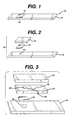
- Fig. 1 is a perspective view of a test strip of this invention.
- Fig. 2 is an exploded view of another test strip of this invention.
- Fig. 3 is an exploded view of yet another test strip of this invention.
- Fig. 4 is a pictorial depiction of the chemistry of a glucose assay of this invention.
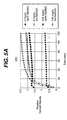
- Fig. 5 is a graph that shows the effect of nitrite as a hemoglobin suppressor on a two-layer assay.
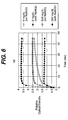
- Fig. 6 is a graph that shows the effect of nitrite as a hemoglobin suppressor on a single-layer glucose assay.
- the present invention provides a reagent for measuring analyte concentration in hemoglobin-containing biological fluids (such as whole blood), by producing a concentration of the reduced form of a cofactor, such as NADH, NAD(P)H, PQQH 2 , FMNH 2 , or FADH 2 that is a measure of the analyte concentration.
- a cofactor such as NADH, NAD(P)H, PQQH 2 , FMNH 2 , or FADH 2 that is a measure of the analyte concentration.
- Inclusion of nitrite in the reagent overcomes the interference of hemoglobin with the measurement of the reduced cofactor concentration. It is particularly useful for, but not limited to, measurement of ketone bodies and glucose.
- Fig. 1 depicts a typical test strip 10 of the invention, which consists of a test pad 12 affixed onto a support 14.
- the support may be a plastic - e.g., polystyrene, nylon, or polyester - or metallic sheet or any other suitable material known in the art.
- the test pad is coated with a reagent that reacts with the analyte to cause a color change.
- the test pad preferably comprises a bibulous material, such as filter paper or polymer membrane. However, since the reaction doesn't require oxygen, the test pad may be a non-bibulous material, such as plastic film.
- the reagent includes an enzyme that is specific to the analyte, a hydride transfer agent, a tetrazolium dye precursor, a suitable enzyme cofactor, and a hemoglobin suppressor.
- a buffer and stabilizer are included for greater stability.
- the test strip can also be a multilayer construction, with top layer 16 overlaying test pad 12.
- the reagent may be divided between the two layers.
- the hemoglobin suppressor may be coated onto optional top layer 16 and the balance of the reagent coated onto test pad 12.
- top layer 16 is bibulous and serves as a spreading layer and as an absorbent layer to absorb excess sample. Sample is applied to top layer 16, and it passes through to test pad 12. The analyte concentration is determined by measuring the color change through support layer 14 or, if layer 14 is not transparent where it adjoins the reaction area, through optional window or through-hole 18.
- spacer 20 separates top layer 16 and test pad 12.
- Spacer 20 is preferably a non-bibulous plastic film having an adhesive coating (not shown) on both faces.
- Channel 22 in spacer 20 provides a capillary path for sample to flow from opening 24 to measurement area 26. The flow depends on air venting between a surface of test pad 12 and an adjoining layer or, alternatively, through optional vent 18. The color change in measurement area 26 is monitored through optional vent/window 18.
- Reagent may all be on test pad 12 or, alternatively, may be divided among the test pad and one or both of non-bibulous layers 14 and 16.
- a first part of the reagent may be on the test pad and a second part of the reagent may be on one or both of the non-bibulous layers.
- reagent when we refer to reagent as being a "coating" or "on" a layer, we intend to include the possibility that reagent will be absorbed into the layer, particularly if it is bibulous.
- Suitable oxidase enzymes and their corresponding analytes include: alcohol oxidase for alcohol, glucose oxidase for glucose, galactose oxidase for galactose, cholesterol oxidase for cholesterol, L-lactate oxidase for L-lactate, urate oxidase for uric acid, bilirubin oxidase for bilirubin, and choline oxidase for choline.
- Suitable dehydrogenase enzymes and the corresponding analytes include: pyruvate dehydrogenase for pyruvate, D-lactate dehydrogenase for D-lactate, and succinate dehydrogenase for succinate.
- Cofactors that may be added to a flavin-dependent enzyme include: flavin' mononucleotide (FMN) and flavin adenine dinucleotide (FAD). In the presence of the enzyme, the analyte reduces the cofactor.
- FMN flavin' mononucleotide
- FAD flavin adenine dinucleotide
- the next step in the dye-forming process is hydride abstraction from the reduced cofactor by an electron transfer agent.
- Suitable electron transfer agents include diaphorase, such as lipoic dehydrogenase, ferredoxin-NADP reductase, and lipoamide dehydrogenase. More preferred, when a flavin cofactor is used, are non-enzymatic electron transfer agents, such as phenazine methosulfate (PMS), phenazine ethosulfate (PES), 1-methoxyphenazine methosulfate, or Meldola Blue. Reaction kinetics and stability are the primary factors for selecting an electron transfer agent or "hydride abstractor".
- PMS is the universal hydride abstractor, because it has relatively fast reaction kinetics with most of the tetrazolium compounds listed below. For that reason, it is preferred when the cofactor is PQQ. PMS is, however, more sensitive to light than enzyme-based hydride abstractors. Diaphorase is more stable and, for that reason, is preferred when the cofactor is NAD.
- Tetrazolium compounds that are most suitable for this device are: 2-(2'benzothiazolyl)-5-styryl-3-(4'-phthalhydrazidyl) tetrazolium (BSPT), 2-benzothiazolyl(2)-3,5-diphenyl tetrazolium (BTDP), 2,3-di(4-nitrophenyl) tetrazolium (DNP), 2,5-diphenyl-3-(4-styrylphenyl) tetrazolium (DPSP), distyryl nitroblue tetrazolium (DS-NBT), 3,3'-[3,3'-dimethoxy-(1,1'-biphenyl)-4,4'-diyl]-bis[2-(4-nitrophenyl)-5- phenyl(-2H tetrazolium (NBT), 3-(4,5-
- water-soluble dye precursors more preferably WST-5
- WST-5 water-soluble dye precursors
- the resulting formazan compound exhibits strong spectral absorption at the purple-blue region, thus reducing the need for correcting the background signal from hemoglobin.
- a hemoglobin suppressor is present in the reagent to curtail the undesirable dye-forming reaction between hemoglobin and the tetrazolium compound.
- the role of the hemoglobin suppressor is to oxidize the hemoglobin to methemoglobin, which does not react with the tetrazolium or formazan.
- nitrite salts such as sodium nitrite, potassium nitrite, and their derivatives, are very effective in suppressing the hemoglobin, while not destroying the reduced cofactor (such as NADH, PQQH 2 , FMNH 2 , or FADH 2 ).
- the nitrites are effective, as well, at elevated temperature and with high hematocrit samples.
- Sodium nitrite is preferred, because it has high aqueous solubility, is not toxic, and is relatively inexpensive.
- the reagent may also include a stabilizer, such as a divalent metal salt.
- a stabilizer such as a divalent metal salt.
- the reagent of this invention can be used in a wet chemical mode, such as in a cuvette
- the invention provides dry strips for assaying beta-hydroxybutyrate or glucose in whole blood.
- Strips may be either single-layer or two-layer.
- a two-layer strip consists of a membrane test pad, preferably of nylon, that is placed between a support and a top layer.
- the support is preferably of polyester sheet.
- the top layer can be a mesh or any bibulous material known in the art.
- a preferred material is a porous polyethylene treated with sodium methyl oleoyl taurate, available from the Porex Corp. of Fairburn, GA. We refer to this material as "Porex”.
- the test pad has a positively-charged surface.
- the test pad is polyamide.
- the test pad contains a reagent comprising glucose oxidase (including a flavin cofactor), PMS (or one of its analogs), and WST-5 (Table 1, below).
- the Porex top layer contains a nitrite reagent (Table 2).
- the Porex layer is omitted, and the entire reagent, including the nitrite (Table 3), is applied to the test pad.
- a flavin-dependent enzyme that has a flavin bound to it or a flavin-dependent enzyme that does not have a flavin bound to it may be used.
- a flavin cofactor e.g. FMN or FAD
- a user applies a drop of whole blood to the upper surface of the Porex top layer.
- the sodium nitrite is reconstituted and reacts with the available free hemoglobin, thus rendering the hemoglobin harmless to the assay.
- the resulting, substantially hemoglobin-free sample is transferred to the test pad below, via capillary or gravitational force.
- the sample initiates the cascade reaction to yield a colored dye, whose concentration is proportional to the analyte concentration in the sample and can be determined directly with a photometer.
- Fig. 4 depicts the reaction for glucose, using glucose oxidase and PMS.
- Fig. 5 depicts the change in optical density over time of blood samples, all having 60% hematocrit and containing 0 and 100 mg/dL of glucose, both with and without nitrite.
- the top graph displays results at 35°C.
- the bottom graph displays results at room temperature (RT).
- RT room temperature
- the nitrite concentration was 5 g/dL.
- hemoglobin reduces the tetrazolium to form a continuously increasing dye concentration, with a corresponding increase in optical density.
- Nitrite by removing the hemoglobin (by oxidation), limits the color formation to that which results solely from the glucose in the sample. Preparation of the two-layer strip that was used to generate the data depicted in the graphs is described in Example 1, below.
- Fig. 6 shows the effect of nitrite on the color-forming reaction in the glucose/glucose oxidase system for a single-layer strip.
- Example 1 a two-layer strip was used, the analyte is glucose, and the enzyme is glucose oxidase.
- Example 2 a single-layer strip was used.
- the analyte is glucose and the enzyme is glucose oxidase.
- the compositions can readily be modified for application to other analyte-enzyme combinations listed earlier. (See, for example, Tietz Textbook of Clinical Chemistry , 2 nd Ed., ed. by C. Burtis et al., W. B. Saunders Co., Philadelphia, PA, 1994, pp 976-978 and 1174-1175.) The examples are not intended to be in any way limiting.
- a 0.8 ⁇ m nylon membrane obtained from Pall Corporation (East Hills, NY) was dipped into the reagent of Table 1, until saturated. The excess reagent was scraped off gently with a glass rod. The resulting membrane was hung to dry in a 56° C oven for 10 minutes. Porex (0.6 mm thick) was soaked in the nitrite solution of Table 2 and then hung to dry in a 100° C oven for ten hours. Finally, the membrane was laminated between a polyester stock (0.4 mm Melenex® polyester from ICI America, Wilmington, DE) and the nitrite-impregnated Porex.
- Example 1 The procedure of Example 1 was repeated, except that the first dip was the reagent of Table 3, and there was no second dip, since the Porex was not needed.
Landscapes
- Life Sciences & Earth Sciences (AREA)
- Chemical & Material Sciences (AREA)
- Health & Medical Sciences (AREA)
- Engineering & Computer Science (AREA)
- Organic Chemistry (AREA)
- Immunology (AREA)
- Molecular Biology (AREA)
- Zoology (AREA)
- Wood Science & Technology (AREA)
- Proteomics, Peptides & Aminoacids (AREA)
- Physics & Mathematics (AREA)
- Microbiology (AREA)
- Biotechnology (AREA)
- General Health & Medical Sciences (AREA)
- Analytical Chemistry (AREA)
- Biochemistry (AREA)
- Hematology (AREA)
- Urology & Nephrology (AREA)
- Biomedical Technology (AREA)
- Biophysics (AREA)
- Genetics & Genomics (AREA)
- Bioinformatics & Cheminformatics (AREA)
- General Engineering & Computer Science (AREA)
- Cell Biology (AREA)
- Food Science & Technology (AREA)
- Medicinal Chemistry (AREA)
- General Physics & Mathematics (AREA)
- Pathology (AREA)
- Emergency Medicine (AREA)
- Measuring Or Testing Involving Enzymes Or Micro-Organisms (AREA)
- Investigating Or Analysing Biological Materials (AREA)
- Investigating Or Analysing Materials By The Use Of Chemical Reactions (AREA)
Abstract
Description
| Reagent for a Glucose Test Pad | |
| Components | Quantity |
| Water | 100 ml |
| (2-[-Morpholino]ethanesulfonic acid) sodium salt MES (MW 217.2, Sigma, St. Louis, MO, USA) Adjust pH to 5-7 by adding 6 M HCl) | 2.2 gm |
| Tetonic 1307 (BASF Corporation, Moun Olive, New Jersey, USA) | 1-3 gm |
| PSSA, Polystyrenesulfonic acid, sodium salt (MW 70,000, Polysciences, Inc., Warrington, PA, USA) | 2-4 gm |
| Crotein (Croda Inc., Parsippany, NJ, USA) | 2-4 gm |
| Mannitol (MW 182, Sigma, St. Louis, MO, USA) | 1-10 gm |
| Phenazine Methosulfate (PMS, MW 306.34, Sigma, St. Louis, MO, USA | 30-300 mg |
| WST-5 (MW 1331.37, Dojindo) | 0.8-4 gm |
| Glucose Oxidase (GO, TOYOBO) | 100-1000KU |
| Nitrite Reagent | |
| Components | Quantity |
| 10 mM Phosphate Buffer Saline, pH7.4, (P-3813, Sigma, St. Louis, MO, USA) | 70 ml |
| Ethanol | 30 ml |
| Sodium Nitrite (MW69, Aldrich Chemicals, Milwaukee, WI, USA) | 5 gm |
| Polyvinylpyrrodine (MW 40,000, Sigma, St. Louis, MO, USA) | 200 mg |
| Reagent for a Glucose Test Pad | |
| Components | Quantity |
| Water | 100 ml |
| (2-[-Morpholino]ethanesulfonic acid) sodium salt MES (MW 217.2, Sigma, St. Louis, MO, USA) | 2.2 gm |
| Gantrez 6% | 20 mL |
| Adjust pH to 5.5-7 by adding 50% NaOH | |
| Triton X-305 (BASF Corporation, Moun Olive, New Jersey, USA) | 0.5-2 gm |
| Mannitol (MW 182, Sigma, St. Louis, MO, USA) | 1-10 gm |
| Sodium Nitrite (MW69, Aldirch Chemicals, Milwaukee, WI, USA | 1-5 gm |
| WST-5 (MW 1331.37, Dojindo) | 0.8-4 gm |
| Magnesium Chloride (MW 203, Sigma, St. Louis, MO, USA) | 3-5 gm |
| Phenazine Ethosulfate (PES, MW 334.4, Sigma, St. Louis, MO, USA) | 100-1000 mg |
| Glucose Oxidase (GO, TOYOBO) | 100-1000KU |
Claims (16)
- A reagent for measuring a concentration of an analyte in a hemoglobin-containing biological fluid, comprising:a) a flavin-dependent enzyme that has a flavin bound to it and that has specificity for the analyte,b) a tetrazolium dye precursor,c) an electron transfer agent, andd) a nitrite salt.
- A reagent for measuring a concentration of an analyte in a hemoglobin-containing biological fluid, comprising:a) a flavin-dependent enzyme that has specificity for the analyte and does not have a flavin bound to it,b) flavin mononucleotide (FMN) or flavin adenine dinucleotide (FAD).c) a tetrazolium dye precursor,d) an electron transfer agent, ande) a nitrite salt.
- The reagent of claim 1 in which the analyte is glucose and the enzyme is glucose oxidase.
- The reagent of any preceding claim in which the dye precursor is water-soluble.
- The reagent of any preceding claim in which the electron transfer agent comprises phenazine methosulfate (PMS) or an analog thereof.
- The reagent of any preceding claim further comprising a divalent metal stabilizer.
- A dry reagent strip for measuring a concentration of an analyte in a hemoglobin-containing biological fluid comprising a support layer on which is a test pad having a coating of the reagent of any preceding claim.
- The strip of claim 7 in which the test pad has a positively-charged surface.
- The strip of claim 7 or claim 8 in which the test pad comprises a polyamide.
- The strip of any of claims 7 to 9 further comprising a bibulous top layer overlaying the test pad.
- A dry reagent strip for measuring a concentration of an analyte in a hemoglobin-containing biological fluid comprising a support layer on which is a test pad and a top laying overlaying the test pad in which a first part of the reagent of any of claims 1 to 6 is on the test pad and a second part of the reagent is on the support and/or top layer.
- The strip of claim 11 in which the top layer is bibulous.
- The strip of claim 11 further comprising a spacer and channel between the top layer and test pad to provide a capillary path between the top layer and pad.
- The strip of claim 11 in which the tetrazolium dye precursor is 2,2'-dibenzothiazolyl-5,5'-bis[4-di(2-sulfoethyl)carbamoylphenyl]-3,3'-(3,3'-dimethoxy- 4,4'-biphenylene)ditetrazolium, disodium salt (WST-5).
- A dry reagent test strip for measuring a concentration of glucose in a hemoglobin-containing biological fluid, comprising:a) a support layer,b) on the support layer, a test pad having a coating that comprises:i) glucose oxidase that has a flavin bound to it,ii) a tetrazolium dye precursor, andiii) PMS or an analog thereof, andc) on the test pad, a bibulous top layer that is coated with a nitrite salt.
- A dry reagent test strip for measuring a concentration of glucose in a hemoglobin-containing biological fluid, comprising:a) a support layer,b) on the support layer, a test pad having a coating that comprises:i) a flavin-dependent enzyme that does not have a flavin bound to it,ii) FMN or FAD,iii) a tetrazolium dye precursor, andiv) PMS or an analog thereof, andc) on the test pad, a bibulous top layer that is coated with a nitrite salt.
Applications Claiming Priority (2)
| Application Number | Priority Date | Filing Date | Title |
|---|---|---|---|
| US09/513,071 US6656697B1 (en) | 1998-09-28 | 2000-02-25 | Diagnostics based on tetrazolium compounds |
| US513071 | 2000-02-25 |
Publications (3)
| Publication Number | Publication Date |
|---|---|
| EP1130111A2 true EP1130111A2 (en) | 2001-09-05 |
| EP1130111A3 EP1130111A3 (en) | 2002-07-03 |
| EP1130111B1 EP1130111B1 (en) | 2004-10-06 |
Family
ID=24041784
Family Applications (1)
| Application Number | Title | Priority Date | Filing Date |
|---|---|---|---|
| EP01301670A Expired - Lifetime EP1130111B1 (en) | 2000-02-25 | 2001-02-23 | Diagnostics based on tetrazolium compounds |
Country Status (21)
| Country | Link |
|---|---|
| US (3) | US6656697B1 (en) |
| EP (1) | EP1130111B1 (en) |
| JP (1) | JP2001292795A (en) |
| KR (1) | KR20010085564A (en) |
| CN (1) | CN1214117C (en) |
| AR (1) | AR027544A1 (en) |
| AT (1) | ATE278804T1 (en) |
| AU (1) | AU782774B2 (en) |
| BR (1) | BR0102467A (en) |
| CA (1) | CA2337562A1 (en) |
| DE (1) | DE60106110T2 (en) |
| DK (1) | DK1130111T3 (en) |
| ES (1) | ES2230240T3 (en) |
| IL (1) | IL141580A0 (en) |
| MX (1) | MXPA01002062A (en) |
| MY (1) | MY134005A (en) |
| NO (1) | NO20010939L (en) |
| PT (1) | PT1130111E (en) |
| RU (1) | RU2269784C2 (en) |
| SG (1) | SG100621A1 (en) |
| ZA (1) | ZA200101543B (en) |
Cited By (9)
| Publication number | Priority date | Publication date | Assignee | Title |
|---|---|---|---|---|
| EP1312921A1 (en) * | 2001-11-20 | 2003-05-21 | Lifescan, Inc. | Stabilized tetrazolium-phenazine reagent compositions and methods for using the same |
| EP1312922A1 (en) * | 2001-11-20 | 2003-05-21 | Lifescan, Inc. | Stabilized tetrazolium reagent compositions with nitrite and methods for using the same |
| EP1293574A3 (en) * | 2001-09-14 | 2004-03-03 | Bayer Corporation | Reagents, methods and devices for detecting analytes |
| EP1867732A1 (en) * | 2001-09-14 | 2007-12-19 | Bayer Corporation | Reagents, methods and devices for detecting analytes |
| WO2008018074A1 (en) * | 2006-08-10 | 2008-02-14 | Inverness Medical Switzerland Gmbh | Dry format sialidase assay |
| US7381539B2 (en) | 2002-06-07 | 2008-06-03 | Arkray, Inc. | Method of assay by oxidation-reduction reaction with formazan |
| CN100394187C (en) * | 2002-06-14 | 2008-06-11 | 爱科来株式会社 | Determination method using sulfonic acid compound and nitro compound |
| EP2136206A4 (en) * | 2007-02-24 | 2010-03-24 | Arkray Inc | METHOD AND APPARATUS FOR DETERMINING SUBSTRATE CONCENTRATION AND REAGENT FOR DETERMINING SUBSTRATE CONCENTRATION |
| EP3264085A4 (en) * | 2015-02-25 | 2018-09-12 | Sekisui Medical Co., Ltd. | Immunoassay method and assay reagent used in said method |
Families Citing this family (159)
| Publication number | Priority date | Publication date | Assignee | Title |
|---|---|---|---|---|
| US6036924A (en) | 1997-12-04 | 2000-03-14 | Hewlett-Packard Company | Cassette of lancet cartridges for sampling blood |
| US6391005B1 (en) | 1998-03-30 | 2002-05-21 | Agilent Technologies, Inc. | Apparatus and method for penetration with shaft having a sensor for sensing penetration depth |
| US6656697B1 (en) * | 1998-09-28 | 2003-12-02 | Lifescan, Inc. | Diagnostics based on tetrazolium compounds |
| US6420128B1 (en) * | 2000-09-12 | 2002-07-16 | Lifescan, Inc. | Test strips for detecting the presence of a reduced cofactor in a sample and method for using the same |
| DE10057832C1 (en) | 2000-11-21 | 2002-02-21 | Hartmann Paul Ag | Blood analysis device has syringe mounted in casing, annular mounting carrying needles mounted behind test strip and being swiveled so that needle can be pushed through strip and aperture in casing to take blood sample |
| US8641644B2 (en) | 2000-11-21 | 2014-02-04 | Sanofi-Aventis Deutschland Gmbh | Blood testing apparatus having a rotatable cartridge with multiple lancing elements and testing means |
| US7041068B2 (en) | 2001-06-12 | 2006-05-09 | Pelikan Technologies, Inc. | Sampling module device and method |
| US9226699B2 (en) | 2002-04-19 | 2016-01-05 | Sanofi-Aventis Deutschland Gmbh | Body fluid sampling module with a continuous compression tissue interface surface |
| US9427532B2 (en) | 2001-06-12 | 2016-08-30 | Sanofi-Aventis Deutschland Gmbh | Tissue penetration device |
| WO2002100460A2 (en) | 2001-06-12 | 2002-12-19 | Pelikan Technologies, Inc. | Electric lancet actuator |
| CA2448902C (en) | 2001-06-12 | 2010-09-07 | Pelikan Technologies, Inc. | Self optimizing lancing device with adaptation means to temporal variations in cutaneous properties |
| US7344507B2 (en) | 2002-04-19 | 2008-03-18 | Pelikan Technologies, Inc. | Method and apparatus for lancet actuation |
| WO2002100461A2 (en) | 2001-06-12 | 2002-12-19 | Pelikan Technologies, Inc. | Method and apparatus for improving success rate of blood yield from a fingerstick |
| AU2002348683A1 (en) | 2001-06-12 | 2002-12-23 | Pelikan Technologies, Inc. | Method and apparatus for lancet launching device integrated onto a blood-sampling cartridge |
| US7537571B2 (en) | 2001-06-12 | 2009-05-26 | Pelikan Technologies, Inc. | Integrated blood sampling analysis system with multi-use sampling module |
| US7682318B2 (en) | 2001-06-12 | 2010-03-23 | Pelikan Technologies, Inc. | Blood sampling apparatus and method |
| US9795747B2 (en) | 2010-06-02 | 2017-10-24 | Sanofi-Aventis Deutschland Gmbh | Methods and apparatus for lancet actuation |
| US7981056B2 (en) | 2002-04-19 | 2011-07-19 | Pelikan Technologies, Inc. | Methods and apparatus for lancet actuation |
| US8337419B2 (en) | 2002-04-19 | 2012-12-25 | Sanofi-Aventis Deutschland Gmbh | Tissue penetration device |
| US7344894B2 (en) | 2001-10-16 | 2008-03-18 | Agilent Technologies, Inc. | Thermal regulation of fluidic samples within a diagnostic cartridge |
| US6723500B2 (en) * | 2001-12-05 | 2004-04-20 | Lifescan, Inc. | Test strips having reaction zones and channels defined by a thermally transferred hydrophobic barrier |
| US7582099B2 (en) | 2002-04-19 | 2009-09-01 | Pelikan Technologies, Inc | Method and apparatus for penetrating tissue |
| US9795334B2 (en) | 2002-04-19 | 2017-10-24 | Sanofi-Aventis Deutschland Gmbh | Method and apparatus for penetrating tissue |
| US7524293B2 (en) | 2002-04-19 | 2009-04-28 | Pelikan Technologies, Inc. | Method and apparatus for penetrating tissue |
| US7491178B2 (en) | 2002-04-19 | 2009-02-17 | Pelikan Technologies, Inc. | Method and apparatus for penetrating tissue |
| US8267870B2 (en) | 2002-04-19 | 2012-09-18 | Sanofi-Aventis Deutschland Gmbh | Method and apparatus for body fluid sampling with hybrid actuation |
| US9314194B2 (en) | 2002-04-19 | 2016-04-19 | Sanofi-Aventis Deutschland Gmbh | Tissue penetration device |
| US7374544B2 (en) | 2002-04-19 | 2008-05-20 | Pelikan Technologies, Inc. | Method and apparatus for penetrating tissue |
| US7717863B2 (en) | 2002-04-19 | 2010-05-18 | Pelikan Technologies, Inc. | Method and apparatus for penetrating tissue |
| US7563232B2 (en) | 2002-04-19 | 2009-07-21 | Pelikan Technologies, Inc. | Method and apparatus for penetrating tissue |
| US7229458B2 (en) | 2002-04-19 | 2007-06-12 | Pelikan Technologies, Inc. | Method and apparatus for penetrating tissue |
| US7648468B2 (en) | 2002-04-19 | 2010-01-19 | Pelikon Technologies, Inc. | Method and apparatus for penetrating tissue |
| US7226461B2 (en) | 2002-04-19 | 2007-06-05 | Pelikan Technologies, Inc. | Method and apparatus for a multi-use body fluid sampling device with sterility barrier release |
| US7547287B2 (en) | 2002-04-19 | 2009-06-16 | Pelikan Technologies, Inc. | Method and apparatus for penetrating tissue |
| US7674232B2 (en) | 2002-04-19 | 2010-03-09 | Pelikan Technologies, Inc. | Method and apparatus for penetrating tissue |
| US8360992B2 (en) | 2002-04-19 | 2013-01-29 | Sanofi-Aventis Deutschland Gmbh | Method and apparatus for penetrating tissue |
| US7892185B2 (en) | 2002-04-19 | 2011-02-22 | Pelikan Technologies, Inc. | Method and apparatus for body fluid sampling and analyte sensing |
| US7371247B2 (en) | 2002-04-19 | 2008-05-13 | Pelikan Technologies, Inc | Method and apparatus for penetrating tissue |
| US8784335B2 (en) | 2002-04-19 | 2014-07-22 | Sanofi-Aventis Deutschland Gmbh | Body fluid sampling device with a capacitive sensor |
| US7901362B2 (en) | 2002-04-19 | 2011-03-08 | Pelikan Technologies, Inc. | Method and apparatus for penetrating tissue |
| US7297122B2 (en) | 2002-04-19 | 2007-11-20 | Pelikan Technologies, Inc. | Method and apparatus for penetrating tissue |
| US7331931B2 (en) | 2002-04-19 | 2008-02-19 | Pelikan Technologies, Inc. | Method and apparatus for penetrating tissue |
| US7909778B2 (en) | 2002-04-19 | 2011-03-22 | Pelikan Technologies, Inc. | Method and apparatus for penetrating tissue |
| US7976476B2 (en) | 2002-04-19 | 2011-07-12 | Pelikan Technologies, Inc. | Device and method for variable speed lancet |
| US8579831B2 (en) | 2002-04-19 | 2013-11-12 | Sanofi-Aventis Deutschland Gmbh | Method and apparatus for penetrating tissue |
| US7232451B2 (en) | 2002-04-19 | 2007-06-19 | Pelikan Technologies, Inc. | Method and apparatus for penetrating tissue |
| US7291117B2 (en) | 2002-04-19 | 2007-11-06 | Pelikan Technologies, Inc. | Method and apparatus for penetrating tissue |
| US9248267B2 (en) | 2002-04-19 | 2016-02-02 | Sanofi-Aventis Deustchland Gmbh | Tissue penetration device |
| US8221334B2 (en) | 2002-04-19 | 2012-07-17 | Sanofi-Aventis Deutschland Gmbh | Method and apparatus for penetrating tissue |
| US7892183B2 (en) | 2002-04-19 | 2011-02-22 | Pelikan Technologies, Inc. | Method and apparatus for body fluid sampling and analyte sensing |
| US7410468B2 (en) | 2002-04-19 | 2008-08-12 | Pelikan Technologies, Inc. | Method and apparatus for penetrating tissue |
| US7481776B2 (en) | 2002-04-19 | 2009-01-27 | Pelikan Technologies, Inc. | Method and apparatus for penetrating tissue |
| US7141058B2 (en) | 2002-04-19 | 2006-11-28 | Pelikan Technologies, Inc. | Method and apparatus for a body fluid sampling device using illumination |
| US8702624B2 (en) | 2006-09-29 | 2014-04-22 | Sanofi-Aventis Deutschland Gmbh | Analyte measurement device with a single shot actuator |
| JP2007147630A (en) * | 2002-06-14 | 2007-06-14 | Arkray Inc | Measuring method using sulfonic acid compound and nitro compound |
| EP1522593A4 (en) | 2002-07-17 | 2008-07-23 | Arkray Inc | Method of decomposing protein with sulfonic acid compound |
| CA2500392C (en) | 2002-09-27 | 2012-11-27 | The General Hospital Corporation | Microfluidic device for cell separation and uses thereof |
| US8574895B2 (en) | 2002-12-30 | 2013-11-05 | Sanofi-Aventis Deutschland Gmbh | Method and apparatus using optical techniques to measure analyte levels |
| EP2238892A3 (en) | 2003-05-30 | 2011-02-09 | Pelikan Technologies Inc. | Apparatus for body fluid sampling |
| ES2490740T3 (en) | 2003-06-06 | 2014-09-04 | Sanofi-Aventis Deutschland Gmbh | Apparatus for blood fluid sampling and analyte detection |
| WO2006001797A1 (en) | 2004-06-14 | 2006-01-05 | Pelikan Technologies, Inc. | Low pain penetrating |
| US7604592B2 (en) | 2003-06-13 | 2009-10-20 | Pelikan Technologies, Inc. | Method and apparatus for a point of care device |
| US7220034B2 (en) * | 2003-07-11 | 2007-05-22 | Rudolph Technologies, Inc. | Fiber optic darkfield ring light |
| EP1671096A4 (en) | 2003-09-29 | 2009-09-16 | Pelikan Technologies Inc | METHOD AND APPARATUS FOR AN IMPROVED SAMPLING INTERFERENCE DEVICE |
| EP1680014A4 (en) | 2003-10-14 | 2009-01-21 | Pelikan Technologies Inc | METHOD AND APPARATUS PROVIDING A VARIABLE USER INTERFACE |
| WO2005043120A2 (en) * | 2003-10-29 | 2005-05-12 | Mec Dynamics Corp. | Micro mechanical methods and systems for performing assays |
| US7822454B1 (en) | 2005-01-03 | 2010-10-26 | Pelikan Technologies, Inc. | Fluid sampling device with improved analyte detecting member configuration |
| WO2005065414A2 (en) | 2003-12-31 | 2005-07-21 | Pelikan Technologies, Inc. | Method and apparatus for improving fluidic flow and sample capture |
| US20050164330A1 (en) | 2004-01-27 | 2005-07-28 | Daiichi Pure Chemicals Co., Ltd. | Method for quantitatively determining a specific component in a biological specimen, and reagent for quantitative determination |
| US20060121624A1 (en) * | 2004-03-03 | 2006-06-08 | Huang Lotien R | Methods and systems for fluid delivery |
| WO2005084380A2 (en) * | 2004-03-03 | 2005-09-15 | The General Hospital Corporation | System for delivering a diluted solution |
| US7504693B2 (en) * | 2004-04-23 | 2009-03-17 | International Business Machines Corporation | Dislocation free stressed channels in bulk silicon and SOI CMOS devices by gate stress engineering |
| US8828203B2 (en) | 2004-05-20 | 2014-09-09 | Sanofi-Aventis Deutschland Gmbh | Printable hydrogels for biosensors |
| EP1765194A4 (en) | 2004-06-03 | 2010-09-29 | Pelikan Technologies Inc | METHOD AND APPARATUS FOR MANUFACTURING A DEVICE FOR SAMPLING LIQUIDS |
| US9775553B2 (en) | 2004-06-03 | 2017-10-03 | Sanofi-Aventis Deutschland Gmbh | Method and apparatus for a fluid sampling device |
| US8343074B2 (en) | 2004-06-30 | 2013-01-01 | Lifescan Scotland Limited | Fluid handling devices |
| US20060002817A1 (en) * | 2004-06-30 | 2006-01-05 | Sebastian Bohm | Flow modulation devices |
| CN101023168B (en) | 2004-08-05 | 2010-10-13 | 旭化成制药株式会社 | Reagent containing protease reaction promoter and/or pigment stabilizer |
| US8652831B2 (en) | 2004-12-30 | 2014-02-18 | Sanofi-Aventis Deutschland Gmbh | Method and apparatus for analyte measurement test time |
| US20070196820A1 (en) | 2005-04-05 | 2007-08-23 | Ravi Kapur | Devices and methods for enrichment and alteration of cells and other particles |
| US20060223178A1 (en) * | 2005-04-05 | 2006-10-05 | Tom Barber | Devices and methods for magnetic enrichment of cells and other particles |
| US20070026418A1 (en) * | 2005-07-29 | 2007-02-01 | Martin Fuchs | Devices and methods for enrichment and alteration of circulating tumor cells and other particles |
| US20090317798A1 (en) * | 2005-06-02 | 2009-12-24 | Heid Christian A | Analysis using microfluidic partitioning devices |
| US20070059680A1 (en) * | 2005-09-15 | 2007-03-15 | Ravi Kapur | System for cell enrichment |
| US20090181421A1 (en) * | 2005-07-29 | 2009-07-16 | Ravi Kapur | Diagnosis of fetal abnormalities using nucleated red blood cells |
| US8921102B2 (en) | 2005-07-29 | 2014-12-30 | Gpb Scientific, Llc | Devices and methods for enrichment and alteration of circulating tumor cells and other particles |
| US20070059774A1 (en) * | 2005-09-15 | 2007-03-15 | Michael Grisham | Kits for Prenatal Testing |
| US20070059719A1 (en) * | 2005-09-15 | 2007-03-15 | Michael Grisham | Business methods for prenatal Diagnosis |
| US20070059716A1 (en) * | 2005-09-15 | 2007-03-15 | Ulysses Balis | Methods for detecting fetal abnormality |
| US20070059781A1 (en) * | 2005-09-15 | 2007-03-15 | Ravi Kapur | System for size based separation and analysis |
| US20080124721A1 (en) * | 2006-06-14 | 2008-05-29 | Martin Fuchs | Analysis of rare cell-enriched samples |
| EP2029779A4 (en) | 2006-06-14 | 2010-01-20 | Living Microsystems Inc | Use of highly parallel snp genotyping for fetal diagnosis |
| EP2589668A1 (en) | 2006-06-14 | 2013-05-08 | Verinata Health, Inc | Rare cell analysis using sample splitting and DNA tags |
| US20080050739A1 (en) * | 2006-06-14 | 2008-02-28 | Roland Stoughton | Diagnosis of fetal abnormalities using polymorphisms including short tandem repeats |
| US8137912B2 (en) * | 2006-06-14 | 2012-03-20 | The General Hospital Corporation | Methods for the diagnosis of fetal abnormalities |
| JP5017612B2 (en) * | 2006-09-15 | 2012-09-05 | 株式会社シノテスト | Method and reagent for measuring substance to be measured in biological sample, method for avoiding influence of hemoglobin, and agent for avoiding influence of hemoglobin |
| JP4697809B2 (en) | 2007-02-22 | 2011-06-08 | 旭化成ファーマ株式会社 | Method for stabilizing leuco dyes |
| CN101842095B (en) * | 2007-07-02 | 2015-06-24 | 于明 | Formulas , Methods and Targets of Tumor Therapy |
| US8008068B2 (en) * | 2008-02-29 | 2011-08-30 | Light Pointe Medical, Inc. | Nonhemolytic optical sensor with enhanced reflectance |
| US20090219509A1 (en) * | 2008-02-29 | 2009-09-03 | Hiroshi Nomura | Optical sensor with enhanced reflectance |
| EP2265324B1 (en) | 2008-04-11 | 2015-01-28 | Sanofi-Aventis Deutschland GmbH | Integrated analyte measurement system |
| EP2295969B1 (en) * | 2008-07-04 | 2016-05-18 | Sekisui Medical Co., Ltd. | Method for enhancing sensitivity or method for avoiding influence of hemoglobin in immunological measurement |
| ES2620012T3 (en) | 2008-09-20 | 2017-06-27 | The Board Of Trustees Of The Leland Stanford Junior University | Non-invasive diagnosis of fetal aneuploidy by sequencing |
| EP2389455A4 (en) * | 2009-01-26 | 2012-12-05 | Verinata Health Inc | Methods and compositions for identifying a fetal cell |
| US9375169B2 (en) | 2009-01-30 | 2016-06-28 | Sanofi-Aventis Deutschland Gmbh | Cam drive for managing disposable penetrating member actions with a single motor and motor and control system |
| DE102009033008A1 (en) | 2009-07-02 | 2011-01-05 | Dst Diagnostische Systeme & Technologien Gmbh | New PoC test system and procedures |
| US9408880B2 (en) | 2013-12-20 | 2016-08-09 | Katherine Rose Kovarik | Method and system for prevention and treatment of allergic and inflammatory diseases |
| US9585920B2 (en) | 2011-02-04 | 2017-03-07 | Katherine Rose Kovarik | Method and system for treating cancer cachexia |
| US9457077B2 (en) | 2009-11-18 | 2016-10-04 | Katherine Rose Kovarik | Method and system for targeting the microbiome to promote health and treat allergic and inflammatory diseases |
| US8965476B2 (en) | 2010-04-16 | 2015-02-24 | Sanofi-Aventis Deutschland Gmbh | Tissue penetration device |
| US9034593B2 (en) | 2010-11-22 | 2015-05-19 | Kimberly-Clark Worldwide, Inc. | Vaginal indicator to detect biomarkers of good health |
| US10687975B2 (en) | 2011-02-04 | 2020-06-23 | Joseph E. Kovarik | Method and system to facilitate the growth of desired bacteria in a human's mouth |
| US12257272B2 (en) | 2015-12-24 | 2025-03-25 | Seed Health, Inc. | Method and system for reducing the likelihood of developing depression in an individual |
| US11191665B2 (en) | 2011-02-04 | 2021-12-07 | Joseph E. Kovarik | Method and system for reducing the likelihood of a porphyromonas gingivalis infection in a human being |
| US9987224B2 (en) | 2011-02-04 | 2018-06-05 | Joseph E. Kovarik | Method and system for preventing migraine headaches, cluster headaches and dizziness |
| US10111913B2 (en) | 2011-02-04 | 2018-10-30 | Joseph E. Kovarik | Method of reducing the likelihood of skin cancer in an individual human being |
| US10085938B2 (en) | 2011-02-04 | 2018-10-02 | Joseph E. Kovarik | Method and system for preventing sore throat in humans |
| US10548761B2 (en) | 2011-02-04 | 2020-02-04 | Joseph E. Kovarik | Method and system for reducing the likelihood of colorectal cancer in a human being |
| US11951139B2 (en) | 2015-11-30 | 2024-04-09 | Seed Health, Inc. | Method and system for reducing the likelihood of osteoporosis |
| US10010568B2 (en) | 2011-02-04 | 2018-07-03 | Katherine Rose Kovarik | Method and system for reducing the likelihood of a spirochetes infection in a human being |
| US10314865B2 (en) | 2011-02-04 | 2019-06-11 | Katherine Rose Kovarik | Method and system for treating cancer and other age-related diseases by extending the healthspan of a human |
| US11419903B2 (en) | 2015-11-30 | 2022-08-23 | Seed Health, Inc. | Method and system for reducing the likelihood of osteoporosis |
| US11523934B2 (en) | 2011-02-04 | 2022-12-13 | Seed Health, Inc. | Method and system to facilitate the growth of desired bacteria in a human's mouth |
| US11357722B2 (en) | 2011-02-04 | 2022-06-14 | Seed Health, Inc. | Method and system for preventing sore throat in humans |
| US10245288B2 (en) | 2011-02-04 | 2019-04-02 | Joseph E. Kovarik | Method and system for reducing the likelihood of developing NASH in an individual diagnosed with non-alcoholic fatty liver disease |
| US10835560B2 (en) | 2013-12-20 | 2020-11-17 | Joseph E. Kovarik | Reducing the likelihood of skin cancer in an individual human being |
| US11951140B2 (en) | 2011-02-04 | 2024-04-09 | Seed Health, Inc. | Modulation of an individual's gut microbiome to address osteoporosis and bone disease |
| US11998479B2 (en) | 2011-02-04 | 2024-06-04 | Seed Health, Inc. | Method and system for addressing adverse effects on the oral microbiome and restoring gingival health caused by sodium lauryl sulphate exposure |
| US12279989B2 (en) | 2011-02-04 | 2025-04-22 | Seed Health, Inc. | Method and system for increasing beneficial bacteria and decreasing pathogenic bacteria in the oral cavity |
| US10086018B2 (en) | 2011-02-04 | 2018-10-02 | Joseph E. Kovarik | Method and system for reducing the likelihood of colorectal cancer in a human being |
| US10512661B2 (en) | 2011-02-04 | 2019-12-24 | Joseph E. Kovarik | Method and system for reducing the likelihood of developing liver cancer in an individual diagnosed with non-alcoholic fatty liver disease |
| US12533312B2 (en) | 2011-02-04 | 2026-01-27 | Seed Health, Inc. | Method and system for preventing sore throat in humans |
| US10842834B2 (en) | 2016-01-06 | 2020-11-24 | Joseph E. Kovarik | Method and system for reducing the likelihood of developing liver cancer in an individual diagnosed with non-alcoholic fatty liver disease |
| US9730967B2 (en) | 2011-02-04 | 2017-08-15 | Katherine Rose Kovarik | Method and system for treating cancer cachexia |
| US11273187B2 (en) | 2015-11-30 | 2022-03-15 | Joseph E. Kovarik | Method and system for reducing the likelihood of developing depression in an individual |
| US11844720B2 (en) | 2011-02-04 | 2023-12-19 | Seed Health, Inc. | Method and system to reduce the likelihood of dental caries and halitosis |
| US10583033B2 (en) | 2011-02-04 | 2020-03-10 | Katherine Rose Kovarik | Method and system for reducing the likelihood of a porphyromonas gingivalis infection in a human being |
| US9840732B2 (en) | 2012-05-21 | 2017-12-12 | Fluidigm Corporation | Single-particle analysis of particle populations |
| US8877023B2 (en) * | 2012-06-21 | 2014-11-04 | Lifescan Scotland Limited | Electrochemical-based analytical test strip with intersecting sample-receiving chambers |
| KR101700022B1 (en) * | 2012-06-22 | 2017-02-13 | 에프. 호프만-라 로슈 아게 | Method and device for detecting an analyte in a body fluid |
| US9732079B2 (en) * | 2013-04-26 | 2017-08-15 | Mitsubishi Gas Chemical Company, Inc. | Yellow reduced pyrroloquinoline quinone crystal and method of producing the same, and food, pharmaceutical, gel, composition and method of producing composition |
| WO2015069872A2 (en) * | 2013-11-08 | 2015-05-14 | The Board Of Trustees Of The University Of Illinois | Personal glucose meters for detection and quantification of enzymes and metabolites based on coenzyme detection |
| US12318377B2 (en) | 2013-12-20 | 2025-06-03 | Seed Health, Inc. | Method and system for reducing the likelihood of a porphyromonas gingivalis infection in a human being |
| US12329783B2 (en) | 2013-12-20 | 2025-06-17 | Seed Health, Inc. | Method and system to improve the health of a person's skin microbiome |
| US11833177B2 (en) | 2013-12-20 | 2023-12-05 | Seed Health, Inc. | Probiotic to enhance an individual's skin microbiome |
| US12246043B2 (en) | 2013-12-20 | 2025-03-11 | Seed Health, Inc. | Topical application to treat acne vulgaris |
| US11980643B2 (en) | 2013-12-20 | 2024-05-14 | Seed Health, Inc. | Method and system to modify an individual's gut-brain axis to provide neurocognitive protection |
| US11998574B2 (en) | 2013-12-20 | 2024-06-04 | Seed Health, Inc. | Method and system for modulating an individual's skin microbiome |
| US12005085B2 (en) | 2013-12-20 | 2024-06-11 | Seed Health, Inc. | Probiotic method and composition for maintaining a healthy vaginal microbiome |
| US11839632B2 (en) | 2013-12-20 | 2023-12-12 | Seed Health, Inc. | Topical application of CRISPR-modified bacteria to treat acne vulgaris |
| US11826388B2 (en) | 2013-12-20 | 2023-11-28 | Seed Health, Inc. | Topical application of Lactobacillus crispatus to ameliorate barrier damage and inflammation |
| US11969445B2 (en) | 2013-12-20 | 2024-04-30 | Seed Health, Inc. | Probiotic composition and method for controlling excess weight, obesity, NAFLD and NASH |
| CA2950166C (en) | 2014-07-25 | 2023-08-01 | Becton, Dickinson And Company | Analyte test strip assays, and test strips and kits for use in practicing the same |
| US9885663B2 (en) * | 2015-10-25 | 2018-02-06 | Adriel Sumathipala | Portable, rapid, and inexpensive diagnostic tests for cardiac disease risk |
| EA201800291A1 (en) * | 2016-05-26 | 2018-09-28 | Общество С Ограниченной Ответственностью Научно-Производственное Предприятие "Биочип" | BIOCHIP FOR MULTIPLEX ANALYSIS AND METHOD OF STUDYING CELLS FOR DIAGNOSTICS OF ONCOLOGICAL DISEASES |
| WO2019089768A1 (en) * | 2017-11-01 | 2019-05-09 | William Marsh Rice University | Low resource device and system for measurement of bilirubin levels |
| CN108359710B (en) * | 2018-02-11 | 2019-04-30 | 山东大学齐鲁医院 | Enzyme chromogenic quantitative assay kit and assay method for glucose phosphate isomerase |
| CN112557663A (en) * | 2019-09-25 | 2021-03-26 | 百略医学科技股份有限公司 | Test strip and method for manufacturing test strip |
| EP4428532A4 (en) * | 2021-12-13 | 2025-03-12 | Terumo Kabushiki Kaisha | BIOLOGICAL COMPONENT CONCENTRATION MEASURING REAGENT, MEASURING METHOD AND SENSOR |
Family Cites Families (46)
| Publication number | Priority date | Publication date | Assignee | Title |
|---|---|---|---|---|
| DE411464C (en) | 1923-03-24 | 1925-03-30 | Christian Reitzammer | Vessel with a capsule attached to the bottom and receiving an electrode heater |
| US3694974A (en) * | 1970-03-10 | 1972-10-03 | Alan Eckel | Audiometric survey booth |
| US3791988A (en) * | 1972-03-23 | 1974-02-12 | Hoffmann La Roche | Diagnostic test for glucose |
| CS164231B2 (en) | 1972-09-28 | 1975-11-07 | ||
| FR2258235B1 (en) | 1974-01-21 | 1981-02-06 | Voest Ag | |
| US4254222A (en) * | 1978-07-19 | 1981-03-03 | Owen Oliver E | Semi-quantitative assay of lactic acid and β-hydroxy butyrate |
| US4368243A (en) | 1980-10-10 | 1983-01-11 | W. R. Grace & Co. | Battery separator |
| DE3048662A1 (en) | 1980-12-23 | 1982-07-22 | Boehringer Mannheim Gmbh, 6800 Mannheim | STABILIZED PREPARATION OF TETRAZOLIUM SALTS |
| US4366243A (en) * | 1981-04-17 | 1982-12-28 | Miles Laboratories, Inc. | Stabilization of glucose oxidase apoenzyme |
| JPS5818167A (en) * | 1981-07-24 | 1983-02-02 | Fuji Photo Film Co Ltd | Analyzing film and analysis using said film |
| US4461829A (en) * | 1981-09-14 | 1984-07-24 | Miles Laboratories, Inc. | Homogeneous specific binding assay element and lyophilization production method |
| JPS58129994A (en) | 1982-01-27 | 1983-08-03 | Toyo Jozo Co Ltd | Highly sensitive measurement process |
| DE3247894A1 (en) * | 1982-12-24 | 1984-06-28 | Merck Patent Gmbh, 6100 Darmstadt | TEST SYSTEM AND METHOD FOR DETERMINING NAD (P) H |
| JPS59162899A (en) * | 1983-03-08 | 1984-09-13 | Kyoto Daiichi Kagaku:Kk | Method and composition for determination of beta-hydroxybutyric acid |
| JPS6024199A (en) | 1983-07-18 | 1985-02-06 | Nippon Chemiphar Co Ltd | Determination of substance relating to disease |
| JPS60180600A (en) * | 1984-02-29 | 1985-09-14 | Kyowa Medetsukusu Kk | Determination of reduced-type nicotinamide adenine dinucleotide |
| JPS60251895A (en) * | 1984-05-29 | 1985-12-12 | Ube Ind Ltd | Preparation of pyrroloquinoline quinone |
| JPH0672883B2 (en) * | 1985-06-19 | 1994-09-14 | コニカ株式会社 | Analytical element |
| US4937047A (en) | 1986-04-01 | 1990-06-26 | Konishiroku Photo Industry Co., Ltd. | Analytical element |
| US4935346A (en) * | 1986-08-13 | 1990-06-19 | Lifescan, Inc. | Minimum procedure system for the determination of analytes |
| US5178831A (en) * | 1986-10-08 | 1993-01-12 | Dai Nippon Insatsu Kab Ushiki Kaisha | Device for testing body fluids |
| US5036000A (en) | 1986-12-16 | 1991-07-30 | Enzymatics, Inc. | Threshold color control system |
| US5126247A (en) | 1988-02-26 | 1992-06-30 | Enzymatics, Inc. | Method, system and devices for the assay and detection of biochemical molecules |
| US5196519A (en) * | 1988-07-05 | 1993-03-23 | Eastman Kodak Company | Reducible compounds which provide aniline dyes, and analytical compositions, elements and methods using same |
| DE3826922A1 (en) * | 1988-08-09 | 1990-02-22 | Boehringer Mannheim Gmbh | PROCESS FOR THE COLOR-RIMETRIC DETERMINATION OF AN ANALYTE BY ENZYMATIC OXIDATION |
| US5340722A (en) * | 1988-08-24 | 1994-08-23 | Avl Medical Instruments Ag | Method for the determination of the concentration of an enzyme substrate and a sensor for carrying out the method |
| SE466158B (en) * | 1989-04-25 | 1992-01-07 | Migrata Uk Ltd | METHOD OF ANALYSIS FOR GLUCOSE DETERMINATION IN WHOLE BLOOD |
| EP0400918A1 (en) * | 1989-05-31 | 1990-12-05 | Nakano Vinegar Co., Ltd. | Enzyme sensor |
| US5166051A (en) * | 1990-08-08 | 1992-11-24 | Genesis Labs, Inc. | Membranes, membrane overlays for exclusion of erythrocytes, and method for immunoassay of whole blood analytes |
| US5126275A (en) | 1990-09-19 | 1992-06-30 | Miles Inc. | Analytical method using tetrazolium salt indicators having a reflectance plateau |
| DE4041569A1 (en) * | 1990-12-22 | 1992-06-25 | Hoechst Ag | METHOD FOR PROCESSING SULFUR HYDROGEN, CYAN HYDROGEN AND AMMONIA CONTAINING AQUEOUS SOLUTIONS |
| DE69328182T2 (en) | 1992-07-02 | 2000-09-28 | Roche Diagnostics Corp., Indianapolis | REAGENT STABILIZED BY TWO-VALUE METAL SALTS |
| EP0648278B1 (en) | 1992-07-02 | 1999-12-08 | Roche Diagnostics Corporation | Stabilizing tetrazolium salts in a reagent |
| US5510245A (en) * | 1992-09-08 | 1996-04-23 | Bayer Corporation | Composition and method of assaying for ketone bodies |
| US5298144A (en) * | 1992-09-15 | 1994-03-29 | The Yellow Springs Instrument Company, Inc. | Chemically wired fructose dehydrogenase electrodes |
| DE4311464A1 (en) | 1993-04-08 | 1994-10-13 | Boehringer Mannheim Gmbh | Method for the colorimetric determination of an analyte with a PQQ-dependent dehydrogenase |
| CA2127172C (en) | 1993-08-05 | 1998-07-14 | Amy H. Chu | Analyte detection device and process |
| US5360595A (en) | 1993-08-19 | 1994-11-01 | Miles Inc. | Preparation of diagnostic test strips containing tetrazolium salt indicators |
| US5563031A (en) * | 1994-09-08 | 1996-10-08 | Lifescan, Inc. | Highly stable oxidative coupling dye for spectrophotometric determination of analytes |
| JP2757348B2 (en) | 1996-04-18 | 1998-05-25 | 株式会社同仁化学研究所 | New water-soluble tetrazolium salt compound |
| US6040195A (en) * | 1997-06-10 | 2000-03-21 | Home Diagnostics, Inc. | Diagnostic sanitary test strip |
| US5948695A (en) * | 1997-06-17 | 1999-09-07 | Mercury Diagnostics, Inc. | Device for determination of an analyte in a body fluid |
| AU2005399A (en) * | 1997-12-19 | 1999-07-12 | Amira Medical | Embossed test strip system |
| US6656697B1 (en) * | 1998-09-28 | 2003-12-02 | Lifescan, Inc. | Diagnostics based on tetrazolium compounds |
| US5902731A (en) * | 1998-09-28 | 1999-05-11 | Lifescan, Inc. | Diagnostics based on tetrazolium compounds |
| US6420128B1 (en) * | 2000-09-12 | 2002-07-16 | Lifescan, Inc. | Test strips for detecting the presence of a reduced cofactor in a sample and method for using the same |
-
2000
- 2000-02-25 US US09/513,071 patent/US6656697B1/en not_active Expired - Lifetime
-
2001
- 2001-02-21 IL IL14158001A patent/IL141580A0/en unknown
- 2001-02-22 SG SG200101038A patent/SG100621A1/en unknown
- 2001-02-22 CA CA002337562A patent/CA2337562A1/en not_active Abandoned
- 2001-02-23 RU RU2001105186/15A patent/RU2269784C2/en not_active IP Right Cessation
- 2001-02-23 AU AU23210/01A patent/AU782774B2/en not_active Ceased
- 2001-02-23 PT PT01301670T patent/PT1130111E/en unknown
- 2001-02-23 BR BR0102467-1A patent/BR0102467A/en not_active IP Right Cessation
- 2001-02-23 NO NO20010939A patent/NO20010939L/en unknown
- 2001-02-23 AR ARP010100834A patent/AR027544A1/en unknown
- 2001-02-23 EP EP01301670A patent/EP1130111B1/en not_active Expired - Lifetime
- 2001-02-23 DK DK01301670T patent/DK1130111T3/en active
- 2001-02-23 JP JP2001049366A patent/JP2001292795A/en active Pending
- 2001-02-23 ES ES01301670T patent/ES2230240T3/en not_active Expired - Lifetime
- 2001-02-23 AT AT01301670T patent/ATE278804T1/en active
- 2001-02-23 DE DE60106110T patent/DE60106110T2/en not_active Expired - Lifetime
- 2001-02-23 MY MYPI20010824A patent/MY134005A/en unknown
- 2001-02-23 ZA ZA200101543A patent/ZA200101543B/en unknown
- 2001-02-24 KR KR1020010009448A patent/KR20010085564A/en not_active Withdrawn
- 2001-02-24 CN CNB011162511A patent/CN1214117C/en not_active Expired - Fee Related
- 2001-02-26 MX MXPA01002062A patent/MXPA01002062A/en active IP Right Grant
-
2003
- 2003-09-15 US US10/663,217 patent/US7011954B2/en not_active Expired - Lifetime
-
2004
- 2004-11-16 US US10/990,684 patent/US7144709B2/en not_active Expired - Lifetime
Cited By (13)
| Publication number | Priority date | Publication date | Assignee | Title |
|---|---|---|---|---|
| US7163616B2 (en) | 2001-09-14 | 2007-01-16 | Bayer Corporation | Reagents and methods for detecting analytes, and devices comprising reagents for detecting analytes |
| EP1867732A1 (en) * | 2001-09-14 | 2007-12-19 | Bayer Corporation | Reagents, methods and devices for detecting analytes |
| EP1293574A3 (en) * | 2001-09-14 | 2004-03-03 | Bayer Corporation | Reagents, methods and devices for detecting analytes |
| US6939685B2 (en) * | 2001-11-20 | 2005-09-06 | Lifescan, Inc. | Stabilized tetrazolium phenazine reagent compositions and methods for using the same |
| SG117429A1 (en) * | 2001-11-20 | 2005-12-29 | Lifescan Inc | Stabilized tetrazolium reagent compositions and methods for using the same |
| EP1312921A1 (en) * | 2001-11-20 | 2003-05-21 | Lifescan, Inc. | Stabilized tetrazolium-phenazine reagent compositions and methods for using the same |
| EP1312922A1 (en) * | 2001-11-20 | 2003-05-21 | Lifescan, Inc. | Stabilized tetrazolium reagent compositions with nitrite and methods for using the same |
| US7381539B2 (en) | 2002-06-07 | 2008-06-03 | Arkray, Inc. | Method of assay by oxidation-reduction reaction with formazan |
| CN100394187C (en) * | 2002-06-14 | 2008-06-11 | 爱科来株式会社 | Determination method using sulfonic acid compound and nitro compound |
| WO2008018074A1 (en) * | 2006-08-10 | 2008-02-14 | Inverness Medical Switzerland Gmbh | Dry format sialidase assay |
| US7591978B2 (en) | 2006-08-10 | 2009-09-22 | Inverness Medical Switzerland Gmbh | Solid phase test device for sialidase assay |
| EP2136206A4 (en) * | 2007-02-24 | 2010-03-24 | Arkray Inc | METHOD AND APPARATUS FOR DETERMINING SUBSTRATE CONCENTRATION AND REAGENT FOR DETERMINING SUBSTRATE CONCENTRATION |
| EP3264085A4 (en) * | 2015-02-25 | 2018-09-12 | Sekisui Medical Co., Ltd. | Immunoassay method and assay reagent used in said method |
Also Published As
| Publication number | Publication date |
|---|---|
| CN1214117C (en) | 2005-08-10 |
| RU2269784C2 (en) | 2006-02-10 |
| MY134005A (en) | 2007-11-30 |
| US7144709B2 (en) | 2006-12-05 |
| US20040053352A1 (en) | 2004-03-18 |
| BR0102467A (en) | 2001-12-04 |
| US6656697B1 (en) | 2003-12-02 |
| HK1038772A1 (en) | 2002-03-28 |
| KR20010085564A (en) | 2001-09-07 |
| JP2001292795A (en) | 2001-10-23 |
| NO20010939L (en) | 2001-08-27 |
| DE60106110T2 (en) | 2006-03-09 |
| DE60106110D1 (en) | 2004-11-11 |
| AR027544A1 (en) | 2003-04-02 |
| AU782774B2 (en) | 2005-08-25 |
| US20050112712A1 (en) | 2005-05-26 |
| EP1130111A3 (en) | 2002-07-03 |
| US7011954B2 (en) | 2006-03-14 |
| EP1130111B1 (en) | 2004-10-06 |
| MXPA01002062A (en) | 2002-08-20 |
| AU2321001A (en) | 2001-08-30 |
| NO20010939D0 (en) | 2001-02-23 |
| IL141580A0 (en) | 2002-03-10 |
| CN1317575A (en) | 2001-10-17 |
| SG100621A1 (en) | 2003-12-26 |
| DK1130111T3 (en) | 2005-02-28 |
| PT1130111E (en) | 2005-01-31 |
| ZA200101543B (en) | 2002-08-23 |
| ATE278804T1 (en) | 2004-10-15 |
| ES2230240T3 (en) | 2005-05-01 |
| CA2337562A1 (en) | 2001-08-25 |
Similar Documents
| Publication | Publication Date | Title |
|---|---|---|
| EP1130111B1 (en) | Diagnostics based on tetrazolium compounds | |
| US6200773B1 (en) | Diagnostics based on tetrazolium compounds | |
| US5326697A (en) | Composition and method of assaying for D-β-hydroxybutyrate | |
| EP1312922A1 (en) | Stabilized tetrazolium reagent compositions with nitrite and methods for using the same | |
| US5510245A (en) | Composition and method of assaying for ketone bodies | |
| HK1038772B (en) | Diagnostics based on tetrazolium compounds | |
| HK1025604A (en) | Diagnostics based on tetrazolium compounds | |
| HK1025604B (en) | Diagnostics based on tetrazolium compounds | |
| HK1026001B (en) | Diagnostics based on tetrazolium compounds | |
| MXPA99004096A (en) | Diagnostic agent based on tetrazo compounds | |
| MXPA99002507A (en) | Diagnostic agent based on tetrazo compounds |
Legal Events
| Date | Code | Title | Description |
|---|---|---|---|
| PUAI | Public reference made under article 153(3) epc to a published international application that has entered the european phase |
Free format text: ORIGINAL CODE: 0009012 |
|
| AK | Designated contracting states |
Kind code of ref document: A2 Designated state(s): AT BE CH CY DE DK ES FI FR GB GR IE IT LI LU MC NL PT SE TR |
|
| AX | Request for extension of the european patent |
Free format text: AL;LT;LV;MK;RO;SI |
|
| PUAL | Search report despatched |
Free format text: ORIGINAL CODE: 0009013 |
|
| AK | Designated contracting states |
Kind code of ref document: A3 Designated state(s): AT BE CH CY DE DK ES FI FR GB GR IE IT LI LU MC NL PT SE TR |
|
| AX | Request for extension of the european patent |
Free format text: AL;LT;LV;MK;RO;SI |
|
| RIC1 | Information provided on ipc code assigned before grant |
Free format text: 7C 12Q 1/54 A, 7G 01N 33/52 B, 7C 12Q 1/26 B |
|
| 17P | Request for examination filed |
Effective date: 20021210 |
|
| AKX | Designation fees paid |
Designated state(s): AT BE CH CY DE DK ES FI FR GB GR IE IT LI LU MC NL PT SE TR |
|
| 17Q | First examination report despatched |
Effective date: 20030303 |
|
| GRAP | Despatch of communication of intention to grant a patent |
Free format text: ORIGINAL CODE: EPIDOSNIGR1 |
|
| GRAS | Grant fee paid |
Free format text: ORIGINAL CODE: EPIDOSNIGR3 |
|
| GRAA | (expected) grant |
Free format text: ORIGINAL CODE: 0009210 |
|
| AK | Designated contracting states |
Kind code of ref document: B1 Designated state(s): AT BE CH CY DE DK ES FI FR GB GR IE IT LI LU MC NL PT SE TR |
|
| REG | Reference to a national code |
Ref country code: GB Ref legal event code: FG4D |
|
| REG | Reference to a national code |
Ref country code: CH Ref legal event code: EP |
|
| REG | Reference to a national code |
Ref country code: IE Ref legal event code: FG4D |
|
| REF | Corresponds to: |
Ref document number: 60106110 Country of ref document: DE Date of ref document: 20041111 Kind code of ref document: P |
|
| REG | Reference to a national code |
Ref country code: GR Ref legal event code: EP Ref document number: 20040403922 Country of ref document: GR |
|
| REG | Reference to a national code |
Ref country code: CH Ref legal event code: NV Representative=s name: E. BLUM & CO. PATENTANWAELTE |
|
| REG | Reference to a national code |
Ref country code: SE Ref legal event code: TRGR |
|
| REG | Reference to a national code |
Ref country code: PT Ref legal event code: SC4A Effective date: 20041117 |
|
| PG25 | Lapsed in a contracting state [announced via postgrant information from national office to epo] |
Ref country code: CY Free format text: LAPSE BECAUSE OF FAILURE TO SUBMIT A TRANSLATION OF THE DESCRIPTION OR TO PAY THE FEE WITHIN THE PRESCRIBED TIME-LIMIT Effective date: 20050223 |
|
| PG25 | Lapsed in a contracting state [announced via postgrant information from national office to epo] |
Ref country code: MC Free format text: LAPSE BECAUSE OF NON-PAYMENT OF DUE FEES Effective date: 20050228 |
|
| REG | Reference to a national code |
Ref country code: DK Ref legal event code: T3 |
|
| REG | Reference to a national code |
Ref country code: HK Ref legal event code: GR Ref document number: 1038772 Country of ref document: HK |
|
| REG | Reference to a national code |
Ref country code: ES Ref legal event code: FG2A Ref document number: 2230240 Country of ref document: ES Kind code of ref document: T3 |
|
| PLBE | No opposition filed within time limit |
Free format text: ORIGINAL CODE: 0009261 |
|
| STAA | Information on the status of an ep patent application or granted ep patent |
Free format text: STATUS: NO OPPOSITION FILED WITHIN TIME LIMIT |
|
| ET | Fr: translation filed | ||
| 26N | No opposition filed |
Effective date: 20050707 |
|
| REG | Reference to a national code |
Ref country code: CH Ref legal event code: PFA Owner name: LIFESCAN, INC. Free format text: LIFESCAN, INC.#1000 GIBRALTAR DRIVE#MILPITAS, CALIFORNIA 95035 (US) -TRANSFER TO- LIFESCAN, INC.#1000 GIBRALTAR DRIVE#MILPITAS, CALIFORNIA 95035 (US) |
|
| REG | Reference to a national code |
Ref country code: FR Ref legal event code: PLFP Year of fee payment: 16 |
|
| REG | Reference to a national code |
Ref country code: FR Ref legal event code: PLFP Year of fee payment: 17 |
|
| REG | Reference to a national code |
Ref country code: FR Ref legal event code: PLFP Year of fee payment: 18 |
|
| PGFP | Annual fee paid to national office [announced via postgrant information from national office to epo] |
Ref country code: LU Payment date: 20180208 Year of fee payment: 18 |
|
| PGFP | Annual fee paid to national office [announced via postgrant information from national office to epo] |
Ref country code: FI Payment date: 20180209 Year of fee payment: 18 Ref country code: DK Payment date: 20180212 Year of fee payment: 18 |
|
| PGFP | Annual fee paid to national office [announced via postgrant information from national office to epo] |
Ref country code: PT Payment date: 20180222 Year of fee payment: 18 Ref country code: GR Payment date: 20180116 Year of fee payment: 18 Ref country code: SE Payment date: 20180213 Year of fee payment: 18 Ref country code: AT Payment date: 20180125 Year of fee payment: 18 Ref country code: BE Payment date: 20180115 Year of fee payment: 18 Ref country code: TR Payment date: 20180216 Year of fee payment: 18 |
|
| PGFP | Annual fee paid to national office [announced via postgrant information from national office to epo] |
Ref country code: NL Payment date: 20190214 Year of fee payment: 19 |
|
| PGFP | Annual fee paid to national office [announced via postgrant information from national office to epo] |
Ref country code: FR Payment date: 20190111 Year of fee payment: 19 Ref country code: IT Payment date: 20190221 Year of fee payment: 19 Ref country code: DE Payment date: 20190212 Year of fee payment: 19 Ref country code: ES Payment date: 20190301 Year of fee payment: 19 Ref country code: IE Payment date: 20190211 Year of fee payment: 19 Ref country code: GB Payment date: 20190220 Year of fee payment: 19 Ref country code: CH Payment date: 20190215 Year of fee payment: 19 |
|
| REG | Reference to a national code |
Ref country code: DK Ref legal event code: EBP Effective date: 20190228 |
|
| REG | Reference to a national code |
Ref country code: SE Ref legal event code: EUG |
|
| REG | Reference to a national code |
Ref country code: AT Ref legal event code: MM01 Ref document number: 278804 Country of ref document: AT Kind code of ref document: T Effective date: 20190223 |
|
| PG25 | Lapsed in a contracting state [announced via postgrant information from national office to epo] |
Ref country code: FI Free format text: LAPSE BECAUSE OF NON-PAYMENT OF DUE FEES Effective date: 20190223 Ref country code: LU Free format text: LAPSE BECAUSE OF NON-PAYMENT OF DUE FEES Effective date: 20190223 Ref country code: SE Free format text: LAPSE BECAUSE OF NON-PAYMENT OF DUE FEES Effective date: 20190224 Ref country code: PT Free format text: LAPSE BECAUSE OF NON-PAYMENT OF DUE FEES Effective date: 20190823 |
|
| REG | Reference to a national code |
Ref country code: BE Ref legal event code: MM Effective date: 20190228 |
|
| PG25 | Lapsed in a contracting state [announced via postgrant information from national office to epo] |
Ref country code: GR Free format text: LAPSE BECAUSE OF NON-PAYMENT OF DUE FEES Effective date: 20190904 |
|
| PG25 | Lapsed in a contracting state [announced via postgrant information from national office to epo] |
Ref country code: AT Free format text: LAPSE BECAUSE OF NON-PAYMENT OF DUE FEES Effective date: 20190223 |
|
| PG25 | Lapsed in a contracting state [announced via postgrant information from national office to epo] |
Ref country code: DK Free format text: LAPSE BECAUSE OF NON-PAYMENT OF DUE FEES Effective date: 20190228 |
|
| PG25 | Lapsed in a contracting state [announced via postgrant information from national office to epo] |
Ref country code: BE Free format text: LAPSE BECAUSE OF NON-PAYMENT OF DUE FEES Effective date: 20190228 |
|
| REG | Reference to a national code |
Ref country code: DE Ref legal event code: R119 Ref document number: 60106110 Country of ref document: DE |
|
| REG | Reference to a national code |
Ref country code: CH Ref legal event code: PL |
|
| REG | Reference to a national code |
Ref country code: NL Ref legal event code: MM Effective date: 20200301 |
|
| GBPC | Gb: european patent ceased through non-payment of renewal fee |
Effective date: 20200223 |
|
| PG25 | Lapsed in a contracting state [announced via postgrant information from national office to epo] |
Ref country code: CH Free format text: LAPSE BECAUSE OF NON-PAYMENT OF DUE FEES Effective date: 20200229 Ref country code: LI Free format text: LAPSE BECAUSE OF NON-PAYMENT OF DUE FEES Effective date: 20200229 |
|
| PG25 | Lapsed in a contracting state [announced via postgrant information from national office to epo] |
Ref country code: NL Free format text: LAPSE BECAUSE OF NON-PAYMENT OF DUE FEES Effective date: 20200301 |
|
| PG25 | Lapsed in a contracting state [announced via postgrant information from national office to epo] |
Ref country code: DE Free format text: LAPSE BECAUSE OF NON-PAYMENT OF DUE FEES Effective date: 20200901 Ref country code: GB Free format text: LAPSE BECAUSE OF NON-PAYMENT OF DUE FEES Effective date: 20200223 Ref country code: IE Free format text: LAPSE BECAUSE OF NON-PAYMENT OF DUE FEES Effective date: 20200223 Ref country code: FR Free format text: LAPSE BECAUSE OF NON-PAYMENT OF DUE FEES Effective date: 20200229 |
|
| REG | Reference to a national code |
Ref country code: ES Ref legal event code: FD2A Effective date: 20210708 |
|
| PG25 | Lapsed in a contracting state [announced via postgrant information from national office to epo] |
Ref country code: IT Free format text: LAPSE BECAUSE OF NON-PAYMENT OF DUE FEES Effective date: 20200223 |
|
| PG25 | Lapsed in a contracting state [announced via postgrant information from national office to epo] |
Ref country code: ES Free format text: LAPSE BECAUSE OF NON-PAYMENT OF DUE FEES Effective date: 20200224 |
|
| PG25 | Lapsed in a contracting state [announced via postgrant information from national office to epo] |
Ref country code: TR Free format text: LAPSE BECAUSE OF NON-PAYMENT OF DUE FEES Effective date: 20190223 |