EP1129191B1 - Verfahren zur diagnose und behandlung neurologischer erkrankungen - Google Patents
Verfahren zur diagnose und behandlung neurologischer erkrankungen Download PDFInfo
- Publication number
- EP1129191B1 EP1129191B1 EP99960975A EP99960975A EP1129191B1 EP 1129191 B1 EP1129191 B1 EP 1129191B1 EP 99960975 A EP99960975 A EP 99960975A EP 99960975 A EP99960975 A EP 99960975A EP 1129191 B1 EP1129191 B1 EP 1129191B1
- Authority
- EP
- European Patent Office
- Prior art keywords
- molecule
- seq
- protein molecule
- activity
- disease
- Prior art date
- Legal status (The legal status is an assumption and is not a legal conclusion. Google has not performed a legal analysis and makes no representation as to the accuracy of the status listed.)
- Expired - Lifetime
Links
Images










Classifications
-
- C—CHEMISTRY; METALLURGY
- C07—ORGANIC CHEMISTRY
- C07K—PEPTIDES
- C07K14/00—Peptides having more than 20 amino acids; Gastrins; Somatostatins; Melanotropins; Derivatives thereof
- C07K14/435—Peptides having more than 20 amino acids; Gastrins; Somatostatins; Melanotropins; Derivatives thereof from animals; from humans
- C07K14/46—Peptides having more than 20 amino acids; Gastrins; Somatostatins; Melanotropins; Derivatives thereof from animals; from humans from vertebrates
- C07K14/47—Peptides having more than 20 amino acids; Gastrins; Somatostatins; Melanotropins; Derivatives thereof from animals; from humans from vertebrates from mammals
- C07K14/4701—Peptides having more than 20 amino acids; Gastrins; Somatostatins; Melanotropins; Derivatives thereof from animals; from humans from vertebrates from mammals not used
- C07K14/4711—Alzheimer's disease; Amyloid plaque core protein
-
- A—HUMAN NECESSITIES
- A61—MEDICAL OR VETERINARY SCIENCE; HYGIENE
- A61P—SPECIFIC THERAPEUTIC ACTIVITY OF CHEMICAL COMPOUNDS OR MEDICINAL PREPARATIONS
- A61P1/00—Drugs for disorders of the alimentary tract or the digestive system
-
- A—HUMAN NECESSITIES
- A61—MEDICAL OR VETERINARY SCIENCE; HYGIENE
- A61P—SPECIFIC THERAPEUTIC ACTIVITY OF CHEMICAL COMPOUNDS OR MEDICINAL PREPARATIONS
- A61P11/00—Drugs for disorders of the respiratory system
-
- A—HUMAN NECESSITIES
- A61—MEDICAL OR VETERINARY SCIENCE; HYGIENE
- A61P—SPECIFIC THERAPEUTIC ACTIVITY OF CHEMICAL COMPOUNDS OR MEDICINAL PREPARATIONS
- A61P15/00—Drugs for genital or sexual disorders; Contraceptives
-
- A—HUMAN NECESSITIES
- A61—MEDICAL OR VETERINARY SCIENCE; HYGIENE
- A61P—SPECIFIC THERAPEUTIC ACTIVITY OF CHEMICAL COMPOUNDS OR MEDICINAL PREPARATIONS
- A61P21/00—Drugs for disorders of the muscular or neuromuscular system
-
- A—HUMAN NECESSITIES
- A61—MEDICAL OR VETERINARY SCIENCE; HYGIENE
- A61P—SPECIFIC THERAPEUTIC ACTIVITY OF CHEMICAL COMPOUNDS OR MEDICINAL PREPARATIONS
- A61P25/00—Drugs for disorders of the nervous system
-
- A—HUMAN NECESSITIES
- A61—MEDICAL OR VETERINARY SCIENCE; HYGIENE
- A61P—SPECIFIC THERAPEUTIC ACTIVITY OF CHEMICAL COMPOUNDS OR MEDICINAL PREPARATIONS
- A61P25/00—Drugs for disorders of the nervous system
- A61P25/14—Drugs for disorders of the nervous system for treating abnormal movements, e.g. chorea, dyskinesia
-
- A—HUMAN NECESSITIES
- A61—MEDICAL OR VETERINARY SCIENCE; HYGIENE
- A61P—SPECIFIC THERAPEUTIC ACTIVITY OF CHEMICAL COMPOUNDS OR MEDICINAL PREPARATIONS
- A61P25/00—Drugs for disorders of the nervous system
- A61P25/14—Drugs for disorders of the nervous system for treating abnormal movements, e.g. chorea, dyskinesia
- A61P25/16—Anti-Parkinson drugs
-
- A—HUMAN NECESSITIES
- A61—MEDICAL OR VETERINARY SCIENCE; HYGIENE
- A61P—SPECIFIC THERAPEUTIC ACTIVITY OF CHEMICAL COMPOUNDS OR MEDICINAL PREPARATIONS
- A61P25/00—Drugs for disorders of the nervous system
- A61P25/28—Drugs for disorders of the nervous system for treating neurodegenerative disorders of the central nervous system, e.g. nootropic agents, cognition enhancers, drugs for treating Alzheimer's disease or other forms of dementia
-
- A—HUMAN NECESSITIES
- A61—MEDICAL OR VETERINARY SCIENCE; HYGIENE
- A61P—SPECIFIC THERAPEUTIC ACTIVITY OF CHEMICAL COMPOUNDS OR MEDICINAL PREPARATIONS
- A61P43/00—Drugs for specific purposes, not provided for in groups A61P1/00-A61P41/00
-
- G—PHYSICS
- G01—MEASURING; TESTING
- G01N—INVESTIGATING OR ANALYSING MATERIALS BY DETERMINING THEIR CHEMICAL OR PHYSICAL PROPERTIES
- G01N33/00—Investigating or analysing materials by specific methods not covered by groups G01N1/00 - G01N31/00
- G01N33/48—Biological material, e.g. blood, urine; Haemocytometers
- G01N33/50—Chemical analysis of biological material, e.g. blood, urine; Testing involving biospecific ligand binding methods; Immunological testing
- G01N33/68—Chemical analysis of biological material, e.g. blood, urine; Testing involving biospecific ligand binding methods; Immunological testing involving proteins, peptides or amino acids
- G01N33/6893—Chemical analysis of biological material, e.g. blood, urine; Testing involving biospecific ligand binding methods; Immunological testing involving proteins, peptides or amino acids related to diseases not provided for elsewhere
- G01N33/6896—Neurological disorders, e.g. Alzheimer's disease
Definitions
- Cell death is a common feature occuring in two distinct forms in nature. Necrosis results from physical or chemical insult while apoptosis or programmed cell death results from a self-destruction program within the cell in response to internal and external stimuli. Latter process is a gene-directed form of cell death that is essential for normal development and maintenance of multicellular organisms. Recent work has clearly demonstrated that dysregulation of apoptosis may underlie the pathogenesis of a variety of diseases. Apoptosis has been reported to occur in conditions characterized by ischaemia, e.g. myocardial infarction and stroke. It has been implicated in a number of liver disorders including obstructive jaundice.
- Hepatic damage due to toxins and drugs is also associated with apoptosis in hepatocytes.
- Apoptosis has also been identified as a key phenomenon in some diseases of the kidney, i.e. polycistic kidney, as well as in disorders of the pancreas like alcohol-induced pancreatitis and diabetes.
- AIDS and neurodegenerative disorders like Alzheimer's and Parkinson's disease represent the most widely studied group of disorders where an excess of apoptosis has been implicated.
- Amyotrophic lateral sclerosis, retinitis pigmentosa, epilepsy and alcoholic brain damage are other neurological disorders in which apoptosis has been implicated.
- AD Alzheimer's disease
- Alois Alzheimer in 1907 is a progressive neurological disorder which begins with short term memory loss and proceeds to loss of cognitive functions, disorientation, impairment of judgement and reasoning and, ultimately, dementia. It is the most common cause of dementia. AD has been estimated to afflict 5 to 11 percent of the population over age 65 and as much as 47 percent of the population over age 85.
- AD Alzheimer's disease
- Amyloid plaques are evenly distributed throughout the neocortex and the hippocampus, whereas neurodegeneration occurs predominantly in the inferior temporal lobes, the entorhinal cortex, and the hippocampus. Similar neurons in the frontal, parietal, and occipital lobes are largely preserved from degeneration even in severe end-stage AD. These observations indicate selective vulnerability of specific population of neurons. Factors that determine selective vulnerability of neurons in AD brains are unknown.
- Nomura et al. one of those reported genes, originally designated KIAA0018 (Emhum2 database entry Hsrsc390: accession number D13643), is transcribed into a cDNA of 4186 bp in length, with a potential protein coding region of 402 amino acids.
- Nomura et al. reported an ubiquitous expression of KIAA0018 mRNA in 16 different human tissues. The genomic location of the KIAA0018 gene was mapped to human chromosome 1
- the present invention aims at elucidating the causes and the underlying pathogenesis of neurological diseases, in particular Alzheimer's disease. It is therefore an object of the present invention to provide an insight into the pathogenesis of neurological diseases and to provide methods and materials which are suited for diagnosis and treatment of said diseases, cell degeneration and cell death.
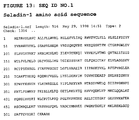
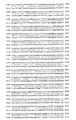
- the invention features an isolated nucleic acid molecule encoding a protein molecule whose amino acid sequence comprises the sequence shown in SEQ ID NO. 1 as well as the protein molecule according to SEQ ID NO.1.
- the protein molecule of SEQ ID NO. 1 is denoted "SELADIN-1".
- SELADIN-1 One function of SELADIN-1 is to protect cells against degeneration and cell death. In particular, cells of the nerve system, muscular system, prostate, stomach, testis, ovary, adrenal glands, mammary glands, liver, spleen, lung, trachea or placenta are protected against degeneration and/or cell death.
- the present invention also features functional variants of SELADIN-1 which might have a modification of the given primary structure of SELADIN-1, but whose essential biological function remains unaffected.
- "Variants" of a protein molecule shown in SEQ ID NO.1 include for example proteins with conservative amino acid substitutions .
- isoleucine, valine and leucine can each be substituted for one another. Aspartate and glutamate can be substituted for each other. Glutamine and asparagine can be substituted for each other. Serine and threonine can be substituted for each other. Amino acid substitutions in less conservative regions include e.g.: Isoleucine, valine and leucine can each be substituted for one another. Aspartate and glutamate can be substituted for each other. Glutamine and asparagine can be subsituted for each other. Serine and threonine can be substituted for each other. Glycine and alanine can be substituted for each other.
- Alanine and valine can be substituted for each other.
- Methionine can be substituted for each of leucine, isoleucine or valine, and vice versa.
- Lysine and arginine can be substituted for each other.
- One of aspartate and glutamate can be substituted for one of arginine or lysine, and vice versa.
- Histidine can be substituted for arginine or lysine, and vice versa.
- Glutamine and glutamate can be substituted for each other.
- Asparagine and aspartate can be substituted for each other.
- Other examples of protein modifications include glycosilation and further posttranslational modifications.
- the invention also features the nucleic acid molecules encoding such functional variants of the protein molecule of SEQ ID NO. 1.
- Nucleic acid molecules can be DNA molecules, such as genomic DNA molecules or cDNA molecules, or RNA molecules, such as mRNA molecules.
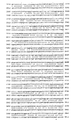
- said nucleic acid molecule can be a cDNA molecule comprising a nucleotide sequence of SEQ ID NO. 2.
- the invention also features an isolated D N A molecule capable of hybridizing with the complement of the cD N A described in SEQ ID NO. 2 under stringent conditions.
- Examples for stringent conditions include (i) 0.2xSSC (standard saline citrate) and 0.1 % SDS at 60 °C and (ii) 50 % formamide, 4xSSC, 50 mM HEPES, pH 7.0, 10x Denhardt's solution, 100 ⁇ g/ml thermally denatured salmon sperm DNA at 42 °C.
- the invention features a vector comprising a nucleic acid encoding a protein molecule shown in SEQ ID NO. 1. It also features a vector comprising a nucleic acid molecule encoding a protein molecule, the function of which is to protect cells against degeneration and/or cell death, wherein the amino acid sequence of the protein molecule comprises the sequence shown in SEQ ID NO. 1 or a functional variant thereof.
- a virus, a bacteriophage, or a plasmid comprises the described nucleic acid.
- a plasmid adapted for expression in a bacterial cell comprises said nucleic acid molecule, e.g.
- the invention features a plasmid adapted for expression in a yeast cell which comprises said nucleic acid molecule, e.g. a nucleic acid molecule encoding a protein molecule shown in SEQ ID NO. 1, and the regulatory elements necessary for expression of said molecule in the yeast cell.
- the invention features a plasmid adapted for expression in a mammalian cell which comprises a nucleic acid molecule, e.g. a nucleic acid molecule encoding a protein molecule shown in SEQ ID NO.1, and the regulatory elements necessary for expression of said molecule in the mammalian cell.
- the invention features a cell comprising a nucleic acid molecule encoding a protein molecule shown in SEQ ID NO. 1.
- the invention also features cells comprising a nucleic acid molecule encoding a protein molecule whose function is to protect cells against degeneration and/or cell death and whose amino acid sequence comprises the sequence shown in SEQ ID NO. 1 or a functional variant thereof. It also features cells comprising a D N A molecule capable of hybridizing with the complement of the c D N A described in SEQ ID NO. 2 under stringent conditions.
- said cell is a bacterial cell, a yeast cell, a mammalian cell, or a cell of an insect.
- the invention features a bacterial cell comprising a plasmid adapted for expression in a bacterial cell, said plasmid comprising a nucleic acid molecule which encodes a protein molecule shown in SEQ ID NO. 1, and the regulatory elements necessary for expression of said molecule in the bacterial cell.
- the invention also features a yeast cell comprising a plasmid adapted for expression in a yeast cell, said plasmid comprises a nucleic acid molecule encoding a protein molecule shown in SEQ ID NO. 1, and the regulatory elements necessary for expression of said molecule in the yeast cell.
- mammalian cell comprising a plasmid adapted for expression in a mammalian cell, said plasmid comprising a nucleic acid molecule which encodes a protein molecule shown in SEQ ID NO.1, and the regulatory elements necessary for expression of said molecule in the mammalian cell.
- the invention further features an antibody specifically immunoreactive with an immunogen, wherein said immunogen is shown in SEQ ID NO. 1 or wherein said immunogen is a protein molecule, the function of which is to protect cells against degeneration and/or cell death, wherein the amino acid sequence of the protein molecule comprises the sequence shown in SEQ ID NO. 1 or a functional variant thereof.
- the invention aims at an in-vitro method of detecting pathological cells in a subject which comprises immunocytochemically staining cells with the aforementioned antibody, wherein a low degree of staining in said cell compared to a reference cell representing a known health status indicates a pathological change of said cell.
- the invention is particularly suited to detect pathological structures in the brain of a subject - the detection method comprises immunocytochemically staining said pathological structures with said antibody. It is also especially suited to detect pathological cells of the muscular system, prostate, stomach, testis, ovary, adrenal glands, mammary glands, liver, spleen, lung, trachea or placenta.
- the invention features an in-vitro method of diagnosing or prognosing a disease, in particular a neurological disease, in a subject comprising:
- the invention features an in-vitro method of monitoring the progression of a disease, in particular a neurological disease, in a subject, comprising:
- the invention features an in-vitro method of evaluating a treatment for a disease, in particular a neurological disease, in a subject, said method comprising:
- the invention features a kit for diagnosis, or prognosis of a disease, said kit comprising:
- the kit may be used in monitoring success or failure of a therapeutic treatment of said subject. It can also be used in monitoring the progression of a disease.
- the function of said protein molecule or a functional variant thereof is to protect cells from degeneration and/or cell death.
- said D N A molecule capable of hybridizing with the complement of the c D N A described in SEQ ID NO. 2 encodes a protein molecule, the function of which is to protect cells against cell degeneration and/or cell death.
- said subjects suffer from Alzheimer's disease and related neurofibrillary disorders, or degenerative states, e.g. neurodegenerative states, characterized by cell degeneration or cell death.
- degenerative states e.g. neurodegenerative states, characterized by cell degeneration or cell death.
- neurological diseases are Parkinson's disease, Huntington disease, amyotrophic lateralsclerosis and Pick's disease.
- said sample is a brain tissue or other body cells including cells of the muscular system, prostate, stomach, testis, ovary, adrenal glands, mammary glands, liver, spleen, lung, trachea, or placenta.
- the sample might also be cerebrospinal fluid or another body fluid.
- a reduction in the level, or activity, or both said level and said activity of (i) a transcription product of a D N A molecule encoding a protein molecule, whose amino acid sequence comprises the sequence shown in SEQ ID NO.1 or a functional variant thereof or (ii) a protein molecule whose amino acid sequence comprises the sequence shown in SEQ ID NO. 1 or a functional variant thereof, in a sample from said subject relative to a reference value representing a known health status indicates the presence of a pathological status in said subject.
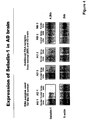
- a reduction in the level, or activity, or both said level and said activity of SELADIN-1 or SELADIN-1 transcripts in said subject's brain regions affected heavily by neurodegeneration relative to a reference value representing a known health status indicates a diagnosis or prognosis of Alzheimer's disease.
- said subject has previously been determined to have one or more factors indicating that such subject is afflicted with a disease under study, in particular a neurological disease.
- said subject can be a human, an experimental animal, e.g. a rat or a mouse, a domestic animal, or a non-human primate, e.g. a monkey.
- the experimental animal can be an animal model for a disorder, e.g. a transgenic mouse with an Alzheimer's-type neuropathology.
- At least one of said substances is detected using an immunoassay, an enzyme activity assay and/or a binding assay.
- measurement of the level of transcription products of the SELADIN-1 gene, or a functional variant thereof is performed in body cells using Northern blots with probes specific for the SELADIN-1 gene or said variant.
- Quantitative PCR with primer combinations to amplify SELADIN-1 gene-specific sequences from cDNA obtained by reverse transcription of RNA extracted from body cells of a subject can also be applied. These techniques are known to those of ordinary skill in the art (see e.g. Watson et al., Rekombin Of DNA, 2nd edition, Spektrum Akademischer Verlag GmbH, Heidelberg, 1993; Watson et al., Recombinant DNA, 2nd ed. W.H. Freeman and Company, 1992).
- said level or activity of the protein molecule shown in SEQ ID NO. 1, or a functional variant or fragment thereof is detected using an immunoassay.
- immunoassays can measure the amount of binding between said protein molecule and an anti-protein antibody, e.g. an anti-SELADIN-1 antibody, by the use of enzymatic, chromodynamic, radioactive, or luminescent labels which are attached to either the anti-protein antibody or a secondary antibody which binds the anti-protein antibody.
- an anti-protein antibody e.g. an anti-SELADIN-1 antibody
- Immunoassays which can be used include e.g. ELISAs, Western blots and other techniques known to those of ordinary skill in the art (see Harlow et al., Antibodies, A Laboratory Manual, Cold Spring Harbor Laboratory Press, Cold Spring Harbor, New York).
- the antibody or ligand to be used should preferably specifically detect SELADIN-1 or a functional variant or fragment thereof. It is preferred that it does not substantially interact with any other protein present in said sample.
- Monoclonal antibodies capable of recognizing a protein molecule of SEQ ID NO. 1 or a functional variant or fragment thereof can be prepared using methods known in the art (see e.g. Köhler and Milstein, Nature 256, 495 - 497 1975; Kozbor et al., Immunol. Today 4, 72, 1983; Cole et al., Monoclonal antibodies and cancer therapy, Alan R. Liss, Inc., pp 77 - 96, 1985; Marks et al., J. Biol. Chem., 16007 - 16010, 1992; the contents of which are incorporated herein by reference).
- Such monoclonal antibodies or fragments thereof can also be produced by alternative methods known to those of skill in the art of recombinant DNA technology (see e.g. Sastry et al, PNAS 86: 5728, 1989; ; Watson et al., Rekombin Of DNA, 2nd ed., Spektrum Akademischer Verlag GmbH, 1993; Watson et al, Recombinant DNA, 2nd ed., W. H. Freeman and Company, 1992; the contents of which are incorporated herein by reference).
- Monoclonal antibodies useful in the methods of the invention are directed to an epitope of SELADIN-1 or a functional variant or fragment thereof, such that the complex formed between the antibody and SELADIN-1, or between the antibody and said functional variant or fragment, can be recognized in detection assays.
- antibodies encompasses all forms of antibodies known in the art, such as polyclonal, monoclonal, chimeric, recombinatorial, single chain antibodies as well as fragments thereof which specifically bind to SELADIN-1, or to a functional variant or fragment thereof.
- Antibodies or ligands might also be used in detecting specifically molecules mentioned in the above described methods and kit under g) and h) above.
- luminescent labels are used in any detection assay, it is preferred to use a confocal optical set-up.
- said reference value is that of a level, or an activity, or both said level and said activity, of at least one substance which is selected from the group consisting of (a) to (h) described above in a sample from a subject not suffering of the disease under study, in particular a neurological disease such as Alzheimer's disease.
- the healthy subject can be of the same weight, age, and gender as the subject who is being diagnosed or prognosed for said disease. In some cases, it might be preferred to use a reference value from the subject which is diagnosed.
- the level, or the activity, or both said level and said activity, of at least one of said substances (a) to (h) described above in a sample is determined at least twice, e.g. at two points which are weeks or months apart. The levels or activities at these two time points are compared in order to monitor the progression of said disease. It might be preferred to take a series of samples over a period of time. In further preferred embodiments, said subject receives a treatment prior to one or more of said sample gatherings.
- the invention can be employed in a method of treating or preventing a disease, in particular a neurological disease, in a subject comprising administering to said subject in a therapeutically effective amount an agent or agents which affect a level, or an activity, or both said level and said activity, of at least one substance which is selected from the group consisting of
- the function of said protein molecule or a functional variant thereof is to protect cells from degeneration and/or cell death.
- said D N A molecule capable of hybridizing with the complement of the c D N A described in SEQ ID NO. 2 encodes a protein molecule, the function of which is to protect cells against cell degeneration and/or cell death.
- said subjects suffer from Alzheimer's disease and related neurofibrillary disorders, or degenerative states, such as neurodegenerative states, characterized by cell degeneration or cell death.
- degenerative states such as neurodegenerative states, characterized by cell degeneration or cell death.
- neurological diseases are Parkinson's disease, Huntington disease, amyotrophic lateralsclerosis and Pick's disease.
- the method comprises the application of per se known methods of gene therapy nucleic acid technology to administer said agent or said agents.
- gene therapy includes several approaches: molecular replacement of a mutated gene, addition of a new gene resulting in the synthesis of a therapeutic protein, and modulation of endogeneous cellular gene expression by recombinant expression methods or by drugs.
- Gene-transfer techniques are described in detail (see e.g. Behr, Acc. Chem. Res.
- the method comprises grafting donor cells into the central nervous system, preferably the brain, of said subject, said subject or donor cells preferably treated so as to minimize or reduce graft rejection, wherein said donor cells are genetically modified by insertion of at least one transgene encoding said agent or agents.
- Said transgene might be carried by a viral vector, in particular a retroviral vector.
- the transgene can be inserted into the donor cells by a nonviral physical transfection of DNA encoding a transgene, in particular by microinjection. Insertion of the transgene can also be performed by electroporation, chemically mediated transfection, in particular calcium phospate transfection, liposomal mediated transfection, etc.
- said agent is a therapeutic protein which can be administered to said subject, preferably a human, by a process comprising introducing subject cells into said subject, said subject cells having been treated in vitro to insert a DNA segment encoding said therapeutic protein, said subject cells expressing in vivo in said subject a therapeutically effective amount of said therapeutic protein.
- Said DNA segment can be inserted into said cells in vitro by a viral vector, in particular a retroviral vector.
- the therapeutic nucleic acid or protein reduces or prevents the degeneration of cells, in particular neurons and slows brain amyloid formation.
- the invention features a method for identifying an agent that affects an activity, or level, or both said activity or level, of at least one substance which is selected from the group consisting of
- the function of said protein molecule or a variant thereof is to protect cells from degeneration and/or cell death.
- said D N A molecule capable of hybridizing with the complement of the c D N A described in SEQ ID NO. 2 encodes a protein molecule, whose function is to protect cells against degeneration and/or cell death.
- SELADIN-1 that has homologies to FAD-dependent oxido-reductases has been identified. It has been shown that it was down-regulated in selectively vulnerable regions of AD brain. In situ hybridization of AD brain sections demonstrated that the reduced mRNA levels are not only due to neuronal loss in affected areas but also reflects reduced mRNA expression of the remaining neurons. Expression of SELADIN-1 in H4 cells conferred resistance to apoptosis by oxidative stress, yet after execution of apoptosis SELADIN-1 is cleaved at putative caspase cleavage sites and therefore is presumably inactivated.
- SELADIN-1 is an integral component of the cellular machinery protecting cells, in particular neurons, from oxidative stress. Once oxidative stress becomes overwhelming, SELADIN-1 becomes a target for caspase action in the course of apoptosis. SELADIN-1 is a good candidate gene for therapeutical intervention to protect cells against degeneration and cell death. It is in particular, a good candidate gene for therapeutical intervention to protect neurons from A ⁇ induced cytotoxicity.
- RNA from post-mortem brain tissues was prepared by using the RNeasy kit (Qiagen). The RNA preparations were treated with DNase I (Boehringer Mannheim) together with RNAsin (Promega) for 30 minutes, followed by phenol extraction, and ethanol precipitation. 0.2 mg of each RNA preparation were transcribed to cDNA by using Expand Reverse Transcriptase (Boehringer Mannheim) with one base ancor primers HT 11 A, HT 11 C and HT 11 G.
- DNase I Boehringer Mannheim
- RNAsin Promega
- the cDNAs were amplified by using HT 11 A along with the random primers HAP-5 (5'-TGCCGAAGCTTGGAGCTT-3') and HAP3-T (5'TGCCGAAGCTTTGGTCAT-3').
- Taq-polymerase AmpliTaq, Perkin Elmer Corp.
- dGTP, dCTP, and dTTP (Amersham Pharmacia Biotech)
- ⁇ 35 S)-dATP NPN life science products
- the PCR products were separated on 6% polyacrylamide-urea sequencing gels that were dried subsequently on 3 mm filter paper (Whatman), and X-ray films (Dupont) were exposed for 12 hours.
- Differential bands were excised from the gel, boiled in water for 10 minutes, centrifuged, and cDNAs were precipitated from the supernatant fluids by using ethanol and glycogen/sodiumacetate, followed by dialysis against 10% glycerol for 1 hour through 0.025 mm filters (type VS, Millipore).
- the dialysates were used as templates for the reamplification reactions that were done under identical conditions as in the differential display PCR, with the exception of the initial cycle for nonspecific annealing.
- PCR products were separated by agarose gelelectrophoresis, purified from the gel with the QIAEXII Agarose Gel Extraction Kit (Qiagen), and cloned into the Hind III restriction site of pBluescript KS (Stratagene). Cloned cDNA fragments were sequenced with an ABI 377 DNA sequencer (Perkin Elmer Corp.) by using T3 and T7 primers.
- a SELADIN-1 cDNA fragment was amplified by using cDNA transcribed from human brain tissue by using RNA High Fidelity Taq-polymerase (Boehringer Mannheim) and SELADIN-1 -specific primers for a PCR reaction with 40 cycles of annealing of 70 °C for 1 minute, and polymerization at 72 °C for 3 minutes.
- the PCR products were separated by agarose gel electrophoresis, purified, and cloned into the Sma I restriction site of pBluescript KS (Stratagene). The cloned PCR product was sequenced, and restriction were used as a probe both for screening a human brain cDNA library and for probing Northern blots.
- RNA from post-mortem human brains were prepared by using the Trizol reagent (Gibco BRL, Life Technologies), following the manufacturer's instructions. 5 - 10 mg of RNA were separated in 1 % formaldehyde-containing agarose gels, and the RNA was blotted onto nylon membranes (Hybond-N + , Amersham). Membranes were hybridized with ( ⁇ - 32 P)-dCTP (NEN) labeled SELADIN-1-specific cDNA probes that were generated by using the Megaprime DNA labelling kit (Amersham). Membranes were washed under high stringency conditions, and X-ray films were exposed for 1 to 72 hours.
- RNA was probed with a 700 pb cDNA fragment of human glycerolaldehyd-3-phosphate dehydrogenase ( GAPDH ), or with a b-actin cDNA fragment (Clontech).
- GAPDH human glycerolaldehyd-3-phosphate dehydrogenase
- SELADIN -1-specific cDNA probes of 650bp and of 900bp representing the initial two parts of the open reading frame were cloned in pBluescript (Stratagene) and reversely transcribed in the presence of 35 S-CTP by using the Ambion transcription kit.
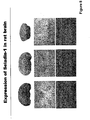
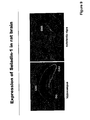
- In situ hybridization was done with, 14mm sections of adult rat brain cut on a cryomicrotome, mounted on aminoalkylsilane-treated slides and fixed in 4 % paraformaldehyde in PBS for 5 min at room temperature. After washing for 5 min in PBS, sections were acetylated for 10 min, passed through a series of increasing ethanol grades and air dried.
- Prehybridizations were done in 50 % deionized formamide, 25 mM EDTA, 25 mM Pipes, pH 6.8, 0.75 M NaCl, 0.2 % SDS, 5 x Denhardt's, 10 mM DTT, 250 mg/ml denatured herring sperm DNA and 250 mg/ml yeast tRNA.
- Hybridization of slides with RNA sense and antisense probes diluted to 2000 - 5000 cpm/ml in the same buffer with additional 10 % dextransulphate was performed at 50 °C for 12 hours. Slides were then washed four times in 4 x SCC for 5 min. each, followed by an incubation for 30 min.
- RNAseA in 0.5 M NaCl, 10 mM Tris-HCL, pH 7.5, 1 mM EDTA and another 30 min without RNAseA. Then slides were washed twice for 15 min. at 50 °C in 2 x SCC and dried through graded ethanols. Slides were exposed to Kodak Biomax x-ray films for 15 days and subsequently dipped in Kodak NTB-3 nuclear track emulsion and exposed for 6 weeks. After developing in Kodak D19 and fixing in Kodak Unifix, slides were counterstained with Mayer" Hemalaun and coversplipped.
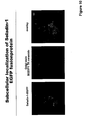
- SELADIN-1 The complete coding region of SELADIN-1 was subcloned into the N-terminus of the pEGFP-N1-expression vector (Clontech).
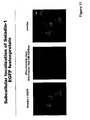
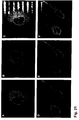
- Cos-7-cells were transfected with EGFP or with SELADIN-1-EGFP by using the SuperFect transfection reagent from Qiagen according to the manufacturers instructions. Cells were cultured in 3 cm dishes for two days. Part of the cells were stained for the Golgi-apparatus with 0.25 mM BODIPY TR ceramide (molecular probes) for one hour, the other part was treated with 250 nM of the mitochondrial stain Mito Tracker Red CM-H2Xros (Molecular probes) for 45 min. the subcellular localization of the SELADIN-1-EGFP fusion protein was analyzed by confocal laser scanning microscopy using the appropriate filter sets.
Landscapes
- Health & Medical Sciences (AREA)
- Life Sciences & Earth Sciences (AREA)
- Engineering & Computer Science (AREA)
- Chemical & Material Sciences (AREA)
- Biomedical Technology (AREA)
- General Health & Medical Sciences (AREA)
- Medicinal Chemistry (AREA)
- Organic Chemistry (AREA)
- Neurology (AREA)
- Bioinformatics & Cheminformatics (AREA)
- Veterinary Medicine (AREA)
- Animal Behavior & Ethology (AREA)
- Chemical Kinetics & Catalysis (AREA)
- Public Health (AREA)
- General Chemical & Material Sciences (AREA)
- Pharmacology & Pharmacy (AREA)
- Nuclear Medicine, Radiotherapy & Molecular Imaging (AREA)
- Neurosurgery (AREA)
- Molecular Biology (AREA)
- Biochemistry (AREA)
- Urology & Nephrology (AREA)
- Immunology (AREA)
- Hematology (AREA)
- Proteomics, Peptides & Aminoacids (AREA)
- Biotechnology (AREA)
- Food Science & Technology (AREA)
- Genetics & Genomics (AREA)
- Biophysics (AREA)
- Microbiology (AREA)
- Gastroenterology & Hepatology (AREA)
- Zoology (AREA)
- Toxicology (AREA)
- Physics & Mathematics (AREA)
- Analytical Chemistry (AREA)
- Psychology (AREA)
- General Physics & Mathematics (AREA)
- Pathology (AREA)
- Cell Biology (AREA)
- Pulmonology (AREA)
- Hospice & Palliative Care (AREA)
Claims (30)
- Isolierte Nucleinsäure, die ein Proteinmolekül codiert, das in SEQ ID Nr. 1 gezeigt ist.
- Isoliertes Nucleinsäuremolekül, das ein Proteinmolekül codiert, dessen Funktion darin besteht, Zellen vor Degeneration und/oder Zelltod zu schützen, wobei die Aminosäuresequenz des Proteinmoleküls die in SEQ ID Nr. 1 gezeigte Sequenz oder eine funktionelle Variante davon umfasst.
- Isoliertes Nucleinsäuremolekül gemäß Anspruch 1 oder 2, wobei das Nucleinsäuremolekül ein DNA-Molekül ist.
- Isoliertes Nucleinsäuremolekül gemäß Anspruch 3, wobei das Nucleinsäuremolekül ein cDNA-Molekül ist.
- Isoliertes DNA-Molekül, das ein Proteinmolekül, dessen Funktion darin besteht, Zellen vor Degeneration und/oder Zelltod zu schützen, codiert und das unter stringenten Bedingungen mit dem Komplement der in SEQ ID Nr. 2 beschriebenen cDNA hybridisieren kann.
- Isoliertes Nucleinsäuremolekül gemäß Anspruch 2 oder 5, das ein Proteinmolekül codiert, dessen Funktion darin besteht, Zellen des Nervensystems, der Muskulatur, der Prostata, des Magens, der Hoden, der Eierstöcke, der Nebennieren, der Brustdrüsen, der Leber, der Milz, der Lunge, der Luftröhre oder der Plazenta vor Degeneration und/oder Zelltod zu schützen.
- Vektor, der ein Nucleinsäuremolekül gemäß einem der Ansprüche 1 bis 6 umfasst.
- Vektor gemäß Anspruch 7, wobei der Vektor ein Plasmid, ein Virus oder ein Bakteriophage ist.
- Plasmid gemäß Anspruch 8, wobei das Plasmid für die Expression in einer Hefezelle geeignet ist und weiterhin die für eine Expression des Nucleinsäuremoleküls notwendigen regulatorischen Elemente umfasst.
- Plasmid gemäß Anspruch 8, wobei das Plasmid für die Expression in einer Bakterienzelle geeignet ist und weiterhin die für eine Expression des Nucleinsäuremoleküls notwendigen regulatorischen Elemente umfasst.
- Plasmid gemäß Anspruch 8, wobei das Plasmid für die Expression in einer Säugerzelle geeignet ist und weiterhin die für eine Expression des Nucleinsäuremoleküls notwendigen regulatorischen Elemente umfasst.
- Zelle, die mit einem Nucleinsäuremolekül gemäß einem der Ansprüche 1 bis 6 transformiert ist.
- Zelle gemäß Anspruch 12, wobei die Zelle eine Bakterienzelle, eine Hefezelle, eine Säugerzelle oder eine Insektenzelle ist.
- Proteinmolekül, das in SEQ ID Nr. 1 gezeigt ist.
- Proteinmolekül, dessen Funktion darin besteht, Zellen vor Degeneration und/oder Zelltod zu schützen, wobei die Aminosäuresequenz des Proteinmoleküls die in SEQ ID Nr. 1 gezeigte Sequenz oder eine funktionelle Variante davon umfasst.
- Proteinmolekül gemäß Anspruch 14, dessen Funktion darin besteht, Zellen des Nervensystems, der Muskulatur, der Prostata, des Magens, der Hoden, der Eierstöcke, der Nebennieren, der Brustdrüsen, der Leber und der Milz vor Degeneration und/oder Zelltod zu schützen.
- Antikörper, der gegenüber einem Immunogen spezifisch immunreaktiv ist, wobei das Immunogen ein in SEQ ID Nr. 1 gezeigtes Proteinmolekül ist.
- Antikörper, der gegenüber einem Proteinmolekül spezifisch immunreaktiv ist, dessen Funktion darin besteht, Zellen vor Degeneration und/oder Zelltod zu schützen, wobei die Aminosäuresequenz des Proteinmoleküls die in SEQ ID Nr. 1 gezeigte Sequenz oder eine funktionelle Variante davon umfasst.
- In-vitro-Verfahren zum Nachweisen von pathologischen Zellen bei einem Patienten, das das immunocytochemische Anfärben von Zellen mit einem Antikörper gemäß Anspruch 17 oder 18 umfasst, wobei ein geringes Ausmaß der Anfärbung bei der Zelle im Vergleich zu einer Zelle, die einen bekannten Gesundheitszustand darstellt, auf eine pathologische Veränderung der Zellen hinweist.
- Verfahren gemäß Anspruch 19, wobei Zellen des Nervensystems, der Muskulatur, der Prostata, des Magens, der Hoden, der Eierstöcke, der Nebennieren, der Brustdrüsen, der Leber, der Milz, der Lunge, der Luftröhre oder der Plazenta verwendet werden.
- In-vitro-Verfahren zum Diagnostizieren oder Prognostizieren einer Krankheit bei einem Patienten, wobei das Verfahren Folgendes umfasst:Bestimmen einer Konzentration oder einer Aktivität oder sowohl einer Konzentration als auch einer Aktivität wenigstens einer Substanz, die aus der Gruppe ausgewählt ist, die aus den folgenden besteht:(a) einem DNA-Molekül, das ein Proteinmolekül codiert, dessen Funktion darin besteht, Zellen vor Degeneration und/oder Zelltod zu schützen, wobei die Aminosäuresequenz des Proteinmoleküls die in SEQ ID Nr. 1 gezeigte Sequenz oder eine funktionelle Variante davon umfasst;(b) einem Transcriptionsprodukt eines DNA-Moleküls, das ein Proteinmolekül codiert, dessen Funktion darin besteht, Zellen vor Degeneration und/oder Zelltod zu schützen, wobei die Aminosäuresequenz des Proteinmoleküls die in SEQ ID Nr. 1 gezeigte Sequenz oder eine funktionelle Variante davon umfasst;(c) einem Proteinmolekül, dessen Funktion darin besteht, Zellen vor Degeneration und/oder Zelltod zu schützen, wobei die Aminosäuresequenz des Proteinmoleküls die in SEQ ID Nr. 1 gezeigte Sequenz oder eine funktionelle Variante davon umfasst;(d) einem DNA-Molekül, das ein Proteinmolekül, dessen Funktion darin besteht, Zellen vor Degeneration und/oder Zelltod zu schützen, codiert und das unter stringenten Bedingungen mit dem Komplement der in SEQ ID Nr. 2 beschriebenen cDNA hybridisieren kann;(e) einem Transcriptionsprodukt eines DNA-Moleküls, das ein Proteinmolekül, dessen Funktion darin besteht, Zellen vor Degeneration und/oder Zelltod zu schützen, codiert und das unter stringenten Bedingungen mit dem Komplement der in SEQ ID Nr. 2 beschriebenen cDNA hybridisieren kann;(f) einem Translationsprodukt eines DNA-Moleküls, das ein Proteinmolekül, dessen Funktion darin besteht, Zellen vor Degeneration und/oder Zelltod zu schützen, codiert und das unter stringenten Bedingungen mit dem Komplement der in SEQ ID Nr. 2 beschriebenen cDNA hybridisieren kann; und
Vergleichen der Konzentration oder der Aktivität oder sowohl der Konzentration als auch der Aktivität von wenigstens einer der Substanzen (a) bis (f) mit einem Referenzwert, der einen bekannten Krankheits- oder Gesundheitszustand darstellt, wodurch die Krankheit bei dem Patienten diagnostiziert oder prognostiziert wird. - In-vitro-Verfahren zur Überwachung des Fortschritts einer Krankheit bei einem Patienten, wobei das Verfahren Folgendes umfasst:Bestimmen einer Konzentration oder einer Aktivität oder sowohl einer Konzentration als auch einer Aktivität wenigstens einer Substanz, die aus der Gruppe ausgewählt ist, die aus den folgenden besteht:(a) einem DNA-Molekül, das ein Proteinmolekül codiert, dessen Funktion darin besteht, Zellen vor Degeneration und/oder Zelltod zu schützen, wobei die Aminosäuresequenz des Proteinmoleküls die in SEQ ID Nr. 1 gezeigte Sequenz oder eine funktionelle Variante davon umfasst;(b) einem Transcriptionsprodukt eines DNA-Moleküls, das ein Proteinmolekül codiert, dessen Funktion darin besteht, Zellen vor Degeneration und/oder Zelltod zu schützen, wobei die Aminosäuresequenz des Proteinmoleküls die in SEQ ID Nr. 1 gezeigte Sequenz oder eine funktionelle Variante davon umfasst;(c) einem Proteinmolekül, dessen Funktion darin besteht, Zellen vor Degeneration und/oder Zelltod zu schützen, wobei die Aminosäuresequenz des Proteinmoleküls die in SEQ ID Nr. 1 gezeigte Sequenz oder eine funktionelle Variante davon umfasst;(d) einem DNA-Molekül, das ein Proteinmolekül, dessen Funktion darin besteht, Zellen vor Degeneration und/oder Zelltod zu schützen, codiert und das unter stringenten Bedingungen mit dem Komplement der in SEQ ID Nr. 2 beschriebenen cDNA hybridisieren kann;(e) einem Transcriptionsprodukt eines DNA-Moleküls, das ein Proteinmolekül, dessen Funktion darin besteht, Zellen vor Degeneration und/oder Zelltod zu schützen, codiert und das unter stringenten Bedingungen mit dem Komplement der in SEQ ID Nr. 2 beschriebenen cDNA hybridisieren kann;(f) einem Translationsprodukt eines DNA-Moleküls, das ein Proteinmolekül, dessen Funktion darin besteht, Zellen vor Degeneration und/oder Zelltod zu schützen, codiert und das unter stringenten Bedingungen mit dem Komplement der in SEQ ID Nr. 2 beschriebenen cDNA hybridisieren kann; und
Vergleichen der Konzentration oder der Aktivität oder sowohl der Konzentration als auch der Aktivität von wenigstens einer der Substanzen (a) bis (f) mit einem Referenzwert, der einen bekannten Krankheits- oder Gesundheitszustand darstellt, wodurch der Fortschritt der Krankheit bei dem Patienten überwacht wird. - In-vitro-Verfahren zur Bewertung einer Behandlung einer Krankheit bei einem Patienten, wobei das Verfahren Folgendes umfasst:Bestimmen einer Konzentration oder einer Aktivität oder sowohl einer Konzentration als auch einer Aktivität wenigstens einer Substanz, die aus der Gruppe ausgewählt ist, die aus den folgenden besteht:(a) einem DNA-Molekül, das ein Proteinmolekül codiert, dessen Funktion darin besteht, Zellen vor Degeneration und/oder Zelltod zu schützen, wobei die Aminosäuresequenz des Proteinmoleküls die in SEQ ID Nr. 1 gezeigte Sequenz oder eine funktionelle Variante davon umfasst;(b) einem Transcriptionsprodukt eines DNA-Moleküls, das ein Proteinmolekül codiert, dessen Funktion darin besteht, Zellen vor Degeneration und/oder Zelltod zu schützen, wobei die Aminosäuresequenz des Proteinmoleküls die in SEQ ID Nr. 1 gezeigte Sequenz oder eine funktionelle Variante davon umfasst;(c) einem Proteinmolekül, dessen Funktion darin besteht, Zellen vor Degeneration und/oder Zelltod zu schützen, wobei die Aminosäuresequenz des Proteinmoleküls die in SEQ ID Nr. 1 gezeigte Sequenz oder eine funktionelle Variante davon umfasst;(d) einem DNA-Molekül, das ein Proteinmolekül, dessen Funktion darin besteht, Zellen vor Degeneration und/oder Zelltod zu schützen, codiert und das unter stringenten Bedingungen mit dem Komplement der in SEQ ID Nr. 2 beschriebenen cDNA hybridisieren kann;(e) einem Transcriptionsprodukt eines DNA-Moleküls, das ein Proteinmolekül, dessen Funktion darin besteht, Zellen vor Degeneration und/oder Zelltod zu schützen, codiert und das unter stringenten Bedingungen mit dem Komplement der in SEQ ID Nr. 2 beschriebenen cDNA hybridisieren kann;(f) einem Translationsprodukt eines DNA-Moleküls, das ein Proteinmolekül, dessen Funktion darin besteht, Zellen vor Degeneration und/oder Zelltod zu schützen, codiert und das unter stringenten Bedingungen mit dem Komplement der in SEQ ID Nr. 2 beschriebenen cDNA hybridisieren kann; und
Vergleichen der Konzentration oder der Aktivität oder sowohl der Konzentration als auch der Aktivität von wenigstens einer der Substanzen (a) bis (f) mit einem Referenzwert, der einen bekannten Krankheits- oder Gesundheitszustand darstellt, wodurch die Behandlung der Krankheit bei dem Patienten bewertet wird. - Verfahren gemäß einem der Ansprüche 21 bis 23, wobei eine Abnahme der Konzentration oder der Aktivität von (i) einem Transcriptionsprodukt eines DNA-Moleküls, das ein Proteinmolekül codiert, dessen Aminosäuresequenz die in SEQ ID Nr. 1 gezeigte Sequenz oder eine funktionelle Variante davon umfasst, oder (ii) einem Proteinmolekül, dessen Aminosäuresequenz die in SEQ ID Nr. 1 gezeigte Sequenz oder eine funktionelle Variante davon umfasst, in einer Probe von dem Patienten relativ zu einem Referenzwert, der einen bekannten Gesundheitszustand darstellt, das Vorhandensein einer Krankheit bei dem Patienten anzeigt.
- Verfahren gemäß den Ansprüchen 21 bis 24, wobei die Krankheit eine neurologische Krankheit ist.
- Verfahren gemäß einem der Ansprüche 21 bis 25, wobei der Patient an der Alzheimer-Krankheit oder verwandten neurofibrillären Störungen oder an neurodegenerativen Zuständen, die durch Zelldegeneration oder Zelltod gekennzeichnet sind, oder an der Parkinson-Krankheit oder Chorea Huntington oder amyotropher lateraler Sklerose oder der Niemann-Pick-Krankheit leidet.
- Verfahren zum Identifizieren eines Mittels, das eine Aktivität oder eine Konzentration oder sowohl eine Aktivität als auch eine Konzentration wenigstens einer Substanz beeinflusst, die aus der Gruppe ausgewählt ist, die aus den folgenden besteht:(a) einem DNA-Molekül, das ein Proteinmolekül codiert, wobei die Aminosäuresequenz des Proteinmoleküls die in SEQ ID Nr. 1 gezeigte Sequenz oder eine funktionelle Variante davon umfasst;(b) einem Transcriptionsprodukt eines DNA-Moleküls, das ein Proteinmolekül codiert, wobei die Aminosäuresequenz des Proteinmoleküls die in SEQ ID Nr. 1 gezeigte Sequenz oder eine funktionelle Variante davon umfasst;(c) einem Proteinmolekül, wobei die Aminosäuresequenz des Proteinmoleküls die in SEQ ID Nr. 1 gezeigte Sequenz oder eine funktionelle Variante davon umfasst;(d) einem DNA-Molekül, das unter stringenten Bedingungen mit dem Komplement der in SEQ ID Nr. 2 beschriebenen cDNA hybridisieren kann;(e) einem Transcriptionsprodukt eines DNA-Moleküls, das unter stringenten Bedingungen mit dem Komplement der in SEQ ID Nr. 2 beschriebenen cDNA hybridisieren kann;(f) einem Translationsprodukt eines DNA-Moleküls, das unter stringenten Bedingungen mit dem Komplement der in SEQ ID Nr. 2 beschriebenen cDNA hybridisieren kann;
wobei das Verfahren die folgenden Schritte umfasst:(i) Bereitstellen einer Probe, die wenigstens eine Substanz enthält, die aus der Gruppe ausgewählt ist, die aus (a) bis (f) besteht;(ii) In-Kontakt-Bringen der Probe mit wenigstens einem Reagens;(iii) Vergleichen der Aktivität oder der Konzentration oder sowohl der Aktivität als auch der Konzentration wenigstens einer der Substanzen vor und nach dem In-Kontakt-Bringen. - Verfahren gemäß Anspruch 27, wobei die Funktion des Proteinmoleküls oder seiner Variante darin besteht, Zellen vor Degeneration und/oder Zelltod zu schützen.
- Verfahren gemäß Anspruch 27 oder 28, wobei das DNA-Molekül, das mit dem Komplement der in SEQ ID Nr. 2 beschriebenen cDNA hybridisieren kann, ein Proteinmolekül codiert, dessen Funktion darin besteht, Zellen vor Degeneration und/oder Zelltod zu schützen.
- Kit für die Diagnose oder Prognose einer Krankheit, wobei der Kit Folgendes umfasst:(1) wenigstens ein Reagens, das aus der Gruppe ausgewählt ist, die aus Reagentien besteht, die selektiv Folgendes nachweisen:(a) ein DNA-Molekül, das ein Proteinmolekül codiert, wobei die Aminosäuresequenz des Proteinmoleküls die in SEQ ID Nr. 1 gezeigte Sequenz oder eine funktionelle Variante davon umfasst;(b) ein Transcriptionsprodukt eines DNA-Moleküls, das ein Proteinmolekül codiert, wobei die Aminosäuresequenz des Proteinmoleküls die in SEQ ID Nr. 1 gezeigte Sequenz oder eine funktionelle Variante davon umfasst;(c) ein Proteinmolekül, wobei die Aminosäuresequenz des Proteinmoleküls die in SEQ ID Nr. 1 gezeigte Sequenz oder eine funktionelle Variante davon umfasst;(d) ein DNA-Molekül, das unter stringenten Bedingungen mit dem Komplement der in SEQ ID Nr. 2 beschriebenen cDNA hybridisieren kann;(e) ein Transcriptionsprodukt eines DNA-Moleküls, das unter stringenten Bedingungen mit dem Komplement der in SEQ ID Nr. 2 beschriebenen cDNA hybridisieren kann;(f) ein Translationsprodukt eines DNA-Moleküls, das unter stringenten Bedingungen mit dem Komplement der in SEQ ID Nr. 2 beschriebenen cDNA hybridisieren kann;(2) Anweisungen zum Diagnostizieren oder Prognostizieren der Krankheit durch:(i) Bestimmen einer Konzentration oder einer Aktivität oder sowohl einer Konzentration als auch einer Aktivität wenigstens einer Substanz, die aus der Gruppe ausgewählt ist, die aus (a) bis (f) besteht, in einer Probe von dem Patienten; und(ii) Diagnostizieren oder Prognostizieren der Krankheit, wobei eine veränderte Konzentration oder eine veränderte Aktivität oder sowohl eine veränderte Konzentration als auch eine veränderte Aktivität wenigstens einer Substanz, die aus der Gruppe ausgewählt ist, die aus (a) bis (f) besteht, im Vergleich zu einem Referenzwert, der einen bekannten Gesundheitszustand darstellt, oder eine Konzentration oder Aktivität oder sowohl eine Konzentration als auch eine Aktivität wenigstens einer Substanz, die aus der Gruppe ausgewählt ist, die aus (a) bis (f) besteht, welche ähnlich oder gleich einem Referenzwert ist, der einen bekannten Krankheitszustand darstellt, auf eine Diagnose oder Prognose der Krankheit hinweist.
Priority Applications (1)
| Application Number | Priority Date | Filing Date | Title |
|---|---|---|---|
| EP99960975A EP1129191B1 (de) | 1998-11-12 | 1999-11-12 | Verfahren zur diagnose und behandlung neurologischer erkrankungen |
Applications Claiming Priority (4)
| Application Number | Priority Date | Filing Date | Title |
|---|---|---|---|
| EP98121478A EP1002862A1 (de) | 1998-11-12 | 1998-11-12 | Verfahren zur Diagnose oder Behandlung neurologischer Krankheiten |
| EP98121478 | 1998-11-12 | ||
| PCT/EP1999/008744 WO2000029569A1 (en) | 1998-11-12 | 1999-11-12 | Methods of diagnosing or treating neurological diseases |
| EP99960975A EP1129191B1 (de) | 1998-11-12 | 1999-11-12 | Verfahren zur diagnose und behandlung neurologischer erkrankungen |
Publications (2)
| Publication Number | Publication Date |
|---|---|
| EP1129191A1 EP1129191A1 (de) | 2001-09-05 |
| EP1129191B1 true EP1129191B1 (de) | 2006-03-22 |
Family
ID=8232965
Family Applications (2)
| Application Number | Title | Priority Date | Filing Date |
|---|---|---|---|
| EP98121478A Withdrawn EP1002862A1 (de) | 1998-11-12 | 1998-11-12 | Verfahren zur Diagnose oder Behandlung neurologischer Krankheiten |
| EP99960975A Expired - Lifetime EP1129191B1 (de) | 1998-11-12 | 1999-11-12 | Verfahren zur diagnose und behandlung neurologischer erkrankungen |
Family Applications Before (1)
| Application Number | Title | Priority Date | Filing Date |
|---|---|---|---|
| EP98121478A Withdrawn EP1002862A1 (de) | 1998-11-12 | 1998-11-12 | Verfahren zur Diagnose oder Behandlung neurologischer Krankheiten |
Country Status (8)
| Country | Link |
|---|---|
| US (2) | US20050239169A1 (de) |
| EP (2) | EP1002862A1 (de) |
| JP (1) | JP4663121B2 (de) |
| AT (1) | ATE321135T1 (de) |
| DE (1) | DE69930545T2 (de) |
| DK (1) | DK1129191T3 (de) |
| ES (1) | ES2262352T3 (de) |
| WO (1) | WO2000029569A1 (de) |
Families Citing this family (7)
| Publication number | Priority date | Publication date | Assignee | Title |
|---|---|---|---|---|
| JP2002525081A (ja) * | 1998-08-27 | 2002-08-13 | クォーク・バイオテク・インコーポレーテッド | 低酸素により調節される遺伝子転写に特徴的な配列 |
| WO2002044419A2 (en) * | 2000-11-28 | 2002-06-06 | Wyeth | Expression analysis of kiaa nucleic acids and polypeptides useful in the diagnosis and treatment of prostate cancer |
| EP1398378A4 (de) * | 2001-05-31 | 2005-03-30 | Chiba Prefecture | In neuroblastom isolierte nukleinsäuren |
| EP1410013A4 (de) | 2001-06-21 | 2006-02-01 | Millennium Pharm Inc | Zusammensetzungen, kits und verfahren zur identifizerung, beurteilung, vorbeugung und therapie von brust- und eierstockkrebs |
| WO2003100092A2 (en) * | 2002-05-28 | 2003-12-04 | Evotec Neurosciences Gmbh | Diagnostic and therapeutic use of cyp11a1 for neurodegenerative diseases |
| GEP20115195B (en) | 2004-07-30 | 2011-04-11 | Rinat Neuroscience Corp | Antibodies directed against amyloid-beta peptide and use thereof |
| PE20061323A1 (es) | 2005-04-29 | 2007-02-09 | Rinat Neuroscience Corp | Anticuerpos dirigidos contra el peptido amiloide beta y metodos que utilizan los mismos |
Family Cites Families (2)
| Publication number | Priority date | Publication date | Assignee | Title |
|---|---|---|---|---|
| EP0814157A3 (de) * | 1996-06-18 | 1998-01-07 | Smithkline Beecham Corporation | Diagnostischer Masker für Varianten von Presenilin Genen, verbunden mit alzheimerischen Krankheit und familiären erwachsenen Einsetzens alzheimerischen Krankheit |
| JP2002525081A (ja) * | 1998-08-27 | 2002-08-13 | クォーク・バイオテク・インコーポレーテッド | 低酸素により調節される遺伝子転写に特徴的な配列 |
-
1998
- 1998-11-12 EP EP98121478A patent/EP1002862A1/de not_active Withdrawn
-
1999
- 1999-11-12 JP JP2000582553A patent/JP4663121B2/ja not_active Expired - Lifetime
- 1999-11-12 DE DE69930545T patent/DE69930545T2/de not_active Expired - Lifetime
- 1999-11-12 ES ES99960975T patent/ES2262352T3/es not_active Expired - Lifetime
- 1999-11-12 WO PCT/EP1999/008744 patent/WO2000029569A1/en not_active Ceased
- 1999-11-12 EP EP99960975A patent/EP1129191B1/de not_active Expired - Lifetime
- 1999-11-12 AT AT99960975T patent/ATE321135T1/de active
- 1999-11-12 DK DK99960975T patent/DK1129191T3/da active
-
2004
- 2004-08-04 US US10/910,772 patent/US20050239169A1/en not_active Abandoned
-
2007
- 2007-12-11 US US12/000,307 patent/US20080261302A1/en not_active Abandoned
Also Published As
| Publication number | Publication date |
|---|---|
| DK1129191T3 (da) | 2006-07-17 |
| EP1002862A1 (de) | 2000-05-24 |
| EP1129191A1 (de) | 2001-09-05 |
| DE69930545T2 (de) | 2007-03-08 |
| ES2262352T3 (es) | 2006-11-16 |
| US20080261302A1 (en) | 2008-10-23 |
| US20050239169A1 (en) | 2005-10-27 |
| JP4663121B2 (ja) | 2011-03-30 |
| WO2000029569A1 (en) | 2000-05-25 |
| JP2002530076A (ja) | 2002-09-17 |
| ATE321135T1 (de) | 2006-04-15 |
| DE69930545D1 (de) | 2006-05-11 |
Similar Documents
| Publication | Publication Date | Title |
|---|---|---|
| US20080261302A1 (en) | Methods of diagnosing or treating neurological diseases and cell degeneration | |
| US20060127927A1 (en) | Mammalian IAP gene family, primers, probes, and detection methods | |
| US9541555B2 (en) | Replication protein | |
| US20070199080A1 (en) | Diagnostic and therapeutic use of F-box proteins for Alzheimer's disease and related neurodegenerative disorders | |
| JP2007535959A (ja) | アルツハイマー病のためのkcnj6の診断および治療使用 | |
| US7235372B2 (en) | Use of neuronal apoptosis inhibitor protein (NAIP) | |
| JP4499414B2 (ja) | 免疫系に関する疾病を治療するためのcrmpファミリーのタンパク質の使用 | |
| US20040053265A1 (en) | Diagnostic and therapeutic use of a caveolae-associated integral membrane protein for alzheimer's disease and related neurodegenerative disorders | |
| US7235383B2 (en) | Alzheimer's related proteins and methods of use | |
| US20040214763A1 (en) | Method for determining the ability of a compound to modify the interaction between parkin and the p38 protein | |
| EP1188839A1 (de) | Verwendung von "Caveolae-Associated Integral " Membranprotein zur Diagnose und in Therapie von Alzheimer und verbundenen Neurodegenerativen Erkrankungen | |
| US20040157225A1 (en) | Diagnostic and therapeutic use of a nuclear restricted protein for alzheimer's disease and related neurodegenerative disorders | |
| US20030175278A1 (en) | Ubiquilin, a presenilin interactor and methods of using same | |
| WO2002022867A2 (en) | Diagnostic and therapeutic use of a phosphoprotein enriched in astrocytes for alzheimer's disease and related neurodegenerative disorders | |
| EP1485410B1 (de) | Diagnostische und therapeutische verwendung von humanen maguinproteinen und nukleinsäuren bei neurodegenerativen krankheiten | |
| US8138307B2 (en) | Parkin interacting polypeptides and methods of use | |
| EP1189060A1 (de) | Diagnostische Tests für die Alzheimersche Krankheit unter Verwendung des Phosphoproteins PEA-15 | |
| US20040137450A1 (en) | Als2 gene and amyotrophic lateral sclerosis type 2 | |
| US20060294602A1 (en) | Diagnostic and therapeutic use of a rab family gtp-binding protein for neurodegenerative diseases | |
| US20050153295A1 (en) | Diagnostic and therapeutic use of human maguin proteins and nucleic acids for neurodegenerative diseases | |
| JP2001066302A (ja) | 細胞死抑制薬の同定方法およびスクリーニング方法 | |
| US20060160728A1 (en) | Diagnostic and therapeutic use of ensandin-0138 gene and protein for neurodegenerative diseases | |
| JPWO2004001038A1 (ja) | 細胞または組織の神経化に関与する新規遺伝子およびタンパク質、並びにその利用 |
Legal Events
| Date | Code | Title | Description |
|---|---|---|---|
| PUAI | Public reference made under article 153(3) epc to a published international application that has entered the european phase |
Free format text: ORIGINAL CODE: 0009012 |
|
| 17P | Request for examination filed |
Effective date: 20010504 |
|
| AK | Designated contracting states |
Kind code of ref document: A1 Designated state(s): AT BE CH CY DE DK ES FI FR GB GR IE IT LI LU MC NL PT SE |
|
| 17Q | First examination report despatched |
Effective date: 20020328 |
|
| RAP1 | Party data changed (applicant data changed or rights of an application transferred) |
Owner name: GREEVE, ISABELL Owner name: EVOTEC NEUROSCIENCES GMBH |
|
| RIN1 | Information on inventor provided before grant (corrected) |
Inventor name: GREEVE, ISABELL Inventor name: NITSCH, ROGER |
|
| RAP1 | Party data changed (applicant data changed or rights of an application transferred) |
Owner name: EVOTEC NEUROSCIENCES GMBH |
|
| GRAP | Despatch of communication of intention to grant a patent |
Free format text: ORIGINAL CODE: EPIDOSNIGR1 |
|
| GRAS | Grant fee paid |
Free format text: ORIGINAL CODE: EPIDOSNIGR3 |
|
| GRAA | (expected) grant |
Free format text: ORIGINAL CODE: 0009210 |
|
| AK | Designated contracting states |
Kind code of ref document: B1 Designated state(s): AT BE CH CY DE DK ES FI FR GB GR IE IT LI LU MC NL PT SE |
|
| PG25 | Lapsed in a contracting state [announced via postgrant information from national office to epo] |
Ref country code: IT Free format text: LAPSE BECAUSE OF FAILURE TO SUBMIT A TRANSLATION OF THE DESCRIPTION OR TO PAY THE FEE WITHIN THE PRESCRIBED TIME-LIMIT;WARNING: LAPSES OF ITALIAN PATENTS WITH EFFECTIVE DATE BEFORE 2007 MAY HAVE OCCURRED AT ANY TIME BEFORE 2007. THE CORRECT EFFECTIVE DATE MAY BE DIFFERENT FROM THE ONE RECORDED. Effective date: 20060322 |
|
| REG | Reference to a national code |
Ref country code: GB Ref legal event code: FG4D |
|
| REG | Reference to a national code |
Ref country code: CH Ref legal event code: EP |
|
| REG | Reference to a national code |
Ref country code: IE Ref legal event code: FG4D |
|
| REF | Corresponds to: |
Ref document number: 69930545 Country of ref document: DE Date of ref document: 20060511 Kind code of ref document: P |
|
| REG | Reference to a national code |
Ref country code: SE Ref legal event code: TRGR |
|
| REG | Reference to a national code |
Ref country code: CH Ref legal event code: NV Representative=s name: SCHMAUDER & PARTNER AG PATENTANWALTSBUERO |
|
| REG | Reference to a national code |
Ref country code: DK Ref legal event code: T3 |
|
| PG25 | Lapsed in a contracting state [announced via postgrant information from national office to epo] |
Ref country code: PT Free format text: LAPSE BECAUSE OF FAILURE TO SUBMIT A TRANSLATION OF THE DESCRIPTION OR TO PAY THE FEE WITHIN THE PRESCRIBED TIME-LIMIT Effective date: 20060822 |
|
| ET | Fr: translation filed | ||
| REG | Reference to a national code |
Ref country code: ES Ref legal event code: FG2A Ref document number: 2262352 Country of ref document: ES Kind code of ref document: T3 |
|
| PG25 | Lapsed in a contracting state [announced via postgrant information from national office to epo] |
Ref country code: MC Free format text: LAPSE BECAUSE OF NON-PAYMENT OF DUE FEES Effective date: 20061130 |
|
| PLBE | No opposition filed within time limit |
Free format text: ORIGINAL CODE: 0009261 |
|
| STAA | Information on the status of an ep patent application or granted ep patent |
Free format text: STATUS: NO OPPOSITION FILED WITHIN TIME LIMIT |
|
| 26N | No opposition filed |
Effective date: 20061227 |
|
| PG25 | Lapsed in a contracting state [announced via postgrant information from national office to epo] |
Ref country code: GR Free format text: LAPSE BECAUSE OF FAILURE TO SUBMIT A TRANSLATION OF THE DESCRIPTION OR TO PAY THE FEE WITHIN THE PRESCRIBED TIME-LIMIT Effective date: 20060623 |
|
| PG25 | Lapsed in a contracting state [announced via postgrant information from national office to epo] |
Ref country code: FI Free format text: LAPSE BECAUSE OF FAILURE TO SUBMIT A TRANSLATION OF THE DESCRIPTION OR TO PAY THE FEE WITHIN THE PRESCRIBED TIME-LIMIT Effective date: 20060322 |
|
| PG25 | Lapsed in a contracting state [announced via postgrant information from national office to epo] |
Ref country code: CY Free format text: LAPSE BECAUSE OF FAILURE TO SUBMIT A TRANSLATION OF THE DESCRIPTION OR TO PAY THE FEE WITHIN THE PRESCRIBED TIME-LIMIT Effective date: 20060322 |
|
| REG | Reference to a national code |
Ref country code: CH Ref legal event code: PCAR Free format text: SCHMAUDER & PARTNER AG PATENT- UND MARKENANWAELTE VSP;ZWAENGIWEG 7;8038 ZUERICH (CH) |
|
| PGFP | Annual fee paid to national office [announced via postgrant information from national office to epo] |
Ref country code: AT Payment date: 20101119 Year of fee payment: 12 |
|
| PGFP | Annual fee paid to national office [announced via postgrant information from national office to epo] |
Ref country code: IT Payment date: 20101126 Year of fee payment: 12 |
|
| PGFP | Annual fee paid to national office [announced via postgrant information from national office to epo] |
Ref country code: LU Payment date: 20111123 Year of fee payment: 13 Ref country code: ES Payment date: 20111123 Year of fee payment: 13 Ref country code: IE Payment date: 20111121 Year of fee payment: 13 Ref country code: NL Payment date: 20111123 Year of fee payment: 13 |
|
| REG | Reference to a national code |
Ref country code: DE Ref legal event code: R082 Ref document number: 69930545 Country of ref document: DE Representative=s name: VON KREISLER SELTING WERNER, DE |
|
| REG | Reference to a national code |
Ref country code: DE Ref legal event code: R082 Ref document number: 69930545 Country of ref document: DE Representative=s name: DOMPATENT VON KREISLER SELTING WERNER - PARTNE, DE Effective date: 20130114 Ref country code: DE Ref legal event code: R082 Ref document number: 69930545 Country of ref document: DE Representative=s name: VON KREISLER SELTING WERNER - PARTNERSCHAFT VO, DE Effective date: 20130114 Ref country code: DE Ref legal event code: R082 Ref document number: 69930545 Country of ref document: DE Representative=s name: VON KREISLER SELTING WERNER, DE Effective date: 20130114 Ref country code: DE Ref legal event code: R081 Ref document number: 69930545 Country of ref document: DE Owner name: EVOTEC INTERNATIONAL GMBH, DE Free format text: FORMER OWNER: EVOTEC NEUROSCIENCES GMBH, 22525 HAMBURG, DE Effective date: 20130114 |
|
| REG | Reference to a national code |
Ref country code: CH Ref legal event code: PFA Owner name: EVOTEC INTERNATIONAL GMBH, DE Free format text: FORMER OWNER: EVOTEC NEUROSCIENCES GMBH, DE |
|
| REG | Reference to a national code |
Ref country code: NL Ref legal event code: V1 Effective date: 20130601 |
|
| REG | Reference to a national code |
Ref country code: AT Ref legal event code: MM01 Ref document number: 321135 Country of ref document: AT Kind code of ref document: T Effective date: 20121112 |
|
| PG25 | Lapsed in a contracting state [announced via postgrant information from national office to epo] |
Ref country code: AT Free format text: LAPSE BECAUSE OF NON-PAYMENT OF DUE FEES Effective date: 20121112 |
|
| REG | Reference to a national code |
Ref country code: IE Ref legal event code: MM4A |
|
| PG25 | Lapsed in a contracting state [announced via postgrant information from national office to epo] |
Ref country code: NL Free format text: LAPSE BECAUSE OF NON-PAYMENT OF DUE FEES Effective date: 20130601 Ref country code: IT Free format text: LAPSE BECAUSE OF NON-PAYMENT OF DUE FEES Effective date: 20121112 |
|
| PG25 | Lapsed in a contracting state [announced via postgrant information from national office to epo] |
Ref country code: IE Free format text: LAPSE BECAUSE OF NON-PAYMENT OF DUE FEES Effective date: 20121112 |
|
| REG | Reference to a national code |
Ref country code: ES Ref legal event code: FD2A Effective date: 20140307 |
|
| PG25 | Lapsed in a contracting state [announced via postgrant information from national office to epo] |
Ref country code: ES Free format text: LAPSE BECAUSE OF NON-PAYMENT OF DUE FEES Effective date: 20121113 Ref country code: LU Free format text: LAPSE BECAUSE OF NON-PAYMENT OF DUE FEES Effective date: 20121112 |
|
| REG | Reference to a national code |
Ref country code: FR Ref legal event code: PLFP Year of fee payment: 17 |
|
| REG | Reference to a national code |
Ref country code: FR Ref legal event code: PLFP Year of fee payment: 18 |
|
| REG | Reference to a national code |
Ref country code: FR Ref legal event code: PLFP Year of fee payment: 19 |
|
| PGFP | Annual fee paid to national office [announced via postgrant information from national office to epo] |
Ref country code: DK Payment date: 20181126 Year of fee payment: 20 Ref country code: DE Payment date: 20181204 Year of fee payment: 20 Ref country code: SE Payment date: 20181126 Year of fee payment: 20 |
|
| PGFP | Annual fee paid to national office [announced via postgrant information from national office to epo] |
Ref country code: BE Payment date: 20181122 Year of fee payment: 20 Ref country code: FR Payment date: 20181127 Year of fee payment: 20 Ref country code: GB Payment date: 20181126 Year of fee payment: 20 Ref country code: CH Payment date: 20181126 Year of fee payment: 20 |
|
| REG | Reference to a national code |
Ref country code: DE Ref legal event code: R071 Ref document number: 69930545 Country of ref document: DE |
|
| REG | Reference to a national code |
Ref country code: DK Ref legal event code: EUP Effective date: 20191112 |
|
| REG | Reference to a national code |
Ref country code: CH Ref legal event code: PL |
|
| REG | Reference to a national code |
Ref country code: GB Ref legal event code: PE20 Expiry date: 20191111 |
|
| REG | Reference to a national code |
Ref country code: BE Ref legal event code: MK Effective date: 20191112 |
|
| PG25 | Lapsed in a contracting state [announced via postgrant information from national office to epo] |
Ref country code: GB Free format text: LAPSE BECAUSE OF EXPIRATION OF PROTECTION Effective date: 20191111 |
|
| REG | Reference to a national code |
Ref country code: SE Ref legal event code: EUG |