EP1094655A1 - Arrangement for resource and work-item selection - Google Patents
Arrangement for resource and work-item selection Download PDFInfo
- Publication number
- EP1094655A1 EP1094655A1 EP00309154A EP00309154A EP1094655A1 EP 1094655 A1 EP1094655 A1 EP 1094655A1 EP 00309154 A EP00309154 A EP 00309154A EP 00309154 A EP00309154 A EP 00309154A EP 1094655 A1 EP1094655 A1 EP 1094655A1
- Authority
- EP
- European Patent Office
- Prior art keywords
- resource
- work item
- value
- work
- treatment
- Prior art date
- Legal status (The legal status is an assumption and is not a legal conclusion. Google has not performed a legal analysis and makes no representation as to the accuracy of the status listed.)
- Ceased
Links
Images



Classifications
-
- G—PHYSICS
- G06—COMPUTING OR CALCULATING; COUNTING
- G06Q—INFORMATION AND COMMUNICATION TECHNOLOGY [ICT] SPECIALLY ADAPTED FOR ADMINISTRATIVE, COMMERCIAL, FINANCIAL, MANAGERIAL OR SUPERVISORY PURPOSES; SYSTEMS OR METHODS SPECIALLY ADAPTED FOR ADMINISTRATIVE, COMMERCIAL, FINANCIAL, MANAGERIAL OR SUPERVISORY PURPOSES, NOT OTHERWISE PROVIDED FOR
- G06Q10/00—Administration; Management
- G06Q10/06—Resources, workflows, human or project management; Enterprise or organisation planning; Enterprise or organisation modelling
-
- G—PHYSICS
- G06—COMPUTING OR CALCULATING; COUNTING
- G06Q—INFORMATION AND COMMUNICATION TECHNOLOGY [ICT] SPECIALLY ADAPTED FOR ADMINISTRATIVE, COMMERCIAL, FINANCIAL, MANAGERIAL OR SUPERVISORY PURPOSES; SYSTEMS OR METHODS SPECIALLY ADAPTED FOR ADMINISTRATIVE, COMMERCIAL, FINANCIAL, MANAGERIAL OR SUPERVISORY PURPOSES, NOT OTHERWISE PROVIDED FOR
- G06Q10/00—Administration; Management
- G06Q10/10—Office automation; Time management
-
- G—PHYSICS
- G06—COMPUTING OR CALCULATING; COUNTING
- G06F—ELECTRIC DIGITAL DATA PROCESSING
- G06F15/00—Digital computers in general; Data processing equipment in general
-
- G—PHYSICS
- G06—COMPUTING OR CALCULATING; COUNTING
- G06F—ELECTRIC DIGITAL DATA PROCESSING
- G06F8/00—Arrangements for software engineering
-
- G—PHYSICS
- G06—COMPUTING OR CALCULATING; COUNTING
- G06Q—INFORMATION AND COMMUNICATION TECHNOLOGY [ICT] SPECIALLY ADAPTED FOR ADMINISTRATIVE, COMMERCIAL, FINANCIAL, MANAGERIAL OR SUPERVISORY PURPOSES; SYSTEMS OR METHODS SPECIALLY ADAPTED FOR ADMINISTRATIVE, COMMERCIAL, FINANCIAL, MANAGERIAL OR SUPERVISORY PURPOSES, NOT OTHERWISE PROVIDED FOR
- G06Q10/00—Administration; Management
- G06Q10/06—Resources, workflows, human or project management; Enterprise or organisation planning; Enterprise or organisation modelling
- G06Q10/063—Operations research, analysis or management
- G06Q10/0631—Resource planning, allocation, distributing or scheduling for enterprises or organisations
- G06Q10/06311—Scheduling, planning or task assignment for a person or group
- G06Q10/063112—Skill-based matching of a person or a group to a task
-
- H—ELECTRICITY
- H04—ELECTRIC COMMUNICATION TECHNIQUE
- H04M—TELEPHONIC COMMUNICATION
- H04M3/00—Automatic or semi-automatic exchanges
- H04M3/42—Systems providing special services or facilities to subscribers
- H04M3/50—Centralised arrangements for answering calls; Centralised arrangements for recording messages for absent or busy subscribers ; Centralised arrangements for recording messages
- H04M3/51—Centralised call answering arrangements requiring operator intervention, e.g. call or contact centers for telemarketing
- H04M3/523—Centralised call answering arrangements requiring operator intervention, e.g. call or contact centers for telemarketing with call distribution or queueing
- H04M3/5232—Call distribution algorithms
- H04M3/5233—Operator skill based call distribution
Definitions
- This invention relates to workflow management.
- workflows work items-be they physical items like products and paper documents or virtual items like communications and electronic documents-progress through one or more steps of processing each performed by resources, e.g., workmen, machines, agents, that are allocated in whole or in part to those stages.
- resources e.g., workmen, machines, agents
- Representative workflows include call centers and assembly lines.
- This invention is directed to solving these and other problems and disadvantages of the prior art.
- a new workflow resource-selection and work-item-selection arrangement that attempts to match work items with resources in such a way that it brings the most value to all of the stakeholders in the workflow. This may include customers, resources, managers, etc.
- the arrangement defines resources as having particular skills and preferably also levels of proficiency in those skills, as is conventional. It classifies work items when they arrive for processing as requiring certain skills, as is also conventional.
- the arrangement determines those available resources that possess skills needed by an available work item, for each determined resource determines both a business value of having that resource service the work item and a value to that resource of servicing the work item, and then selects the resource that has a best combined value of the business value and the value to the resource to serve the work item.
- the arrangement determines those available work items that need skills possessed by an available resource, for each determined work item determines both a business value of having that work item serviced by the resource and a value to that work item of being serviced by the resource, and then selects the work item that has a best combined value of the business value and the value to the work item to be served by the resource.
- the arrangement may thus be viewed as setting goals for work-item processing and resource treatment and then matching work items to resources in a way that optimizes the workflow to bring the most value to all of the stakeholders in the workflow.
- the arrangement indicates a weight for each skill needed by a work item, and the business value is computed as a sum of products of a proficiency level of the resource in each of the skills and the weight of that skill of the work item.
- the arrangement keeps track of treatments that are being given to resources and work items, e.g., for resources, a time since the resource became available, a time that the resource has not spent serving work items, and a measure of an effect that serving a work item would have on a goal of the resource; and for work items, a time that the work item has been waiting for service, an estimated time that the work item will have to wait for service, and a time by which the work item has exceeded its target wait time.
- the values to the resource and to the work item are then computed from these treatments.
- the arrangement indicates a weight to be given to each of the treatments, whereupon the value to a resource is computed as a sum of products of each treatment of the resource and the weight of the treatment, and the value to a work item is computed as a sum of products of each treatment of the work item and the weight of that treatment.
- determining a business value preferably involves determining a weighted business value, which is the business value weighted by a business value weight that is preferably common to all available or determined resources under resource surplus conditions and to all or available or determined work items under work-item surplus conditions.
- determining a value to the resource preferably involves determining a weighted value to the resource, which is the value to the resource weighted by a resource value weight that is preferably common to all available or determined resources
- determining a value to the work item preferably involves determining a weighted value to the work item, which is the value to the work item weighted by a work item value weight that is preferably common to all available or determined work items. Selecting a resource or a work item then involves selecting the resource or work item that has the best combined value (e.g., sum) of the weighted business value and the weighted value to the resource or work item.
- the invention offers one or more of the following advantages.
- the invention has been characterized in terms of a method, it also encompasses apparatus that performs the method.
- the apparatus preferably includes an effector--any entity that effects the corresponding step, unlike a means--for each method step.
- the invention further encompasses a computer-readable medium containing instructions which, when executed in a computer, cause the computer to perform the method steps.
- FIG. 1 shows an illustrative work processing system that comprises work items 100 waiting to be processed, resources 104 that process work items 100, a match-maker 102 that assigns individual work items 100 to individual resources 104 for processing, and a selection arrangement (SELECTOR) 106 that controls match-maker 102 and determines which work item 100 should be assigned to which resource 104.
- the processing system may be a call center wherein work items 100 comprise waiting communications, resources 104 comprise agents and interactive response systems, match-maker 102 comprises an automatic communications distributor (ACD), and selection arrangement 106 comprises either an adjunct processor to the ACD or a control program residing in memory of the ACD and executing on a processor of the ACD.
- ACD automatic communications distributor
- selection arrangement 106 The goal of selection arrangement 106 is to match work items 100 and resources 104 in a way that it brings the most value to all of the stakeholders in the work processing system. This includes customers, resources, managers, etc. According to the invention, to perform this optimization, selection arrangement 106 evaluates three components of a work item 100-to-resource 104 match.
- the business value (BV) of a work item 100-to-resource 104 match is a measure of resource 104 qualification for work-item 100 handling based on resource 104 skills and skill proficiencies and work-item 100 skill requirements.
- the resource treatment value (RTV) of a work item 100-to-resource 104 match is a measure of how a resource 104 is spending time compared with other resources 104, as well as individual resource 104 goals.
- the work item treatment value (WTV) of a work item 100-to-resource 104 match is a measure of how a work item 100 is treated compared to other work items 100, as well as individual treatment goals for the specific work item 100.
- the system is considered to be in a state of resource surplus (RS).
- RS resource surplus
- the objective is to find the best resource 104 to handle the work item 100. So, one would evaluate the business value and the resource treatment value of each resource 104 matched with the new work item 100, looking for the resource 104-to-work item 100 match that brought the highest value to the organization. For this case of resource surplus, work item treatment is not an issue because the work item 100 will receive immediate handling, provided that there is a resource 104 available with the required skills.
- the system is considered to be in a state of work item surplus (WS).
- WS work item surplus
- the objective is to find the best work item 100 for the resource 104 to handle. So, one would evaluate the business value and the work item treatment value of each work 100 item matched with the newly-available resource 104, looking for the resource 104-to-work item 100 match that brings the highest value to the organization.
- resource treatment is not an issue, because the resource 104 will receive the work item 100 immediately upon becoming available, provided that there is a work item 100 available for which the resource 104 has the required skills.
- a availresources,maxskills represents the available resources 104 and their associated skill levels such that A n,m represents the skill level (an integer between 0 and 10, for example) for resource n and skill m .
- a matrix BR pendingworkitems,maxskills represents the skill weight of the work item 100 such that BR n,m represents the skill weight (an integer between 0 and 10) for work item n and skill m .
- a matrix BRR pendingworkitems,maxskills represents the requirement of a skill for a work item 100 such that BRR n,m (true of false) indicates whether a resource 104 must have a skill level > 0 in skill m to handle work item n .
- This array is not used in the calculation of business value, but is used farther below.
- a matrix TW pendingworkitems,3 represents the weights to be applied to the treatment values T of resources 104 such that TW n,m is the weight for resource n to be applied to T n,m ⁇ m , where 1 ⁇ m ⁇ 3.
- TT numresources,maxskills be a vector containing the total time spent by each resource 104 in processing work items 100. This vector is updated as follows:
- P A n,maxskills be the actual percent allocation for resource n such that:
- T t the total time that resource 104 has been handling work items 100
- T wi the total number of work items 100 handled by resource 104.
- T avg T t T wi .
- a matrix CW pendingworkitems,3 represents the weights to be applied to the treatment values C such that CW n,m is the weight for resource n to be applied to C n,m ⁇ m , where 1 ⁇ m ⁇ 3.
- Calculation of the estimated wait for service is accomplished with a moving average of past wait times, weighted across the list of skills and skill requirements as follows:
- F maxskills be a vector for holding moving averages of past wait times (one moving average for each skill, up to maxskills ), let AW be the average number of work items 100 waiting for service, and let TWWI be the total number of waiting work items 100.
- the weight of the business value vs. resource treatment value in the case of resource surplus and the weight of business value vs. work item treatment value in case of work item surplus.
- W RSBV weight of business value with resource surplus
- W AT resource treatment value with resource surplus
- W WSBV weight of business value with work -item surplus
- W CV weight of work-item treatment value in the case of work-item surplus.
- An option to setting predefined weights for business value and work item treatment value in the case of work item surplus is to allow the values to change over time. This change increases the weight of the work item treatment value over time in order to prevent starvation and move closer to the work item's target service time.
- the above algorithm selects a resource 104 or a work item 100 based on a highest score.
- each of the scaled values WRSBV, WWSBV, WRTV, and WWTV is between 0 and 100.
- the matrix A of available resources looks like this: Further assume that Jeff has been idle for 1 minute and has been on calls 75% of the day. Jane has been idle for 3 minutes and on calls 50% of the day. Now, the matrix T looks like this: Now, a work item 100 -a call-arrives in the system. The work item is qualified with the following requirements: English (weight 10), Tech support (weight 10), and UNIX (weight 5). All three of these skills are required . Now, the matrix BR and matrix BRR look like this:
- Jane is selected to handle the work item. Note that Jeff scored higher in business value and Jane scored higher in resource fairness value. However, due to the 80% weight on the resource fairness value, the work item was delivered to Jane.
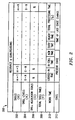
- Selection arrangement 106 of FIG. 1 therefore includes a list 116 of all resources 104 in the system of FIG. 1 and of their qualifications. These qualifications include both relatively static as well as dynamic data, and are illustrated in FIG. 2.
- Qualifications 200 for each resource 104 include a skills vector 202, which is a list of all of the skills possessed by resource 104.
- Qualifications 200 for each resource 104 further include a skill-level vector 204, which indicates the level of skill of this resource 104 for each skill possessed by this resource 104, and a skill allocation goals vector 208, which indicates present allocation goals for all skills possessed by this resource 104.
- Qualifications 200 further include measured values, such as a skill times vector 208 which indicates for each skill the total amount or percentage of time spent by this resource 104 in processing work items 100 that needed this skill. (If a work item 100 processed by a resource 104 requires a plurality of skills of that resource 104, each required skill's skill time is credited with the time that resource 104 spent processing the work item 100.) Measured values further include a worktime vector 210 which indicates one or more of the following: the total time that resource 104 has been logged in, the total time that resource 104 has spent in live communication with customers (in-call time), the total time other than in-call time that resource 104 has spent processing calls (ACW time), the total time that resource 104 has been busy, the total time that resource 104 has been ready to process work items 100, and the total time (T P ) that resource 104 has spent processing work items 100.
- a skill times vector 208 which indicates for each skill the total amount or percentage of time spent by this resource 104 in processing work items 100 that needed
- the metrics of worktime vector 210 correspond to like metrics that are conventionally maintained for agents in ACD systems, and are computed in the same manner.
- Qualifications 200 further include state information 212 that indicates the present state of the corresponding resource 104 and the time of the last state change of resource 104. The latter value is used to determine the amount of time that resource 104 has been idle since last processing a work item 100.
- Idle resources 104 form an idle resource list 120 which is a subset of resource list 116.
- Unitary skills are individual, independent skills. Skills such as English, Spanish, Sales, Tech Support, UNIX, Windows, and Macintosh fall into this category. These are also the most simple to administer. Each skill is assigned a number starting at 1 such that A n,m represents the skill level of resource n for the skill m .
- Aggregate skills are slightly more difficult to work with. They are skills that are made up of combinations of unitary skills, described above. Aggregate skills are needed in that there may be a resource 104 capable of handling several skills individually and only in certain combinations. For instance, suppose that there is an agent in a call center who speaks Spanish and knows UNIX, Windows, and Macintosh. Also, suppose that this agent has had some technical support training and therefore is skilled in tech support as well. However, this agent is being eased into the tech support role. For the first two weeks the agent should only handle Spanish tech support calls for Windows. During the following two weeks, the agent can also take Spanish tech support calls for Macintosh. Finally, the agent is also allowed to handle Spanish tech support calls for UNIX. This scenario is most easily administered with three aggregate skills : Spanish Windows Tech Support, Spanish Macintosh Tech Support, and Spanish UNIX Tech Support.
- aggregate skills are administered as follows.
- some aggregate skill g is an aggregate of unitary skills a , b , and c .
- a n,g represents the skill level of resource n for aggregate skill g , where g > maxunitskills , and maxunitskills is the total number of unitary skills.
- Dynamic items 206-212 of qualifications 200 of all resources 104 in resource list 116 are dynamically updated and kept current by a resource state update 118 in FIG. 1.
- Resource state update 118 provides an interface to which applications can send information to update the state of resources 104 as necessary.
- Resource state update 118 receives the notifications of resource 104 state-change events and updates list 116 and 120 contents accordingly.
- Each work item's classification 300 includes a skills vector 302, which is a list of all possible skills 1-M that a work item 100 can have. Each skill that is required or simply desired for the handling of a work item 100 must be added to the work item classification 300 for each of the categories below.
- Each qualification 300 includes a BR vector 306, which is a list of the skill weights assigned for this work item 100 to each of the skills in skills vector 302.
- Each classification 300 includes a BRR vector 304 indicating which of the skills in skill vector 302 are required by this work item 100.
- BRR vector 304 For each skill, both aggregate and unitary, associated with work item n , a value of true or false must be assigned to BRR such that BRR n,m indicates whether or not a skill m is required for work time n .
- Vectors 302, 304 and 306 together represent a business value of work item 100. Note that it is possible for a skill to contribute to the business value calculation but not be a required skill. For example, suppose that some agents in a call center had been trained in effective communication, but this is not required to handle a call. Those agents could score higher in business value, having had that training. However, agents who were not trained would not be excluded from the selection process if the skill had a weight > 0 in BRR but not a value of true in the requirements vector BRR .
- Each classification 300 includes a qualifying weights for resource fairness values (QWRFV) vector 308.
- the values, for resource n , of TW n,m must be filled in for fairness values one through three (1 ⁇ m ⁇ 3.)
- TW n,1 is the weight to be given to the time since resource n has become available (or is it the idle time?)
- TW n,2 is the weight to be given to the percentage of time that resource n has not spent handling work items 100
- TW n is the weight to be given to how much the processing of the current work item 100 would move resource 104 toward its service objective.
- the values of TW can be anything, it is most appropriate to imagine that for a percentage weight of each of the values for some resource n . In the simple default case, it is expected that a work item 100 will have only one set of TW values in common for all resources 104.
- Each classification 300 includes a qualifying weights for work item fairness values (QWWIFV) vector 312.
- QWWIFV work item fairness values
- the values, for work item n , of CW n,m must be filled in for fairness values one through three (1 ⁇ m ⁇ 3).
- CW n,1 is the weight to be given to time that work item 100 has spent waiting for processing
- CW n,2 is the weight to be given to the work item's estimated total wait time
- CW n,3 is the weight to be given to the waiting time by which work item 100 has exceeded its target service time.
- the values of CW can be anything, it is most appropriate to imagine that for a percentage weight of each of the values for some resource n .
- classifier 110 passes a new work item 100 to the system for distribution, it is assumed that classifier 110 knows nothing of the state of the system and therefore must provide enough information to make a decision in any state.
- each classification 300 provides resource surplus weights 314 that include the weight of business value with resource surplus W RSBV , and the weight of resource fairness with resource surplus W AT .
- each classification 300 provides work-item surplus weights 316 that include the weight of business value with work-item surplus W WSBV , and the weight of work-item fairness with work-item surplus W CV .
- each classification 300 provides the target wait time for work item 100, Target 318.
- values 308-318 are pre-administered for different business values (values of fields 302-306), so that classifier 110 need only determine the business values (values of fields 302-306)--illustratively in the same manner as is done in conventional skills-based ACD systems--and then populates fields 308-318 with the corresponding administered values.
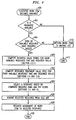
- FIGS. 4 and 5 show an illustrative implementation of selection engine 114.
- FIG. 4 shows the operation of engine 114 when a classified work item 100 becomes available
- FIG. 5 shows its operation when a resource 104 becomes available.
- engine 114 checks idle resources list 120 to determine if any resource 104 is available to handle the work item, at step 402. If idle resources list 120 is empty, engine 114 returns work-item 100 to list 112, at step 410, and ends its operation, at step 412, until such time as a resource 104 becomes available. If idle resources list 120 is not empty, engine 114 compares skills requirements 304 of the work item's classification 300 with the skill levels 204 of the available resources' qualifications 200 to determine if an available resource 104 has the skills that are required by available work item 100, at step 414. If not, engine 114 proceeds to steps 410 et seq., if so, engine 114 proceeds to step 420 et seq.
- engine 114 computes the business value (RSBV) for each available resource 104 that has the skills required by available work item 100. The computation is effected as described in Section 2.3.1 above. Engine 114 then computes the resource treatment value (RTV) for each available resource 104 that has the required skills at step 422. The computation is effected as described in Sections 2.4 and 2.5 above. Engine 114 then selects an available resource 104 based on the combined weighted RSBV and RTV score, at step 424. This computation and selection is effected as described in Section 3.1 above.
- RSBV business value
- RTV resource treatment value
- Engine 114 then removes the selected resource from idle resources list 120, at step 426, requests match-maker 102 to assign available work item 100 to selected resource 104, at step 428, and ends its operation, at step 430, until another classified work item 100 or resource 104 becomes available.
- engine 114 checks waiting work items list 112 to determine if any work item 100 is available for handling, at step 502. If waiting work items list 112 is empty, engine 114 returns resource 104 to list 120, at step 510, and ends its operations until such time as a work item 100 becomes available, at step 512. If waiting work items list 112 is not empty, engine 114 compares skill levels 204 of the resource's qualifications 200 with the skills requirements 304 of the available work items' classifications 300 to determine if the resource's skills match the skill requirements of an available work item 100, at step 514. If not, engine 114 proceeds to steps 510 et seq.; if so, engine 114 proceeds to steps 520 et seq.
- engine 114 computes the business value (WSBV) for each available work item 100 whose skill needs match the skills of resource 104. The computation is effected as described in Section 2.3.1 above. Engine 114 then computes the work-item treatment value (WTV) for each available work item 100 whose skill needs match the skills of resource 104, at step 522. The computation is effected as described in Sections 2.6 and 2.7 above. Engine 114 then selects an available work item 100 based on the combined weighted WSDV and WTV score, at step 524. This computation and selection is effected as described in Section 3.2 above.
- WSBV business value
- WTV work-item treatment value
- Engine 114 then removes the selected work-item 100 from waiting work items list 112, at step 526, requests match-maker 102 to assign available resource 104 to selected work item 100, at step 528, and ends its operation, at step 530, until another resource 104 or classified work item 100 becomes available.
Landscapes
- Business, Economics & Management (AREA)
- Engineering & Computer Science (AREA)
- Human Resources & Organizations (AREA)
- Entrepreneurship & Innovation (AREA)
- Strategic Management (AREA)
- Theoretical Computer Science (AREA)
- Economics (AREA)
- Marketing (AREA)
- General Physics & Mathematics (AREA)
- Physics & Mathematics (AREA)
- Tourism & Hospitality (AREA)
- Quality & Reliability (AREA)
- General Business, Economics & Management (AREA)
- Operations Research (AREA)
- Educational Administration (AREA)
- Development Economics (AREA)
- Game Theory and Decision Science (AREA)
- General Engineering & Computer Science (AREA)
- Data Mining & Analysis (AREA)
- Signal Processing (AREA)
- Software Systems (AREA)
- Computer Hardware Design (AREA)
- Management, Administration, Business Operations System, And Electronic Commerce (AREA)
Applications Claiming Priority (2)
| Application Number | Priority Date | Filing Date | Title |
|---|---|---|---|
| US420912 | 1999-10-20 | ||
| US09/420,912 US7035808B1 (en) | 1999-10-20 | 1999-10-20 | Arrangement for resource and work-item selection |
Publications (1)
| Publication Number | Publication Date |
|---|---|
| EP1094655A1 true EP1094655A1 (en) | 2001-04-25 |
Family
ID=23668351
Family Applications (1)
| Application Number | Title | Priority Date | Filing Date |
|---|---|---|---|
| EP00309154A Ceased EP1094655A1 (en) | 1999-10-20 | 2000-10-17 | Arrangement for resource and work-item selection |
Country Status (5)
| Country | Link |
|---|---|
| US (1) | US7035808B1 (enExample) |
| EP (1) | EP1094655A1 (enExample) |
| JP (1) | JP2001155084A (enExample) |
| KR (1) | KR20010051142A (enExample) |
| CA (1) | CA2322723A1 (enExample) |
Cited By (4)
| Publication number | Priority date | Publication date | Assignee | Title |
|---|---|---|---|---|
| SG139543A1 (en) * | 2004-01-02 | 2008-02-29 | Taiwan Semiconductor Mfg | System and method for capacity management and trading |
| DE102012001003A1 (de) * | 2011-06-17 | 2012-12-20 | Avaya Inc. | zielbasierte geschätzte Wartezeit |
| WO2013008096A1 (en) * | 2011-07-14 | 2013-01-17 | Silver Lining Solutions Ltd. | Work skillset generation |
| CN104331632A (zh) * | 2014-11-21 | 2015-02-04 | 西安电子科技大学 | 用于处理诊疗流程的计算机软系统 |
Families Citing this family (87)
| Publication number | Priority date | Publication date | Assignee | Title |
|---|---|---|---|---|
| US7356440B1 (en) | 2000-08-31 | 2008-04-08 | Rapt, Inc. | Method and business process for the estimation of erosion costs in assemble-to-order manufacturing operations |
| US7483842B1 (en) * | 2001-02-21 | 2009-01-27 | The Yacobian Group | System and method for determining recommended action based on measuring and analyzing store and employee data |
| JP2002297900A (ja) * | 2001-03-30 | 2002-10-11 | Ibm Japan Ltd | 業務別応対管理システム、顧客側端末装置、応対側端末装置、管理サーバ、待ち行列監視装置、応対側端末の割り当て方法、および記憶媒体 |
| WO2003040889A2 (en) * | 2001-11-07 | 2003-05-15 | Real Consulting Llc | System and method for electronically creating, filling and approving applications for insurance coverage |
| US7127716B2 (en) * | 2002-02-13 | 2006-10-24 | Hewlett-Packard Development Company, L.P. | Method of load balancing a distributed workflow management system |
| US7502459B1 (en) * | 2002-02-28 | 2009-03-10 | Adaptec, Inc. | Unified services entitlement architecture |
| US7372952B1 (en) * | 2002-03-07 | 2008-05-13 | Wai Wu | Telephony control system with intelligent call routing |
| US7415417B2 (en) * | 2002-03-15 | 2008-08-19 | Avaya Technology Corp. | Presence awareness agent |
| US7620169B2 (en) | 2002-06-17 | 2009-11-17 | Avaya Inc. | Waiting but not ready |
| JP3979276B2 (ja) * | 2002-11-29 | 2007-09-19 | 富士通株式会社 | 業務支援方法、業務支援装置、及びプログラム |
| US20040133889A1 (en) * | 2002-12-12 | 2004-07-08 | Renzo Colle | Scheduling tasks across multiple locations |
| US20040158568A1 (en) * | 2002-12-12 | 2004-08-12 | Renzo Colle | Scheduling resources for performing a service |
| US20040193468A1 (en) * | 2003-03-31 | 2004-09-30 | Dave Mosquera | System for optimizing business rule resources |
| US7770175B2 (en) * | 2003-09-26 | 2010-08-03 | Avaya Inc. | Method and apparatus for load balancing work on a network of servers based on the probability of being serviced within a service time goal |
| US20050071241A1 (en) * | 2003-09-26 | 2005-03-31 | Flockhart Andrew D. | Contact center resource allocation based on work bidding/auction |
| US8094804B2 (en) | 2003-09-26 | 2012-01-10 | Avaya Inc. | Method and apparatus for assessing the status of work waiting for service |
| US7139846B1 (en) * | 2003-09-30 | 2006-11-21 | Veritas Operating Corporation | Computer system and method for performing low impact backup operations |
| US20050222884A1 (en) * | 2004-03-31 | 2005-10-06 | Ralf Ehret | Capacity planning of resources |
| US8000989B1 (en) | 2004-03-31 | 2011-08-16 | Avaya Inc. | Using true value in routing work items to resources |
| US7953859B1 (en) | 2004-03-31 | 2011-05-31 | Avaya Inc. | Data model of participation in multi-channel and multi-party contacts |
| US7734032B1 (en) | 2004-03-31 | 2010-06-08 | Avaya Inc. | Contact center and method for tracking and acting on one and done customer contacts |
| US7810099B2 (en) * | 2004-06-17 | 2010-10-05 | International Business Machines Corporation | Optimizing workflow execution against a heterogeneous grid computing topology |
| US8234141B1 (en) | 2004-09-27 | 2012-07-31 | Avaya Inc. | Dynamic work assignment strategies based on multiple aspects of agent proficiency |
| US7567653B1 (en) | 2005-03-22 | 2009-07-28 | Avaya Inc. | Method by which call centers can vector inbound TTY calls automatically to TTY-enabled resources |
| US8554599B2 (en) * | 2005-03-25 | 2013-10-08 | Microsoft Corporation | Work item rules for a work item tracking system |
| US7809127B2 (en) | 2005-05-26 | 2010-10-05 | Avaya Inc. | Method for discovering problem agent behaviors |
| EP1729247A1 (de) * | 2005-06-01 | 2006-12-06 | InVision Software AG | Mitarbeitereinsatzplanung |
| US7779042B1 (en) | 2005-08-08 | 2010-08-17 | Avaya Inc. | Deferred control of surrogate key generation in a distributed processing architecture |
| US7881450B1 (en) | 2005-09-15 | 2011-02-01 | Avaya Inc. | Answer on hold notification |
| US7657796B1 (en) * | 2005-09-30 | 2010-02-02 | Symantec Operating Corporation | System and method for distributed storage verification |
| US7822587B1 (en) | 2005-10-03 | 2010-10-26 | Avaya Inc. | Hybrid database architecture for both maintaining and relaxing type 2 data entity behavior |
| US7752230B2 (en) | 2005-10-06 | 2010-07-06 | Avaya Inc. | Data extensibility using external database tables |
| US20070116240A1 (en) * | 2005-10-25 | 2007-05-24 | Capital One Financial Corporation | Systems and methods for qualification-based intelligent call routing |
| US20070127527A1 (en) * | 2005-12-06 | 2007-06-07 | International Business Machines Corporation | Methods and apparatus for implementing a flexible multi-user advance reservation system where reservation requests are specified in terms of multiple options and where each option has an associated business value |
| US8238541B1 (en) | 2006-01-31 | 2012-08-07 | Avaya Inc. | Intent based skill-set classification for accurate, automatic determination of agent skills |
| US8737173B2 (en) | 2006-02-24 | 2014-05-27 | Avaya Inc. | Date and time dimensions for contact center reporting in arbitrary international time zones |
| US8924335B1 (en) | 2006-03-30 | 2014-12-30 | Pegasystems Inc. | Rule-based user interface conformance methods |
| EP2038748A1 (en) * | 2006-06-19 | 2009-03-25 | Diskeeper Corporation | Resource-based scheduler |
| US9588809B2 (en) | 2006-10-10 | 2017-03-07 | Invistasking LLC | Resource-based scheduler |
| US8056083B2 (en) | 2006-10-10 | 2011-11-08 | Diskeeper Corporation | Dividing a computer job into micro-jobs for execution |
| US7936867B1 (en) | 2006-08-15 | 2011-05-03 | Avaya Inc. | Multi-service request within a contact center |
| US8391463B1 (en) | 2006-09-01 | 2013-03-05 | Avaya Inc. | Method and apparatus for identifying related contacts |
| US8938063B1 (en) | 2006-09-07 | 2015-01-20 | Avaya Inc. | Contact center service monitoring and correcting |
| US8811597B1 (en) | 2006-09-07 | 2014-08-19 | Avaya Inc. | Contact center performance prediction |
| US8971520B1 (en) * | 2006-10-27 | 2015-03-03 | Answer Financial Inc. | Method for optimizing skill assignment in call center agent applications |
| US7895069B2 (en) * | 2006-11-09 | 2011-02-22 | International Business Machines Corporation | System and method for implementing database concurrency for allowing multiple agents to coordinate execution of tasks in a cluster |
| US8767944B1 (en) | 2007-01-03 | 2014-07-01 | Avaya Inc. | Mechanism for status and control communication over SIP using CODEC tunneling |
| US20080183538A1 (en) * | 2007-01-30 | 2008-07-31 | Microsoft Corporation | Allocating Resources to Tasks in Workflows |
| US8180658B2 (en) * | 2007-01-30 | 2012-05-15 | Microsoft Corporation | Exploitation of workflow solution spaces to account for changes to resources |
| US20080184250A1 (en) * | 2007-01-30 | 2008-07-31 | Microsoft Corporation | Synchronizing Workflows |
| US9183524B2 (en) * | 2007-02-21 | 2015-11-10 | Novell, Inc. | Imaged-based method for transport and authentication of virtualized workflows |
| US20080244604A1 (en) * | 2007-03-30 | 2008-10-02 | Bennington Bud J | Method for task and resource management |
| US20080244605A1 (en) * | 2007-03-30 | 2008-10-02 | Bennington Bud J | Method for task and resource management |
| US20080244603A1 (en) * | 2007-03-30 | 2008-10-02 | Bennington Bud J | Method for task and resource management |
| US20080244602A1 (en) * | 2007-03-30 | 2008-10-02 | Bennington Bud J | Method for task and resource management |
| US20080275889A1 (en) * | 2007-05-01 | 2008-11-06 | General Electric Company | Method and system for assessing the staffing needs of an organization |
| US20100332358A1 (en) * | 2007-06-21 | 2010-12-30 | Owens Bryan K | System and method of tracing items |
| US8504534B1 (en) | 2007-09-26 | 2013-08-06 | Avaya Inc. | Database structures and administration techniques for generalized localization of database items |
| US8856182B2 (en) | 2008-01-25 | 2014-10-07 | Avaya Inc. | Report database dependency tracing through business intelligence metadata |
| US8359220B2 (en) * | 2008-05-21 | 2013-01-22 | International Business Machines Corporation | Technical support routing among members of a technical support group |
| US8116237B2 (en) | 2008-09-26 | 2012-02-14 | Avaya Inc. | Clearing house for publish/subscribe of status data from distributed telecommunications systems |
| WO2010050956A1 (en) * | 2008-10-30 | 2010-05-06 | Hewlett-Packard Development Company, L.P. | Supply and demand consolidation in employee resouces planning |
| US8843435B1 (en) | 2009-03-12 | 2014-09-23 | Pegasystems Inc. | Techniques for dynamic data processing |
| US8468492B1 (en) | 2009-03-30 | 2013-06-18 | Pegasystems, Inc. | System and method for creation and modification of software applications |
| US20160098298A1 (en) * | 2009-04-24 | 2016-04-07 | Pegasystems Inc. | Methods and apparatus for integrated work management |
| US8964958B2 (en) * | 2009-05-20 | 2015-02-24 | Avaya Inc. | Grid-based contact center |
| US8644491B2 (en) * | 2009-08-21 | 2014-02-04 | Avaya Inc. | Mechanism for multisite service state description |
| US8385533B2 (en) | 2009-09-21 | 2013-02-26 | Avaya Inc. | Bidding work assignment on conference/subscribe RTP clearing house |
| US8565386B2 (en) | 2009-09-29 | 2013-10-22 | Avaya Inc. | Automatic configuration of soft phones that are usable in conjunction with special-purpose endpoints |
| US9468755B2 (en) * | 2009-09-30 | 2016-10-18 | Respicardia, Inc. | Medical lead with preformed bias |
| US9516069B2 (en) | 2009-11-17 | 2016-12-06 | Avaya Inc. | Packet headers as a trigger for automatic activation of special-purpose softphone applications |
| US8306212B2 (en) * | 2010-02-19 | 2012-11-06 | Avaya Inc. | Time-based work assignments in automated contact distribution |
| US8880487B1 (en) | 2011-02-18 | 2014-11-04 | Pegasystems Inc. | Systems and methods for distributed rules processing |
| JP5720398B2 (ja) * | 2011-04-25 | 2015-05-20 | ソニー株式会社 | 評価装置及び評価方法、サービス提供システム、並びにコンピューター・プログラム |
| US8825609B2 (en) | 2011-06-10 | 2014-09-02 | HCL America, Inc. | Detecting wasteful data collection |
| US20130024229A1 (en) * | 2011-07-19 | 2013-01-24 | HCL America Inc. | Automatic bill of talent generation |
| US9195936B1 (en) | 2011-12-30 | 2015-11-24 | Pegasystems Inc. | System and method for updating or modifying an application without manual coding |
| US8675860B2 (en) | 2012-02-16 | 2014-03-18 | Avaya Inc. | Training optimizer for contact center agents |
| US10469396B2 (en) | 2014-10-10 | 2019-11-05 | Pegasystems, Inc. | Event processing with enhanced throughput |
| US20160232468A1 (en) * | 2015-02-05 | 2016-08-11 | Qu-U-Up Vsa Ltd. | System and method for queue management |
| WO2017074310A1 (en) * | 2015-10-27 | 2017-05-04 | Hewlett Packard Enterprise Development Lp | Partitioning a workflow |
| US20170213171A1 (en) * | 2016-01-21 | 2017-07-27 | Accenture Global Solutions Limited | Intelligent scheduling and work item allocation |
| US10698599B2 (en) | 2016-06-03 | 2020-06-30 | Pegasystems, Inc. | Connecting graphical shapes using gestures |
| US10698647B2 (en) | 2016-07-11 | 2020-06-30 | Pegasystems Inc. | Selective sharing for collaborative application usage |
| US11048488B2 (en) | 2018-08-14 | 2021-06-29 | Pegasystems, Inc. | Software code optimizer and method |
| KR102245481B1 (ko) * | 2020-07-02 | 2021-04-27 | 박인철 | 수작업 공정의 작업 표준화를 이용한 생산관리방법 |
| US11567945B1 (en) | 2020-08-27 | 2023-01-31 | Pegasystems Inc. | Customized digital content generation systems and methods |
Citations (4)
| Publication number | Priority date | Publication date | Assignee | Title |
|---|---|---|---|---|
| US5335269A (en) * | 1992-03-12 | 1994-08-02 | Rockwell International Corporation | Two dimensional routing apparatus in an automatic call director-type system |
| US5506898A (en) * | 1994-07-12 | 1996-04-09 | At&T Corp. | Expected wait-time indication arrangement |
| EP0740450A2 (en) * | 1995-04-24 | 1996-10-30 | International Business Machines Corporation | Method and apparatus for skill-based routing in a call center |
| US6130942A (en) * | 1998-10-30 | 2000-10-10 | Ericsson Inc. | Skills-based automatic call distribution system |
Family Cites Families (14)
| Publication number | Priority date | Publication date | Assignee | Title |
|---|---|---|---|---|
| US5206903A (en) * | 1990-12-26 | 1993-04-27 | At&T Bell Laboratories | Automatic call distribution based on matching required skills with agents skills |
| US5963911A (en) * | 1994-03-25 | 1999-10-05 | British Telecommunications Public Limited Company | Resource allocation |
| JPH08137811A (ja) * | 1994-11-10 | 1996-05-31 | Nippon Telegr & Teleph Corp <Ntt> | ネットワーク資源割当変更方法 |
| JP3315844B2 (ja) * | 1994-12-09 | 2002-08-19 | 株式会社東芝 | スケジューリング装置及びスケジューリング方法 |
| JPH08287162A (ja) | 1995-02-14 | 1996-11-01 | Toshiba Corp | ワークフローシステム |
| US5918207A (en) * | 1996-05-01 | 1999-06-29 | Electronic Data Systems Corporation | Process and system for predictive resource planning |
| US5903641A (en) * | 1997-01-28 | 1999-05-11 | Lucent Technologies Inc. | Automatic dynamic changing of agents' call-handling assignments |
| JPH10261122A (ja) | 1997-03-18 | 1998-09-29 | Sumitomo Wiring Syst Ltd | 作業配分最適化方法 |
| US6044355A (en) * | 1997-07-09 | 2000-03-28 | Iex Corporation | Skills-based scheduling for telephone call centers |
| JP3507302B2 (ja) | 1997-10-02 | 2004-03-15 | 株式会社日立製作所 | システム構成提案支援方法およびツール |
| US6173053B1 (en) * | 1998-04-09 | 2001-01-09 | Avaya Technology Corp. | Optimizing call-center performance by using predictive data to distribute calls among agents |
| US6070142A (en) * | 1998-04-17 | 2000-05-30 | Andersen Consulting Llp | Virtual customer sales and service center and method |
| US6389400B1 (en) * | 1998-08-20 | 2002-05-14 | Sbc Technology Resources, Inc. | System and methods for intelligent routing of customer requests using customer and agent models |
| US6275812B1 (en) * | 1998-12-08 | 2001-08-14 | Lucent Technologies, Inc. | Intelligent system for dynamic resource management |
-
1999
- 1999-10-20 US US09/420,912 patent/US7035808B1/en not_active Expired - Fee Related
-
2000
- 2000-10-10 CA CA002322723A patent/CA2322723A1/en not_active Abandoned
- 2000-10-17 EP EP00309154A patent/EP1094655A1/en not_active Ceased
- 2000-10-19 KR KR1020000061620A patent/KR20010051142A/ko not_active Withdrawn
- 2000-10-20 JP JP2000320155A patent/JP2001155084A/ja active Pending
Patent Citations (4)
| Publication number | Priority date | Publication date | Assignee | Title |
|---|---|---|---|---|
| US5335269A (en) * | 1992-03-12 | 1994-08-02 | Rockwell International Corporation | Two dimensional routing apparatus in an automatic call director-type system |
| US5506898A (en) * | 1994-07-12 | 1996-04-09 | At&T Corp. | Expected wait-time indication arrangement |
| EP0740450A2 (en) * | 1995-04-24 | 1996-10-30 | International Business Machines Corporation | Method and apparatus for skill-based routing in a call center |
| US6130942A (en) * | 1998-10-30 | 2000-10-10 | Ericsson Inc. | Skills-based automatic call distribution system |
Non-Patent Citations (1)
| Title |
|---|
| HASSLER K W ET AL: "REVOLUTIONIZING DEFINITY CALL CENTERS IN THE 1990S", AT & T TECHNICAL JOURNAL,US,AMERICAN TELEPHONE AND TELEGRAPH CO. NEW YORK, vol. 74, no. 4, 1 July 1995 (1995-07-01), pages 64 - 73, XP000517580, ISSN: 8756-2324 * |
Cited By (8)
| Publication number | Priority date | Publication date | Assignee | Title |
|---|---|---|---|---|
| SG139543A1 (en) * | 2004-01-02 | 2008-02-29 | Taiwan Semiconductor Mfg | System and method for capacity management and trading |
| DE102012001003A1 (de) * | 2011-06-17 | 2012-12-20 | Avaya Inc. | zielbasierte geschätzte Wartezeit |
| DE102012001003B4 (de) * | 2011-06-17 | 2013-09-05 | Avaya Inc. | Zielbasierte geschätzte Wartezeit |
| US8903080B2 (en) | 2011-06-17 | 2014-12-02 | Avaya Inc. | Goal-based estimated wait time |
| WO2013008096A1 (en) * | 2011-07-14 | 2013-01-17 | Silver Lining Solutions Ltd. | Work skillset generation |
| US8589215B2 (en) | 2011-07-14 | 2013-11-19 | Silver Lining Solutions Ltd. | Work skillset generation |
| CN104331632A (zh) * | 2014-11-21 | 2015-02-04 | 西安电子科技大学 | 用于处理诊疗流程的计算机软系统 |
| CN104331632B (zh) * | 2014-11-21 | 2017-05-17 | 西安电子科技大学 | 用于处理诊疗流程的计算机软系统 |
Also Published As
| Publication number | Publication date |
|---|---|
| CA2322723A1 (en) | 2001-04-20 |
| US7035808B1 (en) | 2006-04-25 |
| KR20010051142A (ko) | 2001-06-25 |
| JP2001155084A (ja) | 2001-06-08 |
Similar Documents
| Publication | Publication Date | Title |
|---|---|---|
| US7035808B1 (en) | Arrangement for resource and work-item selection | |
| US11218597B2 (en) | Techniques for behavioral pairing in a contact center system | |
| US7894595B1 (en) | Telephony control system with intelligent call routing | |
| US6859529B2 (en) | Method and system for self-service scheduling of inbound inquiries | |
| US12075003B2 (en) | Techniques for decisioning behavioral pairing in a task assignment system | |
| EP1119170A2 (en) | Methods and apparatus for multi-variable work assignment in a call center | |
| US20030095652A1 (en) | Contact center autopilot algorithms | |
| US20160255199A1 (en) | Distributed constraint-based optimized routing of interactions | |
| EP0740450A2 (en) | Method and apparatus for skill-based routing in a call center | |
| KR19980070730A (ko) | 관리자 호 처리의 지정의 자동 동적 변경 장치 및 방법 | |
| US8971520B1 (en) | Method for optimizing skill assignment in call center agent applications | |
| Gupta et al. | Scheduling service tickets in shared delivery | |
| HK40076601A (en) | Techniques for decisioning behavioral pairing in a task assignment system | |
| HK40041789A (en) | Techniques for decisioning behavioral pairing in a task assignment system |
Legal Events
| Date | Code | Title | Description |
|---|---|---|---|
| PUAI | Public reference made under article 153(3) epc to a published international application that has entered the european phase |
Free format text: ORIGINAL CODE: 0009012 |
|
| 17P | Request for examination filed |
Effective date: 20001025 |
|
| AK | Designated contracting states |
Kind code of ref document: A1 Designated state(s): DE FR GB |
|
| AX | Request for extension of the european patent |
Free format text: AL;LT;LV;MK;RO;SI |
|
| 17Q | First examination report despatched |
Effective date: 20010411 |
|
| AKX | Designation fees paid |
Free format text: DE FR GB |
|
| STAA | Information on the status of an ep patent application or granted ep patent |
Free format text: STATUS: THE APPLICATION HAS BEEN REFUSED |
|
| 18R | Application refused |
Effective date: 20030221 |