EP1090396B1 - Method for injection of liquid samples for radioisotope separations - Google Patents
Method for injection of liquid samples for radioisotope separations Download PDFInfo
- Publication number
- EP1090396B1 EP1090396B1 EP99935287A EP99935287A EP1090396B1 EP 1090396 B1 EP1090396 B1 EP 1090396B1 EP 99935287 A EP99935287 A EP 99935287A EP 99935287 A EP99935287 A EP 99935287A EP 1090396 B1 EP1090396 B1 EP 1090396B1
- Authority
- EP
- European Patent Office
- Prior art keywords
- separator
- tubing segment
- valve
- multiposition valve
- air
- Prior art date
- Legal status (The legal status is an assumption and is not a legal conclusion. Google has not performed a legal analysis and makes no representation as to the accuracy of the status listed.)
- Expired - Lifetime
Links
- 238000000926 separation method Methods 0.000 title claims abstract description 48
- 238000000034 method Methods 0.000 title claims abstract description 44
- 239000007788 liquid Substances 0.000 title claims description 41
- 238000002347 injection Methods 0.000 title 1
- 239000007924 injection Substances 0.000 title 1
- 239000003480 eluent Substances 0.000 claims description 24
- 239000000872 buffer Substances 0.000 claims description 23
- 238000010828 elution Methods 0.000 claims description 22
- 239000002699 waste material Substances 0.000 claims description 22
- 230000003750 conditioning effect Effects 0.000 claims description 19
- 239000003153 chemical reaction reagent Substances 0.000 claims description 17
- 238000003860 storage Methods 0.000 claims description 10
- 238000011068 loading method Methods 0.000 claims description 9
- 239000003011 anion exchange membrane Substances 0.000 claims description 8
- 239000000203 mixture Substances 0.000 claims description 6
- 238000005349 anion exchange Methods 0.000 claims description 4
- 238000011049 filling Methods 0.000 claims description 3
- 230000000717 retained effect Effects 0.000 claims description 3
- 238000011010 flushing procedure Methods 0.000 claims 1
- 238000011109 contamination Methods 0.000 abstract description 7
- 238000011084 recovery Methods 0.000 abstract description 7
- 238000013459 approach Methods 0.000 abstract description 6
- 230000008569 process Effects 0.000 abstract description 4
- 239000012530 fluid Substances 0.000 abstract description 3
- 238000005406 washing Methods 0.000 abstract description 3
- 238000005202 decontamination Methods 0.000 abstract description 2
- 230000003588 decontaminative effect Effects 0.000 abstract description 2
- 239000011159 matrix material Substances 0.000 abstract description 2
- 239000000243 solution Substances 0.000 description 58
- 239000012528 membrane Substances 0.000 description 23
- 239000000047 product Substances 0.000 description 23
- VMHLLURERBWHNL-UHFFFAOYSA-M Sodium acetate Chemical compound [Na+].CC([O-])=O VMHLLURERBWHNL-UHFFFAOYSA-M 0.000 description 14
- 238000002474 experimental method Methods 0.000 description 14
- 230000000694 effects Effects 0.000 description 9
- 239000011347 resin Substances 0.000 description 9
- 229920005989 resin Polymers 0.000 description 9
- 238000005342 ion exchange Methods 0.000 description 8
- 206010028980 Neoplasm Diseases 0.000 description 7
- 230000005855 radiation Effects 0.000 description 7
- LFQSCWFLJHTTHZ-UHFFFAOYSA-N Ethanol Chemical compound CCO LFQSCWFLJHTTHZ-UHFFFAOYSA-N 0.000 description 6
- GRYLNZFGIOXLOG-UHFFFAOYSA-N Nitric acid Chemical compound O[N+]([O-])=O GRYLNZFGIOXLOG-UHFFFAOYSA-N 0.000 description 6
- 230000006378 damage Effects 0.000 description 6
- 229910017604 nitric acid Inorganic materials 0.000 description 6
- 238000004458 analytical method Methods 0.000 description 5
- 229910052797 bismuth Inorganic materials 0.000 description 5
- 235000017281 sodium acetate Nutrition 0.000 description 5
- 239000001632 sodium acetate Substances 0.000 description 5
- 239000000126 substance Substances 0.000 description 5
- 238000012360 testing method Methods 0.000 description 5
- 241000282465 Canis Species 0.000 description 4
- 239000003957 anion exchange resin Substances 0.000 description 4
- 239000011324 bead Substances 0.000 description 4
- 238000010586 diagram Methods 0.000 description 4
- 229910052751 metal Inorganic materials 0.000 description 4
- 239000002184 metal Substances 0.000 description 4
- 239000002953 phosphate buffered saline Substances 0.000 description 4
- 108090000623 proteins and genes Proteins 0.000 description 4
- 102000004169 proteins and genes Human genes 0.000 description 4
- 238000000163 radioactive labelling Methods 0.000 description 4
- 239000000700 radioactive tracer Substances 0.000 description 4
- 241000237858 Gastropoda Species 0.000 description 3
- 229910052767 actinium Inorganic materials 0.000 description 3
- QQINRWTZWGJFDB-UHFFFAOYSA-N actinium atom Chemical compound [Ac] QQINRWTZWGJFDB-UHFFFAOYSA-N 0.000 description 3
- 150000001450 anions Chemical class 0.000 description 3
- 201000011510 cancer Diseases 0.000 description 3
- 239000003729 cation exchange resin Substances 0.000 description 3
- 239000002738 chelating agent Substances 0.000 description 3
- 238000002372 labelling Methods 0.000 description 3
- 238000004519 manufacturing process Methods 0.000 description 3
- 150000002739 metals Chemical class 0.000 description 3
- 150000002892 organic cations Chemical group 0.000 description 3
- 239000002245 particle Substances 0.000 description 3
- 230000001225 therapeutic effect Effects 0.000 description 3
- QPCDCPDFJACHGM-UHFFFAOYSA-N N,N-bis{2-[bis(carboxymethyl)amino]ethyl}glycine Chemical compound OC(=O)CN(CC(O)=O)CCN(CC(=O)O)CCN(CC(O)=O)CC(O)=O QPCDCPDFJACHGM-UHFFFAOYSA-N 0.000 description 2
- PPBRXRYQALVLMV-UHFFFAOYSA-N Styrene Chemical compound C=CC1=CC=CC=C1 PPBRXRYQALVLMV-UHFFFAOYSA-N 0.000 description 2
- JCXGWMGPZLAOME-UHFFFAOYSA-N bismuth atom Chemical compound [Bi] JCXGWMGPZLAOME-UHFFFAOYSA-N 0.000 description 2
- 238000005341 cation exchange Methods 0.000 description 2
- 150000001768 cations Chemical class 0.000 description 2
- 230000010261 cell growth Effects 0.000 description 2
- 238000001730 gamma-ray spectroscopy Methods 0.000 description 2
- 238000003384 imaging method Methods 0.000 description 2
- 239000000463 material Substances 0.000 description 2
- 238000011027 product recovery Methods 0.000 description 2
- 238000000746 purification Methods 0.000 description 2
- 230000002285 radioactive effect Effects 0.000 description 2
- 239000012217 radiopharmaceutical Substances 0.000 description 2
- 229940121896 radiopharmaceutical Drugs 0.000 description 2
- 230000002799 radiopharmaceutical effect Effects 0.000 description 2
- 239000002594 sorbent Substances 0.000 description 2
- 239000007858 starting material Substances 0.000 description 2
- BQCIDUSAKPWEOX-UHFFFAOYSA-N 1,1-Difluoroethene Chemical compound FC(F)=C BQCIDUSAKPWEOX-UHFFFAOYSA-N 0.000 description 1
- NWUYHJFMYQTDRP-UHFFFAOYSA-N 1,2-bis(ethenyl)benzene;1-ethenyl-2-ethylbenzene;styrene Chemical compound C=CC1=CC=CC=C1.CCC1=CC=CC=C1C=C.C=CC1=CC=CC=C1C=C NWUYHJFMYQTDRP-UHFFFAOYSA-N 0.000 description 1
- HNSDLXPSAYFUHK-UHFFFAOYSA-N 1,4-bis(2-ethylhexyl) sulfosuccinate Chemical compound CCCCC(CC)COC(=O)CC(S(O)(=O)=O)C(=O)OCC(CC)CCCC HNSDLXPSAYFUHK-UHFFFAOYSA-N 0.000 description 1
- ZSLUVFAKFWKJRC-IGMARMGPSA-N 232Th Chemical compound [232Th] ZSLUVFAKFWKJRC-IGMARMGPSA-N 0.000 description 1
- QTBSBXVTEAMEQO-UHFFFAOYSA-M Acetate Chemical compound CC([O-])=O QTBSBXVTEAMEQO-UHFFFAOYSA-M 0.000 description 1
- 206010000830 Acute leukaemia Diseases 0.000 description 1
- 102000012214 Immunoproteins Human genes 0.000 description 1
- 108010036650 Immunoproteins Proteins 0.000 description 1
- 229920006370 Kynar Polymers 0.000 description 1
- 108010013709 Leukocyte Common Antigens Proteins 0.000 description 1
- 102000017095 Leukocyte Common Antigens Human genes 0.000 description 1
- 239000002033 PVDF binder Substances 0.000 description 1
- 108010090804 Streptavidin Proteins 0.000 description 1
- 239000004809 Teflon Substances 0.000 description 1
- 229920006362 Teflon® Polymers 0.000 description 1
- 229910052776 Thorium Inorganic materials 0.000 description 1
- 239000002253 acid Substances 0.000 description 1
- 230000004075 alteration Effects 0.000 description 1
- JCXGWMGPZLAOME-RNFDNDRNSA-N bismuth-213 Chemical compound [213Bi] JCXGWMGPZLAOME-RNFDNDRNSA-N 0.000 description 1
- 239000008366 buffered solution Substances 0.000 description 1
- 210000000170 cell membrane Anatomy 0.000 description 1
- 239000003795 chemical substances by application Substances 0.000 description 1
- 150000003841 chloride salts Chemical class 0.000 description 1
- 125000001309 chloro group Chemical group Cl* 0.000 description 1
- 150000001875 compounds Chemical class 0.000 description 1
- 230000001143 conditioned effect Effects 0.000 description 1
- 239000000356 contaminant Substances 0.000 description 1
- 239000008367 deionised water Substances 0.000 description 1
- 229910021641 deionized water Inorganic materials 0.000 description 1
- 230000001066 destructive effect Effects 0.000 description 1
- LOKCTEFSRHRXRJ-UHFFFAOYSA-I dipotassium trisodium dihydrogen phosphate hydrogen phosphate dichloride Chemical compound P(=O)(O)(O)[O-].[K+].P(=O)(O)([O-])[O-].[Na+].[Na+].[Cl-].[K+].[Cl-].[Na+] LOKCTEFSRHRXRJ-UHFFFAOYSA-I 0.000 description 1
- 238000001704 evaporation Methods 0.000 description 1
- 230000008020 evaporation Effects 0.000 description 1
- 230000007717 exclusion Effects 0.000 description 1
- 239000012467 final product Substances 0.000 description 1
- 239000012634 fragment Substances 0.000 description 1
- 229910052732 germanium Inorganic materials 0.000 description 1
- GNPVGFCGXDBREM-UHFFFAOYSA-N germanium atom Chemical compound [Ge] GNPVGFCGXDBREM-UHFFFAOYSA-N 0.000 description 1
- 230000036541 health Effects 0.000 description 1
- 210000003958 hematopoietic stem cell Anatomy 0.000 description 1
- 229910001410 inorganic ion Inorganic materials 0.000 description 1
- 239000003014 ion exchange membrane Substances 0.000 description 1
- 150000002500 ions Chemical class 0.000 description 1
- 238000002955 isolation Methods 0.000 description 1
- 238000009206 nuclear medicine Methods 0.000 description 1
- 238000005457 optimization Methods 0.000 description 1
- 230000008520 organization Effects 0.000 description 1
- 229920001343 polytetrafluoroethylene Polymers 0.000 description 1
- -1 polytrifluoroethylene Polymers 0.000 description 1
- 229920002981 polyvinylidene fluoride Polymers 0.000 description 1
- 239000000843 powder Substances 0.000 description 1
- 238000002360 preparation method Methods 0.000 description 1
- 239000012460 protein solution Substances 0.000 description 1
- 230000005258 radioactive decay Effects 0.000 description 1
- 229910052705 radium Inorganic materials 0.000 description 1
- HCWPIIXVSYCSAN-UHFFFAOYSA-N radium atom Chemical compound [Ra] HCWPIIXVSYCSAN-UHFFFAOYSA-N 0.000 description 1
- 230000035484 reaction time Effects 0.000 description 1
- 238000011160 research Methods 0.000 description 1
- 238000011012 sanitization Methods 0.000 description 1
- 239000011734 sodium Substances 0.000 description 1
- 239000002904 solvent Substances 0.000 description 1
- 241000894007 species Species 0.000 description 1
- 238000010561 standard procedure Methods 0.000 description 1
- 239000011550 stock solution Substances 0.000 description 1
- 230000033772 system development Effects 0.000 description 1
- 238000002560 therapeutic procedure Methods 0.000 description 1
- 229940127044 therapeutic radiopharmaceutical Drugs 0.000 description 1
- 238000012546 transfer Methods 0.000 description 1
- XLYOFNOQVPJJNP-UHFFFAOYSA-N water Chemical compound O XLYOFNOQVPJJNP-UHFFFAOYSA-N 0.000 description 1
Images


Classifications
-
- G—PHYSICS
- G21—NUCLEAR PHYSICS; NUCLEAR ENGINEERING
- G21G—CONVERSION OF CHEMICAL ELEMENTS; RADIOACTIVE SOURCES
- G21G4/00—Radioactive sources
Definitions
- the present invention relates generally to the chemical separation of radionuclides. More specifically it relates to a method of automated chemical separation of one radionuclide from another, and more specifically, it relates to the automation of the separation of a short lived daughter isotope from a longer lived parent isotope, where the daughter isotope is useful in nuclear medicine.
- radionuclides such as 213 Bi, which emit alpha radiation, or alpha emitters, because the alpha radiation emitted by these radionuclides does not penetrate deeply into tissue.
- the radioactive decay chain in which 213 Bi is found is well known: 233 U (1.62x10 5 yr t 1/2) to 229 Th to 225 Ra (14.8 day t 1/2 ) to 225 Ac (10 day t 1/2 ) to 213 Bi 47 min t 1/2 ).
- the daughters of interest for biological applications include 225 Ra which decays to 225 Ac.
- the tumor may be exposed to the alpha radiation without undue exposure of surrounding healthy tissue.
- the alpha emitter is placed adjacent to the tumor site by binding the alpha emitter to a chelator which is in turn bound to a monoclonal antibody which will seek out the tumor site within the body.
- the chelator will also bind to metals other than the desired alpha emitter. It is therefore desirable that the number of monoclonal antibodies bonded to metals other than the desired alpha emitter be minimized. Thus, it is desirable that the alpha emitter be highly purified from other metal cations.
- alpha emitters such as 213 Bi (47 min t 1/2 ) have very short half-lives.
- these short lived radionuclides must be efficiently separated from other metals or contaminants in a short period of time to maximize the amount of the alpha emitter available.
- 213 Bi is an alpha emitter which can be linked to a monoclonal antibody, "an engineered protein molecule" that when attached to the outside of the cell membrane - can deliver radioactive 213 Bi, an alpha emitter with a half-life of 47 minutes. This initial trial represented the first use of alpha therapy for human cancer treatment in the U.S.
- the loaded ion exchange beads are then mixed with non-loaded beads to "dilute" the destructive effect, when placed in an ion exchange column used for Bi separation.
- the 213 Bi that is eluted from the generator is chemically reactive and antibody radiolabeling efficiencies in excess of 80% (decay corrected) are readily achieved.
- the entire process including the radiolabeling of the monoclonal antibody takes place at abient temperature within 20-25 minutes.
- the immunoreactivity of the product has been determined at a nominal value of 80%.
- the resultant radiopharmaceutical is pyrogen-free and sterile.
- the preparation of the "cow" prior to separation of the Bi from the organic resin is time consuming and may not meet ALARA radiation standards.
- the 225 Ac remains associated with the organic resin during the life time of the generator ( ⁇ 20 days) releasing organic fragments into the 213 Bi product solution each time the "cow" is milked.
- the Düsseldorf radionuclide generator described in Koch, 1997 was developed in support of Dr. David Scheinberg's (Memorial Soan-Kettering Cancer Center (MSKCC), New York, NY) linking 213 Bi to a recombinant humanized M195 (HuM195) antibody. All 225 Ac was loaded on an inlet edge of an AGMP-50 cation exchange resin column. Because of radiation damage to the ion exchange column and resin, MSKCC altered the Düsseldorf radionuclide generator to spread the 225 Ac throughout the resin bed. This alteration reduced local radiation damage, but because the 225 Ac is maintained in the resin, the resin does suffer damage from the alpha activity.
- a column of Alphasept 1TM is pretreated with nitric acid (HNO 3 ), the 225 Ac in 1 M HNO 3 feed is then loaded on to the column and the 213 Bi product is eluted with 1 M HNO 3 .
- the product HNO 3 must then be evaporated to dryness to remove the nitric acid. It is then brought back into solution with a suitable buffered solution to prepare the final binding of the alpha emitter to a chelator and monocolyl antibody.
- the evaporation step extends the time required to prepare the final product and limits the usefulness of this approach.
- US-A-5,154,897 discloses a process and apparatus for separating daughter radioisotopes from a stock solution (cow) comprising both daughter and parent radioisotopes comprising a pump (not shown and not specifically defined as being bi-directional), multiway valve and separation bed.
- the cow is supplied to the separation bed, which retains the daughter isotope.
- a wash solution is passed through the separation bed to release any trace of parent isotope and finally the daughter isotope retained in bed is eluted with eluent.
- the present invention is method of separating a short-lived daughter isotope from a longer lived parent isotope, with recovery of the parent isotope for further use.
- a system with a bi-directional pump and one or more valves Using a system with a bi-directional pump and one or more valves. a solution of the parent isotope is processed to generate two separate solutions, one of which contains the daughter isotope, from which the parent has been removed with a high decontamination factor, and the other solution contains the recovered patent isotope. The process can be repeated on this solution of the parent isotope.
- the system with the fluid drive and one or more valves is controlled by a program on a microprocessor executing a series of steps to accomplish the operation.
- the cow solution is passed through a separation medium that selectively retains the desired daughter isotope, while the parent isotope and the matrix pass through the medium. After washing this medium, the daughter is released from the separation medium using another solution.
- the parent isotope can be reused to recover more daughter isotope at a later time, with no manual manipulation of the parent isotope involved.
- a bi-directional pump 100 is connected to a tubing segment 102 .
- the bi-directional pump 100 and tubing segment 102 are filled with a buffer liquid (not shown).
- a first valve 104 is connected to the tubing segment 102 and connected to a gas supply (not shown) for drawing a volume of a gas in contact with the buffer liquid.
- a second valve 106 is connected to the tubing segment permitting drawing a first liquid sample (not shown) of a mixture of said short lived daughter isotope and said long lived parent isotope into the tubing segment by withdrawing an amount of the buffer liquid.
- the first liquid sample is prevented from contacting the buffer liquid by the volume of gas therebetween.
- the size (inside diameter) of the tubing segment and other tubing is selected so that the surface tension of liquids in cooperation with the inside diameter is sufficient in the presence of a gas to prevent flow of the liquid past the gas.
- Isolation valves 108 may be included.
- valves 104,106 , and others connected to the tubing segment 102 for the additional streams be collected into a multiposition valve 200 as shown in FIG. 2
- the bi-directional pump 100 is a high precision digital syringe pump (syringe volume 10 ml) (Alitea USA, Medina WA).
- the tubing segment 102 is a coil connected to a first multiposition valve 200 containing the gas valve or port 104 . the sample or cow valve or port 106 and others as shown.
- An outlet port 300 directs fluids to a separator 302 .
- the separator outlet is connected to a second multiposition valve 304 .
- a cow reservoir 306 is connected to ports on both the first and second multiposition valves.
- a product reservior 308 collects the desired radionuclide solution.
- the separator 302 is an anion exchange membrane.
- FIG. 3b An alternative embodiment is shown in FIG. 3b including a 4 port two-position valve 310 .
- the first multiposition valve 200 is connected to a separation reactor port (two-position value 310, port 1) and a stack of zones is delivered from the tubing segment 102 through the two-postiton valve 310 to the separator 302 at a specified flow rate.
- the purpose of the two-position valve 310 is to provide tor the possibility of flow direction reversal through the separator 302 .
- the two-position valve 310 is optional.
- a preferred material for separation is an anion absorbing resin in the form of an membrane system, provided by 3M. St. Paul, MN.
- the membrane system has a paper thin organic membrane containing the anion exchange resin, incorporated into a cartridge.
- the anion exchange resin, AnexTM, from Sarasep Corp., Santa Clare, CA; is ground to a powder and is secured in a PTFE (polytrifluoroethylene) membrane in accordance with the method described in a 3M, U.S. Patent 5,071,610.
- the cartridge was 25mm in diameter. Both the cartridge size and the type of anion exchange resin used can be varied depending on the size required by the generator. Alternatively, the anion exchange resin may be in the form of particles placed in a column. Size of the cartridge or column may be determined by the desired exchange capacity.
- All valves are preferably non-metallic, for example CheminertTM obtained from Valco Instrument Company, Inc., (Houston TX).
- reagent and transport lines including the tubing segment 102 are preferably non-metallic and chemically inert, for example, polytetrafluoroethylene (Teflon), polyvinylidene fluoride resin (Kynar), polyetherethylketone (PEEK) and combinations thereof.
- the pump and valves are controlled remotely from a microprocessor. Any microprocessor and operating software may be used, for example a lap-top PC using FIALAB software (Alitea).
- the method of the present invention is for separating a short lived daughter isotope from a long lived parent isotope, and has the steps of:
- a Bi generator can have as the starting material either 225 Ac, separated from the parents, or a mixture of 225 Ra/ 225 Ac.
- 225 Ra is not separated from the 225 Ac, the amount of Bi in terms of available radioactivity as a function of time is greatly extended.
- the 225 Ra also contains a fraction of 224 Ra, because the original thorium "cow" contained both 229 Th and a small percent of 228 Th, separation to remove the radium is desirable.
- the apparatus of the present invention may be used in two modes, stacking and sequential.
- the stacking mode has multiple "slugs” of liquid separated by multiple "slugs” of gas
- the sequential mode has only one "slug” of gas to separate sequentially loaded "slugs" of liquid from the buffer liquid.
- separator 304 is conditioned and ready for separation. All transport lines and the separator 304 are filled with air.
- tubing segment 102 contains sequentially stacked zones of "cow” and scrub solutions separated with the air segments.
- Bi-213 is retained on the anion exchange membrane within the separator 302 and is separated from the parent Ac-225.
- the Ac-225 "cow” solution is recovered in the original storage vial or reservoir 306.
- the separator 302 and transport lines are flushed with air.
- the separator 302 is ready for Bi-213 elution.
- the Bi-213 product is eluted from the anion exchange membrane in the separator 302 and collected in the product vial 306 .
- the separator 302 and all transport lines are flushed with air. The system is ready for the next separation run.
- the instrument After the membrane is replaced or possibly washed for reuse, the instrument is ready to proceed with a next separation.
- the efficiency of the automated separations was monitored using a portable high purity germanium (HPGe) gamma-spectroscopy unit.
- HPGe high purity germanium
- the Bi-213 product fractions, scrub fractions, and Ac-225 "cow” solutions were collected and counted to estimate Bi-213 recovery and purity, and Ac-225 losses during the separation run.
- the counting experiments were performed using standard procedures.
- a 25 mm anion exchange membrane disc (3M company, St. Paul MN) was used as separation media in the separator 302 . Because of the low activity of the radionuclides, low pressure valves (34.5 bar (500 psi) gas pressure rating) were used.
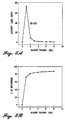
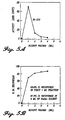
- FIG. 4a shows that Bi-213 elution provides about 73% of Bi-213 activity recovered in first ml of the eluent solution.
- FIG. 4b shows that over 87% of the Bi-213 product was recovered with 4 ml of the sodium acetate eluent.
- the miniature sorbent column was constructed from 1.6 mm i.d. FEP tubing (Upchurch) using 1/4-28 flangeless connectors and fittings (Upchurch); and 25 ⁇ m FEP frits (Alltech Associates, Deerfield, IL). The length of the column was 3 cm (calculated volume 0.06 ml). The column was packed with surface derivatized styrene-based strongly basic anion exchanger particles (particle size 50 ⁇ m) in Cl - form obtained from OnGuard-ATM column (Dionex Corporation, Sunnyvale CA).
- Results of the automated Bi-213 separation using a miniature ion exchange column are given in Table E2-2. Results of the automated separation experiments using 50 ⁇ l ion exchange column Solution Ac-225 Bi-213 Feed 2 ml 0.5 M HCl tracer Ac225/Bi213 101% 0% Scrub 0.5 ml 0.005 M HCl Not detected 1.51 % Strip 3 ml 0.1 M NaOAc Not detected 94% Column Not detected 5.7% Product Balance 101.2%
- a 25 mm anion exchange membrane disc (3M Company, St. Paul MN) was used as separation media in the separator 302 as in Example 1.
- high pressure valves 5000 psi gas pressure rating
- a 0.25 ml air segment was placed into the tubing segment 102 in the beginning of the separation procedure and was not expelled until the end of the separation run.
- the volume of the air segment used to separate zones in the holding coil was 1 ml. This air segment was propelled through the membrane to recover solutions. Following the solution delivery, additional volume of air (10 ml) was pulled into the coil and delivered through the membrane to ensure complete removal of liquid from the membrane disc and transport lines. The separation run starts with the membrane disk and all transport lines filled with air.
- the membrane disc is positioned vertically, luer adapter side at the top.
- the 3M disc was washed with 0.005M HCl to remove the interstitial feed and acid.
- the sorbed 213 Bi chloro complexed anion was then eluted at 1 ml/min increments using 0.1 M NaOAc, pH 5.5.
- the 3M web (after elution), the 4 ml of wash solution, and each of the 1 ml effluent fractions were sampled and counted using the portable GEA system.
- a sample (10 ⁇ l) of the first 1 ml of effluent was sent to the analytical laboratory for complete analysis; and the balance of the 1 ml was used for linking studies.
- the two proteins included a canine monoclonal antibody CA12.10C12 which is reactive with the CD45 antigen on hematopoietic cells and recombinant streptavidin (r-Sav).
- the r-Sav was midified with 1.5 CHX-B DTPA chelates/molecule.
- PBS phosphate buffered saline solution
- the anti-CD45 canine monoclonal antibody was modified with a 3.6 CHX-B DTPA chelates/molecule.
- a 100 ⁇ g quantity of monoclonal antibody in 120 ⁇ l of PBS was used.
- the 120 ⁇ l of protein solution was mixed with 100 ⁇ L of 1 M NaOAc, pH 5, and ⁇ 300 ⁇ l of 213 Bi from the first fraction of eluent.
- An initial determination of the amount of radioactivity was determined using a Capintec CRC-7 dose calibrator.
- the mixture was placed on the top of a NAP-10 (G-25) size exclusion column and eluted. Elution fractions (200 ⁇ l of PBS each) were collected in separate micro centrifuge tubes and counted. The empty reaction vial and the eluted NPA-10 column were also counted.
Landscapes
- Chemical & Material Sciences (AREA)
- Chemical Kinetics & Catalysis (AREA)
- General Chemical & Material Sciences (AREA)
- Physics & Mathematics (AREA)
- Engineering & Computer Science (AREA)
- General Engineering & Computer Science (AREA)
- High Energy & Nuclear Physics (AREA)
- Medicines Containing Antibodies Or Antigens For Use As Internal Diagnostic Agents (AREA)
- Treatment Of Liquids With Adsorbents In General (AREA)
- Application Of Or Painting With Fluid Materials (AREA)
- Sampling And Sample Adjustment (AREA)
- Measurement Of Radiation (AREA)
Applications Claiming Priority (3)
| Application Number | Priority Date | Filing Date | Title |
|---|---|---|---|
| US09/086,623 US6153154A (en) | 1998-05-27 | 1998-05-27 | Method for sequential injection of liquid samples for radioisotope separations |
| US86623 | 1998-05-27 | ||
| PCT/US1999/011830 WO1999062073A1 (en) | 1998-05-27 | 1999-05-26 | Method for sequential injection of liquid samples for radioisotope separations |
Publications (2)
| Publication Number | Publication Date |
|---|---|
| EP1090396A1 EP1090396A1 (en) | 2001-04-11 |
| EP1090396B1 true EP1090396B1 (en) | 2004-05-12 |
Family
ID=22199806
Family Applications (1)
| Application Number | Title | Priority Date | Filing Date |
|---|---|---|---|
| EP99935287A Expired - Lifetime EP1090396B1 (en) | 1998-05-27 | 1999-05-26 | Method for injection of liquid samples for radioisotope separations |
Country Status (9)
| Country | Link |
|---|---|
| US (1) | US6153154A (https=) |
| EP (1) | EP1090396B1 (https=) |
| JP (1) | JP4486252B2 (https=) |
| AT (1) | ATE266894T1 (https=) |
| AU (1) | AU5079799A (https=) |
| CA (1) | CA2333356C (https=) |
| DE (1) | DE69917265T2 (https=) |
| ES (1) | ES2216544T3 (https=) |
| WO (1) | WO1999062073A1 (https=) |
Cited By (1)
| Publication number | Priority date | Publication date | Assignee | Title |
|---|---|---|---|---|
| EP1927996B1 (en) * | 2005-07-27 | 2012-04-25 | Mallinckrodt LLC | Radiation-shielding assemblies and methods of using the same |
Families Citing this family (16)
| Publication number | Priority date | Publication date | Assignee | Title |
|---|---|---|---|---|
| PT967618E (pt) * | 1998-06-22 | 2003-12-31 | Europ Economic Community | Metodo e dispositivo para a preparacao de bi-213 para utilizacao terapeutica humana |
| EP1404430B1 (en) * | 2001-06-22 | 2011-10-05 | PG Research Foundation, Inc. | Automated radionuclide separation system and method |
| DE60228960D1 (de) * | 2001-06-22 | 2008-10-30 | Pg Res Foundation Inc | Kompakte automatisierte vorrichtung zur trennung von radionukliden |
| US6852296B2 (en) * | 2001-06-22 | 2005-02-08 | Pg Research Foundation | Production of ultrapure bismuth-213 for use in therapeutic nuclear medicine |
| WO2003018852A1 (en) * | 2001-08-24 | 2003-03-06 | Actinium Pharmaceuticals Ltd. | Method for rapid elution of bismuth-213 and uses thereof |
| EA007452B1 (ru) * | 2002-04-12 | 2006-10-27 | Пи Джи Рисерч Фаундейшн, Инк. | Многоколоночный генератор с инверсией избирательности для производства сверхчистых радионуклидов |
| AU2003228206A1 (en) * | 2002-06-21 | 2004-01-06 | Lynntech, Inc. | Ion exchange materials for use in a bi-213 generator |
| US6951634B2 (en) * | 2002-09-18 | 2005-10-04 | Battelle Energy Alliance, Llc | Process for recovery of daughter isotopes from a source material |
| US6972414B2 (en) * | 2003-03-24 | 2005-12-06 | Battelle Memorial Institute | Method and apparatus for production of 213Bi from a high activity 225Ac source |
| DE102004022200B4 (de) | 2004-05-05 | 2006-07-20 | Actinium Pharmaceuticals, Inc. | Radium-Target sowie Verfahren zu seiner Herstellung |
| ES2369482T3 (es) * | 2005-04-27 | 2011-12-01 | Comecer S.P.A. | Sistema para producir radiosótopos automáticamente. |
| EP1772157A1 (de) * | 2005-10-06 | 2007-04-11 | Karl-Heinz Jansen | Modul-Bausatz und Syntheseverfahren zum Herstellen von Radiopharmaka und Radionukliden |
| DE102006008023B4 (de) * | 2006-02-21 | 2008-05-29 | Actinium Pharmaceuticals, Inc. | Verfahren zum Reinigen von 225Ac aus bestrahlten 226Ra-Targets |
| CA2950532C (en) * | 2006-09-08 | 2018-10-23 | Actinium Pharmaceuticals, Inc. | Method for the purification of radium from different sources |
| DE102009049108B4 (de) * | 2009-10-12 | 2016-12-08 | Johannes Gutenberg-Universität Mainz | Verfahren und Vorrichtung zur Gewinnung eines Radionuklids |
| AU2023403061A1 (en) * | 2022-11-30 | 2025-06-19 | Jubilant Draximage Inc. | Improved and safe techniques for use of radioactive generator |
Family Cites Families (18)
| Publication number | Priority date | Publication date | Assignee | Title |
|---|---|---|---|---|
| US3576998A (en) * | 1966-11-16 | 1971-05-04 | Nen Picker Radiopharmaceutical | Self-contained, closed system and method for generating and collecting a short-lived daughter radionuclide from a long-lived parent radionuclide |
| US3740558A (en) * | 1971-02-17 | 1973-06-19 | Dainabot Radioisotope Labor Lt | Radioactive isotope generator of short-lived nuclides |
| US3902849A (en) * | 1971-08-19 | 1975-09-02 | Medi Physics Inc | Radioisotope and radiopharmaceutical generators |
| US3774036A (en) * | 1972-02-23 | 1973-11-20 | Searle & Co | Generation of a supply of radionuclide |
| NL7411605A (nl) * | 1974-09-02 | 1976-03-04 | Philips Nv | Werkwijze voor het automatisch transporteren en injekteren van een vloeistofmonster. |
| DK150802C (da) * | 1974-09-16 | 1988-02-01 | Bifok Ab | Fremgangsmaade og apparat til kontinuerlig hoejhastighedsanalyse af en vaeskeproeve i en baererstroem |
| SE414228B (sv) * | 1976-09-13 | 1980-07-14 | Bifok Ab | Sett att tillsetta prov till en kontinuerligt strommande berarlosning for automatisk analys samt anordning for genomforande av settet |
| SE414554B (sv) * | 1977-02-16 | 1980-08-04 | Bifok Ab | Sett vid kontinuerlig genomstromningsanalys, der en oavbruten, laminer berarstromning, icke segmenterad av luftblasor, genom en huvudledning transporterar en provplugg till en genomstromningsdetektor samt anordning ... |
| US4314824A (en) * | 1977-02-16 | 1982-02-09 | Bifok Ab | Programmable, continuous flow analyzer |
| SE418017B (sv) * | 1978-06-14 | 1981-04-27 | Bifok Ab | Sett att kontinuerligt bestemma olika langsamt reagerande substanser kvantitativt med anvendning av en enda metcell |
| US4315754A (en) * | 1979-08-28 | 1982-02-16 | Bifok Ab | Flow injection analysis with intermittent flow |
| US4663129A (en) * | 1985-01-30 | 1987-05-05 | The United States Of America As Represented By The United States Department Of Energy | Isotopic generator for bismuth-212 and lead-212 from radium |
| SE455537B (sv) * | 1985-01-31 | 1988-07-18 | Bifok Ab | Sett for kemisk analys vid vilken provet och/eller dess reaktionsprodukter bringas att passera en genomstromningscell, samt en apparatur for utovande av settet |
| US4683123A (en) * | 1985-08-26 | 1987-07-28 | The United States Of America As Represented By The United States Department Of Energy | Osmium-191/iridium-191m radionuclide |
| US5154897A (en) * | 1991-03-06 | 1992-10-13 | University Of Missouri | Method and apparatus for the generation of radioisotopes |
| US5186913A (en) * | 1991-04-26 | 1993-02-16 | Martin Marietta Energy Systems, Inc. | Tungsten-188/carrier-free rhenium-188 perrhenic acid generator system |
| US5749042A (en) * | 1997-01-28 | 1998-05-05 | Battelle Memorial Institute | Bismuth generator method |
| US5854968A (en) * | 1997-06-09 | 1998-12-29 | Arch Development Corporation | Process and apparatus for the production of BI-213 cations |
-
1998
- 1998-05-27 US US09/086,623 patent/US6153154A/en not_active Expired - Fee Related
-
1999
- 1999-05-26 AT AT99935287T patent/ATE266894T1/de not_active IP Right Cessation
- 1999-05-26 DE DE69917265T patent/DE69917265T2/de not_active Expired - Lifetime
- 1999-05-26 WO PCT/US1999/011830 patent/WO1999062073A1/en not_active Ceased
- 1999-05-26 CA CA002333356A patent/CA2333356C/en not_active Expired - Fee Related
- 1999-05-26 EP EP99935287A patent/EP1090396B1/en not_active Expired - Lifetime
- 1999-05-26 AU AU50797/99A patent/AU5079799A/en not_active Abandoned
- 1999-05-26 JP JP2000551396A patent/JP4486252B2/ja not_active Expired - Fee Related
- 1999-05-26 ES ES99935287T patent/ES2216544T3/es not_active Expired - Lifetime
Cited By (1)
| Publication number | Priority date | Publication date | Assignee | Title |
|---|---|---|---|---|
| EP1927996B1 (en) * | 2005-07-27 | 2012-04-25 | Mallinckrodt LLC | Radiation-shielding assemblies and methods of using the same |
Also Published As
| Publication number | Publication date |
|---|---|
| WO1999062073A1 (en) | 1999-12-02 |
| CA2333356C (en) | 2009-08-25 |
| ATE266894T1 (de) | 2004-05-15 |
| US6153154A (en) | 2000-11-28 |
| DE69917265D1 (de) | 2004-06-17 |
| EP1090396A1 (en) | 2001-04-11 |
| ES2216544T3 (es) | 2004-10-16 |
| CA2333356A1 (en) | 1999-12-02 |
| AU5079799A (en) | 1999-12-13 |
| JP4486252B2 (ja) | 2010-06-23 |
| JP2002517005A (ja) | 2002-06-11 |
| DE69917265T2 (de) | 2005-05-19 |
Similar Documents
| Publication | Publication Date | Title |
|---|---|---|
| EP1090396B1 (en) | Method for injection of liquid samples for radioisotope separations | |
| JP4495453B2 (ja) | 自動放射性核種分離システム | |
| McDevitt et al. | An 225Ac/213Bi generator system for therapeutic clinical applications: construction and operation | |
| US5749042A (en) | Bismuth generator method | |
| US7700926B2 (en) | Systems and methods for radioisotope generation | |
| US20030194364A1 (en) | Multicolumn selectivity inversion generator for production of high purity actinium for use in therapeutic nuclear medicine | |
| AU2002320137A1 (en) | Automated radionuclide separation system and method | |
| JP2005512772A (ja) | 水溶液中の金属元素イオンの分離方法および装置 | |
| AU663716B2 (en) | Tungsten-188/carrier-free rhenium-188 perrhenic acid generator system | |
| CN113874101B (zh) | 用于将镭与铅、铋和钍分离的系统和方法 | |
| Bray et al. | Development of a unique bismuth (Bi-213) automated generator for use in cancer therapy | |
| US10946310B2 (en) | Alternating flow column chromatography apparatus and method of use | |
| CN1327926C (zh) | 制备基本不含杂质的所需子体放射性核素的溶液的方法 | |
| EP1073609A2 (en) | Bismuth-213 generator and uses thereof | |
| O’Hara et al. | Hydroxamate column-based purification of zirconium-89 (89Zr) using an automated fluidic platform | |
| WO1998026852A1 (en) | Concentration of perrhenate and pertechnetate solutions | |
| Dvorakova | Production and chemical processing of Lu-177 for nuclear medicine at the Munich research reactor FRM-II | |
| US5206346A (en) | Method for iodination/purification | |
| MXPA00011635A (es) | Metodo de inyección secuencial de muestras liquidas para separaciones de radioisotopos | |
| Ruiz Quiros | A Chromatographic Method to Separate Sc (III) from Zn (II) Ions: A Step in the Purification of Sc-44 (an isotope of medical interest) | |
| CN117594277A (zh) | 一种从反应堆辐照富集46Ca靶料中提取47Sc的装置及方法 | |
| Knapp et al. | Concentration of perrhenate and pertechnetate solutions | |
| Bray et al. | Bismuth generator method |
Legal Events
| Date | Code | Title | Description |
|---|---|---|---|
| PUAI | Public reference made under article 153(3) epc to a published international application that has entered the european phase |
Free format text: ORIGINAL CODE: 0009012 |
|
| 17P | Request for examination filed |
Effective date: 20001220 |
|
| AK | Designated contracting states |
Kind code of ref document: A1 Designated state(s): AT BE CH CY DE DK ES FI FR GB GR IE IT LI LU MC NL PT SE |
|
| RIN1 | Information on inventor provided before grant (corrected) |
Inventor name: BRAY, LANE, A. Inventor name: GRATE, JAY, W. Inventor name: EGOROV, OLEG, B. |
|
| 17Q | First examination report despatched |
Effective date: 20021104 |
|
| GRAP | Despatch of communication of intention to grant a patent |
Free format text: ORIGINAL CODE: EPIDOSNIGR1 |
|
| RTI1 | Title (correction) |
Free format text: METHOD FOR INJECTION OF LIQUID SAMPLES FOR RADIOISOTOPE SEPARATIONS |
|
| GRAS | Grant fee paid |
Free format text: ORIGINAL CODE: EPIDOSNIGR3 |
|
| GRAA | (expected) grant |
Free format text: ORIGINAL CODE: 0009210 |
|
| AK | Designated contracting states |
Kind code of ref document: B1 Designated state(s): AT BE CH CY DE DK ES FI FR GB GR IE IT LI LU MC NL PT SE |
|
| PG25 | Lapsed in a contracting state [announced via postgrant information from national office to epo] |
Ref country code: IT Free format text: LAPSE BECAUSE OF FAILURE TO SUBMIT A TRANSLATION OF THE DESCRIPTION OR TO PAY THE FEE WITHIN THE PRESCRIBED TIME-LIMIT;WARNING: LAPSES OF ITALIAN PATENTS WITH EFFECTIVE DATE BEFORE 2007 MAY HAVE OCCURRED AT ANY TIME BEFORE 2007. THE CORRECT EFFECTIVE DATE MAY BE DIFFERENT FROM THE ONE RECORDED. Effective date: 20040512 Ref country code: FI Free format text: LAPSE BECAUSE OF FAILURE TO SUBMIT A TRANSLATION OF THE DESCRIPTION OR TO PAY THE FEE WITHIN THE PRESCRIBED TIME-LIMIT Effective date: 20040512 Ref country code: CY Free format text: LAPSE BECAUSE OF FAILURE TO SUBMIT A TRANSLATION OF THE DESCRIPTION OR TO PAY THE FEE WITHIN THE PRESCRIBED TIME-LIMIT Effective date: 20040512 Ref country code: BE Free format text: LAPSE BECAUSE OF FAILURE TO SUBMIT A TRANSLATION OF THE DESCRIPTION OR TO PAY THE FEE WITHIN THE PRESCRIBED TIME-LIMIT Effective date: 20040512 Ref country code: AT Free format text: LAPSE BECAUSE OF FAILURE TO SUBMIT A TRANSLATION OF THE DESCRIPTION OR TO PAY THE FEE WITHIN THE PRESCRIBED TIME-LIMIT Effective date: 20040512 |
|
| REG | Reference to a national code |
Ref country code: GB Ref legal event code: FG4D |
|
| REG | Reference to a national code |
Ref country code: CH Ref legal event code: EP |
|
| PG25 | Lapsed in a contracting state [announced via postgrant information from national office to epo] |
Ref country code: LU Free format text: LAPSE BECAUSE OF NON-PAYMENT OF DUE FEES Effective date: 20040526 Ref country code: IE Free format text: LAPSE BECAUSE OF NON-PAYMENT OF DUE FEES Effective date: 20040526 |
|
| PG25 | Lapsed in a contracting state [announced via postgrant information from national office to epo] |
Ref country code: MC Free format text: LAPSE BECAUSE OF NON-PAYMENT OF DUE FEES Effective date: 20040531 |
|
| REG | Reference to a national code |
Ref country code: IE Ref legal event code: FG4D |
|
| REF | Corresponds to: |
Ref document number: 69917265 Country of ref document: DE Date of ref document: 20040617 Kind code of ref document: P |
|
| REG | Reference to a national code |
Ref country code: CH Ref legal event code: NV Representative=s name: E. BLUM & CO. PATENTANWAELTE |
|
| PG25 | Lapsed in a contracting state [announced via postgrant information from national office to epo] |
Ref country code: SE Free format text: LAPSE BECAUSE OF FAILURE TO SUBMIT A TRANSLATION OF THE DESCRIPTION OR TO PAY THE FEE WITHIN THE PRESCRIBED TIME-LIMIT Effective date: 20040812 Ref country code: GR Free format text: LAPSE BECAUSE OF FAILURE TO SUBMIT A TRANSLATION OF THE DESCRIPTION OR TO PAY THE FEE WITHIN THE PRESCRIBED TIME-LIMIT Effective date: 20040812 Ref country code: DK Free format text: LAPSE BECAUSE OF FAILURE TO SUBMIT A TRANSLATION OF THE DESCRIPTION OR TO PAY THE FEE WITHIN THE PRESCRIBED TIME-LIMIT Effective date: 20040812 |
|
| REG | Reference to a national code |
Ref country code: ES Ref legal event code: FG2A Ref document number: 2216544 Country of ref document: ES Kind code of ref document: T3 |
|
| ET | Fr: translation filed | ||
| REG | Reference to a national code |
Ref country code: IE Ref legal event code: MM4A |
|
| PLBE | No opposition filed within time limit |
Free format text: ORIGINAL CODE: 0009261 |
|
| STAA | Information on the status of an ep patent application or granted ep patent |
Free format text: STATUS: NO OPPOSITION FILED WITHIN TIME LIMIT |
|
| 26N | No opposition filed |
Effective date: 20050215 |
|
| REG | Reference to a national code |
Ref country code: CH Ref legal event code: PFA Owner name: BATTELLE MEMORIAL INSTITUTE Free format text: BATTELLE MEMORIAL INSTITUTE#PACIFIC NORTHWEST LABORATORIES P.O. BOX 999#RICHLAND, WA 99352 (US) -TRANSFER TO- BATTELLE MEMORIAL INSTITUTE#PACIFIC NORTHWEST LABORATORIES P.O. BOX 999#RICHLAND, WA 99352 (US) |
|
| PG25 | Lapsed in a contracting state [announced via postgrant information from national office to epo] |
Ref country code: PT Free format text: LAPSE BECAUSE OF NON-PAYMENT OF DUE FEES Effective date: 20041012 |
|
| PGFP | Annual fee paid to national office [announced via postgrant information from national office to epo] |
Ref country code: FR Payment date: 20100525 Year of fee payment: 12 Ref country code: ES Payment date: 20100524 Year of fee payment: 12 |
|
| PGFP | Annual fee paid to national office [announced via postgrant information from national office to epo] |
Ref country code: NL Payment date: 20100510 Year of fee payment: 12 Ref country code: DE Payment date: 20100531 Year of fee payment: 12 |
|
| PGFP | Annual fee paid to national office [announced via postgrant information from national office to epo] |
Ref country code: CH Payment date: 20100430 Year of fee payment: 12 |
|
| PGFP | Annual fee paid to national office [announced via postgrant information from national office to epo] |
Ref country code: GB Payment date: 20100401 Year of fee payment: 12 |
|
| REG | Reference to a national code |
Ref country code: DE Ref legal event code: R119 Ref document number: 69917265 Country of ref document: DE |
|
| REG | Reference to a national code |
Ref country code: DE Ref legal event code: R119 Ref document number: 69917265 Country of ref document: DE |
|
| REG | Reference to a national code |
Ref country code: NL Ref legal event code: V1 Effective date: 20111201 |
|
| REG | Reference to a national code |
Ref country code: CH Ref legal event code: PL |
|
| GBPC | Gb: european patent ceased through non-payment of renewal fee |
Effective date: 20110526 |
|
| PG25 | Lapsed in a contracting state [announced via postgrant information from national office to epo] |
Ref country code: CH Free format text: LAPSE BECAUSE OF NON-PAYMENT OF DUE FEES Effective date: 20110531 Ref country code: NL Free format text: LAPSE BECAUSE OF NON-PAYMENT OF DUE FEES Effective date: 20111201 Ref country code: LI Free format text: LAPSE BECAUSE OF NON-PAYMENT OF DUE FEES Effective date: 20110531 |
|
| REG | Reference to a national code |
Ref country code: FR Ref legal event code: ST Effective date: 20120131 |
|
| PG25 | Lapsed in a contracting state [announced via postgrant information from national office to epo] |
Ref country code: FR Free format text: LAPSE BECAUSE OF NON-PAYMENT OF DUE FEES Effective date: 20110531 |
|
| PG25 | Lapsed in a contracting state [announced via postgrant information from national office to epo] |
Ref country code: GB Free format text: LAPSE BECAUSE OF NON-PAYMENT OF DUE FEES Effective date: 20110526 |
|
| REG | Reference to a national code |
Ref country code: ES Ref legal event code: FD2A Effective date: 20121116 |
|
| PG25 | Lapsed in a contracting state [announced via postgrant information from national office to epo] |
Ref country code: ES Free format text: LAPSE BECAUSE OF NON-PAYMENT OF DUE FEES Effective date: 20110527 |
|
| PG25 | Lapsed in a contracting state [announced via postgrant information from national office to epo] |
Ref country code: DE Free format text: LAPSE BECAUSE OF NON-PAYMENT OF DUE FEES Effective date: 20111130 |