EP1078913B1 - Verfahren zur Herstellung von Di(meth)acrylsäureestern - Google Patents
Verfahren zur Herstellung von Di(meth)acrylsäureestern Download PDFInfo
- Publication number
- EP1078913B1 EP1078913B1 EP00117576A EP00117576A EP1078913B1 EP 1078913 B1 EP1078913 B1 EP 1078913B1 EP 00117576 A EP00117576 A EP 00117576A EP 00117576 A EP00117576 A EP 00117576A EP 1078913 B1 EP1078913 B1 EP 1078913B1
- Authority
- EP
- European Patent Office
- Prior art keywords
- meth
- process according
- zirconium
- acrylic acid
- ppm
- Prior art date
- Legal status (The legal status is an assumption and is not a legal conclusion. Google has not performed a legal analysis and makes no representation as to the accuracy of the status listed.)
- Expired - Lifetime
Links
- 238000000034 method Methods 0.000 title claims description 29
- CERQOIWHTDAKMF-UHFFFAOYSA-N Methacrylic acid Chemical compound CC(=C)C(O)=O CERQOIWHTDAKMF-UHFFFAOYSA-N 0.000 title claims description 24
- 238000002360 preparation method Methods 0.000 title description 6
- 150000005690 diesters Chemical class 0.000 title description 3
- 239000003054 catalyst Substances 0.000 claims abstract description 42
- NBIIXXVUZAFLBC-UHFFFAOYSA-N Phosphoric acid Chemical compound OP(O)(O)=O NBIIXXVUZAFLBC-UHFFFAOYSA-N 0.000 claims abstract description 38
- QCWXUUIWCKQGHC-UHFFFAOYSA-N Zirconium Chemical compound [Zr] QCWXUUIWCKQGHC-UHFFFAOYSA-N 0.000 claims abstract description 21
- 229910052726 zirconium Inorganic materials 0.000 claims abstract description 21
- 229910000147 aluminium phosphate Inorganic materials 0.000 claims abstract description 18
- 239000002244 precipitate Substances 0.000 claims abstract description 9
- 238000004519 manufacturing process Methods 0.000 claims abstract description 3
- 238000005809 transesterification reaction Methods 0.000 claims description 29
- VVQNEPGJFQJSBK-UHFFFAOYSA-N Methyl methacrylate Chemical compound COC(=O)C(C)=C VVQNEPGJFQJSBK-UHFFFAOYSA-N 0.000 claims description 28
- 238000006243 chemical reaction Methods 0.000 claims description 21
- 239000011541 reaction mixture Substances 0.000 claims description 15
- YOBOXHGSEJBUPB-MTOQALJVSA-N (z)-4-hydroxypent-3-en-2-one;zirconium Chemical compound [Zr].C\C(O)=C\C(C)=O.C\C(O)=C\C(C)=O.C\C(O)=C\C(C)=O.C\C(O)=C\C(C)=O YOBOXHGSEJBUPB-MTOQALJVSA-N 0.000 claims description 8
- 238000004821 distillation Methods 0.000 claims description 8
- 150000002736 metal compounds Chemical class 0.000 claims description 8
- 150000003755 zirconium compounds Chemical class 0.000 claims description 8
- 238000011065 in-situ storage Methods 0.000 claims description 5
- 229910052751 metal Inorganic materials 0.000 claims description 5
- 239000002184 metal Substances 0.000 claims description 5
- 238000000746 purification Methods 0.000 claims description 5
- BAPJBEWLBFYGME-UHFFFAOYSA-N Methyl acrylate Chemical compound COC(=O)C=C BAPJBEWLBFYGME-UHFFFAOYSA-N 0.000 claims description 4
- POILWHVDKZOXJZ-ARJAWSKDSA-M (z)-4-oxopent-2-en-2-olate Chemical compound C\C([O-])=C\C(C)=O POILWHVDKZOXJZ-ARJAWSKDSA-M 0.000 claims description 3
- 150000001298 alcohols Chemical class 0.000 claims description 3
- QVGXLLKOCUKJST-UHFFFAOYSA-N atomic oxygen Chemical compound [O] QVGXLLKOCUKJST-UHFFFAOYSA-N 0.000 claims description 2
- SKFIUGUKJUULEM-UHFFFAOYSA-N butan-1-ol;zirconium Chemical compound [Zr].CCCCO SKFIUGUKJUULEM-UHFFFAOYSA-N 0.000 claims description 2
- 239000003112 inhibitor Substances 0.000 claims description 2
- 239000001301 oxygen Substances 0.000 claims description 2
- 229910052760 oxygen Inorganic materials 0.000 claims description 2
- 230000032050 esterification Effects 0.000 claims 1
- 238000005886 esterification reaction Methods 0.000 claims 1
- -1 acrylate ester Chemical class 0.000 abstract description 6
- 150000001252 acrylic acid derivatives Chemical class 0.000 abstract description 4
- 125000004432 carbon atom Chemical group C* 0.000 abstract description 4
- LFQSCWFLJHTTHZ-UHFFFAOYSA-N Ethanol Chemical compound CCO LFQSCWFLJHTTHZ-UHFFFAOYSA-N 0.000 abstract description 3
- 239000013522 chelant Substances 0.000 abstract description 3
- 230000001376 precipitating effect Effects 0.000 abstract 1
- 239000000203 mixture Substances 0.000 description 25
- 239000000376 reactant Substances 0.000 description 23
- NWVVVBRKAWDGAB-UHFFFAOYSA-N p-methoxyphenol Chemical compound COC1=CC=C(O)C=C1 NWVVVBRKAWDGAB-UHFFFAOYSA-N 0.000 description 13
- 239000012467 final product Substances 0.000 description 12
- 238000004817 gas chromatography Methods 0.000 description 12
- NIXOWILDQLNWCW-UHFFFAOYSA-N acrylic acid group Chemical group C(C=C)(=O)O NIXOWILDQLNWCW-UHFFFAOYSA-N 0.000 description 11
- 229940113115 polyethylene glycol 200 Drugs 0.000 description 10
- WERYXYBDKMZEQL-UHFFFAOYSA-N butane-1,4-diol Chemical compound OCCCCO WERYXYBDKMZEQL-UHFFFAOYSA-N 0.000 description 8
- OKKJLVBELUTLKV-UHFFFAOYSA-N Methanol Chemical compound OC OKKJLVBELUTLKV-UHFFFAOYSA-N 0.000 description 7
- 239000000047 product Substances 0.000 description 7
- ZWEHNKRNPOVVGH-UHFFFAOYSA-N 2-Butanone Chemical compound CCC(C)=O ZWEHNKRNPOVVGH-UHFFFAOYSA-N 0.000 description 6
- YRKCREAYFQTBPV-UHFFFAOYSA-N acetylacetone Chemical compound CC(=O)CC(C)=O YRKCREAYFQTBPV-UHFFFAOYSA-N 0.000 description 6
- 125000002496 methyl group Chemical group [H]C([H])([H])* 0.000 description 5
- PUPZLCDOIYMWBV-UHFFFAOYSA-N (1R)-1,3-butanediol Natural products CC(O)CCO PUPZLCDOIYMWBV-UHFFFAOYSA-N 0.000 description 4
- UFHFLCQGNIYNRP-UHFFFAOYSA-N Hydrogen Chemical compound [H][H] UFHFLCQGNIYNRP-UHFFFAOYSA-N 0.000 description 4
- 229920000604 Polyethylene Glycol 200 Polymers 0.000 description 4
- 238000001479 atomic absorption spectroscopy Methods 0.000 description 4
- 150000001875 compounds Chemical group 0.000 description 4
- 229940068918 polyethylene glycol 400 Drugs 0.000 description 4
- 238000006116 polymerization reaction Methods 0.000 description 4
- DNIAPMSPPWPWGF-VKHMYHEASA-N (+)-propylene glycol Chemical compound C[C@H](O)CO DNIAPMSPPWPWGF-VKHMYHEASA-N 0.000 description 3
- YPFDHNVEDLHUCE-UHFFFAOYSA-N 1,3-propanediol Substances OCCCO YPFDHNVEDLHUCE-UHFFFAOYSA-N 0.000 description 3
- UHOVQNZJYSORNB-UHFFFAOYSA-N Benzene Chemical compound C1=CC=CC=C1 UHOVQNZJYSORNB-UHFFFAOYSA-N 0.000 description 3
- LYCAIKOWRPUZTN-UHFFFAOYSA-N Ethylene glycol Chemical compound OCCO LYCAIKOWRPUZTN-UHFFFAOYSA-N 0.000 description 3
- YXFVVABEGXRONW-UHFFFAOYSA-N Toluene Chemical compound CC1=CC=CC=C1 YXFVVABEGXRONW-UHFFFAOYSA-N 0.000 description 3
- 239000007864 aqueous solution Substances 0.000 description 3
- 238000009835 boiling Methods 0.000 description 3
- 230000000052 comparative effect Effects 0.000 description 3
- 238000001914 filtration Methods 0.000 description 3
- 150000002334 glycols Chemical class 0.000 description 3
- 125000005647 linker group Chemical group 0.000 description 3
- 229920000166 polytrimethylene carbonate Polymers 0.000 description 3
- 238000000926 separation method Methods 0.000 description 3
- 239000000243 solution Substances 0.000 description 3
- XPUJOEOXHUYRPJ-UHFFFAOYSA-N 2,4-ditert-butyl-4-methylcyclohexa-1,5-dien-1-ol Chemical compound CC(C)(C)C1=C(O)C=CC(C)(C(C)(C)C)C1 XPUJOEOXHUYRPJ-UHFFFAOYSA-N 0.000 description 2
- SMZOUWXMTYCWNB-UHFFFAOYSA-N 2-(2-methoxy-5-methylphenyl)ethanamine Chemical compound COC1=CC=C(C)C=C1CCN SMZOUWXMTYCWNB-UHFFFAOYSA-N 0.000 description 2
- QWGRWMMWNDWRQN-UHFFFAOYSA-N 2-methylpropane-1,3-diol Chemical compound OCC(C)CO QWGRWMMWNDWRQN-UHFFFAOYSA-N 0.000 description 2
- XOJWAAUYNWGQAU-UHFFFAOYSA-N 4-(2-methylprop-2-enoyloxy)butyl 2-methylprop-2-enoate Chemical compound CC(=C)C(=O)OCCCCOC(=O)C(C)=C XOJWAAUYNWGQAU-UHFFFAOYSA-N 0.000 description 2
- YKXAYLPDMSGWEV-UHFFFAOYSA-N 4-hydroxybutyl 2-methylprop-2-enoate Chemical compound CC(=C)C(=O)OCCCCO YKXAYLPDMSGWEV-UHFFFAOYSA-N 0.000 description 2
- NTIZESTWPVYFNL-UHFFFAOYSA-N Methyl isobutyl ketone Chemical compound CC(C)CC(C)=O NTIZESTWPVYFNL-UHFFFAOYSA-N 0.000 description 2
- UIHCLUNTQKBZGK-UHFFFAOYSA-N Methyl isobutyl ketone Natural products CCC(C)C(C)=O UIHCLUNTQKBZGK-UHFFFAOYSA-N 0.000 description 2
- 229920002565 Polyethylene Glycol 400 Polymers 0.000 description 2
- 239000004721 Polyphenylene oxide Substances 0.000 description 2
- 125000000217 alkyl group Chemical group 0.000 description 2
- 230000001419 dependent effect Effects 0.000 description 2
- 150000002148 esters Chemical class 0.000 description 2
- 239000001257 hydrogen Substances 0.000 description 2
- 229910052739 hydrogen Inorganic materials 0.000 description 2
- VLKZOEOYAKHREP-UHFFFAOYSA-N n-Hexane Chemical compound CCCCCC VLKZOEOYAKHREP-UHFFFAOYSA-N 0.000 description 2
- 229920000570 polyether Polymers 0.000 description 2
- 238000001556 precipitation Methods 0.000 description 2
- BDERNNFJNOPAEC-UHFFFAOYSA-N propan-1-ol Chemical compound CCCO BDERNNFJNOPAEC-UHFFFAOYSA-N 0.000 description 2
- 230000035484 reaction time Effects 0.000 description 2
- 125000000999 tert-butyl group Chemical group [H]C([H])([H])C(*)(C([H])([H])[H])C([H])([H])[H] 0.000 description 2
- ZIBGPFATKBEMQZ-UHFFFAOYSA-N triethylene glycol Chemical compound OCCOCCOCCO ZIBGPFATKBEMQZ-UHFFFAOYSA-N 0.000 description 2
- XLYOFNOQVPJJNP-UHFFFAOYSA-N water Substances O XLYOFNOQVPJJNP-UHFFFAOYSA-N 0.000 description 2
- 150000003754 zirconium Chemical class 0.000 description 2
- VDYWHVQKENANGY-UHFFFAOYSA-N 1,3-Butyleneglycol dimethacrylate Chemical compound CC(=C)C(=O)OC(C)CCOC(=O)C(C)=C VDYWHVQKENANGY-UHFFFAOYSA-N 0.000 description 1
- QIGBRXMKCJKVMJ-UHFFFAOYSA-N 1,4-Benzenediol Natural products OC1=CC=C(O)C=C1 QIGBRXMKCJKVMJ-UHFFFAOYSA-N 0.000 description 1
- 150000005208 1,4-dihydroxybenzenes Chemical class 0.000 description 1
- CBCKQZAAMUWICA-UHFFFAOYSA-N 1,4-phenylenediamine Chemical compound NC1=CC=C(N)C=C1 CBCKQZAAMUWICA-UHFFFAOYSA-N 0.000 description 1
- WJFKNYWRSNBZNX-UHFFFAOYSA-N 10H-phenothiazine Chemical compound C1=CC=C2NC3=CC=CC=C3SC2=C1 WJFKNYWRSNBZNX-UHFFFAOYSA-N 0.000 description 1
- QTCNKIZNNWURDV-UHFFFAOYSA-N 2,2-dimethylpropane-1,3-diol Chemical compound OCC(C)(C)CO.OCC(C)(C)CO QTCNKIZNNWURDV-UHFFFAOYSA-N 0.000 description 1
- MZGMQAMKOBOIDR-UHFFFAOYSA-N 2-[2-(2-hydroxyethoxy)ethoxy]ethyl 2-methylprop-2-enoate Chemical compound CC(=C)C(=O)OCCOCCOCCO MZGMQAMKOBOIDR-UHFFFAOYSA-N 0.000 description 1
- HWSSEYVMGDIFMH-UHFFFAOYSA-N 2-[2-[2-(2-methylprop-2-enoyloxy)ethoxy]ethoxy]ethyl 2-methylprop-2-enoate Chemical compound CC(=C)C(=O)OCCOCCOCCOC(=O)C(C)=C HWSSEYVMGDIFMH-UHFFFAOYSA-N 0.000 description 1
- RBTBFTRPCNLSDE-UHFFFAOYSA-N 3,7-bis(dimethylamino)phenothiazin-5-ium Chemical compound C1=CC(N(C)C)=CC2=[S+]C3=CC(N(C)C)=CC=C3N=C21 RBTBFTRPCNLSDE-UHFFFAOYSA-N 0.000 description 1
- HTWRFCRQSLVESJ-UHFFFAOYSA-N 3-(2-methylprop-2-enoyloxy)propyl 2-methylprop-2-enoate Chemical compound CC(=C)C(=O)OCCCOC(=O)C(C)=C HTWRFCRQSLVESJ-UHFFFAOYSA-N 0.000 description 1
- GNSFRPWPOGYVLO-UHFFFAOYSA-N 3-hydroxypropyl 2-methylprop-2-enoate Chemical compound CC(=C)C(=O)OCCCO GNSFRPWPOGYVLO-UHFFFAOYSA-N 0.000 description 1
- XDTMQSROBMDMFD-UHFFFAOYSA-N Cyclohexane Chemical compound C1CCCCC1 XDTMQSROBMDMFD-UHFFFAOYSA-N 0.000 description 1
- WHXSMMKQMYFTQS-UHFFFAOYSA-N Lithium Chemical compound [Li] WHXSMMKQMYFTQS-UHFFFAOYSA-N 0.000 description 1
- 238000006845 Michael addition reaction Methods 0.000 description 1
- UTGQNNCQYDRXCH-UHFFFAOYSA-N N,N'-diphenyl-1,4-phenylenediamine Chemical compound C=1C=C(NC=2C=CC=CC=2)C=CC=1NC1=CC=CC=C1 UTGQNNCQYDRXCH-UHFFFAOYSA-N 0.000 description 1
- 229920002535 Polyethylene Glycol 1500 Polymers 0.000 description 1
- XSQUKJJJFZCRTK-UHFFFAOYSA-N Urea Chemical compound NC(N)=O XSQUKJJJFZCRTK-UHFFFAOYSA-N 0.000 description 1
- ULQMPOIOSDXIGC-UHFFFAOYSA-N [2,2-dimethyl-3-(2-methylprop-2-enoyloxy)propyl] 2-methylprop-2-enoate Chemical compound CC(=C)C(=O)OCC(C)(C)COC(=O)C(C)=C ULQMPOIOSDXIGC-UHFFFAOYSA-N 0.000 description 1
- WPMFZXJYQLIHBM-UHFFFAOYSA-N [2-methyl-3-(2-methylprop-2-enoyloxy)propyl] 2-methylprop-2-enoate Chemical compound CC(=C)C(=O)OCC(C)COC(=O)C(C)=C WPMFZXJYQLIHBM-UHFFFAOYSA-N 0.000 description 1
- 239000002253 acid Substances 0.000 description 1
- 150000007513 acids Chemical class 0.000 description 1
- 125000003118 aryl group Chemical group 0.000 description 1
- NSHHIZQAQLPYLS-UHFFFAOYSA-N butane-1,3-diol;2-methylprop-2-enoic acid Chemical compound CC(O)CCO.CC(=C)C(O)=O NSHHIZQAQLPYLS-UHFFFAOYSA-N 0.000 description 1
- 125000000484 butyl group Chemical group [H]C([*])([H])C([H])([H])C([H])([H])C([H])([H])[H] 0.000 description 1
- AXCZMVOFGPJBDE-UHFFFAOYSA-L calcium dihydroxide Chemical class [OH-].[OH-].[Ca+2] AXCZMVOFGPJBDE-UHFFFAOYSA-L 0.000 description 1
- 235000011116 calcium hydroxide Nutrition 0.000 description 1
- 239000004202 carbamide Substances 0.000 description 1
- 238000006555 catalytic reaction Methods 0.000 description 1
- 238000005119 centrifugation Methods 0.000 description 1
- 125000000113 cyclohexyl group Chemical group [H]C1([H])C([H])([H])C([H])([H])C([H])(*)C([H])([H])C1([H])[H] 0.000 description 1
- 125000001511 cyclopentyl group Chemical group [H]C1([H])C([H])([H])C([H])([H])C([H])(*)C1([H])[H] 0.000 description 1
- NZZIMKJIVMHWJC-UHFFFAOYSA-N dibenzoylmethane Chemical compound C=1C=CC=CC=1C(=O)CC(=O)C1=CC=CC=C1 NZZIMKJIVMHWJC-UHFFFAOYSA-N 0.000 description 1
- 230000000694 effects Effects 0.000 description 1
- 125000003700 epoxy group Chemical group 0.000 description 1
- 125000001495 ethyl group Chemical group [H]C([H])([H])C([H])([H])* 0.000 description 1
- 238000004880 explosion Methods 0.000 description 1
- 239000007789 gas Substances 0.000 description 1
- 125000001072 heteroaryl group Chemical group 0.000 description 1
- 125000004051 hexyl group Chemical group [H]C([H])([H])C([H])([H])C([H])([H])C([H])([H])C([H])([H])C([H])([H])* 0.000 description 1
- 230000007062 hydrolysis Effects 0.000 description 1
- 238000006460 hydrolysis reaction Methods 0.000 description 1
- 239000012442 inert solvent Substances 0.000 description 1
- 230000005764 inhibitory process Effects 0.000 description 1
- 125000000959 isobutyl group Chemical group [H]C([H])([H])C([H])(C([H])([H])[H])C([H])([H])* 0.000 description 1
- 125000001449 isopropyl group Chemical group [H]C([H])([H])C([H])(*)C([H])([H])[H] 0.000 description 1
- 229910052744 lithium Inorganic materials 0.000 description 1
- 229960000907 methylthioninium chloride Drugs 0.000 description 1
- 125000004108 n-butyl group Chemical group [H]C([H])([H])C([H])([H])C([H])([H])C([H])([H])* 0.000 description 1
- 125000004123 n-propyl group Chemical group [H]C([H])([H])C([H])([H])C([H])([H])* 0.000 description 1
- SLCVBVWXLSEKPL-UHFFFAOYSA-N neopentyl glycol Chemical compound OCC(C)(C)CO SLCVBVWXLSEKPL-UHFFFAOYSA-N 0.000 description 1
- 230000007935 neutral effect Effects 0.000 description 1
- YCIMNLLNPGFGHC-UHFFFAOYSA-N o-dihydroxy-benzene Natural products OC1=CC=CC=C1O YCIMNLLNPGFGHC-UHFFFAOYSA-N 0.000 description 1
- 125000002255 pentenyl group Chemical group C(=CCCC)* 0.000 description 1
- 125000001147 pentyl group Chemical group C(CCCC)* 0.000 description 1
- 150000002989 phenols Chemical class 0.000 description 1
- 229950000688 phenothiazine Drugs 0.000 description 1
- SDKTUKJXHDZWMB-UHFFFAOYSA-N phosphoric acid zirconium Chemical class [Zr].P(O)(O)(O)=O SDKTUKJXHDZWMB-UHFFFAOYSA-N 0.000 description 1
- 229940093430 polyethylene glycol 1500 Drugs 0.000 description 1
- XPGAWFIWCWKDDL-UHFFFAOYSA-N propan-1-olate;zirconium(4+) Chemical compound [Zr+4].CCC[O-].CCC[O-].CCC[O-].CCC[O-] XPGAWFIWCWKDDL-UHFFFAOYSA-N 0.000 description 1
- 125000001436 propyl group Chemical group [H]C([*])([H])C([H])([H])C([H])([H])[H] 0.000 description 1
- 230000009257 reactivity Effects 0.000 description 1
- 238000010992 reflux Methods 0.000 description 1
- 229920006395 saturated elastomer Polymers 0.000 description 1
- 238000007086 side reaction Methods 0.000 description 1
- 239000002904 solvent Substances 0.000 description 1
- 239000007858 starting material Substances 0.000 description 1
- 239000000126 substance Substances 0.000 description 1
- 125000003396 thiol group Chemical group [H]S* 0.000 description 1
Classifications
-
- C—CHEMISTRY; METALLURGY
- C07—ORGANIC CHEMISTRY
- C07C—ACYCLIC OR CARBOCYCLIC COMPOUNDS
- C07C67/00—Preparation of carboxylic acid esters
- C07C67/03—Preparation of carboxylic acid esters by reacting an ester group with a hydroxy group
-
- C—CHEMISTRY; METALLURGY
- C07—ORGANIC CHEMISTRY
- C07C—ACYCLIC OR CARBOCYCLIC COMPOUNDS
- C07C67/00—Preparation of carboxylic acid esters
- C07C67/48—Separation; Purification; Stabilisation; Use of additives
- C07C67/60—Separation; Purification; Stabilisation; Use of additives by treatment giving rise to chemical modification
Definitions
- the present invention relates to processes for the preparation of di (meth) acrylic esters by transesterification of (meth) acrylic acid esters of C 1 -C 4 alcohols with 1, n-diols, wherein n ⁇ 3, in the presence of metal compounds as catalysts, wherein used as a metal compound chelates of zirconium with 1,3-dicarbonyl compounds.
- Di (meth) acrylic esters are generally characterized by the catalyzed transesterification of (meth) acrylic esters receive. Catalysts for this transesterification are in the Well known in the art. So become alkaline Catalysts, such as lithium and Calcium hydroxides used, as this example in the published patent applications DE-OS 34 23 441 and 34 23 443, are described. When using this basic However, catalysts must be expected with side reactions such as the Michael Addition, the both the purity of the desired diesters and their Yield diminishes.
- zirconium complexes which are used for Catalysis of the reaction between the esters and the Alcohols can be used. These complexes lead to very high sales and high purity of Products because these catalysts are neutral. On Another advantage of these catalysts is that the alcohols are not dried before transesterification have to. These catalysts are for example in the German Offenlegungsschrift DE-OS 28 05 702 and in the European Patent EP 0 236 994 B1.
- FR-A-2 747 675 describes a method for Transesterification of (meth) acrylates in which Zirconium catalysts are formed in situ.
- the invention was based on the object To provide a process in which the catalyst without energy-intensive distillation separated from the product can be.
- the notation di (meth) acrylic ester includes diesters of methacrylic acid, acrylic acid and mixtures of both acids.
- Examples of particularly preferred compound group Y are straight-chain, branched or cyclic alkyl radicals, which can be both saturated and unsaturated, such as for example, propyl, butyl, pentyl, hexyl, cyclopentyl, Cyclohexyl, pentenyl, and polyether glycols.
- Linking groups can have reactive groups. To These reactive groups include, for example halogenated groups, epoxy groups, aromatic and heteroaromatic groups and thiol groups.
- Alkyl groups having 1 to 4 carbon atoms for example, methyl, ethyl, n-propyl, iso-propyl, n-butyl, iso-butyl and tert-butyl. This group can both unsubstituted and substituted.
- the above-mentioned (meth) acrylic esters are in the generally available commercially, with methyl acrylate and methyl methacrylate are particularly preferred. This Substances are particularly inexpensive. Furthermore, lets easily liberated in the transesterification methanol remove by distillation from the reaction mixture, so that very high sales can be achieved.
- n-diols where n ⁇ 3, especially include compounds of the formula HO-Y-OH wherein Y has the same meaning as in formula I.
- n-diols include, among others Alkoxyalkanediols, alkenoxyalkanediols, alkenediols, glycols, Polyether glycols, phenoxyalkanediols, Alkylphenoxyalkanediols, phenylalkanediols, alkylphenylalkanediols, Alkylmorpholinoalkanediols, alkylpiperidinoalkanediols, Pyridylalkandiole, Halogenalkandiole.
- 1, n-diols are 1,3-propanediol, n-butane-1,3-diol, 2-methyl-1,3-propanediol, Neopentyl glycol (2,2-dimethyl-1,3-propanediol), 1,4-butanediol, triethylene glycol and polyethylene glycol-400.
- the 1, n-diols may be alone or in the form of a mixture be used. They are generally commercial and their production is widely known in the art is known.
- Chelate complexes of zirconium with 1,3-dicarbonyl compounds are well known to those skilled in the art.
- 1,3-dicarbonyl compounds include other acetoacetic esters, acetylacetonate, 2,4-hexanedionate, 3,5-heptanedionate, 3-methylacetylacetonate, 3-phenylacetylacetonate, 4,4,4-trifluoro-1-phenyl-1,3-butanedionate, 2,2,6,6-tetramethyl-3,5-heptanedionate, 1,1,1-trifluoro-5,5-dimethyl-2,4-hexandionat, 1,1,1-trifluoro-2,4-pentanedionate and dibenzoylmethane.
- Particularly preferred is acetylacetone.
- the most particular in the context of the present invention is preferably used as a catalyst compound Zirconium acetylacetonate.
- the zirconium catalysts used singly or as a mixture.
- the quantities used for transesterification are in the range of 0.01 to 10 mol%, preferably from 0.05 to 10 mol%, based on the moles of 1, n-diols.
- the (meth) acrylic esters of the formula (II) become especially advantageously in amounts in the range 2 to 20 mol, in particular in the range of 3 to 12 moles to 1 mole 1, n-diol used.
- connections like for example, hydroquinones, hydroquinone ethers, such as Hydroquinone monomethyl ether or di-tert-butyl catechol, Phenothiazine, p-phenylenediamine, Methylene blue or sterically hindered phenols are in the Well known in the art. These connections can used singly or in the form of mixtures and are generally commercially available.
- oxygen can also be used for the inhibition become.
- This can also be in the form of air can be used, the amounts are metered advantageous be that the content in the gas phase above the Reaction mixture remains below the explosion limit.
- amounts in the range of 0.1 are particularly preferred to 1 1 per hour and mol of 1, n-diol.
- the transesterification can be under normal, under and over pressure occur.
- the reaction temperatures can be in one wide range to be chosen generally from the used pressure dependent.
- advantageous Temperatures are for example in the range of 30 to 150 ° C, especially from 50 to 130 ° C and especially preferably from 70 to 120 ° C.
- the transesterification can be both continuous as well be carried out batchwise.
- the invention Process can be carried out in bulk, i. without using one be carried out further solvent. If if desired, an inert solvent can also be used become. These include, but are not limited to, benzene, toluene, n-hexane, cyclohexane and methyl isobutyl ketone (MIBK), Methyl ethyl ketone (MEK).
- all components such as the 1, n-diol, the (meth) acrylic acid ester and the catalyst, mixed, after which this reaction mixture is heated to boiling.
- water which may be contained in the alcohol is first removed azeotropically with (meth) acrylic acid.
- the liberated C 1 -C 4 alcohol is removed by distillation, possibly azeotropically with (meth) acrylic acid, from the reaction mixture.
- reaction times are for example of the selected Parameters, such as pressure and temperature, the reactants, such as (Meth) acrylic acid and 1, n-diol, and the catalyst dependent. However, they are generally in the range of 1 to 12 hours, preferably from 3 to 8 hours. Further Hints, in terms of reaction times, the One skilled in the art from the attached examples.
- the zirconium catalyst becomes after the reaction from the mixture through Separation of phosphoric acid separated.
- the phosphoric acid can the reaction mixture in pure form and as a solution be mixed. Particularly advantageous is the Phosphoric acid added as an aqueous solution.
- the Concentration of the aqueous solution may, for example, in Range of 0.5 to 90 wt .-% are. The concentration depends in particular on the used 1, n-diol compound as shown in the examples can be.
- the amount of phosphoric acid used depends both on the used Zirconium compound as well as after the used 1, n-diol. In general, it is in the range of 0.5 to 2 Mole, per mole of zirconium compound to be precipitated.
- Precipitation forms a Precipitation, which in any way known to those skilled in the art of the reaction mixture can be separated. These include including centrifuging, decanting, distilling and filter. Because of the economic efficiency that is Filtration particularly preferred.
- the after Transesterification of the invention obtained di (meth) acrylates without distillative purification in general Zirconium content of less than 1.5 ppm, preferably less than 0.7 ppm and most preferably less than 0.1 ppm, measured as metal.
- the obtained Di (meth) acrylic acid ester without further purification be used. Small amounts of remaining 1, n-diol generally interfere with the subsequent polymerization reactions not, whereby sales are achieved in the Usually much larger than 90%.
- the Di (meth) acrylic esters are often used together with the acrylic starting materials used, so that residues These reactants do not have to be separated.
- the resulting reaction mixtures are according to the Precipitation of the catalyst by the phosphoric acid clear.
- the reaction mixture was cooled to about 90 ° C, the MMA distilled off as an azeotrope was replaced by fresh replaced and 6 g (1% based on the reactants) Zirconium acetylacetonate was added to the mixture. Subsequently, the reaction mixture boiled again heated, the formed MMA-methanol azeotrope was removed by distillation from the reaction mixture. The Head temperature rises from 65 to approx. 99 ° C, finally reaching the boiling point of pure MMA has been. After 6 hours, the reaction was complete. To this Time passed only pure MMA. The Reaction mixture was cooled. Subsequently, the Mixture 25 ml of 10% phosphoric acid (aqueous solution) was added, whereby the zirconium catalyst precipitated. Of the The precipitate formed was separated by filtration and excess MMA was removed from the mixture in vacuo away.
- the mixture was subsequently analyzed by gas chromatography. The yield was 140 g.
- the final product contained by GC analysis 94.2% 1,3-propanediol dimethacrylate, 5.2% 1,3-propanediol monomethacrylate and 0.2% 1,3-propanediol.
- Example 1 above was essentially repeated, however, 78.4 g of 1,3-butanediol and 522 g of MMA as Reactants were used. This mixture was with 200 ppm hydroquinone monomethyl ether stabilized. The Implementation took 8 hours.
- the catalyst was precipitated with 19 ml of 1% phosphoric acid.
- the yield was 157 g.
- the final product contained 98.6% 1,3-butanediol dimethacrylate and 0.17% 1,3-butanediol monomethacrylate.
- the zirconium content was determined by atomic absorption spectroscopy (AAS), this was less than 0.1 ppm.
- Example 1 above was essentially repeated, however, 78.3 g of 2-methyl-1,3-propanediol and 522 g of MMA were used as reactants. This mixture was stabilized with 200 ppm hydroquinone monomethyl ether. The conversion took 8 hours.
- the catalyst was precipitated with 25 ml of 10% phosphoric acid. The yield was 175 g. According to GC analysis, the final product contained 98.6% 2-methyl-1,3-propanediol dimethacrylate and 0.08% MMA.
- Example 1 above was essentially repeated, however, 88.4 g of neopentyl glycol and 510 g of MMA were used as reactants. This mixture was stabilized with 200 ppm hydroquinone monomethyl ether. The conversion took 5 hours.
- the final product contained 97.5% neopentyl glycol dimethacrylate and 1.2% MMA.
- Example 1 above was essentially repeated, however, 78.4 g of 1,4-butanediol and 522 g of MMA were used as reactants. This mixture was stabilized with 200 ppm hydroquinone monomethyl ether. The conversion took 4 hours.
- the catalyst was precipitated with 25 ml of 10% phosphoric acid.
- the yield was 177 g.
- the final product contained 99% 1,4-butanediol dimethacrylate, 0.14% 1,4-butanediol monomethacrylate, 0.09% 1,4-butanediol and 0.23% MMA.
- the zirconium content according to AAS was less than 0.1 ppm.
- Example 1 above was essentially repeated, however, using 560 g of polyethylene glycol-200 and 1500 g of MMA as reactants, which were placed in a 41 three-necked flask. This mixture was stabilized with 250 ppm hydroquinone monomethyl ether. The amount of zirconium acetylacetonate used was 25 g (1% based on the reactants). The conversion took 7 hours.
- the catalyst was precipitated with 100 ml of 10% phosphoric acid. The yield was 860 g. According to GC analysis, the final product contained 96.8% polyethylene glycol 200 dimethacrylate, 1% polyethylene glycol 200 monomethacrylate and 0.8% MMA.
- Example 1 above was essentially repeated, however, 70 grams of polyethylene glycol-200 and 238 grams of MMA were used as reactants. The amount of zirconium acetylacetonate used was 3 g (0.5% based on the reactants). This mixture was stabilized with 250 ppm hydroquinone monomethyl ether. In this transesterification was dispensed drainage of the reaction mixture. The conversion took 6 hours.
- the catalyst was precipitated with 12.5 ml of 10% phosphoric acid.
- the yield was 107 g.
- the final product contained 96.7% polyethylene glycol 200 dimethacrylate, 0.6% polyethylene glycol 200 monomethacrylate and 1.3% MMA.
- Example 1 above was essentially repeated, however, 600 g of triethylene glycol and 1800 g of MMA were used as reactants, which were placed in a 41 three-necked flask. This mixture was stabilized with 1000 ppm hydroquinone monomethyl ether and 250 ppm 2,4-bis (tert-butyl) -p-cresol. The amount of zirconium acetylacetonate used was 24 g (1% based on the reactants). The conversion took 6 hours.
- the catalyst was precipitated with 97 ml of 10% phosphoric acid. The yield was 1070 g. According to GC analysis, the final product contained 96.5% triethylene glycol dimethacrylate, 1.12% triethylene glycol monomethacrylate and 1% MMA. The zirconium content according to AAS was 0.6 ppm.
- Example 1 above was essentially repeated, however, 100 g of polyethylene glycol-400 and 200 g of MMA were used as reactants, which were placed in a 500 ml three-necked flask. This mixture was stabilized with 500 ppm hydroquinone monomethyl ether and 250 ppm 2,4-bis (t-butyl) -p-cresol. The amount of zirconium acetylacetonate used was 3 g (1% based on the reactants). The conversion took 3.5 hours.
- the catalyst was precipitated with 12.5 ml of 10% phosphoric acid.
- the yield was 119 g.
- the final product contained 96.7% polyethylene glycol 400 dimethacrylate and 0.07% polyethylene glycol 400 monomethacrylate.
- the zirconium content according to AAS was 1.3 ppm.
- Example 1 above was essentially repeated, however, 78.4 g of 1,4-butanediol and 522 g of MMA were used as reactants. This mixture was stabilized with 120 ppm of hydroquinone monomethyl ether and 3 mg of 2,2,6,6-tetramethylpiperidyl-N-oxyl. To this composition was added 2.9 g (6.15 mmol) of a 70% solution of tetra-n-propyl zirconate in n-propanol to form a precipitate. After addition of 2.5 g (25 mmol) of freshly distilled acetylacetone, the previously formed precipitate dissolved, after which the composition was heated to boiling temperature. The conversion took 2 hours. Subsequently, volatile compounds, such as excess MMA, were separated in vacuo (1 mbar).
- the catalyst was precipitated with 0.83 ml of 85% phosphoric acid at room temperature.
- the yield was 185 g.
- According to GC analysis contained the Final product 98.6% 1,4-butanediol dimethacrylate, 0.032% 1,4-butanediol monomethacrylate, 0.6% acetylacetone and 0.015% MMA.
- Example 1 above was essentially repeated, however, with 62 g of ethylene glycol and 600 g of MMA as Reactants were used.
- the amount used Zirconium acetylacetonate was 6.62 g (1% based on the Reactants).
- This mixture was 70 ppm Hydroquinone monomethyl ether, 40 ppm N, N'-diphenylp-phenylenediamine and 10 ppm of 2,2,6,6-tetramethyl-4-hydroxy-piperidine-N-oxyl stabilized. After 5.5 hours, the Reaction stopped because no methanol was formed.
- Example 1 above was essentially repeated, however, using 140 g (0.7 mol) of polyethylene glycol-200 and 477 g (4.77 mol) of MMA as reactants.
- the amount of zirconium acetylacetonate used was 6.2 g (1% based on the reactants).
- This mixture was stabilized with 0.059 g (250 ppm based on the reactants) of hydroquinone monomethyl ether and 5.9 mg (25 ppm based on the reactants) of 2,2,6,6-tetramethyl-4-hydroxy-piperidine-N-oxyl. In this transesterification was dispensed drainage of the reaction mixture. The conversion took 5.5 hours.
- the final product contained 96.9% polyethylene glycol 200 dimethacrylate and 1.07% polyethylene glycol 200 monomethacrylate.
- the product has a zirconium content from 43 ppm up.
Landscapes
- Chemical & Material Sciences (AREA)
- Organic Chemistry (AREA)
- Chemical Kinetics & Catalysis (AREA)
- General Chemical & Material Sciences (AREA)
- Low-Molecular Organic Synthesis Reactions Using Catalysts (AREA)
- Organic Low-Molecular-Weight Compounds And Preparation Thereof (AREA)
- Catalysts (AREA)
Description
- Erfindungsgemäße Verfahren führen zu sehr hohen Umsätzen und einer hohen Reinheit der Produkte.
- Die eingesetzten 1,n-Diole, wobei n ≥ 3 ist, müssen nicht vor ihrer Verwendung getrocknet werden.
- In dem Verfahren können preisgünstige Zirconiumverbindungen eingesetzt werden, da der Katalysator in situ durch Zugabe von 1,3-Dicarbonylverbindungen hergestellt werden kann.
- Nach der Abtrennung der durch Phosphorsäure gefällten Zirconiumverbindungen muß das Endprodukt nicht mehr destillativ gereinigt werden.
- Durch das erfindungsgemäße Verfahren werden Produkte erhalten, die keine Trübung aufweisen.
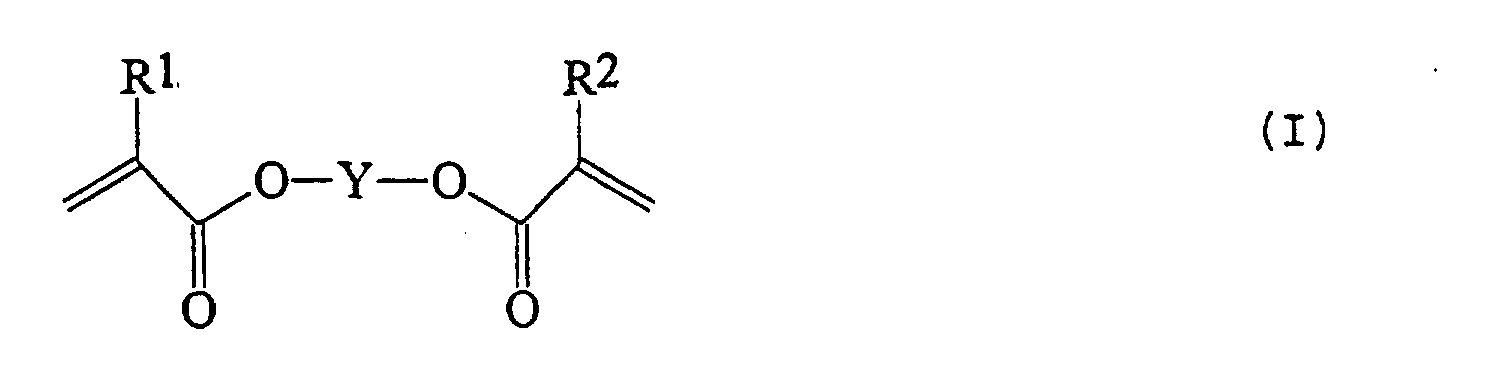
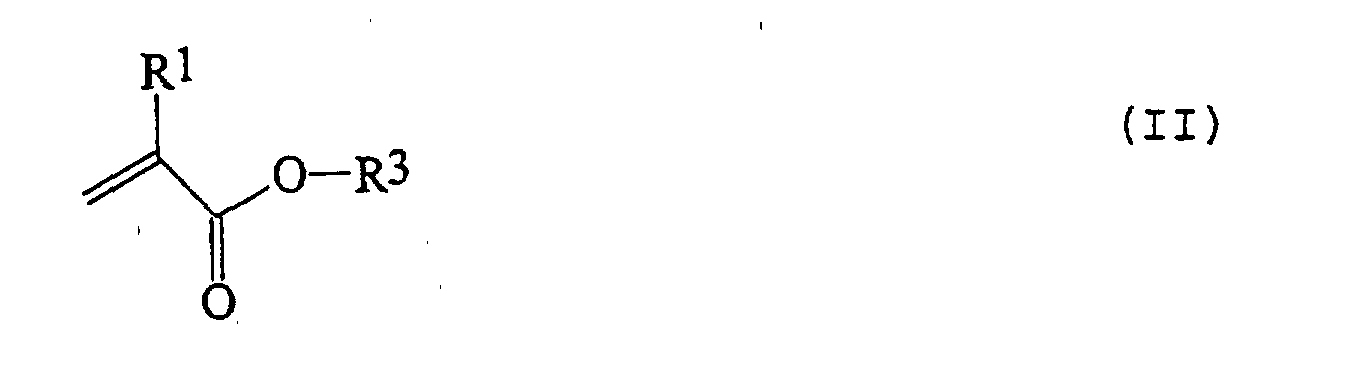
94,2 % 1,3-Propandioldimethacrylat,
5,2 % 1,3-Propandiolmonomethacrylat und
0,2 % 1,3-Propandiol.
98,6 % 1,3-Butandioldimethacrylat und
0,17 % 1,3-Butandiolmonomethacrylat. Der Zirconiumgehalt wurde durch Atomabsorptionsspektroskopie (AAS) bestimmt,
wobei dieser kleiner als 0,1 ppm war.
wobei jedoch 78,3 g 2-Methyl-1,3-propandiol und 522 g MMA als Reaktanten eingesetzt wurden. Diese Mischung wurde mit 200 ppm Hydrochinonmonomethylether stabilisiert. Die Umsetzung dauerte 8 Stunden.
98,6 % 2-Methyl-1,3-propandioldimethacrylat und
0,08 % MMA.
wobei jedoch 88,4 g Neopentylglycol und 510 g MMA als Reaktanten eingesetzt wurden. Diese Mischung wurde mit 200 ppm Hydrochinonmonomethylether stabilisiert. Die Umsetzung dauerte 5 Stunden.
wobei jedoch 78,4 g 1,4-Butandiol und 522 g MMA als Reaktanten eingesetzt wurden. Diese Mischung wurde mit 200 ppm Hydrochinonmonomethylether stabilisiert. Die Umsetzung dauerte 4 Stunden.
99 % 1,4-Butandioldimethacrylat,
0,14 % 1,4-Butandiolmonomethacrylat, 0,09 % 1,4-Butandiol und 0,23 % MMA. Der Zirconiumgehalt gemäß AAS war kleiner als 0,1 ppm.
wobei jedoch 560 g Polyethylenglycol-200 und 1500 g MMA als Reaktanten eingesetzt wurden, welche in einen 41-Dreihalskolben gegeben wurden. Diese Mischung wurde mit 250 ppm Hydrochinonmonomethylether stabilisiert. Die eingesetzte Menge an Zirconiumacetylacetonat betrug 25 g (1 % bezogen auf die Reaktanten). Die Umsetzung dauerte 7 Stunden.
96,8 % Polyethylenglycol-200-dimethacrylat,
1 % Polyethylenglycol-200-monomethacrylat und 0,8 % MMA.
wobei jedoch 70 g Polyethylenglycol-200 und 238 g MMA als Reaktanten eingesetzt wurden. Die eingesetzte Menge an Zirconiumacetylacetonat betrug 3 g (0,5 % bezogen auf die Reaktanten). Diese Mischung wurde mit 250 ppm Hydrochinonmonomethylether stabilisiert. Bei dieser Umesterung wurde auf eine Entwässerung der Reaktionsmischung verzichtet. Die Umsetzung dauerte 6 Stunden.
96,7 % Polyethylenglycol-200-dimethacrylat, 0,6 % Polyethylenglycol-200-monomethacrylat und 1,3 % MMA.
wobei jedoch 600 g Triethylenglycol und 1800 g MMA als Reaktanten eingesetzt wurden, welche in einen 41-Dreihalskolben gegeben wurden. Diese Mischung wurde mit 1000 ppm Hydrochinonmonomethylether und 250 ppm 2,4-Bis(tert.-butyl)-p-kresol stabilisiert. Die eingesetzte Menge an Zirconiumacetylacetonat betrug 24 g (1 % bezogen auf die Reaktanten). Die Umsetzung dauerte 6 Stunden.
96,5 % Triethylenglycoldimethacrylat, 1,12 % Triethylenglycolmonomethacrylat und 1 % MMA. Der Zirconiumgehalt gemäß AAS betrug 0,6 ppm.
wobei jedoch 100 g Polyethylenglycol-400 und 200 g MMA als Reaktanten eingesetzt wurden, welche in einen 500 ml Dreihalskolben gegeben wurden. Diese Mischung wurde mit 500 ppm Hydrochinonmonomethylether und 250 ppm 2,4-Bis(tert.-butyl)-p-kresol stabilisiert. Die eingesetzte Menge an Zirconiumacetylacetonat betrug 3 g (1 % bezogen auf die Reaktanten). Die Umsetzung dauerte 3,5 Stunden.
96,7 % Polyethylenglycol-400-dimethacrylat und 0,07 % Polyethylenglycol-400-monomethacrylat. Der Zirconiumgehalt gemäß AAS betrug 1,3 ppm.
wobei jedoch 78,4 g 1,4-Butandiol und 522 g MMA als Reaktanten eingesetzt wurden. Diese Mischung wurde mit 120 ppm Hydrochinonmonomethylether und 3 mg 2,2,6,6-Tetramethylpiperidyl-N-oxyl stabilisiert. Zu dieser Zusammensetzung wurden 2,9 g (6,15 mmol) einer 70%-igen Lösung von Tetra-n-propylzirconat in n-Propanol gegeben, wodurch ein Niederschlag gebildet wurde. Nach Zugabe von 2,5 g (25 mmol) frisch destilliertes Acetylaceton löste sich der zuvor gebildete Niederschlag auf, wonach die Zusammensetzung auf Siedetemperatur erhitzt wurde. Die Umsetzung dauerte 2 Stunden. Anschließend wurden leicht flüchtige Verbindungen, wie überschüssiges MMA, im Vakuum (1 mbar) abgetrennt.
Endprodukt 98,6 % 1,4-Butandioldimethacrylat,
0,032 % 1,4-Butandiolmonomethacrylat, 0,6 % Acetylaceton und 0,015% MMA.
wobei jedoch 140 g (0,7 mol) Polyethylenglycol-200 und 477 g (4,77 mol) MMA als Reaktanten eingesetzt wurden. Die eingesetzte Menge an Zirconiumacetylacetonat betrug 6,2 g (1 % bezogen auf die Reaktanten). Diese Mischung wurde mit 0,059 g (250 ppm bezogen auf die Reaktanten) Hydrochinonmonomethylether und 5,9 mg (25 ppm bezogen auf die Reaktanten) 2,2,6,6-Tetramethyl-4-hydroxy-piperidin-N-oxyl stabilisiert. Bei dieser Umesterung wurde auf eine Entwässerung der Reaktionsmischung verzichtet. Die Umsetzung dauerte 5,5 Stunden.
Claims (14)
- Verfahren zur Herstellung von Di(meth)acrylsäureestern durch Umesterung von (Meth)acrylsäureestern von C1-C4-Alkoholen mit 1,n-Diolen, worin n ≥ 3 ist, in Gegenwart von Metallverbindungen als Katalysatoren, wobei man als Metallverbindung Chelate des Zirconiums mit 1,3-Dicarbonylverbindungen einsetzt,
dadurch gekennzeichnet, daß man den Katalysator nach der Umesterung mit Phosphorsäure ausfällt und den entstandenen Niederschlag abtrennt. - Verfahren nach Anspruch 1,
dadurch gekennzeichnet, daß man den Katalysator in situ aus mindestens einer Zirconiumverbindung und mindestens einer 1,3-Dicarbonylverbindung herstellt. - Verfahren nach Anspruch 2,
dadurch gekennzeichnet, daß man als Zirconiumverbindung Tetrabutoxyzirconium und als 1,3-Dicarbonylverbindung Acetylacetonat einsetzt. - Verfahren nach einem oder mehreren der vorhergehenden Ansprüche,
dadurch gekennzeichnet, daß man Di(meth)acrylsäureester erhält, die ohne destillative Aufreinigung einen Zirconiumgehalt von weniger als 1,5 ppm, gemessen als Metall, aufweisen. - Verfahren nach Anspruch 4,
dadurch gekennzeichnet, , daß man Di(meth)acrylsäureester erhält, die ohne destillative Aufreinigung einen Zirconiumgehalt von weniger als 0,7 ppm, gemessen als Metall, aufweisen. - Verfahren nach Anspruch 5,
dadurch gekennzeichnet, daß man Di(meth)acrylsäureester erhält, die ohne destillative Aufreinigung einen Zirconiumgehalt von weniger als 0,1 ppm, gemessen als Metall, aufweisen. - Verfahren nach einem oder mehreren der vorhergehenden Ansprüche,
dadurch gekennzeichnet, daß man einen oder mehrere Katalysatoren in einer Menge von 0,01 bis 10 Mol%, bezogen auf die Mole an 1,n-Diolen, einsetzt. - Verfahren nach einem oder mehreren der vorhergehenden Ansprüche,
dadurch gekennzeichnet, daß man einen oder mehrere Katalysatoren in einer Menge von 0,05 bis 10 Mol%, bezogen auf die Mole an 1,n-Diolen, einsetzt. - Verfahren nach einem oder mehreren der vorhergehenden Ansprüche,
dadurch gekennzeichnet, daß man die Umesterung in Gegenwart von Zirconiumacetylacetonat durchführt. - Verfahren nach einem oder mehreren der vorhergehenden Ansprüche,
dadurch gekennzeichnet, daß man Methylmethacrylat oder Methylacrylat mit 1,n-Diolen, worin n = 3, 4 oder 6 ist, umsetzt. - Verfahren nach einem oder mehreren der vorhergehenden Ansprüche,
dadurch gekennzeichnet, daß man 2 bis 20 Mol (Meth)acrylsäure auf 1 Mol 1,n-Diol einsetzt. - Verfahren nach einem oder mehreren der vorhergehenden Ansprüche,
dadurch gekennzeichnet, daß man während der Reaktion das freiwerdende Alkanol des (Meth)acrylsäureesters kontinuierlich aus dem Reaktionsgemisch entfernt. - Verfahren nach einem oder mehreren der vorhergehenden Ansprüche,
dadurch gekennzeichnet,
man die Umsetzung in Gegenwart von Polymerisationsinhibitoren durchführt. - Verfahren nach einem oder mehreren der vorhergehenden Ansprüche,
dadurch gekennzeichnet, daß man die Umsetzung in Gegenwart von Luftsauerstoff durchführt.
Applications Claiming Priority (2)
| Application Number | Priority Date | Filing Date | Title |
|---|---|---|---|
| DE19940622A DE19940622C1 (de) | 1999-08-27 | 1999-08-27 | Verfahren zur Herstellung von Di(meth)acrylsäureestern |
| DE19940622 | 1999-08-27 |
Publications (3)
| Publication Number | Publication Date |
|---|---|
| EP1078913A2 EP1078913A2 (de) | 2001-02-28 |
| EP1078913A3 EP1078913A3 (de) | 2003-01-02 |
| EP1078913B1 true EP1078913B1 (de) | 2004-03-24 |
Family
ID=7919761
Family Applications (1)
| Application Number | Title | Priority Date | Filing Date |
|---|---|---|---|
| EP00117576A Expired - Lifetime EP1078913B1 (de) | 1999-08-27 | 2000-08-16 | Verfahren zur Herstellung von Di(meth)acrylsäureestern |
Country Status (5)
| Country | Link |
|---|---|
| US (1) | US6639099B1 (de) |
| EP (1) | EP1078913B1 (de) |
| JP (1) | JP4593745B2 (de) |
| AT (1) | ATE262503T1 (de) |
| DE (2) | DE19940622C1 (de) |
Families Citing this family (17)
| Publication number | Priority date | Publication date | Assignee | Title |
|---|---|---|---|---|
| DE10145228A1 (de) | 2001-09-13 | 2003-04-24 | Roehm Gmbh | Synthese von t-Butylaminoethylmethacrylat durch Umesterung des Alkohols mit MMA |
| DE10314776A1 (de) * | 2003-03-31 | 2004-10-14 | Rohmax Additives Gmbh | Schmierölzusammensetzung mit guten Reibeigenschaften |
| DE102004021717A1 (de) * | 2004-04-30 | 2005-11-24 | Rohmax Additives Gmbh | Verfahren zur Herstellung von Schmierfett |
| DE102004034618A1 (de) * | 2004-07-16 | 2006-02-16 | Rohmax Additives Gmbh | Verwendung von Pfropfcopolymeren |
| JP4583830B2 (ja) * | 2004-07-22 | 2010-11-17 | 三洋化成工業株式会社 | 不飽和モノカルボン酸エステルおよびその製造方法 |
| DE102004037929A1 (de) * | 2004-08-04 | 2006-03-16 | Rohmax Additives Gmbh | Verfahren zur radikalischen Polymerisation ethylenisch-ungesättigter Verbindungen |
| DE102006001771A1 (de) * | 2006-01-12 | 2007-07-19 | Röhm Gmbh | Verfahren zur Aufreinigung von (Meth)acrylaten |
| DE102006039420A1 (de) | 2006-08-23 | 2008-02-28 | Evonik Rohmax Additves Gmbh | Verfahren zur Herstellung von Methacrylatestern |
| DE102007031474A1 (de) | 2007-07-05 | 2009-01-08 | Evonik Röhm Gmbh | Verfahren zur Herstellung von Butandioldimethacrylaten |
| DE102007031468A1 (de) * | 2007-07-05 | 2009-01-08 | Evonik Röhm Gmbh | Verfahren zur Herstellung von Allylmethacrylat |
| DE102007031473A1 (de) | 2007-07-05 | 2009-01-08 | Evonik Röhm Gmbh | Verfahren zur Herstellung von Ethylenglycoldimethacrylat |
| FR2924114A1 (fr) * | 2007-11-27 | 2009-05-29 | Arkema France | Procede de synthese de (meth)acrylates d'alcoxypolyalkylene glycols par transesterification |
| EP2220023B1 (de) * | 2007-12-19 | 2017-04-05 | Evonik Röhm GmbH | Verfahren zur herstellung von (meth)acrylaten |
| DE102008040214A1 (de) | 2008-07-07 | 2010-01-14 | Evonik Röhm Gmbh | Verfahren zur Herstellung von Polyalkylenglykoldi(meth)acrylaten |
| CN110036057B (zh) * | 2016-12-14 | 2021-11-30 | 罗门哈斯公司 | 用于制备聚硅氧烷(甲基)丙烯酸酯的非毒性催化剂 |
| EP4376970A1 (de) | 2021-07-29 | 2024-06-05 | Basf Se | Verfahren zur kontinuierlichen destillation von acrylaten |
| DE102021133605A1 (de) | 2021-12-17 | 2023-06-22 | Basf Se | Verfahren zur Herstellung von Estern auf Basis von 2-Propylheptanol |
Family Cites Families (8)
| Publication number | Priority date | Publication date | Assignee | Title |
|---|---|---|---|---|
| GB1573071A (en) * | 1977-02-10 | 1980-08-13 | Mitsubishi Rayon Co | Process for producing unsaturated carbocylic acid esters |
| US4777265A (en) * | 1986-03-11 | 1988-10-11 | Basf Aktiengesellschaft | Preparation of acrylates and methacrylates |
| FR2602229B1 (fr) * | 1986-07-31 | 1988-09-09 | Charbonnages Ste Chimique | Procede de preparation d'esters d'acides carboxyliques insatures |
| FR2747675B1 (fr) * | 1996-04-19 | 1998-05-22 | Atochem Elf Sa | Procede de preparation de (meth)acrylates |
| EP0837049B1 (de) * | 1996-10-17 | 2002-07-31 | Rohm And Haas Company | Verfahren zum Herstellen von Monomeren |
| FR2772375B1 (fr) * | 1997-12-15 | 2000-01-14 | Atochem Elf Sa | Procede de conditionnement d'acrylates d'alkyle a longue chaine |
| JPH11236353A (ja) * | 1998-02-20 | 1999-08-31 | Kuraray Co Ltd | 2−メチル−1,4−ブタンジオール ジ(メタ)アクリレートおよびその製造方法 |
| JPH11236355A (ja) * | 1998-02-20 | 1999-08-31 | Kuraray Co Ltd | 3−メチル−1,7−オクタンジオール ジ(メタ)アクリレートおよびその製造方法 |
-
1999
- 1999-08-27 DE DE19940622A patent/DE19940622C1/de not_active Expired - Fee Related
-
2000
- 2000-08-16 DE DE50005769T patent/DE50005769D1/de not_active Expired - Lifetime
- 2000-08-16 EP EP00117576A patent/EP1078913B1/de not_active Expired - Lifetime
- 2000-08-16 AT AT00117576T patent/ATE262503T1/de not_active IP Right Cessation
- 2000-08-24 JP JP2000254163A patent/JP4593745B2/ja not_active Expired - Fee Related
- 2000-08-24 US US09/644,557 patent/US6639099B1/en not_active Expired - Fee Related
Also Published As
| Publication number | Publication date |
|---|---|
| US6639099B1 (en) | 2003-10-28 |
| DE19940622C1 (de) | 2001-05-17 |
| EP1078913A2 (de) | 2001-02-28 |
| ATE262503T1 (de) | 2004-04-15 |
| EP1078913A3 (de) | 2003-01-02 |
| JP4593745B2 (ja) | 2010-12-08 |
| DE50005769D1 (de) | 2004-04-29 |
| JP2001089415A (ja) | 2001-04-03 |
Similar Documents
| Publication | Publication Date | Title |
|---|---|---|
| DE19940622C1 (de) | Verfahren zur Herstellung von Di(meth)acrylsäureestern | |
| EP2162419B1 (de) | Verfahren zur herstellung von ethylenglycoldimethacrylat | |
| EP0148729B1 (de) | Verfahren zur Herstellung von sterisch gehinderten Hydroxyphenyl-carbonsäureestern | |
| DE102007031470A1 (de) | Verfahren zur Herstellung von (Meth)acrylaten | |
| EP0236994A1 (de) | Verfahren zur Herstellung von Acryl- und Methycrylsäureestern | |
| DE102009000861A1 (de) | Verfahren zur Herstellung von Cyanacrylsäureestern | |
| WO2003055837A1 (de) | Verfahren zur kontinuierlichen herstellung von alkyl(meth)acrylaten | |
| EP2294048A2 (de) | Verfahren zur herstellung von (meth)acrylsäureestern | |
| EP2162420B1 (de) | Verfahren zur herstellung von allylmethacrylat | |
| EP0897380A1 (de) | VERFAHREN ZUR HERSTELLUNG $g(g), $g(d)-UNGESÄTTIGTER KETONE DURCH UMSETZUNG TERTIÄRER ALLYLALKOHOLE MIT ALKENYLALKYLETHERN | |
| DE69703138T2 (de) | Verfahren zum Herstellen von substituierten Hydroxy-Hydrocinnamatestern | |
| DE19602035A1 (de) | Verfahren zur Herstellung von Alkoxypolyglycol(meth)acrylaten | |
| EP2162421B1 (de) | Verfahren zur herstellung von butandioldimethacrylaten | |
| DE10353934A1 (de) | Verfahren zur Herstellung von Metallsalzen der Trifluormethansulfonsäure und deren Verwendung als Veresterungskatalysatoren | |
| DE2745982C2 (de) | Verfahren zur Herstellung von Phosphonsäuren und Phosphinsäuren | |
| DE3843854A1 (de) | Verfahren zur verbesserten herstellung von (meth)acrylsaeureestern mehrwertiger alkohole (i) | |
| DE2928944A1 (de) | Verbessertes verfahren zur herstellung von hoeheren ungesaettigten ketonen | |
| DE3725344A1 (de) | Verfahren zur herstellung von ungesaettigten carbonsaeureestern | |
| EP0365777B1 (de) | Verfahren zur Herstellung von hochsiedenden Acrylaten bzw. Methacrylaten | |
| DE2343056A1 (de) | Verfahren zur herstellung von vanadylalkoholaten | |
| DE3325372A1 (de) | Verfahren zur herstellung von reinen adipinsaeuremonoestern | |
| EP0765861B1 (de) | Verfahren zur Herstellung von Alkylestern der (Meth)acrylsäure | |
| EP0245792B1 (de) | Verfahren zur Herstellung von Carbonsäureestern | |
| DE1173454B (de) | Verfahren zur Herstellung von N-Vinyl-carbaminsaeureestern | |
| EP1284954A1 (de) | Verfahren zur herstellung von estern ungesättigter carbonsäuren |
Legal Events
| Date | Code | Title | Description |
|---|---|---|---|
| PUAI | Public reference made under article 153(3) epc to a published international application that has entered the european phase |
Free format text: ORIGINAL CODE: 0009012 |
|
| AK | Designated contracting states |
Kind code of ref document: A2 Designated state(s): AT BE CH CY DE DK ES FI FR GB GR IE IT LI LU MC NL PT SE |
|
| AX | Request for extension of the european patent |
Free format text: AL;LT;LV;MK;RO;SI |
|
| RAP1 | Party data changed (applicant data changed or rights of an application transferred) |
Owner name: ROEHM GMBH & CO. KG |
|
| PUAL | Search report despatched |
Free format text: ORIGINAL CODE: 0009013 |
|
| AK | Designated contracting states |
Kind code of ref document: A3 Designated state(s): AT BE CH CY DE DK ES FI FR GB GR IE IT LI LU MC NL PT SE |
|
| AX | Request for extension of the european patent |
Free format text: AL;LT;LV;MK;RO;SI |
|
| 17P | Request for examination filed |
Effective date: 20030116 |
|
| RIN1 | Information on inventor provided before grant (corrected) |
Inventor name: KNEBEL, JOACHIM, DR. Inventor name: CARL, JOACHIM, DR. Inventor name: GRAEFF, GUENTHER Inventor name: WITTKOWSKI, ANDREA |
|
| AKX | Designation fees paid |
Designated state(s): AT BE CH CY DE DK ES FI FR GB GR IE IT LI LU MC NL PT SE |
|
| GRAP | Despatch of communication of intention to grant a patent |
Free format text: ORIGINAL CODE: EPIDOSNIGR1 |
|
| GRAS | Grant fee paid |
Free format text: ORIGINAL CODE: EPIDOSNIGR3 |
|
| GRAA | (expected) grant |
Free format text: ORIGINAL CODE: 0009210 |
|
| AK | Designated contracting states |
Kind code of ref document: B1 Designated state(s): AT BE CH CY DE DK ES FI FR GB GR IE IT LI LU MC NL PT SE |
|
| PG25 | Lapsed in a contracting state [announced via postgrant information from national office to epo] |
Ref country code: IT Free format text: LAPSE BECAUSE OF FAILURE TO SUBMIT A TRANSLATION OF THE DESCRIPTION OR TO PAY THE FEE WITHIN THE PRESCRIBED TIME-LIMIT;WARNING: LAPSES OF ITALIAN PATENTS WITH EFFECTIVE DATE BEFORE 2007 MAY HAVE OCCURRED AT ANY TIME BEFORE 2007. THE CORRECT EFFECTIVE DATE MAY BE DIFFERENT FROM THE ONE RECORDED. Effective date: 20040324 Ref country code: CY Free format text: LAPSE BECAUSE OF FAILURE TO SUBMIT A TRANSLATION OF THE DESCRIPTION OR TO PAY THE FEE WITHIN THE PRESCRIBED TIME-LIMIT Effective date: 20040324 Ref country code: NL Free format text: LAPSE BECAUSE OF FAILURE TO SUBMIT A TRANSLATION OF THE DESCRIPTION OR TO PAY THE FEE WITHIN THE PRESCRIBED TIME-LIMIT Effective date: 20040324 Ref country code: IE Free format text: LAPSE BECAUSE OF FAILURE TO SUBMIT A TRANSLATION OF THE DESCRIPTION OR TO PAY THE FEE WITHIN THE PRESCRIBED TIME-LIMIT Effective date: 20040324 Ref country code: ES Free format text: LAPSE BECAUSE OF FAILURE TO SUBMIT A TRANSLATION OF THE DESCRIPTION OR TO PAY THE FEE WITHIN THE PRESCRIBED TIME-LIMIT Effective date: 20040324 Ref country code: FI Free format text: LAPSE BECAUSE OF FAILURE TO SUBMIT A TRANSLATION OF THE DESCRIPTION OR TO PAY THE FEE WITHIN THE PRESCRIBED TIME-LIMIT Effective date: 20040324 |
|
| REG | Reference to a national code |
Ref country code: GB Ref legal event code: FG4D Free format text: NOT ENGLISH |
|
| REG | Reference to a national code |
Ref country code: CH Ref legal event code: EP |
|
| REG | Reference to a national code |
Ref country code: IE Ref legal event code: FG4D Free format text: GERMAN |
|
| REF | Corresponds to: |
Ref document number: 50005769 Country of ref document: DE Date of ref document: 20040429 Kind code of ref document: P |
|
| PG25 | Lapsed in a contracting state [announced via postgrant information from national office to epo] |
Ref country code: SE Free format text: LAPSE BECAUSE OF FAILURE TO SUBMIT A TRANSLATION OF THE DESCRIPTION OR TO PAY THE FEE WITHIN THE PRESCRIBED TIME-LIMIT Effective date: 20040624 Ref country code: GR Free format text: LAPSE BECAUSE OF FAILURE TO SUBMIT A TRANSLATION OF THE DESCRIPTION OR TO PAY THE FEE WITHIN THE PRESCRIBED TIME-LIMIT Effective date: 20040624 Ref country code: DK Free format text: LAPSE BECAUSE OF FAILURE TO SUBMIT A TRANSLATION OF THE DESCRIPTION OR TO PAY THE FEE WITHIN THE PRESCRIBED TIME-LIMIT Effective date: 20040624 |
|
| GBT | Gb: translation of ep patent filed (gb section 77(6)(a)/1977) |
Effective date: 20040713 |
|
| PG25 | Lapsed in a contracting state [announced via postgrant information from national office to epo] |
Ref country code: LU Free format text: LAPSE BECAUSE OF NON-PAYMENT OF DUE FEES Effective date: 20040816 Ref country code: AT Free format text: LAPSE BECAUSE OF NON-PAYMENT OF DUE FEES Effective date: 20040816 |
|
| PG25 | Lapsed in a contracting state [announced via postgrant information from national office to epo] |
Ref country code: CH Free format text: LAPSE BECAUSE OF NON-PAYMENT OF DUE FEES Effective date: 20040831 Ref country code: BE Free format text: LAPSE BECAUSE OF NON-PAYMENT OF DUE FEES Effective date: 20040831 Ref country code: MC Free format text: LAPSE BECAUSE OF NON-PAYMENT OF DUE FEES Effective date: 20040831 Ref country code: LI Free format text: LAPSE BECAUSE OF NON-PAYMENT OF DUE FEES Effective date: 20040831 |
|
| NLV1 | Nl: lapsed or annulled due to failure to fulfill the requirements of art. 29p and 29m of the patents act | ||
| REG | Reference to a national code |
Ref country code: IE Ref legal event code: FD4D |
|
| ET | Fr: translation filed | ||
| PLBE | No opposition filed within time limit |
Free format text: ORIGINAL CODE: 0009261 |
|
| STAA | Information on the status of an ep patent application or granted ep patent |
Free format text: STATUS: NO OPPOSITION FILED WITHIN TIME LIMIT |
|
| BERE | Be: lapsed |
Owner name: *ROHM G.M.B.H. & CO. K.G. Effective date: 20040831 |
|
| 26N | No opposition filed |
Effective date: 20041228 |
|
| REG | Reference to a national code |
Ref country code: CH Ref legal event code: PL |
|
| BERE | Be: lapsed |
Owner name: *ROHM G.M.B.H. & CO. K.G. Effective date: 20040831 |
|
| PG25 | Lapsed in a contracting state [announced via postgrant information from national office to epo] |
Ref country code: PT Free format text: LAPSE BECAUSE OF NON-PAYMENT OF DUE FEES Effective date: 20040824 |
|
| REG | Reference to a national code |
Ref country code: FR Ref legal event code: CJ Ref country code: FR Ref legal event code: CD |
|
| PGFP | Annual fee paid to national office [announced via postgrant information from national office to epo] |
Ref country code: DE Payment date: 20130821 Year of fee payment: 14 |
|
| PGFP | Annual fee paid to national office [announced via postgrant information from national office to epo] |
Ref country code: FR Payment date: 20130823 Year of fee payment: 14 Ref country code: GB Payment date: 20130821 Year of fee payment: 14 |
|
| REG | Reference to a national code |
Ref country code: DE Ref legal event code: R119 Ref document number: 50005769 Country of ref document: DE |
|
| GBPC | Gb: european patent ceased through non-payment of renewal fee |
Effective date: 20140816 |
|
| REG | Reference to a national code |
Ref country code: FR Ref legal event code: ST Effective date: 20150430 |
|
| REG | Reference to a national code |
Ref country code: DE Ref legal event code: R119 Ref document number: 50005769 Country of ref document: DE Effective date: 20150303 |
|
| PG25 | Lapsed in a contracting state [announced via postgrant information from national office to epo] |
Ref country code: DE Free format text: LAPSE BECAUSE OF NON-PAYMENT OF DUE FEES Effective date: 20150303 Ref country code: GB Free format text: LAPSE BECAUSE OF NON-PAYMENT OF DUE FEES Effective date: 20140816 |
|
| PG25 | Lapsed in a contracting state [announced via postgrant information from national office to epo] |
Ref country code: FR Free format text: LAPSE BECAUSE OF NON-PAYMENT OF DUE FEES Effective date: 20140901 |