EP1073015A2 - Bildsignalprozessor zur Kompression und Kodierung - Google Patents
Bildsignalprozessor zur Kompression und Kodierung Download PDFInfo
- Publication number
- EP1073015A2 EP1073015A2 EP00116419A EP00116419A EP1073015A2 EP 1073015 A2 EP1073015 A2 EP 1073015A2 EP 00116419 A EP00116419 A EP 00116419A EP 00116419 A EP00116419 A EP 00116419A EP 1073015 A2 EP1073015 A2 EP 1073015A2
- Authority
- EP
- European Patent Office
- Prior art keywords
- coefficients
- image data
- section
- processing section
- image
- Prior art date
- Legal status (The legal status is an assumption and is not a legal conclusion. Google has not performed a legal analysis and makes no representation as to the accuracy of the status listed.)
- Withdrawn
Links
Images






Classifications
-
- H—ELECTRICITY
- H04—ELECTRIC COMMUNICATION TECHNIQUE
- H04N—PICTORIAL COMMUNICATION, e.g. TELEVISION
- H04N21/00—Selective content distribution, e.g. interactive television or video on demand [VOD]
- H04N21/80—Generation or processing of content or additional data by content creator independently of the distribution process; Content per se
- H04N21/83—Generation or processing of protective or descriptive data associated with content; Content structuring
- H04N21/835—Generation of protective data, e.g. certificates
- H04N21/8358—Generation of protective data, e.g. certificates involving watermark
-
- G—PHYSICS
- G06—COMPUTING OR CALCULATING; COUNTING
- G06T—IMAGE DATA PROCESSING OR GENERATION, IN GENERAL
- G06T1/00—General purpose image data processing
- G06T1/0021—Image watermarking
-
- G—PHYSICS
- G06—COMPUTING OR CALCULATING; COUNTING
- G06T—IMAGE DATA PROCESSING OR GENERATION, IN GENERAL
- G06T9/00—Image coding
- G06T9/007—Transform coding, e.g. discrete cosine transform
-
- H—ELECTRICITY
- H04—ELECTRIC COMMUNICATION TECHNIQUE
- H04N—PICTORIAL COMMUNICATION, e.g. TELEVISION
- H04N21/00—Selective content distribution, e.g. interactive television or video on demand [VOD]
- H04N21/20—Servers specifically adapted for the distribution of content, e.g. VOD servers; Operations thereof
- H04N21/23—Processing of content or additional data; Elementary server operations; Server middleware
- H04N21/238—Interfacing the downstream path of the transmission network, e.g. adapting the transmission rate of a video stream to network bandwidth; Processing of multiplex streams
- H04N21/2389—Multiplex stream processing, e.g. multiplex stream encrypting
- H04N21/23892—Multiplex stream processing, e.g. multiplex stream encrypting involving embedding information at multiplex stream level, e.g. embedding a watermark at packet level
-
- G—PHYSICS
- G06—COMPUTING OR CALCULATING; COUNTING
- G06T—IMAGE DATA PROCESSING OR GENERATION, IN GENERAL
- G06T2201/00—General purpose image data processing
- G06T2201/005—Image watermarking
- G06T2201/0052—Embedding of the watermark in the frequency domain
-
- G—PHYSICS
- G06—COMPUTING OR CALCULATING; COUNTING
- G06T—IMAGE DATA PROCESSING OR GENERATION, IN GENERAL
- G06T2201/00—General purpose image data processing
- G06T2201/005—Image watermarking
- G06T2201/0053—Embedding of the watermark in the coding stream, possibly without decoding; Embedding of the watermark in the compressed domain
Definitions
- the present invention relates to an image signal processor and particularly relates to an image signal processor conducting processings including image data encoding and decoding processings.
- Japanese Patent Examined Application Publication No. 7-122960 proposes a method of encoding image data by providing a Vernam cipher machine in a digital camera.
- an electronic watermark technique As a technique for protecting the copyright of image data, there is proposed a technique for inserting electronic watermarks into image data, which technique is referred to as an electronic watermark technique.
- the electronic watermark technique includes a method of inserting electronic watermarks into an original signal and a method of inserting electronic watermarks into a frequency space (see NIKKEI ELECTRONICS 1997. 2. 24 pp. 99-124).
- image data is normally very large in size and it is difficult to process encoding operation at high speed by means of a processor of relatively weak calculation power such as a processor built in a digital camera.
- a digital camera or the like stores picked-up image data by compressing the image data according to a JPEG compression scheme and recording them on a storage medium or the like.
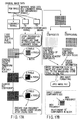
- this JPEG compression scheme is a technique for, as shown in FIGS. 17A, 17B and 18, dividing image data into small blocks of fixed size, converting the blocks into frequency space for each block, discarding high frequency components which do not much contribute to the human recognition of images and thereby compressing the image data.
- FIG. 17A is a conceptual view of the algorithm of this JPEG compression scheme.
- FIG. 18 is a flow chart for describing a compression processing conducted according to the JPEG compression scheme.
- FIG. 17B shows the relationship among components in a block according to the above-stated JPEG compression scheme.
- the present invention takes note of the fact that only the image data part of the DC coefficients greatly contributing to the recognition of the content of the image is encoded and that the entire contents of the image data can be kept secret.
- the present invention is intended to encode a mass storage data file such as an image data file at high speed.
- the present invention takes note of a technique for inserting electronic watermark data into an image when an image is encoded and compressed as a technique effective if image data is large in size and a technique for protecting the copyright of the image data.
- the present invention is, therefore, intended to encode a mass storage data file such as an image data file at high speed.
- the electronic watermark data insertion technique is a method of inserting electronic watermarks into a series of direct current data components which have been converted into a frequency space (note, if the series of the direct current data components are arranged, an image having a lower resolution than that of an original image is obtained).
- the size of a block is 8 ⁇ 8.
- the electronic watermark insertion technique involves a method of inserting electronic watermarks into an original signal and a method of inserting electronic watermarks into a frequency space (see NIKKEI ELECTRONICS 1997. 2. 24, PP. 116-124). Since DC component data series can be regarded as an ordinary image although the resolution is decreased. It is, therefore, possible to utilize both of the methods.
- an object of the present invention to provide an image signal processor conducting processings including image data encoding and decoding processings which processor can encode an image data file at high speed and can insert electronic watermark data into an image by employing a technique for encoding only the image data part of DC coefficients and a technique for inserting electronic watermark data into an image so as to secure the secrecy of the contents of image data and to protect the copyright of the image data.
- an image signal processor comprising:
- an image signal processor according to (1), characterized in that
- an image signal processor according to (4), characterized in that
- an image signal processor according to (2) or (3), characterized in that
- an image signal processor according to (6), characterized in that
- an image signal processor comprising:
- an image signal processor comprising:
- an image signal processor the first to fourth embodiments according to the present invention will be outlined with reference to FIGS. 1 to 4.
- FIG. 1 is a typical view showing the outline of the first embodiment of an image signal processor according to the present invention.
- a JPEG image file 3 consisting of a file header part 1 to which header information, such as image size and a quantization table, is written, and a data part 2 which contains DC coefficients 2a and AC coefficients 2b separated from each other by a loss-less-compression processing and which is formatted for a JPEG image is obtained based on the JPEG compression scheme already described above.
- an operation amount can be reduced by about 1/64 (note, however, that since the DC coefficients and the AC coefficients are reversibly compressed, respectively, the reduction ratio is not exactly 1/64) compared with that required in a conventional technique for encoding an entire image data file containing the DC coefficients 2a and the AC coefficients 2b. It is, therefore, possible to encode a mass storage data file such as image data file at high speed.
- FIG. 2 is a typical view showing the outline of the second embodiment of the image signal processor according to the present invention.
- a JPEG image file 3 consisting of a file header part 1 to which header information, such as image size and a quantization table, is written, and a data part 2 which contains DC coefficients 2a and AC coefficients 2b separated from each other by a loss-less-compression processing and which is formatted for a JPEG image, is obtained based on the JPEG compression scheme stated above.
- a technique for encoding only the image data part of the DC coefficients 2a is employed for the JPEG image file 3 and a code 1a indicating that the image data part is encoded is inserted into a predetermined position of the header part 1 of the file 3, thereby obtaining an encoded JPEG image file 4A.
- an operation amount can be reduced by about 1/64 (note, however, that since the DC coefficients 2a and the AC coefficients 2b are reversibly compressed, respectively, the reduction ratio is not exactly 1/64) compared with a conventional technique for encoding an entire image data file containing the DC coefficients 2a and the AC coefficients 2b. It is, therefore, possible to encode a mass storage data file such as an image data file at high speed.
- the code 1a indicating that the image data part is encoded is inserted into the predetermined position of the header part 1, it is possible to facilitate a read processing and a decoding processing for the encoded JPEG image file 4A.
- FIG. 3 is a typical view showing the outline of the third embodiment of the image signal processor according to the present invention.
- a JPEG image file 3 consisting of a file header part 1 to which header information, such as image size and a quantization table, is written, and a data part 2 which contains DC coefficients 2a and AC coefficients 2b separated from each other by a loss-less-compression processing and which is formatted for a JPEG image, is obtained based on the JPEG compression scheme already stated above.
- a technique for encoding only the image data part of the DC coefficients 2a is employed for the JPEG image file 3 and the data length 1b of the DC coefficients 2a which have been reversibly compressed is inserted into a predetermined position of the header part 1, thereby obtaining an encoded JPEG image file 4B.
- an operation amount can be reduced by about 1/64 (note, however, that since the DC coefficients and the AC coefficients are reversibly compressed, respectively, the reduction ratio is not exactly 1/64) compared with a conventional technique for encoding an entire image data file containing the DC coefficients 2a and the AC coefficients 2b. It is, therefore, possible to encode a mass storage data file such as an image data file at high speed.
- the data length 1b of the DC coefficients 2a which have been reversibly compressed is inserted into the predetermined position of the header part 1, it is possible to facilitate a read processing and a decoding processing for the encoded JPEG image file 4B.
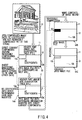
- FIG. 4 is a typical view showing the outline of the fourth embodiment of the image signal processor according to the present invention.
- a JPEG image file 13 consisting of a file header part 11 to which header information, such as image size and a quantization table, is written, and a data part 12 which contains DC coefficients 12a which are not reversibly compressed yet and AC coefficients 12b reversibly compressed and which data part is formatted for a JPEG image, is obtained.
- an operation amount can be reduced by about 1/64 (note, however, that since the DC coefficients and the AC coefficients are reversibly compressed, respectively, the reduction ratio is not exactly 1/64) compared with the conventional technique for encoding an entire image data file containing the DC coefficients 2a and the AC coefficients 2b. It is, therefore, possible to encode a mass storage data file such as an image data file at high speed. Besides, it is possible to protect the copyright of the image data and to secure the secrecy of the contents of the image data.
- FIG. 5 is a block diagram showing the concrete constitution of an image signal processor according to the first concrete example.
- this image signal processor is constituted as an mage encoder 100 which consists of a data input/output section 101, an image lossy-compression processing section 102, an image loss-less-compression processing section 103, a header information recording section 104, an encoding processing section 105 and a control section 106 all of which constituent elements are mutually connected by an internal bus.
- the section 101 Since the data input/output section 101 is connected to an external module, an external apparatus or the like, the section 101 inputs original image data (e.g., RGB image data) to be encoded and outputs, if necessary, an encoded image data file or the like.
- original image data e.g., RGB image data
- the image lossy-compression processing section 102 and the image loss-less-compression processing section 103 conduct, if necessary, an image lossy-compression processing and an image loss-less-compression processing to DC coefficients and AC coefficients separated from each other in the course of JPEG compression, respectively, based on the JPEG compression scheme stated above.
- the header information recording section 104 creates header information, such as image size and a quantization table, for compression image data containing the DC coefficients and the AC coefficients separated from each other by a loss-less-compression processing in the course of the above-stated JPEG compression.
- the encoding section 105 conducts a predetermined encoding processing only to the DC coefficients separated by the loss-less-compression processing in the course of the above-stated JPEG compression.
- control section 106 controls the other constituent elements and conducts predetermined operations and processings necessary in the course of the JPEG compression according to the JPEG compression scheme stated above and also necessary for encoding only the DC coefficients.
- control section 106 includes a block dividing section 106a for dividing image data into a plurality of blocks each of a predetermined size.
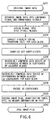
- FIG. 6 is a flow chart for describing processing procedures based on the concrete constitution of the image signal processor in the first concrete example.
- the data input/output section 101 inputs original image data (RGB image data) (in a step S201).
- control section 106 separates the original image data (RGB image data) into a luminance signal (Y) and chrominance signals (Cb) and (Cr) (in a step S202).
- the block dividing section 106a in the control section 106 divides each of the luminance signal (Y) and the chrominance signals (Cb) and (Cr) into blocks each consisting of 8 (pixels) ⁇ 8 (pixels) (in a step S203).
- control section 106 conducts a discrete cosine transform (DCT) to each of the divided luminance signal (Y) and chrominance signals (Cb) and (Cr) for each block (in a step S204).
- DCT discrete cosine transform
- the control section 106 quantizes each of the divided luminance signal (Y) and chrominance signals (Cb) and (Cr) for each block according to DCT counting (in a step S205).
- each of the luminance signal (Y) and chrominance signals (Cb) and (Cr) DCT coefficients of which have been quantized is zigzag-scanned for each block and a high frequency component region having lower zigzag scan values is discarded, thereby separating each signal into DC coefficients and AC coefficients.
- the image loss-less-compression processing section 103 reversibly compresses a data series derived from the differences between DC coefficients of adjacent blocks (in a step S206).
- the image loss-less-compression processing section 103 reversibly compresses a data series derived from the differences between adjacent AC coefficients for each block (in a step S208).
- the encoding processing section 105 encodes only the DC coefficients which have been reversibly compressed (in a step S208).
- the header information recording section 104 creates header information, such as image size and a quantization table, for each of the luminance signal (Y) and chrominance signals (Cb) and (Cr) each of which contains the DC coefficients which have been reversibly compressed and the encoded and the AC coefficients which have been only reversibly compressed, and the created header information is written to the file header, thereby recording and storing each signal as one file (in a step S209).
- header information such as image size and a quantization table
- the control section 106 formats each of the luminance signal (Y) and the chrominance signals (Cr) and (Cb) for a JPEG image, each of which signal contains the DC coefficients and the AC coefficients and which is recorded and stored as one file by writing the header information to the file header, thereby providing a JPEG image file (in a step S210).
- an image signal processor corresponding to the above-stated first embodiment and characterized by comprising the compression processing section 102 which separates image data into the DC coefficients and the AC coefficients and which compresses the respective components, and the encoding processing section 105 which encodes the image data on the DC coefficients among the image data compressed by the compression processing section.
- the concrete constitution of an image signal processor according to the second concrete example is the same as that of the image signal processor according to the first concrete example shown in FIG. 5.
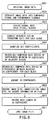
- FIG. 7 is a flow chart for describing processing procedures based on the concrete constitution of the image signal processor according to the second concrete example.
- the data input/output section 101 inputs original image data (RGB image data) (in a step S601).
- control section 106 separates the original image data into a luminance signal (Y) and chrominance signals (Cb) and (Cr) (in a step S602).
- the block dividing section 106a in the control section 106 divides each of the luminance signal (Y) and the chrominance signals (Cb) and (Cr) into blocks each consisting of 8 (pixels) ⁇ 8 (pixels) (in a step S603).
- the control section 106 conducts a discrete cosine transform (DCT) to each of the divided luminance signal (Y) and chrominance signals (Cb) and (Cr) for each block (in a step S604).
- DCT discrete cosine transform
- the control section 106 then conducts quantizes the DCT coefficients of each of the DCT-processed luminance signal (Y) and chrominance signals (Cb) and (Cr) for each block (in a step S605).
- each of the luminance signal (Y) and chrominance signals (Cb) and (Cr) DCT coefficients of which have been quantized is zigzag-scanned for each block and a high frequency region having lower zigzag scan values is discarded, thereby separating each signal into DC coefficients and AC coefficients.
- the image loss-less-compression processing section 103 conducts reversibly compressed a data series derived from the differences between DC coefficients of adjacent blocks (in a step S606).
- the image loss-less-compression processing section 103 reversibly compressed a data series derived from the differences between adjacent AC coefficients for each block (in a step S607).
- the encoding processing section 105 encodes only the DC coefficients which have been reversibly compressed (in a step S608).
- the header information recording section 104 creates header information, such as image size and a quantization table, for each of the luminance signal (Y) and chrominance signals (Cb) and (Cr) each of which contains the DC coefficients which have reversibly compressed and encoded and the AC coefficients which have been only reversibly compressed, and writes the created header information to the file header, thereby recording and storing each signal as one file (in a step S609).
- header information such as image size and a quantization table
- the header information recording section 104 writes a code indicating that encoding has been carried out, to a predetermined position of the file header (in a step S610).
- the control section 106 formats each of the luminance signal (Y) and chrominance signals (Cb) and (Cr) for a JPEG image, each of which signal contains the DC coefficients and the AC coefficients and which is recorded and stored as one file by writing the header information to the file header, thereby providing a JPEG image file (in a step S611).
- an image signal processor based on the image signal processor according to the above-stated first concrete example, corresponding to the second embodiment stated above and characterized by comprising the block dividing section 106a for dividing image data into a plurality of blocks each of a predetermined size, the loss-less-compression processing section 103 for reversibly compressing each component after separating the image data into DC coefficients and AC coefficients for each block divided by the block dividing section, and the header information recording section 107 for creating header information on the compressed data for each component separated by the loss-less-compression processing section.
- an image signal processor corresponding to the above-stated second embodiment and characterized in that the header information crating section 107 records a code indicating that the image data on the DC coefficients has been encoded by the encoding processing section 103, to a predetermined position in the header information.
- an image signal processor based on the image signal processor according to the above-stated first concrete example, corresponding to the above-stated second embodiment and characterized in that the compression processing section 103 comprises the block dividing section 106a for dividing the image data into a plurality of blocks each of a predetermined size, the loss-less-compression processing section 103 for reversibly compressing each component after separating the image data into DC coefficients and AC coefficients for each block divided by the block dividing section, and the header information recording section 107 for creating header information on the compressed data for each component separated by the loss-less-compression processing section.
- an image signal processor corresponding to the above-stated second embodiment and characterized in that the header information recording section 107 records a code indicating that the image data on the DC coefficients has been encoded by the encoding processing section 103, to a predetermined position in the header information.
- the concrete constitution of an image signal processor according to the third concrete example is the same as that of the image signal processor according to the first concrete example shown in FIG. 5.
- FIG. 8 is a flow chart for describing processing procedures based on the concrete constitution of the image signal processor according to the third concrete example.
- the data input/output section 101 inputs original image data (RGB image data) (in a step S801).
- control section 106 separates the original image data (RGB image data) into a luminance signal (Y) and chrominance signals (Cb) and (Cr) (in a step S802).
- the block dividing section 106a in the control section 106 divides each of the luminance signal (Y) and chrominance signals (Cb) and (Cr) into blocks each consisting of 8 (pixels) ⁇ 8 (pixels) (in a step S803).
- the control section then conducts a discrete cosine transform (DCT) to each of the divided luminance signal (Y) and chrominance signals (Cb) and (Cr) for each block (in a step S804).
- DCT discrete cosine transform
- the control section 106 quantizes DCT coefficients of each of the DCT-processed luminance signal (Y) and chrominance signals (Cb) and (Cr) according to DCT counting for each block (in a step S805).
- each of the luminance signal (Y) and chrominance signals (Cb) and (Cr) DCT coefficients of which have been quantized is zigzag-scanned for each block and a high frequency region having lower zigzag scan values is discarded, thereby separating each signal into DC coefficients and AC coefficients.
- the image loss-less-compression processing section 103 reversibly compresses a data series derived from the differences between DC coefficients of adjacent blocks (in a step S806).
- the image loss-less-compression processing section 103 also reversibly compresses a data series derived from the differences between adjacent AC coefficients for each block (in a step S807).
- the encoding processing section 105 encodes only the reversibly compressed DC coefficients (in a step S808).
- the header information recording section 104 creates header information, such as image size and a quantization table, on each of the luminance signal (Y) and chrominance signals (Cb) and (Cr) each of which signal contains the DC coefficients which have been reversibly compressed and encoded and the AC coefficients which have been only reversibly compressed, and writes the created header information to the file header, thereby recording and storing each signal as one file (in a step S809).
- header information such as image size and a quantization table
- the header information recording section 104 writes the data length of the DC coefficients which have been reversibly compressed and encoded, to a predetermined position of the file header (in a step S810).
- the control section 106 formats each of the luminance signal (Y) and chrominance signals (Cb) and (Cr) according to DCT counting, each of which signal contains the DC coefficients and the AC coefficients and which is recorded and stored as one file by writing the header information to the file header, thereby providing a JPEG image file (in a step S811).
- an image signal processor based on the image signal processor according to the second concrete example, corresponding to the third embodiment stated above and characterized in that the header information recording section 104 records the size of the image data before the DC coefficients are encoded, to a predetermined position in the header information if the encoding processing section 103 employs the block encoding method.
- FIG. 9 is a block diagram showing the concrete constitution of an image signal processor according to the fourth concrete example.
- the image signal processor is constituted as an image decoder 200 consisting of a data input/output section 201, an expansion processing section 202 with respect to an image lossy-compression processing, an expansion processing section 203 with respect to an image loss-less-compression processing, a header information reading section 204, a decoding processing section 205 and a control section 206, all of which constituent elements are mutually connected by an internal bus.
- the section 201 Since the data input/output section 201 is connected to an external module, an external apparatus or the like, the section 201 inputs compressed image data at least DC coefficients of which have been encoded by the image signal processor or the like according to the above-stated first to third concrete examples, and outputs, if necessary, a decoded mage data file or the like.
- the header information read section 204 reads header information, such as image size and a quantization table, on the compressed image data recorded on a file header part in the course of the above-stated JPEG compression.
- the decoding processing section 205 reads the encoded DC coefficients from the input, compressed image data at least DC coefficients of which have been encoded, based on the header information read by the header information read section 204, and decodes the image data on the encoded DC coefficients using a predetermined decoding key.
- the expansion processing section 202 with respect to the image lossy-compression processing and the expansion processing section 203 with respect to the image loss-less-compression processing conduct, if necessary, an expansion processing with respect to the image lossy-compression processing and an expansion processing with respect to the image loss-less-compression processing to the image data decoded by the decoding processing section 205 for the DC coefficients and AC coefficients, respectively, separated in the course of the above-stated JPEG compression according to the JPEG compression scheme stated above, based on the header information read by the header information reading section 204.
- the control section 206 controls the other constituent elements and conducts predetermined operations and processings necessary for the decoding processing conducted to the DC coefficients in the above-stated image data and necessary for the expansion processing conducted to the DC coefficients and the AC coefficients, respectively.
- FIG. 10 is a flow chart for describing processing procedures based on the concrete constitution of the image signal processor according to the fourth concrete example.
- the data input/output section 201 inputs compressed image data at least DC coefficients of which have been encoded (in a step S301).
- the control section 206 reads the encoded DC coefficients based on the header information read by the header information read section 204 (in a step S302).
- the decoding processing section 205 decodes the image data on the DC coefficients thus read using a predetermined decoding key (in a step S303).
- the expansion processing section 202 with respect to the image lossy-compression processing and the expansion processing section 203 with respect to the image loss-less-compression processing section conduct expansion processings according to a well-known method, to the image data decoded by the decoding processing section 205 based on the header information read by the header information reading section 204, respectively (in a step S304).
- an expansion processing with respect to the image lossy-compression processing or an expansion processing with respect to the image loss-less-compression processing is conducted, if necessary, to the DC coefficients and the AC coefficients, respectively, separated in the course of the JPEG compression according to the above-stated JPEG compression scheme.
- the data input/output section 201 outputs, if necessary, the image data which has been decoded and expanded (in a step S305).
- the concrete constitution of an image signal processor according to the fifth concrete example is the same as that of the image signal processor according to the fourth concrete example shown in FIG. 9.
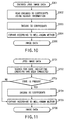
- FIG. 11 is a flow chart for describing processing procedures based on the concrete constitution of the image signal processor according to the fifth concrete example.
- the data input/output section 201 inputs compressed image data at least DC coefficients of which have been encoded (in a step S701).
- the control section 206 searches for a code indicating that the input, compressed image data has been encoded from the header information read by the header information reading section 204 (in a step S702).
- control section 206 determines whether or not the code indicating that the input, compressed image data has been encoded is present (in a step S703).
- the decoding processing section 205 decodes the image data on the DC coefficients thus read using a predetermined decoding key if the control section 206 determines that the code indicating that the input, compressed image data has been encoded is present (in a step S704).
- the expansion processing section 202 with respect to an image lossy-compression processing section and the expansion processing section 203 with respect to an image loss-less-compression processing conducts expansion processings to the image data when the control section 206 determines that the code indicating that the input, compressed image data has been encoded is not present, according to a well-known method based on the header information read by the header information reading section 204, respectively (in a step S705).
- an expansion processing with respect to the image lossy-compression processing or an expansion processing with respect to the image loss-less-compression processing is conducted, if necessary, to the DC coefficients and AC coefficients, respectively, separated from each other in the course of a JPEG compression according to the above-stated JPEG compression scheme.
- the data input/output section 201 outputs, if necessary, the image data which has been decoded and expanded (in a step S706).
- an image signal processor characterized by comprising:
- an image signal processor characterized in that the expansion processing sections 202 and 203 expand the image data using the predetermined information, the image data on the DC coefficients and the image data on the AC coefficients.
- the concrete constitution of an image signal processor according to the sixth concrete example is the same as that of the image signal processor according to the fourth concrete example shown in FIG. 9.
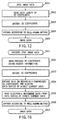
- FIG. 12 is a flow chart for describing processing procedures based on the concrete constitution of the image signal processor according to the sixth concrete example.
- the data input/output section 201 inputs compressed image data at least DC coefficients of which have been encoded (in a step S901).
- control section 206 reads the data length of the DC coefficients from header information read by the header information reading section 204 (in a step S902).
- the decoding processing section 205 decodes the image data on the DC coefficients using a predetermined decoding key based on the data length of the DC coefficients thus read (in a step S903).
- the expansion processing section 202 with respect to an image lossy-compression processing and the expansion processing section 203 with respect to an image loss-less-compression processing conduct expansion processings to the image data decoded by the decoding processing section 204 or to the image data when the control section 206 determines that a code indicating that the input, compressed image data have been encoded is not present, according to a well-known method based on the header information read by the header information reading section 204 (in a step S904).
- an expansion processing with respect to the image lossy-compression processing or an expansion processing with respect to the image loss-less-compression processing is conducted, if necessary, to the DC coefficients and the AC coefficients, respectively, separated from each other in the course of JPEG compression according to the above-stated JPEG compression scheme.
- the data input/output section 201 outputs, if necessary, the image data which has been decoded and expanded (in a step S905).
- FIG. 13 is a block diagram showing the concrete constitution of an image signal processor according to the seventh concrete example.
- the image signal processor is constituted as an image encoder 300 consisting of a data input/output section 301, an image lossy-compression processing section 302, an image loss-less-compression processing section 303, a header information recording section 304, an encoding processing section 305, a control section 306 and an electronic watermark embedding section 308, all of which constituent elements are mutually connected by an internal bus.
- the data input/output section 301 Since connected to an external module, an external apparatus or the like, the data input/output section 301 inputs original image data (e.g., RGB image data) to be encoded and outputs, if necessary, an encoded image data file or the like.
- original image data e.g., RGB image data
- the image lossy-compression processing section 302 and the image loss-less-compression processing section 303 conducts, if necessary, an image lossy-compression processing and an image loss-less-compression processing, respectively, to DC coefficients and AC coefficients separated from each other in the course of JPEG compression according to the above-stated JPEG compression scheme.
- the header information recording section 304 creates header information, such as image size and a quantization table, on the compressed image data containing the DC coefficients and the AC coefficients separated from each other by the loss-less-compression processing in the course of the above-stated JPEG compression.
- the encoding processing section 305 conducts a predetermined encoding processing only to the DC coefficients separated by the loss-less-compression processing in the course of the above-stated JPEG compression.
- the control section 306 controls the other constituent elements and conducts predetermined operations and processings necessary for the JPEG compression and necessary for the encoding processing conducted only to the DC coefficients according to the above-stated JPEG compression scheme.
- control section 306 includes a block dividing section 306a for dividing image data into a plurality of blocks each of a predetermined size.
- the electronic watermark embedding section 308 inserts watermark data into the image data part of the DC coefficients, which are not reversibly compressed yet, in the JPEG image file so as to protect the copyright of the image data. It is noted that the watermark data appears to be the same as the other image data.
- FIG. 14 is a flow chart for describing processing procedures based on the concrete constitution of the image signal processor according to the seventh concrete example.
- the data input/output section 301 inputs original image data (RGB image data) (in a step S401).
- control section 306 separates the original image data (RGB image data) into a luminance signal (Y) and chrominance signals (Cb) and (Cr) (in a step S402).
- the block dividing section 306 in the control section 306 divides each of the luminance signal (Y) and the chrominance signals (Cb) and (Cr) into blocks each consisting of 8 (pixels) ⁇ 8 (pixels) (in a step S403)
- the control section 306 conducts a discrete cosine transform (DCT) to each of the divided luminance signal (Y) and chrominance signals (Cb) and (Cr) for each block (in a step S404).
- DCT discrete cosine transform
- the control section 306 then conducts quantizes DCT coefficients of each of the DCT-processed luminance signal (Y) and chrominance signals (Cb) and (Cr) for each block (in a step S405).
- each of the luminance signal (Y) and chrominance signals (Cb) and (Cr) DCT coefficients of which have been quantized is zigzag-scanned for each block and a high frequency area having lower zigzag scan values is discarded, thereby separating each signal into DC coefficients and AC coefficients.
- the electronic mark embedding section 308 inserts electronic mark data into a data series derive from the differences between DC coefficients of adjacent blocks (in a step S406). It is noted that the electronic watermark data appears to be the same as the other image data.
- the image loss-less-compression processing section 303 reversibly compresses the data series derived from the differences between the DC coefficients of adjacent blocks into which data series the electronic watermark data has been inserted (in a step S407).
- the image loss-less-compression processing section 303 reversibly compresses a data series derived from the differences between adjacent AC coefficients for each block (in a step S408).
- the encoding processing section 305 encodes only the DC coefficients which have been reversibly compressed (in a step S409).
- the header information recording section 304 creates header information, such as image size and a quantization table, on each of the luminance signal (Y) and chrominance signals (Cb) and (Cr) each of which signal contains the DC coefficients which have been reversibly compressed and encoded and the AC coefficients which have been only reversibly compressed, and writes the created header information to a file header, thereby recording and storing each signal as one file (in a step S410).
- header information such as image size and a quantization table
- the control section 306 formats each of the luminance signal (Y) and chrominance signals (Cb) and (Cr) for a JPEG image, each of which signal contains the DC coefficients and the AC coefficients and which has been recorded and stored as one file by writing the header information to the file header, thereby providing an JPEG image file (in a step S411).
- an image signal processor based on the image signal processor according to the second concrete example, corresponding to the fourth embodiment stated above and characterized in that the encoding processing section 305 is provided with the information embedding section 308 for embedding the electronic watermark data as predetermined authentication information into the image data on the DC coefficients after the image data has been separated into the DC coefficients and the AC coefficients and that the loss-less-compression processing section 303 reversibly compresses the image data on the DC coefficients into which the authentication information has been embedded by the information embedding section.
- FIG. 15 is a block diagram showing the concrete constitution of an image signal processor according to the eighth concrete example.
- the image signal processor is constituted as an image decoder 200 consisting of a data input/output section 401, an expansion processing section 402 with respect to an image lossy-compression processing, an expansion processing section 403 with respect to an image loss-less-compression processing, a header information reading section 404, a decoding processing section 407, a control section 406 and an electronic watermark reading section 409, all of which constituent elements are mutually connected by an internal bus.
- the data input/output section 401 Since connected to an external module, an external apparatus or the like, the data input/output section 401 inputs compressed image data at least DC coefficients of which have been encoded by the image signal processor according to the first to third concrete examples and outputs, if necessary, a decoded image data file or the like.
- the header information reading section 404 reads header information, such as image size and a quantization table, on the compressed image data recorded in the file header part in the course of the above-stated JPEG compression.
- the decoding processing section 407 reads the encoded DC component from the input, compressed image data at least DC coefficients of which have been encoded based on the header information read by the header information reading section 404, and decodes the image data on the encoded DC component using a predetermined decoding key.
- the expansion processing section 402 with respect to an image lossy-compression processing and the expansion processing section 403 with respect to an image loss-less-compression processing section conduct, if necessary, an expansion processing with respect to the image lossy-compression processing and an expansion processing with respect to the image loss-less-compression processing, respectively, to the image data decoded by the decoding processing section 407 for the DC coefficients and the AC coefficients, respectively, separated from each other in the course of the JPEG compression according to the above-stated JPEG compression scheme, based on the header information read by the header information reading section 404.
- the control section 406 controls the other constituent elements and conducts predetermined operations and processings necessary for the decoding processing conducted to the DC coefficients in the image data and necessary for the expansion processings for the DC coefficients and the AC coefficients, respectively.
- the electronic watermark reading section 409 reads electronic watermark data inserted into a data series of the encoded DC coefficients among the input, compressed image data.
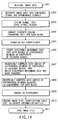
- FIG. 16 is a flow chart for describing processing procedures based on the concrete constitution of the image signal processor according to the eighth concrete example.
- the data input/output section 401 inputs compressed (JPEG) image data at least DC coefficients of which have been encoded (in a step S501).
- JPEG compressed
- control section 406 reads the encoded DC coefficients based on the header information read by the header information reading section 404 (in a step S502).
- the decoding processing section 407 decodes the image data on the DC coefficients thus read using a predetermined decoding key (in a step S503).
- the expansion processing section 403 with respect to the image loss-less-compression processing acquires a data series of the DC coefficients by expanding the image data on the DC coefficients decoded by the decoding processing section 407 (in a step S504).
- the electronic watermark reading section 409 reads electronic watermark data from the data series of the DC coefficients (in a step S505).
- the expansion processing 402 with respect to the image lossy-compression processing and the expansion processing section 403 with respect to the image loss-less-compression processing expand the image data decoded by the decoding processing section 407 or the image data when the control section 406 determines that a code indicating that the input, compressed image data has been encoded is not present, based on the header information read by the header information reading section 404 according to a well-known method (in a step S506).
- an expansion processing with respect to the image lossy-compression processing and an expansion processing with respect to the image loss-less-compression processing is conducted, if necessary, for the DC coefficients and the AC coefficients, respectively, separated from each other in the course of JPEG compression conducted according to the above-stated JPEG compression scheme.
- the data input/output section 401 outputs, if necessary, the image data which has been decoded and expanded (in a step S507).
- an image signal processor characterized by comprising: the header information reading section 404 for reading header information from the image data at least part of which has been compressed and encoded and which has header information as predetermined authentication information on DC component data, the decoding processing section 407 for reading the encoded DC component data from the compressed image data based on the header information read by the information reading section and decoding the encoded image data on the DC coefficients using a predetermined decoding key, the expansion processing section 403 for expanding the image data on the DC coefficients decoded by the decoding processing section based on the predetermined information and thereby acquiring a data series of DC coefficients, and the electronic watermark reading section 409 serving as an authentication information reading section for reading the predetermined authentication information from the data series of the DC coefficients acquired by the expansion processing section.
- the present invention can provide an image signal processor conducting processings including image data encoding and decoding processings, which processor can encode a mass storage data file such as an image data file at high speed by employing the technique for encoding only the image data part of the DC coefficients so as to secure the secrecy of the contents of image data.
- the present invention can provide an mage signal processor conducting processings including image data encoding and decoding processings, which processor can encode an image data file at high speed and can insert electronic watermark information into an image by employing the technique for encoding only the image data part of the DC coefficients and the technique for inserting electronic watermark data into the image so as to secure the secrecy of the contents of the image data and to protect the copyright of the image data.
Landscapes
- Engineering & Computer Science (AREA)
- Physics & Mathematics (AREA)
- General Physics & Mathematics (AREA)
- Multimedia (AREA)
- Theoretical Computer Science (AREA)
- Signal Processing (AREA)
- Computer Security & Cryptography (AREA)
- Discrete Mathematics (AREA)
- Compression Of Band Width Or Redundancy In Fax (AREA)
- Image Processing (AREA)
- Compression Or Coding Systems Of Tv Signals (AREA)
- Editing Of Facsimile Originals (AREA)
- Signal Processing For Digital Recording And Reproducing (AREA)
- Television Signal Processing For Recording (AREA)
Applications Claiming Priority (2)
| Application Number | Priority Date | Filing Date | Title |
|---|---|---|---|
| JP11217529A JP2001045265A (ja) | 1999-07-30 | 1999-07-30 | 画像信号処理装置 |
| JP21752999 | 1999-07-30 |
Publications (2)
| Publication Number | Publication Date |
|---|---|
| EP1073015A2 true EP1073015A2 (de) | 2001-01-31 |
| EP1073015A3 EP1073015A3 (de) | 2003-09-24 |
Family
ID=16705685
Family Applications (1)
| Application Number | Title | Priority Date | Filing Date |
|---|---|---|---|
| EP00116419A Withdrawn EP1073015A3 (de) | 1999-07-30 | 2000-07-28 | Bildsignalprozessor zur Kompression und Kodierung |
Country Status (2)
| Country | Link |
|---|---|
| EP (1) | EP1073015A3 (de) |
| JP (1) | JP2001045265A (de) |
Cited By (3)
| Publication number | Priority date | Publication date | Assignee | Title |
|---|---|---|---|---|
| EP1519562A1 (de) * | 2003-09-29 | 2005-03-30 | Lucent Technologies Inc. | Fehlerschutzverfahren zum Videobilder-Wasserzeichnen |
| US8861922B2 (en) | 2003-09-29 | 2014-10-14 | Alcatel Lucent | Watermarking scheme for digital video |
| CN107578452A (zh) * | 2017-07-31 | 2018-01-12 | 华南理工大学 | 一种具有兼容格式和不变尺寸的jpeg图像加密方法 |
Families Citing this family (2)
| Publication number | Priority date | Publication date | Assignee | Title |
|---|---|---|---|---|
| KR100501933B1 (ko) * | 2002-11-21 | 2005-07-18 | 삼성전자주식회사 | 멀티미디어 데이터 암호화 압축방법 및 장치 |
| JP4821200B2 (ja) * | 2005-07-12 | 2011-11-24 | 三菱電機株式会社 | データ変換装置、データ変換方法、データ変換プログラムおよびデータ変換プログラムを記録したコンピュータ読み取り可能な記録媒体 |
Family Cites Families (1)
| Publication number | Priority date | Publication date | Assignee | Title |
|---|---|---|---|---|
| FR2771581B1 (fr) * | 1997-11-26 | 1999-12-17 | Thomson Multimedia Sa | Procede d'embrouillage et procede de desembrouillage de donnees video numeriques et dispositifs mettant en oeuvre les procedes |
-
1999
- 1999-07-30 JP JP11217529A patent/JP2001045265A/ja not_active Withdrawn
-
2000
- 2000-07-28 EP EP00116419A patent/EP1073015A3/de not_active Withdrawn
Non-Patent Citations (1)
| Title |
|---|
| HUANG, JIWU: "A Study on Adaptive Image Coding and Adaptive Image Watermarking", November 1998, INSTITUTE OF AUTOMATION, CHINESE ACADEMY OF SCIENCES, BEIJING, CHINA * |
Cited By (7)
| Publication number | Priority date | Publication date | Assignee | Title |
|---|---|---|---|---|
| EP1519562A1 (de) * | 2003-09-29 | 2005-03-30 | Lucent Technologies Inc. | Fehlerschutzverfahren zum Videobilder-Wasserzeichnen |
| CN100546381C (zh) * | 2003-09-29 | 2009-09-30 | 朗迅科技公司 | 用于数字视频加水印的色彩选择方案 |
| US7630509B2 (en) | 2003-09-29 | 2009-12-08 | Alcatel-Lucent Usa Inc. | Color selection scheme for digital video watermarking |
| AU2004214592B2 (en) * | 2003-09-29 | 2010-03-11 | Qualcomm Incorporated | Color selection scheme for digital video watermarking |
| US8861922B2 (en) | 2003-09-29 | 2014-10-14 | Alcatel Lucent | Watermarking scheme for digital video |
| CN107578452A (zh) * | 2017-07-31 | 2018-01-12 | 华南理工大学 | 一种具有兼容格式和不变尺寸的jpeg图像加密方法 |
| CN107578452B (zh) * | 2017-07-31 | 2020-08-18 | 华南理工大学 | 一种具有兼容格式和不变尺寸的jpeg图像加密方法 |
Also Published As
| Publication number | Publication date |
|---|---|
| EP1073015A3 (de) | 2003-09-24 |
| JP2001045265A (ja) | 2001-02-16 |
Similar Documents
| Publication | Publication Date | Title |
|---|---|---|
| EP1162573A2 (de) | Bildverarbeitungsvorrichtung und -verfahren | |
| US6192138B1 (en) | Apparatus and method for embedding/unembedding supplemental information | |
| US6798977B2 (en) | Image data encoding and decoding using plural different encoding circuits | |
| US20100266157A1 (en) | Method for embedding watermark into an image and digital video recorder using said method | |
| CN1774936B (zh) | 图像文件创建设备 | |
| US6563946B2 (en) | Image processing apparatus and method | |
| US8189687B2 (en) | Data embedding apparatus, data extracting apparatus, data embedding method, and data extracting method | |
| EP1073015A2 (de) | Bildsignalprozessor zur Kompression und Kodierung | |
| JP4274653B2 (ja) | 動画像合成装置および動画像合成方法 | |
| US7848416B2 (en) | Video signal encoding apparatus and video data encoding method | |
| JP4086103B2 (ja) | 画像データ作成方法、改竄検出方法、画像データ作成装置、改竄検出装置、コンピュータプログラム、及び記録媒体 | |
| JP3853115B2 (ja) | 画像符号化装置、画像復号化装置、画像符号化方法及び画像復号化方法 | |
| JP3938054B2 (ja) | 画像データ構造を有するデータが記録されたコンピュータ読み取り可能な記憶媒体、画像記録方法、装置及びプログラム | |
| JP2001145106A (ja) | 画像圧縮装置及び方法 | |
| JP2003179758A (ja) | 画像符号化復号装置 | |
| EP1345449A1 (de) | Digitalbildkompression und Dekompression unter Verwendung von Blockcodierung | |
| JPH06327001A (ja) | 画像処理装置 | |
| JP5247793B2 (ja) | 画像処理装置、画像処理方法、及びプログラム | |
| JP4612831B2 (ja) | 可変長符号化装置及び可変長符号化方法 | |
| JP2007005844A (ja) | 符号化処理装置、符号化処理方法、プログラム及び情報記録媒体 | |
| JP2000059612A (ja) | 画像処理装置及びその方法 | |
| JPH10215366A (ja) | 圧縮画像データの抽出方法およびその装置 | |
| JP3720791B2 (ja) | 画像符号化装置及び方法、並びに画像復号装置及び方法 | |
| JP4141692B2 (ja) | 画像圧縮処理装置及び画像圧縮処理方法 | |
| JP2007060334A (ja) | 画像処理装置及び画像処理方法 |
Legal Events
| Date | Code | Title | Description |
|---|---|---|---|
| PUAI | Public reference made under article 153(3) epc to a published international application that has entered the european phase |
Free format text: ORIGINAL CODE: 0009012 |
|
| AK | Designated contracting states |
Kind code of ref document: A2 Designated state(s): AT BE CH CY DE DK ES FI FR GB GR IE IT LI LU MC NL PT SE |
|
| AX | Request for extension of the european patent |
Free format text: AL;LT;LV;MK;RO;SI |
|
| PUAL | Search report despatched |
Free format text: ORIGINAL CODE: 0009013 |
|
| AK | Designated contracting states |
Kind code of ref document: A3 Designated state(s): AT BE CH CY DE DK ES FI FR GB GR IE IT LI LU MC NL PT SE |
|
| AX | Request for extension of the european patent |
Extension state: AL LT LV MK RO SI |
|
| 17P | Request for examination filed |
Effective date: 20040120 |
|
| AKX | Designation fees paid |
Designated state(s): DE FR GB |
|
| 17Q | First examination report despatched |
Effective date: 20040603 |
|
| STAA | Information on the status of an ep patent application or granted ep patent |
Free format text: STATUS: THE APPLICATION IS DEEMED TO BE WITHDRAWN |
|
| 18D | Application deemed to be withdrawn |
Effective date: 20041014 |