EP1069486B2 - Verfahren zur Steuerung eines Komplexen Dynamischen Prozesses - Google Patents
Verfahren zur Steuerung eines Komplexen Dynamischen Prozesses Download PDFInfo
- Publication number
- EP1069486B2 EP1069486B2 EP00401870A EP00401870A EP1069486B2 EP 1069486 B2 EP1069486 B2 EP 1069486B2 EP 00401870 A EP00401870 A EP 00401870A EP 00401870 A EP00401870 A EP 00401870A EP 1069486 B2 EP1069486 B2 EP 1069486B2
- Authority
- EP
- European Patent Office
- Prior art keywords
- des
- processus
- evolution
- phenomenon
- les
- Prior art date
- Legal status (The legal status is an assumption and is not a legal conclusion. Google has not performed a legal analysis and makes no representation as to the accuracy of the status listed.)
- Expired - Lifetime
Links
- 238000000034 method Methods 0.000 title claims abstract description 376
- 230000008569 process Effects 0.000 title claims abstract description 233
- 238000004519 manufacturing process Methods 0.000 claims abstract description 69
- 230000008447 perception Effects 0.000 claims description 71
- 230000006870 function Effects 0.000 claims description 19
- 238000004458 analytical method Methods 0.000 claims description 15
- 238000009434 installation Methods 0.000 claims description 6
- 239000004568 cement Substances 0.000 claims description 5
- 239000011521 glass Substances 0.000 claims description 4
- 238000005096 rolling process Methods 0.000 claims description 4
- 239000011248 coating agent Substances 0.000 claims description 3
- 238000000576 coating method Methods 0.000 claims description 3
- 239000002184 metal Substances 0.000 claims description 3
- 229910052751 metal Inorganic materials 0.000 claims description 3
- 238000005058 metal casting Methods 0.000 claims description 3
- 230000001419 dependent effect Effects 0.000 claims description 2
- 108020001568 subdomains Proteins 0.000 claims 1
- 230000001131 transforming effect Effects 0.000 abstract description 2
- 241000135309 Processus Species 0.000 description 93
- 238000012797 qualification Methods 0.000 description 43
- 230000002123 temporal effect Effects 0.000 description 37
- 238000001514 detection method Methods 0.000 description 23
- 238000000638 solvent extraction Methods 0.000 description 20
- 230000001684 chronic effect Effects 0.000 description 17
- 230000005484 gravity Effects 0.000 description 16
- 230000008859 change Effects 0.000 description 11
- 238000012986 modification Methods 0.000 description 10
- 238000012790 confirmation Methods 0.000 description 9
- 239000013598 vector Substances 0.000 description 9
- 239000003795 chemical substances by application Substances 0.000 description 8
- 230000004907 flux Effects 0.000 description 8
- 239000003607 modifier Substances 0.000 description 8
- 230000009471 action Effects 0.000 description 7
- 239000000463 material Substances 0.000 description 6
- 230000007423 decrease Effects 0.000 description 5
- 230000004807 localization Effects 0.000 description 5
- 238000007726 management method Methods 0.000 description 5
- 230000000737 periodic effect Effects 0.000 description 5
- 229910001018 Cast iron Inorganic materials 0.000 description 4
- 241000196324 Embryophyta Species 0.000 description 4
- 239000000571 coke Substances 0.000 description 4
- 230000008449 language Effects 0.000 description 4
- 229910052748 manganese Inorganic materials 0.000 description 4
- 239000000203 mixture Substances 0.000 description 4
- 230000000051 modifying effect Effects 0.000 description 4
- 239000002893 slag Substances 0.000 description 4
- IJGRMHOSHXDMSA-UHFFFAOYSA-N Atomic nitrogen Chemical compound N#N IJGRMHOSHXDMSA-UHFFFAOYSA-N 0.000 description 3
- OKTJSMMVPCPJKN-UHFFFAOYSA-N Carbon Chemical compound [C] OKTJSMMVPCPJKN-UHFFFAOYSA-N 0.000 description 3
- 240000008042 Zea mays Species 0.000 description 3
- QVGXLLKOCUKJST-UHFFFAOYSA-N atomic oxygen Chemical compound [O] QVGXLLKOCUKJST-UHFFFAOYSA-N 0.000 description 3
- 239000003245 coal Substances 0.000 description 3
- 230000006378 damage Effects 0.000 description 3
- 239000007789 gas Substances 0.000 description 3
- 230000007774 longterm Effects 0.000 description 3
- 238000013178 mathematical model Methods 0.000 description 3
- 229910052760 oxygen Inorganic materials 0.000 description 3
- 239000001301 oxygen Substances 0.000 description 3
- 238000005070 sampling Methods 0.000 description 3
- 230000011664 signaling Effects 0.000 description 3
- 229910052717 sulfur Inorganic materials 0.000 description 3
- 230000009466 transformation Effects 0.000 description 3
- 230000007704 transition Effects 0.000 description 3
- 229910000831 Steel Inorganic materials 0.000 description 2
- 230000006978 adaptation Effects 0.000 description 2
- 230000002776 aggregation Effects 0.000 description 2
- 238000004220 aggregation Methods 0.000 description 2
- 230000032683 aging Effects 0.000 description 2
- 230000003542 behavioural effect Effects 0.000 description 2
- 230000015572 biosynthetic process Effects 0.000 description 2
- 239000002801 charged material Substances 0.000 description 2
- 238000004891 communication Methods 0.000 description 2
- 230000006854 communication Effects 0.000 description 2
- 230000003247 decreasing effect Effects 0.000 description 2
- 238000011161 development Methods 0.000 description 2
- 230000018109 developmental process Effects 0.000 description 2
- 230000000694 effects Effects 0.000 description 2
- 238000001914 filtration Methods 0.000 description 2
- 230000014509 gene expression Effects 0.000 description 2
- 230000001965 increasing effect Effects 0.000 description 2
- 230000010354 integration Effects 0.000 description 2
- XEEYBQQBJWHFJM-UHFFFAOYSA-N iron Substances [Fe] XEEYBQQBJWHFJM-UHFFFAOYSA-N 0.000 description 2
- 229910052742 iron Inorganic materials 0.000 description 2
- 230000001788 irregular Effects 0.000 description 2
- 238000002844 melting Methods 0.000 description 2
- 230000008018 melting Effects 0.000 description 2
- 238000005192 partition Methods 0.000 description 2
- 229910052698 phosphorus Inorganic materials 0.000 description 2
- 238000012545 processing Methods 0.000 description 2
- 230000011218 segmentation Effects 0.000 description 2
- 229910052710 silicon Inorganic materials 0.000 description 2
- 239000010959 steel Substances 0.000 description 2
- 239000000126 substance Substances 0.000 description 2
- 230000001360 synchronised effect Effects 0.000 description 2
- 238000003786 synthesis reaction Methods 0.000 description 2
- 238000013519 translation Methods 0.000 description 2
- 238000010200 validation analysis Methods 0.000 description 2
- 229910052725 zinc Inorganic materials 0.000 description 2
- CWYNVVGOOAEACU-UHFFFAOYSA-N Fe2+ Chemical compound [Fe+2] CWYNVVGOOAEACU-UHFFFAOYSA-N 0.000 description 1
- 241000282414 Homo sapiens Species 0.000 description 1
- 241001080024 Telles Species 0.000 description 1
- 241000897276 Termes Species 0.000 description 1
- 230000004931 aggregating effect Effects 0.000 description 1
- 238000013459 approach Methods 0.000 description 1
- 238000013473 artificial intelligence Methods 0.000 description 1
- 230000009286 beneficial effect Effects 0.000 description 1
- 238000004422 calculation algorithm Methods 0.000 description 1
- 238000004364 calculation method Methods 0.000 description 1
- 238000005266 casting Methods 0.000 description 1
- 230000001364 causal effect Effects 0.000 description 1
- 230000000739 chaotic effect Effects 0.000 description 1
- 238000006243 chemical reaction Methods 0.000 description 1
- 230000001149 cognitive effect Effects 0.000 description 1
- 230000009850 completed effect Effects 0.000 description 1
- 238000005094 computer simulation Methods 0.000 description 1
- 238000010924 continuous production Methods 0.000 description 1
- 238000007796 conventional method Methods 0.000 description 1
- 239000000498 cooling water Substances 0.000 description 1
- 238000012937 correction Methods 0.000 description 1
- 125000004122 cyclic group Chemical group 0.000 description 1
- 238000013479 data entry Methods 0.000 description 1
- 238000013523 data management Methods 0.000 description 1
- 238000013500 data storage Methods 0.000 description 1
- 230000000593 degrading effect Effects 0.000 description 1
- 238000013461 design Methods 0.000 description 1
- 238000009826 distribution Methods 0.000 description 1
- 230000009977 dual effect Effects 0.000 description 1
- 230000001747 exhibiting effect Effects 0.000 description 1
- 238000002513 implantation Methods 0.000 description 1
- 230000001976 improved effect Effects 0.000 description 1
- 238000012417 linear regression Methods 0.000 description 1
- 238000011068 loading method Methods 0.000 description 1
- CPLXHLVBOLITMK-UHFFFAOYSA-N magnesium oxide Inorganic materials [Mg]=O CPLXHLVBOLITMK-UHFFFAOYSA-N 0.000 description 1
- 230000014759 maintenance of location Effects 0.000 description 1
- 238000005259 measurement Methods 0.000 description 1
- 239000000155 melt Substances 0.000 description 1
- 229910052757 nitrogen Inorganic materials 0.000 description 1
- 210000000056 organ Anatomy 0.000 description 1
- 230000036961 partial effect Effects 0.000 description 1
- 239000002245 particle Substances 0.000 description 1
- 238000003909 pattern recognition Methods 0.000 description 1
- 238000012567 pattern recognition method Methods 0.000 description 1
- 238000004886 process control Methods 0.000 description 1
- 230000000750 progressive effect Effects 0.000 description 1
- 238000010298 pulverizing process Methods 0.000 description 1
- 239000011819 refractory material Substances 0.000 description 1
- 230000004044 response Effects 0.000 description 1
- 230000004043 responsiveness Effects 0.000 description 1
- 230000000717 retained effect Effects 0.000 description 1
- 229920006395 saturated elastomer Polymers 0.000 description 1
- 238000012163 sequencing technique Methods 0.000 description 1
- 238000012384 transportation and delivery Methods 0.000 description 1
- 238000011144 upstream manufacturing Methods 0.000 description 1
Images
Classifications
-
- G—PHYSICS
- G05—CONTROLLING; REGULATING
- G05B—CONTROL OR REGULATING SYSTEMS IN GENERAL; FUNCTIONAL ELEMENTS OF SUCH SYSTEMS; MONITORING OR TESTING ARRANGEMENTS FOR SUCH SYSTEMS OR ELEMENTS
- G05B23/00—Testing or monitoring of control systems or parts thereof
- G05B23/02—Electric testing or monitoring
- G05B23/0205—Electric testing or monitoring by means of a monitoring system capable of detecting and responding to faults
- G05B23/0259—Electric testing or monitoring by means of a monitoring system capable of detecting and responding to faults characterized by the response to fault detection
- G05B23/0267—Fault communication, e.g. human machine interface [HMI]
- G05B23/0272—Presentation of monitored results, e.g. selection of status reports to be displayed; Filtering information to the user
-
- G—PHYSICS
- G05—CONTROLLING; REGULATING
- G05B—CONTROL OR REGULATING SYSTEMS IN GENERAL; FUNCTIONAL ELEMENTS OF SUCH SYSTEMS; MONITORING OR TESTING ARRANGEMENTS FOR SUCH SYSTEMS OR ELEMENTS
- G05B15/00—Systems controlled by a computer
- G05B15/02—Systems controlled by a computer electric
Definitions
- the invention relates to a method and a device for conducting a complex process; these processes generally have a level of digital control-command according to the model called "CIM" ("Computer Integrated Manufacturing” in English).
- CCM Computer Integrated Manufacturing
- Methodological tools for the automatic exploitation of such knowledge include knowledge-based system design methodologies, such as the software product called "OpenKads TM", or methodologies for developing generic knowledge bases such as KADS.
- the dynamic character of the behavior model is obtained by the use of formalisms integrating temporal constraints, for example by adding concepts of chronic and events to the logic of the first order predicates; a known example of this type of formalism is called "DEVS"("Discrete Event System Specification” in English), which makes it possible to define so-called discrete-events from the inputs U , of the state X , outputs Y , internal transitions functions X -> X , external transitions functions U x X ⁇ X , output functions X x U ⁇ Y and lifetime functions of a state.
- DEVS Discrete Event System Specification
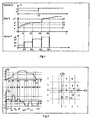
- the figure 1 illustrates such a discrete event abstraction E1 to E4 of an input U - output Y relationship .
- problem-solving techniques provide the technological and methodological tools to automate the exploitation of expert knowledge to drive a complex process and translate that knowledge into a model of complex dynamic process behavior.
- a blast furnace As an example of a complex dynamic process, there may be mentioned: a blast furnace, an electric steel production furnace, a glass production furnace, a cement production furnace, a rolling mill.
- Fuzzy logic is a classic way to exploit this type of complex dynamic process model in order to guide the conduct of this process towards production objectives, previously assigned or updated; the fuzzy logic applied to this type of model consists in evaluating a membership rate of the state of the process at one or more "symbolic values" of input of the model, in deducing the corresponding "symbolic values” of output, and in calculate the state of the system by weighting these output values according to the corresponding membership rates.
- Such a conventional means makes it possible to make the transitions between the different possible branches of reasoning on which the model is based more progressive.
- the object of the invention is to avoid such a disadvantage in the case of the use of complex dynamic process models.
- the invention namely to judge and address only "timely" messages - avoids the saturation of information operators and allows them to devote their attention to the most relevant information at the appropriate time to act on the steering of the process.
- the evolution of quantities is integrated into the basis of the definition of each phenomenon-process which serves to describe the evolution of the process and its operating context; in a space, called a state space, whose dimensions correspond to these quantities, the global evolution of the process or its overall operating context, resulting from said evolution of the quantities, can then be represented by a trajectory whose projection on each dimension corresponds to the evolution of each size.
- the system to be piloted is equipped with sensors or means for capturing the information that is necessary to estimate the state of the process.
- the system to be driven is equipped with actuators whose adjustment values can be modified in order to change the state of the process.
- control device according to the invention may be called "rational reactive agent”.
- An agent is described as "rational" if he actually selects an action from the moment he becomes aware that this action may lead to one of his external goals; moreover, a rational agent selects no action if its external goals are met.
- the means by which the rational agent can apply the principle of rationality lies in what is called a body of knowledge about how the process works; this means, here the corpus of knowledge, thus constitutes the link between information channels, external goals and actions.
- a rational agent is qualified as "reactive" when he is able to respond autonomously to changes of his environment.
- the privileged recipients of these messages are therefore process control operators, whether they are automatic "hardware” operators or "personal” operators, that is human operators.
- the device according to the invention thus provides a digital-symbolic conversion.
- the method is adapted so that messages are issued in a timely manner and, where appropriate, as soon as possible.
- the "perceive” function is synchronized with the information transmitted by the sensors; the other functions are activated asynchronously: the "judge” function is activated as soon as the “perceive” function detects a “phenomena”, the "correct” function is activated when the "judge” function has determined that the state of the process was “problematic”, and the function "to collaborate” is activated either on the initiative of the operators of piloting, or with that of the device when it is necessary.
- the FIRST STAGE of PERCEPTION consists in constructing and ordering the values taken over time by quantities which make it possible to describe the state of the process.
- Values of these quantities are obtained from the interpretation of the information available on the process, in particular the information transmitted by the sensors; "Value” is a real giving in general the amplitude of the magnitude or an integer indicative, for example, of a true / false character carried by the magnitude (i.e. a binary value).
- the need for the aperiodic / event distinction is based on the fact that the "Date value" is generally interpreted in relation to physical objects having a finite life; the lifetime of each of these objects defining a time interval, the dates assigned to the values of the aperiodic quantities can be assigned to these objects, and ordered within the time intervals corresponding to their lifetime.
- the "Date Value" associated with the values of the aperiodic quantities is interpreted as a measure of a particular magnitude measuring a "relative time" to an object with a finite life; the global chronology is ensured by that of the objects themselves.
- the environment of the device according to the invention can exploit multiple clocks of different nature, it is essential to order the values of comparable quantities; this means that two different "date values" associated with different but comparable quantities correspond to different dates.
- the ordering of "Values" can be both spatial and temporal, ie spatio-temporal; the ordered sequence of corresponding pairs or triplets then forms a spatial signal.
- the method according to the invention is "clocked" according to a so-called acquisition period; at each beginning of the cycle of implementation of the method according to the invention, one thus acquires information concerning the process - couples "Value” - "DateValeur” or couples “Valeur” - “PositionValeur”, or triplets "Valeur” - " DateValue "-” ValueValue "; each "information” is associated with a "DateAcquisition” which corresponds, for example, to the number of the cycle counted since the last initialization of the device.
- Each "data” is then a triplet or quadruplet "Value” - "DateValue” - “DateAcquisition”, or “Value” - “ValueValue” - “DateAcquisition”, or “Value” - “DateValue” - “ValueValue” - “DateAcquisition” ".
- This double indexing data management system advantageously enables the device according to the invention to reason in continuous time and to manage its digital data according to the modalities of a discrete time system.
- the "discretization" of the trajectories depends on the aims or objectives of production, and goes through a partitioning of the state space and phase spaces according to these "aims"; according to the invention, this partitioning is performed at each information acquisition cycle.
- the state space is defined as a space whose dimensions are the magnitudes of perception and in which a state of the process is represented by a state vector X (t) whose components are the "Values" of the magnitudes of perception. corresponding to this state; if all these "Values" are defined in R , the state space is defined in R not , where n is the number of components of the state vector X; the coordinates of a point in the state space are the "Values" of the perception quantities of the state described by this point.
- the evolution of the process can be described by a succession of states represented by points in the state space, a succession which forms a trajectory of evolution of the process in this space; this trajectory of evolution of the process has a projection on each of the dimensions of the state space; this projection corresponds to the successive values of a perception quantity during the evolution of the process represented by the trajectory.
- Partitioning or "discretization" of the state space must be done in subsets of states, each corresponding to a specific type of state, so that each state of the process can be identified no longer by its state vector X but by the subset of states or type of state to which this state belongs.
- the representation of the evolution of the process can also be “discretized” one passes from a representation by a trajectory of evolution "continuous” to a representation by a succession of changes of types of states, that we call “discretized trajectory” of evolution of the process.
- this partitioning is performed according to the production objectives assigned to the process at each acquisition of information cycle concerning the process.
- the "targets” are updated and the state space is partitioned again according to the new "targets”.
- a "target” corresponds to an interval delimited by the lower “InF value” and higher “SupSensor” limits, which is represented for example by [InvalidValue, UpValue]; sometimes, the values of the limits are fixed by threshold values.
- the partition can be done in three parts: - ⁇ , Valeurlnf [ , [ Valeurlnf , ValeurSup ] , ] ValeurSup , + ⁇ .
- the set of subsets [ValueInf, ValueSup] specific to each dimension defines a "hyper-cube" in the state space.
- a given state of the process can therefore be considered as belonging or not to this hypercube, depending on whether or not it satisfies the production objectives of the process.
- the fineness in the partitioning of the continuous state space may, however, require the definition of a larger number of subsets.
- the partitioning of the state space therefore defines, at each acquisition cycle and for each of the components of the continuous state vector, intervals of values in R not , and associates with each interval of values a relative integer; the partitioned state space is therefore a space defined on Z n .
- the phase space is defined from a signal, ie from a sequence of values of the same quantity ordered according to a variable, such as the time in the case of a temporal signal or as the position in the case of a spatial signal; by definition, this space has only two dimensions, the first corresponding to the value of the quantity, the second corresponding to the derivative of this value as a function of the variable; the phase space is therefore peculiar to a perception quantity, and so there are at least as many phase spaces as there are perception quantities.
- X (t) and X '(t) then determine the coordinates of a point in the phase space of this magnitude; during a change in behavior of this quantity, the set of values taken by the pair (X (t), X '(t)) and the succession of corresponding points form a behavior trajectory of this magnitude.
- the partitioning or "discretization" of the phase space of a quantity must be done in subsets that each correspond to a specific type so that we can thus identify the "value" of a quantity of the process. either by the values (X (t), X '(t)) but by the subset to which the corresponding point belongs.
- phase space For the partitioning of the phase space, we thus define a finite and countable number of subsets of this space; the phase space can be partitioned according to a method comparable to that previously described for the partitioning of the state space, by taking, for the first dimension corresponding to the magnitude value, the same "targets".
- this partitioning is also performed at each acquisition cycle according to the production objectives already mentioned for the partitioning of the state space.
- Each point of the phase space of a magnitude can be assigned to one of the subsets of that space; the representation by assignment then constitutes a discretized representation of the value of the quantities.
- the figure 2 illustrates this principle for a perception variable x (t) and its derivative x '(t), that is to say for a component of a state vector, which evolve as a function of time as illustrated in the left part of the figure ; the discretized representation deduced from it appears in the right part.
- the representation of the behavior of a quantity can then be "discretized” one goes from a representation by a “continuous” trajectory to a representation by a succession of changes of types, which one calls “discretized trajectory” of behavior of a magnitude.
- control method according to the invention is "reactive" in the sense that it is able to react, autonomously, to changes in its environment.
- the evolution of the process is thus "perceived" not only by its trajectory in the state space but also by the trajectory of each of the perception quantities in their phase space.
- the THIRD STAGE of PERCEPTION is to describe the evolution of the process on the basis of the evolution of the perception quantities themselves, in the form of chronicles of events concerning these quantities; these chronicles can be temporal, spatial, or spatio-temporal.
- a sequence of couples (Evt, DateEvt) is called a "chronic" temporal, where "Evt” designates an event concerning a quantity, and “DateEvt” designates the date assigned to this event; a series of pairs (Evt, PositionEvt) where "PositionEvt” designates the position assigned to this event; we call a spatio-temporal "chronic” a sequence of triplets (Evt, DateEvt, PositionEvt).
- a "discrete event" is generated concerning a perception quantity when the evolution of the process causes a subset change to which the current representative point of this quantity belongs in its phase space according to the definition of the subsets. and that of partitioning the phase space above.
- the date of this passage is then attributed: for example, referring to FIG. 6, to the discrete event E 1 which corresponds in the transition from subset 1 to subset 2, the date e 1 is assigned.
- each magnitude can be described by a series of pairs (Evt, DateEvt) which forms a discrete-event chronicle of this magnitude;
- Figure 6 illustrates this principle for a size of perception.
- classes of behavior a method for recognizing the behavior of a magnitude so as to affect it or not to be assigned to one of these classes and a method of dating the change of class are defined. of behavior ; according to these definitions and methods, it is possible to generate and date a signal event at each change of behavior class, and thus to obtain a chronic event-signal (Evt, DateEvt).
- Implementing a behavior recognition method may require configuring the signal exhibiting said behavior; it is then necessary to add upstream a signal filtering method, adapted to the method used.
- the behavior classes can be parameterized in a constant or variable way: according to the example cited below, these parameters concern in particular the constraints concerning each model and its scales of analysis.
- each behavior model can be represented by a trajectory type in the phase space of this magnitude; each model of behavior and / or each type of trajectory defines here a class of behavior.
- a simple example of this method consists in determining the data (triplet or quadruplet defined above) of the signal which is at the origin of the generation of the "Evt" signal event and to be assigned the "Datevalue" of this datum to the "DateEvt" associated with this signal event; in the case of the use of models to define the behavior classes, the method of dating depends on the model of behavior retained and the search for the data of the signal which is at the origin of the generation of the event-signal is performed on the scale of analysis associated with this model.
- these chronicles can be aggregated into a single global event chronicle.
- This aggregation is performed by collecting and aggregating the chronicles (Evt, DateEvt) of each "Size”; we end up with a sequence of triplets (Evt, DateEvt, Grandeur); these triplets constitute a global chronicle of events which describes the evolution of the overall behavior of quantities; preferably, this global chronic is ordered according to the "DateEvt" values of each triplet.
- This principle makes it possible to associate with any temporal evolution of a continuous process a global chronicle of events, each event of which corresponds to a change in the type of behavior of a magnitude (event-signal) or to a subset change. observed in the phase space of a magnitude (discrete event).
- the behavior of the perception quantities during the evolution of the process is therefore taken into account in the form of a global chronicle of events, each event of this chronicle relating to the evolution of one of these magnitudes.
- the FOURTH STAGE of PERCEPTION aims at describing the evolution of the process by identifying, in a global chronicle of events, typologies of global chronicles, which we call "phenomena-signals" because the events of these chronicles are detected at from the observation of signals.
- Signal-phenomena are defined by types of global evolution event chronicles the process, each type of chronicle gathering discrete events and / or signal events of the same size or of different magnitudes; a signal event of a type of chronic can be temporal, spatial or spatio-temporal, as previously described.
- a type of chronic that contains only time-signal events corresponds to a signal phenomenon called "temporal”
- a type of chronic that contains only spatial signal events corresponds to a signal phenomenon called “spatial”
- a type of chronic that contains both temporal and spatial signal events corresponds to a so-called “spatio-temporal” phenomenon-signal.
- the recognition or detection of signal phenomena then consists in identifying to what type of chronicle the global chronicle of events concerning the evolution of the process belongs; a signaling phenomenon is therefore generated each time that a type of predefined event chronicle is recognized in the global event history concerning the evolution of the process.
- the FIFTH STAGE of the PERCEPTION aims to describe the evolution of the process by integrating all the elements developed above to describe the evolution of the process.
- phenomena-processes must therefore integrate all the elements described above capable of describing the evolution of the process from the temporal, spatial, spatio-temporal signals of the quantities, starting from the trajectory of each magnitude in its phase space, and from the trajectory, continuous or “discretized", of evolution of the process in the state space.
- the first law corresponds to the preceding descriptions in the state space by a state vector whose components are the magnitudes X and by a trajectory of this vector in this epace, whereas the second law corresponds to the preceding descriptions in the spaces of each magnitude X.
- the problem solved by the invention is to integrate and aggregate these two constitutive laws of quantities in the case of a complex dynamic process.
- this definition of a phenomenon-process advantageously makes it possible, if necessary, to distinguish two phenomena presenting the same trajectory in the state space. but different evolutions of some of the magnitudes of perception on this same trajectory; the definition of a phenomenon-process thus integrates the evolution of perception quantities in the form of event-discrete or signal-events (first level), and / or in the form of events chronicles (at say signal-phenomena: second level), or even in the form of chronic phenomena-signals (third level).
- a chronicle can be temporal and can be expressed as a list of couples (Evt, DateEvt); it can be spatial and then express itself as a list of pairs (Evt, PositionEvt); it can also be spatio-temporal and is then expressed as a list of triplets (Evt, DateEvt, PositionEvt).
- This definition of the phenomenon-processes advantageously makes it possible to take into account the timely nature or not of the detection of a phenomenon-process in a given current situation, integrating the elements past, present, and immediate future; in cognitive terms, the definition of these classes reflects knowledge of the causality between phenomena; for example, it is not necessarily “appropriate” to take into account a phenomenon-process, if its "causes", other events or phenomena previous or present, have already been taken into account, or if its "effects", other events or future phenomena, do not occur.
- the definition of the phenomenon-process also passes by that of rules of dating which apply to the elements (events, chronicles) of the classes for the detection of beginning and end of phenomenon-process; for example, the start date setting rule may consist of taking the "DateEvt" of an event or the "StartDatePhenomenon-process" of a phenomenon of the start detection class.
- the perception of the state and the evolution of the process therefore integrates both the global behavior as described in the state space and the behavior of the perception quantities.
- the second MAIN FUNCTION "JUGER” must result in the sending of messages to the environment of the process, and in particular to the system control operators to help them evaluate the opportunity to modify the settings of the system. certain actuators, so as to satisfy the current production objectives of the process.
- the FIRST STEP of the JUDGMENT is to prepare the messages likely to be issued and the criteria for issuing these messages, by assessing the context of evolution of the process and by classifying the phenomena-processes pending according to criteria of severity and according to this context.
- the qualification of the context and the severity of a phenomenon-process also involves context management rules.
- the gravity qualifier of a phenomenon-process concerns its problematic nature from the point of view of the satisfaction of the aims of operation of the process, which are updated with each cycle of acquisition of operating data: a phenomenon-process is problematic if its presence impairs the ability of pilotage operators to meet production objectives.
- a phenomenon-process is qualified in terms of severity of "problematic”, “alarm” or “warning” if it is necessary to take it into account to interpret the evolution of the behavior of the process and / or to initiate corrective actions; by definition of these qualification rules, an instance of phenomenon-process termed “Alarm” is more worrying than an instance qualified as “Warning”; conversely, the phenomenon-processes detected can therefore be qualified as "not serious” if it is not necessary to take it into account to interpret the evolution of the behavior of the process.
- Context management rules are then described as follows: a context that can be used to describe the severity of a phenomenon-process is called "active"; on the other hand, an inactive context can not be used to qualify the gravity of a phenomenon-process.
- the purpose of qualification of the gravity of a phenomenon-process being the emission, in real time, of messages towards the operators of control of the process, the dating of the contexts must be carried out as soon as it is possible, that is to say that is, the detection date of the beginning and end of the instances of the elements of the class defining a context, for example that of phenomenon-process: the severity of the unfinished process phenomena is thus judged according to the current context.
- the SECOND STAGE of the JUDGMENT is to send messages towards the environment, taking into account only the phenomena-processes detected the most serious in the current context of evolution of the process.
- the detected process-phenomena are classified according to the qualification of their gravity carried out, if necessary, in the current context, evaluated as previously described.
- the date of the alert is fixed in real time, according to the evolution of the state of the process, that is to say according to the changes of context of qualification and according to the changes of qualification of the magnitude and locality of the phenomenon-process instance.
- the invention can be advantageously used for the control of blast furnace, thermal furnace, such as a cement kiln, a glass furnace or a slab furnace, a continuous metal casting plant, a rolling mill or a coating plant.
- thermal furnace such as a cement kiln, a glass furnace or a slab furnace
- continuous metal casting plant such as a rolling mill or a coating plant.
- continuous metal band the invention is not limited to the general example above given for information only.
Landscapes
- Engineering & Computer Science (AREA)
- Physics & Mathematics (AREA)
- General Physics & Mathematics (AREA)
- Automation & Control Theory (AREA)
- General Engineering & Computer Science (AREA)
- Human Computer Interaction (AREA)
- Management, Administration, Business Operations System, And Electronic Commerce (AREA)
- Feedback Control In General (AREA)
- General Factory Administration (AREA)
- Earth Drilling (AREA)
Claims (8)
- Verfahren zur Steuerung eines Prozesses ausgehend von Informationen, die von der Umgebung des Prozesses ausgesendet werden, und um Informationen an die Operatoren des Prozesses zu übermitteln, welche so beschaffen sind, dass sie ihnen helfen, den Prozess innerhalb seiner Produktionsziele zu halten oder zu ihnen zurückzuführen, bei dem:nachdem vorab Prozessphänomene basierend auf einem oder mehrerer Entwicklungskriterien, gemäß mindestens einer Datums- und/oder Positionsvariablen, mindestens einer Wahrnehmungsgröße des Zustands des Prozesses definiert wurden,dadurch gekennzeichnet, dass es einen Zwischenschritt aufweist, bei dem jedes erfasste Prozessphänomen in Abhängigkeit von einem eigenen Kontext beurteilt wird, der selbst von anderen Prozessphänomenen beschrieben wird, und dadurch gekennzeichnet, dass die Informationen betreffend das beurteilte Prozessphänomen nur dann an die Operatoren übermittelt werden, wenn sich aus seiner Beurteilung ergibt, dass diese Informationen in diesem Kontext notwendig und angebracht sind, um dazu beizutragen, den Prozess innerhalb seiner Produktionsziele zu halten oder zu ihnen zurückzuführen; und- die ausgesendeten Informationen periodisch erfasst und ausgehend von diesen Informationen Werte der Wahrnehmungsgrößen erarbeitet werden, die für die Definition der Prozessphänomene verwendet werden,- der Zustand und die Entwicklung des Prozesses durch eine Folge von erfassten Prozessphänomenen beschrieben werden,- und den Operatoren Informationen betreffend die erfassten Prozessphänomene übermittelt werden,
dadurch gekennzeichnet, dass der Prozess aus der Gruppe ausgewählt wird, die einen Hochofen, einen Wärmebehandlungsofen, wie einen Zementbrennofen, einen Glasofen oder einen Brammenofen, eine Anlage zum kontinuierlichen Stranggießen von Metall und eine Anlage zum kontinuierlichen Walzen oder Beschichten eines Metallbands umfasst. - Verfahren nach Anspruch 1, dadurch gekennzeichnet, dass die Beschreibung des Zustands und der Entwicklung des Prozesses und/oder diejenige seines Betriebskontexts Ereignisberichte aufweist, wobei die Definition der Ereignisse diejenige eines oder mehrerer Entwicklungskriterien mindestens einer Wahrnehmungsgröße einschließt, und jedem Ereignis ein Datum und/oder eine Position zugewiesen wird,
und jeder Bericht von einer Folge von Ereignissen gebildet wird, die nach ihrem Datum und/oder ihrer Position geordnet ist. - Verfahren nach einem der vorhergehenden Ansprüche, dadurch gekennzeichnet, dass die vorhergehende Definition der Prozessphänomene ebenfalls diejenige von Typen von Ereignisberichten einschließt.
- Verfahren nach einem der vorhergehenden Ansprüche, dadurch gekennzeichnet, dass die Definition der Prozessphänomene und/oder der Ereignisse ebenfalls diejenige eines oder mehrerer Entwicklungskriterien der ersten Ableitung mindestens einer Größe bezüglich einer Datums- und/oder Positionsvariablen einschließt, wobei diese Ableitung von dieser Variablen abhängt.
- Verfahren nach einem der vorhergehenden Ansprüche, dadurch gekennzeichnet, dass,
wenn die Werte einer Größe oder ggf. ihrer ersten Ableitung gemäß der Datums- und/oder Positionsvariablen geordnet sind, um ein "Signal" zu bilden,
bei den Entwicklungskriterien, die sich auf ausgehend von diesem Signal berechnete Parameter beziehen, die nur über ein vorbestimmtes Werteintervall der Variablen, "Analyseskala" genannt, zu beachten sind,
die Definition jedes der Kriterien über die Einordnung des berechneten Werts jedes Parameters, auf den sich das Kriterium bezieht, in verschiedene vorbestimmte Teilbereiche des Wertebereichs dieses Parameters läuft, wobei jeder Teilbereich durch eine Untergrenze und eine Obergrenze definiert wird. - Verfahren nach einem der vorhergehenden Ansprüche, dadurch gekennzeichnet, dass:- zumindest manche dieser Kriterien in Abhängigkeit von den Produktionszielen des Prozesses bestimmt werden,- die Produktionsziele in jeder Erfassungsperiode der Informationen neu bewertet und die Kriterien dementsprechend aktualisiert werden.
- Verfahren nach Anspruch 6, wenn er von Anspruch 5 abhängt, dadurch gekennzeichnet, dass zur Bestimmung der Kriterien in Abhängigkeit von den Produktionszielen diese Grenzen in Abhängigkeit von diesen Zielen verändert werden.
- Verwendung des Verfahrens nach einem der vorhergehenden Ansprüche, um einen komplexen dynamischen Prozess zu steuern.
Applications Claiming Priority (2)
| Application Number | Priority Date | Filing Date | Title |
|---|---|---|---|
| FR9908417 | 1999-07-01 | ||
| FR9908417A FR2795830B1 (fr) | 1999-07-01 | 1999-07-01 | Procede de pilotage d'un processus dynamique complexe |
Publications (3)
| Publication Number | Publication Date |
|---|---|
| EP1069486A1 EP1069486A1 (de) | 2001-01-17 |
| EP1069486B1 EP1069486B1 (de) | 2004-08-04 |
| EP1069486B2 true EP1069486B2 (de) | 2008-10-22 |
Family
ID=9547531
Family Applications (1)
| Application Number | Title | Priority Date | Filing Date |
|---|---|---|---|
| EP00401870A Expired - Lifetime EP1069486B2 (de) | 1999-07-01 | 2000-06-30 | Verfahren zur Steuerung eines Komplexen Dynamischen Prozesses |
Country Status (8)
| Country | Link |
|---|---|
| US (1) | US6560585B1 (de) |
| EP (1) | EP1069486B2 (de) |
| JP (1) | JP5109059B2 (de) |
| AT (1) | ATE272856T1 (de) |
| BR (1) | BR0002272B1 (de) |
| CA (1) | CA2314175C (de) |
| DE (1) | DE60012636T3 (de) |
| FR (1) | FR2795830B1 (de) |
Families Citing this family (7)
| Publication number | Priority date | Publication date | Assignee | Title |
|---|---|---|---|---|
| GB2379752A (en) * | 2001-06-05 | 2003-03-19 | Abb Ab | Root cause analysis under conditions of uncertainty |
| US7451126B2 (en) * | 2001-10-18 | 2008-11-11 | Omron Corporation | State space navigation system, user system and business methods for machine to machine business |
| US8665269B2 (en) * | 2010-12-16 | 2014-03-04 | Csi Ricerca & Ambiente Srl | Method of determining features of events or processes having a dynamic evolution in space and/or time |
| EP4016220A1 (de) * | 2020-12-16 | 2022-06-22 | Siemens Aktiengesellschaft | Hilfsvorrichtung und verfahren zur automatischen erkennung von ausfallarten eines technischen systems |
| CN114434241B (zh) * | 2021-12-30 | 2023-06-02 | 西门子(中国)有限公司 | 控制石磨机横梁运动的方法、装置、电子设备及存储介质 |
| WO2024224146A1 (en) * | 2023-04-28 | 2024-10-31 | Arcelormittal | Method for monitoring a steel processing line, associated electronic device and steel processing line |
| CN117371983A (zh) * | 2023-10-16 | 2024-01-09 | 国家石油天然气管网集团有限公司 | 一种储罐大修周期预测方法、系统、存储介质和电子设备 |
Family Cites Families (21)
| Publication number | Priority date | Publication date | Assignee | Title |
|---|---|---|---|---|
| US4965743A (en) * | 1988-07-14 | 1990-10-23 | The United States Of America As Represented By The Administrator Of The National Aeronautics And Space Administration | Discrete event simulation tool for analysis of qualitative models of continuous processing system |
| US5205289A (en) * | 1988-12-23 | 1993-04-27 | Medical Instrumentation And Diagnostics Corporation | Three-dimensional computer graphics simulation and computerized numerical optimization for dose delivery and treatment planning |
| JP2533942B2 (ja) * | 1989-03-13 | 1996-09-11 | 株式会社日立製作所 | 知識抽出方法およびプロセス運転支援システム |
| CA2031765C (en) * | 1989-12-08 | 1996-02-20 | Masahide Nomura | Method and system for performing control conforming with characteristics of controlled system |
| US5477444A (en) * | 1992-09-14 | 1995-12-19 | Bhat; Naveen V. | Control system using an adaptive neural network for target and path optimization for a multivariable, nonlinear process |
| US5486998A (en) * | 1993-06-14 | 1996-01-23 | Amax Coal West, Inc. | Process stabilizing process controller |
| US6141647A (en) * | 1995-10-20 | 2000-10-31 | The Dow Chemical Company | System and method for integrating a business environment, a process control environment, and a laboratory environment |
| FR2722310B1 (fr) * | 1994-07-11 | 1996-09-27 | Elf Aquitaine | Procede et dispositif de regulation sur une plage admissible avec anticipation sur contextes utilisant la logique floue |
| US5704011A (en) * | 1994-11-01 | 1997-12-30 | The Foxboro Company | Method and apparatus for providing multivariable nonlinear control |
| US5570282A (en) * | 1994-11-01 | 1996-10-29 | The Foxboro Company | Multivariable nonlinear process controller |
| US5659667A (en) * | 1995-01-17 | 1997-08-19 | The Regents Of The University Of California Office Of Technology Transfer | Adaptive model predictive process control using neural networks |
| US5592622A (en) * | 1995-05-10 | 1997-01-07 | 3Com Corporation | Network intermediate system with message passing architecture |
| US5802278A (en) * | 1995-05-10 | 1998-09-01 | 3Com Corporation | Bridge/router architecture for high performance scalable networking |
| US5832468A (en) * | 1995-09-28 | 1998-11-03 | The United States Of America As Represented By The Administrator Of The Environmental Protection Agency | Method for improving process control by reducing lag time of sensors using artificial neural networks |
| AU3477397A (en) * | 1996-06-04 | 1998-01-05 | Paul J. Werbos | 3-brain architecture for an intelligent decision and control system |
| EP0906594B1 (de) * | 1996-06-21 | 2001-09-12 | Siemens Aktiengesellschaft | Verfahren und system zur inbetriebsetzung von industrieanlagen, insbesondere der grundstoffindustrie |
| JPH1020924A (ja) * | 1996-07-03 | 1998-01-23 | Toshiba Corp | プラント監視装置 |
| JPH10245808A (ja) * | 1997-03-05 | 1998-09-14 | Nikko Co Ltd | アスファルトプラントにおけるプラント診断システム |
| DE19732046A1 (de) * | 1997-07-25 | 1999-01-28 | Abb Patent Gmbh | Prozeßdiagnosesystem und Verfahren zur Diagnose von Vorgängen und Zuständen eines technischen Prozesses |
| DE19734947B4 (de) * | 1997-08-13 | 2010-04-29 | Otte, Ralf, Dr. | Verfahren zur Steuerung von Prozeßvorgängen |
| US5963447A (en) * | 1997-08-22 | 1999-10-05 | Hynomics Corporation | Multiple-agent hybrid control architecture for intelligent real-time control of distributed nonlinear processes |
-
1999
- 1999-07-01 FR FR9908417A patent/FR2795830B1/fr not_active Expired - Lifetime
-
2000
- 2000-06-30 CA CA002314175A patent/CA2314175C/fr not_active Expired - Lifetime
- 2000-06-30 DE DE60012636T patent/DE60012636T3/de not_active Expired - Lifetime
- 2000-06-30 EP EP00401870A patent/EP1069486B2/de not_active Expired - Lifetime
- 2000-06-30 AT AT00401870T patent/ATE272856T1/de not_active IP Right Cessation
- 2000-07-03 JP JP2000201119A patent/JP5109059B2/ja not_active Expired - Fee Related
- 2000-07-03 BR BRPI0002272-1A patent/BR0002272B1/pt not_active IP Right Cessation
- 2000-07-03 US US09/609,942 patent/US6560585B1/en not_active Expired - Lifetime
Also Published As
| Publication number | Publication date |
|---|---|
| FR2795830B1 (fr) | 2001-08-31 |
| ATE272856T1 (de) | 2004-08-15 |
| JP5109059B2 (ja) | 2012-12-26 |
| DE60012636D1 (de) | 2004-09-09 |
| FR2795830A1 (fr) | 2001-01-05 |
| BR0002272B1 (pt) | 2012-08-07 |
| JP2001051702A (ja) | 2001-02-23 |
| BR0002272A (pt) | 2001-03-20 |
| DE60012636T3 (de) | 2009-05-14 |
| EP1069486B1 (de) | 2004-08-04 |
| EP1069486A1 (de) | 2001-01-17 |
| CA2314175A1 (fr) | 2001-01-01 |
| US6560585B1 (en) | 2003-05-06 |
| CA2314175C (fr) | 2009-01-27 |
| DE60012636T2 (de) | 2005-09-08 |
Similar Documents
| Publication | Publication Date | Title |
|---|---|---|
| EP2678747B1 (de) | Prognose von wartungsarbeiten für ein flugzeugtriebwerk | |
| EP3039497B1 (de) | Überwachung eines flugzeugmotors zur vorausplanung von wartungsoperationen | |
| EP3008531B1 (de) | Verfahren zur erstellung einer datenbank und zur formulierung einer karte von betriebszuständen eines flugzeugs sowie verfahren zur überwachung des betriebs eines entsprechenden flugzeugs | |
| FR2841385A1 (fr) | Dispositif de calcul du degre de deterioration et procede de calcul du degre de deterioration d'une batterie | |
| EP1069486B1 (de) | Verfahren zur Steuerung eines Komplexen Dynamischen Prozesses | |
| FR2963960A1 (fr) | Surveillance des particules dans un systeme de lubrification | |
| FR3143749A1 (fr) | Procédé et système pour prédire le vieillissement d’un composant chauffant dans un système de cuisson de matériau de batterie de traction | |
| FR3056002A1 (fr) | Procede d’analyse de donnees de composants de vehicules | |
| CN121410549A (zh) | 汽车动力电池电压异常检测方法和车辆 | |
| EP3559688B1 (de) | Verbesserte charakterisierung einer elektrochemischen vorrichtung im betrieb zur vorhersage des künftigen betriebs der vorrichtung | |
| WO2023275371A1 (fr) | Procédé de contrôle d'un système et produit programme d'ordinateur associé | |
| EP4320338A1 (de) | Verfahren zur vorhersage des verschleisses eines mechanischen teils und verfahren zur bestimmung des betriebsrisikos im zusammenhang mit einem flugzeug oder einer flugzeugflotte | |
| EP3646255B1 (de) | System und verfahren zur verwaltung von risiken in einem prozess | |
| EP0697638B1 (de) | Verfahren zur Aufspürung von vollständigen Sequenzen und Misserfolgsequenzen in einem Fallerkennungssystem | |
| CN119337193A (zh) | 预警方法、装置、网络设备、电能设备及介质 | |
| Martino | Probabilistic technological forecasts using precursor events | |
| WO2020128342A1 (fr) | Procédé et système de détection de déviation de fonctionnement d'un équipement industriel | |
| EP4379486B1 (de) | Frugales prädiktives wartungsverfahren, entsprechendes computerprogrammprodukt und computerlesbares medium | |
| CN120928212B (zh) | 电池风险确定方法、装置、设备及介质 | |
| EP4345686A1 (de) | Verfahren zur automatischen erzeugung eines entscheidungsunterstützungsalgorithmus, entsprechendes computerprogrammprodukt und computervorrichtung | |
| CN121978538A (zh) | 一种电池状态评估方法、系统及存储介质 | |
| CN121032469A (zh) | 车辆维护方法、车辆、存储介质及计算机程序产品 | |
| CN121684936A (zh) | 一种基于个体健康基线的车辆故障预测方法和系统 | |
| FR3150606A1 (fr) | Stockage d’informations d’impact de batteries dans un registre distribué | |
| FR3165523A1 (fr) | Installation électronique et procédé d’aide à la décision avec gestion améliorée de l’alerte d’énergie, aéronef et programme d’ordinateur associés |
Legal Events
| Date | Code | Title | Description |
|---|---|---|---|
| PUAI | Public reference made under article 153(3) epc to a published international application that has entered the european phase |
Free format text: ORIGINAL CODE: 0009012 |
|
| AK | Designated contracting states |
Kind code of ref document: A1 Designated state(s): AT BE CH CY DE DK ES FI FR GB GR IE IT LI LU MC NL PT SE |
|
| AX | Request for extension of the european patent |
Free format text: AL;LT;LV;MK;RO;SI |
|
| 17P | Request for examination filed |
Effective date: 20010717 |
|
| AKX | Designation fees paid |
Free format text: AT BE CH CY DE DK ES FI FR GB GR IE IT LI LU MC NL PT SE |
|
| GRAP | Despatch of communication of intention to grant a patent |
Free format text: ORIGINAL CODE: EPIDOSNIGR1 |
|
| GRAS | Grant fee paid |
Free format text: ORIGINAL CODE: EPIDOSNIGR3 |
|
| RAP1 | Party data changed (applicant data changed or rights of an application transferred) |
Owner name: USINOR |
|
| GRAA | (expected) grant |
Free format text: ORIGINAL CODE: 0009210 |
|
| AK | Designated contracting states |
Kind code of ref document: B1 Designated state(s): AT BE CH CY DE DK ES FI FR GB GR IE IT LI LU MC NL PT SE |
|
| PG25 | Lapsed in a contracting state [announced via postgrant information from national office to epo] |
Ref country code: AT Free format text: LAPSE BECAUSE OF FAILURE TO SUBMIT A TRANSLATION OF THE DESCRIPTION OR TO PAY THE FEE WITHIN THE PRESCRIBED TIME-LIMIT Effective date: 20040804 Ref country code: FI Free format text: LAPSE BECAUSE OF FAILURE TO SUBMIT A TRANSLATION OF THE DESCRIPTION OR TO PAY THE FEE WITHIN THE PRESCRIBED TIME-LIMIT Effective date: 20040804 Ref country code: NL Free format text: LAPSE BECAUSE OF FAILURE TO SUBMIT A TRANSLATION OF THE DESCRIPTION OR TO PAY THE FEE WITHIN THE PRESCRIBED TIME-LIMIT Effective date: 20040804 Ref country code: GB Free format text: LAPSE BECAUSE OF FAILURE TO SUBMIT A TRANSLATION OF THE DESCRIPTION OR TO PAY THE FEE WITHIN THE PRESCRIBED TIME-LIMIT Effective date: 20040804 Ref country code: IE Free format text: LAPSE BECAUSE OF FAILURE TO SUBMIT A TRANSLATION OF THE DESCRIPTION OR TO PAY THE FEE WITHIN THE PRESCRIBED TIME-LIMIT Effective date: 20040804 |
|
| REG | Reference to a national code |
Ref country code: GB Ref legal event code: FG4D Free format text: NOT ENGLISH |
|
| REG | Reference to a national code |
Ref country code: CH Ref legal event code: EP |
|
| REG | Reference to a national code |
Ref country code: IE Ref legal event code: FG4D Free format text: FRENCH |
|
| REF | Corresponds to: |
Ref document number: 60012636 Country of ref document: DE Date of ref document: 20040909 Kind code of ref document: P |
|
| PG25 | Lapsed in a contracting state [announced via postgrant information from national office to epo] |
Ref country code: DK Free format text: LAPSE BECAUSE OF FAILURE TO SUBMIT A TRANSLATION OF THE DESCRIPTION OR TO PAY THE FEE WITHIN THE PRESCRIBED TIME-LIMIT Effective date: 20041104 Ref country code: SE Free format text: LAPSE BECAUSE OF FAILURE TO SUBMIT A TRANSLATION OF THE DESCRIPTION OR TO PAY THE FEE WITHIN THE PRESCRIBED TIME-LIMIT Effective date: 20041104 Ref country code: GR Free format text: LAPSE BECAUSE OF FAILURE TO SUBMIT A TRANSLATION OF THE DESCRIPTION OR TO PAY THE FEE WITHIN THE PRESCRIBED TIME-LIMIT Effective date: 20041104 |
|
| PG25 | Lapsed in a contracting state [announced via postgrant information from national office to epo] |
Ref country code: ES Free format text: LAPSE BECAUSE OF FAILURE TO SUBMIT A TRANSLATION OF THE DESCRIPTION OR TO PAY THE FEE WITHIN THE PRESCRIBED TIME-LIMIT Effective date: 20041115 |
|
| NLV1 | Nl: lapsed or annulled due to failure to fulfill the requirements of art. 29p and 29m of the patents act | ||
| GBV | Gb: ep patent (uk) treated as always having been void in accordance with gb section 77(7)/1977 [no translation filed] |
Effective date: 20040804 |
|
| REG | Reference to a national code |
Ref country code: IE Ref legal event code: FD4D |
|
| PLAQ | Examination of admissibility of opposition: information related to despatch of communication + time limit deleted |
Free format text: ORIGINAL CODE: EPIDOSDOPE2 |
|
| PLBQ | Unpublished change to opponent data |
Free format text: ORIGINAL CODE: EPIDOS OPPO |
|
| PLAQ | Examination of admissibility of opposition: information related to despatch of communication + time limit deleted |
Free format text: ORIGINAL CODE: EPIDOSDOPE2 |
|
| PLAR | Examination of admissibility of opposition: information related to receipt of reply deleted |
Free format text: ORIGINAL CODE: EPIDOSDOPE4 |
|
| PLBI | Opposition filed |
Free format text: ORIGINAL CODE: 0009260 |
|
| PLBQ | Unpublished change to opponent data |
Free format text: ORIGINAL CODE: EPIDOS OPPO |
|
| PLAQ | Examination of admissibility of opposition: information related to despatch of communication + time limit deleted |
Free format text: ORIGINAL CODE: EPIDOSDOPE2 |
|
| PLAR | Examination of admissibility of opposition: information related to receipt of reply deleted |
Free format text: ORIGINAL CODE: EPIDOSDOPE4 |
|
| PLAX | Notice of opposition and request to file observation + time limit sent |
Free format text: ORIGINAL CODE: EPIDOSNOBS2 |
|
| PLBQ | Unpublished change to opponent data |
Free format text: ORIGINAL CODE: EPIDOS OPPO |
|
| PLAB | Opposition data, opponent's data or that of the opponent's representative modified |
Free format text: ORIGINAL CODE: 0009299OPPO |
|
| 26 | Opposition filed |
Opponent name: DUERR SYSTEMS GMBH Effective date: 20050503 |
|
| PG25 | Lapsed in a contracting state [announced via postgrant information from national office to epo] |
Ref country code: CY Free format text: LAPSE BECAUSE OF FAILURE TO SUBMIT A TRANSLATION OF THE DESCRIPTION OR TO PAY THE FEE WITHIN THE PRESCRIBED TIME-LIMIT Effective date: 20050630 Ref country code: BE Free format text: LAPSE BECAUSE OF NON-PAYMENT OF DUE FEES Effective date: 20050630 Ref country code: LU Free format text: LAPSE BECAUSE OF NON-PAYMENT OF DUE FEES Effective date: 20050630 Ref country code: LI Free format text: LAPSE BECAUSE OF NON-PAYMENT OF DUE FEES Effective date: 20050630 Ref country code: CH Free format text: LAPSE BECAUSE OF NON-PAYMENT OF DUE FEES Effective date: 20050630 Ref country code: MC Free format text: LAPSE BECAUSE OF NON-PAYMENT OF DUE FEES Effective date: 20050630 |
|
| R26 | Opposition filed (corrected) |
Opponent name: DUERR SYSTEMS GMBH Effective date: 20050503 |
|
| PLAF | Information modified related to communication of a notice of opposition and request to file observations + time limit |
Free format text: ORIGINAL CODE: EPIDOSCOBS2 |
|
| PLBB | Reply of patent proprietor to notice(s) of opposition received |
Free format text: ORIGINAL CODE: EPIDOSNOBS3 |
|
| REG | Reference to a national code |
Ref country code: CH Ref legal event code: PL |
|
| RAP2 | Party data changed (patent owner data changed or rights of a patent transferred) |
Owner name: ARCELOR FRANCE |
|
| APBP | Date of receipt of notice of appeal recorded |
Free format text: ORIGINAL CODE: EPIDOSNNOA2O |
|
| APAH | Appeal reference modified |
Free format text: ORIGINAL CODE: EPIDOSCREFNO |
|
| APBQ | Date of receipt of statement of grounds of appeal recorded |
Free format text: ORIGINAL CODE: EPIDOSNNOA3O |
|
| BERE | Be: lapsed |
Owner name: *USINOR Effective date: 20050630 |
|
| PG25 | Lapsed in a contracting state [announced via postgrant information from national office to epo] |
Ref country code: PT Free format text: LAPSE BECAUSE OF NON-PAYMENT OF DUE FEES Effective date: 20050104 |
|
| APBU | Appeal procedure closed |
Free format text: ORIGINAL CODE: EPIDOSNNOA9O |
|
| PUAH | Patent maintained in amended form |
Free format text: ORIGINAL CODE: 0009272 |
|
| STAA | Information on the status of an ep patent application or granted ep patent |
Free format text: STATUS: PATENT MAINTAINED AS AMENDED |
|
| RAP2 | Party data changed (patent owner data changed or rights of a patent transferred) |
Owner name: ARCELORMITTAL FRANCE |
|
| 27A | Patent maintained in amended form |
Effective date: 20081022 |
|
| AK | Designated contracting states |
Kind code of ref document: B2 Designated state(s): AT BE CH CY DE DK ES FI FR GB GR IE IT LI LU MC NL PT SE |
|
| REG | Reference to a national code |
Ref country code: ES Ref legal event code: FD2A Effective date: 20050701 |
|
| REG | Reference to a national code |
Ref country code: FR Ref legal event code: TP Owner name: PAUL WURTH S.A., LU Effective date: 20120830 |
|
| REG | Reference to a national code |
Ref country code: DE Ref legal event code: R082 Ref document number: 60012636 Country of ref document: DE Representative=s name: OFFICE FREYLINGER S.A., LU Effective date: 20120816 Ref country code: DE Ref legal event code: R082 Ref document number: 60012636 Country of ref document: DE Representative=s name: OFFICE ERNEST T. FREYLINGER S.A., LU Effective date: 20120816 Ref country code: DE Ref legal event code: R081 Ref document number: 60012636 Country of ref document: DE Owner name: PAUL WURTH S.A., LU Free format text: FORMER OWNER: ARCELORMITTAL FRANCE, SAINT DENIS, FR Effective date: 20120816 |
|
| REG | Reference to a national code |
Ref country code: FR Ref legal event code: PLFP Year of fee payment: 16 |
|
| PGFP | Annual fee paid to national office [announced via postgrant information from national office to epo] |
Ref country code: FR Payment date: 20150518 Year of fee payment: 16 |
|
| REG | Reference to a national code |
Ref country code: FR Ref legal event code: ST Effective date: 20170228 |
|
| PG25 | Lapsed in a contracting state [announced via postgrant information from national office to epo] |
Ref country code: FR Free format text: LAPSE BECAUSE OF NON-PAYMENT OF DUE FEES Effective date: 20160630 |
|
| PGFP | Annual fee paid to national office [announced via postgrant information from national office to epo] |
Ref country code: DE Payment date: 20180514 Year of fee payment: 19 |
|
| PGFP | Annual fee paid to national office [announced via postgrant information from national office to epo] |
Ref country code: IT Payment date: 20180612 Year of fee payment: 19 |
|
| REG | Reference to a national code |
Ref country code: DE Ref legal event code: R119 Ref document number: 60012636 Country of ref document: DE |
|
| PG25 | Lapsed in a contracting state [announced via postgrant information from national office to epo] |
Ref country code: DE Free format text: LAPSE BECAUSE OF NON-PAYMENT OF DUE FEES Effective date: 20200101 Ref country code: IT Free format text: LAPSE BECAUSE OF NON-PAYMENT OF DUE FEES Effective date: 20190630 |