EP1069486B2 - Method for controlling a complex dynamic process - Google Patents
Method for controlling a complex dynamic process Download PDFInfo
- Publication number
- EP1069486B2 EP1069486B2 EP00401870A EP00401870A EP1069486B2 EP 1069486 B2 EP1069486 B2 EP 1069486B2 EP 00401870 A EP00401870 A EP 00401870A EP 00401870 A EP00401870 A EP 00401870A EP 1069486 B2 EP1069486 B2 EP 1069486B2
- Authority
- EP
- European Patent Office
- Prior art keywords
- des
- processus
- evolution
- phenomenon
- les
- Prior art date
- Legal status (The legal status is an assumption and is not a legal conclusion. Google has not performed a legal analysis and makes no representation as to the accuracy of the status listed.)
- Expired - Lifetime
Links
- 238000000034 method Methods 0.000 title claims abstract description 376
- 230000008569 process Effects 0.000 title claims abstract description 233
- 238000004519 manufacturing process Methods 0.000 claims abstract description 69
- 230000008447 perception Effects 0.000 claims description 71
- 230000006870 function Effects 0.000 claims description 19
- 238000004458 analytical method Methods 0.000 claims description 15
- 238000009434 installation Methods 0.000 claims description 6
- 239000004568 cement Substances 0.000 claims description 5
- 239000011521 glass Substances 0.000 claims description 4
- 238000005096 rolling process Methods 0.000 claims description 4
- 239000011248 coating agent Substances 0.000 claims description 3
- 238000000576 coating method Methods 0.000 claims description 3
- 239000002184 metal Substances 0.000 claims description 3
- 229910052751 metal Inorganic materials 0.000 claims description 3
- 238000005058 metal casting Methods 0.000 claims description 3
- 230000001419 dependent effect Effects 0.000 claims description 2
- 108020001568 subdomains Proteins 0.000 claims 1
- 230000001131 transforming effect Effects 0.000 abstract description 2
- 241000135309 Processus Species 0.000 description 93
- 238000012797 qualification Methods 0.000 description 43
- 230000002123 temporal effect Effects 0.000 description 37
- 238000001514 detection method Methods 0.000 description 23
- 238000000638 solvent extraction Methods 0.000 description 20
- 230000001684 chronic effect Effects 0.000 description 17
- 230000005484 gravity Effects 0.000 description 16
- 230000008859 change Effects 0.000 description 11
- 238000012986 modification Methods 0.000 description 10
- 238000012790 confirmation Methods 0.000 description 9
- 239000013598 vector Substances 0.000 description 9
- 239000003795 chemical substances by application Substances 0.000 description 8
- 230000004907 flux Effects 0.000 description 8
- 239000003607 modifier Substances 0.000 description 8
- 230000009471 action Effects 0.000 description 7
- 239000000463 material Substances 0.000 description 6
- 230000007423 decrease Effects 0.000 description 5
- 230000004807 localization Effects 0.000 description 5
- 238000007726 management method Methods 0.000 description 5
- 230000000737 periodic effect Effects 0.000 description 5
- 229910001018 Cast iron Inorganic materials 0.000 description 4
- 241000196324 Embryophyta Species 0.000 description 4
- 239000000571 coke Substances 0.000 description 4
- 230000008449 language Effects 0.000 description 4
- 229910052748 manganese Inorganic materials 0.000 description 4
- 239000000203 mixture Substances 0.000 description 4
- 230000000051 modifying effect Effects 0.000 description 4
- 239000002893 slag Substances 0.000 description 4
- IJGRMHOSHXDMSA-UHFFFAOYSA-N Atomic nitrogen Chemical compound N#N IJGRMHOSHXDMSA-UHFFFAOYSA-N 0.000 description 3
- OKTJSMMVPCPJKN-UHFFFAOYSA-N Carbon Chemical compound [C] OKTJSMMVPCPJKN-UHFFFAOYSA-N 0.000 description 3
- 240000008042 Zea mays Species 0.000 description 3
- QVGXLLKOCUKJST-UHFFFAOYSA-N atomic oxygen Chemical compound [O] QVGXLLKOCUKJST-UHFFFAOYSA-N 0.000 description 3
- 239000003245 coal Substances 0.000 description 3
- 230000006378 damage Effects 0.000 description 3
- 239000007789 gas Substances 0.000 description 3
- 230000007774 longterm Effects 0.000 description 3
- 238000013178 mathematical model Methods 0.000 description 3
- 229910052760 oxygen Inorganic materials 0.000 description 3
- 239000001301 oxygen Substances 0.000 description 3
- 238000005070 sampling Methods 0.000 description 3
- 230000011664 signaling Effects 0.000 description 3
- 229910052717 sulfur Inorganic materials 0.000 description 3
- 230000009466 transformation Effects 0.000 description 3
- 230000007704 transition Effects 0.000 description 3
- 229910000831 Steel Inorganic materials 0.000 description 2
- 230000006978 adaptation Effects 0.000 description 2
- 230000002776 aggregation Effects 0.000 description 2
- 238000004220 aggregation Methods 0.000 description 2
- 230000032683 aging Effects 0.000 description 2
- 230000003542 behavioural effect Effects 0.000 description 2
- 230000015572 biosynthetic process Effects 0.000 description 2
- 239000002801 charged material Substances 0.000 description 2
- 238000004891 communication Methods 0.000 description 2
- 230000006854 communication Effects 0.000 description 2
- 230000003247 decreasing effect Effects 0.000 description 2
- 238000011161 development Methods 0.000 description 2
- 230000018109 developmental process Effects 0.000 description 2
- 230000000694 effects Effects 0.000 description 2
- 238000001914 filtration Methods 0.000 description 2
- 230000014509 gene expression Effects 0.000 description 2
- 230000001965 increasing effect Effects 0.000 description 2
- 230000010354 integration Effects 0.000 description 2
- XEEYBQQBJWHFJM-UHFFFAOYSA-N iron Substances [Fe] XEEYBQQBJWHFJM-UHFFFAOYSA-N 0.000 description 2
- 229910052742 iron Inorganic materials 0.000 description 2
- 230000001788 irregular Effects 0.000 description 2
- 238000002844 melting Methods 0.000 description 2
- 230000008018 melting Effects 0.000 description 2
- 238000005192 partition Methods 0.000 description 2
- 229910052698 phosphorus Inorganic materials 0.000 description 2
- 238000012545 processing Methods 0.000 description 2
- 230000011218 segmentation Effects 0.000 description 2
- 229910052710 silicon Inorganic materials 0.000 description 2
- 239000010959 steel Substances 0.000 description 2
- 239000000126 substance Substances 0.000 description 2
- 230000001360 synchronised effect Effects 0.000 description 2
- 238000003786 synthesis reaction Methods 0.000 description 2
- 238000013519 translation Methods 0.000 description 2
- 238000010200 validation analysis Methods 0.000 description 2
- 229910052725 zinc Inorganic materials 0.000 description 2
- CWYNVVGOOAEACU-UHFFFAOYSA-N Fe2+ Chemical compound [Fe+2] CWYNVVGOOAEACU-UHFFFAOYSA-N 0.000 description 1
- 241000282414 Homo sapiens Species 0.000 description 1
- 241001080024 Telles Species 0.000 description 1
- 241000897276 Termes Species 0.000 description 1
- 230000004931 aggregating effect Effects 0.000 description 1
- 238000013459 approach Methods 0.000 description 1
- 238000013473 artificial intelligence Methods 0.000 description 1
- 230000009286 beneficial effect Effects 0.000 description 1
- 238000004422 calculation algorithm Methods 0.000 description 1
- 238000004364 calculation method Methods 0.000 description 1
- 238000005266 casting Methods 0.000 description 1
- 230000001364 causal effect Effects 0.000 description 1
- 230000000739 chaotic effect Effects 0.000 description 1
- 238000006243 chemical reaction Methods 0.000 description 1
- 230000001149 cognitive effect Effects 0.000 description 1
- 230000009850 completed effect Effects 0.000 description 1
- 238000005094 computer simulation Methods 0.000 description 1
- 238000010924 continuous production Methods 0.000 description 1
- 238000007796 conventional method Methods 0.000 description 1
- 239000000498 cooling water Substances 0.000 description 1
- 238000012937 correction Methods 0.000 description 1
- 125000004122 cyclic group Chemical group 0.000 description 1
- 238000013479 data entry Methods 0.000 description 1
- 238000013523 data management Methods 0.000 description 1
- 238000013500 data storage Methods 0.000 description 1
- 230000000593 degrading effect Effects 0.000 description 1
- 238000013461 design Methods 0.000 description 1
- 238000009826 distribution Methods 0.000 description 1
- 230000009977 dual effect Effects 0.000 description 1
- 230000001747 exhibiting effect Effects 0.000 description 1
- 238000002513 implantation Methods 0.000 description 1
- 230000001976 improved effect Effects 0.000 description 1
- 238000012417 linear regression Methods 0.000 description 1
- 238000011068 loading method Methods 0.000 description 1
- CPLXHLVBOLITMK-UHFFFAOYSA-N magnesium oxide Inorganic materials [Mg]=O CPLXHLVBOLITMK-UHFFFAOYSA-N 0.000 description 1
- 230000014759 maintenance of location Effects 0.000 description 1
- 238000005259 measurement Methods 0.000 description 1
- 239000000155 melt Substances 0.000 description 1
- 229910052757 nitrogen Inorganic materials 0.000 description 1
- 210000000056 organ Anatomy 0.000 description 1
- 230000036961 partial effect Effects 0.000 description 1
- 239000002245 particle Substances 0.000 description 1
- 238000003909 pattern recognition Methods 0.000 description 1
- 238000012567 pattern recognition method Methods 0.000 description 1
- 238000004886 process control Methods 0.000 description 1
- 230000000750 progressive effect Effects 0.000 description 1
- 238000010298 pulverizing process Methods 0.000 description 1
- 239000011819 refractory material Substances 0.000 description 1
- 230000004044 response Effects 0.000 description 1
- 230000004043 responsiveness Effects 0.000 description 1
- 230000000717 retained effect Effects 0.000 description 1
- 229920006395 saturated elastomer Polymers 0.000 description 1
- 238000012163 sequencing technique Methods 0.000 description 1
- 238000012384 transportation and delivery Methods 0.000 description 1
- 238000011144 upstream manufacturing Methods 0.000 description 1
Images
Classifications
-
- G—PHYSICS
- G05—CONTROLLING; REGULATING
- G05B—CONTROL OR REGULATING SYSTEMS IN GENERAL; FUNCTIONAL ELEMENTS OF SUCH SYSTEMS; MONITORING OR TESTING ARRANGEMENTS FOR SUCH SYSTEMS OR ELEMENTS
- G05B23/00—Testing or monitoring of control systems or parts thereof
- G05B23/02—Electric testing or monitoring
- G05B23/0205—Electric testing or monitoring by means of a monitoring system capable of detecting and responding to faults
- G05B23/0259—Electric testing or monitoring by means of a monitoring system capable of detecting and responding to faults characterized by the response to fault detection
- G05B23/0267—Fault communication, e.g. human machine interface [HMI]
- G05B23/0272—Presentation of monitored results, e.g. selection of status reports to be displayed; Filtering information to the user
-
- G—PHYSICS
- G05—CONTROLLING; REGULATING
- G05B—CONTROL OR REGULATING SYSTEMS IN GENERAL; FUNCTIONAL ELEMENTS OF SUCH SYSTEMS; MONITORING OR TESTING ARRANGEMENTS FOR SUCH SYSTEMS OR ELEMENTS
- G05B15/00—Systems controlled by a computer
- G05B15/02—Systems controlled by a computer electric
Definitions
- the invention relates to a method and a device for conducting a complex process; these processes generally have a level of digital control-command according to the model called "CIM" ("Computer Integrated Manufacturing” in English).
- CCM Computer Integrated Manufacturing
- Methodological tools for the automatic exploitation of such knowledge include knowledge-based system design methodologies, such as the software product called "OpenKads TM", or methodologies for developing generic knowledge bases such as KADS.
- the dynamic character of the behavior model is obtained by the use of formalisms integrating temporal constraints, for example by adding concepts of chronic and events to the logic of the first order predicates; a known example of this type of formalism is called "DEVS"("Discrete Event System Specification” in English), which makes it possible to define so-called discrete-events from the inputs U , of the state X , outputs Y , internal transitions functions X -> X , external transitions functions U x X ⁇ X , output functions X x U ⁇ Y and lifetime functions of a state.
- DEVS Discrete Event System Specification
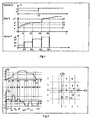
- the figure 1 illustrates such a discrete event abstraction E1 to E4 of an input U - output Y relationship .
- problem-solving techniques provide the technological and methodological tools to automate the exploitation of expert knowledge to drive a complex process and translate that knowledge into a model of complex dynamic process behavior.
- a blast furnace As an example of a complex dynamic process, there may be mentioned: a blast furnace, an electric steel production furnace, a glass production furnace, a cement production furnace, a rolling mill.
- Fuzzy logic is a classic way to exploit this type of complex dynamic process model in order to guide the conduct of this process towards production objectives, previously assigned or updated; the fuzzy logic applied to this type of model consists in evaluating a membership rate of the state of the process at one or more "symbolic values" of input of the model, in deducing the corresponding "symbolic values” of output, and in calculate the state of the system by weighting these output values according to the corresponding membership rates.
- Such a conventional means makes it possible to make the transitions between the different possible branches of reasoning on which the model is based more progressive.
- the object of the invention is to avoid such a disadvantage in the case of the use of complex dynamic process models.
- the invention namely to judge and address only "timely" messages - avoids the saturation of information operators and allows them to devote their attention to the most relevant information at the appropriate time to act on the steering of the process.
- the evolution of quantities is integrated into the basis of the definition of each phenomenon-process which serves to describe the evolution of the process and its operating context; in a space, called a state space, whose dimensions correspond to these quantities, the global evolution of the process or its overall operating context, resulting from said evolution of the quantities, can then be represented by a trajectory whose projection on each dimension corresponds to the evolution of each size.
- the system to be piloted is equipped with sensors or means for capturing the information that is necessary to estimate the state of the process.
- the system to be driven is equipped with actuators whose adjustment values can be modified in order to change the state of the process.
- control device according to the invention may be called "rational reactive agent”.
- An agent is described as "rational" if he actually selects an action from the moment he becomes aware that this action may lead to one of his external goals; moreover, a rational agent selects no action if its external goals are met.
- the means by which the rational agent can apply the principle of rationality lies in what is called a body of knowledge about how the process works; this means, here the corpus of knowledge, thus constitutes the link between information channels, external goals and actions.
- a rational agent is qualified as "reactive" when he is able to respond autonomously to changes of his environment.
- the privileged recipients of these messages are therefore process control operators, whether they are automatic "hardware” operators or "personal” operators, that is human operators.
- the device according to the invention thus provides a digital-symbolic conversion.
- the method is adapted so that messages are issued in a timely manner and, where appropriate, as soon as possible.
- the "perceive” function is synchronized with the information transmitted by the sensors; the other functions are activated asynchronously: the "judge” function is activated as soon as the “perceive” function detects a “phenomena”, the "correct” function is activated when the "judge” function has determined that the state of the process was “problematic”, and the function "to collaborate” is activated either on the initiative of the operators of piloting, or with that of the device when it is necessary.
- the FIRST STAGE of PERCEPTION consists in constructing and ordering the values taken over time by quantities which make it possible to describe the state of the process.
- Values of these quantities are obtained from the interpretation of the information available on the process, in particular the information transmitted by the sensors; "Value” is a real giving in general the amplitude of the magnitude or an integer indicative, for example, of a true / false character carried by the magnitude (i.e. a binary value).
- the need for the aperiodic / event distinction is based on the fact that the "Date value" is generally interpreted in relation to physical objects having a finite life; the lifetime of each of these objects defining a time interval, the dates assigned to the values of the aperiodic quantities can be assigned to these objects, and ordered within the time intervals corresponding to their lifetime.
- the "Date Value" associated with the values of the aperiodic quantities is interpreted as a measure of a particular magnitude measuring a "relative time" to an object with a finite life; the global chronology is ensured by that of the objects themselves.
- the environment of the device according to the invention can exploit multiple clocks of different nature, it is essential to order the values of comparable quantities; this means that two different "date values" associated with different but comparable quantities correspond to different dates.
- the ordering of "Values" can be both spatial and temporal, ie spatio-temporal; the ordered sequence of corresponding pairs or triplets then forms a spatial signal.
- the method according to the invention is "clocked" according to a so-called acquisition period; at each beginning of the cycle of implementation of the method according to the invention, one thus acquires information concerning the process - couples "Value” - "DateValeur” or couples “Valeur” - “PositionValeur”, or triplets "Valeur” - " DateValue "-” ValueValue "; each "information” is associated with a "DateAcquisition” which corresponds, for example, to the number of the cycle counted since the last initialization of the device.
- Each "data” is then a triplet or quadruplet "Value” - "DateValue” - “DateAcquisition”, or “Value” - “ValueValue” - “DateAcquisition”, or “Value” - “DateValue” - “ValueValue” - “DateAcquisition” ".
- This double indexing data management system advantageously enables the device according to the invention to reason in continuous time and to manage its digital data according to the modalities of a discrete time system.
- the "discretization" of the trajectories depends on the aims or objectives of production, and goes through a partitioning of the state space and phase spaces according to these "aims"; according to the invention, this partitioning is performed at each information acquisition cycle.
- the state space is defined as a space whose dimensions are the magnitudes of perception and in which a state of the process is represented by a state vector X (t) whose components are the "Values" of the magnitudes of perception. corresponding to this state; if all these "Values" are defined in R , the state space is defined in R not , where n is the number of components of the state vector X; the coordinates of a point in the state space are the "Values" of the perception quantities of the state described by this point.
- the evolution of the process can be described by a succession of states represented by points in the state space, a succession which forms a trajectory of evolution of the process in this space; this trajectory of evolution of the process has a projection on each of the dimensions of the state space; this projection corresponds to the successive values of a perception quantity during the evolution of the process represented by the trajectory.
- Partitioning or "discretization" of the state space must be done in subsets of states, each corresponding to a specific type of state, so that each state of the process can be identified no longer by its state vector X but by the subset of states or type of state to which this state belongs.
- the representation of the evolution of the process can also be “discretized” one passes from a representation by a trajectory of evolution "continuous” to a representation by a succession of changes of types of states, that we call “discretized trajectory” of evolution of the process.
- this partitioning is performed according to the production objectives assigned to the process at each acquisition of information cycle concerning the process.
- the "targets” are updated and the state space is partitioned again according to the new "targets”.
- a "target” corresponds to an interval delimited by the lower “InF value” and higher “SupSensor” limits, which is represented for example by [InvalidValue, UpValue]; sometimes, the values of the limits are fixed by threshold values.
- the partition can be done in three parts: - ⁇ , Valeurlnf [ , [ Valeurlnf , ValeurSup ] , ] ValeurSup , + ⁇ .
- the set of subsets [ValueInf, ValueSup] specific to each dimension defines a "hyper-cube" in the state space.
- a given state of the process can therefore be considered as belonging or not to this hypercube, depending on whether or not it satisfies the production objectives of the process.
- the fineness in the partitioning of the continuous state space may, however, require the definition of a larger number of subsets.
- the partitioning of the state space therefore defines, at each acquisition cycle and for each of the components of the continuous state vector, intervals of values in R not , and associates with each interval of values a relative integer; the partitioned state space is therefore a space defined on Z n .
- the phase space is defined from a signal, ie from a sequence of values of the same quantity ordered according to a variable, such as the time in the case of a temporal signal or as the position in the case of a spatial signal; by definition, this space has only two dimensions, the first corresponding to the value of the quantity, the second corresponding to the derivative of this value as a function of the variable; the phase space is therefore peculiar to a perception quantity, and so there are at least as many phase spaces as there are perception quantities.
- X (t) and X '(t) then determine the coordinates of a point in the phase space of this magnitude; during a change in behavior of this quantity, the set of values taken by the pair (X (t), X '(t)) and the succession of corresponding points form a behavior trajectory of this magnitude.
- the partitioning or "discretization" of the phase space of a quantity must be done in subsets that each correspond to a specific type so that we can thus identify the "value" of a quantity of the process. either by the values (X (t), X '(t)) but by the subset to which the corresponding point belongs.
- phase space For the partitioning of the phase space, we thus define a finite and countable number of subsets of this space; the phase space can be partitioned according to a method comparable to that previously described for the partitioning of the state space, by taking, for the first dimension corresponding to the magnitude value, the same "targets".
- this partitioning is also performed at each acquisition cycle according to the production objectives already mentioned for the partitioning of the state space.
- Each point of the phase space of a magnitude can be assigned to one of the subsets of that space; the representation by assignment then constitutes a discretized representation of the value of the quantities.
- the figure 2 illustrates this principle for a perception variable x (t) and its derivative x '(t), that is to say for a component of a state vector, which evolve as a function of time as illustrated in the left part of the figure ; the discretized representation deduced from it appears in the right part.
- the representation of the behavior of a quantity can then be "discretized” one goes from a representation by a “continuous” trajectory to a representation by a succession of changes of types, which one calls “discretized trajectory” of behavior of a magnitude.
- control method according to the invention is "reactive" in the sense that it is able to react, autonomously, to changes in its environment.
- the evolution of the process is thus "perceived" not only by its trajectory in the state space but also by the trajectory of each of the perception quantities in their phase space.
- the THIRD STAGE of PERCEPTION is to describe the evolution of the process on the basis of the evolution of the perception quantities themselves, in the form of chronicles of events concerning these quantities; these chronicles can be temporal, spatial, or spatio-temporal.
- a sequence of couples (Evt, DateEvt) is called a "chronic" temporal, where "Evt” designates an event concerning a quantity, and “DateEvt” designates the date assigned to this event; a series of pairs (Evt, PositionEvt) where "PositionEvt” designates the position assigned to this event; we call a spatio-temporal "chronic” a sequence of triplets (Evt, DateEvt, PositionEvt).
- a "discrete event" is generated concerning a perception quantity when the evolution of the process causes a subset change to which the current representative point of this quantity belongs in its phase space according to the definition of the subsets. and that of partitioning the phase space above.
- the date of this passage is then attributed: for example, referring to FIG. 6, to the discrete event E 1 which corresponds in the transition from subset 1 to subset 2, the date e 1 is assigned.
- each magnitude can be described by a series of pairs (Evt, DateEvt) which forms a discrete-event chronicle of this magnitude;
- Figure 6 illustrates this principle for a size of perception.
- classes of behavior a method for recognizing the behavior of a magnitude so as to affect it or not to be assigned to one of these classes and a method of dating the change of class are defined. of behavior ; according to these definitions and methods, it is possible to generate and date a signal event at each change of behavior class, and thus to obtain a chronic event-signal (Evt, DateEvt).
- Implementing a behavior recognition method may require configuring the signal exhibiting said behavior; it is then necessary to add upstream a signal filtering method, adapted to the method used.
- the behavior classes can be parameterized in a constant or variable way: according to the example cited below, these parameters concern in particular the constraints concerning each model and its scales of analysis.
- each behavior model can be represented by a trajectory type in the phase space of this magnitude; each model of behavior and / or each type of trajectory defines here a class of behavior.
- a simple example of this method consists in determining the data (triplet or quadruplet defined above) of the signal which is at the origin of the generation of the "Evt" signal event and to be assigned the "Datevalue" of this datum to the "DateEvt" associated with this signal event; in the case of the use of models to define the behavior classes, the method of dating depends on the model of behavior retained and the search for the data of the signal which is at the origin of the generation of the event-signal is performed on the scale of analysis associated with this model.
- these chronicles can be aggregated into a single global event chronicle.
- This aggregation is performed by collecting and aggregating the chronicles (Evt, DateEvt) of each "Size”; we end up with a sequence of triplets (Evt, DateEvt, Grandeur); these triplets constitute a global chronicle of events which describes the evolution of the overall behavior of quantities; preferably, this global chronic is ordered according to the "DateEvt" values of each triplet.
- This principle makes it possible to associate with any temporal evolution of a continuous process a global chronicle of events, each event of which corresponds to a change in the type of behavior of a magnitude (event-signal) or to a subset change. observed in the phase space of a magnitude (discrete event).
- the behavior of the perception quantities during the evolution of the process is therefore taken into account in the form of a global chronicle of events, each event of this chronicle relating to the evolution of one of these magnitudes.
- the FOURTH STAGE of PERCEPTION aims at describing the evolution of the process by identifying, in a global chronicle of events, typologies of global chronicles, which we call "phenomena-signals" because the events of these chronicles are detected at from the observation of signals.
- Signal-phenomena are defined by types of global evolution event chronicles the process, each type of chronicle gathering discrete events and / or signal events of the same size or of different magnitudes; a signal event of a type of chronic can be temporal, spatial or spatio-temporal, as previously described.
- a type of chronic that contains only time-signal events corresponds to a signal phenomenon called "temporal”
- a type of chronic that contains only spatial signal events corresponds to a signal phenomenon called “spatial”
- a type of chronic that contains both temporal and spatial signal events corresponds to a so-called “spatio-temporal” phenomenon-signal.
- the recognition or detection of signal phenomena then consists in identifying to what type of chronicle the global chronicle of events concerning the evolution of the process belongs; a signaling phenomenon is therefore generated each time that a type of predefined event chronicle is recognized in the global event history concerning the evolution of the process.
- the FIFTH STAGE of the PERCEPTION aims to describe the evolution of the process by integrating all the elements developed above to describe the evolution of the process.
- phenomena-processes must therefore integrate all the elements described above capable of describing the evolution of the process from the temporal, spatial, spatio-temporal signals of the quantities, starting from the trajectory of each magnitude in its phase space, and from the trajectory, continuous or “discretized", of evolution of the process in the state space.
- the first law corresponds to the preceding descriptions in the state space by a state vector whose components are the magnitudes X and by a trajectory of this vector in this epace, whereas the second law corresponds to the preceding descriptions in the spaces of each magnitude X.
- the problem solved by the invention is to integrate and aggregate these two constitutive laws of quantities in the case of a complex dynamic process.
- this definition of a phenomenon-process advantageously makes it possible, if necessary, to distinguish two phenomena presenting the same trajectory in the state space. but different evolutions of some of the magnitudes of perception on this same trajectory; the definition of a phenomenon-process thus integrates the evolution of perception quantities in the form of event-discrete or signal-events (first level), and / or in the form of events chronicles (at say signal-phenomena: second level), or even in the form of chronic phenomena-signals (third level).
- a chronicle can be temporal and can be expressed as a list of couples (Evt, DateEvt); it can be spatial and then express itself as a list of pairs (Evt, PositionEvt); it can also be spatio-temporal and is then expressed as a list of triplets (Evt, DateEvt, PositionEvt).
- This definition of the phenomenon-processes advantageously makes it possible to take into account the timely nature or not of the detection of a phenomenon-process in a given current situation, integrating the elements past, present, and immediate future; in cognitive terms, the definition of these classes reflects knowledge of the causality between phenomena; for example, it is not necessarily “appropriate” to take into account a phenomenon-process, if its "causes", other events or phenomena previous or present, have already been taken into account, or if its "effects", other events or future phenomena, do not occur.
- the definition of the phenomenon-process also passes by that of rules of dating which apply to the elements (events, chronicles) of the classes for the detection of beginning and end of phenomenon-process; for example, the start date setting rule may consist of taking the "DateEvt" of an event or the "StartDatePhenomenon-process" of a phenomenon of the start detection class.
- the perception of the state and the evolution of the process therefore integrates both the global behavior as described in the state space and the behavior of the perception quantities.
- the second MAIN FUNCTION "JUGER” must result in the sending of messages to the environment of the process, and in particular to the system control operators to help them evaluate the opportunity to modify the settings of the system. certain actuators, so as to satisfy the current production objectives of the process.
- the FIRST STEP of the JUDGMENT is to prepare the messages likely to be issued and the criteria for issuing these messages, by assessing the context of evolution of the process and by classifying the phenomena-processes pending according to criteria of severity and according to this context.
- the qualification of the context and the severity of a phenomenon-process also involves context management rules.
- the gravity qualifier of a phenomenon-process concerns its problematic nature from the point of view of the satisfaction of the aims of operation of the process, which are updated with each cycle of acquisition of operating data: a phenomenon-process is problematic if its presence impairs the ability of pilotage operators to meet production objectives.
- a phenomenon-process is qualified in terms of severity of "problematic”, “alarm” or “warning” if it is necessary to take it into account to interpret the evolution of the behavior of the process and / or to initiate corrective actions; by definition of these qualification rules, an instance of phenomenon-process termed “Alarm” is more worrying than an instance qualified as “Warning”; conversely, the phenomenon-processes detected can therefore be qualified as "not serious” if it is not necessary to take it into account to interpret the evolution of the behavior of the process.
- Context management rules are then described as follows: a context that can be used to describe the severity of a phenomenon-process is called "active"; on the other hand, an inactive context can not be used to qualify the gravity of a phenomenon-process.
- the purpose of qualification of the gravity of a phenomenon-process being the emission, in real time, of messages towards the operators of control of the process, the dating of the contexts must be carried out as soon as it is possible, that is to say that is, the detection date of the beginning and end of the instances of the elements of the class defining a context, for example that of phenomenon-process: the severity of the unfinished process phenomena is thus judged according to the current context.
- the SECOND STAGE of the JUDGMENT is to send messages towards the environment, taking into account only the phenomena-processes detected the most serious in the current context of evolution of the process.
- the detected process-phenomena are classified according to the qualification of their gravity carried out, if necessary, in the current context, evaluated as previously described.
- the date of the alert is fixed in real time, according to the evolution of the state of the process, that is to say according to the changes of context of qualification and according to the changes of qualification of the magnitude and locality of the phenomenon-process instance.
- the invention can be advantageously used for the control of blast furnace, thermal furnace, such as a cement kiln, a glass furnace or a slab furnace, a continuous metal casting plant, a rolling mill or a coating plant.
- thermal furnace such as a cement kiln, a glass furnace or a slab furnace
- continuous metal casting plant such as a rolling mill or a coating plant.
- continuous metal band the invention is not limited to the general example above given for information only.
Landscapes
- Engineering & Computer Science (AREA)
- Physics & Mathematics (AREA)
- General Physics & Mathematics (AREA)
- Automation & Control Theory (AREA)
- General Engineering & Computer Science (AREA)
- Human Computer Interaction (AREA)
- Management, Administration, Business Operations System, And Electronic Commerce (AREA)
- Feedback Control In General (AREA)
- General Factory Administration (AREA)
- Earth Drilling (AREA)
Abstract
Description
L'invention concerne un procédé et un dispositif pour la conduite d'un processus complexe ; ces processus disposent généralement d'un niveau de contrôle-commande numérique selon le modèle dit " CIM " (" Computer Integrated Manufacturing " en langue anglaise).The invention relates to a method and a device for conducting a complex process; these processes generally have a level of digital control-command according to the model called "CIM" ("Computer Integrated Manufacturing" in English).
Ce procédé et ce dispositif intègrent des techniques classiques concernant :
- l'acquisition et la qualification de données numériques et symboliques,
- les calculs numériques,
- le traitement du signal et la reconnaissance de formes,
- l'intelligence artificielle, notamment des techniques de représentation des connaissances incertaines, spatiales et temporelles en règles de logique des prédicats du premier ordre, en objets et en chroniques, et les techniques de raisonnements associées,
- le contrôle automatique des systèmes continus et/ou des systèmes discrétisés, dans le temps et dans l'espace.
- les algorithmes de contrôle de systèmes en temps réel.
- the acquisition and qualification of digital and symbolic data,
- numerical calculations,
- signal processing and pattern recognition,
- artificial intelligence, including techniques for representing uncertain, spatial and temporal knowledge in rules of logic of first-order predicates, objects and chronicles, and associated reasoning techniques,
- automatic control of continuous systems and / or discretized systems, in time and space.
- real-time system control algorithms.
Pour décrire l'état d'un processus et l'évolution de l'état d'un processus, on fait appel aux définitions classiques suivantes :
- Un processus est un système de transformation d'un flux entrant en un flux sortant, de matière, d'énergie ou d'informations ; dans un système tel qu'un haut-fourneau de sidérurgie ou un four tournant de cimenterie, le processus transforme la matière ou l'énergie.
- Un tel système de transformation procède selon un ensemble de phénomènes reliés entre eux selon une finalité commune, correspondant à des objectifs de production, dans un environnement imparfait.
- L'objectif de production du processus peut être exprimé en terme de respect de contraintes portant sur certains flux entrants et sur certains flux sortants ; ces contraintes peuvent à leur tour être exprimées en terme de visées ou d'intervalles de valeurs ; les visées portant sur des flux entrant concernent par exemple la position des actionneurs du processus que l'opérateur de conduite du processus doit respecter, comme par exemple, dans le cas d'un haut-fourneau, une proportion minimum et maximum de consommation de charbon, un débit minimum et maximum d'oxygène, alors que les visées portant sur des flux sortant expriment des contraintes portant sur les sorties que l'opérateur de conduite doit satisfaire, qui concernent par exemple un intervalle de températures de fonte, un débit journalier minimum de fonte, un intervalle de teneur en Si dans la fonte ou le laitier.
- L'environnement est qualifié imparfait au sens où il est défini de manière imprécise, incertaine et incomplète ; cet environnement limite les possibilités de production du processus.
- Un modèle de comportement d'un processus est un ensemble organisé de connaissances, ou " corpus " de connaissances, qui sert à prédire l'état du système en fonction de la valeur de grandeurs de perception de ce système et, par exemple, de valeurs de paramétrage de ce modèle.
- Un processus est dynamique lorsque les grandeurs qui interviennent dans son modèle de fonctionnement, comme les variables d'état X, les variables d'entrées U et les variables de sorties Y, sont liées par des relations temporelles.
- Le comportement d'une grandeur peut se définir par la relation entre la valeur de cette grandeur x et le temps t ; il se représente alors par x(t).
- Selon les règles classiques définies dans le domaine technique du contrôle automatique des systèmes, l'état d'un système à un instant d'observation t peut être défini par l'ensemble des couples de valeurs (X'(t), X(t)) relatifs à chaque grandeur de perception, où X' désigne la dérivée par rapport au temps t de la grandeur X ; le processus peut alors être décrit par une relation du type :

- Une trajectoire d'état d'un processus sur un intervalle de temps [tmin, tmax] est définie par une suite de points (X'(t), X(t)) où les valeurs de t appartiennent à cet intervalle.
- Un processus dynamique est complexe dans l'un ou l'autre des cas suivants :
- absence de modèle mathématique de comportement ou modèle mathématique de comportement inopérant ;
- absence de modèle physique de comportement, par exemple du fait de l'insuffisance des connaissances scientifiques, ou modèle physique de comportement inopérant ne donnant lieu à aucun algorithme de calcul numérique exploitable, par exemple : modèle non inversible, modèle non calculatoire, modèle conduisant à des temps de calcul rédhibitoires par rapport au temps de réponse requis , modèle chaotique.
- A process is a system for transforming an incoming flow into an outgoing flow of material, energy or information; in a system such as a steel furnace or a cement kiln, the process transforms matter or energy.
- Such a transformation system proceeds according to a set of interrelated phenomena according to a common purpose, corresponding to production objectives, in an imperfect environment.
- The production objective of the process can be expressed in terms of respecting constraints on certain incoming flows and on certain outgoing flows; these constraints can in turn be expressed in terms of targets or ranges of values; the targets for incoming flows concern, for example, the position of the process actuators that the process operator must respect, for example, in the case of a blast furnace, a minimum and maximum proportion of coal consumption. , a minimum and maximum flow rate of oxygen, whereas the targets on outgoing flows express constraints on the outputs that the operator must satisfy, which concern for example a range of melting temperatures, a minimum daily flow of cast iron, a range of Si content in cast iron or slag.
- The environment is qualified as imperfect in the sense that it is defined in a vague, uncertain and incomplete way; this environment limits the production possibilities of the process.
- A behavioral model of a process is an organized body of knowledge, or "body of knowledge", that is used to predict the state of the system based on the value of perception quantities of that system and, for example, setting of this model.
- A process is dynamic when the quantities involved in its operating model, such as X state variables, U input variables and Y output variables, are linked by temporal relationships.
- The behavior of a quantity can be defined by the relation between the value of this quantity x and the time t; he is then represented by x (t).
- According to the classical rules defined in the technical field of automatic control of systems, the state of a system at an instant of observation t can be defined by the set of pairs of values (X '(t), X (t )) relating to each perception variable, where X 'denotes the derivative with respect to the time t of the magnitude X; the process can then be described by a relation of the type:
- A state path of a process over a time interval [t min , t max ] is defined by a sequence of points (X '(t), X (t)) where the values of t belong to this interval.
- A dynamic process is complex in either of the following cases:
- absence of mathematical model of behavior or mathematical model of inoperative behavior;
- absence of a physical model of behavior, for example because of the insufficiency of scientific knowledge, or physical model of inoperative behavior not giving rise to any exploitable numerical calculation algorithm, for example: non invertible model, non-computational model, model leading to unacceptable calculation times compared to the required response time, chaotic model.
Dans le cas des processus dynamiques complexes, on utilise donc généralement des modèles symboliques rassemblant l'ensemble des connaissances et de l'expertise tirées de l'observation du comportement du processus ; d'une manière classique, on peut construire un tel modèle de comportement à partir des connaissances détenues par des experts en conduite du processus concerné, en faisant appel :
- à des formalismes logiques permettant de représenter ces connaissances,
- à des outils méthodologiques permettant l'acquisition desdites connaissances en vue de leur représentation,
- à des techniques de résolution de problèmes adaptées pour trouver automatiquement des solutions à des problèmes exprimés selon ces formalismes,
- logical formalisms to represent this knowledge,
- methodological tools allowing the acquisition of such knowledge in view of their representation,
- appropriate problem solving techniques to automatically find solutions to problems expressed according to these formalisms,
Parmi les formalismes employés, on peut citer :
- La représentation des connaissances descriptives sous forme d'objets, de classes et de méta-classes,
- La représentation des connaissances déductives en logique des prédicats du premier ordre,
- La représentation de connaissances temporelles sous la forme d'une logique temporelle réïfiée,
- La représentation de connaissances spatio-temporelles sous la forme de graphes d'événements discrets.
- The representation of descriptive knowledge in the form of objects, classes and meta-classes,
- The representation of deductive knowledge in logic of first-order predicates,
- The representation of temporal knowledge in the form of a temporal logic rei fi ed,
- The representation of spatio-temporal knowledge in the form of discrete event graphs.
Parmi les techniques de résolution de problèmes, on peut citer :
- Le raisonnement par héritage de propriétés et de comportements,
- Le raisonnement en logique des prédicats du premier ordre, par exemple du type dit " Modus Ponens ",
- Le contrôle des raisonnements dirigés par les événements, par exemple par compilation de règles en arbres d'événements binaires,
- La gestion de contraintes temporelles,
- Le traitement du signal, par exemple par filtrage, par segmentation temporelle et/ou spatiale, par identification paramétrique,
- La reconnaissance de forme, par exemple par régression linéaire multiple.
- Reasoning by inheritance of properties and behaviors,
- The reasoning in logic of the first order predicates, for example of the type called "Modus Ponens",
- The control of event-driven reasoning, for example by compiling rules into binary event trees,
- The management of temporal constraints,
- Signal processing, for example by filtering, by temporal and / or spatial segmentation, by parametric identification,
- Shape recognition, for example by multiple linear regression.
Parmi les outils méthodologiques permettant l'exploitation automatique desdites connaissances, on peut citer des méthodologies de conception de système à base de connaissances, comme le produit logiciel dénommé " OpenKads™", ou des méthodologies de mise au point de bases de connaissances génériques telles que KADS.Methodological tools for the automatic exploitation of such knowledge include knowledge-based system design methodologies, such as the software product called "OpenKads ™", or methodologies for developing generic knowledge bases such as KADS.
Le caractère dynamique du modèle de comportement est obtenu par l'emploi de formalismes intégrant des contraintes temporelles, par exemple en adjoignant des concepts de chroniques et d'événements à la logique des prédicats du premier ordre ; un exemple connu de formalisme de ce type est appelé " DEVS " (" Discrete Event System Spécification " en langue anglaise), qui permet de définir ce qu'on appelle des événements-discrets à partir des entrées U, de l'état X, des sorties Y, de fonctions de transitions internes X -> X, de fonctions de transitions externes U x X → X, de fonctions de sortie X x U → Y et de fonctions de durée de vie d'un état.The dynamic character of the behavior model is obtained by the use of formalisms integrating temporal constraints, for example by adding concepts of chronic and events to the logic of the first order predicates; a known example of this type of formalism is called "DEVS"("Discrete Event System Specification" in English), which makes it possible to define so-called discrete-events from the inputs U , of the state X , outputs Y , internal transitions functions X -> X , external transitions functions U x X → X , output functions X x U → Y and lifetime functions of a state.
La
En résumé, les techniques de résolution de problèmes fournissent les outils technologiques et méthodologiques permettant d'automatiser l'exploitation des connaissances mises en oeuvre par les experts pour conduire un processus complexe et de traduire ces connaissances en un modèle de comportement du processus dynamique complexe.In summary, problem-solving techniques provide the technological and methodological tools to automate the exploitation of expert knowledge to drive a complex process and translate that knowledge into a model of complex dynamic process behavior.
Comme exemple de processus dynamique complexe, on peut citer : un haut fourneau, un four électrique de production d'acier, un four de production de verre, un four de production de ciment, une installation de laminage.As an example of a complex dynamic process, there may be mentioned: a blast furnace, an electric steel production furnace, a glass production furnace, a cement production furnace, a rolling mill.
L'invention a pour but de fournir un procédé et un dispositif capable d'exploiter ce modèle de processus dynamique complexe en vue d'orienter la conduite dudit processus conformément aux objectifs de production de ce processus dans un environnement imparfait.It is an object of the invention to provide a method and a device capable of exploiting this complex dynamic process model in order to direct the conduct of said process in accordance with the production objectives of this process in an imperfect environment.
La logique floue est un moyen classique pour exploiter ce type de modèle de processus dynamique complexe en vue d'orienter la conduite de ce processus vers des objectifs de production, préalablement assignés ou mis à jour ; la logique floue appliquée à ce type de modèle consiste à évaluer un taux d'appartenance de l'état du processus à une ou plusieurs "valeurs symbolique" d'entrée du modèle, à déduire les " valeurs symboliques " de sortie correspondantes, et à calculer l'état du système par pondération de ces valeurs de sortie en fonction des taux d'appartenance correspondants.Fuzzy logic is a classic way to exploit this type of complex dynamic process model in order to guide the conduct of this process towards production objectives, previously assigned or updated; the fuzzy logic applied to this type of model consists in evaluating a membership rate of the state of the process at one or more "symbolic values" of input of the model, in deducing the corresponding "symbolic values" of output, and in calculate the state of the system by weighting these output values according to the corresponding membership rates.
Un tel moyen classique permet de rendre plus progressives les transitions entre les différentes branches de raisonnement possibles sur lequel le modèle est basé.Such a conventional means makes it possible to make the transitions between the different possible branches of reasoning on which the model is based more progressive.
Mais l'inconvénient d'un tel moyen est qu'il conduit à négliger certaines hypothèses de comportement du processus qui peuvent avoir, par exemple exceptionnellement ou à long terme, des conséquences très importantes, par exemple catastrophiques ou au contraire très bénéfiques ; on passe ainsi à côté de phénomènes rares mais d'importance exceptionnelle.But the disadvantage of such a means is that it leads to neglecting certain assumptions of behavior of the processes that may have, for example exceptionally or long-term, very important consequences, for example catastrophic or on the contrary very beneficial; thus we miss out on rare phenomena but of exceptional importance.
L'invention a pour but d'éviter un tel inconvénient dans le cas de l'utilisation de modèles de processus dynamiques complexes.The object of the invention is to avoid such a disadvantage in the case of the use of complex dynamic process models.
En outre, à partir des phénomènes perçus sur la base de l'estimation de l'état du processus dynamique complexe et de son évolution au cours du temps, les buts poursuivis sont également :
- d'alerter sur le caractère " problématique " du comportement courant du processus, en expliquant le problème rencontré,
- d'évaluer la " performance " du processus en rendant compte de la tendance globale à l'amélioration ou à la dégradation des " sorties " du processus par rapport aux objectifs poursuivis,
- de proposer l'engagement d'actions de correction des éventuels comportements "problématiques" ou insuffisamment performants ; l'engagement d'actions correspond par exemple à des changements de réglage des actionneurs et/ou à des modifications des " entrées " du processus.
- to warn about the "problematic" character of the current behavior of the process, explaining the problem encountered,
- to evaluate the "performance" of the process by reporting on the overall trend towards improving or degrading the "outputs" of the process in relation to the objectives pursued,
- to propose the commitment of actions to correct possible "problematic" or insufficiently effective behaviors; the action commitment corresponds, for example, to changes in the setting of the actuators and / or to changes in the "inputs" of the process.
A cet effet, l'invention a pour objet un procédé de pilotage d'un processus à partir d'informations émises par l'environnement dudit processus et en vue d'adresser des informations aux opérateurs dudit processus de nature à les aider à maintenir ou à ramener ledit processus dans ses objectifs de production, dans lequel :
- ayant au préalable défini des phénomène-processus en se basant sur un ou plusieurs critères d'évolution, selon au moins une variable de date et/ou de position, d'au moins une grandeur de perception de l'état dudit processus,
- on acquiert périodiquement lesdites informations émises et on élabore, à partir de ces informations, des valeurs des grandeurs de perception utilisées pour la définition des phénomènes-processus,
- on décrit l'état et l'évolution du processus par une succession de phénomènes-processus détectés,
- et on adresse aux opérateurs des informations concernant les dits phénomènes-processus détectés,
et caractérisé en ce qu'on adresse aux opérateurs lesdites informations concernant le phénomène-processus jugé uniquement lorsque son jugement a établi que ces informations sont nécessaires et opportunes dans ledit contexte pour aider à maintenir ou à ramener ledit processus dans ses objectifs de production.For this purpose, the subject of the invention is a method for controlling a process on the basis of information emitted by the environment of the said process and for sending information to the operators of the said process that may help them to maintain or returning said process to its production objectives, wherein:
- having previously defined process-phenomena based on one or more evolution criteria, according to at least one date and / or position variable, of at least one perception quantity of the state of said process,
- these transmitted information are periodically acquired and, from this information, values of the perception quantities used for the definition of the process phenomena are developed,
- the state and evolution of the process are described by a succession of detected phenomena-processes,
- and operators are provided with information concerning said detected process phenomena,
and characterized by providing the operators with said information relating to the phenomenon-process judged only when its judgment has established that such information is necessary and expedient in said context to help maintain or reduce said process in its production objectives.
L'invention - à savoir juger et n'adresser que des messages " opportuns " - permet d'éviter la saturation d'informations des opérateurs et leur permet de consacrer leur attention aux informations les plus pertinentes au moment opportun pour agir sur le pilotage du processus.The invention - namely to judge and address only "timely" messages - avoids the saturation of information operators and allows them to devote their attention to the most relevant information at the appropriate time to act on the steering of the process.
L'évolution des grandeurs est intégrée à la base de la définition de chaque phénomène-processus qui sert à décrire l'évolution du processus et son contexte de fonctionnement ; dans un espace, appelé espace d'état, dont les dimensions correspondent à ces grandeurs, l'évolution globale du processus ou son contexte global de fonctionnement, résultant de ladite évolution des grandeurs, peuvent alors être représentés par une trajectoire dont la projection sur chaque dimension correspond à l'évolution de chaque grandeur.The evolution of quantities is integrated into the basis of the definition of each phenomenon-process which serves to describe the evolution of the process and its operating context; in a space, called a state space, whose dimensions correspond to these quantities, the global evolution of the process or its overall operating context, resulting from said evolution of the quantities, can then be represented by a trajectory whose projection on each dimension corresponds to the evolution of each size.
Si les critères portent sur la valeur des grandeurs, ils définissent alors implicitement une trajectoire " type " dans l'espace d'état.If the criteria relate to the value of the quantities, then they implicitly define a "standard" trajectory in the state space.
L'invention peut également présenter une ou plusieurs des caractéristiques suivantes :
- ◆ la description de l'état et de l'évolution du processus et/ou celle de son contexte de fonctionnement comprend des chroniques d'événements, la définition desdits événements intégrant celle d'un ou plusieurs critères d'évolution d'au moins une grandeur de perception et chaque événement étant affecté d'une date et/ou d'une position, et chaque chronique étant formée d'une suite d'événements ordonnée suivant leur date et/ou leur position.
Cette caractéristique additionnelle complète la description de l'état et de l'évolution du processus et/ou de son contexte ; elle un moyen avantageux pour associer des événements très différents et/ou des évolutions à long terme ou à des positions très éloignées. - ◆ la définition préalable des phénomène-processus intègre également celle de types de chronique d'événements.
Cette définition plus complète permet de repérer des évolutions sur le long terme et/ou entre des positions très éloignées du processus qui permettent aux opérateurs du processus de le piloter en anticipant ces évolutions ; utilisée pour décrire les contextes, elle permet d'améliorer le jugement et de sélectionner au mieux les informations à adresser aux opérateurs ; les types de chronique d'événements sont appelés ultérieurement « phénomène- signaux ». - ◆ la définition des phénomène-processus et/ou des événements intègre également celle d'un ou plusieurs critères d'évolution de la dérivée première d'au moins une grandeur par rapport à une variable de date et/ou de position, cette dérivée étant fonction de cette variable.
Si l'évolution de la dérivée première des grandeurs est intégrée à la définition de certains phénomènes-processus et/ou événements suivant les critères propres à cette caractéristique additionnelle de l'invention, alors, on peut représenter l'évolution de chaque grandeur par une trajectoire dans un espace propre à chaque grandeur, dont les deux dimensions correspondent à cette grandeur et à sa dérivée première, et qu'on appelle " espace de phase ".
Grâce à l'invention, la succession de phénomènes-processus détectés, qui décrit l'état et l'évolution du processus et son contexte de fonctionnement, intègre alors deux représentations : l'une sous forme de trajectoire dans l'espace d'état, l'autre sous forme de trajectoires dans les espaces de phase.
On améliore donc sensiblement la description de l'état et de l'évolution du processus, parce que cette définition plus complète d'un phénomène-processus permet par exemple de distinguer deux phénomènes présentant la même trajectoire dans l'espace d'état mais des trajectoires différentes dans certains espaces de phase.
Utilisée pour décrire les contextes, cette caractéristique additionnelle de l'invention permet également d'améliorer le jugement. - ◆ si les valeurs d'une grandeur ou, le cas échéant, de sa dérivée première sont ordonnées selon ladite variable de date et/ou de position pour former un " signal ", pour les critères d'évolution qui portent sur des paramètres calculés à partir de ce signal, à observer uniquement sur un intervalle prédéterminé de valeurs de ladite variable, appelé " échelle d'analyse ", la définition de chacun desdits critères passe par la classification de la valeur calculée de chaque paramètre sur lequel ledit critère porte dans différents sous-domaines prédéterminés du domaine de valeurs de ce paramètre, chaque sous-domaine étant défini par une borne inférieure et une borne supérieure.
Dans le cas où le paramètre est la fonction " identité " et où l'échelle d'analyse ne concerne qu'une valeur de variable, cette définition des critères correspond au partitionnement de l'espace d'état (borne inférieure et borne supérieure pour chaque sous-domaine de valeurs d'une grandeur) et au partitionnement des espaces de phase (borne inférieure et borne supérieure pour chaque sous-domaine de valeurs d'une grandeur et pour chaque sous-domaine de valeurs de la dérivée première d'une grandeur). - ◆ certains au moins desdits critères sont déterminés en fonction des objectifs de production dudit processus, et les objectifs de production sont ré-évalués à chaque période d'acquisition desdites informations et lesdits critères remis à jour en conséquence.
Grâce à l'invention selon laquelle, à chaque cycle d'acquisition, on réévalue les objectifs de production par exemple en mettant à jour des " visées " pour chaque grandeur de perception puis on remet à jour les critères qui définissent les phénomènes, le procédé de pilotage s'adapte automatiquement aux changements de conditions ou de contexte d'exploitation du processus et à l'évolution du processus lui-même, par exemple quant à son usure et/ou son vieillissement.
Ainsi, le procédé de pilotage selon l'invention est " réactif au sens qu'il est capable de réagir, de manière autonome, aux modifications de son environnement. - ◆ pour déterminer lesdits critères en fonction des objectifs de production, on fait varier ces bornes en fonction de ces objectifs.
- ■ Enfin, l'invention a également pour l'objet l'utilisation du procédé selon l'invention pour piloter un processus dynamique complexe, ledit processus étant choisi dans le groupe comprenant un haut-fourneau, un four thermique, comme un four de cimenterie, un four à verre ou un four à brames, une installation de coulée continue de métal, et une installation de laminage ou de revêtement en continu de bande métallique.
- ◆ the description of the state and evolution of the process and / or that of its operating context includes chronicles of events, the definition of said events integrating that of one or more evolution criteria of at least one magnitude of perception and each event being assigned a date and / or position, and each chronicle being formed of an ordered sequence of events according to their date and / or position.
This additional characteristic completes the description of the state and evolution of the process and / or its context; it is an advantageous means for associating very different events and / or long-term evolutions or at very distant positions. - ◆ The prior definition of process phenomena also integrates that of event chronic types.
This more complete definition makes it possible to identify changes over the long term and / or between positions very far from the process that allow the operators of the process to control it by anticipating these evolutions; used to describe the contexts, it makes it possible to improve the judgment and to select as well as possible the information to be addressed to the operators; types of event chronicles are referred to later as "phenomenon- signals ". - ◆ the definition of the phenomenon-processes and / or events also integrates that of one or more criteria of evolution of the first derivative of at least one magnitude with respect to a date and / or position variable, this derivative being function of this variable.
If the evolution of the first derivative of the quantities is integrated in the definition of certain phenomena-processes and / or events according to the criteria specific to this additional characteristic of the invention, then we can represent the evolution of each quantity by a trajectory in a space specific to each magnitude, whose two dimensions correspond to this magnitude and its first derivative, and which is called "phase space".
Thanks to the invention, the succession of detected phenomena-processes, which describes the state and evolution of the process and its operating context, then integrates two representations: one in the form of a trajectory in the state space the other in the form of trajectories in the phase spaces.
The description of the state and the evolution of the process is therefore substantially improved, because this more complete definition of a phenomenon-process makes it possible, for example, to distinguish two phenomena presenting the same trajectory in the state space, but different trajectories in certain phase spaces.
Used to describe contexts, this additional feature of the invention also improves judgment. - ◆ if the values of a quantity or, if appropriate, of its first derivative are ordered according to said date and / or position variable to form a "signal", for the evolution criteria which relate to parameters calculated at from this signal, to observe only on a predetermined interval of values of said variable, called "analysis scale", the definition of each of said criteria passes by the classification of the calculated value of each parameter on which said criterion carries in different predetermined subdomains of the value domain of this parameter, each subdomain being defined by a lower bound and an upper bound.
In the case where the parameter is the "identity" function and the analysis scale relates to only one variable value, this definition of the criteria corresponds to the partitioning of the state space (lower bound and upper bound for each subdomain of values of a magnitude) and the partitioning of the phase spaces (lower bound and upper bound for each subdomain of values of a magnitude and for each subdomain of values of the first derivative of a magnitude). - At least some of said criteria are determined according to the production objectives of said process, and the production objectives are re-evaluated at each acquisition period of said information and said criteria updated accordingly.
Thanks to the invention according to which, at each acquisition cycle, the production objectives are re-evaluated, for example by updating "targets" for each perception quantity, and then the criteria defining the phenomena, the process, are updated. The control system automatically adapts to changes in the operating conditions or context of the process and to the evolution of the process itself, for example with regard to its wear and / or aging.
Thus, the control method according to the invention is "reactive in the sense that it is able to react, autonomously, to changes in its environment. - ◆ to determine these criteria according to production objectives, these limits are varied according to these objectives.
- Finally, the invention also relates to the use of the method according to the invention for controlling a complex dynamic process, said process being chosen from the group comprising a blast furnace, a thermal oven, such as a cement kiln. , a glass furnace or a slab furnace, a continuous metal casting plant, and a metal strip continuous rolling or coating plant.
L'invention sera mieux comprise à la lecture de la description qui va suivre, donnée à titre d'exemple non limitatif, et en référence aux figures annexées sur lesquelles :
- la
figure 1 illustre une abstraction à événements discrets E1 à E4 d'une relation entrées U - sorties Y. - la
figure 2 illustre le principe de représentation discrétisée pour une grandeur de perception x(t) et sa dérivée x'(t).
- the
figure 1 illustrates a discrete event abstraction E1 to E4 of an input U - output Y relationship . - the
figure 2 illustrates the principle of discretized representation for a perception variable x (t) and its derivative x '(t).
On va maintenant décrire un exemple général de processus complexe, d'installation de pilotage et de mise en oeuvre de cette installation.We will now describe a general example of complex process, installation of piloting and implementation of this installation.
Le système à piloter est doté de capteurs ou moyens pour capter les informations qui sont nécessaires à l'estimation de l'état du processus.The system to be piloted is equipped with sensors or means for capturing the information that is necessary to estimate the state of the process.
Dans le cas d'un haut fourneau, ces informations concernent par exemple :
- la température de la fonte, des gaz au gueulard et en haut de cuve, de la flamme, des parois, notamment aux niveau des staves, des margelles et des réfractaires ;
- la composition chimique des gaz de gueulard, notamment la teneur en CO, CO2, H2, O2, celle de la fonte, notamment la teneur en S, P, Si, Mn, Zn, celle du laitier, notamment la teneur en Fe, Mn, S, MgO, celles des matières enfournées, notamment la teneur en K2O et en fer ferreux ;
- le débit d'azote total et aux tuyères, le débit d'oxygène, la température et le débit du vent chaud, le débit de charbon pulvérisé et le débit d'eau de refroidissement ;
- le poids des matières enfournées, notamment le coke et le minerai, et le poids des matières défournées, notamment la fonte et le laitier ;
- la vitesse des gaz au gueulard, le niveau des charges, la granulométrie des matières chargées, notamment d'agglomérés ;
- la pression en paroi, la pression différentielle en parois,
- la durée des coulées, la durée de coulée sans laitier.
- the temperature of the cast iron, the gases at the top and at the top of the tank, the flame, the walls, especially at the level of the staves, copings and refractories;
- the chemical composition of the top gases, in particular the content of CO, CO2, H2, O2, that of the melt, in particular the content of S, P, Si, Mn, Zn, that of the slag, in particular the content of Fe, Mn , S, MgO, those of the fired materials, in particular the content of K2O and ferrous iron;
- total nitrogen and nozzle flow rate, oxygen flow rate, hot wind temperature and flow rate, pulverized coal flow, and cooling water flow rate;
- the weight of the materials that are fired, including coke and ore, and the weight of the materials diverted, including melting and slag;
- the speed of gases at the top, the level of the charges, the particle size of the charged materials, in particular agglomerates;
- the wall pressure, the differential wall pressure,
- the duration of the castings, the casting time without slag.
Le système à piloter est doté d'actionneurs dont les valeurs de réglage peuvent être modifées en vue de faire évoluer l'état du processus.The system to be driven is equipped with actuators whose adjustment values can be modified in order to change the state of the process.
Dans le cas d'un haut fourneau, on peut notamment citer :
- les actionneurs permettant de modifier la mise au mille du coke et la mise au mille du charbon pulvérisé ;
- l'actionneur permettant de modifier le débit total d'oxygène ;
- les actionneurs permettant de modifier la température du vent chaud et sa teneur en humidité ;
- l'actionneur permettant de modifier la contre-pression au gueulard ;
- les actionneurs permettant de modifier la quantité de matières chargées, la composition chimique des matières enfournées, et la répartition radiale de ces matières ;
- les actionneurs permettant de modifier l'épaisseur des couches, duquel dépend le poids de fonte enfournée par cycle de chargement.
- actuators making it possible to modify the coke pitch and the pulverization of the pulverized coal;
- the actuator for modifying the total flow of oxygen;
- actuators for modifying the temperature of the hot wind and its moisture content;
- the actuator for modifying the back pressure at the top;
- actuators making it possible to modify the quantity of charged materials, the chemical composition of the fired materials, and the radial distribution of these materials;
- the actuators for modifying the thickness of the layers, on which depends the weight of cast iron loaded by loading cycle.
Le procédé de pilotage selon l'invention enchaîne de manière cyclique et permanente deux fonctions classiques fondamentales :
- percevoir, c'est à dire estimer l'état de fonctionnement du processus à partir des " sorties " du processus, notamment à partir des informations délivrées par les capteurs ;
- commander, c'est à dire déterminer la valeur de réglage des " entrées " ou actionneurs du processus en fonction de la perception du processus et de manière à satisfaire les objectifs de production du processus ; la satisfaction des objectifs de production consiste à maintenir le processus dans les visées lorsqu'elles sont déjà toutes satisfaites, ou à ramener le processus dans les visées lorsque l'une au moins n'est pas satisfaite.
- perceive, ie estimate the operating state of the process from the "outputs" of the process, in particular from the information delivered by the sensors;
- control, ie determining the setting value of the "inputs" or actuators of the process according to the perception of the process and in order to satisfy the production objectives of the process; the satisfaction of the production objectives consists in keeping the process in the sights when they are all already satisfied, or in returning the process to the objectives when at least one is not satisfied.
Le dispositif de pilotage selon l'invention peut être qualifié " d'agent rationnel réactif".The control device according to the invention may be called "rational reactive agent".
Le mot " agent " désigne un dispositif autonome comprenant :
- des "entrées" organisées sous la forme d'un ensemble de canaux d'informations permettant l'aquisition des informations sur le processus et son environnement,
- des "sorties " organisées sous la forme d'un ensemble d'actions permettant à cet agent d'agir sur son environnement,
- des objectifs de production assignés au processus, organisés sous la forme d'un ensemble de buts externes qui sont également déterminées par son environnement.
- "Entries" organized in the form of a set of information channels for obtaining information on the process and its environment,
- "outings" organized in the form of a set of actions allowing this agent to act on his environment,
- production objectives assigned to the process, organized in the form of a set of external goals that are also determined by its environment.
Un agent est qualifié de " rationnel " s'il sélectionne effectivement une action à partir du moment où il prend connaissance du fait que cette action peut conduire à satisfaire un de ses buts externes ; de plus, un agent rationnel ne sélectionne aucune action si ses buts externes sont satisfaits.An agent is described as "rational" if he actually selects an action from the moment he becomes aware that this action may lead to one of his external goals; moreover, a rational agent selects no action if its external goals are met.
Le moyen permettant à l'agent rationnel d'appliquer le principe de rationalité réside dans ce qu'on appelle un corpus de connaissances concernant le fonctionnement du processus ; ce moyen, ici le corpus de connaissances, constitue donc le lien entre les canaux d'informations, les buts externes et les actions.The means by which the rational agent can apply the principle of rationality lies in what is called a body of knowledge about how the process works; this means, here the corpus of knowledge, thus constitutes the link between information channels, external goals and actions.
Un agent rationnel est qualifié de " réactif " lorsqu'il est capable de réagir, de manière autonome, aux modifications de son environnement.A rational agent is qualified as "reactive" when he is able to respond autonomously to changes of his environment.
Ainsi, dans le mode de réalisation du dispositif de pilotage selon l'invention :
- ■ Les canaux d'informations véhiculent des "messages" adressés par l'environnement ;
- ■ Les buts externes sont déclinés en " visées " et chaque " visée " est définie par un intervalle de valeurs définissant un domaine d'évolution des flux de sortie du processus.
- ■ Les actions résident dans l'émission de messages adressés à l'environnement ; ces messages contiennent une description des problèmes concernant la situation courante par rapport aux visées de production et éventuellement des conseils sur la conduite à suivre pour remédier à ces problèmes ; ils sont accompagnés des informations nécessaires et suffisantes pour " convaincre " l'environnement de l'importance des problèmes et de la pertinence des conseils.
- ■ Information channels carry "messages" addressed by the environment;
- ■ The external goals are broken down into "targets" and each "target" is defined by a range of values defining a field of evolution of the output flows of the process.
- ■ The actions reside in the sending of messages addressed to the environment; these messages contain a description of the problems with the current situation in relation to the aims of production and possibly advice on how to deal with these problems; they are accompanied by the necessary and sufficient information to "convince" the environment of the importance of the problems and the relevance of the advice.
Ainsi, entre autres, ces messages adressés à l'environnement :
- ■ décrivent l'état du processus et le caractère éventuellement " problématique " de son évolution,
- ■ indiquent, lorsque cela est possible et nécessaire, les actionneurs dont les réglages sont à modifier et les nouvelles valeurs de réglage proposées,
- ■ et fournissent, à la demande des opérateurs du processus, des explications sur l'état du processus, le problème rencontré, les réglages à effectuer.
- ■ describe the state of the process and the possible "problematic" nature of its evolution,
- ■ indicate, when possible and necessary, the actuators whose settings are to be modified and the new setting values proposed,
- ■ and provide, at the request of the process operators, explanations of the state of the process, the problem encountered, the adjustments to be made.
Les destinataires privilégiés de ces messages sont donc des opérateurs de pilotage du processus, qu'il s'agisse d'opérateurs " matériels " automatiques ou d'opérateurs " personnels ", c'est à dire humains.The privileged recipients of these messages are therefore process control operators, whether they are automatic "hardware" operators or "personal" operators, that is human operators.
Concernant le langage et la syntaxe des messages, il convient de préciser :
- que les messages envoyés par l'environnement sont généralement formatés en nombres réels qui représentent généralement la valeur d'une grandeur physique,
- que les raisonnements sont ensuite effectués dans un espace symbolique,
- que les messages émis ensuite vers l'environnement sont libellés dans un langage adapté aux destinataires : langage naturel, symbolique et/ou phénoménologique, comme des phrases accompagnées de graphiques, dans le cas où ces destinataires sont des hommes.
- that the messages sent by the environment are generally formatted in real numbers which generally represent the value of a physical quantity,
- that the reasonings are then carried out in a symbolic space,
- that the messages then sent to the environment are written in a language adapted to the recipients: natural language, symbolic and / or phenomenological, like sentences accompanied by graphics, in the case where these recipients are men.
Le dispositif selon l'invention assure donc une conversion numérique-symbolique.The device according to the invention thus provides a digital-symbolic conversion.
Le dispositif de pilotage selon l'invention est donc adapté pour satisfaire les visées de production du processus, c'est-à-dire :
- Aider à maintenir le processus dans les visées de production lorsque toutes ces visées sont satisfaites ;
- Aider à ramener le processus dans les visées de production lorsque l'une au moins de ces visées n'est pas satisfaite.
- Help keep the process in production targets when all of these are met;
- Assist in bringing the process back into production when at least one of these is not met.
Ce dispositif de pilotage fonctionne à la fois d'une manière synchrone et asynchrone :
- ■ Fonctionnement synchrone pour l'acquisition des informations, basé sur une acquisition périodique des messages adressés par l'environnement ;
- ■ Fonctionnement asynchrone pour l'émission des messages adressés à l'environnement au sens où ces messages ne sont adressés que lorsqu'ils sont nécessaires pour maintenir ou ramener le processus dans les visées.
- ■ Synchronous operation for the acquisition of information, based on a periodic acquisition of messages sent by the environment;
- ■ Asynchronous operation for sending messages addressed to the environment in the sense that these messages are only sent when they are needed to maintain or return the process in the targets.
Avantageusement, puisque les messages ne leur sont adressés que lorsqu'ils sont nécessaires, les opérateurs sont beaucoup moins saturés que dans les procédés de l'art antérieur et peuvent se consacrer aux informations les plus importantes de ces messages ; de plus, le procédé est adapté pour que les messages soient émis en temps opportun, et, lorsque c'est opportun, le plus tôt possible.Advantageously, since the messages are addressed to them only when they are necessary, the operators are much less saturated than in the processes of the prior art and can devote themselves to the most important information of these messages; furthermore, the method is adapted so that messages are issued in a timely manner and, where appropriate, as soon as possible.
Lors d'un cycle d'acquisition d'informations, il arrive donc fréquemment qu'aucun message d'action ne soit émis.During an information acquisition cycle, it frequently happens that no action message is sent.
Le procédé selon l'invention comprend au moins les deux premières étapes parmi les quatre étapes principales cycliques suivantes :
- percevoir, c'est à dire évaluer l'état du processus et son évolution à partir d'informations, notamment celles délivrées par les capteurs ;
- juger ou qualifier en terme de gravité la perception en fonction du contexte de fonctionnement du processus, et émettre un message selon le jugement effectué ; ainsi, un état ou une évolution du processus sont jugés " problématiques " s'ils ne permettent pas de satisfaire les objectifs de production et un message les concernant est alors émis s'il convient de modifier les réglages des actionneurs pour maintenir ou ramener le processus dans les visées de production ;
- corriger : cette fonction est destinée, le cas échéant, à quantifier les modifications nécessaires des valeurs de réglage des actionneurs pour satisfaire ou maintenir les objectifs de production et à planifier ces modifications dans le temps ;
- collaborer : cette fonction assure la communication et l'interface vers les opérateurs du processus : adaptation des messages délivrées par le dispositif selon l'invention en fonction des opérateurs de pilotage auxquels elles sont destinées et en fonction du contexte de fonctionnement du processus.
- perceive, that is to say evaluate the state of the process and its evolution from information, notably those delivered by the sensors;
- judge or qualify in terms of severity the perception according to the operating context of the process, and issue a message according to the judgment made; thus, a state or an evolution of the process are judged "problematic" if they do not make it possible to satisfy the objectives of production and a message concerning them is then emitted if it is necessary to modify the settings of the actuators to maintain or to bring back the process in production targets;
- correct: this function is intended, if necessary, to quantify the necessary modifications of actuator adjustment values to meet or maintain the production objectives and to plan these changes over time;
- collaborate: this function provides the communication and the interface to the process operators: adaptation of the messages delivered by the device according to the invention according to the control operators for which they are intended and according to the operating context of the process.
Seule la fonction "percevoir" est synchronisée avec les informations transmises par les capteurs ; les autres fonctions sont activées de manière asynchrone : la fonction " juger " est activée dès que la fonction " percevoir " détecte un " phénomènes", la fonction " corriger " est activée lorsque la fonction " juger " a déterminé que l'état du processus était " problématique ", et la fonction " collaborer " est activée soit à l'initiative des opérateurs de pilotage, soit à celle du dispositif lorsque cela est nécessaire.Only the "perceive" function is synchronized with the information transmitted by the sensors; the other functions are activated asynchronously: the "judge" function is activated as soon as the "perceive" function detects a "phenomena", the "correct" function is activated when the "judge" function has determined that the state of the process was "problematic", and the function "to collaborate" is activated either on the initiative of the operators of piloting, or with that of the device when it is necessary.
Selon l'invention, la première FONCTION PRINCIPALE " PERCEVOIR " comprend essentiellement les étapes suivantes :
- 1 - élaboration des valeurs de grandeurs de perception de l'état du processus et élaboration de signaux, les signaux étant des ensembles numériques ordonnées de valeurs de ces grandeurs,
- 2 - description de l'évolution de l'état du processus par une trajectoire dans l'espace d'état et des trajectoires dans l'espace de phase relatif à chaque grandeur, et discrétisation de ces trajectoires par partitionnement des espaces,
- 3 - description de l'évolution de l'état du processus sur la base de l'évolution des grandeurs de perception elles-mêmes, sous la forme d'une chronique globale d'événements concernant ces grandeurs ; ces chroniques peuvent être temporelles, spatiales, ou spatio-temporelles ; on définira deux types d'événements : les événements-discrets et les événements-signaux,
- 4 - description de l'évolution de l'état du processus en répérant, dans une chronique globale d'événements, des typologies de chroniques globales, qu'on appelle " phénomènes-signaux ",
- 5 - description de l'évolution de l'état du processus sous la forme d'une chronique de phénomène-processus, la définition d'un phénomène-processus intégrant les points 2, 3
et 4 ci-dessus.
- 1 - development of the values of size of perception of the state of the process and development of signals, the signals being ordered numerical sets of values of these quantities,
- 2 - description of the evolution of the state of the process by a trajectory in the state space and trajectories in the phase space relative to each magnitude, and discretization of these trajectories by space partitioning,
- 3 - description of the evolution of the state of the process on the basis of the evolution of the perception quantities themselves, in the form of a global chronicle of events concerning these quantities; these chronicles can be temporal, spatial, or spatio-temporal; we will define two types of events: discrete events and signal events,
- 4 - description of the evolution of the state of the process by listing, in a global chronicle of events, typologies of global chronicles, called "signal phenomena",
- 5 - description of the evolution of the state of the process in the form of a chronic phenomenon-process, the definition of a phenomenon-
process integrating points
Ces cinq étapes sont décrites plus en détail ci-après.These five steps are described in more detail below.
La PREMIERE ETAPE de la PERCEPTION consiste à construire et à ordonner les valeurs prises au cours du temps par des grandeurs qui permettent de décrire l'état du processus.The FIRST STAGE of PERCEPTION consists in constructing and ordering the values taken over time by quantities which make it possible to describe the state of the process.
Le dispositif selon l'invention distingue deux types de grandeurs selon l'utilisation qu'il en fait :
- Les grandeurs mesurées : une grandeur mesurée est soit une grandeur dont les valeurs sont acquises directement à partir des capteurs instrumentant le processus, soit une grandeur dont les valeurs sont calculées à partir de celles d'autres grandeurs sur la base de modèles mathématiques numériques.
- Les grandeurs de perception : les grandeurs de perception sont les grandeurs mesurées qui contiennent l'information sur l'état du processus et son évolution au cours du temps, c'est à dire X(t) et X'(t) tels que précédemment définis ; les valeurs de ces grandeurs ne sont généralement pas directement mesurables et sont calculées ou déduites comme indiqué ci-dessous ; les grandeurs de perception forment donc les composantes de ce qu'on appelle couramment un vecteur d'état X du processus dans l'espace d'état à n dimensions, n correspondant au nombre de grandeurs de perception.
- Measured quantities: A measured quantity is either a quantity whose values are acquired directly from the sensors that instrument the process, or a quantity whose values are calculated from those of other quantities on the basis of numerical mathematical models.
- The magnitudes of perception: the magnitudes of perception are the measured quantities which contain information on the state of the process and its evolution over time, ie X (t) and X '(t) as previously defined; the values of these quantities are generally not directly measurable and are calculated or deduced as indicated below; Perception quantities thus form the components of what is commonly called an X- state vector of the process in the n-dimensional state space, where n is the number of perception quantities.
Les valeurs de ces grandeurs sont obtenues à partir de l'interprétation des informations disponibles concernant le processus, notamment les informations transmises par les capteurs ; " Valeur " est un réel donnant en général l'amplitude de la grandeur ou un entier indicatif, par exemple, d'un caractère vrai/faux porté par la grandeur (i.e. une valeur binaire).The values of these quantities are obtained from the interpretation of the information available on the process, in particular the information transmitted by the sensors; "Value" is a real giving in general the amplitude of the magnitude or an integer indicative, for example, of a true / false character carried by the magnitude (i.e. a binary value).
On peut ordonner les " Valeurs " prises par une grandeur d'une manière spatiale ou/et d'une manière temporelle.One can order the "Values" taken by a magnitude in a spatial way and / or in a temporal way.
On va d'abord décrire un ordonnancement de type temporel de valeurs d'une grandeur, dans le cas, par exemple, où ces valeurs transitent sur un " bus " de données ; pour la datation des " Valeurs ", on peut alors utiliser un système classique de gestion du " bus ", qui est externe au dispositif selon l'invention et prend donc en compte différentes horloges, parfois indépendantes les unes des autres ; ainsi, à chaque " Valeur " est attribuée une " Datevaleur" cette datation est indépendante des horloges propres au dispositif selon l'invention.We will first describe a temporal type scheduling of values of a magnitude, in the case, for example, where these values pass on a "bus" of data; for the dating of "Values", one can then use a conventional system for managing the "bus", which is external to the device according to the invention and therefore takes into account different clocks, sometimes independent of each other; thus, each "value" is assigned a "date value" this dating is independent of the clocks of the device according to the invention.
On distingue trois modalités temporelles principales de datation des valeurs selon les types de grandeurs :
- Grandeurs périodiques, lorsque que la durée s'écoulant entre deux valeurs successives prises par cette grandeur est constante au cours du temps ; la notion de grandeur périodique est donc associée à celle de période d'échantillonnage et de fréquence d'échantillonnage de cette grandeur ; la " Datevaleur" associée aux " Valeurs " d'une grandeur périodique est donc un multiple entier de la période d'échantillonnage et ces " Datevaleur" sont interprétées par le dispositif selon l'invention comme des valeurs d'une grandeur appelée " temps universel ".
- Grandeurs événementielles, qui ne sont ni périodiques, ni apériodiques ; les " Valeurs " des grandeurs événementielles ne sont donc connues qu'à des dates particulières et la " Datevaleur" est alors attribuée selon des modalités spécifiques, en référence à des horloges quelconques : il peut s'agir par exemple de la date de prise d'un échantillon, celle de l'analyse de l'échantillon, celle de la validation de la saisie des valeurs de l'analyse ; dans ces trois exemples, les horloges peuvent être par exemple la montre d'un opérateur, une horloge murale ou celle d'un terminal de saisie.
- Periodic quantities, when the time elapsing between two successive values taken by this quantity is constant over time; the notion of periodic quantity is thus associated with that of sampling period and sampling frequency of this quantity; the "Date value" associated with the "Values" of a periodic quantity is therefore an integer multiple of the sampling period and these "Datevaleur" are interpreted by the device according to the invention as values of a quantity called "universal time"".
- Event quantities, which are neither periodic nor aperiodic; the "Values" of the event quantities are thus known only on particular dates and the "Datevaleur" is then attributed according to specific modalities, with reference to any clocks: it can be for example the date of taking of a sample, that of the analysis of the sample, that of the validation of the input of the values of the analysis; in these three examples, the clocks can be for example the watch of an operator, a wall clock or that of a data entry terminal.
Les dates associées aux grandeurs événementielles ne sont donc pas interprétées en tant que mesure du " temps universel ", mais comme des index permettant d'ordonner une suite de "Valeurs" de ces grandeurs événementielles.
- Grandeurs apériodiques, lorsque que le nombre de " Valeurs " que cette grandeur prend sur une durée prédéterminée est constant au cours du temps ; il s'agit d'un cas particulier de grandeurs événementielles pour lesquelles on garantit un nombre constant de mesures ou de " Valeurs " pendant cette durée prédéterminée, durant le fonctionnement du processus ; la " Datevaleur" associée aux valeurs des grandeurs apériodiques possède les mêmes propriétés que celles des grandeurs événementielles.
- Aperiodic quantities, when the number of "Values" that this quantity takes over a predetermined duration is constant over time; it is a special case of event quantities for which a constant number of measurements or "values" are guaranteed during this predetermined duration, during the operation of the process; the "Date value" associated with the values of the aperiodic quantities has the same properties as those of the event quantities.
La nécessité de la distinction apériodique/événementielle se fonde sur le fait que la " Datevaleur" s'interprète généralement par rapport à des objets physiques ayant une durée de vie finie ; la durée de vie de chacun de ces objets définissant un intervalle de temps, les dates attribuées aux valeurs des grandeurs apériodiques peuvent être attribuées à ces objets, et ordonnés à l'intérieur des intervalles de temps correspondant à leur durée de vie.The need for the aperiodic / event distinction is based on the fact that the "Date value" is generally interpreted in relation to physical objects having a finite life; the lifetime of each of these objects defining a time interval, the dates assigned to the values of the aperiodic quantities can be assigned to these objects, and ordered within the time intervals corresponding to their lifetime.
Par conséquent, la " Datevaleur" associée aux valeurs des grandeurs apériodiques est interprétée comme une mesure d'une grandeur particulière mesurant un " temps relatif " à un objet à durée de vie finie ; la chronologie globale est assurée par celle des objets eux-mêmes.Therefore, the "Date Value" associated with the values of the aperiodic quantities is interpreted as a measure of a particular magnitude measuring a "relative time" to an object with a finite life; the global chronology is ensured by that of the objects themselves.
L'environnement du dispositif selon l'invention pouvant exploiter de multiples horloges de nature différentes, il indispensable d'ordonner les valeurs de grandeurs comparables ; cela signifie que deux " Datevaleur" différentes associées à des grandeurs différentes mais comparables, correspondent à des dates différentes.The environment of the device according to the invention can exploit multiple clocks of different nature, it is essential to order the values of comparable quantities; this means that two different "date values" associated with different but comparable quantities correspond to different dates.
On va maintenant décrire un ordonnancement de type spatial de valeurs d'une grandeur, dans le cas, par exemple, du pilotage d'un haut-fourneau ; si la grandeur concerne la température de paroi, chaque valeur de cette grandeur correspond à un point donné de cette paroi, qu'on appelle " Point d'Acquisition " repéré par une " Position" un ensemble de " Points " forme une "Zone".We will now describe a spatial type scheduling of values of a magnitude, in the case, for example, of piloting a blast furnace; if the quantity relates to the wall temperature, each value of this quantity corresponds to a given point of this wall, which is called "Acquisition point" indicated by a "Position" a set of "Points" forms a "Zone" .
Ces " Points" forment un ensemble dont la structure est liée, par exemple, à l'implantation des capteurs dans le système et cet ensemble peut être ordonné ; dans le cas des températures de parois d'un haut-fourneau, ils peuvent être ordonnés par exemple selon leur " position " sur un diamètre de paroi et/ou selon leur " position " en hauteur sur cette paroi ; l'ordonnancement de cet ensemble de " Points " permet alors d'ordonner les " Valeurs " relatives à ces " Points " selon une suite ordonnée de couples " Valeurs "-" Position " qui forme un signal spatial.These "Points" form a set whose structure is linked, for example, to the implantation of the sensors in the system and this set can be ordered; in the case of wall temperatures of a blast furnace, they can be ordered for example according to their "position" on a wall diameter and / or according to their "position" in height on this wall; the scheduling of this set of "Points" then makes it possible to order the "Values" relative to these "Points" according to an ordered sequence of pairs "Values" - "Position" which forms a spatial signal.
Enfin, l'ordonnancement des " Valeurs" peut être à la fois spatial et temporel, c'est à dire spatio-temporel ; la suite ordonnée de couples ou de triplets correspondante forme alors un signal spatial.Finally, the ordering of "Values" can be both spatial and temporal, ie spatio-temporal; the ordered sequence of corresponding pairs or triplets then forms a spatial signal.
Par ailleurs, le procédé selon l'invention est " cadencé " selon une période dite d'acquisition ; à chaque début de cycle de mise en oeuvre du procédé selon l'invention, on acquiert donc des informations concernant le processus - couples "Valeur"-"DateValeur" ou couples " Valeur "-" PositionValeur ", ou triplets " Valeur "-" DateValeur "-" PositionValeur " ; à chaque " information ", on associe une " DateAcquisition " qui correspond par exemple au numéro de cycle compté depuis la dernière initialisation du dispositif.Moreover, the method according to the invention is "clocked" according to a so-called acquisition period; at each beginning of the cycle of implementation of the method according to the invention, one thus acquires information concerning the process - couples "Value" - "DateValeur" or couples "Valeur" - "PositionValeur", or triplets "Valeur" - " DateValue "-" ValueValue "; each "information" is associated with a "DateAcquisition" which corresponds, for example, to the number of the cycle counted since the last initialization of the device.
Le repérage de " DateAcquisition " par le numéro de cycle introduit, de fait, une discrétisation du temps.The identification of "DateAcquisition" by the cycle number introduces, in fact, a discretization of time.
Chaque " donnée " est alors un triplet ou quadruplet "Valeur"-" DateValeur"- " DateAcquisition ", ou " Valeur "-"PositionValeur"-" DateAcquisition ", ou " Valeur "-" DateValeur "-" PositionValeur "-" DateAcquisition ".Each "data" is then a triplet or quadruplet "Value" - "DateValue" - "DateAcquisition", or "Value" - "ValueValue" - "DateAcquisition", or "Value" - "DateValue" - "ValueValue" - "DateAcquisition" ".
On stocke ces données dans une base de données indexée suivant la " DateAcquisition ".These data are stored in a database indexed according to the "DateAcquisition".
Chaque valeur d'une grandeur est donc liée à deux dates et/ou à une date et une position :
- une DateAcquisition, pour l'indexation du stockage des données,
- une DateValeur, pour ordonner les suites numériques de " Valeurs " d'une même grandeur et définir ainsi le signal temporel d'une grandeur,
- une Position de Point d'acquisition, pour ordonner les suites numériques de " Valeurs " d'une même grandeur et définir ainsi le signal spatial d'une grandeur,
- une DateValeur et une Position pour ordonner les suites numériques de " Valeurs " d'un ensemble de grandeurs de même nature, comme par exemple les températures mesurées sur les parois d'un haut-fourneau,et définir ainsi le signal spatio-temporel associé à cet ensemble de grandeurs de même nature.
- a DateAcquisition, for indexing data storage,
- a DateValor, to order the numerical sequences of "Values" of the same size and thus to define the signal time of a magnitude,
- an acquisition point position, to order the numerical sequences of "values" of the same magnitude and thus define the spatial signal of a magnitude,
- a DateValeur and a Position to order the numerical sequences of "Values" of a set of quantities of the same nature, such as for example the temperatures measured on the walls of a blast furnace, and thus to define the spatio-temporal signal associated with this set of magnitudes of the same nature.
Dans la suite du procédé, on cherche à décrire l'évolution du processus à la fois :
- à l'aide d'une suite globale consolidée des " Valeurs " de toutes les grandeurs, ordonnée suivant la DateAcquisition,
- à l'aide des signaux des grandeurs, chaque signal est alors défini comme une suite ordonnée des " Valeurs " d'une même grandeur.
- using a consolidated aggregate "Values" of all quantities, ordered according to DateAcquisition,
- Using the signals of the quantities, each signal is then defined as an ordered sequence of "Values" of the same size.
Ce système de gestion des données selon un double indexage permet avantageusement au dispositif selon l'invention de raisonner en temps continu et de gérer ses données numériques selon les modalités d'un système à temps discret.This double indexing data management system advantageously enables the device according to the invention to reason in continuous time and to manage its digital data according to the modalities of a discrete time system.
La DEUXIEME ETAPE de la PERCEPTION consiste à décrire l'évolution du processus à la fois :
- par la trajectoire " discrétisée " que suit l'état du processus dans l'espace d'état, tel qu'elle découle de la suite globale consolidée des " Valeurs " de toutes les grandeurs,
- et par les trajectoires " discrétisées " que suivent les valeurs des grandeurs dans leur espace de phase, telles qu'elles découlent des signaux propres à chaque grandeur, qu'ils soient temporels, spatiaux, ou spatio-temporels.
- by the "discretized" trajectory followed by the state of the process in the state space, as it results from the consolidated overall series of "Values" of all the magnitudes,
- and by the "discretized" trajectories followed by the magnitude values in their phase space, as derived from the signals specific to each magnitude, whether they are temporal, spatial, or spatio-temporal.
La " discrétisation " des trajectoires dépend des visées ou des objectifs de production, et passe par un partitionnement de l'espace d'état et des espaces de phase en fonction de ces " visées " ; selon l'invention, ce partitionnement est effectuée à chaque cycle d'acquisition des informations.The "discretization" of the trajectories depends on the aims or objectives of production, and goes through a partitioning of the state space and phase spaces according to these "aims"; according to the invention, this partitioning is performed at each information acquisition cycle.
On définit l'espace d'état comme un espace dont les dimensions sont les grandeurs de perception et dans lequel on représente un état du processus par un vecteur d'état X(t) dont les composantes sont les " Valeurs " des grandeurs de perception correspondant à cet état ; si toutes ces " Valeurs " sont définies dans 

On peut décrire l'évolution du processus par une succession d'états représentés par des points dans l'espace d'état, succession qui forme une trajectoire d'évolution du processus dans cet espace ; cette trajectoire d'évolution du processus possède une projection sur chacune des dimensions de l'espace d'état ; cette projection correspond aux valeurs successives d'une grandeur de perception au cours de l'évolution du processus représenté par la trajectoire.The evolution of the process can be described by a succession of states represented by points in the state space, a succession which forms a trajectory of evolution of the process in this space; this trajectory of evolution of the process has a projection on each of the dimensions of the state space; this projection corresponds to the successive values of a perception quantity during the evolution of the process represented by the trajectory.
Le partitionnement ou " discrétisation " de l'espace d'état doit être réalisé en sous-ensembles d'états qui correspondent chacun à un type d'état déterminé de telle sorte que l'on puisse ainsi repérer chaque état du processus non plus par son vecteur d'état X mais par le sous-ensemble d'états ou type d'état auquel cet état appartient.Partitioning or "discretization" of the state space must be done in subsets of states, each corresponding to a specific type of state, so that each state of the process can be identified no longer by its state vector X but by the subset of states or type of state to which this state belongs.
Grâce à ce partitionnement, la représentation de l'évolution du processus peut être également " discrétisée" on passe d'une représentation par une trajectoire d'évolution " continue " à une représentation par une succession de changements de types d'états, qu'on appelle " trajectoire discrétisée " d'évolution du processus.Thanks to this partitioning, the representation of the evolution of the process can also be "discretized" one passes from a representation by a trajectory of evolution "continuous" to a representation by a succession of changes of types of states, that we call "discretized trajectory" of evolution of the process.
Pour le partionnement de l'espace d'état, on définit donc un nombre fini et dénombrable de sous-ensembles de cet espace.For the partitioning of the state space, we thus define a finite and countable number of subsets of this space.
Selon une caractéristique de l'invention, ce partionnement est effectué en fonction des objectifs de production assignés au processus à chaque cycle d'acquisition des informations concernant le processus.According to one characteristic of the invention, this partitioning is performed according to the production objectives assigned to the process at each acquisition of information cycle concerning the process.
A partir des objectifs de production assignés au processus, exprimés par exemple en critères quantitatifs et qualitatifs que doivent satisfaire certains des flux " entrants " et " sortants " du processus, et à l'aide du corpus de connaissances concernant le comportement du processus, on définit des " visées " pour les grandeurs de perception, de sorte que, si un état du processus est défini par des valeurs de grandeurs de perception qui appartiennent à ces visées respectives, cet état est jugé comme satisfaisant les objectifs de production.From the production objectives assigned to the process, expressed for example in quantitative and qualitative criteria that must be met by some of the "incoming" and "outgoing" flows of the process, and using the body of knowledge concerning the behavior of the process, one defines "targets" for perception quantities, so that if a state of the process is defined by values of perception quantities that belong to these respective aims, this state is judged to satisfy the production objectives.
A chaque cycle d'acquisition, on remet donc à jour les " visées " et on effectue donc à nouveau le partitionnement de l'espace d'état en fonction des nouvelles " visées ".At each acquisition cycle, the "targets" are updated and the state space is partitioned again according to the new "targets".
Pour une grandeur dont les valeurs sont des nombres réels, une " visée " correspond à un intervalle délimité par des bornes inférieure "ValeurInf" et supérieure " ValeurSup", qui est représenté par exemple par [ValeurInf, ValeurSup] ; parfois, les valeurs des bornes sont fixées par des valeurs de seuils.For a quantity whose values are real numbers, a "target" corresponds to an interval delimited by the lower "InF value" and higher "SupSensor" limits, which is represented for example by [InvalidValue, UpValue]; sometimes, the values of the limits are fixed by threshold values.
La définition de ces " visées " et/ou celle des bornes de ces intervalles est réalisée par les opérateurs de conduite du procédé, notamment en fonction de l'expérience ; les valeurs des bornes peuvent être constantes ou être fonction de valeurs d'autres grandeurs et de valeurs d'autres bornes ; il n'est pas toujours possible de définir un " intervalle de valeurs satisfaisantes " ou des valeurs de bornes pour chaque grandeur de perception.The definition of these "targets" and / or that of the limits of these intervals is carried out by the operators of the process, in particular according to experience; the values of the terminals can be constant or be dependent on values of other quantities and values of other terminals; it is not always possible to define a "range of satisfactory values" or terminal values for each perception quantity.
Ainsi, sur les dimensions de l'espace d'état, la partition peut s'effectuer en trois parties :
L'ensemble des sous-ensembles [ValeurInf, ValeurSup] propres à chaque dimension définit un " hyper-cube " dans l'espace d'état.The set of subsets [ValueInf, ValueSup] specific to each dimension defines a "hyper-cube" in the state space.
Un état donné du processus peut donc être considéré comme appartenant ou non à cet hypercube, selon qu'il satisfait ou non les objectifs de production du processus.A given state of the process can therefore be considered as belonging or not to this hypercube, depending on whether or not it satisfies the production objectives of the process.
La finesse dans le partitionnement de l'espace d'état continu peut cependant nécessiter la définition d'un nombre plus important de sous-ensembles.The fineness in the partitioning of the continuous state space may, however, require the definition of a larger number of subsets.
Le partitionnement de l'espace d'états définit donc, à chaque cycle d'acquisition et pour chacune des composantes du vecteur d'état continu, des intervalles de valeurs dans 
On définit l'espace de phase à partir d'un signal, c'est à dire à partir d'une suite de valeurs d'une même grandeur ordonnée selon une variable, comme le temps dans le cas d'un signal temporel ou comme la position dans le cas d'un signal spatial ; par définition, cet espace ne présente que deux dimensions, la première correspondant à la valeur de la grandeur, la seconde correspondant à la dérivée de cette valeur en fonction de la variable ; l'espace de phase est donc propre à une grandeur de perception et il existe donc au moins autant d'espaces de phase que de grandeurs de perception.The phase space is defined from a signal, ie from a sequence of values of the same quantity ordered according to a variable, such as the time in the case of a temporal signal or as the position in the case of a spatial signal; by definition, this space has only two dimensions, the first corresponding to the value of the quantity, the second corresponding to the derivative of this value as a function of the variable; the phase space is therefore peculiar to a perception quantity, and so there are at least as many phase spaces as there are perception quantities.
Ainsi, dans le cas où la variable est le temps, pour un état du processus repéré dans l'espace d'état par un vecteur d'état X dont les composantes sont X1(t), X2(t), ..., Xi(t), ... Xn(t), chaque composante représente la " Valeur " = Xi(t) de la grandeur de perception correspondante Gi à l'instant t.Thus, in the case where the variable is the time, for a state of the process identified in the state space by a state vector X whose components are X 1 (t), X 2 (t), ., X i (t), ... X n (t), each component represents the "Value" = X i (t) of the corresponding perception quantity G i at time t.
A partir du signal temporel d'une grandeur G, formée par une suite de " Valeurs " de cette grandeur ordonnées suivant leur " Datevaleur", et à laquelle X(t) appartient, on peut calculer la dérivée première X'(t) de la valeur X(t).From the time signal of a quantity G, formed by a sequence of "Values" of this quantity ordered according to their "Date value", and at which X (t) belongs, the first derivative X '(t) of the value X (t).
X(t) et X'(t) déterminent alors les coordonnées d'un point dans l'espace de phase de cette grandeur ; au cours d'un changement de comportement de cette grandeur, l'ensemble des valeurs prises par le couple (X(t), X'(t)) et la succession des points correspondants forme une trajectoire de comportement de cette grandeur.X (t) and X '(t) then determine the coordinates of a point in the phase space of this magnitude; during a change in behavior of this quantity, the set of values taken by the pair (X (t), X '(t)) and the succession of corresponding points form a behavior trajectory of this magnitude.
On peut ainsi décrire le comportement d'une grandeur par une trajectoire " continue " dans le plan de phase associé à cette grandeur ; pour décrire ce comportement par une trajectoire " discrétisée ", on va procéder au partitionnement de l'espace des phases.It is thus possible to describe the behavior of a quantity by a "continuous" trajectory in the phase plane associated with this quantity; to describe this behavior by a "discretized" trajectory, we will partition the phase space.
Le partitionnement ou " discrétisation" de l'espace de phase d'une grandeur doit être réalisé en sous-ensembles qui correspondent chacun à un type déterminé de telle sorte que l'on puisse ainsi repérer la " Valeur " d'une grandeur du processus non plus par les valeurs (X(t), X'(t)) mais par le sous-ensemble auquel le point correspondant appartient.The partitioning or "discretization" of the phase space of a quantity must be done in subsets that each correspond to a specific type so that we can thus identify the "value" of a quantity of the process. either by the values (X (t), X '(t)) but by the subset to which the corresponding point belongs.
Pour le partionnement de l'espace de phase, on définit donc un nombre fini et dénombrable de sous-ensembles de cet espace ; on peut partitionner l'espace de phase selon une méthode comparable à celle précédemment décrite pour le partionnement de l'espace d'état, en reprenant, pour la première dimension correspondant à la valeur de la grandeur, les mêmes " visées ".For the partitioning of the phase space, we thus define a finite and countable number of subsets of this space; the phase space can be partitioned according to a method comparable to that previously described for the partitioning of the state space, by taking, for the first dimension corresponding to the magnitude value, the same "targets".
Selon une caractéristique de l'invention, ce partionnement est également effectué à chaque cycle d'acquisition en fonction des objectifs de production déjà cités pour le partionnement de l'espace d'état.According to one characteristic of the invention, this partitioning is also performed at each acquisition cycle according to the production objectives already mentioned for the partitioning of the state space.
Chaque point de l'espace de phase d'une grandeur peut être affecté à un des sous-ensembles de cet espace ; la représentation par affectation constitue alors une représentation discrétisée de la valeur des grandeurs.Each point of the phase space of a magnitude can be assigned to one of the subsets of that space; the representation by assignment then constitutes a discretized representation of the value of the quantities.
La
Grâce à ce partitionnement, la représentation du comportement d'une grandeur peut ensuite être "discrétisée" on passe d'une représentation par une trajectoire " continue " à une représentation par une succession de changements de types, qu'on appelle " trajectoire discrétisée " de comportement d'une grandeur.Thanks to this partitioning, the representation of the behavior of a quantity can then be "discretized" one goes from a representation by a "continuous" trajectory to a representation by a succession of changes of types, which one calls "discretized trajectory" of behavior of a magnitude.
Grâce à l'invention selon laquelle, à chaque cycle d'acquisition, on met à jour les " visées " pour chaque grandeur de perception puis on renouvelle le partitionnement de l'espace d'état et celui des espaces de phase, le procédé de pilotage s'adapte automatiquement :
- aux changements de conditions ou de contexte d'exploitation du processus, tels le changement de point de fonctionnement ou le changement de la nature des flux de matière ou d'énergie,
- et à l'évolution du processus, relatif par exemple à l'usure, au vieillissement, ou à l'endommagement d'organes de ce processus.
- changes in the operating conditions or context of the process, such as the change of operating point or the change in the nature of the flows of matter or energy,
- and the evolution of the process, relating for example to wear, aging, or damage to organs of this process.
Ainsi, le procédé de pilotage selon l'invention est " réactif " au sens qu'il est capable de réagir, de manière autonome, aux modifications de son environnement.Thus, the control method according to the invention is "reactive" in the sense that it is able to react, autonomously, to changes in its environment.
Ici, deux aspects de l'invention méritent d'être soulignés et distingués en tant que conséquences du partionnement : la réactivité, produite par la détection des événements discrets, et l'adaptativité produite par un partionnement fondé sur des visées numériques remises à jour ; ces deux propriétés apportent des avantages importants par rapport à l'approche de logique floue de l'art antérieur.Here two aspects of the invention deserve to be underlined and distinguished as consequences of parotation: the responsiveness produced by the discrete event detection and the adaptivity produced by a division based on updated numerical targets; these two properties provide significant advantages over the fuzzy logic approach of the prior art.
Selon une caractéristique de l'invention, on " perçoit " donc l'évolution du processus non seulement par sa trajectoire dans l'espace d'état mais également par la trajectoire de chacune des grandeurs de perception dans leur espace de phase.According to one characteristic of the invention, the evolution of the process is thus "perceived" not only by its trajectory in the state space but also by the trajectory of each of the perception quantities in their phase space.
Ce double mode de perception, à la fois dans l'espace d'état et dans les espaces de phase, est en effet particulièrement pertinent car une trajectoire dont la projection est nulle selon une dimension correspondant à une grandeur de perception de l'espace d'état ne correspond pas forcément à un point dans l'espace de phase de cette grandeur ; cela signifie que, si l'évolution d'un processus possède une " traduction " vide signifiant l'absence d'évolution dans l'espace d'état, sa " traduction " n'est pas forcément vide dans les espaces de phase, au niveau du comportement de chacune de ses grandeurs de perception (et vice-versa).This dual mode of perception, both in the state space and in the phase spaces, is indeed particularly relevant because a trajectory whose projection is zero according to a dimension corresponding to a perception quantity of the space of state does not necessarily correspond to a point in the phase space of that magnitude; this means that, if the evolution of a process has an empty "translation" signifying the absence of evolution in the state space, its "translation" is not necessarily empty in the phase spaces, the level of behavior of each of its perception quantities (and vice versa).
L'évolution d'un processus (trajectoire dans l'espace d'état) et le comportement de ses grandeurs de perception (trajectoire dans l'espace de phase) sont bien évidemment liés mais la relation qui les lie est particulièrement difficile à établir dans le cas des processus dynamiques complexes ; l'invention permet de pallier cette difficulté, notamment grâce à la troisième, quatrième et cinquième étape de perception.The evolution of a process (trajectory in the state space) and the behavior of its perception quantities (trajectory in the phase space) are of course linked, but the relation which links them is particularly difficult to establish in the case of complex dynamic processes; the invention makes it possible to overcome this difficulty, in particular thanks to the third, fourth and fifth stages of perception.
La TROISIEME ETAPE de la PERCEPTION consiste à décrire l'évolution du processus sur la base de l'évolution des grandeurs de perception elles-mêmes, sous la forme de chroniques d'événements concernant ces grandeurs ; ces chroniques peuvent être temporelles, spatiales, ou spatio-temporelles.The THIRD STAGE of PERCEPTION is to describe the evolution of the process on the basis of the evolution of the perception quantities themselves, in the form of chronicles of events concerning these quantities; these chronicles can be temporal, spatial, or spatio-temporal.
On appelle " chronique " temporelle une suite de couples (Evt, DateEvt) où " Evt " désigne un événement concernant une grandeur et " DateEvt " désigne la date affectée à cet événement ; on appelle " chronique " spatiale une suite de couples (Evt, PositionEvt) où " PositionEvt " désigne la position affectée à cet événement ; on appelle " chronique "spatio-temporelle une suite de triplets (Evt, DateEvt, PositionEvt).A sequence of couples (Evt, DateEvt) is called a "chronic" temporal, where "Evt" designates an event concerning a quantity, and "DateEvt" designates the date assigned to this event; a series of pairs (Evt, PositionEvt) where "PositionEvt" designates the position assigned to this event; we call a spatio-temporal "chronic" a sequence of triplets (Evt, DateEvt, PositionEvt).
Pour aboutir à ces chroniques, il convient donc de définir des événements, leur mode de détection et leur mode de datation et/ou de localisation.To arrive at these chronicles, it is therefore necessary to define events, their mode of detection and their method of dating and / or location.
On va maintenant définir un premier type d'événements ; les " événenements-discrets ".We will now define a first type of event; the "discrete events".
Par défintion, on génère un " événement-discret " concernant une grandeur de perception lorsque l'évolution du processus provoque un changement de sous-ensemble auquel appartient le point représentatif courant de cette grandeur dans son espace de phase selon la définition des sous-ensembles et celle du partitionnement de l'espace de phase ci-dessus.By definition, a "discrete event" is generated concerning a perception quantity when the evolution of the process causes a subset change to which the current representative point of this quantity belongs in its phase space according to the definition of the subsets. and that of partitioning the phase space above.
A un événement-discret donné qui correspond au passage d'un sous-ensemble à un autre, est alors attribuée la date de ce passage : par exemple, en se reportant à la figure 6, à l'événement-discret E1 qui correspond au passage du sous-ensemble 1 au sous-ensemble 2, est attribuée la date e1.At a given discrete event which corresponds to the transition from one subset to another, the date of this passage is then attributed: for example, referring to FIG. 6, to the discrete event E 1 which corresponds in the transition from
Ainsi, le comportement de chaque grandeur peut être décrit par une suite de couples (Evt, DateEvt) qui forme une chronique d'événements-discrets de cette grandeur ; la figure 6 illustre ce principe pour une grandeur de perception.Thus, the behavior of each magnitude can be described by a series of pairs (Evt, DateEvt) which forms a discrete-event chronicle of this magnitude; Figure 6 illustrates this principle for a size of perception.
On va maintenant décrire la définition des événements-signaux.The definition of signal events will now be described.
On a vu précédemment qu'une suite numérique ordonnée de " Valeurs " d'une même grandeur définissait le signal, ce signal pouvant être temporel, spatial, ou spatio-temporel.We saw previously that an ordered numerical sequence of "Values" of the same magnitude defined the signal, this signal being able to be temporal, spatial, or spatio-temporal.
Par l'analyse de ce signal, on va repérer le comportement de la grandeur associée à ce signal et générer un " événement-signal " à chaque changement de comportement.By analyzing this signal, we will identify the behavior of the quantity associated with this signal and generate a "signal event" at each change of behavior.
Selon l'invention, à cette fin, on définit des classes de comportement, une méthode pour reconnaître le comportement d'une grandeur de manière à l'affecter ou non à l'une de ces classes et une méthode de datation du changement de classe de comportement ; selon ces définitions et méthodes, on peut générer et dater un événement-signal à chaque changement de classe de comportement, et aboutir ainsi à une chronique d'événements-signaux (Evt,DateEvt).According to the invention, for this purpose, classes of behavior, a method for recognizing the behavior of a magnitude so as to affect it or not to be assigned to one of these classes and a method of dating the change of class are defined. of behavior ; according to these definitions and methods, it is possible to generate and date a signal event at each change of behavior class, and thus to obtain a chronic event-signal (Evt, DateEvt).
La mise en oeuvre d'une méthode de reconnaissance de comportement peut nécessiter de configurer le signal présentant ledit comportement ; il est alors nécessaire d'ajouter en amont une méthode de filtrage du signal, adaptée à la méthode utilisée.Implementing a behavior recognition method may require configuring the signal exhibiting said behavior; it is then necessary to add upstream a signal filtering method, adapted to the method used.
Les classes de comportement peuvent être paramétrées d'une manière constante ou variable : selon l'exemple cité ci-après, ces paramètres concernent en particulier les contraintes concernant chaque modèle et ses échelles d'analyse.The behavior classes can be parameterized in a constant or variable way: according to the example cited below, these parameters concern in particular the constraints concerning each model and its scales of analysis.
L'exemple suivant illustre l'invention pour la définition des événements-signaux et leur mode de datation :The following example illustrates the invention for the definition of signal events and their method of dating:
Pour chacune des grandeurs de perception, on définit plusieurs modèles de comportement possibles ; chaque modèle de comportement peut être représenté par un type de trajectoire dans l'espace de phase de cette grandeur ; chaque modèle de comportement et/ou chaque type de trajectoire définit donc ici une classe de comportement.For each of the perception quantities, we define several possible behavior models; each behavior model can be represented by a trajectory type in the phase space of this magnitude; each model of behavior and / or each type of trajectory defines here a class of behavior.
On génère alors un événement-signal pour une grandeur donnée dès que l'on détecte une des conditions suivantes :
- 1. Reconnaissance de l'établissement d'un modèle de comportement,
- 2. Reconnaissance de l'achèvement d'un modèle de comportement préalablement reconnu,
- 3. Incapacité à reconnaître un modèle de comportement.
- 1. Recognition of the establishment of a behavior model,
- 2. Recognition of the completion of a previously recognized pattern of behavior
- 3. Inability to recognize a pattern of behavior.
Pour détecter ces conditions, on peut par exemple utiliser l'une des deux méthodes de génération décrite ci-après :
- Une méthode par analyse du signal adaptée pour reconnaître le comportement d'un signal par rapport à un ensemble de modèles de comportement temporel de référence et selon une échelle temporelle d'analyse donnée du signal ; un modèle de comportement temporel correspond à un ensemble de contraintes portant sur un segment temporel de signal prédéterminé ; une échelle temporelle d'analyse correspond au segment temporel nécessaire à l'analyse du signal pour reconnaître le modèle de comportement ; de ce fait, le segment temporel de définition du comportement du signal d'une grandeur est d'une durée inférieure à l'échelle temporelle d'analyse.
- Une méthode de reconnaissance de formes temporelles adaptée pour reconnaître le comportement courant d'un signal par rapport à un ensemble de modèles de formes temporelles de référence et selon une échelle d'observation donnée ; une forme temporelle est un ensemble de contraintes portant sur un assemblage de modèles de comportements temporels ; dans le cas de l'utilisation de cette méthode, l'échelle temporelle d'analyse est au moins égale à la somme des échelles temporelles d'analyses associées aux modèles de comportement temporels composant le modèle de la forme temporelle à reconnaître.
- A signal analysis method adapted to recognize the behavior of a signal with respect to a set of reference time behavior patterns and a given time scale of the signal analysis; a temporal behavior model corresponds to a set of constraints relating to a predetermined signal time segment; a time scale of analysis corresponds to the time segment necessary for the analysis of the signal to recognize the behavior model; as a result, the time segment for defining the signal behavior of a quantity is shorter than the time scale of analysis.
- A temporal pattern recognition method adapted to recognize the current behavior of a signal with respect to a set of reference temporal pattern patterns and a given observation scale; a temporal form is a set of constraints on an assembly of patterns of temporal behavior; in the case of the use of this method, the time scale of analysis is at least equal to the sum of the time scales of analyzes associated with the temporal behavior models composing the model of the temporal form to be recognized.
Il convient ensuite de définir une méthode de datation de l'événement-signal ; dans le cas des signaux temporels, un exemple simple de cette méthode consiste à déterminer la donnée (triplet ou quadruplet défini ci-dessus) du signal qui est à l'origine de la génération de l'événement-signal " Evt " et à affecter la " Datevaleur" de cette donnée à la " DateEvt " associée à cet événement-signal ; dans le cas de l'utilisation de modèles pour définir les classes de comportement, la méthode de datation dépend du modèle de comportement retenu et la recherche de la donnée du signal qui est à l'origine de la génération de l'événement-signal est effectuée sur l'échelle d'analyse associée à ce modèle.It is then necessary to define a method of dating the signal event; in the case of time signals, a simple example of this method consists in determining the data (triplet or quadruplet defined above) of the signal which is at the origin of the generation of the "Evt" signal event and to be assigned the "Datevalue" of this datum to the "DateEvt" associated with this signal event; in the case of the use of models to define the behavior classes, the method of dating depends on the model of behavior retained and the search for the data of the signal which is at the origin of the generation of the event-signal is performed on the scale of analysis associated with this model.
Comme pour les événements-dicrets, le comportement de chaque grandeur est alors aussi décrit par une suite de couples (Evt, DateEvt) qui forme une chronique d'événements-signaux de cette grandeur ; la figure 6 illustre ce principe pour une grandeur de perception ; cette description du comportement de chaque grandeur est liée à la définition des classes de comportement de cette grandeur, par exemple sous forme de modèles ou de types de trajectoire, de la même façon que la description de comportement basée sur les événements-discrets est basée sur le partionnement de l'espace de phase de cette grandeur.As with discrete events, the behavior of each magnitude is then also described by a sequence of pairs (Evt, DateEvt) which forms a chronic event-signal of this magnitude; Figure 6 illustrates this principle for a magnitude of perception; this description of the behavior of each quantity is related to the definition of the behavior classes of this quantity, for example in the form of models or types of trajectory, in the same way that the description of behavior based on the discrete events is based on the partitioning of the phase space of this magnitude.
Globalement, on aboutit à une série de suites de couples (Evt, DateEvt) où Evt désigne soit un événement-discret soit un événement-signal, c'est à dire à une série de chroniques d'événements concernant cette grandeur.Overall, we arrive at a series of couples sequences (Evt, DateEvt) where Evt denotes either a discrete event or a signal event, ie a series of event chronicles concerning this magnitude.
Pour décrire l'évolution du processus, ces chroniques peuvent être agrégées en une seule chronique globale d'événements.To describe the evolution of the process, these chronicles can be aggregated into a single global event chronicle.
On effectue cette agrégation en rassemblant et en agrégeant les chroniques (Evt, DateEvt) de chaque "Grandeur "; on aboutit alors à une suite de triplets (Evt, DateEvt, Grandeur) ; ces triplets constituent une chronique globale d'événements qui décrit l'évolution du comportement d'ensemble des grandeurs ; de préférence, cette chronique globale est ordonnée selon les valeurs " DateEvt " de chaque triplet.This aggregation is performed by collecting and aggregating the chronicles (Evt, DateEvt) of each "Size"; we end up with a sequence of triplets (Evt, DateEvt, Grandeur); these triplets constitute a global chronicle of events which describes the evolution of the overall behavior of quantities; preferably, this global chronic is ordered according to the "DateEvt" values of each triplet.
Ce principe permet d'associer à toute évolution temporelle d'un processus continu une chronique globale d'événements, dont chaque événement correspond à un changement de type de comportement d'une grandeur (événement-signal) ou à un changement de sous-ensemble observé dans l'espace de phase d'une grandeur (événement-discret).This principle makes it possible to associate with any temporal evolution of a continuous process a global chronicle of events, each event of which corresponds to a change in the type of behavior of a magnitude (event-signal) or to a subset change. observed in the phase space of a magnitude (discrete event).
Selon une caractéristique de l'invention, on prend donc en compte le comportement des grandeurs de perception pendant l'évolution du processus sous la forme d'une chronique globale d'événements, chaque événement de cette chronique concernant l'évolution d'une de ces grandeurs.According to one characteristic of the invention, the behavior of the perception quantities during the evolution of the process is therefore taken into account in the form of a global chronicle of events, each event of this chronicle relating to the evolution of one of these magnitudes.
La QUATRIÈME ÉTAPE de la PERCEPTION vise à décrire l'évolution du processus en répérant, dans une chronique globale d'événements, des typologies de chroniques globales, qu'on appelle " phénomènes-signaux " parce que les événements de ces chroniques sont détectés à partir de l'observation de signaux.The FOURTH STAGE of PERCEPTION aims at describing the evolution of the process by identifying, in a global chronicle of events, typologies of global chronicles, which we call "phenomena-signals" because the events of these chronicles are detected at from the observation of signals.
Il s'agit donc de définir les phénomènes-signaux, leur mode de détection et de datation ; on définit en outre un moyen de qualification de ces phénomènes-signaux.It is therefore a question of defining the signal phenomena, their mode of detection and dating; a means for qualifying these signal phenomena is furthermore defined.
On définit les phénomènes-signaux par des types de chroniques globales d'événements concernant l'évolution du processus, chaque type de chronique rassemblant des événements-discrets et/ou des événements-signaux d'une même grandeur ou de grandeurs différentes ; un événement-signal d'un type de chronique peut être temporel, spatial ou spatio-temporel, comme précédemment décrit.Signal-phenomena are defined by types of global evolution event chronicles the process, each type of chronicle gathering discrete events and / or signal events of the same size or of different magnitudes; a signal event of a type of chronic can be temporal, spatial or spatio-temporal, as previously described.
Un type de chronique est donc paramétré et caractérisé par :
- la définition de chaque événement " Evt " qui le compose, et qui, dans le cas des événements signaux, intègre des contraintes concernant la forme du signal d'une grandeur,
- la date et/ou la position de ces événements et l'intervalle de temps ou de position qui les sépare, qui intègre la valeur " DateEvt " et/ou " PositionEvt " de chaque événement, et des contraintes temporelles ou spatiales relatives au séquencement ou au positionnement des événements.
- the definition of each event "Evt" which composes it, and which, in the case of signal events, includes constraints concerning the signal form of a quantity,
- the date and / or position of these events and the time or position interval between them, which includes the "DateEvt" and / or "PositionEvt" value of each event, and temporal or spatial constraints relating to the sequencing or to the positioning of events.
Un type de chronique qui ne contient que des événements-signaux temporels correspond à un phénomène-signal dit " temporel " ; un type de chronique qui ne contient que des événements-signaux spatiaux correspond à un phénomène-signal dit " spatial " ; un type de chronique qui contient à la fois des événements-signaux temporels et spatiaux correspond à un phénomène-signal dit "spatio-temporel".A type of chronic that contains only time-signal events corresponds to a signal phenomenon called "temporal"; a type of chronic that contains only spatial signal events corresponds to a signal phenomenon called "spatial"; a type of chronic that contains both temporal and spatial signal events corresponds to a so-called "spatio-temporal" phenomenon-signal.
La reconnaissance ou détection des phénomènes-signaux consiste alors à identifier à quel type de chronique la chronique globale d'événements concernant l'évolution du processus appartient ; on génère donc un phénomène-signal à chaque fois que l'on reconnaît, dans la chronique globale d'événements concernant l'évolution du processus, un type de chronique d'événements prédéfini.The recognition or detection of signal phenomena then consists in identifying to what type of chronicle the global chronicle of events concerning the evolution of the process belongs; a signaling phenomenon is therefore generated each time that a type of predefined event chronicle is recognized in the global event history concerning the evolution of the process.
Il convient ensuite de définir avec précision une méthode de datation du début ("DateDébutPhénomène-signal") et de fin (" DateFinPhénomène-signal") du phénomène-processus ou du phénomène-signal ; pour cette datation, dans le mode de réalisation décrit, on attribue :
- à " DateDébutPhénomène-signal " la valeur " DateEvt " de l'événement-discret ou de l'événement-signal le plus ancien de la chronique correspondant au type de chronique reconnu ;
- à " DateFinPhénomène- signal " la valeur " DateEvt" de l'événement-discret ou de l'événement-signal le plus récent de la chronique correspondant au type de chronique reconnu ;
- à "DateDétectionDébut " la valeur donnée par l'horloge interne du dispositif selon l'invention au moment de la détection ou de la reconnaissance du phénomène-signal,
- à " DateDétectionFin " la valeur donnée par la même horloge interne au moment de la fin de détection ou de la fin de reconnaissance du phénomène-signal.
- "DateFieldPhenomenon" means the "DateEvt" value of the discrete event or the oldest signal event of the chronicle corresponding to the type of recognized chronicle;
- at "DateFinPhenomenon-signal" the value "DateEvt" of the discrete event or the most recent signal event of the chronicle corresponding to the type of recognized chronicle;
- "DateDetectionStart" the value given by the internal clock of the device according to the invention at the time of detection or recognition of the signaling phenomenon,
- at "EndDetectionDate" the value given by the same internal clock at the time of the end of detection or the end of recognition of the signaling phenomenon.
On définit donc en outre un moyen de qualification des phénomènes-signaux.
Les phénomènes signaux sont qualifiés en fonction :
- ■ De ce que l'on appelle leur amplitude ; l'amplitude d'un phénomène-signal est une mesure de l'écart de comportement par rapport au comportement de référence souhaité ; s'il s'agit d'un phénomène-signal temporel ou spatio-temporel, l'amplitude correspond à une étiquette associée à la partie de l'espace d'état partitionné à l'origine de la détection d'un événement signal participant à la détection du phénomène-signal considéré.
- ■ De ce que l'on appelle leur localisation ; la localisation des phénomène-signaux est portée par la liste des grandeurs sur lesquelles un comportement particulier est observé ; s'il s'agit d'un phénomène-signal temporel, cette liste ne contient que la grandeur de perception associée au phénomène-signal ; s'il s'agit d'un phénomène-signal spatial ou spatio-temporel, cette liste contient l'ensemble des grandeurs à l'origine de la détection du phénomène-signal ; plus précisément, cette liste détermine la zone géographique du processus concernée par le phénomène-signal.
The signal phenomena are qualified according to:
- ■ What is called their amplitude; the amplitude of a signal-phenomenon is a measure of the behavioral deviation with respect to the desired reference behavior; if it is a temporal or spatio-temporal phenomenon-signal, the amplitude corresponds to a label associated with the part of the partitioned state space at the origin of the detection of a participating signal event at the detection of the phenomenon-signal considered.
- ■ From what is called their location; the localization of the phenomenon-signals is carried by the list of the quantities on which a particular behavior is observed; if it is a temporal phenomenon-signal, this list contains only the perception quantity associated with the signal-phenomenon; if it is a spatial or spatio-temporal signal-phenomenon, this list contains all the quantities at the origin of the detection of the signal-phenomenon; more precisely, this list determines the geographical area of the process concerned by the signal phenomenon.
Les étiquettes sont des chaînes de caractères contenant des adjectifs qualifiant notamment l'ampleur du phénomène, sa rapidité ou son caractère asymétrique, par exemple :
- ■ Qualification d'amplitude :
- ■ Si le phénomène-signal concerne des modifications temporelles de grandeurs assimilées à des droites croissantes ou décroissantes, les qualificatifs possibles du phénomène-signal sont : " Très forte hausse ", " Forte hausse ", " Hausse ", " Baisse ", " Forte baisse ", " Très forte baisse ".
- ■ Si le phénomène-signal concerne des modifications temporelles de grandeurs assimilées à des niveaux, , les qualificatifs possibles du phénomène-signal sont : " Très élevé ", "Elevé", " Bas ", " Très bas ".
- ■ Qualifications de rapidité :
- ■ Si le phénomène-signal concerne des modifications temporelles de grandeurs assimilées à des droites croissantes ou décroissantes, les qualificatifs possibles du phénomène-signal sont : " Hausse très brutale", " Hausse brutale", " Hausse rapide ", " Hausse ", " Baisse ", " Baisse rapide ", " Baisse brutale ", " Baisse très brutale ".
- ■ Qualification de l'asymétrie :
- ■ Asymétrie temporelle :
- " Très irrégulier ", "Irrégulier", "Constance ".
- ■ Asymétrie spatiale :
- " Dissymétrique ", " Fortement hétérogène ".
- ■ Asymétrie temporelle :
- ■ Amplitude qualification:
- ■ If the signal-phenomenon concerns temporal modifications of quantities assimilated to increasing or decreasing lines, the possible qualifiers of the signal-phenomenon are: "Very strong rise", "Strong rise", "Rise", "Fall", "Strong" drop "," Very strong decline ".
- ■ If the signal phenomenon concerns time changes of quantities assimilated to levels, the possible qualifiers of the signal phenomenon are: "Very high", "High", "Low", "Very low".
- ■ Speed qualifications:
- ■ If the signal-phenomenon concerns temporal modifications of quantities assimilated to increasing or decreasing lines, the possible qualifiers of the signal-phenomenon are: "very brutal increase", "brutal increase", "fast increase", "increase", " Decrease "," Decline fast "," Decrease "," Decrease ".
- ■ Qualification of asymmetry:
- ■ Time asymmetry:
- "Very irregular", "Irregular", "Constancy".
- ■ Space asymmetry:
- "Dissymmetrical", "Highly heterogeneous".
- ■ Time asymmetry:
La CINQUIÈME ÉTAPE de la PERCEPTION vise à décrire l'évolution du processus en intégrant tous les éléments développés ci-dessus pour décrire l'évolution du processus.The FIFTH STAGE of the PERCEPTION aims to describe the evolution of the process by integrating all the elements developed above to describe the evolution of the process.
A cette fin, on va d'abord définir des " phénomènes-processus " ou " Ph-Pr " en intégrant tous ces éléments, pour être en mesure de décrire l'évolution du processus par une suite ou chronique de " phénomènes-processus ".To this end, we will first define "phenomena-processes" or "Ph-Pr" by integrating all these elements, to be able to describe the evolution of the process by a sequence or chronic "phenomena-process" .
La définition des " phénomènes-processus " doit donc intégrer tous les éléments décrits ci-dessus susceptibles de décrire l'évolution du processus à partir des signaux temporels, spatiaux, spatio-temporels des grandeurs, à partir de la trajectoire de chaque grandeur dans son espace de phase, et à partir de la trajectoire, continue ou "discrétisée", d'évolution du processus dans l'espace d'état.The definition of "phenomena-processes" must therefore integrate all the elements described above capable of describing the evolution of the process from the temporal, spatial, spatio-temporal signals of the quantities, starting from the trajectory of each magnitude in its phase space, and from the trajectory, continuous or "discretized", of evolution of the process in the state space.
L'intégration de tous ces éléments permet d'aboutir à une description plus complète et à une perception plus pertinente de l'évolution du processus qui permet d'améliorer sensiblement le pilotage du processus.The integration of all these elements leads to a more complete description and a more relevant perception of the evolution of the process that significantly improves the control of the process.
Ce problème d'intégration et d'agrégation de différents moyens pour décrire l'évolution du processus peut être également illustré de la manière suivante : les grandeurs X de description de l'état du processus obéissent à deux types de lois classiques de comportement :
- 1ère loi : X = f ( t , x), où t est la date ou le temps, et x la position ;
- 2ème loi : f' ( X, dX/dt, dX/dx ) = 0, équation différentielle du premier ordre.
- 1st law: X = f (t, x), where t is the date or the time, and x the position;
- 2nd law: f '(X, dX / dt, dX / dx) = 0, differential equation of the first order.
La première loi correspond aux descriptions précédentes dans l'espace d'état par un vecteur d'état dont les composantes sont les grandeurs X et par une trajectoire de ce vecteur dans cet epace, alors que la deuxième loi correspond aux descriptions précédentes dans les espaces de phase de chaque grandeur X.The first law corresponds to the preceding descriptions in the state space by a state vector whose components are the magnitudes X and by a trajectory of this vector in this epace, whereas the second law corresponds to the preceding descriptions in the spaces of each magnitude X.
Le problème résolu par l'invention est d'intégrer et d'agréger ces deux lois de comportement des grandeurs dans le cas d'un processus dynamique complexe.The problem solved by the invention is to integrate and aggregate these two constitutive laws of quantities in the case of a complex dynamic process.
Afin de résoudre ce problème, on définit donc d'abord un phénomène-processus par une " signature ", c'est à dire par un " type de trajectoire ", continue ou " discrétisée ", dans l'espace d'état et, à cette " signature", on associe des moyens de détection, y compris d'infirmation/confirmation, des moyens de datation et des moyens de qualification qui intègrent les autres éléments développés ci-dessus pour décrire l'évolution du processus.In order to solve this problem, we first define a phenomenon-process by a "signature", that is to say by a "type of trajectory", continuous or "discretized", in the state space and, this "signature" is combined with detection means, including confirmation / confirmation, dating means and qualification means that integrate the other elements developed above to describe the evolution of the process.
Parce qu'elle intégre tous les éléments développés ci-dessus pour décrire l'évolution du processus, cette définition d'un phénomène-processus permet avantageusement, le cas échéant, de distinguer deux phénomènes présentant la même trajectoire dans l'espace d'état mais des évolutions différentes de certaines des grandeurs de perception sur cette même trajectoire ; la définition d'un phénomène-processus intègre ainsi l'évolution de grandeurs de perception sous forme d'événement-discrets ou d'événements-signaux (premier niveau), et/ou sous forme de chroniques d'événements (c'est à dire de phénomènes-signaux : deuxième niveau), voire sous forme de chroniques de phénomènes-signaux (troisième niveau).Because it integrates all the elements developed above to describe the evolution of the process, this definition of a phenomenon-process advantageously makes it possible, if necessary, to distinguish two phenomena presenting the same trajectory in the state space. but different evolutions of some of the magnitudes of perception on this same trajectory; the definition of a phenomenon-process thus integrates the evolution of perception quantities in the form of event-discrete or signal-events (first level), and / or in the form of events chronicles (at say signal-phenomena: second level), or even in the form of chronic phenomena-signals (third level).
Dans le mode de réalisation du procédé selon l'invention, la définition d'un phénomène-processus ou " Phénomène-processus " comprend alors celle
- d'un type de trajectoire dans l'espace d'état,
- de classes d'événements, et/ou de chroniques d'événements (phénomènes-signaux), et/ou de chroniques de phénomènes-signaux, notamment une classe pour la détection de début de phénomène-processus, une classe pour la détection de fin de phénomène-processus et une classe de qualification ; on peut aussi ajouter une classe pour l'infirmation et/ou une classe pour la confirmation du phénomène-processus.
- a trajectory type in the state space,
- event classes, and / or event chronicles (phenomena-signals), and / or chronic phenomena-signals, in particular a class for the detection of beginning of phenomenon-processes, a class for the end detection of phenomenon-process and a qualification class; we can also add a class for the confirmation and / or a class for the confirmation of the phenomenon-process.
Comme précédemment, une chronique peut être temporelle et s'exprime alors comme une liste de couples (Evt,DateEvt) ; elle peut être spatiale et s'exprime alors comme une liste de couples (Evt,PositionEvt) ; elle peut être également spatio-temporelle et s'exprime alors comme une liste de triplets (Evt,DateEvt,PositionEvt).As before, a chronicle can be temporal and can be expressed as a list of couples (Evt, DateEvt); it can be spatial and then express itself as a list of pairs (Evt, PositionEvt); it can also be spatio-temporal and is then expressed as a list of triplets (Evt, DateEvt, PositionEvt).
L'intérêt d'une définition aussi complète et précise d'un phénomène-processus est illustré par l'exemple simple ci-après : une batterie déchargée et une batterie court-circuitée d'automobile ont des effets communs sur le comportement de cette automobile: elle ne démarre pas, les phares ne s'allument pas plus que l'autoradio ; on risque donc de confondre un phénomène-processus de " court-circuit " et un phénomène-processus de " déchargement " de batterie, ces deux phénomènes étant pourtant différents ; ces deux phénomènes peuvent être alors distingués en considérant que le " déchargement " d'une batterie est un phénomène qualifié de plus lent que le " court-circuit "; des moyens des confirmation peuvent également être utilisés pour distinguer ces deux phénomènes, comme par exemple l'événement selon lequel les phares de l'automobile sont restés ou non allumés durant la nuit précédente, cet événement " phare allumé " et ce délai " nuit précédente " constituant alors une chronique ou événement-signal formant une classe à un seul élément de confirmation ou d'infirmation.The interest of such a complete and precise definition of a phenomenon-process is illustrated by the simple example below: a discharged battery and a short-circuited automobile battery have common effects on the behavior of this automobile. : it does not start, the headlights do not turn on more than the car radio; it is therefore possible to confuse a phenomenon-process of "short-circuit" and a phenomenon-process of "unloading" of battery, these two phenomena being however different; these two phenomena can then be distinguished by considering that the "unloading" of a battery is a qualified phenomenon of slower than the "short circuit"; means of confirmation can also be used to distinguish these two phenomena, such as the event that the headlights of the car remained or not lit during the previous night, this event "flagship lit" and this delay "previous night "constituting then a chronicle or signal event forming a class with a single element of confirmation or denial.
Cette définition des phénomène-processus, notamment au niveau des classes de détection et d'infirmation/confirmation, permet avantageusement de prendre en compte le caractère opportun ou non de la détection d'un phénomène-processus dans une situation courante donnée, intégrant les éléments du passé, du présent et du futur immédiat ; en terme cognitif, la définition de ces classes traduit des connaissances sur la causalité entre phénomènes ; par exemple, il n'est pas forcément " opportun " de prendre en compte un phénomène-processus, si ses " causes", autres événements ou phénomènes antérieurs ou présents, ont déjà été prises en compte, ou si ses " effets ", autres événements ou phénomènes futurs, ne se produisent pas.This definition of the phenomenon-processes, in particular at the level of the detection and confirmation / confirmation classes, advantageously makes it possible to take into account the timely nature or not of the detection of a phenomenon-process in a given current situation, integrating the elements past, present, and immediate future; in cognitive terms, the definition of these classes reflects knowledge of the causality between phenomena; for example, it is not necessarily "appropriate" to take into account a phenomenon-process, if its "causes", other events or phenomena previous or present, have already been taken into account, or if its "effects", other events or future phenomena, do not occur.
La définition du phénomène-processus passe aussi par celle de règles de datation qui s'appliquent aux éléments (événements, chroniques) des classes pour la détection de début et de fin de phénomène-processus ; par exemple, la règle de fixation de la date de début peut consister à prendre la " DateEvt" d'un événement ou la " DateDébutPhénomène-processus " d'un phénomène de la classe de détection de début.The definition of the phenomenon-process also passes by that of rules of dating which apply to the elements (events, chronicles) of the classes for the detection of beginning and end of phenomenon-process; for example, the start date setting rule may consist of taking the "DateEvt" of an event or the "StartDatePhenomenon-process" of a phenomenon of the start detection class.
La définition du phénomène-processus passe aussi par celle de règles de qualification ; comme pour les phénomènes-signaux, le qualificatif d'un phénomène-processus concerne par exemple l'amplitude de ce phénomène et/ou sa localisation ; le qualificatif d'un phénomène-processus peut varier dès son apparition jusqu'à sa fin, mais ne varie plus après ; comme exemples de qualificatif, on peut citer :
- ■ Qualificatif le plus récent ou la plus grave : le qualificatif attribué à un phénomène-processus est celui de l'instance la plus récente ou la plus grave dans l'ensemble des éléments de la classe de qualification.
- ■ Qualification majoritaire : le qualificatif attribué à un phénomène-processus est le qualificatif le plus souvent attribué aux instances dans l'ensemble des éléments de la classe de qualification.
- ■ Qualification de localisation : définie comme la zone géométrique minimale couvrant l'ensemble des grandeurs concernées par les éléments de la classe de qualification, ou comme la zone formée par l'ensemble des positions des éléments de la classe de qualification.
- ■ Most recent or worst qualifier: The qualifier assigned to a process-phenomenon is the most recent or worst instance in all elements of the qualification class.
- ■ Majority qualification: the qualifier attributed to a process-phenomenon is the qualifier most often attributed to the instances in all the elements of the qualification class.
- ■ Location qualification: defined as the minimum geometrical area covering all the quantities concerned by the elements of the qualification class, or as the area formed by all the positions of the elements of the qualification class.
En l'absence de qualificatif de localisation, un phénomène-processus est qualifié de " global ".In the absence of a location qualifier, a phenomenon-process is called "global".
A partir de cette définition des phénomènes-processus, lors de l'évolution de l'état du processus, on détecte donc une succession de phénomènes-processus et on aboutit à une liste ou " chronique " dont chaque élément comporte au moins les points suivants : nom du phénomène-processus, date de début, date de fin, liste de couples (qualificatif, date d'attribution du qualificatif).From this definition of the process-phenomena, during the evolution of the state of the process, a sequence of process-phenomena is thus detected and a list or "chronicle" is obtained, each element of which comprises at least the following points: : name of the process-phenomenon, start date, end date, couples list (qualifier, qualifier date).
Dans le procédé selon l'invention, la perception de l'état et de l'évolution du processus intègre donc à la fois le comportement global tel que décrit dans l'espace d'état et le comportement des grandeurs de perception.In the method according to the invention, the perception of the state and the evolution of the process therefore integrates both the global behavior as described in the state space and the behavior of the perception quantities.
Selon l'invention, la deuxième FONCTION PRINCIPALE " JUGER " doit aboutir à l'émission de messages vers l'environnement du processus, et notamment à destination des opérateurs de pilotage du système pour les aider à évaluer l'opportunité de modifier les réglages de certains actionneurs, de manière à satisfaire les objectifs courants de production du processus.According to the invention, the second MAIN FUNCTION "JUGER" must result in the sending of messages to the environment of the process, and in particular to the system control operators to help them evaluate the opportunity to modify the settings of the system. certain actuators, so as to satisfy the current production objectives of the process.
Ces messages doivent contenir une description des problèmes concernant la situation courante par rapport aux visées de production et doivent être accompagnés des informations nécessaires et suffisantes pour " convaincre " les opérateurs de l'importance des éventuels problèmes.These messages should contain a description of the problems concerning the current situation in relation to the production targets and should be accompanied by the information necessary and sufficient to "convince" the operators of the importance of the possible problems.
Ainsi, entre autres, ces messages doivent décrire l'état du processus et son caractère problématique, et fournir, à la demande, des explications sur l'état du processus et sur le problème rencontré.Thus, among other things, these messages must describe the state of the process and its problematic nature, and provide, on request, explanations of the state of the process and the problem encountered.
L'émission de ces messages doit être effectuée en temps opportun et de manière opportune ; on peut ainsi trier les messages par gravité et n'émettre que les messages les plus graves ; il peut ainsi arriver qu'à l'issue d'un cycle d'acquisition d'informations, aucun message ne soit émis.The delivery of these messages must be timely and timely; it is thus possible to sort the messages by gravity and to emit only the most serious messages; it can happen that after an information acquisition cycle, no message is issued.
Enfin, lorsqu'ils sont destinés aux personnes en charge du pilotage, ces messages doivent être libellés dans un langage naturel, symbolique et/ou phénoménologique, comme des phrases accompagnées de graphiques.Finally, when they are intended for those in charge of the piloting, these messages must be written in a natural, symbolic and / or phenomenological language, like sentences accompanied by graphics.
Selon l'invention, la deuxième FONCTION PRINCIPALE "JUGER" comprend essentiellement les étapes suivantes :
- 1- Évaluer le contexte d'évolution du processus et classer les phénomènes-processus en instance selon des critères de gravité et selon ce contexte.
- 2- Émettre des messages concernant les phénomènes-processus classifiés comme les plus graves.
- 1- Evaluate the evolution context of the process and classify the pending processes-phenomena according to gravity criteria and according to this context.
- 2- To send messages concerning phenomena-processes classified as the most serious.
La PREMIERE ETAPE du JUGEMENT consiste à préparer les messages susceptibles d'être émis et les critères d'émission de ces messages, en évaluant le contexte d'évolution du processus et en classant les phénomènes-processus en instance selon des critères de gravité et selon ce contexte.The FIRST STEP of the JUDGMENT is to prepare the messages likely to be issued and the criteria for issuing these messages, by assessing the context of evolution of the process and by classifying the phenomena-processes pending according to criteria of severity and according to this context.
Dans le mode de réalisation du procédé selon l'invention, pour tenir compte du contexte de fonctionnement du processus, la qualification concernant la gravité d'un phénomène-processus passe par la définition :
- d'une classe d'événements, et/ou de chroniques d'événements (phénomènes-signaux), et/ou de chroniques de phénomènes-signaux (phénomènes-processus) qui définissent les éléments du contexte de fonctionnement du processus à prendre en compte pour qualifier le contexte et/ou la gravité,
- de règles de qualification du contexte et/ou de la gravité du phénomène-processus en instance, c'est à dire détecté et en cours, qui s'appliquent aux éléments ce cette classe, comme la nature et l'amplitude d'un phénomène processus spécifique appartenant à cette classe.
- a class of events, and / or events chronicles (phenomena-signals), and / or chronic phenomena-signals (phenomena-processes) that define the elements of the operating context of the process to be taken into account to qualify the context and / or the gravity,
- of rules of qualification of the context and / or the gravity of the phenomenon-process pending, ie detected and in progress, which apply to the elements this this class, like the nature and the amplitude of a phenomenon specific process belonging to this class.
Dans le mode de réalisation du procédé selon l'invention, la qualification du contexte et de la gravité d'un phénomène-processus passe également par des règles de gestion des contextes.In the embodiment of the method according to the invention, the qualification of the context and the severity of a phenomenon-process also involves context management rules.
On va d'abord décrire des règles générales ou particulières de qualification de contexte et les éléments, notamment des phénomène-processus, auxquels ces règles s'appliquent.We will first describe general or specific context qualification rules and the elements, in particular phenomenon-processes, to which these rules apply.
Le qualificatif de gravité d'un phénomène-processus concerne son caractère problématique du point de vue de la satisfaction des visées de fonctionnement du processus, qui sont mises à jour à chaque cycle d'acquisitions des données de fonctionnement : un phénomène-processus est problématique si sa présence obère la capacité des opérateurs de pilotage à satisfaire les objectifs de production.The gravity qualifier of a phenomenon-process concerns its problematic nature from the point of view of the satisfaction of the aims of operation of the process, which are updated with each cycle of acquisition of operating data: a phenomenon-process is problematic if its presence impairs the ability of pilotage operators to meet production objectives.
Par conséquent, un phénomène-processus est qualifié en terme de gravité de " problématique ", " d'alarme " ou " d'avertissement " s'il est nécessaire d'en tenir compte pour interpréter l'évolution du comportement du processus et/ou pour engager des actions de correction ; par définition de ces règles de qualification, une instance de phénomène-processus qualifiée d' " Alarme " est plus préoccupante qu'une instance qualifiée d'" Avertissement " ; à l'inverse, les phénomène-processus détectés peuvent donc être qualifiés " sans gravité " s'il n'est pas nécessaire d'en tenir compte pour interpréter l'évolution du comportement du processus.Therefore, a phenomenon-process is qualified in terms of severity of "problematic", "alarm" or "warning" if it is necessary to take it into account to interpret the evolution of the behavior of the process and / or to initiate corrective actions; by definition of these qualification rules, an instance of phenomenon-process termed "Alarm" is more worrying than an instance qualified as "Warning"; conversely, the phenomenon-processes detected can therefore be qualified as "not serious" if it is not necessary to take it into account to interpret the evolution of the behavior of the process.
La définition de " contextes de classification en gravité " permet de porter un jugement sur la gravité d'un phénomène-processus en fonction du contexte réel d'exploitation du processus ; ainsi, tout phénomène-processus détecté est d'abord qualifié en gravité selon l'un des qualificatifs suivants :
- ■ " sans gravité " : dans l'ensemble des Phénomène-processus, il existe une catégorie de Phénomène-processus dont la détection ne revêt pas un caractère problématique en soit ; leur détection est alors justifiée par la nécessité de construire un état aussi complet que possible du processus.
- ■ "toujours grave" : dans l'ensemble des phénomène-processus, il existe une catégorie de phénomène-processus dont la détection revêt toujours, dans des conditions normales d'exploitation du processus, un caractère problématique et la détection d'une instance d'un tel Phénomène-processus nécessite toujours d'alerter les opérateurs du processus.
- ■ " contextuellement grave " : les Phénomène-processus de cette catégorie sont ceux pouvant revêtir un caractère problématique dans un contexte de fonctionnement, alors que dans une autre, ils peuvent être considérés comme étant anodins ; dans le premier cas, il est nécessaire d'alerter les opérateurs, alors que dans le second, cela peut être inutile ; le jugement porté sur la gravité de cette catégorie de phénomène-processus dépend donc de la situation courante décrite définie notamment par l'ensemble des phénomène-processus en cours (i.e. dont la date de début est connue mais pas la date de fin), et des phénomène-processus récemment terminés ; par définition, la gravité des phénomène-processus "contextuellement grave " dépend du contexte courant.
- ■ "without gravity": in the set of Phenomena-processes, there is a category of phenomenon-process whose detection is not problematic in itself; their detection is then justified by the need to build as complete a state of the process as possible.
- ■ "always serious": in the set of phenomenon-processes, there is a category of phenomenon-process whose detection always takes place, under normal conditions of operation of the process, a problematic character and the detection of an instance of Such a phenomenon-process always requires alerting process operators.
- ■ "contextually serious": the phenomenon-processes of this category are those that may be problematic in an operating context, while in another, they may be considered as innocuous; in the first case, it is necessary to alert the operators, while in the second, it may be useless; the judgment on the severity of this category of phenomenon-process therefore depends on the current situation described defined in particular by the set of process-phenomena in progress (ie whose start date is known but not the end date), and recently completed phenomena-processes; by definition, the severity of the "contextually serious" phenomenon-process depends on the current context.
La gravité d'un phénomène-processus de la catégorie des phénomène-processus " contextuellement grave " est ensuite jugée à partir d'une synthèse de l'état présent et passé du processus tel que décrit par les éléments de la classe du contexte de ce phénomène-processus :
- cette synthèse est effectuée dans la perspective de la satisfaction des visées courantes ou des objectifs courants de production ;
- cette classe est composée d'événements, phénomènes-signaux ou autres phénomènes-processus et le contexte de classification est défini, entre autres, par des contraintes temporelles, exprimées en termes de présence ou d'absence d'instances d'au moins un autre phénomène-processus sur une période présente et passée.
- this synthesis is carried out with a view to meeting current objectives or current production objectives;
- this class is composed of events, phenomena-signals or other phenomena-processes and the classification context is defined, inter alia, by temporal constraints, expressed in terms of the presence or absence of instances of at least one other phenomenon-process over a present and past period.
D'une manière générale, on peut par exemple définir les contextes suivants :
- ■ Contexte " Processus Correct " dans le cas où l'état présent et passé du processus est conforme aux attentes des opérateurs de pilotage au sens où les visées ou objectifs de production sont susceptibles d'être respectés, sans qu'il soit nécessaire d'engager une action ; ce contexte correspond donc à un jugement " satisfaisant ".
- ■ Contexte " Processus Ralenti " dans le cas où l'on considère que l'état présent et passé du processus ne permettra plus aux opérateurs de satisfaire les visées ou objectifs de production poursuivis dans la situation présente ; ce contexte correspond donc à un jugement " insatisfaisant " et implique donc un risque de perte de production ; par définition, ce contexte correspond à au moins un autre phénomène-processus spécifique en cours, de la classe définissant ce contexte. Dans ce contexte, les seuls phénomène-processus " problématiques " sont en général des phénomène-processus qualifiés de " catastrophiques " au sens où leur instance aggrave la situation et risque de conduire à l'arrêt complet du processus, voire à la destruction de tout ou partie du procédé (i.e. perte partielle de la production et de l'outil de production).
- ■ Contexte " Processus Hors-Norme ".
Par définition également, ce contexte correspond à au moins un autre phénomène-processus spécifique en cours, de la classe définissant ce nouveau contexte ; ce contexte signifie que le processus n'est plus en exploitation.
Dans ce contexte, le procédé selon l'invention n'est donc plus capable d'assurer une aide efficace à la conduite du processus car les relations causales liant les Phénomènes-signaux aux Phénomène-processus sont considérées comme n'étant plus valides. Dans ce contexte, les cinq étapes du procédé concernant la perception du processus sont poursuivies cycliquement afin de garantir la continuité des analyses et de continuer à émettre des messages de Phénomène-processus, mais la gravité des phénomène-processus en instance n'est plus qualifiée.
- ■ "Correct Process" context in the case where the present and past state of the process is in accordance with the expectations of the pilotage operators in the sense that the aims or production objectives are likely to be respected, without it being necessary to initiate an action; this context corresponds to a "satisfactory" judgment.
- ■ "Slow Process" context in the case where it is considered that the present and past state of the process will no longer allow operators to meet the production objectives or objectives pursued in the current situation; this context therefore corresponds to an "unsatisfactory" judgment and therefore implies a risk of loss of production; by definition, this context corresponds to at least one other current process-specific phenomenon, of the class defining this context. In this context, the only "problematic" phenomenon-processes are in general phenomena-processes described as "catastrophic" in the sense that their authority aggravates the situation and risks leading to a complete cessation of the process, or even to the destruction of everything. or part of the process (ie partial loss of production and production tool).
- ■ Background "Non-Standard Process".
By definition also, this context corresponds to at least one other current process-specific phenomenon, of the class defining this new context; this context means that the process is no longer in operation.
In this context, the method according to the invention is therefore no longer able to provide effective assistance to the conduct of the process because the causal relationships linking the signal-Phenomena to the phenomenon-processes are considered to be no longer valid. In this context, the five process steps concerning the perception of the process are continued cyclically in order to guarantee the continuity of the analyzes and to continue to send Phenomenon-process messages, but the gravity of the process-phenomena is no longer qualified. .
D'une manière plus spécifique à certains processus et à certains phénomènes-processus, dans le cas d'un haut-fourneau, on peut par exemple définir les contextes particuliers suivants :
- ■ Contexte " Vidange creuset correct ", défini par l'absence, sur les huit dernières heures, d'instance d'un phénomène-processus " Niveau rétention fonte creuset " de quelque qualification que ce soit.
- ■ Contexte " T°Fonte correcte ", défini par l'absence d'instance non terminée d'un phénomène-processus " NiveauT°Fonte" qualifié de " très élevé ", " bas " ou " très bas " et par l'absence, sur les huit dernières heures d'instance de phénomène-processus " T°Fonte Coulée " qualifié de " très élevée " ou " très basse " on voit donc ici que la définition du contexte appelle deux éléments différents (phénomènes-processus) dans la classe de contexte.
- ■ Contexte " Descente des charges correcte ", défini par l'absence d'instance d'un phénomène-processus " Accrochage " sur la dernière heure écoulée, et par l'absence d'instance d'un phénomène-processus " Qualité court terme de la décente des charges " sur les quatre dernières heures.
- ■ Contexte " Pertes thermiques correctes " ", défini par l'absence d'instance d'un phénomène-processus " Niveau de la charge thermique en paroi " de quelque qualification que ce soit.
- ■ Context "Correct emptying of the crucible", defined by the absence, over the last eight hours, of an instance of a phenomenon-process "Retention level melted crucible" of any qualification whatsoever.
- ■ Context "Correct Tone", defined by the absence of an unfinished instance of a process-phenomenon "LevelT ° Cast" qualified as "very high", "low" or "very low" and by the absence over the last eight hours of phenomenon-process instance "T ° Cast Cast" described as "very high" or "very low", we see here that the definition of the context calls for two different elements (phenomena-processes) in the context class.
- ■ Context "Correct descent of loads", defined by the absence of instance of a phenomenon-process "Snapping" on the last hour elapsed, and by the absence of instance of a phenomenon-process "Short term quality from the decent charges "over the last four hours.
- ■ Background "Correct heat losses", defined by the absence of an instance of a phenomenon-process "Heat load level in wall" of any qualification whatsoever.
On va ensuite décrire des règles de gestion des contextes de la manière suivante : un contexte utilisable pour qualifier la gravité d'un phénomène-processus est dit " actif " ; a contrario, un contexte inactif ne peut pas être utilisé pour qualifier la gravité d'un phénomène-processus.Context management rules are then described as follows: a context that can be used to describe the severity of a phenomenon-process is called "active"; on the other hand, an inactive context can not be used to qualify the gravity of a phenomenon-process.
En reprenant les définitions de contexte ci-dessus, les règles de gestion des contextes sont alors les suivantes :
- ■ Le contexte " Processus Hors Norme " est " actif " si la contrainte qui le définit est vérifiée ; il est " inactif " dans le cas contraire.
- ■ Si le contexte " Processus Hors Norme" est " actif", alors tous les autres contextes sont " inactifs " cette contrainte étant générale, elle ne sera pas reprise dans l'expression des règles suivantes de gestion des contextes.
- ■ Le contexte " Processus Ralenti " est " actif " si la contrainte le définissant est vérifiée ; il est " inactif " dans le cas contraire.
- ■ Si le contexte est "Processus Ralenti " est " actif ", alors tous les contextes particuliers et le contexte " Processus correct " sont " inactifs ".
- ■ Un contexte particulier est " actif " si le contexte " Processus Ralenti " est inactif et si la contrainte logico-temporelle qui le définit est satisfaite ; il est inactif dans le cas contraire.
- ■ Le contexte " Processus correct " est actif si le contexte " Processus Ralenti " est inactif et si tous les contextes intermédiaires sont actifs ; il est inactif dans le cas contraire.
- ■ The "Out of Standard Process" context is "active" if the constraint that defines it is verified; it is "inactive" otherwise.
- ■ If the "Out of Standard Process" context is "active", then all other contexts are "inactive" since this constraint is general, it will not be included in the expression of the following context management rules.
- ■ The "Idle Process" context is "active" if the constraint defining it is checked; it is "inactive" otherwise.
- ■ If the context is "Slow Process" is "active", then all the particular contexts and the "Correct Process" context are "inactive".
- ■ A particular context is "active" if the "Idle Process" context is inactive and if the logico-temporal constraint that defines it is satisfied; it is inactive in the opposite case.
- ■ The "Correct Process" context is active if the "Idle Process" context is inactive and all intermediate contexts are active; it is inactive in the opposite case.
Les règles de qualification de gravité et de contexte peuvent alors être complétées comme suit :
- ■ La gravité d'aucun phénomène-processus n'est qualifiée dans le contexte " Processus Hors-Norme ".
- ■ La gravité de tout phénomène-processus de la catégorie des " Phénomène-processus jamais grave " est qualifiée de " sans gravité ", quelques soient les contextes actifs, en dehors du cas : " Processus Hors-Norme ".
- ■ La gravité de tout phénomène-processus de la catégorie des " Phénomène-processus toujours grave " est qualifiée d' " Alarme " ou d' " Avertissement " ", quels que soient les contextes actifs, en dehors du cas " Processus Hors-Norme ", et en fonction d'un qualificatif attribué par les opérateurs.
- ■ La gravité de tout phénomène-processus de la catégorie des " Phénomène-processus contextuellement grave " est le qualificatif le plus grave de l'ensemble des qualificatifs attribués dans chacun des contextes actifs, toujours en dehors du cas " Processus Hors-Norme ".
- ■ The gravity of any phenomenon-process is not qualified in the context of "Non-Standard Process".
- ■ The gravity of any phenomenon-process of the category "Phenomenon-process never serious" is qualified as "non-serious", whatever the active contexts, except for the case: "Non-Standard Process".
- ■ The severity of any process-phenomena in the "Severe Process-Phenomenon" category is referred to as "Alarm" or "Warning", regardless of the active contexts, except for the "Out-of-Standard Process" case. ", and according to a qualifier attributed by the operators.
- ■ The severity of any phenomenon-process in the "Contextually Severe Process-Phenomenon" category is the most serious qualifier of all the qualifiers assigned in each of the active contexts, always outside the "Non-Standard Process" case.
La finalité de la qualification de la gravité d'un phénomène-processus étant l'émission, en temps réel, de messages vers les opérateurs de pilotage du processus, la datation des contextes doit être effectuée dès que cela est possible, c'est-à-dire à la date de détection de début et de fin des instances des éléments de la classe définissant un contexte, par exemple celle de phénomène-processus : la gravité des phénomène-processus non terminés est ainsi jugée en fonction du contexte courant.The purpose of qualification of the gravity of a phenomenon-process being the emission, in real time, of messages towards the operators of control of the process, the dating of the contexts must be carried out as soon as it is possible, that is to say that is, the detection date of the beginning and end of the instances of the elements of the class defining a context, for example that of phenomenon-process: the severity of the unfinished process phenomena is thus judged according to the current context.
A cette fin, les contextes de classification sont datés par rapport à la date courante :
- ■ La date de début d'un contexte est la date de détection du passage de l'état inactif à l'état actif.
- ■ La date de fin d'un contexte est la date de détection du passage de l'état actif à l'état inactif.
- ■ The start date of a context is the detection date of the change from inactive to active.
- ■ The end date of a context is the detection date of the transition from the active state to the inactive state.
La DEUXIEME ETAPE du JUGEMENT consiste à émettre des messages vers l'environnement, en ne prenant en compte que les phénomènes-processus détectés les plus graves dans le contexte courant d'évolution du processus.The SECOND STAGE of the JUDGMENT is to send messages towards the environment, taking into account only the phenomena-processes detected the most serious in the current context of evolution of the process.
Selon l'invention, on classifie les phénomènes-processus détectés selon la qualification de leur gravité effectuée, le cas échéant, dans le contexte courant, évalué comme précédemment décrit.According to the invention, the detected process-phenomena are classified according to the qualification of their gravity carried out, if necessary, in the current context, evaluated as previously described.
Pour tout phénomène-processus qualifié de "alarme" ou de " avertissement ", on émet alors un message comprenant les éléments descriptifs de ce phénomène-processus, notamment sa nature et les éléments concernant son positionnement, sa datation et ses qualificatifs.For any phenomenon-process called "alarm" or "warning", then a message is sent comprising the descriptive elements of this phenomenon-process, including its nature and the elements concerning its positioning, its dating and its qualifiers.
L'émission effective d'un message constitue une " alerte ".The actual issue of a message constitutes an "alert".
Selon ce procédé, comme les opérateurs de pilotage ne sont informés en temps réel que des phénomène-processus qualifiés " d'alarme " ou " d'avertissement ", ces opérateurs ne sont pas informés, du moins en temps réel, de la présence d'un phénomène-processus sans gravité, quel que soit le contexte de fonctionnement du processus, ce qui évite avantageusement la saturation d'informations des opérateurs et leur permet de consacrer leur attention aux informations les plus pertinentes au moment opportun pour agir sur le pilotage du processus.According to this method, as the flight operators are only informed in real time of phenomena-processes described as "alarm" or "warning", these operators are not informed, at least in real time, of the presence of 'a phenomenon-process without gravity, regardless of the operating context of the process, which advantageously avoids the saturation of information operators and allows them to devote their attention to the most relevant information at the appropriate time to act on the steering of the process.
Enfin, les " alertes " peuvent être datées comme suit :
- ■ La date de l'alerte est la date la plus récente entre la date de début de l'éventuel contexte de qualification associé à la qualification de la gravité courante et la date de qualification de l'ampleur et de la localité de l'instance de Phénomène-processus (i.e. la DateAttributionQualificatif).
- ■ The date of the alert is the most recent date between the start date of the eventual qualification context associated with the current severity rating and the date of qualification of the magnitude and location of the instance. of Process-Phenomenon (ie theQualifyingAttribution Date).
Ainsi, la date de l'alerte est fixée en temps réel, en fonction de l'évolution de l'état du processus, c'est-à-dire selon les changements de contexte de qualification et selon les changements de qualification de l'ampleur et de la localité de l'instance de phénomène-processus.Thus, the date of the alert is fixed in real time, according to the evolution of the state of the process, that is to say according to the changes of context of qualification and according to the changes of qualification of the magnitude and locality of the phenomenon-process instance.
L'invention peut être avantageusement utilisée pour le pilotage de haut-fourneau, de four thermique, comme un four de cimenterie, un four à verre ou un four à brames, d'une installation de coulée continue de métal, de laminage ou de revêtement en continu de bande métallique ; l'invention ne se limite pas à l'exemple général ci-dessus donné à titre indicatif.The invention can be advantageously used for the control of blast furnace, thermal furnace, such as a cement kiln, a glass furnace or a slab furnace, a continuous metal casting plant, a rolling mill or a coating plant. continuous metal band; the invention is not limited to the general example above given for information only.
Claims (8)
- Method for controlling a process on the basis of information output by the environment of the said process and with a view to directing information to the operators of the said process such as to help them to maintain the said process within its production objectives or to bring it back to said objectives, in which:- process phenomena having previously been defined, based on one or more criteria of evolution, according to at least one data variable and/or position variable, of at least one perception quantity for assessing the state of the said process,- the said information output is acquired periodically and values of the perception quantities used for the definition of the process phenomena are computed on the basis of this information,- the state and the evolution of the process are described by a succession of detected process phenomena,- and information relating to the said detected process phenomena is directed to the operators,characterized in that it comprises an intermediate step in which each detected process phenomenon is appraised as a function of a specific context, itself described by other process phenomena,
and characterised in that the said information relating to the appraised process phenomenon is directed to the operators only when the appraisal thereof has established that this information is necessary and opportune within the said context in order to help to maintain the said process within its production objectives or to bring it back to said objectives,
and characterized in that the said process is chosen from the group comprising a blast furnace, a heat furnace, such as a cement kiln, a glass furnace or a slab furnace, a continuous metal casting installation, and a metal strip rolling or continuous coating installation. - Method according to Claim 1, characterized in that the description of the state and of the evolution of the process and/or that of its operating context comprises event logs,
the definition of the said events incorporating the definition of one or more criteria of evolution of at least one perception quantity and each event being assigned a data and/or a position,
and each log being made up of an ordered series of events arranged according to their date and/or their position. - Method according to either of the preceding claims, characterized in that the prior definition of the process phenomena also incorporates the definition of event log types.
- Method according to any one of the preceding claims, characterized in that the definition of the process phenomena and/or of the events also incorporates the definition of one or more criteria of evolution of the first derivative of at least one quantity with respect to a data variable and/or position variable, this derivative being dependent on this variable.
- Method according to any one of the preceding claims, characterized in that,
if the values of a quantity or, as the case may be, of its first derivative are ordered according to the said data variable and/or position variable to form a "signal",
for the evolution criteria which pertain to parameters calculated on the basis of this signal, to be observed solely over a predetermined interval of values of the said variable, called the "analysis scale",
the definition of each of the said criteria involves the classification of the calculated value of each parameter to which the said criterion pertains within various predetermined sub-domains of the domain of values of this parameter, each sub-domain being defined by a lower bound and an upper bound. - Method according to any one of the preceding claims, characterized in that,- certain at least of the said criteria are determined as a function of the production objectives of the said process,- the production objectives are re-evaluated at each period of acquisition of the said information and the said criteria reupdated accordingly.
- Method according to Claim 6 when it depends on Claim 5, characterized in that, to determine the said criteria as a function of the production objectives, these bounds are made to vary as a function of these objectives.
- Use of the method according to any one of the preceding claims to control a complex dynamic process.
Applications Claiming Priority (2)
| Application Number | Priority Date | Filing Date | Title |
|---|---|---|---|
| FR9908417 | 1999-07-01 | ||
| FR9908417A FR2795830B1 (en) | 1999-07-01 | 1999-07-01 | STEERING PROCESS OF A COMPLEX DYNAMIC PROCESS |
Publications (3)
| Publication Number | Publication Date |
|---|---|
| EP1069486A1 EP1069486A1 (en) | 2001-01-17 |
| EP1069486B1 EP1069486B1 (en) | 2004-08-04 |
| EP1069486B2 true EP1069486B2 (en) | 2008-10-22 |
Family
ID=9547531
Family Applications (1)
| Application Number | Title | Priority Date | Filing Date |
|---|---|---|---|
| EP00401870A Expired - Lifetime EP1069486B2 (en) | 1999-07-01 | 2000-06-30 | Method for controlling a complex dynamic process |
Country Status (8)
| Country | Link |
|---|---|
| US (1) | US6560585B1 (en) |
| EP (1) | EP1069486B2 (en) |
| JP (1) | JP5109059B2 (en) |
| AT (1) | ATE272856T1 (en) |
| BR (1) | BR0002272B1 (en) |
| CA (1) | CA2314175C (en) |
| DE (1) | DE60012636T3 (en) |
| FR (1) | FR2795830B1 (en) |
Families Citing this family (7)
| Publication number | Priority date | Publication date | Assignee | Title |
|---|---|---|---|---|
| GB2379752A (en) * | 2001-06-05 | 2003-03-19 | Abb Ab | Root cause analysis under conditions of uncertainty |
| US7451126B2 (en) * | 2001-10-18 | 2008-11-11 | Omron Corporation | State space navigation system, user system and business methods for machine to machine business |
| US8665269B2 (en) * | 2010-12-16 | 2014-03-04 | Csi Ricerca & Ambiente Srl | Method of determining features of events or processes having a dynamic evolution in space and/or time |
| EP4016220A1 (en) * | 2020-12-16 | 2022-06-22 | Siemens Aktiengesellschaft | Assistance apparatus and method for automatically identifying failure types of a technical system |
| CN114434241B (en) * | 2021-12-30 | 2023-06-02 | 西门子(中国)有限公司 | Method and device for controlling movement of cross beam of stone mill, electronic equipment and storage medium |
| WO2024224146A1 (en) * | 2023-04-28 | 2024-10-31 | Arcelormittal | Method for monitoring a steel processing line, associated electronic device and steel processing line |
| CN117371983A (en) * | 2023-10-16 | 2024-01-09 | 国家石油天然气管网集团有限公司 | A storage tank overhaul cycle prediction method, system, storage medium and electronic equipment |
Family Cites Families (21)
| Publication number | Priority date | Publication date | Assignee | Title |
|---|---|---|---|---|
| US4965743A (en) * | 1988-07-14 | 1990-10-23 | The United States Of America As Represented By The Administrator Of The National Aeronautics And Space Administration | Discrete event simulation tool for analysis of qualitative models of continuous processing system |
| US5205289A (en) * | 1988-12-23 | 1993-04-27 | Medical Instrumentation And Diagnostics Corporation | Three-dimensional computer graphics simulation and computerized numerical optimization for dose delivery and treatment planning |
| JP2533942B2 (en) * | 1989-03-13 | 1996-09-11 | 株式会社日立製作所 | Knowledge extraction method and process operation support system |
| CA2031765C (en) * | 1989-12-08 | 1996-02-20 | Masahide Nomura | Method and system for performing control conforming with characteristics of controlled system |
| US5477444A (en) * | 1992-09-14 | 1995-12-19 | Bhat; Naveen V. | Control system using an adaptive neural network for target and path optimization for a multivariable, nonlinear process |
| US5486998A (en) * | 1993-06-14 | 1996-01-23 | Amax Coal West, Inc. | Process stabilizing process controller |
| US6141647A (en) * | 1995-10-20 | 2000-10-31 | The Dow Chemical Company | System and method for integrating a business environment, a process control environment, and a laboratory environment |
| FR2722310B1 (en) * | 1994-07-11 | 1996-09-27 | Elf Aquitaine | METHOD AND DEVICE FOR CONTROLLING ON AN ELIGIBLE RANGE WITH ANTICIPATION ON CONTEXTS USING FUZZY LOGIC |
| US5704011A (en) * | 1994-11-01 | 1997-12-30 | The Foxboro Company | Method and apparatus for providing multivariable nonlinear control |
| US5570282A (en) * | 1994-11-01 | 1996-10-29 | The Foxboro Company | Multivariable nonlinear process controller |
| US5659667A (en) * | 1995-01-17 | 1997-08-19 | The Regents Of The University Of California Office Of Technology Transfer | Adaptive model predictive process control using neural networks |
| US5592622A (en) * | 1995-05-10 | 1997-01-07 | 3Com Corporation | Network intermediate system with message passing architecture |
| US5802278A (en) * | 1995-05-10 | 1998-09-01 | 3Com Corporation | Bridge/router architecture for high performance scalable networking |
| US5832468A (en) * | 1995-09-28 | 1998-11-03 | The United States Of America As Represented By The Administrator Of The Environmental Protection Agency | Method for improving process control by reducing lag time of sensors using artificial neural networks |
| AU3477397A (en) * | 1996-06-04 | 1998-01-05 | Paul J. Werbos | 3-brain architecture for an intelligent decision and control system |
| EP0906594B1 (en) * | 1996-06-21 | 2001-09-12 | Siemens Aktiengesellschaft | Process and system for commissioning industrial plants, in particular in the primary industry |
| JPH1020924A (en) * | 1996-07-03 | 1998-01-23 | Toshiba Corp | Plant monitoring equipment |
| JPH10245808A (en) * | 1997-03-05 | 1998-09-14 | Nikko Co Ltd | Plant diagnostic system in asphalt plant |
| DE19732046A1 (en) * | 1997-07-25 | 1999-01-28 | Abb Patent Gmbh | Process diagnostic system and method for diagnosing processes and states of a technical process |
| DE19734947B4 (en) * | 1997-08-13 | 2010-04-29 | Otte, Ralf, Dr. | Method for controlling process operations |
| US5963447A (en) * | 1997-08-22 | 1999-10-05 | Hynomics Corporation | Multiple-agent hybrid control architecture for intelligent real-time control of distributed nonlinear processes |
-
1999
- 1999-07-01 FR FR9908417A patent/FR2795830B1/en not_active Expired - Lifetime
-
2000
- 2000-06-30 CA CA002314175A patent/CA2314175C/en not_active Expired - Lifetime
- 2000-06-30 DE DE60012636T patent/DE60012636T3/en not_active Expired - Lifetime
- 2000-06-30 EP EP00401870A patent/EP1069486B2/en not_active Expired - Lifetime
- 2000-06-30 AT AT00401870T patent/ATE272856T1/en not_active IP Right Cessation
- 2000-07-03 JP JP2000201119A patent/JP5109059B2/en not_active Expired - Fee Related
- 2000-07-03 BR BRPI0002272-1A patent/BR0002272B1/en not_active IP Right Cessation
- 2000-07-03 US US09/609,942 patent/US6560585B1/en not_active Expired - Lifetime
Also Published As
| Publication number | Publication date |
|---|---|
| FR2795830B1 (en) | 2001-08-31 |
| ATE272856T1 (en) | 2004-08-15 |
| JP5109059B2 (en) | 2012-12-26 |
| DE60012636D1 (en) | 2004-09-09 |
| FR2795830A1 (en) | 2001-01-05 |
| BR0002272B1 (en) | 2012-08-07 |
| JP2001051702A (en) | 2001-02-23 |
| BR0002272A (en) | 2001-03-20 |
| DE60012636T3 (en) | 2009-05-14 |
| EP1069486B1 (en) | 2004-08-04 |
| EP1069486A1 (en) | 2001-01-17 |
| CA2314175A1 (en) | 2001-01-01 |
| US6560585B1 (en) | 2003-05-06 |
| CA2314175C (en) | 2009-01-27 |
| DE60012636T2 (en) | 2005-09-08 |
Similar Documents
| Publication | Publication Date | Title |
|---|---|---|
| EP2678747B1 (en) | Forecasting maintenance operations for an aircraft engine | |
| EP3039497B1 (en) | Monitoring of an aircraft engine to anticipate maintenance operations | |
| EP3008531B1 (en) | Methods of creating a database and of formulating a map of operating states of aircraft and a method of monitoring the operation of an associated aircraft | |
| FR2841385A1 (en) | DEVICE FOR CALCULATING THE DETERIORATION DEGREE AND METHOD FOR CALCULATING THE DETERIORATION DEGREE OF A BATTERY | |
| EP1069486B1 (en) | Method for controlling a complex dynamic process | |
| FR2963960A1 (en) | PARTICLE MONITORING IN A LUBRICATION SYSTEM | |
| FR3143749A1 (en) | METHOD AND SYSTEM FOR PREDICTING THE AGING OF A HEATING COMPONENT IN A TRACTION BATTERY MATERIAL COOKING SYSTEM | |
| FR3056002A1 (en) | METHOD FOR ANALYZING DATA OF VEHICLE COMPONENTS | |
| CN121410549A (en) | Methods for detecting abnormal voltage in automotive power batteries and vehicles | |
| EP3559688B1 (en) | Improved characterisation of an electrochemical device in operation for a prognosis of the future operation of the device | |
| WO2023275371A1 (en) | Method for monitoring a system and associated computer program product | |
| EP4320338A1 (en) | Method for predicting the wear of a mechanical part, and method for determining the operational risk associated with an aircraft or with a fleet of aircraft | |
| EP3646255B1 (en) | System and method for managing risks in a process | |
| EP0697638B1 (en) | Method of detection of complete sequences and failed sequences in a system for situation recognition | |
| CN119337193A (en) | Early warning method, device, network equipment, electric energy equipment and medium | |
| Martino | Probabilistic technological forecasts using precursor events | |
| WO2020128342A1 (en) | Method and system for detecting the operational deviation of an industrial equipment | |
| EP4379486B1 (en) | Frugal predictive maintenance procedure, corresponding computer program product and computer-readable medium | |
| CN120928212B (en) | Battery risk assessment methods, apparatus, equipment and media | |
| EP4345686A1 (en) | Method for automatically generating a decision-making assistance algorithm; associated computer program product and computer device | |
| CN121978538A (en) | A battery state assessment method, system, and storage medium | |
| CN121032469A (en) | Vehicle maintenance methods, vehicles, storage media, and computer program products | |
| CN121684936A (en) | Vehicle fault prediction method and system based on individual health baseline | |
| FR3150606A1 (en) | Storing battery impact information in a distributed ledger | |
| FR3165523A1 (en) | Electronic installation and decision support process with enhanced energy alert management, aircraft and associated computer program |
Legal Events
| Date | Code | Title | Description |
|---|---|---|---|
| PUAI | Public reference made under article 153(3) epc to a published international application that has entered the european phase |
Free format text: ORIGINAL CODE: 0009012 |
|
| AK | Designated contracting states |
Kind code of ref document: A1 Designated state(s): AT BE CH CY DE DK ES FI FR GB GR IE IT LI LU MC NL PT SE |
|
| AX | Request for extension of the european patent |
Free format text: AL;LT;LV;MK;RO;SI |
|
| 17P | Request for examination filed |
Effective date: 20010717 |
|
| AKX | Designation fees paid |
Free format text: AT BE CH CY DE DK ES FI FR GB GR IE IT LI LU MC NL PT SE |
|
| GRAP | Despatch of communication of intention to grant a patent |
Free format text: ORIGINAL CODE: EPIDOSNIGR1 |
|
| GRAS | Grant fee paid |
Free format text: ORIGINAL CODE: EPIDOSNIGR3 |
|
| RAP1 | Party data changed (applicant data changed or rights of an application transferred) |
Owner name: USINOR |
|
| GRAA | (expected) grant |
Free format text: ORIGINAL CODE: 0009210 |
|
| AK | Designated contracting states |
Kind code of ref document: B1 Designated state(s): AT BE CH CY DE DK ES FI FR GB GR IE IT LI LU MC NL PT SE |
|
| PG25 | Lapsed in a contracting state [announced via postgrant information from national office to epo] |
Ref country code: AT Free format text: LAPSE BECAUSE OF FAILURE TO SUBMIT A TRANSLATION OF THE DESCRIPTION OR TO PAY THE FEE WITHIN THE PRESCRIBED TIME-LIMIT Effective date: 20040804 Ref country code: FI Free format text: LAPSE BECAUSE OF FAILURE TO SUBMIT A TRANSLATION OF THE DESCRIPTION OR TO PAY THE FEE WITHIN THE PRESCRIBED TIME-LIMIT Effective date: 20040804 Ref country code: NL Free format text: LAPSE BECAUSE OF FAILURE TO SUBMIT A TRANSLATION OF THE DESCRIPTION OR TO PAY THE FEE WITHIN THE PRESCRIBED TIME-LIMIT Effective date: 20040804 Ref country code: GB Free format text: LAPSE BECAUSE OF FAILURE TO SUBMIT A TRANSLATION OF THE DESCRIPTION OR TO PAY THE FEE WITHIN THE PRESCRIBED TIME-LIMIT Effective date: 20040804 Ref country code: IE Free format text: LAPSE BECAUSE OF FAILURE TO SUBMIT A TRANSLATION OF THE DESCRIPTION OR TO PAY THE FEE WITHIN THE PRESCRIBED TIME-LIMIT Effective date: 20040804 |
|
| REG | Reference to a national code |
Ref country code: GB Ref legal event code: FG4D Free format text: NOT ENGLISH |
|
| REG | Reference to a national code |
Ref country code: CH Ref legal event code: EP |
|
| REG | Reference to a national code |
Ref country code: IE Ref legal event code: FG4D Free format text: FRENCH |
|
| REF | Corresponds to: |
Ref document number: 60012636 Country of ref document: DE Date of ref document: 20040909 Kind code of ref document: P |
|
| PG25 | Lapsed in a contracting state [announced via postgrant information from national office to epo] |
Ref country code: DK Free format text: LAPSE BECAUSE OF FAILURE TO SUBMIT A TRANSLATION OF THE DESCRIPTION OR TO PAY THE FEE WITHIN THE PRESCRIBED TIME-LIMIT Effective date: 20041104 Ref country code: SE Free format text: LAPSE BECAUSE OF FAILURE TO SUBMIT A TRANSLATION OF THE DESCRIPTION OR TO PAY THE FEE WITHIN THE PRESCRIBED TIME-LIMIT Effective date: 20041104 Ref country code: GR Free format text: LAPSE BECAUSE OF FAILURE TO SUBMIT A TRANSLATION OF THE DESCRIPTION OR TO PAY THE FEE WITHIN THE PRESCRIBED TIME-LIMIT Effective date: 20041104 |
|
| PG25 | Lapsed in a contracting state [announced via postgrant information from national office to epo] |
Ref country code: ES Free format text: LAPSE BECAUSE OF FAILURE TO SUBMIT A TRANSLATION OF THE DESCRIPTION OR TO PAY THE FEE WITHIN THE PRESCRIBED TIME-LIMIT Effective date: 20041115 |
|
| NLV1 | Nl: lapsed or annulled due to failure to fulfill the requirements of art. 29p and 29m of the patents act | ||
| GBV | Gb: ep patent (uk) treated as always having been void in accordance with gb section 77(7)/1977 [no translation filed] |
Effective date: 20040804 |
|
| REG | Reference to a national code |
Ref country code: IE Ref legal event code: FD4D |
|
| PLAQ | Examination of admissibility of opposition: information related to despatch of communication + time limit deleted |
Free format text: ORIGINAL CODE: EPIDOSDOPE2 |
|
| PLBQ | Unpublished change to opponent data |
Free format text: ORIGINAL CODE: EPIDOS OPPO |
|
| PLAQ | Examination of admissibility of opposition: information related to despatch of communication + time limit deleted |
Free format text: ORIGINAL CODE: EPIDOSDOPE2 |
|
| PLAR | Examination of admissibility of opposition: information related to receipt of reply deleted |
Free format text: ORIGINAL CODE: EPIDOSDOPE4 |
|
| PLBI | Opposition filed |
Free format text: ORIGINAL CODE: 0009260 |
|
| PLBQ | Unpublished change to opponent data |
Free format text: ORIGINAL CODE: EPIDOS OPPO |
|
| PLAQ | Examination of admissibility of opposition: information related to despatch of communication + time limit deleted |
Free format text: ORIGINAL CODE: EPIDOSDOPE2 |
|
| PLAR | Examination of admissibility of opposition: information related to receipt of reply deleted |
Free format text: ORIGINAL CODE: EPIDOSDOPE4 |
|
| PLAX | Notice of opposition and request to file observation + time limit sent |
Free format text: ORIGINAL CODE: EPIDOSNOBS2 |
|
| PLBQ | Unpublished change to opponent data |
Free format text: ORIGINAL CODE: EPIDOS OPPO |
|
| PLAB | Opposition data, opponent's data or that of the opponent's representative modified |
Free format text: ORIGINAL CODE: 0009299OPPO |
|
| 26 | Opposition filed |
Opponent name: DUERR SYSTEMS GMBH Effective date: 20050503 |
|
| PG25 | Lapsed in a contracting state [announced via postgrant information from national office to epo] |
Ref country code: CY Free format text: LAPSE BECAUSE OF FAILURE TO SUBMIT A TRANSLATION OF THE DESCRIPTION OR TO PAY THE FEE WITHIN THE PRESCRIBED TIME-LIMIT Effective date: 20050630 Ref country code: BE Free format text: LAPSE BECAUSE OF NON-PAYMENT OF DUE FEES Effective date: 20050630 Ref country code: LU Free format text: LAPSE BECAUSE OF NON-PAYMENT OF DUE FEES Effective date: 20050630 Ref country code: LI Free format text: LAPSE BECAUSE OF NON-PAYMENT OF DUE FEES Effective date: 20050630 Ref country code: CH Free format text: LAPSE BECAUSE OF NON-PAYMENT OF DUE FEES Effective date: 20050630 Ref country code: MC Free format text: LAPSE BECAUSE OF NON-PAYMENT OF DUE FEES Effective date: 20050630 |
|
| R26 | Opposition filed (corrected) |
Opponent name: DUERR SYSTEMS GMBH Effective date: 20050503 |
|
| PLAF | Information modified related to communication of a notice of opposition and request to file observations + time limit |
Free format text: ORIGINAL CODE: EPIDOSCOBS2 |
|
| PLBB | Reply of patent proprietor to notice(s) of opposition received |
Free format text: ORIGINAL CODE: EPIDOSNOBS3 |
|
| REG | Reference to a national code |
Ref country code: CH Ref legal event code: PL |
|
| RAP2 | Party data changed (patent owner data changed or rights of a patent transferred) |
Owner name: ARCELOR FRANCE |
|
| APBP | Date of receipt of notice of appeal recorded |
Free format text: ORIGINAL CODE: EPIDOSNNOA2O |
|
| APAH | Appeal reference modified |
Free format text: ORIGINAL CODE: EPIDOSCREFNO |
|
| APBQ | Date of receipt of statement of grounds of appeal recorded |
Free format text: ORIGINAL CODE: EPIDOSNNOA3O |
|
| BERE | Be: lapsed |
Owner name: *USINOR Effective date: 20050630 |
|
| PG25 | Lapsed in a contracting state [announced via postgrant information from national office to epo] |
Ref country code: PT Free format text: LAPSE BECAUSE OF NON-PAYMENT OF DUE FEES Effective date: 20050104 |
|
| APBU | Appeal procedure closed |
Free format text: ORIGINAL CODE: EPIDOSNNOA9O |
|
| PUAH | Patent maintained in amended form |
Free format text: ORIGINAL CODE: 0009272 |
|
| STAA | Information on the status of an ep patent application or granted ep patent |
Free format text: STATUS: PATENT MAINTAINED AS AMENDED |
|
| RAP2 | Party data changed (patent owner data changed or rights of a patent transferred) |
Owner name: ARCELORMITTAL FRANCE |
|
| 27A | Patent maintained in amended form |
Effective date: 20081022 |
|
| AK | Designated contracting states |
Kind code of ref document: B2 Designated state(s): AT BE CH CY DE DK ES FI FR GB GR IE IT LI LU MC NL PT SE |
|
| REG | Reference to a national code |
Ref country code: ES Ref legal event code: FD2A Effective date: 20050701 |
|
| REG | Reference to a national code |
Ref country code: FR Ref legal event code: TP Owner name: PAUL WURTH S.A., LU Effective date: 20120830 |
|
| REG | Reference to a national code |
Ref country code: DE Ref legal event code: R082 Ref document number: 60012636 Country of ref document: DE Representative=s name: OFFICE FREYLINGER S.A., LU Effective date: 20120816 Ref country code: DE Ref legal event code: R082 Ref document number: 60012636 Country of ref document: DE Representative=s name: OFFICE ERNEST T. FREYLINGER S.A., LU Effective date: 20120816 Ref country code: DE Ref legal event code: R081 Ref document number: 60012636 Country of ref document: DE Owner name: PAUL WURTH S.A., LU Free format text: FORMER OWNER: ARCELORMITTAL FRANCE, SAINT DENIS, FR Effective date: 20120816 |
|
| REG | Reference to a national code |
Ref country code: FR Ref legal event code: PLFP Year of fee payment: 16 |
|
| PGFP | Annual fee paid to national office [announced via postgrant information from national office to epo] |
Ref country code: FR Payment date: 20150518 Year of fee payment: 16 |
|
| REG | Reference to a national code |
Ref country code: FR Ref legal event code: ST Effective date: 20170228 |
|
| PG25 | Lapsed in a contracting state [announced via postgrant information from national office to epo] |
Ref country code: FR Free format text: LAPSE BECAUSE OF NON-PAYMENT OF DUE FEES Effective date: 20160630 |
|
| PGFP | Annual fee paid to national office [announced via postgrant information from national office to epo] |
Ref country code: DE Payment date: 20180514 Year of fee payment: 19 |
|
| PGFP | Annual fee paid to national office [announced via postgrant information from national office to epo] |
Ref country code: IT Payment date: 20180612 Year of fee payment: 19 |
|
| REG | Reference to a national code |
Ref country code: DE Ref legal event code: R119 Ref document number: 60012636 Country of ref document: DE |
|
| PG25 | Lapsed in a contracting state [announced via postgrant information from national office to epo] |
Ref country code: DE Free format text: LAPSE BECAUSE OF NON-PAYMENT OF DUE FEES Effective date: 20200101 Ref country code: IT Free format text: LAPSE BECAUSE OF NON-PAYMENT OF DUE FEES Effective date: 20190630 |