EP1059540A2 - Verfahren und Gerät zur effizienten Unterscheidung von Geweben mittels bildgebender magnetischer Resonanz - Google Patents
Verfahren und Gerät zur effizienten Unterscheidung von Geweben mittels bildgebender magnetischer Resonanz Download PDFInfo
- Publication number
- EP1059540A2 EP1059540A2 EP00304184A EP00304184A EP1059540A2 EP 1059540 A2 EP1059540 A2 EP 1059540A2 EP 00304184 A EP00304184 A EP 00304184A EP 00304184 A EP00304184 A EP 00304184A EP 1059540 A2 EP1059540 A2 EP 1059540A2
- Authority
- EP
- European Patent Office
- Prior art keywords
- pulse
- tissue
- suppression
- fat
- spectrally selective
- Prior art date
- Legal status (The legal status is an assumption and is not a legal conclusion. Google has not performed a legal analysis and makes no representation as to the accuracy of the status listed.)
- Ceased
Links
- 238000000034 method Methods 0.000 title claims abstract description 44
- 230000004069 differentiation Effects 0.000 title claims abstract description 8
- 230000001629 suppression Effects 0.000 claims abstract description 141
- 230000005415 magnetization Effects 0.000 claims abstract description 50
- 238000012546 transfer Methods 0.000 claims abstract description 47
- 238000002595 magnetic resonance imaging Methods 0.000 claims abstract description 38
- XLYOFNOQVPJJNP-UHFFFAOYSA-N water Substances O XLYOFNOQVPJJNP-UHFFFAOYSA-N 0.000 claims abstract description 29
- 230000004044 response Effects 0.000 claims abstract description 22
- 230000000694 effects Effects 0.000 claims description 30
- 238000003384 imaging method Methods 0.000 claims description 18
- 238000013461 design Methods 0.000 claims description 13
- 230000007704 transition Effects 0.000 claims description 9
- 238000004590 computer program Methods 0.000 claims description 5
- 230000001747 exhibiting effect Effects 0.000 claims description 5
- 210000004351 coronary vessel Anatomy 0.000 abstract description 42
- 230000000747 cardiac effect Effects 0.000 abstract description 15
- 238000002583 angiography Methods 0.000 abstract description 11
- 210000004165 myocardium Anatomy 0.000 abstract description 4
- 210000001519 tissue Anatomy 0.000 description 79
- 210000004369 blood Anatomy 0.000 description 15
- 239000008280 blood Substances 0.000 description 15
- 230000002107 myocardial effect Effects 0.000 description 15
- 230000001965 increasing effect Effects 0.000 description 14
- 229920001817 Agar Polymers 0.000 description 10
- 238000005481 NMR spectroscopy Methods 0.000 description 10
- 239000008272 agar Substances 0.000 description 10
- 230000005284 excitation Effects 0.000 description 8
- 238000010521 absorption reaction Methods 0.000 description 7
- 210000003127 knee Anatomy 0.000 description 5
- 241000894007 species Species 0.000 description 5
- 238000012800 visualization Methods 0.000 description 5
- 238000001208 nuclear magnetic resonance pulse sequence Methods 0.000 description 4
- 230000009467 reduction Effects 0.000 description 4
- 238000001228 spectrum Methods 0.000 description 4
- 238000013459 approach Methods 0.000 description 3
- 210000004204 blood vessel Anatomy 0.000 description 3
- 210000003205 muscle Anatomy 0.000 description 3
- 238000009738 saturating Methods 0.000 description 3
- 239000000126 substance Substances 0.000 description 3
- 210000000988 bone and bone Anatomy 0.000 description 2
- 230000015556 catabolic process Effects 0.000 description 2
- 208000029078 coronary artery disease Diseases 0.000 description 2
- 230000034994 death Effects 0.000 description 2
- 231100000517 death Toxicity 0.000 description 2
- 238000006731 degradation reaction Methods 0.000 description 2
- 230000000593 degrading effect Effects 0.000 description 2
- 238000005259 measurement Methods 0.000 description 2
- 230000007246 mechanism Effects 0.000 description 2
- 241001465754 Metazoa Species 0.000 description 1
- 210000000709 aorta Anatomy 0.000 description 1
- 210000001367 artery Anatomy 0.000 description 1
- 230000005540 biological transmission Effects 0.000 description 1
- 210000001715 carotid artery Anatomy 0.000 description 1
- 239000002131 composite material Substances 0.000 description 1
- 230000001010 compromised effect Effects 0.000 description 1
- 238000010586 diagram Methods 0.000 description 1
- 238000002592 echocardiography Methods 0.000 description 1
- 230000002708 enhancing effect Effects 0.000 description 1
- 238000002474 experimental method Methods 0.000 description 1
- 210000002082 fibula Anatomy 0.000 description 1
- 210000004013 groin Anatomy 0.000 description 1
- 229920002521 macromolecule Polymers 0.000 description 1
- 238000012423 maintenance Methods 0.000 description 1
- 239000011159 matrix material Substances 0.000 description 1
- 230000003278 mimic effect Effects 0.000 description 1
- 230000000737 periodic effect Effects 0.000 description 1
- 230000002093 peripheral effect Effects 0.000 description 1
- 230000002688 persistence Effects 0.000 description 1
- 238000012545 processing Methods 0.000 description 1
- 229920006395 saturated elastomer Polymers 0.000 description 1
- 238000004088 simulation Methods 0.000 description 1
- 230000003595 spectral effect Effects 0.000 description 1
- 238000010561 standard procedure Methods 0.000 description 1
Images


Classifications
-
- G—PHYSICS
- G01—MEASURING; TESTING
- G01R—MEASURING ELECTRIC VARIABLES; MEASURING MAGNETIC VARIABLES
- G01R33/00—Arrangements or instruments for measuring magnetic variables
- G01R33/20—Arrangements or instruments for measuring magnetic variables involving magnetic resonance
- G01R33/44—Arrangements or instruments for measuring magnetic variables involving magnetic resonance using nuclear magnetic resonance [NMR]
- G01R33/446—Multifrequency selective RF pulses, e.g. multinuclear acquisition mode
-
- G—PHYSICS
- G01—MEASURING; TESTING
- G01R—MEASURING ELECTRIC VARIABLES; MEASURING MAGNETIC VARIABLES
- G01R33/00—Arrangements or instruments for measuring magnetic variables
- G01R33/20—Arrangements or instruments for measuring magnetic variables involving magnetic resonance
- G01R33/44—Arrangements or instruments for measuring magnetic variables involving magnetic resonance using nuclear magnetic resonance [NMR]
- G01R33/48—NMR imaging systems
- G01R33/483—NMR imaging systems with selection of signals or spectra from particular regions of the volume, e.g. in vivo spectroscopy
- G01R33/4838—NMR imaging systems with selection of signals or spectra from particular regions of the volume, e.g. in vivo spectroscopy using spatially selective suppression or saturation of MR signals
Definitions
- the present invention relates generally to magnetic resonance imaging (MRI), and more particularly to a method and apparatus for efficient MRI tissue differentiation using an RF pulse designed to provide a frequency response combining a magnetization transfer contrast and fat suppression simultaneously.
- MRI magnetic resonance imaging
- Coronary artery disease is currently the leading cause of death in western hemisphere countries. Therefore, the visualization of the coronary arteries is an important step in preventing deaths due to coronary artery disease.
- coronary artery visualization is accomplished using x-ray contrast angiography, a highly invasive procedure.
- x-ray angiography a catheter is inserted into the artery through the groin area of a patient in order to accomplish x-ray angiography. It would be advantageous to acquire angiographic images of the coronary arteries without having to require such an invasive procedure.
- Magnetic resonance angiography is a non-invasive alternative to x-ray angiography that has been successfully used to image carotid arteries, the aorta, and other peripheral vessels.
- coronary arteries are small, tortuous vessels, usually no more than 1-5 mm. in diameter.
- Successful visualization of coronary arteries using conventional MRA is hampered because coronary arteries are often surrounded by pericardial fat and myocardium, especially the more distal segments.
- a high degree of fat suppression can be achieved using standard chemical saturation pulses.
- suppression of the myocardial signal without an accompanying reduction in the blood signal, has heretofore been a challenging problem.
- myocardial signal is a significant attribute to the contrast-to-noise ratio (CNR) of the coronary arteries
- suppression of myocardium is essential for reliable visualization of more complete portions of the left anterior descending (LAD) coronary arteries, as well as the distal segments of the right coronary artery.
- MTC magnetization transfer contrast
- MTC effects have been found to adequately suppress myocardial signals in human and animal hearts and can be produced by using either a binomial, zero-degree on-resonance excitation, or an off-resonance spectrally selective excitation.
- the off-resonance irradiation utilizes RF pulses of high B 1 amplitude and are set to at least 1 kHz from the water resonance frequency.
- the large resonance offset avoids undesired saturation of spins with long T 2 times in the imaged volume.
- Continuous wave MTC results in too high of a specific absorption rate (SAR) to the patient and requires an ancillary RF amplifier on conventional whole-body MR imaging scanners, and is therefore not widely used or desirable.
- SAR specific absorption rate
- the off-resonant MTC technique is most effectively achieved using a train of Gaussian pulses of fixed bandwidth, for example, 500 Hz, at 1500 Hz off-resonance.
- the entire duration of the MTC pulse composite is typically about 200-300 ms.
- MRA using a cardiac-gated 3D fast-gradient recalled echo sequence, several problems arise.
- the specific absorption rate of these pulses is very high, thereby limiting its use. It also prohibits use of continuous RF excitation, which is another mechanism for suppressing myocardial signals that can be used in conjunction with magnetization transfer based methods.
- the present invention relates to a system and method for differentiating tissue types in MR imaging that can efficiently discriminate fat tissue from proteinated tissues, and each from water-based tissue, that solves the aforementioned problems.
- the present invention combines fat suppression and magnetization transfer (MT) in an RF pulse to overcome the aforementioned problems.
- MT fat suppression and magnetization transfer
- Two basic approaches are described.
- the pulse can be designed to induce an MT effect by increasing the flip angle based on the amount of MT effect and fat suppression desired.
- increasing the flip angle, or the effective B 1 , of a fat saturation pulse that increases the MTC effect is done at the cost of degrading fat suppression at certain flip angles and care must be taken so as to not exceed the specific absorption rate desirable for a patient.
- Another approach includes modulating an RF pulse with a sinusoidal function, such as that provided in a Hadamard excitation pulse.
- the frequency response of the resultant pulse is the frequency response of the original RF pulse shifted in frequency to both sides of the carrier.
- the spacing of the pulses is determined by the frequency of the modulation function.
- a method of differentiating tissue in NMR imaging includes the steps of creating a spectrally selective suppression pulse having an RF pulse profile designed to produce a frequency response with high fat suppression and selecting a spectrally selective suppression amplitude to produce a magnetization transfer contrast between two tissue types.
- the method also includes applying the spectrally selective suppression pulse with a flip angle selected to optimize fat suppression and magnetization transfer contrast saturation simultaneously.
- an MRI apparatus for MR angiography is disclosed that is capable of efficient tissue differentiation that includes an MRI system having a number of gradient coils positioned about a bore of a magnet to impress a polarizing magnetic field and an RF transceiver system having an RF modulator controlled by a pulse control module to transmit RF signals to an RF coil assembly to acquire MR images.
- the MRI apparatus also includes a computer programmed to construct a desired RF pulse based on input design criteria that includes desired bandwidth, desired percentage in-band (pass band) ripple, and desired percentage out-of-band (stop-band) ripple, and a desired flip angle so that the desired RF pulse has low stop and pass band ripple and high transition band slope.
- the computer is also programmed to select an RF pulse frequency for the desired RF pulse proportional to a fat tissue resonance frequency and to select an RF pulse amplitude of the desired RF pulse to obtain both optimal fat suppression and to obtain a substantial MTC effect between proteinated tissue and water tissue.
- the system then transmits the desired RF pulse to the pulse control module to transmit RF signals to the RF coil assembly to acquire MR images having fat suppression and MTC effects between proteinated tissue and water tissue simultaneously.
- the acquired MR images enhance the contrast between the proteinated tissue and the water tissue, while at the same time suppressing fat tissue.
- a computer system for use with an MRI apparatus comprising a computer programmed from a computer readable storage medium having thereon a computer program programmed to create a spectrally selective suppression pulse having an RF pulse profile designed to produce a frequency and amplitude response with high fat suppression and to select a spectrally selective suppression amplitude to produce a magnetization transfer contrast between two tissue types.
- the computer is also programmed to apply the spectrally selective suppression pulse with a flip angle selected to optimize fat suppression and magnetization transfer contrast saturation simultaneously for use by the MRI apparatus.
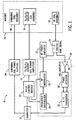
- a nuclear magnetic resonance (NMR) imaging system 8 of a type suitable for the practice of the invention includes a computer 10 which controls gradient coil power amplifiers 14 through a pulse control module 12.
- the pulse control module 12 and the gradient amplifiers 14 together produce the proper gradient waveforms Gx, Gy, and Gz, for either a spin echo, a gradient recalled echo pulse sequence, a fast spin echo, or other type of pulse sequences.
- the gradient waveforms are connected to gradient coils 16 which are positioned around the bore of the magnet 34 so that gradients Gx, Gy, and Gz are impressed along their respective axes on the polarizing magnetic field Bo from magnet 34.
- the pulse control module 12 also controls a radio frequency synthesizer 18 which is part of an RF transceiver system, portions of which are enclosed by dashed line block 36.
- the pulse control module 12 also controls an RF modulator 20 which modulates the output of the radio frequency synthesizer 18.
- the resultant RF signals amplified by power amplifier 22 and applied to RF coil 26 through transmit/receive switch 24, are used to excite the nuclear spins of the imaged object (not shown).
- the NMR signals from the excited nuclei of the imaged object are picked up by the RF coil 26 and presented to preamplifier 28 through transmit/receive switch 24, to be amplified and then processed by a quadrature phase detector 30.
- the detected signals are digitized by a high speed A/D converter 32 and applied to computer 10 for processing to produce NMR images of the object.
- Computer 10 also controls shimming coil power supplies 38 to power shimming coil assembly 40.
- the present invention includes a method and system for MR imaging that differentiates water-based tissue from proteinated tissue while simultaneously suppressing fat tissue, which is particularly useful in MR angiography (MRA), but is applicable to any MR imaging of any portion of the body in which enhanced contrast between blood tissue and the surrounding tissue is poor.
- MRA MR angiography
- the present invention combines magnetization transfer contrast techniques with a fat suppression pulse to produce an MR image with enhanced tissue differentiation.
- coronary arteries are small, tortuous vessels, typically between 1-5 mm in diameter, the visualization of such vessels using MRA is hampered because they are often surrounded by pericardial fat and also embedded in myocardium.
- a high degree of fat suppression is achieved by using a standard method for spectral chemical saturation, while suppression of the myocardial signal is achieved by combining a magnetization transfer contrast (MTC) pulse with the fat suppression pulse to avoid a concomitant reduction in the blood signal.
- MTC magnetization transfer contrast
- a specially designed RF pulse with requisite features must be used.
- Magnetization transfer imaging alters the contrast in MR images by saturating the short T 2 species present in tissue.
- Off-resonance continuous wave and pulsed short T 2 selective saturation alters the relaxation mechanisms governing tissue contrast, thus causing some spins close to the saturated species to experience longer T 2 and T 1 times.
- the continuous wave MT technique requires the application of lower power off-resonance irradiation.
- the pulsed MT technique reduces the overall specific absorption rate by applying periodic RF pulses, avoids the need for a secondary RF transmitter, and significantly reduces the total average RF power transmitted. Therefore, the pulsed MT technique is preferred.
- the power requited by a radio frequency pulse depends on the difference between the transmit and the resonance frequencies.
- the distance traversed by the magnetization which is a product of the effective flip angle, increases as the transmission frequency moves off-resonance.
- the effective flip angle is calculated from the pulse field strength and the transmit frequency difference, and is given by: where ⁇ transmit is the transmit frequency, ⁇ 0 is the resonance frequency, B 1 is the pulse field strength, t is the transmit time, ⁇ is the gyomagnetic ratio, a physical constant and ⁇ effective is the effective flip angle. Therefore, by transmitting close to resonance, a substantial reduction in absorbed RF power is accomplished.
- the use of such pulses provides efficient saturation of short T 2 species. Applying these binomial RF pulses slightly off-resonance, and in particular, at the fat resonance frequency, effectively suppresses fat signals while providing an adequate MT effect. Two such techniques are disclosed.
- a fat suppression pulse transmitted at off-resonant frequency of ⁇ 220 Hz at 1.5 Telsa can be made to induce an MT effect by increasing the effective flip angle.
- By increasing the flip angle, or effectively the B 1 , of the fat saturation pulse increases the MT contrast effect with only slight degradation of the fat suppression. It has been found that acceptable MTC effects can be achieved at flip angles of approximately 200° or more using the fat saturation pulse.
- An example of such a pulse is disclosed in Fig. 2 which shows an RF pulse profile oh spectrally selective suppression pulse 50 according to the present invention.
- the pulse is a real-valued pulse, and in a preferred embodiment, has the following design parameters: a pulse width of approximately 8 ms, approximately 400 total points, a flip angle of approximately 200° , a 1.0% or less pass band and stop band ripple, a bandwidth of approximately 180 Hz, and is an inversion, minimum phase pulse.
- the flip angle is set to increase the MTC saturation at least 15% while exhibiting a frequency response with fat suppression of at least 85%.
- Such a pulse will reduce signal intensity of proteinated tissue to less than 80% of its maximum level to enhance contrast between proteinated tissue and water tissue, and suppress a majority of fat tissue.
- the flip angle can be set between 100° and 1,000° depending on the image to be acquired, the strength of the magnet in the MR apparatus, the amount of fat suppression desired, as well as what level of specific absorption rate is allowable.
- the bandwidth of the pulse would likewise depend on the aforementioned factors and can range between 100 Hz and 200 Hz.
- the pulse width can range from 8 ms to 32 ms for most applications.
- the transition slopes 52, 54 of Fig. 2 are preferably set to a maximum slope (i.e., with as short a frequency span as possible) to avoid saturating any on-resonance protons.
- the aforementioned requirements provide a well-defined pulse having good transition bandwidth and minimal pass and stop band ripple so as to avoid saturating the on-resonance frequency protons.
- the pulse is brought in further and further, on the frequency spectrum, the more important a well-shaped pulse is in order to avoid saturation of on-resonance protons.
- the frequency response 56 of the spectrally selective suppression pulse of Fig. 1 is shown.
- the longitudinal magnetization (M z ) is plotted as a function of frequency and shows that at the on-resonance frequency protons are minimally affected by the magnetization.
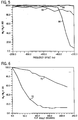
- Fig. 4 shows a plot of saturation, measured as a percentage, for a phantom having agar, fat, and CuSO 4 -doped water as a function of RF saturation/suppression pulse flip angle or pulse amplitude.
- agar simulates proteinated tissue and is used to mimic the tissue that exhibits MTC effects. It is noted that the agar plot 58 exhibits a pronounced MTC saturation effect as the RF pulse amplitude increases.
- the plot for fat tissue 60 shows a broad minimum for fat suppression that permits the RF suppression pulse to be overdriven and allow increased MTC saturation of the simulated proteinated tissue 58 while only minimally degrading the fat suppression.
- the RF pulse is applied using a flip angle of at least 100° to provide at least a 16% MTC effect on the agar while providing fat suppression of approximately 90%. Only a 1% saturation of the on-resonance water signal 62 was observed at a flip angle of 100°.
- the broad minimum suppression of fat tissue 60 allows the flip angle to be increased to provide a corresponding increase in MTC saturation 58. It is noted that increasing the MTC saturation to between 22% and 29%, allows the maintenance of fat suppression at 88% - 90%. With the increased RF amplitude, the longer T 2 species begin to exhibit increased saturation and there is a negligible degradation in the doped water saturation 62 at the higher flip angles.
- Fig. 5 shows a plot of saturation of the agar 64, the fat tissue 66 and the doped water 68 as a function of frequency offset with the suppression flip angle set at 110°. It is noted that the persistence of agar saturation as compared to fat or water saturation, at higher frequency offsets is indicative of the MTC effect. It is therefore evident from Fig. 5 that the saturation effect observed is due to magnetization transfer and not to a direct saturation of the agar since the agar and water signals are not equally affected by the suppression pulse. In fact, at a frequency offset of approximately -500Hz, both fat and doped water remain relatively unaffected, while the agar exhibited an 8% saturation level.
- Fig. 6 shows actual data points obtained from an MRI of a normal knee of a volunteer patient that shows similar results as depicted in the aforementioned phantom measurements.
- Fig. 6 is a plot of saturation as a function of RF suppression flip angle in muscle 70 and in the trabecular bone 72, which is fatty marrow. It is noted that the same acquisition parameters were used to acquire the signal intensity in the human knee of Fig. 6 as that for the phantom depicted in Figs. 4 and 5.
- a 60-70% MTC saturation was obtained while maintaining fat suppression at 85-90%. It is evident that overdriving the spectrally selective suppression RF pulse by approximately 50%, an additional 17% MTC saturation can be obtained.
- the spectrally selective suppression pulse applied was an SLR pulse (a pulse designed using the Shinnar-LeRoux algorithm, Pauley J., Le Roux P., Parameter Relations for the Shinnar-Le Roux Selective Excitation Pulse Design Algorithm , IEEE Trans. Med. Imaging, March 1991, Vol. 10: 53-65) that is widely known in the industry.
- the pulse was applied in a steady state fast gradient recalled echo pulse sequence.
- the 8 ms pulse was applied once per RF excitation and increased the minimum sequence by about 12 ms, including crusher gradients.
- the amplitude of the spectrally selective suppression pulse was phase-cycled in a positive (+), negative (-), negative (-), positive (+) fashion to reduce spurious echoes from forming in the data acquisition window.
- the other pulse design parameters were previously disclosed.
- the phantom used for plotting Figs. 4 and 5 contained agar, a proteinated tissue substitute, fat tissue, and CuSO 4 -doped water.
- the pulse sequence parameters were set at 5 mm. thick sections, 24 cm. field-of-view, a 256 x 128 acquisition matrix, ⁇ 32 kH receiver bandwidth, 30° flip angle, and TE/TR of 2.9 and 19.9 ms, respectively. All experiments were performed in a head coil.
- the MTC saturation effect was measured as a function of the flip angle of the spectrally selective suppression RF pulse and is a function of the frequency offset at a fixed flip angle for the saturation pulse.
- the measurements obtained on the knee were obtained in a head coil with the same acquisition parameters as that of the phantom studies. However, the images acquired were in the coronal plane. The signal intensities were measured in the muscle and in the trabecular bone of the fibula just below the knee for the fat signal. The experimental results using the phantoms indicated an MTC saturation effect of 20% - 30% at the fat resonance of ⁇ 220 Hz.
- the present invention includes a method of differentiating tissue in NMR imaging having the steps of creating a spectrally selective suppression pulse having an RF pulse profile designed to produce a frequency response with high fat suppression and selecting a spectrally selective suppression amplitude to produce a magnetization transfer contrast between two tissue types -- proteinated tissue and water tissue.
- the method also includes applying the spectrally selective suppression pulse with a flip angle selected to optimize fat suppression and magnetization transfer contrast saturation of the two tissue types simultaneously.
- the method results in a magnetization transfer contrast saturation of at least 15% while maintaining fat suppression of at least 80%.
- the flip angle is set in excess of 100° and less than 1,000°.
- the spectrally selective suppression pulse should have a bandwidth of between 100 Hz and 200 Hz and have a pulse width of approximately 8-32 ms. It is important to minimize the stop and pass band ripple, preferably to less than 1.0%.
- the pulse is preferably applied at the fat resonance frequency of approximately ⁇ 220 Hz. In order to avoid saturation of on-resonance protons, the pulse should be designed with minimum transition bandwidth.
- the invention also includes an MRI apparatus capable of efficient tissue differentiation that includes an MRI system having a plurality of gradient coils positioned about a bare of a magnet to impress a polarizing magnetic field and an RF transceiver system, including an RF modulator controlled by a pulse control module to transmit RF signals to an RF coil assembly to acquire MR images.
- the MRI apparatus includes a computer program to construct a desired RF pulse based on input design criteria that includes a desired bandwidth, a desired percentage in-band (pass-band) ripple, and desired percentage out-band (stop-band) ripple, so that the desired RF pulse has low stop and pass band ripple and minimal transition bandwidth.
- the computer is further programmed to select an RF pulse frequency for the desired RF pulse proportional to a fat tissue resonance frequency and select an RF pulse amplitude of the desired RF pulse to maximize a magnetization transfer contrast effect between proteinated tissue and water tissue.
- the computer is also programmed to transmit the desired RF pulse to the pulse control module to transmit RF signals to the RF coil assembly to acquire MR images having fat suppression and magnetization transfer contrast effect between proteinated tissue and water tissue simultaneously.
- the resulting acquired MR images enhance the contrast between proteinated tissue and water tissue, while at the same time substantially suppressing fat tissue.
- the pulse design is as previously described.
- the present invention also includes a computer system for use with an MRI apparatus comprising a computer programmed from a computer readable storage medium having thereon a computer program programmed to create a spectrally selective suppression pulse having an RF pulse profile designed to produce a frequency response with high fat suppression and select a spectrally selective suppression amplitude to produce a magnetization transfer contrast between two tissue types, and apply the spectrally selective suppression pulse with a flip angle selected to optimize fat suppression and magnetization transfer contrast saturation simultaneously for the MRI apparatus.
- the computer system is implemented using the same pulse design criteria as previously described.
- An alternate embodiment of the present invention includes modulating an RF pulse similar to that as shown in Fig. 2, with a sinusoidal function in that at least two spectrally selected suppression pulses are applied simultaneously but with a proportional reduction in the RF amplitude, each applied at the same absolute frequency value but on opposite sides of the frequency spectrum.
- the frequency response of the resultant pulse is a frequency response of the original single RF pulse, but replicated on the other side of the on-resonance carrier frequency, the spacing of which is determined by the frequency of the modulation function.
- An example of such a pulse is the known Hadamard encoded pulse, which results in excitation on both sides of the transmitter frequency. This results in an effective MTC effect equivalent to 2 ⁇ ,if the fat saturation pulse is ⁇ in the aforementioned embodiment.
- the invention includes the alternative step of applying at least two of the spectrally selective suppression pulses simultaneously and distributed evenly on each side of a resonance frequency, each having a proportional amount of total RF power.
- the method includes applying only two spectrally selective suppression pulses simultaneously at off-resonance frequency, each having one-half of the total RF power applied, and wherein one of the spectrally selective suppression pulses is applied at a desired fat suppression frequency on a positive side of the resonance frequency and the other is applied at the desired fat suppression frequency on a negative side of the resonance frequency.
- a specific implementation of the aforementioned invention is to enhance blood vessel visibility in an MRI by producing a magnetization transfer contrast between blood in a vessel and myocardial tissue located about the vessel while suppressing associated fat about the vessel to thereby producing an improved MR image of the blood vessel.
- the blood vessel is a coronary artery and the MR image is an MR angiograph.
- the step of applying the spectrally selective suppression pulse is further defined as applying the spectrally selective suppression pulse to a patient in imaging the heart such that an MR angiogram of the patient's coronary arteries is acquired, and further includes the step of reconstructing an image of the patient's coronary arteries wherein the image reconstructed suppresses fat and simultaneously enhances contrast between blood in the coronary artery and myocardial about the coronary artery.
- the computer of the MRI apparatus of the present invention is also programmed, in a preferred embodiment, to enhance cardiac vessel visibility in an MRI by producing a magnetization transfer contrast between blood in a cardiac vessel and myocardial tissue located about the cardiac vessel while suppressing associated fat about the cardiac vessel to thereby produce an MR angiograph of the coronary arteries.
- the computer is programmed to apply the spectrally selective suppression pulse to a patient's coronary arteries to acquire an MR image of the patient's coronary arteries, and to reconstruct an image of the patient's coronary arteries wherein the resulting image reconstructed adequately suppresses fat and enhances contrast between blood in the coronary artery and myocardial tissue located about the coronary artery, simultaneously.
Landscapes
- Physics & Mathematics (AREA)
- High Energy & Nuclear Physics (AREA)
- Condensed Matter Physics & Semiconductors (AREA)
- General Physics & Mathematics (AREA)
- Magnetic Resonance Imaging Apparatus (AREA)
Applications Claiming Priority (2)
| Application Number | Priority Date | Filing Date | Title |
|---|---|---|---|
| US09/313,107 US6265875B1 (en) | 1999-05-17 | 1999-05-17 | Method and apparatus for efficient MRI tissue differentiation |
| US313107 | 1999-05-17 |
Publications (2)
| Publication Number | Publication Date |
|---|---|
| EP1059540A2 true EP1059540A2 (de) | 2000-12-13 |
| EP1059540A3 EP1059540A3 (de) | 2002-07-10 |
Family
ID=23214414
Family Applications (1)
| Application Number | Title | Priority Date | Filing Date |
|---|---|---|---|
| EP00304184A Ceased EP1059540A3 (de) | 1999-05-17 | 2000-05-17 | Verfahren und Gerät zur effizienten Unterscheidung von Geweben mittels bildgebender magnetischer Resonanz |
Country Status (3)
| Country | Link |
|---|---|
| US (1) | US6265875B1 (de) |
| EP (1) | EP1059540A3 (de) |
| JP (1) | JP4675455B2 (de) |
Cited By (4)
| Publication number | Priority date | Publication date | Assignee | Title |
|---|---|---|---|---|
| DE10245155B4 (de) * | 2001-10-04 | 2008-04-03 | Ge Medical Systems Global Technology Company Llc, Waukesha | Magnet-Resonanz-Abbildungsgerät |
| US8320647B2 (en) | 2007-11-20 | 2012-11-27 | Olea Medical | Method and system for processing multiple series of biological images obtained from a patient |
| EP3236277A1 (de) * | 2016-04-18 | 2017-10-25 | Centre Hospitalier Universitaire Vaudois (CHUV) | Differenzierte gewebeanregung durch mrt unter verwendung binomischen off-resonanz 1-1 hf-pulsen |
| US11187768B2 (en) | 2017-04-06 | 2021-11-30 | King's College London | Controlled excitation and saturation of magnetisation transfer systems |
Families Citing this family (21)
| Publication number | Priority date | Publication date | Assignee | Title |
|---|---|---|---|---|
| US6818199B1 (en) | 1994-07-29 | 2004-11-16 | James F. Hainfeld | Media and methods for enhanced medical imaging |
| US6998841B1 (en) * | 2000-03-31 | 2006-02-14 | Virtualscopics, Llc | Method and system which forms an isotropic, high-resolution, three-dimensional diagnostic image of a subject from two-dimensional image data scans |
| DE10221850B4 (de) * | 2002-05-16 | 2007-04-05 | Siemens Ag | Verfahren zum Gestalten eines selektiven HF-Pulses und selektiver HF-Puls |
| US8527030B2 (en) * | 2002-08-27 | 2013-09-03 | Kennedy Krieger Institute | Microvascular blood volume magnetic resonance imaging |
| US20040175329A1 (en) * | 2003-03-07 | 2004-09-09 | Fisher John Steele | Method for continuous visualization of a body lumen |
| US7803352B2 (en) * | 2003-03-07 | 2010-09-28 | John Steele Fisher | Method for continuous visualization of a blood clot or plaque in body lumen |
| US7256579B2 (en) * | 2003-11-24 | 2007-08-14 | The Board Of Trustees Of The Leland Stanford Junior University | Method for imaging biological matter using an adiabatic pulse |
| WO2007084747A2 (en) * | 2006-01-19 | 2007-07-26 | The Johns Hopkins University | Method of assessing central arterial stiffness using mri, method of assessing vascular function including arterial stiffness, applications program and media embodying same |
| US8457711B2 (en) * | 2007-02-01 | 2013-06-04 | Beth Israel Deaconess Medical Center, Inc. | Magnetic resonance imaging of coronary venous structures |
| US20100201361A1 (en) * | 2007-05-03 | 2010-08-12 | Edelman Robert R | System and method for passive catheter tracking with magnetic resonance imaging |
| US8228060B2 (en) * | 2007-06-25 | 2012-07-24 | General Electric Company | Method and apparatus for generating a flip angle schedule for a spin echo train pulse sequence |
| US8150126B2 (en) * | 2007-09-26 | 2012-04-03 | Siemens Aktiengesellschaft | Method and system for scale-based vessel enhancement in X-ray angiography |
| JP5508697B2 (ja) * | 2007-10-04 | 2014-06-04 | 株式会社東芝 | Mri装置 |
| US8742755B2 (en) * | 2008-04-09 | 2014-06-03 | Beth Israel Deaconess Medical Center, Inc. | Positive magnetic resonance imaging contrast methods and apparatus using chemical exchange saturation transfer |
| JP5460264B2 (ja) * | 2009-11-24 | 2014-04-02 | 株式会社日立メディコ | 磁気共鳴イメージング装置および磁気共鳴イメージング装置の動作制御方法 |
| US20120274322A1 (en) | 2011-04-27 | 2012-11-01 | Sangwoo Lee | Magnetic resonance imaging apparatus |
| US9339239B2 (en) * | 2013-09-10 | 2016-05-17 | Ohio State Innovation Foundation | Methods and devices for optimization of magnetic resonance imaging protocols |
| JP6496547B2 (ja) * | 2014-12-25 | 2019-04-03 | ジーイー・メディカル・システムズ・グローバル・テクノロジー・カンパニー・エルエルシー | 磁気共鳴装置 |
| WO2016145355A1 (en) | 2015-03-11 | 2016-09-15 | Ohio State Innovation Foundation | Methods and devices for optimizing magnetic resonance imaging protocols |
| JP6487554B2 (ja) * | 2015-07-23 | 2019-03-20 | 株式会社日立製作所 | 磁気共鳴イメージング装置 |
| KR101877104B1 (ko) * | 2015-12-11 | 2018-07-10 | (의료)길의료재단 | Mrs 영상 기법에서 여기 신호 대역의 중심 주파수 조절 및 수신 대역폭 조절을 통한 물 신호 억제 방법 |
Family Cites Families (11)
| Publication number | Priority date | Publication date | Assignee | Title |
|---|---|---|---|---|
| JPS63212337A (ja) * | 1987-02-28 | 1988-09-05 | 株式会社島津製作所 | 水・脂肪分離撮像法 |
| US5270652A (en) * | 1992-05-20 | 1993-12-14 | North American Philips Corporation | MR method and apparatus employing magnetization transfer contrast inducing fat-selective RF pulse |
| US5677626A (en) * | 1993-04-27 | 1997-10-14 | Kabushiki Kaisha Toshiba | System for magnetic resonance imaging |
| JP3386509B2 (ja) * | 1993-04-27 | 2003-03-17 | 株式会社東芝 | Mr撮像方法および磁気共鳴イメージング装置 |
| US5572126A (en) * | 1994-07-28 | 1996-11-05 | University Of Pennsylvania | Reduced power selective excitation RF pulses |
| JP3307114B2 (ja) * | 1994-09-30 | 2002-07-24 | 株式会社島津製作所 | Mrイメージング装置 |
| US5619138A (en) * | 1995-08-21 | 1997-04-08 | National Research Council Of Canada | Method of providing an RF pulse for use in NMR |
| US5821752A (en) * | 1996-07-15 | 1998-10-13 | General Electric Company | Real-time RF pulse construction for NMR measurement sequences |
| DE19628951C2 (de) * | 1996-07-18 | 2000-08-31 | Juergen Hennig | Verfahren der Kernspintomographie zur zeitaufgelösten Darstellung pulsatiler Gefäße (Projektionsangiographie) |
| JP3112866B2 (ja) * | 1997-08-13 | 2000-11-27 | ジーイー横河メディカルシステム株式会社 | Mrイメージング方法およびmri装置 |
| JPH11244256A (ja) * | 1998-03-03 | 1999-09-14 | Toshiba Corp | 磁気共鳴診断装置 |
-
1999
- 1999-05-17 US US09/313,107 patent/US6265875B1/en not_active Expired - Fee Related
-
2000
- 2000-05-16 JP JP2000142749A patent/JP4675455B2/ja not_active Expired - Fee Related
- 2000-05-17 EP EP00304184A patent/EP1059540A3/de not_active Ceased
Non-Patent Citations (1)
| Title |
|---|
| None * |
Cited By (6)
| Publication number | Priority date | Publication date | Assignee | Title |
|---|---|---|---|---|
| DE10245155B4 (de) * | 2001-10-04 | 2008-04-03 | Ge Medical Systems Global Technology Company Llc, Waukesha | Magnet-Resonanz-Abbildungsgerät |
| US8320647B2 (en) | 2007-11-20 | 2012-11-27 | Olea Medical | Method and system for processing multiple series of biological images obtained from a patient |
| US9123100B2 (en) | 2007-11-20 | 2015-09-01 | Olea Medical | Method and system for processing multiple series of biological images obtained from a patient |
| EP3236277A1 (de) * | 2016-04-18 | 2017-10-25 | Centre Hospitalier Universitaire Vaudois (CHUV) | Differenzierte gewebeanregung durch mrt unter verwendung binomischen off-resonanz 1-1 hf-pulsen |
| US10578695B2 (en) | 2016-04-18 | 2020-03-03 | Centre Hospitalier Universitaire Vaudois | Differentiated tissue excitation in MRI |
| US11187768B2 (en) | 2017-04-06 | 2021-11-30 | King's College London | Controlled excitation and saturation of magnetisation transfer systems |
Also Published As
| Publication number | Publication date |
|---|---|
| US6265875B1 (en) | 2001-07-24 |
| JP2000350713A (ja) | 2000-12-19 |
| EP1059540A3 (de) | 2002-07-10 |
| JP4675455B2 (ja) | 2011-04-20 |
Similar Documents
| Publication | Publication Date | Title |
|---|---|---|
| US6265875B1 (en) | Method and apparatus for efficient MRI tissue differentiation | |
| Botnar et al. | 3D coronary vessel wall imaging utilizing a local inversion technique with spiral image acquisition | |
| Mosher et al. | A DANTE tagging sequence for the evaluation of translational sample motion | |
| DE102015203385B4 (de) | Verfahren zur Erzeugung einer Bewegungsinformation zu einem zumindest teilweise bewegten Untersuchungsbereich sowie Magnetresonanzanlage und Hybrid-Bildgebungsmodalität | |
| US7542793B2 (en) | MR-guided breast tumor ablation and temperature imaging system | |
| EP1060706B1 (de) | Magnetresonanz bildgebungsvorrichtung | |
| US5229717A (en) | Simultaneous two-contrast fast spin echo NMR imaging | |
| JP3373563B2 (ja) | 磁気共鳴影像装置 | |
| US6377834B1 (en) | Real time in vivo measurement of temperature changes with contrast enhanced NMR imaging | |
| EP0636342B1 (de) | Apparat zum Erzeugen von NMR Bildern | |
| US5251628A (en) | Variable ECG delay in fast pulse sequence scans | |
| EP2199815A1 (de) | MR-Bildgebung mit CEST-Kontrastverstärkung | |
| US8483466B2 (en) | Magnetic resonance imaging apparatus and blood vessel image acquiring method | |
| EP0471501A2 (de) | Verfahren und Gerät für die Kernspinresonanz- Angiographie | |
| US20050240096A1 (en) | Method and apparatus for quantitative bone matrix imaging by magnetic resonance imaging | |
| US5682891A (en) | MR imaging apparatus using a devised MTC pulse waveform | |
| DE69225831T2 (de) | Kernspinresonanzverfahren und Anordnung zur Bewegungsüberwachung an einem Teil eines Objekts auf der Basis stimulierter Echos | |
| De Martino et al. | Spin echo functional MRI in bilateral auditory cortices at 7 T: an application of B1 shimming | |
| CN1698537B (zh) | 冠状动脉的时间分辨的对比度增强的磁共振投影成像 | |
| Zhu et al. | Ultrafast B1 mapping with RF‐prepared 3D FLASH acquisition: correcting the bias due to T1‐induced k‐space filtering effect | |
| Mao et al. | Fat tissue and fat suppression | |
| JPH07116144A (ja) | 核磁気共鳴撮影方法及び装置 | |
| JP2016041243A (ja) | 磁気共鳴イメージング装置 | |
| US20040133098A1 (en) | Quadruple inversion recovery for quantitative contrast-enhanced black blood imaging | |
| DE102005051323A1 (de) | Verfahren und Gerät zur Magnet-Resonanz-Bildgebung auf Basis einer Gradientenechosequenz |
Legal Events
| Date | Code | Title | Description |
|---|---|---|---|
| PUAI | Public reference made under article 153(3) epc to a published international application that has entered the european phase |
Free format text: ORIGINAL CODE: 0009012 |
|
| AK | Designated contracting states |
Kind code of ref document: A2 Designated state(s): AT BE CH CY DE DK ES FI FR GB GR IE IT LI LU MC NL PT SE |
|
| AX | Request for extension of the european patent |
Free format text: AL;LT;LV;MK;RO;SI |
|
| PUAL | Search report despatched |
Free format text: ORIGINAL CODE: 0009013 |
|
| AK | Designated contracting states |
Kind code of ref document: A3 Designated state(s): AT BE CH CY DE DK ES FI FR GB GR IE IT LI LU MC NL PT SE |
|
| AX | Request for extension of the european patent |
Free format text: AL;LT;LV;MK;RO;SI |
|
| 17P | Request for examination filed |
Effective date: 20030110 |
|
| AKX | Designation fees paid |
Designated state(s): DE NL |
|
| 17Q | First examination report despatched |
Effective date: 20050126 |
|
| STAA | Information on the status of an ep patent application or granted ep patent |
Free format text: STATUS: THE APPLICATION HAS BEEN REFUSED |
|
| 18R | Application refused |
Effective date: 20061103 |