EP1054685B1 - Liquid crystal forms of cyclosporin - Google Patents
Liquid crystal forms of cyclosporin Download PDFInfo
- Publication number
- EP1054685B1 EP1054685B1 EP99906966A EP99906966A EP1054685B1 EP 1054685 B1 EP1054685 B1 EP 1054685B1 EP 99906966 A EP99906966 A EP 99906966A EP 99906966 A EP99906966 A EP 99906966A EP 1054685 B1 EP1054685 B1 EP 1054685B1
- Authority
- EP
- European Patent Office
- Prior art keywords
- cyclosporin
- powder
- composition
- showed
- particles
- Prior art date
- Legal status (The legal status is an assumption and is not a legal conclusion. Google has not performed a legal analysis and makes no representation as to the accuracy of the status listed.)
- Expired - Lifetime
Links
- PMATZTZNYRCHOR-CGLBZJNRSA-N Cyclosporin A Chemical compound CC[C@@H]1NC(=O)[C@H]([C@H](O)[C@H](C)C\C=C\C)N(C)C(=O)[C@H](C(C)C)N(C)C(=O)[C@H](CC(C)C)N(C)C(=O)[C@H](CC(C)C)N(C)C(=O)[C@@H](C)NC(=O)[C@H](C)NC(=O)[C@H](CC(C)C)N(C)C(=O)[C@H](C(C)C)NC(=O)[C@H](CC(C)C)N(C)C(=O)CN(C)C1=O PMATZTZNYRCHOR-CGLBZJNRSA-N 0.000 title claims abstract description 207
- 108010036949 Cyclosporine Proteins 0.000 title claims abstract description 206
- 229960001265 ciclosporin Drugs 0.000 title claims abstract description 202
- 229930105110 Cyclosporin A Natural products 0.000 title claims abstract description 191
- 229930182912 cyclosporin Natural products 0.000 title claims abstract description 100
- 239000004973 liquid crystal related substance Substances 0.000 title claims abstract description 23
- 239000000843 powder Substances 0.000 claims abstract description 175
- 239000002245 particle Substances 0.000 claims abstract description 66
- 239000000203 mixture Substances 0.000 claims abstract description 57
- 238000000034 method Methods 0.000 claims abstract description 25
- 230000002685 pulmonary effect Effects 0.000 claims abstract description 22
- LFQSCWFLJHTTHZ-UHFFFAOYSA-N Ethanol Chemical compound CCO LFQSCWFLJHTTHZ-UHFFFAOYSA-N 0.000 claims description 60
- 238000001694 spray drying Methods 0.000 claims description 46
- CSCPPACGZOOCGX-UHFFFAOYSA-N Acetone Chemical compound CC(C)=O CSCPPACGZOOCGX-UHFFFAOYSA-N 0.000 claims description 33
- OKKJLVBELUTLKV-UHFFFAOYSA-N Methanol Chemical compound OC OKKJLVBELUTLKV-UHFFFAOYSA-N 0.000 claims description 18
- 238000002360 preparation method Methods 0.000 claims description 18
- 239000000546 pharmaceutical excipient Substances 0.000 claims description 17
- KFZMGEQAYNKOFK-UHFFFAOYSA-N Isopropanol Chemical compound CC(C)O KFZMGEQAYNKOFK-UHFFFAOYSA-N 0.000 claims description 16
- WEVYAHXRMPXWCK-UHFFFAOYSA-N Acetonitrile Chemical compound CC#N WEVYAHXRMPXWCK-UHFFFAOYSA-N 0.000 claims description 15
- 239000002904 solvent Substances 0.000 claims description 14
- 238000000235 small-angle X-ray scattering Methods 0.000 claims description 12
- 239000008194 pharmaceutical composition Substances 0.000 claims description 7
- 208000019693 Lung disease Diseases 0.000 claims description 5
- XLYOFNOQVPJJNP-UHFFFAOYSA-N water Substances O XLYOFNOQVPJJNP-UHFFFAOYSA-N 0.000 claims description 5
- 201000009794 Idiopathic Pulmonary Fibrosis Diseases 0.000 claims description 3
- 208000006673 asthma Diseases 0.000 claims description 3
- 239000003937 drug carrier Substances 0.000 claims description 3
- 208000036971 interstitial lung disease 2 Diseases 0.000 claims description 3
- 239000000725 suspension Substances 0.000 claims description 3
- 208000006545 Chronic Obstructive Pulmonary Disease Diseases 0.000 claims description 2
- 201000003883 Cystic fibrosis Diseases 0.000 claims description 2
- 206010014561 Emphysema Diseases 0.000 claims description 2
- 208000004248 Familial Primary Pulmonary Hypertension Diseases 0.000 claims description 2
- 208000032376 Lung infection Diseases 0.000 claims description 2
- 206010064911 Pulmonary arterial hypertension Diseases 0.000 claims description 2
- 230000003110 anti-inflammatory effect Effects 0.000 claims description 2
- 230000001684 chronic effect Effects 0.000 claims description 2
- 230000002757 inflammatory effect Effects 0.000 claims description 2
- 201000008312 primary pulmonary hypertension Diseases 0.000 claims description 2
- 206010039073 rheumatoid arthritis Diseases 0.000 claims description 2
- 201000000306 sarcoidosis Diseases 0.000 claims description 2
- 208000037812 secondary pulmonary hypertension Diseases 0.000 claims description 2
- 206010052779 Transplant rejections Diseases 0.000 claims 1
- 230000001088 anti-asthma Effects 0.000 claims 1
- 230000001506 immunosuppresive effect Effects 0.000 claims 1
- 239000007921 spray Substances 0.000 abstract description 54
- 238000009472 formulation Methods 0.000 abstract description 23
- 229940079593 drug Drugs 0.000 abstract description 6
- 239000003814 drug Substances 0.000 abstract description 6
- 239000000243 solution Substances 0.000 description 48
- 238000001035 drying Methods 0.000 description 43
- 239000000443 aerosol Substances 0.000 description 35
- 238000012512 characterization method Methods 0.000 description 29
- 238000000113 differential scanning calorimetry Methods 0.000 description 28
- 239000000155 melt Substances 0.000 description 21
- 238000004128 high performance liquid chromatography Methods 0.000 description 16
- 238000000634 powder X-ray diffraction Methods 0.000 description 16
- 230000008859 change Effects 0.000 description 14
- 238000001907 polarising light microscopy Methods 0.000 description 14
- 238000001878 scanning electron micrograph Methods 0.000 description 13
- 239000013557 residual solvent Substances 0.000 description 12
- 125000001475 halogen functional group Chemical group 0.000 description 11
- 210000004072 lung Anatomy 0.000 description 11
- 238000009826 distribution Methods 0.000 description 10
- 239000000463 material Substances 0.000 description 8
- 239000000126 substance Substances 0.000 description 8
- 239000004974 Thermotropic liquid crystal Substances 0.000 description 7
- 230000015556 catabolic process Effects 0.000 description 7
- 239000013078 crystal Substances 0.000 description 7
- 238000006731 degradation reaction Methods 0.000 description 7
- 239000007787 solid Substances 0.000 description 7
- 230000007704 transition Effects 0.000 description 7
- 238000004458 analytical method Methods 0.000 description 6
- 239000007788 liquid Substances 0.000 description 6
- 238000000386 microscopy Methods 0.000 description 6
- 239000003960 organic solvent Substances 0.000 description 6
- 238000003860 storage Methods 0.000 description 6
- RKTYLMNFRDHKIL-UHFFFAOYSA-N copper;5,10,15,20-tetraphenylporphyrin-22,24-diide Chemical compound [Cu+2].C1=CC(C(=C2C=CC([N-]2)=C(C=2C=CC=CC=2)C=2C=CC(N=2)=C(C=2C=CC=CC=2)C2=CC=C3[N-]2)C=2C=CC=CC=2)=NC1=C3C1=CC=CC=C1 RKTYLMNFRDHKIL-UHFFFAOYSA-N 0.000 description 5
- 238000000354 decomposition reaction Methods 0.000 description 5
- 230000003247 decreasing effect Effects 0.000 description 5
- 238000002844 melting Methods 0.000 description 5
- 230000008018 melting Effects 0.000 description 5
- 235000000346 sugar Nutrition 0.000 description 5
- 108010036941 Cyclosporins Proteins 0.000 description 4
- DHMQDGOQFOQNFH-UHFFFAOYSA-N Glycine Chemical compound NCC(O)=O DHMQDGOQFOQNFH-UHFFFAOYSA-N 0.000 description 4
- 238000002441 X-ray diffraction Methods 0.000 description 4
- 238000000889 atomisation Methods 0.000 description 4
- 238000010438 heat treatment Methods 0.000 description 4
- 239000003018 immunosuppressive agent Substances 0.000 description 4
- 238000005259 measurement Methods 0.000 description 4
- 239000008188 pellet Substances 0.000 description 4
- 230000008569 process Effects 0.000 description 4
- 108090000765 processed proteins & peptides Proteins 0.000 description 4
- 235000018102 proteins Nutrition 0.000 description 4
- 108090000623 proteins and genes Proteins 0.000 description 4
- 102000004169 proteins and genes Human genes 0.000 description 4
- 238000001988 small-angle X-ray diffraction Methods 0.000 description 4
- NLJMYIDDQXHKNR-UHFFFAOYSA-K sodium citrate Chemical compound O.O.[Na+].[Na+].[Na+].[O-]C(=O)CC(O)(CC([O-])=O)C([O-])=O NLJMYIDDQXHKNR-UHFFFAOYSA-K 0.000 description 4
- 239000001509 sodium citrate Substances 0.000 description 4
- 238000001228 spectrum Methods 0.000 description 4
- 150000008163 sugars Chemical class 0.000 description 4
- 238000002411 thermogravimetry Methods 0.000 description 4
- 239000003981 vehicle Substances 0.000 description 4
- KRKNYBCHXYNGOX-UHFFFAOYSA-K Citrate Chemical compound [O-]C(=O)CC(O)(CC([O-])=O)C([O-])=O KRKNYBCHXYNGOX-UHFFFAOYSA-K 0.000 description 3
- YMWUJEATGCHHMB-UHFFFAOYSA-N Dichloromethane Chemical compound ClCCl YMWUJEATGCHHMB-UHFFFAOYSA-N 0.000 description 3
- 206010051604 Lung transplant rejection Diseases 0.000 description 3
- 239000000654 additive Substances 0.000 description 3
- XAGFODPZIPBFFR-UHFFFAOYSA-N aluminium Chemical compound [Al] XAGFODPZIPBFFR-UHFFFAOYSA-N 0.000 description 3
- 229910052782 aluminium Inorganic materials 0.000 description 3
- 239000003963 antioxidant agent Substances 0.000 description 3
- 235000006708 antioxidants Nutrition 0.000 description 3
- 239000000337 buffer salt Substances 0.000 description 3
- 230000001419 dependent effect Effects 0.000 description 3
- 230000008021 deposition Effects 0.000 description 3
- 238000012377 drug delivery Methods 0.000 description 3
- 239000010419 fine particle Substances 0.000 description 3
- 239000011888 foil Substances 0.000 description 3
- 239000007789 gas Substances 0.000 description 3
- 230000001861 immunosuppressant effect Effects 0.000 description 3
- 239000012299 nitrogen atmosphere Substances 0.000 description 3
- 229940124531 pharmaceutical excipient Drugs 0.000 description 3
- 229920001223 polyethylene glycol Polymers 0.000 description 3
- 239000003755 preservative agent Substances 0.000 description 3
- 239000003380 propellant Substances 0.000 description 3
- 230000000717 retained effect Effects 0.000 description 3
- 230000001225 therapeutic effect Effects 0.000 description 3
- GUBGYTABKSRVRQ-XLOQQCSPSA-N Alpha-Lactose Chemical compound O[C@@H]1[C@@H](O)[C@@H](O)[C@@H](CO)O[C@H]1O[C@@H]1[C@@H](CO)O[C@H](O)[C@H](O)[C@H]1O GUBGYTABKSRVRQ-XLOQQCSPSA-N 0.000 description 2
- CIWBSHSKHKDKBQ-JLAZNSOCSA-N Ascorbic acid Chemical compound OC[C@H](O)[C@H]1OC(=O)C(O)=C1O CIWBSHSKHKDKBQ-JLAZNSOCSA-N 0.000 description 2
- IJGRMHOSHXDMSA-UHFFFAOYSA-N Atomic nitrogen Chemical compound N#N IJGRMHOSHXDMSA-UHFFFAOYSA-N 0.000 description 2
- FBPFZTCFMRRESA-KVTDHHQDSA-N D-Mannitol Chemical compound OC[C@@H](O)[C@@H](O)[C@H](O)[C@H](O)CO FBPFZTCFMRRESA-KVTDHHQDSA-N 0.000 description 2
- 239000004471 Glycine Substances 0.000 description 2
- GUBGYTABKSRVRQ-QKKXKWKRSA-N Lactose Natural products OC[C@H]1O[C@@H](O[C@H]2[C@H](O)[C@@H](O)C(O)O[C@@H]2CO)[C@H](O)[C@@H](O)[C@H]1O GUBGYTABKSRVRQ-QKKXKWKRSA-N 0.000 description 2
- 229930195725 Mannitol Natural products 0.000 description 2
- 206010029888 Obliterative bronchiolitis Diseases 0.000 description 2
- 108010038807 Oligopeptides Proteins 0.000 description 2
- 102000015636 Oligopeptides Human genes 0.000 description 2
- 241001351439 Oneida Species 0.000 description 2
- FAPWRFPIFSIZLT-UHFFFAOYSA-M Sodium chloride Chemical compound [Na+].[Cl-] FAPWRFPIFSIZLT-UHFFFAOYSA-M 0.000 description 2
- 239000004809 Teflon Substances 0.000 description 2
- 229920006362 Teflon® Polymers 0.000 description 2
- 239000007864 aqueous solution Substances 0.000 description 2
- 238000003556 assay Methods 0.000 description 2
- 201000003848 bronchiolitis obliterans Diseases 0.000 description 2
- 208000023367 bronchiolitis obliterans with obstructive pulmonary disease Diseases 0.000 description 2
- 235000014633 carbohydrates Nutrition 0.000 description 2
- 150000001720 carbohydrates Chemical class 0.000 description 2
- 239000012159 carrier gas Substances 0.000 description 2
- KYKAJFCTULSVSH-UHFFFAOYSA-N chloro(fluoro)methane Chemical compound F[C]Cl KYKAJFCTULSVSH-UHFFFAOYSA-N 0.000 description 2
- 150000001875 compounds Chemical class 0.000 description 2
- 239000006184 cosolvent Substances 0.000 description 2
- 239000002178 crystalline material Substances 0.000 description 2
- 239000007857 degradation product Substances 0.000 description 2
- 238000013461 design Methods 0.000 description 2
- 229940112141 dry powder inhaler Drugs 0.000 description 2
- 230000000694 effects Effects 0.000 description 2
- 239000011521 glass Substances 0.000 description 2
- PCHJSUWPFVWCPO-UHFFFAOYSA-N gold Chemical compound [Au] PCHJSUWPFVWCPO-UHFFFAOYSA-N 0.000 description 2
- 229960003444 immunosuppressant agent Drugs 0.000 description 2
- 239000008101 lactose Substances 0.000 description 2
- 239000000594 mannitol Substances 0.000 description 2
- 235000010355 mannitol Nutrition 0.000 description 2
- 210000000056 organ Anatomy 0.000 description 2
- 229920000036 polyvinylpyrrolidone Polymers 0.000 description 2
- 235000013855 polyvinylpyrrolidone Nutrition 0.000 description 2
- 238000001556 precipitation Methods 0.000 description 2
- 102000004196 processed proteins & peptides Human genes 0.000 description 2
- 239000000047 product Substances 0.000 description 2
- 238000011321 prophylaxis Methods 0.000 description 2
- 238000011160 research Methods 0.000 description 2
- 150000003839 salts Chemical class 0.000 description 2
- 229920006395 saturated elastomer Polymers 0.000 description 2
- 238000004062 sedimentation Methods 0.000 description 2
- 238000000935 solvent evaporation Methods 0.000 description 2
- 239000011877 solvent mixture Substances 0.000 description 2
- 150000005846 sugar alcohols Chemical class 0.000 description 2
- 230000009885 systemic effect Effects 0.000 description 2
- 238000002560 therapeutic procedure Methods 0.000 description 2
- 238000011282 treatment Methods 0.000 description 2
- HDTRYLNUVZCQOY-UHFFFAOYSA-N α-D-glucopyranosyl-α-D-glucopyranoside Natural products OC1C(O)C(O)C(CO)OC1OC1C(O)C(O)C(O)C(CO)O1 HDTRYLNUVZCQOY-UHFFFAOYSA-N 0.000 description 1
- QEKLELUAISGHEL-CGLBZJNRSA-N (3S,6S,9S,12R,15S,18S,21S,24S,30S,33S,34R)-30-ethyl-34-[(E,2R)-hex-4-en-2-yl]-4,7,10,12,15,19,25,28-octamethyl-33-(methylamino)-6,9,18,24-tetrakis(2-methylpropyl)-3,21-di(propan-2-yl)-1-oxa-4,7,10,13,16,19,22,25,28,31-decazacyclotetratriacontane-2,5,8,11,14,17,20,23,26,29,32-undecone Chemical compound CC[C@@H]1NC(=O)[C@@H](NC)[C@H](OC(=O)[C@H](C(C)C)N(C)C(=O)[C@H](CC(C)C)N(C)C(=O)[C@H](CC(C)C)N(C)C(=O)[C@@H](C)NC(=O)[C@H](C)NC(=O)[C@H](CC(C)C)N(C)C(=O)[C@@H](NC(=O)[C@H](CC(C)C)N(C)C(=O)CN(C)C1=O)C(C)C)[C@H](C)C\C=C\C QEKLELUAISGHEL-CGLBZJNRSA-N 0.000 description 1
- CYDQOEWLBCCFJZ-UHFFFAOYSA-N 4-(4-fluorophenyl)oxane-4-carboxylic acid Chemical compound C=1C=C(F)C=CC=1C1(C(=O)O)CCOCC1 CYDQOEWLBCCFJZ-UHFFFAOYSA-N 0.000 description 1
- 239000004475 Arginine Substances 0.000 description 1
- 108010011485 Aspartame Proteins 0.000 description 1
- 208000023275 Autoimmune disease Diseases 0.000 description 1
- RYGMFSIKBFXOCR-UHFFFAOYSA-N Copper Chemical compound [Cu] RYGMFSIKBFXOCR-UHFFFAOYSA-N 0.000 description 1
- FBPFZTCFMRRESA-FSIIMWSLSA-N D-Glucitol Natural products OC[C@H](O)[C@H](O)[C@@H](O)[C@H](O)CO FBPFZTCFMRRESA-FSIIMWSLSA-N 0.000 description 1
- 150000008574 D-amino acids Chemical class 0.000 description 1
- KCXVZYZYPLLWCC-UHFFFAOYSA-N EDTA Chemical compound OC(=O)CN(CC(O)=O)CCN(CC(O)=O)CC(O)=O KCXVZYZYPLLWCC-UHFFFAOYSA-N 0.000 description 1
- 229920001917 Ficoll Polymers 0.000 description 1
- 108010010803 Gelatin Proteins 0.000 description 1
- WHUUTDBJXJRKMK-UHFFFAOYSA-N Glutamic acid Natural products OC(=O)C(N)CCC(O)=O WHUUTDBJXJRKMK-UHFFFAOYSA-N 0.000 description 1
- 102000008100 Human Serum Albumin Human genes 0.000 description 1
- 108091006905 Human Serum Albumin Proteins 0.000 description 1
- 229920001612 Hydroxyethyl starch Polymers 0.000 description 1
- QNAYBMKLOCPYGJ-REOHCLBHSA-N L-alanine Chemical compound C[C@H](N)C(O)=O QNAYBMKLOCPYGJ-REOHCLBHSA-N 0.000 description 1
- ODKSFYDXXFIFQN-BYPYZUCNSA-P L-argininium(2+) Chemical compound NC(=[NH2+])NCCC[C@H]([NH3+])C(O)=O ODKSFYDXXFIFQN-BYPYZUCNSA-P 0.000 description 1
- CKLJMWTZIZZHCS-REOHCLBHSA-N L-aspartic acid Chemical compound OC(=O)[C@@H](N)CC(O)=O CKLJMWTZIZZHCS-REOHCLBHSA-N 0.000 description 1
- WHUUTDBJXJRKMK-VKHMYHEASA-N L-glutamic acid Chemical compound OC(=O)[C@@H](N)CCC(O)=O WHUUTDBJXJRKMK-VKHMYHEASA-N 0.000 description 1
- 241001465754 Metazoa Species 0.000 description 1
- 239000002202 Polyethylene glycol Substances 0.000 description 1
- MUPFEKGTMRGPLJ-RMMQSMQOSA-N Raffinose Natural products O(C[C@H]1[C@@H](O)[C@H](O)[C@@H](O)[C@@H](O[C@@]2(CO)[C@H](O)[C@@H](O)[C@@H](CO)O2)O1)[C@@H]1[C@H](O)[C@@H](O)[C@@H](O)[C@@H](CO)O1 MUPFEKGTMRGPLJ-RMMQSMQOSA-N 0.000 description 1
- 206010038731 Respiratory tract irritation Diseases 0.000 description 1
- 239000004990 Smectic liquid crystal Substances 0.000 description 1
- 229930006000 Sucrose Natural products 0.000 description 1
- CZMRCDWAGMRECN-UGDNZRGBSA-N Sucrose Chemical compound O[C@H]1[C@H](O)[C@@H](CO)O[C@@]1(CO)O[C@@H]1[C@H](O)[C@@H](O)[C@H](O)[C@@H](CO)O1 CZMRCDWAGMRECN-UGDNZRGBSA-N 0.000 description 1
- HDTRYLNUVZCQOY-WSWWMNSNSA-N Trehalose Natural products O[C@@H]1[C@@H](O)[C@@H](O)[C@@H](CO)O[C@@H]1O[C@@H]1[C@H](O)[C@@H](O)[C@@H](O)[C@@H](CO)O1 HDTRYLNUVZCQOY-WSWWMNSNSA-N 0.000 description 1
- MUPFEKGTMRGPLJ-UHFFFAOYSA-N UNPD196149 Natural products OC1C(O)C(CO)OC1(CO)OC1C(O)C(O)C(O)C(COC2C(C(O)C(O)C(CO)O2)O)O1 MUPFEKGTMRGPLJ-UHFFFAOYSA-N 0.000 description 1
- 238000010521 absorption reaction Methods 0.000 description 1
- 239000002253 acid Substances 0.000 description 1
- 150000007513 acids Chemical class 0.000 description 1
- 230000000996 additive effect Effects 0.000 description 1
- 238000001856 aerosol method Methods 0.000 description 1
- 238000012387 aerosolization Methods 0.000 description 1
- 239000000556 agonist Substances 0.000 description 1
- 235000004279 alanine Nutrition 0.000 description 1
- HDTRYLNUVZCQOY-LIZSDCNHSA-N alpha,alpha-trehalose Chemical compound O[C@@H]1[C@@H](O)[C@H](O)[C@@H](CO)O[C@@H]1O[C@@H]1[C@H](O)[C@@H](O)[C@H](O)[C@@H](CO)O1 HDTRYLNUVZCQOY-LIZSDCNHSA-N 0.000 description 1
- 235000001014 amino acid Nutrition 0.000 description 1
- 150000001413 amino acids Chemical class 0.000 description 1
- 239000005557 antagonist Substances 0.000 description 1
- 239000002260 anti-inflammatory agent Substances 0.000 description 1
- 239000000924 antiasthmatic agent Substances 0.000 description 1
- 239000003125 aqueous solvent Substances 0.000 description 1
- 239000008135 aqueous vehicle Substances 0.000 description 1
- ODKSFYDXXFIFQN-UHFFFAOYSA-N arginine Natural products OC(=O)C(N)CCCNC(N)=N ODKSFYDXXFIFQN-UHFFFAOYSA-N 0.000 description 1
- 235000009697 arginine Nutrition 0.000 description 1
- 235000010323 ascorbic acid Nutrition 0.000 description 1
- 239000011668 ascorbic acid Substances 0.000 description 1
- 229960005070 ascorbic acid Drugs 0.000 description 1
- 239000000605 aspartame Substances 0.000 description 1
- IAOZJIPTCAWIRG-QWRGUYRKSA-N aspartame Chemical compound OC(=O)C[C@H](N)C(=O)N[C@H](C(=O)OC)CC1=CC=CC=C1 IAOZJIPTCAWIRG-QWRGUYRKSA-N 0.000 description 1
- 235000010357 aspartame Nutrition 0.000 description 1
- 229960003438 aspartame Drugs 0.000 description 1
- 235000003704 aspartic acid Nutrition 0.000 description 1
- 239000012298 atmosphere Substances 0.000 description 1
- QVGXLLKOCUKJST-UHFFFAOYSA-N atomic oxygen Chemical compound [O] QVGXLLKOCUKJST-UHFFFAOYSA-N 0.000 description 1
- 230000008901 benefit Effects 0.000 description 1
- OQFSQFPPLPISGP-UHFFFAOYSA-N beta-carboxyaspartic acid Natural products OC(=O)C(N)C(C(O)=O)C(O)=O OQFSQFPPLPISGP-UHFFFAOYSA-N 0.000 description 1
- 230000004071 biological effect Effects 0.000 description 1
- 238000009835 boiling Methods 0.000 description 1
- 210000001185 bone marrow Anatomy 0.000 description 1
- 239000000872 buffer Substances 0.000 description 1
- 239000004067 bulking agent Substances 0.000 description 1
- 239000005018 casein Substances 0.000 description 1
- BECPQYXYKAMYBN-UHFFFAOYSA-N casein, tech. Chemical compound NCCCCC(C(O)=O)N=C(O)C(CC(O)=O)N=C(O)C(CCC(O)=N)N=C(O)C(CC(C)C)N=C(O)C(CCC(O)=O)N=C(O)C(CC(O)=O)N=C(O)C(CCC(O)=O)N=C(O)C(C(C)O)N=C(O)C(CCC(O)=N)N=C(O)C(CCC(O)=N)N=C(O)C(CCC(O)=N)N=C(O)C(CCC(O)=O)N=C(O)C(CCC(O)=O)N=C(O)C(COP(O)(O)=O)N=C(O)C(CCC(O)=N)N=C(O)C(N)CC1=CC=CC=C1 BECPQYXYKAMYBN-UHFFFAOYSA-N 0.000 description 1
- 235000021240 caseins Nutrition 0.000 description 1
- 239000002738 chelating agent Substances 0.000 description 1
- 229940069078 citric acid / sodium citrate Drugs 0.000 description 1
- 238000001816 cooling Methods 0.000 description 1
- 229910052802 copper Inorganic materials 0.000 description 1
- 239000010949 copper Substances 0.000 description 1
- 239000002285 corn oil Substances 0.000 description 1
- 235000005687 corn oil Nutrition 0.000 description 1
- 125000004122 cyclic group Chemical group 0.000 description 1
- 239000008367 deionised water Substances 0.000 description 1
- 229940096516 dextrates Drugs 0.000 description 1
- 238000001938 differential scanning calorimetry curve Methods 0.000 description 1
- 150000004683 dihydrates Chemical class 0.000 description 1
- 239000006185 dispersion Substances 0.000 description 1
- 239000002552 dosage form Substances 0.000 description 1
- 238000011067 equilibration Methods 0.000 description 1
- 238000002474 experimental method Methods 0.000 description 1
- 239000012530 fluid Substances 0.000 description 1
- 238000004108 freeze drying Methods 0.000 description 1
- 210000001035 gastrointestinal tract Anatomy 0.000 description 1
- 229920000159 gelatin Polymers 0.000 description 1
- 239000008273 gelatin Substances 0.000 description 1
- 239000007903 gelatin capsule Substances 0.000 description 1
- 235000019322 gelatine Nutrition 0.000 description 1
- 235000011852 gelatine desserts Nutrition 0.000 description 1
- 208000007565 gingivitis Diseases 0.000 description 1
- 239000003365 glass fiber Substances 0.000 description 1
- 235000013922 glutamic acid Nutrition 0.000 description 1
- 239000004220 glutamic acid Substances 0.000 description 1
- 229940093915 gynecological organic acid Drugs 0.000 description 1
- 239000001307 helium Substances 0.000 description 1
- 229910052734 helium Inorganic materials 0.000 description 1
- SWQJXJOGLNCZEY-UHFFFAOYSA-N helium atom Chemical compound [He] SWQJXJOGLNCZEY-UHFFFAOYSA-N 0.000 description 1
- 231100000304 hepatotoxicity Toxicity 0.000 description 1
- 230000002209 hydrophobic effect Effects 0.000 description 1
- DNZMDASEFMLYBU-RNBXVSKKSA-N hydroxyethyl starch Chemical compound OC[C@H]1O[C@H](O)[C@H](O)[C@@H](O)[C@@H]1O.OCCOC[C@H]1O[C@H](OCCO)[C@H](OCCO)[C@@H](OCCO)[C@@H]1OCCO DNZMDASEFMLYBU-RNBXVSKKSA-N 0.000 description 1
- 229940050526 hydroxyethylstarch Drugs 0.000 description 1
- 230000008629 immune suppression Effects 0.000 description 1
- 210000000987 immune system Anatomy 0.000 description 1
- 229940124589 immunosuppressive drug Drugs 0.000 description 1
- 238000010348 incorporation Methods 0.000 description 1
- 150000007529 inorganic bases Chemical class 0.000 description 1
- 108010044263 isocyclosporin A Proteins 0.000 description 1
- 238000006317 isomerization reaction Methods 0.000 description 1
- 210000003734 kidney Anatomy 0.000 description 1
- 230000000670 limiting effect Effects 0.000 description 1
- 239000002502 liposome Substances 0.000 description 1
- 230000007056 liver toxicity Effects 0.000 description 1
- 230000014759 maintenance of location Effects 0.000 description 1
- 230000007246 mechanism Effects 0.000 description 1
- 150000007522 mineralic acids Chemical class 0.000 description 1
- 238000012986 modification Methods 0.000 description 1
- 230000004048 modification Effects 0.000 description 1
- 238000002663 nebulization Methods 0.000 description 1
- 239000006199 nebulizer Substances 0.000 description 1
- 229940063121 neoral Drugs 0.000 description 1
- 231100000417 nephrotoxicity Toxicity 0.000 description 1
- 229910052757 nitrogen Inorganic materials 0.000 description 1
- 229940124624 oral corticosteroid Drugs 0.000 description 1
- 150000007524 organic acids Chemical class 0.000 description 1
- 235000005985 organic acids Nutrition 0.000 description 1
- 150000007530 organic bases Chemical class 0.000 description 1
- 239000004482 other powder Substances 0.000 description 1
- 239000001301 oxygen Substances 0.000 description 1
- 229910052760 oxygen Inorganic materials 0.000 description 1
- 238000004806 packaging method and process Methods 0.000 description 1
- 230000007170 pathology Effects 0.000 description 1
- 239000008180 pharmaceutical surfactant Substances 0.000 description 1
- 238000000053 physical method Methods 0.000 description 1
- 229920001296 polysiloxane Polymers 0.000 description 1
- 229920000136 polysorbate Polymers 0.000 description 1
- 229940098458 powder spray Drugs 0.000 description 1
- 238000012545 processing Methods 0.000 description 1
- 239000000651 prodrug Substances 0.000 description 1
- 229940002612 prodrug Drugs 0.000 description 1
- 239000003586 protic polar solvent Substances 0.000 description 1
- 238000010791 quenching Methods 0.000 description 1
- MUPFEKGTMRGPLJ-ZQSKZDJDSA-N raffinose Chemical compound O[C@H]1[C@H](O)[C@@H](CO)O[C@@]1(CO)O[C@@H]1[C@H](O)[C@@H](O)[C@H](O)[C@@H](CO[C@@H]2[C@@H]([C@@H](O)[C@@H](O)[C@@H](CO)O2)O)O1 MUPFEKGTMRGPLJ-ZQSKZDJDSA-N 0.000 description 1
- 230000002829 reductive effect Effects 0.000 description 1
- 230000000241 respiratory effect Effects 0.000 description 1
- 229940063122 sandimmune Drugs 0.000 description 1
- 238000004626 scanning electron microscopy Methods 0.000 description 1
- 238000001464 small-angle X-ray scattering data Methods 0.000 description 1
- HELHAJAZNSDZJO-OLXYHTOASA-L sodium L-tartrate Chemical compound [Na+].[Na+].[O-]C(=O)[C@H](O)[C@@H](O)C([O-])=O HELHAJAZNSDZJO-OLXYHTOASA-L 0.000 description 1
- PPASLZSBLFJQEF-RKJRWTFHSA-M sodium ascorbate Substances [Na+].OC[C@@H](O)[C@H]1OC(=O)C(O)=C1[O-] PPASLZSBLFJQEF-RKJRWTFHSA-M 0.000 description 1
- 235000010378 sodium ascorbate Nutrition 0.000 description 1
- 229960005055 sodium ascorbate Drugs 0.000 description 1
- 239000011780 sodium chloride Substances 0.000 description 1
- 229960000999 sodium citrate dihydrate Drugs 0.000 description 1
- 239000001540 sodium lactate Substances 0.000 description 1
- 229940005581 sodium lactate Drugs 0.000 description 1
- 235000011088 sodium lactate Nutrition 0.000 description 1
- 239000001488 sodium phosphate Substances 0.000 description 1
- 229910000162 sodium phosphate Inorganic materials 0.000 description 1
- 239000001433 sodium tartrate Substances 0.000 description 1
- 229960002167 sodium tartrate Drugs 0.000 description 1
- 235000011004 sodium tartrates Nutrition 0.000 description 1
- PPASLZSBLFJQEF-RXSVEWSESA-M sodium-L-ascorbate Chemical compound [Na+].OC[C@H](O)[C@H]1OC(=O)C(O)=C1[O-] PPASLZSBLFJQEF-RXSVEWSESA-M 0.000 description 1
- 239000000600 sorbitol Substances 0.000 description 1
- 238000013112 stability test Methods 0.000 description 1
- 239000003381 stabilizer Substances 0.000 description 1
- 239000005720 sucrose Substances 0.000 description 1
- 238000012360 testing method Methods 0.000 description 1
- 230000001988 toxicity Effects 0.000 description 1
- 231100000419 toxicity Toxicity 0.000 description 1
- LENZDBCJOHFCAS-UHFFFAOYSA-N tris Chemical compound OCC(N)(CO)CO LENZDBCJOHFCAS-UHFFFAOYSA-N 0.000 description 1
- HRXKRNGNAMMEHJ-UHFFFAOYSA-K trisodium citrate Chemical compound [Na+].[Na+].[Na+].[O-]C(=O)CC(O)(CC([O-])=O)C([O-])=O HRXKRNGNAMMEHJ-UHFFFAOYSA-K 0.000 description 1
- RYFMWSXOAZQYPI-UHFFFAOYSA-K trisodium phosphate Chemical compound [Na+].[Na+].[Na+].[O-]P([O-])([O-])=O RYFMWSXOAZQYPI-UHFFFAOYSA-K 0.000 description 1
- 229960000281 trometamol Drugs 0.000 description 1
- 238000005303 weighing Methods 0.000 description 1
- 230000004580 weight loss Effects 0.000 description 1
Images




Classifications
-
- A—HUMAN NECESSITIES
- A61—MEDICAL OR VETERINARY SCIENCE; HYGIENE
- A61K—PREPARATIONS FOR MEDICAL, DENTAL OR TOILETRY PURPOSES
- A61K9/00—Medicinal preparations characterised by special physical form
- A61K9/14—Particulate form, e.g. powders, Processes for size reducing of pure drugs or the resulting products, Pure drug nanoparticles
- A61K9/16—Agglomerates; Granulates; Microbeadlets ; Microspheres; Pellets; Solid products obtained by spray drying, spray freeze drying, spray congealing,(multiple) emulsion solvent evaporation or extraction
- A61K9/1682—Processes
- A61K9/1688—Processes resulting in pure drug agglomerate optionally containing up to 5% of excipient
-
- A—HUMAN NECESSITIES
- A61—MEDICAL OR VETERINARY SCIENCE; HYGIENE
- A61K—PREPARATIONS FOR MEDICAL, DENTAL OR TOILETRY PURPOSES
- A61K38/00—Medicinal preparations containing peptides
- A61K38/04—Peptides having up to 20 amino acids in a fully defined sequence; Derivatives thereof
- A61K38/12—Cyclic peptides, e.g. bacitracins; Polymyxins; Gramicidins S, C; Tyrocidins A, B or C
- A61K38/13—Cyclosporins
-
- A—HUMAN NECESSITIES
- A61—MEDICAL OR VETERINARY SCIENCE; HYGIENE
- A61P—SPECIFIC THERAPEUTIC ACTIVITY OF CHEMICAL COMPOUNDS OR MEDICINAL PREPARATIONS
- A61P11/00—Drugs for disorders of the respiratory system
-
- A—HUMAN NECESSITIES
- A61—MEDICAL OR VETERINARY SCIENCE; HYGIENE
- A61P—SPECIFIC THERAPEUTIC ACTIVITY OF CHEMICAL COMPOUNDS OR MEDICINAL PREPARATIONS
- A61P11/00—Drugs for disorders of the respiratory system
- A61P11/06—Antiasthmatics
-
- A—HUMAN NECESSITIES
- A61—MEDICAL OR VETERINARY SCIENCE; HYGIENE
- A61P—SPECIFIC THERAPEUTIC ACTIVITY OF CHEMICAL COMPOUNDS OR MEDICINAL PREPARATIONS
- A61P29/00—Non-central analgesic, antipyretic or antiinflammatory agents, e.g. antirheumatic agents; Non-steroidal antiinflammatory drugs [NSAID]
-
- A—HUMAN NECESSITIES
- A61—MEDICAL OR VETERINARY SCIENCE; HYGIENE
- A61P—SPECIFIC THERAPEUTIC ACTIVITY OF CHEMICAL COMPOUNDS OR MEDICINAL PREPARATIONS
- A61P37/00—Drugs for immunological or allergic disorders
- A61P37/02—Immunomodulators
- A61P37/06—Immunosuppressants, e.g. drugs for graft rejection
-
- A—HUMAN NECESSITIES
- A61—MEDICAL OR VETERINARY SCIENCE; HYGIENE
- A61K—PREPARATIONS FOR MEDICAL, DENTAL OR TOILETRY PURPOSES
- A61K9/00—Medicinal preparations characterised by special physical form
- A61K9/0012—Galenical forms characterised by the site of application
- A61K9/007—Pulmonary tract; Aromatherapy
- A61K9/0073—Sprays or powders for inhalation; Aerolised or nebulised preparations generated by other means than thermal energy
- A61K9/0075—Sprays or powders for inhalation; Aerolised or nebulised preparations generated by other means than thermal energy for inhalation via a dry powder inhaler [DPI], e.g. comprising micronized drug mixed with lactose carrier particles
-
- A—HUMAN NECESSITIES
- A61—MEDICAL OR VETERINARY SCIENCE; HYGIENE
- A61K—PREPARATIONS FOR MEDICAL, DENTAL OR TOILETRY PURPOSES
- A61K9/00—Medicinal preparations characterised by special physical form
- A61K9/10—Dispersions; Emulsions
- A61K9/127—Synthetic bilayered vehicles, e.g. liposomes or liposomes with cholesterol as the only non-phosphatidyl surfactant
- A61K9/1274—Non-vesicle bilayer structures, e.g. liquid crystals, tubules, cubic phases or cochleates; Sponge phases
Definitions
- This invention relates to a liquid crystal form of the cyclic peptide cyclosporin and to powder formulations of cyclosporin prepared using this novel liquid crystal form of the drug. Methods for preparing and using these formulations are also provided.
- the present invention relates to dispersible spray dried panicles of cyclosporin suitable for pulmonary delivery
- cyclosporins are a group of non-polar oligopeptides with immunosuppressant activity.
- Cyclosponn A also known as cyclosporine, is the major known cyclosporin, with the structure of cyclosporins B through I also being known (The Merck Index. Twelfth Edition, 461-465 (1996)).
- a number of synthetic cyclosporin analogs have been prepared. (Id.)
- Cyclosporin A is an orally active immunosuppressive drug that has been used for immune suppression since the mid-1980's (Guzman et al., J. of Pharm Sci. 82:5) 496-506 (1993)). It has become the mainstay of organ transplant therapy as prophylaxis against organ rejection. The original cyclosporine product for this use. Sandimmune by Sandoz, is formulated in corn oil and designed for oral delivery, however. bioavailability from the gastrointestinal tract tends to be low and somewhat erratic. (ld.) Recently. Sandoz has begun marketing an improved proprietary oral formulation (Neoral) that is claimed to be more reliable than the original (Med. Ad News. Feb 1996. 7-10) Cyclosporin A causes kidney and liver toxicity at high doses when delivered orally and tolerability must always be monitored along with clinical assessments of refection (Physician's Desk Reference, 52 nd Ed. 1891-1901 (1998))
- nebulized cyclosporin A appears to be efficacious in preventing lung transplant rejection using aerosolized liquid ethanol and polyethylene glycol cyclosporine formulations (Burckart. et al., Inhalation Delivery of Therapeutic Peptides and Proteins. Marcel Dekker. NY. pp 281-299 (1997)).
- Nebulized cyclsporin A also appears to lower oral cortico-steroid dependency in asthma (Morley, et al., Ciclosporin Form for Pulmonary Administration . European Patent Application EP-A-0 504 760.
- Liposomal cyclosporine has also been administered as an aerosol using a nebulizer (Waldrep. et al.. Cyclosporin A Liposome Aerosol: Particle Size and Calculated Respiratory Deposition , Intl. J. Pharm. 97:205-212 (1993)).
- the aim of such formulations has been to decrease toxicity compared to conventional oral formulations and to provide an alternative to nebulized solutions containing cosolvents.
- Nebulized solution delivery of cyclosporin suffers from limited drug solubility in aqueous based vehicles. Further. there are safety concerns surrounding nebulization of organic vehicles. Delivery of nebulized solutions and suspensions both suffer from low drug delivery efficiency from commercial nebulizers. Aerosolization of cyclosporin A (CsA) with MDI's would involve a solution of CsA in propellant(s) (chlorofluorocarbon or non-chlorofluorocarbon propellants) or the use of finely divided CsA suspended in propellant(s). Poor drug delivery efficiency and low drug-carrying payload capacity make MDI's an inconvenient means of aerosol delivery for human dosing regimens that may require 1 mg to 20 mg of CsA delivered per day to the lung.
- propellant(s) chlorofluorocarbon or non-chlorofluorocarbon propellants
- finely divided CsA suspended in propellant(s) Poor drug delivery efficiency and low drug-carrying payload
- cyclosporin inhalation, it may be desirable to deliver cyclosporin as a dry powder.
- the ability to deliver pharmaceutical compositions as dry powders is problematic in certain respects.
- the dosage of many pharmaceutical compositions is often critical, so it is desirable that dry powder delivery systems be able to accurately, precisely and reliably deliver the intended amount of drug.
- the present invention provides a novel liquid crystal form of cyclosporin not previously known.
- This novel form is thermotropic liquid crystal cyclosporin. It has unexpectedly been found that spray drying organic solutions containing cyclosporin, in particular cyclosporin A (CsA), under specific conditions, results in this novel form of cyclosporin. Spray drying of organic solutions containing cyclosporin produces powders where the particulate cyclosporin exhibits a lack of 3-dimensional (3-d) order as determined by powder X-ray diffraction (PXRD) and also exhibits 2-d order when analyzed by small angle X-ray scattering (SAXS).
- PXRD powder X-ray diffraction
- SAXS small angle X-ray scattering
- cyclosporin is liquid crystal cyclosporin.
- the process conditions for spray drying may be vaned within certain limits to achieve very narrow particle size distributions that make the powders especially suitable for efficient delivery by oral inhalation. These powders have high delivery efficiency when aerosolized with a dry powder inhaler and have demonstrated physical, chemical, and aerosol stability over prolonged periods of high temperature and high humidity.
- the invention provides liquid crystal cyclosporin.
- the liquid crystal form of cyclosporin A is provided.
- the invention provides dispersible powder formulations of liquid crystal cyclosporin for pulmonary delivery
- cyclosporin-based dispersible powder formulations which are spray dried from cyclosporin and, optionally, excipient, in a solvent are provided, as are methods for making these formulations.
- Spray dried cyclosporin A powders are specifically provided.
- the invention provides the use of the cyclosporin and formulations mentioned above for preparing a pharmaceutical composition for use in methods for treating a subject suffering from or subject to a condition which may be alleviated or prevented by the administration of cyclosporin comprising administering the dispersible powder cyclosporin formulations described above.
- methods to alleviate or prevent lung diseases or conditions which affect the lung are provided.
- Cyclosporin may be used as an anti-inflammatory, immunosuppressive or anti-asthmatic agent.
- the present invention is based at least in part on the discovery of a novel. thermotropic liquid crystal form of cyclosporin, particularly cyclosporin A.
- This liquid crystal form of cyclosporin may be formulated as a dispersible powder by spray drying from organic solvents.
- the cyclosporin-based compositions are suitable for pulmonary delivery due to their dispersibility characteristics.
- the compositions of the invention are readily aerosolized and presented to the deep lung of a host when delivered by a dry powder inhaler.
- the powder formulations of the present invention retain stability, are readily dispersible for pulmonary delivery and allow for unit dose packaging.
- the invention consists, in part, of compositions comprising cyclosporin in dispersible powder formulations
- the use of particles of a certain size range allows for delivery of cyclosporin to the alveolar area of the lungs (i.e., to the deep lung).
- the powder formulations of the present invention may contain stabilizers and excipients such as buffer salts, sugars, tonicifiers, preservatives and anti-oxidants.
- the compositions of the present invention are useful in pulmonary dry powder drug delivery systems, including but not limited to those disclosed in U.S. Patent No. 5,458,135 and International Patent Publication WO96/09085.
- Tetragonal and orthorhombic crystal forms of CsA exhibit high melting points and have characteristic sharp diffraction peaks when analyzed by PXRD and are birefringent to polarized light.
- Amorphous materials unlike liquid crystals, have no peaks by SAXS and are not birefringent to polarized light.
- Liquid crystals show a distinct melt over a narrow temperature range unlike amorphous glasses which show no such melt.
- An amorphous form of CsA has been mentioned without report of its physicochemical properties (Morley, et al., European Patent Application No. 92104426.9 (1992)).
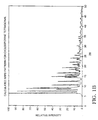
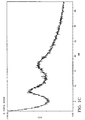
- CsA powders prepared by organic solvent spray drying can be designed such that they are not of the orthorhombic or tetragonal crystal forms. Indeed, no sharp diffraction peaks indicative of 3-dimensional order are observed by PXRD of the spray dried powders ( Figure 1C) However, the spray dried powders do exhibit 2-dimensional order when analyzed by SAXS, indicative of a liquid crystal form ( Figure 3).
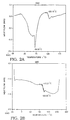
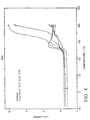
- the CsA powders prepared by organic solvent spray drying also demonstrated a distinct endotherm between 0-75°C when analyzed by differential scanning calorimetry (DSC) at 10°/min in an open pan ( Figure 2A). Since the physical nature of the powders does not change (not a melt) through that temperature ranee and because the endotherm is absent in the closed pan DSC trace ( Figure 2B), the transition is believed to be due to solvent evaporation.
- a melt occurs beginning at about 120°C when analyzed by hotstage microscopy at 2°/minute.
- the DSC thermogram at the same heating rate shows a step-wise change in heat capacity (Cp) (a Tg-like transition) at that temperature.
- 3-d ordered crystals do not exhibit a step-wise Cp change going from solid to liquid.
- dielectric analysis is consistent with DSC results and confirms that the transition observed at ⁇ 120°C is a second order transition, as it is demonstrated by the observed frequency dependency.
- the terms "dispersibility” or “dispersible” mean a dry powder having a moisture and/or residual solvent content of less than about 10% by weight (%w), usually below about 5%w and preferably less than about 3%w and often less than about 1%w: a particle size of between 0.1 and 15 ⁇ m. often between 0.2 ⁇ m and 10 ⁇ m. usually about 0.4 to 5 ⁇ m mass median diameter (MMD). preferably about 1 to 4 ⁇ m MMD and most preferably 1 to 2 ⁇ m MMD: a delivered dose of greater than about 30%, usually greater than about 40%, preferably greater than about 50% and most preferably greater than about 60%, and an aerosol particle size distribution of about 1-5 ⁇ m mass median aerodynamic diameter (MMAD). usually about 1.5-4.5 ⁇ m MMAD and preferably about 1.5-4.0 ⁇ m MMAD, or with at least about 40% (preferably at least about 50%) of the particles less than about 3.3 ⁇ m in diameter.
- MMAD mass median aerodynamic diameter
- cyclosporin means any of the group of non-polar cyclic oligopeptides with immunosuppressant activity and includes known cyclosporins A through I.
- this term includes cyclosporin A, also known as cyclosporine.
- Synthetically produced, naturally-derived or purified and recombinantly produced moieties are included, as are analogs, derivatives, agonists. antagonists and pharmaceutically acceptable salts of any of these.
- the term also includes cyclosporins which have D-amino acids, modified, denvatized or non-naturally occurring amino acids in the D- or L-configuration and/or peptomimetic or prodrug units as part of their structure.
- thermotropic liquid crystal is a state of matter distinct from the amorphous and 3-dimensional crystalline states and characterized by the existence of long range order in one (nematic) or two (smectic) dimensions in the absence of solvent.
- An amorphous phase lacks long-range order and a 3-dimensional crystalline phase contains 3-dimensional long-range order.
- powder means a composition that consists of finely dispersed solid particles that are free flowing and capable of being readily dispersed in an inhalation device and subsequently inhaled by a subject so that the particles reach the spaces of the deep lung to permit deposition in the alveoli.
- the powder is said to be "respirable.”
- pharmaceutical excipient or “additive” mean compounds which stabilize cyclosporin and/or improve powder aerosol performance and stability
- excipients useful in the present invention include buffer salts, sugars, tonicifiers, preservatives and anti-oxidants, and the like
- compositions that do not show a change in phase over time.
- chemically stable or “chemical stability” means that the composition shows less than 10% and, preferably, less than 5% total degradation in 2 years at room temperature at the storage conditions specified.
- aerosol stability means that the aerosol composition shows no statistical change in delivered dose efficiency with time
- subject includes any human or animal species in need of cyclosporin for treatment or prophylaxis of conditions for which pulmonary delivery of cyclosporin would be efficacious.
- compositions B. Compositions:
- the present invention is drawn to liquid crystal forms of cyclosporin and to dispersible cyclosporin-containing powder compositions suitable for pulmonary delivery formed by spray drying from organic solvents.
- the dispersible powder compositions comprise a therapeutically effective amount of cyclosporin, optionally in combination with a pharmaceutically acceptable carrier or excipient.
- Spray drying is a process that utilizes high temperatures and high-carrier gas flow rates to rapidly evaporate solvents from an atomized solution that contains dissolved solutes.
- the solvent evaporates to leave a solid particle.
- the size of the particle is dependent upon the conditions of the spray drying process (e.g., solids content of solution, pressure of atomization gas. design of atomizer nozzle and design of cyclone collector) Control of particle size and particle size distribution is important for efficient inhalation delivery to the airways and the deep lung.
- the mass median diameter (MMD) of the particles should preferably be between 1 and 2 ⁇ m, with 100% of the particles less than 15 ⁇ m.
- Cyclosporin, including cyclosporin A (CsA) is very hydrophobic and is practically insoluble ( ⁇ 6 ⁇ g/mL) in aqueous vehicles.
- Organic solvents with boiling points less than 200°C, preferably less than 150°C, and most preferably less than 100°C should be used to obtain powders with low residual solvent.
- the preferred solvents for making spray dried cyclosporin (including CsA) powders include. but are not limited to, ethanol. acetone, acetonitrile, methanol, isopropanol, and methylene chloride, either alone or in combination or in cosolvent systems.
- Pharmaceutically acceptable protic solvents with low dielectric constants are more preferred (e.g, ethanol is preferred over methanol)
- Solvent mixtures with less than 50%, preferably less than 25%, and most preferably with 10% or less water by volume may also be employed for spray drying cyclosporin.
- Use of water in the solvent mixture allows the incorporation of watersoluble excipients into the CsA particles, however non-aqueous systems are preferred.
- Water-soluble excipients useful in the present invention include, but are not limited to. buffer salts (e.g., citric acid/sodium citrate), natural and synthetic sugars as bulking agents (e.g., lactose, mannitol), tonicifiers (e.g., sodium chloride), and preservatives and antioxidants (e.g., ascorbic acid/sodium ascorbate).
- buffer salts e.g., citric acid/sodium citrate
- natural and synthetic sugars as bulking agents e.g., lactose, mannitol
- tonicifiers e.g., sodium chloride
- Pharmaceutical excipients and/or additives generally useful in the present invention include suitable pH adjusters or buffers such as organic salts prepared from organic acids and bases, such as sodium citrate, glycine. sodium tartrate, sodium lactate. tromethamine and the like.
- suitable pH adjusters or buffers such as organic salts prepared from organic acids and bases, such as sodium citrate, glycine. sodium tartrate, sodium lactate. tromethamine and the like.
- Proteins e.g., HSA, recombinant human albumin (rHA), gelatin and casein
- peptides e.g., aspartame
- ammo acids e.g., alanine, glycine, arginine, glutamic acid and aspartic acid
- Carbohydrates/sugars and alditols are also useful.
- Suitable carbohydrate/sugar compounds include sucrose, trehalose. lactose, raffinose, and the like.
- Suitable alditols include mannitol and pyranosyl sorbitol and the like.
- Polymeric excipients/additives include polyvinylpyrrolidones (PVP), Ficolls, soluble hydroxy ethyl starch, dextrates and the like of high molecular weight. Also useful are small amounts of pharmaceutically acceptable surfactants such as Tweens, chelators such as EDTA and inorganic acids and bases such as sodium phosphate and the like.
- Other suitable pharmaceutical excipients and/or additives include those disclosed in Remington. Pharmaceutical Sciences 18th ed. (1990).
- the temperatures employed for drying the atomized solution droplets may range from 20 to 300°C, preferably 30 to 150°C, and most preferably 40 to 120°C. These temperatures are expressed as the outlet temperature of the carrier gas. Specifically, the outlet temperature is the temperature of the gas at the outlet of the drying chamber prior to entry into the cyclone and collector. Correspondingly higher temperatures are required at the point of atomization to achieve the recommended outlet temperatures.
- the spray drying process may include maintaining the powder for an additional period of time at a given temperature after the completion of cyclosporin solution feed through the system (i.e., secondary drying). This secondary drying may be used to reduce any residual solvent left in the powder.
- a droplet size of about 4 to about 8 ⁇ m diameter is preferred in order to achieve optimal powder characteristics.
- Such a droplet size may be achieved, for example. by using the atomization method described in International Patent Application No PCT/US97/07779, with publication No. WO-A-9741833. Unless otherwise specified, atomization methods that result in droplet sizes of 4-8 ⁇ m were used in the examples that follow.
- the mass median diameter (MMD) of the powders prepared by organic spray drying were measured by centrifugal sedimentation with a Horiba CAPA-700 Particle Size Analyzer.
- a powder sample was dispersed in a vehicle of Sedisperse W-11 (Micromentics. Norcross. GA) which was pre-saturated with cyclosporin A and filtered prior to the addition of the powder sample.
- the particle size ranged from about 0.7 to about 2.4 MMD.
- the size of the CsA particles was confirmed by scanning electron microscopy: the particles were also found to be generally spherical in shape, i.e., from smooth spheres to dimpled, raisin-like or wrinkled.
- the aerosol performance characteristics of the powders were evaluated using the Inhale Therapeutic System's aerosol device.
- the device includes an aerosol chamber and employs a volume of compressed air to disperse the powder from an aluminum foil blister package.
- the delivered dose efficiency (DDE) for each powder was defined as the percentage of the nominal dose contained within a blister package that exited the mouthpiece of the aerosol device and was captured on a filter through which a vacuum was drawn (30 L/min) for 2.5 seconds following device actuation.
- the filter was weighed before and after actuation of the device to determine the mass of powder delivered past the mouthpiece.
- the particle size distribution of the aerosolized powders was determined using an Andersen cascade impactor through which a vacuum (28.3 L/min) was pulled for 2.5 seconds.
- the residual solvent and/or moisture content of the powder particles of the present invention is usually below about 10% by weight, preferably below about 5%w and more preferably below about 3%w
- Such low solvent and/or moisture content powders are generally physically and chemically stable during storage at room temperature and are readily dispersible in an inhalation device to form an aerosol.
- the amount of cyclosporin which constitutes a therapeutically effective amount will vary in the composition depending on the biological activity of the cyclosporin employed and the amount needed in the unit dosage form. The condition to be treated or prevented will also determine the amount of evelosporin required, as will the subject to which the composition is being administered
- the compositions comprise at least about 40% by weight cyclosporin in the formulation, preferably between about 70% to about 100% and most preferably about 90% to about 100%.
- the amount of excipients and pharmaceutically acceptable additives may he from about 0-60%, preferably from about 0-30% and most preferably from about 0-10% by weight.
- compositions of the present invention will often be packaged as unit doses where a therapeutically effective amount of the cyclosporin composition is present in a unit dose receptacle, such as a blister pack, gelatin capsule, or the like, so long as a moisture bamer is provided.
- a unit dose receptacle such as a blister pack, gelatin capsule, or the like
- the cyclosporin-based dry powder compositions of the present invention may be produced by spray drying solutions or slumes of the cyclosporin and. optionally. excipients, in a non-aqueous solvent under conditions to provide a respirable dry powder.
- Solvents may include ethanol. acetone, acetonitrile, methanol and isopropanol, which may be readily dried.
- the cyclosporin-based dry powder compositions may also be produced by evaporative drying, freeze-drying, quench from a melt. precipitation including super-critical fluid precipitation.
- thermotropic liquid crystal form of cyclosporin is formed.
- characterization of this cyclosporin form using polarized light microscopy showed that it was birefringent, indicating that it was a non-amorphous form of cyclosporin.
- SAXS analysis showed the presence of sharp peaks ( Figure 3), a characteristic of non-amorphous materials.
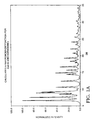
- FIGS. 1A through 1C show X-ray powder diffraction patterns of two crystalline forms of cyclosporin (tetragonal and orthorhombic) and our novel spray dried form.
- Hotstage microscopy DSC. DEA, and SAXS were used to characterize the novel form of cyclosporin. Hotstage microscopy of this material showed a distinct melting point which is characteristic of both crystalline and liquid crystalline materials. DSC showed a step-wise heat capacity change at the melt temperature, characteristic of liquid crystalline materials.
- Figure 2A shows a DSC (heating rate at 10°C/min) of the liquid crystal cyclosporin of the present invention, indicating a melting point beginning at 122°C and which can be between 115°C and 125°C. When analyzed by DEA, such transition was found to be frequency dependent, suggesting it is indeed a second order transition and not a true melt.
- Pulmonary cyclosporin is useful for the treatment of asthma and lung transplants but has the potential for use in many other indications as well. Pulmonary cyclosporin may be useful to treat sarcoidosis.
- Obliterative bronchiolitis (OB) the pulmonary pathology that occurs in lung transplant rejection, also occurs in heart and bone marrow rejection, thus there is the potential for inhaled cyclosporin to be of use in other transplant therapies in conjunction with oral immunosuppressants.
- Chronic inflammatory lung disease chronic obstructive pulmonary disease, emphysema, primary and secondary pulmonary hypertension, cystic fibrosis.
- lung infections or idiopathic pulmonary fibrosis are other pulmonary diseases that may respond to inhaled cyclosporin, since they appear to be caused or exacerbated by an overly reactive immune system. Further. cyclosporin may be useful to treat pulmonary complications associated with autoimmune diseases such as rheumatoid arthritis.
- the advantage of pulmonary delivery of cyclosporin for lung disease or conditions which affect the lungs is that the total body burden of drug can be reduced, which reduces or eliminates systemic side effects.
- cyclosporin may be delivered directly to the deep lung in dry powder form using a dry powder delivery device.
- a significant requirement for such dry powder delivery devices is efficiency.
- the delivered dose must be relatively high to reduce the number of breaths required to achieve a total dosage.
- the ability to achieve adequate dispersion is a significant technical challenge that requires in part that each unit dosage of the powder composition be readily and reliably dispersible.
- Certain pulmonary delivery devices such as those disclosed in U.S. Patent No. 5,458,135 and International Patent Publication WO96/09085 are useful for pulmonary delivery of dry powder drugs.
- Cyclosporin A GMP grade, was obtained as a powder crystallized from acetonc (melting point 148-150°C) from Poll Industria Chimica. S.p.A.
- Spray dried powders were stored under dry atmosphere (RH ⁇ 5%).
- PSD particle size distribution
- the PXRD was performed on a Siemens D-500 X-ray Diffractor.
- the sample was measured at 3°/min (0.8 sec/0.04° step) and 0.5°/step, 1 sec/step respectively.
- the scan was run continuously from 2° to 40° in 2 ⁇ .
- SAXS Small angle X-ray scattering
- SAXS analysis was performed on a Rigaku 12KW diffractometer equipped with a Kratky camera and a Braun 10-cm position sensitive detector, using a copper X-ray source of 1.542 ⁇ at a scanning rate of 0.12°/min in the range of 0 to 2.2° in 2 ⁇ .
- Birefringence was tested using a polarized light microscope, Nikon Optiphot 2-Pol, equipped with a Hamamatsu camera and controller C2400. Pictures were printed on a graphic printer UP890MD. The powders, either dry or immersed in Sedisperse W-11 or water, were examined under 20X. 40X and 60X objectives, and photomicrographs were taken through normal and cross polarized light.
- Hotstage microscopy was pertormed on a Nikon Optiphot 2-Pol equipped with a Mettler Toledo FP82HT Hotstage and a Hamamatsu camera and controller C2400. Photomicrographs were printed on a graphic printer UP890MD. The slide was placed in the hotstage and a representative field was round using the 40X objective. Samples were heated at a rate of 2°C/min from room temperature to past the melting point. Pictures were taken when changes were visually observed.
- Samples were analyzed by Oneida Research Services, Inc. The TGA was performed on a Omnitherm 1500 TGA. Samples were heated from 40-600°C at 10°/min under a nitrogen atmosphere with a flow rate of 30 ml/min.
- DSC Differential scanning calorimetry
- the DSC scans were performed on a TA Instrument model 2920 Modulated DSC with a TA refrigerated cooling system (RCS) unit, and pure helium gas with a flow rate of ⁇ 120 cm 3 /min.
- the cell flow rate was set at about 40 cm 3 /min.
- the scans were performed at 10°C/min non-modulated, with an equilibration temperature of -30°C for 15-30 min, followed by heating to about 200-225°C. Open and closed aluminum pans were filled with about 2 mg-6 mg of powder ( Figures 2A and 2B, respectively).
- the DEA scan was performed on a TA Instrument 2970 Dielectric Analyzer using liquid nitrogen to cool the sample to the initial temperature.
- the powder (40-45 mg) was pressed into a pellet, 1 ⁇ 2 inch in diameter and approximately 0.3 mm thick, using a Carver press for 40 seconds at 1 ton.
- the pellet was surrounded by a silicone gasket. ID 9/16 inch. OD 1 1/16 inches thickness, 0.35 mm. to help maintain thickness during the measurement
- the pellet was also sandwiched between two layers of Teflon. 25 ⁇ m thick, to remove possible contributions from ionic conductivity.
- Electrodes were fabricated from TA Instruments sensors for sputter coated samples and gold foil. 25 ⁇ m thick, one disk 7/16 inch in diameter and the other 6/8 inch in diameter, so that only the sample contacted the foil electrodes. Experiments were performed using a heating rate of 2°C/min from -40 to 200°C and using the following frequencies: 1 Hz. 10 Hz. 100 Hz. 1.000 Hz. 10.000 Hz. 100.000 Hz. The permitivities measured with this method were in arbitrary units since the data was not adjusted for the gold foil sensors; however, this does not impact the interpretation of the results (Figure 4).
- the delivered dose assay was performed to determine the efficiency and reproducibility of pulmonary delivery of the dispersible powder cyclosporin compositions.
- the aerosol performance characteristics of the powders were evaluated using the Inhale Therapeutic System's aerosol device, similar to devices disclosed in WO96/09085.
- the device includes an aerosol chamber and employs a volume of compressed air to disperse the powder from an aluminum foil blister package.
- the delivered dose efficiency (DDE) for each powder was defined as the percentage of the nominal dose contained within a blister package that exited the mouthpiece of the aerosol device and was captured on a glass fiber filter (Gelman, 47 mm diameter) through which a vacuum was drawn (30 L/min) for 2.5 seconds following device actuation.
- Delivered dose efficiency was calculated by dividing the mass of the powder collected on the filter by the mass of the powder in the blister pack. Each result was the average of 5-10 replicate measurements.
- the aerosol particle size distribution was obtained using an eight stage cascade impactor (Graseby Andersen. Smyma, Georgia). The impactor air-flow was set to pull a vacuum of 28.3 L/min, the calibrated flow-rate for the instrument, for 2.5 seconds. For each run. the blister packs filled with approximately 5 mg of powder were dispersed from the inhaler. The particle size was determined by weighing the powder on the impactor plates and evaluating the results on a log-probability plot. Both the mass median aerodynamic diameter (MMAD) and the mass fraction less than 5 ⁇ m were determined from the log-probability plot.
- MMAD mass median aerodynamic diameter
- a dry powder comprised of cyclosporin A was produced by spray drying the organic solution using a Buchi B-190 Laboratory Spray Dryer using a nitrogen atmosphere containing less than 5% oxygen (with N 2 atm ⁇ 5% O 2 ) with the following parameters: Outlet Temperature 70°C Inlet Temperature 100°C Feed Rate 5 mL/min Atomizer Flow Rate 13 lit/min Secondary Drying None
- the Tg-like endotherm which is a melt, appeared on the scan at 122°C onset temperature. Hotstage microscopy showed the melt to be in the range of 138-140°C.
- the MMD of the powder sample was determined to be 1.6 ⁇ m. with 96.5% less than 5.2 ⁇ m.
- the DEA showed a frequency-dependent change in the permitivity indicative of a second order transition, in the same temperature range as determined by DSC. where the change in heat capacity started around 125°C. At the temperature range that the large endotherm was seen in the DSC scan ( ⁇ 20-70°C), there was no change in the permitivity, suggesting that the endotherm is not due to a phase change but rather to solvent evaporation.
- the mass median acrodynamic diameter (MMAD) was determined to be 2.81 ⁇ m, with 85% less than 5 ⁇ m.
- FIG. 5A shows a sample stored at 110°C for 196 hours.
- Figure 5B shows a sample stored at 140°C for 50 hours and
- Figure 5C shows a sample stored at 210°C for 10 minutes.
- the degradation products for the liquid crystal cyclosporin are different than for other reported forms of cyclosporin.
- a dry powder comprised of cyclosporin A was produced by spray drying the organic solution using a Buchi B-190 Laboratory Spray Dryer with N 2 atm ⁇ 5% O 2 with the following parameters: Outlet Temperature 88°C Inlet Temperature 118°C Feed Rate 5 mL/min Atomizer Flow Rate 13 lit/min Secondary Drying 85°C/5 min
- the outlet temperature was maintained at 85°C for 5 min by slowly decreasing the inlet temperature to provide secondary drying.
- PXRD of the powder showed that it exhibited a double halo with two maxima at 2 ⁇ equal to 8.5° and 17°.
- Polarized light microscopy showed the particles to be birefringent.
- TGA analysis of the powder showed the powder to have 0.1% by weight of residual solvent and a decomposition temperature range of 347-421°C.
- the SEM image of the powder showed the particles to be rounded, with slight dimples.
- the DSC scan showed a large endotherm ranging from about 20°C to about 70°C with a peak maximum at 58°C.
- the MMD of the powder sample was determined to be 1.19 ⁇ m. with 95.8% less than 5.2 ⁇ m.
- the MMAD was determined to be 2.0 ⁇ m with 84% less than 5 ⁇ m.
- a dry powder comprised of cyclosporin A was produced by spray drying the organic solution using a Buchi B-190 Laboratory Spray Dryer with N 2 atm ⁇ 5% O 2 with the following parameters: Outlet Temperature 85°C Inlet Temperature 120°C Feed Rate 5 mL/min Atomizer Flow Rate 13 lit/min Secondary Drying 85°C/5 min
- the outlet temperature was maintained at 85°C for 5 min by slowly decreasing the inlet temperature to provide secondary drying.
- PXRD of the powder showed that it exhibited a double halo with two maxima at 2 ⁇ equal to 8.5° and 17°.
- Polarized light microscopy showed the particles to be birefringent.
- TGA analysis of the powder showed the powder to have 0.3% by weight of residual solvent and a decomposition temperature range of 348-425°C.
- the SEM image of the powder showed the particles were raisin-like.
- the DSC scan showed a large endotherm ranging from about 20°C to about 70°C with a peak maximum at 62°C.
- the MMD of the powder sample was determined to be 1.27 ⁇ m. with 100% less than 5.2 ⁇ m.
- the MMAD was determined to be 2.8 ⁇ m with 86% less than 5 ⁇ m.
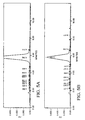
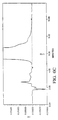
- FIG. 6A is a chromatogram of the mobile phase.
- Figure 6B is a chromatogram of the bulk cyclosporin A in the mobile phase with a 25 ⁇ g load.
- Figure 6C is a chromatogram of the spray dried cyclosporin A aged at 40°C and 75% relative humidity for 10 months reconstituted in the mobile phase.
- cyclosporin A 1.5 g was dissolved in 50 mL of acetonitrile (HPLC grade from Burdick and Jackson).
- a dry powder comprised of cyclosporin A was produced by spray drying the organic solution using a Buchi B-190 Laboratory Spray Dryer with N 2 atm ⁇ 5% O 2 with the following parameters: Outlet Temperature 101°C Inlet Temperature 141°C Feed Rate 5 mL/min Atomizer Flow Rate 15 lit/min Secondary Drying 100°C/5 mm
- the outlet temperature was maintained at 100°C for 5 mm by slowly decreasing the inlet temperature to provide secondary drying.
- PXRD of the powder showed that it exhibited a double halo with two maxima at 2 ⁇ equal to 8.5° and 17° Polarized light microscopy showed the particles to be birefringent.
- the SEM image of the powder showed the particles to be slightly dimpled.
- the DSC scan showed a large endotherm ranging from about 20°C to about 70°C with a peak maximum at 69°C.
- the MMD of the powder sample was determined to be 1.99 ⁇ m. with 99% less than 5.2 ⁇ m.
- the MMAD was determined to be 1.9 ⁇ m with 83% less than 5 ⁇ m.
- cyclosporin A 1.5 g was dissolved in 50 mL of acetone (HPLC grade from J.T. Baker).
- a dry powder comprised of cyclosporin A was produced by spray drying the organic solution using a Buchi B-190 Laboratory Spray Dryer with N 2 atm ⁇ 5% O 2 with the following parameters: Outlet Temperature 102-103°C Inlet Temperature 140°C Feed Rate 5 mL/min Atomizer Flow Rate 15 lit/min Secondary Drying 101°C/5 min
- the outlet temperature was maintained at 101°C for 5 min by slowly decreasing the inlet temperature to provide secondary drying.
- Polarized light microscopy showed the particles to be birefringent.
- the SEM image of the powder showed that the particles looked round.
- the DSC scan showed a large endotherm ranging from about 20°C to about 70°C with a peak maximum at 69°C.
- the MMD of the powder sample was determined to be 1.20 ⁇ m with 87.0% ⁇ 5.2 ⁇ m.
- the MMAD was determined to be 1.8 ⁇ m with 80% less than 5 ⁇ m.
- cyclosporin A 1.35 g was dissolved in 50 mL of ethanol (200 proof, USP, NF grade from Spectrum). 150 mg of Sodium Citrate from Sigma Chemicals was dissolved in 2.5 mL of de-ionized water. The ethanol/cyclosporin A solution was added to the Sodium Citrate/water solution and swirled rapidly The resulting suspension was processed in the Spray Dryer.
- a dry powder comprised of cyclosporin A and sodium citrate (90 10) was produced by spray drying the organic solution using a Buchi B-190 Laboratory Spray Dryer with N 2 atm ⁇ 5% O 2 with the following parameters: Outlet Temperature 85°C Inlet Temperature 120°C Feed Rate 5 mL/min Atomizer Flow Rate 13 lit/min Secondary Drying 85°C/5 min
- the outlet temperature was maintained at 85°C for 5 min by slowly decreasing the inlet temperature to provide secondary drying.
- PXRD of the powder showed that it exhibited a double halo with two maxima at 2 ⁇ equal to 8.5° and 17°.
- the sharp diffraction peaks which stood out above the double halo corresponded to a sodium citrate dihydrate scan.
- Polarized light microscopy showed the particles to be birefringent.
- TGA analysis of the powder showed the powder to have 1.3% by weight of residual solvent and a decomposition temperature range of 288-395°C.
- the SEM image of the powder showed the particles appeared raisin-like and some facetted individual citrate crystals were observed.
- the DSC scan showed a large endotherm ranging from about 20°C to about 70°C with a peak maximum at 59°C.
- the MMD of the powder sample was determined to be 1.11 ⁇ m, with 96.7% less than 5.2 ⁇ m.
- the MMAD was determined to be 3.2 ⁇ m with 78% less than 5 ⁇ m.
- a dry powder comprised of cyclosporin A was produced by spray drying the organic solution using a Buchi B-190 Laboratory Spray Dryer with N 2 atm ⁇ 5% O 2 with the following parameters: Outlet Temperature 85°C Inlet Temperature 120°C Feed Rate 5 mL/min Atomizer Flow Rate 13 lit/min Secondary Drying None
- PXRD of the powder showed that it exhibited a double halo with two maxima at 2 ⁇ equal to 8.5° and 17°.
- Polarized light microscopy showed the particles to be birefringent.
- TGA analysis of the powder showed the powder to have 0.7% by weight of residual solvent and a decomposition temperature range of 347-428°C.
- the SEM image of the powder showed that the particles looked raisin-like.
- the DSC scan showed a large endotherm ranging from about 20°C to about 70°C with a peak maximum at 65°C.
- the Tg-like endotherm which is a melt, appeared on the scan at 122°C onset temperature.
- the MMD of the powder sample was determined to be 0.9 ⁇ m, with 97.6% less than 5.2 ⁇ m.
- the MMAD was determined to be 2.7 ⁇ m with 85% less than 5 ⁇ m.
- a dry powder comprised of cyclosporin A was produced by spray drying the organic solution using a Buchi B-190 Laboratory Spray Dryer with N 2 atm ⁇ 5% O 2 with the following parameters: Outlet Temperature 101°C Inlet Temperature 138°C Feed Rate 5 mL/min Atomizer Flow Rate 14.5 lit/min Secondary Drying None
- Polarized light microscopy showed the particles to be birefringent.
- the SEM images showed that the particles were slightly dimpled.
- the DSC scan showed a large endotherm ranging from about 20°C to about 70°C with a peak maximum at 68°C
- the MMD of the powder sample was determined to be 2.3 ⁇ m. with 86.6% less than 5.2 ⁇ m.
- the X-ray diffraction pattern of the powder showed a halo with two broad maxima at 2 ⁇ equal to ⁇ 8.5° and ⁇ 18.8°.
- the small angle X-ray diffraction pattern of the powder showed a peak at 2 ⁇ equal to 0.2°, indicative of 2-dimensional order.
- the MMAD was determined to be 2.59 ⁇ m with 75% less than 5 ⁇ m
- a dry powder comprised of cyclosporin A was produced by spray drying the organic solution using a Buchi B-190 Laboratory Spray Dryer with N 2 atm ⁇ 5% O 2 with the following parameters: Outlet Temperature 49°C Inlet Temperature 60°C Feed Rate 5 mL/min Atomizer Flow Rate 14.5 lit/min Secondary Drying None
- Polarized light microscopy showed the particles to be birefringent.
- the SEM images showed that the particles were round and dimpled.
- the MMD of the powder sample was determined to be 3.5 ⁇ m, with 70.3% less than 5.2 ⁇ m.
- the MMAD was determined to be 2.30 ⁇ m with 63.6% less than 5 ⁇ m.
- a dry powder comprised of cyclosporin A was produced by spray drying the organic solution using a Buchi B-190 Laboratory Spray Dryer with N 2 atm ⁇ 5% O 2 with the following parameters: Outlet Temperature 100°C Inlet Temperature 135°C Feed Rate 5 mL/min Atomizer Flow Rate 14.5 lit/min Secondary Drying None
- Polarized light microscopy showed the particles to be birefringent.
- the SEM images showed that the particles were round and non-dimpled.
- the DSC scan showed a large endotherm ranging from about 20°C to about 70°C with a peak maximum at 66°C.
- the Tg-like endotherm which is a melt, appeared on the scan at 120°C onset temperature.
- the MMD of the powder sample was determined to be 2.75 ⁇ m, with 76.3% less than 5.2 ⁇ m.
- the X-ray diffraction pattern of the powder showed a halo with a broad maxima at 2 ⁇ equal to ⁇ 7.8°.
- the small angle X-ray diffraction pattern of the powder showed a peak at 2 ⁇ equal to 0.2°, indicative of 2-dimensional order.
- the mass median aerodynamic diameter (MMAD) was determined to be 2.1 ⁇ m with 70% less than 5 ⁇ m.
- a dry powder comprised of cyclosporin A was produced by spray drying the organic solution using a Buchi B-190 Laboratory Spray Dryer with N 2 atm ⁇ 5% O 2 with the following parameters: Outlet Temperature 77°C Inlet Temperature 105°C Feed Rate 5 mL/min Atomizer Flow Rate 14.5 lit/min Secondary Drying None
- Polarized light microscopy showed the particles to be birefringent.
- the SEM images showed that the particles were round and slightly dimpled.
- the DSC scan showed a large endotherm ranging from about 20°C to about 70°C with a peak maximum at 66°C.
- the Tg-like endotherm which is a melt, appeared on the scan at 122°C onset temperature.
- the MMD of the powder sample was determined to be 2.22 ⁇ m, with 85.7% less than 5.2 ⁇ m
- the X-ray diffraction pattern of the powder showed a halo with a broad maxima at 2 ⁇ equal to ⁇ 75°.
- the small angle X-ray diffraction pattern of the powder showed a peak at 2 ⁇ equal to 0.1°, indicative of 2-dimensional order.
- the MMAD was determined to be 3.8 ⁇ m with 97.8% less than 5 ⁇ m.
- a dry powder comprised of cyclosporin A was produced by spray drying the organic solution using a Buchi B-190 Laboratory Spray Dryer with N 2 atm ⁇ 5% O 2 with the following parameters: Outlet Temperature 104°C Inlet Temperature 145°C Feed Rate 5 mL/min Atomizer Flow Rate 14.5 lit/min Secondary Drying None
- Polarized light microscopy showed the particles to be birefringent.
- the SEM images showed that the particles were round and non-dimpled.
- the DSC scan showed a large endotherm ranging from about 20°C to about 70°C with a peak maximum at 66°C.
- the Tg-like endotherm which is a melt, appeared on the scan at 121°C onset temperature.
- the MMD of the powder sample was determined to be 2.36 ⁇ m, with 89.9% less than 5.2 ⁇ m.
- the X-ray diffraction pattern of the powder showed a halo with two broad maxima at 2 ⁇ equal to ⁇ 8.9° and ⁇ 19°.
- the small angle X-ray diffraction pattern of the powder showed a peak at 2 ⁇ equal to 0.1°, indicative of 2-dimensional order.
- the MMAD was determined to be 2.7 ⁇ m with 76.8% less than 5 ⁇ m.
- a dry powder comprised of cyclosporin A was produced by spray drying the organic solution using a Buchi B-190 Laboratory Spray Dryer with N 2 atm ⁇ 5% O 2 with the following parameters: Outlet Temperature 63°C Inlet Temperature 88°C Feed Rate 5 mL/min Atomizer Flow Rate 14.5 lit/min Secondary Drying None
- Polarized light microscopy showed the particles to be birefringent.
- the SEM images showed that the particles were very dimpled.
- the MMD of the powder sample was determined to be 2.37 ⁇ m, with 90.1% less than 5.2 ⁇ m.
- the DSC scan showed a large endotherm ranging from about 20-70°C with a peak maximum at 52°C.
- the Tg-like endotherm which is a melt, appeared on the scan at 119°C onset temperature.
- the MMAD was determined to be 2.5 ⁇ m with 80.7% less than 5 ⁇ m.
- Example 1 The method of Example 1 was followed except that the solution was atomized using a standard, commercially available, Buchi nozzle.
- the mass mean diameter (MMD) of the droplets using this nozzle was between 7 and 15 ⁇ m.
- Figure 7 is a chromatogram of the spray dried sample reconstituted in a mobile phase after storage for 15 months at room temperature. The powder was determined to be chemically stable over the time course of the study.
- Spray dried cyclosporin A powders were produced from various solvents using a variety of spray drying temperatures with or without secondary drying. Secondary drying appeared to have no effect on particle properties.
- the percent yield defined as the weight of CsA-containing powder recovered in the collector of the spray dryer divided by the weight of CsA (and any excipient) in the solution which was spray dried (times 100%), ranged from 22% to 78%. Yields of at least about 20% are preferred, with higher yields being generally more preferred, so long as other powder characteristics such as MMD and DDE are acceptable.
- the fine particle fraction (%) defined as DDE times the % ⁇ 5 ⁇ m, ranged from 33.3 to 67.7%. Powders with a fine particle traction of at least about 25% are preferred.
Landscapes
- Health & Medical Sciences (AREA)
- Engineering & Computer Science (AREA)
- Bioinformatics & Cheminformatics (AREA)
- Life Sciences & Earth Sciences (AREA)
- Public Health (AREA)
- Chemical & Material Sciences (AREA)
- Veterinary Medicine (AREA)
- Medicinal Chemistry (AREA)
- Animal Behavior & Ethology (AREA)
- General Health & Medical Sciences (AREA)
- Pharmacology & Pharmacy (AREA)
- Immunology (AREA)
- Epidemiology (AREA)
- Chemical Kinetics & Catalysis (AREA)
- Nuclear Medicine, Radiotherapy & Molecular Imaging (AREA)
- General Chemical & Material Sciences (AREA)
- Organic Chemistry (AREA)
- Gastroenterology & Hepatology (AREA)
- Proteomics, Peptides & Aminoacids (AREA)
- Pulmonology (AREA)
- Pain & Pain Management (AREA)
- Rheumatology (AREA)
- Transplantation (AREA)
- Medicines That Contain Protein Lipid Enzymes And Other Medicines (AREA)
- Medicinal Preparation (AREA)
- Peptides Or Proteins (AREA)
- Nitrogen And Oxygen Or Sulfur-Condensed Heterocyclic Ring Systems (AREA)
Applications Claiming Priority (3)
| Application Number | Priority Date | Filing Date | Title |
|---|---|---|---|
| US7542298P | 1998-02-20 | 1998-02-20 | |
| US75422P | 1998-02-20 | ||
| PCT/US1999/003052 WO1999042124A1 (en) | 1998-02-20 | 1999-02-11 | Liquid crystal forms of cyclosporin |
Publications (2)
| Publication Number | Publication Date |
|---|---|
| EP1054685A1 EP1054685A1 (en) | 2000-11-29 |
| EP1054685B1 true EP1054685B1 (en) | 2001-11-28 |
Family
ID=22125639
Family Applications (1)
| Application Number | Title | Priority Date | Filing Date |
|---|---|---|---|
| EP99906966A Expired - Lifetime EP1054685B1 (en) | 1998-02-20 | 1999-02-11 | Liquid crystal forms of cyclosporin |
Country Status (10)
| Country | Link |
|---|---|
| US (2) | US6413547B1 (enExample) |
| EP (1) | EP1054685B1 (enExample) |
| JP (1) | JP2002503703A (enExample) |
| KR (1) | KR100609672B1 (enExample) |
| AT (1) | ATE209502T1 (enExample) |
| AU (1) | AU755065B2 (enExample) |
| CA (1) | CA2321268C (enExample) |
| DE (1) | DE69900495T2 (enExample) |
| TW (1) | TW581681B (enExample) |
| WO (1) | WO1999042124A1 (enExample) |
Families Citing this family (14)
| Publication number | Priority date | Publication date | Assignee | Title |
|---|---|---|---|---|
| US20020006901A1 (en) * | 1999-02-05 | 2002-01-17 | Aldo T. Iacono | Use of aerosolized cyclosporine for prevention and treatment of pulmonary disease |
| AU2001254995A1 (en) * | 2000-05-15 | 2001-11-26 | Vectura Limited | Method of manufacturing particles |
| AU2002335046A1 (en) * | 2001-10-19 | 2003-05-06 | Inhale Therapeutic Systems, Inc. | The use of proton sequestering agents in drug formulations |
| WO2003035028A1 (en) * | 2001-10-19 | 2003-05-01 | Nektar Therapeutics | Modulating charge density to produce improvements in the characteristics of spray-dried proteins |
| US20050059583A1 (en) * | 2003-09-15 | 2005-03-17 | Allergan, Inc. | Methods of providing therapeutic effects using cyclosporin components |
| US20060039985A1 (en) * | 2004-04-27 | 2006-02-23 | Bennett David B | Methotrexate compositions |
| US7151085B2 (en) * | 2004-11-15 | 2006-12-19 | Allergan, Inc. | Therapeutic methods using cyclosporine components |
| US7135455B2 (en) * | 2004-11-15 | 2006-11-14 | Allergan, Inc | Methods for the therapeutic use of cyclosporine components |
| WO2007027574A2 (en) * | 2005-08-29 | 2007-03-08 | Palatin Technologies, Inc. | Cyclic peptide isolation by spray drying |
| CN1763084B (zh) * | 2005-10-11 | 2010-04-21 | 山东新时代药业有限公司 | 高纯度环孢菌素a的制备方法 |
| DE102006051512A1 (de) | 2005-12-06 | 2007-06-14 | Pari GmbH Spezialisten für effektive Inhalation | Pharmazeutische Medikamentenzusammensetzungen mit Cyclosporin |
| US10245272B2 (en) * | 2010-10-25 | 2019-04-02 | Iryna Kravchenko | Transmembrane penetration enhancer |
| WO2013074608A1 (en) * | 2011-11-15 | 2013-05-23 | Allergan, Inc. | Cyclosporine a form 2 and method of making same |
| JP7760720B2 (ja) * | 2021-11-05 | 2025-10-27 | 中国科学院過程工程研究所 | シクロペプチドガラス及びシクロペプチドを含有する医薬組成物ガラス |
Family Cites Families (16)
| Publication number | Priority date | Publication date | Assignee | Title |
|---|---|---|---|---|
| EP0005913B2 (en) * | 1978-05-26 | 1991-10-30 | Imperial Chemical Industries Plc | Method of improving the processability of rigid polymers; melts, solutions and shaped articles prepared according to this method |
| JP2577049B2 (ja) * | 1987-06-04 | 1997-01-29 | 三共株式会社 | シクロスポリン製剤 |
| US5015797A (en) * | 1987-11-23 | 1991-05-14 | The Dow Chemical Company | Alkylation of polycyclic aromatic compounds to alkylates enriched in the linear- and near linear-substituted isomers |
| HU203564B (en) | 1987-12-21 | 1991-08-28 | Sandoz Ag | Process for producing new orthorombos cyclosporin without solvatation |
| US5342625A (en) * | 1988-09-16 | 1994-08-30 | Sandoz Ltd. | Pharmaceutical compositions comprising cyclosporins |
| US5204329A (en) * | 1990-06-11 | 1993-04-20 | Du Pont Merck Pharmaceutical Company | Treatment of organ transplantation rejection |
| GB9105705D0 (en) * | 1991-03-18 | 1991-05-01 | Sandoz Ltd | Improvements in or relating to organic compounds |
| ES2141108T3 (es) | 1991-07-02 | 2000-03-16 | Inhale Inc | Metodo y dispositivo para proporcionar medicamentos en aerosol. |
| CA2173104C (en) * | 1993-10-18 | 1999-08-24 | Magda El-Nokaly | Non-sweating lipsticks |
| US6051256A (en) | 1994-03-07 | 2000-04-18 | Inhale Therapeutic Systems | Dispersible macromolecule compositions and methods for their preparation and use |
| DK0756489T3 (da) * | 1994-06-01 | 1999-12-06 | Yuhan Corp | Cyclosporinholdigt præparat og fremgangsmåde til fremstillingen af dette |
| US5635159A (en) * | 1994-08-26 | 1997-06-03 | Abbott Laboratories | Aerosol drug formulations containing polyglycolyzed glycerides |
| BR9508964A (pt) | 1994-09-21 | 1998-06-02 | Inhale Therapeutic Syst | Processo e aparelho de aerossolização conjunto de tubo de alimentação e receptáculo para contenção de um medicamento pulverizado |
| CZ283516B6 (cs) | 1996-09-12 | 1998-04-15 | Galena A.S. | Léčivé přípravky, zejména pro vnitřní aplikaci, ve formě samomikroemulgujících terapeutických systémů |
| US6001336A (en) * | 1996-12-31 | 1999-12-14 | Inhale Therapeutic Systems | Processes for spray drying aqueous suspensions of hydrophobic drugs and compositions thereof |
| US5858985A (en) * | 1997-10-03 | 1999-01-12 | Markov; Angel K. | Treatment of asthma with fructose-1,6-diphosphate |
-
1999
- 1999-02-10 TW TW088102091A patent/TW581681B/zh not_active IP Right Cessation
- 1999-02-11 KR KR1020007009134A patent/KR100609672B1/ko not_active Expired - Fee Related
- 1999-02-11 EP EP99906966A patent/EP1054685B1/en not_active Expired - Lifetime
- 1999-02-11 US US09/248,416 patent/US6413547B1/en not_active Expired - Fee Related
- 1999-02-11 CA CA2321268A patent/CA2321268C/en not_active Expired - Fee Related
- 1999-02-11 AT AT99906966T patent/ATE209502T1/de not_active IP Right Cessation
- 1999-02-11 WO PCT/US1999/003052 patent/WO1999042124A1/en not_active Ceased
- 1999-02-11 DE DE69900495T patent/DE69900495T2/de not_active Expired - Lifetime
- 1999-02-11 JP JP2000532138A patent/JP2002503703A/ja active Pending
- 1999-02-11 AU AU26750/99A patent/AU755065B2/en not_active Ceased
-
2002
- 2002-05-29 US US10/158,387 patent/US20030130176A1/en not_active Abandoned
Also Published As
| Publication number | Publication date |
|---|---|
| ATE209502T1 (de) | 2001-12-15 |
| EP1054685A1 (en) | 2000-11-29 |
| WO1999042124A1 (en) | 1999-08-26 |
| CA2321268A1 (en) | 1999-08-26 |
| JP2002503703A (ja) | 2002-02-05 |
| KR20010041094A (ko) | 2001-05-15 |
| US6413547B1 (en) | 2002-07-02 |
| CA2321268C (en) | 2010-04-13 |
| DE69900495D1 (de) | 2002-01-10 |
| KR100609672B1 (ko) | 2006-08-09 |
| AU2675099A (en) | 1999-09-06 |
| DE69900495T2 (de) | 2002-06-27 |
| AU755065B2 (en) | 2002-12-05 |
| TW581681B (en) | 2004-04-01 |
| US20030130176A1 (en) | 2003-07-10 |
Similar Documents
| Publication | Publication Date | Title |
|---|---|---|
| US7473433B2 (en) | Pulmonary delivery of polyene antifungal agents | |
| US12226404B2 (en) | Methods for making compositions for pulmonary administration | |
| EP1734938B1 (en) | Insulin highly respirable microparticles | |
| Lo et al. | Liposomes and disaccharides as carriers in spray-dried powder formulations of superoxide dismutase | |
| EP1458360B1 (en) | Pulmonary delivery of aminoglycosides | |
| EP1054685B1 (en) | Liquid crystal forms of cyclosporin | |
| EP0309464B1 (en) | Membrane lipid composition and method for its preparation | |
| AU2002245181A1 (en) | Pulmonary delivery of polyene antifungal agents | |
| US20080038357A1 (en) | Inhalation Powder Containing the CGRP antagonist BIBN4096 and Process for the Preparation Thereof | |
| PT1107743E (pt) | Formulações proteicas estáveis secas por pulverização | |
| ES3022184T3 (en) | Rapamycin powders for pulmonary delivery | |
| US20060039985A1 (en) | Methotrexate compositions | |
| WO2007092088A1 (en) | Compositions comprising amphotericin b | |
| MXPA00008133A (en) | Liquid crystal forms of cyclosporin | |
| WO2009064469A1 (en) | Pulmonary delivery of a macrolide antibiotic |
Legal Events
| Date | Code | Title | Description |
|---|---|---|---|
| PUAI | Public reference made under article 153(3) epc to a published international application that has entered the european phase |
Free format text: ORIGINAL CODE: 0009012 |
|
| 17P | Request for examination filed |
Effective date: 20000915 |
|
| AK | Designated contracting states |
Kind code of ref document: A1 Designated state(s): AT BE CH CY DE DK ES FI FR GB GR IE IT LI LU MC NL PT SE |
|
| AX | Request for extension of the european patent |
Free format text: AL PAYMENT 20000915;LT PAYMENT 20000915;LV PAYMENT 20000915;MK PAYMENT 20000915;RO PAYMENT 20000915;SI PAYMENT 20000915 |
|
| GRAG | Despatch of communication of intention to grant |
Free format text: ORIGINAL CODE: EPIDOS AGRA |
|
| RIN1 | Information on inventor provided before grant (corrected) |
Inventor name: TAN, TRIXIE, K. Inventor name: PATTON, JOHN, S. Inventor name: LECHUGA-BALLESTEROS, DAVID Inventor name: FOSTER, LINDA, C. Inventor name: CABOT, KIRSTEN, M. Inventor name: BENNETT, DAVID, B. |
|
| 17Q | First examination report despatched |
Effective date: 20010110 |
|
| GRAG | Despatch of communication of intention to grant |
Free format text: ORIGINAL CODE: EPIDOS AGRA |
|
| GRAG | Despatch of communication of intention to grant |
Free format text: ORIGINAL CODE: EPIDOS AGRA |
|
| GRAH | Despatch of communication of intention to grant a patent |
Free format text: ORIGINAL CODE: EPIDOS IGRA |
|
| GRAH | Despatch of communication of intention to grant a patent |
Free format text: ORIGINAL CODE: EPIDOS IGRA |
|
| GRAA | (expected) grant |
Free format text: ORIGINAL CODE: 0009210 |
|
| AK | Designated contracting states |
Kind code of ref document: B1 Designated state(s): AT BE CH CY DE DK ES FI FR GB GR IE IT LI LU MC NL PT SE |
|
| AX | Request for extension of the european patent |
Free format text: AL PAYMENT 20000915;LT PAYMENT 20000915;LV PAYMENT 20000915;MK PAYMENT 20000915;RO PAYMENT 20000915;SI PAYMENT 20000915 |
|
| PG25 | Lapsed in a contracting state [announced via postgrant information from national office to epo] |
Ref country code: NL Free format text: LAPSE BECAUSE OF FAILURE TO SUBMIT A TRANSLATION OF THE DESCRIPTION OR TO PAY THE FEE WITHIN THE PRESCRIBED TIME-LIMIT Effective date: 20011128 Ref country code: LI Free format text: LAPSE BECAUSE OF FAILURE TO SUBMIT A TRANSLATION OF THE DESCRIPTION OR TO PAY THE FEE WITHIN THE PRESCRIBED TIME-LIMIT Effective date: 20011128 Ref country code: IT Free format text: LAPSE BECAUSE OF FAILURE TO SUBMIT A TRANSLATION OF THE DESCRIPTION OR TO PAY THE FEE WITHIN THE PRESCRIBED TIME-LIMIT;WARNING: LAPSES OF ITALIAN PATENTS WITH EFFECTIVE DATE BEFORE 2007 MAY HAVE OCCURRED AT ANY TIME BEFORE 2007. THE CORRECT EFFECTIVE DATE MAY BE DIFFERENT FROM THE ONE RECORDED. Effective date: 20011128 Ref country code: GR Free format text: LAPSE BECAUSE OF FAILURE TO SUBMIT A TRANSLATION OF THE DESCRIPTION OR TO PAY THE FEE WITHIN THE PRESCRIBED TIME-LIMIT Effective date: 20011128 Ref country code: FI Free format text: LAPSE BECAUSE OF FAILURE TO SUBMIT A TRANSLATION OF THE DESCRIPTION OR TO PAY THE FEE WITHIN THE PRESCRIBED TIME-LIMIT Effective date: 20011128 Ref country code: CH Free format text: LAPSE BECAUSE OF FAILURE TO SUBMIT A TRANSLATION OF THE DESCRIPTION OR TO PAY THE FEE WITHIN THE PRESCRIBED TIME-LIMIT Effective date: 20011128 Ref country code: BE Free format text: LAPSE BECAUSE OF FAILURE TO SUBMIT A TRANSLATION OF THE DESCRIPTION OR TO PAY THE FEE WITHIN THE PRESCRIBED TIME-LIMIT Effective date: 20011128 Ref country code: AT Free format text: LAPSE BECAUSE OF FAILURE TO SUBMIT A TRANSLATION OF THE DESCRIPTION OR TO PAY THE FEE WITHIN THE PRESCRIBED TIME-LIMIT Effective date: 20011128 |
|
| REF | Corresponds to: |
Ref document number: 209502 Country of ref document: AT Date of ref document: 20011215 Kind code of ref document: T |
|
| REG | Reference to a national code |
Ref country code: CH Ref legal event code: EP |
|
| REG | Reference to a national code |
Ref country code: IE Ref legal event code: FG4D |
|
| REG | Reference to a national code |
Ref country code: GB Ref legal event code: IF02 |
|
| REF | Corresponds to: |
Ref document number: 69900495 Country of ref document: DE Date of ref document: 20020110 |
|
| PGFP | Annual fee paid to national office [announced via postgrant information from national office to epo] |
Ref country code: SE Payment date: 20020206 Year of fee payment: 4 |
|
| PG25 | Lapsed in a contracting state [announced via postgrant information from national office to epo] |
Ref country code: IE Free format text: LAPSE BECAUSE OF NON-PAYMENT OF DUE FEES Effective date: 20020211 |
|
| PGFP | Annual fee paid to national office [announced via postgrant information from national office to epo] |
Ref country code: LU Payment date: 20020213 Year of fee payment: 4 Ref country code: ES Payment date: 20020213 Year of fee payment: 4 |
|
| PG25 | Lapsed in a contracting state [announced via postgrant information from national office to epo] |
Ref country code: SE Free format text: LAPSE BECAUSE OF FAILURE TO SUBMIT A TRANSLATION OF THE DESCRIPTION OR TO PAY THE FEE WITHIN THE PRESCRIBED TIME-LIMIT Effective date: 20020228 Ref country code: PT Free format text: LAPSE BECAUSE OF FAILURE TO SUBMIT A TRANSLATION OF THE DESCRIPTION OR TO PAY THE FEE WITHIN THE PRESCRIBED TIME-LIMIT Effective date: 20020228 Ref country code: DK Free format text: LAPSE BECAUSE OF FAILURE TO SUBMIT A TRANSLATION OF THE DESCRIPTION OR TO PAY THE FEE WITHIN THE PRESCRIBED TIME-LIMIT Effective date: 20020228 Ref country code: CY Free format text: LAPSE BECAUSE OF FAILURE TO SUBMIT A TRANSLATION OF THE DESCRIPTION OR TO PAY THE FEE WITHIN THE PRESCRIBED TIME-LIMIT Effective date: 20020228 |
|
| PGFP | Annual fee paid to national office [announced via postgrant information from national office to epo] |
Ref country code: BE Payment date: 20020418 Year of fee payment: 4 |
|
| NLV1 | Nl: lapsed or annulled due to failure to fulfill the requirements of art. 29p and 29m of the patents act | ||
| PGFP | Annual fee paid to national office [announced via postgrant information from national office to epo] |
Ref country code: MC Payment date: 20020517 Year of fee payment: 4 |
|
| PG25 | Lapsed in a contracting state [announced via postgrant information from national office to epo] |
Ref country code: ES Free format text: LAPSE BECAUSE OF FAILURE TO SUBMIT A TRANSLATION OF THE DESCRIPTION OR TO PAY THE FEE WITHIN THE PRESCRIBED TIME-LIMIT Effective date: 20020530 |
|
| REG | Reference to a national code |
Ref country code: CH Ref legal event code: PL |
|
| PLBE | No opposition filed within time limit |
Free format text: ORIGINAL CODE: 0009261 |
|
| STAA | Information on the status of an ep patent application or granted ep patent |
Free format text: STATUS: NO OPPOSITION FILED WITHIN TIME LIMIT |
|
| 26N | No opposition filed | ||
| REG | Reference to a national code |
Ref country code: IE Ref legal event code: MM4A |
|
| PG25 | Lapsed in a contracting state [announced via postgrant information from national office to epo] |
Ref country code: LU Free format text: LAPSE BECAUSE OF NON-PAYMENT OF DUE FEES Effective date: 20030211 |
|
| PG25 | Lapsed in a contracting state [announced via postgrant information from national office to epo] |
Ref country code: MC Free format text: LAPSE BECAUSE OF NON-PAYMENT OF DUE FEES Effective date: 20030228 |
|
| REG | Reference to a national code |
Ref country code: FR Ref legal event code: CD |
|
| PGFP | Annual fee paid to national office [announced via postgrant information from national office to epo] |
Ref country code: FR Payment date: 20100223 Year of fee payment: 12 |
|
| PGFP | Annual fee paid to national office [announced via postgrant information from national office to epo] |
Ref country code: GB Payment date: 20100202 Year of fee payment: 12 Ref country code: DE Payment date: 20100219 Year of fee payment: 12 |
|
| GBPC | Gb: european patent ceased through non-payment of renewal fee |
Effective date: 20110211 |
|
| REG | Reference to a national code |
Ref country code: FR Ref legal event code: ST Effective date: 20111102 |
|
| REG | Reference to a national code |
Ref country code: DE Ref legal event code: R119 Ref document number: 69900495 Country of ref document: DE Effective date: 20110901 |
|
| PG25 | Lapsed in a contracting state [announced via postgrant information from national office to epo] |
Ref country code: FR Free format text: LAPSE BECAUSE OF NON-PAYMENT OF DUE FEES Effective date: 20110228 |
|
| PG25 | Lapsed in a contracting state [announced via postgrant information from national office to epo] |
Ref country code: GB Free format text: LAPSE BECAUSE OF NON-PAYMENT OF DUE FEES Effective date: 20110211 |
|
| PG25 | Lapsed in a contracting state [announced via postgrant information from national office to epo] |
Ref country code: DE Free format text: LAPSE BECAUSE OF NON-PAYMENT OF DUE FEES Effective date: 20110901 |