EP1047145B1 - Verfahren zur Herstellung einer sekundären Lithium-Zelle mit einem wärmeempfindlichen Schutzmechanismus - Google Patents
Verfahren zur Herstellung einer sekundären Lithium-Zelle mit einem wärmeempfindlichen Schutzmechanismus Download PDFInfo
- Publication number
- EP1047145B1 EP1047145B1 EP00103213A EP00103213A EP1047145B1 EP 1047145 B1 EP1047145 B1 EP 1047145B1 EP 00103213 A EP00103213 A EP 00103213A EP 00103213 A EP00103213 A EP 00103213A EP 1047145 B1 EP1047145 B1 EP 1047145B1
- Authority
- EP
- European Patent Office
- Prior art keywords
- wax
- separator
- electrodes
- electrolyte
- cell
- Prior art date
- Legal status (The legal status is an assumption and is not a legal conclusion. Google has not performed a legal analysis and makes no representation as to the accuracy of the status listed.)
- Expired - Lifetime
Links
- 238000000034 method Methods 0.000 title claims description 8
- HBBGRARXTFLTSG-UHFFFAOYSA-N Lithium ion Chemical group [Li+] HBBGRARXTFLTSG-UHFFFAOYSA-N 0.000 title abstract description 8
- 230000001681 protective effect Effects 0.000 title 1
- 239000002245 particle Substances 0.000 claims abstract description 22
- WHXSMMKQMYFTQS-UHFFFAOYSA-N Lithium Chemical group [Li] WHXSMMKQMYFTQS-UHFFFAOYSA-N 0.000 claims abstract description 18
- 229910052744 lithium Inorganic materials 0.000 claims abstract description 18
- 238000002844 melting Methods 0.000 claims abstract description 18
- 239000000843 powder Substances 0.000 claims abstract description 12
- 230000008018 melting Effects 0.000 claims abstract description 11
- 239000011248 coating agent Substances 0.000 claims abstract description 7
- 238000000576 coating method Methods 0.000 claims abstract description 7
- 239000003792 electrolyte Substances 0.000 claims abstract description 7
- 238000004519 manufacturing process Methods 0.000 claims abstract description 6
- 238000009830 intercalation Methods 0.000 claims abstract description 4
- 239000001993 wax Substances 0.000 claims description 44
- -1 polyethylene Polymers 0.000 claims description 10
- 239000004698 Polyethylene Substances 0.000 claims description 7
- 229920000573 polyethylene Polymers 0.000 claims description 6
- 229920000098 polyolefin Polymers 0.000 claims description 5
- 239000000203 mixture Substances 0.000 claims description 3
- 230000037427 ion transport Effects 0.000 claims 2
- 229910001416 lithium ion Inorganic materials 0.000 abstract description 13
- 230000001351 cycling effect Effects 0.000 abstract 1
- 229920013683 Celanese Polymers 0.000 description 9
- 239000004743 Polypropylene Substances 0.000 description 6
- 239000002904 solvent Substances 0.000 description 6
- 239000011230 binding agent Substances 0.000 description 5
- 150000002500 ions Chemical class 0.000 description 5
- 230000000052 comparative effect Effects 0.000 description 4
- 229920001155 polypropylene Polymers 0.000 description 4
- 230000002269 spontaneous effect Effects 0.000 description 4
- 239000000463 material Substances 0.000 description 3
- 229920000642 polymer Polymers 0.000 description 3
- CSCPPACGZOOCGX-UHFFFAOYSA-N Acetone Chemical compound CC(C)=O CSCPPACGZOOCGX-UHFFFAOYSA-N 0.000 description 2
- LFQSCWFLJHTTHZ-UHFFFAOYSA-N Ethanol Chemical compound CCO LFQSCWFLJHTTHZ-UHFFFAOYSA-N 0.000 description 2
- 238000009835 boiling Methods 0.000 description 2
- 230000000694 effects Effects 0.000 description 2
- 230000005518 electrochemistry Effects 0.000 description 2
- 238000002474 experimental method Methods 0.000 description 2
- 239000000835 fiber Substances 0.000 description 2
- 230000004907 flux Effects 0.000 description 2
- 230000004224 protection Effects 0.000 description 2
- 230000009979 protective mechanism Effects 0.000 description 2
- 239000007921 spray Substances 0.000 description 2
- NIXOWILDQLNWCW-UHFFFAOYSA-M Acrylate Chemical compound [O-]C(=O)C=C NIXOWILDQLNWCW-UHFFFAOYSA-M 0.000 description 1
- OKTJSMMVPCPJKN-UHFFFAOYSA-N Carbon Chemical compound [C] OKTJSMMVPCPJKN-UHFFFAOYSA-N 0.000 description 1
- MTCFGRXMJLQNBG-UHFFFAOYSA-N Serine Natural products OCC(N)C(O)=O MTCFGRXMJLQNBG-UHFFFAOYSA-N 0.000 description 1
- 230000002411 adverse Effects 0.000 description 1
- 238000007664 blowing Methods 0.000 description 1
- 229910052799 carbon Inorganic materials 0.000 description 1
- 238000006243 chemical reaction Methods 0.000 description 1
- 239000007795 chemical reaction product Substances 0.000 description 1
- 239000003795 chemical substances by application Substances 0.000 description 1
- 239000006185 dispersion Substances 0.000 description 1
- 238000003487 electrochemical reaction Methods 0.000 description 1
- 238000004146 energy storage Methods 0.000 description 1
- 230000007613 environmental effect Effects 0.000 description 1
- 231100000572 poisoning Toxicity 0.000 description 1
- 230000000607 poisoning effect Effects 0.000 description 1
- 239000011148 porous material Substances 0.000 description 1
- 230000036647 reaction Effects 0.000 description 1
- 238000011076 safety test Methods 0.000 description 1
- DCKVNWZUADLDEH-UHFFFAOYSA-N sec-butyl acetate Chemical compound CCC(C)OC(C)=O DCKVNWZUADLDEH-UHFFFAOYSA-N 0.000 description 1
- 125000003607 serino group Chemical class [H]N([H])[C@]([H])(C(=O)[*])C(O[H])([H])[H] 0.000 description 1
- 238000005245 sintering Methods 0.000 description 1
- 239000011877 solvent mixture Substances 0.000 description 1
- 230000003068 static effect Effects 0.000 description 1
Images



Classifications
-
- H—ELECTRICITY
- H01—ELECTRIC ELEMENTS
- H01M—PROCESSES OR MEANS, e.g. BATTERIES, FOR THE DIRECT CONVERSION OF CHEMICAL ENERGY INTO ELECTRICAL ENERGY
- H01M10/00—Secondary cells; Manufacture thereof
- H01M10/05—Accumulators with non-aqueous electrolyte
- H01M10/052—Li-accumulators
- H01M10/0525—Rocking-chair batteries, i.e. batteries with lithium insertion or intercalation in both electrodes; Lithium-ion batteries
-
- H—ELECTRICITY
- H01—ELECTRIC ELEMENTS
- H01M—PROCESSES OR MEANS, e.g. BATTERIES, FOR THE DIRECT CONVERSION OF CHEMICAL ENERGY INTO ELECTRICAL ENERGY
- H01M10/00—Secondary cells; Manufacture thereof
- H01M10/05—Accumulators with non-aqueous electrolyte
- H01M10/058—Construction or manufacture
-
- H—ELECTRICITY
- H01—ELECTRIC ELEMENTS
- H01M—PROCESSES OR MEANS, e.g. BATTERIES, FOR THE DIRECT CONVERSION OF CHEMICAL ENERGY INTO ELECTRICAL ENERGY
- H01M10/00—Secondary cells; Manufacture thereof
- H01M10/42—Methods or arrangements for servicing or maintenance of secondary cells or secondary half-cells
- H01M10/4235—Safety or regulating additives or arrangements in electrodes, separators or electrolyte
-
- H—ELECTRICITY
- H01—ELECTRIC ELEMENTS
- H01M—PROCESSES OR MEANS, e.g. BATTERIES, FOR THE DIRECT CONVERSION OF CHEMICAL ENERGY INTO ELECTRICAL ENERGY
- H01M50/00—Constructional details or processes of manufacture of the non-active parts of electrochemical cells other than fuel cells, e.g. hybrid cells
- H01M50/40—Separators; Membranes; Diaphragms; Spacing elements inside cells
- H01M50/409—Separators, membranes or diaphragms characterised by the material
- H01M50/411—Organic material
- H01M50/414—Synthetic resins, e.g. thermoplastics or thermosetting resins
- H01M50/417—Polyolefins
-
- H—ELECTRICITY
- H01—ELECTRIC ELEMENTS
- H01M—PROCESSES OR MEANS, e.g. BATTERIES, FOR THE DIRECT CONVERSION OF CHEMICAL ENERGY INTO ELECTRICAL ENERGY
- H01M50/00—Constructional details or processes of manufacture of the non-active parts of electrochemical cells other than fuel cells, e.g. hybrid cells
- H01M50/40—Separators; Membranes; Diaphragms; Spacing elements inside cells
- H01M50/409—Separators, membranes or diaphragms characterised by the material
- H01M50/449—Separators, membranes or diaphragms characterised by the material having a layered structure
-
- H—ELECTRICITY
- H01—ELECTRIC ELEMENTS
- H01M—PROCESSES OR MEANS, e.g. BATTERIES, FOR THE DIRECT CONVERSION OF CHEMICAL ENERGY INTO ELECTRICAL ENERGY
- H01M2200/00—Safety devices for primary or secondary batteries
- H01M2200/10—Temperature sensitive devices
-
- H—ELECTRICITY
- H01—ELECTRIC ELEMENTS
- H01M—PROCESSES OR MEANS, e.g. BATTERIES, FOR THE DIRECT CONVERSION OF CHEMICAL ENERGY INTO ELECTRICAL ENERGY
- H01M4/00—Electrodes
- H01M4/02—Electrodes composed of, or comprising, active material
- H01M4/04—Processes of manufacture in general
-
- Y—GENERAL TAGGING OF NEW TECHNOLOGICAL DEVELOPMENTS; GENERAL TAGGING OF CROSS-SECTIONAL TECHNOLOGIES SPANNING OVER SEVERAL SECTIONS OF THE IPC; TECHNICAL SUBJECTS COVERED BY FORMER USPC CROSS-REFERENCE ART COLLECTIONS [XRACs] AND DIGESTS
- Y02—TECHNOLOGIES OR APPLICATIONS FOR MITIGATION OR ADAPTATION AGAINST CLIMATE CHANGE
- Y02E—REDUCTION OF GREENHOUSE GAS [GHG] EMISSIONS, RELATED TO ENERGY GENERATION, TRANSMISSION OR DISTRIBUTION
- Y02E60/00—Enabling technologies; Technologies with a potential or indirect contribution to GHG emissions mitigation
- Y02E60/10—Energy storage using batteries
-
- Y—GENERAL TAGGING OF NEW TECHNOLOGICAL DEVELOPMENTS; GENERAL TAGGING OF CROSS-SECTIONAL TECHNOLOGIES SPANNING OVER SEVERAL SECTIONS OF THE IPC; TECHNICAL SUBJECTS COVERED BY FORMER USPC CROSS-REFERENCE ART COLLECTIONS [XRACs] AND DIGESTS
- Y02—TECHNOLOGIES OR APPLICATIONS FOR MITIGATION OR ADAPTATION AGAINST CLIMATE CHANGE
- Y02P—CLIMATE CHANGE MITIGATION TECHNOLOGIES IN THE PRODUCTION OR PROCESSING OF GOODS
- Y02P70/00—Climate change mitigation technologies in the production process for final industrial or consumer products
- Y02P70/50—Manufacturing or production processes characterised by the final manufactured product
-
- Y—GENERAL TAGGING OF NEW TECHNOLOGICAL DEVELOPMENTS; GENERAL TAGGING OF CROSS-SECTIONAL TECHNOLOGIES SPANNING OVER SEVERAL SECTIONS OF THE IPC; TECHNICAL SUBJECTS COVERED BY FORMER USPC CROSS-REFERENCE ART COLLECTIONS [XRACs] AND DIGESTS
- Y10—TECHNICAL SUBJECTS COVERED BY FORMER USPC
- Y10T—TECHNICAL SUBJECTS COVERED BY FORMER US CLASSIFICATION
- Y10T29/00—Metal working
- Y10T29/49—Method of mechanical manufacture
- Y10T29/49002—Electrical device making
- Y10T29/49108—Electric battery cell making
-
- Y—GENERAL TAGGING OF NEW TECHNOLOGICAL DEVELOPMENTS; GENERAL TAGGING OF CROSS-SECTIONAL TECHNOLOGIES SPANNING OVER SEVERAL SECTIONS OF THE IPC; TECHNICAL SUBJECTS COVERED BY FORMER USPC CROSS-REFERENCE ART COLLECTIONS [XRACs] AND DIGESTS
- Y10—TECHNICAL SUBJECTS COVERED BY FORMER USPC
- Y10T—TECHNICAL SUBJECTS COVERED BY FORMER US CLASSIFICATION
- Y10T29/00—Metal working
- Y10T29/49—Method of mechanical manufacture
- Y10T29/49002—Electrical device making
- Y10T29/49108—Electric battery cell making
- Y10T29/49115—Electric battery cell making including coating or impregnating
Definitions
- the invention relates to a method for producing a secondary lithium cell, which has at least one carbon-containing negative electrode, at least one lithium intercalating positive electrode, at least one separator disposed between positive and negative electrodes and a non-aqueous, lithium ion-conducting electrolyte.
- the invention further relates to a secondary lithium cell.
- Electrochemical cells that have a high energy storage capacity require safety precautions, e.g. provide protection against the spontaneous release of stored energy in the case of short circuits.
- safety precautions e.g. provide protection against the spontaneous release of stored energy in the case of short circuits.
- a separator for electrochemical cells is furthermore known in which polymer particles having a predetermined melting temperature are applied to the separator.
- the application of the polymer particles is then carried out from a dispersion of the polymer particles in a low-boiling solvent.
- Approximately 1 to 15 .mu.m-sized particles are applied in layer thicknesses of about 25 microns with the aid of binders on the separator.
- the application of a low-boiling solvent for environmental reasons requires a lot of equipment to remove the solvent vapors from the exhaust air, and the remaining in the cell binder can adversely affect the electrochemical reactions of the cell.
- the invention has the object to provide a method to simplify the production of electrochemical cells with a heat-sensitive protection mechanism, to avoid entry of materials that the electrochemistry in normal operation and to shorten the response times to activate the interruption of ion flux in the electrochemical cell.
- the invention relates to lithium ion batteries having carbonaceous negative electrodes.
- the object is achieved by a method for producing a secondary lithium cell with a heat-sensitive protective mechanism having the features of patent claim 1.
- the method according to the invention makes it possible in a simple manner to coat the surface of the electrodes and / or of the separator with wax cells, without appreciably restricting the porosity of the electrodes and / or the separator necessary for the transport of the lanes.
- waxes are used which consist of a mixture of waxes with underswhiedllchen melting points.
- the low-melting fraction of the waxes advantageously has a melting temperature in the range from 60 to 90 ° C.
- the wax particles applied according to the invention are preferably sintered on the surface of the electrodes and / or the separator by storage at the softening temperature of the low-melting fraction.
- Polyolefin waxes in particular polyethylene waxes, are preferably used as waxes
- the cells obtained according to the invention are unchanged by the absence of an additional binder in terms of their electrochemistry and show over known cells with a separator of several polypropylene and polyethylene layers a shortened response or an improvement in the temperature limit in the case of an internal or external short circuit.
- the cells grown according to the method according to the invention have a significantly improved cycle life.
- the above-mentioned object is further achieved with a secondary lithium cell having the features of patent claim 6.
- negative electrodes are suspended in a metallically conductive manner and contacted with a pole of a DC voltage source of a powder coating system.
- the applied powdery wax with a softening start at about 88 ° C and a melting point of about 113 ° C specified by the manufacturer is in this system with a pressurized gas (preferably compressed air) largely homogeneously mixed (fluidized) and a spray gun on the electrodes sprayed.
- the spray gun is connected to the other pole of the DC voltage source and thus causes a static charge of the powder particles.
- the voltage difference of generally 30 kV to 100 kV ensures a directional feed and good adhesion of the powder particles on the electrodes.
- the freshly coated electrodes are treated in a sintering furnace at a temperature of about 90 ° C for about 10 minutes.
- a similar cell was made with waxless electrodes using two plies of a commercial polypropylene / polyethylene / polypropylene (PP / PE / PP) sheath-down film separator (Celgard 2300, Hoechst Celanese Corp.) to electrically insulate the electrodes against each other. Both cells show nearly identical behavior and performance in normal operation. To verify the functionality of the shutdown mechanism, a safety trial was carried out with both cells. In this case, the 100% charged cell is exposed to a low-resistance external short circuit for 90 minutes, the external short-circuit resistance being less than or equal to the internal cell resistance.
- the shutdown effect occurs in the cell with the commercial shutdown separator after about 5 minutes.
- the shutdown rate for the cell with the commercial shutdown separator is 32% per minute, based on the current value at the start of the shutdown.
- the shutdown rate is in the cell with the invention wax-coated electrodes 61% per minute, based on the current value at the beginning of the shutdown.
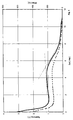
- the cell with the commercial shutdown separator initiates the spontaneous release of electrical energy, characterized by the onset of current (solid line) and voltage (dashed line).
- the spontaneous release of the electrical energy in the cell with the commercial shutdown separator leads, as shown in FIG. 3, to temperatures on the surface of the cell vessel of over 400 ° C.
- the safety valve of the cell opens, allowing electrolyte vapors and reaction products to escape.
- the cell with the wax-coated electrodes according to the invention heats up to a maximum of 90 ° C. in the course of the experiment (FIG. 4). Opening the safety valve and blowing off cell contents will be prevented.
- a similar cell was made with a wax coated separator.
- a commercial polypropylene separator was immersed in a solution of 30 g of an acrylate binder (Gelva - 2480, from Monsanto), 180 g of polyethylene wax (Polywax - 655 T10, from Petrolite) in the solvent mixture of 760 g of acetone and 40 g of ethanol. so that about 1.0 mg / cm 2 Separator Structure were applied.
- the comparative cell according to Comparative Example 2 has only a cycle life of about 80 cycles to a relative capacity of 80%
- the cell according to the invention, as shown in FIG. 5, reaches about 480 full cycles until the relative capacity drops to 80% of the initial capacity.
Landscapes
- Chemical & Material Sciences (AREA)
- Chemical Kinetics & Catalysis (AREA)
- Electrochemistry (AREA)
- General Chemical & Material Sciences (AREA)
- Engineering & Computer Science (AREA)
- Manufacturing & Machinery (AREA)
- Materials Engineering (AREA)
- Battery Electrode And Active Subsutance (AREA)
- Secondary Cells (AREA)
- Cell Separators (AREA)
- Inorganic Compounds Of Heavy Metals (AREA)
Description
- Die Erfindung betrifft ein Verfahren zur Herstellung einer sekundären Lithium-Zelle, die mindestens eine kohlenstoffhaltige negative Elektrode, mindestens eine Lithium interkallerende positive Elektrode, mindestens einen zwischen positiver und negativer Elektrode angeordneten Separator sowie einen nichtwäßrigen, Lithium-ionen leitenden Elektrolyten besitzt.
Die Erfindung betrifft ferner eine sekundäre Lithium-Zelle. - Elektrochemische Zellen, die ein hohes Energiespeichervermögen besten, benötigen Sicherheitsvorkehrungen, die z.B. im Falle von Kurzschlüssen einen Schutz vor der spontanen Freisetzung der in ihnen gespeicherten Energie bieten. Zu diesem Zweck wurde bereits vorgeschlagen, einen wärmesensitiven Schutzmechanismus in die Lithium-lonen-Zellen zu integrieren, der ab einer vorgegebenen Zellentemperatur den Ionenfluß in der Zelle unterbinden oder zumindest erhebfich einschränken soll.
- Dokument US-A 4,075,400 offenbart einen Separator, der ein die elektrochemische Zellenreaktion vergiftendes Mittel enthält, das in ein temperatursensitives Material eingebettet ist und ab einer vorgegebenen Temperatur freigesetzt wird.
- Die Dokumente US-A 4,650,730 und 4,731,304 offenbaren Separatoren, die aus zwei mikroporösen Schichten mit unterschiedlichenSchmelzpunkten bestehen. Beim Erreichen des Schmelzpunktes des niedrig schmelzenden Materials verliert dieses serine : poröse Struktur und reduziert dadurch den lonenfluß in der Zelle.
- Dokument US-A 4,741,979 beschreibt einen Separator, der aus wachsbeschichteten Fasern hergestellt ist. Das Wachs soll ab einer vorgegebenen Tem- ; peratur schmelzen und die Poren zwischen den Fasern verschließen.
- Aus dem Dokument US-A 5,091,272 ist weiterhin ein Separator für elektrochemische Zellen bekannt, bei dem Polymerpartikel mit einer vorgegebenen Schmelztemperatur auf den Separator aufgebracht werden. Das Aufbringen der Polymerteilchen erfolgt danach aus einer Dispersion der Polymerteilchen in einem niedrig siedenden Lösungsmittel. Ca. 1 bis 15 µm große Teilchen werden in Schichtdicken von ca. 25 µm unter Zuhilfenahme von Bindemitteln auf den Separator aufgebracht. Allerdings verlangt die Aufbringung aus einem niedrig siedenden Lösemittel aus Umweltschutzgründen einen hohen apparativen Aufwand zum Entfemen der Lösemitteldämpfe aus der Abluft, und die in der Zelle verbleibenden Bindemittel können sich ungünstig auf die elektrochemischen Reaktionen der Zelle auswirken.
- Die Erfindung hat sich die Aufgabe gestellt, ein Verfahren anzugeben, die Herstellung von elektrochemischen Zellen mit einem wärmeempfindlichen Schutzmechanismus zu vereinfachen, einen Eintrag von Materialien zu vermeiden, die die Elektrochemie im Normalbetrieb beeinflussen, und die Ansprechzeiten zur Aktivierung der Unterbrechung deslonenflusses in der elektrochemischen Zelle zu verkürzen.
- Die Erfindung bezieht sich insbesondere auf Lithium-Ionen-Batterien, die kohlenstoffhaltige negative Elektroden besitzen.
- Erfindungsgemäß wird die Aufgabe durch ein Verfahren zur Herstellung einer sekundären Lithium-Zelle mit einem wärmeempfindlichen Schutzmechanis-mus mit den Merkmalen des Patentanspruchs 1 gelöst.
- Das erfindungsgemäße Verfahren gestattet es in einfacher Weise, die Oberfläche der Elektroden und/oder des Separators mit Wachstellchen zu beschichten, ohne die für den lanentransport notwendige Porosität der Elektroden und/oder des Separators merklich einzuschränken.
- Vorteilhafterweise werden Wachse eingesetzt, die aus einem Gemisch von Wachsen mit unterswhiedllchen Schmelzpunkten bestehen. Der niedrig schmelzende Anteil der Wachse hat dabei vorteilhafter weise eine Schmelztemperatur im Bereich von 60 bis 90°C.
- Die erfindungsgemäß aufgebrachten Wachsteilchen werden auf der Oberfläche der Elektroden und/oder des Separators vorzugsweise durch eine Lagerung bei der Erweichungstemperatur des niedrig schmelzenden Anteils angesintert.
- Bevorzugt werden als Wachse Polyolefinwachse, Insbesondere Polyethylenwachse, eingesetzt
- Die erfindungsgemäß erhaltenen Zellen sind durch den Verzicht auf ein zusätzliches Bindemittel hinsichtlich ihrer Elektrochemie unverändert und zeigen gegenüber bekannten Zellen mit einem Separator aus mehreren Polypropylen- und Polyethylenschichten ein verkürztes Ansprechverhalten bzw. eine Verbesserung der Temperaturbegrenzung im Falle eines inneren oder äußeren Kurzschlusses. Gegenüber Zellen mit Separatoren, die eine aus Lösemitteln aufgebrachte Wachsschicht aufweisen, besitzen die nach dem ertindungsgemäßen Verfahren hergesteilten Zellen eine deutlich verbesserte Zyklenlebensdauer.
Die oben erwähnte Aufgabe wird ferner mit einer sekundären Lithium-Zelle mit den Merkmalen des Patentanspruchs 6 gelöst. - Die Erfindung wird nachfolgend an einem Beispiel und zwei Vergleichsbeisplelen näher erläutert.
- Es zeigen:
- Figur 1:
- Strom (durchgezogene Linie) und Span nung (gestrichelte Linie) während eines externen Kurzschlusses an einer prismetischen 60 Ah Uthium Ion Zelle mit einem kommerziellen Shutdown-Separator (Celgard 2300, Hoechst Celanese Corp.).
- Figur 2:
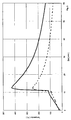
- Strom (durchgezogene Linie) und Spannung (gestrichelte Linie) während eines externen Kurzschlusses an einer prismatischen 60 Ah Lithium Ion Zelle mit erfindungsgemäß wachsbeschichteten Elektroden und einem kommerziellen Separator (Celgard 2502, Hoechst Celanese).
- Figur 3:
- Temperatur am Zellengefäß (durchgezogene Linie) und am Minuspol der Zelle (gestrichelte Linie) während eines externen Kurzschlusses an einer prismatischen 60 Ah Lithium Ion Zelle mit einem kommerziellen Shutdown-Separator (Celgard 2300, Hoechst Celanese Corp.).
- Figur 4:
- Temperatur am Zellengefäß (durchgezogene Linie) und am Minuspol der Zelle (gestrichelte Linie) während eines externen Kurzschlusses an einer prismatischen 60 Ah Lithium Ion Zelle mit wachsbeschichteten Elektroden und einem kommerziellen Separator (Celgard 2502, Hoechst Celanese).
- Figur 5:
- Vergleich der Zyklenlebensdauer einer prismatischen 60 Ah Lithium Ion Zelle mit erfindungsgemäß wachsbeschichteten Elektroden und einem kommerziellen Separator (-▲-) und prismatischen 60 Ah Lithium Ion Zellen, die einen Separator enthalten, der mit einem bindemittelhaltigen Wachs in einem Lösemittel beschichtet wurde (-●-).
- Zum Aufbringen der Wachsteilchen werden negative Elektroden metallisch leitend aufgehängt und mit einem Pol einer Gleichspannungsquelle einer Pulverbeschichtungsanlage kontaktiert.
- Das aufzubringende pulverförmige Wachs mit einem Erweichungsbeginn bei etwa 88°C und einem vom Hersteller angegebenen Schmelzpunkt von etwa 113°C wird in dieser Anlage mit einem unter Druck stehenden Gas (vorzugsweise Preßluft) weitgehend homogen vermischt (fluidisiert) und über eine Sprühpistole auf die Elektroden gesprüht. Die Sprühpistole ist mit dem anderen Pol der Gleichspannungsquelle verbunden und verursacht so eine statische Aufladung der Pulverteilchen. Der Spannungsunterschied von im allgemeinen 30 kV bis 100 kV sorgt für eine gerichtete Hinführung und ein gutes Anhaften der Pulverteilchen auf den Elektroden.
- Um die Elektroden bei der Verarbeitung handhaben zu können ohne die Pulverschicht zu zerstören, werden die frisch beschichteten Elektroden in einem Sinterofen bei einer Temperatur von etwa 90°C für ca. 10 Minuten behandelt.
- In Lebensdauertests an mehreren Zellen konnte nachgewiesen werden, daß die Wachsbeschichtung keinen negativen Einfluß auf die Lebensdauer der Zelle hat (Figur 5). Im Sicherheitsversuch (externer Kurzschluß einer geladenen Zelle) verhindert die Beschichtung das Öffnen der Zelle und die thermische Eskalation (Figur 4).
- Eine gleichartige Zelle wurde mit Elektroden ohne Wachs gefertigt, wobei zwei Lagen eines kommerziellen Polypropylen/Polyethylen/Polypropylen (PP/PE/PP)-Shutdown-Folienseparators (Celgard 2300, Hoechst Celanese Corp.) zur elektrischen Isolierung der Elektroden gegeneinander verwendet wurde. Beide Zellen zeigen nahezu identisches Verhalten und Leistungsfähigkeit im normalen Betrieb. Zur Überprüfung der Funktionalität des Shutdown-Mechanismus wurde mit beiden Zellen ein Sicherheitsversuch durchgeführt. Hierbei wird die zu 100% geladene Zelle einem niederohmigen externen Kurzschluß für 90 min ausgesetzt, wobei der externe Kurzschlußwiderstand kleiner oder gleich dem internen Zellenwiderstand ist.
- Wie Figur 1 zeigt, tritt der Shutdown-Effekt bei der Zelle mit dem kommerziellen Shutdown-Separator nach etwa 5 min ein.
- Der Shutdown-Effekt tritt bei der Zelle mit den erfindungsgemäß beschichteten Elektroden, wie Figur 2 zeigt, bereits nach etwa 2 min ein.
- Die Shutdown-Rate beträgt bei der Zelle mit dem kommerziellen Shutdown-Separator 32% pro Minute, bezogen auf den Stromwert zu Beginn des Shutdown.
- Die Shutdown-Rate beträgt bei der Zelle mit den erfindungsgemäß wachsbeschichteten Elektroden 61% pro Minute, bezogen auf den Stromwert zu Beginn des Shutdown.
- Nach ca. 11 Minuten setzt bei der Zelle mit dem kommerziellen Shutdown-Separator, wie die Figur 3 zeigt, die spontane Freisetzung der elektrischen Energie ein, gekennzeichnet durch den Einbruch von Strom (durchgezogene Linie) und Spannung (gestrichelte Linie).
- Bei der Zelle mit den erfindungsgemäß wachsbeschichteten Elektroden tritt bis zum Ende des Versuches (90 min), wie Figur 4 zeigt, keine spontane Freisetzung der elektrischen Energie ein.
- Die spontane Freisetzung der elektrischen Energie bei der Zelle mit dem kommerziellen Shutdown-Separator führt, wie Figur 3 zeigt, zu Temperaturen auf der Oberfläche des Zellengefäßes von über 400°C. Das Sicherheitsventil der Zelle öffnet sich und läßt Elektrolytdämpfe und Reaktionsprodukte entweichen.
- Die Zelle mit den erfindungsgemäß wachsbeschichteten Elektroden erwärmt sich im Laufe des Versuches auf maximal 90°C (Figur 4). Ein Öffnen des Sicherheitsventiles und das Abblasen von Zelleninhaltsstoffen wird verhindert.
- Eine gleichartige Zelle wurde mit einem Wachs beschichteten Separator gefertigt. Ein handelsüblicher Polypropylenseparator wurde dazu in eine Lösung von 30 g eines Acrylatbindemittels (Gelva - 2480, der Fa. Monsanto), 180 g Polyethylenwachs (Polywax - 655 T10, der Fa. Petrolite) im Lösemittelgemisch von 760 g Aceton und 40 g Ethanol getaucht, so daß ca. 1,0 mg/cm2 Separatorfläche aufgebracht wurden. Während die Vergleichszelle gemäß Vergleichbeispiel 2 nur eine Zyklenlebensdauer von etwa 80 Zyklen bis zu einer relativen Kapazität von 80 % besitzt, erreicht die erfindungsgemäße Zelle, wie Figur 5 zeigt, etwa 480 Vollzyklen bis zu einem Abfall der relativen Kapazität auf 80 % der Ausgangskapazität.
Claims (10)
- Verfahren zur Herstellung einer sekundären Lithium-Zelle, die mindestens eine Lithium zyklierende negative Elektrode, mindestens eine Lithium interkalierende positive Elektrode, mindestens einen zwischen positiver und negativer Elektrode angeordneten Separator sowie einen nichtwässrigen, Lithiumionen leitenden Elektroyten aufweist, dadurch gekennzeichnet, dass die Oberfläche wenigstens einer der Elektroden und/oder des Separators aus einer Pulverschicht aus im Elektrolyten unlöslichen Wachsteilchen gebildet wird, indem die Wachsteilchen mittels elektrostatischer Pulverbeschichtung so aufgesprüht werden, dass die Pulverteilchen unmittelbar an der Oberfläche anhaften und die für den Ionentransport notwendige Porosität der Elektroden und/oder des Separators nicht merklich einschränken, wobei Wachsteilchen mit einer Schmelztemperatur von 50 bis 150° C und einer mittleren Teilchengröße von 6 bis 20 µm und eine Wachsmenge zwischen 0,5 und 2,5 mg/cm2 Elektrodenfläche verwendet werden.
- Verfahren nach Anspruch 1, dadurch gekennzeichnet, dass als im Elektrolyt unlösliches Wachs ein Gemisch von Wachsen eingesetzt wird, wobei der niederigschmelzende Anteil eine Schmelztemperatur von 60 bis 90°C besitzt.
- Verfahren nach Anspruch 1 und/oder Anspruch 2, dadurch gekennzeichnet, dass die Wachsteilchen auf den Oberflächen der Elektroden und/oder des Separators durch Lagerung bei der Erweichungstemperatur des niedrigschmelzenden Anteils angesintert werden.
- Verfahren nach einem oder mehreren der Ansprüche 1 bis 3, dadurch gekennzeichnet, dass als im Elektrolyt unlösliches Wachs ein Polyolefinwachs eingesetzt wird.
- Verfahren nach Anspruch 4, dadurch gekennzeichnet, dass als Polyolefinwachs ein Polyethylenwachs eingesetzt wird
- Sekundäre Lithium-Zelle, die mindestens eine Lithium zyklisierende negative Elektrode, mindestens eine Lithium interkalierende positive Elektrode, mindestens einen zwischen positiver und negativer Elektrode angeordneten Separator sowie einen nichtwässrigen, Lithiumionen leitenden Elektrolyten aufweist, dadurch gekennzeichnet, dass die Oberfläche wenigstens einer der Elektroden eine aus im Elektrolyten unlöslichen Wachsteilchen gebildete Pulverschicht aufweist, die mittels elektrostatischer Pulverbeschichtung so aufgebracht ist, dass die Pulverteilchen unmittelbar an der Oberfläche anhaften und die für den Ionentransport notwendige Porosität der Elektroden nicht merklich einschränken, wobei die Wachsteilchen eine Schmelztemperatur von 50 bis 150°C und eine mittlere Teilchengröße von 6 bis 20 µm besitzen und die Wachsmenge zwischen 0,5 und 2,5 mg/cm2 Elektrodenfläche beträgt.
- Sekundäre Lithium-Zelle nach Anspruch6, dadurch gekennzeichnet, dass das im Elektrolyt unlösliche Wachs ein Gemisch von Wachsen ist, wobei der niedrigschmelzende Anteil eine Schmelztemperatur von 60 bis 90°C aufweist.
- Sekundäre Lithium-Zelle nach Anspruch 6 oder 7, dadurch gekennzeichnet, dass die Wachsteilchen auf den Oberflächen der Elektroden und/oder des Separators durch Lagerung bei der Erweichungstemperatur des niedrig schmelzenden Anteils angesintert werden.
- Sekundäre Lithium-Zelle nach einem der vorstehenden Ansprüche, dadurch gekennzeichnet, dass das im Elektrolyt unlösliche Wachs ein Polyolefinwachs ist.
- Sekundäre Lithium-Zelle nach Anspruch 9, dadurch gekennzeichnet, dass das Polyolefinwachs ein Polyethylenwachs ist.
Applications Claiming Priority (2)
| Application Number | Priority Date | Filing Date | Title |
|---|---|---|---|
| DE19918109A DE19918109A1 (de) | 1999-04-22 | 1999-04-22 | Verfahren zur Herstellung einer sekundären Lithium-Zelle mit einem wärmeempfindlichen Schutzmechanismus |
| DE19918109 | 1999-04-22 |
Publications (2)
| Publication Number | Publication Date |
|---|---|
| EP1047145A1 EP1047145A1 (de) | 2000-10-25 |
| EP1047145B1 true EP1047145B1 (de) | 2006-07-26 |
Family
ID=7905369
Family Applications (1)
| Application Number | Title | Priority Date | Filing Date |
|---|---|---|---|
| EP00103213A Expired - Lifetime EP1047145B1 (de) | 1999-04-22 | 2000-02-17 | Verfahren zur Herstellung einer sekundären Lithium-Zelle mit einem wärmeempfindlichen Schutzmechanismus |
Country Status (4)
| Country | Link |
|---|---|
| US (1) | US6511517B1 (de) |
| EP (1) | EP1047145B1 (de) |
| AT (1) | ATE334487T1 (de) |
| DE (2) | DE19918109A1 (de) |
Cited By (1)
| Publication number | Priority date | Publication date | Assignee | Title |
|---|---|---|---|---|
| US12424706B2 (en) | 2019-07-03 | 2025-09-23 | Byd Company Limited | Adhesive-coated separator for lithium-ion batteries, method for preparing same, and applications thereof |
Families Citing this family (22)
| Publication number | Priority date | Publication date | Assignee | Title |
|---|---|---|---|---|
| US20050100794A1 (en) * | 2003-11-06 | 2005-05-12 | Tiax, Llc | Separator for electrochemical devices and methods |
| CN100466369C (zh) * | 2004-08-06 | 2009-03-04 | 株式会社Lg化学 | 内部构造中含有容纳相变材料的胶囊的电池系统 |
| US8758925B2 (en) | 2004-08-06 | 2014-06-24 | Lg Chem, Ltd. | Battery system containing phase change material-containing capsules in interior configuration thereof |
| CN101479877B (zh) * | 2006-05-04 | 2013-07-31 | 株式会社Lg化学 | 锂二次电池及其制造方法 |
| EP2201628B1 (de) * | 2007-08-21 | 2015-02-18 | A123 Systems, Inc. | Trennglied für eine elektrochemische zelle und herstellungsverfahren dafür |
| CN101809801B (zh) * | 2007-09-28 | 2014-03-26 | A123系统公司 | 具有无机/有机多孔膜的电池 |
| CN102388483B (zh) * | 2009-01-12 | 2016-04-06 | A123系统有限责任公司 | 叠层电池及其制备方法 |
| US20130171484A1 (en) * | 2011-06-06 | 2013-07-04 | The Board Of Trustees Of The University Of Illinois | Materials and Methods for Autonomous Battery Shutdown |
| JP5994467B2 (ja) * | 2012-08-06 | 2016-09-21 | トヨタ自動車株式会社 | リチウムイオン二次電池の製造方法 |
| US8999553B2 (en) | 2013-03-15 | 2015-04-07 | Ford Global Technologies, Llc | Rechargeable battery with shutdown layer comprising a low melting point material and an electrically conductive material |
| EP3213361B1 (de) | 2014-10-27 | 2020-10-21 | Dragonfly Energy Corp. | Verfahren zur herstellung von leitfähigen partikelfilmen für lithium-ionen-batterien sowie lithium-ionen-batterien |
| CN105680086B (zh) * | 2014-12-03 | 2019-07-05 | 纳米及先进材料研发院有限公司 | 具有热敏层的锂离子电池 |
| KR102259218B1 (ko) | 2018-07-03 | 2021-05-31 | 삼성에스디아이 주식회사 | 리튬 이차 전지용 전극, 및 이를 포함하는 리튬 이차 전지 |
| KR102259219B1 (ko) | 2018-07-03 | 2021-05-31 | 삼성에스디아이 주식회사 | 리튬 이차 전지 |
| CN109524597B (zh) * | 2018-11-20 | 2021-07-23 | 哈尔滨理工大学 | 聚乙烯蜡微球/pvdf锂离子电池隔膜的制备方法 |
| KR102323950B1 (ko) | 2018-12-12 | 2021-11-08 | 삼성에스디아이 주식회사 | 리튬 이차 전지용 전극 및 이를 포함하는 리튬 이차 전지 |
| KR102425513B1 (ko) | 2019-05-03 | 2022-07-25 | 삼성에스디아이 주식회사 | 리튬 이차 전지 |
| KR102492832B1 (ko) | 2019-05-03 | 2023-01-26 | 삼성에스디아이 주식회사 | 리튬 이차 전지 |
| KR102425514B1 (ko) * | 2019-05-03 | 2022-07-25 | 삼성에스디아이 주식회사 | 리튬 이차 전지 |
| KR102487628B1 (ko) | 2019-05-03 | 2023-01-12 | 삼성에스디아이 주식회사 | 리튬 이차 전지 |
| KR102425515B1 (ko) | 2019-05-03 | 2022-07-25 | 삼성에스디아이 주식회사 | 리튬 이차 전지 |
| KR102492831B1 (ko) | 2019-05-03 | 2023-01-26 | 삼성에스디아이 주식회사 | 리튬 이차 전지 |
Family Cites Families (9)
| Publication number | Priority date | Publication date | Assignee | Title |
|---|---|---|---|---|
| NL6706132A (de) * | 1966-05-03 | 1967-11-06 | ||
| US4075400A (en) | 1977-02-04 | 1978-02-21 | Fritts David H | Over temperature battery deactivation system |
| JPS6052A (ja) * | 1983-06-15 | 1985-01-05 | Fuji Elelctrochem Co Ltd | 非水電解液電池 |
| US4650730A (en) | 1985-05-16 | 1987-03-17 | W. R. Grace & Co. | Battery separator |
| US4741979A (en) * | 1986-05-19 | 1988-05-03 | Eastman Kodak Company | Battery separator assembly |
| US5091272A (en) * | 1990-05-29 | 1992-02-25 | Duracell Inc. | Separator for electrochemical cells |
| US5591542A (en) | 1993-02-09 | 1997-01-07 | Sumitomo Electric Industries, Ltd. | Battery diaphragm and battery with such a diaphragm |
| JPH07130349A (ja) * | 1993-11-05 | 1995-05-19 | Sony Corp | 電池用セパレータの製造方法 |
| US5837015A (en) * | 1997-09-26 | 1998-11-17 | Motorola, Inc. | Method of making a multilayered gel electrolyte bonded rechargeable electrochemical cell |
-
1999
- 1999-04-22 DE DE19918109A patent/DE19918109A1/de not_active Ceased
-
2000
- 2000-02-17 EP EP00103213A patent/EP1047145B1/de not_active Expired - Lifetime
- 2000-02-17 DE DE50013210T patent/DE50013210D1/de not_active Expired - Fee Related
- 2000-02-17 AT AT00103213T patent/ATE334487T1/de not_active IP Right Cessation
- 2000-04-17 US US09/551,132 patent/US6511517B1/en not_active Expired - Fee Related
Cited By (1)
| Publication number | Priority date | Publication date | Assignee | Title |
|---|---|---|---|---|
| US12424706B2 (en) | 2019-07-03 | 2025-09-23 | Byd Company Limited | Adhesive-coated separator for lithium-ion batteries, method for preparing same, and applications thereof |
Also Published As
| Publication number | Publication date |
|---|---|
| US6511517B1 (en) | 2003-01-28 |
| DE19918109A1 (de) | 2000-10-26 |
| EP1047145A1 (de) | 2000-10-25 |
| DE50013210D1 (de) | 2006-09-07 |
| ATE334487T1 (de) | 2006-08-15 |
Similar Documents
| Publication | Publication Date | Title |
|---|---|---|
| EP1047145B1 (de) | Verfahren zur Herstellung einer sekundären Lithium-Zelle mit einem wärmeempfindlichen Schutzmechanismus | |
| DE10238943B4 (de) | Separator-Elektroden-Einheit für Lithium-Ionen-Batterien, Verfahren zu deren Herstellung und Verwendung in Lithium-Batterien sowie eine Batterie, aufweisend die Separator-Elektroden-Einheit | |
| DE60309815T2 (de) | Lithium-Ionen-Batterie mit anorganischem Li-Ionenleitenden Festelektrolyten | |
| EP2934792B1 (de) | Suspension und verfahren zur herstellung einer lithiumpulveranode | |
| DE10238945B4 (de) | Elektrischer Separator mit Abschaltmechanismus, Verfahren zu dessen Herstellung, Verwendung des Separators in Lithium-Batterien und Batterie mit dem Separator | |
| EP1359637B1 (de) | Verfahren zur Herstellung eines galvanischen Elements | |
| EP1803177B1 (de) | Anorganische separator-elektroden-einheit für lithium-ionen-batterien, verfahren zu deren herstellung und verwendung in lithium-batterien | |
| EP3560011B1 (de) | Wiederaufladbare elektrochemische zelle mit keramischer separatorschicht und indikatorelektrode | |
| DE112014006933B4 (de) | Verfahren zum Herstellen einer Beschichtung aus Kohlenstoffpartikeln oder Metalloxidpartikeln mit Submikrongröße auf den Oberflächen von Partikeln aus einem aktiven Elektrodenmaterial für eine Lithium-Sekundärbatterie | |
| EP2452383A1 (de) | Sekundärbatterie mit schnellladefähigkeit | |
| DE112015004696T5 (de) | Sekundärbatterie mit nicht-wässrigem Elektrolyt und Verfahren zu ihrer Herstellung | |
| EP3050143B1 (de) | Herstellungsverfahren für elektrochemische zellen einer festkörperbatterie | |
| DE10255122A1 (de) | Langzeitstabiler Separator für eine elektrochemische Zelle | |
| DE112004001344T5 (de) | Lithiummetalldispersion in Elektroden | |
| WO2020083812A1 (de) | Feststoffelektrolytmaterial mit verbesserter chemischer stabilität | |
| DE102013203485A1 (de) | Galvanisches Element mit verbesserten Sicherheitseigenschaften | |
| EP3308418A1 (de) | Na-dotiertes und nb-, w- und/oder mo-dotiertes he-ncm | |
| DE10151830B4 (de) | Verfahren zur Herstellung von Lithium-Sekundär-Batterien, vorzugsweise von Lithium-Polymer-Batterien, und Lithium-Polymer-Batterie | |
| EP1229597A2 (de) | Verfahren zur Herstellung von Elektrodenfolien | |
| WO2013152906A1 (de) | Elektrochemischer energiespeicher und verfahren zum herstellen desselben | |
| DE10150227A1 (de) | Verfahren zur Herstellung eines Elektroden-/Separatorverbundes für galvanische Elemente | |
| EP3120400B1 (de) | Elektrode für eine lithium-zelle | |
| DE102021130666A1 (de) | Festkörperbatterie | |
| WO2000044061A9 (de) | Nichtwässrige elektrochemische zelle | |
| EP2146931B1 (de) | Verfahren zur herstellung von lithiumreichen metalloxiden |
Legal Events
| Date | Code | Title | Description |
|---|---|---|---|
| PUAI | Public reference made under article 153(3) epc to a published international application that has entered the european phase |
Free format text: ORIGINAL CODE: 0009012 |
|
| AK | Designated contracting states |
Kind code of ref document: A1 Designated state(s): AT BE CH CY DE DK ES FI FR GB GR IE IT LI LU MC NL PT SE |
|
| AX | Request for extension of the european patent |
Free format text: AL;LT;LV;MK;RO;SI |
|
| 17P | Request for examination filed |
Effective date: 20001116 |
|
| AKX | Designation fees paid |
Free format text: AT BE CH CY DE DK ES FI FR GB GR IE IT LI LU MC NL PT SE |
|
| RAP1 | Party data changed (applicant data changed or rights of an application transferred) |
Owner name: VARTA AUTOMOTIVE SYSTEMS GMBH |
|
| 17Q | First examination report despatched |
Effective date: 20031127 |
|
| GRAP | Despatch of communication of intention to grant a patent |
Free format text: ORIGINAL CODE: EPIDOSNIGR1 |
|
| GRAS | Grant fee paid |
Free format text: ORIGINAL CODE: EPIDOSNIGR3 |
|
| GRAA | (expected) grant |
Free format text: ORIGINAL CODE: 0009210 |
|
| AK | Designated contracting states |
Kind code of ref document: B1 Designated state(s): AT BE CH CY DE DK ES FI FR GB GR IE IT LI LU MC NL PT SE |
|
| PG25 | Lapsed in a contracting state [announced via postgrant information from national office to epo] |
Ref country code: IT Free format text: LAPSE BECAUSE OF FAILURE TO SUBMIT A TRANSLATION OF THE DESCRIPTION OR TO PAY THE FEE WITHIN THE PRESCRIBED TIME-LIMIT;WARNING: LAPSES OF ITALIAN PATENTS WITH EFFECTIVE DATE BEFORE 2007 MAY HAVE OCCURRED AT ANY TIME BEFORE 2007. THE CORRECT EFFECTIVE DATE MAY BE DIFFERENT FROM THE ONE RECORDED. Effective date: 20060726 Ref country code: FI Free format text: LAPSE BECAUSE OF FAILURE TO SUBMIT A TRANSLATION OF THE DESCRIPTION OR TO PAY THE FEE WITHIN THE PRESCRIBED TIME-LIMIT Effective date: 20060726 Ref country code: IE Free format text: LAPSE BECAUSE OF FAILURE TO SUBMIT A TRANSLATION OF THE DESCRIPTION OR TO PAY THE FEE WITHIN THE PRESCRIBED TIME-LIMIT Effective date: 20060726 |
|
| REG | Reference to a national code |
Ref country code: GB Ref legal event code: FG4D Free format text: NOT ENGLISH |
|
| REG | Reference to a national code |
Ref country code: CH Ref legal event code: EP |
|
| REG | Reference to a national code |
Ref country code: IE Ref legal event code: FG4D Free format text: LANGUAGE OF EP DOCUMENT: GERMAN |
|
| REF | Corresponds to: |
Ref document number: 50013210 Country of ref document: DE Date of ref document: 20060907 Kind code of ref document: P |
|
| PG25 | Lapsed in a contracting state [announced via postgrant information from national office to epo] |
Ref country code: SE Free format text: LAPSE BECAUSE OF FAILURE TO SUBMIT A TRANSLATION OF THE DESCRIPTION OR TO PAY THE FEE WITHIN THE PRESCRIBED TIME-LIMIT Effective date: 20061026 Ref country code: DK Free format text: LAPSE BECAUSE OF FAILURE TO SUBMIT A TRANSLATION OF THE DESCRIPTION OR TO PAY THE FEE WITHIN THE PRESCRIBED TIME-LIMIT Effective date: 20061026 |
|
| PG25 | Lapsed in a contracting state [announced via postgrant information from national office to epo] |
Ref country code: ES Free format text: LAPSE BECAUSE OF FAILURE TO SUBMIT A TRANSLATION OF THE DESCRIPTION OR TO PAY THE FEE WITHIN THE PRESCRIBED TIME-LIMIT Effective date: 20061106 |
|
| GBT | Gb: translation of ep patent filed (gb section 77(6)(a)/1977) |
Effective date: 20061023 |
|
| PG25 | Lapsed in a contracting state [announced via postgrant information from national office to epo] |
Ref country code: PT Free format text: LAPSE BECAUSE OF FAILURE TO SUBMIT A TRANSLATION OF THE DESCRIPTION OR TO PAY THE FEE WITHIN THE PRESCRIBED TIME-LIMIT Effective date: 20061226 |
|
| ET | Fr: translation filed | ||
| PG25 | Lapsed in a contracting state [announced via postgrant information from national office to epo] |
Ref country code: MC Free format text: LAPSE BECAUSE OF NON-PAYMENT OF DUE FEES Effective date: 20070228 Ref country code: CH Free format text: LAPSE BECAUSE OF NON-PAYMENT OF DUE FEES Effective date: 20070228 Ref country code: LI Free format text: LAPSE BECAUSE OF NON-PAYMENT OF DUE FEES Effective date: 20070228 |
|
| PLBE | No opposition filed within time limit |
Free format text: ORIGINAL CODE: 0009261 |
|
| STAA | Information on the status of an ep patent application or granted ep patent |
Free format text: STATUS: NO OPPOSITION FILED WITHIN TIME LIMIT |
|
| 26N | No opposition filed |
Effective date: 20070427 |
|
| REG | Reference to a national code |
Ref country code: CH Ref legal event code: PL |
|
| BERE | Be: lapsed |
Owner name: VARTA AUTOMOTIVE SYSTEMS G.M.B.H. Effective date: 20070228 |
|
| PG25 | Lapsed in a contracting state [announced via postgrant information from national office to epo] |
Ref country code: BE Free format text: LAPSE BECAUSE OF NON-PAYMENT OF DUE FEES Effective date: 20070228 |
|
| PG25 | Lapsed in a contracting state [announced via postgrant information from national office to epo] |
Ref country code: GR Free format text: LAPSE BECAUSE OF FAILURE TO SUBMIT A TRANSLATION OF THE DESCRIPTION OR TO PAY THE FEE WITHIN THE PRESCRIBED TIME-LIMIT Effective date: 20061027 |
|
| PGFP | Annual fee paid to national office [announced via postgrant information from national office to epo] |
Ref country code: GB Payment date: 20080222 Year of fee payment: 9 Ref country code: NL Payment date: 20080220 Year of fee payment: 9 |
|
| PG25 | Lapsed in a contracting state [announced via postgrant information from national office to epo] |
Ref country code: AT Free format text: LAPSE BECAUSE OF NON-PAYMENT OF DUE FEES Effective date: 20070217 |
|
| PGFP | Annual fee paid to national office [announced via postgrant information from national office to epo] |
Ref country code: DE Payment date: 20090306 Year of fee payment: 10 |
|
| PG25 | Lapsed in a contracting state [announced via postgrant information from national office to epo] |
Ref country code: LU Free format text: LAPSE BECAUSE OF NON-PAYMENT OF DUE FEES Effective date: 20070217 Ref country code: CY Free format text: LAPSE BECAUSE OF FAILURE TO SUBMIT A TRANSLATION OF THE DESCRIPTION OR TO PAY THE FEE WITHIN THE PRESCRIBED TIME-LIMIT Effective date: 20060726 |
|
| GBPC | Gb: european patent ceased through non-payment of renewal fee |
Effective date: 20090217 |
|
| PGFP | Annual fee paid to national office [announced via postgrant information from national office to epo] |
Ref country code: FR Payment date: 20090217 Year of fee payment: 10 |
|
| NLV4 | Nl: lapsed or anulled due to non-payment of the annual fee |
Effective date: 20090901 |
|
| PG25 | Lapsed in a contracting state [announced via postgrant information from national office to epo] |
Ref country code: NL Free format text: LAPSE BECAUSE OF NON-PAYMENT OF DUE FEES Effective date: 20090901 |
|
| PG25 | Lapsed in a contracting state [announced via postgrant information from national office to epo] |
Ref country code: GB Free format text: LAPSE BECAUSE OF NON-PAYMENT OF DUE FEES Effective date: 20090217 |
|
| REG | Reference to a national code |
Ref country code: FR Ref legal event code: ST Effective date: 20101029 |
|
| PG25 | Lapsed in a contracting state [announced via postgrant information from national office to epo] |
Ref country code: FR Free format text: LAPSE BECAUSE OF NON-PAYMENT OF DUE FEES Effective date: 20100301 |
|
| PG25 | Lapsed in a contracting state [announced via postgrant information from national office to epo] |
Ref country code: DE Free format text: LAPSE BECAUSE OF NON-PAYMENT OF DUE FEES Effective date: 20100901 |