EP1008304B1 - Method and apparatus for removing toxic substances from waste marine products - Google Patents
Method and apparatus for removing toxic substances from waste marine products Download PDFInfo
- Publication number
- EP1008304B1 EP1008304B1 EP99119923A EP99119923A EP1008304B1 EP 1008304 B1 EP1008304 B1 EP 1008304B1 EP 99119923 A EP99119923 A EP 99119923A EP 99119923 A EP99119923 A EP 99119923A EP 1008304 B1 EP1008304 B1 EP 1008304B1
- Authority
- EP
- European Patent Office
- Prior art keywords
- electrodes
- heavy metal
- acid solution
- marine products
- waste marine
- Prior art date
- Legal status (The legal status is an assumption and is not a legal conclusion. Google has not performed a legal analysis and makes no representation as to the accuracy of the status listed.)
- Expired - Lifetime
Links
- 239000002699 waste material Substances 0.000 title claims description 96
- 239000003440 toxic substance Substances 0.000 title claims description 46
- 238000000034 method Methods 0.000 title claims description 20
- 231100000614 poison Toxicity 0.000 title description 29
- 229910001385 heavy metal Inorganic materials 0.000 claims description 130
- 239000000243 solution Substances 0.000 claims description 109
- 239000002253 acid Substances 0.000 claims description 90
- 238000005868 electrolysis reaction Methods 0.000 claims description 66
- 229910052785 arsenic Inorganic materials 0.000 claims description 43
- RQNWIZPPADIBDY-UHFFFAOYSA-N arsenic atom Chemical compound [As] RQNWIZPPADIBDY-UHFFFAOYSA-N 0.000 claims description 43
- 239000002002 slurry Substances 0.000 claims description 36
- 239000007787 solid Substances 0.000 claims description 35
- 238000000605 extraction Methods 0.000 claims description 34
- QAOWNCQODCNURD-UHFFFAOYSA-N Sulfuric acid Chemical compound OS(O)(=O)=O QAOWNCQODCNURD-UHFFFAOYSA-N 0.000 claims description 31
- 239000000843 powder Substances 0.000 claims description 27
- 238000004140 cleaning Methods 0.000 claims description 24
- 239000008151 electrolyte solution Substances 0.000 claims description 19
- 108090000623 proteins and genes Proteins 0.000 claims description 17
- 102000004169 proteins and genes Human genes 0.000 claims description 17
- 231100000167 toxic agent Toxicity 0.000 claims description 17
- 235000019784 crude fat Nutrition 0.000 claims description 16
- 239000003513 alkali Substances 0.000 claims description 15
- XLYOFNOQVPJJNP-UHFFFAOYSA-N water Substances O XLYOFNOQVPJJNP-UHFFFAOYSA-N 0.000 claims description 14
- RTZKZFJDLAIYFH-UHFFFAOYSA-N Diethyl ether Chemical compound CCOCC RTZKZFJDLAIYFH-UHFFFAOYSA-N 0.000 claims description 12
- VEXZGXHMUGYJMC-UHFFFAOYSA-N Hydrochloric acid Chemical compound Cl VEXZGXHMUGYJMC-UHFFFAOYSA-N 0.000 claims description 12
- 230000007935 neutral effect Effects 0.000 claims description 9
- 239000013049 sediment Substances 0.000 claims description 8
- 230000000630 rising effect Effects 0.000 claims description 7
- 239000000284 extract Substances 0.000 claims description 6
- 239000002904 solvent Substances 0.000 claims description 6
- 230000005587 bubbling Effects 0.000 claims description 5
- 239000003795 chemical substances by application Substances 0.000 claims description 5
- 238000002156 mixing Methods 0.000 claims description 3
- 238000005189 flocculation Methods 0.000 claims description 2
- 230000016615 flocculation Effects 0.000 claims description 2
- 239000000047 product Substances 0.000 description 89
- 210000001835 viscera Anatomy 0.000 description 32
- 239000000126 substance Substances 0.000 description 20
- 238000000151 deposition Methods 0.000 description 15
- 229910052793 cadmium Inorganic materials 0.000 description 13
- BDOSMKKIYDKNTQ-UHFFFAOYSA-N cadmium atom Chemical compound [Cd] BDOSMKKIYDKNTQ-UHFFFAOYSA-N 0.000 description 13
- 230000008021 deposition Effects 0.000 description 12
- 239000002994 raw material Substances 0.000 description 11
- HEMHJVSKTPXQMS-UHFFFAOYSA-M Sodium hydroxide Chemical compound [OH-].[Na+] HEMHJVSKTPXQMS-UHFFFAOYSA-M 0.000 description 9
- 235000019197 fats Nutrition 0.000 description 8
- 239000007788 liquid Substances 0.000 description 8
- 230000003247 decreasing effect Effects 0.000 description 5
- 150000002500 ions Chemical class 0.000 description 5
- 238000004062 sedimentation Methods 0.000 description 5
- XEEYBQQBJWHFJM-UHFFFAOYSA-N Iron Chemical compound [Fe] XEEYBQQBJWHFJM-UHFFFAOYSA-N 0.000 description 4
- 241000237503 Pectinidae Species 0.000 description 4
- OAICVXFJPJFONN-UHFFFAOYSA-N Phosphorus Chemical compound [P] OAICVXFJPJFONN-UHFFFAOYSA-N 0.000 description 4
- FAPWRFPIFSIZLT-UHFFFAOYSA-M Sodium chloride Chemical compound [Na+].[Cl-] FAPWRFPIFSIZLT-UHFFFAOYSA-M 0.000 description 4
- 239000012267 brine Substances 0.000 description 4
- 230000007423 decrease Effects 0.000 description 4
- 230000000694 effects Effects 0.000 description 4
- 235000011167 hydrochloric acid Nutrition 0.000 description 4
- 239000011574 phosphorus Substances 0.000 description 4
- 229910052698 phosphorus Inorganic materials 0.000 description 4
- 235000020637 scallop Nutrition 0.000 description 4
- HPALAKNZSZLMCH-UHFFFAOYSA-M sodium;chloride;hydrate Chemical compound O.[Na+].[Cl-] HPALAKNZSZLMCH-UHFFFAOYSA-M 0.000 description 4
- 238000003860 storage Methods 0.000 description 4
- 241001465754 Metazoa Species 0.000 description 3
- 235000013305 food Nutrition 0.000 description 3
- 210000000056 organ Anatomy 0.000 description 3
- 239000013535 sea water Substances 0.000 description 3
- 235000011121 sodium hydroxide Nutrition 0.000 description 3
- 238000003756 stirring Methods 0.000 description 3
- NLXLAEXVIDQMFP-UHFFFAOYSA-N Ammonia chloride Chemical compound [NH4+].[Cl-] NLXLAEXVIDQMFP-UHFFFAOYSA-N 0.000 description 2
- IJGRMHOSHXDMSA-UHFFFAOYSA-N Atomic nitrogen Chemical compound N#N IJGRMHOSHXDMSA-UHFFFAOYSA-N 0.000 description 2
- 101100476210 Caenorhabditis elegans rnt-1 gene Proteins 0.000 description 2
- UXVMQQNJUSDDNG-UHFFFAOYSA-L Calcium chloride Chemical compound [Cl-].[Cl-].[Ca+2] UXVMQQNJUSDDNG-UHFFFAOYSA-L 0.000 description 2
- WCUXLLCKKVVCTQ-UHFFFAOYSA-M Potassium chloride Chemical compound [Cl-].[K+] WCUXLLCKKVVCTQ-UHFFFAOYSA-M 0.000 description 2
- 241000238371 Sepiidae Species 0.000 description 2
- PMZURENOXWZQFD-UHFFFAOYSA-L Sodium Sulfate Chemical compound [Na+].[Na+].[O-]S([O-])(=O)=O PMZURENOXWZQFD-UHFFFAOYSA-L 0.000 description 2
- HCHKCACWOHOZIP-UHFFFAOYSA-N Zinc Chemical compound [Zn] HCHKCACWOHOZIP-UHFFFAOYSA-N 0.000 description 2
- 238000007664 blowing Methods 0.000 description 2
- 239000001110 calcium chloride Substances 0.000 description 2
- 229910001628 calcium chloride Inorganic materials 0.000 description 2
- 239000003729 cation exchange resin Substances 0.000 description 2
- 238000004925 denaturation Methods 0.000 description 2
- 230000036425 denaturation Effects 0.000 description 2
- 239000000706 filtrate Substances 0.000 description 2
- WQYVRQLZKVEZGA-UHFFFAOYSA-N hypochlorite Chemical compound Cl[O-] WQYVRQLZKVEZGA-UHFFFAOYSA-N 0.000 description 2
- 229910052742 iron Inorganic materials 0.000 description 2
- 238000000691 measurement method Methods 0.000 description 2
- 229910052751 metal Inorganic materials 0.000 description 2
- 239000002184 metal Substances 0.000 description 2
- 239000000203 mixture Substances 0.000 description 2
- 239000002245 particle Substances 0.000 description 2
- 238000003825 pressing Methods 0.000 description 2
- 235000015170 shellfish Nutrition 0.000 description 2
- 239000011780 sodium chloride Substances 0.000 description 2
- VWDWKYIASSYTQR-UHFFFAOYSA-N sodium nitrate Chemical compound [Na+].[O-][N+]([O-])=O VWDWKYIASSYTQR-UHFFFAOYSA-N 0.000 description 2
- 229910052938 sodium sulfate Inorganic materials 0.000 description 2
- 235000011152 sodium sulphate Nutrition 0.000 description 2
- 229910052725 zinc Inorganic materials 0.000 description 2
- 239000011701 zinc Substances 0.000 description 2
- NWUYHJFMYQTDRP-UHFFFAOYSA-N 1,2-bis(ethenyl)benzene;1-ethenyl-2-ethylbenzene;styrene Chemical compound C=CC1=CC=CC=C1.CCC1=CC=CC=C1C=C.C=CC1=CC=CC=C1C=C NWUYHJFMYQTDRP-UHFFFAOYSA-N 0.000 description 1
- VEXZGXHMUGYJMC-UHFFFAOYSA-M Chloride anion Chemical compound [Cl-] VEXZGXHMUGYJMC-UHFFFAOYSA-M 0.000 description 1
- RYGMFSIKBFXOCR-UHFFFAOYSA-N Copper Chemical compound [Cu] RYGMFSIKBFXOCR-UHFFFAOYSA-N 0.000 description 1
- SSISHJJTAXXQAX-ZETCQYMHSA-N L-ergothioneine Chemical compound C[N+](C)(C)[C@H](C([O-])=O)CC1=CNC(=S)N1 SSISHJJTAXXQAX-ZETCQYMHSA-N 0.000 description 1
- FYYHWMGAXLPEAU-UHFFFAOYSA-N Magnesium Chemical compound [Mg] FYYHWMGAXLPEAU-UHFFFAOYSA-N 0.000 description 1
- 229920000297 Rayon Polymers 0.000 description 1
- BQCADISMDOOEFD-UHFFFAOYSA-N Silver Chemical compound [Ag] BQCADISMDOOEFD-UHFFFAOYSA-N 0.000 description 1
- NINIDFKCEFEMDL-UHFFFAOYSA-N Sulfur Chemical compound [S] NINIDFKCEFEMDL-UHFFFAOYSA-N 0.000 description 1
- 239000000853 adhesive Substances 0.000 description 1
- 230000001070 adhesive effect Effects 0.000 description 1
- 150000001413 amino acids Chemical class 0.000 description 1
- 235000019270 ammonium chloride Nutrition 0.000 description 1
- 235000008429 bread Nutrition 0.000 description 1
- 235000011148 calcium chloride Nutrition 0.000 description 1
- 125000003178 carboxy group Chemical group [H]OC(*)=O 0.000 description 1
- 229940023913 cation exchange resins Drugs 0.000 description 1
- 230000000052 comparative effect Effects 0.000 description 1
- 150000001875 compounds Chemical class 0.000 description 1
- 238000010276 construction Methods 0.000 description 1
- 238000007796 conventional method Methods 0.000 description 1
- 229910052802 copper Inorganic materials 0.000 description 1
- 239000010949 copper Substances 0.000 description 1
- 230000002596 correlated effect Effects 0.000 description 1
- 238000005260 corrosion Methods 0.000 description 1
- 230000007797 corrosion Effects 0.000 description 1
- XUJNEKJLAYXESH-UHFFFAOYSA-N cysteine Natural products SCC(N)C(O)=O XUJNEKJLAYXESH-UHFFFAOYSA-N 0.000 description 1
- 230000002542 deteriorative effect Effects 0.000 description 1
- 238000004090 dissolution Methods 0.000 description 1
- 239000003814 drug Substances 0.000 description 1
- 238000001035 drying Methods 0.000 description 1
- 230000005611 electricity Effects 0.000 description 1
- 239000003337 fertilizer Substances 0.000 description 1
- 239000007789 gas Substances 0.000 description 1
- XLYOFNOQVPJJNP-UHFFFAOYSA-M hydroxide Chemical compound [OH-] XLYOFNOQVPJJNP-UHFFFAOYSA-M 0.000 description 1
- 239000011261 inert gas Substances 0.000 description 1
- 230000005764 inhibitory process Effects 0.000 description 1
- FBAFATDZDUQKNH-UHFFFAOYSA-M iron chloride Chemical compound [Cl-].[Fe] FBAFATDZDUQKNH-UHFFFAOYSA-M 0.000 description 1
- RBTARNINKXHZNM-UHFFFAOYSA-K iron trichloride Chemical compound Cl[Fe](Cl)Cl RBTARNINKXHZNM-UHFFFAOYSA-K 0.000 description 1
- 210000003734 kidney Anatomy 0.000 description 1
- 238000004898 kneading Methods 0.000 description 1
- 210000004185 liver Anatomy 0.000 description 1
- 239000002932 luster Substances 0.000 description 1
- 239000011777 magnesium Substances 0.000 description 1
- 229910052749 magnesium Inorganic materials 0.000 description 1
- 239000000463 material Substances 0.000 description 1
- 229910044991 metal oxide Inorganic materials 0.000 description 1
- 238000001465 metallisation Methods 0.000 description 1
- 150000007522 mineralic acids Chemical class 0.000 description 1
- VLKZOEOYAKHREP-UHFFFAOYSA-N n-Hexane Chemical compound CCCCCC VLKZOEOYAKHREP-UHFFFAOYSA-N 0.000 description 1
- 238000006386 neutralization reaction Methods 0.000 description 1
- 229910052757 nitrogen Inorganic materials 0.000 description 1
- 238000007254 oxidation reaction Methods 0.000 description 1
- 239000001103 potassium chloride Substances 0.000 description 1
- 235000011164 potassium chloride Nutrition 0.000 description 1
- 238000007790 scraping Methods 0.000 description 1
- 238000000926 separation method Methods 0.000 description 1
- 238000010008 shearing Methods 0.000 description 1
- 229910052709 silver Inorganic materials 0.000 description 1
- 239000004332 silver Substances 0.000 description 1
- 235000002639 sodium chloride Nutrition 0.000 description 1
- 235000010344 sodium nitrate Nutrition 0.000 description 1
- 239000004317 sodium nitrate Substances 0.000 description 1
- 239000011593 sulfur Substances 0.000 description 1
- 229910052717 sulfur Inorganic materials 0.000 description 1
- 239000001117 sulphuric acid Substances 0.000 description 1
- 235000011149 sulphuric acid Nutrition 0.000 description 1
- 239000010891 toxic waste Substances 0.000 description 1
Images


Classifications
-
- A—HUMAN NECESSITIES
- A23—FOODS OR FOODSTUFFS; TREATMENT THEREOF, NOT COVERED BY OTHER CLASSES
- A23L—FOODS, FOODSTUFFS OR NON-ALCOHOLIC BEVERAGES, NOT OTHERWISE PROVIDED FOR; PREPARATION OR TREATMENT THEREOF
- A23L17/00—Food-from-the-sea products; Fish products; Fish meal; Fish-egg substitutes; Preparation or treatment thereof
-
- A—HUMAN NECESSITIES
- A23—FOODS OR FOODSTUFFS; TREATMENT THEREOF, NOT COVERED BY OTHER CLASSES
- A23J—PROTEIN COMPOSITIONS FOR FOODSTUFFS; WORKING-UP PROTEINS FOR FOODSTUFFS; PHOSPHATIDE COMPOSITIONS FOR FOODSTUFFS
- A23J1/00—Obtaining protein compositions for foodstuffs; Bulk opening of eggs and separation of yolks from whites
- A23J1/001—Obtaining protein compositions for foodstuffs; Bulk opening of eggs and separation of yolks from whites from waste materials, e.g. kitchen waste
- A23J1/002—Obtaining protein compositions for foodstuffs; Bulk opening of eggs and separation of yolks from whites from waste materials, e.g. kitchen waste from animal waste materials
-
- A—HUMAN NECESSITIES
- A23—FOODS OR FOODSTUFFS; TREATMENT THEREOF, NOT COVERED BY OTHER CLASSES
- A23J—PROTEIN COMPOSITIONS FOR FOODSTUFFS; WORKING-UP PROTEINS FOR FOODSTUFFS; PHOSPHATIDE COMPOSITIONS FOR FOODSTUFFS
- A23J1/00—Obtaining protein compositions for foodstuffs; Bulk opening of eggs and separation of yolks from whites
- A23J1/04—Obtaining protein compositions for foodstuffs; Bulk opening of eggs and separation of yolks from whites from fish or other sea animals
-
- A—HUMAN NECESSITIES
- A23—FOODS OR FOODSTUFFS; TREATMENT THEREOF, NOT COVERED BY OTHER CLASSES
- A23K—FODDER
- A23K10/00—Animal feeding-stuffs
- A23K10/20—Animal feeding-stuffs from material of animal origin
- A23K10/26—Animal feeding-stuffs from material of animal origin from waste material, e.g. feathers, bones or skin
-
- A—HUMAN NECESSITIES
- A23—FOODS OR FOODSTUFFS; TREATMENT THEREOF, NOT COVERED BY OTHER CLASSES
- A23K—FODDER
- A23K20/00—Accessory food factors for animal feeding-stuffs
- A23K20/10—Organic substances
- A23K20/142—Amino acids; Derivatives thereof
- A23K20/147—Polymeric derivatives, e.g. peptides or proteins
-
- A—HUMAN NECESSITIES
- A23—FOODS OR FOODSTUFFS; TREATMENT THEREOF, NOT COVERED BY OTHER CLASSES
- A23L—FOODS, FOODSTUFFS OR NON-ALCOHOLIC BEVERAGES, NOT OTHERWISE PROVIDED FOR; PREPARATION OR TREATMENT THEREOF
- A23L5/00—Preparation or treatment of foods or foodstuffs, in general; Food or foodstuffs obtained thereby; Materials therefor
- A23L5/20—Removal of unwanted matter, e.g. deodorisation or detoxification
- A23L5/23—Removal of unwanted matter, e.g. deodorisation or detoxification by extraction with solvents
-
- C—CHEMISTRY; METALLURGY
- C02—TREATMENT OF WATER, WASTE WATER, SEWAGE, OR SLUDGE
- C02F—TREATMENT OF WATER, WASTE WATER, SEWAGE, OR SLUDGE
- C02F1/00—Treatment of water, waste water, or sewage
- C02F1/46—Treatment of water, waste water, or sewage by electrochemical methods
-
- C—CHEMISTRY; METALLURGY
- C02—TREATMENT OF WATER, WASTE WATER, SEWAGE, OR SLUDGE
- C02F—TREATMENT OF WATER, WASTE WATER, SEWAGE, OR SLUDGE
- C02F1/00—Treatment of water, waste water, or sewage
- C02F1/66—Treatment of water, waste water, or sewage by neutralisation; pH adjustment
-
- C—CHEMISTRY; METALLURGY
- C02—TREATMENT OF WATER, WASTE WATER, SEWAGE, OR SLUDGE
- C02F—TREATMENT OF WATER, WASTE WATER, SEWAGE, OR SLUDGE
- C02F2101/00—Nature of the contaminant
- C02F2101/10—Inorganic compounds
- C02F2101/20—Heavy metals or heavy metal compounds
-
- C—CHEMISTRY; METALLURGY
- C02—TREATMENT OF WATER, WASTE WATER, SEWAGE, OR SLUDGE
- C02F—TREATMENT OF WATER, WASTE WATER, SEWAGE, OR SLUDGE
- C02F9/00—Multistage treatment of water, waste water or sewage
Definitions
- the present invention relates generally to a method and apparatus for removing toxic substances from waste marine products, and more particularly to a method and apparatus for removing toxic substances from waste marine products, which extracts the toxic substances such as heavy metal and arsenic included in the waste marine products such as cuttlefishes, shellfishes, shells (scallops in particular) and fishes into an acid solution and separates/collects the toxic substances.
- the toxic substances such as heavy metal and arsenic included in the waste marine products such as cuttlefishes, shellfishes, shells (scallops in particular) and fishes into an acid solution and separates/collects the toxic substances.
- the toxic substances such as heavy metal (e.g., silver, copper, cadmium and zinc), arsenic and phosphorus are concentrated in the internal organs, liver and kidney of fishes and cuttlefishes and the internal organs of shells.
- the concentration of the heavy metal in the marine products varies according to the kinds and organs of the marine products, the seasons and the habitats. The concentration of the heavy metal is high from the summer to the autumn when the temperature is high, and the heavy metal of 30-100mg/dried solid 1kg or more is included in the marine products. When the temperature is low, the heavy metal of several ten mg may be included in the marine products. Arsenic of several ten mg may also be included in some kinds and organs of the marine products.
- Waste marine products including the toxic substances such as heavy metal and arsenic are buried in the ground, thrown into the sea and incinerated. If a large amount of waste marine products is discarded, they become toxic wastes that may pollute the environment. It is therefore preferable to discard the waste marine products after the toxic substances such as heavy metal and arsenic are removed from the waste marine products in order to prevent the pollution of the environment.
- the waste marine products may be reused for animal food if the concentration of the heavy metal per 1kg of dried solid is 5mg or less and the concentration of arsenic per 1kg of dried solid is 1mg or less.
- the concentration of heavy metal and arsenic are allowed to be higher than feed if the waste marine products are reused for fertilizers.
- Japanese Patent Provisional Publication Nos. 8-99001 and 9-47257 disclose the technique of extracting the heavy metal included in the waste marine products into a sulfuric acid solution, or the like and electrolytically removing the heavy metal included in the extracted solution. This technique has been developed around Hokkaido prefectural industrial laboratory.
- JP 09217131A discloses the separation of heavy metals from internal organs of sea products by immersing the organs in dilute sulphuric acid, stirring, and contacting eluate with a cation exchange resin. Then, the cation exchange resins in which the heavy metals are thickened and accumulated are brought into contact with an acid to reverse extract the heavy metals. The extracting liquid is electrolyzed, by which the heavy metals are recovered.
- the deposit including the heavy metal is accumulated on the surfaces of the electrodes, and the protein in the waste marine products is adhered to the surfaces of the electrodes. This remarkably lowers the heavy metal deposition efficiency.
- the deposition efficiency is lowered since the heavy metal, which is excessively deposited on the surfaces of the electrodes, is separated from the surfaces of the electrodes or the adhesive deposit including the heavy metal is adhered to the surfaces of the electrodes.
- the surfaces of the electrodes can be rubbed by the brush and the sponge, but a large plant has dozens of electrodes with surface area of 1m 2 or more. Thus, the weight of the plant is in the metric ton level. In the case of the large plant, it is impossible to take out the electrodes from the electrolytic bath, clean the electrodes and then mount the electrodes in the electrolytic bath if the cleaning time and labor are taken into consideration.
- Arsenic and phosphorus as well as the heavy metal are extracted into the acid solution, and thus, it is necessary to separate and collect arsenic as well as the heavy metal.
- the present invention is directed to a method of removing a toxic substance from waste marine products, the method comprising: an extraction step of bringing waste marine products including heavy metal as a toxic substance into contact with an acid solution including at least one of sulfuric acid and hydrochloric acid to thereby extract the heavy metal from the waste marine products into the acid solution; an electrolysis step of applying a direct current voltage between electrodes provided in the acid solution, into which the heavy metal is extracted, to thereby deposit the heavy metal in the acid solution on the electrodes; and an electrode cleaning step of reversing the polarity applied between the electrodes in a neutral or alkali electrolytic solution from the polarity in the electrolysis to thereby remove the heavy metal from the electrodes.
- the heavy metal included in the waste marine products is extracted into the acid solution including at least one of sulfuric acid and hydrochloric acid, and the direct current voltage is applied between the electrodes provided in the acid solution to deposit the heavy metal in the acid solution on the electrodes. If the heavy metal, or the like excessively deposits on the electrodes to lower the deposition efficiency, the polarity of the electrode applied between the electrodes in the neutral or alkali electrolytic solution is reversed from the polarity in the electrolytic deposition to thereby remove the heavy metal from the electrodes. This enables the efficient removal of the heavy metal from the waste marine products and drastically reduces the electrode cleaning time.
- the acid solution in slurry which is formed by mixing powder of the waste marine products and the acid solution, is circulated between the extraction step and the electrolysis step to extract the heavy metal and deposit the heavy metal on the electrodes. This improves the extraction efficiency and the deposition efficiency of the electrodes.
- the circulating flow of the acid solution circulated between the extraction step and the electrolysis step is formed by a rising force of bubbles in the air blown into the acid solution, the bubbles rising between the electrodes.
- the waste marine products includes arsenic as a toxic substance
- an alkali agent and a flocculant are added to the acid solution, from which the waste marine products is separated after the electrolysis step, to thereby adjust the acid solution to pH8-11.5 so that flocculation including arsenic can sediment in the acid solution.
- crude fat of the waste marine products measured using ethyl ether as a solvent is reduced to 15% or less per dried solid weight in a pretreatment before the extraction step; a water content is reduced to 25% or less; and protein in the waste marine products is denatured.
- ethyl ether as a solvent
- the present invention is directed to an apparatus for removing a toxic substance from waste marine products, the apparatus comprising: an extraction part for bringing waste marine products including heavy metal as a toxic substance into contact with an acid solution including at least one of sulfuric acid and hydrochloric acid to thereby extract the heavy metal from the waste marine products into the acid solution; an electrolysis part for applying a direct current voltage between electrodes provided in the acid solution, into which the heavy metal is extracted, to thereby deposit the heavy metal in the acid solution on the electrodes; and an electrode cleaning part for reversing the polarity applied between the electrodes in a neutral or alkali electrolytic solution from the polarity in the electrolysis to thereby remove the heavy metal from the electrodes.
- the electrodes are arranged above the extraction part, and air bubbling means is provided between the electrodes and the extraction part, and a circulating flow of the acid solution is formed between the extraction part and the electrodes by a rising force of bubbles in the air blown out from the air bubbling means.
- the air bubbling means blows out the bubbles of 3mm or less and more preferably between 1mm and 2mm in diameter with a small force to form the slow flow of the solution near the electrodes.
- the electrodes can efficiently capture the heavy metal. If the diameter of the bubbles is in excess of 3mm, the stirring force is increased to such an extent as to separate the heavy metal deposited on the surfaces of the electrodes. Strongly blowing the air during the cleaning of the electrodes facilitates the removal of the heavy metal from the electrodes.
- Some waste marine products include toxic substances such as heavy metal and arsenic.
- the heavy metal takes a variety of forms; for example, metal thioneine is heavy metal concentrated protein, and cadmium is combined with sulfur between cystein residues to become a cluster compound to construct the higher structure of the protein.
- the heavy metal may be combined with carboxyl group, etc. in fat, and may be incorporated into an amino acid complex.
- waste marine products including the heavy metal as the toxic substance is immersed in an acid solution (electrolytic solution)
- the heavy metal in the waste marine products is extracted as ions or is extracted as sol substance or gel substance in the state of being combined with organic substances such as protein in the waste marine products.
- an electrolysis is performed for scores of hours by applying direct current voltage between electrodes provided in the acid solution in which the heavy metal ions are extracted, the black brown film with metallic luster or viscose gel substances are adhered to the surface of the cathode. If a large amount of the gel substances adhered to the electrode surfaces, the deposit speed of the heavy metal is significantly lowered even if the same amount of electric current is supplied. This deteriorates the heavy metal removing performance of the electrolysis.
- the bare heavy metal ions and the charged gel substance which is the combination of the heavy metal and the organic substances in the waste marine products, are mixed in the acid solution, and the gel substance includes the toxic substances such as arsenic.
- the desirable extraction efficiency can be maintained. As soon as the flow stops, however, the extraction efficiency decreases. For this reason, if there is no flow of acid solution near the electrode surfaces, a layer of the gel substances is formed on or near the electrode surfaces to disturb the movement of the heavy metal ions toward the electrode. Since the adhesion of the gel substances adhered to the electrode surfaces is small, however, the gel substances can easily be separated from the electrode surfaces by the shearing force of the flow of the acid solution formed in proximity to the electrodes.
- the flow of the acid solution is formed in proximity to the cathode to thereby decrease a concentration gradient and brake the layer of the gel substances with bubbles.
- the inert gas such as nitrogen may be used instead of the air.
- the diameter of the bubbles is 3mm or less, and more preferably between 1mm and 2mm.
- the area in the proximity to the electrodes may be stirred mechanically, but as stated above, the physical stir breaks the layer of the gel substances, but forms the uneven flow. This unnecessarily separates the heavy metal deposited on the electrodes.
- the removal of the heavy metal in the electrolysis is continued for a long period of time, an excessive amount of deposit such as the heavy metal and the gel substances is accumulated on the electrode surfaces and this disturbs the electrolysis.
- the acid solution in the electrolytic bath is replaced by neutral or alkali electrolytic solution such as brine, the polarity applied between the electrodes is reversed from the polarity in the electrolytic deposit of the heavy metal, and the electric current of about 0.1A/dm 3 is passed through (reverse electrolysis); the electrodes on which the heavy metal is deposited turns brown within scores of minutes, and then a black film is separated from the electrode surfaces to expose the electrodes. Consequently, the heavy metal and the gel substances are separated from the electrodes, and thus, the electrodes can be cleaned easily and quickly.
- the heavy metal is deposited in such a manner that the acid solution, in which the heavy metal is extracted, is supplied again to the electrolytic bath and then the polarity applied between the electrodes is returned to the original. As a result, the deposit efficiency of the heavy metal can be recovered to the original desirable level.
- the electrodes may be cleaned in either a direct-current electrolysis, which keeps the polarity reversed, or an alternating electrolysis, which alternates the polarity of the electrodes continuously. If the protein or fat is adhered to the cathode during the deposit of the heavy metal, the alternating electrolysis is more preferable than the direct-current electrolysis to remove the protein or fat from the electrodes.
- Examples of the electrolytic solution for use in the cleaning of the electrodes are neutral or alkali electrolytic solution such as sodium chloride, potassium chloride, ammonium chloride, calcium chloride, hypochlorite, hydrochloric acid, sodium sulfate, sodium nitrate and caustic soda, and the mixture thereof.
- the filtrated seawater may be used as it is. If the brine and the seawater are used as the electrolytic solution, the medicine is inexpensive, and the brine and the seawater are harmless when they are mixed with the waste marine products to be processed. It is therefore unnecessary to clean the waste marine products, and the working efficiency can be improved significantly.
- the electrolytic solution is left untouched after the cleaning of the electrodes, the solid matters including the heavy metal separated from the electrodes naturally sediments. In this case, the solid matters are filtrated to collect the heavy metal, and the filtrate is repeatedly used for cleaning the electrodes.
- Arsenic included in the waste marine products seems to adhere to or combine with the organic matters in the waste marine products, but the actions of arsenic are still unknown.
- Arsenic having trivalence, quinquevalance, and the like seem to be mixed in the marine produce, and arsenic is dissolved in inorganic acid solution. Some arsenic dissolved in the acid solution may be deposited on the electrodes and the other remains in the acid solution. Arsenic deposited on the electrodes is separated by the reverse electrolysis in the electrolytic solution, and the arsenic sediments together with the oxide and chloride of iron.
- An alkali agent e.g., sodium hydroxide
- a flocculant e.g., iron chloride and calcium chloride
- the acid solution can be alkalescent within the range between pH8 and pH11.5, and more preferably between pH9 and pH11.
- the arsenic sediments from as a hydroxide from the acid solution, and arsenic can be less than the discharge standard of 0.5mg/L.
- the toxic substances such as the heavy metal and arsenic included in the waste marine products are defatted, heated, dried and the like to become protein-denatured powder at the pretreatment step before the toxic substances are removed from the waste marine products by extracting the toxic substances into the acid solution.
- the waste marine products includes a large amount of crude fat, the broken waste marine products becomes solid in a group, and the contact between the waste marine products and the acid solution is disturbed. As a result, the heavy metal and arsenic cannot be extracted satisfactorily.
- the amount of crude fat is less than 15% per dried solid weight (in the case that ethyl ether is used as a solvent)
- the powder of the marine products in the sulfuric acid solution of 3% and the acid solution is easily separated from the acid solution. In other words, if the slurry phase of the powder of the waste marine products and the acid solution is weakly stirred, the acid solution with a little amount of the waste marine products is formed at the upper area of the slurry.
- the supply of the solution in the upper area of the slurry between the electrodes prevents the electrodes from being contaminated by the organic matters.
- the fat has a tendency to combine with heavy metal and phosphorus, and thus, the concentration of the heavy metal and the phosphorus can be lowered by defatting the fat.
- the fat is mainly the crude fat, which is defatted by pressing or kneading the waste marine products at a temperature of 80°C.
- the extent of defatting is reduced to less than about 15% in a fat measurement method using a Soxhlet extractor and ethyl ether as a solvent and less than about 22% in a measurement method using normal hexane as a solvent.
- the extent of defatting must be changed according to the purposes after the treatment of the waste marine products.
- the crude fat dissolved in ethyl ether is preferably less than 10% to prevent the oxidization of the waste marine products being kept.
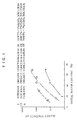
- Fig. 1 shows a relation between the initial water content of the internal organs and the viscosity of slurry in the case that the slurry phase is formed by mixing the broken internal organs of shellfishes with the 3% sulfuric acid solution and the slurry is stirred for two hours. Decreasing the initial water content of the suspended internal organs lowers the viscosity of the slurry, so that the slurry can easily be handled with small transporting power. If the apparatus is run at 200cP (centipoise) and the water content of the internal organs is 15%, the concentration of internal organs in the sulfuric acid solution can be 50% per weight.
- the concentration of the internal organs is about 20% per weight, and if the initial water content of the internal organs is 70% (equivalent to moisture of raw internal organs), the concentration of the internal organs is about 10% per weight.
- the concentration of the internal organs in the acid solution in other words, if the concentration of the waste marine products is high; the concentration of the extracted heavy metal is high, and thus, the electrolysis deposit speed and efficiency can also be high. If the concentration of the waste marine products in the acid solution is high, the amount of the slurry is small. This makes the apparatus smaller and reduces the equipment costs. If the viscosity of the slurry is low, the transporting power can be reduced. If the drying energy for decreasing the initial water content is taken into consideration, the upper limit of the initial water content of the waste marine products for forming the slurry is preferably 25 weight %.
- the viscosity of the slurry is correlated with the dissolved amount and denaturation degree of the protein.
- the viscosity of the slurry is estimated based on the denaturation degree of the protein.
- the amount of a solid collected by acting centrifugal force for three minutes at 1000G after the particles of the waste marine products is immersed in the 1% sulfuric acid solution for ten minutes is 100; the amount of a solid collected by operating a centrifugal force for three minutes at 1000G after the particles of the waste marine products is immersed in the 1% sulfuric acid solution for three minutes at 1000G is 80 or more.
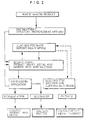
- Fig. 2 is a flow chart showing an example of a process for removing the toxic substances such as heavy metal and arsenic from the waste marine products to thereby acquire the powder of the waste marine products with the decreased amount of heavy metal and arsenic.
- waste marine products (raw material) is broken, the protein therein is denatured, and then the waste marine products is defatted and dried at the pretreatment steps so as to produce the dried powder.
- the dried powder of the waste marine products is mixed in the acid solution to produce the slurry.
- the toxic substances such as heavy metal and arsenic included in the waste marine products in the form of the slurry are extracted into the acid solution.
- the acid solution is circulated between the extraction step and the electrolysis step, so that the heavy metal extracted into the acid solution can mainly be deposited on the electrodes.
- the slurry, from which the heavy metal has mainly be removed is solid-liquid separated into the solid and the acid solution.
- the toxic substances such as arsenic, which have been extracted in the acid solution, are separated from the solid-liquid separated acid solution in the flocculant sedimentation in such a manner that an alkali agent and a flocculant are added to a part of the acid solution.
- the rest of the acid solution is returned to the extraction step.
- the solid is neutralized, and then the powder of the waste marine products with the decreased amount of arsenic and metal is collected.
- the electrodes contaminated by the electrolysis are cleaned in the reverse electrolysis in the neutral or alkali electrolytic solution.
- the matters (including heavy metal and some arsenic) separated from the electrodes naturally sediments in the electrolytic solution, which is used for cleaning the electrodes.
- the sedimenting-separated matters are filtrated and collected.
- the electrolytic solution, from which the separated matters are removed, is reused.
- Fig. 3 is a view of assistance in explaining the structure of the apparatus for removing the toxic substances from the waste marine products according to the present invention.
- the waste marine products are the internal organs of scallops.
- the internal organs of 1kg includes a solid of 0.25kg (mainly protein); cadmium (Cd) 70-140mg/dried solid 1kg, crude fat of 17-25% measured with the solvent being ethyl ether; arsenic (As) 5-20mg/dried solid 1kg; and water.
- Cd cadmium
- As arsenic
- the internal organs are denatured in such a way that they are boiled by a hot water tank 2 having a heater 2A after they are broken by a high-speed cutter 1.
- the internal organs are broken to such an extent as to pass through a screen of 3.2mm.
- the internal organs are boiled in hot water of 90°C for three minutes.
- the internal organs are defatted by a defatting apparatus 3, which heats and presses the internal organs.
- the aperture of a pressing screen is about 1.5mm, and the internal organs are pressed at a temperature of about 90°C.
- a drier 4 heats the internal organs by steam to denature the protein in the internal organs and produce the dried powder of the internal organs. While the internal organs are dried with steam, the vacuum is reduced to 720mmHg.
- the dried powder of the internal organs is weighed by a powder scale 5 and is supplied to a slurry tank 7.
- the 1-3% acid solution e.g., the sulfuric acid solution
- the slurry tank 7 is stirred by a stirrer 8. Consequently, the dried powder and the sulfuric acid solution are mixed to form the slurry.
- An electrolytic bath 11 has a plurality of electrodes 13, 14 composed of anodes 13 and cathodes 14.
- the electrodes 13, 14 are connected to an electric current power source 21 through a power source switcher 23.
- An air pipe 16 having a number of nozzles for blowing out the air is provided below the electrodes 13, 14, and the air is blown to the surfaces of the electrodes 13 and 14 through the nozzles.
- the acid solution of the slurry phase forms a circulatory flow by rising between the electrodes 13, 14, flows into a trough 9 from the top of the electrolytic bath 11, and falls to the extraction part 17 to a return pipe 9A.
- the dried powder is always stirred by the stirrers 15 to prevent the sedimentation of the dried powder, and thereby, the toxic substances such as heavy metal and arsenic are easily extracted into the acid solution.
- the heavy metal extraction part 17 is provided at the lower part of the electrolytic bath 11; however, the present invention should not be restricted to this.
- the toxic substances such as heavy metal may be extracted in the slurry tank 7 and the acid solution, into which the heavy metal in the slurry tank 7 are extracted, may be circulated between the electrolytic bath 11 and the slurry tank 7.
- another tank for extraction may be provided, and the acid solution may be circulated between this tank and the electrolytic bath 11.
- the heavy metal extracted into the acid solution is separated from the acid solution in such a manner that the heavy metal is deposited on the cathodes in the electrolysis.
- the electrolysis is performed for five to eight hours with the cathode electric current density being at 1.5A/dm 2 .
- the slurry in the electrolytic bath 11 is supplied to a solid-liquid separator 33, which solid-liquid separates the slurry through a slurry pipe 32.
- a belt-press type separator and a centrifugal separator are used as the solid-liquid separator 33.
- Arsenic is dissolved in the acid solution, from which the solid has been separated, and thus, the acid solution is temporarily stored in an intermediate tank 31, and a part of the acid solution is supplied to a sedimentation tank 39.
- an alkali agent such as sodium hydroxide and a flocculant such as iron chloride (FeCl 3 ) are added to the acid solution so that pH can be adjusted to 8-11.5 and more preferably 9-11.
- a flocculant such as iron chloride (FeCl 3 )
- the rest of the acid solution in the intermediate tank 31 is supplied to the slurry tank 7 through a pump 34 for reuse.
- the solid (moist solid) separated by the solid-liquid separator 33 is neutralized by alkali in a neutralization tank 35, and then, it is dried by a vacuum drier (not shown). This obtains the powder of the waste marine products with the heavy metal of less than 5mg/dried solid 1kg and arsenic of less than 1mg/dried solid 1kg. Consequently, the waste marine products can be used for animal food.
- the electrolysis is performed for the dried powder five to six times in a batch method in the electrolytic bath 11, all the acid solution in the electrolytic bath 11 is supplied to the solid-liquid separators 33 to empty the electrolytic bath 11. Then, a supply pump 28 is run to supply the alkali or neutral electrolytic solution (electrode cleaning solution) stored in a cleaning solution storage tank 42 can be supplied to the electrolytic bath 11 through an electrolytic solution supply pipe 29. Then, the power switcher 23 reverses the polarity to be applied between the electrodes from a power source 21. More specifically, the cathode in the deposition is reversed to the anode, and about 1/10 of the electric current in the deposition is passed through to clean the electrodes.
- a supply pump 28 is run to supply the alkali or neutral electrolytic solution (electrode cleaning solution) stored in a cleaning solution storage tank 42 can be supplied to the electrolytic bath 11 through an electrolytic solution supply pipe 29.
- the power switcher 23 reverses the polarity to be applied between the electrodes from
- the electrodes 13, 14 can be cleaned more effectively if the amount of air blown out from the air pipe 16 is increased to the maximum to increase the amount of bubbles scraping the surfaces of the electrodes 13, 14.
- the electrodes 13, 14 can be electrolytically cleaned in the alternating electrolysis by providing an alternating power source (not shown) between the electrodes 13, 14 instead of the electric current power source 21.
- an alternating power source not shown
- the deposit which is mainly composed of the heavy metal, is separated from the electrodes into the electrolytic solution.
- the electrolytic solution including the separated solid is returned to the cleaning solution storage tank 42.
- the separated solid sediments at the bottom of the cleaning solution storage tank 42, and the solid is filtrated so that the heavy metal can mainly be collected.
- the filtrate is returned to the cleaning solution storage tank 42 for reuse.
- the raw internal organs of the scallops are broken, defatted and dried, and the protein in the internal organs is denatured to thereby produce powder of the waste marine products with the crude fat of 9.3% and 15%.
- the raw material powder of 340g (the raw internal organs of 1.8kg) and the 3% sulfuric acid solution of 1500ml are supplied to the electrolytic bath 11. While the air is aerated from below the electrodes so that the diameter of each bubble can be about 2mm, the electrolysis is performed to deposit the heavy metal in a constant current electrolysis method with the cathode area being 1dm 2 and the electric current density being 1.5A/dm 2 . In a comparative example, the electrolysis is performed under the same conditions except that the bubbles are not aerated from below the electrodes. SUS 316 is used as the material for the electrodes.
- the raw material powder is sampled from the electrolytic bath to analyze the cadmium concentration per dried solid, which is compared with the cadmium concentration per dried solid before the electrolysis.
- Fig. 4 shows the results.
- Run1 is a graph in the case that the raw material powder with the crude fat of 9.3% are electrolyzed, and the cadmium concentration reaches the target of 5mg/dried solid weight 1kg in three hours.
- Run2 is a graph in the case that the raw material powder with the crude fat of 15% are electrolyzed, and the cadmium concentration reaches the target of 5mg/dried solid weight 1kg in five hours. This indicates that the more the crude fat of the raw material powder is, the longer the time required for the electrolysis is.
- the cadmium reaches the target of 5mg/dried solid weight 1kg for more than fifteen hours even if the crude fat of the raw material powder is 9.3%.
- the bubbles are formed by aerating the air toward the electrodes to thereby reduce the concentration gradient of the heavy metal ions and effectively bread a layer of gel substances adhered to the surfaces of the electrodes or formed near the electrodes, so that the heavy metal can easily be deposited on the electrodes.
- the effects of the electrode cleaning are checked in the case that the electrolysis is performed continuously to deposit the heavy metal.
- the results of the first example show that the cadmium concentration reaches the target of 5mg/dried solid weight 1kg in five hours if the air is aerated.
- the electrolysis time for one batch of electrolysis in the electrolytic bath is set at five hours.
- the electrolysis from Run1-25 is performed with the raw material powder of 340g with the crude fat of 8-13%.
- the cadmium concentration of the raw material powder before the electrolysis from Run 1 to Run 25 is about 90-150mg/dried solid weight 1kg.
- Fig. 5 shows the results of Run1-25.
- the repetition of the electrolysis causes the cadmium concentration after the electrolysis to exceed the target of 5mg/dried solid weight 1kg from Run5 to Run7 after the removal performance starts deteriorating.
- the acid solution in the electrolytic bath is replaced by the 3% brine of pH8.5, and the polarity to be applied between the electrodes is reversed from the polarity in the electrolytic deposition of the heavy metal.
- the reverse electrolysis is performed for seven minutes to clean the electrodes with the current density being 0.12A/dm 2 . Consequently, in Run 8 after the cleaning of the electrodes, the cadmium concentration is reduced to 2.8mg/dried solid weight 1kg so as to recover the heavy metal removal performance.
- the reverse electrolysis for cleaning the electrodes is switched to the electrolysis for depositing the heavy metal and the electrolysis is continuously performed to clean the electrodes after Run18 and Run23.
- the electrodes are cleaned in the alternating electrolysis in which the anode and the cathode are switched alternately at intervals of 10 seconds in the solution (the mixture of 1% sodium chloride and 1% sodium sulfate) of pH10.5.
- the deposit is removed from the surfaces of the electrodes in five minutes, and the heavy metal removal performance is recovered.
- the alternating electrolysis significantly reduces wear such as corrosion on the surfaces of the SUS 316 resulting from the local dissolution.
- the electrolysis inhibition factors such as the deposit on the electrodes, which deteriorates the deposit efficiency, are easily and quickly removed from the electrodes to thereby improve the electrolysis efficiency.
- the desirable electrolysis efficiency can be maintained for a long period of time, and this significantly reduces the time required for electrolytically removing the toxic substances such as the heavy metal from the waste marine products.
- the air is aerated from below the electrodes in the electrolytic bath to form the flow of the acid solution near the electrodes. Consequently, the heavy metal can efficiently be captured by the electrodes and can be deposited on the electrodes.
- the marine product is defatted and dried to thereby reduce the amount of the fat and the water content of the waste marine products and denature the protein in the waste marine products. Then, the marine product is suspended in the acid solution to become the slurry. Thus, the viscosity of the slurry is lowered, and the slurry with highly concentrated marine products can be formed. This improves the electrolytic deposition efficiency, reduces the energy required for transferring the acid solution being electrolyzed, decreases the volume of installment and makes it easier to run the apparatus.
- the toxic substances such as heavy metal and arsenic can be removed from the waste marine products without fail at low costs.
Landscapes
- Life Sciences & Earth Sciences (AREA)
- Chemical & Material Sciences (AREA)
- Polymers & Plastics (AREA)
- Engineering & Computer Science (AREA)
- Food Science & Technology (AREA)
- Zoology (AREA)
- Health & Medical Sciences (AREA)
- Proteomics, Peptides & Aminoacids (AREA)
- Animal Husbandry (AREA)
- Biochemistry (AREA)
- Marine Sciences & Fisheries (AREA)
- Nutrition Science (AREA)
- Biotechnology (AREA)
- Physiology (AREA)
- Molecular Biology (AREA)
- Biomedical Technology (AREA)
- Electrolytic Production Of Metals (AREA)
- Processing Of Solid Wastes (AREA)
- Meat, Egg Or Seafood Products (AREA)
- Extraction Or Liquid Replacement (AREA)
- Water Treatment By Electricity Or Magnetism (AREA)
- Edible Seaweed (AREA)
- General Preparation And Processing Of Foods (AREA)
Description
- The present invention relates generally to a method and apparatus for removing toxic substances from waste marine products, and more particularly to a method and apparatus for removing toxic substances from waste marine products, which extracts the toxic substances such as heavy metal and arsenic included in the waste marine products such as cuttlefishes, shellfishes, shells (scallops in particular) and fishes into an acid solution and separates/collects the toxic substances.
- Sometimes, the toxic substances such as heavy metal (e.g., silver, copper, cadmium and zinc), arsenic and phosphorus are concentrated in the internal organs, liver and kidney of fishes and cuttlefishes and the internal organs of shells. The concentration of the heavy metal in the marine products varies according to the kinds and organs of the marine products, the seasons and the habitats. The concentration of the heavy metal is high from the summer to the autumn when the temperature is high, and the heavy metal of 30-100mg/dried solid 1kg or more is included in the marine products. When the temperature is low, the heavy metal of several ten mg may be included in the marine products. Arsenic of several ten mg may also be included in some kinds and organs of the marine products.
- Waste marine products including the toxic substances such as heavy metal and arsenic are buried in the ground, thrown into the sea and incinerated. If a large amount of waste marine products is discarded, they become toxic wastes that may pollute the environment. It is therefore preferable to discard the waste marine products after the toxic substances such as heavy metal and arsenic are removed from the waste marine products in order to prevent the pollution of the environment.
- Since the waste marine products includes protein of high concentration, the waste marine products may be reused for animal food if the concentration of the heavy metal per 1kg of dried solid is 5mg or less and the concentration of arsenic per 1kg of dried solid is 1mg or less. The concentration of heavy metal and arsenic are allowed to be higher than feed if the waste marine products are reused for fertilizers.
- Accordingly, Japanese Patent Provisional Publication Nos. 8-99001 and 9-47257 disclose the technique of extracting the heavy metal included in the waste marine products into a sulfuric acid solution, or the like and electrolytically removing the heavy metal included in the extracted solution. This technique has been developed around Hokkaido prefectural industrial laboratory.
- JP 09217131A discloses the separation of heavy metals from internal organs of sea products by immersing the organs in dilute sulphuric acid, stirring, and contacting eluate with a cation exchange resin. Then, the cation exchange resins in which the heavy metals are thickened and accumulated are brought into contact with an acid to reverse extract the heavy metals. The extracting liquid is electrolyzed, by which the heavy metals are recovered.
- In a conventional method of removing the heavy metal in the electrolysis, the heavy metal in the waste marine products is proved to be eliminated at a high removal rate of 99% or more, but the waste marine products must be processed for dozens of hours (Japanese Patent Provisional Publication No. 8-99001) and for about twenty-four hours (Japanese Patent Provisional Publication No. 9-47257) until the concentration of the heavy metal is reduced to an allowable value of 5mg/dried solid 1kg.
- In addition, the deposit including the heavy metal is accumulated on the surfaces of the electrodes, and the protein in the waste marine products is adhered to the surfaces of the electrodes. This remarkably lowers the heavy metal deposition efficiency.
- The deposition efficiency is lowered since the heavy metal, which is excessively deposited on the surfaces of the electrodes, is separated from the surfaces of the electrodes or the adhesive deposit including the heavy metal is adhered to the surfaces of the electrodes.
- To address this problem, when the deposit including the heavy metal is excessively accumulated on the surfaces of the electrodes and the surfaces of electrodes become unclean, the surfaces of the electrodes are cleaned by rubbing the surfaces of the electrodes by brush, sponge, or the like to recover the deposition efficiency.
- In the case of experimental equipment used in a laboratory, the surfaces of the electrodes can be rubbed by the brush and the sponge, but a large plant has dozens of electrodes with surface area of 1m2 or more. Thus, the weight of the plant is in the metric ton level. In the case of the large plant, it is impossible to take out the electrodes from the electrolytic bath, clean the electrodes and then mount the electrodes in the electrolytic bath if the cleaning time and labor are taken into consideration.
- Arsenic and phosphorus as well as the heavy metal are extracted into the acid solution, and thus, it is necessary to separate and collect arsenic as well as the heavy metal.
- In view of the foregoing, it is an object of the present invention to provide the method and apparatus for removing the toxic substances from the waste marine products, which makes it possible to remove the toxic substances such as heavy metal and arsenic from the waste marine products with extremely high efficiency at low cost.
- To achieve the above-mentioned object, the present invention is directed to a method of removing a toxic substance from waste marine products, the method comprising: an extraction step of bringing waste marine products including heavy metal as a toxic substance into contact with an acid solution including at least one of sulfuric acid and hydrochloric acid to thereby extract the heavy metal from the waste marine products into the acid solution; an electrolysis step of applying a direct current voltage between electrodes provided in the acid solution, into which the heavy metal is extracted, to thereby deposit the heavy metal in the acid solution on the electrodes; and an electrode cleaning step of reversing the polarity applied between the electrodes in a neutral or alkali electrolytic solution from the polarity in the electrolysis to thereby remove the heavy metal from the electrodes.
- According to the present invention, the heavy metal included in the waste marine products is extracted into the acid solution including at least one of sulfuric acid and hydrochloric acid, and the direct current voltage is applied between the electrodes provided in the acid solution to deposit the heavy metal in the acid solution on the electrodes. If the heavy metal, or the like excessively deposits on the electrodes to lower the deposition efficiency, the polarity of the electrode applied between the electrodes in the neutral or alkali electrolytic solution is reversed from the polarity in the electrolytic deposition to thereby remove the heavy metal from the electrodes. This enables the efficient removal of the heavy metal from the waste marine products and drastically reduces the electrode cleaning time.
- According to the present invention, the acid solution in slurry, which is formed by mixing powder of the waste marine products and the acid solution, is circulated between the extraction step and the electrolysis step to extract the heavy metal and deposit the heavy metal on the electrodes. This improves the extraction efficiency and the deposition efficiency of the electrodes.
- According to the present invention, the circulating flow of the acid solution circulated between the extraction step and the electrolysis step is formed by a rising force of bubbles in the air blown into the acid solution, the bubbles rising between the electrodes. This makes the circulation slower than the circulation by the mechanical force of a stirrer, or the like, so that the heavy metal can be separated from the electrodes by force of the circulating flow.
- According to the present invention, if the waste marine products includes arsenic as a toxic substance, an alkali agent and a flocculant are added to the acid solution, from which the waste marine products is separated after the electrolysis step, to thereby adjust the acid solution to pH8-11.5 so that flocculation including arsenic can sediment in the acid solution. This enables the removal of arsenic, which is extracted at the extraction step but is hardly removed at the electrolysis step.
- According to the present invention, in a pretreatment before the extraction step, crude fat of the waste marine products measured using ethyl ether as a solvent is reduced to 15% or less per dried solid weight in a pretreatment before the extraction step; a water content is reduced to 25% or less; and protein in the waste marine products is denatured. This makes it easier to handle the acid solution, and raises the concentration of the waste marine products in the acid solution. As a result, the heavy metal removal efficiency can be improved remarkably.
- To achieve the above-mentioned object, the present invention is directed to an apparatus for removing a toxic substance from waste marine products, the apparatus comprising: an extraction part for bringing waste marine products including heavy metal as a toxic substance into contact with an acid solution including at least one of sulfuric acid and hydrochloric acid to thereby extract the heavy metal from the waste marine products into the acid solution; an electrolysis part for applying a direct current voltage between electrodes provided in the acid solution, into which the heavy metal is extracted, to thereby deposit the heavy metal in the acid solution on the electrodes; and an electrode cleaning part for reversing the polarity applied between the electrodes in a neutral or alkali electrolytic solution from the polarity in the electrolysis to thereby remove the heavy metal from the electrodes.
- This enables the efficient removal of the heavy metal from the waste marine products and remarkably reduced the electrode cleaning time. If the electricity is turned on in an alternating method in which the polarity of the electrodes is switched alternately, the deposit on the positive electrodes can also be removed.
- According to the present invention, the electrodes are arranged above the extraction part, and air bubbling means is provided between the electrodes and the extraction part, and a circulating flow of the acid solution is formed between the extraction part and the electrodes by a rising force of bubbles in the air blown out from the air bubbling means. This enables a slower circulation than the mechanical circulation, and prevents the heavy metal extracted on the electrodes from being separated from the electrodes by force of the circulatory flow. In this case, the air bubbling means blows out the bubbles of 3mm or less and more preferably between 1mm and 2mm in diameter with a small force to form the slow flow of the solution near the electrodes. This decreases the concentration gradient of the heavy metal in proximity to the electrodes, and enables the cataphoretic action of the heavy metal in proximity to the surfaces of the electrodes. Therefore, the electrodes can efficiently capture the heavy metal. If the diameter of the bubbles is in excess of 3mm, the stirring force is increased to such an extent as to separate the heavy metal deposited on the surfaces of the electrodes. Strongly blowing the air during the cleaning of the electrodes facilitates the removal of the heavy metal from the electrodes.
- The nature of this invention, as well as other objects and advantages thereof, will be explained in the following with reference to the accompanying drawings, in which like reference characters designate the same or similar parts throughout the figures and wherein:
- Fig. 1 is a view showing a relation between the initial water content and the viscosity in the case that the internal organs are changed into slurry in 3% sulfuric acid solution;
- Fig. 2 is a flow chart showing an example of the process for removing the toxic substances from the raw material of waste marine products to acquire powder of waste marine products with the decreased amount of toxic substances;
- Fig. 3 is a view showing the construction of an apparatus for removing toxic substances from waste marine products according to the present invention;
- Fig. 4 is a view showing the results of the examination for checking the effect of crude fat in the electrolytic deposition of heavy metal; and
- Fig. 5 is a view showing the results of the examination for checking the electrode cleaning effect in the case that the electrolysis is continuously performed for depositing the heavy metal.
-
- This invention will be described in further detail by way of example with reference to the accompanying drawings.
- First, a description will be given of the knowledge gained by an inventor in the development of a method and apparatus for eliminating toxic substances from waste marine products according to the present invention.
- Some waste marine products include toxic substances such as heavy metal and arsenic. The heavy metal takes a variety of forms; for example, metal thioneine is heavy metal concentrated protein, and cadmium is combined with sulfur between cystein residues to become a cluster compound to construct the higher structure of the protein. The heavy metal may be combined with carboxyl group, etc. in fat, and may be incorporated into an amino acid complex.
- If waste marine products including the heavy metal as the toxic substance is immersed in an acid solution (electrolytic solution), the heavy metal in the waste marine products is extracted as ions or is extracted as sol substance or gel substance in the state of being combined with organic substances such as protein in the waste marine products. If an electrolysis is performed for scores of hours by applying direct current voltage between electrodes provided in the acid solution in which the heavy metal ions are extracted, the black brown film with metallic luster or viscose gel substances are adhered to the surface of the cathode. If a large amount of the gel substances adhered to the electrode surfaces, the deposit speed of the heavy metal is significantly lowered even if the same amount of electric current is supplied. This deteriorates the heavy metal removing performance of the electrolysis.
- If the deposit on the electrode surfaces is analyzed, a metallic oxide such as iron, zinc and magnesium, and an organic substance mainly comprised of protein are detected. Most of the gel substances adhered to the electrodes is organic substances, which include a little amount of arsenic. A part of arsenic, which is the toxic substance in the waste marine products, is removed from the acid solution as the gel substances adhered to the electrodes in the electrolysis.
- Consequently, the bare heavy metal ions and the charged gel substance, which is the combination of the heavy metal and the organic substances in the waste marine products, are mixed in the acid solution, and the gel substance includes the toxic substances such as arsenic. If the extraction is performed while forming the slow flow of the acid solution in proximity to the electrode surfaces, the desirable extraction efficiency can be maintained. As soon as the flow stops, however, the extraction efficiency decreases. For this reason, if there is no flow of acid solution near the electrode surfaces, a layer of the gel substances is formed on or near the electrode surfaces to disturb the movement of the heavy metal ions toward the electrode. Since the adhesion of the gel substances adhered to the electrode surfaces is small, however, the gel substances can easily be separated from the electrode surfaces by the shearing force of the flow of the acid solution formed in proximity to the electrodes.
- If the air as well as the gas generated by the electrolysis are weakly jetted toward the cathode, the flow of the acid solution is formed in proximity to the cathode to thereby decrease a concentration gradient and brake the layer of the gel substances with bubbles. This improves the extraction efficiency. In this case, the inert gas such as nitrogen may be used instead of the air. The diameter of the bubbles is 3mm or less, and more preferably between 1mm and 2mm. In this case, the area in the proximity to the electrodes may be stirred mechanically, but as stated above, the physical stir breaks the layer of the gel substances, but forms the uneven flow. This unnecessarily separates the heavy metal deposited on the electrodes.
- If the removal of the heavy metal in the electrolysis is continued for a long period of time, an excessive amount of deposit such as the heavy metal and the gel substances is accumulated on the electrode surfaces and this disturbs the electrolysis. If the acid solution in the electrolytic bath is replaced by neutral or alkali electrolytic solution such as brine, the polarity applied between the electrodes is reversed from the polarity in the electrolytic deposit of the heavy metal, and the electric current of about 0.1A/dm3 is passed through (reverse electrolysis); the electrodes on which the heavy metal is deposited turns brown within scores of minutes, and then a black film is separated from the electrode surfaces to expose the electrodes. Consequently, the heavy metal and the gel substances are separated from the electrodes, and thus, the electrodes can be cleaned easily and quickly. After the cleaning of the electrodes in the reverse electrolysis, the heavy metal is deposited in such a manner that the acid solution, in which the heavy metal is extracted, is supplied again to the electrolytic bath and then the polarity applied between the electrodes is returned to the original. As a result, the deposit efficiency of the heavy metal can be recovered to the original desirable level.
- The electrodes may be cleaned in either a direct-current electrolysis, which keeps the polarity reversed, or an alternating electrolysis, which alternates the polarity of the electrodes continuously. If the protein or fat is adhered to the cathode during the deposit of the heavy metal, the alternating electrolysis is more preferable than the direct-current electrolysis to remove the protein or fat from the electrodes.
- Examples of the electrolytic solution for use in the cleaning of the electrodes are neutral or alkali electrolytic solution such as sodium chloride, potassium chloride, ammonium chloride, calcium chloride, hypochlorite, hydrochloric acid, sodium sulfate, sodium nitrate and caustic soda, and the mixture thereof. The filtrated seawater may be used as it is. If the brine and the seawater are used as the electrolytic solution, the medicine is inexpensive, and the brine and the seawater are harmless when they are mixed with the waste marine products to be processed. It is therefore unnecessary to clean the waste marine products, and the working efficiency can be improved significantly.
- If the electrolytic solution is left untouched after the cleaning of the electrodes, the solid matters including the heavy metal separated from the electrodes naturally sediments. In this case, the solid matters are filtrated to collect the heavy metal, and the filtrate is repeatedly used for cleaning the electrodes.
- Arsenic included in the waste marine products seems to adhere to or combine with the organic matters in the waste marine products, but the actions of arsenic are still unknown. Arsenic having trivalence, quinquevalance, and the like seem to be mixed in the marine produce, and arsenic is dissolved in inorganic acid solution. Some arsenic dissolved in the acid solution may be deposited on the electrodes and the other remains in the acid solution. Arsenic deposited on the electrodes is separated by the reverse electrolysis in the electrolytic solution, and the arsenic sediments together with the oxide and chloride of iron. An alkali agent (e.g., sodium hydroxide) and a flocculant (e.g., iron chloride and calcium chloride) are added to a part of the acid solution so that the acid solution can be alkalescent within the range between pH8 and pH11.5, and more preferably between pH9 and pH11. Thereby, the arsenic sediments from as a hydroxide from the acid solution, and arsenic can be less than the discharge standard of 0.5mg/L.
- According to the present invention, the toxic substances such as the heavy metal and arsenic included in the waste marine products are defatted, heated, dried and the like to become protein-denatured powder at the pretreatment step before the toxic substances are removed from the waste marine products by extracting the toxic substances into the acid solution.
- If the waste marine products includes a large amount of crude fat, the broken waste marine products becomes solid in a group, and the contact between the waste marine products and the acid solution is disturbed. As a result, the heavy metal and arsenic cannot be extracted satisfactorily. If the amount of crude fat is less than 15% per dried solid weight (in the case that ethyl ether is used as a solvent), the powder of the marine products in the sulfuric acid solution of 3% and the acid solution is easily separated from the acid solution. In other words, if the slurry phase of the powder of the waste marine products and the acid solution is weakly stirred, the acid solution with a little amount of the waste marine products is formed at the upper area of the slurry. The supply of the solution in the upper area of the slurry between the electrodes prevents the electrodes from being contaminated by the organic matters. The fat has a tendency to combine with heavy metal and phosphorus, and thus, the concentration of the heavy metal and the phosphorus can be lowered by defatting the fat. The fat is mainly the crude fat, which is defatted by pressing or kneading the waste marine products at a temperature of 80°C. The extent of defatting is reduced to less than about 15% in a fat measurement method using a Soxhlet extractor and ethyl ether as a solvent and less than about 22% in a measurement method using normal hexane as a solvent. The extent of defatting must be changed according to the purposes after the treatment of the waste marine products. For example, in order to keep the waste marine products for use as raw material for animal food and the like, the crude fat dissolved in ethyl ether is preferably less than 10% to prevent the oxidization of the waste marine products being kept.
- Fig. 1 shows a relation between the initial water content of the internal organs and the viscosity of slurry in the case that the slurry phase is formed by mixing the broken internal organs of shellfishes with the 3% sulfuric acid solution and the slurry is stirred for two hours. Decreasing the initial water content of the suspended internal organs lowers the viscosity of the slurry, so that the slurry can easily be handled with small transporting power. If the apparatus is run at 200cP (centipoise) and the water content of the internal organs is 15%, the concentration of internal organs in the sulfuric acid solution can be 50% per weight. If the initial water content of the internal organs is 30%, the concentration of the internal organs is about 20% per weight, and if the initial water content of the internal organs is 70% (equivalent to moisture of raw internal organs), the concentration of the internal organs is about 10% per weight.
- If the concentration of the internal organs in the acid solution, in other words, if the concentration of the waste marine products is high; the concentration of the extracted heavy metal is high, and thus, the electrolysis deposit speed and efficiency can also be high. If the concentration of the waste marine products in the acid solution is high, the amount of the slurry is small. This makes the apparatus smaller and reduces the equipment costs. If the viscosity of the slurry is low, the transporting power can be reduced. If the drying energy for decreasing the initial water content is taken into consideration, the upper limit of the initial water content of the waste marine products for forming the slurry is preferably 25 weight %.
- The viscosity of the slurry is correlated with the dissolved amount and denaturation degree of the protein. Thus, the viscosity of the slurry is estimated based on the denaturation degree of the protein. In the case that the amount of a solid collected by acting centrifugal force for three minutes at 1000G after the particles of the waste marine products is immersed in the 1% sulfuric acid solution for ten minutes is 100; the amount of a solid collected by operating a centrifugal force for three minutes at 1000G after the particles of the waste marine products is immersed in the 1% sulfuric acid solution for three minutes at 1000G is 80 or more.
- Fig. 2 is a flow chart showing an example of a process for removing the toxic substances such as heavy metal and arsenic from the waste marine products to thereby acquire the powder of the waste marine products with the decreased amount of heavy metal and arsenic.
- First, the waste marine products (raw material) is broken, the protein therein is denatured, and then the waste marine products is defatted and dried at the pretreatment steps so as to produce the dried powder.
- At the next extraction step, the dried powder of the waste marine products is mixed in the acid solution to produce the slurry. The toxic substances such as heavy metal and arsenic included in the waste marine products in the form of the slurry are extracted into the acid solution. The acid solution is circulated between the extraction step and the electrolysis step, so that the heavy metal extracted into the acid solution can mainly be deposited on the electrodes.
- Then, the slurry, from which the heavy metal has mainly be removed, is solid-liquid separated into the solid and the acid solution. The toxic substances such as arsenic, which have been extracted in the acid solution, are separated from the solid-liquid separated acid solution in the flocculant sedimentation in such a manner that an alkali agent and a flocculant are added to a part of the acid solution. The rest of the acid solution is returned to the extraction step. On the other hand, the solid is neutralized, and then the powder of the waste marine products with the decreased amount of arsenic and metal is collected.
- The electrodes contaminated by the electrolysis are cleaned in the reverse electrolysis in the neutral or alkali electrolytic solution. The matters (including heavy metal and some arsenic) separated from the electrodes naturally sediments in the electrolytic solution, which is used for cleaning the electrodes. Thus, the sedimenting-separated matters are filtrated and collected. The electrolytic solution, from which the separated matters are removed, is reused.
- Fig. 3 is a view of assistance in explaining the structure of the apparatus for removing the toxic substances from the waste marine products according to the present invention. In this example, the waste marine products are the internal organs of scallops.
- Usually, the internal organs of 1kg includes a solid of 0.25kg (mainly protein); cadmium (Cd) 70-140mg/dried solid 1kg, crude fat of 17-25% measured with the solvent being ethyl ether; arsenic (As) 5-20mg/dried solid 1kg; and water.
- The internal organs are denatured in such a way that they are boiled by a
hot water tank 2 having aheater 2A after they are broken by a high-speed cutter 1. The internal organs are broken to such an extent as to pass through a screen of 3.2mm. For example, The internal organs are boiled in hot water of 90°C for three minutes. Then, the internal organs are defatted by adefatting apparatus 3, which heats and presses the internal organs. As a result, the crude fat is reduced to less than 15%. The aperture of a pressing screen is about 1.5mm, and the internal organs are pressed at a temperature of about 90°C. Then, a drier 4 heats the internal organs by steam to denature the protein in the internal organs and produce the dried powder of the internal organs. While the internal organs are dried with steam, the vacuum is reduced to 720mmHg. - The dried powder of the internal organs is weighed by a
powder scale 5 and is supplied to aslurry tank 7. The 1-3% acid solution (e.g., the sulfuric acid solution) is supplied to theslurry tank 7 and is stirred by astirrer 8. Consequently, the dried powder and the sulfuric acid solution are mixed to form the slurry. - An electrolytic bath 11 has a plurality of
electrodes anodes 13 andcathodes 14. Theelectrodes current power source 21 through apower source switcher 23. Anair pipe 16 having a number of nozzles for blowing out the air is provided below theelectrodes electrodes extraction part 17, the toxic substances such as heavy metal and arsenic are extracted from the slurry supplied from theslurry tank 7 to the electrolytic bath 11. As the bubbles of the air blown out from theair pipe 16 rise in the electrolytic bath 11, the acid solution of the slurry phase forms a circulatory flow by rising between theelectrodes trough 9 from the top of the electrolytic bath 11, and falls to theextraction part 17 to areturn pipe 9A. At theextraction part 17, the dried powder is always stirred by thestirrers 15 to prevent the sedimentation of the dried powder, and thereby, the toxic substances such as heavy metal and arsenic are easily extracted into the acid solution. - In Fig. 3, the heavy
metal extraction part 17 is provided at the lower part of the electrolytic bath 11; however, the present invention should not be restricted to this. For example, the toxic substances such as heavy metal may be extracted in theslurry tank 7 and the acid solution, into which the heavy metal in theslurry tank 7 are extracted, may be circulated between the electrolytic bath 11 and theslurry tank 7. Alternatively, another tank for extraction may be provided, and the acid solution may be circulated between this tank and the electrolytic bath 11. - The heavy metal extracted into the acid solution is separated from the acid solution in such a manner that the heavy metal is deposited on the cathodes in the electrolysis. The electrolysis is performed for five to eight hours with the cathode electric current density being at 1.5A/dm2. After the electrolysis, the slurry in the electrolytic bath 11 is supplied to a solid-
liquid separator 33, which solid-liquid separates the slurry through aslurry pipe 32. A belt-press type separator and a centrifugal separator are used as the solid-liquid separator 33. Arsenic is dissolved in the acid solution, from which the solid has been separated, and thus, the acid solution is temporarily stored in anintermediate tank 31, and a part of the acid solution is supplied to asedimentation tank 39. In thesedimentation tank 39, an alkali agent such as sodium hydroxide and a flocculant such as iron chloride (FeCl3) are added to the acid solution so that pH can be adjusted to 8-11.5 and more preferably 9-11. Thereby, the flocculated matter including the arsenic sediments at the bottom of thesedimentation tank 39 and is separated from the acid solution. The rest of the acid solution in theintermediate tank 31 is supplied to theslurry tank 7 through apump 34 for reuse. On the other hand, the solid (moist solid) separated by the solid-liquid separator 33 is neutralized by alkali in aneutralization tank 35, and then, it is dried by a vacuum drier (not shown). This obtains the powder of the waste marine products with the heavy metal of less than 5mg/dried solid 1kg and arsenic of less than 1mg/dried solid 1kg. Consequently, the waste marine products can be used for animal food. - After the electrolysis is performed for the dried powder five to six times in a batch method in the electrolytic bath 11, all the acid solution in the electrolytic bath 11 is supplied to the solid-
liquid separators 33 to empty the electrolytic bath 11. Then, asupply pump 28 is run to supply the alkali or neutral electrolytic solution (electrode cleaning solution) stored in a cleaningsolution storage tank 42 can be supplied to the electrolytic bath 11 through an electrolyticsolution supply pipe 29. Then, thepower switcher 23 reverses the polarity to be applied between the electrodes from apower source 21. More specifically, the cathode in the deposition is reversed to the anode, and about 1/10 of the electric current in the deposition is passed through to clean the electrodes. Theelectrodes air pipe 16 is increased to the maximum to increase the amount of bubbles scraping the surfaces of theelectrodes electrodes electrodes current power source 21. In particular, if the deposit and the attachment exist at the anode in the deposition of the heavy metal, it is preferable to set the alternating electrolysis mode since both the cathode and the anode can be cleaned. - As a result of the electrode cleaning operation, the deposit, which is mainly composed of the heavy metal, is separated from the electrodes into the electrolytic solution. The electrolytic solution including the separated solid is returned to the cleaning
solution storage tank 42. The separated solid sediments at the bottom of the cleaningsolution storage tank 42, and the solid is filtrated so that the heavy metal can mainly be collected. The filtrate is returned to the cleaningsolution storage tank 42 for reuse. - A description will be given of examples in which the heavy metal is removed from the raw internal organs of scallops by using the apparatus for removing the heavy metal from the waste marine products according to the present invention, which was described with reference to Fig. 3.
- In the first example, an effect of the crude fat on the electrolytic deposition of the heavy metal is checked.
- The raw internal organs of the scallops are broken, defatted and dried, and the protein in the internal organs is denatured to thereby produce powder of the waste marine products with the crude fat of 9.3% and 15%.
- The raw material powder of 340g (the raw internal organs of 1.8kg) and the 3% sulfuric acid solution of 1500ml are supplied to the electrolytic bath 11. While the air is aerated from below the electrodes so that the diameter of each bubble can be about 2mm, the electrolysis is performed to deposit the heavy metal in a constant current electrolysis method with the cathode area being 1dm2 and the electric current density being 1.5A/dm2. In a comparative example, the electrolysis is performed under the same conditions except that the bubbles are not aerated from below the electrodes. SUS 316 is used as the material for the electrodes.
- Every one hour after the start of the electrolysis, the raw material powder is sampled from the electrolytic bath to analyze the cadmium concentration per dried solid, which is compared with the cadmium concentration per dried solid before the electrolysis.
- Fig. 4 shows the results. Run1 is a graph in the case that the raw material powder with the crude fat of 9.3% are electrolyzed, and the cadmium concentration reaches the target of 5mg/dried solid weight 1kg in three hours. Run2 is a graph in the case that the raw material powder with the crude fat of 15% are electrolyzed, and the cadmium concentration reaches the target of 5mg/dried solid weight 1kg in five hours. This indicates that the more the crude fat of the raw material powder is, the longer the time required for the electrolysis is.
- Although not shown in Fig. 4, if the air is not aerated, the cadmium reaches the target of 5mg/dried solid weight 1kg for more than fifteen hours even if the crude fat of the raw material powder is 9.3%. The bubbles are formed by aerating the air toward the electrodes to thereby reduce the concentration gradient of the heavy metal ions and effectively bread a layer of gel substances adhered to the surfaces of the electrodes or formed near the electrodes, so that the heavy metal can easily be deposited on the electrodes.
- In the second example, the effects of the electrode cleaning are checked in the case that the electrolysis is performed continuously to deposit the heavy metal.
- The results of the first example show that the cadmium concentration reaches the target of 5mg/dried solid weight 1kg in five hours if the air is aerated. Thus, in the second example, the electrolysis time for one batch of electrolysis in the electrolytic bath is set at five hours. The electrolysis from Run1-25 is performed with the raw material powder of 340g with the crude fat of 8-13%. The cadmium concentration of the raw material powder before the electrolysis from
Run 1 to Run 25 is about 90-150mg/dried solid weight 1kg. - Fig. 5 shows the results of Run1-25. The repetition of the electrolysis causes the cadmium concentration after the electrolysis to exceed the target of 5mg/dried solid weight 1kg from Run5 to Run7 after the removal performance starts deteriorating. Then, the acid solution in the electrolytic bath is replaced by the 3% brine of pH8.5, and the polarity to be applied between the electrodes is reversed from the polarity in the electrolytic deposition of the heavy metal. The reverse electrolysis is performed for seven minutes to clean the electrodes with the current density being 0.12A/dm2. Consequently, in
Run 8 after the cleaning of the electrodes, the cadmium concentration is reduced to 2.8mg/dried solid weight 1kg so as to recover the heavy metal removal performance. - If the reverse electrolysis for cleaning the electrodes is switched to the electrolysis for depositing the heavy metal and the electrolysis is performed continuously, the heavy metal removal performance is gradually deteriorated from Run8 to Run13. Thus, the electrodes are cleaned again after Run13. Consequently, the cadmium concentration is reduced to 2.9mg/dried solid weight 1kg in Run14, and the heavy metal removal performance is recovered. The reverse electrolysis after Run7 and Run13 is performed with the direct electric current.
- Continuously, the reverse electrolysis for cleaning the electrodes is switched to the electrolysis for depositing the heavy metal and the electrolysis is continuously performed to clean the electrodes after Run18 and Run23. After Run18 and Run23, the electrodes are cleaned in the alternating electrolysis in which the anode and the cathode are switched alternately at intervals of 10 seconds in the solution (the mixture of 1% sodium chloride and 1% sodium sulfate) of pH10.5. In this case, the deposit is removed from the surfaces of the electrodes in five minutes, and the heavy metal removal performance is recovered. Compared with the case where the electrodes are cleaned by the direct electric current power source, the alternating electrolysis significantly reduces wear such as corrosion on the surfaces of the SUS 316 resulting from the local dissolution.
- As set forth hereinabove, according to the method and apparatus for removing the toxic substances in the waste marine products, the electrolysis inhibition factors such as the deposit on the electrodes, which deteriorates the deposit efficiency, are easily and quickly removed from the electrodes to thereby improve the electrolysis efficiency. Thus, the desirable electrolysis efficiency can be maintained for a long period of time, and this significantly reduces the time required for electrolytically removing the toxic substances such as the heavy metal from the waste marine products.
- Moreover, the air is aerated from below the electrodes in the electrolytic bath to form the flow of the acid solution near the electrodes. Consequently, the heavy metal can efficiently be captured by the electrodes and can be deposited on the electrodes.
- In the pretreatment before the extraction process, the marine product is defatted and dried to thereby reduce the amount of the fat and the water content of the waste marine products and denature the protein in the waste marine products. Then, the marine product is suspended in the acid solution to become the slurry. Thus, the viscosity of the slurry is lowered, and the slurry with highly concentrated marine products can be formed. This improves the electrolytic deposition efficiency, reduces the energy required for transferring the acid solution being electrolyzed, decreases the volume of installment and makes it easier to run the apparatus.
- Therefore, the toxic substances such as heavy metal and arsenic can be removed from the waste marine products without fail at low costs.
Claims (7)
- A method of removing a toxic substance from waste marine products, said method comprising:an extraction step of bringing waste marine products including heavy metal as a toxic substance into contact with an acid solution including at least one of sulfuric acid and hydrochloric acid to thereby extract the heavy metal from said waste marine products into said acid solution;an electrolysis step of applying a direct current voltage between electrodes (13, 14) provided in said acid solution, into which said heavy metal is extracted, to thereby deposit said heavy metal in said acid solution on said electrodes (13, 14); andan electrode cleaning step of reversing the polarity applied between said electrodes (13, 14) in a neutral or alkali electrolytic solution from the polarity in said electrolysis to thereby remove said heavy metal from said electrodes (13, 14).
- The method of removing the toxic substance from the waste marine products as defined in claim 1, wherein the acid solution in slurry, which is formed by mixing powder of said waste marine products and said acid solution, is circulated between said extraction step and said electrolysis step to extract said heavy metal and deposit said heavy metal on said electrodes (13, 14).
- The method of removing the toxic substance from the waste marine products as defined in claim 2, wherein a circulating flow of the acid solution circulated between said extraction step and said electrolysis step is formed by a rising force of bubbles in the air blown into said acid solution, said bubbles rising between said electrodes (13, 14).
- The method of removing the toxic substance from the waste marine products as defined in claim 1, wherein if said waste marine products includes arsenic as a toxic substance, an alkali agent and a flocculant are added to the acid solution, from which said waste marine products is separated after said electrolysis step, to thereby adjust the acid solution to pH8-11.5 so that flocculation including arsenic can sediment in said acid solution.
- The method of removing the toxic substance from the waste marine products as defined in claim 1, wherein in a pretreatment before said extraction step, crude fat of said waste marine products measured using ethyl ether as a solvent is reduced to 15% or less per dried solid weight in a pretreatment before said extraction step; a water content is reduced to 25% or less; and protein in said waste marine products is denatured.
- An apparatus for removing a toxic substance from waste marine products, said apparatus comprising:an extraction part (17) for bringing waste marine products including heavy metal as a toxic substance into contact with an acid solution including at least one of sulfuric acid and hydrochloric acid to thereby extract the heavy metal from said waste marine products into said acid solution;an electrolysis part (11, 13, 14, 21) for applying a direct current voltage between electrodes (13, 14) provided in said acid solution, into which said heavy metal is extracted, to thereby deposit said heavy metal in said acid solution on said electrodes (13, 14); andan electrode cleaning part (11, 13, 14, 21, 23) for reversing the polarity applied between said electrodes (13, 14) in a neutral or alkali electrolytic solution from the polarity in said electrolysis to thereby remove said heavy metal from said electrodes (13, 14).
- The apparatus for removing the toxic substance from the waste marine products as defined in claim 6, wherein said electrodes (13, 14) are arranged above said extraction part (17), and air bubbling means (16) is provided between said electrodes (13, 14) and said extraction part (17), and a circulating flow of said acid solution is formed between said extraction part (17) and said electrodes (13, 14) by a rising force of bubbles in the air blown out from said air bubbling means (16).
Applications Claiming Priority (2)
| Application Number | Priority Date | Filing Date | Title |
|---|---|---|---|
| JP10353136A JP3055544B2 (en) | 1998-12-11 | 1998-12-11 | Method and apparatus for removing heavy metals from biopolymer |
| JP35313698 | 1998-12-11 |
Publications (2)
| Publication Number | Publication Date |
|---|---|
| EP1008304A1 EP1008304A1 (en) | 2000-06-14 |
| EP1008304B1 true EP1008304B1 (en) | 2003-05-02 |
Family
ID=18428808
Family Applications (1)
| Application Number | Title | Priority Date | Filing Date |
|---|---|---|---|
| EP99119923A Expired - Lifetime EP1008304B1 (en) | 1998-12-11 | 1999-10-11 | Method and apparatus for removing toxic substances from waste marine products |
Country Status (5)
| Country | Link |
|---|---|
| US (1) | US6251258B1 (en) |
| EP (1) | EP1008304B1 (en) |
| JP (1) | JP3055544B2 (en) |
| KR (1) | KR100375351B1 (en) |
| CA (1) | CA2285740A1 (en) |
Cited By (1)
| Publication number | Priority date | Publication date | Assignee | Title |
|---|---|---|---|---|
| CN109311707A (en) * | 2016-07-21 | 2019-02-05 | 日本多宁股份有限公司 | Electrolyzed water generator |
Families Citing this family (21)
| Publication number | Priority date | Publication date | Assignee | Title |
|---|---|---|---|---|
| JP3055544B2 (en) * | 1998-12-11 | 2000-06-26 | 日立プラント建設株式会社 | Method and apparatus for removing heavy metals from biopolymer |
| JP4698792B2 (en) * | 2000-03-17 | 2011-06-08 | 日本メナード化粧品株式会社 | Method for removing heavy metals from mushroom extract |
| JP2002126692A (en) * | 2000-10-26 | 2002-05-08 | Kowa Eng:Kk | Separation and recovery method of heavy metals contained in fly ash etc. |
| JP2002336818A (en) * | 2001-05-17 | 2002-11-26 | Tamura Kagaku Kenkyusho:Kk | Mollusk food processing residue treatment method, treatment process and treatment equipment used therefor |
| JP4197893B2 (en) * | 2001-12-28 | 2008-12-17 | 株式会社オメガ | Method and apparatus for producing washing / cleaning sterilizing water |
| JP4624025B2 (en) * | 2004-07-30 | 2011-02-02 | 株式会社サンアクティス | Method for producing food material extract from which harmful heavy metals have been removed |
| JP2007135491A (en) * | 2005-11-18 | 2007-06-07 | San Akuteisu:Kk | Heavy metal removal equipment |
| JP4734643B2 (en) * | 2006-03-01 | 2011-07-27 | 国立大学法人佐賀大学 | Method for removing heavy metals from scallop visceral waste |
| JP5250814B2 (en) * | 2006-03-17 | 2013-07-31 | 国立大学法人東京海洋大学 | Production method of organic fertilizer from fishery processing residue |
| CN101462784B (en) * | 2008-07-31 | 2011-09-28 | 诸暨市天佑环保科技有限公司 | Electrocatalysis oxidation apparatus |
| JP5199050B2 (en) * | 2008-12-12 | 2013-05-15 | 高砂熱学工業株式会社 | Water treatment apparatus and water treatment method |
| US9067810B2 (en) * | 2009-03-02 | 2015-06-30 | Chester J. Sohn | Electrolytic apparatus for treating ballast water and treatment system using same |
| CN101781054B (en) * | 2010-02-11 | 2012-08-22 | 南京大学 | Method for utilizing three-dimensional electrode coagulation combination to carry out advanced treatment on coking wastewater |
| KR101026753B1 (en) * | 2010-08-20 | 2011-04-08 | 한국지질자원연구원 | Arsenic contaminated soil restoration method |
| WO2012144681A1 (en) * | 2011-04-22 | 2012-10-26 | 씨제이제일제당 (주) | Natural anchovy condiment |
| KR101082390B1 (en) * | 2011-04-22 | 2011-11-11 | 씨제이제일제당 (주) | Anchovy powder and its manufacturing method |
| CN104939158B (en) * | 2015-06-12 | 2019-11-12 | 温州大学 | A kind of pickling method of arsenic-free hijiki |
| CN105692812B (en) * | 2016-04-22 | 2018-03-30 | 西安建筑科技大学 | Polypyrrole/chitosan combination electrode is applied to heavy metal ion adsorbed method |
| EP4584429A2 (en) * | 2022-09-09 | 2025-07-16 | Phoenix Tailings, Inc. | Molten salt electrolytic cell and related systems and methods |
| CN116693004B (en) * | 2023-06-29 | 2025-01-28 | 昆明理工大学 | A preparation method of filter membrane electrode for efficiently removing heavy metals from solution |
| FR3158657A1 (en) * | 2024-01-26 | 2025-08-01 | Upcyclink | Heavy metal decontamination process |
Family Cites Families (12)
| Publication number | Priority date | Publication date | Assignee | Title |
|---|---|---|---|---|
| GB387483A (en) | 1931-12-30 | 1933-02-09 | Matthew Noel Griffith | Improvements relating to coin freed vending machines |
| GB387493A (en) * | 1932-01-18 | 1933-02-09 | Koho Miyashita | Improvements in and relating to methods of deodorizing fishes |
| KR830000648B1 (en) * | 1976-04-07 | 1983-03-23 | 산요덴기 가부시기가이샤 | Battery with spiral wound electrode body |
| US4193854A (en) | 1977-12-23 | 1980-03-18 | Union Carbide Corporation | Heavy metal removal from wastewater sludge |
| US5043050A (en) * | 1990-08-20 | 1991-08-27 | Herbst Robert J | Electrolytic treatment apparatus |
| JP2667986B2 (en) * | 1994-09-29 | 1997-10-27 | 北海道 | Method and apparatus for removing heavy metals contained in organisms |
| JPH0947257A (en) * | 1995-08-09 | 1997-02-18 | Yoichi Sakuta | Removal of heavy metal contained in organism and device therefor |
| JP3323392B2 (en) * | 1996-02-15 | 2002-09-09 | 田中貴金属工業株式会社 | Method for separating and removing heavy metal from fish internal organs and method for recovering heavy metal |
| GB9615678D0 (en) | 1996-07-25 | 1996-09-04 | Molins Plc | Ledger for cigarette making machine cut-off |
| JPH1052692A (en) * | 1996-08-09 | 1998-02-24 | Yukimasa Sato | HEAVY METAL REMOVAL METHOD AND APPARATUS AND PROTEIN DEPOSITION METHOD FOR REMOVAL OF HEAVY METAL |
| US6041043A (en) | 1996-10-25 | 2000-03-21 | Tektronix, Inc. | SONET path/ATM physical layer transmit/receive processor |
| JP3055544B2 (en) * | 1998-12-11 | 2000-06-26 | 日立プラント建設株式会社 | Method and apparatus for removing heavy metals from biopolymer |
-
1998
- 1998-12-11 JP JP10353136A patent/JP3055544B2/en not_active Expired - Fee Related
-
1999
- 1999-09-17 KR KR10-1999-0039973A patent/KR100375351B1/en not_active Expired - Fee Related
- 1999-10-05 US US09/412,650 patent/US6251258B1/en not_active Expired - Fee Related
- 1999-10-08 CA CA002285740A patent/CA2285740A1/en not_active Abandoned
- 1999-10-11 EP EP99119923A patent/EP1008304B1/en not_active Expired - Lifetime
Cited By (2)
| Publication number | Priority date | Publication date | Assignee | Title |
|---|---|---|---|---|
| CN109311707A (en) * | 2016-07-21 | 2019-02-05 | 日本多宁股份有限公司 | Electrolyzed water generator |
| CN109311707B (en) * | 2016-07-21 | 2022-02-08 | 日本多宁股份有限公司 | Electrolyzed water generator |
Also Published As
| Publication number | Publication date |
|---|---|
| US6251258B1 (en) | 2001-06-26 |
| JP3055544B2 (en) | 2000-06-26 |
| JP2000166517A (en) | 2000-06-20 |
| KR100375351B1 (en) | 2003-03-19 |
| EP1008304A1 (en) | 2000-06-14 |
| KR20000047491A (en) | 2000-07-25 |
| CA2285740A1 (en) | 2000-06-11 |
Similar Documents
| Publication | Publication Date | Title |
|---|---|---|
| US6251258B1 (en) | Method and apparatus for removing toxic substances from waste marine products | |
| Ho et al. | The application of lead dioxide-coated titanium anode in the electroflotation of palm oil mill effluent | |
| WO2011119043A1 (en) | Method for removal of contaminations from water | |
| DE69103369T2 (en) | METHOD FOR CLEANING SEA WATER AND BOAT FOR CLEANING DIRTY WATER. | |
| CN109179803A (en) | A kind of brownification liquid COD treatment process | |
| CN101970072A (en) | Active metal salt coagulant and its production method | |
| MY118909A (en) | Washing machine having electrolytic sewage disposal apparatus. | |
| EP0914500A1 (en) | Method and apparatus for electrochemical delacquering and detinning | |
| JP2005087931A (en) | Method and apparatus for removing heavy metals from living organisms | |
| NO20100441A1 (en) | Procedure for removing saturated fat and contaminants from oil | |
| KR20100052962A (en) | Treatment method using ultrasonic-electrolysis-precipitator for domestic sewage or wasted water | |
| CN212532585U (en) | Contain salt liquid phase separation system and aluminium cell overhaul sediment processing system | |
| JP2001149941A (en) | Metal-containing waste liquid treatment equipment | |
| JP2007275741A (en) | Sludge electrolytic treatment equipment | |
| JP2005262003A (en) | Discoloring method and discoloring apparatus for waste water | |
| JP2575659Y2 (en) | Prevention of sediment accumulation in electrolytic cells such as sludge | |
| JP3175762B2 (en) | Method and apparatus for removing heavy metals in aquatic polymer and aquatic polymer | |
| US1543324A (en) | Process for treating trade waste waters to clarify and sterilize the same and to extract fats therefrom | |
| JPH09217131A (en) | Method for separating and removing heavy metal from seafood viscera and method for recovering heavy metal | |
| JPS62140700A (en) | Device for electrolytically treating sewage sludge or the like | |
| EP0063123A1 (en) | A process for removing cyanide ions from solutions | |
| JPH0371200B2 (en) | ||
| JP2930947B1 (en) | Equipment for removing heavy metals from living organisms | |
| JP4632350B2 (en) | Removal of heavy metals from fishery processing residue | |
| SU739004A1 (en) | Method of electrolytic purification of waste water |
Legal Events
| Date | Code | Title | Description |
|---|---|---|---|
| PUAI | Public reference made under article 153(3) epc to a published international application that has entered the european phase |
Free format text: ORIGINAL CODE: 0009012 |
|
| AK | Designated contracting states |
Kind code of ref document: A1 Designated state(s): ES FR GB IT NL |
|
| AX | Request for extension of the european patent |
Free format text: AL;LT;LV;MK;RO;SI |
|
| 17P | Request for examination filed |
Effective date: 20000922 |
|
| AKX | Designation fees paid |
Free format text: ES FR GB IT NL |
|
| GRAH | Despatch of communication of intention to grant a patent |
Free format text: ORIGINAL CODE: EPIDOS IGRA |
|
| GRAH | Despatch of communication of intention to grant a patent |
Free format text: ORIGINAL CODE: EPIDOS IGRA |
|
| GRAA | (expected) grant |
Free format text: ORIGINAL CODE: 0009210 |
|
| AK | Designated contracting states |
Designated state(s): ES FR GB IT NL |
|
| PG25 | Lapsed in a contracting state [announced via postgrant information from national office to epo] |
Ref country code: IT Free format text: LAPSE BECAUSE OF FAILURE TO SUBMIT A TRANSLATION OF THE DESCRIPTION OR TO PAY THE FEE WITHIN THE PRESCRIBED TIME-LIMIT;WARNING: LAPSES OF ITALIAN PATENTS WITH EFFECTIVE DATE BEFORE 2007 MAY HAVE OCCURRED AT ANY TIME BEFORE 2007. THE CORRECT EFFECTIVE DATE MAY BE DIFFERENT FROM THE ONE RECORDED. Effective date: 20030502 |
|
| REG | Reference to a national code |
Ref country code: GB Ref legal event code: FG4D |
|
| PG25 | Lapsed in a contracting state [announced via postgrant information from national office to epo] |
Ref country code: ES Free format text: LAPSE BECAUSE OF FAILURE TO SUBMIT A TRANSLATION OF THE DESCRIPTION OR TO PAY THE FEE WITHIN THE PRESCRIBED TIME-LIMIT Effective date: 20030813 |
|
| PG25 | Lapsed in a contracting state [announced via postgrant information from national office to epo] |
Ref country code: GB Free format text: LAPSE BECAUSE OF NON-PAYMENT OF DUE FEES Effective date: 20031011 |
|
| ET | Fr: translation filed | ||
| PLBE | No opposition filed within time limit |
Free format text: ORIGINAL CODE: 0009261 |
|
| STAA | Information on the status of an ep patent application or granted ep patent |
Free format text: STATUS: NO OPPOSITION FILED WITHIN TIME LIMIT |
|
| 26N | No opposition filed |
Effective date: 20040203 |
|
| PG25 | Lapsed in a contracting state [announced via postgrant information from national office to epo] |
Ref country code: NL Free format text: LAPSE BECAUSE OF NON-PAYMENT OF DUE FEES Effective date: 20040501 |
|
| GBPC | Gb: european patent ceased through non-payment of renewal fee |
Effective date: 20031011 |
|
| NLV4 | Nl: lapsed or anulled due to non-payment of the annual fee |
Effective date: 20040501 |
|
| PG25 | Lapsed in a contracting state [announced via postgrant information from national office to epo] |
Ref country code: FR Free format text: LAPSE BECAUSE OF NON-PAYMENT OF DUE FEES Effective date: 20031031 |
|
| REG | Reference to a national code |
Ref country code: FR Ref legal event code: ST Effective date: 20110531 |