EP0992919B1 - Apparatus and method for processing natural language - Google Patents
Apparatus and method for processing natural language Download PDFInfo
- Publication number
- EP0992919B1 EP0992919B1 EP99307422A EP99307422A EP0992919B1 EP 0992919 B1 EP0992919 B1 EP 0992919B1 EP 99307422 A EP99307422 A EP 99307422A EP 99307422 A EP99307422 A EP 99307422A EP 0992919 B1 EP0992919 B1 EP 0992919B1
- Authority
- EP
- European Patent Office
- Prior art keywords
- data
- meaning
- equivalence
- lexical
- representations
- Prior art date
- Legal status (The legal status is an assumption and is not a legal conclusion. Google has not performed a legal analysis and makes no representation as to the accuracy of the status listed.)
- Expired - Lifetime
Links
Images




Classifications
-
- G—PHYSICS
- G06—COMPUTING OR CALCULATING; COUNTING
- G06F—ELECTRIC DIGITAL DATA PROCESSING
- G06F40/00—Handling natural language data
- G06F40/30—Semantic analysis
Definitions
- the present invention generally relates to a method and apparatus for processing natural language and in particular to a method and apparatus for matching input natural language to reference natural language having regard to the meaning of the natural language.
- the meaning of the input instructions in a natural language can be determined using a parser such as disclosed in GB-A-2269923 and EP-A-0737928 for example.
- dependency grammar a particular form of grammar termed dependency grammar.
- Other examples of such a dependency parser are disclosed in "A Dependency Parser for English", Technical Reports, No. TR-1, Department of General Linguistics, University of Helsinki, March 1997, T. Järvinen and P. Tapanainen, and "A Nonprojective Dependency Parser" by P. Tapanainen and T. Järvinen, Proceedings of the Fifth Conference on Applied Natural Language Processing, Washington DC, April 1997, Association for Computational Linguistics, the content of which is hereby incorporated by reference.
- a dependency parser parses the natural language to generate meaning data which comprises meaning representations for the words and links between them.
- the links indicate which meaning representations modify the meaning of other meaning representations and the links
- a meaning representation structure can be determined using a parser.
- the meaning data is compared to meaning data for one or more sets of reference data representing a phrase, sentence or passage of the natural language. By this comparison it can be determined whether the meaning of the input instruction matches the meaning of any of the reference data. If a match in the meanings is found then the apparatus can respond accordingly.
- the entered instruction could be "turn off the light on the second floor” and the reference phrase to which it has to be matched in order for the light to be turned on is "switch the light on the second floor off".
- a simple word matching operation will not succeed since the words and syntax are different in the respective phrases. If however the meaning of the two phrases is analysed, the meanings can be matched.
- Another area where such a problem is encountered is in the area of database searching. Typically databases are searched using key words. The accuracy of database searches can be greatly enhanced if a meaning analysis is used together with meaning matching.
- word information consisting of the text form of the word, the morphological base form of the word and the syntactic function label of the word is stored at the leaf nodes.
- Conjunctions are stored at the ancestor node which covers all of the conjunct structures (sub-trees) and prepositions are stored at the ancestor node which covers the prepositional complement construct.
- the matching algorithm In the matching algorithm described by Sheridan et al, one tree structure analysis is compared directly against another and a score reflecting the similarity of the two tree structures is computed.
- the matching algorithm starts from the right in the query tree structure and works towards the left.
- the matching algorithm works only with a simple binary tree at each stage, this consisting of two child nodes connected by a parent. The algorithm descends down the sub-trees until both children are leaf nodes, computes a match score for that binary tree, and then jumps back up, substituting the match score for the sub-tree at the node which was the parent to that sub-tree.
- the matching algorithm performs matching of individual nodes or words.
- a score is assigned to each of these match constituents and it is a combination of these scores that makes up the final word/word score.
- the tree structures are organised in such a way that the common parent of two nodes always defines the syntactic relationship that exists between those two nodes.
- the syntactic relationships can therefore be matched by a comparison of the parent node of the two children in the query tree structure to the parent node of the two matched nodes in the text tree structure.
- This matching of parent nodes is accomplished to a set of rules that specify which syntactic relationship should match.
- Residual structures are defined as that part of the text tree structure which lies between two matched child nodes and under the parent node but which have not been matched. Residual structure analysis is used to validate the correctness of the match on the syntactic relationship performed at the parent node level and to detect ambiguity.
- the present invention also provides an apparatus as set out in claim 38.
- An embodiment of the present invention provides an apparatus and method for linguistic processing wherein input data representing a phrase, sentence, or passage of a natural language can be input and matched to reference data representing a phrase, sentence, or passage in the natural language using a meaning analysis in a more efficient and accurate manner then heretofore disclosed.
- the matching may be used to enable the carrying out of an operation such as the retrieval of data, the routing of the input data, or the carrying out of instructions given by the meaning of the input data.
- the data may be input into the apparatus in any of a number of ways such as by speech, whereby speech recognition generates text data, optical character recognition of a document whereby text data is generated, simple entry of text data, or the transference of text data from a remote apparatus.
- input data is analysed to generate meaning data structured in computer usable form as lexical meaning representations and links therebetween having regard to the grammar of the natural language.
- the links indicate which of the lexical meaning representations modify other lexical meaning representations.
- a dependency parser is used.
- the present invention is not limited to such a form of parser and any parser can be used whereby the modification relationships can be derived.
- the meaning data of the input data is then compared with meaning data for reference data.
- the meaning data for the reference data can either be determined each time it is to be compared from stored reference data, or the meaning data for the reference data can be determined beforehand and stored ready for comparison.
- the comparison takes place by determining equivalent lexical meaning representations in the meaning data for the input data and the reference data linked by equivalent links, starting from a head lexical meaning representation which does not modify any others, in accordance with a set of relationships defining equivalence between at least one of lexical meaning representations, linked lexical meaning representations, and links.
- the relationships define rules by which the equivalence can be determined.
- the process is an incremental or recursive process which incrementally or recursively determines equivalence along a chain of lexical meaning representations for the input data and the reference data.
- the chain comprises a plurality of lexical meaning representations sequentially linked together by the links which identify which lexical meaning representations modify or are modified by other lexical meaning representations.
- Many different rules of equivalence can be used and the form of these rules will depend upon the grammar and accuracy of the matching required between the input data and the reference data.
- the apparatus can then carry out an operation e.g. determine whether, or to what degree, the input data matches the meaning of the reference data, or identify a set of reference data which has the highest equivalence in meaning to the input data, whereby the resultant operation can be the result of the match displayed on the screen or the implementation of an instruction for responding to reference data which best matches the meaning of the input data.
- an operation e.g. determine whether, or to what degree, the input data matches the meaning of the reference data, or identify a set of reference data which has the highest equivalence in meaning to the input data, whereby the resultant operation can be the result of the match displayed on the screen or the implementation of an instruction for responding to reference data which best matches the meaning of the input data.
- a machine executable instruction is generated in dependence upon the determined match, so enabling a machine executable instruction to be generated from input text in a natural language.
- the lexical meaning representations represent the meaning of a set of words. Such a set of words can comprise a number of different parts of speech and comprise any set of words which can be considered to convey an idea.
- the links can define any modification relationship between the linked lexical meaning representations.
- the links can indicate the semantic relationships of the lexical meaning representations and/or they can comprise specifiers.
- the comparing step comprises identifying a first lexical meaning representation in the meaning data for the input data, identifying any corresponding first lexical meaning representation in the meaning data for the reference data, identifying a second lexical meaning representation which modifies the first lexical meaning representation, identifying any corresponding second lexical meaning representation linked to the identified corresponding first lexical meaning representation in the meaning data for the reference data, determining the equivalence of any linked first and second lexical meaning representations in the meaning data for the input data and the reference data according to the set of relationships, and if an equivalence is found, repeating the identifying steps and the determining step for each of (n+1) th lexical meaning representations which modifies each nth lexical meaning representation until no equivalence is found.
- the equivalent lexical meaning representations are identified in the input meaning data and the reference meaning data and connections are registered between them.
- the step of identifying linked pairs of lexical meaning representations then comprises sequentially identifying lexical meaning representations for which there are registered connections between input meaning data and reference meaning data and for which there are equivalent links therebetween.
- the machine executable instructions generated can be dependent upon the number of determined equivalent linked lexical meaning representations. For instance, a match may only be registered if all of the linked lexical meaning representations in the input meaning data have equivalent linked lexical meaning representations in the reference meaning data. Alternatively, a threshold number of equated linked lexical meaning representations can be chosen to trigger matching.
- the set of relationships give a score for the equivalence where a high score indicates a good match and a low score indicates a poor match.
- the equivalence of the linked lexical meaning representations is then determined as an accumulated score and the match is dependent upon this accumulated score.
- a poor match could accrue a high penalty compared to a good match and thus a good match is indicated by a low accumulated penalty score.
- Scores may be given for many different relationships. For instance, the occurrence of a particular lexical meaning representation can be given a score: less distinctive lexical meaning representations having a higher score than more distinctive lexical meaning representations.
- the distinctiveness of particular lexical meaning representations can be determined from the frequency of occurrence as well as other factors. For example, in an embodiment used for retrieving images the words "picture” and "image” are not very distinctive since they are common words in the application domain. However, in terms of general language use they are not particularly frequent words.
- the lexical meaning representations comprise a set of possible words which have the ascribed meaning.
- Each lexical meaning representation may be divided into sub-lexical meaning representations i.e. more specific lexical meanings which can in turn be divided into the specific words.
- groups of words within the set of words which fall within the lexical meaning representation can be divided into different types e.g. parts of speech.
- the occurrence of any sub-lexical meaning or type can also be given a particular score depending upon its frequency of occurrence having regard to the application or some other parameter.
- the set of relationships can also give scores for the equivalence of the types of each lexical meaning representation.
- the type may comprise the verb part of speech whilst in the reference meaning data the type may comprise the noun part of speech.
- the lexical meaning representations are the same, because they are derived from different parts of speech, the equivalence score may be reduced accordingly.
- the set of relationships can also give scores for the equivalence of types of links between lexical meaning representations.
- the types of links are dependent upon the pair of lexical meaning representations forming the ends of the links and the grammar of the natural language.
- the relationship may define one or more links as being equivalent to multiple links which skip over one or more intermediate lexical meaning representations. If such equivalents are given, the score for the equivalence may be reduced. The reduction in score may be dependent upon the number of links in the multiple link.
- the method also takes into account negation in the input data and the reference data. Negation is detected in the lexical meaning representations linked to the determined equivalent linked lexical meaning representations in the meaning data for the reference data and the accumulated score is reduced if negation is detected.
- the lexical meaning representations in the meaning data for the input data and the reference data which have no significant content are not used for the determination of equivalence.
- such lexical meaning representations can comprise prepositions, pronouns, intensifiers and determiners.
- the lexical meaning representation structure includes branches i.e. a lexical meaning representation of the meaning data for the input data and/or the reference data is modified by more than one other lexical meaning representation
- the equivalence of the chain linked lexical meaning representations is determined for each branch in turn and if an accumulated score is being used, a product of the scores for the branches is determined as the final score for the equivalence.
- input data is recognised by determining its meaning and comparing its meaning with the meaning of reference data.
- the meaning data of the input data is compared with a plurality of sets of reference data and the set of reference data for which the meaning data best matches the meaning data for the input data is identified.
- equivalent chain linked pairs of lexical meaning representations are determined by an initial step of identifying equivalent lexical meaning representations in the meaning data for the input data and the reference data, and registering an equivalence between the identified equivalent lexical meaning representations, the equivalent chain linked pairs of lexical meaning representations being determined using the registered equivalences, said links, and said set of relationships.
- a match can be found between the input meaning data and the reference meaning data when a certain number e.g. all or a threshold number of linked lexical meaning representations are determined to be equivalent in the input meaning data and the reference meaning data.
- a certain number e.g. all or a threshold number of linked lexical meaning representations are determined to be equivalent in the input meaning data and the reference meaning data.
- an accumulated score a match can be identified when a certain threshold accumulated score is reached or one or more sets of reference data associated with the highest accumulated scores can be selected as the best match or matches.
- a penalty score is used, a match can be chosen which has a lowest penalty score derived from accumulating penalty scores where a poor match between equivalent lexical meaning representations is assigned a higher penalty score than a good match.
- the results of the match can be the display of the identification of the set or sets of reference data ranked according to their accumulated probability.
- the retrieved or displayed information may comprise information associated with the reference data.
- Such information can comprise a title and bibliographic information or where the reference data comprises a description of for example images, the retrieved information can comprise the image itself or information on the image such as its file name.
- Figure 1 illustrates the hardware of an embodiment of the present invention which comprises computer apparatus wherein a display device 10 is provided for displaying the input data as it is input.
- a processor 11 comprises an analyser engine 11a, an alignment engine 11b and a matching engine 11c.
- Read only memory (ROM) 12 is provided for storing the conventional firmware i.e. BIOS etc.
- a random access memory (RAM) 13 is provided as a working memory for use by the processor 11.
- the keyboard 17 is provided for operation by a user when interfacing with the apparatus in order to enable data to be input.
- a keyboard is shown as the input device, any other means of entering data representing a natural language can be used e.g. a speech recognition interface, or optical character recognition interface, or an interface to external apparatus for inputting the data into the apparatus.
- a program storage device 15 is provided for storing the programs which will be used by the processor for implementing the present invention.
- the storage device can take any conventional form such as a fixed magnetic "hard” disc, optical disc, magnetic tape drive, programmable read only memory, and a removable magnetic "floppy” disc.
- a reference data storage device 16 is also provided for storing the reference data for matching with the input data. Also, a communication interface 18 is provided to allow a reference data to be retrieved from external apparatus e.g. over a local area network (LAN), a wide area network (WAN) or over the internet. Thus, the communications interface 18 can be provided in addition to or alternatively to the reference data storage device 16.
- LAN local area network
- WAN wide area network
- All of the elements of the apparatus are interconnected via a communications and data bus 14 to allow the passage of control signals and data therebetween.
- the present invention can be embodied as a programmed computer and thus the present invention can be embodied as a computer program stored on a computer readable storage medium.
- a storage medium can comprise any conventional storage medium such as an optical disc, a magnetic disc or tape, or an electronic memory device such as programmable read only memory (PROM).
- PROM programmable read only memory Since the computer program can be obtained as an encoded signal e.g. by downloading the code over the internet, the present invention can also be embodied as an encoded signal carrying processor implementable instructions for controlling a processor to carry out the method as hereinafter described.
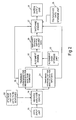
- Figure 2 is a schematic illustration of a first embodiment of the present invention wherein data representing a phrase, sentence, or passage of a natural language is input by the data input unit 20 into a meaning analyser engine 21.
- a storage unit 22 is provided for storing reference data representing a phrase, sentence, or passage of a natural language to be searched.
- the storage unit would usually contain a number of sets of reference data to which the input data is to be matched.
- the data in the storage unit 22 is input into the meaning analyser engine 21 so that meaning data for the data to be searched is generated and input into a temporary storage unit 23 and meaning data for the input data is generated and input into the temporary storage unit 24.
- the meaning data from the temporary storage units 23 and 24 is then read into an alignment engine 25 in order to determine equivalent lexical meaning representations within the meaning data and to register links therebetween.
- An alignment data storage unit 30 is provided for storing data indicating which lexical meaning representations are equivalent and can therefore be aligned. This data is input into the alignment engine 25 to allow the determination of equivalence and the registration of links.
- the registered links are stored within the temporary storage unit 26 as alignment data and this is then passed to the matching engine 27 together with the meaning data from the temporary storage units 23 and 24.
- an equivalence data storage unit 28 which stores the equivalence relationships. These are input into the matching engine 27 which determines a match between the meaning data for the input data and the reference data. The result of the match is passed to a match output unit 29 for the outputting of the result of the match.
- the alignment engine 25 and the matching engine 27 are illustrated as being separate and carry out a first step of aligning meaning representations in the alignment engine 25 and then a second step of determining the equivalence of the linking of the lexical meaning representations in the matching engine 27, the functions could equally well be carried out in a single unit in one process.
- Figure 2 it is illustrated that the data to be searched is input into the analyser engine 21 so that every time data is input the analyser must perform the meaning analysis on the reference data, this is not essential.
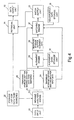
- Figure 3 illustrates a second embodiment of the present invention wherein there is a permanent storage unit 22a for the meaning data for the data to be searched.
- the meaning analyser engine 21 need not be used in real time to analyse the reference data. This can be done at an initial or set-up phase. This arrangement therefore reduces the computational requirements for the meaning analyser engine 21 and can thus increase the speed of matching. However, it does require the content of the reference data not to change very often, if at all.
- the embodiment of Figure 2 is appropriate where the reference data is dynamic whereas the embodiment of Figure 3 is appropriate for circumstances where the reference data is static or at least static relative to the frequency of updating of the meaning data in the storage unit 22a.
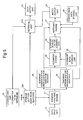
- Figure 4 illustrates another embodiment of the present invention wherein the embodiment of Figure 2 is incorporated in a data retrieval system. Since like reference numerals denote like elements of the apparatus, a description will only be given of the differences between the embodiments of Figure 2 and the present embodiment.
- the matching output unit 29 generates a signal dependent upon the result of the match carried out by the matching engine 27. This controls a retrieval unit 31 in order to direct it to retrieve the data for which a match has been found between the input meaning data and the reference meaning data. In response to the signal the retrieval unit 21 accesses the storage unit 22 and retrieves the data for output to the data output unit 32.
- This embodiment of the present invention is applicable to a database retrieval system wherein the input data comprises a query in a natural language and the data stored in the storage unit 22 comprises a plurality of keys i.e. sets of text e.g. documents in the natural language.
- the retrieval unit 31 is controlled to retrieve the identified set of reference data e.g. the document for output.
- the data output unit 32 can output the data in any one of a number of ways e.g. to a display, to a printer, or to a communications interface for the communication of the retrieved data to a remote apparatus.
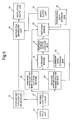
- Figure 5 illustrates a modified embodiment of Figure 4 wherein storage unit 22b stores data to be searched in the form of index data for information stored in a storage unit 33.
- the index data can for example be an abstract of a document stored in the storage unit 33, a title or other bibliographic information, or a description of information stored in the storage unit 33 e.g. a description of content of an image.
- the purpose of the data retrieval system is not to retrieve the indexing data in the storage unit 22b but instead to retrieve the information from the storage unit 33.
- this information retrieval unit 31a can retrieve the information identified by the index data from the storage unit 33 and this can be output to the data output unit 32.
- the information can then be output in any one of a number of different ways e.g. to the screen of the computer of the user, to a printer, or to a remote apparatus.
- Figure 6 illustrates a further embodiment of the present invention in which the embodiment of Figure 2 is incorporated within an apparatus for generating computer executable instructions.
- the output of the match output unit 29 is passed to an instruction generator unit 34 to control the generation of instructions.
- the instruction generator unit refers to the storage unit 22 which stores not only the data to be searched in the form of a description of the operation to be carried out in the natural language, but also an identification of the instruction to be generated.
- the instruction generator unit identifies the instruction to be generated by reference to the storage unit 22 and thus generates an instruction which is passed to the instruction output unit 35.
- the storage unit 22 stores a series of instructions in the natural language together with a computer identifiable action to be carried out that can be interpreted by the instruction generator unit 34.
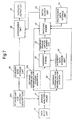
- Figure 7 illustrates another embodiment of the present invention for identifying the category to which the input data belongs.
- the storage unit 22c stores category descriptions and the temporary storage unit 23a stores meaning data for the category descriptions after analysis by the meaning analyser engine 21 of the category descriptions from the storage unit 22c.
- the storage unit 22c stores descriptions for the category data stored in the category data storage unit 38.
- the categoriser unit 36 is controlled to retrieve the category data from the category data storage unit 38 and to send this to the category output unit 37.
- data can be classified or categorised.
- the category output unit 37 can output the identified category onto a display to identify to a user the category to which the input data belongs.
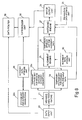
- Figure 8 is an extension to the embodiment of Figure 7 wherein instead of the category merely being output by the category output unit 37, a data router 39 is provided to receive the data input by the data input unit 20.
- the output of the categorising unit 36 which comprises the identified category is input into the data router 39 in order to control the routing of the input data.
- the input data comprises text in a particular subject area
- this can be identified as lying within a subject category and the data can be routed accordingly e.g. to be stored in a particular location.
- this embodiment provides a method for automatically sorting data such as documents.
- this provides a method of automatically sorting documents which have been optically character recognised so that these can be stored appropriately in dependence upon the subject of the content of the documents.
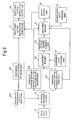
- Figure 9 illustrates yet another embodiment of the present invention for causing a switching action.
- This embodiment is similar to the embodiment of Figure 6.
- the storage unit 22c stores switching action descriptions which describe switching instructions which are stored in the storage unit 40.
- the temporary storage unit 23d stores meaning data for the switching action descriptions generated by the analysis of the switching action descriptions by the meaning analyser 21.
- switching action instruction generator 41 is controlled to retrieve the appropriate switching instructions from the storage unit 40 and these are output to the switching instruction output unit 42.
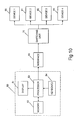
- Figure 10 illustrates a physical implementation of this embodiment.
- the apparatus illustrated in Figure 9 is implemented in a computer apparatus 50 comprising a processor 53, a memory 52, a display 51 and a keyboard 54.
- the switching action instructions are output from the computer apparatus 50 via an interface 60 to a switching unit 70 whereupon the switching action instructions are implemented in order to switch any one of the devices 80, 81, 82 or 83 in accordance with the instruction.
- this embodiment provides for a method of allowing a user to enter instructions into a computer apparatus in order to cause the implementation of the instructions by the computer apparatus.
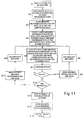
- Figure 11 is a flow diagram of the steps taken in determining a match between the input data and the stored reference data.
- the input data or reference data comprise computer readable representations of a phrase, sentence, or passage of a natural language. Conventionally such a representation takes the form of text.
- step S1 the data to be matched is input and in step S2 this input data is analysed by the meaning analysis engine to generate meaning data.
- this input data is analysed by the meaning analysis engine to generate meaning data.
- the meaning analysis engine not only is the input data analysed but also the reference data so that respective meaning data is generated in step S2.
- step S2 comprises a parsing process which in this embodiment uses dependency grammar.
- Any parser can be used which generates lexical meaning representations and modification information from which links can be generated between the lexical meaning representations identifying which lexical meaning representations modify the meaning of which lexical meaning representation.
- Such a parser can be of the form described in GB-A-2272091, EP-A-0737928, or in the article by T. Järvinen and P. Tapanainen entitled "A Dependency Parser for English" mentioned hereinabove.
- the parser generates meaning data in the form of lexical meaning representations and meaning modification information from the input phrase, sentence, or passage in a natural language.
- the lexical meaning representations comprise a representation of a set of words which have the same meaning.
- the lexical meaning representations can be divided into subclassifications representing different types of meanings.
- a meaning representation "copy” can represent syntactic variants of the noun and verb e.g. "copy” (noun or verb), "copies” (noun or verb), “copying” (verb), or “copied” (verb). Also it can represent the derivative variants "copier” and "copyist”.
- the level of the lexical meaning representations depend upon the tables used within the parser defining equivalence between words and the meaning representations. In its simplest form a lexical meaning representation can actually represent the word itself. Any level of lexical meaning representation can be used.
- the links between the lexical meaning representations identify the modification relationship between the lexical meaning representations.
- the minimum information required for the present invention is the direction of modification i.e. which of the linked pairs of lexical meaning representations is being modified.
- the parser used in this embodiment of the present invention will now be described in detail.
- the parser is implemented as a computer program on a computer and is defined by a set of rules which are implemented by a functional programming language (Haskell).
- the parser acts sequentially on words as they are input to build up the meaning data sequentially.
- the parser used in this embodiment not only gives the direction of the links but also the types of links.
- the types of links are labelled with a relation e.g. subject, specifier, object.
- Table 1 below gives the rules implemented by the parser for linking types of lexical meaning representations and the types of links.
- Preposition Complementiser Has Object that (a man walked) on To Noun Has PSubject copier to print Adverb Verb Is Modifier bark suddenly Adverb Copula Is Modifier is suddenly ConjN Noun Is LeftConju cat and (dog) Intensifier Intensifier Has Specifier very, very Example wording in each category: Nominal - no examples, just gathers common properties of some other categories Verbal - no examples, just gathers common properties of some other categories
- Has Subject Only one link is resisted to avoid both Has Subject and Has Object links being formed for example for the phrase dog walked by a man.
- the correct link for the noun "dog” and the verb "walked” in this case is Has Object not Has Subject.
- the verb can only have a noun as a subject if the verb is not a passive. In the example "dog walked by a man” the "dog” is the object not the subject.
- Table 1 indicates the meaning data which is output from the parser taking into consideration the constraints.
- the link direction is indicated by Has or Is, and in general the links labelled Is are left to right links and the links labelled Has are right to left links, it has been found that in order to avoid errors, modifications to the link directions are required in accordance with the rules given in Table 5 below.
- step S3 the lexical meaning representations for the input data and the reference data are aligned.
- This process comprises determining which lexical meaning representations in the input data and the reference data are equivalent in meaning.
- the alignment process takes place by comparing each lexical meaning representation of the input meaning data with each lexical meaning representation of the reference data to thereby register links therebetween if equivalence is found whereby a table identifying the positions of the matched or aligned lexical meaning representations is formed and stored.
- the score given for lexical meaning representations which are of the same category is 1.0 whilst a score given for the equivalence of lexical meaning representations of alignable categories is 0.3 except for the alignment of an adjective and a gerund, a noun and an adjective, and a noun and a gerund which are each given a score of 1.0.
- an equivalence between lexical meaning representations can be given based on synonyms e.g. animal and beast, thesaurus relations e.g. rose and flower, and hierarchical relationships (hyponyms etc) e.g. copy and representation or document, and copier and office machine.
- the lexical meaning representations may take inflectional and derivational morphology into account, if the lexical meaning representations are highly specific and do not take these into account, the alignment of the lexical meaning representations can take morphological variations into account instead in order to ensure alignment of such lexical meaning representations.
- the equivalence between the lexical meaning representations using such equivalence relationships can be given as a score of between 0 and 1.0.
- Each lexical meaning representation represents a set of words.
- Each word can be assigned a score which is dependent upon its frequency of occurrence in the natural language. Thus the words which occur rarely can be assigned a high score which can thus be used to increase the score of a match between the input data and the reference data if the word is identified to be present in both the input data and the reference data.
- the result of the alignment process is a table indicating the locations of all alignable lexical meaning representations and scores for the alignment.
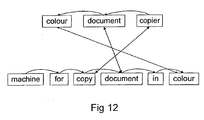
- Figure 12 illustrates diagrammatically the alignment of the lexical meaning representations for the input phrase "colour document copier” with the stored phrase "machine for copying documents in colour”.
- the lexical meaning representations "colour” and "document” align exactly with the lexical meaning representations in the input and reference data
- the input meaning representation "copier” aligns with the reference lexical meaning representation "copy” by a derivational morphological equivalence relationship.
- step S4 a head lexical meaning representation is selected in the input data and an equivalent lexical meaning representation is identified in the reference data using the alignment data.
- the identification of the head lexical meaning representation in the input data requires the identification of a lexical meaning representation which does not modify any other lexical meaning representation. This can be achieved by forming a table of link data. For example for the input data illustrated in the top part of Figure 12 the positions 1, 2 and 3 can be assigned respectively to the words colour document copier and Table 6 given below will be formed. Table 6 Modified Meaning Representation Position Modifying Meaning Representation Position Link 3 2 Label 1 2 1 Label 2
- the head lexical meaning representation can be identified by identifying the head lexical meaning representation as being at the position which appears in the left hand column but not in the right hand column of Table 3 i.e. position 3 which corresponds to the lexical meaning representation "copier". Having identified that the head lexical meaning representation of the input data is "copier" as can be seen in Figure 12 this can be aligned with the lexical meaning representation "copy” in the reference data using the alignment data. Since the alignment data may indicate many different alignments between the lexical meaning representation of the input data and the lexical meaning representations of the reference data, each will be tried in the matching process described hereinafter.
- step S5 an aligned lexical meaning representation which is linked to the head lexical meaning representation in the input data is identified from the link data of the meaning data output from the parser, and any equivalent lexical meaning representation in the reference data is identified using the alignment data.
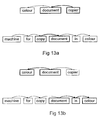
- This process is illustrated in Figure 13a.
- the head lexical meaning representation "copier” in the input data is aligned with the lexical meaning representation "copy” in the reference data and the linked lexical meaning representation "document” is identified in the input data using the link data output from the parser.
- An equivalent lexical meaning representation "document” is then identified in the reference data.
- step S6 the process then proceeds to step S6 wherein the linked pairs of lexical meaning representations are compared for equivalence.
- the comparison of equivalence is carried out on the basis of a set of relationships which defines the equivalence of the paths.
- the equivalence relationships used in this embodiment are given in Table 7 below.
- any links means that any number of links can be matched unconditionally i.e. multiple links can match a single link thereby skipping over intermediate meaning representations.
- Head indicates that the lexical meaning representation is the head lexical meaning representation.
- step S7 determines whether the paths match i.e. the score for the match. If the score is greater than a threshold e.g. greater than zero, in the flow diagram of Figure 11 the process proceeds from step S7 to step S8 wherein the linked lexical meaning representation is nominally made the head.
- step S9 the score is accumulated and this entails in accumulating the score for the path together with the score for the aligned lexical meaning representations and any other scores such as scores for aligning specific words.
- the process then returns to step S5 to recursively proceed along the chain linked pairs of lexical meaning representations in order to identify aligned pairs of lexical meaning representations and to compare paths in order to accumulate a score.
- Figure 13b illustrates steps S5 and S6 on the second loop wherein the lexical meaning representation "document” is made nominally the head and the linked lexical meaning representation "colour” is identified in the input data. It is determined from the alignment data that this links with the lexical meaning representation "colour” in the reference data.
- the comparison step S6 the path for "colour document” is then compared with the path for "document in colour”.
- the path between the lexical meaning representations "document” and “colour” in the reference data is not a direct path i.e. multiple links are present.
- the matching process may take into consideration the difference in number of links present and assign a score dependent upon the number of links i.e. the score is decreased for a larger number of links.
- step S10 If in the process of Figure 11 no match is found or the score for the match is below a threshold e.g. zero, the process proceeds to step S10 whereupon it is determined that if there are any branches in the linked lexical meaning representation structure the process proceeds to step S11 wherein the lexical meaning representation at which branching occurred is made nominally the head and in step S12 the score is accumulated for the matching. The process then returns to step S5 to determine an accumulated score for the branch.
- a threshold e.g. zero
- Figure 16 illustrates a linked lexical meaning representation structure which has a branch at the head lexical meaning representation "copy”. If the phrase of Figure 16 was either the input data or the reference data each of the branches would be matched to the input data or reference data to accumulate a score for each branch and total score for the matching of the phrase would be the product of the accumulated scores for the branches.
- step S10 If all of the branches have been matched in step S10 the process proceeds in step S13 in Figure 11 wherein the result of the accumulation of matches is output as a score. This can then be compared with a predetermined set of parameters in step S14 e.g. a threshold and the match result is output in step S15.
- a predetermined set of parameters e.g. a threshold
- Steps S1 to S13 can be implemented for a number of sets of reference data in order to provide a number of accumulated scores.
- the reference data having the highest accumulated score can then be selected as the reference data to which the input data matches.
- a restriction could be placed on this matching in that this match is only indicated if a threshold accumulated score is achieved i.e. the quality of match is good enough.
- Matching of the paths of the linked pairs of lexical meaning representations can be dependent upon many different matching rules such as the types and number of links and the types of lexical meaning representations comprising the linked pair.
- More generally matching can occur by matching all identified linked pairs irrespective of the types and number of links.
- the matching could be limited to direct links or the matching could be limited to only matching links of identical type.
- the preferred embodiment uses a set of rules which define a set of rules which take into account indirect links and link types.
- step S5 only meaning representations which have significance are identified. Thus meaning representations which are not important e.g. determiners, intensifiers, prepositions and pronouns are not used in the matching process.
- the reference meaning data can be further studied to identify negation. For example, if the input data is "colour document copier” and the reference data is "not a colour document copier” the process will find a match for "colour document copier” and the further linked lexical meaning representations can be identified and compared with known negation lexical meaning representations to reduce the accumulated score or to indicate that there is no match.
- Figure 14 illustrates the input data comprising "colour document” which is to be matched with the reference data "document in colour”.
- Figures 15a and 15b illustrate the sensitivity of this form of meaning matching. If the input data is "software design” to be matched to the reference data "design of software", a match can be found because of the equivalence of the multiple link with the intermediate lexical meaning representation "of". In 15b however with the input data "design software” and the reference data “design of software” a match will not be found since the modification direction is different.
- the result of the match can be used for many different applications.
- the simplest result is the cause of an action e.g. the generation of a computer instruction.
- the result of the matching process may be the identification of a number of sets of reference data to which matching has been found to a certain degree together with an indication of that degree i.e. the accumulated score. Where only one set of reference data is present, the result can simply be the accumulated score giving an indication of the likelihood of the match being a good match.
- the present invention provides a far more simple user interface allowing a user to enter data representing a phrase, sentence, or passage of a natural language in order to cause a machine to operate in a particular fashion.
- Such a technique is particularly applicable to the retrieval of information from a database wherein the searching can take place either on the information to be retrieved itself or on indexing data.
- the present invention is also applicable to any apparatus wherein a command is to be entered in order to control the operation of apparatus.
- sets of reference data which represent command phrases in a natural language can be stored so that when command phrases in the natural language are entered by a user these can be matched using the matching process of the present invention in order that the corresponding instruction can be carried out.
- the present invention has been described hereinabove with reference to specific embodiments, the present invention is not limited to these specific embodiments and it will be apparent to a skilled person in the art that modifications are possible within the spirit and scope of the present invention.
- the lexical meaning representations are stated as representing a set of words i.e. defining a general meaning, the lexical meaning representations can comprise the words themselves.
- the method of alignment i.e. finding equivalence between lexical meaning representations is described as a process separate to and preceding the matching of the paths, this process can be carried out in combination.
- the present invention is applicable to data which can be represented as any natural language which can be parsed to provide meaning representations and modification relationships therebetween. Still further, the generation of the meaning data in the present invention can be carried out by any known parser which enables meaning representations and modification relationships to be determined therefrom. Many such parsers are well known in the prior art, one such being the dependency parser which directly generates meaning representations and modification relationships. The present invention is not however limited to the use of such a parser to form the meaning data.
Landscapes
- Engineering & Computer Science (AREA)
- Theoretical Computer Science (AREA)
- Audiology, Speech & Language Pathology (AREA)
- Health & Medical Sciences (AREA)
- Computational Linguistics (AREA)
- General Health & Medical Sciences (AREA)
- Physics & Mathematics (AREA)
- General Engineering & Computer Science (AREA)
- General Physics & Mathematics (AREA)
- Artificial Intelligence (AREA)
- Machine Translation (AREA)
- Document Processing Apparatus (AREA)
- Information Retrieval, Db Structures And Fs Structures Therefor (AREA)
Applications Claiming Priority (2)
| Application Number | Priority Date | Filing Date | Title |
|---|---|---|---|
| GBGB9821969.4A GB9821969D0 (en) | 1998-10-08 | 1998-10-08 | Apparatus and method for processing natural language |
| GB9821969 | 1998-10-08 |
Publications (2)
| Publication Number | Publication Date |
|---|---|
| EP0992919A1 EP0992919A1 (en) | 2000-04-12 |
| EP0992919B1 true EP0992919B1 (en) | 2006-12-13 |
Family
ID=10840226
Family Applications (1)
| Application Number | Title | Priority Date | Filing Date |
|---|---|---|---|
| EP99307422A Expired - Lifetime EP0992919B1 (en) | 1998-10-08 | 1999-09-20 | Apparatus and method for processing natural language |
Country Status (5)
| Country | Link |
|---|---|
| US (1) | US6937975B1 (enExample) |
| EP (1) | EP0992919B1 (enExample) |
| JP (1) | JP4306894B2 (enExample) |
| DE (1) | DE69934371T2 (enExample) |
| GB (1) | GB9821969D0 (enExample) |
Cited By (1)
| Publication number | Priority date | Publication date | Assignee | Title |
|---|---|---|---|---|
| DE102010054217A1 (de) | 2010-12-11 | 2012-06-14 | Volkswagen Aktiengesellschaft | Verfahren zum Bereitstellen eines Sprachbediensystems in einem Fahrzeug und Sprachbediensystem dazu |
Families Citing this family (214)
| Publication number | Priority date | Publication date | Assignee | Title |
|---|---|---|---|---|
| AU6630800A (en) | 1999-08-13 | 2001-03-13 | Pixo, Inc. | Methods and apparatuses for display and traversing of links in page character array |
| US8645137B2 (en) | 2000-03-16 | 2014-02-04 | Apple Inc. | Fast, language-independent method for user authentication by voice |
| CN100495391C (zh) * | 2000-07-06 | 2009-06-03 | 金时焕 | 信息查询系统及其方法 |
| GB0026353D0 (en) | 2000-10-27 | 2000-12-13 | Canon Kk | Apparatus and a method for facilitating searching |
| US7120900B2 (en) * | 2001-04-19 | 2006-10-10 | International Business Machines | Bi-directional display |
| US7996207B2 (en) * | 2001-06-26 | 2011-08-09 | International Business Machines Corporation | Bidirectional domain names |
| US20070265834A1 (en) * | 2001-09-06 | 2007-11-15 | Einat Melnick | In-context analysis |
| ITFI20010199A1 (it) | 2001-10-22 | 2003-04-22 | Riccardo Vieri | Sistema e metodo per trasformare in voce comunicazioni testuali ed inviarle con una connessione internet a qualsiasi apparato telefonico |
| US20040128138A1 (en) * | 2002-06-28 | 2004-07-01 | Andrews Donna B. | Universal type-in line |
| US7720680B2 (en) * | 2004-06-17 | 2010-05-18 | Robert Bosch Gmbh | Interactive manual, system and method for vehicles and other complex equipment |
| US7669134B1 (en) | 2003-05-02 | 2010-02-23 | Apple Inc. | Method and apparatus for displaying information during an instant messaging session |
| JP4476609B2 (ja) * | 2003-12-10 | 2010-06-09 | 株式会社東芝 | 中国語解析装置、中国語解析方法および中国語解析プログラム |
| US20050138556A1 (en) * | 2003-12-18 | 2005-06-23 | Xerox Corporation | Creation of normalized summaries using common domain models for input text analysis and output text generation |
| US7603705B2 (en) * | 2004-05-04 | 2009-10-13 | Next It Corporation | Methods and systems for enforcing network and computer use policy |
| US7565368B2 (en) * | 2004-05-04 | 2009-07-21 | Next It Corporation | Data disambiguation systems and methods |
| US7177883B2 (en) * | 2004-07-15 | 2007-02-13 | Hitachi, Ltd. | Method and apparatus for hierarchical storage management based on data value and user interest |
| US7580837B2 (en) | 2004-08-12 | 2009-08-25 | At&T Intellectual Property I, L.P. | System and method for targeted tuning module of a speech recognition system |
| US9330175B2 (en) | 2004-11-12 | 2016-05-03 | Make Sence, Inc. | Techniques for knowledge discovery by constructing knowledge correlations using concepts or terms |
| US8126890B2 (en) | 2004-12-21 | 2012-02-28 | Make Sence, Inc. | Techniques for knowledge discovery by constructing knowledge correlations using concepts or terms |
| US8108389B2 (en) | 2004-11-12 | 2012-01-31 | Make Sence, Inc. | Techniques for knowledge discovery by constructing knowledge correlations using concepts or terms |
| US7242751B2 (en) | 2004-12-06 | 2007-07-10 | Sbc Knowledge Ventures, L.P. | System and method for speech recognition-enabled automatic call routing |
| US7751551B2 (en) | 2005-01-10 | 2010-07-06 | At&T Intellectual Property I, L.P. | System and method for speech-enabled call routing |
| US7627096B2 (en) * | 2005-01-14 | 2009-12-01 | At&T Intellectual Property I, L.P. | System and method for independently recognizing and selecting actions and objects in a speech recognition system |
| US7817983B2 (en) * | 2005-03-14 | 2010-10-19 | Qualcomm Incorporated | Method and apparatus for monitoring usage patterns of a wireless device |
| US7657020B2 (en) | 2005-06-03 | 2010-02-02 | At&T Intellectual Property I, Lp | Call routing system and method of using the same |
| US8898134B2 (en) | 2005-06-27 | 2014-11-25 | Make Sence, Inc. | Method for ranking resources using node pool |
| US8140559B2 (en) | 2005-06-27 | 2012-03-20 | Make Sence, Inc. | Knowledge correlation search engine |
| US8677377B2 (en) | 2005-09-08 | 2014-03-18 | Apple Inc. | Method and apparatus for building an intelligent automated assistant |
| US7633076B2 (en) | 2005-09-30 | 2009-12-15 | Apple Inc. | Automated response to and sensing of user activity in portable devices |
| US8024653B2 (en) | 2005-11-14 | 2011-09-20 | Make Sence, Inc. | Techniques for creating computer generated notes |
| EP1974292A4 (en) * | 2005-11-14 | 2009-04-01 | Make Sence Inc | RESEARCH ENGINE COMPRISING A MECHANISM FOR CORRELATION OF INFORMATION |
| US9318108B2 (en) | 2010-01-18 | 2016-04-19 | Apple Inc. | Intelligent automated assistant |
| US8226416B2 (en) * | 2006-12-08 | 2012-07-24 | Sri International | Method and apparatus for reading education |
| CN101595474B (zh) * | 2007-01-04 | 2012-07-11 | 思解私人有限公司 | 语言分析 |
| US8977255B2 (en) | 2007-04-03 | 2015-03-10 | Apple Inc. | Method and system for operating a multi-function portable electronic device using voice-activation |
| US20090018818A1 (en) * | 2007-07-10 | 2009-01-15 | Aibelive Co., Ltd. | Operating device for natural language input |
| ITFI20070177A1 (it) | 2007-07-26 | 2009-01-27 | Riccardo Vieri | Sistema per la creazione e impostazione di una campagna pubblicitaria derivante dall'inserimento di messaggi pubblicitari all'interno di uno scambio di messaggi e metodo per il suo funzionamento. |
| US8868479B2 (en) | 2007-09-28 | 2014-10-21 | Telogis, Inc. | Natural language parsers to normalize addresses for geocoding |
| US9053089B2 (en) | 2007-10-02 | 2015-06-09 | Apple Inc. | Part-of-speech tagging using latent analogy |
| US8165886B1 (en) | 2007-10-04 | 2012-04-24 | Great Northern Research LLC | Speech interface system and method for control and interaction with applications on a computing system |
| US8595642B1 (en) | 2007-10-04 | 2013-11-26 | Great Northern Research, LLC | Multiple shell multi faceted graphical user interface |
| US8364694B2 (en) | 2007-10-26 | 2013-01-29 | Apple Inc. | Search assistant for digital media assets |
| US8620662B2 (en) | 2007-11-20 | 2013-12-31 | Apple Inc. | Context-aware unit selection |
| US10002189B2 (en) | 2007-12-20 | 2018-06-19 | Apple Inc. | Method and apparatus for searching using an active ontology |
| US9330720B2 (en) | 2008-01-03 | 2016-05-03 | Apple Inc. | Methods and apparatus for altering audio output signals |
| US8327272B2 (en) | 2008-01-06 | 2012-12-04 | Apple Inc. | Portable multifunction device, method, and graphical user interface for viewing and managing electronic calendars |
| US8065143B2 (en) | 2008-02-22 | 2011-11-22 | Apple Inc. | Providing text input using speech data and non-speech data |
| US8289283B2 (en) | 2008-03-04 | 2012-10-16 | Apple Inc. | Language input interface on a device |
| US8996376B2 (en) | 2008-04-05 | 2015-03-31 | Apple Inc. | Intelligent text-to-speech conversion |
| US8706477B1 (en) | 2008-04-25 | 2014-04-22 | Softwin Srl Romania | Systems and methods for lexical correspondence linguistic knowledge base creation comprising dependency trees with procedural nodes denoting execute code |
| US10496753B2 (en) | 2010-01-18 | 2019-12-03 | Apple Inc. | Automatically adapting user interfaces for hands-free interaction |
| US8464150B2 (en) | 2008-06-07 | 2013-06-11 | Apple Inc. | Automatic language identification for dynamic text processing |
| US20100030549A1 (en) | 2008-07-31 | 2010-02-04 | Lee Michael M | Mobile device having human language translation capability with positional feedback |
| US8768702B2 (en) | 2008-09-05 | 2014-07-01 | Apple Inc. | Multi-tiered voice feedback in an electronic device |
| US8898568B2 (en) | 2008-09-09 | 2014-11-25 | Apple Inc. | Audio user interface |
| US8355919B2 (en) | 2008-09-29 | 2013-01-15 | Apple Inc. | Systems and methods for text normalization for text to speech synthesis |
| US8712776B2 (en) | 2008-09-29 | 2014-04-29 | Apple Inc. | Systems and methods for selective text to speech synthesis |
| US8352268B2 (en) | 2008-09-29 | 2013-01-08 | Apple Inc. | Systems and methods for selective rate of speech and speech preferences for text to speech synthesis |
| US8352272B2 (en) | 2008-09-29 | 2013-01-08 | Apple Inc. | Systems and methods for text to speech synthesis |
| US8396714B2 (en) | 2008-09-29 | 2013-03-12 | Apple Inc. | Systems and methods for concatenation of words in text to speech synthesis |
| US8583418B2 (en) | 2008-09-29 | 2013-11-12 | Apple Inc. | Systems and methods of detecting language and natural language strings for text to speech synthesis |
| US8676904B2 (en) | 2008-10-02 | 2014-03-18 | Apple Inc. | Electronic devices with voice command and contextual data processing capabilities |
| WO2010067118A1 (en) | 2008-12-11 | 2010-06-17 | Novauris Technologies Limited | Speech recognition involving a mobile device |
| US8494857B2 (en) | 2009-01-06 | 2013-07-23 | Regents Of The University Of Minnesota | Automatic measurement of speech fluency |
| US8862252B2 (en) | 2009-01-30 | 2014-10-14 | Apple Inc. | Audio user interface for displayless electronic device |
| US8380507B2 (en) | 2009-03-09 | 2013-02-19 | Apple Inc. | Systems and methods for determining the language to use for speech generated by a text to speech engine |
| US10241752B2 (en) | 2011-09-30 | 2019-03-26 | Apple Inc. | Interface for a virtual digital assistant |
| US10540976B2 (en) | 2009-06-05 | 2020-01-21 | Apple Inc. | Contextual voice commands |
| US9858925B2 (en) | 2009-06-05 | 2018-01-02 | Apple Inc. | Using context information to facilitate processing of commands in a virtual assistant |
| US10241644B2 (en) | 2011-06-03 | 2019-03-26 | Apple Inc. | Actionable reminder entries |
| US10255566B2 (en) | 2011-06-03 | 2019-04-09 | Apple Inc. | Generating and processing task items that represent tasks to perform |
| US8762131B1 (en) | 2009-06-17 | 2014-06-24 | Softwin Srl Romania | Systems and methods for managing a complex lexicon comprising multiword expressions and multiword inflection templates |
| US8762130B1 (en) | 2009-06-17 | 2014-06-24 | Softwin Srl Romania | Systems and methods for natural language processing including morphological analysis, lemmatizing, spell checking and grammar checking |
| US9431006B2 (en) | 2009-07-02 | 2016-08-30 | Apple Inc. | Methods and apparatuses for automatic speech recognition |
| US8682649B2 (en) | 2009-11-12 | 2014-03-25 | Apple Inc. | Sentiment prediction from textual data |
| US8600743B2 (en) | 2010-01-06 | 2013-12-03 | Apple Inc. | Noise profile determination for voice-related feature |
| US8311838B2 (en) | 2010-01-13 | 2012-11-13 | Apple Inc. | Devices and methods for identifying a prompt corresponding to a voice input in a sequence of prompts |
| US8381107B2 (en) | 2010-01-13 | 2013-02-19 | Apple Inc. | Adaptive audio feedback system and method |
| US10705794B2 (en) | 2010-01-18 | 2020-07-07 | Apple Inc. | Automatically adapting user interfaces for hands-free interaction |
| US10276170B2 (en) | 2010-01-18 | 2019-04-30 | Apple Inc. | Intelligent automated assistant |
| US10553209B2 (en) | 2010-01-18 | 2020-02-04 | Apple Inc. | Systems and methods for hands-free notification summaries |
| US10679605B2 (en) | 2010-01-18 | 2020-06-09 | Apple Inc. | Hands-free list-reading by intelligent automated assistant |
| DE202011111062U1 (de) | 2010-01-25 | 2019-02-19 | Newvaluexchange Ltd. | Vorrichtung und System für eine Digitalkonversationsmanagementplattform |
| US8682667B2 (en) | 2010-02-25 | 2014-03-25 | Apple Inc. | User profiling for selecting user specific voice input processing information |
| US8639516B2 (en) | 2010-06-04 | 2014-01-28 | Apple Inc. | User-specific noise suppression for voice quality improvements |
| US8713021B2 (en) | 2010-07-07 | 2014-04-29 | Apple Inc. | Unsupervised document clustering using latent semantic density analysis |
| US9104670B2 (en) | 2010-07-21 | 2015-08-11 | Apple Inc. | Customized search or acquisition of digital media assets |
| US8719006B2 (en) | 2010-08-27 | 2014-05-06 | Apple Inc. | Combined statistical and rule-based part-of-speech tagging for text-to-speech synthesis |
| US8719014B2 (en) | 2010-09-27 | 2014-05-06 | Apple Inc. | Electronic device with text error correction based on voice recognition data |
| US10515147B2 (en) | 2010-12-22 | 2019-12-24 | Apple Inc. | Using statistical language models for contextual lookup |
| US10762293B2 (en) | 2010-12-22 | 2020-09-01 | Apple Inc. | Using parts-of-speech tagging and named entity recognition for spelling correction |
| US8781836B2 (en) | 2011-02-22 | 2014-07-15 | Apple Inc. | Hearing assistance system for providing consistent human speech |
| US8688453B1 (en) * | 2011-02-28 | 2014-04-01 | Nuance Communications, Inc. | Intent mining via analysis of utterances |
| JP5691654B2 (ja) * | 2011-03-03 | 2015-04-01 | 富士通株式会社 | 表示制御装置、表示制御方法、および表示制御プログラム |
| US9262612B2 (en) | 2011-03-21 | 2016-02-16 | Apple Inc. | Device access using voice authentication |
| US20120310642A1 (en) | 2011-06-03 | 2012-12-06 | Apple Inc. | Automatically creating a mapping between text data and audio data |
| US10057736B2 (en) | 2011-06-03 | 2018-08-21 | Apple Inc. | Active transport based notifications |
| US8812294B2 (en) | 2011-06-21 | 2014-08-19 | Apple Inc. | Translating phrases from one language into another using an order-based set of declarative rules |
| US8706472B2 (en) | 2011-08-11 | 2014-04-22 | Apple Inc. | Method for disambiguating multiple readings in language conversion |
| US8994660B2 (en) | 2011-08-29 | 2015-03-31 | Apple Inc. | Text correction processing |
| US8762156B2 (en) | 2011-09-28 | 2014-06-24 | Apple Inc. | Speech recognition repair using contextual information |
| US9934218B2 (en) * | 2011-12-05 | 2018-04-03 | Infosys Limited | Systems and methods for extracting attributes from text content |
| US10134385B2 (en) | 2012-03-02 | 2018-11-20 | Apple Inc. | Systems and methods for name pronunciation |
| US9483461B2 (en) | 2012-03-06 | 2016-11-01 | Apple Inc. | Handling speech synthesis of content for multiple languages |
| US9576593B2 (en) | 2012-03-15 | 2017-02-21 | Regents Of The University Of Minnesota | Automated verbal fluency assessment |
| CN103365834B (zh) * | 2012-03-29 | 2017-08-18 | 富泰华工业(深圳)有限公司 | 语言歧义消除系统及方法 |
| US9280610B2 (en) | 2012-05-14 | 2016-03-08 | Apple Inc. | Crowd sourcing information to fulfill user requests |
| US10417037B2 (en) | 2012-05-15 | 2019-09-17 | Apple Inc. | Systems and methods for integrating third party services with a digital assistant |
| US8775442B2 (en) | 2012-05-15 | 2014-07-08 | Apple Inc. | Semantic search using a single-source semantic model |
| US9721563B2 (en) | 2012-06-08 | 2017-08-01 | Apple Inc. | Name recognition system |
| WO2013185109A2 (en) | 2012-06-08 | 2013-12-12 | Apple Inc. | Systems and methods for recognizing textual identifiers within a plurality of words |
| WO2013188540A1 (en) * | 2012-06-12 | 2013-12-19 | Grant Street Group, Inc. | Practical natural-language human-machine interfaces |
| US9495129B2 (en) | 2012-06-29 | 2016-11-15 | Apple Inc. | Device, method, and user interface for voice-activated navigation and browsing of a document |
| US9576574B2 (en) | 2012-09-10 | 2017-02-21 | Apple Inc. | Context-sensitive handling of interruptions by intelligent digital assistant |
| US9547647B2 (en) | 2012-09-19 | 2017-01-17 | Apple Inc. | Voice-based media searching |
| US8935167B2 (en) | 2012-09-25 | 2015-01-13 | Apple Inc. | Exemplar-based latent perceptual modeling for automatic speech recognition |
| CN113470641B (zh) | 2013-02-07 | 2023-12-15 | 苹果公司 | 数字助理的语音触发器 |
| US9733821B2 (en) | 2013-03-14 | 2017-08-15 | Apple Inc. | Voice control to diagnose inadvertent activation of accessibility features |
| US9368114B2 (en) | 2013-03-14 | 2016-06-14 | Apple Inc. | Context-sensitive handling of interruptions |
| US10572476B2 (en) | 2013-03-14 | 2020-02-25 | Apple Inc. | Refining a search based on schedule items |
| US9977779B2 (en) | 2013-03-14 | 2018-05-22 | Apple Inc. | Automatic supplementation of word correction dictionaries |
| US10652394B2 (en) | 2013-03-14 | 2020-05-12 | Apple Inc. | System and method for processing voicemail |
| US10642574B2 (en) | 2013-03-14 | 2020-05-05 | Apple Inc. | Device, method, and graphical user interface for outputting captions |
| KR101759009B1 (ko) | 2013-03-15 | 2017-07-17 | 애플 인크. | 적어도 부분적인 보이스 커맨드 시스템을 트레이닝시키는 것 |
| WO2014144579A1 (en) | 2013-03-15 | 2014-09-18 | Apple Inc. | System and method for updating an adaptive speech recognition model |
| US10748529B1 (en) | 2013-03-15 | 2020-08-18 | Apple Inc. | Voice activated device for use with a voice-based digital assistant |
| KR102014665B1 (ko) | 2013-03-15 | 2019-08-26 | 애플 인크. | 지능형 디지털 어시스턴트에 의한 사용자 트레이닝 |
| KR102057795B1 (ko) | 2013-03-15 | 2019-12-19 | 애플 인크. | 콘텍스트-민감성 방해 처리 |
| US9104780B2 (en) | 2013-03-15 | 2015-08-11 | Kamazooie Development Corporation | System and method for natural language processing |
| US9342846B2 (en) * | 2013-04-12 | 2016-05-17 | Ebay Inc. | Reconciling detailed transaction feedback |
| US9495357B1 (en) * | 2013-05-02 | 2016-11-15 | Athena Ann Smyros | Text extraction |
| WO2014197334A2 (en) | 2013-06-07 | 2014-12-11 | Apple Inc. | System and method for user-specified pronunciation of words for speech synthesis and recognition |
| WO2014197336A1 (en) | 2013-06-07 | 2014-12-11 | Apple Inc. | System and method for detecting errors in interactions with a voice-based digital assistant |
| US9582608B2 (en) | 2013-06-07 | 2017-02-28 | Apple Inc. | Unified ranking with entropy-weighted information for phrase-based semantic auto-completion |
| WO2014197335A1 (en) | 2013-06-08 | 2014-12-11 | Apple Inc. | Interpreting and acting upon commands that involve sharing information with remote devices |
| US10176167B2 (en) | 2013-06-09 | 2019-01-08 | Apple Inc. | System and method for inferring user intent from speech inputs |
| KR101922663B1 (ko) | 2013-06-09 | 2018-11-28 | 애플 인크. | 디지털 어시스턴트의 둘 이상의 인스턴스들에 걸친 대화 지속성을 가능하게 하기 위한 디바이스, 방법 및 그래픽 사용자 인터페이스 |
| KR101809808B1 (ko) | 2013-06-13 | 2017-12-15 | 애플 인크. | 음성 명령에 의해 개시되는 긴급 전화를 걸기 위한 시스템 및 방법 |
| US10791216B2 (en) | 2013-08-06 | 2020-09-29 | Apple Inc. | Auto-activating smart responses based on activities from remote devices |
| US10296160B2 (en) | 2013-12-06 | 2019-05-21 | Apple Inc. | Method for extracting salient dialog usage from live data |
| US10825724B2 (en) | 2014-04-25 | 2020-11-03 | Taiwan Semiconductor Manufacturing Company | Metal contact structure and method of forming the same in a semiconductor device |
| US9620105B2 (en) | 2014-05-15 | 2017-04-11 | Apple Inc. | Analyzing audio input for efficient speech and music recognition |
| US10592095B2 (en) | 2014-05-23 | 2020-03-17 | Apple Inc. | Instantaneous speaking of content on touch devices |
| US9502031B2 (en) | 2014-05-27 | 2016-11-22 | Apple Inc. | Method for supporting dynamic grammars in WFST-based ASR |
| US10078631B2 (en) | 2014-05-30 | 2018-09-18 | Apple Inc. | Entropy-guided text prediction using combined word and character n-gram language models |
| US10170123B2 (en) | 2014-05-30 | 2019-01-01 | Apple Inc. | Intelligent assistant for home automation |
| US9715875B2 (en) | 2014-05-30 | 2017-07-25 | Apple Inc. | Reducing the need for manual start/end-pointing and trigger phrases |
| US9785630B2 (en) | 2014-05-30 | 2017-10-10 | Apple Inc. | Text prediction using combined word N-gram and unigram language models |
| US10289433B2 (en) | 2014-05-30 | 2019-05-14 | Apple Inc. | Domain specific language for encoding assistant dialog |
| US9734193B2 (en) | 2014-05-30 | 2017-08-15 | Apple Inc. | Determining domain salience ranking from ambiguous words in natural speech |
| US9633004B2 (en) | 2014-05-30 | 2017-04-25 | Apple Inc. | Better resolution when referencing to concepts |
| US9430463B2 (en) | 2014-05-30 | 2016-08-30 | Apple Inc. | Exemplar-based natural language processing |
| US9842101B2 (en) | 2014-05-30 | 2017-12-12 | Apple Inc. | Predictive conversion of language input |
| TWI566107B (zh) | 2014-05-30 | 2017-01-11 | 蘋果公司 | 用於處理多部分語音命令之方法、非暫時性電腦可讀儲存媒體及電子裝置 |
| US9760559B2 (en) | 2014-05-30 | 2017-09-12 | Apple Inc. | Predictive text input |
| US9338493B2 (en) | 2014-06-30 | 2016-05-10 | Apple Inc. | Intelligent automated assistant for TV user interactions |
| US10659851B2 (en) | 2014-06-30 | 2020-05-19 | Apple Inc. | Real-time digital assistant knowledge updates |
| US10446141B2 (en) | 2014-08-28 | 2019-10-15 | Apple Inc. | Automatic speech recognition based on user feedback |
| US9818400B2 (en) | 2014-09-11 | 2017-11-14 | Apple Inc. | Method and apparatus for discovering trending terms in speech requests |
| US10789041B2 (en) | 2014-09-12 | 2020-09-29 | Apple Inc. | Dynamic thresholds for always listening speech trigger |
| US9646609B2 (en) | 2014-09-30 | 2017-05-09 | Apple Inc. | Caching apparatus for serving phonetic pronunciations |
| US10074360B2 (en) | 2014-09-30 | 2018-09-11 | Apple Inc. | Providing an indication of the suitability of speech recognition |
| US9886432B2 (en) | 2014-09-30 | 2018-02-06 | Apple Inc. | Parsimonious handling of word inflection via categorical stem + suffix N-gram language models |
| US9668121B2 (en) | 2014-09-30 | 2017-05-30 | Apple Inc. | Social reminders |
| US10127911B2 (en) | 2014-09-30 | 2018-11-13 | Apple Inc. | Speaker identification and unsupervised speaker adaptation techniques |
| US10552013B2 (en) | 2014-12-02 | 2020-02-04 | Apple Inc. | Data detection |
| US9711141B2 (en) | 2014-12-09 | 2017-07-18 | Apple Inc. | Disambiguating heteronyms in speech synthesis |
| US9865280B2 (en) | 2015-03-06 | 2018-01-09 | Apple Inc. | Structured dictation using intelligent automated assistants |
| US9721566B2 (en) | 2015-03-08 | 2017-08-01 | Apple Inc. | Competing devices responding to voice triggers |
| US10567477B2 (en) | 2015-03-08 | 2020-02-18 | Apple Inc. | Virtual assistant continuity |
| US9886953B2 (en) | 2015-03-08 | 2018-02-06 | Apple Inc. | Virtual assistant activation |
| US9899019B2 (en) | 2015-03-18 | 2018-02-20 | Apple Inc. | Systems and methods for structured stem and suffix language models |
| US9842105B2 (en) | 2015-04-16 | 2017-12-12 | Apple Inc. | Parsimonious continuous-space phrase representations for natural language processing |
| US10083688B2 (en) | 2015-05-27 | 2018-09-25 | Apple Inc. | Device voice control for selecting a displayed affordance |
| US10127220B2 (en) | 2015-06-04 | 2018-11-13 | Apple Inc. | Language identification from short strings |
| US9578173B2 (en) | 2015-06-05 | 2017-02-21 | Apple Inc. | Virtual assistant aided communication with 3rd party service in a communication session |
| US10101822B2 (en) | 2015-06-05 | 2018-10-16 | Apple Inc. | Language input correction |
| US10255907B2 (en) | 2015-06-07 | 2019-04-09 | Apple Inc. | Automatic accent detection using acoustic models |
| US11025565B2 (en) | 2015-06-07 | 2021-06-01 | Apple Inc. | Personalized prediction of responses for instant messaging |
| US10186254B2 (en) | 2015-06-07 | 2019-01-22 | Apple Inc. | Context-based endpoint detection |
| US10671428B2 (en) | 2015-09-08 | 2020-06-02 | Apple Inc. | Distributed personal assistant |
| US10747498B2 (en) | 2015-09-08 | 2020-08-18 | Apple Inc. | Zero latency digital assistant |
| US9697820B2 (en) | 2015-09-24 | 2017-07-04 | Apple Inc. | Unit-selection text-to-speech synthesis using concatenation-sensitive neural networks |
| US10366158B2 (en) | 2015-09-29 | 2019-07-30 | Apple Inc. | Efficient word encoding for recurrent neural network language models |
| US11010550B2 (en) | 2015-09-29 | 2021-05-18 | Apple Inc. | Unified language modeling framework for word prediction, auto-completion and auto-correction |
| US11587559B2 (en) | 2015-09-30 | 2023-02-21 | Apple Inc. | Intelligent device identification |
| US10691473B2 (en) | 2015-11-06 | 2020-06-23 | Apple Inc. | Intelligent automated assistant in a messaging environment |
| US10049668B2 (en) | 2015-12-02 | 2018-08-14 | Apple Inc. | Applying neural network language models to weighted finite state transducers for automatic speech recognition |
| US10223066B2 (en) | 2015-12-23 | 2019-03-05 | Apple Inc. | Proactive assistance based on dialog communication between devices |
| US10446143B2 (en) | 2016-03-14 | 2019-10-15 | Apple Inc. | Identification of voice inputs providing credentials |
| US9934775B2 (en) | 2016-05-26 | 2018-04-03 | Apple Inc. | Unit-selection text-to-speech synthesis based on predicted concatenation parameters |
| US9972304B2 (en) | 2016-06-03 | 2018-05-15 | Apple Inc. | Privacy preserving distributed evaluation framework for embedded personalized systems |
| US10249300B2 (en) | 2016-06-06 | 2019-04-02 | Apple Inc. | Intelligent list reading |
| US10049663B2 (en) | 2016-06-08 | 2018-08-14 | Apple, Inc. | Intelligent automated assistant for media exploration |
| DK179309B1 (en) | 2016-06-09 | 2018-04-23 | Apple Inc | Intelligent automated assistant in a home environment |
| US10067938B2 (en) | 2016-06-10 | 2018-09-04 | Apple Inc. | Multilingual word prediction |
| US10490187B2 (en) | 2016-06-10 | 2019-11-26 | Apple Inc. | Digital assistant providing automated status report |
| US10192552B2 (en) | 2016-06-10 | 2019-01-29 | Apple Inc. | Digital assistant providing whispered speech |
| US10586535B2 (en) | 2016-06-10 | 2020-03-10 | Apple Inc. | Intelligent digital assistant in a multi-tasking environment |
| US10509862B2 (en) | 2016-06-10 | 2019-12-17 | Apple Inc. | Dynamic phrase expansion of language input |
| DK179415B1 (en) | 2016-06-11 | 2018-06-14 | Apple Inc | Intelligent device arbitration and control |
| DK201670540A1 (en) | 2016-06-11 | 2018-01-08 | Apple Inc | Application integration with a digital assistant |
| DK179049B1 (en) | 2016-06-11 | 2017-09-18 | Apple Inc | Data driven natural language event detection and classification |
| DK179343B1 (en) | 2016-06-11 | 2018-05-14 | Apple Inc | Intelligent task discovery |
| US10043516B2 (en) | 2016-09-23 | 2018-08-07 | Apple Inc. | Intelligent automated assistant |
| US10593346B2 (en) | 2016-12-22 | 2020-03-17 | Apple Inc. | Rank-reduced token representation for automatic speech recognition |
| CN109313638B (zh) * | 2017-03-09 | 2023-09-01 | 微软技术许可有限责任公司 | 应用推荐 |
| DK201770439A1 (en) | 2017-05-11 | 2018-12-13 | Apple Inc. | Offline personal assistant |
| DK179496B1 (en) | 2017-05-12 | 2019-01-15 | Apple Inc. | USER-SPECIFIC Acoustic Models |
| DK179745B1 (en) | 2017-05-12 | 2019-05-01 | Apple Inc. | SYNCHRONIZATION AND TASK DELEGATION OF A DIGITAL ASSISTANT |
| DK201770431A1 (en) | 2017-05-15 | 2018-12-20 | Apple Inc. | Optimizing dialogue policy decisions for digital assistants using implicit feedback |
| DK201770432A1 (en) | 2017-05-15 | 2018-12-21 | Apple Inc. | Hierarchical belief states for digital assistants |
| DK179549B1 (en) | 2017-05-16 | 2019-02-12 | Apple Inc. | FAR-FIELD EXTENSION FOR DIGITAL ASSISTANT SERVICES |
| JP7761124B2 (ja) * | 2022-02-15 | 2025-10-28 | Ntt株式会社 | 妥当性判定装置、妥当性判定方法、および妥当性判定プログラム |
Family Cites Families (17)
| Publication number | Priority date | Publication date | Assignee | Title |
|---|---|---|---|---|
| JPS59176823A (ja) | 1983-01-28 | 1984-10-06 | テキサス インスツルメンツ インコ−ポレイテツド | 自然言語を用いてコンピュータに入力する方法 |
| US5404506A (en) * | 1985-03-27 | 1995-04-04 | Hitachi, Ltd. | Knowledge based information retrieval system |
| US4914590A (en) * | 1988-05-18 | 1990-04-03 | Emhart Industries, Inc. | Natural language understanding system |
| NL8900247A (nl) * | 1989-02-01 | 1990-09-03 | Bso Buro Voor Systeemontwikkel | Werkwijze en stelsel voor het weergeven van meervoudige analyses in een afhankelijkheidsgrammatica, alsmede ontleed-inrichting voor het genereren van een dergelijke weergave. |
| GB9217886D0 (en) | 1992-08-21 | 1992-10-07 | Canon Res Ct Europe Ltd | Method and apparatus for parsing natural language |
| GB2272091B (en) | 1992-10-30 | 1996-10-23 | Canon Europa Nv | Apparatus for use in aligning bilingual corpora |
| GB2278467B (en) | 1993-05-20 | 1998-04-01 | Canon Res Ct Europe Ltd | Apparatus and method for data processing and/or for control |
| US5840701A (en) | 1993-08-16 | 1998-11-24 | Hsia; Jen-Chang | Compositions and methods utilizing nitroxides in combination with biocompatible macromolecules |
| GB2300495A (en) | 1995-04-13 | 1996-11-06 | Canon Kk | Language processing |
| JPH08287094A (ja) * | 1995-04-18 | 1996-11-01 | Fujitsu Social Sci Lab:Kk | マルチメディアデータのデータ管理システムおよびデータ管理装置 |
| US5963940A (en) * | 1995-08-16 | 1999-10-05 | Syracuse University | Natural language information retrieval system and method |
| US6026388A (en) * | 1995-08-16 | 2000-02-15 | Textwise, Llc | User interface and other enhancements for natural language information retrieval system and method |
| US6076051A (en) * | 1997-03-07 | 2000-06-13 | Microsoft Corporation | Information retrieval utilizing semantic representation of text |
| US5933822A (en) * | 1997-07-22 | 1999-08-03 | Microsoft Corporation | Apparatus and methods for an information retrieval system that employs natural language processing of search results to improve overall precision |
| US5960384A (en) * | 1997-09-03 | 1999-09-28 | Brash; Douglas E. | Method and device for parsing natural language sentences and other sequential symbolic expressions |
| US6144958A (en) * | 1998-07-15 | 2000-11-07 | Amazon.Com, Inc. | System and method for correcting spelling errors in search queries |
| US6167370A (en) * | 1998-09-09 | 2000-12-26 | Invention Machine Corporation | Document semantic analysis/selection with knowledge creativity capability utilizing subject-action-object (SAO) structures |
-
1998
- 1998-10-08 GB GBGB9821969.4A patent/GB9821969D0/en not_active Ceased
-
1999
- 1999-09-20 DE DE69934371T patent/DE69934371T2/de not_active Expired - Lifetime
- 1999-09-20 EP EP99307422A patent/EP0992919B1/en not_active Expired - Lifetime
- 1999-09-22 US US09/400,872 patent/US6937975B1/en not_active Expired - Fee Related
- 1999-10-07 JP JP28709499A patent/JP4306894B2/ja not_active Expired - Fee Related
Cited By (1)
| Publication number | Priority date | Publication date | Assignee | Title |
|---|---|---|---|---|
| DE102010054217A1 (de) | 2010-12-11 | 2012-06-14 | Volkswagen Aktiengesellschaft | Verfahren zum Bereitstellen eines Sprachbediensystems in einem Fahrzeug und Sprachbediensystem dazu |
Also Published As
| Publication number | Publication date |
|---|---|
| US6937975B1 (en) | 2005-08-30 |
| EP0992919A1 (en) | 2000-04-12 |
| GB9821969D0 (en) | 1998-12-02 |
| JP4306894B2 (ja) | 2009-08-05 |
| DE69934371D1 (de) | 2007-01-25 |
| DE69934371T2 (de) | 2007-09-20 |
| JP2000112938A (ja) | 2000-04-21 |
Similar Documents
| Publication | Publication Date | Title |
|---|---|---|
| US6937975B1 (en) | Apparatus and method for processing natural language | |
| US5528491A (en) | Apparatus and method for automated natural language translation | |
| US7346490B2 (en) | Method and system for describing and identifying concepts in natural language text for information retrieval and processing | |
| Turmo et al. | Adaptive information extraction | |
| Ratnaparkhi | A linear observed time statistical parser based on maximum entropy models | |
| US7251781B2 (en) | Computer based summarization of natural language documents | |
| Sarkar et al. | Automatic extraction of subcategorization frames for Czech | |
| Mikheev | Periods, capitalized words, etc. | |
| Palmer et al. | Adaptive multilingual sentence boundary disambiguation | |
| Lin | A dependency-based method for evaluating broad-coverage parsers | |
| JP3476237B2 (ja) | 構文解析装置 | |
| US20070073533A1 (en) | Systems and methods for structural indexing of natural language text | |
| US20070073678A1 (en) | Semantic document profiling | |
| McDonald | An efficient chart-based algorithm for partial-parsing of unrestricted texts | |
| Krovetz | Word-sense disambiguation for large text databases | |
| Zhao et al. | A nearest-neighbor method for resolving PP-attachment ambiguity | |
| Scott et al. | University of Sheffield TREC‐9 Q & A System | |
| WO1997040452A1 (en) | Automated natural language translation | |
| Quasthoff | Tools for automatic lexicon maintenance: acquisition, error correction, and the generation of missing values. | |
| Bangalore | Complexity of lexical descriptions and its relevance to partial parsing | |
| Morton | Using semantic relations to improve information retrieval | |
| Hockenmaier et al. | Providing robustness for a CCG system | |
| Delmonte et al. | Another evaluation of anaphora resolution algorithms and a comparison with GETARUNS’knowledge rich approach | |
| Babarczy et al. | Hunpars: a rule-based sentence parser for Hungarian | |
| Seo | An experiment in automatic indexing with Korean texts: a comparison of syntactico-statistical and manual methods |
Legal Events
| Date | Code | Title | Description |
|---|---|---|---|
| PUAI | Public reference made under article 153(3) epc to a published international application that has entered the european phase |
Free format text: ORIGINAL CODE: 0009012 |
|
| AK | Designated contracting states |
Kind code of ref document: A1 Designated state(s): DE FR GB IT |
|
| AX | Request for extension of the european patent |
Free format text: AL;LT;LV;MK;RO;SI |
|
| 17P | Request for examination filed |
Effective date: 20000824 |
|
| AKX | Designation fees paid |
Free format text: DE FR GB IT |
|
| 17Q | First examination report despatched |
Effective date: 20040505 |
|
| GRAP | Despatch of communication of intention to grant a patent |
Free format text: ORIGINAL CODE: EPIDOSNIGR1 |
|
| GRAS | Grant fee paid |
Free format text: ORIGINAL CODE: EPIDOSNIGR3 |
|
| GRAA | (expected) grant |
Free format text: ORIGINAL CODE: 0009210 |
|
| AK | Designated contracting states |
Kind code of ref document: B1 Designated state(s): DE FR GB IT |
|
| PG25 | Lapsed in a contracting state [announced via postgrant information from national office to epo] |
Ref country code: IT Free format text: LAPSE BECAUSE OF FAILURE TO SUBMIT A TRANSLATION OF THE DESCRIPTION OR TO PAY THE FEE WITHIN THE PRESCRIBED TIME-LIMIT;WARNING: LAPSES OF ITALIAN PATENTS WITH EFFECTIVE DATE BEFORE 2007 MAY HAVE OCCURRED AT ANY TIME BEFORE 2007. THE CORRECT EFFECTIVE DATE MAY BE DIFFERENT FROM THE ONE RECORDED. Effective date: 20061213 |
|
| REG | Reference to a national code |
Ref country code: GB Ref legal event code: FG4D |
|
| REF | Corresponds to: |
Ref document number: 69934371 Country of ref document: DE Date of ref document: 20070125 Kind code of ref document: P |
|
| ET | Fr: translation filed | ||
| PLBE | No opposition filed within time limit |
Free format text: ORIGINAL CODE: 0009261 |
|
| STAA | Information on the status of an ep patent application or granted ep patent |
Free format text: STATUS: NO OPPOSITION FILED WITHIN TIME LIMIT |
|
| 26N | No opposition filed |
Effective date: 20070914 |
|
| PGFP | Annual fee paid to national office [announced via postgrant information from national office to epo] |
Ref country code: GB Payment date: 20120926 Year of fee payment: 14 |
|
| PGFP | Annual fee paid to national office [announced via postgrant information from national office to epo] |
Ref country code: DE Payment date: 20120930 Year of fee payment: 14 |
|
| PGFP | Annual fee paid to national office [announced via postgrant information from national office to epo] |
Ref country code: FR Payment date: 20121009 Year of fee payment: 14 |
|
| GBPC | Gb: european patent ceased through non-payment of renewal fee |
Effective date: 20130920 |
|
| REG | Reference to a national code |
Ref country code: FR Ref legal event code: ST Effective date: 20140530 |
|
| REG | Reference to a national code |
Ref country code: DE Ref legal event code: R119 Ref document number: 69934371 Country of ref document: DE Effective date: 20140401 |
|
| PG25 | Lapsed in a contracting state [announced via postgrant information from national office to epo] |
Ref country code: GB Free format text: LAPSE BECAUSE OF NON-PAYMENT OF DUE FEES Effective date: 20130920 |
|
| PG25 | Lapsed in a contracting state [announced via postgrant information from national office to epo] |
Ref country code: FR Free format text: LAPSE BECAUSE OF NON-PAYMENT OF DUE FEES Effective date: 20130930 Ref country code: DE Free format text: LAPSE BECAUSE OF NON-PAYMENT OF DUE FEES Effective date: 20140401 |