EP0977451B1 - Verifizierung eines Datentransfers basierend auf eindeutigen Identifizierungskoden - Google Patents
Verifizierung eines Datentransfers basierend auf eindeutigen Identifizierungskoden Download PDFInfo
- Publication number
- EP0977451B1 EP0977451B1 EP99305677A EP99305677A EP0977451B1 EP 0977451 B1 EP0977451 B1 EP 0977451B1 EP 99305677 A EP99305677 A EP 99305677A EP 99305677 A EP99305677 A EP 99305677A EP 0977451 B1 EP0977451 B1 EP 0977451B1
- Authority
- EP
- European Patent Office
- Prior art keywords
- communication terminal
- identification code
- unique identification
- data packet
- message
- Prior art date
- Legal status (The legal status is an assumption and is not a legal conclusion. Google has not performed a legal analysis and makes no representation as to the accuracy of the status listed.)
- Expired - Lifetime
Links
- 238000012795 verification Methods 0.000 title claims description 33
- 238000012546 transfer Methods 0.000 title claims description 12
- 238000004891 communication Methods 0.000 claims description 202
- 238000004422 calculation algorithm Methods 0.000 claims description 73
- 238000000034 method Methods 0.000 claims description 25
- 238000004590 computer program Methods 0.000 claims description 19
- 230000004044 response Effects 0.000 claims description 14
- 238000004364 calculation method Methods 0.000 claims description 13
- 230000001413 cellular effect Effects 0.000 claims description 12
- 230000000295 complement effect Effects 0.000 claims 4
- 230000005540 biological transmission Effects 0.000 description 9
- 230000015654 memory Effects 0.000 description 8
- 230000008859 change Effects 0.000 description 7
- 230000006870 function Effects 0.000 description 6
- 230000000694 effects Effects 0.000 description 5
- 238000004519 manufacturing process Methods 0.000 description 5
- 230000008569 process Effects 0.000 description 5
- 230000008672 reprogramming Effects 0.000 description 4
- 238000004883 computer application Methods 0.000 description 2
- 210000003813 thumb Anatomy 0.000 description 2
- 230000003213 activating effect Effects 0.000 description 1
- 238000013475 authorization Methods 0.000 description 1
- 230000006399 behavior Effects 0.000 description 1
- 230000008901 benefit Effects 0.000 description 1
- 230000010267 cellular communication Effects 0.000 description 1
- 230000001419 dependent effect Effects 0.000 description 1
- 230000018109 developmental process Effects 0.000 description 1
- 230000009977 dual effect Effects 0.000 description 1
- 238000005516 engineering process Methods 0.000 description 1
- 239000000284 extract Substances 0.000 description 1
- 210000003811 finger Anatomy 0.000 description 1
- 230000002427 irreversible effect Effects 0.000 description 1
- 230000007246 mechanism Effects 0.000 description 1
- 230000002093 peripheral effect Effects 0.000 description 1
- 238000012545 processing Methods 0.000 description 1
- 238000010200 validation analysis Methods 0.000 description 1
Images


Classifications
-
- H—ELECTRICITY
- H04—ELECTRIC COMMUNICATION TECHNIQUE
- H04W—WIRELESS COMMUNICATION NETWORKS
- H04W12/00—Security arrangements; Authentication; Protecting privacy or anonymity
- H04W12/06—Authentication
-
- H—ELECTRICITY
- H04—ELECTRIC COMMUNICATION TECHNIQUE
- H04L—TRANSMISSION OF DIGITAL INFORMATION, e.g. TELEGRAPHIC COMMUNICATION
- H04L63/00—Network architectures or network communication protocols for network security
- H04L63/08—Network architectures or network communication protocols for network security for authentication of entities
- H04L63/083—Network architectures or network communication protocols for network security for authentication of entities using passwords
-
- H—ELECTRICITY
- H04—ELECTRIC COMMUNICATION TECHNIQUE
- H04L—TRANSMISSION OF DIGITAL INFORMATION, e.g. TELEGRAPHIC COMMUNICATION
- H04L63/00—Network architectures or network communication protocols for network security
- H04L63/12—Applying verification of the received information
- H04L63/123—Applying verification of the received information received data contents, e.g. message integrity
-
- H—ELECTRICITY
- H04—ELECTRIC COMMUNICATION TECHNIQUE
- H04W—WIRELESS COMMUNICATION NETWORKS
- H04W12/00—Security arrangements; Authentication; Protecting privacy or anonymity
- H04W12/12—Detection or prevention of fraud
- H04W12/128—Anti-malware arrangements, e.g. protection against SMS fraud or mobile malware
-
- H—ELECTRICITY
- H04—ELECTRIC COMMUNICATION TECHNIQUE
- H04W—WIRELESS COMMUNICATION NETWORKS
- H04W12/00—Security arrangements; Authentication; Protecting privacy or anonymity
- H04W12/30—Security of mobile devices; Security of mobile applications
- H04W12/35—Protecting application or service provisioning, e.g. securing SIM application provisioning
-
- H—ELECTRICITY
- H04—ELECTRIC COMMUNICATION TECHNIQUE
- H04W—WIRELESS COMMUNICATION NETWORKS
- H04W12/00—Security arrangements; Authentication; Protecting privacy or anonymity
- H04W12/60—Context-dependent security
- H04W12/69—Identity-dependent
- H04W12/71—Hardware identity
-
- H—ELECTRICITY
- H04—ELECTRIC COMMUNICATION TECHNIQUE
- H04W—WIRELESS COMMUNICATION NETWORKS
- H04W88/00—Devices specially adapted for wireless communication networks, e.g. terminals, base stations or access point devices
- H04W88/02—Terminal devices
Definitions
- the invention relates to a new method for transferring a data packet, e.g. a software sequence, between two communication terminals.
- a data packet e.g. a software sequence
- Smart Messaging Concepts at the CeBIT fair in 1997.
- any GSM phone with the SMS (Short Message Service) capability can access the services.
- the Smart Messaging technology allows the GSM subscriber access to a wide range of new applications, such as information and "infotainment" services and the Internet. Services could include flight schedules, weather reports, stock news, currency rates, telebanking information, sports news and movie listings.
- Services could include flight schedules, weather reports, stock news, currency rates, telebanking information, sports news and movie listings.
- the concept may be used for downloading software sold in aftersale.
- new ringing tones may be downloaded Over The Air (OTA).
- OTA Over The Air
- Communication terminals such as cellular phones have yet to be type approved in order to ensure that the activity of the terminal does not interact with the network or other types of electronic equipment in an unintended or unfavorable manner. Therefore both the manufacturer and the owner of such a communication terminal have a need for securing the terminal against unauthorized software loading into the phone.
- US patent 5,381,138 describes a system and method fox "over-the-air reprogramming" of a pager.
- the method comprises receiving a message at the pager, determining if the message is a reprogramming message, and, if the message is a reprogramming message, the pager searches for a match to an over-the-air password associated with the incoming message.
- the next step is dependent on the type of a received command code (CC) and, if an appropriate type of CC is received, the pager stores a plurality of incoming reprogramming data bits.
- CC received command code
- a method of transferring a data packet from a providing communication terminal to a requesting communication terminal wherein said requesting communication terminal transfers a message to the providing communication terminal including a request for receiving the data packet and a first unique identification code identifying the requesting communication terminal; said providing communication terminal verifies the validity of the first unique identification code, and upon a successful verification, responds by transferring a message to the requesting communication terminal including the requested data packet and a second unique identification code; and said requesting communication terminal verifies the validity of the second unique identification code, and upon a successful verification, stores the data packet accordingly.
- the providing communication terminal has an opportunity to verify the identity of the requesting communication terminal before the delivery of the data packet.
- the requesting communication terminal may verify the identity of the providing communication terminal and thereby check whether the data packet is provided by an authorized provider or not. If the data packet is deemed to be provided by an authorized provider the requesting communication terminal stores the received data packet and if the data packet includes a computer program or parts thereof the terminal automatically runs the required setup routines.
- the providing communication terminal may advantageously be a fixed unit which is a part of a wireless communication network, while the requesting communication terminal then may be a mobile unit communicating via said wireless communication network.
- the requesting communication terminal may be a GSM phone and the first unique identification code may include an International Mobile Equipment Identity (IMEI) code.
- the IMEI code uniquely identifies the phone and includes a Type Approval Code (TAC), a Final Assembly Code (FAC) identifying the assembly plant and a serial number (SN).
- TAC Type Approval Code
- FAC Final Assembly Code
- SN serial number
- the IMEI code includes 15 digits.
- the GSM system its is a part of the standard that the mobile stations (phone) transfer their IMEI code to the network operator in response to a request (RIL3-MM IDENTITY REQUEST message), and these requests are given in order to identify the phone, e.g. upon location update or in order identify failures in the system.
- a Master Password is defined by the administrator of the providing communication terminal.
- Phones or a communication terminal supporting the data packet verification method according to embodiments of the invention are each provided with a phone password.
- the phone password is stored in the phone and is calculated by combining the IMEI number and the Master Password by means of a secure hash algorithm, such as a public key algorithm (e.g. the MD5 algorithm from the RSA Data Security Company).
- the MD5 algorithm is a one-way hash function producing a 128 bit hash value (16 byte) from input messages of arbitrary length.
- the phone password calculated based on the Master Password may be used for the calculation of the second unique identification code.
- This second unique identification code is calculated by combining the code image of the data packet to be sent and the phone password by means of an secure bash algorithm, such as the MD5 algorithm.
- the code image and the second unique identification code is then transferred to the requesting communication terminal.
- the requesting communication terminal separates the code image and combines this and the phone password stored in the phone by means of an secure hash algorithm, such as the MD5 algorithm to obtain another signature.
- the requesting communication terminal compares the received second unique identification code and calculates another signature. When the comparison shows that the codes are identical the requesting communication terminal deems the received code image to authenticated and stores the data accordingly.
- a wireless communication network in which a data packet may be transferred securely from a providing communication terminal to a requesting communication terminal, wherein said requesting communication terminal comprises means for transmitting a message to the providing communication terminal, said message includes a request for the data packet and an identification of itself by means of a first unique identification code; said providing communication terminal includes means for verifying the validity of the first unique identification code, and means for transmitting a message, upon a successful verification, to the requesting communication terminal, said message includes the requested data packet and a second unique identification code; said requesting communication terminal comprises means for verifying the validity of the second unique identification code; and the requesting communication terminal includes means for storing the data packet, upon a successful verification of the validity of the received message.
- This network is able to ensure that unauthorized programs are not downloaded via the network to the communication terminals connected thereto. Otherwise the communication traffic could be affected.
- a computer program product for handling the verification of the transfer of a data packet from a providing communication terminal to a requesting communication terminal, and comprising a computer useable medium in a providing communication terminal having computer readable program code means embodied therein for handling verification of the requesting communication terminal requesting a data packet to be transferred over a wireless network from the providing communication terminal to the requesting communication terminal, the computer readable program code means in the computer program product comprising computer readable program code means for identifying a request for the data packet and a first unique identification code for the requesting communication terminal included in a message received by said providing communication terminal; computer readable program code means for verifying the validity of the first unique identification code; computer readable program code means for setting up a response message to the requesting communication terminal upon a successful verification, said responding message includes the requested data packet and a second unique identification code.
- This program will normally be running on a computer controlled by a service provider, software provider or the manufacture of the requesting communication units.
- Another computer program product may run on the requesting communication terminal for handling the verification of the transfer of a data packet from a providing communication terminal to a requesting communication terminal, and comprises a computer useable medium in the requesting communication terminal having computer readable program code means embodied therein for handling a request of a data packet and the verification of the data packet when received via a wireless network from providing communication terminal
- the computer readable program code means in the computer program product comprises computer readable program code means for setting up a message to the providing communication terminal, said message includes a request for the data packet and an identification of the requesting communication terminal by means of a first unique identification code
- computer readable program code means for identifying the requested data packet and a second unique identification code in the responding message from the providing communication terminal
- computer readable program code means for verifying the validity of the second unique identification code
- computer readable program code means for storing the data packet, upon a successful verification of the validity of the received message.
- a requesting communication terminal for communicating with a providing communication terminal via a wireless communication network, comprises means for transmitting a message to the providing communication terminal, said message includes a request for the data packet and an identification of the requesting communication terminal by means of a first unique identification code; means for receiving a responding message from the providing communication terminal, said responding message includes the requested data packet and a second unique identification code; means for verifying the validity of the second unique identification code; and means for storing the data packet, upon a successful verification of the validity of the received message.
- a mobile unit may be a cellular phone, and the phone will then be able to check whether a software code included in a received data packet may be stored in the phone.
- the providing communication terminal which is a part of a wireless communication network.
- the fixed part comprises means for receiving a message from a requesting communication terminal, said message includes a request for the data packet and an identification of the mobile unit by means of a first unique identification code; means for verifying the validity of the first unique identification code; and means for transmitting a responding message, upon a successful verification, to the requesting communication terminal, said responding message includes the requested data packet and a second unique identification code.
- the software provider will have an opportunity to check whether the requesting phone will be allowed to receive the requested data packet.
- the binding of software to a particular phone relies on an unalterable ID being available in the phone, and having a mechanism that can prevent software from running if the software is configured for a different ID.
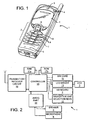
- a phone 1 comprises a user interface having a keypad 2, a display 3, an on/off button 4, a speaker 5, and a microphone 6.
- the phone 1 according to the preferred embodiment is adapted for communication via a cellular network, but could have been designed for a cordless network as well.
- the keypad 2 has a first group 7 of keys as alphanumeric keys, by means of which the user can enter a telephone number, write a text message (SMS), write a name (associated with the phone number), etc.
- SMS text message
- Each of the twelve alphanumeric keys 7 is provided with a figure "0-9" or a sign "#" or "*", respectively.
- each key is associated with a number of letters and special signs used in text editing.
- the keypad 2 additionally comprises two soft keys 8, two call handling keys 9, and a navigation key 10.
- the two soft keys 8 have a functionality corresponding to what is known from the phones Nokia 2110TM, Nokia 8110TM and Nokia 3810TM.
- the functionality of the soft key depends on the state of the phone and the navigation in the menu by using a navigation key.
- the present functionality of the soft keys 8 is shown in separate fields in the display 3 just above the keys 8.
- the two call handling keys 9 are used for establishing a call or a conference call, terminating a call or rejecting an incoming call.
- the navigation key 10 is an up/down key and is placed centrally on the front surface of the phone between the display 3 and the group of alphanumeric keys 7.
- the user will be able to control this key with his thumb.
- This is the best site to place an input key requiring precise motor movements.
- Many experienced phone users are used to one-hand handling. They place the phone in the hand between the finger tips and the palm of the hand. Hereby the thumb is free for inputting information.
- Fig. 2 schematically illustrates the components of the phone 1.
- the preferred embodiment of the phone 1 is adapted for use in connection with the GSM network, but, of course, embodiments of the invention find application in connection with other phone networks, such as cellular networks and various forms of cordless phone systems or in dual band phones accessing sets of these systems/networks.
- the microphone 6 records the user's speech, and the analog signals formed thereby are AID converted in an AID converter (not shown) before the speech is encoded in an audio part 14.
- the encoded speech signal is transferred to the processor 18, which i.a. supports the GSM terminal software.
- the processor 18 also forms the interface to the peripheral units of the apparatus, including a RAM memory 17a and a Flash ROM memory 17b, a SIM card 16, the display 3 and the keypad 2 (as well as data, power supply, etc.).
- the processor 18 communicates with the transmitter/receiver circuit 19.
- the audio part 14 speech-decodes the signal, which is transferred from the processor 18 to the earpiece 5 via an D/A converter (not shown).
- the processor 18 is connected to the user interface. Thus, it is the processor 18 which monitors the activity in the phone and controls the display 3 in response thereto.
- a state change event may be caused by the user when he activates the keypad including the navigation key 10, and this type of events is called entry events or user events.
- the network communicating with the phone may also cause a state change event.
- This type of event and other events beyond the user's control are called non user events.
- Non user events comprise status change during call set-up, change in battery voltage, change in antenna conditions, message on reception of SMS, etc.
- the method of transferring a data packet from a providing communication terminal to a requesting communication terminal will be explained in the following with reference to the GSM standard, and especially the use of the data transmission feature available under this standard.
- the data transmission is handled under Technical Specification; GSM 04.22 issued by ETSI in 1995.
- the inherent maximum transmission rate in GSM is 9600 bps.
- the described method is especially valuable when a phone user requests a new software application to be implemented in e.g. a cellular phone.
- a phone has been type approved the type approval covers the software inherent in the phone. Change of certain parts of the software requires a new type approval of the phone. Neither the manufacturer or the user has an interest in implementing non-verified software in the phone. If the phone affects the network due to erroneous software the phone can be identified and possibly be rejected by the network.
- Fig. 3 shows a Mobile Terminal MT such as the phone 1 including MT Software 30 that may include the operating system of the phone 1.
- the MT Software 30 is in the preferred embodiment stored in an EEPROM which is emulated in the Flash ROM 17b.
- the MT Software 30 is flashed into the Flash ROM 17b during the manufacturing of the phone 1.
- the MT Software 30 does furthermore include the so-called IMEI code that uniquely identifies the phone 1.
- the MT Software 30 is saved in an emulated EEPROM space of the Flash ROM 17b, and when a program or a program segment for use with the operating system of the phone has been downloaded over the air this downloaded code 31 is stored temporarily in the RAM memory 17a until the phone has verified the validity of the downloaded code 31. When this has been done the downloaded code 31 is transferred to the emulated EEPROM space of the Flash ROM 17b.
- a phone may have a dictionary associated with an editor in order to predict a full word based on a few letters inputted by the user.
- a dictionary In general such a dictionary requires a memory space in the range 60-100 kByte for each language.
- a phone for the European market will typically include around ten selectable languages.
- the manufacturer wants to provide the phone with some free memory in which the downloaded code may be stored.
- the user of the phone 1 wants to download an application or a program segment for use in an already available application he sends a request message 36, "SoftDownload_Req(lMEl)" in fig. 5 , identifying the requested software and including the IMEI code of the phone 1.
- the requesting application of the phone sets up the request message 36 in a predefined format.
- the request message 36 includes an identification of the receiver (the software provider 33), and this requires an input from the user or from the phonebook of the phone 1.
- the IMEI code 37 is automatically attached to the request message 36 without being displayed or entered by the user.
- the requested downloadable code is identified by the user - typically selected as an item in a list earlier received from the software provider.
- This request message 36 is forwarded from the phone 1 via the air and a base station 32 in the communication network to a software provider 33 authorized by the manufacturer of the phone 1.
- the software provider 33 has a set of codes 34 which may be copied or downloaded to a requesting phone 1. These codes 34 include the files requested by the requesting phone 1. Furthermore the software provider 34 has access to a certification center 35 in which authorized IMEI codes, a Master Password and a Code Block is stored.
- the software provider 33 When the software provider 33 receives a request message 36 the IMEI part of the message is automatically forwarded to certification center 35 that check the validity of the request 36. This is simply done by checking in a database table whether the requesting phone 1 has an open account for paying for the requested software code or file. From this database table the software provider 33 can find the phone number of the requesting phone 1 based on the IMEI code.
- the certification center 35 deems the request message 36 to be valid the certification center 35 then calculates a phone password 40.
- the phone password 40 may be calculated by means of a per se known secure hash algorithm, such as MD5 from the RSA Data Security Company.
- the MD5 algorithm 39 that is a secure hash algorithm, receives the IMEI code 37 and the Master Password 38 from the memories associated with the certification center 35, and outputs a Phone Password 40 in response.
- the Master Password 38 is a universal password defined by the software provider, and the IMEI code 37 is a universal code unambiguously identifying the phone.
- the certification center of the software provider 33 When the certification center of the software provider 33 has calculated the phone password 40 it starts calculating a first signature 43 that is unique for this specific software transfer.
- the calculated Phone Password 40 is put into the beginning and the end of a binary string having the binary code 44 (the code image) of the file to be transferred in the middle.
- This binary string is inputted into an appropriate signature generating algorithm 42, such as the MD5 algorithm, that was used for calculating the Phone Password 40 as described above.
- the signature generating algorithm 42 does not need to be similar to the secure hash algorithm 39.
- the output from the signature generating algorithm 42 may be regarded as a first digital signature 43 (sig2) that is unique for the this specific software transfer, as it is based on a sequence specific for the receiving phone and a sequence specific for the transmitted software code.
- the service provider 33 starts to transfer the binary code 44 (the code image) of the file and the calculated first digital signature 43 (sig2) to the requesting phone 1.
- This is indicated in fig. 5 as a response message 41 (SoftwareDownload_Resp(Codeblock+Signature)).
- the transfer of the response message 41 may be done by using the data transmission facilities set up in, e.g. the GSM standard.
- the phone 1 When the phone 1 receives a binary code 47 and the first digital signature 43 (16 bytes) it extracts these two parts from the message based on the informations included in the header of the message 41. Apart from the IMEI code 37 the phone password 45 is stored as a part of the MT software 30 in the phone 1. The phone password 45 is granted by the software provider 33 when an account is established. The phone password 40 calculated by the software provider 33 is identical with the phone password 45 granted to the phone. The two passwords 40 and 45 differ only when errors occur in the calculation at the software provider. The transmitted binary code 44 and the received binary code 47 will be identical when the transmission and the identification in the receiver is free of errors.
- the phone 1 Based on the binary code 47 (the code image) and the phone password 45 the phone 1 starts to calculate a second signature 46 (sig2').
- the stored Phone Password 45 is put into the beginning and the end of a binary string having the binary code 47 (the code image) of the file received in the middle.
- the binary string is inputted to the very same signature generating algorithm 42 as used by the software provider 33 for calculating the first signature 43 (sig2).
- the phone 1 compares this calculated second signature 46 with the first signature 43 received by the response message 41. If these two signatures 43 and 46 fit together i.e. are identical the phone 1 deems the response message to be coming from an authorized software provider having access to the Master Password 38. Therefor the phone 1 deems the received code image to be authentic and starts to transfer the down loaded code 31 to the MT software. If the authentication has failed the downloaded software would automatically have been deleted.
- the described method provides the added benefit that the transmission of the received code has been free of errors. This is due to the fact that the code image is used for the calculation of the signatures (sig2 and sig2') 43 and 46.
- the manufacture of a phone acts as the software provider he may provide the phone with the phone password during the production. Then a corresponding account may be opened by accessing an appropriate Intemet homepage of the manufacturer/software provider.
- a corresponding account may be opened by accessing an appropriate Intemet homepage of the manufacturer/software provider.
- the user of the phone has placed money into the account or agreed to do so, he may request new applications or the like to his phone. According to a preferred embodiment these new applications are transferred to the phone as software code for storing in the phone when being recognized as authentic software code.
- the data packet transferred to the phone does include an instruction that, when authenticated by the phone, activates an application that has been present in the phone as software code since the manufacture of the phone.
- a secure hash function produces a fixed-length bit pattem from an input text of any length.
- the process should be irreversible or extremely difficult to reverse and the function should give no or extremely little correlation between output results for very similar input texts. i.e. it should be to all practical intents and purposes computationally infeasible to create a input text, which produces a predefined output from the hash function.
- MD5 used as the hash function, but other hash functions may be used in its place.
- a clear text password if known both in the phone and at the authorised software producer, a signature can be constructed. Notice that the password is both prefixed and suffixed the code image. This is done to prevent birthday attacks, i.e. attacks, where a (untrusted) software supplier generates some software, where the hash value of the code image is the same as an approved version, but the behaviour is different (and probably malign).
- the downloaded code may be an application to become installed in the phone, e.g. an application for controlling a television by means of the inherent infra red link of the phone, or an E-mail application setting up an Internet compatible format for the phone, or it may be an activating key opening a program segment present in the phone but disabled.
- the downloaded code may therefore be anything from independent executable applications to short code segments used by other applications already available in the phone.
- the certification center may calculate the phone password when the account is established and store the password in the record that may be addressed by the IMEI code. Then there will be no need for calculating the phone password every time new software is requested.
- the providing communication terminal e.g. a software provider is authorized by the phone manufacturer and communicating with the network to which the requesting communication unit or phone is connected.
- the providing communication terminal preferably includes a computer program product on a server for handling the verification of a request for transferring a data packet to a requesting communication terminal or phone.
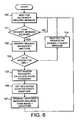
- the providing communication terminal 33 is in a mode 100 in fig. 6 where it waits for a request message 36.
- the processing unit of the providing communication terminal 33 starts in step 102 to decode the message in order to identify the requested data packet and a first unique identification code for the mobile unit included in the message.
- This first unique identification code includes according to the preferred embodiment of the invention the IMEI code 37 of the phone.
- the providing communication terminal 33 has access to a certification center 35 in which it is checked (step 103) whether the requesting communication terminal or phone do have a valid account for paying the requested program code. If the user does not have a valid account a reject message is sent to the user in step 104 where the user is informed about the situation.
- the providing communication terminal 33 starts in step 105 to calculate a phone password 40 for the requesting communication terminal 1 based on the first unique identification code (the International Mobile Equipment Identity (IMEI) code 37) and the master password 38 using a first secure hash algorithm 39, such as MD 5. Then the providing communication terminal 33 provides the requested software code from an appropriate memory connected to the server.
- IMEI International Mobile Equipment Identity
- the providing communication terminal 33 starts to calculate at step 106 a first unique signature 43 based on a binary string having the Phone Password 40 in the beginning and the end and the binary code 44 in the middle by using an appropriate secure hash algorithm 42.
- the providing communication terminal 33 starts to set up a response message 41 to the requesting communication terminal 1, said responding message 41 includes the requested data packet and the first unique signature 43. Then the responding message 41 is transmitted to the requesting communication terminal 1 in step 107.
- the server goes back to step 100 and wait for the next request message.
- the server preferably has a capacity that is sufficient to serve several requests in parallel.
- the computer program is implemented in a service provider server connected to a cellular network for transferring computer software via the wireless network (Over The Air) to mobile units upon request.
- a service provider server connected to a cellular network for transferring computer software via the wireless network (Over The Air) to mobile units upon request.
- the requesting communication terminal e.g. a cellular phone
- the requesting communication terminal includes a computer program product for handling the verification of the authenticity of a data packet received from a providing communication terminal upon request.
- This computer program product is preferably included in the MT Software 30 in fig. 3 and is an integrated part of a computer application that is controlled by the user and sets up a user interface in which the user may identify the code to be down loaded.
- the computer application may get the IMEI code directly from the MT Software and may get the phone number of the software provider from the phonebook stored on the SIM card once it has been inputted by the user or stored by the phone manufacturer in a memory location in the phone.
- the phone 1 has computer readable program code means embodied therein for handling the verification of the data packet when received via a wireless network from the software provider 33.
- the requesting communication unit or the phone 1 requests a code sequence included in a data packet to be transferred over a wireless network from the software provider 33.
- the request message 36 has a predefined format set up by the phone 1, and the request message 36 identifies the requested code and the phone 1 requesting the code.
- the phone 1 is identified by means of a first unique identification code, that preferably is based on the International Mobile Equipment Identity (IMEI) code or a similar type of code that globally identifies the phone.
- IMEI International Mobile Equipment Identity
- the software based application in step 200 detects an activity the processor checks whether the user has inputted an instruction. If this is the situation the application gets the IMEI code 37 from the Flash ROM 17b in step 201. In step 202 the application sets up the request message 36 and forwards the message to the software provider 33 in step 203. Then the phone starts to wait (step 204) for the response message. When a message is received it is checked in step 205 whether the message is the response message the phone 1 is waiting for.
- the phone 1 When the phone 1 detects the response message 41 it starts in step 206 to identify the code image 47 or the requested data packet and the first signature 43 or the second unique identification code.
- the phone When the first signature 43 is identified the phone starts to verify the validity of the first signature 43 and thereby the authenticity of the received response message 41.
- the verification of the validity of the first signature 43 includes calculation of a second signature 46.
- This second signature 46 is calculated by phone 1 by inputting a phone password 45 stored in the phone into the beginning and the end of a binary string having the received binary code 47 in the middle into a secure hash algorithm 42 (MD5) that is identical to the secure hash algorithm 42 (MD5) used by the certification center for calculating the first signature 43.
- the two signatures 43 and 46 are calculated based on the very same secure hash algorithm 42 (MD5). By comparing these two signatures 43 and 46 the phone 1 can prove the validity of the received message 41. If the received code image 47 fully corresponds the transmitted code image 44 the two signatures 43 and 46 will be identical.
- the phone 1 calculates the second signature 46 based on the code image 47 and the phone password 45.
- the phone password 45 is not transmitted over the air and is only available in the phone and in the computer of the software provider 33.
- the software provider 33 calculates the first signature 43 based on the code image 44, the IMEI code 37 and master password 38.
- the IMEI code 37 is transmitted via the network and may be intercepted by an unauthorized third party. However the master password is only present in the computer of the software provider 33.
- the phone may be in a situation where it may deem a message to be authorized when sender of the message is able to provide a correct first signature 43. Therefore the phone 1 in step 208 compares the two signatures 43 and 46 and stores in step 210 the received code image 47 in the MT software area 30 when the two signature are identical.
- the received software image is added to the existing MT software as a new application or a new software segment for use in an existing application.
- the phone skips the received software (code image 47) and asks for a re-transmission in step 209.
- the two signatures 43 and 46 are different this may be caused by errors in the transmission.
- steps 201-208 are repeated. If the re-transmission is also unsuccessful the phone may automatically inform the service provider about the situation and desist from further attempts.
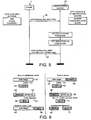
- Another technique for verifying downloaded code involves using public key encryption. Such a technique will be briefly described with reference to fig. 8 .
- public key encryption it is not necessary to keep the password in clear text format in the phone to verify downloaded code. Instead a public key is kept in the phone.
- This public key 69 corresponds to a private key 64 which is only known at the software certification centre.
- a hash value or signature (sig1) 62 for a download software block 60 is calculated by means of an appropriate hash algorithm 61, e.g. MD5.
- This signature 62 is then encrypted using the private key 64 by using an appropriate encryption algorithm 65, e.g. an RSA algorithm, and the resulting digital signature 66 is appended to the software block 60 and down loaded to the requesting terminal.
- the requesting terminal When the requesting terminal (the phone 1) receives a software block 67, it can calculate the hash value or signature (sig1) 62 for the software block 67 by means of the same hash algorithm 61 as used in the certification centre, e.g. MD5.
- the appended signature 68 shall not be used in these calculations.
- the appended signature 68 is decrypted using the public key 69, which is kept in the phone.
- the same encryption algorithm 65 e.g. an RSA algorithm as used in the certification centre 35 is used in the phone for calculating a signature (sigl') 71. If the calculated hash value (sig1) 62 matches the decrypted signature (sigl') 71, the software block 67 is verified. The software blocks 60 and 67 will be identical when the transmission was free of errors.
- the signatures (sig2) 66 and 68 are also be identical under these circumstances.
- the phone password does not need to be available at the software provider 33 it can also be only known at the certification center 35 and the phone. Because even the calculation of the signature can be done at the certification center. This way even the phone passwords are protected against fraud at the software provider's site.
Landscapes
- Engineering & Computer Science (AREA)
- Computer Security & Cryptography (AREA)
- Computer Networks & Wireless Communication (AREA)
- Signal Processing (AREA)
- Computer Hardware Design (AREA)
- Computing Systems (AREA)
- General Engineering & Computer Science (AREA)
- Mobile Radio Communication Systems (AREA)
- Data Exchanges In Wide-Area Networks (AREA)
- Computer And Data Communications (AREA)
Claims (38)
- Übertragungsverfahren für ein Datenpaket (44) von einem bereitstellenden Kommunikationsendgerät (32, 33, 35) an ein anforderndes Kommunikationsendgerät (1), wobei:das anfordernde Kommunikationsendgerät (1) eine Nachricht (36) an das bereitstellende Kommunikationsendgerät überträgt, die eine Anforderung für ein Empfangen des Datenpakets (44) und einen ersten einzigartigen Identifikationscode (37), der das anfordernde Kommunikationsendgerät (1) identifiziert, enthält;das bereitstellende Kommunikationsendgerät (32, 33, 35) die Gültigkeit des ersten einzigartigen Identifikationscodes (37) verifiziert und auf eine erfolgreiche Verifikation hin durch Übertragen einer Nachricht (41), die das angeforderte Datenpaket (44) und einen zweiten einzigartigen Identifikationscode (43) enthält, an das anfordernde Kommunikationsendgerät (1) antwortet;das anfordernde Kommunikationsendgerät (1) die Gültigkeit des zweiten einzigartigen Identifikationscodes (43) verifiziert und auf eine erfolgreiche Verifikation hin, das Datenpaket (44) entsprechend speichert.
- Verfahren gemäß Anspruch 1, wobei das bereitstellende Kommunikationsendgerät eine stationäre Einheit ist, die ein Teil eines drahtlosen Kommunikationsnetzwerkes ist, und das anfordernde Kommunikationsendgerät eine über das drahtlose Kommunikationsnetzwerk kommunizierende Mobileinheit ist.
- Verfahren gemäß Anspruch 2, wobei der erste einzigartige Identifikationscode einen für die Mobileinheit einzigartigen International Mobile Equipment Identity (IMEI)-Code enthält.
- Verfahren gemäß Anspruch 3, wobei die Mobileinheit weiter zum einzigartigen Identifikationscode einem einzigartigen Passwort (45; 40) zugeordnet ist, das in der Mobileinheit gespeichert ist und das durch das bereitstellende Kommunikationsendgerät basierend auf dem International Mobile Equipment Identity (IMEI)-Code und einem dem bereitstellenden Kommunikationsendgerät verfügbaren Hauptpasswort (38) berechnet werden kann, und das bereitstellende Kommunikationsendgerät eine erste einzigartige Signatur (43) basierend auf dem Hauptpasswort und dem International Mobile Equipment Identity (IMEI)-Code berechnet, und die erste einzigartige Signatur als der zweite einzigartige Identifikationscode verwendet wird.
- Verfahren gemäß Anspruch 4, wobei das bereitstellende Kommunikationsendgerät für die Mobileinheit ein Telefonpasswort (40) basierend auf dem International Mobile Equipment Identity (IMEI)-Code und dem Hauptpasswort unter Verwendung eines sicheren Hash-Algorithmus berechnet und dann die erste einzigartige Signatur basierend auf dem Telefonpasswort und dem zu sendenden Datenpaket unter Verwendung des gleichen sicheren Hash-Algorithmus berechnet.
- Verfahren gemäß Anspruch 5, wobei die Mobileinheit, auf Empfang der das angeforderte Datenpaket und die einzigartige Signatur enthaltenden Nachricht hin, eine zweite Signatur (46) basierend auf dem empfangenen Datenpaket und dem Telefonpasswort durch Anwenden eines sicheren Hash-Algorithmus, der komplementär zu dem sicheren, in dem bereitstellenden Kommunikationsendgerät verwendeten Hash-Algorithmus ist, berechnet und die Mobileinheit die erste als ein Teil der Nachricht empfangene einzigartige Signatur und die berechnete zweite Signatur vergleicht, und die Nachricht, die das Datenpaket enthält als verifiziert bestimmt, wenn die zwei Signaturen zusammenpassen.
- Verfahren gemäß Anspruch 1, wobei:das bereitstellende Kommunikationsendgerät:einen sitzungsspezifischen Wert basierend auf einem Eingeben des angeforderten Datenpakets in einen sicheren Hash-Algorithmus berechnet; undden zweiten einzigartigen Identifikationscode mittels eines privaten Schlüssels (64) und des sitzungsspezifischen Werts durch Anwenden eines Verschlüsselungsalgorithmus berechnet; unddas anfordernde Kommunikationsendgerät die Gültigkeit des zweiten einzigartigen Identifikationscode verifiziert durch:Berechnen eines sitzungsspezifischen Werts basierend auf Eingeben des empfangenen Datenpakets in einen sicheren Hash-Algorithmus, der ähnlich zu dem durch das bereitstellende Kommunikationsendgerät verwendeten Hash-Algorithmus ist; undBerechnen einer Signatur mittels Eingeben eines öffentlichen Schlüssels und des empfangenen zweiten einzigartigen Identifikationscodes in einen Entschlüsselungsalgorithmus, der ähnlich zu dem durch das bereitstellende Kommunikationsendgerät verwendeten Verschlüsselungsalgorithmus ist; undVerifizieren der Gültigkeit des zweiten einzigartigen Identifikationscodes, wenn der sitzungsspezifische Wert, der auf Eingeben des empfangenen Datenpakets und der mittels des öffentlichen Schlüssels berechneten Signatur basiert, und der empfangene zweite einzigartige Identifikationscode zusammenpassen.
- Verfahren gemäß Anspruch 1, wobei der zweite einzigartige Identifikationscode einzigartig die Nachricht in dem Netzwerk als zum Empfang durch das anfordernde Kommunikationsendgerät beabsichtigt identifiziert.
- Verfahren gemäß einem der vorhergehenden Ansprüche, wobei der zweite einzigartige Identifikationscode verschlüsselt ist.
- Verfahren gemäß Anspruch 9, wobei der zweite Identifikationscode auf Empfang hin an dem anfordernden Kommunikationsendgerät entschlüsselt wird.
- Drahtloskommunikationsnetzwerk, in dem ein Datenpaket (44) sicher von einem bereitstellenden Kommunikationsendgerät (32, 33, 35) an ein anforderndes Kommunikationsendgerät (1) übertragen werden kann, wobei:das anfordernde Kommunikationsendgerät (1) aufweist Mittel zum Übertragen (19) einer Nachricht (36) an das bereitstellende Kommunikationsendgerät (32, 33, 35), wobei die Nachricht (36) eine Anforderung für das Datenpaket (44) und eine Identifikation von sich selbst mittels eines ersten einzigartigen Identifikationscodes (37) enthält;das bereitstellende Kommunikationsendgerät (32, 33, 35) enthält Mittel zum Verifizieren (35) der Gültigkeit des ersten einzigartigen Identifikationscodes (37) und Mittel zum Übertragen einer Nachricht (41), auf eine erfolgreiche Verifikation hin, an das anfordernde Kommunikationsendgerät (1), wobei die Nachricht (41) das angeforderte Datenpaket (44) und einen zweiten einzigartigen Identifikationscode (43) enthält;das anfordernde Kommunikationsendgerät (1) aufweist Mittel zum Verifizieren (18) der Gültigkeit des zweiten einzigartigen Identifikationscodes (43); unddas anfordernde Kommunikationsendgerät (1) enthält Mittel zum Speichern (17) des Datenpakets, auf eine erfolgreiche Verifikation der Gültigkeit der empfangenen Nachricht (41) hin.
- Drahtloskommunikationsnetzwerk gemäß Anspruch 11, wobei das bereitstellende Kommunikationsendgerät eine stationäre Einheit ist, die ein Teil eines Drahtloskommunikationsnetzwerkes ist, und das anfordernde Kommunikationsendgerät eine über das Drahtloskommunikationsnetzwerk kommunizierende Mobileinheit ist.
- Drahtloskommunikationsnetzwerk gemäß Anspruch 12, wobei der erste einzigartige Identifikationscode einen für die Mobileinheit einzigartigen International Mobile Equipment Identity (IMEI)-Code enthält.
- Drahtloskommunikationsnetzwerk gemäß Anspruch 13, wobei die Mobileinheit weiter zu dem einzigartigen Identifikationscode einem einzigartigen Passwort (40; 45) zugeordnet ist, das in der Mobileinheit gespeichert ist, wobei das bereitstellende Kommunikationsendgerät aufweist:Mittel zum Berechnen (35) einer ersten einzigartigen Signatur basierend auf dem International Mobile Equipment Identity (IMEI)-Code und einem für das bereitstellende Kommunikationsendgerät verfügbaren Hauptpasswort (48), wobei die erste einzigartige Signatur als der zweite einzigartige Identifikationscode verwendet wird.
- Drahtloskommunikationsnetzwerk gemäß Anspruch 14, wobei das bereitstellende Kommunikationsendgerät aufweist:Mittel zum Berechnen für die Mobileinheit eines Telefonpassworts (40) basierend auf dem International Mobile Equipment Identity (IMEI)-Code und dem Hauptpasswort unter Verwendung eines sicheren Hash-Algorithmus, undMittel zum Berechnen der ersten einzigartigen Signatur basierend auf dem Telefonpasswort und dem zu sendenden Datenpaket unter Verwendung desselben sicheren Hash-Algorithmus.
- Drahtloskommunikationsnetzwerk gemäß Anspruch 15, wobei die Mobileinheit aufweist:Mittel zum Berechnen (18) einer zweiten Signatur (46) basierend auf dem empfangenen Datenpaket und dem Telefonpasswort durch Anwenden eines sicheren Hash-Algorithmus, der komplementär zu dem sicheren in dem bereitstellenden Kommunikationsendgerät verwendeten Hash-Algorithmus ist,Mittel zum Vergleichen der ersten, als ein Teil der Nachricht empfangenen, einzigartigen Signatur und der berechneten zweiten Signatur, und zum Erachten der Nachricht einschließlich des Datenpakets als verifiziert, wenn die zwei Signaturen zusammenpassen.
- Drahtloskommunikationsnetzwerk gemäß Anspruch 11, wobei die Berechnungsmittel in dem bereitstellenden Kommunikationsendgerät vorbereitet sind zum:Berechnen eines sitzungsspezifischen Werts basierend auf Eingeben des angeforderten Datenpakets in einen sicheren Hash-Algorithmus; undBerechnen des zweiten einzigartigen Identifikationscodes mittels eines privaten Schlüssels (64) und des sitzungsspezifischen Werts durch Anwenden einen Verschlüsselungsalgorithmus; und
wobei die Berechnungsmittel in dem anfordernden Kommunikationsendgerät vorbereitet sind zum Verifizieren der Gültigkeit des zweiten einzigartigen Identifikationscodes durch:Berechnen eines sitzungsspezifischen Werts basierend auf Eingeben des empfangenen Datenpakets in einen sicheren Hash-Algorithmus, der ähnlich dem durch das bereitstellende Kommunikationsendgerät verwendeten Hash-Algorithmus ist; undBerechnen einer Signatur mittels Eingeben eines öffentlichen Schlüssels und des empfangenen zweiten einzigartigen Identifikationscodes in einen Entschlüsselungsalgorithmus, der ähnlich dem durch das bereitstellende Kommunikationsendgerät verwendeten Verschlüsselungsalgorithmus ist; undVerifizieren der Gültigkeit des zweiten einzigartigen Identifikationscodes, wenn der sitzungsspezifische Wert, der auf Eingeben des empfangenen Datenpakets und der mittels des öffentlichen Schlüssels berechneten Signatur basiert, und der empfangene zweite einzigartige Identifikationscode zusammenpassen. - Drahtloskommunikationsnetzwerk gemäß Anspruch 11, wobei der zweite einzigartige Identifikationscode einzigartig die Nachricht in dem Netzwerk als zum Empfang durch das anfordernde Kommunikationsendgerät beabsichtigt identifiziert.
- Drahtloskommunikationsnetzwerk gemäß Anspruch 11, wobei der zweite einzigartige Identifikationscode verschlüsselt ist.
- Drahtloskommunikationsnetzwerk gemäß Anspruch 19, wobei der zweite einzigartige Identifikationscode auf Empfang hin an dem anfordernden Kommunikationsendgerät entschlüsselt wird.
- Computerprogrammprodukt zum Abwickeln der Verifikation der Übertragung eines Datenpakets (44) von einem bereitstellenden Kommunikationsendgerät (32, 33, 35) an ein anforderndes Kommunikationsendgerät (1), und aufweisend:ein computerverwendbares Medium in dem bereitstellenden Kommunikationsendgerät (32, 33, 35) mit computerlesbaren darauf verkörperten Programmcodemitteln zum Abwickeln einer Verifikation des anfordernden Kommunikationsendgeräts (1), das ein über ein Drahtlosnetzwerk von dem bereitstellenden Kommunikationsendgerät (32, 33, 35) an das anfordernde Kommunikationsendgerät (1) zu übertragendes Datenpaket (44) anfordert, wobei die computerlesbaren Programmcodemittel in dem Computerprogrammprodukt aufweisen:computerlesbare Programmcodemittel zum Identifizieren einer Anforderung für das Datenpaket (44) und eines ersten einzigartigen Identifikationscodes (37) für das anfordernde Kommunikationsendgerät (1), der in einer durch das bereitstellende Kommunikationsendgerät (32, 33, 35) empfangenen Nachricht (36) enthalten ist;computerlesbare Programmcodemittel zum Verifizieren der Gültigkeit des ersten einzigartigen Identifikationscodes (37);computerlesbare Programmcodemittel zum Vorbereiten einer Antwortnachricht (41) an das anfordernde Kommunikationsendgerät (1), auf eine erfolgreiche Verifikation hin, wobei die Antwortnachricht (41) das angeforderte Datenpaket (44) und einen zweiten einzigartigen Identifikationscode (43) enthält.
- Computerprogrammprodukt gemäß Anspruch 21, und aufweisend:computerlesbare Programmcodemittel zum Berechnen für die Mobileinheit eines Telefonpassworts (40) basierend auf dem ersten einzigartigen Identifikationscode (dem International Mobile Equipment Identity (IMEI)-Code) und dem Hauptpasswort (38) unter Verwendung eines ersten sicheren Hash-Algorithmus, undcomputerlesbare Programmcodemittel zum Berechnen des ersten einzigartigen Identifikationscodes basierend auf dem Telefonpasswort und dem zu sendenden Datenpaket unter Verwendung eines zweiten sicheren Hash-Algorithmus.
- Computerprogrammprodukt gemäß Anspruch 21, wobei die computerlesbaren Programmcodemittel zum Berechnen des ersten einzigartigen Identifikationscodes vorbereitet sind zum:Berechnen eines sitzungsspezifischen Werts basierend auf Eingeben des angeforderten Datenpakets in einen sicheren Hash-Algorithmus; undBerechnen des zweiten einzigartigen Identifikationscodes mittels eines privaten Schlüssels (64) und des sitzungsspezifischen Werts durch Anwenden eines Verschlüsselungsalgorithmus.
- Computerprogrammprodukt gemäß einem der Ansprüche 21 bis 23 und implementiert in einem Computer eines Dienstanbieters, der verbunden ist mit einem zellularen Netzwerk zum Übertragen von Computersoftware über das Drahtlosnetzwerk (über die Luft) an Mobileinheiten auf Anforderung hin.
- Computerprogrammprodukt zum Abwickeln der Verifikation der Übertragung eines Datenpakets (44) von einem bereitstellenden Kommunikationsendgerät (32, 33, 35) an ein anforderndes Kommunikationsendgerät (1), und aufweisend:ein computerverwendbares Medium in dem anfordernden Kommunikationsendgerät mit computerlesbaren darauf verkörperten Programmcodemitteln zum Abwickeln einer Anforderung eines Datenpakets (44) und der Verifikation des Datenpakets (44), wenn es über ein Drahtlosnetzwerk von dem bereitstellenden Kommunikationsendgerät (32, 33, 35) empfangen wurde, wobei die computerlesbaren Programmcodemittel in dem Computerprogrammprodukt aufweisen:computerlesbare Programmcodemittel zum Vorbereiten einer Nachricht (36) an das bereitstellende Kommunikationsendgerät (32, 33, 35), wobei die Nachricht (36) enthält eine Anforderung nach dem Datenpaket (44) und eine Identifikation des anfordernden Kommunikationsendgeräts (1) mittels eines ersten einzigartigen Identifikationscodes (37);computerlesbare Programmcodemittel zum Identifizieren des angeforderten Datenpakets (44) und eines zweiten einzigartigen Identifikationscodes (43) in einer Antwortnachricht (41) von dem bereitstellenden Kommunikationsendgerät (32, 33, 35);computerlesbare Programmcodemittel zum Verifizieren der Gültigkeit des zweiten einzigartigen Identifikationscodes (43);computerlesbare Programmcodemittel zum Speichern des Datenpakets (44), auf eine erfolgreiche Verifikation der Gültigkeit der empfangenen Nachricht (41) hin.
- Computerprogrammprodukt gemäß Anspruch 25, wobei computerlesbare Programmcodemittel einen für das anfordernde Kommunikationsendgerät einzigartigen International Mobile Equipment Identity (IMEI)-Code als ersten einzigartigen Identifikationscode anwenden.
- Computerprogrammprodukt gemäß einem der Ansprüche 25 oder 26, und weiter aufweisend:computerlesbare Programmcodemittel zum Berechnen einer zweiten Signatur (46) basierend auf dem empfangenen Datenpaket und einem Telefonpasswort (45) durch Anwenden eines sicheren Hash-Algorithmus, der komplementär zu dem sicheren in dem bereitstellenden Kommunikationsendgerät verwendeten Hash-Algorithmus ist; undcomputerlesbare Programmcodemittel zum Vergleichen des zweiten einzigartigen Identifikationscodes, der als ein Teil der Nachricht empfangen wurde, und der berechneten zweiten Signatur, und zum Erachten der Nachricht einschließlich des Datenpakets als verifiziert, wenn die zwei Signaturen zusammenpassen.
- Computerprogrammprodukt gemäß Anspruch 25, wobei die computerlesbaren Programmcodemittel zum Berechnen der zweiten einzigartigen Signatur vorbereitet sind für das Verifizieren der Gültigkeit des zweiten einzigartigen Identifikationscodes durch:Berechnen eines sitzungsspezifischen Werts basierend auf Eingeben des empfangenen Datenpakets in einen sicheren Hash-Algorithmus, der ähnlich zu dem durch das bereitstellende Kommunikationsendgerät verwendeten Hash-Algorithmus ist; undBerechnen einer Signatur mittels Eingeben eines öffentlichen Schlüssels und des empfangenen zweiten einzigartigen Identifikationscodes in einen Entschlüsselungsalgorithmus, der ähnlich zu dem durch das bereitstellende Kommunikationsendgerät verwendeten Verschlüsselungsalgorithmus ist; undVerifizieren der Gültigkeit des zweiten einzigartigen Identifikationscodes, wenn der sitzungsspezifische Wert, der auf Eingeben des empfangenden Datenpakets und der mittels des öffentlichen Schlüssels berechneten Signatur basiert, und der empfangene zweite einzigartige Identifikationscode zusammenpassen.
- Anforderndes Kommunikationsendgerät (1) zum Kommunizieren mit einem bereitstellenden Kommunikationsendgerät (32, 33, 35) über ein Drahtloskommunikationsnetzwerk, und aufweisend:Mittel zum Übertragen (19) einer Nachricht (36) an das bereitstellende Kommunikationsendgerät (32, 33, 35), wobei die Nachricht (36) enthält eine Anforderung für das Datenpaket (44) und eine Identifikation des anfordernden Kommunikationsendgeräts mittels eines ersten einzigartigen Identifikationscodes (37);Mittel zum Empfangen (19) einer Antwortnachricht (41) von dem bereitstellenden Kommunikationsendgerät (32, 33, 34), wobei die Antwortnachricht (41) das angeforderte Datenpaket (44) und einen zweiten einzigartigen Identifikationscode (43) enthält;Mittel zum Verifizieren (18) der Gültigkeit des zweiten einzigartigen Identifikationscodes (43); undMittel zum Speichern (17) des Datenpakets (44), auf eine erfolgreiche Verifikation der Gültigkeit der empfangenen Nachricht (41) hin.
- Anforderndes Kommunikationsendgerät gemäß Anspruch 29, wobei das anfordernde Kommunikationsendgerät eine Mobileinheit ist und der erste einzigartige Identifikationscode einen für die Mobileinheit einzigartigen International Mobile Equipment Identity (IMEI)-Code enthält.
- Anforderndes Kommunikationsendgerät gemäß Anspruch 30, wobei die Mobileinheit weiter zu dem einzigartigen Identifikationscode einem einzigartigen Passwort (45; 40) zugeordnet ist; das in der Mobileinheit gespeichert ist und welches anhand eines Hauptpassworts (38) abgeleitet werden kann, wenn der International Mobile Equipment Identity (IMEI)-Code bekannt ist.
- Anforderndes Kommunikationsendgerät gemäß einem der Ansprüche 29 bis 31, wobei das anfordernde Kommunikationsendgerät ein Zelltelefon ist.
- Anforderndes Kommunikationsendgerät gemäß einem der Ansprüche 29 bis 32, wobei das anfordernde Kommunikationsendgerät, wenn es die Nachricht einschließlich des zweiten einzigartigen Identifikationscode von dem bereitstellenden Kommunikationsendgerät erhält, den zweiten einzigartigen Identifikationscode als eine erste einzigartige Signatur handhabt; wobei das anfordernde Kommunikationsendgerät weiter aufweist:Mittel zum Berechnen (18) einer zweiten Signatur basierend auf dem empfangenen Datenpaket und dem Telefonpasswort (45) durch Anwenden eines sicheren Hash-Algorithmus, der komplementär zu dem sicheren in dem bereitstellenden Kommunikationsendgerät verwendeten Hash-Algorithmus ist; undMittel zum Vergleichen der ersten einzigartigen als ein Teil der Nachricht empfangenen Signatur und der berechneten zweiten Signatur und zum Erachten der Nachricht einschließlich des Datenpakets als verifiziert, wenn die zwei Signaturen zusammenpassen.
- Anforderndes Kommunikationsendgerät gemäß Anspruch 29, wobei die Berechnungsmittel in dem bereitstellenden Kommunikationsendgerät vorbereitet sind für:Berechnen eines sitzungsspezifischen Werts basierend auf Eingeben des angeforderten Datenpakets in einen sicheren Hash-Algorithmus; undBerechnen des zweiten einzigartigen Identifikationscodes mittels eines privaten Schlüssels und des sitzungsspezifischen Werts durch Anwenden eines Verschlüsselungsalgorithmus; und
wobei die Berechnungsmittel in dem anfordernden Kommunikationsendgerät vorbereitet sind zum Verifizieren der Gültigkeit des zweiten einzigartigen Identifikationscode durch:Berechnen eines sitzungsspezifischen Werts basierend auf Eingeben des empfangenen Datenpakets in eine sicheren Hash-Algorithmus, der ähnlich zu dem durch das bereitstellende Kommunikationsendgerät verwendeten Hash-Algorithmus ist; undBerechnen einer Signatur mittels Eingeben eines öffentlichen Schlüssels und des empfangenen zweiten einzigartigen Identifikationscodes in einen Entschlüsselungsalgorithmus, der ähnlich zu dem durch das bereitstellende Kommunikationsendgerät verwendeten Verschlüsselungsalgorithmus ist; undVerifizieren der Gültigkeit des zweiten einzigartigen Identifikationscodes, wenn der sitzungsspezifische Wert, der auf einem Eingeben des empfangenen Datenpakets und der mittels des öffentlichen Schlüssels berechneten Signatur basiert, und der empfangene zweite einzigartige Identifikationscode zusammenpassen. - Bereitstellendes Kommunikationsendgerät (32, 33, 35), das Teil eines Drahtloskommunikationsnetzwerks ist und aufweist:Mittel zum Empfangen (32) einer Nachricht (36) von einem anfordernden Kommunikationsendgerät (1), wobei die Nachricht enthält eine Anforderung nach einem Datenpaket (44) und eine Identifikation des anfordernden Kommunikationsendgeräts (1) mittels eines ersten einzigartigen Identifikationscodes (37);Mittel zum Verifizieren (35) der Gültigkeit des ersten einzigartigen Identifikationscodes (37); undMittel zum Übertragen (32) einer Antwortnachricht (41), auf eine erfolgreiche Verifikation hin, an das anfordernde Kommunikationsendgerät (1), wobei die Antwortnachricht enthält das angeforderte Datenpaket und einen zweiten einzigartigen Identifikationscode (43).
- Bereitstellendes Kommunikationsendgerät gemäß Anspruch 35 und vorgesehen als eine stationäre Einheit.
- Bereitstellendes Kommunikationsendgerät gemäß Anspruch 35 oder 36 und aufweisend:Mittel zum Berechnen für das anfordernde Kommunikationsendgerät eines Telefonpassworts (40) basierend auf dem ersten einzigartigen Identifikationscode (dem International Mobile Equipment Identity (IMEI)-Code) und dem Hauptpasswort (38) unter Verwendung eines sicheren Hash-Algorithmus; undMittel zum Berechnen der ersten einzigartigen Signatur (43) basierend auf dem Telefonpasswort und dem zu sendenden Datenpaket unter Verwendung desselben sicheren Hash-Algorithmus.
- Bereitstellendes Kommunikationsendgerät gemäß Anspruch 37, wobei die Berechnungsmittel in dem bereitstellenden Kommunikationsendgerät vorbereitet sind zum:Berechnen eines sitzungsspezifischen Werts basierend auf Eingeben des angeforderten Datenpakets in einen sicheren Hash-Algorithmus; undBerechnen des zweiten einzigartigen Identifikationscodes mittels Eingeben eines privaten Schlüssels (64) und sitzungsspezifischen Wert in einen Verschlüsselungsalgorithmus.
Applications Claiming Priority (2)
| Application Number | Priority Date | Filing Date | Title |
|---|---|---|---|
| GB9816541A GB2340344A (en) | 1998-07-29 | 1998-07-29 | Bilateral Data Transfer Verification for Programming a Cellular Phone |
| GB9816541 | 1998-07-29 |
Publications (3)
| Publication Number | Publication Date |
|---|---|
| EP0977451A2 EP0977451A2 (de) | 2000-02-02 |
| EP0977451A3 EP0977451A3 (de) | 2001-01-24 |
| EP0977451B1 true EP0977451B1 (de) | 2008-10-22 |
Family
ID=10836388
Family Applications (1)
| Application Number | Title | Priority Date | Filing Date |
|---|---|---|---|
| EP99305677A Expired - Lifetime EP0977451B1 (de) | 1998-07-29 | 1999-07-16 | Verifizierung eines Datentransfers basierend auf eindeutigen Identifizierungskoden |
Country Status (5)
| Country | Link |
|---|---|
| US (1) | US6707915B1 (de) |
| EP (1) | EP0977451B1 (de) |
| JP (1) | JP2000059440A (de) |
| DE (1) | DE69939759D1 (de) |
| GB (1) | GB2340344A (de) |
Cited By (1)
| Publication number | Priority date | Publication date | Assignee | Title |
|---|---|---|---|---|
| US9471910B2 (en) | 1999-10-25 | 2016-10-18 | Smartflash, LLC | Data storage and access systems |
Families Citing this family (93)
| Publication number | Priority date | Publication date | Assignee | Title |
|---|---|---|---|---|
| WO2001059569A2 (en) * | 2000-02-09 | 2001-08-16 | Apriva, Inc. | Communication systems, components, and methods with programmable wireless devices |
| AU777912B2 (en) * | 2000-02-29 | 2004-11-04 | International Business Machines Corporation | System and method of associating devices to secure commercial transactions performed over the internet |
| FI111207B (fi) * | 2000-03-24 | 2003-06-13 | Smarttrust Systems Oy | Viestin käsittely |
| FI20001073A7 (fi) | 2000-05-08 | 2001-11-09 | Nokia Corp | Menetelmä muistikortin suojaamiseksi ja muistikortti |
| DE10026326B4 (de) * | 2000-05-26 | 2016-02-04 | Ipcom Gmbh & Co. Kg | Verfahren zur kryptografisch prüfbaren Identifikation einer physikalischen Einheit in einem offenen drahtlosen Telekommunikationsnetzwerk |
| US7043456B2 (en) * | 2000-06-05 | 2006-05-09 | Telefonaktiebolaget Lm Ericsson (Publ) | Mobile electronic transaction personal proxy |
| US20040073617A1 (en) | 2000-06-19 | 2004-04-15 | Milliken Walter Clark | Hash-based systems and methods for detecting and preventing transmission of unwanted e-mail |
| US7328349B2 (en) * | 2001-12-14 | 2008-02-05 | Bbn Technologies Corp. | Hash-based systems and methods for detecting, preventing, and tracing network worms and viruses |
| US20040064737A1 (en) * | 2000-06-19 | 2004-04-01 | Milliken Walter Clark | Hash-based systems and methods for detecting and preventing transmission of polymorphic network worms and viruses |
| GB2364209A (en) * | 2000-06-30 | 2002-01-16 | Nokia Oy Ab | Combined digital video broadcast receiver and cellular receiver |
| GB2364211A (en) * | 2000-06-30 | 2002-01-16 | Nokia Oy Ab | A terminal comprising two receivers for receiving an encrypted first signal from a first network and a decryption second signal from a second network |
| GB2365264B (en) * | 2000-07-25 | 2004-09-29 | Vodafone Ltd | Telecommunication systems and methods |
| KR20000072644A (ko) * | 2000-09-16 | 2000-12-05 | 최선정 | 외부인에 의한 사용자 계정의 침입 감지 및 계정내 정보보호 방법 |
| US7668315B2 (en) * | 2001-01-05 | 2010-02-23 | Qualcomm Incorporated | Local authentication of mobile subscribers outside their home systems |
| US7200105B1 (en) | 2001-01-12 | 2007-04-03 | Bbn Technologies Corp. | Systems and methods for point of ingress traceback of a network attack |
| US7266687B2 (en) * | 2001-02-16 | 2007-09-04 | Motorola, Inc. | Method and apparatus for storing and distributing encryption keys |
| US7123719B2 (en) * | 2001-02-16 | 2006-10-17 | Motorola, Inc. | Method and apparatus for providing authentication in a communication system |
| GB2372903A (en) * | 2001-02-28 | 2002-09-04 | Telepathix Ltd | Methods for registering and notifying wireless devices |
| US7945592B2 (en) | 2001-03-20 | 2011-05-17 | Verizon Business Global Llc | XML based transaction detail records |
| US7406306B2 (en) * | 2001-03-20 | 2008-07-29 | Verizon Business Global Llc | Method for billing in a telecommunications network |
| US8380840B2 (en) * | 2001-12-17 | 2013-02-19 | Verizon Business Global Llc | Method for recording events in an IP network |
| JP3763349B2 (ja) * | 2001-04-03 | 2006-04-05 | 日本電気株式会社 | 加入者カードを用いる携帯電話機 |
| KR20020087656A (ko) * | 2001-05-15 | 2002-11-23 | 채운들 | 무선통신기를 이용한 정당 이용자 인증 방법 |
| US7133971B2 (en) * | 2003-11-21 | 2006-11-07 | International Business Machines Corporation | Cache with selective least frequently used or most frequently used cache line replacement |
| US7133662B2 (en) * | 2001-05-24 | 2006-11-07 | International Business Machines Corporation | Methods and apparatus for restricting access of a user using a cellular telephone |
| US7548518B2 (en) * | 2001-06-29 | 2009-06-16 | Nokia Corporation | Receiver |
| US6978223B2 (en) * | 2001-09-06 | 2005-12-20 | Bbnt Solutions Llc | Systems and methods for network performance measurement using packet signature collection |
| US7281132B2 (en) * | 2001-10-19 | 2007-10-09 | Sun Microsystems, Inc. | Using token-based signing to install unsigned binaries |
| JP4019266B2 (ja) | 2001-10-25 | 2007-12-12 | 日本電気株式会社 | データ送信方法 |
| US20030125013A1 (en) * | 2001-12-28 | 2003-07-03 | Mizell Jerry L. | Method, network and node for levying a tariff against an originator of a data transfer in a telecommunication network |
| US7181612B1 (en) * | 2002-01-17 | 2007-02-20 | Cisco Technology, Inc. | Facilitating IPsec communications through devices that employ address translation in a telecommunications network |
| FR2837009A1 (fr) * | 2002-03-11 | 2003-09-12 | Schlumberger Systems & Service | Mise a jour d'un algorithme d'authentification dans un systeme informatique |
| GB0212318D0 (en) * | 2002-05-28 | 2002-07-10 | Symbian Ltd | Tamper evident removable media storing executable code |
| US7353394B2 (en) * | 2002-06-20 | 2008-04-01 | International Business Machine Corporation | System and method for digital signature authentication of SMS messages |
| US7296156B2 (en) * | 2002-06-20 | 2007-11-13 | International Business Machines Corporation | System and method for SMS authentication |
| FR2842059B1 (fr) * | 2002-07-04 | 2004-12-24 | Cit Alcatel | Procede de verouillage d'un terminal mobile de telecommunication |
| US20040025026A1 (en) * | 2002-08-02 | 2004-02-05 | Karp Alan H. | System-specific passwords |
| US7366913B1 (en) * | 2002-09-04 | 2008-04-29 | Haley Jeffrey T | Knowledge-type authorization device and methods |
| JP3651605B2 (ja) | 2002-09-06 | 2005-05-25 | 株式会社東芝 | 認定試験方法、認定試験システム、無線端末及び認定装置 |
| WO2004042998A1 (en) | 2002-11-08 | 2004-05-21 | Nokia Corporation | Software integrity test in a mobile telephone |
| US20040202329A1 (en) * | 2003-04-11 | 2004-10-14 | Samsung Electronics Co., Ltd. | Method and system for providing broadcast service using encryption in a mobile communication system |
| KR100506528B1 (ko) * | 2003-08-12 | 2005-08-03 | 삼성전자주식회사 | 전자 서명을 이용한 모바일 기기 제어 시스템 및 방법 |
| US7114074B2 (en) * | 2003-12-22 | 2006-09-26 | Graphic Security Systems Corporation | Method and system for controlling encoded image production using image signatures |
| EP2549659A1 (de) | 2004-02-20 | 2013-01-23 | Nuance Communications, Inc. | Anrufübernahmeverfahren zur Kunden-Selbstunterstützung in einer mobilen Vorrichtung |
| DE102004013658B3 (de) * | 2004-03-19 | 2005-12-08 | Siemens Ag | Protokollerweiterung einer Signalisierungsnachricht |
| DE102004040658A1 (de) * | 2004-08-20 | 2006-02-23 | Mobileview Ag | Verfahren und Einrichtung zur Übertragung kostenpflichtiger Daten auf mobile Endgeräte |
| US8219811B2 (en) | 2004-09-21 | 2012-07-10 | Nuance Communications, Inc. | Secure software execution such as for use with a cell phone or mobile device |
| US7877112B2 (en) * | 2004-11-19 | 2011-01-25 | Nextel Communications Inc. | SIM card data transfer system and methods |
| US7917133B2 (en) * | 2004-12-23 | 2011-03-29 | Research In Motion Limited | Method and apparatus for after-market vending of feature-provisioning software to third party mobile wireless communication devices |
| US8059551B2 (en) | 2005-02-15 | 2011-11-15 | Raytheon Bbn Technologies Corp. | Method for source-spoofed IP packet traceback |
| WO2007044972A2 (en) | 2005-10-12 | 2007-04-19 | Snapin Software Inc. | Message intercept methods, such as for customer self-support on a mobile device |
| CN101248472B (zh) | 2005-06-24 | 2010-11-03 | 斯纳品软件公司 | 本地拦截方法,例如提供训练、信息呼叫和诊断的客户帮助的应用程序 |
| US20070074027A1 (en) * | 2005-09-26 | 2007-03-29 | Tien-Chun Tung | Methods of verifying, signing, encrypting, and decrypting data and file |
| EP1791378B1 (de) * | 2005-11-29 | 2010-02-10 | Research In Motion Limited | Überprüfung von drahtloser Zugangssoftware mittels Hashing von Kennungen |
| US7389426B2 (en) * | 2005-11-29 | 2008-06-17 | Research In Motion Limited | Mobile software terminal identifier |
| EP1969886B1 (de) | 2005-12-13 | 2017-09-20 | Nuance Communications, Inc. | Verfahren zum durchführen interaktiver dienste auf einem mobilgerät, wie zum beispiel von zeit- oder ortseingeleiteten interaktiven diensten |
| JP4167688B2 (ja) * | 2006-01-12 | 2008-10-15 | 松下電器産業株式会社 | 携帯端末、暗号化コンテンツ再生方法及びそれに用いられる平文データ生成方法 |
| US20100146609A1 (en) * | 2006-10-04 | 2010-06-10 | Rob Bartlett | Method and system of securing accounts |
| USRE47533E1 (en) * | 2006-10-04 | 2019-07-23 | Aaa Internet Publishing Inc. | Method and system of securing accounts |
| US9087183B2 (en) * | 2006-10-04 | 2015-07-21 | Rob Bartlett | Method and system of securing accounts |
| GB0619696D0 (en) * | 2006-10-05 | 2006-11-15 | Helixion Ltd | Personal electronic device security |
| US8744414B2 (en) | 2007-01-05 | 2014-06-03 | Nuance Communications, Inc. | Methods of interacting between mobile devices and voice response systems |
| US8126506B2 (en) | 2007-02-14 | 2012-02-28 | Nuance Communications, Inc. | System and method for securely managing data stored on mobile devices, such as enterprise mobility data |
| US7817042B2 (en) * | 2007-02-23 | 2010-10-19 | Cisco Technology, Inc. | RFID tag management and operation |
| ATE447304T1 (de) * | 2007-02-27 | 2009-11-15 | Lucent Technologies Inc | Drahtloses kommunikationsverfahren zur steuerung eines mittels sicherheitsvorrichtung gewährten zugangs |
| AU2008240151B2 (en) | 2007-04-12 | 2012-04-05 | Nuance Communications, Inc. | System and method for detecting mutually supported capabilities between mobile devices |
| US8533821B2 (en) | 2007-05-25 | 2013-09-10 | International Business Machines Corporation | Detecting and defending against man-in-the-middle attacks |
| US10380847B2 (en) * | 2007-07-11 | 2019-08-13 | Green Lottery Technologies | Digital lottery game control system |
| JP4538046B2 (ja) * | 2007-12-10 | 2010-09-08 | 株式会社エヌ・ティ・ティ・ドコモ | 移動通信システム、位置登録周期規定ノード、移動機、および、移動通信の位置登録方法 |
| US20090282256A1 (en) * | 2008-05-12 | 2009-11-12 | Sony Ericsson Mobile Communications Ab | Secure push messages |
| US8589149B2 (en) | 2008-08-05 | 2013-11-19 | Nuance Communications, Inc. | Probability-based approach to recognition of user-entered data |
| EP2166483A1 (de) * | 2008-09-17 | 2010-03-24 | Tds Todos Data System Ab | Verfahren und Vorrichtung zur Erstellung einer digitalen Unterschrift |
| US20100269162A1 (en) | 2009-04-15 | 2010-10-21 | Jose Bravo | Website authentication |
| US8711751B2 (en) * | 2009-09-25 | 2014-04-29 | Apple Inc. | Methods and apparatus for dynamic identification (ID) assignment in wireless networks |
| US8683609B2 (en) * | 2009-12-04 | 2014-03-25 | International Business Machines Corporation | Mobile phone and IP address correlation service |
| US9641606B2 (en) | 2010-06-22 | 2017-05-02 | Blackberry Limited | Peer to peer secure synchronization between handheld devices |
| WO2012079612A1 (en) * | 2010-12-17 | 2012-06-21 | Sony Ericsson Mobile Communications Ab | Method for changing an operating mode of a mobile device |
| US8838988B2 (en) | 2011-04-12 | 2014-09-16 | International Business Machines Corporation | Verification of transactional integrity |
| CN102610045B (zh) * | 2012-03-22 | 2014-11-26 | 瑞达信息安全产业股份有限公司 | 一种可信移动支付系统及移动支付方法 |
| US8917826B2 (en) | 2012-07-31 | 2014-12-23 | International Business Machines Corporation | Detecting man-in-the-middle attacks in electronic transactions using prompts |
| CN102831079B (zh) * | 2012-08-20 | 2016-02-24 | 中兴通讯股份有限公司 | 一种对移动终端进行检测的方法和移动终端 |
| US10917299B2 (en) | 2012-10-05 | 2021-02-09 | Aaa Internet Publishing Inc. | Method of using a proxy network to normalize online connections by executing computer-executable instructions stored on a non-transitory computer-readable medium |
| US11838212B2 (en) | 2012-10-05 | 2023-12-05 | Aaa Internet Publishing Inc. | Method and system for managing, optimizing, and routing internet traffic from a local area network (LAN) to internet based servers |
| USRE49392E1 (en) | 2012-10-05 | 2023-01-24 | Aaa Internet Publishing, Inc. | System and method for monitoring network connection quality by executing computer-executable instructions stored on a non-transitory computer-readable medium |
| CN102970139B (zh) * | 2012-11-09 | 2016-08-10 | 中兴通讯股份有限公司 | 数据安全验证方法和装置 |
| US10255429B2 (en) | 2014-10-03 | 2019-04-09 | Wells Fargo Bank, N.A. | Setting an authorization level at enrollment |
| US9473490B2 (en) | 2014-10-13 | 2016-10-18 | Wells Fargo Bank, N.A. | Bidirectional authentication |
| KR20170084934A (ko) * | 2016-01-13 | 2017-07-21 | 삼성전자주식회사 | 전자 장치 및 전자 장치의 식별 정보 인증 방법 |
| US9591066B1 (en) | 2016-01-29 | 2017-03-07 | Xero Limited | Multiple server automation for secure cloud reconciliation |
| US9769671B1 (en) * | 2016-06-13 | 2017-09-19 | T-Mobile Usa, Inc. | Securing identities of chipsets of mobile devices |
| JP6259536B1 (ja) * | 2017-01-23 | 2018-01-10 | Emtg株式会社 | 認証システム、認証方法及びプログラム |
| CN107547142B (zh) * | 2017-08-31 | 2022-01-14 | 努比亚技术有限公司 | 基于超声波的通信方法、装置及计算机可读存储介质 |
| CN109803260B (zh) * | 2017-11-17 | 2022-01-11 | 中兴通讯股份有限公司 | 拒绝接入方法、装置及系统 |
Family Cites Families (20)
| Publication number | Priority date | Publication date | Assignee | Title |
|---|---|---|---|---|
| SE465800B (sv) * | 1990-03-09 | 1991-10-28 | Ericsson Telefon Ab L M | Foerfarande att utfoera behoerighetskontroll mellan en basstation och en mobilstation i ett mobilradiosystem |
| FR2662877B1 (fr) * | 1990-05-29 | 1992-08-21 | France Etat | Installation telephonique pour le chargement a distance de donnees d'abonnement telephonique d'une station autonome. |
| US5077790A (en) * | 1990-08-03 | 1991-12-31 | Motorola, Inc. | Secure over-the-air registration of cordless telephones |
| JPH05347617A (ja) * | 1992-06-15 | 1993-12-27 | Toshiba Corp | 無線通信システムの通信方法 |
| US5339361A (en) * | 1992-12-04 | 1994-08-16 | Texas Instruments Incorporated | System and method for authenticating transmission and receipt of electronic information |
| US5434917A (en) * | 1993-10-13 | 1995-07-18 | Thomson Consumer Electronics S.A. | Unforgeable identification device, identification device reader and method of identification |
| US5371794A (en) * | 1993-11-02 | 1994-12-06 | Sun Microsystems, Inc. | Method and apparatus for privacy and authentication in wireless networks |
| US5488649A (en) | 1994-05-06 | 1996-01-30 | Motorola, Inc. | Method for validating a communication link |
| JP3184763B2 (ja) * | 1995-06-07 | 2001-07-09 | インターナショナル・ビジネス・マシーンズ・コーポレ−ション | マルチメディア直接アクセス記憶装置及びフォーマット方法 |
| US5600708A (en) * | 1995-08-04 | 1997-02-04 | Nokia Mobile Phones Limited | Over the air locking of user identity modules for mobile telephones |
| US5854982A (en) * | 1995-08-21 | 1998-12-29 | Motorola, Inc. | Communication system architecture and method of routing therefor |
| JPH09149456A (ja) * | 1995-11-17 | 1997-06-06 | Matsushita Electric Ind Co Ltd | 無線電話装置および無線電話方法 |
| JPH09153014A (ja) * | 1995-11-30 | 1997-06-10 | Eiji Watanabe | 電子ネットワークの端末装置 |
| JP3799642B2 (ja) * | 1996-01-10 | 2006-07-19 | ソニー株式会社 | 通信端末のソフトウェア更新システム、通信端末及び通信管理センタ |
| JPH09265551A (ja) * | 1996-03-28 | 1997-10-07 | Hitachi Software Eng Co Ltd | 証明書自動発行システム |
| US5926624A (en) * | 1996-09-12 | 1999-07-20 | Audible, Inc. | Digital information library and delivery system with logic for generating files targeted to the playback device |
| JP3813673B2 (ja) * | 1996-11-15 | 2006-08-23 | 株式会社東芝 | 相互認証システムと有料道路の料金収受システムと料金収受システムの相互認証方法 |
| US5999526A (en) * | 1996-11-26 | 1999-12-07 | Lucent Technologies Inc. | Method and apparatus for delivering data from an information provider using the public switched network |
| FI107367B (fi) * | 1996-12-10 | 2001-07-13 | Nokia Networks Oy | Tiedonsiirron osapuolien oikeellisuuden tarkistaminen tietoliikenneverkossa |
| US5995624A (en) | 1997-03-10 | 1999-11-30 | The Pacid Group | Bilateral authentication and information encryption token system and method |
-
1998
- 1998-07-29 GB GB9816541A patent/GB2340344A/en not_active Withdrawn
-
1999
- 1999-07-16 DE DE69939759T patent/DE69939759D1/de not_active Expired - Lifetime
- 1999-07-16 EP EP99305677A patent/EP0977451B1/de not_active Expired - Lifetime
- 1999-07-27 US US09/361,410 patent/US6707915B1/en not_active Expired - Fee Related
- 1999-07-28 JP JP11212971A patent/JP2000059440A/ja not_active Ceased
Cited By (1)
| Publication number | Priority date | Publication date | Assignee | Title |
|---|---|---|---|---|
| US9471910B2 (en) | 1999-10-25 | 2016-10-18 | Smartflash, LLC | Data storage and access systems |
Also Published As
| Publication number | Publication date |
|---|---|
| GB2340344A (en) | 2000-02-16 |
| JP2000059440A (ja) | 2000-02-25 |
| EP0977451A3 (de) | 2001-01-24 |
| US6707915B1 (en) | 2004-03-16 |
| EP0977451A2 (de) | 2000-02-02 |
| DE69939759D1 (de) | 2008-12-04 |
| GB9816541D0 (en) | 1998-09-30 |
Similar Documents
| Publication | Publication Date | Title |
|---|---|---|
| US6707915B1 (en) | Data transfer verification based on unique ID codes | |
| CN101167388B (zh) | 对移动终端特征的受限供应访问 | |
| US9231763B2 (en) | System and method for providing a multi-credential authentication protocol | |
| US7296156B2 (en) | System and method for SMS authentication | |
| EP1728406B1 (de) | Sicherheitsvorrichtung und -verfahren für eine zellulare einrichtung | |
| US6490687B1 (en) | Login permission with improved security | |
| CN100409612C (zh) | 用于检验数据的完整性的方法、系统和移动终端 | |
| US20040266395A1 (en) | Process for securing a mobile terminal and applications of the process for executing applications requiring a high degree of security | |
| US20080003980A1 (en) | Subsidy-controlled handset device via a sim card using asymmetric verification and method thereof | |
| US20100332848A1 (en) | System and method for code signing | |
| EP1624360A1 (de) | Sichere Zertifikat-Anmeldung eines Geräts über ein zellulares Mobilfunknetzwerk | |
| KR20010039387A (ko) | 분실된 이동 단말기에 내장된 데이터 보호 방법 및 이에 관한 기록매체 | |
| WO2003021991A1 (en) | Method of verifying downloaded software and corresponding device | |
| US6993666B1 (en) | Method and apparatus for remotely accessing a password-protected service in a data communication system | |
| US20030059049A1 (en) | Method and apparatus for secure mobile transaction | |
| EP1561301B1 (de) | Software-integritätstest bei einem mobiltelefon | |
| CN107154920B (zh) | 安全信息的加密方法、解密方法及用以接收安全信息的接收装置 | |
| US12494919B2 (en) | System and method for secure messaging in a telecommunications network | |
| EP4525359A1 (de) | Verfahren zur übertragung von esim-profildaten | |
| EP1590919A1 (de) | Verfahren zum einrichten einer sicheren verbindung unter verwendung eines öffentlichen und eines privaten schlüssels, der in einem benutzerendgerät erzeugt wird | |
| HK1098282B (en) | Cellular device security apparatus and method |
Legal Events
| Date | Code | Title | Description |
|---|---|---|---|
| PUAI | Public reference made under article 153(3) epc to a published international application that has entered the european phase |
Free format text: ORIGINAL CODE: 0009012 |
|
| AK | Designated contracting states |
Kind code of ref document: A2 Designated state(s): DE FR GB IT |
|
| AX | Request for extension of the european patent |
Free format text: AL;LT;LV;MK;RO;SI |
|
| RIN1 | Information on inventor provided before grant (corrected) |
Inventor name: STAGE, ERLING BUGGE Inventor name: JOBST, MATTHIAS |
|
| PUAL | Search report despatched |
Free format text: ORIGINAL CODE: 0009013 |
|
| AK | Designated contracting states |
Kind code of ref document: A3 Designated state(s): AT BE CH CY DE DK ES FI FR GB GR IE IT LI LU MC NL PT SE |
|
| AX | Request for extension of the european patent |
Free format text: AL;LT;LV;MK;RO;SI |
|
| RIC1 | Information provided on ipc code assigned before grant |
Free format text: 7H 04Q 7/32 A, 7H 04L 29/06 B |
|
| 17P | Request for examination filed |
Effective date: 20010724 |
|
| AKX | Designation fees paid |
Free format text: DE FR GB IT |
|
| RAP1 | Party data changed (applicant data changed or rights of an application transferred) |
Owner name: NOKIA CORPORATION |
|
| 17Q | First examination report despatched |
Effective date: 20070530 |
|
| GRAP | Despatch of communication of intention to grant a patent |
Free format text: ORIGINAL CODE: EPIDOSNIGR1 |
|
| GRAS | Grant fee paid |
Free format text: ORIGINAL CODE: EPIDOSNIGR3 |
|
| GRAA | (expected) grant |
Free format text: ORIGINAL CODE: 0009210 |
|
| AK | Designated contracting states |
Kind code of ref document: B1 Designated state(s): DE FR GB IT |
|
| REG | Reference to a national code |
Ref country code: GB Ref legal event code: FG4D |
|
| REF | Corresponds to: |
Ref document number: 69939759 Country of ref document: DE Date of ref document: 20081204 Kind code of ref document: P |
|
| PLBE | No opposition filed within time limit |
Free format text: ORIGINAL CODE: 0009261 |
|
| STAA | Information on the status of an ep patent application or granted ep patent |
Free format text: STATUS: NO OPPOSITION FILED WITHIN TIME LIMIT |
|
| PG25 | Lapsed in a contracting state [announced via postgrant information from national office to epo] |
Ref country code: IT Free format text: LAPSE BECAUSE OF FAILURE TO SUBMIT A TRANSLATION OF THE DESCRIPTION OR TO PAY THE FEE WITHIN THE PRESCRIBED TIME-LIMIT Effective date: 20081022 |
|
| 26N | No opposition filed |
Effective date: 20090723 |
|
| GBPC | Gb: european patent ceased through non-payment of renewal fee |
Effective date: 20090716 |
|
| REG | Reference to a national code |
Ref country code: FR Ref legal event code: ST Effective date: 20100331 |
|
| PG25 | Lapsed in a contracting state [announced via postgrant information from national office to epo] |
Ref country code: FR Free format text: LAPSE BECAUSE OF NON-PAYMENT OF DUE FEES Effective date: 20090731 |
|
| PG25 | Lapsed in a contracting state [announced via postgrant information from national office to epo] |
Ref country code: GB Free format text: LAPSE BECAUSE OF NON-PAYMENT OF DUE FEES Effective date: 20090716 |
|
| PGFP | Annual fee paid to national office [announced via postgrant information from national office to epo] |
Ref country code: DE Payment date: 20100714 Year of fee payment: 12 |
|
| PG25 | Lapsed in a contracting state [announced via postgrant information from national office to epo] |
Ref country code: DE Free format text: LAPSE BECAUSE OF NON-PAYMENT OF DUE FEES Effective date: 20120201 |
|
| REG | Reference to a national code |
Ref country code: DE Ref legal event code: R119 Ref document number: 69939759 Country of ref document: DE Effective date: 20120201 |