EP0957598A2 - Rundfunksender und -empfänger - Google Patents
Rundfunksender und -empfänger Download PDFInfo
- Publication number
- EP0957598A2 EP0957598A2 EP99108815A EP99108815A EP0957598A2 EP 0957598 A2 EP0957598 A2 EP 0957598A2 EP 99108815 A EP99108815 A EP 99108815A EP 99108815 A EP99108815 A EP 99108815A EP 0957598 A2 EP0957598 A2 EP 0957598A2
- Authority
- EP
- European Patent Office
- Prior art keywords
- program
- information
- category
- space
- identifier
- Prior art date
- Legal status (The legal status is an assumption and is not a legal conclusion. Google has not performed a legal analysis and makes no representation as to the accuracy of the status listed.)
- Withdrawn
Links
Images






Classifications
-
- H—ELECTRICITY
- H04—ELECTRIC COMMUNICATION TECHNIQUE
- H04H—BROADCAST COMMUNICATION
- H04H60/00—Arrangements for broadcast applications with a direct linking to broadcast information or broadcast space-time; Broadcast-related systems
- H04H60/68—Systems specially adapted for using specific information, e.g. geographical or meteorological information
- H04H60/73—Systems specially adapted for using specific information, e.g. geographical or meteorological information using meta-information
-
- H—ELECTRICITY
- H04—ELECTRIC COMMUNICATION TECHNIQUE
- H04N—PICTORIAL COMMUNICATION, e.g. TELEVISION
- H04N7/00—Television systems
- H04N7/08—Systems for the simultaneous or sequential transmission of more than one television signal, e.g. additional information signals, the signals occupying wholly or partially the same frequency band, e.g. by time division
-
- H—ELECTRICITY
- H04—ELECTRIC COMMUNICATION TECHNIQUE
- H04H—BROADCAST COMMUNICATION
- H04H60/00—Arrangements for broadcast applications with a direct linking to broadcast information or broadcast space-time; Broadcast-related systems
- H04H60/68—Systems specially adapted for using specific information, e.g. geographical or meteorological information
- H04H60/72—Systems specially adapted for using specific information, e.g. geographical or meteorological information using electronic programme guides [EPG]
Definitions
- the present invention relates to a broadcasting transmitter that transmits programs being grouped based on categories in a hierarchical system and a receiver that receives the on-air programs. More particularly it relates to a broadcasting transmitter which transmits program service information including on-air schedule and other supplementary information multiplexed on an ordinary program such as video, audio and other applications, and further it multiplexes and transmits category information related to programs in a hierarchical system.
- the receiver of the present invention stores the category information in the hierarchical system besides the received programs and their service information.
- Program information transmitting technique is one of key techniques of the digital broadcasting for supplying Electronics Program Guide (EPG) service. This technique multiplexes service information regarding programs and channels on the on-air signals of video and audio programs.
- EPG Electronics Program Guide
- This service information is defined by DVB (Digital Video Broadcasting) standard as SI (service information).
- SI service information.
- the digital CS broadcasting in Japan is operated in accordance with the DVB standard.
- the receiver for this transmitter displays the information about channels and on-air schedule of programs on the screen by using the SI, whereby functions benefiting audiences to select programs are realized.
- a TV drama is aired at a fixed time every week, and completed in a plurality of on-airs, and a drama gained popularity from audiences is re-run after a certain period, or a continuation of the drama is produced.
- An audience who has a receiver including a recording medium sometimes wants to record a TV drama sequentially every week, and record or watch a re-run of part of the drama which the audience forgot to record.
- the audience wants to control the TV drama recorded in sequence to be stored in a secondary storage device, and also the drama is desirably in an entire drama complied in series.
- the conventional SI has included independent information on respective on-airs, which has not permitted the audiences to identify a relation to a next part of the drama to be aired next week.
- the drama is re-run, its SI does not indicate "re-run". The audiences thus cannot find easily through their receiving terminal that the program has been stored or not.
- a broadcasting station wants to inform audiences of programs by grouping a plurality of programs from various views of points for organizing better programs. For instance, this grouping is practiced by the station so that recommended programs and a special event program such as Olympic games can be promoted to audiences.
- the information of grouping programs is an effective tool for the broadcasting station because it can provide audiences with appealing contents, and for the audiences, it is a key tool for classifying, and searching the programs.
- the conventional SI has not included this kind of grouping information having various data about a program, the requests discussed above are thus not satisfied yet.
- a genre code named "contents_nibble" can be added to the SI; however, the genre code is provided with a number corresponding to a genre such as sport, drama, news, etc. Therefore, this genre code just classifies programs from a standpoint of a program type or a program category. The genre code thus has not classified programs from angles other than a type-wise angle, or has not classified programs by combining classifications viewed from various standpoints. The conventional genre code thus needs to be improved.
- the present invention has an object to provide a broadcasting transmitter which can produce category information in a hierarchical system for grouping programs responsive to any purposes.
- the present invention has another object to provide a broadcasting transmitter which can realize various functions such as program search, automatic program archive, archived programs control, and the like, by using the category information in the hierarchical system.
- the present invention still has an object to provide a broadcasting transmitter which can transmit not only the category information about programs but also category information including all related information such as the casts, director, producer of the program, as well as to provide a receiver for this transmitter.
- the broadcasting transmitter of the present invention transmits the following three items:
- the category information forms a plurality of domains (hereinafter referred to as a "category space”) responsive to respective objects.
- Each category space comprises a plurality of nodes (hereinafter referred to as a "directory space”) indicating a hierarchical structure.
- a broadcast station can establish category spaces responsive to objects, form directory spaces in a category space, link a program to a directory space, whereby programs can be grouped in a hierarchical structure.
- the receiver of the present invention receives the following three items:
- the category information forms a plurality of category spaces responsive to respective objects.
- Each category space comprises a plurality of directory spaces indicating a hierarchical structure.
- the receiver can receive an independent category space depending on needs, and record a program automatically or search a program according to the hierarchical system shown in the directory space.
- the broadcasting transmitter of the present invention transmits the updated category information and, at the same time, selective information in which the changed portion by updating is described.
- the transmitter receives only this selective information, thereby updating the archived category information.
- An audience can thus search and classify the archived programs with the latest category information. Having not archived the category information, the audience can obtain the latest category information by using the updated category information.
- a broadcasting transmitter and a receiver of the present invention are described hereinafter with reference to the accompanying drawings.
- the broadcasting transmitter and the receiver used in digital satellite broadcasting system in accordance with MPEG 2 standard are employed; however, the applicable scope of the present invention is independent of a type of networks and services.
- the present invention can be also applicable to e.g. the type of using VBI (vertical blanking interval) in an analog broadcasting system utilizing the ground wave, and a bi-directional transmission or one-way transmission utilizing a CATV network.
- VBI vertical blanking interval
- Fig. 1 illustrates a broadcasting transmitter in accordance with the exemplary embodiment in digital satellite broadcasting of the present invention.
- program manager 101 controls "program management information" such as on-air schedule, program title, data (video, audio or other data forms) storage location.
- Manager 101 refers to an on-air schedule and sends a program comprising data (video, audio and other data forms) to program transmitter 102.
- Program transmitter 102 encodes the input data and sends them to multiplexer 104.
- Program manager 101 refers to the on-air schedule and sends various data including independent data of broadcasting to data transmitter 103.
- Data transmitter 103 encodes the input data and sends it to multiplexer 104, which multiplexes a plurality of coded data supplied from program transmitter 102 and data transmitter 103, then sends them to up-link section 105.
- Up-link section 105 up-links the input data supplied from multiplexer 104 to a broadcasting satellite and the like.
- SI service information
- the SI includes information of a channel, programs on-air schedule of each channel, a program title, a program description and the like.
- SI producer 106 receives the program management information necessary for producing the SI from program manager 101, and produces the SI based on the information, then sends the SI to SI transmitter 107.
- SI transmitter 107 encodes the SI and sends it to multiplexer 104, which multiplexes coded data supplied from SI transmitter 107 in addition to those supplied from program transmitter 102 and data transmitter 103, then sends them to up-link section 105.
- Fig. 2 is a schematic diagram illustrating the SI, which is utilized for controlling programs by on-air channels and on-air times.
- the SI includes programs on-air schedules of each channel, further it can additionally include program titles and program descriptions.
- a receiving terminal having a storage medium of large capacity is expected to be widely used, and then a program-watching-style free from on-air time, of selecting a program out of programs stored once in a storage medium, prevails among audiences.
- Programs are desirably grouped by a broadcasting station in a versatile and restriction-free manner, and such a grouping should be realized on the storage medium so that the problems discussed above can be solved.
- Hierarchical category producer 108 realizes the versatile and restriction-free grouping of programs, for this purpose, it obtains category information set by the station for grouping programs from program manager 101, then puts the information into a hierarchical system, and controls them as hierarchical category information.
- hierarchical category producer 108 forms and controls a plurality of category spaces responsive to respective objects.
- the hierarchical category information and category spaces produced by producer 108 are sent to hierarchical-category-transmitter 109, which encodes the input data from producer 108, and sends the coded data to multiplexer 104.
- Multiplexer 104 multiplexes the coded data supplied from transmitter 109 together with the input coded data supplied from program transmitter 102, data transmitter 103 and SI producer 106, then sends the resultant data to up-link section 105.
- Fig. 3 shows a layer structure of a category space produced by hierarchical category producer 108.
- a program category set by the station and the organizing of programs into a basic unit such as dramas and news are unified into a hierarchical expression.
- This arrangement allows receivers to obtain program information available only at a transmitter side in the past in addition to the regular program frames already available to receivers.
- layer 3 e.g. "series title A” and “series title B” are program frames.
- a program is not described in this category space, but it is defined as "series title A, title A1" in the SI.
- a program per se is not defined in a directory space of the category space, and is defined in SI; however, under layer 3 of "series title A", layer 4 is formed and "title A1" can be defined therein.
- a plurality of directory spaces are established in a category space, where a root directory space, a top of hierarchical structure, must be always established.
- the root directory space is utilized for indicating the information of the category space per se.
- Category space 301 includes hierarchical layer 1 with four directory spaces, i.e. drama, documentary, sport A, and sport B.
- the drama in layer 1 is further separated into hierarchical layer 2, i.e. drama A and drama B, and drama A is still further separated into hierarchical layer 3, i.e. series title A and series title B.
- the category space comprises a plurality of hierarchical layers, whereby description of restriction-free can be realized.
- the directory space has three layers; however, a number of layers are not limited.
- Each directory space has attribution, which can be added in plural numbers.
- Fig. 4 shows an attribute structure of the directory space named "series title A" of layer 3 belonging to category space 301.
- a directory space name one of attribution, represents a name of directory space.
- Attribution of a category space name represents a name of category to which directory spaces belong, i.e. names of root directory spaces in the category space.
- Attribution of a directory path represents a hierarchical structure in a category space.
- Fig. 4 shows that "series title A” belongs to directory space named "drama A” which belongs to “drama” in the category space named "Channel A Program Directory”.
- Attribution of directory-space-identifier is utilized to identify a directory space in a category space. This identifier can be also utilized as same as the attribution of directory path in order to indicate a hierarchical structure.
- An identification No. (hereinafter referred to as an "ID. No.") is provided to an upper directory space. Arranging ID. Nos. from the top of hierarchy to down forms a directory-space-identifier. Each ID. No. is separated by “ . ".
- Attribution of archive mode is a flag indicating compulsory or arbitrary.
- the flag indicates whether the programs or various information in the directory space are compulsorily archived or not. When this attribute shows arbitrary, the received data are not archived unless the receiver requests to archive them.
- Eternity is one of attribution of directory space, and it is a flag indicating whether a directory space can eternally exist with regard to an upper directory space or not.
- ID. Nos. are used regularly in eternal directory spaces, on the other hand, used ID Nos. can be re-used in non-eternal directory spaces when the stock of ID Nos. are exhausted.
- Date of producing a directory space is another attribution.
- a valid period is also one of attribution, and it indicates a valid period of a directory space from the data of space production.
- the latest updated date is also one of attribution, and it indicates the latest date of updating a directory space.
- the data of producing a directory space, a valid period and the latest updated date are described in a unit of "day". However, they can be described in other time unit including "second”, or described in time-zone, e.g. GMT (global management time) to accommodate a plurality of nationwide standard times.
- GMT global management time
- Description is also one of attribution, and it indicates information supplementary to a directory space. Further, program attribution is available in order to indicates a relation between a directory space and a program. This attribution can be added in plural numbers. In Fig. 4, two program attributions are described, and the two indicate that "title A1" and “title A2" are included in the program frame of "series title A”.
- link-information to a program is described as information for a directory space, whereby the directory space can be related to the program, namely, the directory space to which the program belongs can be assigned.
- a directory space can be also related to a program by describing the information linking to a directory-space into SI.
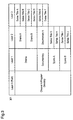
- Fig. 5 shows a data structure of SI of the program named "title A1".
- This program links to "series title A" in "Channel A Program Directory” by using the category space name and directory path.
- link information there are two ways to describe link information: (1) Describing information linking to SI corresponding to a program, (2) Describing information linking to a directory space in SI corresponding to a program. Both ways are available in a broadcasting transmitter, and either one can be utilized depending on the situation.
- link information to a program is described by using a channel name and a program title, and that to a category space is described by using a category space name and a directory path.
- respective identifiers can be used, or other methods can do the same job.
- Hierarchical category producer 108 can produce the updated details as a selective portion changed from the previous category space before updated.
- the attribution of directory space including a name of directory space can be changed.
- Fig. 6 shows a data structure of a selective information for updating the category space in Fig. 3 archived in a receiver.
- Fig. 6 indicates the following three changes in the category space shown in Fig. 3:
- Section 601 indicates that "series title A” is deleted from “Channel A Program Directory” on June 30, 1998. This omits the description of "series title A” from the transmission details, but this does not mean that "series title A” per se is deleted under “drama A”. If the relation between "drama A” and “series title A” should be deleted, eternity of directory space, one of attributions of directory space, should be set at "no eternity”.
- Section 602 of Fig. 6 indicates that a new directory space "title K" is produced under "drama A” in "Channel A Program Directory” on June 30, 1998.
- the new directory-space-identifier tells that an ID. No. (in this case, No. 3) different from those of existing "series title A” and “series title B” is assigned to "title K" under "drama A”.
- Section 603 indicates that the directory space "sport A" belonging to "Channel A Program Directory” moves under "sport".
- a new directory-space-identifier is assigned, this is the same procedure as when a new space is added.
- ID. No. 3 is assigned to the moved space as a space under "sport”.
- Fig. 7 shows a layer structure of an updated category space which contained the updating shown in Fig. 6 with regard to the category space shown in Fig. 3.
- a process follows the selective information shown in Fig. 6, and thus "series title A" of the category space in Fig. 3 is deleted, “title K” is added and “sport A” is moved.
- the broadcasting transmitter of the present invention as discussed above provides the following advantages:
- the broadcasting transmitter in accordance with this exemplary embodiment is so structured that it transmits hierarchical information and SI independently.
- a data structure of SI can be expanded so that the hierarchical information can be included therein.
- the hierarchical category information indicates category spaces, it may sometimes include a lot of information.
- the independent transmission of these two types of information thus can benefit the transmitter to select changes in SI, reproduce data quickly and transmit it when some data in SI are changed.
- the transmitter can change and transmit the SI first promptly to notify audiences of the changes. Then, the transmitter changes and transmits the hierarchical category information to notify the audiences of details of the changes.
- the audiences receive the changes step by step, which avoids possible confusion due to receipt of many changes at one time.
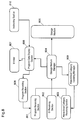
- Fig. 8 is a block diagram illustrating an embodiment of the receiver of the present invention in digital satellite broadcasting. Fig. 8 particularly focuses on a section involved in processing program information.
- the receiver in Fig. 8 comprises storage medium 805 and program receiving section 801.
- Storage medium 805 can arbitrarily archive and control programs and their information.
- Program receiving section 801 receives a program transmitted by the broadcasting transmitter shown in Fig. 1, and controls the program.
- the broadcasting transmitter shown in Fig. 1 multiplexes coded data supplied from program transmitter 102, data transmitter 103, SI transmitter 107 and hierarchical category transmitter 109 in multiplexer 104, then transmits the multiplexed data.
- program receiving section 801 receives coded data produced by program transmitter 102, the coded data is separated from the coded data multiplexed and transmitted from the broadcasting transmitter. Receiving section 801 decodes the coded data, and controls the decoded program.
- receiving section 801 archives the received program
- the decoded program is sent to storage manager 804 from receiving section 801.
- Storage manager 804 archives and controls the received program in storage medium 805.
- Receiving section 801 can output video and the like to monitor 807, though this is not illustrated in Fig. 8.
- SI receiving section 802 receives coded data produced by SI transmitter 107, the coded data is separated from the coded data multiplexed and transmitted from the broadcasting transmitter. Receiving section 802 decodes the coded data, and controls the decoded SI.
- hierarchical-category-receiving-section 803 receives coded data produced by category transmitter 108, the coded data is separated from the coded data multiplexed and transmitted from the broadcasting transmitter. Receiving section 803 decodes the coded data, and controls the decoded hierarchical category information and category spaces.
- the category spaces can be reproduced from the hierarchical category information.
- the category space comprises a plurality of directory spaces including root directory spaces, which was discussed in the description of the broadcasting transmission.
- Storage manager 804 controls to storage medium 805 for storing.
- Storage manager 804 respective information archived in storage medium 805.
- Storage medium 805 can be available in a plurality of numbers and regardless of types such as memory, disc including DVD-RAM (rewritable anytime, such as a digital video disc), and a type-mixing is also possible.
- Program data display section 806 displays program data such as EPG on monitor 807 by using SI and hierarchical category information.
- Instructing section 810 receives instructions from an audience, e.g. through a remote controller.
- the audience regularly instructs which functions provided on the screen, e.g. EPG, is to be selected or operated.
- the instruction received at section 810 is sent to program data display section 806 for processing.
- instructing section 810 sends the instruction to program recording section 808 via display section 806.
- Program recording section 808 presets a time to receive the program.
- Program recording section 808 controls a timer and instructs program receiving section 810 to receive the program when the on-air time comes.
- Hierarchical-category-updating-manager 809 controls the updating of the category spaces, and instructs hierarchical-category-receiving-section 803 to receive the latest category space.
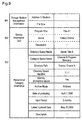
- Fig. 9 shows a data structure of the management information of archived program in storage manager 804.
- storage medium management information 901 controls the actual state of the program archived in the storage medium.
- SI manager 902 and hierarchical category information 903 control the SI and hierarchical category information.
- link information is available for relating a program to hierarchical category information.
- a category space to which a program belongs can be archived.
- a program description or information of a program frame in this case, "series title A"
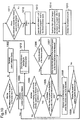
- Fig. 10 is a flowchart illustrating a process by the broadcasting transmitter when a category space is displayed.
- the broadcasting transmitter When a directory space in a category space is displayed, the broadcasting transmitter, first, searches and obtains both of archived programs and category information, and links them to respective directory spaces, then displays them.
- the receiver practices the process on Step 1003 when an audience selects through instructing section 810, a specific directory from the directories displayed on monitor 807.
- a process of displaying programs belonging to directory spaces is practiced (Step 1010) between Steps 1003 and 1004.
- program display section 806 firstly inquires storage manager 804 whether the latest directory space is linked to the program or not. Then the processes below follow Step 1010:
- the process discussed above allows the receiver to display a hierarchical structure of the category space to the audience in an interactive manner, and at the same time, to display both of programs to be aired and archived programs already aired on the same display.
- the receiver can save the storage medium to archive substances of programs because the storage of only SI and hierarchical category information allows the audiences to notice that the program was already aired. This method provides the audiences with greater convenience.
- Fig. 11 is a flowchart illustrating a process of the receiving terminal when a category space is updated.
- the category space to which archived program belongs is updated every time.
- selective information thereof is transmitted to the receiver. The receiver thus always checks the selective information.
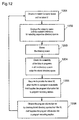
- Fig. 12 is a flowchart illustrating a process of recording automatically a program belonging to a space under arbitrary directory space by using the category space in the receiver. Fig. 12 describes the process up to presetting a time for recording a program.
- program recording section 808 program receiving section 801, storage manager 804, storage medium 805 and the like.
- an audience selects all the directory spaces; however, the audience may select a specific directory space only.
- the audience also selects a directory space through an interactive user interface; however, an agent or the like may automatically extract a favorable space for the audience.
- the receiver also can provide audiences with a favorable program or a recommended program by the process discussed above.
- Fig. 13 shows a layer structure when the category space are assigned to casts appearing in programs. For instance, assume that an audience presets a time to receive the program where a new talent of agency A appears. Then the receiver follows the process shown in the flowchart in Fig. 12, and presets a time to receive this program. In this case, the programs included in all the directory spaces under "new talent", i.e. all the program where team B and talent B appear can be programmed to receive at preset times.
- Layer 0 zero
- a root directory is assigned to be "variety show program" from a view of program genre
- a category space covering "variety show programs” is created.
- Layer 1 and onward, directory spaces can be established from a view of casts in the same manner as the example shown in Fig. 13.
- the category space can be established not only from a program view of point, but also from all aspects of the program, such as appearing casts, director, producer and the like.
- the category space comprises directory spaces established free from fixed view of angles, but from plurality views of angles.
Landscapes
- Engineering & Computer Science (AREA)
- Signal Processing (AREA)
- Multimedia (AREA)
- Television Systems (AREA)
- Two-Way Televisions, Distribution Of Moving Picture Or The Like (AREA)
- Circuits Of Receivers In General (AREA)
Applications Claiming Priority (2)
| Application Number | Priority Date | Filing Date | Title |
|---|---|---|---|
| JP12764298 | 1998-05-11 | ||
| JP12764298 | 1998-05-11 |
Publications (2)
| Publication Number | Publication Date |
|---|---|
| EP0957598A2 true EP0957598A2 (de) | 1999-11-17 |
| EP0957598A3 EP0957598A3 (de) | 2001-04-04 |
Family
ID=14965150
Family Applications (1)
| Application Number | Title | Priority Date | Filing Date |
|---|---|---|---|
| EP99108815A Withdrawn EP0957598A3 (de) | 1998-05-11 | 1999-05-04 | Rundfunksender und -empfänger |
Country Status (6)
| Country | Link |
|---|---|
| EP (1) | EP0957598A3 (de) |
| KR (1) | KR19990088153A (de) |
| CN (1) | CN1130078C (de) |
| AU (1) | AU761964B2 (de) |
| SG (1) | SG81981A1 (de) |
| TW (1) | TW417393B (de) |
Cited By (4)
| Publication number | Priority date | Publication date | Assignee | Title |
|---|---|---|---|---|
| WO2004008688A1 (en) * | 2002-07-12 | 2004-01-22 | Nokia Corporation | Announcing information service through broadcasting or multicasting |
| KR100753918B1 (ko) * | 2000-05-19 | 2007-08-31 | 톰슨 멀티미디어 | 멀티미디어 다큐먼트들 사이에서의 다이내믹한 네비게이션방법 및 그 방법의 구현을 위한 멀티미디어 터미널 |
| WO2011049278A1 (en) | 2009-10-25 | 2011-04-28 | Lg Electronics Inc. | Method for processing broadcast program information and broadcast receiver |
| US8375205B2 (en) | 2007-09-28 | 2013-02-12 | Intel Corporation | Techniques for communicating information over management channels |
Families Citing this family (5)
| Publication number | Priority date | Publication date | Assignee | Title |
|---|---|---|---|---|
| KR100693652B1 (ko) * | 2000-04-26 | 2007-03-14 | 엘지전자 주식회사 | 티브이 방송 프로그램 데이터의 화면 표시 장치 및 방법 |
| KR100765740B1 (ko) * | 2001-06-26 | 2007-10-15 | 삼성전자주식회사 | A/v신호 저장 및 검색 방법과 그 장치 |
| KR100457178B1 (ko) * | 2002-12-06 | 2004-11-16 | 한국전자통신연구원 | 디지털 데이터 방송을 위한 데이터 처리 장치 및 그 방법 |
| KR20130015802A (ko) * | 2011-08-05 | 2013-02-14 | 이흥수 | 계층적 구조의 식별정보를 이용한 교통 신호 제어 장치 및 방법 |
| CN104284247A (zh) * | 2013-07-02 | 2015-01-14 | 乐金电子(中国)研究开发中心有限公司 | 数字电视节目信息处理方法及系统 |
Citations (1)
| Publication number | Priority date | Publication date | Assignee | Title |
|---|---|---|---|---|
| US5623613A (en) * | 1994-11-29 | 1997-04-22 | Microsoft Corporation | System for displaying programming information |
Family Cites Families (5)
| Publication number | Priority date | Publication date | Assignee | Title |
|---|---|---|---|---|
| EP0325325B1 (de) * | 1988-01-19 | 1996-09-04 | Koninklijke Philips Electronics N.V. | Informationsübertragungssystem mit Informationsträger |
| CA2271555C (en) * | 1992-12-09 | 2003-11-11 | Discovery Communications, Inc. | Remote control for cable television delivery system |
| GB9400101D0 (en) * | 1994-01-05 | 1994-03-02 | Thomson Consumer Electronics | Consumer interface for a satellite television system |
| JP4032402B2 (ja) * | 1996-10-14 | 2008-01-16 | ソニー株式会社 | 情報提供装置および方法、表示制御装置および方法、情報提供システム |
| JPH10126750A (ja) * | 1996-10-23 | 1998-05-15 | Matsushita Electric Ind Co Ltd | 番組情報放送システム、放送装置、及び受信端末装置 |
-
1999
- 1999-05-03 SG SG9902105A patent/SG81981A1/en unknown
- 1999-05-03 AU AU26009/99A patent/AU761964B2/en not_active Ceased
- 1999-05-04 EP EP99108815A patent/EP0957598A3/de not_active Withdrawn
- 1999-05-07 TW TW088107472A patent/TW417393B/zh not_active IP Right Cessation
- 1999-05-10 KR KR1019990016573A patent/KR19990088153A/ko not_active Ceased
- 1999-05-10 CN CN99106346A patent/CN1130078C/zh not_active Expired - Fee Related
Patent Citations (1)
| Publication number | Priority date | Publication date | Assignee | Title |
|---|---|---|---|---|
| US5623613A (en) * | 1994-11-29 | 1997-04-22 | Microsoft Corporation | System for displaying programming information |
Non-Patent Citations (2)
| Title |
|---|
| "Electronic Program Guide (EPG); Protocol for a TV Guide using electronic data transmission", ETS 300 707, May 1997 (1997-05-01), XP014014274 * |
| GRECO: "Data Preparation for Interactive Electronic Program Guides", INTERNARIONAL BROADCASTING CONVENTION, CONFERENCE PUBLICATION, no. 428, pages 294 - 297, XP006510035 * |
Cited By (9)
| Publication number | Priority date | Publication date | Assignee | Title |
|---|---|---|---|---|
| KR100753918B1 (ko) * | 2000-05-19 | 2007-08-31 | 톰슨 멀티미디어 | 멀티미디어 다큐먼트들 사이에서의 다이내믹한 네비게이션방법 및 그 방법의 구현을 위한 멀티미디어 터미널 |
| WO2004008688A1 (en) * | 2002-07-12 | 2004-01-22 | Nokia Corporation | Announcing information service through broadcasting or multicasting |
| US7664063B2 (en) | 2002-07-12 | 2010-02-16 | Nokia Corporation | Announcing information service through broadcasting or multicasting |
| US8032127B2 (en) * | 2002-07-12 | 2011-10-04 | Nokia Corporation | Announcing information service through broadcasting or multicasting |
| US8375205B2 (en) | 2007-09-28 | 2013-02-12 | Intel Corporation | Techniques for communicating information over management channels |
| WO2011049278A1 (en) | 2009-10-25 | 2011-04-28 | Lg Electronics Inc. | Method for processing broadcast program information and broadcast receiver |
| CN102668581A (zh) * | 2009-10-25 | 2012-09-12 | Lg电子株式会社 | 用于处理广播节目信息的方法及广播接收器 |
| EP2460347A4 (de) * | 2009-10-25 | 2014-03-12 | Lg Electronics Inc | Verfahren zur verarbeitung von rundfunkprogramminformationen und rundfunkempfänger |
| US9143822B2 (en) | 2009-10-25 | 2015-09-22 | Lg Electronics Inc. | Method for transceiving a broadcast signal and broadcast-receiving using same |
Also Published As
| Publication number | Publication date |
|---|---|
| AU761964B2 (en) | 2003-06-12 |
| EP0957598A3 (de) | 2001-04-04 |
| CN1239855A (zh) | 1999-12-29 |
| TW417393B (en) | 2001-01-01 |
| SG81981A1 (en) | 2001-07-24 |
| AU2600999A (en) | 1999-11-18 |
| HK1024800A1 (en) | 2000-10-20 |
| CN1130078C (zh) | 2003-12-03 |
| KR19990088153A (ko) | 1999-12-27 |
Similar Documents
| Publication | Publication Date | Title |
|---|---|---|
| US7627882B2 (en) | Categorical electronic program guide | |
| US6665870B1 (en) | Narrative electronic program guide with hyper-links | |
| US7739711B2 (en) | Electronic television program guide with calendar tool | |
| DE69323560T2 (de) | Operationszentrale für ein fernsehprogrammpaketierungs- und versorgungssystem | |
| US5945987A (en) | Interactive entertainment network system and method for providing short sets of preview video trailers | |
| US6028599A (en) | Database for use in method and apparatus for displaying television programs and related text | |
| KR100583057B1 (ko) | 패킷화된 프로그램 데이터를 디코딩하기 위한 장치 및 방법 | |
| US20110126235A1 (en) | Program guide optimization system | |
| KR100387318B1 (ko) | 프로그램정보작성방법과장치및방송시스템의정보처리용수신장치 | |
| CN101600091B (zh) | 用于创建用来转移多媒体节目化数据的自一致数据结构的方法 | |
| US7124431B2 (en) | Transmit device and method thereof, record/play device and method thereof as well as recording system and media | |
| US7243364B2 (en) | Interactive entertainment network system and method for customizing operation thereof according to viewer preferences | |
| US6401242B1 (en) | Method and apparatus for designating a preferred source to avoid duplicative programming services | |
| US20120288260A1 (en) | Tv program database | |
| CA2847138A1 (en) | Electronic program guide with related-program search feature | |
| WO1997030546A1 (en) | Method and apparatus for sorting and searching a television program guide | |
| AU761964B2 (en) | Broadcasting transmitter and receiver | |
| KR100582310B1 (ko) | 프로그램 방송 시스템 | |
| US20030041327A1 (en) | System with improved user interface | |
| JP3540098B2 (ja) | テレビジョン放送受信装置 | |
| KR100767103B1 (ko) | 디지털 텔레비전 방송을 위한 방법과, 디지털 tv 네트워크 송신기 및 수신기 | |
| JP3302940B2 (ja) | 放送送信装置、放送受信装置及びこれらを用いた放送システム | |
| JP2003525545A (ja) | 映像音声放送番組の映像表示方法及び映像表示装置 | |
| KR100186530B1 (ko) | 방송 프로그램의 주제별 통합 분류방법 | |
| HK1043463B (en) | Dynamic event information table schedule window |
Legal Events
| Date | Code | Title | Description |
|---|---|---|---|
| PUAI | Public reference made under article 153(3) epc to a published international application that has entered the european phase |
Free format text: ORIGINAL CODE: 0009012 |
|
| AK | Designated contracting states |
Kind code of ref document: A2 Designated state(s): DE FR GB |
|
| AX | Request for extension of the european patent |
Free format text: AL;LT;LV;MK;RO;SI |
|
| PUAL | Search report despatched |
Free format text: ORIGINAL CODE: 0009013 |
|
| AK | Designated contracting states |
Kind code of ref document: A3 Designated state(s): AT BE CH CY DE DK ES FI FR GB GR IE IT LI LU MC NL PT SE |
|
| AX | Request for extension of the european patent |
Free format text: AL;LT;LV;MK;RO;SI |
|
| 17P | Request for examination filed |
Effective date: 20010705 |
|
| AKX | Designation fees paid |
Free format text: DE FR GB |
|
| 17Q | First examination report despatched |
Effective date: 20060801 |
|
| STAA | Information on the status of an ep patent application or granted ep patent |
Free format text: STATUS: THE APPLICATION IS DEEMED TO BE WITHDRAWN |
|
| 18D | Application deemed to be withdrawn |
Effective date: 20061212 |