EP0956049B1 - Thrombininhibitor-konjugate und endogene träger - Google Patents
Thrombininhibitor-konjugate und endogene träger Download PDFInfo
- Publication number
- EP0956049B1 EP0956049B1 EP97937767A EP97937767A EP0956049B1 EP 0956049 B1 EP0956049 B1 EP 0956049B1 EP 97937767 A EP97937767 A EP 97937767A EP 97937767 A EP97937767 A EP 97937767A EP 0956049 B1 EP0956049 B1 EP 0956049B1
- Authority
- EP
- European Patent Office
- Prior art keywords
- argatroban
- thrombin
- blood
- solution
- compound according
- Prior art date
- Legal status (The legal status is an assumption and is not a legal conclusion. Google has not performed a legal analysis and makes no representation as to the accuracy of the status listed.)
- Expired - Lifetime
Links
- 229940122388 Thrombin inhibitor Drugs 0.000 title claims abstract description 63
- 239000003868 thrombin inhibitor Substances 0.000 title claims abstract description 63
- 239000000969 carrier Substances 0.000 title 1
- 150000001875 compounds Chemical class 0.000 claims abstract description 94
- KXNPVXPOPUZYGB-XYVMCAHJSA-N argatroban Chemical compound OC(=O)[C@H]1C[C@H](C)CCN1C(=O)[C@H](CCCN=C(N)N)NS(=O)(=O)C1=CC=CC2=C1NC[C@H](C)C2 KXNPVXPOPUZYGB-XYVMCAHJSA-N 0.000 claims abstract description 81
- 229960003856 argatroban Drugs 0.000 claims abstract description 66
- 108090000190 Thrombin Proteins 0.000 claims abstract description 62
- 229960004072 thrombin Drugs 0.000 claims abstract description 61
- 101000712605 Theromyzon tessulatum Theromin Proteins 0.000 claims abstract description 43
- 239000012503 blood component Substances 0.000 claims abstract description 38
- 239000003814 drug Substances 0.000 claims abstract description 22
- 238000000034 method Methods 0.000 claims abstract description 20
- 230000005764 inhibitory process Effects 0.000 claims abstract description 16
- 230000002401 inhibitory effect Effects 0.000 claims abstract description 15
- 230000000694 effects Effects 0.000 claims abstract description 13
- 238000001727 in vivo Methods 0.000 claims abstract description 5
- -1 imino ester Chemical class 0.000 claims description 77
- 210000004369 blood Anatomy 0.000 claims description 36
- 239000008280 blood Substances 0.000 claims description 36
- 210000003743 erythrocyte Anatomy 0.000 claims description 36
- 238000006243 chemical reaction Methods 0.000 claims description 27
- 150000002148 esters Chemical class 0.000 claims description 16
- 239000002904 solvent Substances 0.000 claims description 15
- NQTADLQHYWFPDB-UHFFFAOYSA-N N-Hydroxysuccinimide Chemical compound ON1C(=O)CCC1=O NQTADLQHYWFPDB-UHFFFAOYSA-N 0.000 claims description 13
- 239000002253 acid Substances 0.000 claims description 13
- 208000007536 Thrombosis Diseases 0.000 claims description 12
- 125000003178 carboxy group Chemical group [H]OC(*)=O 0.000 claims description 12
- 102000007562 Serum Albumin Human genes 0.000 claims description 11
- 108010071390 Serum Albumin Proteins 0.000 claims description 11
- 238000000338 in vitro Methods 0.000 claims description 7
- 238000004519 manufacturing process Methods 0.000 claims description 7
- 239000000203 mixture Substances 0.000 claims description 7
- 230000002792 vascular Effects 0.000 claims description 7
- GVJXGCIPWAVXJP-UHFFFAOYSA-N 2,5-dioxo-1-oxoniopyrrolidine-3-sulfonate Chemical compound ON1C(=O)CC(S(O)(=O)=O)C1=O GVJXGCIPWAVXJP-UHFFFAOYSA-N 0.000 claims description 6
- 125000004432 carbon atom Chemical group C* 0.000 claims description 6
- 108060003951 Immunoglobulin Proteins 0.000 claims description 5
- 125000000217 alkyl group Chemical group 0.000 claims description 5
- 102000018358 immunoglobulin Human genes 0.000 claims description 5
- RPENMORRBUTCPR-UHFFFAOYSA-M sodium;1-hydroxy-2,5-dioxopyrrolidine-3-sulfonate Chemical compound [Na+].ON1C(=O)CC(S([O-])(=O)=O)C1=O RPENMORRBUTCPR-UHFFFAOYSA-M 0.000 claims description 4
- 150000008064 anhydrides Chemical class 0.000 claims description 3
- 230000017531 blood circulation Effects 0.000 claims description 3
- 239000012948 isocyanate Substances 0.000 claims description 3
- 150000002513 isocyanates Chemical class 0.000 claims description 3
- 125000005647 linker group Chemical group 0.000 claims description 3
- 239000002243 precursor Substances 0.000 claims description 3
- 206010051055 Deep vein thrombosis Diseases 0.000 claims description 2
- 206010047249 Venous thrombosis Diseases 0.000 claims description 2
- 239000000443 aerosol Substances 0.000 claims description 2
- 125000002947 alkylene group Chemical group 0.000 claims description 2
- 206010003230 arteritis Diseases 0.000 claims description 2
- 125000004429 atom Chemical group 0.000 claims description 2
- 238000004090 dissolution Methods 0.000 claims description 2
- 125000004185 ester group Chemical group 0.000 claims description 2
- 208000010125 myocardial infarction Diseases 0.000 claims description 2
- 125000005702 oxyalkylene group Chemical group 0.000 claims description 2
- 238000001356 surgical procedure Methods 0.000 claims description 2
- 150000007970 thio esters Chemical class 0.000 claims description 2
- 210000005166 vasculature Anatomy 0.000 claims description 2
- 230000002194 synthesizing effect Effects 0.000 claims 7
- 239000007822 coupling agent Substances 0.000 claims 2
- 229940079593 drug Drugs 0.000 abstract description 11
- 239000012048 reactive intermediate Substances 0.000 abstract description 2
- IAZDPXIOMUYVGZ-UHFFFAOYSA-N Dimethylsulphoxide Chemical compound CS(C)=O IAZDPXIOMUYVGZ-UHFFFAOYSA-N 0.000 description 69
- 102000008100 Human Serum Albumin Human genes 0.000 description 69
- 108091006905 Human Serum Albumin Proteins 0.000 description 69
- LOKCTEFSRHRXRJ-UHFFFAOYSA-I dipotassium trisodium dihydrogen phosphate hydrogen phosphate dichloride Chemical compound P(=O)(O)(O)[O-].[K+].P(=O)(O)([O-])[O-].[Na+].[Na+].[Cl-].[K+].[Cl-].[Na+] LOKCTEFSRHRXRJ-UHFFFAOYSA-I 0.000 description 57
- 239000002953 phosphate buffered saline Substances 0.000 description 51
- OKKJLVBELUTLKV-UHFFFAOYSA-N Methanol Chemical compound OC OKKJLVBELUTLKV-UHFFFAOYSA-N 0.000 description 39
- 238000003556 assay Methods 0.000 description 39
- 210000004027 cell Anatomy 0.000 description 35
- 101001074244 Homo sapiens Glycophorin-A Proteins 0.000 description 32
- 102000004169 proteins and genes Human genes 0.000 description 29
- 108090000623 proteins and genes Proteins 0.000 description 29
- 241000283973 Oryctolagus cuniculus Species 0.000 description 24
- 239000000243 solution Substances 0.000 description 21
- XLYOFNOQVPJJNP-UHFFFAOYSA-N water Chemical compound O XLYOFNOQVPJJNP-UHFFFAOYSA-N 0.000 description 17
- 230000015572 biosynthetic process Effects 0.000 description 16
- 239000000306 component Substances 0.000 description 15
- 239000000758 substrate Substances 0.000 description 15
- 229910001868 water Inorganic materials 0.000 description 14
- 238000002835 absorbance Methods 0.000 description 13
- 210000001772 blood platelet Anatomy 0.000 description 13
- 238000003786 synthesis reaction Methods 0.000 description 13
- 238000003118 sandwich ELISA Methods 0.000 description 11
- 238000005160 1H NMR spectroscopy Methods 0.000 description 10
- 239000000872 buffer Substances 0.000 description 10
- 230000007062 hydrolysis Effects 0.000 description 10
- 238000006460 hydrolysis reaction Methods 0.000 description 10
- 239000000523 sample Substances 0.000 description 10
- OKKJLVBELUTLKV-MZCSYVLQSA-N Deuterated methanol Chemical compound [2H]OC([2H])([2H])[2H] OKKJLVBELUTLKV-MZCSYVLQSA-N 0.000 description 9
- 230000027455 binding Effects 0.000 description 9
- 210000003617 erythrocyte membrane Anatomy 0.000 description 9
- 210000002381 plasma Anatomy 0.000 description 9
- 108090000765 processed proteins & peptides Proteins 0.000 description 9
- LFQSCWFLJHTTHZ-UHFFFAOYSA-N Ethanol Chemical compound CCO LFQSCWFLJHTTHZ-UHFFFAOYSA-N 0.000 description 8
- 229920002594 Polyethylene Glycol 8000 Polymers 0.000 description 8
- 229920001184 polypeptide Polymers 0.000 description 8
- 102000004196 processed proteins & peptides Human genes 0.000 description 8
- 208000010110 spontaneous platelet aggregation Diseases 0.000 description 8
- 241000283707 Capra Species 0.000 description 7
- VEXZGXHMUGYJMC-UHFFFAOYSA-N Hydrochloric acid Chemical compound Cl VEXZGXHMUGYJMC-UHFFFAOYSA-N 0.000 description 7
- AVXURJPOCDRRFD-UHFFFAOYSA-N Hydroxylamine Chemical compound ON AVXURJPOCDRRFD-UHFFFAOYSA-N 0.000 description 7
- IXCSERBJSXMMFS-UHFFFAOYSA-N hydrogen chloride Substances Cl.Cl IXCSERBJSXMMFS-UHFFFAOYSA-N 0.000 description 7
- 229910000041 hydrogen chloride Inorganic materials 0.000 description 7
- 239000000463 material Substances 0.000 description 7
- 125000001570 methylene group Chemical group [H]C([H])([*:1])[*:2] 0.000 description 7
- 239000002244 precipitate Substances 0.000 description 7
- CSCPPACGZOOCGX-UHFFFAOYSA-N Acetone Chemical compound CC(C)=O CSCPPACGZOOCGX-UHFFFAOYSA-N 0.000 description 6
- 238000012286 ELISA Assay Methods 0.000 description 6
- PEDCQBHIVMGVHV-UHFFFAOYSA-N Glycerine Chemical compound OCC(O)CO PEDCQBHIVMGVHV-UHFFFAOYSA-N 0.000 description 6
- FAPWRFPIFSIZLT-UHFFFAOYSA-M Sodium chloride Chemical compound [Na+].[Cl-] FAPWRFPIFSIZLT-UHFFFAOYSA-M 0.000 description 6
- HEMHJVSKTPXQMS-UHFFFAOYSA-M Sodium hydroxide Chemical compound [OH-].[Na+] HEMHJVSKTPXQMS-UHFFFAOYSA-M 0.000 description 6
- 239000003153 chemical reaction reagent Substances 0.000 description 6
- 238000010790 dilution Methods 0.000 description 6
- 239000012895 dilution Substances 0.000 description 6
- 238000002330 electrospray ionisation mass spectrometry Methods 0.000 description 6
- 239000003112 inhibitor Substances 0.000 description 6
- 238000005292 vacuum distillation Methods 0.000 description 6
- 102000004506 Blood Proteins Human genes 0.000 description 5
- 108010017384 Blood Proteins Proteins 0.000 description 5
- 108091005250 Glycophorins Proteins 0.000 description 5
- 102000028180 Glycophorins Human genes 0.000 description 5
- 239000004353 Polyethylene glycol 8000 Substances 0.000 description 5
- 150000007942 carboxylates Chemical group 0.000 description 5
- 238000002474 experimental method Methods 0.000 description 5
- 238000004949 mass spectrometry Methods 0.000 description 5
- 235000019446 polyethylene glycol 8000 Nutrition 0.000 description 5
- 229940085678 polyethylene glycol 8000 Drugs 0.000 description 5
- 239000012265 solid product Substances 0.000 description 5
- 239000000725 suspension Substances 0.000 description 5
- 0 C*(N)S1*C1 Chemical compound C*(N)S1*C1 0.000 description 4
- YMWUJEATGCHHMB-UHFFFAOYSA-N Dichloromethane Chemical compound ClCCl YMWUJEATGCHHMB-UHFFFAOYSA-N 0.000 description 4
- 238000002965 ELISA Methods 0.000 description 4
- TWRXJAOTZQYOKJ-UHFFFAOYSA-L Magnesium chloride Chemical compound [Mg+2].[Cl-].[Cl-] TWRXJAOTZQYOKJ-UHFFFAOYSA-L 0.000 description 4
- LRHPLDYGYMQRHN-UHFFFAOYSA-N N-Butanol Chemical compound CCCCO LRHPLDYGYMQRHN-UHFFFAOYSA-N 0.000 description 4
- UIIMBOGNXHQVGW-UHFFFAOYSA-M Sodium bicarbonate Chemical compound [Na+].OC([O-])=O UIIMBOGNXHQVGW-UHFFFAOYSA-M 0.000 description 4
- QAOWNCQODCNURD-UHFFFAOYSA-N Sulfuric acid Chemical compound OS(O)(=O)=O QAOWNCQODCNURD-UHFFFAOYSA-N 0.000 description 4
- 125000003277 amino group Chemical group 0.000 description 4
- 238000002372 labelling Methods 0.000 description 4
- 150000004702 methyl esters Chemical class 0.000 description 4
- 239000008188 pellet Substances 0.000 description 4
- 239000008363 phosphate buffer Substances 0.000 description 4
- 239000000047 product Substances 0.000 description 4
- 239000011780 sodium chloride Substances 0.000 description 4
- 238000002834 transmittance Methods 0.000 description 4
- QAPSNMNOIOSXSQ-YNEHKIRRSA-N 1-[(2r,4s,5r)-4-[tert-butyl(dimethyl)silyl]oxy-5-(hydroxymethyl)oxolan-2-yl]-5-methylpyrimidine-2,4-dione Chemical compound O=C1NC(=O)C(C)=CN1[C@@H]1O[C@H](CO)[C@@H](O[Si](C)(C)C(C)(C)C)C1 QAPSNMNOIOSXSQ-YNEHKIRRSA-N 0.000 description 3
- WEVYAHXRMPXWCK-UHFFFAOYSA-N Acetonitrile Chemical compound CC#N WEVYAHXRMPXWCK-UHFFFAOYSA-N 0.000 description 3
- UXVMQQNJUSDDNG-UHFFFAOYSA-L Calcium chloride Chemical compound [Cl-].[Cl-].[Ca+2] UXVMQQNJUSDDNG-UHFFFAOYSA-L 0.000 description 3
- 102000014914 Carrier Proteins Human genes 0.000 description 3
- WQZGKKKJIJFFOK-GASJEMHNSA-N Glucose Natural products OC[C@H]1OC(O)[C@H](O)[C@@H](O)[C@@H]1O WQZGKKKJIJFFOK-GASJEMHNSA-N 0.000 description 3
- JGFZNNIVVJXRND-UHFFFAOYSA-N N,N-Diisopropylethylamine (DIPEA) Chemical compound CCN(C(C)C)C(C)C JGFZNNIVVJXRND-UHFFFAOYSA-N 0.000 description 3
- 241000609499 Palicourea Species 0.000 description 3
- 229920001213 Polysorbate 20 Polymers 0.000 description 3
- ZMANZCXQSJIPKH-UHFFFAOYSA-N Triethylamine Chemical compound CCN(CC)CC ZMANZCXQSJIPKH-UHFFFAOYSA-N 0.000 description 3
- 230000002159 abnormal effect Effects 0.000 description 3
- 239000012190 activator Substances 0.000 description 3
- 238000004458 analytical method Methods 0.000 description 3
- 239000004019 antithrombin Substances 0.000 description 3
- 239000006227 byproduct Substances 0.000 description 3
- 239000001110 calcium chloride Substances 0.000 description 3
- 229910001628 calcium chloride Inorganic materials 0.000 description 3
- 230000001413 cellular effect Effects 0.000 description 3
- KRKNYBCHXYNGOX-UHFFFAOYSA-N citric acid Chemical compound OC(=O)CC(O)(C(O)=O)CC(O)=O KRKNYBCHXYNGOX-UHFFFAOYSA-N 0.000 description 3
- 230000021615 conjugation Effects 0.000 description 3
- 208000037265 diseases, disorders, signs and symptoms Diseases 0.000 description 3
- 208000035475 disorder Diseases 0.000 description 3
- 239000008103 glucose Substances 0.000 description 3
- 229940072221 immunoglobulins Drugs 0.000 description 3
- 238000011534 incubation Methods 0.000 description 3
- 238000002347 injection Methods 0.000 description 3
- 239000007924 injection Substances 0.000 description 3
- 239000007788 liquid Substances 0.000 description 3
- 238000005259 measurement Methods 0.000 description 3
- 239000013642 negative control Substances 0.000 description 3
- 239000004033 plastic Substances 0.000 description 3
- 229920003023 plastic Polymers 0.000 description 3
- 210000004623 platelet-rich plasma Anatomy 0.000 description 3
- 239000000256 polyoxyethylene sorbitan monolaurate Substances 0.000 description 3
- 235000010486 polyoxyethylene sorbitan monolaurate Nutrition 0.000 description 3
- 238000001556 precipitation Methods 0.000 description 3
- 238000012746 preparative thin layer chromatography Methods 0.000 description 3
- 210000002966 serum Anatomy 0.000 description 3
- 239000007787 solid Substances 0.000 description 3
- 239000006228 supernatant Substances 0.000 description 3
- KXNPVXPOPUZYGB-IOVMHBDKSA-N (2R,4R)-1-[(2S)-5-(diaminomethylideneamino)-2-[(3-methyl-1,2,3,4-tetrahydroquinolin-8-yl)sulfonylamino]-1-oxopentyl]-4-methyl-2-piperidinecarboxylic acid Chemical compound OC(=O)[C@H]1C[C@H](C)CCN1C(=O)[C@H](CCCN=C(N)N)NS(=O)(=O)C1=CC=CC2=C1NCC(C)C2 KXNPVXPOPUZYGB-IOVMHBDKSA-N 0.000 description 2
- PBLZLIFKVPJDCO-UHFFFAOYSA-N 12-aminododecanoic acid Chemical compound NCCCCCCCCCCCC(O)=O PBLZLIFKVPJDCO-UHFFFAOYSA-N 0.000 description 2
- GHCZTIFQWKKGSB-UHFFFAOYSA-N 2-hydroxypropane-1,2,3-tricarboxylic acid;phosphoric acid Chemical compound OP(O)(O)=O.OC(=O)CC(O)(C(O)=O)CC(O)=O GHCZTIFQWKKGSB-UHFFFAOYSA-N 0.000 description 2
- TYMLOMAKGOJONV-UHFFFAOYSA-N 4-nitroaniline Chemical compound NC1=CC=C([N+]([O-])=O)C=C1 TYMLOMAKGOJONV-UHFFFAOYSA-N 0.000 description 2
- 102100033312 Alpha-2-macroglobulin Human genes 0.000 description 2
- 102000007347 Apyrase Human genes 0.000 description 2
- 108010007730 Apyrase Proteins 0.000 description 2
- IJGRMHOSHXDMSA-UHFFFAOYSA-N Atomic nitrogen Chemical compound N#N IJGRMHOSHXDMSA-UHFFFAOYSA-N 0.000 description 2
- OKTJSMMVPCPJKN-UHFFFAOYSA-N Carbon Chemical compound [C] OKTJSMMVPCPJKN-UHFFFAOYSA-N 0.000 description 2
- RTZKZFJDLAIYFH-UHFFFAOYSA-N Diethyl ether Chemical compound CCOCC RTZKZFJDLAIYFH-UHFFFAOYSA-N 0.000 description 2
- 108090000790 Enzymes Proteins 0.000 description 2
- 102000004190 Enzymes Human genes 0.000 description 2
- XEKOWRVHYACXOJ-UHFFFAOYSA-N Ethyl acetate Chemical compound CCOC(C)=O XEKOWRVHYACXOJ-UHFFFAOYSA-N 0.000 description 2
- 102000008857 Ferritin Human genes 0.000 description 2
- 108050000784 Ferritin Proteins 0.000 description 2
- 238000008416 Ferritin Methods 0.000 description 2
- OAKJQQAXSVQMHS-UHFFFAOYSA-N Hydrazine Chemical compound NN OAKJQQAXSVQMHS-UHFFFAOYSA-N 0.000 description 2
- 108010052285 Membrane Proteins Proteins 0.000 description 2
- 108010015078 Pregnancy-Associated alpha 2-Macroglobulins Proteins 0.000 description 2
- VMHLLURERBWHNL-UHFFFAOYSA-M Sodium acetate Chemical compound [Na+].CC([O-])=O VMHLLURERBWHNL-UHFFFAOYSA-M 0.000 description 2
- PXIPVTKHYLBLMZ-UHFFFAOYSA-N Sodium azide Chemical compound [Na+].[N-]=[N+]=[N-] PXIPVTKHYLBLMZ-UHFFFAOYSA-N 0.000 description 2
- 108090000901 Transferrin Proteins 0.000 description 2
- 102000004338 Transferrin Human genes 0.000 description 2
- 150000001412 amines Chemical class 0.000 description 2
- QVGXLLKOCUKJST-UHFFFAOYSA-N atomic oxygen Chemical compound [O] QVGXLLKOCUKJST-UHFFFAOYSA-N 0.000 description 2
- RIIWUGSYXOBDMC-UHFFFAOYSA-N benzene-1,2-diamine;hydron;dichloride Chemical compound Cl.Cl.NC1=CC=CC=C1N RIIWUGSYXOBDMC-UHFFFAOYSA-N 0.000 description 2
- 108091008324 binding proteins Proteins 0.000 description 2
- 229910052799 carbon Inorganic materials 0.000 description 2
- 239000003795 chemical substances by application Substances 0.000 description 2
- 230000008878 coupling Effects 0.000 description 2
- 238000010168 coupling process Methods 0.000 description 2
- 238000005859 coupling reaction Methods 0.000 description 2
- 238000011033 desalting Methods 0.000 description 2
- 238000001514 detection method Methods 0.000 description 2
- 238000009826 distribution Methods 0.000 description 2
- 239000003937 drug carrier Substances 0.000 description 2
- 238000000132 electrospray ionisation Methods 0.000 description 2
- 229940088598 enzyme Drugs 0.000 description 2
- 230000005284 excitation Effects 0.000 description 2
- 239000000706 filtrate Substances 0.000 description 2
- 238000007478 fluorogenic assay Methods 0.000 description 2
- 125000000524 functional group Chemical group 0.000 description 2
- 239000007789 gas Substances 0.000 description 2
- 125000002887 hydroxy group Chemical group [H]O* 0.000 description 2
- 238000003119 immunoblot Methods 0.000 description 2
- 238000004895 liquid chromatography mass spectrometry Methods 0.000 description 2
- 229910001629 magnesium chloride Inorganic materials 0.000 description 2
- 239000011159 matrix material Substances 0.000 description 2
- 238000000816 matrix-assisted laser desorption--ionisation Methods 0.000 description 2
- 238000001906 matrix-assisted laser desorption--ionisation mass spectrometry Methods 0.000 description 2
- 125000000956 methoxy group Chemical group [H]C([H])([H])O* 0.000 description 2
- NDBSIOZEOQUDBF-UHFFFAOYSA-N methyl 12-aminododecanoate Chemical compound COC(=O)CCCCCCCCCCCN NDBSIOZEOQUDBF-UHFFFAOYSA-N 0.000 description 2
- 230000003278 mimic effect Effects 0.000 description 2
- 230000000269 nucleophilic effect Effects 0.000 description 2
- 229910052760 oxygen Inorganic materials 0.000 description 2
- 239000001301 oxygen Substances 0.000 description 2
- 125000001147 pentyl group Chemical group C(CCCC)* 0.000 description 2
- 230000000737 periodic effect Effects 0.000 description 2
- 238000002360 preparation method Methods 0.000 description 2
- 125000002924 primary amino group Chemical group [H]N([H])* 0.000 description 2
- 238000010791 quenching Methods 0.000 description 2
- 239000011541 reaction mixture Substances 0.000 description 2
- 150000003839 salts Chemical class 0.000 description 2
- 239000012898 sample dilution Substances 0.000 description 2
- 239000001632 sodium acetate Substances 0.000 description 2
- 235000017281 sodium acetate Nutrition 0.000 description 2
- 229910000030 sodium bicarbonate Inorganic materials 0.000 description 2
- 102000005963 steroid binding proteins Human genes 0.000 description 2
- 108020003178 steroid binding proteins Proteins 0.000 description 2
- 238000003756 stirring Methods 0.000 description 2
- 125000000472 sulfonyl group Chemical group *S(*)(=O)=O 0.000 description 2
- 230000001225 therapeutic effect Effects 0.000 description 2
- 125000003396 thiol group Chemical group [H]S* 0.000 description 2
- 238000012546 transfer Methods 0.000 description 2
- 239000012581 transferrin Substances 0.000 description 2
- 238000003828 vacuum filtration Methods 0.000 description 2
- DGVVWUTYPXICAM-UHFFFAOYSA-N β‐Mercaptoethanol Chemical compound OCCS DGVVWUTYPXICAM-UHFFFAOYSA-N 0.000 description 2
- GMVPRGQOIOIIMI-UHFFFAOYSA-N (8R,11R,12R,13E,15S)-11,15-Dihydroxy-9-oxo-13-prostenoic acid Natural products CCCCCC(O)C=CC1C(O)CC(=O)C1CCCCCCC(O)=O GMVPRGQOIOIIMI-UHFFFAOYSA-N 0.000 description 1
- SLXKOJJOQWFEFD-UHFFFAOYSA-N 6-aminohexanoic acid Chemical compound NCCCCCC(O)=O SLXKOJJOQWFEFD-UHFFFAOYSA-N 0.000 description 1
- WRDABNWSWOHGMS-UHFFFAOYSA-N AEBSF hydrochloride Chemical compound Cl.NCCC1=CC=C(S(F)(=O)=O)C=C1 WRDABNWSWOHGMS-UHFFFAOYSA-N 0.000 description 1
- 102000009027 Albumins Human genes 0.000 description 1
- 108010088751 Albumins Proteins 0.000 description 1
- 108010078791 Carrier Proteins Proteins 0.000 description 1
- RDFLLVCQYHQOBU-GPGGJFNDSA-O Cyanin Natural products O([C@H]1[C@H](O)[C@H](O)[C@H](O)[C@H](CO)O1)c1c(-c2cc(O)c(O)cc2)[o+]c2c(c(O[C@H]3[C@H](O)[C@@H](O)[C@H](O)[C@H](CO)O3)cc(O)c2)c1 RDFLLVCQYHQOBU-GPGGJFNDSA-O 0.000 description 1
- FBPFZTCFMRRESA-KVTDHHQDSA-N D-Mannitol Chemical compound OC[C@@H](O)[C@@H](O)[C@H](O)[C@H](O)CO FBPFZTCFMRRESA-KVTDHHQDSA-N 0.000 description 1
- 101710126496 Envelope glycoprotein I Proteins 0.000 description 1
- 102100025306 Integrin alpha-IIb Human genes 0.000 description 1
- 101710149643 Integrin alpha-IIb Proteins 0.000 description 1
- 102100032999 Integrin beta-3 Human genes 0.000 description 1
- 108010020950 Integrin beta3 Proteins 0.000 description 1
- GDBQQVLCIARPGH-UHFFFAOYSA-N Leupeptin Natural products CC(C)CC(NC(C)=O)C(=O)NC(CC(C)C)C(=O)NC(C=O)CCCN=C(N)N GDBQQVLCIARPGH-UHFFFAOYSA-N 0.000 description 1
- 241000124008 Mammalia Species 0.000 description 1
- 229930195725 Mannitol Natural products 0.000 description 1
- 102000012750 Membrane Glycoproteins Human genes 0.000 description 1
- 108010090054 Membrane Glycoproteins Proteins 0.000 description 1
- 102000018697 Membrane Proteins Human genes 0.000 description 1
- 239000000020 Nitrocellulose Substances 0.000 description 1
- 241000237988 Patellidae Species 0.000 description 1
- 102100031574 Platelet glycoprotein 4 Human genes 0.000 description 1
- 101710202087 Platelet glycoprotein 4 Proteins 0.000 description 1
- 239000004793 Polystyrene Substances 0.000 description 1
- 208000010378 Pulmonary Embolism Diseases 0.000 description 1
- VYPSYNLAJGMNEJ-UHFFFAOYSA-N Silicium dioxide Chemical compound O=[Si]=O VYPSYNLAJGMNEJ-UHFFFAOYSA-N 0.000 description 1
- NINIDFKCEFEMDL-UHFFFAOYSA-N Sulfur Chemical compound [S] NINIDFKCEFEMDL-UHFFFAOYSA-N 0.000 description 1
- 239000013543 active substance Substances 0.000 description 1
- 239000000654 additive Substances 0.000 description 1
- 230000002411 adverse Effects 0.000 description 1
- 230000004931 aggregating effect Effects 0.000 description 1
- 230000002776 aggregation Effects 0.000 description 1
- 238000004220 aggregation Methods 0.000 description 1
- 238000013019 agitation Methods 0.000 description 1
- 150000001298 alcohols Chemical class 0.000 description 1
- 230000000735 allogeneic effect Effects 0.000 description 1
- 229960000711 alprostadil Drugs 0.000 description 1
- 150000001408 amides Chemical class 0.000 description 1
- 229960002684 aminocaproic acid Drugs 0.000 description 1
- 239000003146 anticoagulant agent Substances 0.000 description 1
- 229940127219 anticoagulant drug Drugs 0.000 description 1
- 239000000427 antigen Substances 0.000 description 1
- 102000036639 antigens Human genes 0.000 description 1
- 108091007433 antigens Proteins 0.000 description 1
- 239000012736 aqueous medium Substances 0.000 description 1
- 125000000852 azido group Chemical group *N=[N+]=[N-] 0.000 description 1
- WQZGKKKJIJFFOK-VFUOTHLCSA-N beta-D-glucose Chemical compound OC[C@H]1O[C@@H](O)[C@H](O)[C@@H](O)[C@@H]1O WQZGKKKJIJFFOK-VFUOTHLCSA-N 0.000 description 1
- SQVRNKJHWKZAKO-UHFFFAOYSA-N beta-N-Acetyl-D-neuraminic acid Natural products CC(=O)NC1C(O)CC(O)(C(O)=O)OC1C(O)C(O)CO SQVRNKJHWKZAKO-UHFFFAOYSA-N 0.000 description 1
- 230000000975 bioactive effect Effects 0.000 description 1
- 230000004071 biological effect Effects 0.000 description 1
- 239000002775 capsule Substances 0.000 description 1
- 210000003850 cellular structure Anatomy 0.000 description 1
- 238000005345 coagulation Methods 0.000 description 1
- 230000015271 coagulation Effects 0.000 description 1
- 239000012468 concentrated sample Substances 0.000 description 1
- 238000001816 cooling Methods 0.000 description 1
- 238000002425 crystallisation Methods 0.000 description 1
- 230000008025 crystallization Effects 0.000 description 1
- RDFLLVCQYHQOBU-ZOTFFYTFSA-O cyanin Chemical compound O[C@@H]1[C@@H](O)[C@H](O)[C@@H](CO)O[C@H]1OC(C(=[O+]C1=CC(O)=C2)C=3C=C(O)C(O)=CC=3)=CC1=C2O[C@H]1[C@H](O)[C@@H](O)[C@H](O)[C@@H](CO)O1 RDFLLVCQYHQOBU-ZOTFFYTFSA-O 0.000 description 1
- 125000004093 cyano group Chemical group *C#N 0.000 description 1
- 210000004292 cytoskeleton Anatomy 0.000 description 1
- 210000000172 cytosol Anatomy 0.000 description 1
- 230000001086 cytosolic effect Effects 0.000 description 1
- 230000007812 deficiency Effects 0.000 description 1
- 239000008367 deionised water Substances 0.000 description 1
- 229910021641 deionized water Inorganic materials 0.000 description 1
- 230000003111 delayed effect Effects 0.000 description 1
- 238000001212 derivatisation Methods 0.000 description 1
- 125000000664 diazo group Chemical group [N-]=[N+]=[*] 0.000 description 1
- 230000004069 differentiation Effects 0.000 description 1
- 239000003085 diluting agent Substances 0.000 description 1
- BFMYDTVEBKDAKJ-UHFFFAOYSA-L disodium;(2',7'-dibromo-3',6'-dioxido-3-oxospiro[2-benzofuran-1,9'-xanthene]-4'-yl)mercury;hydrate Chemical compound O.[Na+].[Na+].O1C(=O)C2=CC=CC=C2C21C1=CC(Br)=C([O-])C([Hg])=C1OC1=C2C=C(Br)C([O-])=C1 BFMYDTVEBKDAKJ-UHFFFAOYSA-L 0.000 description 1
- 150000002019 disulfides Chemical class 0.000 description 1
- 238000012377 drug delivery Methods 0.000 description 1
- 230000012202 endocytosis Effects 0.000 description 1
- 210000002889 endothelial cell Anatomy 0.000 description 1
- 230000032050 esterification Effects 0.000 description 1
- 238000005886 esterification reaction Methods 0.000 description 1
- 235000019439 ethyl acetate Nutrition 0.000 description 1
- 125000000816 ethylene group Chemical group [H]C([H])([*:1])C([H])([H])[*:2] 0.000 description 1
- 230000007717 exclusion Effects 0.000 description 1
- 235000013861 fat-free Nutrition 0.000 description 1
- 238000001914 filtration Methods 0.000 description 1
- 239000007850 fluorescent dye Substances 0.000 description 1
- ZHNUHDYFZUAESO-UHFFFAOYSA-N formamide Substances NC=O ZHNUHDYFZUAESO-UHFFFAOYSA-N 0.000 description 1
- 150000003948 formamides Chemical class 0.000 description 1
- 239000012458 free base Substances 0.000 description 1
- 238000004108 freeze drying Methods 0.000 description 1
- 239000005350 fused silica glass Substances 0.000 description 1
- 239000000499 gel Substances 0.000 description 1
- BHEPBYXIRTUNPN-UHFFFAOYSA-N hydridophosphorus(.) (triplet) Chemical compound [PH] BHEPBYXIRTUNPN-UHFFFAOYSA-N 0.000 description 1
- YSLDOTFAFZJPOC-UHFFFAOYSA-N hydron;methyl 6-aminohexanoate;chloride Chemical compound Cl.COC(=O)CCCCCN YSLDOTFAFZJPOC-UHFFFAOYSA-N 0.000 description 1
- NPZTUJOABDZTLV-UHFFFAOYSA-N hydroxybenzotriazole Substances O=C1C=CC=C2NNN=C12 NPZTUJOABDZTLV-UHFFFAOYSA-N 0.000 description 1
- 150000002466 imines Chemical class 0.000 description 1
- 125000001841 imino group Chemical group [H]N=* 0.000 description 1
- 230000002163 immunogen Effects 0.000 description 1
- 230000028709 inflammatory response Effects 0.000 description 1
- 238000001802 infusion Methods 0.000 description 1
- 238000003367 kinetic assay Methods 0.000 description 1
- 150000002605 large molecules Chemical group 0.000 description 1
- GDBQQVLCIARPGH-ULQDDVLXSA-N leupeptin Chemical compound CC(C)C[C@H](NC(C)=O)C(=O)N[C@@H](CC(C)C)C(=O)N[C@H](C=O)CCCN=C(N)N GDBQQVLCIARPGH-ULQDDVLXSA-N 0.000 description 1
- 108010052968 leupeptin Proteins 0.000 description 1
- 239000003446 ligand Substances 0.000 description 1
- 239000006166 lysate Substances 0.000 description 1
- 229920002521 macromolecule Polymers 0.000 description 1
- 239000000594 mannitol Substances 0.000 description 1
- 235000010355 mannitol Nutrition 0.000 description 1
- 239000002609 medium Substances 0.000 description 1
- 239000012528 membrane Substances 0.000 description 1
- 229910052751 metal Inorganic materials 0.000 description 1
- 239000002184 metal Substances 0.000 description 1
- TZJVWRXHKAXSEA-UHFFFAOYSA-N methyl 6-aminohexanoate Chemical compound COC(=O)CCCCCN TZJVWRXHKAXSEA-UHFFFAOYSA-N 0.000 description 1
- 239000008267 milk Substances 0.000 description 1
- 210000004080 milk Anatomy 0.000 description 1
- 235000013336 milk Nutrition 0.000 description 1
- 230000004048 modification Effects 0.000 description 1
- 238000012986 modification Methods 0.000 description 1
- UPSFMJHZUCSEHU-JYGUBCOQSA-N n-[(2s,3r,4r,5s,6r)-2-[(2r,3s,4r,5r,6s)-5-acetamido-4-hydroxy-2-(hydroxymethyl)-6-(4-methyl-2-oxochromen-7-yl)oxyoxan-3-yl]oxy-4,5-dihydroxy-6-(hydroxymethyl)oxan-3-yl]acetamide Chemical compound CC(=O)N[C@@H]1[C@@H](O)[C@H](O)[C@@H](CO)O[C@H]1O[C@H]1[C@H](O)[C@@H](NC(C)=O)[C@H](OC=2C=C3OC(=O)C=C(C)C3=CC=2)O[C@@H]1CO UPSFMJHZUCSEHU-JYGUBCOQSA-N 0.000 description 1
- 229920001220 nitrocellulos Polymers 0.000 description 1
- 150000002829 nitrogen Chemical class 0.000 description 1
- 229910052757 nitrogen Inorganic materials 0.000 description 1
- 125000003431 oxalo group Chemical group 0.000 description 1
- 239000002245 particle Substances 0.000 description 1
- 230000002093 peripheral effect Effects 0.000 description 1
- 230000035790 physiological processes and functions Effects 0.000 description 1
- 229920002401 polyacrylamide Polymers 0.000 description 1
- 229920002223 polystyrene Polymers 0.000 description 1
- 239000011148 porous material Substances 0.000 description 1
- 239000013641 positive control Substances 0.000 description 1
- 230000002265 prevention Effects 0.000 description 1
- GMVPRGQOIOIIMI-DWKJAMRDSA-N prostaglandin E1 Chemical compound CCCCC[C@H](O)\C=C\[C@H]1[C@H](O)CC(=O)[C@@H]1CCCCCCC(O)=O GMVPRGQOIOIIMI-DWKJAMRDSA-N 0.000 description 1
- 230000001681 protective effect Effects 0.000 description 1
- 239000012264 purified product Substances 0.000 description 1
- 230000000171 quenching effect Effects 0.000 description 1
- 238000001953 recrystallisation Methods 0.000 description 1
- 230000002829 reductive effect Effects 0.000 description 1
- 230000003252 repetitive effect Effects 0.000 description 1
- 238000000926 separation method Methods 0.000 description 1
- SQVRNKJHWKZAKO-OQPLDHBCSA-N sialic acid Chemical compound CC(=O)N[C@@H]1[C@@H](O)C[C@@](O)(C(O)=O)OC1[C@H](O)[C@H](O)CO SQVRNKJHWKZAKO-OQPLDHBCSA-N 0.000 description 1
- AJPJDKMHJJGVTQ-UHFFFAOYSA-M sodium dihydrogen phosphate Chemical compound [Na+].OP(O)([O-])=O AJPJDKMHJJGVTQ-UHFFFAOYSA-M 0.000 description 1
- 238000002415 sodium dodecyl sulfate polyacrylamide gel electrophoresis Methods 0.000 description 1
- 229910000162 sodium phosphate Inorganic materials 0.000 description 1
- JJGWLCLUQNFDIS-GTSONSFRSA-M sodium;1-[6-[5-[(3as,4s,6ar)-2-oxo-1,3,3a,4,6,6a-hexahydrothieno[3,4-d]imidazol-4-yl]pentanoylamino]hexanoyloxy]-2,5-dioxopyrrolidine-3-sulfonate Chemical compound [Na+].O=C1C(S(=O)(=O)[O-])CC(=O)N1OC(=O)CCCCCNC(=O)CCCC[C@H]1[C@H]2NC(=O)N[C@H]2CS1 JJGWLCLUQNFDIS-GTSONSFRSA-M 0.000 description 1
- 241000894007 species Species 0.000 description 1
- 230000009870 specific binding Effects 0.000 description 1
- 238000004611 spectroscopical analysis Methods 0.000 description 1
- 238000001228 spectrum Methods 0.000 description 1
- 239000007921 spray Substances 0.000 description 1
- 239000003381 stabilizer Substances 0.000 description 1
- 238000010186 staining Methods 0.000 description 1
- 229910001220 stainless steel Inorganic materials 0.000 description 1
- 239000010935 stainless steel Substances 0.000 description 1
- 239000011550 stock solution Substances 0.000 description 1
- 238000003860 storage Methods 0.000 description 1
- 229910052717 sulfur Inorganic materials 0.000 description 1
- 239000011593 sulfur Substances 0.000 description 1
- 238000002560 therapeutic procedure Methods 0.000 description 1
- 150000003568 thioethers Chemical class 0.000 description 1
- 229960003766 thrombin (human) Drugs 0.000 description 1
- 210000001519 tissue Anatomy 0.000 description 1
- 238000004448 titration Methods 0.000 description 1
- 230000032258 transport Effects 0.000 description 1
- 235000015112 vegetable and seed oil Nutrition 0.000 description 1
- 239000008158 vegetable oil Substances 0.000 description 1
- 210000003462 vein Anatomy 0.000 description 1
- 238000005406 washing Methods 0.000 description 1
Images





Classifications
-
- A—HUMAN NECESSITIES
- A61—MEDICAL OR VETERINARY SCIENCE; HYGIENE
- A61K—PREPARATIONS FOR MEDICAL, DENTAL OR TOILETRY PURPOSES
- A61K47/00—Medicinal preparations characterised by the non-active ingredients used, e.g. carriers or inert additives; Targeting or modifying agents chemically bound to the active ingredient
- A61K47/50—Medicinal preparations characterised by the non-active ingredients used, e.g. carriers or inert additives; Targeting or modifying agents chemically bound to the active ingredient the non-active ingredient being chemically bound to the active ingredient, e.g. polymer-drug conjugates
- A61K47/51—Medicinal preparations characterised by the non-active ingredients used, e.g. carriers or inert additives; Targeting or modifying agents chemically bound to the active ingredient the non-active ingredient being chemically bound to the active ingredient, e.g. polymer-drug conjugates the non-active ingredient being a modifying agent
-
- A—HUMAN NECESSITIES
- A61—MEDICAL OR VETERINARY SCIENCE; HYGIENE
- A61K—PREPARATIONS FOR MEDICAL, DENTAL OR TOILETRY PURPOSES
- A61K47/00—Medicinal preparations characterised by the non-active ingredients used, e.g. carriers or inert additives; Targeting or modifying agents chemically bound to the active ingredient
- A61K47/50—Medicinal preparations characterised by the non-active ingredients used, e.g. carriers or inert additives; Targeting or modifying agents chemically bound to the active ingredient the non-active ingredient being chemically bound to the active ingredient, e.g. polymer-drug conjugates
-
- A—HUMAN NECESSITIES
- A61—MEDICAL OR VETERINARY SCIENCE; HYGIENE
- A61K—PREPARATIONS FOR MEDICAL, DENTAL OR TOILETRY PURPOSES
- A61K47/00—Medicinal preparations characterised by the non-active ingredients used, e.g. carriers or inert additives; Targeting or modifying agents chemically bound to the active ingredient
- A61K47/50—Medicinal preparations characterised by the non-active ingredients used, e.g. carriers or inert additives; Targeting or modifying agents chemically bound to the active ingredient the non-active ingredient being chemically bound to the active ingredient, e.g. polymer-drug conjugates
- A61K47/51—Medicinal preparations characterised by the non-active ingredients used, e.g. carriers or inert additives; Targeting or modifying agents chemically bound to the active ingredient the non-active ingredient being chemically bound to the active ingredient, e.g. polymer-drug conjugates the non-active ingredient being a modifying agent
- A61K47/62—Medicinal preparations characterised by the non-active ingredients used, e.g. carriers or inert additives; Targeting or modifying agents chemically bound to the active ingredient the non-active ingredient being chemically bound to the active ingredient, e.g. polymer-drug conjugates the non-active ingredient being a modifying agent the modifying agent being a protein, peptide or polyamino acid
-
- A—HUMAN NECESSITIES
- A61—MEDICAL OR VETERINARY SCIENCE; HYGIENE
- A61P—SPECIFIC THERAPEUTIC ACTIVITY OF CHEMICAL COMPOUNDS OR MEDICINAL PREPARATIONS
- A61P7/00—Drugs for disorders of the blood or the extracellular fluid
- A61P7/02—Antithrombotic agents; Anticoagulants; Platelet aggregation inhibitors
-
- A—HUMAN NECESSITIES
- A61—MEDICAL OR VETERINARY SCIENCE; HYGIENE
- A61P—SPECIFIC THERAPEUTIC ACTIVITY OF CHEMICAL COMPOUNDS OR MEDICINAL PREPARATIONS
- A61P9/00—Drugs for disorders of the cardiovascular system
- A61P9/10—Drugs for disorders of the cardiovascular system for treating ischaemic or atherosclerotic diseases, e.g. antianginal drugs, coronary vasodilators, drugs for myocardial infarction, retinopathy, cerebrovascula insufficiency, renal arteriosclerosis
Definitions
- the field of this invention is the extended lifetime of physiologically active agents in a mammalian host, more specifically, the extended lifetime of inhibitors of thrombin activity in a mammalian host.
- N 2 -(p-tolysulfonyl)-L-arginine esters are one type of agent which can be used and these have been found to be effective in dissolving blood clots (see U.S. Patent No. 3,622,615, issued November 23, 1971).
- Another family of compounds which have been found to be particularly useful as highly specific inhibitors of thrombin for the control of thrombosis is the N 2 -dansyl-L-arginine esters or amides (U.S. Patent No. 3,978,045) and many N 2 -arylsulfonyl-L-argininamides.
- Another compound which has proven to be particularly useful for the treatment of thrombosis in mammals is 1-[5-[Aminoiminomethyl)amino]-1-oxo-2-[[(1,2,3,4-tetrahydro-3-methyl-8-quinolinyl)sulfonyl]-amino]pentyl]-4-methyl-2-piperidinecarboxylic acid, a compound which is commonly known as argatroban.
- the above described compounds have proven useful for the treatment of disorders associated with abnormal thrombosis via inhibition of thrombin activity in vivo , their therapeutic utility is somewhat limited due to the fact that many of these compounds are quickly degraded and/or removed from the host's vascular system after administration.
- the above described thrombin inhibitors must be administered as a large bolus given at periodic time intervals or by providing depots comprising the drug.
- administration of large boluses at periodic time intervals often results in subtherapeutic doses of the drug for extended periods of time followed by doses which may greatly exceed the desired therapeutic level. The latter may often involve serious adverse side effects.
- Novel compounds comprising chemically reactive intermediates which can react with available reactive functionalities on blood components to form covalent linkages, where the resulting covalently bonded conjugates are found to have thrombin inhibition activity.
- the compounds of the present invention are chemically reactive derivatives of the known thrombin inhibitor 1-[5-[Aminoiminomethyl)amino]-1-oxo-2-[[(1,2,3,4-tetrahydro-3-methyl-8-quinolinyl)sulfonyl]-amino]pentyl]-4-methyl-2-piperidinecarboxylic acid, a compound also known as argatroban.
- the derivatized argatroban molecules of the present invention comprise an active thrombin inhibitor portion and become covalently linked through a chemically reactive group to reactive functionalities on various blood components.
- the conjugated thrombin inhibitor molecules thereby have extended lifetimes in the bloodstream, as compared to the unconjugated parent drug, and are, therefore, capable of maintaining thrombin inhibitory activity for extended periods of time as compared to the unconjugated parent drug.
- compositions comprising the derivatized thrombin inhibitor molecules described above combined with pharmaceutically acceptable carriers and methods for inhibiting thrombin activity in vitro.
- Figure 1 is a schematic depiction of the steps involved in the synthesis of various derivatized thrombin inhibitor molecules of the present invention.
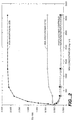
- Figure 2 is a graph showing the results obtained in sandwich ELISA assays with human serum albumin (HSA) alone (“ ⁇ "), HSA treated with prequenched hydroxylamine treated argatroban-C6 NHS ester (“ ⁇ "), HSA treated with prequenched argatroban-C12 NHS ester ("*"), HSA reacted with argatroban-C6 NHS ester (" ⁇ ") or HSA reacted with argatroban-C12 NHS ester ("X”). Results are presented as the absorbance at 490 nm (“OD 490”) versus HSA concentration in nanograms per milliliter (“ng/ml”).
- HSA human serum albumin
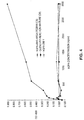
- Figure 3 is a graph showing the results obtained in sandwich ELISA assays with rabbit serum albumin (RSA) alone (“ ⁇ ”), RSA reacted with prequenched argatroban-C6 NHS ester (" ⁇ ”) or RSA reacted with argatroban-C6 NHS ester (" ⁇ ”). Results are presented as the absorbance at 490 nm (“OD 490") versus RSA concentration in nanograms per milliliter (“ng/ml”).
- RSA rabbit serum albumin
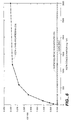
- Figure 4 is a graph showing the results obtained in sandwich ELISA assays with human glycophorin A (hGPA) alone (“ ⁇ "), hGPA treated with prequenched argatroban-C6 NHS ester (“ ⁇ ") or hGPA treated with argatroban-C6 NHS ester (“ ⁇ ”). Results are presented as the absorbance at 490 nm (“OD 490") versus hGPA concentration in nanograms per milliliter (“ng/ml”).
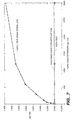
- Figure 5 is a graph showing the results obtained in sandwich ELISA assays with HSA alone (“ ⁇ "), HSA treated with prequenched argatroban-C6 NHS ester ("*"), HSA treated with argatroban-C6 NHS ester (1:500 dilution) (“ ⁇ ”) or HSA reacted with argatroban-C6 NHS ester (1:1000 dilution) ("X”). Results are presented as the absorbance at 490 nm (“OD 490”) versus HSA concentration in nanograms per milliliter (“ng/ml”).
- Figure 6 is a graph showing the results obtained in sandwich ELISA assays with hGPA alone (“ ⁇ "), hGPA treated with prequenched argatroban-C6 NHS ester (“ ⁇ ") or hGPA reacted with argatroban-C6 NHS ester (“ ⁇ ”) employing the 5F4 monoclonal antibody. Results are presented as the absorbance at 490 nm (“OD 490”) versus hGPA concentration in nanograms per milliliter (“ng/ml”).
- Figure 7 is a graph showing the results obtained in sandwich ELISA assays with hGPA alone (“ ⁇ "), hGPA treated with prequenched argatroban-C6 NHS ester (" ⁇ ") or hGPA reacted with argatroban-C6 NHS ester (" ⁇ ") employing the 3C10 monoclonal antibody. Results are presented as the absorbance at 490 nm (“OD 490") versus hGPA concentration in nanograms per milliliter (“ng/ml”).
- Figure 8 is a graph showing the results obtained in sandwich ELISA assays with hGPA alone (“ ⁇ "), hGPA treated with prequenched argatroban-C6 NHS ester (" ⁇ ") or hGPA reacted with argatroban-C6 NHS ester (" ⁇ ") employing the 3E4 monoclonal antibody. Results are presented as the absorbance at 490 nm (“OD 490") versus hGPA concentration in nanograms per milliliter (“ng/ml”).
- Figure 9 is a graph showing the results obtained in thrombin inhibitor assays with RSA alone (“ ⁇ ") or RSA reacted with argatroban-C6 NHS ester (" ⁇ "). Results are presented as the % inhibition of thrombin versus the amount of RSA employed in nM.
- Figure 10 is a graph showing the results obtained in thrombin inhibitor assays with thrombin alone (" ⁇ ") or erythrocyte ghosts reacted with argatroban-C6 NHS ester (" ").
- the points on the graph wherein conjugated erythrocyte ghosts were employed are each shown by the symbol (" "), however, those points define 3 parallel lines representing (from the top of the graph to the bottom) the addition of 200 ⁇ g, 450 ⁇ g and 600 ⁇ g of ghosts/ml. Results are presented as the thrombin activity versus the number of minutes at 21°C.
- Figure 11 is a graph showing the results obtained demonstrating the ability of the novel thrombin inhibitors of the present invention, when covalently bonded to RSA, to delay thrombin-induced platelet aggregation. Data is presented as the concentration in ⁇ g/ml of RSA alone ("RSA") or RSA covalently bonded by argatroban-C6 NHS-ester molecules ("RSA-Ar”) versus the time in minutes to acheive 50% platelet aggregation. Assays were run in duplicate and each assay is shown as a separate column at each concentration tested.
- compositions are provided for the treatment of patients having disorders associated with abnormal thrombosis through inhibition of the mammalian protein, thrombin.
- a novel thrombin inhibitor compound is provided comprising a derivative of the known thrombin inhibitor argatroban, wherein the novel thrombin inhibitor compound has a chemically reactive group which reacts with available reactive functionalities on various blood components, thereby covalently bonding the derivatized thrombin inhibitor molecule to those blood components.
- the chemically reactive group is at a site, so that when the thrombin inhibitor portion is bonded to the blood component, the thrombin inhibitor portion retains a substantial proportion of the parent compound's inhibitory activity. Therefore, through the covalent bonding of the subject thrombin inhibitor molecules to long-lived blood components, the effective lifetime of the thrombin inhibitor in the host's vascular system is greatly increased.
- the various sites with which the chemically reactive group of the subject thrombin inhibitor molecules may react include cells, particularly red blood cells (erythrocytes) and platelets, and proteins, such as immunoglobulins, including IgG and IgM, serum albumin. ferritin, steroid binding proteins, transferrin, thyroxin binding protein, ⁇ -2-macroglobulin, and the like.
- proteins with which the derivatized thrombin inhibitor compounds react which are not long-lived, will generally be eliminated from the host within about three days, so that the proteins indicated above (including the proteins of the cells) will remain at least three days, usually at least four days, and may remain five days or more, usually not exceeding 60 days, more usually not exceeding 30 days, particularly as to the half life, based on the concentration in the blood, as measured in from about 1-3 hours after administration.
- reaction will be with mobile components in the blood, particularly blood proteins and cells, more particularly blood proteins and erythrocytes.
- ''mobile is intended that the component does not have a fixed situs for any extended period of time, generally not exceeding 5, more usually one minute, although some of the blood component may be relatively stationary for extended periods of time.
- functionalized proteins and cells there will be a relatively heterogeneous population of functionalized proteins and cells.
- the population within a few days will vary substantially from the initial population, depending upon the half-life of the functionalized proteins in the blood stream. Therefore, usually within about three days or more, IgG will become the predominant functionalized protein in the blood stream.
- IgG, serum albumin and erythrocytes will be at least about 60 mole %, usually at least about 75 mole %, of the conjugated components in blood, with IgG, IgM (to a substantially lesser extent) and serum albumin being at least about 50 mole %, usually at least about 75 mole %, more usually at least about 80 mole %, of the non-cellular conjugated components.
- the derivatized thrombin inhibitor molecules of the present invention will, for the most part, have the following formula: wherein:
- the activatable precursor will usually be a non-oxo-carbonyl group, including the sulfur and nitrogen analogs thereof, such as thiono and thiol acids and esters and imino esters or functionalities which can be directly modified to provide an active functionality, e.g. cyano.
- the reactive functionalities which are available on proteins for covalently bonding to the chemically reactive group of the derivatized thrombin inhibitors of the present invention are primarily amino groups, carboxyl groups and thiol groups. While any of these may be used as the target of the chemically reactive group on the thrombin inhibitor, for the most part, bonds to amino groups will be employed, particularly with the formation of amide bonds. To form amide bonds, one may use as a chemically reactive group a wide-variety of active carboxyl groups, particularly esters, where the hydroxyl moiety is physiologically acceptable at the levels required.
- N-hydroxysuccinimide N-hydroxysuccinimide
- sulfo-NHS N-hydroxy sulfosuccinimide
- other alcohols which are functional in an aqueous medium such as blood, may also be employed.
- special reagents find use, such as azido, diazo, carbodiimide anhydride, hydrazine, dialdehydes, thiol groups, or amines to form amides, esters, imines, thioethers, disulfides, substituted amines, or the like.
- the covalent bond which is formed should be able to be maintained during the lifetime of the blood component, unless it is intended to be a release site.
- the subject conjugates may also be prepared in vitro by combining blood with derivatized thrombin inhibitors of the present invention, allowing covalent bonding of the derivatized thrombin inhibitors to reactive functionalities on blood components and then returning the conjugated blood to the host.
- the above may also be accomplished by first purifying an individual blood component or limited number of components, such as red blood cells, immunoglobulins, serum albumin, or the like, and combining the component or components in vitro with the chemically reactive thrombin inhibitors.
- the functionalized blood or blood component may then be returned to the host to provide in vivo the subject therapeutically effective conjugates.
- the blood also may be treated to prevent coagulation during handling in vitro.
- the ratio of derivatized thrombin inhibitor to blood components will vary widely, depending upon whether whole blood or just a purified component is used as a bonding site for the derivatized thrombin inhibitor.
- a ratio of derivatized thrombin inhibitor to blood of about 38 micrograms per ml to about 300 micrograms per ml, respectively, while the ratio of derivatized thrombin inhibitor to 10 9 cells will be in the range of about 7.6 micrograms to about 300 micrograms, while the ratio of derivatized thrombin inhibitor to 1 mg of protein will be in the range of about 38 micrograms to about 300 micrograms.
- the nature of the thrombin inhibitor compound may provide for random bonding to the long lived blood components or, to varying degrees, targeted bonding to a restricted class of blood components.
- the distribution of the thrombin inhibitor compound will be based on the relative proportion of active sites for bonding of the blood components, the mode of administration and whatever preferential association the thrombin inhibitor may have.
- a part of the thrombin inhibitor compound will be a group which preferentially non-covalently binds to one or more sites present on one or more of the blood components.
- entities which are known to complex with particular blood components may be used.
- one may prepare a combinatorial library and screen for members of the library which provide the desired blood component association spectrum. For the most part, random bonding will be employed.
- the choice of the long lived blood component will be affected, at least in part, by the desired lifetime for the drug and the availability of the blood component for bonding to the derivatized thrombin inhibitor.
- a long lived blood component has a half life of at least about 12 hours, usually at least about 48 hours, preferably at least about 5 days, desirably at least about 10 days and more desirably at least about 20 days or more.
- half lives are determined by serial measurements of whole blood, plasma or serum levels of the compound following labeling of the compound with an isotope (e.g. 131 I, 125 I, Tc, 5 1 Cr 3 H, etc.) or fluorochrome and injection of a known quantity of labeled compound intravascularly. Included are red blood cells (half life ca, 60 days), platelets (half life ca.
- the subject components are preferably in cell count or concentration sufficient to allow bonding of therapeutically useful amounts of the compound of the present invention.
- the cellular long lived blood components to which the subject derivatized thrombin inhibitors bond are present in high number in the vascular system.
- Platelets are present in from about 1-4x10 5 / ⁇ l, while red blood cells are present in about 4-6x10 6 / ⁇ l.
- the cells have a long half life and the binding to a surface membrane protein of the cells appears not to result in endocytosis.
- Preferred cells have a wide distribution in capillaries and tissue and express specific binding sites on the cell surface associated with their specific differentiation.
- red blood cells and platelets these cells may be readily collected, combined with the conjugate in vitro , and then administered to the host.
- the cells will normally be autologous or allogeneic, but in some instances may even be xenogeneic.
- Suitable erythrocyte binding site containing molecules include glycophorin A, B and C, Band 3 and Rhesus blood group antigens.
- Preferred erythrocyte binding sites are abundantly expressed on the erythrocyte with copy numbers of at least 1,000, preferably at least 10,000, more preferably at least 100,000 per cell, desirably are tethered at least about 0.5, preferably at least about 1 nm above the bilayer surface and do not facilitate per se cell deformation when the derivatized thrombin inhibitor molecule is bonded to the cell (e.g. the bonding will be selected so as not to be a key component of the cytoskeleton).
- Binding sites of the erythrocyte surface glycoprotein glycophorin A and erythrocyte binding sites comprising sialic acid are examples of preferred binding sites.
- Preferred platelet binding sites include GPIIa, GPIIb, GPIIIa and GPIV. Desirably, upon bonding to the target, deformation of the long-lived blood component, e.g. erythrocyte or platelet, does not occur.
- the derivatized thrombin inhibitors of the present invention will usually be administered as a bolus, but may be introduced slowly over time by infusion using metered flow, or the like. Alternatively, although less preferable, blood may be removed from the host, treated ex vivo , and returned to the host.
- the derivatized thrombin inhibitors will be administered in a physiologically acceptable medium, e.g. deionized water, phosphate buffered saline (PBS), saline, aqueous ethanol or other alcohol, plasma, proteinaceous solutions, mannitol, aqueous glucose, alcohol, vegetable oil, or the like.
- compositions may be lyophilized for convenient storage and transport.
- the subject derivatized thrombin inhibitors will for the most part be administered parenterally, such as intravascularly (IV), intraarterially (IA), intramuscularly (IM), subcutaneously (SC), or the like. Administration may in appropriate situations be by transfusion. In some instances, where reaction of the active functional group is relatively slow, administration may be oral, nasal, rectal, transdermal or aerosol, where the nature of the conjugate allows for transfer to the vascular system. Usually a single injection will be employed although more than one injection may be used, if desired.
- the derivatized thrombin inhibitors may be administered by any convenient means, including syringe, trocar, catheter, or the like.
- the administration will be intravascularly, where the site of introduction is not critical to this invention, preferably at a site where there is rapid blood flow, e.g. intravenously, peripheral or central vein. Other routes may find use where the administration is coupled with slow release techniques or a protective matrix.
- the intent is that the subject compound be effectively distributed in the blood, so as to be able to react with the blood components.
- the concentration of the conjugate will vary widely, generally ranging from about 1 pg/ml to 50 mg/ml.
- the total administered intravascularly will generally be in the range of about 0.1 mg/ml to about 10 mg/ml, more usually about 1 mg/ml to about 5 mg/ml.
- the manner of producing the derivatized thrombin inhibitors of the present invention will vary widely, depending upon the nature of the various elements comprising the molecule.
- the synthetic procedures will be selected so as to be simple, provide for high yields, and allow for a highly purified product.
- the chemically reactive group will be created as the last stage, for example, with a carboxyl group, esterification to form an active ester will be the last step of the synthesis.
- An illustrative method for the production of the derivatized thrombin inhibitors of the present invention is shown in Figure 1.
- thrombin protein By bonding to long-lived components of the blood, such as immunoglobulin, serum albumin, red blood cells and platelets, a number of advantages ensue.
- the inhibition of the thrombin protein is extended for days to weeks. Only one administration need be given during this period of time. Greater specificity can be achieved, since the active compound will be primarily bonded to large molecules where it is less likely to be taken up intracellularly to interfere with other physiological processes.
- the blood of the mammalian host may be monitored for the presence of the thrombin inhibitor one or more times. By taking a portion or sample of the blood of the host, one may determine whether the thrombin inhibitor has become bonded to the long lived blood components in sufficient amount to be therapeutically active and, thereafter, the level of thrombin inhibition activity in the blood. If desired, one may also determine to which of the blood components the thrombin inhibitor molecule is bonded.
- the derivatized thrombin inhibitors of the present invention will find use in a variety of different applications.
- the novel thrombin inhibitors of the present invention are useful for the treatment and/or prevention of disorders associated with abnormal thrombosis.
- the subject thrombin inhibitor molecules are useful for inhibiting the production of thromboses, accelerating the dissolution of existing thromboses and for maintaining and/or improving blood circulation.
- the subject derivative molecules will also find use, for example, for treatment after surgery, after myocardial infarction, arteritis of the legs, deep venous thrombosis, pulmonary embolism, and the like.
- linking polypeptides Two amino aliphatic acid methyl esters with 6 and 12 methylene units spans were chosen as the linking polypeptides because of their structural stability and simplicity.
- the linking polypeptides of variable lengths will provide information on length requirement for optimal drug presentation to its target.
- Rabbit erythrocytes were conjugated with the Argatroban-C6 NHS ester compound (compound YL-015-35). To do so, rabbit erythrocytes were isolated from fresh, citrated blood. In brief, an aliquot of blood was centrifuged for 5 minutes at 1800 rpm (Sorvall RC-5B, SH-3000 rotor). The buffy coat was pipetted off the top layer of the cell pellet and the remaining erythrocytes were washed four times with PBS, pH 7.4. Before the last wash, an aliquot of cells was removed for counting. The washed erythrocytes were resuspended at a density of 1 x 10 9 cells/mL.
- the total volume of cells labeled per sample was 3 mL.
- Cells were reacted at room temperature for 45 minutes with gentle agitation with one of the following reagents: (1) sham, 0.5% DMSO/PBS; (2) 100 ⁇ M argatroban C6-free acid (compound YL-015-15) in 0.5% DMSO/PBS; (3) 10 ⁇ M argatroban C6-NHS ester (compound YL-015-35) in 0.5% DMSO/PBS; (4) 50 ⁇ M argatroban C6-NHS ester (compound YL-015-35) in 0.5% DMSO/PBS; (5) 100 ⁇ M argatroban C6-NHS ester (compound YL-015-35) in 0.5% DMSO/PBS; and (6) 100 ⁇ M sulfo-NHS-LC-biotin (Pierce, catalog no.
- the cells were then resuspended in 6 mg/mL BSA/PBS (Sigma, A-2934, lot 93HO291) and gently agitated at room temperature for 30 minutes. After quenching, the cells were washed five times with PBS. Cell yields were determined by cell counting.
- conjugated erythrocyte pellets were chilled on ice for 5 minutes. Cells were then lysed on ice with 12 ml of ice-cold 5 mM phosphate buffer, pH 8.0 (PB) containing 1 mM Pefabloc and 40 ⁇ M leupeptin. Lysates were briefly vortexed and then centrifuged for 20 minutes at 4°C at 15,000 rpm (SS-34, Sorvall RC-5B). The supernatant (hemolysate) was pipetted off the pellet, labeled and stored at 4°C.
- PB pH 8.0
- the pellets were washed four times with 12 ml of cold PBS and centrifuged as above.
- the protein content of the ghosts and hemolysates was determined by using the Micro BCA kit (Pierce; catalog no. 23231). Cell fractions were stored at -80°C.
- the blots were then washed four times with TBS-T (20 mM Tris-HCI, pH 7.6, 137 mM NaCl, 0.25% Tween-20) and incubated for 2 hours at room temperature with a 1:1000 dilution of rabbit serum in TBS-T. Blots were then washed four times with TBS-T as above and incubated with biotinylated anti-rabbit IgG antibodies (Vector, BA-1000) for 1 hour at room temperature. Blots were washed as above and then were incubated with ABC-HRP (Vector) for 30 minutes at room temperature. After washing, blots were visualized with the metal enhanced DAB substrate kit (Pierce, catalog no. 34065).
- Example 3 Mass Spectrometric Analysis of Derivatized Argatroban Conjugation to Human Serum Albumin (HSA) and Rabbit Serum Albumin (RSA) .
- Mass spectrometry was used to support covalency of the bonding of derivatized argatroban molecules to the proteins human serum albumin (HSA) and rabbit serum albumin (RSA) as well as to quantitate the number of conjugated argatroban molecules covalently bonded to the proteins. All samples were analyzed using a high performance liquid chromatograph (HPLC) coupled in-line to an electrospray ionization (ESI) mass spectrometer (MS) which is termed HPLC/ESIMS. Some samples were also analyzed using a matrix-assisted laser desorption ionization (MALDI) time-of-flight (TOF) mass spectrometer which is termed (MALDI-TOFMS).
- HPLC high performance liquid chromatograph
- ESI electrospray ionization
- MS matrix-assisted laser desorption ionization
- TOF time-of-flight
- Samples for HPLC/ESIMS were either prepared as duplicate reaction samples or were part of the same reaction samples which were used in the ELISA assays described below. These samples were injected directly only the HPLC/ESINIS without any manipulation other than dilution with water, where the PBS, DMSO, and unreacted derivative molecules are separated from the protein-argatroban derivative molecule conjugate. Samples for MALDI-MS were first HPLC-purified and mixed 1:1 directly on the stainless steel analysis plate with a matrix of 10 mg/ml sinnapinic acid in 50% acetonitrile/50% water. The mixture was then dried with a gentle flow of air to allow for crystallization and inserted into the instrument for laser ionization.
- the HPLC is a Hewlett Packard 1090 Series II liquid chromatogram with a diode array detector.
- the column used for separation is a Brownlee aquapore OD-300 reversed phase C18 column, 1 mm x 10 cm, 300 ⁇ pore size, 7 ⁇ m particle diameter.
- the mass spectrometer to which the HPLC is connected using fused Silica capillary tubing is a Sciex API-300 triple quadrupole mass spectrometer with an ion-spray source to allow for atmospheric pressure ionization of a liquid flowing continuously into the instrument.
- the MALDI-TOFMS is a Perceptive Biosystems Voyager Elite DE instrument run in the linear mode.
- HPLC/ESIMS of HSA (0.33 ⁇ g/ ⁇ l, 5 ⁇ M) reacted for 1 hour at room temperature with 100 ⁇ M argatroban-C6 NHS ester (compound YL-015-35) indicated a covalent addition of 1-8 argatroban derivative molecules per HSA molecule.
- RSA (0.30 ⁇ g/ ⁇ l, 4.5 ⁇ M) reacted for 1 hour at room temperature with 100 ⁇ M argatroban-C6 NHS ester (compound YL-015-35) also indicated a covalent addition of 1-8 argatroban derivative molecules per RSA molecule.
- HPLC/ESIMS of HSA (0.33% ⁇ g/ ⁇ l, 5 ⁇ M) reacted for 1 hour at room temperature with 0.5 ⁇ M argatroban-C12 NHS ester (compound YL-015-11) indicated a covalent addition of 0-4 argatroban derivative molecules per HSA molecule.
- RSA (0.30 ⁇ g/ ⁇ l, 4.5 ⁇ M) reacted for 1 hour at room temperature with 0.5 ⁇ M argatroban-C12 NHS ester (compound YL-015-11) indicated a covalent addition of 0-3 argatroban derivative molecules per RSA molecule, or slightly less covalent labeling than obtained with the HSA protein.
- the 15 ⁇ M/200 ⁇ M RSA/argatroban derivative sample yielded an average of 5.6 argatroban derivative molecules added per RSA molecule (range of 1-10 added) and the 30 ⁇ M/300 ⁇ M RSA/argatroban derivative sample yielded an average of 5.4 argatroban derivative molecules added per RSA molecule (range of 1-10 added).
- Example 4 Sandwich ELISA Assays to Assess the Relative Bioavailability of Derivatized HSA to Thrombin .
- HSA Human serum albumin
- RSA rabbit serum albumin
- Prequenched negative control samples were of the same composition except that the argatroban NHS ester was reacted with hydroxylamine for 10 minutes prior to the addition of HSA or RSA. Finally, the HSA or RSA only sample had DMSO added to 1% to mimic the addition of argatroban NHS ester solutions and was incubated and quenched the same as the other reactions.
- HSA/argatroban derivative or RSA/argatroban derivative samples were serially diluted in 1% BSA/PBS (1:100 to 1:50,000) and 100 ⁇ l/well was added to duplicate wells of each sample dilution. Samples were incubated on the plates for 2 hours at room temperature and the plates were then washed as above.
- Thrombin (Via Enzymes Systems, 11.4 mg/ml) was diluted to 9.4 ⁇ g/ml in PBS, pH 7.4, with 0.1% BSA/0.1% PEG 8000 (Sigma, catalog no. P-2139) and 100 ⁇ l/well was added. The plates were incubated at room temperature for 1 hour and washed as above.
- Mouse anti-thrombin (American Diagnostics, catalog no. EST-7), an antibody thought to bind away from the active site of thrombin, was diluted to 1 ⁇ g/ml in PBS, pH 7.4, with 0.1% BSA/0.1% PEG 8000 and 100 ⁇ l/well was added to all wells. The plates were incubated at room temperature for 30 minutes and washed as above.
- Biotinylated rabbit anti-mouse IgG (mouse gamma specific, Zymed, catalog no. 61-6540) was diluted 1:1000 in PBS, pH 7.4, with 0.1% BSA and 1% PEG 8000 and 100 ⁇ l/well was added to all wells. The plates were incubated at room temperature for 30 minutes and washed as above.
- ABC-HRP Vector, catalog no. PK4000
- PEG 8000 was added to 0.1% just before addition of ABC-HRP to the plates. The plates were incubated with ABC-HRP for 30 minutes at room temperature and were then washed 10 times by submersion in PBS, pH 7.4.
- the assay was simplified and background reduced by adding goat anti-mouse IgG conjugated with HRP (Jackson ImmunoResearch, catalog no. 115-035-146) diluted 1:500 in HRP diluent (Medix, catalog no. RIH4203) and 100 ⁇ l/well added. The plates were incubated at room temperature for 30 minutes and were then washed 10 times by submersion in PBS, pH 7.4.
- o-phenylenediamine dihydrochloride OPD, Sigma, catalog no. P-3804
- citrate-phosphate buffer pH 5.3 with 0.015% H 2 O 2
- 200 ⁇ l/well of 2 N sulfuric acid VWR, catalog no. VW3S00-1
- absorbance was read at OD 490 in a SpectraMax plate reader (Molecular Devices) after agitating the plate for 5 seconds.
- Results The results obtained from the above sandwich ELISA assays are presented in Figures 2, 3 and 4.
- the data presented in Figure 2 demonstrates that there is a significant increase of OD 490 in wells incubated with samples containing HSA reacted with argatroban-C6 or -C12 NHS ester (compounds YL-015-35 and YL-015-11, respectively) as compared to samples containing prequenched argatroban NHS ester or HSA alone.
- a significant signal above background was detected at approximately 10 ng/ml for both the C6 and the C12 derivatized compounds but the absolute signals for the two compounds are very different with the C6 having a significantly higher OD (approx 6-7 fold at saturation).
- the ELISA assay was identical to the one described for HSA and RSA above with the exception that mouse anti-hGPA (BioAtlantic/CRTS, mAb 5F4), diluted to 10 ⁇ g/ml in 0.1 M sodium acetate, pH 4.5, was used to capture the NHS-argatroban derivative reacted hGPA protein.
- mouse anti-hGPA BioAtlantic/CRTS, mAb 5F4
- KLH Keyhole limpet cyanin
- argatroban-C12 NHS ester compound YL-015-11
- the KLH protein reacted with argatroban-C12 NHS ester was shown by ELISA assay to bind to thrombin and give a detectable signal at approximately 100 ng/ml.
- the ELISA assay was identical to the one described above for HSA and RSA above with the exception that rabbit anti-KLH (Cappel, catalog no.
- Example 5 Sandwich ELISA Assays Using Polyclonal Antibodies to Evaluate HSA, hGPA and Rabbit Erythrocyte ghosts Conjugated with Argatroban-C6 NHS Ester.
- HSA Human serum albumin
- hGPA human glycophorin A
- Rabbit anti-HSA monoclonal antibody (Boehringer/Mannheim, catalog no. 605001) diluted 1:5000 in PBS, pH 7.4 or mouse anti-hGPA monoclonal antibody (BioAtlantic/CRTS, mAb 5F4, diluted to 10 ⁇ g/ml in 0.1 M sodium acetate, pH 4.5 or mAb 3C10 diluted 1:500 or mAb 3E4 diluted 1:1000 in PBS, pH 7.4 - each antibody recognizes a different epitope of hGPA), were used to capture respective proteins by aliquotting 100 ⁇ l/well into a NUNC Maxisorp F96 plate (catalog no. 439454).
- the plates were incubated overnight at 4°C, were then blocked by the addition of 200 ⁇ l/well of 1% BSA/PBS and incubated at room temperature for 1 hour. The plates were then washed 5 times by submersion in PBS, pH 7.4.
- HSA/argatroban derivative or hGPA/argatroban derivative samples were serially diluted in 1% BSA/PBS (1:100 to 1:50,000) and 100 ⁇ l/well was added to duplicate wells for each sample dilution. Samples were incubated on the plates for 2 hours at room temperature and then were washed as above.
- Rabbit anti-KLH-argatroban antibody was diluted 1:500 or 1:1000 in 1% BSA/PBS, pH 7.4 and 100 ⁇ l/well added to each well. The plates were then incubated at room temperature for 30 minutes and washed as above.
- Biotinylated goat anti-rabbit IgG (Vector, catalog no. BA1000) was diluted 1:1000 in 1% BSA/PBS, pH 7.4 and 100 ⁇ l/well added to all wells. The plates were incubated at room temperature for 30 minutes and washed as above.
- the other anti-hGPA monoclonal antibodies (3C10 and 3E4) also detected hGPA-argatroban derivatives, however, at lower levels (see Figures 7 and 8, respectively). These data confirm the thrombin/anti-thrombin results showing that the argatroban-C6 NHS ester has covalently bonded to the HSA and hGPA proteins and, once bonded, binds to thrombin.
- Rabbit erythrocyte ghosts that had been prepared and reacted with 100 ⁇ M argatroban-C6 NHS ester were also shown to be positive in an plate ELISA format using the polyclonal anti-KLH-argatroban antibodies to detect (rabbit erythrocytes reacted with 50 ⁇ M argatroban-C6 NHS ester were also tested but the signal was much lower). Sham treated rabbit erythrocytes or rabbit erythrocytes treated with the argatroban-C6 free acid (compound YL-015-15) did not give a signal above background.
- the ELISA assay was similar to the one described above for the HSA and RSA proteins with the exception that either goat anti-rabbit erythrocyte (Cappel. catalog no. 55616) diluted 1:500 or mouse anti-hGPA (BioAtlantic, mAb 3C10) diluted 1:100 in PBS, pH 7.4 were used to capture the argatroban-C6 NHS ester reacted rabbit erythrocyte ghosts.
- the argatroban-C6 NHS ester was then detected using the polyclonal anti-KLH-argatroban antibodies (1:1000) in the same manner as for the HSA and hGPA proteins above.
- hGPA labeled with argatroban-C6 NHS ester was included in both assays and detected by the goat anti-rabbit erythrocyte to 60 ng/ml and the mouse anti-hGPA to 30 ng/ml.
- goat anti-rabbit erythrocyte to capture
- rabbit erythrocyte/NHS-argatroban conjugate was detected to 1.6 - 3.2 ⁇ g/ml of total protein.
- mouse anti-hGPA mAb 3C10
- rabbit erythrocyte/NHS-argatroban conjugate was detected at about 160 ⁇ g/ml of total protein.
- the argatroban-C6 NHS ester derivative has covalently attached to the rabbit erythrocytes in a manner that is detectable using polyclonal anti-KLH-argatroban antibodies. Since the mouse anti-hGPA was successful with rabbit cells, this assay should also be able to detect argatroban-C6 NHS ester that has covalently attached to human erythrocyte ghosts and whole cells. Moreover, because the goat anti-rabbit erythrocyte antibody was able to detect hGPA, it is likely that this reagent could be used for human erythrocyte ghosts and cells as well.
- a variety of assays were employed to detect the ability of argatroban derivatives to inhibit thrombin activity. Specifically, a Km-based chromogenic assay was first employed. Initially, a 1 mL total volume containing argatroban or a derivative thereof, 8 ⁇ M S-2238 (H-D-Phe-Pip-Arg-p-nitroaniline • 2 HCl) as a substrate for thrombin-induced hydrolysis in 0.1% PEG, 1% DMSO in PBS, pH 7.2, 35°C was initiated by the addition of 10 mU of thrombin from human plasma and the absorbance was measured for 10 minutes at 405 nm.
- S-2238 H-D-Phe-Pip-Arg-p-nitroaniline • 2 HCl
- Measurements at 405 nm are designed to detect the thrombin-induced liberation of p-nitroaniline from the S-2238 substrate. As such, an observed increase in absorbance at 405 nm directly correlates with an increase in hydrolysis of the substrate by thrombin.
- the IC 50 for underivatized argatroban was 6 nM, for a C12-tethered carboxylate of argatroban, about 80 nM, and for compound YL-015-15, a C6-tethered carboxylate of argatroban, about 50 nM.
- Reaction conditions for conjugation of HSA with an NHS ester derivative of argatroban 5 ⁇ M HSA was incubated with 235 ⁇ M of NHS ester of argatroban in 1.5 DMSO, 1.5% ethanol in PBS, pH 7.4 for 1.5 hours at room temperature. At this point, the unreacted ester in the sample was quenched by addition of 1.2 mM hydroxylamine and held at room temperature for 30 minutes. Conjugated HSA was desalted on a kwiksep column to remove any unbound forms of the argatroban derivative and concentrated using a centricon-10 column to approximately the initial reaction volume. Appropriate analogous procedures were followed for controls using 1) underivatized HSA protein and 2) HSA protein processed with prequenched argatroban NHS ester.
- thrombin In a Km-based inhibition assay for thrombin from human plasma, 2.5 mU of thrombin in 10 ⁇ l of 0.1% polyethylene glycol 8000 (PEG) in PBS, pH 7.2, were added to 240 ⁇ l of PBS containing as final concentrations 10 ⁇ M S-2238 hydrolysis substrate, 1% DMSO, 0.1% PEG, and with or without 40 ⁇ g/ml HSA.
- HSA proteins tested included HSA conjugated with an NHS ester of argatroban, HSA processed with hydroxylamine prequenched NHS ester of argatroban and HSA processed through the same incubations and desaltings used to remove residual or free acid forms of the NHS ester of argatroban as in the above samples.
- the rate of substrate hydrolysis by thrombin was nearly linear for the first ten minutes in all cases, as measured by an increase in absorbance at 405 nm from the production of free p-nitroaniline.
- the rate of hydrolysis of substrate was indistinguishable between samples and ranged from 0.94 to 1.08 mOD/minute.
- the rate of hydrolysis of substrate ranged from 0.66 to 0.71 mOD/minute, thus, 32% inhibited compared to controls.
- HSA was again conjugated with argatroban-C12 NHS ester (compound YL-015-11).
- HSA conjugated with argatroban-C12 NHS ester inhibited thrombin activity from 35-42% at 80 mg/ml compared to control samples, with 15-20% inhibition at 40 mg/ml relative to control samples.
- Example 7 K m -Based Fluorogenic Assay for Inhibition of Thrombin from Human Plasma
- Thrombin from human plasma was obtained from Enzyme System Products, Dublin, California, in glycerol:water 1:1, 11.4 mg/ml, 3800 U/mg, MW 36,700, and stored undiluted at -20°C. It was freshly diluted the day of use.
- thrombin 0.67 ⁇ l (25 Units) of thrombin was pipetted into 5 ml of 0.1 mg/ml BSA (from Pierce, Catalog No. 23209, BSA fraction V, a 2 mg/ml stock in saline with sodium azide), in cold PBS (GIBCO, Catalog No. 14190-136, without calcium chloride and magnesium chloride, pH 7.2) and briefly vortexed, yielding a stock of 5 mU thrombin/ ⁇ l. A second dilution of 250 ⁇ l of this stock into 9.75 ml of 0.1 mg BSA/ml PBS resulted in a 0.125 mU/ ⁇ l, or 3.125 mU/25 ⁇ l, final working stock.
- BSA from Pierce, Catalog No. 23209, BSA fraction V, a 2 mg/ml stock in saline with sodium azide
- the substrate was N-tBOC- ⁇ -Benzyl-Asp-Pro-Arg-7-Amido-4-Methylcoumarin HCl and was obtained from Sigma, Catalog No. B-4028, Lot 122H0070, F.W. 770.3. Five mg was dissolved in 1.42 ml DMSO for a 4 mM stock. The stock was stored in 200 ⁇ l aliquots at -20°C in the dark.
- N-tBOC-Val-Pro-Arg-7-Amido-4-Methylcoumarin HCl was obtained from Sigma, Catalog No. B-9385, Lot 53H0805, F.W. of free base 627.7. Five mg was dissolved in 1.863 ml DMSO for a 4 mM stock. The stock was stored in 200 ⁇ l aliquots at -20°C in the dark.
- the fluorescent standard was 7-Amido-4-Methylcoumarin and was obtained from Aldrich, Catalog No. 25,737-0, MW 175.19. 6.1 mg was dissolved in 1.743 ml of DMSO for a 20 mM stock. The stock was stored in 200 ⁇ l aliquots at -20°C in the dark.
- Assays were performed kinetically at ambient temperature (about 20°C) in 96-well microtiter plates (Nunc Immunomodule Maxisorb, a flat bottomed polystyrene plate) on a Perseptive Biosystems Cytofluor I. Stock solutions containing common concentrations and components for each well or group of well were prepared and 200 ⁇ l aliquotted per microtiter well. Assays were routinely conducted in a total volume of 250 ⁇ l, which allows for 25 ⁇ l for inhibitor and 25 ⁇ l for thrombin (about 3 mU).
- the concentration of the fluorogenic substrate N-tBOC- ⁇ -Benzyl-Asp-Pro-Arg-7-Amido-4-Methylcoumarin was varied from 5 to 200 ⁇ M.
- final concentrations per well included 25 ⁇ M N-tBOC- ⁇ -Benzyl-Asp-Pro-Arg-7-Amido-4-Methylcoumarin HCl (approximately K m ), 0.1 mg BSA/ml PBS, and 1% DMSO.
- Initial readings were taken to ensure exclusion of rogue wells with abnormally high backgrounds ( ⁇ excitation at 360 nM, bandwidth 40 nM, ⁇ emission, 460 nm, bandwidth 40 nm).
- 25 ⁇ l of a 10X stock of the putative inhibitor were added per well, mixed for 5 seconds and read kinetically for 10 minutes at ambient temperature to assess background interference and/or any increase in hydrolysis of substrate due to inhibitor.
- Derivatized argatroban molecules attached to RSA or ghosts derived from red blood cells by an activator were formulated in phosphate buffer. Additional RSA of ghost samples processed (1) with tethered argatroban molecules lacking activator or (2) with activator groups attached to ligands that do not inhibit thrombin were included as negative controls.
- the thrombin assay was then initiated by adding 25 ⁇ l of thrombin/well with a multichannel pipettor and mixed for 5 seconds.
- the appearence of the fluorescent product (free 7-amido-4-methylcoumarin released from the peptide by thrombin) was followed simultaneously in 48 wells (one reading per minute for 30 minutes, ⁇ excitation at 360 nm, bandwidth 40 nm, ⁇ emission, 460 nm, bandwidth 40 nm).
- the velocity of the reaction was deterined as an initial velocity in the first 10 minutes, with the signal in relative fluorescent units (RFU) of an uninhibited reaction about 9,000-10,000, above an initial background reading of about 1,000 (gain setting of 80).
- Figure 9 illustrates the ability of the RSA-argatroban (C6) conjugate to inhibit thrombin.
- the IC 50 for this conjugate was estimated to be 25 nM.
- the control RSA sample was not inhibitory at any concentration assayed.
- This result confirms that the C6-tethered argatroban molecules which are covalently-linked to the RSA protein are bioactive as well as bioavailable. Indeed, this observation was extended to erythrocyte ghosts which were labeled with the C6-tethered argaroban molecule (see Figure 10).
- This graph illustrates a kinetic assay of increasing aliquots of ghosts derived from erythrocytes labeled with 100 ⁇ M argatroban (C6)-NHS ester.
- Control sham-treated ghosts or ghosts derived from cells treated with the corresponding argatroban C6-carboxylate were not inhibitory (data not shown).
- carrier proteins either cellularly- or non-cellularly-associated, when conjugated to tethered argatroban molecules are effective drug carriers and that this treatment maintains the bioactivity of the thrombin inhibitor.
- a thrombin-induced platelet aggregation assay was selected to further confirm the bioactivity of the tethered argatroban (C6)-RSA conjugates.
- the conjugate was prepared according to the following protocol. A 15 ⁇ M solution of RSA in PBS was reacted with 200 ⁇ M argatroban-C6 NHS ester for 1 hour at room temperature. Sham samples consist of the RSA incubated for the same length of time at RT in 2% DMSO in PBS. Each of the samples was then concentrated to a final volume of 1.5 mL using Amicon Centricon 30 filtration/concentration devices. The concentrated samples were then desalted on Pierce's 5 mL Kwiksep excellulose plastic desalting columns.
- the excluded volumes containing RSA or argatroban-C6-RSA were then subjected to BCA microprotein estimation and lyophilization.
- these samples were analyzed by LC/MS, sandwich ELISA assays (described above) to measure thrombin binding and immunoblotting. From LC/MS analysis, an average of 10 tethered argatroban molecules were conjugated to each RSA molecule.
- Platelets were purified from freshly drawn human blood diluted with the anticoagulant buffer ACD (9 mls of blood to 1 mL of buffer). The blood was centrifuged for 25 min at 200 x g. The platelet-rich plasma (PRP) was recovered with a plastic pipette. The PRP was centrifuged for 15 min at 3,000 x g in v-shaped plastic tubes.
- ACD anticoagulant buffer
- PPP platelet-poor plasma
- the resuspended platelets were washed 2 times with buffer A1 After the last wash, the platelets were resuspended in buffer B1 (137 mM NaCI, 2.6 mM KCl, 12 mM NaHCO 3 , 0.3 mM NaH 2 PO 4 , 3 mM CaCl 2 , 1 mM MgCl 2 , 5 mM glucose, 3.5 mg/mL BSA and 0.05 U/mL apyrase at pH 7.4) at a density of 3 x 10 5 / ⁇ L. The platelets were maintained at room temperature until ready for use.
- buffer B1 137 mM NaCI, 2.6 mM KCl, 12 mM NaHCO 3 , 0.3 mM NaH 2 PO 4 , 3 mM CaCl 2 , 1 mM MgCl 2 , 5 mM glucose, 3.5 mg/mL BSA and 0.05 U/mL apyrase at pH 7.4
- Figure 11 depicts the delay in thrombin-induced platelet aggregation affected by various titrations of RSA.
- the argatroban-C6-RSA clearly delayed platelet aggregation.
- Table 1 tabulates the estimated concentrations of the conjugates which inhibit 50% of the aggregation (IC 50 ).
- Compound IC 50 Free argatroban 0.1 - 0.15 ⁇ M RSA-argatroban-C6 conjugate 4.5 - 7.5 ⁇ M RSA sham > 150 ⁇ M
- the estimated IC 50 value for the argatroban-C6-RSA was determined to be in the range of 4.5 to 7.5 ⁇ M.
- the sham-treated RSA did not interfere with platelet aggregation even at 150 ⁇ M. Higher concentrations were not tested, so the IC 50 for the sham RSA was not determined.
- the IC 50 for argatroban in this assay is approximately 0.1 ⁇ M, which is in line with literature values. This value is at least an order of magnitude more effective than the argatroban-C6-RSA conjugate. This trend was expected based on the increased IC 50 observed for the C6-tethered argatroban carboxylate as compared to argatroban in the earlier-described K m -based fluorogenic thrombin inhibition assay.
- the subject invention provides for greatly improved treatment involving thrombin inhibition.
- the conjugated thrombin inhibitors maintain for extended periods of time, so that repetitive dosages are not required, compliance by the patient is not required, and protection is ensured.
- the derivatized thrombin inhibitors of the present invention covalently attach to erythrocytes, plasma proteins and various other vascular components while retaining biological activity and are not immunogenic.
Landscapes
- Health & Medical Sciences (AREA)
- Life Sciences & Earth Sciences (AREA)
- Engineering & Computer Science (AREA)
- Bioinformatics & Cheminformatics (AREA)
- Chemical & Material Sciences (AREA)
- Medicinal Chemistry (AREA)
- Pharmacology & Pharmacy (AREA)
- Animal Behavior & Ethology (AREA)
- General Health & Medical Sciences (AREA)
- Public Health (AREA)
- Veterinary Medicine (AREA)
- Epidemiology (AREA)
- Nuclear Medicine, Radiotherapy & Molecular Imaging (AREA)
- Organic Chemistry (AREA)
- Proteomics, Peptides & Aminoacids (AREA)
- General Chemical & Material Sciences (AREA)
- Chemical Kinetics & Catalysis (AREA)
- Heart & Thoracic Surgery (AREA)
- Urology & Nephrology (AREA)
- Vascular Medicine (AREA)
- Cardiology (AREA)
- Diabetes (AREA)
- Hematology (AREA)
- Medicines That Contain Protein Lipid Enzymes And Other Medicines (AREA)
- Peptides Or Proteins (AREA)
- Pharmaceuticals Containing Other Organic And Inorganic Compounds (AREA)
- Micro-Organisms Or Cultivation Processes Thereof (AREA)
Claims (32)
- Eine Verbindung der Formelworin:
 Y eine Linkergruppe mit 2 bis 30 Atomen ist undZ eine chemisch reaktive Gruppe, welche zur Reaktion mit einer reaktiven Funktionalität eines Targetmoleküles in einem wässrigen System fähig ist, um kovalente Bindungen damit auszubilden, oder ein aktivierbarer Vorläufer für die genannte chemische reaktive Gruppe ist und worin diese Verbindung eine Thrombin inhibierende Wirkung in vivo besitzt, wenn sie an eine langlebige Blutkomponente gebunden ist.
 - Verbindung nach Anspruch 1, worin Y eine Alkylen-, Oxyalkylen- oder Polyoxyalkylengruppe ist.
- Verbindung nach Anspruch 1, worin Y eine Alkylgruppe ist.
- Verbindung nach Anspruch 3, worin die Alkylgruppe 6 Kohlenstoffatome besitzt.
- Verbindung nach Anspruch 3, worin die Alkylgruppe 12 Kohlenstoffatome besitzt.
- Verbindung nach Anspruch 1, worin Z eine Carboxygruppe, eine Carboxylestergruppe oder ein gemischtes Anhydrid ist.
- Verbindung nach Anspruch 6, worin Z aus der Gruppe ausgewählt ist, welche aus N-Hydroxysuccinimid, Isocyanat, Thiolester, Thiocarbonsäureester, Iminoester, Carbodi-imidanhydrid, Kohlensäureester und Phosphorylester und N-Hydroxysulfosuccinimid besteht.
- Verbindung nach Anspruch 1, worin Z N-Hydroxysuccinimid ist.
- Verbindung nach Anspruch 8, worin Y gleich -CH2-CH2-CH2-CH2-CH2-CH2- ist.
- Eine Zusammensetzung, welche die Verbindung nach einem der Ansprüche 1 bis 9 und einen physiologisch annehmbaren Träger umfasst.
- Verwendung einer Verbindung nach einem der Ansprüche 1 bis 9 zur Herstellung eines Medikamentes mit Thrombin inhibierender Aktivität.
- Ein Verfahren zur in vitro-Inhibierung der Thrombinaktivität im Blut oder in einem Blutanteil, wobei das Verfahren umfasst:wobei die Thrombininhibierung im Vergleich zur Lebenszeit von ungebundenem Thrombininhibitor über einen längeren Zeitraum aufrechterhalten wird.(a) Isolieren von Blut oder Blutkomponenten eines Säugetierwirts;(b) ex vitro Kontaktieren des Blutes oder der Blutkomponenten mit einer Verbindung nach jedem der Ansprüche 1 bis 9, wobei diese Verbindung kovalent an eine oder mehrere reaktive Funktionalitäten bindet, welche in dem Blut oder den Blutkomponenten vorliegt bzw. vorliegen;
- Ein Blutanteil, umfassend eine Verbindung nach einem der Ansprüche 1 bis 9 kovalent an wenigstens eine langlebige Blutkomponente gebunden.
- Blutanteil nach Anspruch 13, worin die langlebige Blutkomponente Immunoglobulin ist.
- Blutanteil nach Anspruch 13, worin die langlebige Blutkomponente Erythrocyten sind.
- Konjugat, umfassend eine Verbindung nach einem der Ansprüche 1 bis 9, kovalent an eine Blutkomponente gebunden, welche aus der Gruppe ausgewählt ist, die aus Serumalbumin, Immunoglobulin und Erythrocyten besteht.
- Konjugat nach Anspruch 16, worin die Blutkomponente Serumalbumin ist.
- Ein Verfahren zur Bildung von RYZ, worin R ein Argatroban-Molekül, Y eine Linker-Gruppe und Z eine reaktive Gruppe ist, umfassend die Schritte:wobei Z aus der Gruppe ausgewählt ist, welche aus N-Hydroxysulfosuccinimid, N-Hydroxysuccinimid, Isocyanat, Thiocarbonsäureester, Iminoester, Carboimidanhydrid, Kohlensäureester und Phosphorylester besteht.a) Bilden von RY' aus R' + Y'', worin
R'und Y'' H2N-(CH2)nCO2Me ist,
wobei n zwischen 2 und 30 liegt und Me eine Methylgruppe ist,
und RY'ist und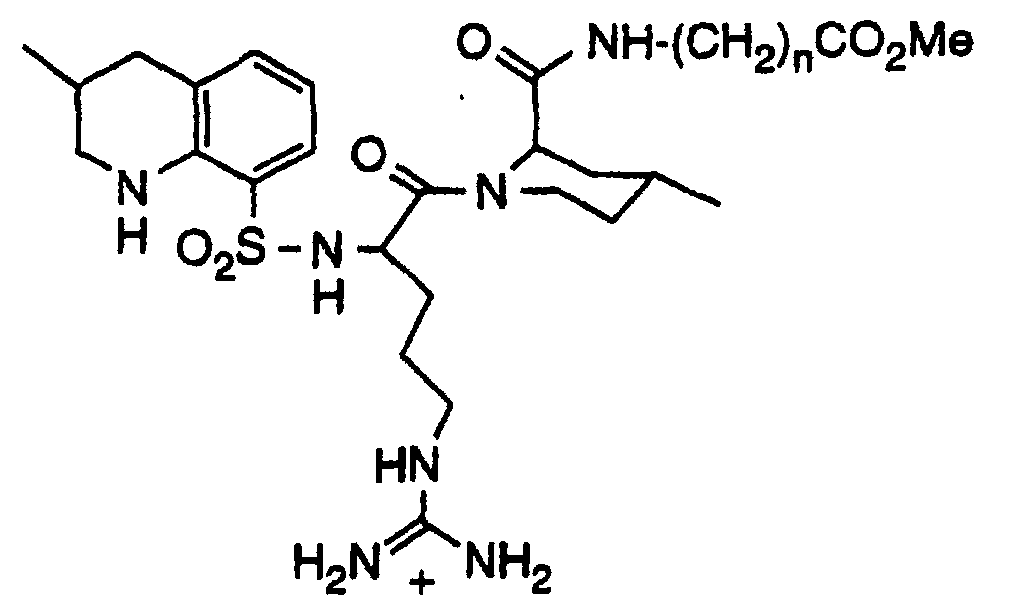 b) Bilden von RYZ aus RY' und Z', worin Z' ein aktivierbarer Vorläufer für eine chemisch reaktive Gruppe Z ist, wobei diese Gruppe zur Reaktion mit einer reaktiven Funktionalität eines Targetmoleküles in einem wässrigen System in der Lage ist, um eine kovalente Bindung damit auszubilden, worin
RYZist,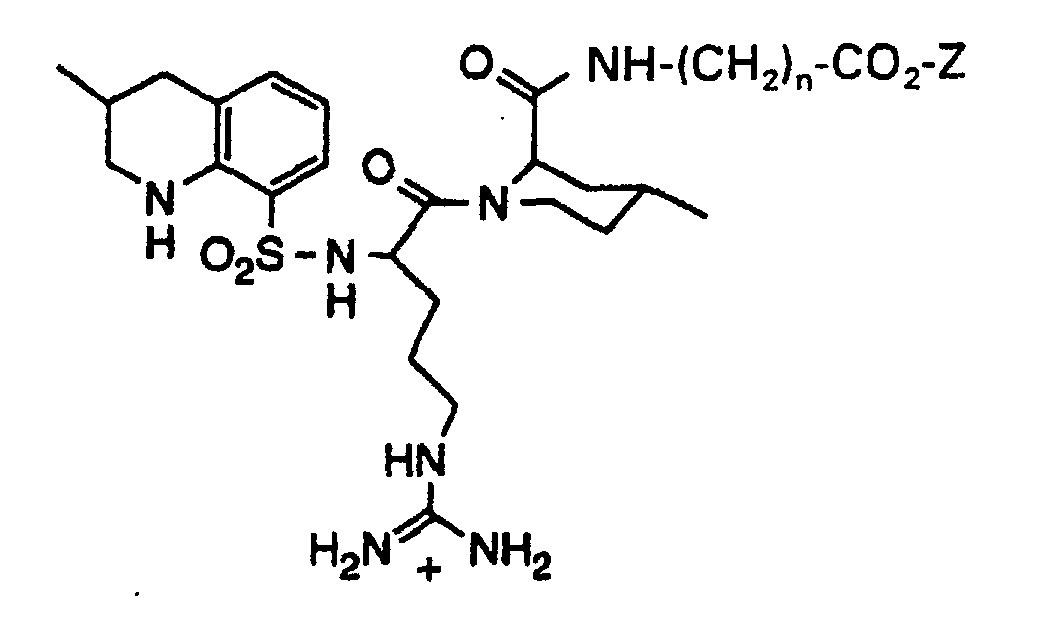
- Verfahren nach Anspruch 18, worin Z N-Hydroxysulfosuccinimid oder N-Hydroxysuccinimid ist.
- Ein Verfahren zur Synthese von R-(CH2)n-CO2-NHS, worin n zwischen 2 und 30 liegt, NHS N-Hydroxysuccinimid bedeutet und Rist, umfassend die Schritte:
 a) Synthetisieren von R-(CH2)n-CO2-CH3 durch:i) Verbinden von R, H2N-(CH2)n-CO2-CH3 und O-Benzotriazol-1-yl-N,N,N',N'-tetramethyluraniumhexafluorophosphat in einem Lösungsmittel unter Ausbildung einer ersten Lösung undii) Entfernen des Lösungsmittels und von O-Benzotriazol-1-yl-N,N,N',N'-tetramethyluraniumhexafluorophosphat aus dieser ersten Lösung;b) Synthetisieren von R-(CH2)n-CO2H aus R-(CH2)n-CO2-CH3 durch:i) Auflösen von R-(CH2)n-CO2-CH3 in einem alkalischen Lösungsmittel unter Ausbildung einer zweiten Lösung;ii) Entfernen des alkalischen Lösungsmittels aus der zweiten Lösung undiii) Ansäuern der zweiten Lösung unter Ausbildung von R-(CH2)n-CO2H; undc) Synthetisieren von R-(CH2)n-CO2-NHS aus R-(CH2)n-CO2H durch:i) Kombinieren von R-(CH2)n-CO2H, N-Hydroxysuccinimid und einem Kopplungsmittel in einem zweiten Lösungsmittel unter Ausbildung einer dritten Lösung undii) Entfernen des zweiten Lösungsmittels aus der dritten Lösung unter Ausbildung von R-(CH2)n-CO2-NHS.
 - Verfahren zur Synthetisierung von R-(CH2)n-CO2-sulfo-NHS, worin n zwischen 2 bis 30 liegt, Sulfo-NHS N-Hydroxysulfosuccinimid ist und Rist, umfassend die Schritte:
 a) Synthetisieren von R-(CH2)n-CO2-CH3 durch:i) Kombinieren von R, H2N-(CH2)n-CO2-CH3 und O-Benzotriazol-1-yl-N,N,N',N'-tetramethyl-uraniumhexafluorophosphat in einem Lösungsmittel unter Ausbildung einer ersten Lösung undii) Entfernen des Lösungsmittels und von O-Benzotriazol-1-yl-N,N,N',N'-tetramethyluraniumhexafluorophosphat aus der ersten Lösung;b) Synthetisieren von R-(CH2)n-CO2H aus R-(CH2)n-CO2-CH3 durch:i) Auflösen von R-(CH2)n-CO2-CH3 in einem alkalischen Lösungsmittel unter Ausbildung einer zweiten Lösung;ii) Entfernen des alkalischen Lösungsmittels aus der zweiten Lösung undiii) Ansäuern der zweiten Lösung;c) Synthetisieren von R-(CH2)n-CO2-sulfo-NHS aus R-(CH2)n-CO2H durch:i) Verbinden von R-(CH2)n-CO2H, N-Hydroxysulfosuccinimid und einem Kopplungsmittel in einem zweiten Lösungsmittel unter Ausbildung einer dritten Lösung undii) Entfernen des zweiten Lösungsmittels aus der dritten Lösung.
 - Verwendung einer Verbindung gemäß einem der Ansprüche 1 bis 9 zur Herstellung eines Medikamentes zur Verwendung in einem Verfahren zur Beschleunigung der Auflösung einer bestehenden Thrombose im Gefäßsystems eines Patienten.
- Verwendung nach Anspruch 22, worin das Medikament intravaskulär, intraarteriell, intramuskulär, subkutan, oral, nasal, rektal, transdermal oder mittels eines Aerosols verabreichbar ist.
- Verwendung nach Anspruch 22, worin das Medikament intraarteriell oder intravaskulär mittels einer Vorrichtung verabreichbar ist, worin die Vorrichtung aus der Gruppe ausgewählt ist, welche aus Spritzen, Trokaren und Kathetern besteht.
- Verwendung nach Anspruch 22, worin das Medikament mittels eines Katheters verabreichbar ist.
- Verwendung nach Anspruch 22, worin das Medikament mit dem Katheter am oder nahe beim Thrombos verabreichbar ist.
- Verwendung nach einem der Ansprüche 22 bis 26, worin die langlebige Blutkomponente ein Erythrocyt oder ein Blutplättchen ist.
- Verwendung einer Verbindung nach einem der Ansprüche 1 bis 9 zur Herstellung eines Medikamentes für ein Verfahren zur Verbesserung der Blutzirkulation in einem Patienten durch Inhibierung der Produktion von Thrombosen in dem Gefäßsystem des Patienten.
- Verwendung nach Anspruch 28, worin das Medikament nach einem Eingriff verabreichbar ist.
- Verfahren nach Anspruch 28, worin das Medikament nach einem Myocardinfarkt des Patienten verabreichbar ist.
- Verwendung nach Anspruch 28, worin das Medikament Verwendung bei der Behandlung einer tiefen Venenthrombose dient.
- Verwendung nach Anspruch 28, worin das Medikament zur Verwendung bei der Behandlung von Arteritis in den Beine dient.
Applications Claiming Priority (3)
| Application Number | Priority Date | Filing Date | Title |
|---|---|---|---|
| US674315 | 1996-07-01 | ||
| US08/674,315 US5840733A (en) | 1996-07-01 | 1996-07-01 | Methods and compositions for producing novel conjugates of thrombin inhibitors and endogenous carriers resulting in anti-thrombins with extended lifetimes |
| PCT/IB1997/001093 WO1998000171A2 (en) | 1996-07-01 | 1997-06-30 | Conjugates of thrombin inhibitors and endogenes carriers |
Publications (2)
| Publication Number | Publication Date |
|---|---|
| EP0956049A2 EP0956049A2 (de) | 1999-11-17 |
| EP0956049B1 true EP0956049B1 (de) | 2002-10-16 |
Family
ID=24706128
Family Applications (1)
| Application Number | Title | Priority Date | Filing Date |
|---|---|---|---|
| EP97937767A Expired - Lifetime EP0956049B1 (de) | 1996-07-01 | 1997-06-30 | Thrombininhibitor-konjugate und endogene träger |
Country Status (9)
| Country | Link |
|---|---|
| US (4) | US5840733A (de) |
| EP (1) | EP0956049B1 (de) |
| JP (1) | JP2000514795A (de) |
| KR (1) | KR20000022371A (de) |
| AT (1) | ATE226092T1 (de) |
| CA (1) | CA2258516A1 (de) |
| DE (1) | DE69716474D1 (de) |
| IL (1) | IL127712A0 (de) |
| WO (1) | WO1998000171A2 (de) |
Cited By (1)
| Publication number | Priority date | Publication date | Assignee | Title |
|---|---|---|---|---|
| US7927579B2 (en) | 2003-01-17 | 2011-04-19 | Advanced Proteome Therapeutics, Inc | Tandem analyses of noncovalently driven effectors for modulatory mapping of activities of protein sites |
Families Citing this family (48)
| Publication number | Priority date | Publication date | Assignee | Title |
|---|---|---|---|---|
| US5840733A (en) * | 1996-07-01 | 1998-11-24 | Redcell, Canada, Inc. | Methods and compositions for producing novel conjugates of thrombin inhibitors and endogenous carriers resulting in anti-thrombins with extended lifetimes |
| US7033765B1 (en) | 1997-02-20 | 2006-04-25 | Toronto Research Chemicals, Inc. | Site-specific drug delivery |
| DE69830305T2 (de) * | 1997-02-20 | 2006-02-02 | Dime, David S., Toronto | Ortsspezifische arzneimittel verabreichung |
| US6437092B1 (en) | 1998-11-06 | 2002-08-20 | Conjuchem, Inc. | Conjugates of opioids and endogenous carriers |
| ATE406577T1 (de) | 1997-11-07 | 2008-09-15 | Conjuchem Biotechnologies Inc | Methoden zum screening von affinitätsmarker- bibliotheken |
| IL135835A0 (en) * | 1997-11-07 | 2001-05-20 | Conjuchem Inc | Novel conjugates of opioids and endogenous carriers |
| US6107489A (en) * | 1998-03-17 | 2000-08-22 | Conjuchem, Inc. | Extended lifetimes in vivo renin inhibitors |
| IL133053A0 (en) * | 1998-03-23 | 2001-03-19 | Conjuchem Inc | Local delivery of long lasting therapeutic agents |
| US20030170250A1 (en) * | 1998-03-23 | 2003-09-11 | Ezrin Alan M. | Local delivery of long lasting therapeutic agents |
| CA2330611A1 (en) | 1998-05-22 | 1999-12-02 | The Board Of Trustees Of The Leland Stanford Junior University | Bifunctional molecules and therapies based thereon |
| US6440417B1 (en) * | 1998-11-06 | 2002-08-27 | Conjuchem, Inc. | Antibodies to argatroban derivatives and their use in therapeutic and diagnostic treatments |
| GB9824632D0 (en) * | 1998-11-10 | 1999-01-06 | Celltech Therapeutics Ltd | Biological compounds |
| US6514500B1 (en) * | 1999-10-15 | 2003-02-04 | Conjuchem, Inc. | Long lasting synthetic glucagon like peptide {GLP-!} |
| PT1180121E (pt) * | 1999-05-17 | 2004-03-31 | Conjuchem Inc | Peptidos insulinotropicos de longa duracao |
| US20090175821A1 (en) * | 1999-05-17 | 2009-07-09 | Bridon Dominique P | Modified therapeutic peptides with extended half-lives in vivo |
| US7601691B2 (en) | 1999-05-17 | 2009-10-13 | Conjuchem Biotechnologies Inc. | Anti-obesity agents |
| US20040266673A1 (en) * | 2002-07-31 | 2004-12-30 | Peter Bakis | Long lasting natriuretic peptide derivatives |
| US6887470B1 (en) | 1999-09-10 | 2005-05-03 | Conjuchem, Inc. | Protection of endogenous therapeutic peptides from peptidase activity through conjugation to blood components |
| DE19926154A1 (de) | 1999-06-09 | 2000-12-14 | Ktb Tumorforschungs Gmbh | Verfahren zur Herstellung einer injizierbaren Arzneimittelzubereitung |
| AU6937100A (en) * | 1999-08-23 | 2001-03-19 | Polaris Pharmaceuticals, Inc. | Inhibitors of binding between proteins and macromolecular ligands |
| EP1889639A3 (de) * | 1999-09-07 | 2008-04-09 | ConjuChem Biotechnologies Inc. | Verfahren und Zusammensetzungen zur Herstellung antineoplastischer Wirkstoffe von hoher Haltbarkeit |
| CA2383798A1 (en) * | 1999-09-07 | 2001-03-15 | Conjuchem Inc. | Pulmonary delivery for bioconjugation |
| US6706892B1 (en) | 1999-09-07 | 2004-03-16 | Conjuchem, Inc. | Pulmonary delivery for bioconjugation |
| EP1229924A4 (de) | 1999-11-19 | 2004-12-15 | Univ Leland Stanford Junior | Gezielte bifunctionelle moleküle und darauf gegründete therapien |
| US7220552B1 (en) | 1999-11-19 | 2007-05-22 | The Board Of Trustees Of The Leland Stanford Junior University | Bifunctional molecules and their use in the disruption of protein-protein interactions |
| US6887842B1 (en) | 1999-11-19 | 2005-05-03 | The Board Of Trustees Of The Leland Stanford Junior University | Modulating a pharmacokinetic property of a drug by administering a bifunctional molecule containing the drug |
| EP1980572A1 (de) * | 2001-02-16 | 2008-10-15 | ConjuChem Biotechnologies Inc. | Glucagonartiges Peptid 2 (GLP-2) mit Langzeitwirkung für die Behandlung von Magendarmerkrankungen und -störungen |
| US6923939B1 (en) * | 2001-07-05 | 2005-08-02 | Uop Llc | Heat activated membrane introduction apparatus and method for screening materials |
| PL371760A1 (en) * | 2001-11-26 | 2005-06-27 | Genentech, Inc. | Catheter composition and uses thereof |
| US7655618B2 (en) | 2002-12-27 | 2010-02-02 | Diobex, Inc. | Compositions and methods for the prevention and control of insulin-induced hypoglycemia |
| JP2006514990A (ja) * | 2002-12-27 | 2006-05-18 | ディオベックス, インコーポレイテッド | インスリン誘発性低血糖の予防および制御のための組成物および方法 |
| US7109243B2 (en) | 2003-03-24 | 2006-09-19 | Irm Llc | Inhibitors of cathepsin S |
| US7384970B2 (en) | 2003-03-24 | 2008-06-10 | Irm Llc | Inhibitors of cathepsin S |
| WO2004103270A2 (en) * | 2003-04-02 | 2004-12-02 | Suntory Pharmaceutical Research Laboratories Llc | Compounds and methods for treatment of thrombosis |
| US7173051B2 (en) | 2003-06-13 | 2007-02-06 | Irm, Llc | Inhibitors of cathepsin S |
| US7256207B2 (en) | 2003-08-20 | 2007-08-14 | Irm Llc | Inhibitors of cathepsin S |
| US20050181513A1 (en) * | 2004-02-18 | 2005-08-18 | Viorica Lopez-Avila | Methods and compositions for assessing a sample by MAILDI mass spectrometry |
| ES2347902T3 (es) * | 2004-04-23 | 2010-11-22 | Conjuchem Biotechnologies Inc. Canadian Corporation 4528590 | Fase solida para uso en un procedimiento para la purificacion de conjugados de albumina. |
| CA2617920C (en) * | 2005-09-01 | 2014-05-27 | Baxter International Inc. | Argatroban formulation comprising an acid as solubilizer |
| US8168592B2 (en) | 2005-10-21 | 2012-05-01 | Amgen Inc. | CGRP peptide antagonists and conjugates |
| US8039432B2 (en) | 2005-11-09 | 2011-10-18 | Conjuchem, Llc | Method of treatment of diabetes and/or obesity with reduced nausea side effect |
| CN101384623B (zh) * | 2005-12-22 | 2013-07-24 | 常山凯捷健生物药物研发(河北)有限公司 | 白蛋白与治疗剂的预成型偶联物的制备方法 |
| US8916148B2 (en) | 2006-11-07 | 2014-12-23 | Genentech, Inc. | Tissue plasminogen activator variant uses |
| US20090099074A1 (en) * | 2007-01-10 | 2009-04-16 | Conjuchem Biotechnologies Inc. | Modulating food intake |
| HUE041305T2 (hu) | 2008-02-08 | 2019-05-28 | Red Hill Biopharma Ltd | Gyulladásos bélbetegségek kezelésére alkalmazott módszerek és készítmények |
| US7915290B2 (en) * | 2008-02-29 | 2011-03-29 | Baxter International Inc. | Argatroban formulations and methods for making and using same |
| US20090221637A1 (en) * | 2008-02-29 | 2009-09-03 | Baxter International Inc. | Solid-state salt argatroban formulations and methods for producing and using the same |
| KR20140090663A (ko) | 2011-11-07 | 2014-07-17 | 디아크론 파마슈티칼스, 인코포레이티드 | 직접 트롬빈 억제제의 연장 방출성 제형 |
Family Cites Families (103)
| Publication number | Priority date | Publication date | Assignee | Title |
|---|---|---|---|---|
| US3622615A (en) * | 1968-11-06 | 1971-11-23 | Parke Davis & Co | N{11 -(p-tolylsulfonyl)-L-arginine esters |
| US4140681A (en) * | 1974-11-08 | 1979-02-20 | Mitsubishi Chemical Industries, Limited | N2 -Arylsulfonyl-L-argininamides and the pharmaceutically acceptable salts thereof |
| US4097591A (en) * | 1974-11-08 | 1978-06-27 | Mitsubishi Chemical Industries Limited | N2 -arylsulfonyl-L-argininamides and the pharmaceutically acceptable salts thereof |
| US4093712A (en) * | 1974-11-08 | 1978-06-06 | Mitsubishi Chemical Industries Limited | N2 -arylsulfonyl-L-argininamides and the pharmaceutically acceptable salts thereof |
| US4073913A (en) * | 1974-11-08 | 1978-02-14 | Mitsubishi Chemical Industries Limited | N2 -arylsulfonyl-L-argininamides and the pharmaceutically acceptable salts thereof |
| US4097472A (en) * | 1974-11-08 | 1978-06-27 | Mitsubishi Chemical Industries Limited | N2 -arylsulfonyl-l-argininamides and the pharmaceutically acceptable salts thereof |
| US4131673A (en) * | 1974-11-08 | 1978-12-26 | Mitsubishi Chemical Industries, Limited | N2 -arylsulfonyl-L-argininamides and the pharmaceutically acceptable salts thereof |
| US3978045A (en) * | 1973-08-13 | 1976-08-31 | Mitsubishi Chemical Industries Ltd. | N2 -dansyl-L-arginine derivatives, and the pharmaceutically acceptable acid addition salts thereof |
| US4133880A (en) * | 1974-11-08 | 1979-01-09 | Mitsubishi Chemical Industries Ltd. | N2 -Substituted-L-arginine derivatives and the pharmaceutically acceptable acid addition salts thereof |
| US4069318A (en) * | 1974-11-08 | 1978-01-17 | Mitsubishi Chemical Industries Ltd. | N2 -Alkoxynaphthalenesulfonyl-L-argininamides and the pharmaceutically acceptable salts thereof |
| US4072743A (en) * | 1974-11-08 | 1978-02-07 | Mitsubishi Chemical Industries Limited | N2 -arylsulfonyl-L-argininamides and the pharmaceutically acceptable salts thereof |
| US4173630A (en) * | 1974-11-08 | 1979-11-06 | Mitsubishi Chemical Industries Limited | N2 Arylsulfonyl-L-argininamides and the pharmaceutically acceptable salts thereof |
| US4096255A (en) * | 1974-11-08 | 1978-06-20 | Mitsubishi Chemical Industries Limited | N2 -naphthalenesulfonyl-L-argininamides, and pharmaceutical salts, compositions and methods |
| US4125619A (en) * | 1974-11-08 | 1978-11-14 | Mitsubishi Chemical Industries, Ltd. | N2 -naphthalenesulfonyl-L-arginine derivatives and the pharmaceutically acceptable acid addition salts thereof |
| US4066773A (en) * | 1974-11-08 | 1978-01-03 | Mitsubishi Chemical Industries Ltd. | N2 -arylsulfonyl-L-argininamides and the pharmaceutically acceptable salts thereof |
| US4108986A (en) * | 1974-11-08 | 1978-08-22 | Mitsubishi Chemical Industries Limited | N2 -Arylsulfonyl-L-argininamides and the pharmaceutically acceptable salts thereof |
| US4104392A (en) * | 1974-11-08 | 1978-08-01 | Mitsubishi Chemical Industries Ltd. | N2 -naphthalenesulfonyl-L-argininamides and the pharmaceutically acceptable salts thereof, and antithrombotic compositions and methods employing them |
| US4069323A (en) * | 1974-11-08 | 1978-01-17 | Mitsubishi Chemical Industries Ltd. | N2 -substituted-L-arginine derivatives and the pharmaceutically acceptable acid addition salts thereof |
| US4055636A (en) * | 1974-11-08 | 1977-10-25 | Mitsubishi Chemical Industries Ltd. | N2 -alkoxynaphthalenesulfonyl-L-argininamides and the pharmaceutically acceptable salts thereof |
| US4139529A (en) * | 1974-11-08 | 1979-02-13 | Mitsubishi Chemical Industries Limited | N2 -Naphthalenesulfonyl-L-arginine derivatives and the pharmaceutically acceptable acid addition salts thereof |
| US4069329A (en) * | 1974-11-08 | 1978-01-17 | Mitsubishi Chemical Industries Limited | N2 -Naphthalenesulfonyl-L-arginine derivatives, and the pharmaceutically acceptable acid addition salts thereof |
| US4154828A (en) * | 1974-11-08 | 1979-05-15 | Mitsubishi Chemical Industries, Ltd. | N2 -Naphthalenesulfonyl-L-arginine derivatives, and the pharmaceutically acceptable acid addition salts thereof |
| US4073914A (en) * | 1974-11-08 | 1978-02-14 | Mitsubishi Chemical Industries Limited | N2 -naphthalenesulfonyl-L-argininamides and the pharmaceutically acceptable salts thereof |
| US4201863A (en) * | 1974-11-08 | 1980-05-06 | Mitsubishi Chemical Industries, Limited | N2 -Arylsulfonyl-L-argininamides and the pharmaceutically acceptable salts thereof |
| US4125604A (en) * | 1974-11-08 | 1978-11-14 | Mitsubishi Chemical Industries Limited | N2-Arylsulfonyl-L-argininamides and the pharmaceutically acceptable salts thereof |
| US4073892A (en) * | 1974-11-08 | 1978-02-14 | Mitsubishi Chemical Industries Limited | N2 -alkoxynaphthylsulfonyl-L-argininamides and the pharmaceutically acceptable salts thereof |
| US4072757A (en) * | 1974-11-08 | 1978-02-07 | Mitsubishi Chemical Industries Limited | N2 alkoxynaphthylsulfonyl-L-argininamides and the pharmaceutically acceptable salts thereof |
| US4073891A (en) * | 1974-11-08 | 1978-02-14 | Mitsubishi Chemical Industries Limited | N2 -Arylsulfonyl-L-argininamides and the pharmaceutically acceptable salts thereof |
| NL7512637A (nl) * | 1974-11-08 | 1976-05-11 | Mitsubishi Chem Ind | Werkwijze ter bereiding van een geneesmiddel, het aldus gevormde geneesmiddel en werkwijze voor de bereiding van actieve component. |
| US4055651A (en) * | 1974-11-08 | 1977-10-25 | Mitsubishi Chemical Industries Ltd. | N2 -alkoxynaphthalenesulfonyl-L-argininamides and the pharmaceutically acceptable salts thereof |
| US4070457A (en) * | 1974-11-08 | 1978-01-24 | Mitsubishi Chemical Industries Ltd. | N2 -naphthalenesulfonyl-L-argininamides and the pharmaceutically acceptable salts thereof |
| US4066759A (en) * | 1974-11-08 | 1978-01-03 | Mitsubishi Chemical Industries Limited | N2 -naphthalenesulfonyl-L-arginine derivatives, and the pharmaceutically acceptable acid addition salts thereof |
| US4046876A (en) * | 1974-11-08 | 1977-09-06 | Mitsubishi Chemical Industries Limited | N2 -alkoxynaphthalenesulfonyl-L-argininamides and the pharmaceutically acceptable salts thereof |
| US4072744A (en) * | 1974-11-08 | 1978-02-07 | Mitsubishi Chemical Industries Limited | N2 -naphthalenesulfonyl-L-argininamides and the pharmaceutically acceptable salts thereof |
| US4073916A (en) * | 1974-11-08 | 1978-02-14 | Mitsubishi Chemical Industries Limited | N2 -naphthalenesulfonyl-L-argininamides and the pharmaceutically acceptable salts thereof |
| US4168307A (en) * | 1974-11-08 | 1979-09-18 | Mitsubishi Chemical Industries Limited | N2 -Naphthalenesulfonyl-L-arginine derivatives, and the pharmaceutically acceptable acid addition salts thereof |
| US4041156A (en) * | 1974-11-08 | 1977-08-09 | Mitsubishi Chemical Industries Limited | N2 -alkoxynaphthalenesulfonyl-L-argininamides and the pharmaceutically acceptable salts thereof |
| US4117127A (en) * | 1974-11-08 | 1978-09-26 | Mitsubishi Chemical Industries Ltd. | N2 -Arylsulfonyl-L-argininamides and the pharmaceutically acceptable salts thereof |
| US4101653A (en) * | 1974-11-08 | 1978-07-18 | Mitsubishi Chemical Industries Limited | N2 -arylsulfonyl-argininamides and the pharmaceutically acceptable salts thereof |
| US4018915A (en) * | 1976-01-05 | 1977-04-19 | Mitsubishi Chemical Industries Ltd. | N2 -alkoxynaphthalenesulfonyl-L-argininamides and the pharmaceutically acceptable salts thereof |
| US4069317A (en) * | 1974-11-08 | 1978-01-17 | Mitsubishi Chemical Industries Ltd. | N2 -Arylsulfonyl-L-argininamides and the pharmaceutically acceptable salts thereof |
| US3992530A (en) * | 1975-12-08 | 1976-11-16 | American Home Products Corporation | [D-2-(1,4-Cyclohexadienyl)gly]6 -des-gly10 -lrh nonapeptide amides |
| US4018913A (en) * | 1976-01-14 | 1977-04-19 | Mitsubishi Chemical Industries Ltd. | N2 -alkoxynaphthalenesulfonyl-L-argininamides and the pharmaceutically acceptable salts thereof |
| US4036955A (en) * | 1976-07-22 | 1977-07-19 | Mitsubishi Chemical Industries Ltd. | N2 -naphthalenesulfonyl-L-argininamides and the pharmaceutically acceptable salts thereof |
| US4071621A (en) * | 1976-01-14 | 1978-01-31 | Mitsubishi Chemical Industries Limited | N2 -alkoxynaphthalenesulfonyl-L-argininamides and the pharmaceutically acceptable salts thereof |
| US4258192A (en) * | 1977-12-16 | 1981-03-24 | Mitsubishi Chemical Industries Limited | N2 -Arylsulfonyl-L-argininamides and the pharmaceutically acceptable salts thereof |
| IE48623B1 (en) * | 1978-08-31 | 1985-03-20 | Mitsubishi Chem Ind | Alpha-(n-arylsulfonyl-l-argininamides,processes for their preparation and pharmaceutical compositions containing these substances |
| WO1982001873A1 (en) * | 1980-12-05 | 1982-06-10 | Takeda Chemical Industries Ltd | 1-sulfo-2-oxoazetidine derivatives and process for their preparation |
| SE8203887D0 (sv) * | 1982-06-23 | 1982-06-23 | Kabivitrum Ab | Nya trombininhiberande foreningar |
| JPS61112018A (ja) * | 1984-11-06 | 1986-05-30 | Mitsubishi Chem Ind Ltd | 線溶増強剤 |
| PT84170B (pt) * | 1986-01-24 | 1989-03-30 | Sanofi Sa | Processo para a preparacao de derivados n alfa-substituidos das n alfa-aril-sulfonilaminoacil d-amidinofenil-alaninamidas |
| ES2052517T3 (es) * | 1986-07-16 | 1994-07-16 | Eniricerche Spa | Analogos de tuftsina parcialmente retroinversos, metodo de preparacion de los mismos y composiciones farmaceuticas que los contienen. |
| US5112615A (en) * | 1988-08-03 | 1992-05-12 | New England Deaconess Hospital Corporation | Soluble hirudin conjugates |
| US5632991A (en) * | 1988-11-14 | 1997-05-27 | Brigham & Women's Hospital | Antibodies specific for E-selectin and the uses thereof |
| ATE124267T1 (de) * | 1989-04-03 | 1995-07-15 | Centocor Inc | Blutplättchenspezifische immunokonjugate. |
| EP0422186B1 (de) * | 1989-04-10 | 1998-12-09 | Oncogen Limited Partnership | Verwendung von oncostatin m zur suppression von mhc antigenen |
| EP0395918A3 (de) * | 1989-04-13 | 1991-10-23 | Vascular Laboratory, Inc. | Plasminogen-Aktivatorkomplex von reiner Pro-Urokinase, kovalent gebunden durch eine Disulfidbrücke an menschlichem Serumalbumin |
| US5240913A (en) * | 1989-08-18 | 1993-08-31 | Biogen, Inc. | Inhibitors of thrombin |
| US5196404B1 (en) * | 1989-08-18 | 1996-09-10 | Biogen Inc | Inhibitors of thrombin |
| US5612034A (en) * | 1990-10-03 | 1997-03-18 | Redcell, Inc. | Super-globuling for in vivo extended lifetimes |
| US5843440A (en) | 1990-10-03 | 1998-12-01 | Redcell Canada, Inc. | Cellular and serum protein anchors for modulating pharmacokinetics |
| US5242810A (en) * | 1990-12-07 | 1993-09-07 | Biogen, Inc. | Bifunctional inhibitors of thrombin and platelet activation |
| US5122615A (en) * | 1990-12-11 | 1992-06-16 | American Cyanamid Company | Process for the preparation of insecticidal, nematicidal and acaricidal 2-halo-3-substituted-5-arylpyrrole compounds |
| DE4111394A1 (de) * | 1991-04-09 | 1992-10-15 | Behringwerke Ag | Amidinophenylalaninderivate, verfahren zu deren herstellung, deren verwendung und diese enthaltende mittel |
| DE4115468A1 (de) * | 1991-05-11 | 1992-11-12 | Behringwerke Ag | Amidinophenylalaninderivate, verfahren zu deren herstellung, deren verwendung und diese enthaltende mittel als antikoagulantien |
| US5458568A (en) * | 1991-05-24 | 1995-10-17 | Cortrak Medical, Inc. | Porous balloon for selective dilatation and drug delivery |
| CA2074304C (en) * | 1991-08-02 | 1996-11-26 | Cyril J. Schweich, Jr. | Drug delivery catheter |
| SE9102462D0 (sv) * | 1991-08-28 | 1991-08-28 | Astra Ab | New isosteric peptides |
| US5635477A (en) * | 1991-09-30 | 1997-06-03 | The Dupont Merck Pharmaceutical Company | Cyclic compounds useful as inhibitors of platelet glycoprotein IIB/IIIA |
| TW223629B (de) * | 1992-03-06 | 1994-05-11 | Hoffmann La Roche | |
| US5506241A (en) * | 1992-03-18 | 1996-04-09 | Mitsubishi Chemical Corporation | Argatroban preparations for ophthalmic use |
| FR2689130B1 (fr) * | 1992-03-30 | 1994-05-27 | Synthelabo | Derives de 1-[2 (arylsulfonylamino)ethyl-1-oxo] piperidine, leur preparation et leur application en therapeutique. |
| US5371091A (en) * | 1992-08-31 | 1994-12-06 | Bristol-Myers Squibb Company | Heteroaromatic amine thrombin inhibitors |
| FR2695562B1 (fr) * | 1992-09-11 | 1994-10-14 | Synthelabo | Utilisation d'un inhibiteur direct de la thrombine pour la fabrication d'un médicament à activité thrombolytique. |
| WO1994009034A1 (en) * | 1992-10-12 | 1994-04-28 | Agen Limited | Clot directed anticoagulant, process for making same and methods of use |
| US5371072A (en) * | 1992-10-16 | 1994-12-06 | Corvas International, Inc. | Asp-Pro-Arg α-keto-amide enzyme inhibitors |
| AU675981B2 (en) * | 1992-12-02 | 1997-02-27 | Bristol-Myers Squibb Company | Guanidinyl-substituted heterocyclic thrombin inhibitors |
| US5583146A (en) * | 1992-12-02 | 1996-12-10 | Bristol-Myers Squibb Company | Heterocyclic thrombin inhibitors |
| EP0602290B1 (de) * | 1992-12-04 | 1999-08-25 | ConjuChem, Inc. | Antikörper-konjugiertes-Hepatitis B-Oberflächenantigen und dessen Verwendung |
| US5332822A (en) * | 1992-12-24 | 1994-07-26 | Bristol-Myers Squibb Company | Heteroaromatic and thioheteroaromatic substituted sulfonamide thrombin inhibitors |
| JPH06219949A (ja) * | 1993-01-25 | 1994-08-09 | Mitsubishi Kasei Corp | 抗トロンビン剤及びその製造方法 |
| JPH06219948A (ja) * | 1993-01-25 | 1994-08-09 | Mitsubishi Kasei Corp | 抗トロンビン剤及びその製造方法 |
| WO1994017817A1 (en) * | 1993-02-12 | 1994-08-18 | Corvas International, Inc. | Inhibitors of thrombosis |
| AU5495194A (en) * | 1993-02-26 | 1994-09-01 | Becton Dickinson & Company | Flow through membrane nucleic acid hybridization assay |
| FR2702220B1 (fr) * | 1993-03-03 | 1995-05-12 | Synthelabo | Dédoublement enzymatique de dérivés de 4-alkyl-2-pipéridine-carboxylate et utilisation des composés obtenus, comme intermédiaires de synthèse. |
| ATE177635T1 (de) * | 1993-04-22 | 1999-04-15 | Senju Pharma Co | Wässrige arzneizubereitungen enthaltend argatroban und cyclodextrin oder coffein |
| FR2710061B1 (fr) * | 1993-09-14 | 1995-12-29 | Synthelabo | Acides et chlorures d'acides 1,2,3, 4-tétrahydroquinoléine-8-sulfoniques, et leur utilisation comme intermédiaires de synthèse. |
| DE4342154A1 (de) * | 1993-12-10 | 1995-06-14 | Behringwerke Ag | Amidinophenylalaninderivate, Verfahren zu deren Herstellung, deren Verwendung und diese enthaltende Mittel als Antikoagulantien |
| FR2715566B1 (fr) * | 1994-02-03 | 1996-03-08 | Synthelabo | Solutions aqueuses concentrées d'argatroban. |
| US5484772A (en) * | 1994-03-04 | 1996-01-16 | Eli Lilly And Company | Antithrombotic agents |
| US5488037A (en) * | 1994-03-04 | 1996-01-30 | Eli Lilly And Company | Antithrombotic agents |
| US5510330A (en) * | 1994-03-25 | 1996-04-23 | Boehringer Mannheim Gmbh | Combinations of thrombolytically active proteins and non-heparin anticoagulants, and uses thereof. |
| US5588962A (en) * | 1994-03-29 | 1996-12-31 | Boston Scientific Corporation | Drug treatment of diseased sites deep within the body |
| US5561146A (en) * | 1994-06-10 | 1996-10-01 | Bristol-Myers Squibb Company | Modified guanidino and amidino thrombin inhibitors |
| US5637599A (en) * | 1994-06-17 | 1997-06-10 | Corvas International, Inc. | Arginine mimic derivatives as enzyme inhibitors |
| DE4424828A1 (de) * | 1994-07-14 | 1996-01-18 | Thomae Gmbh Dr K | Neue substituierte Arylsulfonamide, ihre Herstellung und ihre Verwendung als Arzneimittel |
| US5626562A (en) * | 1994-11-28 | 1997-05-06 | Devices For Vascular Intervention | Drug delivery catheter |
| FR2728901B1 (fr) * | 1994-12-28 | 1997-03-28 | Sanofi Sa | Derives de phenyl-4-thiazoles substitues, procede pour leur preparation et compositions pharmaceutiques les contenant |
| US5612378A (en) * | 1995-06-06 | 1997-03-18 | 3-Dimensional Pharmaceuticals, Inc. | Bis-arylsulfonylaminobenzamide derivatives and the use thereof as factor Xa inhibitors |
| US5559150A (en) * | 1995-06-06 | 1996-09-24 | 3-Dimensional Pharmaceuticals, Inc. | N,N-disulfonylated aminobenzene carboxlic acids and the use thereof as thrombin inhibitors |
| US5713853A (en) * | 1995-06-07 | 1998-02-03 | Interventional Innovations Corporation | Methods for treating thrombosis |
| US5612369A (en) * | 1995-06-07 | 1997-03-18 | 3-Dimensional Pharmaceuticals, Inc. | Thrombin inhibitors |
| US5840733A (en) | 1996-07-01 | 1998-11-24 | Redcell, Canada, Inc. | Methods and compositions for producing novel conjugates of thrombin inhibitors and endogenous carriers resulting in anti-thrombins with extended lifetimes |
-
1996
- 1996-07-01 US US08/674,315 patent/US5840733A/en not_active Expired - Fee Related
-
1997
- 1997-06-30 EP EP97937767A patent/EP0956049B1/de not_active Expired - Lifetime
- 1997-06-30 KR KR1019980710802A patent/KR20000022371A/ko not_active Ceased
- 1997-06-30 DE DE69716474T patent/DE69716474D1/de not_active Expired - Lifetime
- 1997-06-30 JP JP10503954A patent/JP2000514795A/ja active Pending
- 1997-06-30 CA CA002258516A patent/CA2258516A1/en not_active Abandoned
- 1997-06-30 IL IL12771297A patent/IL127712A0/xx unknown
- 1997-06-30 AT AT97937767T patent/ATE226092T1/de not_active IP Right Cessation
- 1997-06-30 WO PCT/IB1997/001093 patent/WO1998000171A2/en not_active Ceased
-
1998
- 1998-07-01 US US09/108,534 patent/US5942620A/en not_active Expired - Fee Related
-
1999
- 1999-06-11 US US09/330,744 patent/US6087375A/en not_active Expired - Lifetime
-
2000
- 2000-06-22 US US09/599,379 patent/US6277863B1/en not_active Expired - Fee Related
Cited By (1)
| Publication number | Priority date | Publication date | Assignee | Title |
|---|---|---|---|---|
| US7927579B2 (en) | 2003-01-17 | 2011-04-19 | Advanced Proteome Therapeutics, Inc | Tandem analyses of noncovalently driven effectors for modulatory mapping of activities of protein sites |
Also Published As
| Publication number | Publication date |
|---|---|
| JP2000514795A (ja) | 2000-11-07 |
| US5942620A (en) | 1999-08-24 |
| KR20000022371A (ko) | 2000-04-25 |
| AU715746B2 (en) | 2000-02-10 |
| EP0956049A2 (de) | 1999-11-17 |
| US6277863B1 (en) | 2001-08-21 |
| CA2258516A1 (en) | 1998-01-08 |
| ATE226092T1 (de) | 2002-11-15 |
| AU4028397A (en) | 1998-01-21 |
| IL127712A0 (en) | 1999-10-28 |
| WO1998000171A3 (en) | 1998-06-04 |
| US5840733A (en) | 1998-11-24 |
| US6087375A (en) | 2000-07-11 |
| WO1998000171A2 (en) | 1998-01-08 |
| DE69716474D1 (de) | 2002-11-21 |
Similar Documents
| Publication | Publication Date | Title |
|---|---|---|
| EP0956049B1 (de) | Thrombininhibitor-konjugate und endogene träger | |
| US6107489A (en) | Extended lifetimes in vivo renin inhibitors | |
| AU7440400A (en) | Methods and compositions for producing long lasting antineoplastic agents | |
| US7615543B2 (en) | Treatment and prevention of tissue damage | |
| US20180298047A1 (en) | Trigger-activatable metabolic sugar precursors for cancer-selective labeling and targeting | |
| EP2700653B1 (de) | Komplex mit einem an ein cotinin-konjugat gebundenen anti-cotinin-antikörper sowie bindesubstanz dafür und verwendung davon | |
| US7166695B2 (en) | Affinity markers for human serum albumin | |
| WO1999024076A9 (en) | Salicylate derivatized therapeutic and diagnostic agents | |
| JP2005531559A5 (de) | ||
| US6440417B1 (en) | Antibodies to argatroban derivatives and their use in therapeutic and diagnostic treatments | |
| US20190016764A1 (en) | Fusion polypeptide in which anti-inflammatory polypeptide and ferritin monomer fragment are bound and pharmaceutical composition for preventing and treating inflammatory diseases, containing same as active ingredient | |
| US20240092832A1 (en) | Deuterated tetrapeptides that target mitochondria | |
| US20120238512A1 (en) | Antithrombotic dual inhibitors comprising a biotin residue | |
| AU715746C (en) | Conjugates of thrombin inhibitors and endogenes carriers | |
| US20020018751A1 (en) | Cellular and serum protein anchors for diagnostic imaging | |
| EP1991271B1 (de) | Antikoagulans/antithrombose-dual-hemmer mit einem biotin-label | |
| US8183228B2 (en) | Anticoagulant antithrombotic dual inhibitors comprising a biotin label | |
| KR20070098934A (ko) | 비히클에 아미노티올 함유 분자를 콘쥬게이션시키는방법 | |
| KR100981531B1 (ko) | 제2형 수분통로단백이 포배된 막과 특이적으로 결합하는펩타이드 및 이의 용도 | |
| JP6711761B2 (ja) | ペプチド及びその使用方法 | |
| Boron | Expression and Cell Surface Re-Engineering of Thrombomodulin on Macrophages | |
| EP1889639A2 (de) | Verfahren und Zusammensetzungen zur Herstellung antineoplastischer Wirkstoffe von hoher Haltbarkeit | |
| NZ622997B2 (en) | Polyethylene glycol based prodrug of adrenomedullin and use thereof | |
| NZ714621B2 (en) | Polyethylene glycol based prodrug of adrenomedullin and use thereof |
Legal Events
| Date | Code | Title | Description |
|---|---|---|---|
| PUAI | Public reference made under article 153(3) epc to a published international application that has entered the european phase |
Free format text: ORIGINAL CODE: 0009012 |
|
| 17P | Request for examination filed |
Effective date: 19990115 |
|
| AK | Designated contracting states |
Kind code of ref document: A2 Designated state(s): AT BE CH DE DK ES FI FR GB GR IE IT LI LU MC NL PT SE |
|
| RIN1 | Information on inventor provided before grant (corrected) |
Inventor name: BRIDON, DOMINIQUE Inventor name: MILNER, PETER Inventor name: SONG, YONGHONG Inventor name: EZRIN, ALAN, M. Inventor name: KRANTZ, ALEXANDER |
|
| RIN1 | Information on inventor provided before grant (corrected) |
Inventor name: BRIDON, DOMINIQUE Inventor name: MILNER, PETER Inventor name: SONG, YONGHONG Inventor name: EZRIN, ALAN, M. Inventor name: KRANTZ, ALEXANDER |
|
| 17Q | First examination report despatched |
Effective date: 20000418 |
|
| GRAG | Despatch of communication of intention to grant |
Free format text: ORIGINAL CODE: EPIDOS AGRA |
|
| RIC1 | Information provided on ipc code assigned before grant |
Free format text: 7A 61K 47/48 A, 7A 61P 7/02 B, 7A 61P 9/10 B |
|
| RTI1 | Title (correction) |
Free format text: CONJUGATES OF THROMBIN INHIBITORS AND ENDOGENOUS CARRIERS |
|
| GRAG | Despatch of communication of intention to grant |
Free format text: ORIGINAL CODE: EPIDOS AGRA |
|
| GRAG | Despatch of communication of intention to grant |
Free format text: ORIGINAL CODE: EPIDOS AGRA |
|
| GRAH | Despatch of communication of intention to grant a patent |
Free format text: ORIGINAL CODE: EPIDOS IGRA |
|
| GRAH | Despatch of communication of intention to grant a patent |
Free format text: ORIGINAL CODE: EPIDOS IGRA |
|
| GRAA | (expected) grant |
Free format text: ORIGINAL CODE: 0009210 |
|
| AK | Designated contracting states |
Kind code of ref document: B1 Designated state(s): AT BE CH DE DK ES FI FR GB GR IE IT LI LU MC NL PT SE |
|
| PG25 | Lapsed in a contracting state [announced via postgrant information from national office to epo] |
Ref country code: NL Free format text: LAPSE BECAUSE OF FAILURE TO SUBMIT A TRANSLATION OF THE DESCRIPTION OR TO PAY THE FEE WITHIN THE PRESCRIBED TIME-LIMIT Effective date: 20021016 Ref country code: LI Free format text: LAPSE BECAUSE OF FAILURE TO SUBMIT A TRANSLATION OF THE DESCRIPTION OR TO PAY THE FEE WITHIN THE PRESCRIBED TIME-LIMIT Effective date: 20021016 Ref country code: IT Free format text: LAPSE BECAUSE OF FAILURE TO SUBMIT A TRANSLATION OF THE DESCRIPTION OR TO PAY THE FEE WITHIN THE PRE;WARNING: LAPSES OF ITALIAN PATENTS WITH EFFECTIVE DATE BEFORE 2007 MAY HAVE OCCURRED AT ANY TIME BEFORE 2007. THE CORRECT EFFECTIVE DATE MAY BE DIFFERENT FROM THE ONE RECORDED.SCRIBED TIME-LIMIT Effective date: 20021016 Ref country code: GR Free format text: LAPSE BECAUSE OF FAILURE TO SUBMIT A TRANSLATION OF THE DESCRIPTION OR TO PAY THE FEE WITHIN THE PRESCRIBED TIME-LIMIT Effective date: 20021016 Ref country code: FR Free format text: LAPSE BECAUSE OF FAILURE TO SUBMIT A TRANSLATION OF THE DESCRIPTION OR TO PAY THE FEE WITHIN THE PRESCRIBED TIME-LIMIT Effective date: 20021016 Ref country code: FI Free format text: LAPSE BECAUSE OF FAILURE TO SUBMIT A TRANSLATION OF THE DESCRIPTION OR TO PAY THE FEE WITHIN THE PRESCRIBED TIME-LIMIT Effective date: 20021016 Ref country code: CH Free format text: LAPSE BECAUSE OF FAILURE TO SUBMIT A TRANSLATION OF THE DESCRIPTION OR TO PAY THE FEE WITHIN THE PRESCRIBED TIME-LIMIT Effective date: 20021016 Ref country code: BE Free format text: LAPSE BECAUSE OF FAILURE TO SUBMIT A TRANSLATION OF THE DESCRIPTION OR TO PAY THE FEE WITHIN THE PRESCRIBED TIME-LIMIT Effective date: 20021016 Ref country code: AT Free format text: LAPSE BECAUSE OF FAILURE TO SUBMIT A TRANSLATION OF THE DESCRIPTION OR TO PAY THE FEE WITHIN THE PRESCRIBED TIME-LIMIT Effective date: 20021016 |
|
| REF | Corresponds to: |
Ref document number: 226092 Country of ref document: AT Date of ref document: 20021115 Kind code of ref document: T |
|
| REG | Reference to a national code |
Ref country code: GB Ref legal event code: FG4D |
|
| REG | Reference to a national code |
Ref country code: CH Ref legal event code: EP |
|
| REG | Reference to a national code |
Ref country code: IE Ref legal event code: FG4D |
|
| REF | Corresponds to: |
Ref document number: 69716474 Country of ref document: DE Date of ref document: 20021121 |
|
| PG25 | Lapsed in a contracting state [announced via postgrant information from national office to epo] |
Ref country code: SE Free format text: LAPSE BECAUSE OF FAILURE TO SUBMIT A TRANSLATION OF THE DESCRIPTION OR TO PAY THE FEE WITHIN THE PRESCRIBED TIME-LIMIT Effective date: 20030116 Ref country code: PT Free format text: LAPSE BECAUSE OF FAILURE TO SUBMIT A TRANSLATION OF THE DESCRIPTION OR TO PAY THE FEE WITHIN THE PRESCRIBED TIME-LIMIT Effective date: 20030116 Ref country code: DK Free format text: LAPSE BECAUSE OF FAILURE TO SUBMIT A TRANSLATION OF THE DESCRIPTION OR TO PAY THE FEE WITHIN THE PRESCRIBED TIME-LIMIT Effective date: 20030116 |
|
| PG25 | Lapsed in a contracting state [announced via postgrant information from national office to epo] |
Ref country code: DE Free format text: LAPSE BECAUSE OF FAILURE TO SUBMIT A TRANSLATION OF THE DESCRIPTION OR TO PAY THE FEE WITHIN THE PRESCRIBED TIME-LIMIT Effective date: 20030117 |
|
| NLV1 | Nl: lapsed or annulled due to failure to fulfill the requirements of art. 29p and 29m of the patents act | ||
| PG25 | Lapsed in a contracting state [announced via postgrant information from national office to epo] |
Ref country code: ES Free format text: LAPSE BECAUSE OF FAILURE TO SUBMIT A TRANSLATION OF THE DESCRIPTION OR TO PAY THE FEE WITHIN THE PRESCRIBED TIME-LIMIT Effective date: 20030429 |
|
| REG | Reference to a national code |
Ref country code: CH Ref legal event code: PL |
|
| PG25 | Lapsed in a contracting state [announced via postgrant information from national office to epo] |
Ref country code: MC Free format text: LAPSE BECAUSE OF NON-PAYMENT OF DUE FEES Effective date: 20030630 Ref country code: LU Free format text: LAPSE BECAUSE OF NON-PAYMENT OF DUE FEES Effective date: 20030630 Ref country code: IE Free format text: LAPSE BECAUSE OF NON-PAYMENT OF DUE FEES Effective date: 20030630 Ref country code: GB Free format text: LAPSE BECAUSE OF NON-PAYMENT OF DUE FEES Effective date: 20030630 |
|
| EN | Fr: translation not filed | ||
| PLBE | No opposition filed within time limit |
Free format text: ORIGINAL CODE: 0009261 |
|
| STAA | Information on the status of an ep patent application or granted ep patent |
Free format text: STATUS: NO OPPOSITION FILED WITHIN TIME LIMIT |
|
| 26N | No opposition filed |
Effective date: 20030717 |
|
| GBPC | Gb: european patent ceased through non-payment of renewal fee |
Effective date: 20030630 |
|
| REG | Reference to a national code |
Ref country code: IE Ref legal event code: MM4A |