EP0954286B1 - Liposomal influenza vaccine composition and method - Google Patents
Liposomal influenza vaccine composition and method Download PDFInfo
- Publication number
- EP0954286B1 EP0954286B1 EP97927355A EP97927355A EP0954286B1 EP 0954286 B1 EP0954286 B1 EP 0954286B1 EP 97927355 A EP97927355 A EP 97927355A EP 97927355 A EP97927355 A EP 97927355A EP 0954286 B1 EP0954286 B1 EP 0954286B1
- Authority
- EP
- European Patent Office
- Prior art keywords
- composition
- liposomal
- liposomes
- csf
- antigen
- Prior art date
- Legal status (The legal status is an assumption and is not a legal conclusion. Google has not performed a legal analysis and makes no representation as to the accuracy of the status listed.)
- Expired - Lifetime
Links
- 239000000203 mixture Substances 0.000 title claims description 67
- 238000000034 method Methods 0.000 title abstract description 16
- 229960003971 influenza vaccine Drugs 0.000 title abstract description 7
- 102000004127 Cytokines Human genes 0.000 claims abstract description 69
- 108090000695 Cytokines Proteins 0.000 claims abstract description 69
- 239000000427 antigen Substances 0.000 claims abstract description 64
- 102000036639 antigens Human genes 0.000 claims abstract description 64
- 108091007433 antigens Proteins 0.000 claims abstract description 64
- 239000002502 liposome Substances 0.000 claims abstract description 59
- 229960005486 vaccine Drugs 0.000 claims abstract description 48
- 206010022000 influenza Diseases 0.000 claims abstract description 15
- 108010002350 Interleukin-2 Proteins 0.000 claims description 67
- 102000000588 Interleukin-2 Human genes 0.000 claims description 67
- 150000002632 lipids Chemical class 0.000 claims description 28
- CITHEXJVPOWHKC-UUWRZZSWSA-N 1,2-di-O-myristoyl-sn-glycero-3-phosphocholine Chemical compound CCCCCCCCCCCCCC(=O)OC[C@H](COP([O-])(=O)OCC[N+](C)(C)C)OC(=O)CCCCCCCCCCCCC CITHEXJVPOWHKC-UUWRZZSWSA-N 0.000 claims description 24
- 229960003724 dimyristoylphosphatidylcholine Drugs 0.000 claims description 23
- 238000002360 preparation method Methods 0.000 claims description 21
- 241000712461 unidentified influenza virus Species 0.000 claims description 14
- 230000028993 immune response Effects 0.000 claims description 13
- 239000002202 Polyethylene glycol Substances 0.000 claims description 12
- 229920001223 polyethylene glycol Polymers 0.000 claims description 12
- 239000000725 suspension Substances 0.000 claims description 7
- 108010052285 Membrane Proteins Proteins 0.000 claims description 6
- 230000003308 immunostimulating effect Effects 0.000 claims description 6
- 208000015181 infectious disease Diseases 0.000 claims description 6
- 230000000890 antigenic effect Effects 0.000 claims description 5
- 102000018697 Membrane Proteins Human genes 0.000 claims description 4
- 230000003612 virological effect Effects 0.000 claims description 4
- 102000004457 Granulocyte-Macrophage Colony-Stimulating Factor Human genes 0.000 claims description 3
- 108010017213 Granulocyte-Macrophage Colony-Stimulating Factor Proteins 0.000 claims description 3
- 102100037850 Interferon gamma Human genes 0.000 claims description 3
- 108010074328 Interferon-gamma Proteins 0.000 claims description 3
- 108010002352 Interleukin-1 Proteins 0.000 claims description 3
- 108010065805 Interleukin-12 Proteins 0.000 claims description 3
- 108090000172 Interleukin-15 Proteins 0.000 claims description 3
- 108090000978 Interleukin-4 Proteins 0.000 claims description 3
- 108090001005 Interleukin-6 Proteins 0.000 claims description 3
- 108010002586 Interleukin-7 Proteins 0.000 claims description 3
- 230000004044 response Effects 0.000 abstract description 24
- 230000003053 immunization Effects 0.000 abstract description 18
- 238000002649 immunization Methods 0.000 abstract description 18
- 230000000091 immunopotentiator Effects 0.000 abstract 1
- 241000699670 Mus sp. Species 0.000 description 47
- 238000002255 vaccination Methods 0.000 description 19
- 102000005348 Neuraminidase Human genes 0.000 description 17
- 108010006232 Neuraminidase Proteins 0.000 description 17
- 210000004027 cell Anatomy 0.000 description 17
- 210000002966 serum Anatomy 0.000 description 17
- 241000700605 Viruses Species 0.000 description 15
- 238000007912 intraperitoneal administration Methods 0.000 description 15
- 238000012360 testing method Methods 0.000 description 15
- 238000011725 BALB/c mouse Methods 0.000 description 14
- 238000002965 ELISA Methods 0.000 description 13
- 239000003795 chemical substances by application Substances 0.000 description 11
- 238000003556 assay Methods 0.000 description 10
- 230000000694 effects Effects 0.000 description 10
- 238000005538 encapsulation Methods 0.000 description 10
- 230000007774 longterm Effects 0.000 description 10
- 210000004988 splenocyte Anatomy 0.000 description 10
- 230000003013 cytotoxicity Effects 0.000 description 9
- 231100000135 cytotoxicity Toxicity 0.000 description 9
- 102000004169 proteins and genes Human genes 0.000 description 9
- 108090000623 proteins and genes Proteins 0.000 description 9
- JZNWSCPGTDBMEW-UHFFFAOYSA-N Glycerophosphorylethanolamin Natural products NCCOP(O)(=O)OCC(O)CO JZNWSCPGTDBMEW-UHFFFAOYSA-N 0.000 description 7
- 241000252870 H3N2 subtype Species 0.000 description 7
- 210000001151 cytotoxic T lymphocyte Anatomy 0.000 description 7
- 150000008104 phosphatidylethanolamines Chemical class 0.000 description 7
- 238000007920 subcutaneous administration Methods 0.000 description 7
- 230000005875 antibody response Effects 0.000 description 6
- 238000006243 chemical reaction Methods 0.000 description 6
- HVYWMOMLDIMFJA-DPAQBDIFSA-N cholesterol Chemical compound C1C=C2C[C@@H](O)CC[C@]2(C)[C@@H]2[C@@H]1[C@@H]1CC[C@H]([C@H](C)CCCC(C)C)[C@@]1(C)CC2 HVYWMOMLDIMFJA-DPAQBDIFSA-N 0.000 description 6
- 230000008348 humoral response Effects 0.000 description 6
- 230000001681 protective effect Effects 0.000 description 6
- 229940031626 subunit vaccine Drugs 0.000 description 6
- DKGAVHZHDRPRBM-UHFFFAOYSA-N Tert-Butanol Chemical compound CC(C)(C)O DKGAVHZHDRPRBM-UHFFFAOYSA-N 0.000 description 5
- 238000011260 co-administration Methods 0.000 description 5
- 230000028996 humoral immune response Effects 0.000 description 5
- 210000004072 lung Anatomy 0.000 description 5
- 239000000243 solution Substances 0.000 description 5
- 239000002691 unilamellar liposome Substances 0.000 description 5
- GVJHHUAWPYXKBD-UHFFFAOYSA-N (±)-α-Tocopherol Chemical compound OC1=C(C)C(C)=C2OC(CCCC(C)CCCC(C)CCCC(C)C)(C)CCC2=C1C GVJHHUAWPYXKBD-UHFFFAOYSA-N 0.000 description 4
- NHBKXEKEPDILRR-UHFFFAOYSA-N 2,3-bis(butanoylsulfanyl)propyl butanoate Chemical compound CCCC(=O)OCC(SC(=O)CCC)CSC(=O)CCC NHBKXEKEPDILRR-UHFFFAOYSA-N 0.000 description 4
- 108091003079 Bovine Serum Albumin Proteins 0.000 description 4
- 239000004322 Butylated hydroxytoluene Substances 0.000 description 4
- NLZUEZXRPGMBCV-UHFFFAOYSA-N Butylhydroxytoluene Chemical compound CC1=CC(C(C)(C)C)=C(O)C(C(C)(C)C)=C1 NLZUEZXRPGMBCV-UHFFFAOYSA-N 0.000 description 4
- 239000012981 Hank's balanced salt solution Substances 0.000 description 4
- 241000712431 Influenza A virus Species 0.000 description 4
- 241001465754 Metazoa Species 0.000 description 4
- QPCDCPDFJACHGM-UHFFFAOYSA-N N,N-bis{2-[bis(carboxymethyl)amino]ethyl}glycine Chemical compound OC(=O)CN(CC(O)=O)CCN(CC(=O)O)CCN(CC(O)=O)CC(O)=O QPCDCPDFJACHGM-UHFFFAOYSA-N 0.000 description 4
- ATUOYWHBWRKTHZ-UHFFFAOYSA-N Propane Chemical compound CCC ATUOYWHBWRKTHZ-UHFFFAOYSA-N 0.000 description 4
- 210000000612 antigen-presenting cell Anatomy 0.000 description 4
- 229940098773 bovine serum albumin Drugs 0.000 description 4
- 235000010354 butylated hydroxytoluene Nutrition 0.000 description 4
- 230000001472 cytotoxic effect Effects 0.000 description 4
- 230000007402 cytotoxic response Effects 0.000 description 4
- 238000010790 dilution Methods 0.000 description 4
- 239000012895 dilution Substances 0.000 description 4
- 230000002209 hydrophobic effect Effects 0.000 description 4
- 230000005764 inhibitory process Effects 0.000 description 4
- 238000002347 injection Methods 0.000 description 4
- 239000007924 injection Substances 0.000 description 4
- 238000007918 intramuscular administration Methods 0.000 description 4
- 229960003330 pentetic acid Drugs 0.000 description 4
- WTJKGGKOPKCXLL-RRHRGVEJSA-N phosphatidylcholine Chemical compound CCCCCCCCCCCCCCCC(=O)OC[C@H](COP([O-])(=O)OCC[N+](C)(C)C)OC(=O)CCCCCCCC=CCCCCCCCC WTJKGGKOPKCXLL-RRHRGVEJSA-N 0.000 description 4
- 150000003905 phosphatidylinositols Chemical class 0.000 description 4
- 239000002904 solvent Substances 0.000 description 4
- 238000003860 storage Methods 0.000 description 4
- XLYOFNOQVPJJNP-UHFFFAOYSA-N water Substances O XLYOFNOQVPJJNP-UHFFFAOYSA-N 0.000 description 4
- 102000004190 Enzymes Human genes 0.000 description 3
- 108090000790 Enzymes Proteins 0.000 description 3
- OKKJLVBELUTLKV-UHFFFAOYSA-N Methanol Chemical compound OC OKKJLVBELUTLKV-UHFFFAOYSA-N 0.000 description 3
- 102000011931 Nucleoproteins Human genes 0.000 description 3
- 108010061100 Nucleoproteins Proteins 0.000 description 3
- 229910019142 PO4 Inorganic materials 0.000 description 3
- 210000001744 T-lymphocyte Anatomy 0.000 description 3
- 208000036142 Viral infection Diseases 0.000 description 3
- 229940037003 alum Drugs 0.000 description 3
- 239000012736 aqueous medium Substances 0.000 description 3
- 230000004071 biological effect Effects 0.000 description 3
- 238000005119 centrifugation Methods 0.000 description 3
- 235000012000 cholesterol Nutrition 0.000 description 3
- 239000012153 distilled water Substances 0.000 description 3
- 230000002708 enhancing effect Effects 0.000 description 3
- 238000002474 experimental method Methods 0.000 description 3
- 238000000338 in vitro Methods 0.000 description 3
- 208000037797 influenza A Diseases 0.000 description 3
- 238000001990 intravenous administration Methods 0.000 description 3
- -1 lipid amine Chemical class 0.000 description 3
- 239000002609 medium Substances 0.000 description 3
- 239000012528 membrane Substances 0.000 description 3
- 239000002184 metal Substances 0.000 description 3
- 230000035772 mutation Effects 0.000 description 3
- 230000001338 necrotic effect Effects 0.000 description 3
- 238000006386 neutralization reaction Methods 0.000 description 3
- NBIIXXVUZAFLBC-UHFFFAOYSA-K phosphate Chemical compound [O-]P([O-])([O-])=O NBIIXXVUZAFLBC-UHFFFAOYSA-K 0.000 description 3
- 239000010452 phosphate Substances 0.000 description 3
- 150000003904 phospholipids Chemical class 0.000 description 3
- 239000000843 powder Substances 0.000 description 3
- 230000009385 viral infection Effects 0.000 description 3
- PORPENFLTBBHSG-MGBGTMOVSA-N 1,2-dihexadecanoyl-sn-glycerol-3-phosphate Chemical compound CCCCCCCCCCCCCCCC(=O)OC[C@H](COP(O)(O)=O)OC(=O)CCCCCCCCCCCCCCC PORPENFLTBBHSG-MGBGTMOVSA-N 0.000 description 2
- 101710145634 Antigen 1 Proteins 0.000 description 2
- 241000894006 Bacteria Species 0.000 description 2
- 102000003886 Glycoproteins Human genes 0.000 description 2
- 108090000288 Glycoproteins Proteins 0.000 description 2
- 239000000232 Lipid Bilayer Substances 0.000 description 2
- 102000007651 Macrophage Colony-Stimulating Factor Human genes 0.000 description 2
- 108010046938 Macrophage Colony-Stimulating Factor Proteins 0.000 description 2
- 241000699666 Mus <mouse, genus> Species 0.000 description 2
- 101710141454 Nucleoprotein Proteins 0.000 description 2
- 102400000368 Surface protein Human genes 0.000 description 2
- 229930003427 Vitamin E Natural products 0.000 description 2
- 238000010521 absorption reaction Methods 0.000 description 2
- 229910021502 aluminium hydroxide Inorganic materials 0.000 description 2
- WNROFYMDJYEPJX-UHFFFAOYSA-K aluminium hydroxide Chemical compound [OH-].[OH-].[OH-].[Al+3] WNROFYMDJYEPJX-UHFFFAOYSA-K 0.000 description 2
- 238000004458 analytical method Methods 0.000 description 2
- 230000000840 anti-viral effect Effects 0.000 description 2
- 239000007900 aqueous suspension Substances 0.000 description 2
- 230000003190 augmentative effect Effects 0.000 description 2
- 238000004166 bioassay Methods 0.000 description 2
- 230000015572 biosynthetic process Effects 0.000 description 2
- 230000008859 change Effects 0.000 description 2
- 239000002738 chelating agent Substances 0.000 description 2
- 230000008878 coupling Effects 0.000 description 2
- 238000010168 coupling process Methods 0.000 description 2
- 238000005859 coupling reaction Methods 0.000 description 2
- 210000004443 dendritic cell Anatomy 0.000 description 2
- 230000001419 dependent effect Effects 0.000 description 2
- LOKCTEFSRHRXRJ-UHFFFAOYSA-I dipotassium trisodium dihydrogen phosphate hydrogen phosphate dichloride Chemical compound P(=O)(O)(O)[O-].[K+].P(=O)(O)([O-])[O-].[Na+].[Na+].[Cl-].[K+].[Cl-].[Na+] LOKCTEFSRHRXRJ-UHFFFAOYSA-I 0.000 description 2
- 239000006185 dispersion Substances 0.000 description 2
- 239000012636 effector Substances 0.000 description 2
- 238000001704 evaporation Methods 0.000 description 2
- 238000001125 extrusion Methods 0.000 description 2
- 238000001914 filtration Methods 0.000 description 2
- WIGCFUFOHFEKBI-UHFFFAOYSA-N gamma-tocopherol Natural products CC(C)CCCC(C)CCCC(C)CCCC1CCC2C(C)C(O)C(C)C(C)C2O1 WIGCFUFOHFEKBI-UHFFFAOYSA-N 0.000 description 2
- 229910001679 gibbsite Inorganic materials 0.000 description 2
- 238000000265 homogenisation Methods 0.000 description 2
- 238000010348 incorporation Methods 0.000 description 2
- 230000002045 lasting effect Effects 0.000 description 2
- 238000004519 manufacturing process Methods 0.000 description 2
- 230000035800 maturation Effects 0.000 description 2
- 238000005259 measurement Methods 0.000 description 2
- 244000005700 microbiome Species 0.000 description 2
- 239000002245 particle Substances 0.000 description 2
- 239000002953 phosphate buffered saline Substances 0.000 description 2
- 239000011148 porous material Substances 0.000 description 2
- 239000001294 propane Substances 0.000 description 2
- 238000011084 recovery Methods 0.000 description 2
- 230000002441 reversible effect Effects 0.000 description 2
- 239000007787 solid Substances 0.000 description 2
- 210000004989 spleen cell Anatomy 0.000 description 2
- MLGCXEBRWGEOQX-UHFFFAOYSA-N tetradifon Chemical compound C1=CC(Cl)=CC=C1S(=O)(=O)C1=CC(Cl)=C(Cl)C=C1Cl MLGCXEBRWGEOQX-UHFFFAOYSA-N 0.000 description 2
- 235000019165 vitamin E Nutrition 0.000 description 2
- 229940046009 vitamin E Drugs 0.000 description 2
- 239000011709 vitamin E Substances 0.000 description 2
- 108010004032 Bromelains Proteins 0.000 description 1
- KXDHJXZQYSOELW-UHFFFAOYSA-M Carbamate Chemical compound NC([O-])=O KXDHJXZQYSOELW-UHFFFAOYSA-M 0.000 description 1
- 241001227713 Chiron Species 0.000 description 1
- 238000012286 ELISA Assay Methods 0.000 description 1
- LFQSCWFLJHTTHZ-UHFFFAOYSA-N Ethanol Chemical compound CCO LFQSCWFLJHTTHZ-UHFFFAOYSA-N 0.000 description 1
- 229930186217 Glycolipid Natural products 0.000 description 1
- 101710154606 Hemagglutinin Proteins 0.000 description 1
- 101001002657 Homo sapiens Interleukin-2 Proteins 0.000 description 1
- 241000134304 Influenza A virus H3N2 Species 0.000 description 1
- 231100000002 MTT assay Toxicity 0.000 description 1
- 238000000134 MTT assay Methods 0.000 description 1
- 101710085938 Matrix protein Proteins 0.000 description 1
- 101710127721 Membrane protein Proteins 0.000 description 1
- 101710169105 Minor spike protein Proteins 0.000 description 1
- 101710081079 Minor spike protein H Proteins 0.000 description 1
- 101000746384 Mus musculus Granulocyte colony-stimulating factor Proteins 0.000 description 1
- UBQYURCVBFRUQT-UHFFFAOYSA-N N-benzoyl-Ferrioxamine B Chemical compound CC(=O)N(O)CCCCCNC(=O)CCC(=O)N(O)CCCCCNC(=O)CCC(=O)N(O)CCCCCN UBQYURCVBFRUQT-UHFFFAOYSA-N 0.000 description 1
- 101710093908 Outer capsid protein VP4 Proteins 0.000 description 1
- 101710135467 Outer capsid protein sigma-1 Proteins 0.000 description 1
- 239000004365 Protease Substances 0.000 description 1
- 101710176177 Protein A56 Proteins 0.000 description 1
- 102000007056 Recombinant Fusion Proteins Human genes 0.000 description 1
- 108010008281 Recombinant Fusion Proteins Proteins 0.000 description 1
- 229930182558 Sterol Natural products 0.000 description 1
- 238000000692 Student's t-test Methods 0.000 description 1
- IQFYYKKMVGJFEH-XLPZGREQSA-N Thymidine Chemical compound O=C1NC(=O)C(C)=CN1[C@@H]1O[C@H](CO)[C@@H](O)C1 IQFYYKKMVGJFEH-XLPZGREQSA-N 0.000 description 1
- 230000002159 abnormal effect Effects 0.000 description 1
- 239000002253 acid Substances 0.000 description 1
- 230000004913 activation Effects 0.000 description 1
- 239000002671 adjuvant Substances 0.000 description 1
- 230000002411 adverse Effects 0.000 description 1
- 150000001408 amides Chemical class 0.000 description 1
- 150000001412 amines Chemical class 0.000 description 1
- 230000027645 antigenic variation Effects 0.000 description 1
- 239000003963 antioxidant agent Substances 0.000 description 1
- 230000003078 antioxidant effect Effects 0.000 description 1
- 235000006708 antioxidants Nutrition 0.000 description 1
- 239000007864 aqueous solution Substances 0.000 description 1
- 230000002238 attenuated effect Effects 0.000 description 1
- 210000003719 b-lymphocyte Anatomy 0.000 description 1
- IQFYYKKMVGJFEH-UHFFFAOYSA-N beta-L-thymidine Natural products O=C1NC(=O)C(C)=CN1C1OC(CO)C(O)C1 IQFYYKKMVGJFEH-UHFFFAOYSA-N 0.000 description 1
- 239000003012 bilayer membrane Substances 0.000 description 1
- 230000017531 blood circulation Effects 0.000 description 1
- 235000019835 bromelain Nutrition 0.000 description 1
- 229920005686 brominated PEG Polymers 0.000 description 1
- 229940095259 butylated hydroxytoluene Drugs 0.000 description 1
- 125000004432 carbon atom Chemical group C* 0.000 description 1
- PFKFTWBEEFSNDU-UHFFFAOYSA-N carbonyldiimidazole Chemical compound C1=CN=CN1C(=O)N1C=CN=C1 PFKFTWBEEFSNDU-UHFFFAOYSA-N 0.000 description 1
- 125000003178 carboxy group Chemical group [H]OC(*)=O 0.000 description 1
- 230000015556 catabolic process Effects 0.000 description 1
- 229930183167 cerebroside Natural products 0.000 description 1
- 150000001784 cerebrosides Chemical class 0.000 description 1
- 239000003153 chemical reaction reagent Substances 0.000 description 1
- 238000004587 chromatography analysis Methods 0.000 description 1
- 230000000052 comparative effect Effects 0.000 description 1
- 229940028617 conventional vaccine Drugs 0.000 description 1
- 239000013078 crystal Substances 0.000 description 1
- 238000006731 degradation reaction Methods 0.000 description 1
- 229940099217 desferal Drugs 0.000 description 1
- 238000011026 diafiltration Methods 0.000 description 1
- 239000002552 dosage form Substances 0.000 description 1
- 239000012154 double-distilled water Substances 0.000 description 1
- 230000008030 elimination Effects 0.000 description 1
- 238000003379 elimination reaction Methods 0.000 description 1
- 150000002148 esters Chemical class 0.000 description 1
- 230000008020 evaporation Effects 0.000 description 1
- 230000000763 evoking effect Effects 0.000 description 1
- 125000002485 formyl group Chemical class [H]C(*)=O 0.000 description 1
- 239000012634 fragment Substances 0.000 description 1
- 238000004108 freeze drying Methods 0.000 description 1
- 150000002270 gangliosides Chemical class 0.000 description 1
- 230000035931 haemagglutination Effects 0.000 description 1
- 210000002443 helper t lymphocyte Anatomy 0.000 description 1
- 239000000185 hemagglutinin Substances 0.000 description 1
- 102000055277 human IL2 Human genes 0.000 description 1
- 150000002430 hydrocarbons Chemical group 0.000 description 1
- 230000001900 immune effect Effects 0.000 description 1
- 230000036039 immunity Effects 0.000 description 1
- 230000002163 immunogen Effects 0.000 description 1
- 230000005847 immunogenicity Effects 0.000 description 1
- 230000016784 immunoglobulin production Effects 0.000 description 1
- 238000001727 in vivo Methods 0.000 description 1
- 230000002779 inactivation Effects 0.000 description 1
- 230000000977 initiatory effect Effects 0.000 description 1
- 238000011081 inoculation Methods 0.000 description 1
- 230000003834 intracellular effect Effects 0.000 description 1
- 238000011031 large-scale manufacturing process Methods 0.000 description 1
- 231100001231 less toxic Toxicity 0.000 description 1
- 231100000518 lethal Toxicity 0.000 description 1
- 230000001665 lethal effect Effects 0.000 description 1
- 239000007788 liquid Substances 0.000 description 1
- 229940124590 live attenuated vaccine Drugs 0.000 description 1
- 229940023012 live-attenuated vaccine Drugs 0.000 description 1
- 239000008176 lyophilized powder Substances 0.000 description 1
- 210000002540 macrophage Anatomy 0.000 description 1
- 230000014759 maintenance of location Effects 0.000 description 1
- 239000000463 material Substances 0.000 description 1
- 239000011159 matrix material Substances 0.000 description 1
- 210000004779 membrane envelope Anatomy 0.000 description 1
- ZAHQPTJLOCWVPG-UHFFFAOYSA-N mitoxantrone dihydrochloride Chemical compound Cl.Cl.O=C1C2=C(O)C=CC(O)=C2C(=O)C2=C1C(NCCNCCO)=CC=C2NCCNCCO ZAHQPTJLOCWVPG-UHFFFAOYSA-N 0.000 description 1
- 239000002808 molecular sieve Substances 0.000 description 1
- 210000000066 myeloid cell Anatomy 0.000 description 1
- 244000045947 parasite Species 0.000 description 1
- 238000007911 parenteral administration Methods 0.000 description 1
- 230000002085 persistent effect Effects 0.000 description 1
- 125000005539 phosphatidic acid group Chemical group 0.000 description 1
- 239000004417 polycarbonate Substances 0.000 description 1
- 229920000515 polycarbonate Polymers 0.000 description 1
- 239000003755 preservative agent Substances 0.000 description 1
- 125000002924 primary amino group Chemical group [H]N([H])* 0.000 description 1
- 230000008569 process Effects 0.000 description 1
- 102000004196 processed proteins & peptides Human genes 0.000 description 1
- 108090000765 processed proteins & peptides Proteins 0.000 description 1
- 238000012545 processing Methods 0.000 description 1
- 230000035755 proliferation Effects 0.000 description 1
- 238000000159 protein binding assay Methods 0.000 description 1
- 230000009257 reactivity Effects 0.000 description 1
- 230000002829 reductive effect Effects 0.000 description 1
- 230000000717 retained effect Effects 0.000 description 1
- 238000000926 separation method Methods 0.000 description 1
- 238000004513 sizing Methods 0.000 description 1
- URGAHOPLAPQHLN-UHFFFAOYSA-N sodium aluminosilicate Chemical compound [Na+].[Al+3].[O-][Si]([O-])=O.[O-][Si]([O-])=O URGAHOPLAPQHLN-UHFFFAOYSA-N 0.000 description 1
- RWVGQQGBQSJDQV-UHFFFAOYSA-M sodium;3-[[4-[(e)-[4-(4-ethoxyanilino)phenyl]-[4-[ethyl-[(3-sulfonatophenyl)methyl]azaniumylidene]-2-methylcyclohexa-2,5-dien-1-ylidene]methyl]-n-ethyl-3-methylanilino]methyl]benzenesulfonate Chemical compound [Na+].C1=CC(OCC)=CC=C1NC1=CC=C(C(=C2C(=CC(C=C2)=[N+](CC)CC=2C=C(C=CC=2)S([O-])(=O)=O)C)C=2C(=CC(=CC=2)N(CC)CC=2C=C(C=CC=2)S([O-])(=O)=O)C)C=C1 RWVGQQGBQSJDQV-UHFFFAOYSA-M 0.000 description 1
- 238000000527 sonication Methods 0.000 description 1
- 239000003381 stabilizer Substances 0.000 description 1
- 125000002345 steroid group Chemical group 0.000 description 1
- 235000003702 sterols Nutrition 0.000 description 1
- 150000003432 sterols Chemical class 0.000 description 1
- 239000006228 supernatant Substances 0.000 description 1
- 238000013268 sustained release Methods 0.000 description 1
- 239000012730 sustained-release form Substances 0.000 description 1
- 239000010409 thin film Substances 0.000 description 1
- 230000001988 toxicity Effects 0.000 description 1
- 231100000419 toxicity Toxicity 0.000 description 1
- 230000007704 transition Effects 0.000 description 1
- GPRLSGONYQIRFK-MNYXATJNSA-N triton Chemical compound [3H+] GPRLSGONYQIRFK-MNYXATJNSA-N 0.000 description 1
- 238000003260 vortexing Methods 0.000 description 1
- 239000007762 w/o emulsion Substances 0.000 description 1
- 210000000707 wrist Anatomy 0.000 description 1
Images





Classifications
-
- A—HUMAN NECESSITIES
- A61—MEDICAL OR VETERINARY SCIENCE; HYGIENE
- A61K—PREPARATIONS FOR MEDICAL, DENTAL OR TOILETRY PURPOSES
- A61K39/00—Medicinal preparations containing antigens or antibodies
- A61K39/12—Viral antigens
- A61K39/145—Orthomyxoviridae, e.g. influenza virus
-
- A—HUMAN NECESSITIES
- A61—MEDICAL OR VETERINARY SCIENCE; HYGIENE
- A61K—PREPARATIONS FOR MEDICAL, DENTAL OR TOILETRY PURPOSES
- A61K39/00—Medicinal preparations containing antigens or antibodies
- A61K39/12—Viral antigens
-
- A—HUMAN NECESSITIES
- A61—MEDICAL OR VETERINARY SCIENCE; HYGIENE
- A61K—PREPARATIONS FOR MEDICAL, DENTAL OR TOILETRY PURPOSES
- A61K39/00—Medicinal preparations containing antigens or antibodies
- A61K39/39—Medicinal preparations containing antigens or antibodies characterised by the immunostimulating additives, e.g. chemical adjuvants
-
- A—HUMAN NECESSITIES
- A61—MEDICAL OR VETERINARY SCIENCE; HYGIENE
- A61P—SPECIFIC THERAPEUTIC ACTIVITY OF CHEMICAL COMPOUNDS OR MEDICINAL PREPARATIONS
- A61P31/00—Antiinfectives, i.e. antibiotics, antiseptics, chemotherapeutics
- A61P31/12—Antivirals
- A61P31/14—Antivirals for RNA viruses
- A61P31/16—Antivirals for RNA viruses for influenza or rhinoviruses
-
- A—HUMAN NECESSITIES
- A61—MEDICAL OR VETERINARY SCIENCE; HYGIENE
- A61K—PREPARATIONS FOR MEDICAL, DENTAL OR TOILETRY PURPOSES
- A61K39/00—Medicinal preparations containing antigens or antibodies
- A61K2039/555—Medicinal preparations containing antigens or antibodies characterised by a specific combination antigen/adjuvant
- A61K2039/55505—Inorganic adjuvants
-
- A—HUMAN NECESSITIES
- A61—MEDICAL OR VETERINARY SCIENCE; HYGIENE
- A61K—PREPARATIONS FOR MEDICAL, DENTAL OR TOILETRY PURPOSES
- A61K39/00—Medicinal preparations containing antigens or antibodies
- A61K2039/555—Medicinal preparations containing antigens or antibodies characterised by a specific combination antigen/adjuvant
- A61K2039/55511—Organic adjuvants
- A61K2039/55522—Cytokines; Lymphokines; Interferons
-
- A—HUMAN NECESSITIES
- A61—MEDICAL OR VETERINARY SCIENCE; HYGIENE
- A61K—PREPARATIONS FOR MEDICAL, DENTAL OR TOILETRY PURPOSES
- A61K39/00—Medicinal preparations containing antigens or antibodies
- A61K2039/555—Medicinal preparations containing antigens or antibodies characterised by a specific combination antigen/adjuvant
- A61K2039/55511—Organic adjuvants
- A61K2039/55522—Cytokines; Lymphokines; Interferons
- A61K2039/55527—Interleukins
- A61K2039/55533—IL-2
-
- A—HUMAN NECESSITIES
- A61—MEDICAL OR VETERINARY SCIENCE; HYGIENE
- A61K—PREPARATIONS FOR MEDICAL, DENTAL OR TOILETRY PURPOSES
- A61K39/00—Medicinal preparations containing antigens or antibodies
- A61K2039/555—Medicinal preparations containing antigens or antibodies characterised by a specific combination antigen/adjuvant
- A61K2039/55511—Organic adjuvants
- A61K2039/55555—Liposomes; Vesicles, e.g. nanoparticles; Spheres, e.g. nanospheres; Polymers
-
- C—CHEMISTRY; METALLURGY
- C12—BIOCHEMISTRY; BEER; SPIRITS; WINE; VINEGAR; MICROBIOLOGY; ENZYMOLOGY; MUTATION OR GENETIC ENGINEERING
- C12N—MICROORGANISMS OR ENZYMES; COMPOSITIONS THEREOF; PROPAGATING, PRESERVING, OR MAINTAINING MICROORGANISMS; MUTATION OR GENETIC ENGINEERING; CULTURE MEDIA
- C12N2760/00—MICROORGANISMS OR ENZYMES; COMPOSITIONS THEREOF; PROPAGATING, PRESERVING, OR MAINTAINING MICROORGANISMS; MUTATION OR GENETIC ENGINEERING; CULTURE MEDIA ssRNA viruses negative-sense
- C12N2760/00011—Details
- C12N2760/16011—Orthomyxoviridae
- C12N2760/16111—Influenzavirus A, i.e. influenza A virus
- C12N2760/16134—Use of virus or viral component as vaccine, e.g. live-attenuated or inactivated virus, VLP, viral protein
-
- Y—GENERAL TAGGING OF NEW TECHNOLOGICAL DEVELOPMENTS; GENERAL TAGGING OF CROSS-SECTIONAL TECHNOLOGIES SPANNING OVER SEVERAL SECTIONS OF THE IPC; TECHNICAL SUBJECTS COVERED BY FORMER USPC CROSS-REFERENCE ART COLLECTIONS [XRACs] AND DIGESTS
- Y10—TECHNICAL SUBJECTS COVERED BY FORMER USPC
- Y10S—TECHNICAL SUBJECTS COVERED BY FORMER USPC CROSS-REFERENCE ART COLLECTIONS [XRACs] AND DIGESTS
- Y10S436/00—Chemistry: analytical and immunological testing
- Y10S436/829—Liposomes, e.g. encapsulation
Definitions
- the present invention relates to a liposomal vaccine composition
- a liposomal vaccine composition comprising a suspension of liposomes, having encapsulated therein: (a) an influenza subunit antigen effective to stimulate an immune response in a mammalian subject, and (b) at least one immunostimulating cytokine effective to enhance the immune response and to the use of such a composition for the preparation of a vaccine for preventing infection in a mammalian subject by influenza virus.
- influenza virus is the major contributor to acute respiratory infections.
- Conventional influenza vaccines contain inactivated microorganisms or live-attenuated microorganisms. Disadvantages of such vaccine preparations include difficulty in large-scale production, safety considerations in handling and production, and the risks involved in immunizing elderly or immunodeficient individuals with live-attenuated vaccines.
- Subunit vaccines which utilize isolated components of a virus particle, have been developed as a safer alternative to conventional vaccines (Amon).
- the components are typically recombinant proteins or synthetic short peptides.
- Influenza subunit vaccines containing the surface proteins HA (haemaggluninin) and NA (neuraminidase), have proven to be less toxic than inactivated whole virus but of inferior protective capacity and immunogenicity (Engelhard, Potter).
- subunit vaccines have been ineffective in eliciting a CTL (cytotoxic T-lymphocyte) response (Amon).
- the CTL response stimulates the production of T-lymphocytes, which attack cells perceived as abnormal, including virus-infected cells.
- Soluble subunit vaccines generally elicit only the humoral immune response, which stimulates B-lymphocytes to produce antibodies Such a response is effective in attacking bacteria and viruses in the extracellular media, but not in the elimination of intracellular bacteria, parasites and virus-infected cells.
- EP 0 356 339 and EP 0 626 169 describe the use of the hemagglutinin or bromelain fragment as antigen for immunisation against influenza and that the antigen may be entrapped in liposomes.
- Mbawuike et al. (Vaccine, 1990 Aug;8(4):347-52 ) could show an enhancement of the protective efficacy of inactivated influenza A virus vaccine in aged mice by IL-2 liposomes.
- an ideal vaccine should also provide a long-lived protective effect without the need for frequent booster doses.
- the present invention provides a liposomal vaccine composition
- a liposomal vaccine composition comprising a suspension of liposomes, having encapsulated therein: (a) an influenza subunit antigen effective to stimulate an immune response in a mammalian subject, and (b) at least one immunostimulating cytokine effective to enhance the immune response.
- the vaccine is effective to produce 100% seroconversion in such a subject for up to six months, and more preferably for up to nine months or more, after administration.
- the antigen and the cytokine or cytokines are coencapsulated in the same liposomes in the composition. Alternatively, they may be encapsulated in different populations of liposomes in the composition.
- the influenza subunit antigen contains the HA (haemagglutimin) and NA (neuraminidase) viral surface proteins of an influenza virus, or antigenic mutants of these proteins.
- the cytokine is preferably selected from the group consisting of IL-1, IL-2. IL-4, IL-6, IL-7, IL-12, IL-15, IFN- ⁇ , and GM-CSF.
- Preferred cytokines are interleukin-2 (IL-2), gramilocyte macrophage colony stimulating factor (GM-CSF), or a combination of the two.
- the liposomes include at least 70 mole percent dimyristoyl phosphatidylcholine (DMPC).
- DMPC dimyristoyl phosphatidylcholine
- a composition used for intraperitoneal, subcutaneous or intramuscular administration may contain liposomes in the form of large multilamellar vesicles (MLV's) having a mean diameter of approximately 0.25 ⁇ to 5.0 ⁇ .
- MLV's large multilamellar vesicles
- the liposomes can be small unilamellar vesicles (SUV's) having a mean diameter of approximately 30 to 80 nm.
- the SUV's may contain 1-25 mole percent of a lipid having a polar head group, typically a phosphate containing head group, derivatized with a polyethylene glycol (PEG) chain which has a molecular weight of between 750 and 10,000 daltons.
- PEG polyethylene glycol
- a liposomal vaccine composition containing an influenza subunit antigen and at least one inmmunostimulating cytokine as provided above, these components are encapsulated within a liposomal suspension, and where the resulting composition is effective to produce 100% seroconversion in a mammalian subject for up to six months, and preferably for up to nine months or more, after administration.
- a composition of this type may produce an anti-H antibody titer of at least 200, as measured by haemagglution-inhibition (HI) assay, up to six months after administration.
- the invention provides a vaccine for preventing infection of a mammalian subject by influenza virus, wherein to the subject an effective amount of the liposomal vaccine composition is to be administered.
- the composition contains a suspension of liposomes, which encapsulate an influenza subunit antigen and at least one immunostimulating cytokine, as described above.
- the liposomes can be small unilamellar vesicles (SUV's) having a mean diameter of approximately 30 to- 80 nm.
- the SUV's may contain 1-25 mole percent of a lipid having a polar head group, typically a phosphate containing head group, derivatized with a PEG chain which has a molecular weight of between 750 and 10,000 daltons.
- a liposomal vaccine composition containing an influenza subunit antigen and at least one immunostimulating cytokine as provided above, these components are encapsulated within a liposomal suspension, and where the resulting composition is effective to produce 100 % seroconversion in a mammalian subject up to six months after administration.
- Vehicle-forming lipids refers to amphipathic lipids which have hydrophobic and polar head group moieties, and which (a) can form spontaneously into bilayer vesicles in water, as exemplified by phospholipids, or (b) are stably incorporated into lipid bilayers, with the hydrophobic moiety in contact with the interior, hydrophobic region of the bilayer membrane, and the polar head group moiety oriented toward the exterior, polar surface of the membrane.
- the vesicle-forming lipids of this type typically include one or two hydrophobic acyl hydrocarbon chains or a steroid group and may contain a chemically reactive group, such as an amine, acid, ester, aldehyde or alcohol, at the polar head group. Included in this class are the phospholipids, such as phosphatidyl choline (PC), phosphatidyl ethanolamine (PE), phosphatidic acid (PA), phosphatidyl inositol (PI), and sphingomyelin (SM), where the two hydrocarbon chains are typically between about 14-22 carbon atoms in length, and have varying degrees of unsaturation.
- Other vesicle-forming lipids include glycolipids, such as cerebrosides and gangliosides, and sterols, such as cholesterol.
- a "mutant" of an influenza virus, or of the viral surface proteins HA and/or NA is an altered virus, or surface protein thereof, resulting from a heritable change, not induced through the incorporation of foreign DNA, in the genome of the virus. Such a change (mutation) results in a new strain that may elude protective immunity directed toward earlier strains.
- CU Cosmetic unit
- IU International Units of Immunological Activity
- IL-2 interleukin-2
- unit used herein in reference to cytokine levels refers to Cetus units.
- “Seroconversion” refers to the demonstration of specific antibody production in the serum of an individual who has been previously negative for that antibody.
- HI haemagglutination-inhibition
- Shapira-Nahor haemagglutination-inhibition assay
- Liposome-encapsulated agents such as an antigen and a cytokine
- Liposome-encapsulated agents indicates that a given vesicle or population or vesicles contains only one of such agents.
- Co-encapsulated indicates that a given vesicle or population of vesicles preferably contains a combination, or all, of such agents.
- the present invention is directed to influenza vaccines containing a subunit antigen and one or more immunostimulating cytokines.
- the cytokines are effective to enhance the immune response evoked by the antigen, specifically by enhancing antigen-presenting cell (APC) as well as B- and T-cell reactivity.
- the antigen and the cytokine are encapsulated in liposomes. Liposomes improve antigen delivery and processing, and provide sustained release of the cytokines at the site of administration.
- the components may be co-encapsulated or separately encapsulated, as defined above. Separately encapsulated compositions are generally preferred for the sake of convenience, and preliminary results indicates that their effectiveness is equal or superior to co-encapsulated vaccines.
- influenza virus particles are surrounded by a bilayer lipid envelope in which two virally coded glycoproteins, hemaggluminin (HA) and neuraminidase (NA), are embedded.
- a protein matrix (M) lies beneath, surrounding eight single stranded RNA molecule, nucleoprotein (NP) and 3 polymerases (P1-P3).
- NP nucleoprotein
- P1-P3 3 polymerases
- Three viral types (A, B and C) are known according to antigenic differences in the NP and M proteins.
- the A viruses are further subdivided into subtypes based on variations in HA and NA. Common subtypes include those designated H1N1. H2N2, and H3N2.
- composition and use of the invention are applicable to any of the various strains of influenza virus described above, i . e ., the A, B, or C strains, subtypes within these strains, and mutants thereof.
- the possible subunit antigens for example, are all combinations of the two subunit proteins (haemagghnin/nenraminidase, or H/N) such as H1N1, H2N2, and H3N2, and mutants thereof,
- Cytokines useful for enhancing immune responses include IL-1, IL-2, IL-4, IL-6, IL-7, IL-12, IL-15, IFN- ⁇ , and GM-CSF.
- Preferred cytokines for the present invention are GM-CSF (granulocyte macrophage colony stimulating factor), which acts as a growth and maturation factor for macrophages and dendritic cells (antigen presenting cells, or APC), and IL-2 (interleukin 2), which acts as a growth and maturation factor for T-lymphocyes.
- lipids as defined above, have been used for forming liposomal compositions, according to methods well known, in the art.
- Preferred lipids for the current invention allow long-term storage of the liposome-entrapped antigen and cytokines and effective release of these components upon administration.
- lipids include, but are not limited to, dimyristoyl phosphatidylcholine (DMPC), dimyristoyl phospharidylglycerol (DMPG), cholesterol, egg phosphatidylcholine (egg PC), phosphatidyl ethanolamine (PE), phosphatidyl inositol (PI), 1,2-distearoyl-3-trimethylammonium propane (DSTAP), 1,2-dimyristoyl-3-trimethylammonium, propane (DMTAP), and combinations thereof, such at DMPC/cholesterol, DMPC/DMPG, DMPC/DSTAP, and DMPG/DMTAP.
- Compositions may contain 10-100 mole percent DMPC.
- Compositions may include 9:1 (mol/mol) DMPC/DMPG and 100% DMPC.
- the liposomes may be large multilamellar vesicles (MLV), as described below, having a mean diameter of approximately 0.25 ⁇ to 5.0 ⁇ . Alternatively, they may be small unilamellar vesicles (SUV) having a mean diameter of approximately 30-80 nm. In the latter case, the vesicle-forming lipids making up the liposomes may contain 1-25 mole percent of a lipid having a polar head group, typically a phosphate containing group, derivatized with a polyethylene glycol (PEG) chain which has a molecular weight of between 750 and 10,000 daltons.
- MMV multilamellar vesicles
- SUV small unilamellar vesicles
- the preparation of such lipids is described in e.g . Woodle.
- the PEG chain may be linked directly to the phosphatidic acid head group of a phospholipid.
- lipids containing a phosphatidyl ethanolamine (PE) or other amino head group may be conveniently coupled to activated PEG chains via reaction with brominated PEG.
- Woodle describes other methods of coupling a lipid amine (specifically PE) with PEG. including activation of hydroxy-terminated PEG with a carbonyl diimidazole coupling reagent, followed by reaction with the lipid amine to form a carbamate linkage.
- PEG end-capped with a carboxyl group may be reacted with a lipid amine to form an amide linkage (Sears).
- Liposomes prepared from such lipids are known to have long circulating times in vivo (Woodle). Because such liposomes are not rapidly taken up by the RES, they may be used effectively for delivery of the vaccine components (antigen and cytokine) to dendritic cells, thus enhancing the CTL immune response, as discussed above.
- Liposomes may be prepared by a variety of techniques, such as those detailed in Szoka et al .
- MLV's multilamellar vesicles
- a mixture of vesicle-forming lipids dissolved in a suitable solvent is evaporated in a vessel to form a thin film, which is then hydrated by an aqueous medium to form MLV's, typically with sizes between about 0.1 to 10 microns.
- Tert-butanol is a preferred solvent for the process, and MLV's prepared using this solvent are termed TB-MLV's.
- the MLV's may then be downsized to a desired size range of 1.0 microns or less by extruding aqueous suspension through a polycarbonate membrane having a selected uniform pore size, typically 0.05 to 1.0 microns.
- MLV's or REV's may be treated, e . g . by extrusion, sonication or homogenization, to produce small unilamellar vesicles (SUV's), which are characterized by sizes in the 0.03-0.08 micron range.
- SUV's may be formed directly by homogenization of an aqueous dispersion of lipids.
- lipids in liposomes are dispersed with a smaller volume of an aqueous medium to form a water-in-oil emulsion.
- the agent to be incorporated is included either in the lipid solution, in the case of a lipophilic agent, or in the aqueous medium, in the case of a watersoluble agent. After removal of the lipid solvent, the resulting gel is converted to liposomes.
- REVs reverse phase evaporation vesicles
- the REVs may be sized by extrusion, if desired, to give oligolamellar vesicles having a maximum selected size between about 0.05 to 1.5 microns.
- Example 1 An aqueous liposome dispersion is colyophilized with other components and the resulting solid dispersed to form MLV's.
- Example 2 illustrates a method (Adler) in which an aqueous solution of the agent to be encapsulated is added to a t-butanol solution of lipids. The mixture is sonicated and lyophilized, and the resulting powder is rehydrated.
- Liposome compositions containing an entrapped agent may be treated after final sizing, if necessary, to remove free (non-entrapped) agent. Conventional separation techniques, such as centrifugation, diafiltration, and molecular-sieve chromatography are suitable for this purpose.
- the composition may also be sterilized by filtration through a conventional 0.45 micron depth filter.
- the concentration of antigen and/or cytokine in the liposomes may give a protein/lipid molar ratio between about 1:100 and 1:1000.
- the efficiency of encapsulation was 95% 92% and 40% for the antigen, IL-2 and GM-CSF, respectively (see Example 6).
- the liposome carrier was fully stable at 1 year, and the entrapped agents retained 75-95% of their initial activity for at least 3-6 months, with IL-2 liposomes being particularly stable.
- the IL-2 and antigen liposomes showed less than 10% loss of activity for up to 6 months.
- Stabilizers may also be added to the liposomal compositions.
- a metal chelator such as Desferal TM or diethylenetriamine pentaacetic acid (DTPA) was included in the lyophilization medium at a concentration of 100 ⁇ M, the IL-2 biological activity loss, was reduced further.
- Preservatives such as BHT (see Example 2) or Vitamin E (see Example 3) may also be included.
- compositions may be stored as the dry lyophilized powder, which is stable for at least a year, and hydrated to form an aqueous suspension before use.
- the two cytokines, IL-2 and GM-CSF may also be incorporated into the same vesicles (see Example 5). In this case, the encapsulation efficiency was 85% and 40%, respectively.
- a antigen dose may be in the range of 1 to 20 ⁇ g.
- Parenteral administration may be by injection, e . g ., intraperitoneal (ip), subcutaneous (sc), intravenous (iv), or intramuscular (im).
- the liposomes of the composition are preferably small unilamellar liposomes, as described above (Sections IIA and' IIB), and more preferably contain 1-25 mole percent of PEG-derivatized lipid, also described above (Section IIA).
- the vaccine may also be administered intranasally, via the mucosal membrane.
- influenza A virus haemagglutinin/neuraminidase designated “H/N” or “HN” in the Figures and discussion
- cytokines GM-CSF and IL-2 were encapsulated, each separately, in large (mean diameter, 1.5 ⁇ ) multilamellar vesicles (MLV) composed of dimyristoyl phosphatidylcholine (DMPC), as described in Examples 1 - 4 below.
- MMV multilamellar vesicles
- DMPC dimyristoyl phosphatidylcholine
- Figs. 1 , 6 , 7 and 9 and Table I below a commercial 1993 preparation of influenza A virus (Shandong H3N2), provided by Sulvay Duphar B.V., the Netherlands, designated antigens 1, was used.
- Figs. 2-5 and 8 and Tables II-V a 1994 preparation from the Swiss Serum and Vaccine Institute, Berne, Switzerland, designated antigen 2, was used.
- mice were injected once intraperitoneally (i.p.) or subcutaneously (s.c.), using the compositions described below.
- the total antigen per injection was in the range of 0.15 to 2.0 ⁇ g, with 0.5 ⁇ g being a typical dose.
- Serum antibodies were tested at different intervals (11-360 days after vaccination), using the haemagglutination-inhibition (HI) assay for specific anti-H antibodies (Shapira-Nahor), enzyme (neuramidinase, or NA) neutralization for specific anti-N antibodies, and ELISA (Ben-Ahmeida, 1993) for total anti-H/N antibodies. Control experiments demonstrated that empty MLV liposomes produced no measurable response in the HI assay.
- HI haemagglutination-inhibition
- mice were infected by intranasal administration of live virus (2000 haemagglutinin units). Animals were sacrificed after six days for lung examination. In mice infected with the virus, multiple necrotic foci were evident. Full (100%) protection was recorded when the lungs were totally free of foci.
- mice immunized with nonencapsulated (free) and encapsulated (liposomal) antigens, with and without additional treatment with free cytokines (IL-2 and/or GM-CSF), was measured.
- BALB/c mice were immunized once. i.p., with 0.5 ⁇ g F-H/N (antigen 1, free).
- Each antigen was tested alone and in conjunction with 45000 units IL-2, GM-CSF, or a combination of IL-2/GM-CSF.
- ELISA antibody titers measured 40 days post-vaccination are shown in Fig. 1A .
- Co-injection of each of the above antigens together with either GM-CSF or IL-2 (nonencapsulated) augmented the response further (5- to 20-fold). This pattern was also found at later stages of the response, ' 150-240 days post vaccination (data not shown).
- HI and anti-N (NA) antibody response of similar compositions were also tested 40 days post-vaccination, giving the results shown in Fig. 1B .
- liposome encapsulation of the antigen increased the titer, in both cases, to approximately 200, and addition of GM-CSF further increased the HI titer by approximately threefold and the NA titer by approximately tenfold.
- NA surface protein is less variable from one influenza virus strain to another than the HI protein, a composition giving a strong anti-NA immune response is likely to provide broad protection against a wide range of such viruses.
- Table I shows long term protection demonstrated in BALB/c mice when administered live influenza virus 10 months after immunization with the compositions described above. Protection was evidenced by the absence of necrotic foci six days after administration. Liposomal antigens and compositions incorporating cytokines, particular IL-2, showed high levels of protection, with 100% protection being typical for compositions having both of these features.
- the level of serum conversion i.e. HI titer of 40 or greater
- HI titer of 40 or greater
- Liposomal antigen preparations showed the highest levels of seroconversion at both early (day 11) and late stages (day 240).
- liposomal antigen plus GM-CSF produced 100% seroconversion at all stages of testing.
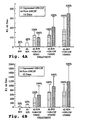
- mice were immunized once, i.p., with 0.5 ⁇ g H/N (antigen 2), free (F-H/N) or Alum-adsorbed (AL-H/N). Additional groups were vaccinated with AL-H/N combined with 5 ⁇ 10 3 , 15 ⁇ 10 3 or 45 ⁇ 10 3 U (Cetus units) of free or liposome-encapsulated IL-2, prepared as described in Example 2 below. The response was measured by HI ( Figs. 2A-2C ) and by ELISA ( Figs. 3A-3B ) at 14, 45. and 167 days. In Figs. 2A-2C , the numbers above the bars indicate the percent seroconversion (minimum titer 40) among the group of animals tested.
- Figs. 2A-2C only a weak HI response was evident in mice immunized with AL-H/N alone. Addition of free IL-2 elicited a low response at 14 days and a moderate response, at the higher doses, at 45 and 167 days. A marked and persistent increase in anti-H antibody titer (at least tenfold at 167 days at all dosages of IL-2) was demonstrated in mice given AL-H/N together with liposomal IL-2.
- compositions containing liposomal IL-2 showed 100% seroconversion at all stages, with H.I. titers typically 200 or more, and 400 or more at later stages. Similar results were shown by ELISA assay of total antibodies, with higher doses showing a greater response ( Figs. 3A-3C ).
- Figs. 4A-4D anti-H titer
- Figs. 5A-5D total antibody titer
- the numbers above the bars indicate the percent seroconversion among the group of animals tested.
- addition of the cytokine particularly when entrapped in liposomes, produced a significant increase in antibody titer. All liposomal cytokine compositions produced 100% seroconversion at all stages up to 9 months, with H.I. titers as high as 1000, and total antibody titers of 4000-8000, observed at later stages.
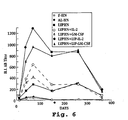
- mice were immunized once, i.p., with 0.5 ⁇ g H/N (antigen 1), free, Alum-adsorbed, or liposome-encapsulated.
- the Lip-H/N was administered alone or co-administered with free IL-2, free GM-CSF, liposomal IL-2, or liposomal GM-CSF (45000 C.U.; prepared as described in Examples 1-2 below). Mice were tested on days 11-360 for anti-H antibody response, to give the results shown in Fig. 6 .
- mice vaccinated with F-H/N or AL-H/N alone exhibited a low and relatively short-lived HI titer, lasting approximately 3 months. A much higher titer, lasting 1 year, was seen in mice injected with Lip-HIN.
- Co-administration of non-encapsulated IL-2 or GM-CSF modestly enhanced the response to Lip-H/N during 3-5 months post vaccination.
- co-administration of Lip-IL-2 or Lip-GM-CSF significantly augmented the response to Lip-H/N throughout the observation period (360 days).
- the titers obtained for the combined vaccines solid circle and triangle
- were greater than twice those observed for those in which only the antigen was encapsulated open circle and triangle.
- a greater than threefold difference was seen.
- the combined vaccines still showed H.I. titers of approximately 150-200.
- mice vaccinated with Lip-H/N + Lip-IL-2 or Lip-GM-CSF also developed a much higher titer of IgG1, IgG2a and IgG3 antibodies than mice immunized with the non-liposomal vaccines ( Figs. 7A-7C ).
- the liposomal vaccines trigger both Th1 and Th2 (helper T-cell) responses.
- the combined liposomal vaccines typically gave titers severalfold higher than the other vaccine compositions.
- the combined liposomal vaccines Lip-HN + Lip-cytokine
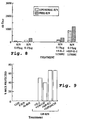
- Fig. 8 shows total antibody response, as measured by ELISA, 45 days after administration of free and liposomal H/N (antigen 2), alone or with free or liposomal IL-2. Addition of free lL-2 to a low (0.15 ⁇ g) dosage of antigen had little effect on the response, but addition of liposomal IL-2 increased the response significantly.
- mice were tested for long-term protection 14 months after vaccination ( Fig. 9 ).
- the level of protection upon co-vaccination with Lip-H/N (antigen 2) + liposomal cytokines was 70% at 14 months, as compared with 40-50% in mice immunized with Lip-H/N + free cytokines, and no protection in mice immunized with free, liposomal or AL-H/N without cytokines.
- a single immunization with the combined liposomal vaccine afforded a high level of protection for over 1 year.
- mice immunized with the combined liposomal vaccine liposomal H/N + liposomal IL-2 or GM-CSF.
- liposomal H/N + liposomal IL-2 or GM-CSF liposomal IL-2 or GM-CSF.
- Splenocytes obtained on day 18 after the second vaccination were stimulated in vitro at a 1:1 ratio with influenza virus-infected irradiated syngeneic splenocytes for 5 days. Cytotoxicity was measured by the 4 hour 51 Cr release assay (Gazit) against virus infected P815 cells. Cytotoxicity is expressed in terms of LU/10 6 cells, where I LU corresponds to 30% cytotoxicity.
- mice immunized with the combination liposomal vaccine exhibited a strong cytotoxic activity against the virus-infected target cells, *with an increased activity at a higher E/T (effector to target cell) ratio.
- Table IV Cytotoxic Activity of Balb/C Spleen Cells Following Vaccination with Influenza A H/N Vaccines a Vaccine Cytotoxicity (LU/10 6 Cells) against: b Non-Infected P815 Infected P815 F-HN (0.5 ⁇ g) ⁇ 1 ⁇ 1 AI-H N ⁇ 1 ⁇ 1 Lip-HN ⁇ 1 ⁇ 1 Lip-HN + Lip-GM-CSF (5 ⁇ 10 4 U) 9.4 32.5 Lip-HN + Lip-IL-2 (5 ⁇ 10 4 U) 4.8 19.1 a Spleen cells obtained 90 days after s.c.
- mice were immunized as described above with the vaccine compositions shown.
- Splenocytes obtained 90 days after immunization were co-cultured for 5 days with influenza virus-infected irradiated syngeneic splenocytes prior to testing. Cytotoxicity was tested against both virus-infected and non-infected P815 target cells, again by the 4 hour 51 Cr release assay.
- cells from mice immunized with combination vaccines H/N plus cytokine
- influenza A virus haemagglutinin/neuraminidase were provided by Sulvay Duphar B.V., the Netherlands (Shandong [9/93] H3N2), and by the Swiss Serum and Vaccine Institute, Berne, Switzerland.
- GM-CSF granulocyte/macrophage colony-stimulating factor
- IL-2 human interleukin-2
- HBSS Hank's Balanced Salt Solution
- BSA bovine serum albumin
- SPF Specific pathogen-free mice
- the ability of free and liposome-entrapped cytokines to induce proliferation was assessed by a 48 [3H]-thymidine incorporation test (Gillis) or by the colorimetric MTT test (Mossmann).
- Gillis 48 [3H]-thymidine incorporation test
- Mossmann colorimetric MTT test
- the GM-CSF-dependent 32-D mouse myeloid cell line and the IL-2-dependent CTLL-2 mouse T-cell line were used as indicator cells.
- 20% Triton x-100 in O.1N HCl was used to dissolve the color crystals and the liposomes and to prevent turbidity related artifacts.
- H/N proteins were adsorbed onto Alum, Al(OH) 3 , as previously described (Harlow), using 100 ⁇ g H/N per 1 mg Al(OH) 3 .
- mice were injected once intraperitoneally (ip), unless otherwise indicated, with H/N, typically at a 0.5 ⁇ g dosage level, administered either as free antigen (F-H/N), combined with Alum (AL-H/N), or in liposomes (Lip-H/N) (prepared as in Example 1, below).
- H/N H/N
- Alum Alum
- Lip-H/N liposomes
- Serum antibodies were tested at different intervals (11-360 days after vaccination), using the haemagglutination-inhibition (HI) assay for specific anti-H antibodies (Shapira-Nahor), enzyme neutralization for specific anti-N antibodies, and ELISA (Ben-Ahmeida, 1993) for total anti-H/N antibodies.
- HI haemagglutination-inhibition
- a titer of 40 or greater is considered to be protective.
- the anti-N and ELISA tests the last serum dilution yielding 50% maximum inhibition or absorption, respectively, was determined. All groups consisted of 5-6 mice each.
- mice were infected by intranasal administration of live virus (2000 haemagglutination units). Since this virus strain is rarely lethal to BALB/C mice, animals were sacrificed on day 6 for lung examination. In mice infected with the virus, multiple necrotic foci were evident. Full protection was recorded when the lungs were totally free of foci.
- live virus 2000 haemagglutination units
- the antigen was entrapped in DMPC liposomes using the dehydration-rehydration technique, as follows. Dimyristoyl phosphatidylcholine (DMPC, Avanti Polar Lipids, Pelham, AL, USA, or Lipoid, Ludwigshafen, Germany), 4 g, was added to 40 ml sterile double distilled water (DDW) and dissolved at 40-45°C. The solution was homogenized for 3 min. at high pressure (10,000 psi), using the Rannie Minilab 8.30 H High Pressure Homogenizer (APV Rannie, Denmark), resulting in the formation of small unilamellar vesicles (50 nm, SUV).
- DMPC dimyristoyl phosphatidylcholine
- DGW sterile double distilled water
- the SUV were sterilized by filtration through a 0.2 ⁇ m pore size filter. H/N (66 ⁇ g in 0.2 ml) was added to 750 ⁇ l of the SUV (lipid/protein ratio 1000/1), and the mixture was vortexed briefly and then co-lyophilized overnight.
- the lipid-protein powder was hydrated by adding first 0.1 ml DDW and then 0.65 ml phosphate buffered saline (PBS) at pH 7.4, followed by vortexing, resulting in the formation of large (mean diameter. 1.5 ⁇ m) multilamellar vesicles (MLV) containing H/N.
- PBS phosphate buffered saline
- the amount of protein entrapped in the liposomes was determined by the filter paper dye-binding assay, using Coomassie brilliant blue G (Minamide).
- DMPC DMPC (0.57g) and 0.02 ml of 1% solution of BHT (butylated hydroxytoluene, an antioxidant) in methanol were mixed with 9 ml tertiary butanol, and the mixture was sonicated at 37°C for 20 min to dissolve the lipid. Subsequently, GM-CSF or IL-2 (1-5 ⁇ 10 6 U in 9 ml HBSS + 0.1% BSA) was added, and the lipid-cytokine mixture was further sonicated for 20 min at room temperature and lyophilized overnight. The powder was hydrated by adding 9 ml DDW and immediately shaking (Labline Multi Wrist Shaker, Melrose Park, IL, USA) for 30 min at room temperature.
- BHT butylated hydroxytoluene, an antioxidant
- GNt-CSF-loaded liposomes and IL-2-loaded liposomes were diluted in HBSS/0.1% BSA and stored at 4°C. Liposomes containing cytokines were separated from the free, nonencapsulated cytokines by centrifugation (Eppendorf centrifuge model 5415C) at 14.000 rpm for 15-20 min. This technique resulted in almost 100% recovery of the liposomal lipids in the liposome fraction.
- the liposomes were first separated from the medium as described above. The level of biologically active cytokines was then determined in the original preparation, in the liposome-free medium and in the isolated liposomes by bioassays, described above. For maximum exposure (>95%) of the liposomal cytokines, the liposomes were sonicated for 30-40 min at 4-8°C. This procedure resulted in excellent recovery of cytokine, with > 90% retention of the cytokine biologic activity.
- Liposomal cytokines were prepared as described in Example 2. except that BHT was replaced by 0.1-0.2 mole % (relative to DMPC) of Vitamin E.
- Liposomal cytokines were prepared as in Example 2, with the addition of a metal chelator such as DTPA (diethylenetriamine pentaacetic acid) or Desferal at a level of ⁇ 50 ⁇ M (final concentration), to prevent transition of metal-related damage to the protein.
- a metal chelator such as DTPA (diethylenetriamine pentaacetic acid) or Desferal at a level of ⁇ 50 ⁇ M (final concentration)
- MLV were prepared as described in Example I except that H/N proteins and cytokines (IL-2. GM-CSF, or a combination of the two) were co-lyophilized together with DMPC.
- Example 6 Encapsulation of Antigens and Cytokines in Liposomes and Stability of the Liposomal Preparations
- influenza A H3N2 antigens and the recombinant cytokines IL-2 and GM-CSF were encapsulated in large MLV (mean diameter, 1.5 ⁇ m) consisting of DMPC.
- the encapsulation efficiency was tested by measuring proteins (H3N2) and cytokine biologic activity (GM-CSF, IL-2) in the supernatants and the liposome fraction following centrifugation, as described above.
- the mean encapsulation efficiency of the antigens, IL-2 and GM-CSF (3 batches each) was 95%, 92% and 40%, respectively.
- the liposomes were stored in liquid form at 4°C for 2 to 8 months, during which time the preparations were tested periodically for residual activity, as compared with the fresh preparations.
- the encapsulated IL-2 and H3N2 were stored up to 6 and 8 months, respectively, without any significant loss of activity ( ⁇ 10%).
- the encapsulated GM-CSF showed a 10-25% decrease in activity at 2 months, with a further decrease (40-50%) at 5 months.
- the liposomal IL-2 preparation is by far more stable than the liposomal GM-CSF.
- the loss of GM-CSF activity was partly due to cytokine leakage from the liposomes and partly to cytokine inactivation/degradation.
- the blood circulation time was 10-20 times longer than that of the non-encapsulated cytokines (data not shown).
- mice were immunized once, ip, with 0.5 ⁇ g F-H/N, AL-H/N, or Lip-H/N (prepared as in Example 1), each alone or in conjunction with free IL-2.
- GM-CSF, or IL-2 + GM-CSF (4.5 x 10' units each).
- the antibody titer was measured by ELISA and HI (for specific anti-H antibodies) on days 11-240. Lung protection was tested, as described above, on day 270 post vaccination. The results are shown in Figs. 1-2 , as discussed above.
- mice were immunized once, ip, with 0.5 ⁇ g H/N, free or Alum-adsorbed. Other groups were vaccinated with AL-H/N combined with 5 ⁇ 10 3 , 15 ⁇ 10 3 or 45 ⁇ 10 3 Cetus units of free or encapsulated IL-2 or GM-CSF, prepared as described in Example 2. The response was measured by HI and ELISA tests on days 14, 45, 167, and (for GM-CSF) 276 (9 months). The results are shown in Figs. 2-5 , as discussed above.
- mice were tested on day 420 for long-term protection, as described above, to give the results shown in Fig. 9 .
- mice immunized with the combine liposomal vaccines Lip-H/N + Lip-IL-2 or Lip-GM-CSF.
- splenocytes of mice vaccinated 3 months previously that were stimulated in vitro for 6 days with influenza A-infected syngeneic splenocytes exhibited a strong cytotoxic activity against virus-infected target cells (P815). Results are shown in Tables IV and V above.
Landscapes
- Health & Medical Sciences (AREA)
- Life Sciences & Earth Sciences (AREA)
- Virology (AREA)
- Chemical & Material Sciences (AREA)
- Medicinal Chemistry (AREA)
- Public Health (AREA)
- General Health & Medical Sciences (AREA)
- Animal Behavior & Ethology (AREA)
- Pharmacology & Pharmacy (AREA)
- Veterinary Medicine (AREA)
- Immunology (AREA)
- Microbiology (AREA)
- Mycology (AREA)
- Epidemiology (AREA)
- General Chemical & Material Sciences (AREA)
- Chemical Kinetics & Catalysis (AREA)
- Pulmonology (AREA)
- Oncology (AREA)
- Organic Chemistry (AREA)
- Nuclear Medicine, Radiotherapy & Molecular Imaging (AREA)
- Communicable Diseases (AREA)
- Molecular Biology (AREA)
- Medicinal Preparation (AREA)
- Medicines Containing Antibodies Or Antigens For Use As Internal Diagnostic Agents (AREA)
- Pharmaceuticals Containing Other Organic And Inorganic Compounds (AREA)
- Medicines That Contain Protein Lipid Enzymes And Other Medicines (AREA)
Applications Claiming Priority (3)
| Application Number | Priority Date | Filing Date | Title |
|---|---|---|---|
| US2006396P | 1996-06-24 | 1996-06-24 | |
| US20063P | 1996-06-24 | ||
| PCT/IL1997/000210 WO1997049423A2 (en) | 1996-06-24 | 1997-06-24 | Liposomal influenza vaccine composition and method |
Publications (2)
| Publication Number | Publication Date |
|---|---|
| EP0954286A2 EP0954286A2 (en) | 1999-11-10 |
| EP0954286B1 true EP0954286B1 (en) | 2009-02-11 |
Family
ID=21796541
Family Applications (1)
| Application Number | Title | Priority Date | Filing Date |
|---|---|---|---|
| EP97927355A Expired - Lifetime EP0954286B1 (en) | 1996-06-24 | 1997-06-24 | Liposomal influenza vaccine composition and method |
Country Status (8)
| Country | Link |
|---|---|
| US (1) | US5919480A (enExample) |
| EP (1) | EP0954286B1 (enExample) |
| JP (2) | JP4227195B2 (enExample) |
| AT (1) | ATE422352T1 (enExample) |
| AU (1) | AU731705B2 (enExample) |
| CA (1) | CA2258878C (enExample) |
| DE (1) | DE69739253D1 (enExample) |
| WO (1) | WO1997049423A2 (enExample) |
Families Citing this family (39)
| Publication number | Priority date | Publication date | Assignee | Title |
|---|---|---|---|---|
| US7731972B1 (en) * | 2000-02-04 | 2010-06-08 | Vlaams Interuniversitair Instituut Voor Biotechnologie | Immunoprotective influenza antigen and its use in vaccination |
| WO1999022763A2 (en) * | 1997-10-31 | 1999-05-14 | Cistron Biotechnology, Inc. | Encapsulated immunomodulators useful as vaccine adjuvants |
| AT407958B (de) * | 1999-02-11 | 2001-07-25 | Immuno Ag | Inaktivierte influenza-virus-vakzine zur nasalen oder oralen applikation |
| DE60117164T2 (de) * | 2000-11-07 | 2006-08-03 | Immuno Vaccine Technologies Inc., Halifax | Impfstoffe mit erhöhter immunantwort und verfahren zur deren herstellung |
| AU3652602A (en) * | 2000-11-15 | 2002-05-27 | Us Gov Health & Human Serv | Sol-fusin: use of gp64-6his to catalyze membrane fusion |
| MY134424A (en) * | 2001-05-30 | 2007-12-31 | Saechsisches Serumwerk | Stable influenza virus preparations with low or no amount of thiomersal |
| US20060029655A1 (en) * | 2001-06-25 | 2006-02-09 | Yissum Research Development Company Of The Hebrew University Of Jerusalem | Method for preparation of vesicles loaded with biological material and different uses thereof |
| WO2003004054A1 (en) * | 2001-07-05 | 2003-01-16 | Virocell Inc. | Ltb4 as vaccine aduvant |
| US20040247661A1 (en) * | 2002-07-03 | 2004-12-09 | Dov Michaeli | Liposomal vaccine |
| CN1665487A (zh) * | 2002-07-03 | 2005-09-07 | 埃弗顿有限公司 | 脂质体疫苗 |
| US20050169979A1 (en) * | 2002-07-03 | 2005-08-04 | Dov Michaeli | Liposomal vaccine |
| KR20060015534A (ko) | 2003-04-25 | 2006-02-17 | 더 펜 스테이트 리서치 파운데이션 | 성장 억제, 지질 유래된 생활성 화합물의 전신 전달을 위한방법 및 시스템 |
| WO2004100928A1 (de) * | 2003-05-09 | 2004-11-25 | Novosom Ag | Injizierbare liposomale depots zum wirkstoffdelivery |
| AU2004263037B2 (en) * | 2003-08-11 | 2011-02-10 | Japan As Represented By The Director-General Of National Institute Of Infectious Diseases | Novel vaccine containing adjuvant capable of inducing mucosal immunity |
| WO2005018610A1 (en) * | 2003-08-21 | 2005-03-03 | Lipotek Pty Ltd | In vivo targeting of dendritic cells |
| FR2868951B1 (fr) * | 2004-04-15 | 2006-07-21 | Ethypharm Sa | Compositions contenant ds vesicules lamellaires incorporant un principe actif peu soluble dans l'eau et produits intermediaires utiles pour leur preparation |
| US20050260260A1 (en) * | 2004-05-19 | 2005-11-24 | Edward Kisak | Liposome compositions for the delivery of macromolecules |
| WO2006074303A2 (en) * | 2005-01-05 | 2006-07-13 | Philadelphia Health And Education Corporation | Delivery vehicles, bioactive substances and viral vaccines |
| CA2523032A1 (en) | 2005-10-07 | 2007-04-07 | Immunovaccine Technologies Inc. | Vaccines for cancer therapy |
| ES2588705T3 (es) * | 2007-09-27 | 2016-11-04 | Immunovaccine Technologies Inc. | Uso de liposomas en un vehículo que comprende una fase hidrófoba continua para la entrega de polinucleótidos in vivo |
| US20100209452A1 (en) * | 2007-10-03 | 2010-08-19 | Immunovaccine Technologies, Inc | Compositions comprising an antigen, an amphipathic compound and a hydrophobic carrier, and uses thereof |
| EP2231180B1 (en) * | 2008-01-16 | 2016-08-17 | Ben-gurion University Of The Negev Research And Development Authority | Vaccine for alzheimer's disease |
| CA2723918C (en) | 2008-06-05 | 2018-01-09 | Immunovaccine Technologies Inc. | Compositions comprising liposomes, an antigen, a polynucleotide and a carrier comprising a continuous phase of a hydrophobic substance |
| EP2299953B1 (en) * | 2008-07-14 | 2017-04-12 | Polypid Ltd. | Sustained-release drug carrier composition |
| US20120157419A1 (en) | 2009-02-02 | 2012-06-21 | Tuvia Gilat | Methods and compositions for treating alzheimer's disease |
| MX2012000372A (es) | 2009-07-06 | 2012-02-28 | Variation Biotechnologies Inc | Metodos para preparar vesiculas y formulaciones producidas a partir de las mismas. |
| US9907746B2 (en) | 2009-07-06 | 2018-03-06 | Variation Biotechnologies, Inc. | Methods for preparing vesicles and formulations produced therefrom |
| CN102470105B (zh) | 2009-07-14 | 2015-07-29 | 波利皮得有限公司 | 持续释放药物载体组合物 |
| EP2485758A1 (en) | 2009-10-09 | 2012-08-15 | New York Blood Center, Inc. | Immunopotentiator-linked oligomeric influenza immunogenic compositions |
| JP5860409B2 (ja) | 2010-01-19 | 2016-02-16 | ポリピッド リミテッド | 徐放性核酸マトリックス組成物 |
| CA2840079C (en) * | 2010-07-06 | 2018-07-03 | Variation Biotechnologies Inc. | Compositions and methods for treating influenza |
| AU2012205315B2 (en) | 2011-01-13 | 2017-05-04 | Variation Biotechnologies, Inc. | Methods for preparing vesicles and formulations produced therefrom |
| US10736844B2 (en) | 2011-01-13 | 2020-08-11 | Variation Biotechnologies Inc. | Compositions and methods for treating viral infections |
| IN2014CN02581A (enExample) | 2011-10-06 | 2015-08-07 | Immunovaccine Technologies Inc | |
| WO2013072768A2 (en) | 2011-11-18 | 2013-05-23 | Variation Biotechnologies, Inc. | Synthetic derivatives of mpl and uses thereof |
| CA2894442C (en) | 2012-01-12 | 2020-01-21 | Variation Biotechnologies Inc. | Compositions and methods for treating viral infections |
| EP4008354A1 (en) | 2012-01-27 | 2022-06-08 | Variation Biotechnologies Inc. | Methods and compositions for therapeutic agents |
| CN103736090B (zh) * | 2014-01-27 | 2016-03-02 | 中国医学科学院医学生物学研究所 | 甲磺酸去铁胺佐剂及含甲磺酸去铁胺佐剂的疫苗 |
| CN110151702A (zh) * | 2019-06-24 | 2019-08-23 | 昆明医科大学 | 聚乙二醇修饰流感疫苗脂质体及其制备方法 |
Family Cites Families (14)
| Publication number | Priority date | Publication date | Assignee | Title |
|---|---|---|---|---|
| US4117113A (en) * | 1974-06-25 | 1978-09-26 | National Research Development Corporation | Immunological preparations |
| US4235871A (en) | 1978-02-24 | 1980-11-25 | Papahadjopoulos Demetrios P | Method of encapsulating biologically active materials in lipid vesicles |
| US4235877A (en) * | 1979-06-27 | 1980-11-25 | Merck & Co., Inc. | Liposome particle containing viral or bacterial antigenic subunit |
| US4426330A (en) | 1981-07-20 | 1984-01-17 | Lipid Specialties, Inc. | Synthetic phospholipid compounds |
| US4534899A (en) | 1981-07-20 | 1985-08-13 | Lipid Specialties, Inc. | Synthetic phospholipid compounds |
| JPH0720857B2 (ja) * | 1988-08-11 | 1995-03-08 | テルモ株式会社 | リポソームおよびその製法 |
| AU627226B2 (en) | 1988-08-25 | 1992-08-20 | Liposome Company, Inc., The | Influenza vaccine and novel adjuvants |
| US5013556A (en) | 1989-10-20 | 1991-05-07 | Liposome Technology, Inc. | Liposomes with enhanced circulation time |
| JP3037994B2 (ja) * | 1989-11-02 | 2000-05-08 | テルモ株式会社 | リポソーム表面への蛋白質吸着抑制剤 |
| JP3220180B2 (ja) * | 1991-05-23 | 2001-10-22 | 三菱化学株式会社 | 薬剤含有タンパク質結合リポソーム |
| MX9304089A (es) * | 1992-07-08 | 1994-01-31 | Schering Corp | Uso de gm-csf como una vacuna adyuvante. |
| US6326353B1 (en) * | 1993-03-23 | 2001-12-04 | Sequus Pharmaceuticals, Inc. | Enhanced circulation effector composition and method |
| AU7384994A (en) * | 1993-08-06 | 1995-02-28 | Opperbas Holding B.V. | A method for high loading of vesicles with biopolymeric substances |
| AUPM500494A0 (en) * | 1994-04-12 | 1994-05-05 | Minister For Agriculture & Rural Affairs For The State Of New South Wales, The | Composition for use in increasing mucosal immunity |
-
1997
- 1997-06-23 US US08/880,238 patent/US5919480A/en not_active Expired - Lifetime
- 1997-06-24 DE DE69739253T patent/DE69739253D1/de not_active Expired - Lifetime
- 1997-06-24 AT AT97927355T patent/ATE422352T1/de not_active IP Right Cessation
- 1997-06-24 EP EP97927355A patent/EP0954286B1/en not_active Expired - Lifetime
- 1997-06-24 WO PCT/IL1997/000210 patent/WO1997049423A2/en not_active Ceased
- 1997-06-24 AU AU31882/97A patent/AU731705B2/en not_active Ceased
- 1997-06-24 JP JP50263298A patent/JP4227195B2/ja not_active Expired - Fee Related
- 1997-06-24 CA CA002258878A patent/CA2258878C/en not_active Expired - Fee Related
-
2008
- 2008-06-06 JP JP2008149959A patent/JP2008260779A/ja not_active Withdrawn
Also Published As
| Publication number | Publication date |
|---|---|
| AU731705B2 (en) | 2001-04-05 |
| EP0954286A2 (en) | 1999-11-10 |
| ATE422352T1 (de) | 2009-02-15 |
| JP2000513352A (ja) | 2000-10-10 |
| CA2258878C (en) | 2008-03-18 |
| US5919480A (en) | 1999-07-06 |
| CA2258878A1 (en) | 1997-12-31 |
| WO1997049423A3 (en) | 1998-02-19 |
| WO1997049423A2 (en) | 1997-12-31 |
| JP2008260779A (ja) | 2008-10-30 |
| DE69739253D1 (de) | 2009-03-26 |
| JP4227195B2 (ja) | 2009-02-18 |
| AU3188297A (en) | 1998-01-14 |
Similar Documents
| Publication | Publication Date | Title |
|---|---|---|
| US5919480A (en) | Liposomal influenza vaccine composition and method | |
| AU631377B2 (en) | Affinity associated vaccine | |
| AU689505B2 (en) | Protein- or peptide-cochleate vaccines and methods of immunizing using the same | |
| US5149529A (en) | Compositions and treatment for herpes simplex | |
| Babai et al. | A novel influenza subunit vaccine composed of liposome-encapsulated haemagglutinin/neuraminidase and IL-2 or GM-CSF. I. Vaccine characterization and efficacy studies in mice | |
| US7767658B2 (en) | Vaccine composition | |
| JP2005525992A (ja) | 生物学的物質を充填した小胞の調製法およびそれらの様々な使用 | |
| EP2058002A1 (en) | Reconstituted respiratory syncytial virus membranes and use as respiratory syncytial virus vaccine | |
| JPH04210925A (ja) | 鼻腔内または吸入投与用ワクチン製剤およびその製造方法 | |
| EP0356340B1 (en) | Affinity associated vaccine | |
| Ben-Yehuda et al. | Immunogenicity and safety of a novel IL-2-supplemented liposomal influenza vaccine (INFLUSOME-VAC) in nursing-home residents | |
| US9540420B2 (en) | Mucosal vaccines | |
| JP2023522592A (ja) | 抗原性部位とリポソーム調製物とを含む免疫原性組成物、当該組成物を作製する方法、薬物として使用するための、特にワクチンとして使用するための、当該組成物 | |
| TWI457145B (zh) | 以被包封於微脂粒內之蒂卡琳素(sticholysin)為基礎的疫苗組成物 | |
| EP1053018B1 (en) | DELIVERY OF IMMUNOGENIC MOLECULES VIA HBsAg PARTICLES | |
| Gould-Fogerite et al. | Cochleate delivery vehicles: applications in vaccine delivery | |
| WO1990001947A1 (en) | Affinity associated vaccine | |
| US7029680B1 (en) | Delivery of immunogenic molecules vis HBsAg particles | |
| CA1334165C (en) | Affinity associated vaccine | |
| Wijburg et al. | Liposomes as Systemic and Mucosal Delivery Vehicles | |
| JP2004161781A (ja) | 経口ワクチン | |
| MXPA06005486A (es) | Composicion de vacuna mezclada con una alquilfosfatidilcolina |
Legal Events
| Date | Code | Title | Description |
|---|---|---|---|
| PUAI | Public reference made under article 153(3) epc to a published international application that has entered the european phase |
Free format text: ORIGINAL CODE: 0009012 |
|
| 17P | Request for examination filed |
Effective date: 19990122 |
|
| AK | Designated contracting states |
Kind code of ref document: A2 Designated state(s): AT BE CH DE DK ES FI FR GB GR IE IT LI LU MC NL PT SE |
|
| AX | Request for extension of the european patent |
Free format text: AL PAYMENT 19990122;LT PAYMENT 19990122;LV PAYMENT 19990122;RO PAYMENT 19990122;SI PAYMENT 19990122 |
|
| 17Q | First examination report despatched |
Effective date: 20030616 |
|
| 17Q | First examination report despatched |
Effective date: 20030616 |
|
| GRAP | Despatch of communication of intention to grant a patent |
Free format text: ORIGINAL CODE: EPIDOSNIGR1 |
|
| RAP1 | Party data changed (applicant data changed or rights of an application transferred) |
Owner name: YISSUM RESEARCH DEVELOPMENT COMPANY OF THE HEBREW |
|
| GRAS | Grant fee paid |
Free format text: ORIGINAL CODE: EPIDOSNIGR3 |
|
| GRAA | (expected) grant |
Free format text: ORIGINAL CODE: 0009210 |
|
| AK | Designated contracting states |
Kind code of ref document: B1 Designated state(s): AT BE CH DE DK ES FI FR GB GR IE IT LI LU MC NL PT SE |
|
| AX | Request for extension of the european patent |
Extension state: AL LT LV RO SI |
|
| REG | Reference to a national code |
Ref country code: GB Ref legal event code: FG4D |
|
| REG | Reference to a national code |
Ref country code: CH Ref legal event code: EP |
|
| REG | Reference to a national code |
Ref country code: IE Ref legal event code: FG4D |
|
| REF | Corresponds to: |
Ref document number: 69739253 Country of ref document: DE Date of ref document: 20090326 Kind code of ref document: P |
|
| LTIE | Lt: invalidation of european patent or patent extension |
Effective date: 20090211 |
|
| PG25 | Lapsed in a contracting state [announced via postgrant information from national office to epo] |
Ref country code: NL Free format text: LAPSE BECAUSE OF FAILURE TO SUBMIT A TRANSLATION OF THE DESCRIPTION OR TO PAY THE FEE WITHIN THE PRESCRIBED TIME-LIMIT Effective date: 20090211 Ref country code: FI Free format text: LAPSE BECAUSE OF FAILURE TO SUBMIT A TRANSLATION OF THE DESCRIPTION OR TO PAY THE FEE WITHIN THE PRESCRIBED TIME-LIMIT Effective date: 20090211 Ref country code: ES Free format text: LAPSE BECAUSE OF FAILURE TO SUBMIT A TRANSLATION OF THE DESCRIPTION OR TO PAY THE FEE WITHIN THE PRESCRIBED TIME-LIMIT Effective date: 20090522 |
|
| NLV1 | Nl: lapsed or annulled due to failure to fulfill the requirements of art. 29p and 29m of the patents act | ||
| PG25 | Lapsed in a contracting state [announced via postgrant information from national office to epo] |
Ref country code: SE Free format text: LAPSE BECAUSE OF FAILURE TO SUBMIT A TRANSLATION OF THE DESCRIPTION OR TO PAY THE FEE WITHIN THE PRESCRIBED TIME-LIMIT Effective date: 20090511 Ref country code: AT Free format text: LAPSE BECAUSE OF FAILURE TO SUBMIT A TRANSLATION OF THE DESCRIPTION OR TO PAY THE FEE WITHIN THE PRESCRIBED TIME-LIMIT Effective date: 20090211 |
|
| PG25 | Lapsed in a contracting state [announced via postgrant information from national office to epo] |
Ref country code: BE Free format text: LAPSE BECAUSE OF FAILURE TO SUBMIT A TRANSLATION OF THE DESCRIPTION OR TO PAY THE FEE WITHIN THE PRESCRIBED TIME-LIMIT Effective date: 20090211 |
|
| PG25 | Lapsed in a contracting state [announced via postgrant information from national office to epo] |
Ref country code: PT Free format text: LAPSE BECAUSE OF FAILURE TO SUBMIT A TRANSLATION OF THE DESCRIPTION OR TO PAY THE FEE WITHIN THE PRESCRIBED TIME-LIMIT Effective date: 20090713 Ref country code: DK Free format text: LAPSE BECAUSE OF FAILURE TO SUBMIT A TRANSLATION OF THE DESCRIPTION OR TO PAY THE FEE WITHIN THE PRESCRIBED TIME-LIMIT Effective date: 20090211 |
|
| PLBE | No opposition filed within time limit |
Free format text: ORIGINAL CODE: 0009261 |
|
| STAA | Information on the status of an ep patent application or granted ep patent |
Free format text: STATUS: NO OPPOSITION FILED WITHIN TIME LIMIT |
|
| 26N | No opposition filed |
Effective date: 20091112 |
|
| PG25 | Lapsed in a contracting state [announced via postgrant information from national office to epo] |
Ref country code: MC Free format text: LAPSE BECAUSE OF NON-PAYMENT OF DUE FEES Effective date: 20090630 |
|
| REG | Reference to a national code |
Ref country code: CH Ref legal event code: PL |
|
| REG | Reference to a national code |
Ref country code: FR Ref legal event code: ST Effective date: 20100226 |
|
| PG25 | Lapsed in a contracting state [announced via postgrant information from national office to epo] |
Ref country code: LI Free format text: LAPSE BECAUSE OF NON-PAYMENT OF DUE FEES Effective date: 20090630 Ref country code: IE Free format text: LAPSE BECAUSE OF NON-PAYMENT OF DUE FEES Effective date: 20090624 Ref country code: FR Free format text: LAPSE BECAUSE OF NON-PAYMENT OF DUE FEES Effective date: 20090630 Ref country code: CH Free format text: LAPSE BECAUSE OF NON-PAYMENT OF DUE FEES Effective date: 20090630 |
|
| PG25 | Lapsed in a contracting state [announced via postgrant information from national office to epo] |
Ref country code: GR Free format text: LAPSE BECAUSE OF FAILURE TO SUBMIT A TRANSLATION OF THE DESCRIPTION OR TO PAY THE FEE WITHIN THE PRESCRIBED TIME-LIMIT Effective date: 20090512 |
|
| PG25 | Lapsed in a contracting state [announced via postgrant information from national office to epo] |
Ref country code: IT Free format text: LAPSE BECAUSE OF FAILURE TO SUBMIT A TRANSLATION OF THE DESCRIPTION OR TO PAY THE FEE WITHIN THE PRESCRIBED TIME-LIMIT Effective date: 20090211 |
|
| PG25 | Lapsed in a contracting state [announced via postgrant information from national office to epo] |
Ref country code: LU Free format text: LAPSE BECAUSE OF NON-PAYMENT OF DUE FEES Effective date: 20090624 |
|
| PGFP | Annual fee paid to national office [announced via postgrant information from national office to epo] |
Ref country code: DE Payment date: 20120622 Year of fee payment: 16 |
|
| PGFP | Annual fee paid to national office [announced via postgrant information from national office to epo] |
Ref country code: GB Payment date: 20120622 Year of fee payment: 16 |
|
| GBPC | Gb: european patent ceased through non-payment of renewal fee |
Effective date: 20130624 |
|
| REG | Reference to a national code |
Ref country code: DE Ref legal event code: R119 Ref document number: 69739253 Country of ref document: DE Effective date: 20140101 |
|
| PG25 | Lapsed in a contracting state [announced via postgrant information from national office to epo] |
Ref country code: GB Free format text: LAPSE BECAUSE OF NON-PAYMENT OF DUE FEES Effective date: 20130624 Ref country code: DE Free format text: LAPSE BECAUSE OF NON-PAYMENT OF DUE FEES Effective date: 20140101 |