EP0951168A2 - Konferenz mit einem Anrufer - Google Patents
Konferenz mit einem Anrufer Download PDFInfo
- Publication number
- EP0951168A2 EP0951168A2 EP99302707A EP99302707A EP0951168A2 EP 0951168 A2 EP0951168 A2 EP 0951168A2 EP 99302707 A EP99302707 A EP 99302707A EP 99302707 A EP99302707 A EP 99302707A EP 0951168 A2 EP0951168 A2 EP 0951168A2
- Authority
- EP
- European Patent Office
- Prior art keywords
- party
- call
- caller
- telephone call
- conferencing
- Prior art date
- Legal status (The legal status is an assumption and is not a legal conclusion. Google has not performed a legal analysis and makes no representation as to the accuracy of the status listed.)
- Withdrawn
Links
- 238000000034 method Methods 0.000 claims abstract description 25
- 230000000977 initiatory effect Effects 0.000 claims description 9
- 230000008901 benefit Effects 0.000 description 3
- 238000007796 conventional method Methods 0.000 description 3
- 230000008569 process Effects 0.000 description 3
- 238000001514 detection method Methods 0.000 description 2
- 230000005540 biological transmission Effects 0.000 description 1
- 230000001413 cellular effect Effects 0.000 description 1
- 230000009977 dual effect Effects 0.000 description 1
- 238000012986 modification Methods 0.000 description 1
- 230000004048 modification Effects 0.000 description 1
- 230000004044 response Effects 0.000 description 1
Images



Classifications
-
- H—ELECTRICITY
- H04—ELECTRIC COMMUNICATION TECHNIQUE
- H04M—TELEPHONIC COMMUNICATION
- H04M3/00—Automatic or semi-automatic exchanges
- H04M3/42—Systems providing special services or facilities to subscribers
- H04M3/428—Arrangements for placing incoming calls on hold
-
- H—ELECTRICITY
- H04—ELECTRIC COMMUNICATION TECHNIQUE
- H04M—TELEPHONIC COMMUNICATION
- H04M3/00—Automatic or semi-automatic exchanges
- H04M3/42—Systems providing special services or facilities to subscribers
- H04M3/56—Arrangements for connecting several subscribers to a common circuit, i.e. affording conference facilities
-
- H—ELECTRICITY
- H04—ELECTRIC COMMUNICATION TECHNIQUE
- H04M—TELEPHONIC COMMUNICATION
- H04M1/00—Substation equipment, e.g. for use by subscribers
- H04M1/57—Arrangements for indicating or recording the number of the calling subscriber at the called subscriber's set
-
- H—ELECTRICITY
- H04—ELECTRIC COMMUNICATION TECHNIQUE
- H04M—TELEPHONIC COMMUNICATION
- H04M2203/00—Aspects of automatic or semi-automatic exchanges
- H04M2203/50—Aspects of automatic or semi-automatic exchanges related to audio conference
- H04M2203/5018—Initiating a conference during a two-party conversation, i.e. three-party service or three-way call
-
- H—ELECTRICITY
- H04—ELECTRIC COMMUNICATION TECHNIQUE
- H04M—TELEPHONIC COMMUNICATION
- H04M2203/00—Aspects of automatic or semi-automatic exchanges
- H04M2203/50—Aspects of automatic or semi-automatic exchanges related to audio conference
- H04M2203/5054—Meet-me conference, i.e. participants dial-in
-
- H—ELECTRICITY
- H04—ELECTRIC COMMUNICATION TECHNIQUE
- H04Q—SELECTING
- H04Q1/00—Details of selecting apparatus or arrangements
- H04Q1/18—Electrical details
- H04Q1/30—Signalling arrangements; Manipulation of signalling currents
- H04Q1/44—Signalling arrangements; Manipulation of signalling currents using alternate current
- H04Q1/444—Signalling arrangements; Manipulation of signalling currents using alternate current with voice-band signalling frequencies
- H04Q1/45—Signalling arrangements; Manipulation of signalling currents using alternate current with voice-band signalling frequencies using multi-frequency signalling
Definitions
- This invention relates generally to three party calling services. More particularly, it relates to apparatus and methods to add a calling party into an existing telephone call.
- Telephone services and advances therewith continue to be in demand in today's society. For instance, cellular telephones have provided users with the ability to place or receive telephone calls while in a car or walking down a street. Along with these advances and demands came the ability for three way conferenced calling.
- Conventional three way conferenced calling enabled one party already established in a telephone call with a second party to place a second telephone call to a third party, and then to conference the two separate telephone calls together into a single three way telephone call.
- a telephone switch e.g., private branch exchange, either at the customer's premises or at the central office of the telephone company, and then transmitted to the initiating party on the single telephone line.
- Fig. 8 shows a conventional method 600 of accomplishing three way conferenced calling at a central office telephone switch
- Figs. 9A to 9C show corresponding states of the conference call.
- step 602 a telephone call is established between party A and party B, each party having a single telephone line or only using a single telephone line of a multi-line telephone.
- the telephone call between party A and party B is depicted in Fig. 9A.
- step 604 at least one of the parties in the telephone call established in step 602 has three way calling service, e.g., party A. That party flashes the telephone line to indicate to the switch that the current party (e.g., party B) is to be put on hold, and a dial tone is to be presented to the flashing party, e.g., party A.
- party A the current party
- step 606 the three way initiating party, e.g., party A, dials out to or calls a third party C, and establishes a telephone call between party A and party C.
- party A dials out to or calls a third party C
- Fig. 9B This is depicted in Fig. 9B, wherein party B is on hold and party A calls out to party C.
- step 608 party A flashes the telephone line again to indicate to the switch to conference together the telephone call to party B with the telephone call to party C, and to present the same to party A as a single telephone call.
- party A flashes the telephone line again to indicate to the switch to conference together the telephone call to party B with the telephone call to party C, and to present the same to party A as a single telephone call.
- the conventional technique of three way calling is convenient and addresses expanding needs for services to a one line telephone.
- the conventional technique requires the initiating party, e.g., party A, to call or dial the telephone number of the third party C while the other party is placed on hold.
- a telephone conferencing control apparatus comprises a call related information receiver.
- a memory is adapted to receive at least one entry relating to call related information regarding a third party caller allowed to enter an existing telephone call.
- a processor compares call related information received by the call related information receiver to the at least one entry in the memory, and allows a third party caller regarding the call related information to enter the existing telephone call if a match is determined by the comparison.
- a method of conferencing a third party caller into an existing telephone call in accordance with another aspect of the present invention comprises providing an indication of a telephone call from a third party caller to a called party already engaged in an existing telephone call.
- the third party caller is added to the existing telephone call at the called party.
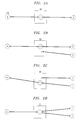
- Fig. 1 shows a method of allowing a calling third party C into an established telephone call between two parties A and B, in accordance with the principles of the present invention.
- Figs. 2A to 2D depict the steps of the method according to the embodiment shown in Fig. 1.
- Fig. 3 shows a first embodiment of the allowance of a third party C into an established call between two parties A and B.
- Figs. 4A to 4C show other aspects of another embodiment of the present invention wherein a third party C is allowed into an established call between two parties A and B.
- Fig. 5 shows a telephone including a directory of accepted third party callers, in accordance with a third embodiment of the present invention.
- Fig. 6 shows a method of allowing a third party C into an established telephone call between two parties A and B using a directory of accepted third party callers as shown in Fig. 5.
- Figs. 7A to 7H show steps in multiple party conferencing in accordance with the principles of the present invention.
- Fig. 8 shows conventional three way conferenced calling wherein a party places a first telephone line on hold, calls or dials a third party, and establishes a three way conferenced call.
- Fig. 9A to 9C depict the steps in the conventional three way calling shown in Fig. 8.
- the present invention provides an advanced three way calling method and apparatus which allows the conferencing of a calling third party C into an established telephone call between two parties A and B.
- Figs. 1 and 2A to 2D show three (or more) way conferencing in accordance with the principles of the present invention.
- a first step or concept 102 of the three way conferencing is the establishment of a telephone call between two parties, e.g., party A and party B. This may be accomplished in any conventional manner, including party A calling party B or party B calling party A.
- the telephone call between party A and party B is depicted in Fig. 2A.
- party A After a telephone call is established between two (or more) parties A and B, party A is then able to receive a three way conferencing call.
- party A receives an indication of a telephone call from a third party C.
- the indication in the preferred embodiment is call related information received from a central office, e.g., Caller ID information.
- the state of the conference call is depicted in Fig. 2A.
- Caller ID is a well known service in the United States which typically provides the telephone number and household name information about a calling party (e.g., party C) to a called party (e.g., party A) before the call is answered.
- Basic call related information is transmitted from the local telephone company to the called party A while the called party's telephone is in a hung-up or on-hook state, e.g., between the first and second rings.
- a called party A at a conventional telephone may decide to not answer the incoming call.
- Another telephone company service which has become well known and popular is that which allows a third party caller (e.g., party C) to call another party (e.g., party A) when the other party A is already off-hook, i.e., already in an established telephone call with another party (e.g., party B).
- This service is currently known in the United States as Call Waiting.
- Call Waiting allows a party, e.g., party A, who is already using the telephone (i.e., in an off-hook state), to receive an audible interruption, click or other indication at the customer premises equipment that another person is calling, and then to establish a connection with the third party caller as desired by placing the first party on hold, e.g., by flashing the telephone line.
- CIDCW Calling Identity Delivery on Call Waiting
- CIDCW allows a customer, while off-hook on an existing call, e.g., between two parties A and B, to receive information about an incoming calling party (e.g., party C) on a waited call before answering that incoming call waiting call.
- Transmission of the third party's call information with this service takes place almost immediately after the customer premises equipment (CPE) is alerted to the availability of call related information with a CPE Alerting Signal (CAS).
- CPE customer premises equipment
- CAS CPE Alerting Signal
- the CAS is a short burst of a combination of high frequencies that are appended to the Subscriber Alerting Signal (SAS) otherwise known as the "Call Waiting Tone".
- SAS Subscriber Alerting Signal
- CIDCW a user can decide whether or not to answer a third party incoming call waiting call.
- CIDCW allows the customer to flash the switch hook to retrieve the waited call while placing the first caller (e.g., party B) on hold, and subsequently to go back and forth between the current far-end party (e.g., party C) and the held party (e.g., party B) by flashing.
- CIDCW provides all the capabilities associated with the current CW service, with the additional capability of providing CID data to a customer on waited calls. Therefore, CIDCW is considered an enhancement of the CW service.
- a telephone line may either have call waiting (CW) or CIDCW service enabled, but not both at the same time.
- CID is a service which provides display or other data to a telephone regarding a calling third party, allowing the user to make a decision as to whether or not to answer an incoming call.
- step 106 of Fig. 1 based on the indication regarding the calling party C, party A adds party C to the existing telephone call established between party A and party B.
- party A adds party C to the existing telephone call established between party A and party B.
- Fig. 2C depicts party A's acceptance of a point-to-point telephone call from party C while party B is on hold at the central office (CO)
- Fig. 2D depicts the established conference call between party A, party B and party C.
- Fig. 3 shows the step 106 of adding the calling third party C to the established two way call between party A and party B in more detail.
- party A may flash the telephone line in step 210 to place the current party B on hold.
- step 212 party A accepts the telephone call from party C, thus establishing a two way telephone call with party C. At this time, party B is on hold at the switch for the benefit of party A.
- step 214 party A again flashes the telephone line, this time to place party C on hold, and re-enters the telephone call with party B as shown in step 216 .
- step 218 party A adds or conferences the telephone call from party C with the telephone call to party B, e.g., by flashing the telephone line a third time.
- party A is able to receive a call from party C and to allow that party C to enter into a three way conference with party B.
- Figs. 4A to 4C show three scenarios or aspects using dual tone multi frequency (DTMF) tones to signal the switch to allow the party C to enter an established call between two other parties A and B, in accordance with another embodiment of the present invention.
- DTMF dual tone multi frequency
- Fig. 4A shows in more detail an embodiment for step 106 shown in Fig. 1.
- the detailed process 106b shown in Fig. 4A includes the use of DTMF tones to control the switch.
- party A flashes the telephone line in step 310 to connect party A with the switch.
- party A enters a predetermined DTMF code via the keypad of their telephone to indicate acceptance of a call from party C and thus to establish a telephone call with party A.
- the key sequence "#2" as transmitted from party A using DTMF tones may indicate to the switch to place the current caller (e.g., party B) on hold and to answer the incoming call from party C.
- step 314 party A enters a predetermined DTMF code corresponding to an instruction to the switch to return to the held telephone call with party B.
- the key sequence "#1" may indicate to the switch to place the current caller (e.g., party C) on hold and return to the already established call with party B.
- party A may enter a predetermined code, e.g., '#3', corresponding to an instruction to the switch to establish a conference between the telephone calls to party B and party C.
- the switch will establish a telephone connection, i.e., a conference, between the telephone line to party B and the telephone line to party C, and pass the conferenced call to party A on a single telephone line to establish a three way call between party A, party B and party C.
- Figs. 4B and 4C show flexibility in the embodiment shown in Fig. 4A.
- Fig. 4B shows an alternative scenario of the embodiment shown in Fig. 4A wherein in step 320 party A flashes the telephone line to place party B on hold. Thereafter, in step 322 , party A may skip the formalities of first talking in a two way call with party C before allowing party C into the established telephone call with party B. Instead, the three way call may be immediately established under the instruction of party A.
- party A may enter a predetermined DTMF code after the telephone line is flashed in step 320 to instruct the switch to establish a conference between party A, party B and party C.
- This instruction may be issued immediately upon receiving the indication that party C is calling, or after speaking with party C.
- This feature is particularly applicable with the use of Caller ID, and when party A recognizes and accepts the telephone number and/or household name of party C being displayed on a Caller ID display.
- Fig. 4B shows a flash of the telephone line in step 320 to invoke a routine at the switch which will monitor the telephone line from party A for DTMF tones.
- the telephone line from party A could be continuously monitored for the presence of DTMF tones, and the requested actions can be performed upon receipt by the switch of the same.
- step 330 of Fig. 4C shows that party A, without flashing the telephone line, simply enters the predetermined DTMF code using the keypad of their telephone to instruct the switch to accept the call from party C, to conference the telephone line from party B with the telephone line from party C, and to present the same to party A on a single telephone line, to thus establish a three way conference between party A, party B and party C.
- party A without flashing the telephone line
- a continuous DTMF decoder a three way conference with a calling party C can be established quickly by party A.
- Fig. 4C requires a fairly robust DTMF decoding routine to overcome and avoid erroneous detection of DTMF tones in the presence of voice.
- One method to improve the robustness of the DTMF decoder is to lengthen the number of characteristics in the predetermined code, e.g., require more than a single keypress, with a maximum time allowed between each keypress. For instance, an instruction "#3" would allow a more robust detection of the DTMF tones than would "3".
- the predetermined code can be established to have an "alerting" DTMF tone, such as is provided by a keypress of "#", followed by an instruction keypress such as "3".
- the "alerting" DTMF tone could be any key intended only to alert or wake up a DTMF decoding routine, followed by a command or instruction DTMF tone.
- Fig. 5 shows an embodiment of a customer premises equipment, i.e., a single line telephone 400 , including a directory of accepted third party callers 402 , in accordance with another embodiment of the present invention.
- the telephone 400 which interfaces to a telephone line from a central office 13 , includes a telephone line interface (TLI) 48 .
- a processor e.g., a microprocessor, microcontroller, and/or digital signal processor (DSP)
- DSP digital signal processor
- a call related information detector and receiver 12 receives call related information (e.g., Caller ID information) from the central office 13 , and provides the same to the processor 18 for display on the display 28 .
- a conventional handset 22 is also interfaced to the telephone line via the TLI 48 and/or the processor 18 .
- the telephone 400 additionally includes a directory of accepted third party callers 402 .
- the directory of accepted third party callers 402 is formed in a portion of memory, e.g., non-volatile memory such as Flash memory.
- the directory of accepted third party callers 402 can be maintained at the central office 13 for the benefit of the user of the telephone 400 .
- the directory of accepted third party callers accepts one or more entries including call related information regarding accepted third party callers who are permitted to automatically conference into an existing call at the called telephone 400 .
- the entries in the directory of accepted third party callers 402 are pre-stored by the user of the telephone 400 .
- the entries are entered into the directory of accepted third party callers 402 through keypresses on the keypad 26 and displayed on display 28 as they are being entered.
- the processor 18 provides prompts to the user on the display 28 to assist in the entry of each of the pre-stored accepted third party callers.
- Each entry in the directory of accepted third party callers 402 includes call related information relating to any desired third party, e.g., a telephone number, a household name, etc.
- the entry may include the entire telephone number and/or household name, or only a portion of the telephone number and/or household name.
- an entry in the directory of accepted third party callers 402 may include only an area code of a telephone number from which a third party caller may automatically be conferenced into an existing telephone call at the called telephone.
- the entry may indicate only a last name of those households allowed to automatically conference into an existing telephone call at the called telephone.
- a call from party C having a telephone number of (800) 555-1212 will be automatically conferenced upon a match between the call related information of a calling party and an entry in the directory of accepted third party callers 402 .
- the match is determined by the processor 18 , which compares information obtained from the call information detector and receiver 12 and the entries in the directory of accepted third party callers 402 . If no match is found, then the calling party will not be allowed to automatically enter the established telephone call at the called telephone.
- an alerting tone may be provided by the central office to the called party.
- the alerting tone may be provided simultaneous with the conferencing of the third party, or it may be provided before the third party is automatically conferenced.
- the central office may provide the alerting tone and, for a predetermined amount of time, e.g., for 3 seconds, await a refusal signal from the called party.
- the refusal signal may be a predetermined DTMF tone, e.g., the "*" key. If the alerting tone is not refused by the called party within the predetermined amount of time, the central office will proceed to automatically conference the third party into the existing telephone call to or from the called party.
- the calling party e.g., party C
- party C will either be allowed to conference into an existing telephone call at the called party in accordance with the embodiments shown in Figs. 1 to 4C, or the calling party C will be handled in a conventional manner, e.g., provided with a busy signal.
- Fig. 6 shows a method 500 of allowing a third party C into an established telephone call between two parties A and B using the directory of accepted third party callers 402 as shown in Fig. 5.
- a telephone call is established between party A and party B in step 502 .
- party A receives call related information regarding party C, e.g., Caller ID information such as a telephone number and/or a household name.
- Caller ID information such as a telephone number and/or a household name.
- step 508 the call related information received in step 504 is compared to pre-stored entries in the directory of accepted third party callers 402 , and a comparison is performed by the processor 18 between the received call related information regarding party C and each of the pre-stored entries in the directory of accepted third party callers 402 . If no match is found, the process 500 ends.
- an alerting tone may be provided to the called party A in step 510 , providing party A the opportunity to refuse automatic conferencing by party C.
- step 512 If the automatic conferencing of party C is refused in step 512 , then the process 500 ends. However, if the called party A does not refuse the automatic conferencing within, e.g., 3 seconds as depicted in step 514 , an accepting signal (e.g., a DTMF tone) will be sent to the central office 13 (Fig. 5) from the telephone 400 (Fig. 5) indicating that the central office 13 may automatically conference in party C. Alternatively, instead of the accepting signal, the telephone 400 may provide a refusal signal (e.g., a DTMF tone) to the central office 13 if the automatic conferencing of party C is refused by the user of the telephone 400 .
- a refusal signal e.g., a DTMF tone
- the present invention can be practiced in addition to conventional three way calling methods, i.e., those that allow a party to an existing call to call out to a third party.
- the present invention is equally applicable to three way conferencing which allows a third party caller to either call in to an established telephone call, or to be called by one of the parties in the established telephone call as in conventional three way calling techniques.
- Figs. 7A to 7H show steps in multiple party conferencing in accordance with the principles of the present invention.
- Fig. 7A shows an establishment of a telephone call between party A and party B.
- party C calls party A.
- party A places party B on hold at the central office, and accepts the telephone call from party C.
- party A adds party B to the telephone call with party C to establish a three way conference between party A, party B and party C as in the other embodiments described herein.
- an additional party i.e., a fourth party D may call in to the three way conference between party A, party B and party C.
- Fig. 7E an additional party, i.e., a fourth party D may call in to the three way conference between party A, party B and party C.
- party A places party B and party C on hold to receive the call from party D (although, in accordance with the principles of the present invention, party D may be authorized to enter directly into the established conference).
- party D may be authorized to enter directly into the established conference.
- the fourth party D is added to the conference.
- Fig. 7H shows that additional parties may be added to the established conference ad infinitum, e.g., up to party Z.
Landscapes
- Engineering & Computer Science (AREA)
- Signal Processing (AREA)
- Multimedia (AREA)
- Telephonic Communication Services (AREA)
- Telephone Function (AREA)
Applications Claiming Priority (2)
| Application Number | Priority Date | Filing Date | Title |
|---|---|---|---|
| US09/060,373 US6269159B1 (en) | 1998-04-15 | 1998-04-15 | Conferencing with a calling party |
| US60373 | 1998-04-15 |
Publications (2)
| Publication Number | Publication Date |
|---|---|
| EP0951168A2 true EP0951168A2 (de) | 1999-10-20 |
| EP0951168A3 EP0951168A3 (de) | 2003-09-03 |
Family
ID=22029074
Family Applications (1)
| Application Number | Title | Priority Date | Filing Date |
|---|---|---|---|
| EP99302707A Withdrawn EP0951168A3 (de) | 1998-04-15 | 1999-04-07 | Konferenz mit einem Anrufer |
Country Status (4)
| Country | Link |
|---|---|
| US (1) | US6269159B1 (de) |
| EP (1) | EP0951168A3 (de) |
| JP (1) | JP2000036872A (de) |
| CA (1) | CA2265314C (de) |
Cited By (2)
| Publication number | Priority date | Publication date | Assignee | Title |
|---|---|---|---|---|
| EP1156654A3 (de) * | 2000-05-18 | 2003-05-21 | Agere Systems Guardian Corporation | Anordnung und Verfahren zum Zusammenführen von Anrufen ohne Unterbrechung bestehender Anrufe |
| US6785246B2 (en) | 2001-01-09 | 2004-08-31 | Telefonaktiebolaget L M Ericsson (Publ) | Multi-party conferencing method |
Families Citing this family (30)
| Publication number | Priority date | Publication date | Assignee | Title |
|---|---|---|---|---|
| EP0948859A1 (de) * | 1996-08-14 | 1999-10-13 | Nortel Networks Limited | Internet-basierender fernsprechanrufverwalter |
| EP1127444B1 (de) * | 1998-10-14 | 2007-08-15 | Bradley S. Templeton | Verfahren und System zur Vemittlung von Sitzungen und Anrufen |
| US6760413B2 (en) * | 1999-02-16 | 2004-07-06 | Agere Systems Inc. | Display of call related information regarding a called party |
| US6714637B1 (en) * | 1999-10-19 | 2004-03-30 | Nortel Networks Limited | Customer programmable caller ID alerting indicator |
| CA2331234C (en) * | 2000-02-23 | 2008-03-18 | Lucent Technologies Inc. | Intelligent incoming call management during cordless intercom mode |
| US6804338B1 (en) * | 2000-05-04 | 2004-10-12 | Cybiotronics, Inc. | Electronic telephone directory |
| US7031453B1 (en) | 2001-03-19 | 2006-04-18 | Nortel Networks Limited | Telephony ring customization |
| WO2003013008A2 (en) * | 2001-08-01 | 2003-02-13 | Voyant Technologies, Inc. | Ocal exchange subscriber line conferencing method |
| US7251319B2 (en) * | 2001-11-15 | 2007-07-31 | International Business Machines Corporations | Method and system for application initiated teleconferencing |
| US7206401B2 (en) * | 2002-01-11 | 2007-04-17 | Freeny Jr Charles C | Remote PBX system and advanced communication terminals |
| US6879673B2 (en) * | 2002-02-19 | 2005-04-12 | International Business Machines Corporation | Remote setup of third party telephone calls |
| US7907550B1 (en) * | 2002-03-19 | 2011-03-15 | At&T Intellectual Property Ii, L.P. | Method and system for providing voice over IP conferencing service |
| US20030185369A1 (en) * | 2002-03-29 | 2003-10-02 | Oliver Neal C. | Telephone conference bridge provided via a plurality of computer telephony resource algorithms |
| US7412049B1 (en) * | 2002-05-31 | 2008-08-12 | At&T Delaware Intellectual Property, Inc. | System and method for real-time blocking of a telephone call |
| US20040001576A1 (en) * | 2002-06-26 | 2004-01-01 | Wang Li K. | Selective answering system |
| GB2391741B (en) * | 2002-08-02 | 2004-10-13 | Samsung Electronics Co Ltd | Method and system for providing conference feature between internet call and telephone network call in a webphone system |
| US20040141605A1 (en) * | 2003-01-16 | 2004-07-22 | International Business Machines Corporation | Method and system for automatic real-time meeting attendance tracking and reporting in a multi-user telephone conferencing environment |
| US20050152523A1 (en) * | 2004-01-12 | 2005-07-14 | International Business Machines Corporation | Method and system for enhanced management of telephone conferences |
| US20050286699A1 (en) * | 2004-06-22 | 2005-12-29 | Gagle Michael D | System and method for automatic conferencing |
| US7447513B2 (en) * | 2004-08-23 | 2008-11-04 | Nokia Corporation | System and associated terminal and method for short-range initiation of joining and/or transferring a communication session |
| US8072909B2 (en) * | 2004-11-15 | 2011-12-06 | Applied Voice & Speech Technologies, Inc. | Apparatus and method for notification of a party in a telephone conference |
| US7656878B2 (en) * | 2004-12-03 | 2010-02-02 | Cisco Technology, Inc. | System and method for providing enhanced caller ID in a session initiation protocol (SIP) environment |
| US20080080703A1 (en) * | 2006-06-07 | 2008-04-03 | Penning Randall J | Telephone station incorporating wirless handset and cradle feature |
| US8014760B2 (en) | 2006-09-06 | 2011-09-06 | Apple Inc. | Missed telephone call management for a portable multifunction device |
| US8090087B2 (en) * | 2006-10-26 | 2012-01-03 | Apple Inc. | Method, system, and graphical user interface for making conference calls |
| US7975242B2 (en) | 2007-01-07 | 2011-07-05 | Apple Inc. | Portable multifunction device, method, and graphical user interface for conference calling |
| US9025751B2 (en) * | 2008-10-01 | 2015-05-05 | Avaya Inc. | System and method of managing conference calls through the use of filtered lists of participants |
| CN101860831B (zh) * | 2010-06-08 | 2014-11-05 | 中兴通讯股份有限公司 | 一种在点击拨号业务中实现呼叫转接的方法及系统 |
| US8694587B2 (en) * | 2011-05-17 | 2014-04-08 | Damaka, Inc. | System and method for transferring a call bridge between communication devices |
| US20230064462A1 (en) * | 2021-08-24 | 2023-03-02 | International Business Machines Corporation | Cognitive core network selection for conference calling |
Family Cites Families (16)
| Publication number | Priority date | Publication date | Assignee | Title |
|---|---|---|---|---|
| US5825867A (en) * | 1984-09-14 | 1998-10-20 | Aspect Telecommunications Corporation | Enhanced call waiting |
| US4796293A (en) * | 1987-12-18 | 1989-01-03 | Communications Network Enhancement Inc. | Enhanced dedicated teleconferencing system |
| US5805677A (en) * | 1991-07-11 | 1998-09-08 | Sbc Technology Resources, Inc. | Apparatus for facilitating the display of information relating to the origin of a third source caller |
| US5812534A (en) * | 1993-01-08 | 1998-09-22 | Multi-Tech Systems, Inc. | Voice over data conferencing for a computer-based personal communications system |
| CA2150060C (en) * | 1994-07-08 | 2000-01-11 | John T. Biggs | Seamless multimedia conferencing system using enhanced endpoint devices |
| EP0717545A3 (de) * | 1994-12-13 | 1998-06-17 | AT&T Corp. | Interaktiver Fernsprechnetzwerkdienst |
| US5483588A (en) * | 1994-12-23 | 1996-01-09 | Latitute Communications | Voice processing interface for a teleconference system |
| US5583925A (en) * | 1995-03-22 | 1996-12-10 | Lucent Technologies, Inc. | Automatic three-way calling feature for a telecommunications system |
| US5680447A (en) * | 1995-05-31 | 1997-10-21 | Cidco, Inc. | Circuit and method for responding to third party calls in a telephone system having call waiting |
| US5550908A (en) * | 1995-06-01 | 1996-08-27 | Lucent Technologies Inc. | Modem communications interoperability with services equipped to provide calling party identity delivery with call waiting |
| US5619561A (en) * | 1995-06-22 | 1997-04-08 | Reese; Morris | Call-waiting and caller identification with three-way conversations arrangements |
| US5563882A (en) * | 1995-07-27 | 1996-10-08 | At&T | Process for converting a point-to-point multimedia call to a bridged multimedia call |
| US5982774A (en) * | 1996-04-01 | 1999-11-09 | At&T Corp. | Internet on hold |
| US5960069A (en) * | 1996-06-05 | 1999-09-28 | David Felger | Method of billing a multiple service representative conference call |
| US5828742A (en) * | 1996-08-02 | 1998-10-27 | Siemens Business Communication Systems, Inc. | Caller discrimination within a telephone system |
| US5999613A (en) * | 1997-09-25 | 1999-12-07 | U. S. West, Inc. | Method and system for processing incoming calls during calls-in-progress |
-
1998
- 1998-04-15 US US09/060,373 patent/US6269159B1/en not_active Expired - Lifetime
-
1999
- 1999-03-15 CA CA002265314A patent/CA2265314C/en not_active Expired - Fee Related
- 1999-04-07 EP EP99302707A patent/EP0951168A3/de not_active Withdrawn
- 1999-04-14 JP JP11106340A patent/JP2000036872A/ja active Pending
Cited By (2)
| Publication number | Priority date | Publication date | Assignee | Title |
|---|---|---|---|---|
| EP1156654A3 (de) * | 2000-05-18 | 2003-05-21 | Agere Systems Guardian Corporation | Anordnung und Verfahren zum Zusammenführen von Anrufen ohne Unterbrechung bestehender Anrufe |
| US6785246B2 (en) | 2001-01-09 | 2004-08-31 | Telefonaktiebolaget L M Ericsson (Publ) | Multi-party conferencing method |
Also Published As
| Publication number | Publication date |
|---|---|
| EP0951168A3 (de) | 2003-09-03 |
| JP2000036872A (ja) | 2000-02-02 |
| CA2265314A1 (en) | 1999-10-15 |
| CA2265314C (en) | 2002-10-15 |
| US6269159B1 (en) | 2001-07-31 |
Similar Documents
| Publication | Publication Date | Title |
|---|---|---|
| CA2265314C (en) | Conferencing with a calling party | |
| US6192119B1 (en) | Telephone conferencing systems | |
| US5627875A (en) | Method in a telephone system for reaching a subscriber under busy/no answer conditions and ring/no answer conditions | |
| EP1814295B1 (de) | Gesprächsweiterreichung zwischen Telefongeräten | |
| US6639972B1 (en) | Method for screening active voice mail messages | |
| CA2456171A1 (en) | Local exchange subscriber line conferencing method | |
| US6424707B1 (en) | Point-to-point-to-point calling | |
| US6882719B2 (en) | Method for providing outgoing call reservation service in exchange system | |
| US6393106B1 (en) | Telephone answering device which records voice message of third party caller | |
| US6393108B1 (en) | Voice messaging system which allows a remote user to return a call without disconnecting from a telephone line | |
| US5369697A (en) | Method and apparatus for automatically switching between pulse code and DTMF signals generated by a telephone | |
| US20030129997A1 (en) | Conference feature for cordless telephone systems | |
| US7218718B2 (en) | Method to perform a telecommunication with dialing destination preview | |
| JP2908162B2 (ja) | 通話中着信表示方法および通話中着信表示方式 | |
| JP2625460B2 (ja) | 電話交換システムにおける通話ルート指定方法 | |
| US7162027B1 (en) | Voice messaging system caller ring bypass control | |
| KR100194467B1 (ko) | 상대방의 다수 전화번호 자동 다이얼링 방법 | |
| WO2000038400A1 (en) | Automatic conference call system and method | |
| JP3333460B2 (ja) | 自動交換機 | |
| US6577722B1 (en) | Call waiting response status | |
| WO2002013496A2 (en) | Method and apparatus for programmed call back | |
| EP0930763B1 (de) | Dienstaktivierung | |
| JP3475103B2 (ja) | 電話機 | |
| KR100381899B1 (ko) | 교환기에서자동재다이얼장치및방법 | |
| KR100233462B1 (ko) | 교환시스템의 착신거부상태 안내방송 방법 |
Legal Events
| Date | Code | Title | Description |
|---|---|---|---|
| PUAI | Public reference made under article 153(3) epc to a published international application that has entered the european phase |
Free format text: ORIGINAL CODE: 0009012 |
|
| AK | Designated contracting states |
Kind code of ref document: A2 Designated state(s): AT BE CH CY DE DK ES FI FR GB GR IE IT LI LU MC NL PT SE |
|
| AX | Request for extension of the european patent |
Free format text: AL;LT;LV;MK;RO;SI |
|
| PUAL | Search report despatched |
Free format text: ORIGINAL CODE: 0009013 |
|
| AK | Designated contracting states |
Kind code of ref document: A3 Designated state(s): AT BE CH CY DE DK ES FI FR GB GR IE IT LI LU MC NL PT SE |
|
| AX | Request for extension of the european patent |
Extension state: AL LT LV MK RO SI |
|
| 17P | Request for examination filed |
Effective date: 20031204 |
|
| REG | Reference to a national code |
Ref country code: DE Ref legal event code: 8566 |
|
| 17Q | First examination report despatched |
Effective date: 20040326 |
|
| AKX | Designation fees paid |
Designated state(s): GB |
|
| APBN | Date of receipt of notice of appeal recorded |
Free format text: ORIGINAL CODE: EPIDOSNNOA2E |
|
| APBR | Date of receipt of statement of grounds of appeal recorded |
Free format text: ORIGINAL CODE: EPIDOSNNOA3E |
|
| APBV | Interlocutory revision of appeal recorded |
Free format text: ORIGINAL CODE: EPIDOSNIRAPE |
|
| RAP3 | Party data changed (applicant data changed or rights of an application transferred) |
Owner name: LUCENT TECHNOLOGIES INC. |
|
| STAA | Information on the status of an ep patent application or granted ep patent |
Free format text: STATUS: THE APPLICATION IS DEEMED TO BE WITHDRAWN |
|
| 18D | Application deemed to be withdrawn |
Effective date: 20100930 |