EP0950116B1 - Granuliertes zuckerproduct - Google Patents
Granuliertes zuckerproduct Download PDFInfo
- Publication number
- EP0950116B1 EP0950116B1 EP97932904A EP97932904A EP0950116B1 EP 0950116 B1 EP0950116 B1 EP 0950116B1 EP 97932904 A EP97932904 A EP 97932904A EP 97932904 A EP97932904 A EP 97932904A EP 0950116 B1 EP0950116 B1 EP 0950116B1
- Authority
- EP
- European Patent Office
- Prior art keywords
- sugar
- shafts
- granulated sugar
- surface material
- product according
- Prior art date
- Legal status (The legal status is an assumption and is not a legal conclusion. Google has not performed a legal analysis and makes no representation as to the accuracy of the status listed.)
- Expired - Lifetime
Links
- 235000021552 granulated sugar Nutrition 0.000 title claims abstract description 41
- 235000000346 sugar Nutrition 0.000 claims abstract description 57
- 239000000463 material Substances 0.000 claims abstract description 43
- 235000003599 food sweetener Nutrition 0.000 claims abstract description 21
- 239000003765 sweetening agent Substances 0.000 claims abstract description 21
- 239000011162 core material Substances 0.000 claims abstract description 7
- 239000000203 mixture Substances 0.000 claims description 32
- 238000000034 method Methods 0.000 claims description 29
- 229920002774 Maltodextrin Polymers 0.000 claims description 20
- 239000005913 Maltodextrin Substances 0.000 claims description 20
- 229940035034 maltodextrin Drugs 0.000 claims description 20
- 239000000619 acesulfame-K Substances 0.000 claims description 16
- WBZFUFAFFUEMEI-UHFFFAOYSA-M Acesulfame k Chemical compound [K+].CC1=CC(=O)[N-]S(=O)(=O)O1 WBZFUFAFFUEMEI-UHFFFAOYSA-M 0.000 claims description 14
- IAOZJIPTCAWIRG-QWRGUYRKSA-N aspartame Chemical compound OC(=O)C[C@H](N)C(=O)N[C@H](C(=O)OC)CC1=CC=CC=C1 IAOZJIPTCAWIRG-QWRGUYRKSA-N 0.000 claims description 14
- XPCTZQVDEJYUGT-UHFFFAOYSA-N 3-hydroxy-2-methyl-4-pyrone Chemical compound CC=1OC=CC(=O)C=1O XPCTZQVDEJYUGT-UHFFFAOYSA-N 0.000 claims description 12
- 229930006000 Sucrose Natural products 0.000 claims description 10
- 239000000594 mannitol Substances 0.000 claims description 10
- 235000010355 mannitol Nutrition 0.000 claims description 10
- 239000000811 xylitol Substances 0.000 claims description 10
- 235000010447 xylitol Nutrition 0.000 claims description 10
- FBPFZTCFMRRESA-KVTDHHQDSA-N D-Mannitol Chemical compound OC[C@@H](O)[C@@H](O)[C@H](O)[C@H](O)CO FBPFZTCFMRRESA-KVTDHHQDSA-N 0.000 claims description 8
- FBPFZTCFMRRESA-JGWLITMVSA-N D-glucitol Chemical compound OC[C@H](O)[C@@H](O)[C@H](O)[C@H](O)CO FBPFZTCFMRRESA-JGWLITMVSA-N 0.000 claims description 8
- 229930195725 Mannitol Natural products 0.000 claims description 8
- 229920002472 Starch Polymers 0.000 claims description 8
- TVXBFESIOXBWNM-UHFFFAOYSA-N Xylitol Natural products OCCC(O)C(O)C(O)CCO TVXBFESIOXBWNM-UHFFFAOYSA-N 0.000 claims description 8
- 239000006260 foam Substances 0.000 claims description 8
- 239000008123 high-intensity sweetener Substances 0.000 claims description 8
- HEBKCHPVOIAQTA-UHFFFAOYSA-N meso ribitol Natural products OCC(O)C(O)C(O)CO HEBKCHPVOIAQTA-UHFFFAOYSA-N 0.000 claims description 8
- 235000013615 non-nutritive sweetener Nutrition 0.000 claims description 8
- 239000008107 starch Substances 0.000 claims description 8
- 235000019698 starch Nutrition 0.000 claims description 8
- HEBKCHPVOIAQTA-SCDXWVJYSA-N xylitol Chemical compound OC[C@H](O)[C@@H](O)[C@H](O)CO HEBKCHPVOIAQTA-SCDXWVJYSA-N 0.000 claims description 8
- 229960002675 xylitol Drugs 0.000 claims description 8
- 239000005720 sucrose Substances 0.000 claims description 7
- FBPFZTCFMRRESA-FSIIMWSLSA-N D-Glucitol Natural products OC[C@H](O)[C@H](O)[C@@H](O)[C@H](O)CO FBPFZTCFMRRESA-FSIIMWSLSA-N 0.000 claims description 6
- 239000004375 Dextrin Substances 0.000 claims description 6
- 229920001353 Dextrin Polymers 0.000 claims description 6
- WQZGKKKJIJFFOK-GASJEMHNSA-N Glucose Natural products OC[C@H]1OC(O)[C@H](O)[C@@H](O)[C@@H]1O WQZGKKKJIJFFOK-GASJEMHNSA-N 0.000 claims description 6
- 229920002527 Glycogen Polymers 0.000 claims description 6
- 229920001202 Inulin Polymers 0.000 claims description 6
- HYMLWHLQFGRFIY-UHFFFAOYSA-N Maltol Natural products CC1OC=CC(=O)C1=O HYMLWHLQFGRFIY-UHFFFAOYSA-N 0.000 claims description 6
- 239000001913 cellulose Substances 0.000 claims description 6
- 229920002678 cellulose Polymers 0.000 claims description 6
- 235000010980 cellulose Nutrition 0.000 claims description 6
- 235000019425 dextrin Nutrition 0.000 claims description 6
- 125000001495 ethyl group Chemical class [H]C([H])([H])C([H])([H])* 0.000 claims description 6
- 229940096919 glycogen Drugs 0.000 claims description 6
- JYJIGFIDKWBXDU-MNNPPOADSA-N inulin Chemical compound O[C@H]1[C@H](O)[C@@H](CO)O[C@@]1(CO)OC[C@]1(OC[C@]2(OC[C@]3(OC[C@]4(OC[C@]5(OC[C@]6(OC[C@]7(OC[C@]8(OC[C@]9(OC[C@]%10(OC[C@]%11(OC[C@]%12(OC[C@]%13(OC[C@]%14(OC[C@]%15(OC[C@]%16(OC[C@]%17(OC[C@]%18(OC[C@]%19(OC[C@]%20(OC[C@]%21(OC[C@]%22(OC[C@]%23(OC[C@]%24(OC[C@]%25(OC[C@]%26(OC[C@]%27(OC[C@]%28(OC[C@]%29(OC[C@]%30(OC[C@]%31(OC[C@]%32(OC[C@]%33(OC[C@]%34(OC[C@]%35(OC[C@]%36(O[C@@H]%37[C@@H]([C@@H](O)[C@H](O)[C@@H](CO)O%37)O)[C@H]([C@H](O)[C@@H](CO)O%36)O)[C@H]([C@H](O)[C@@H](CO)O%35)O)[C@H]([C@H](O)[C@@H](CO)O%34)O)[C@H]([C@H](O)[C@@H](CO)O%33)O)[C@H]([C@H](O)[C@@H](CO)O%32)O)[C@H]([C@H](O)[C@@H](CO)O%31)O)[C@H]([C@H](O)[C@@H](CO)O%30)O)[C@H]([C@H](O)[C@@H](CO)O%29)O)[C@H]([C@H](O)[C@@H](CO)O%28)O)[C@H]([C@H](O)[C@@H](CO)O%27)O)[C@H]([C@H](O)[C@@H](CO)O%26)O)[C@H]([C@H](O)[C@@H](CO)O%25)O)[C@H]([C@H](O)[C@@H](CO)O%24)O)[C@H]([C@H](O)[C@@H](CO)O%23)O)[C@H]([C@H](O)[C@@H](CO)O%22)O)[C@H]([C@H](O)[C@@H](CO)O%21)O)[C@H]([C@H](O)[C@@H](CO)O%20)O)[C@H]([C@H](O)[C@@H](CO)O%19)O)[C@H]([C@H](O)[C@@H](CO)O%18)O)[C@H]([C@H](O)[C@@H](CO)O%17)O)[C@H]([C@H](O)[C@@H](CO)O%16)O)[C@H]([C@H](O)[C@@H](CO)O%15)O)[C@H]([C@H](O)[C@@H](CO)O%14)O)[C@H]([C@H](O)[C@@H](CO)O%13)O)[C@H]([C@H](O)[C@@H](CO)O%12)O)[C@H]([C@H](O)[C@@H](CO)O%11)O)[C@H]([C@H](O)[C@@H](CO)O%10)O)[C@H]([C@H](O)[C@@H](CO)O9)O)[C@H]([C@H](O)[C@@H](CO)O8)O)[C@H]([C@H](O)[C@@H](CO)O7)O)[C@H]([C@H](O)[C@@H](CO)O6)O)[C@H]([C@H](O)[C@@H](CO)O5)O)[C@H]([C@H](O)[C@@H](CO)O4)O)[C@H]([C@H](O)[C@@H](CO)O3)O)[C@H]([C@H](O)[C@@H](CO)O2)O)[C@@H](O)[C@H](O)[C@@H](CO)O1 JYJIGFIDKWBXDU-MNNPPOADSA-N 0.000 claims description 6
- 229940029339 inulin Drugs 0.000 claims description 6
- 229940043353 maltol Drugs 0.000 claims description 6
- 239000000600 sorbitol Substances 0.000 claims description 6
- 235000010356 sorbitol Nutrition 0.000 claims description 6
- 238000005054 agglomeration Methods 0.000 claims description 5
- 230000002776 aggregation Effects 0.000 claims description 5
- 239000000625 cyclamic acid and its Na and Ca salt Substances 0.000 claims description 4
- 239000008103 glucose Substances 0.000 claims description 4
- 239000000905 isomalt Substances 0.000 claims description 4
- 235000010439 isomalt Nutrition 0.000 claims description 4
- 239000000832 lactitol Substances 0.000 claims description 4
- 235000010448 lactitol Nutrition 0.000 claims description 4
- 239000000845 maltitol Substances 0.000 claims description 4
- 235000010449 maltitol Nutrition 0.000 claims description 4
- 239000000879 neohesperidine DC Substances 0.000 claims description 4
- 235000010434 neohesperidine DC Nutrition 0.000 claims description 4
- 235000010437 saccharin and its sodium, potassium and calcium salts Nutrition 0.000 claims description 4
- 239000000892 thaumatin Substances 0.000 claims description 4
- 235000010436 thaumatin Nutrition 0.000 claims description 4
- 239000008187 granular material Substances 0.000 claims description 3
- 125000000185 sucrose group Chemical group 0.000 claims description 3
- HDTRYLNUVZCQOY-UHFFFAOYSA-N α-D-glucopyranosyl-α-D-glucopyranoside Natural products OC1C(O)C(O)C(CO)OC1OC1C(O)C(O)C(O)C(CO)O1 HDTRYLNUVZCQOY-UHFFFAOYSA-N 0.000 claims description 2
- HQFMTRMPFIZQJF-MBBOGVHQSA-N (3r,4s,5s,6r)-2-[(2r,3s,4s,5r)-3,4-dihydroxy-2,5-bis(hydroxymethyl)oxolan-2-yl]oxy-6-[[(2r,3s,4s,5r)-3,4-dihydroxy-2,5-bis(hydroxymethyl)oxolan-2-yl]oxymethyl]oxane-3,4,5-triol Chemical compound O[C@H]1[C@H](O)[C@@H](CO)O[C@@]1(CO)OC[C@@H]1[C@@H](O)[C@H](O)[C@@H](O)C(O[C@@]2(CO)[C@H]([C@H](O)[C@@H](CO)O2)O)O1 HQFMTRMPFIZQJF-MBBOGVHQSA-N 0.000 claims description 2
- SERLAGPUMNYUCK-DCUALPFSSA-N 1-O-alpha-D-glucopyranosyl-D-mannitol Chemical compound OC[C@@H](O)[C@@H](O)[C@H](O)[C@H](O)CO[C@H]1O[C@H](CO)[C@@H](O)[C@H](O)[C@H]1O SERLAGPUMNYUCK-DCUALPFSSA-N 0.000 claims description 2
- OWEGMIWEEQEYGQ-UHFFFAOYSA-N 100676-05-9 Natural products OC1C(O)C(O)C(CO)OC1OCC1C(O)C(O)C(O)C(OC2C(OC(O)C(O)C2O)CO)O1 OWEGMIWEEQEYGQ-UHFFFAOYSA-N 0.000 claims description 2
- GUBGYTABKSRVRQ-XLOQQCSPSA-N Alpha-Lactose Chemical compound O[C@@H]1[C@@H](O)[C@@H](O)[C@@H](CO)O[C@H]1O[C@@H]1[C@@H](CO)O[C@H](O)[C@H](O)[C@H]1O GUBGYTABKSRVRQ-XLOQQCSPSA-N 0.000 claims description 2
- GUBGYTABKSRVRQ-CUHNMECISA-N D-Cellobiose Chemical compound O[C@@H]1[C@@H](O)[C@H](O)[C@@H](CO)O[C@H]1O[C@@H]1[C@@H](CO)OC(O)[C@H](O)[C@H]1O GUBGYTABKSRVRQ-CUHNMECISA-N 0.000 claims description 2
- SHZGCJCMOBCMKK-UHFFFAOYSA-N D-mannomethylose Natural products CC1OC(O)C(O)C(O)C1O SHZGCJCMOBCMKK-UHFFFAOYSA-N 0.000 claims description 2
- WQZGKKKJIJFFOK-QTVWNMPRSA-N D-mannopyranose Chemical compound OC[C@H]1OC(O)[C@@H](O)[C@@H](O)[C@@H]1O WQZGKKKJIJFFOK-QTVWNMPRSA-N 0.000 claims description 2
- HMFHBZSHGGEWLO-SOOFDHNKSA-N D-ribofuranose Chemical compound OC[C@H]1OC(O)[C@H](O)[C@@H]1O HMFHBZSHGGEWLO-SOOFDHNKSA-N 0.000 claims description 2
- 229930091371 Fructose Natural products 0.000 claims description 2
- 239000005715 Fructose Substances 0.000 claims description 2
- RFSUNEUAIZKAJO-ARQDHWQXSA-N Fructose Chemical compound OC[C@H]1O[C@](O)(CO)[C@@H](O)[C@@H]1O RFSUNEUAIZKAJO-ARQDHWQXSA-N 0.000 claims description 2
- DGAQECJNVWCQMB-PUAWFVPOSA-M Ilexoside XXIX Chemical compound C[C@@H]1CC[C@@]2(CC[C@@]3(C(=CC[C@H]4[C@]3(CC[C@@H]5[C@@]4(CC[C@@H](C5(C)C)OS(=O)(=O)[O-])C)C)[C@@H]2[C@]1(C)O)C)C(=O)O[C@H]6[C@@H]([C@H]([C@@H]([C@H](O6)CO)O)O)O.[Na+] DGAQECJNVWCQMB-PUAWFVPOSA-M 0.000 claims description 2
- AYRXSINWFIIFAE-SCLMCMATSA-N Isomaltose Natural products OC[C@H]1O[C@H](OC[C@@H](O)[C@@H](O)[C@H](O)[C@@H](O)C=O)[C@@H](O)[C@@H](O)[C@@H]1O AYRXSINWFIIFAE-SCLMCMATSA-N 0.000 claims description 2
- SHZGCJCMOBCMKK-JFNONXLTSA-N L-rhamnopyranose Chemical compound C[C@@H]1OC(O)[C@H](O)[C@H](O)[C@H]1O SHZGCJCMOBCMKK-JFNONXLTSA-N 0.000 claims description 2
- PNNNRSAQSRJVSB-UHFFFAOYSA-N L-rhamnose Natural products CC(O)C(O)C(O)C(O)C=O PNNNRSAQSRJVSB-UHFFFAOYSA-N 0.000 claims description 2
- GUBGYTABKSRVRQ-QKKXKWKRSA-N Lactose Natural products OC[C@H]1O[C@@H](O[C@H]2[C@H](O)[C@@H](O)C(O)O[C@@H]2CO)[C@H](O)[C@@H](O)[C@H]1O GUBGYTABKSRVRQ-QKKXKWKRSA-N 0.000 claims description 2
- GUBGYTABKSRVRQ-PICCSMPSSA-N Maltose Natural products O[C@@H]1[C@@H](O)[C@H](O)[C@@H](CO)O[C@@H]1O[C@@H]1[C@@H](CO)OC(O)[C@H](O)[C@H]1O GUBGYTABKSRVRQ-PICCSMPSSA-N 0.000 claims description 2
- VSRVRBXGIRFARR-CIYSLCTESA-N Neohesperidose Natural products O([C@@H]1[C@@H](O)[C@H](O)[C@H](CO)O[C@H]1O)[C@H]1[C@H](O)[C@@H](O)[C@@H](O)[C@H](C)O1 VSRVRBXGIRFARR-CIYSLCTESA-N 0.000 claims description 2
- MUPFEKGTMRGPLJ-RMMQSMQOSA-N Raffinose Natural products O(C[C@H]1[C@@H](O)[C@H](O)[C@@H](O)[C@@H](O[C@@]2(CO)[C@H](O)[C@@H](O)[C@@H](CO)O2)O1)[C@@H]1[C@H](O)[C@@H](O)[C@@H](O)[C@@H](CO)O1 MUPFEKGTMRGPLJ-RMMQSMQOSA-N 0.000 claims description 2
- PYMYPHUHKUWMLA-LMVFSUKVSA-N Ribose Natural products OC[C@@H](O)[C@@H](O)[C@@H](O)C=O PYMYPHUHKUWMLA-LMVFSUKVSA-N 0.000 claims description 2
- UQZIYBXSHAGNOE-USOSMYMVSA-N Stachyose Natural products O(C[C@H]1[C@@H](O)[C@H](O)[C@H](O)[C@@H](O[C@@]2(CO)[C@H](O)[C@@H](O)[C@@H](CO)O2)O1)[C@@H]1[C@H](O)[C@@H](O)[C@@H](O)[C@H](CO[C@@H]2[C@@H](O)[C@@H](O)[C@@H](O)[C@H](CO)O2)O1 UQZIYBXSHAGNOE-USOSMYMVSA-N 0.000 claims description 2
- HDTRYLNUVZCQOY-WSWWMNSNSA-N Trehalose Natural products O[C@@H]1[C@@H](O)[C@@H](O)[C@@H](CO)O[C@@H]1O[C@@H]1[C@H](O)[C@@H](O)[C@@H](O)[C@@H](CO)O1 HDTRYLNUVZCQOY-WSWWMNSNSA-N 0.000 claims description 2
- MUPFEKGTMRGPLJ-UHFFFAOYSA-N UNPD196149 Natural products OC1C(O)C(CO)OC1(CO)OC1C(O)C(O)C(O)C(COC2C(C(O)C(O)C(CO)O2)O)O1 MUPFEKGTMRGPLJ-UHFFFAOYSA-N 0.000 claims description 2
- GZCGUPFRVQAUEE-SLPGGIOYSA-N aldehydo-D-glucose Chemical compound OC[C@@H](O)[C@@H](O)[C@H](O)[C@@H](O)C=O GZCGUPFRVQAUEE-SLPGGIOYSA-N 0.000 claims description 2
- HDTRYLNUVZCQOY-LIZSDCNHSA-N alpha,alpha-trehalose Chemical compound O[C@@H]1[C@@H](O)[C@H](O)[C@@H](CO)O[C@@H]1O[C@@H]1[C@H](O)[C@@H](O)[C@H](O)[C@@H](CO)O1 HDTRYLNUVZCQOY-LIZSDCNHSA-N 0.000 claims description 2
- HMFHBZSHGGEWLO-UHFFFAOYSA-N alpha-D-Furanose-Ribose Natural products OCC1OC(O)C(O)C1O HMFHBZSHGGEWLO-UHFFFAOYSA-N 0.000 claims description 2
- WQZGKKKJIJFFOK-PHYPRBDBSA-N alpha-D-galactose Chemical compound OC[C@H]1O[C@H](O)[C@H](O)[C@@H](O)[C@H]1O WQZGKKKJIJFFOK-PHYPRBDBSA-N 0.000 claims description 2
- VSRVRBXGIRFARR-OUEGHFHCSA-N alpha-L-rhamnopyranosyl-(1->2)-beta-D-glucopyranose Chemical compound O[C@@H]1[C@H](O)[C@@H](O)[C@H](C)O[C@H]1O[C@@H]1[C@@H](O)[C@H](O)[C@@H](CO)O[C@H]1O VSRVRBXGIRFARR-OUEGHFHCSA-N 0.000 claims description 2
- PYMYPHUHKUWMLA-WDCZJNDASA-N arabinose Chemical compound OC[C@@H](O)[C@@H](O)[C@H](O)C=O PYMYPHUHKUWMLA-WDCZJNDASA-N 0.000 claims description 2
- PYMYPHUHKUWMLA-UHFFFAOYSA-N arabinose Natural products OCC(O)C(O)C(O)C=O PYMYPHUHKUWMLA-UHFFFAOYSA-N 0.000 claims description 2
- SRBFZHDQGSBBOR-UHFFFAOYSA-N beta-D-Pyranose-Lyxose Natural products OC1COC(O)C(O)C1O SRBFZHDQGSBBOR-UHFFFAOYSA-N 0.000 claims description 2
- WQZGKKKJIJFFOK-VFUOTHLCSA-N beta-D-glucose Chemical compound OC[C@H]1O[C@@H](O)[C@H](O)[C@@H](O)[C@@H]1O WQZGKKKJIJFFOK-VFUOTHLCSA-N 0.000 claims description 2
- GUBGYTABKSRVRQ-QUYVBRFLSA-N beta-maltose Chemical compound OC[C@H]1O[C@H](O[C@H]2[C@H](O)[C@@H](O)[C@H](O)O[C@@H]2CO)[C@H](O)[C@@H](O)[C@@H]1O GUBGYTABKSRVRQ-QUYVBRFLSA-N 0.000 claims description 2
- 159000000007 calcium salts Chemical class 0.000 claims description 2
- HCAJEUSONLESMK-UHFFFAOYSA-N cyclohexylsulfamic acid Chemical compound OS(=O)(=O)NC1CCCCC1 HCAJEUSONLESMK-UHFFFAOYSA-N 0.000 claims description 2
- 229930182830 galactose Natural products 0.000 claims description 2
- HPIGCVXMBGOWTF-UHFFFAOYSA-N isomaltol Natural products CC(=O)C=1OC=CC=1O HPIGCVXMBGOWTF-UHFFFAOYSA-N 0.000 claims description 2
- DLRVVLDZNNYCBX-RTPHMHGBSA-N isomaltose Chemical compound O[C@@H]1[C@@H](O)[C@H](O)[C@@H](CO)O[C@@H]1OC[C@@H]1[C@@H](O)[C@H](O)[C@@H](O)C(O)O1 DLRVVLDZNNYCBX-RTPHMHGBSA-N 0.000 claims description 2
- VQHSOMBJVWLPSR-JVCRWLNRSA-N lactitol Chemical compound OC[C@H](O)[C@@H](O)[C@@H]([C@H](O)CO)O[C@@H]1O[C@H](CO)[C@H](O)[C@H](O)[C@H]1O VQHSOMBJVWLPSR-JVCRWLNRSA-N 0.000 claims description 2
- 229960003451 lactitol Drugs 0.000 claims description 2
- 239000008101 lactose Substances 0.000 claims description 2
- VQHSOMBJVWLPSR-WUJBLJFYSA-N maltitol Chemical compound OC[C@H](O)[C@@H](O)[C@@H]([C@H](O)CO)O[C@H]1O[C@H](CO)[C@@H](O)[C@H](O)[C@H]1O VQHSOMBJVWLPSR-WUJBLJFYSA-N 0.000 claims description 2
- 229940035436 maltitol Drugs 0.000 claims description 2
- ITVGXXMINPYUHD-CUVHLRMHSA-N neohesperidin dihydrochalcone Chemical compound C1=C(O)C(OC)=CC=C1CCC(=O)C(C(=C1)O)=C(O)C=C1O[C@H]1[C@H](O[C@H]2[C@@H]([C@H](O)[C@@H](O)[C@H](C)O2)O)[C@@H](O)[C@H](O)[C@@H](CO)O1 ITVGXXMINPYUHD-CUVHLRMHSA-N 0.000 claims description 2
- HQFMTRMPFIZQJF-UAEIHXJMSA-N neokestose Natural products OC[C@H]1O[C@@](CO)(OC[C@H]2O[C@@H](O[C@]3(CO)O[C@H](CO)[C@@H](O)[C@@H]3O)[C@H](O)[C@@H](O)[C@@H]2O)[C@@H](O)[C@@H]1O HQFMTRMPFIZQJF-UAEIHXJMSA-N 0.000 claims description 2
- MUPFEKGTMRGPLJ-ZQSKZDJDSA-N raffinose Chemical compound O[C@H]1[C@H](O)[C@@H](CO)O[C@@]1(CO)O[C@@H]1[C@H](O)[C@@H](O)[C@H](O)[C@@H](CO[C@@H]2[C@@H]([C@@H](O)[C@@H](O)[C@@H](CO)O2)O)O1 MUPFEKGTMRGPLJ-ZQSKZDJDSA-N 0.000 claims description 2
- 235000019204 saccharin Nutrition 0.000 claims description 2
- 239000000901 saccharin and its Na,K and Ca salt Substances 0.000 claims description 2
- 239000011734 sodium Substances 0.000 claims description 2
- 229910052708 sodium Inorganic materials 0.000 claims description 2
- UQZIYBXSHAGNOE-XNSRJBNMSA-N stachyose Chemical compound O[C@H]1[C@H](O)[C@@H](CO)O[C@@]1(CO)O[C@@H]1[C@H](O)[C@@H](O)[C@H](O)[C@@H](CO[C@@H]2[C@@H]([C@@H](O)[C@@H](O)[C@@H](CO[C@@H]3[C@@H]([C@@H](O)[C@@H](O)[C@@H](CO)O3)O)O2)O)O1 UQZIYBXSHAGNOE-XNSRJBNMSA-N 0.000 claims description 2
- 239000006188 syrup Substances 0.000 claims description 2
- 235000020357 syrup Nutrition 0.000 claims description 2
- DBTMGCOVALSLOR-UHFFFAOYSA-N 32-alpha-galactosyl-3-alpha-galactosyl-galactose Natural products OC1C(O)C(O)C(CO)OC1OC1C(O)C(OC2C(C(CO)OC(O)C2O)O)OC(CO)C1O DBTMGCOVALSLOR-UHFFFAOYSA-N 0.000 claims 1
- RXVWSYJTUUKTEA-UHFFFAOYSA-N D-maltotriose Natural products OC1C(O)C(OC(C(O)CO)C(O)C(O)C=O)OC(CO)C1OC1C(O)C(O)C(O)C(CO)O1 RXVWSYJTUUKTEA-UHFFFAOYSA-N 0.000 claims 1
- 235000001727 glucose Nutrition 0.000 claims 1
- FYGDTMLNYKFZSV-UHFFFAOYSA-N mannotriose Natural products OC1C(O)C(O)C(CO)OC1OC1C(CO)OC(OC2C(OC(O)C(O)C2O)CO)C(O)C1O FYGDTMLNYKFZSV-UHFFFAOYSA-N 0.000 claims 1
- FYGDTMLNYKFZSV-BYLHFPJWSA-N β-1,4-galactotrioside Chemical compound O[C@@H]1[C@@H](O)[C@H](O)[C@@H](CO)O[C@H]1O[C@@H]1[C@H](CO)O[C@@H](O[C@@H]2[C@@H](O[C@@H](O)[C@H](O)[C@H]2O)CO)[C@H](O)[C@H]1O FYGDTMLNYKFZSV-BYLHFPJWSA-N 0.000 claims 1
- 239000007788 liquid Substances 0.000 description 28
- XLYOFNOQVPJJNP-UHFFFAOYSA-N water Substances O XLYOFNOQVPJJNP-UHFFFAOYSA-N 0.000 description 17
- 108010011485 Aspartame Proteins 0.000 description 12
- 239000000605 aspartame Substances 0.000 description 12
- 235000010357 aspartame Nutrition 0.000 description 12
- 229960003438 aspartame Drugs 0.000 description 12
- CZMRCDWAGMRECN-UGDNZRGBSA-N Sucrose Chemical compound O[C@H]1[C@H](O)[C@@H](CO)O[C@@]1(CO)O[C@@H]1[C@H](O)[C@@H](O)[C@H](O)[C@@H](CO)O1 CZMRCDWAGMRECN-UGDNZRGBSA-N 0.000 description 7
- 239000000843 powder Substances 0.000 description 7
- 229960004793 sucrose Drugs 0.000 description 6
- 239000013078 crystal Substances 0.000 description 4
- 238000005507 spraying Methods 0.000 description 4
- 150000008163 sugars Chemical class 0.000 description 4
- 235000013681 dietary sucrose Nutrition 0.000 description 3
- 230000000694 effects Effects 0.000 description 3
- 239000007787 solid Substances 0.000 description 2
- 239000007921 spray Substances 0.000 description 2
- 235000019640 taste Nutrition 0.000 description 2
- 235000004443 Ricinus communis Nutrition 0.000 description 1
- 235000009508 confectionery Nutrition 0.000 description 1
- 238000001035 drying Methods 0.000 description 1
- 231100000252 nontoxic Toxicity 0.000 description 1
- 230000003000 nontoxic effect Effects 0.000 description 1
- 230000002093 peripheral effect Effects 0.000 description 1
- 238000002360 preparation method Methods 0.000 description 1
- 238000005086 pumping Methods 0.000 description 1
- 239000002002 slurry Substances 0.000 description 1
- 239000000126 substance Substances 0.000 description 1
Images
Classifications
-
- C—CHEMISTRY; METALLURGY
- C13—SUGAR INDUSTRY
- C13B—PRODUCTION OF SUCROSE; APPARATUS SPECIALLY ADAPTED THEREFOR
- C13B50/00—Sugar products, e.g. powdered, lump or liquid sugar; Working-up of sugar
- C13B50/002—Addition of chemicals or other foodstuffs
-
- C—CHEMISTRY; METALLURGY
- C13—SUGAR INDUSTRY
- C13B—PRODUCTION OF SUCROSE; APPARATUS SPECIALLY ADAPTED THEREFOR
- C13B50/00—Sugar products, e.g. powdered, lump or liquid sugar; Working-up of sugar
- C13B50/004—Agglomerated sugar products; Agglomeration
Definitions
- the present invention relates to a granulated sugar product and a process for making such a product and, in particular, to a product intended to be used as a substitute for granulated sugar.
- the product should, when dispensed by a variety of measures eg. spoons, deliver less, preferably, only half or less, of the weight for the same sweetness when compared with granulated sugar.
- the product should also exhibit the "crunch" and reflective appearance of granulated sugar.
- EP 0,335,852 discloses a powder product containing at least 50% saccharose, with a density of between 50-70% of the density of commercial powder sugar, with added high intensity sweeteners.
- the present invention has been made from a consideration of this problem and in order to provide a granulated sugar product having one or more of the above-mentioned characteristics.
- a granulated sugar product comprising a core material of a granulated first sugar and a surface material, wherein the surface material is less dense than the first sugar material and wherein the surface material comprises a second sugar, dextrins, sorbitol, mannitol, starch, cellulose, inulin, glycogen, xylitol, levoglucason or maltol (and ethyl derivative).
- the surface material may cover only some or all of the surface of the first sugar granule.
- the product may also incorporate a sweetener, preferably a high intensity sweetener.
- a granulated sugar product can be provided with an overall bulk density less than the bulk density of the granulated first sugar and, therefore, act as a lighter alternative to the first sugar product whilst maintaining the granulated form and "crunch". Furthermore, by the use of appropriate quantities of sweeteners, a lighter product with the same sweetness as the first sugar may be obtained.
- the first sugar is sucrose but any granulated sugar product may be used.
- granulated is meant such products as would include, for instance, commercial table sugar and caster sugar but not icing sugar.
- typically granulated may imply having crystals of at least 0.1 mm or between about 0.1 mm and 1.0 mm, more preferably 0.2 mm and 0.8 mm and including specifically castor sugar having crystals in the range 0.27 to 0.34 mm and conventional granulated or table sugar having crystals in the range 0.60 to 0.67 mm.
- the crystal sizes are in the range 0.27 to 0.67 mm.
- the second sugar may be selected from any sugar product.
- it may be selected from sucrose, glucose (dextrose, anhydrous & mono), fructose, lactose (anhydrous and hydrated), maltose, Ribose, galactose, dried glucose syrups, grape sugar, arabinose, raffinose, mannose, rhamnose, iso-maltose, gentobiose, trehalose, cellobiose, neohesperidose, mallotriose, parose, neokestose, stachyose.
- the sweetener may be any sweetener.
- the sweetener is selected from sorbitol (E420), mannitol (E421), isomalt (E953), maltitol (E965), lactitol (E966), xylitol (E967), acesulfame K (E950), aspartame (E951), cyclamic acid and sodium and calcium salts (E952), saccharin and its sodium, potassium and calcium salts (E954), thaumatin (E957), neohesperidine DC (E959).
- the sweetener is aspartame and/or acesulfame K and/or other high intensity sweeteners.
- the high intensity of the sweetener is defined in terms of its sweetness compared with sugar on a weight basis.
- the high intensity sweetener is at least 30 times, typically 200/300 times or at least 100 times, as sweet as sugar on a weight basis.
- the product comprises two sweeteners, typically both aspartame and acesulfame K.
- aspartame tastes good but tends not to be heat stable whereas acesulfame K is heat stable but does not taste as good.
- the product may include a liquid component such as water. The amount of added liquid typically determines the consistency of the mixture.
- the surface material is in a powder form. More preferably, the surface material comprises a foam dried material.
- a surface material having a lower calorific density compared with sucrose is used. The lower calorific density may be due to the chemical or physical form of the surface material or both.
- a low density maltodextrin is used.
- the maltodextrin is in powder form and most preferably the maltodextrin comprises foam dried maltodextrin.
- Foam drying is a known process comprising pumping gas under pressure into the feed to the spray drier prior to the sugar being spray dried.
- Foam dried sugar has a honeycomb effect which gives it a significantly reduced bulk density. Thus, preferably a sugar that is fluffy and light is used.
- the product comprises the first sugar in the range of 60-90% by weight, more preferably, 75-85 % by weight.
- the surface material is 10-40% by weight, more preferably, 15-25% by weight.
- the sweetener typically aspartame and/or acesulfame K
- the sweetener is 0.1 - 1.0 % by weight, more preferably, 0.1 to 0.5 % by weight.
- about 0.4 % sweetener or about 0.2% each of aspartame and acesulfame K is used.
- about 0.18 to 0.22 % each of aspartame and acesulfame K is used.
- a method of producing a granulated sugar product comprising mixing a core material of a granulated first sugar and a surface material in such a manner as to result in agglomeration of the mixture, wherein the surface material is less dense than the first sugar material and wherein the surface material comprises a second sugar, dextrins, sorbitol, mannitol, starch, cellulose, inulin, glycogen, xylitol, levoglucason or maltol (and ethyl derivative).
- the components of the mixture are as described above with respect to the first aspect of the invention.
- the mixing is by means of a low shear mixer or slow speed blender.
- a batch or continuous agglomerator may be used.
- liquid typically water
- the liquid may be added by spraying atomised liquid onto the mixture.
- the liquid turns the mixture into a slurry, but, preferably, does not dissolve the majority of the granulated first sugar or, preferably, the majority of the surface material although the liquid will, inevitably, dissolve some of the sugars.
- the liquid once dried, has the effect of encouraging the first sugar and the surface material to agglomerate thus producing larger granules with lower bulk density than the first sugar.
- the liquid is water but any liquid able to solubilise sugars may be used.
- the liquid is nontoxic and is easily evaporated.
- the mixture is mixed in a low shear mixer and a small amount of liquid, typically water, is added.
- a small amount of liquid typically water
- 50 ml to 3.0 litres water may be added to an approximately 60 kg mixture. This results in the even and permanent agglomeration of the mixture with all of or some of the aforementioned characteristics.
- the low shear mixer may be of any suitable type such as drum types, tote blenders or slow speed blenders.
- the mixture may be added to a batch or continuous agglomerator such as a fluidised bed agglomerator.
- a batch or continuous agglomerator such as a fluidised bed agglomerator.
- agglomerator may comprise a vessel having an air distribution grate at a lower end thereof.
- One or more filters may be positioned at an upper end of the vessel to filter out entrained solids.
- Nozzles for spraying atomised liquids, typically water may be positioned in, on or adjacent to the vessel, for example in the sides or top of the vessel.
- a small amount of sugar is added to the liquid or water in either embodiment before it enters the mixer or agglomerator as it has been found that this gives better results.
- the method comprises mixing using a mixing machine as described in GB 2026881.
- the method comprises mixing by means of a mixing machine in which the components of the mixture are mixed by means of two counterrotating shafts with blades, where some of the blades have different angles of incidence and different blade areas in order to obtain a good mixing of the components.
- the mixing machine comprises a mixing chamber in which two shafts are arranged in the same horizontal plane, the shafts being provided with blades or paddles disposed at an angle to and parallel with the shafts, the shafts rotating in opposite directions.
- the machine may be operated as described in GB 2026881 with reference to Figure 4 thereof, it is preferred that the machine is operated such that downward movements are on the side where the shafts turn toward one another.
- the mixing machine is operated such that the blades have a peripheral rotational velocity of at least 1.2 m/sec or between 1.2 and 1.8 m/sec.
- a plurality of opposing pairs of blades of certain area are mounted on each shaft, positioned 90° transverse of the centerline for the shafts and with the blade wings disposed at a 45° angle in relation to the shaft centreline.
- the supports for the blade wings of some opposing pairs of blades may be displaced 90° in relation to the supports for other pairs as specifically described in GB 2026881.
- Other specific features of the machine such as the disposition and form of the blades at the ends of the shafts, may be as described in GB 2026881.
- the machine is operated conversely to the operation described in GB 2026881 in that the shafts are rotated in contra-rotation with downward movement of the shafts being on the side where the shafts turn towards each other. This allows the mixing to take place towards the lower region of the chamber, that is below the level of the shafts. It has been found that such operation gives surprisingly better results.
- a method of producing a granulated sugar product comprising the steps of:-
- the shafts of the mixer or blender are disposed in substantially the same horizontal plane and preferably the mixer or blender is operated such that downward movement of the shafts is on the side where the shafts turn toward one another.
- the mixer or blender is as described in GB 2026881 with reference to Figures 1 to 3 thereof and/or as described above.
- the method may include adding sweetener, liquid or other method steps described herein.
- the surface material sugars and sweeteners may be as aforedescribed herein.
- the invention further includes a method of producing a granulated sugar product of the invention and a product produced by means of a method of the invention.
- a granulated sugar product comprising a mixture of granulated sugar, maltodextrin and high intensity sweetener.
- the product is crystalline.
- the sweetener is as described above.
- the product comprises two sweeteners, typically both aspartame and acesulfame K.
- the product may include a liquid component such as water. The amount of added liquid typically determines the consistency of the mixture.
- a low density maltodextrin is used.
- the maltodextrin is in powder form and most preferably, the maltodextrin comprises foam dried maltodextrin. Foam dried maltodextrin has a honeycomb effect which gives it a significantly reduced bulk density. Thus, preferably a maltodextrin that is fluffy and light is used.
- the product comprises granulated sugar in the range of 60-90 % by weight, more preferably 75-85% by weight, maltodextrin 10-40% by weight more preferably 15-25 % by weight and sweetener, typically aspartame and/or acesulfame K, 0.1 to 1.0% by weight more preferably 0.1 to 0.5% by weight.
- sweetener typically aspartame and/or acesulfame K, 0.1 to 1.0% by weight more preferably 0.1 to 0.5% by weight.
- about 0.4% sweetener or about 0.2% each of aspartame and acesulfame K is used.
- about 0.18 to 0.22 % each of aspartame and acesulfame K is used.
- a method of producing a granulated sugar product comprising mixing granulated sugar, maltodextrin and high intensity sweetener in such a manner as to result in agglomeration of the mixture.
- the components of the mixture are as described above.
- the mixing is by means of a low shear mixer or slow speed blender.
- a batch or continuous agglomerator may be used.
- liquid typically water, is added to the mixture during mixing. The liquid may be added by spraying atomised liquid onto the mixture.
- the mixture is mixed in a low shear mixer and a small amount of liquid, typically water, is added.
- a small amount of liquid typically water
- 50 ml to 3.0 litres water may be added to an approximately 60 kg mixture. This results in the even and permanent agglomeration of the mixture with all of or some of the aforementioned characteristics.
- the low shear mixer may be of any suitable type such as drum types, tote blenders or slow speed blenders.
- the mixture may be added to a batch or continuous agglomerator such as a fluidised bed agglomerator.
- agglomerator may comprise a vessel having an air distribution grate at a lower end thereof.
- One or more filters may be positioned at an upper end of the vessel to filter out entrained solids.
- Nozzles for spraying atomised liquids, typically water, may be positioned in, on or adjacent to the vessel, for example in the sides or top of the vessel.
- a small amount of sugar is added to the liquid or water in either embodiment before it enters the mixer or agglomerator as it has been found that this gives better results.
- the mixer or blender is as described above and is operated as described above.
- the mixer or blender is as described above and is operated as described above.
- the starch or maltodextrin is a low bulk density material.
- maltodextrin is used.
- the method may include adding liquid or other method steps described herein.
- the sugar, maltodextrin and sweetener may be as described herein.
- the invention further includes a method of producing a granulated sugar product of the invention and a product produced by means of a method of the invention.
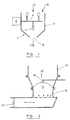
- granulated sugar, maltodextrin and aspartame/acesulfame K are added as shown schematically by arrow A, in powder form to a low shear mixer or slow speed blender 1 comprising an open topped vessel 2 having mixing blades or paddles 4 located therein.
- the blades are mounted on a driving shaft 6 which is rotated by motor means 8 so that the blades move slowly. It is preferable that on certain mixers the rotation is reversed to that of conventional operation.
- the two shafts turn towards each other with upward movement on the side where the shafts turn toward each other so that the paddles take the product and mix them at the top of the vessel where these two sets of paddles meet.
- the two shafts turn toward each other with downward movement on the side where the shafts turn toward each other and that the mixing takes place at the bottom of the machine where the paddles meet.
- any suitable low shear mixer or slow speed blender may be used and for example, a ribbon or screw mixing means may be used instead of blades 4 and shaft 6.
- ribbon mixing means are normally run at high speed such means could be run slowly for the purpose of the present invention.
- the mixture 12 is added to a fluidised bed agglomerator comprising an open topped vessel 14. Liquid is sprayed into the vessel via one or more nozzles 16 located in or on the vessel. Typically the nozzles 16 are designed to atomise the liquid.
- the base of the vessel 14 comprises a mesh plate 18 and the vessel is connected to an air supply or fan 20 so that, in use, air passes up through the mesh plates, through the mixture and out through the filters 22 located at the top of the vessel 14.
- a product of the invention or produced using a method of the invention has one or more of the aforementioned desired characteristics and is cost effective to produce.
- the amount of water in the wet mix may be increased by 50 ml at a time until the required bulk density is obtained. It is preferred that the mixing machine is operated such that the shafts rotate in opposite directions with downward movements on the side where the shafts turn toward one another so that the mixing zone lies below the level of the shafts in contrast to the mixing method described with reference to Figure 4 of GB 2026881.
Landscapes
- Life Sciences & Earth Sciences (AREA)
- Chemical & Material Sciences (AREA)
- Engineering & Computer Science (AREA)
- Food Science & Technology (AREA)
- Biochemistry (AREA)
- Organic Chemistry (AREA)
- Seasonings (AREA)
- Saccharide Compounds (AREA)
- Confectionery (AREA)
- Medicinal Preparation (AREA)
Claims (19)
- Granuliertes Zuckerprodukt, das ein Kernmaterial aus einem granulierten ersten Zucker und ein Oberflächenmaterial umfasst, wobei das Oberflächenmaterial weniger dicht ist als das erste Zuckermaterial und das Oberflächenmaterial einen zweiten Zucker, Dextrine, Sorbit, Mannit, Stärke, Cellulose, Inulin, Glycogen, Xylit, Lävoglucason oder Maltol (und ein Ethyl-Derivat davon) umfasst.
- Granuliertes Zuckerprodukt nach Anspruch 1, worin das Oberflächenmaterial nur einen Teil oder die gesamte Oberfläche der ersten Zuckerkörnchen bedeckt.
- Granuliertes Zuckerprodukt nach irgendeinem vorhergehenden Anspruch, das ein Süßungsmittel enthält.
- Granuliertes Zuckerprodukt nach irgendeinem vorhergehenden Anspruch, das ein Süßungsmittel mit hoher Süßkraft enthält.
- Granuliertes Zuckerprodukt nach irgendeinem vorhergehenden Anspruch, worin der erste Zucker Saccharose ist.
- Granuliertes Zuckerprodukt nach irgendeinem vorhergehenden Anspruch, worin der zweite Zucker ausgewählt ist aus der Gruppe Saccharose, Glucose (Dextrose, wasserfrei und mono), Fructose, Lactose (wasserfrei und hydratisiert), Maltose, Ribose, Galactose, getrocknete Glucose, Sirupe, Traubenzucker, Arabinose, Raffinose, Mannose, Rhamnose, Isomaltose, Gentobiose, Trehalose, Cellobiose, Neohesperidose, Maltotriose, Parose, Neokestose und Stachyose.
- Granuliertes Zuckerprodukt nach irgendeinem vorhergehenden Anspruch, worin das Süßungsmittel ausgewählt ist aus der Gruppe Sorbit (E420), Mannit (E421), Isomalt (E953), Maltit (E965), Lactit (E966), Xylit (E967), Acesulfam K (E950), Aspartam (E951), Cyclaminsäure und ihren Natrium- und Calciumsalzen (E952), Saccharin und seinen Natrium-, Kalium- und Calciumsalzen (E954), Thaumatin (E957) und Neohesperidin DC (E959).
- Granuliertes Zuckerprodukt nach irgendeinem vorhergehenden Anspruch, worin das Oberflächenmaterial ein getrocknetes Schaummaterial umfasst.
- Granuliertes Zuckerprodukt nach irgendeinem vorhergehenden Anspruch, worin das Oberflächenmaterial ein Maltodextrin mit niedriger Dichte umfasst.
- Granuliertes Zuckerprodukt nach irgendeinem vorhergehenden Anspruch, das den ersten Zucker in einer Menge in dem Bereich von 60 bis 90 Gew.-% enthält.
- Granuliertes Zuckerprodukt nach irgendeinem vorhergehenden Anspruch, worin das Oberflächenmaterial 10 bis 40 Gew.-% ausmacht.
- Granuliertes Zuckerprodukt nach irgendeinem vorhergehenden Anspruch, worin das Süßungsmittel 0,1 bis 1,0 Gew.-% ausmacht.
- Verfahren zur Herstellung eines granulierten Zuckerprodukts, das umfasst das Mischen eines Kernmaterials aus einem granulierten ersten Zucker mit einem Oberflächenmaterial in der Weise, dass eine Agglomeration der Mischung erhalten wird, wobei das Oberflächenmaterial weniger dicht ist als das erste Zuckermaterial und das Oberflächenmaterial einen zweiten Zucker, Dextrine, Sorbit, Mannit, Stärke, Cellulose, Inulin, Glycogen, Xylit, Lävoglucason oder Maltol (und ein Ethyl-Derivat davon) umfasst.
- Verfahren zur Herstellung eines granulierten Zuckerprodukts nach Anspruch 13, worin das Mischen unter Verwendung einer Mischvorrichtung durchgeführt wird, die eine Mischkammer aufweist, in der zwei Wellen in der gleichen horizontalen Ebene angeordnet sind, wobei die Wellen mit Schaufeln oder Paddeln ausgestattet sind, die unter einem Winkel zu den Wellen und parallel zu den Wellen, die sich in zueinander entgegengesetzten Richtungen drehen, angeordnet sind.
- Verfahren zur Herstellung eines granulierten Zuckerprodukts nach Anspruch 14, worin die Vorrichtung so betrieben wird, dass die Abwärtsbewegungen auf der Seite erfolgen, auf der die Wellen sich aufeinander zu drehen.
- Verfahren zur Herstellung eines granulierten Zuckerprodukts nach Anspruch 14 oder 15, worin eine Vielzahl von einander gegenüberliegenden Paaren von Rührschaufeln bestimmter Flächen auf jeder Welle befestigt sind, die unter einem Winkel von 90 ° transversal zur Zentrallinie für die Wellen angeordnet sind, und worin die Schaufelflügel unter einem Winkel von 45 ° zu der Wellen-Zentrallinie angeordnet sind.
- Verfahren zur Herstellung eines granulierten Zuckerprodukts, das die Stufen umfasst:(i) Einführung eines Kernmaterials aus einem granulierten ersten Zucker und eines Oberflächenmaterials in einen Mischer mit niedriger Scherkraft oder in einen langsam laufenden Mixer, der mindestens zwei Antriebswellen aufweist, wobei die Wellen mit Rührschaufeln ausgestattet sind, die unter einem Winkel zu den Wellen und parallel zu den Wellen angeordnet sind, wobei das Oberflächenmaterial weniger dicht ist als das erste Zuckermaterial und das Oberflächenmaterial einen zweiten Zucker, Dextrine, Sorbit, Mannit, Stärke, Cellulose, Inulin, Glycogen, Xylit, Lävoglucason oder Maltol (und ein Ethyl-Derivat davon) umfasst; und(ii) Betreiben des Mischers oder Mixers in der Weise, dass die Wellen sich in zueinander entgegengesetzten Richtungen drehen.
- Verfahren nach Anspruch 17, worin die Wellen des Mischers oder Mixers in der gleichen horizontalen Ebene angeordnet sind und der Mischer oder Mixer so betrieben wird, dass die Abwärtsbewegung der Wellen auf der Seite erfolgt, auf der die Wellen sich aufeinander zu drehen.
- Produkt, das erhältlich ist nach einem Verfahren nach einem der Ansprüche 13 bis 18.
Applications Claiming Priority (3)
| Application Number | Priority Date | Filing Date | Title |
|---|---|---|---|
| GBGB9614759.0A GB9614759D0 (en) | 1996-07-13 | 1996-07-13 | Granulated sugar product |
| GB9614759 | 1996-07-13 | ||
| PCT/GB1997/001929 WO1998002585A1 (en) | 1996-07-13 | 1997-07-14 | Granulated sugar product |
Publications (2)
| Publication Number | Publication Date |
|---|---|
| EP0950116A1 EP0950116A1 (de) | 1999-10-20 |
| EP0950116B1 true EP0950116B1 (de) | 2004-12-15 |
Family
ID=10796870
Family Applications (1)
| Application Number | Title | Priority Date | Filing Date |
|---|---|---|---|
| EP97932904A Expired - Lifetime EP0950116B1 (de) | 1996-07-13 | 1997-07-14 | Granuliertes zuckerproduct |
Country Status (15)
| Country | Link |
|---|---|
| EP (1) | EP0950116B1 (de) |
| JP (1) | JP2000514303A (de) |
| CN (1) | CN1075837C (de) |
| AT (1) | ATE284975T1 (de) |
| AU (1) | AU732396B2 (de) |
| BR (1) | BR9710211A (de) |
| CA (1) | CA2260123C (de) |
| DE (1) | DE69731972T2 (de) |
| ES (1) | ES2235242T3 (de) |
| GB (2) | GB9614759D0 (de) |
| IL (1) | IL127870A (de) |
| NO (1) | NO310570B1 (de) |
| NZ (1) | NZ333388A (de) |
| PT (1) | PT950116E (de) |
| WO (1) | WO1998002585A1 (de) |
Families Citing this family (13)
| Publication number | Priority date | Publication date | Assignee | Title |
|---|---|---|---|---|
| US20030031772A1 (en) | 2001-03-28 | 2003-02-13 | Zehner Lee R. | Mixtures of fructose and lactose as a low-calorie bulk sweetener with reduced glyemic index |
| JP2004073197A (ja) * | 2002-07-31 | 2004-03-11 | Unitika Ltd | 甘味組成物およびそれを含有する食品 |
| WO2005084457A1 (en) * | 2004-03-04 | 2005-09-15 | Goekhan Cem | Artificial fruit |
| ITFI20040161A1 (it) * | 2004-07-23 | 2004-10-23 | Biosphere S P A | Composizione dolcificante a basso potere calorico |
| GB2436514A (en) * | 2006-03-28 | 2007-10-03 | Tate & Lyle Plc | A granulated sugar product |
| EP2100519A1 (de) * | 2008-03-04 | 2009-09-16 | Tiense Suikerraffinaderij N.V. | Partikel mit einem hochintensiven Süßstoff sowie Herstellungsverfahren dafür und Verwendung davon |
| JP5020277B2 (ja) * | 2008-11-19 | 2012-09-05 | 日清製粉株式会社 | クッキー生地用上付けシュガーを用いる小麦粉焼成食品の製造方法 |
| CN101999626A (zh) * | 2010-09-29 | 2011-04-06 | 广西轻工业科学技术研究院 | 一种复合糖颗粒的制备方法 |
| CN102415527B (zh) * | 2011-12-09 | 2013-05-08 | 苏州工业园区尚融科技有限公司 | 蓬松颗粒状复合低糖低卡型豆浆用餐桌糖及其制备方法 |
| JP6099870B2 (ja) | 2012-01-06 | 2017-03-22 | 松谷化学工業株式会社 | スクロースとd−プシコースを含む新規甘味料 |
| CN105768034A (zh) * | 2016-03-15 | 2016-07-20 | 邯郸市艺杭纯净糖专营有限公司 | 复配甜味剂的生产方法 |
| RU2765062C1 (ru) * | 2021-02-11 | 2022-01-25 | Федеральное Государственное Бюджетное Образовательное Учреждение Высшего Образования "Московский Государственный Университет Технологий И Управления Имени К.Г. Разумовского (Первый Казачий Университет)" | Способ производства гранулированного сахаросодержащего продукта |
| RU2763505C1 (ru) * | 2021-02-11 | 2021-12-29 | Федеральное Государственное Бюджетное Образовательное Учреждение Высшего Образования "Московский Государственный Университет Технологий И Управления Имени К.Г. Разумовского (Первый Казачий Университет)" | Способ производства гранулированного сахаросодержащего продукта |
Family Cites Families (10)
| Publication number | Priority date | Publication date | Assignee | Title |
|---|---|---|---|---|
| NL267241A (de) * | 1961-07-19 | |||
| JPS5418330B2 (de) * | 1973-03-16 | 1979-07-06 | ||
| DE2429872A1 (de) * | 1973-06-21 | 1975-01-23 | Nikken Chemicals Co Ltd | Zusammengesetztes maltitpulver und verfahren zur herstellung desselben |
| GB2008920B (en) * | 1977-11-29 | 1982-05-26 | Ingredient Technology Corp | Agglomeration process |
| NO149684C (no) * | 1978-07-25 | 1984-06-06 | Halvor Forberg | Fremgangsmaate til blanding av parikkelformede bestanddeler |
| GB8807135D0 (en) * | 1988-03-25 | 1988-04-27 | Tate & Lyle Plc | Sweetener composition |
| BE1001556A4 (fr) * | 1988-03-30 | 1989-12-05 | Raffinerie Tirlemontoise Sa | Produits a base de saccharose contenant des edulcorants a haut pouvoir sucrant et procedes pour leur obtention. |
| JPH0479857A (ja) * | 1990-07-23 | 1992-03-13 | Ajinomoto Co Inc | 低カロリー甘味料の製造方法 |
| US5401519A (en) * | 1992-03-09 | 1995-03-28 | Nisshin Seito Kabushiki Kaisha | Low calorie composite sweetener and a method of making it |
| JP3588379B2 (ja) * | 1994-12-28 | 2004-11-10 | 日新製糖株式会社 | 糖類の球形顆粒及びその製造方法 |
-
1996
- 1996-07-13 GB GBGB9614759.0A patent/GB9614759D0/en active Pending
-
1997
- 1997-07-14 WO PCT/GB1997/001929 patent/WO1998002585A1/en not_active Ceased
- 1997-07-14 PT PT97932904T patent/PT950116E/pt unknown
- 1997-07-14 AT AT97932904T patent/ATE284975T1/de not_active IP Right Cessation
- 1997-07-14 BR BR9710211-3A patent/BR9710211A/pt not_active IP Right Cessation
- 1997-07-14 CA CA002260123A patent/CA2260123C/en not_active Expired - Fee Related
- 1997-07-14 IL IL12787097A patent/IL127870A/en not_active IP Right Cessation
- 1997-07-14 GB GB9802167A patent/GB2319162B/en not_active Expired - Fee Related
- 1997-07-14 JP JP10505760A patent/JP2000514303A/ja not_active Ceased
- 1997-07-14 ES ES97932904T patent/ES2235242T3/es not_active Expired - Lifetime
- 1997-07-14 DE DE69731972T patent/DE69731972T2/de not_active Expired - Fee Related
- 1997-07-14 CN CN97196378A patent/CN1075837C/zh not_active Expired - Fee Related
- 1997-07-14 NZ NZ333388A patent/NZ333388A/xx unknown
- 1997-07-14 AU AU36272/97A patent/AU732396B2/en not_active Ceased
- 1997-07-14 EP EP97932904A patent/EP0950116B1/de not_active Expired - Lifetime
-
1999
- 1999-01-12 NO NO19990117A patent/NO310570B1/no not_active IP Right Cessation
Also Published As
| Publication number | Publication date |
|---|---|
| IL127870A (en) | 2002-04-21 |
| NO990117D0 (no) | 1999-01-12 |
| AU3627297A (en) | 1998-02-09 |
| GB2319162A (en) | 1998-05-20 |
| DE69731972T2 (de) | 2005-12-15 |
| GB9802167D0 (en) | 1998-04-01 |
| ATE284975T1 (de) | 2005-01-15 |
| CA2260123A1 (en) | 1998-01-22 |
| JP2000514303A (ja) | 2000-10-31 |
| EP0950116A1 (de) | 1999-10-20 |
| NO310570B1 (no) | 2001-07-23 |
| CN1075837C (zh) | 2001-12-05 |
| WO1998002585A1 (en) | 1998-01-22 |
| IL127870A0 (en) | 1999-10-28 |
| NO990117L (no) | 1999-03-15 |
| GB9614759D0 (en) | 1996-09-04 |
| PT950116E (pt) | 2005-04-29 |
| ES2235242T3 (es) | 2005-07-01 |
| NZ333388A (en) | 1999-07-29 |
| CA2260123C (en) | 2006-07-11 |
| GB2319162B (en) | 2000-05-31 |
| CN1225135A (zh) | 1999-08-04 |
| BR9710211A (pt) | 2000-01-11 |
| AU732396B2 (en) | 2001-04-26 |
| DE69731972D1 (de) | 2005-01-20 |
Similar Documents
| Publication | Publication Date | Title |
|---|---|---|
| US6703057B2 (en) | Granulated sugar product | |
| EP0950116B1 (de) | Granuliertes zuckerproduct | |
| EP0036738B1 (de) | Schnell-lösliches Süssungsmittel, Verfahren zu seiner Herstellung und seine Verwendung in einer Getränke-Mischung | |
| US6074489A (en) | Process for recrystallizing sugar and product thereof | |
| US5866188A (en) | Comestible composition having spheroidal crystal sugar | |
| US5597416A (en) | Method of making crystalline sugar and products resulting therefrom | |
| US4640717A (en) | Sugar process | |
| CA1328194C (en) | Sweetener composition | |
| WO2007110645A1 (en) | Granulated sugar product | |
| KR100864419B1 (ko) | 말티톨 결정체 입자를 함유하는 분말의 제조 방법 | |
| US5582351A (en) | Convenient to use aspartame and method of making | |
| JPH0520076B2 (de) | ||
| CA2297209A1 (en) | Mesomorphic sugar and products therefrom | |
| EP1042964B1 (de) | Suesstoffzusammensetzung | |
| JPH0412104B2 (de) | ||
| KR890002200B1 (ko) | 속용성 감미제의 제조방법 | |
| JPS5959173A (ja) | 甘味料顆粒又はキユ−ブの製造法 | |
| AU723473B2 (en) | New spheroidal crystal sugar and method of making | |
| JPS5847462A (ja) | 迅速−溶解性甘味料,その調製法およびそれを使用する飲料ミツクス | |
| JPS6359670B2 (de) |
Legal Events
| Date | Code | Title | Description |
|---|---|---|---|
| PUAI | Public reference made under article 153(3) epc to a published international application that has entered the european phase |
Free format text: ORIGINAL CODE: 0009012 |
|
| 17P | Request for examination filed |
Effective date: 19981218 |
|
| AK | Designated contracting states |
Kind code of ref document: A1 Designated state(s): AT BE CH DE DK ES FI FR GB GR IE IT LI LU MC NL PT SE |
|
| AX | Request for extension of the european patent |
Free format text: LT PAYMENT 19981218;LV PAYMENT 19981218;RO PAYMENT 19981218 |
|
| 17Q | First examination report despatched |
Effective date: 20030814 |
|
| GRAP | Despatch of communication of intention to grant a patent |
Free format text: ORIGINAL CODE: EPIDOSNIGR1 |
|
| RIC1 | Information provided on ipc code assigned before grant |
Ipc: 7C 13F 3/00 A |
|
| RTI1 | Title (correction) |
Free format text: GRANULATED SUGAR PRODUCT |
|
| RIC1 | Information provided on ipc code assigned before grant |
Ipc: 7C 13F 3/00 A |
|
| RTI1 | Title (correction) |
Free format text: GRANULATED SUGAR PRODUCT |
|
| GRAL | Information related to payment of fee for publishing/printing deleted |
Free format text: ORIGINAL CODE: EPIDOSDIGR3 |
|
| GRAS | Grant fee paid |
Free format text: ORIGINAL CODE: EPIDOSNIGR3 |
|
| GRAA | (expected) grant |
Free format text: ORIGINAL CODE: 0009210 |
|
| AK | Designated contracting states |
Kind code of ref document: B1 Designated state(s): AT BE CH DE DK ES FI FR GB GR IE IT LI LU MC NL PT SE |
|
| AX | Request for extension of the european patent |
Extension state: LT LV RO |
|
| PG25 | Lapsed in a contracting state [announced via postgrant information from national office to epo] |
Ref country code: NL Free format text: LAPSE BECAUSE OF FAILURE TO SUBMIT A TRANSLATION OF THE DESCRIPTION OR TO PAY THE FEE WITHIN THE PRESCRIBED TIME-LIMIT Effective date: 20041215 Ref country code: LI Free format text: LAPSE BECAUSE OF FAILURE TO SUBMIT A TRANSLATION OF THE DESCRIPTION OR TO PAY THE FEE WITHIN THE PRESCRIBED TIME-LIMIT Effective date: 20041215 Ref country code: FI Free format text: LAPSE BECAUSE OF FAILURE TO SUBMIT A TRANSLATION OF THE DESCRIPTION OR TO PAY THE FEE WITHIN THE PRESCRIBED TIME-LIMIT Effective date: 20041215 Ref country code: CH Free format text: LAPSE BECAUSE OF FAILURE TO SUBMIT A TRANSLATION OF THE DESCRIPTION OR TO PAY THE FEE WITHIN THE PRESCRIBED TIME-LIMIT Effective date: 20041215 Ref country code: AT Free format text: LAPSE BECAUSE OF FAILURE TO SUBMIT A TRANSLATION OF THE DESCRIPTION OR TO PAY THE FEE WITHIN THE PRESCRIBED TIME-LIMIT Effective date: 20041215 |
|
| REG | Reference to a national code |
Ref country code: GB Ref legal event code: FG4D Ref country code: CH Ref legal event code: EP |
|
| REG | Reference to a national code |
Ref country code: IE Ref legal event code: FG4D |
|
| REF | Corresponds to: |
Ref document number: 69731972 Country of ref document: DE Date of ref document: 20050120 Kind code of ref document: P |
|
| PG25 | Lapsed in a contracting state [announced via postgrant information from national office to epo] |
Ref country code: SE Free format text: LAPSE BECAUSE OF FAILURE TO SUBMIT A TRANSLATION OF THE DESCRIPTION OR TO PAY THE FEE WITHIN THE PRESCRIBED TIME-LIMIT Effective date: 20050315 Ref country code: GR Free format text: LAPSE BECAUSE OF FAILURE TO SUBMIT A TRANSLATION OF THE DESCRIPTION OR TO PAY THE FEE WITHIN THE PRESCRIBED TIME-LIMIT Effective date: 20050315 Ref country code: DK Free format text: LAPSE BECAUSE OF FAILURE TO SUBMIT A TRANSLATION OF THE DESCRIPTION OR TO PAY THE FEE WITHIN THE PRESCRIBED TIME-LIMIT Effective date: 20050315 |
|
| REG | Reference to a national code |
Ref country code: PT Ref legal event code: SC4A Free format text: AVAILABILITY OF NATIONAL TRANSLATION Effective date: 20050310 |
|
| LTIE | Lt: invalidation of european patent or patent extension |
Effective date: 20041215 |
|
| NLV1 | Nl: lapsed or annulled due to failure to fulfill the requirements of art. 29p and 29m of the patents act | ||
| REG | Reference to a national code |
Ref country code: CH Ref legal event code: PL |
|
| REG | Reference to a national code |
Ref country code: ES Ref legal event code: FG2A Ref document number: 2235242 Country of ref document: ES Kind code of ref document: T3 |
|
| PG25 | Lapsed in a contracting state [announced via postgrant information from national office to epo] |
Ref country code: LU Free format text: LAPSE BECAUSE OF NON-PAYMENT OF DUE FEES Effective date: 20050714 |
|
| PG25 | Lapsed in a contracting state [announced via postgrant information from national office to epo] |
Ref country code: MC Free format text: LAPSE BECAUSE OF NON-PAYMENT OF DUE FEES Effective date: 20050731 |
|
| PLBE | No opposition filed within time limit |
Free format text: ORIGINAL CODE: 0009261 |
|
| STAA | Information on the status of an ep patent application or granted ep patent |
Free format text: STATUS: NO OPPOSITION FILED WITHIN TIME LIMIT |
|
| 26N | No opposition filed |
Effective date: 20050916 |
|
| ET | Fr: translation filed | ||
| REG | Reference to a national code |
Ref country code: GB Ref legal event code: 732E |
|
| REG | Reference to a national code |
Ref country code: GB Ref legal event code: 732E |
|
| REG | Reference to a national code |
Ref country code: PT Ref legal event code: MM4A Free format text: LAPSE DUE TO NON-PAYMENT OF FEES Effective date: 20090114 |
|
| REG | Reference to a national code |
Ref country code: PT Ref legal event code: NF4A Free format text: RESTITUTIO IN INTEGRUM Effective date: 20090216 |
|
| PGFP | Annual fee paid to national office [announced via postgrant information from national office to epo] |
Ref country code: IE Payment date: 20090130 Year of fee payment: 12 Ref country code: ES Payment date: 20090130 Year of fee payment: 12 |
|
| PGFP | Annual fee paid to national office [announced via postgrant information from national office to epo] |
Ref country code: PT Payment date: 20090216 Year of fee payment: 12 Ref country code: DE Payment date: 20090129 Year of fee payment: 12 |
|
| PGRI | Patent reinstated in contracting state [announced from national office to epo] |
Ref country code: PT Effective date: 20090216 |
|
| PGFP | Annual fee paid to national office [announced via postgrant information from national office to epo] |
Ref country code: GB Payment date: 20090129 Year of fee payment: 12 |
|
| PGFP | Annual fee paid to national office [announced via postgrant information from national office to epo] |
Ref country code: BE Payment date: 20090130 Year of fee payment: 12 |
|
| PGFP | Annual fee paid to national office [announced via postgrant information from national office to epo] |
Ref country code: IT Payment date: 20090130 Year of fee payment: 12 |
|
| PGFP | Annual fee paid to national office [announced via postgrant information from national office to epo] |
Ref country code: FR Payment date: 20090129 Year of fee payment: 12 |
|
| REG | Reference to a national code |
Ref country code: PT Ref legal event code: MM4A Free format text: LAPSE DUE TO NON-PAYMENT OF FEES Effective date: 20100114 |
|
| BERE | Be: lapsed |
Owner name: *PARNOVA ENTERPRISES LTD Effective date: 20090731 |
|
| GBPC | Gb: european patent ceased through non-payment of renewal fee |
Effective date: 20090714 |
|
| REG | Reference to a national code |
Ref country code: FR Ref legal event code: ST Effective date: 20100331 |
|
| REG | Reference to a national code |
Ref country code: IE Ref legal event code: MM4A |
|
| PG25 | Lapsed in a contracting state [announced via postgrant information from national office to epo] |
Ref country code: PT Free format text: LAPSE BECAUSE OF NON-PAYMENT OF DUE FEES Effective date: 20100114 Ref country code: FR Free format text: LAPSE BECAUSE OF NON-PAYMENT OF DUE FEES Effective date: 20090731 |
|
| PG25 | Lapsed in a contracting state [announced via postgrant information from national office to epo] |
Ref country code: GB Free format text: LAPSE BECAUSE OF NON-PAYMENT OF DUE FEES Effective date: 20090714 |
|
| PG25 | Lapsed in a contracting state [announced via postgrant information from national office to epo] |
Ref country code: DE Free format text: LAPSE BECAUSE OF NON-PAYMENT OF DUE FEES Effective date: 20100202 Ref country code: BE Free format text: LAPSE BECAUSE OF NON-PAYMENT OF DUE FEES Effective date: 20090731 |
|
| PG25 | Lapsed in a contracting state [announced via postgrant information from national office to epo] |
Ref country code: IE Free format text: LAPSE BECAUSE OF NON-PAYMENT OF DUE FEES Effective date: 20090714 |
|
| REG | Reference to a national code |
Ref country code: ES Ref legal event code: FD2A Effective date: 20090715 |
|
| PG25 | Lapsed in a contracting state [announced via postgrant information from national office to epo] |
Ref country code: ES Free format text: LAPSE BECAUSE OF NON-PAYMENT OF DUE FEES Effective date: 20090715 |
|
| PG25 | Lapsed in a contracting state [announced via postgrant information from national office to epo] |
Ref country code: IT Free format text: LAPSE BECAUSE OF NON-PAYMENT OF DUE FEES Effective date: 20090714 |