EP0949793B1 - Optimizing call-center performance by using predictive data to distribute agents among calls - Google Patents
Optimizing call-center performance by using predictive data to distribute agents among calls Download PDFInfo
- Publication number
- EP0949793B1 EP0949793B1 EP19990302422 EP99302422A EP0949793B1 EP 0949793 B1 EP0949793 B1 EP 0949793B1 EP 19990302422 EP19990302422 EP 19990302422 EP 99302422 A EP99302422 A EP 99302422A EP 0949793 B1 EP0949793 B1 EP 0949793B1
- Authority
- EP
- European Patent Office
- Prior art keywords
- call
- handler
- handling
- type
- score
- Prior art date
- Legal status (The legal status is an assumption and is not a legal conclusion. Google has not performed a legal analysis and makes no representation as to the accuracy of the status listed.)
- Expired - Lifetime
Links
- 238000000034 method Methods 0.000 claims description 16
- 230000004044 response Effects 0.000 claims description 3
- 239000003795 chemical substances by application Substances 0.000 description 153
- 238000010586 diagram Methods 0.000 description 6
- 230000006870 function Effects 0.000 description 4
- 238000012986 modification Methods 0.000 description 4
- 230000004048 modification Effects 0.000 description 4
- QYSGYZVSCZSLHT-UHFFFAOYSA-N octafluoropropane Chemical compound FC(F)(F)C(F)(F)C(F)(F)F QYSGYZVSCZSLHT-UHFFFAOYSA-N 0.000 description 4
- 230000000694 effects Effects 0.000 description 3
- 230000008859 change Effects 0.000 description 2
- 238000005516 engineering process Methods 0.000 description 2
- 238000011156 evaluation Methods 0.000 description 2
- 239000004744 fabric Substances 0.000 description 2
- 230000000246 remedial effect Effects 0.000 description 2
- 238000012360 testing method Methods 0.000 description 2
- 238000012549 training Methods 0.000 description 2
- 230000005540 biological transmission Effects 0.000 description 1
- 230000003467 diminishing effect Effects 0.000 description 1
- 239000012636 effector Substances 0.000 description 1
- 230000006872 improvement Effects 0.000 description 1
- 230000002452 interceptive effect Effects 0.000 description 1
- 230000007774 longterm Effects 0.000 description 1
- 230000002093 peripheral effect Effects 0.000 description 1
Images


Classifications
-
- H—ELECTRICITY
- H04—ELECTRIC COMMUNICATION TECHNIQUE
- H04M—TELEPHONIC COMMUNICATION
- H04M3/00—Automatic or semi-automatic exchanges
- H04M3/42—Systems providing special services or facilities to subscribers
- H04M3/50—Centralised arrangements for answering calls; Centralised arrangements for recording messages for absent or busy subscribers ; Centralised arrangements for recording messages
- H04M3/51—Centralised call answering arrangements requiring operator intervention, e.g. call or contact centers for telemarketing
- H04M3/523—Centralised call answering arrangements requiring operator intervention, e.g. call or contact centers for telemarketing with call distribution or queueing
- H04M3/5232—Call distribution algorithms
- H04M3/5233—Operator skill based call distribution
Definitions
- This invention relates to methods of, and apparatus for, selecting a call for handling by a call handler.
- Automatic call distribution /(ACD)systems distribute calls ⁇ whether inbound or outbound -for handling to any suitable ones of available call-handling agents according to some predefined criteria.
- the criteria for handling the call from the moment that the ACD system becomes aware of the call until the call is connected to an agent are customer-specifiable (i.e., programmable by the operator of the ACD system) via a capability called call vectoring.
- the controller detects that an agent has become available to handle a call, the controller identifies all predefined call-handling skills of the agent (usually in some order of priority) and delivers to the agent the highest-priority oldest-waiting call that matches the agent's highest-priority skill.
- the only condition that results in a call not being delivered to an available agent is that there are no calls waiting to be handled.
- call-distribution algorithms The primary objective of call-distribution algorithms is to ultimately maximize call center performance. That may involve minimizing cost, maximizing call throughput, and/or maximizing revenue, among others. For example, when a new call arrives, the call should be handled by an agent who either has the ability to produce the most revenue or can handle the call in the shortest amount of time. Also, when an agent becomes available to handle a new call, the agent should handle either the call that has the possibility of generating the most revenue or the call which the agent is most efficient in handling.
- a telephone call-handling system having such functionality is disclosed in U.S. Patent No. 5,299,260 (WO 9209164A).
- this system is limited in its capabilities to truly maximize call center performance: it permits only one criterion or metric to be used at any one time to select an agent for handling an individual call, while call center performance is typically a multi-faceted function that involves a number of criteria or metrics.
- K.W. Hassler et al. "Revolutionizing DEFINITY ® Call Centers in the 1990s", AT&T Technical Journal , vol. 74, no. 4 (July/August 1995), XP000517580 ISSN 8756-2324, pp. 64-73, describes an Expert Agent Selection (EAS) feature that allows classification of incoming call types by caller needs and then matching these calls' skill needs with the particular skills of agents who have unique attributes and levels of expertise or call preference.
- EAS Expert Agent Selection
- Agents are assigned a skill type of "primary" for calls in which they are highly experienced or have a preference for handling. Agents are assigned a skill type of "secondary" for call types in which they are less experienced in handling or for which they serve as a back-up for other agents. Agents only receive calls for secondary skills if there are no calls waiting for their primary skill(s).
- the EAS skill-matching algorithm distributes an incoming call to the appropriate call queue(s) based on the skill(s) needed by the caller. Then, it directs the call to an agent assigned with a skill that matches at least one of the caller's needs by carrying out a best-fit matching of the incoming call's needs to the available agents who have the required skills.
- a call is selected for handling by a call handler (e.g., a call center agent) as follows.
- a call handler who handles calls of a plurality of types (e.g., calls needing different ones of a plurality of agent skills for their handling) becomes available, a call type for which the call handler has a best present performance characteristic is selected for handling by the call handler.
- a measure of "best” may be absolute or relative. For example, a "best" characteristic may be the highest characteristic, or it may be a characteristic that most-closely matches (e.g., minimally exceeds) the call's requirements.
- the determination of the available call for which the call handler has the best performance characteristic is made as follows.
- a service profile comprising present values of a plurality of service metrics for the plurality of call types is maintained for the call handler.
- the present values of the plurality of service metrics for each call type having calls available for handling by the call handler are retrieved from the call handler's service profile and are used in one of a plurality of formulas, each corresponding to a different call type, to obtain a performance characteristic score for each of the call types of available calls. Then the one of the available calls for whose call type the call handler has the best score is selected for handling by the call handler.
- the call handler's performance in handling the selected call is evaluated (quantitatively and/or qualitatively), and the present values of the call handler's service metrics are modified by the valuation to obtain new present values of the service metrics for the call type of the selected call for the call handler.
- the modifications are weighted to give more weight to performance evaluations of calls most-recently handled by this call handler.
- the new present values of the service metrics of the call handler are used in selecting a call for handling by the call handler, until that call type is again selected and the above procedure is repeated.
- their own performance characteristic scores for individual call types are used in selecting calls for them to handle.
- a call handler who has a best present performance characteristic for a call type of an available call is determined and selected to handle the call as follows.
- a service profile comprising present values of a plurality of service metrics for that call type is maintained for each call handler.
- the present values of the plurality of service metrics are retrieved from the call handler's service profile and are combined to obtain a performance characteristic score for each of the available call handlers.
- a call score is obtained for the available call by combining present values of a plurality of characteristics of the call. Then the one of the available call handlers who has a characteristic score that best corresponds to (e.g., matches) the call's score is selected to handle the call.
- a call for which a call handler has a best present performance characteristic is determined and selected for handling by the call handler as follows.
- a service profile comprising present values of a plurality of service metrics for a plurality of call types is maintained for the call handler.
- the present values of the plurality of service metrics for each call type having calls available for handling by the call handler are retrieved from the call handler's service profile and are combined to obtain a performance characteristic score for each of the call types of available calls.
- a call score is obtained for a call of each available call type by combining present values of a plurality of characteristics of each said call. Then the one of the available calls that has a call score that best corresponds the call handler's characteristic score for that corresponding call type is selected for handling by the call handler.
- the apparatus effects the method steps.
- the apparatus preferably includes an effector --any entity that effects the corresponding step, unlike a means-- for each step.
- a computer-readable medium containing software which, when executed in a computer, causes the computer to perform the method steps.
- the invention tends to maximize call center performance. For example, when an agent becomes available to handle a new call, the agent is assigned to a call of a type from which this agent can maximize call center performance as measured by a plurality of metrics. Also, when a new call arrives, it goes to an agent who has the best ability to maximize call center performance as measured by the plurality of metrics. This allows for a multi-dimensional, and hence more accurate or refined, measure of call center performance.
- the invention takes into consideration each agent's historical performance for each call type that the agent handles. Yet, by revising the values of the agent's metrics at the end of every call handled by the agent, the invention automatically adjusts for long-term trends, such as the agent gaining experience and expertise, and short-term trends, such as the agent having "a bad day".
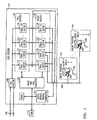
- FIG. 1 shows an illustrative call center.
- the call center comprises a plurality of telephone lines and/or trunks 100 selectively interconnected with a plurality of agent positions 102-104 via an ACD system 101.
- Each agent position 102-104 includes a voice-and-data terminal 105 for use by a corresponding agent 106-108 in handling calls.
- Terminals 105 are connected to ACD system 101 by a voice-and-data transmission medium 109.
- a conventional basic call management system (BCMS) and connected to ACD system 101 is a conventional call management system (CMS) 110 that gather call records and call-center statistics for use in managing the call center and in generating call-center reports.
- CMS and BCMS will hereafter be referred to jointly as CMS 110.
- ACD system 101 is illustratively the Lucent Technologies Definity® private-branch exchange (PBX)-based ACD system. It is a stored-program-controlled system that conventionally includes interfaces to external communications links, a communications switching fabric, service circuits (e.g., tone generators, announcement circuits, etc.), memory for storing control programs and data, and a processor (i.e., a computer) for executing the stored control programs to control the interfaces and the fabric and to provide automatic call-distribution functionality. Included among the data stored in ACD system 101 are a set 120 of call queues and a set 130 of agent queues. Each call queue 121-129 corresponds to a different agent skill, as does each agent queue 131-139.
- PBX Lucent Technologies Definity® private-branch exchange
- calls are prioritized, and either are enqueued in individual ones of call queues 120 in their order of priority or are enqueued in different ones of a plurality of call queues that correspond to a skill and each one of which corresponds to a different priority.
- each agent's skills are prioritized according to his or her level of expertise in that skill, and either agents are enqueued in individual ones of agent queues 130 in their order of expertise level or are enqueued in different ones of a plurality of agent queues that correspond to a skill and each one of which corresponds to a different expertise level.
- Included among the control programs in ACD system 101 is a call vector 140.
- Calls incoming to the call center on lines or trunks 100 are assigned by call vector 140 to different call queues 121-129 based upon the agent skill that they require for their proper handling.
- Agents 106-108 who are available for handling calls are assigned to agent queues 131-139 based upon the skills which they possess.
- An agent may have multiple skills, and hence may be assigned to multiple agent queues 131-139 simultaneously.
- an agent may have different levels of skill expertise (e.g., skill levels 1-16 in one known system or merely primary (P) skills and secondary (S) skills in another known system), and hence may be assigned to different agent queues 131-139 at different expertise levels.
- Agent and call selector 150 and an agent service-profile generator 151.
- Selector 150 and generator 151 are stored either in the main memory or in a peripheral memory (e.g., disk, CD-ROM, etc.) or some other computer-readable medium of ACD system 101. Selector 150 and generator 151 effect an assignment between available calls and available agents in away that tends to maximize the efficiency of the call center.
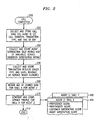
- generator 151 collects efficiency metrics for the call, at steps 202-206. From the PBX on which ACD system 101 is based, generator 151 collects data such as the skill (X) involved in handling the call, the identifier of the agent (Z) who handled the call, the call duration, the transaction type (e.g., catalog sale, information request, complaint, etc.), the time-of-day, and call wait time or agent wait time, and stores this information in a database, such as CMS 110, at step 202.
- a database such as CMS 110
- generator 151 collects and stores the agent's self-rating (which the agent entered on his or her terminal) of how well the agent is satisfied with how he or she handled the call, at step 204. Also, if the handling of the call was observed by a service observer (e.g., either was monitored by a supervisor of the call center, or the non-agent party involved in the call was queried by an interactive voice response system for an evaluation of the service received), generator 151 collects and stores the service observer's satisfaction rating, also at step 204.
- a service observer e.g., either was monitored by a supervisor of the call center, or the non-agent party involved in the call was queried by an interactive voice response system for an evaluation of the service received
- generator 151 collects and stores the transaction results (e.g., type of sale and number of units sold, or revenue generated, or service ticket closure or escalation, etc.), depending on the transaction type, at step 206.
- Generator 151 then weights the age of the stored data for skill X for agent Z for this call and previous calls, at step 208. Weighting favors data obtained from most-recent calls over data obtained from calls in the more-distant past. This enables the weighting to strongly reflect present agent performance, as agent performance may change over time due to, for example, an agent becoming more proficient, or "burned out", or having a "good day” or a "bad day”.
- a service profile is a set of scores for a set of metrics, e.g., an expertise score, a proficiency score, a profitability score, a customer satisfaction score, an agent satisfaction score, an agent occupancy score, agent wait time, priority of the call type to the agent or to the call center, and an indication of the percentage of the agent's work that this call type should represent versus how much it actually represents, etc.
- ACD system 101 has a profile for each skill of each agent. Therefore, there typically exists a plurality of profiles 400-402 for each agent.
- Generator 151 stores the generated service profile 400 along with the agent's other profiles in a database such as CMS 110, at step 210, and then ends its operation, at step 212.
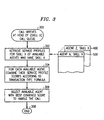
- agent and call selector 150 in selecting an agent for a call is shown in FIG. 3.
- selector 150 retrieves the service profiles 400-500 for skill X of all agents who are available to handle the call and who have skill X, at step 302.
- selector 150 retrieves the service profiles not only for agents who are actually idle and enqueued in the skill X agent queue, but also for those agents who ACD system 101 anticipates will become idle within a predetermined amount of time (e.g., a few seconds).
- selector 150 combines the agent's service profile scores according to a formula which is a function of the transaction type represented by the arrived call, at step 304.
- the formula for each call type is administered (programmed) into the system and may be either algorithm-based (procedural) or rules-based (expert system engine).
- Each formula weights the agent's individual service profile scores based on the type of transaction represented by the arrived call. For example, in a complaint transaction, the service observer satisfaction rating is weighted heavily, whereas in a sales transaction the revenue is weighted heavily, and in an information request transaction the proficiency is weighted heavily.
- the formula for a VIP sales call may weigh profitability less than customer satisfaction, in contrast to a "standard" sales call.
- a simple formula may normalize each score to a 100 point scale, weight each score by a multiplier, sum the weighted scores, and divide the sum by the maximum possible score.
- Selector 150 selects the agent who has the best combined score to handle the call, at step 306.
- the "best" score may either be the highest score, or it may be a just-sufficient score.
- selector 150 selects none of the available agents if none of the agents' combined scores reach a predetermined minimum threshold, and leaves the call waiting in queue for another agent to become available. Selector 150 then ends its operation, at step 308.
- agent and call selector 150 determines which skills this idle agent possesses (e.g., skills X, Y, and Z) and which of those skills have non-empty corresponding call queues 121-129, at step 602.
- selector 150 proceeds conventionally, at step 606, either enqueuing or leaving the idle agent enqueued in those agent queues 131-139 that correspond to the idle agent's skills if there are no non-empty corresponding call queues, or assigning a call from the one non-empty corresponding call queue to the idle agent and dequeuing the idle agent from all agent queues 130.
- selector 150 determines at step 604 that there is a plurality of non-empty corresponding call queues 121-129, selector 150 retrieves the service profiles 500-502 of the idle agent for those skills that correspond to the non-empty call queues 121-129, at step 608. Then, for each of those skills' service profiles of the idle agent, selector 150 combines the service profile scores according to a formula which is a function of the transaction type represented by a call of that skill, at step 610. As was already stated in conjunction with FIG. 3, the - formula for each call type is administered (programmed) into the system and may be either algorithm-based (procedural) or rules-based (expert system engine).
- Selector 150 selects a call needing the skill that has the best (either highest or just-sufficient) combined score to be handled by the idle agent, at step 612.
- selector 150 selects none of the available calls if none of the agent's combined scores reach a predetermined minimum threshold, and leaves the agent waiting in queue for a call of another skill type to become available. Selector 150 then ends its operation, at step 614.
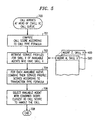
- agent and call selector 150 in selecting an agent for a call is shown in FIG. 5, which is a variation on FIG. 3.
- selector 150 Upon arrival of a call at the head of its queue, at step 700, selector 150 computes a call score for the call according to a call-type formula, at step 701. The computation is illustratively made on the basis of factors such as the purpose of the call (determined from the vector directory number of the call, or the skill queue 120-129 in which the call resides), the in-queue wait time of the call (either actual or predicted), the priority of the call, the caller's ID (such as the ANI or account number), the caller's. history (call history or caller's total business history), etc.
- factors such as the purpose of the call (determined from the vector directory number of the call, or the skill queue 120-129 in which the call resides), the in-queue wait time of the call (either actual or predicted), the priority of the call, the caller's ID (such as the
- a simple formula may normalize each factor on a 100 point scale, weight each normalized factor by a multiplier, sum the weighted factors, and divide the sum by the maximum possible score.
- agent and call selector 150 proceeds at steps 702-704 to obtain a score for each of the available agents who can handle the call, as at steps 302-304 of FIG. 3.
- Selector 150 selects the agent who has the best combined score ⁇ in this instance, the agent whose combined score is closest to the call's score ⁇ to handle the call, at step 706.
- selector 150 selects the agent whose combined score is closest to the call's score, whether it is higher or lower, within a predetermined range around the call's score, and if no agent is available within this range, selects an agent whose combined score least exceeds the call's score.
- Selector 150 ends its operation, at step 708.
- agent and call selector 150 in selecting a call for an agent is shown in FIG. 6, which is a variation on FIG. 4.
- selector 150 proceeds, at steps 800-808, in the same manner as at steps 600-606 of FIG. 4. If there are calls in multiple call queues 120-129 for the agent to choose from, selector 150 recomputes (updates) the call score for the call at the head of each of those queues according to a call type formula, at step 807, in the manner described for step 701 of FIG. 5. Selector 150 then proceeds, at steps 808-810, to obtain a score for each of the skills of the agent that correspond to the available calls, as at steps 608-610 of FIG. 4.
- Selector 150 selects a call of the skill that has the best combined score-in this instance, the call whose score is closest to the agent's combined score for that call type ⁇ to be handled by the agent, at step 812, and ends its operation, at step 814.
- the loci of various data and functions are not important and may be changed at will; for example, skill and agent profiles and the agent service profile generator and the agent selector may be located in an adjunct processor. Nor do the profiles need to be updated in real time; such updating may be done only periodically.
- the call queues and the agent queues may be distributed across a network of multiple ACDs. In this case, preference to distribute calls to other ACDs' agents may affect individual agent profiles, such as when one ACD site is presently working on an overtime-basis while another ACD site is in a different time zone and presently working standard hours.
- profile weighting can vary depending on present business needs or priorities derived from some external source of customer information.
- the agents may be given remedial training, and upon their retum to active duty, agents with lower proficiency values may be selected to provide immediate opportunities to apply the remedial training.
- the service profile scores of all agents may be compared, and the call may remain enqueued if an agent with a high-enough service profile score is predicted to become available shortly. The prediction may illustratively be based on what part of a telescript (a script followed by the agent in handling a call) the agent is presently performing.
- the system may dynamically change the weighting of individual profile scores or even the score-combining formula to reflect present operating conditions of the call center. For example, it may be that customers with low scores (e.g., grumpy people who seldom buy) need agents with high scores (e.g., very patient, positive, versatile agents) and agents with low scores (e.g., agents with little experience or only average people skills) may be assigned to customers with high scores (e.g., easygoing people who buy frequently).
- agents with high scores e.g., very patient, positive, versatile agents
- agents with low scores e.g., agents with little experience or only average people skills
Landscapes
- Business, Economics & Management (AREA)
- Marketing (AREA)
- Engineering & Computer Science (AREA)
- Signal Processing (AREA)
- Telephonic Communication Services (AREA)
Applications Claiming Priority (4)
| Application Number | Priority Date | Filing Date | Title |
|---|---|---|---|
| US57842 | 1998-04-09 | ||
| US09/057,842 US6173053B1 (en) | 1998-04-09 | 1998-04-09 | Optimizing call-center performance by using predictive data to distribute calls among agents |
| US09/185,265 US6163607A (en) | 1998-04-09 | 1998-11-03 | Optimizing call-center performance by using predictive data to distribute agents among calls |
| US185265 | 1998-11-03 |
Publications (2)
| Publication Number | Publication Date |
|---|---|
| EP0949793A1 EP0949793A1 (en) | 1999-10-13 |
| EP0949793B1 true EP0949793B1 (en) | 2004-05-12 |
Family
ID=26736941
Family Applications (1)
| Application Number | Title | Priority Date | Filing Date |
|---|---|---|---|
| EP19990302422 Expired - Lifetime EP0949793B1 (en) | 1998-04-09 | 1999-03-29 | Optimizing call-center performance by using predictive data to distribute agents among calls |
Country Status (4)
| Country | Link |
|---|---|
| EP (1) | EP0949793B1 (enExample) |
| JP (1) | JP3983920B2 (enExample) |
| CA (1) | CA2262044C (enExample) |
| DE (1) | DE69917120T2 (enExample) |
Cited By (5)
| Publication number | Priority date | Publication date | Assignee | Title |
|---|---|---|---|---|
| US8577916B1 (en) | 2006-09-01 | 2013-11-05 | Avaya Inc. | Search-based contact initiation method and apparatus |
| US8792630B2 (en) | 2012-09-24 | 2014-07-29 | Satmap International Holdings Limited | Use of abstracted data in pattern matching system |
| US9215323B2 (en) | 2008-01-28 | 2015-12-15 | Satmap International Holdings, Ltd. | Selective mapping of callers in a call center routing system |
| US9277055B2 (en) | 2012-03-26 | 2016-03-01 | Satmap International Holdings Limited | Call mapping systems and methods using variance algorithm (VA) and/or distribution compensation |
| US11595522B2 (en) | 2016-12-30 | 2023-02-28 | Afiniti, Ltd. | Techniques for workforce management in a contact center system |
Families Citing this family (85)
| Publication number | Priority date | Publication date | Assignee | Title |
|---|---|---|---|---|
| US7318046B1 (en) | 1998-03-05 | 2008-01-08 | American Management Systems, Inc. | Collector's account payment promise option advisory apparatus and method |
| US6925165B2 (en) * | 1998-12-23 | 2005-08-02 | Avaya Technology Corp. | Call selection based on continuum skill levels in a call center |
| DE19938059A1 (de) * | 1999-08-12 | 2001-03-01 | Siemens Ag | Verfahren zur Steuerung eines Operatorservice |
| US6614903B1 (en) * | 1999-12-15 | 2003-09-02 | Avaya Technology Corp. | Methods and apparatus for service state-based processing of communications in a call center |
| US6661889B1 (en) * | 2000-01-18 | 2003-12-09 | Avaya Technology Corp. | Methods and apparatus for multi-variable work assignment in a call center |
| US6633640B1 (en) | 2000-02-01 | 2003-10-14 | Avaya Technology Corp. | Methods and apparatus for analysis of load-balanced multi-site call processing systems |
| US6744879B1 (en) * | 2000-02-02 | 2004-06-01 | Rockwell Electronic Commerce Corp. | Profit-based method of assigning calls in a transaction processing system |
| US6754333B1 (en) * | 2000-04-27 | 2004-06-22 | Avaya Technology Corp. | Wait time prediction arrangement for non-real-time customer contacts |
| IT1317501B1 (it) * | 2000-05-09 | 2003-07-09 | Txt E Solutions S P A | Piattaforma per la gestione del servizio ai clienti |
| JP2001350832A (ja) * | 2000-06-07 | 2001-12-21 | Nippon Telegr & Teleph Corp <Ntt> | メッセージ処理支援システム |
| WO2002030093A2 (en) * | 2000-09-29 | 2002-04-11 | Avaya Technology Corp. | System for automatically predicting availability of a resource in a customer care center |
| US7050566B2 (en) * | 2003-06-13 | 2006-05-23 | Assurant, Inc. | Call processing system |
| US8724796B2 (en) | 2003-09-30 | 2014-05-13 | Avaya Inc. | Estimation of expected value for remaining work time for contact center agents |
| GB2410148B (en) * | 2004-01-19 | 2006-07-12 | Exony Ltd | Call routing |
| JP4861713B2 (ja) * | 2005-02-01 | 2012-01-25 | イーベイ コリア カンパニーリミテッド | 知能型顧客応対システム、知能型顧客応対方法 |
| US8885812B2 (en) * | 2005-05-17 | 2014-11-11 | Oracle International Corporation | Dynamic customer satisfaction routing |
| US8583466B2 (en) | 2005-08-09 | 2013-11-12 | Oracle International Corporation | System and method for routing workflow items based on workflow templates in a call center |
| US8117064B2 (en) | 2006-02-22 | 2012-02-14 | Verint Americas, Inc. | Systems and methods for workforce optimization and analytics |
| US8112306B2 (en) | 2006-02-22 | 2012-02-07 | Verint Americas, Inc. | System and method for facilitating triggers and workflows in workforce optimization |
| US8112298B2 (en) | 2006-02-22 | 2012-02-07 | Verint Americas, Inc. | Systems and methods for workforce optimization |
| US8108237B2 (en) | 2006-02-22 | 2012-01-31 | Verint Americas, Inc. | Systems for integrating contact center monitoring, training and scheduling |
| US8903079B2 (en) | 2008-01-28 | 2014-12-02 | Satmap International Holdings Limited | Routing callers from a set of callers based on caller data |
| US9712679B2 (en) | 2008-01-28 | 2017-07-18 | Afiniti International Holdings, Ltd. | Systems and methods for routing callers to an agent in a contact center |
| US9787841B2 (en) | 2008-01-28 | 2017-10-10 | Afiniti Europe Technologies Limited | Techniques for hybrid behavioral pairing in a contact center system |
| US9781269B2 (en) | 2008-01-28 | 2017-10-03 | Afiniti Europe Technologies Limited | Techniques for hybrid behavioral pairing in a contact center system |
| US9692898B1 (en) | 2008-01-28 | 2017-06-27 | Afiniti Europe Technologies Limited | Techniques for benchmarking paring strategies in a contact center system |
| US10708430B2 (en) | 2008-01-28 | 2020-07-07 | Afiniti Europe Technologies Limited | Techniques for benchmarking pairing strategies in a contact center system |
| US10750023B2 (en) | 2008-01-28 | 2020-08-18 | Afiniti Europe Technologies Limited | Techniques for hybrid behavioral pairing in a contact center system |
| US8670548B2 (en) | 2008-01-28 | 2014-03-11 | Satmap International Holdings Limited | Jumping callers held in queue for a call center routing system |
| US10567586B2 (en) | 2008-11-06 | 2020-02-18 | Afiniti Europe Technologies Limited | Pooling callers for matching to agents based on pattern matching algorithms |
| US8718271B2 (en) | 2008-01-28 | 2014-05-06 | Satmap International Holdings Limited | Call routing methods and systems based on multiple variable standardized scoring |
| NZ587100A (en) * | 2008-01-28 | 2013-07-26 | Resource Group International Ltd | Matching call centre agents with callers by using a pattern matching algorithm and determining a probability score |
| US8781100B2 (en) | 2008-01-28 | 2014-07-15 | Satmap International Holdings Limited | Probability multiplier process for call center routing |
| US9300802B1 (en) | 2008-01-28 | 2016-03-29 | Satmap International Holdings Limited | Techniques for behavioral pairing in a contact center system |
| US9774740B2 (en) | 2008-01-28 | 2017-09-26 | Afiniti Europe Technologies Limited | Techniques for benchmarking pairing strategies in a contact center system |
| US9712676B1 (en) | 2008-01-28 | 2017-07-18 | Afiniti Europe Technologies Limited | Techniques for benchmarking pairing strategies in a contact center system |
| US9654641B1 (en) | 2008-01-28 | 2017-05-16 | Afiniti International Holdings, Ltd. | Systems and methods for routing callers to an agent in a contact center |
| US10708431B2 (en) | 2008-01-28 | 2020-07-07 | Afiniti Europe Technologies Limited | Techniques for hybrid behavioral pairing in a contact center system |
| US8644490B2 (en) | 2008-08-29 | 2014-02-04 | Satmap International Holdings Limited | Shadow queue for callers in a performance/pattern matching based call routing system |
| US8781106B2 (en) | 2008-08-29 | 2014-07-15 | Satmap International Holdings Limited | Agent satisfaction data for call routing based on pattern matching algorithm |
| CN104883459B (zh) * | 2008-08-29 | 2018-11-20 | 阿菲利蒂欧洲科技有限公司 | 基于多变量标准化评分和影子队列的呼叫路由方法及系统 |
| US8472611B2 (en) | 2008-11-06 | 2013-06-25 | The Resource Group International Ltd. | Balancing multiple computer models in a call center routing system |
| USRE48412E1 (en) * | 2008-11-06 | 2021-01-26 | Afiniti, Ltd. | Balancing multiple computer models in a call center routing system |
| PH12011500868A1 (en) * | 2008-11-06 | 2015-09-04 | Afiniti Int Holdings Ltd | Two steps routing procedure in a call center |
| US8634542B2 (en) | 2008-12-09 | 2014-01-21 | Satmap International Holdings Limited | Separate pattern matching algorithms and computer models based on available caller data |
| US8295471B2 (en) | 2009-01-16 | 2012-10-23 | The Resource Group International | Selective mapping of callers in a call-center routing system based on individual agent settings |
| IL199115A (en) | 2009-06-03 | 2013-06-27 | Verint Systems Ltd | Systems and methods for efficiently locating keywords in communication traffic |
| US10115065B1 (en) | 2009-10-30 | 2018-10-30 | Verint Americas Inc. | Systems and methods for automatic scheduling of a workforce |
| US8699694B2 (en) | 2010-08-26 | 2014-04-15 | Satmap International Holdings Limited | Precalculated caller-agent pairs for a call center routing system |
| US8724797B2 (en) | 2010-08-26 | 2014-05-13 | Satmap International Holdings Limited | Estimating agent performance in a call routing center system |
| US8750488B2 (en) | 2010-08-31 | 2014-06-10 | Satmap International Holdings Limited | Predicted call time as routing variable in a call routing center system |
| US9025757B2 (en) * | 2012-03-26 | 2015-05-05 | Satmap International Holdings Limited | Call mapping systems and methods using bayesian mean regression (BMR) |
| MX2018006523A (es) | 2015-12-01 | 2018-08-15 | Afiniti Europe Tech Ltd | Tecnicas para asignacion de asuntos. |
| CN108629481B (zh) * | 2016-04-18 | 2022-11-04 | 阿菲尼帝有限公司 | 用于对联系中心系统中的配对策略进行基准检测的技术 |
| US10142473B1 (en) | 2016-06-08 | 2018-11-27 | Afiniti Europe Technologies Limited | Techniques for benchmarking performance in a contact center system |
| US9692899B1 (en) | 2016-08-30 | 2017-06-27 | Afiniti Europe Technologies Limited | Techniques for benchmarking pairing strategies in a contact center system |
| US9888121B1 (en) | 2016-12-13 | 2018-02-06 | Afiniti Europe Technologies Limited | Techniques for behavioral pairing model evaluation in a contact center system |
| US11831808B2 (en) | 2016-12-30 | 2023-11-28 | Afiniti, Ltd. | Contact center system |
| US10320984B2 (en) | 2016-12-30 | 2019-06-11 | Afiniti Europe Technologies Limited | Techniques for L3 pairing in a contact center system |
| US9955013B1 (en) | 2016-12-30 | 2018-04-24 | Afiniti Europe Technologies Limited | Techniques for L3 pairing in a contact center system |
| US10257354B2 (en) | 2016-12-30 | 2019-04-09 | Afiniti Europe Technologies Limited | Techniques for L3 pairing in a contact center system |
| US10135986B1 (en) | 2017-02-21 | 2018-11-20 | Afiniti International Holdings, Ltd. | Techniques for behavioral pairing model evaluation in a contact center system |
| CN107135319B (zh) * | 2017-03-13 | 2019-10-25 | 平安科技(深圳)有限公司 | 坐席分配方法和装置 |
| US10970658B2 (en) | 2017-04-05 | 2021-04-06 | Afiniti, Ltd. | Techniques for behavioral pairing in a dispatch center system |
| US9930180B1 (en) | 2017-04-28 | 2018-03-27 | Afiniti, Ltd. | Techniques for behavioral pairing in a contact center system |
| US10122860B1 (en) | 2017-07-10 | 2018-11-06 | Afiniti Europe Technologies Limited | Techniques for estimating expected performance in a task assignment system |
| US10509669B2 (en) | 2017-11-08 | 2019-12-17 | Afiniti Europe Technologies Limited | Techniques for benchmarking pairing strategies in a task assignment system |
| US10110746B1 (en) | 2017-11-08 | 2018-10-23 | Afiniti Europe Technologies Limited | Techniques for benchmarking pairing strategies in a task assignment system |
| US11399096B2 (en) | 2017-11-29 | 2022-07-26 | Afiniti, Ltd. | Techniques for data matching in a contact center system |
| US10509671B2 (en) | 2017-12-11 | 2019-12-17 | Afiniti Europe Technologies Limited | Techniques for behavioral pairing in a task assignment system |
| US10623565B2 (en) | 2018-02-09 | 2020-04-14 | Afiniti Europe Technologies Limited | Techniques for behavioral pairing in a contact center system |
| US11250359B2 (en) | 2018-05-30 | 2022-02-15 | Afiniti, Ltd. | Techniques for workforce management in a task assignment system |
| US10496438B1 (en) | 2018-09-28 | 2019-12-03 | Afiniti, Ltd. | Techniques for adapting behavioral pairing to runtime conditions in a task assignment system |
| US10867263B2 (en) | 2018-12-04 | 2020-12-15 | Afiniti, Ltd. | Techniques for behavioral pairing in a multistage task assignment system |
| US11144344B2 (en) | 2019-01-17 | 2021-10-12 | Afiniti, Ltd. | Techniques for behavioral pairing in a task assignment system |
| US10757261B1 (en) | 2019-08-12 | 2020-08-25 | Afiniti, Ltd. | Techniques for pairing contacts and agents in a contact center system |
| US11445062B2 (en) | 2019-08-26 | 2022-09-13 | Afiniti, Ltd. | Techniques for behavioral pairing in a task assignment system |
| US10757262B1 (en) | 2019-09-19 | 2020-08-25 | Afiniti, Ltd. | Techniques for decisioning behavioral pairing in a task assignment system |
| JP7490949B2 (ja) * | 2019-12-12 | 2024-05-28 | 富士電機株式会社 | 電話応対業務支援装置、電話応対業務支援方法、及び電話応対業務支援プログラム |
| WO2021158436A1 (en) | 2020-02-03 | 2021-08-12 | Afiniti, Ltd. | Techniques for behavioral pairing in a task assignment system |
| AU2021216364B2 (en) | 2020-02-04 | 2025-04-17 | Afiniti Ai Limited | Techniques for error handling in a task assignment system with an external pairing system |
| US12307292B2 (en) | 2020-02-05 | 2025-05-20 | Afiniti Ai Limited | Techniques for pairing in a task assignment system with an external pairing system |
| KR102785123B1 (ko) | 2020-02-05 | 2025-03-20 | 아피니티, 엘티디. | 외부 페어링 시스템과의 태스크 할당 시스템에서의 행동 페어링을 위한 기술들 |
| WO2021158793A1 (en) | 2020-02-05 | 2021-08-12 | Afiniti, Ltd. | Techniques for sharing control of assigning tasks between an external pairing system and a task assignment system with an internal pairing system |
| JP7598790B2 (ja) * | 2021-03-12 | 2024-12-12 | 株式会社日本総合研究所 | 情報処理装置、情報処理方法、及び、プログラム |
Family Cites Families (3)
| Publication number | Priority date | Publication date | Assignee | Title |
|---|---|---|---|---|
| WO1992009164A1 (en) * | 1990-11-20 | 1992-05-29 | Unifi Communications Corporation | Telephone call handling system |
| EP0740450B1 (en) * | 1995-04-24 | 2006-06-14 | International Business Machines Corporation | Method and apparatus for skill-based routing in a call center |
| US5721770A (en) * | 1996-07-02 | 1998-02-24 | Lucent Technologies Inc. | Agent vectoring programmably conditionally assigning agents to various tasks including tasks other than handling of waiting calls |
-
1999
- 1999-02-15 CA CA 2262044 patent/CA2262044C/en not_active Expired - Fee Related
- 1999-03-29 DE DE69917120T patent/DE69917120T2/de not_active Expired - Lifetime
- 1999-03-29 EP EP19990302422 patent/EP0949793B1/en not_active Expired - Lifetime
- 1999-04-09 JP JP10239799A patent/JP3983920B2/ja not_active Expired - Fee Related
Cited By (7)
| Publication number | Priority date | Publication date | Assignee | Title |
|---|---|---|---|---|
| US8577916B1 (en) | 2006-09-01 | 2013-11-05 | Avaya Inc. | Search-based contact initiation method and apparatus |
| US9215323B2 (en) | 2008-01-28 | 2015-12-15 | Satmap International Holdings, Ltd. | Selective mapping of callers in a call center routing system |
| US9277055B2 (en) | 2012-03-26 | 2016-03-01 | Satmap International Holdings Limited | Call mapping systems and methods using variance algorithm (VA) and/or distribution compensation |
| US8792630B2 (en) | 2012-09-24 | 2014-07-29 | Satmap International Holdings Limited | Use of abstracted data in pattern matching system |
| US9020137B2 (en) | 2012-09-24 | 2015-04-28 | Satmap International Holdings Limited | Matching using agent/caller sensitivity to performance |
| US9462127B2 (en) | 2012-09-24 | 2016-10-04 | Afiniti International Holdings, Ltd. | Matching using agent/caller sensitivity to performance |
| US11595522B2 (en) | 2016-12-30 | 2023-02-28 | Afiniti, Ltd. | Techniques for workforce management in a contact center system |
Also Published As
| Publication number | Publication date |
|---|---|
| EP0949793A1 (en) | 1999-10-13 |
| JP2000078292A (ja) | 2000-03-14 |
| DE69917120D1 (de) | 2004-06-17 |
| CA2262044A1 (en) | 1999-10-09 |
| DE69917120T2 (de) | 2005-05-12 |
| CA2262044C (en) | 2001-10-30 |
| JP3983920B2 (ja) | 2007-09-26 |
Similar Documents
| Publication | Publication Date | Title |
|---|---|---|
| US6163607A (en) | Optimizing call-center performance by using predictive data to distribute agents among calls | |
| CA2262044C (en) | Optimizing call-center performance by using predictive data to distribute agents among calls | |
| AU2009288509B2 (en) | Call routing methods and systems based on multiple variable standardized scoring and shadow queue | |
| EP1119170A2 (en) | Methods and apparatus for multi-variable work assignment in a call center | |
| CA2258357C (en) | Call center agent selection that optimizes call wait times | |
| CA2962534C (en) | Routing callers from a set of callers in an out of order sequence | |
| EP1109385B1 (en) | State-based service processing in a call center | |
| US6853721B2 (en) | Contact center autopilot architecture | |
| US6563920B1 (en) | Methods and apparatus for processing of communications in a call center based on variable rest period determinations | |
| AU758941B2 (en) | Dynamic skill-based call routing | |
| AU2002301157A1 (en) | Contact center autopilot algorithms | |
| GB2378087A (en) | Multi-site responsibility-based routing | |
| CA3037778C (en) | Routing callers from a set of callers in an out of order sequence | |
| HK1240436A1 (en) | Routing callers from a set of callers in an out of order sequence | |
| NZ515129A (en) | Dynamic skill-based call routing |
Legal Events
| Date | Code | Title | Description |
|---|---|---|---|
| PUAI | Public reference made under article 153(3) epc to a published international application that has entered the european phase |
Free format text: ORIGINAL CODE: 0009012 |
|
| 17P | Request for examination filed |
Effective date: 19990409 |
|
| AK | Designated contracting states |
Kind code of ref document: A1 Designated state(s): DE FR GB |
|
| AX | Request for extension of the european patent |
Free format text: AL;LT;LV;MK;RO;SI |
|
| AKX | Designation fees paid |
Free format text: DE FR GB |
|
| 17Q | First examination report despatched |
Effective date: 20000519 |
|
| GRAP | Despatch of communication of intention to grant a patent |
Free format text: ORIGINAL CODE: EPIDOSNIGR1 |
|
| RIC1 | Information provided on ipc code assigned before grant |
Ipc: 7H 04M 3/523 A |
|
| GRAS | Grant fee paid |
Free format text: ORIGINAL CODE: EPIDOSNIGR3 |
|
| GRAA | (expected) grant |
Free format text: ORIGINAL CODE: 0009210 |
|
| AK | Designated contracting states |
Kind code of ref document: B1 Designated state(s): DE FR GB |
|
| REG | Reference to a national code |
Ref country code: GB Ref legal event code: FG4D |
|
| REF | Corresponds to: |
Ref document number: 69917120 Country of ref document: DE Date of ref document: 20040617 Kind code of ref document: P |
|
| ET | Fr: translation filed | ||
| PLBE | No opposition filed within time limit |
Free format text: ORIGINAL CODE: 0009261 |
|
| STAA | Information on the status of an ep patent application or granted ep patent |
Free format text: STATUS: NO OPPOSITION FILED WITHIN TIME LIMIT |
|
| 26N | No opposition filed |
Effective date: 20050215 |
|
| REG | Reference to a national code |
Ref country code: FR Ref legal event code: PLFP Year of fee payment: 18 |
|
| REG | Reference to a national code |
Ref country code: FR Ref legal event code: PLFP Year of fee payment: 19 |
|
| PGFP | Annual fee paid to national office [announced via postgrant information from national office to epo] |
Ref country code: FR Payment date: 20170322 Year of fee payment: 19 Ref country code: DE Payment date: 20170322 Year of fee payment: 19 |
|
| PGFP | Annual fee paid to national office [announced via postgrant information from national office to epo] |
Ref country code: GB Payment date: 20180321 Year of fee payment: 20 |
|
| REG | Reference to a national code |
Ref country code: DE Ref legal event code: R119 Ref document number: 69917120 Country of ref document: DE |
|
| PG25 | Lapsed in a contracting state [announced via postgrant information from national office to epo] |
Ref country code: DE Free format text: LAPSE BECAUSE OF NON-PAYMENT OF DUE FEES Effective date: 20181002 |
|
| REG | Reference to a national code |
Ref country code: GB Ref legal event code: PE20 Expiry date: 20190328 |
|
| PG25 | Lapsed in a contracting state [announced via postgrant information from national office to epo] |
Ref country code: FR Free format text: LAPSE BECAUSE OF NON-PAYMENT OF DUE FEES Effective date: 20180331 Ref country code: GB Free format text: LAPSE BECAUSE OF EXPIRATION OF PROTECTION Effective date: 20190328 |