EP0945448B1 - 5-alkoxy-2(3h)-oxazolonderivate und verfahren zu ihrer herstellung - Google Patents
5-alkoxy-2(3h)-oxazolonderivate und verfahren zu ihrer herstellung Download PDFInfo
- Publication number
- EP0945448B1 EP0945448B1 EP97912464A EP97912464A EP0945448B1 EP 0945448 B1 EP0945448 B1 EP 0945448B1 EP 97912464 A EP97912464 A EP 97912464A EP 97912464 A EP97912464 A EP 97912464A EP 0945448 B1 EP0945448 B1 EP 0945448B1
- Authority
- EP
- European Patent Office
- Prior art keywords
- group
- oxazolone
- substituted
- alkyl
- methyl
- Prior art date
- Legal status (The legal status is an assumption and is not a legal conclusion. Google has not performed a legal analysis and makes no representation as to the accuracy of the status listed.)
- Expired - Lifetime
Links
- 0 *C(C(O*)=O)N(*)C(Cl)=O Chemical compound *C(C(O*)=O)N(*)C(Cl)=O 0.000 description 1
- ZMXIYERNXPIYFR-UHFFFAOYSA-N CCc1c(cccc2)c2ccc1 Chemical compound CCc1c(cccc2)c2ccc1 ZMXIYERNXPIYFR-UHFFFAOYSA-N 0.000 description 1
Classifications
-
- C—CHEMISTRY; METALLURGY
- C07—ORGANIC CHEMISTRY
- C07D—HETEROCYCLIC COMPOUNDS
- C07D263/00—Heterocyclic compounds containing 1,3-oxazole or hydrogenated 1,3-oxazole rings
- C07D263/02—Heterocyclic compounds containing 1,3-oxazole or hydrogenated 1,3-oxazole rings not condensed with other rings
- C07D263/30—Heterocyclic compounds containing 1,3-oxazole or hydrogenated 1,3-oxazole rings not condensed with other rings having two or three double bonds between ring members or between ring members and non-ring members
- C07D263/34—Heterocyclic compounds containing 1,3-oxazole or hydrogenated 1,3-oxazole rings not condensed with other rings having two or three double bonds between ring members or between ring members and non-ring members with hetero atoms or with carbon atoms having three bonds to hetero atoms with at the most one bond to halogen, e.g. ester or nitrile radicals, directly attached to ring carbon atoms
- C07D263/44—Two oxygen atoms
-
- C—CHEMISTRY; METALLURGY
- C07—ORGANIC CHEMISTRY
- C07D—HETEROCYCLIC COMPOUNDS
- C07D413/00—Heterocyclic compounds containing two or more hetero rings, at least one ring having nitrogen and oxygen atoms as the only ring hetero atoms
- C07D413/02—Heterocyclic compounds containing two or more hetero rings, at least one ring having nitrogen and oxygen atoms as the only ring hetero atoms containing two hetero rings
- C07D413/04—Heterocyclic compounds containing two or more hetero rings, at least one ring having nitrogen and oxygen atoms as the only ring hetero atoms containing two hetero rings directly linked by a ring-member-to-ring-member bond
-
- C—CHEMISTRY; METALLURGY
- C07—ORGANIC CHEMISTRY
- C07D—HETEROCYCLIC COMPOUNDS
- C07D417/00—Heterocyclic compounds containing two or more hetero rings, at least one ring having nitrogen and sulfur atoms as the only ring hetero atoms, not provided for by group C07D415/00
- C07D417/02—Heterocyclic compounds containing two or more hetero rings, at least one ring having nitrogen and sulfur atoms as the only ring hetero atoms, not provided for by group C07D415/00 containing two hetero rings
- C07D417/04—Heterocyclic compounds containing two or more hetero rings, at least one ring having nitrogen and sulfur atoms as the only ring hetero atoms, not provided for by group C07D415/00 containing two hetero rings directly linked by a ring-member-to-ring-member bond
Definitions
- the present invention relates to a 5-substituted-2(3H)-oxazolone compound of formula (I) and a process for preparing the same.
- 4-Carboalkoxy-2-oxazolidinones can be easily led to ⁇ -hydroxy- ⁇ -amino acid which are useful as medical products, medical intermediate or starting materials thereof by hydrolyzing it with an alkali using an aqueous potassium hydroxide solution according to the method described in, for example, Journal of American Chemical Society, vol. 118, pp. 3584-3590 (1996 ).
- US-A-3 936 469 (Fujimoto Yasuo et al. ) describes a process for the preparation of N-carboxylic anhydrides of amino acids and the anhydrides obtainable by the process disclosed.
- An object of the present invention is to provide a novel 5-substituted-2(3H)-oxazolone compound which is useful as a synthetic starting material or an intermediate of medicines or agricultural chemicals and a process for preparing the same.
- the present inventors have investigated to solve the above problems, and as a result, they have found that a novel 5-substituted-2(3H)-oxazolone compound which can be obtained easily with a high yield can be used as a synthetic starting material for 4-carboalkoxy-2-oxazolidinones, whereby accomplished the present invention.
- the present invention relates to a 5-substituted-2(3H)-oxazolone compound represented by the formula (I): wherein R 1 represents
- the present invention relates to a process for preparing the 5-substituted-2(3H)-oxazolone compound represented by the above formula (I) which comprises reacting an N-substituted- ⁇ -amino acid ester represented by the formula (II): wherein R 1 , R 2 and R 3 have the same meanings as defined above, and a chloroformylating agent in the presence of a base (1) in a solvent to convert it to a compound represented by the formula (III): wherein R 1 , R 2 and R 3 have the same meanings as defined above, and then, subjecting to intramolecular cyclization reaction in the presence of a base (2).
- R 1 in the 5-substituted-2(3H)-oxazolone compound represented by the formula (I) represents a hydrogen atom, a C 1 to C 10 alkyl group, a C 2 to C 10 alkenyl group, a C 3 to C 10 cycloalkyl group or a phenyl group.
- the "C 1 to C 10 alkyl group which may be substituted” represented by R1 means (1) "a C 1 to C 10 alkyl group having no substituent” or (2) "a C 1 to C 10 alkyl group ving a substituent(s)".
- the C 1 to C 10 alkyl group having no substituent there may be mentioned a C 1 to C 10 straight or branched alkyl group selected from a methyl group, an ethyl group, a propyl group (including an isomer thereof), a butyl group (including respective isomers thereof), a pentyl group (including respective isomers thereof), a hexyl group (including respective isomers thereof), a heptyl group (including respective isomers thereof), an octyl group (including respective isomers thereof), a nonyl group (including respective isomers thereof) or a decyl group (including respective isomers thereof), preferably a C 1 to C 6 alkyl group, more preferably a methyl group, an ethyl group, a propyl group, an isopropyl group, a butyl group, an isobutyl group, a sec-butyl group or a tert-buty
- a C 1 to C 10 alkyl group in "the C 1 to C 10 alkyl group having a substituent(s)" of (2) has the same meaning as in “the C 1 to C 10 alkyl group having no substituent” of (1).
- the substituent of "the C 1 to C 10 alkyl group having a substituent(s)" of (2) there may be mentioned a cyano group, a benzyloxy group a phthalimido group, an alkoxycarbonyl group, a trialkylsilyloxy group, an acylamino group, a halogen atom such as a fluorine atom, a chlorine atom, a bromine atom and an iodine atom, an aryl group, a heteroaromatic ring group or a C 1 to C 10 alkoxy group.
- acylamino group which is a substituent of "the alkyl group having a substituent(s)" of (2)
- a formamido group an acetamido group, a chloroacetamido group, a benzoylamido group, a phenylacetamido group, a methoxycarbonylamino group, an ethoxycarbonylamino group, an allyloxycarbonylamino group, a tert-butoxycarbonylamino group or a benzyloxycarbonylamino group, preferably a formamido group, an acetamido group, a benzoylamido group, a methoxycarbonylamino group, a tert-butoxycarbonylamino group or a benzyloxycarbonylamino group, more preferably an acetamido group, a tert-butoxycarbonylamino group or a benzyloxycarbon
- alkoxycarbonyl group which is a substituent of "the alkyl group having a substituent(s)" of (2), there may be mentioned an alkoxycarbonyl group having a straight or branched C 1 to C 6 alkyl group portion selected from a methoxycarbonyl group, an ethoxycarbonyl group, a n-propoxycarbonyl group, an isopropoxycarbonyl group, a n-butoxycarbonyl group, a sec-butoxycarbonyl group, a tert-butoxycarbonyl group, a n-pentenyloxycarbonyl group or a n-hexyloxycarbonyl group.
- trialkylsilyloxy group which is a substituent of "the alkyl group having a substituent(s)" of (2)
- a trialkylsilyloxy group having the same or different straight or branched C 1 to C 6 alkyl group portion(s) such as a trimethylsilyloxy group, a triethylsilyloxy group, a triisopropylsilyloxy group, a dimethylisopropylsilyloxy group, a tert-butyldimethylsilyloxy group, a tripentylsilyloxy group or a trihexylsilyloxy group.
- the aryl group which may be substituted which is a substituent of "the C 1 to C 10 alkyl group having a substituent(s)" of (2) means (2-1) "an aryl group having no substituent” or (2-2) "an aryl group having a substituent(s)".
- the aryl group having no substituent there may be mentioned a phenyl group, a naphthyl group, an anthryl group or a phenanthryl group, preferably a phenyl group, a naphthyl group or an anthryl group, more preferably a phenyl group or a naphthyl group.
- the aryl group of "the aryl group having a substituent(s)" of (2-2) has the same meaning as “the aryl group having no substituent” of (2-1).
- substituent of "the aryl group having a substituent(s)" of (2-2) there may be mentioned a nitro group; a cyano group; a benzyloxy group; the alkoxycarbonyl group as mentioned above; the trialkylsilyloxy group as mentioned above; the halogen atom as mentioned above; a straight or branched C 1 to C 6 alkyl group a methyl group, an ethyl group, a propyl group (including an isomer thereof), a butyl group (including respective isomers thereof), a pentyl group (including respective isomers thereof) or a hexyl group (including respective isomers thereof); or a straight or branched to alkoxy group selected from a methoxy group, an ethoxy group, a propoxy group
- the heteroaromatic ring group which may be substituted which is a substituent of "the C 1 to C 10 alkyl group having a substituent(s)" of (2) means (2-3) "a heteroaromatic ring group having no substituent” or (2-4) "a heteroaromatic ring group having a substituent(s)".
- the heteroaromatic ring group of "the heteroaromatic ring group having no substituent" of (2-3) there may be mentioned, a furyl group, a thienyl group, a pyrrolyl group, a 2H-pyrrolyl group, an oxazolyl group, an isoxazolyl group, a thiazolyl group, an isothiazolyl group, an imidazolyl group, a pyrazolyl group, a pyranyl group, a pyridyl group, a pyridazinyl group, a pyrimidinyl group or a pyrazinyl group, preferably a furyl group, a thienyl group, a pyridyl group, an oxazolyl group, more preferably a furyl group.
- heteroaromatic ring group of "the heteroaromatic ring group having a substituent(s)" of (2-4) has the same meaning as “the heteroaromatic ring group having no substituent” of (2-3).
- the substituent(s) of "the heteroaromatic ring group having a substituent(s)" of (2-4) there may be mentioned a nitro group, a cyano group, a benzyloxy group, the alkoxycarbonyl group as mentioned above, the trialkylsilyl group as mentioned above, the halogen atom as mentioned above, the C 1 to C 6 alkyl group "described as the substituent of "the aryl group having a substituent(s)” of (2-2)” or the C 1 to C 6 alkoxy group “described as the substituent of "the aryl group having a substituent(s)” of (2-2)", preferably a C 1 to C 6 alkyl group, a C 1 to C 6 alkoxy group, a benzyloxy group, a halogen atom or a nitro group, more preferably a methyl group, an ethyl group, a propyl group (including an isomer thereof), a butyl group (including
- the C 1 to C 10 alkoxy group which may be substituted which is a substituent of "the C 1 to C 10 alkyl group having a substituent(s)" of (2) means (2-5) "a C 1 to C 10 alkoxy group having no substituent” or (2-6) "a C 1 to C 10 alkoxy group having a substituent(s)".
- the C 1 to C 10 alkoxy group having no substituent of (2-5), there may be mentioned a straight or branched C 1 to C 10 alkoxy group selected from a methoxy group, an ethoxy group, a propoxy group (including an isomer thereof), a butoxy group (including respective isomers thereof), a pentyloxy group (including respective isomers thereof), a hexyloxy group (including respective isomers thereof), a heptyloxy group (including respective isomers thereof), an octyloxy group (including respective isomers thereof), a nonyloxy group (including respective isomers thereof) or a decyloxy group (including respective isomers thereof), preferably a methoxy group, an ethoxy group, a propoxy group or a tert-butoxy group, more preferably a methoxy group.
- the C 1 to C 10 alkoxy group of "the C 1 to C 10 alkoxy group having a substituent(s)" of (2-6) has the same meaning as “the C 1 to C 10 alkoxy group having no substituent” of (2-5).
- substituent(s) of "the C 1 to C 10 alkoxy group having a substituent(s)" of (2-6) there may be mentioned a benzyloxy group, a phenoxy group, a methoxyethoxy group, the trialkylsilyloxy group as mentioned above, or the C 1 to C 6 alkoxy group "described as the substituent of "the aryl group having a substituent(s)" of (2-2)", preferably a methoxy group, an ethoxy group, a benzyloxy group or a methoxyethoxy group, more preferably a methoxy group or a benzyloxy group.
- the number of the substituent(s) and the position thereof are not limited.
- the cycloalkyl group which may be substituted represented by R 1 in the compound (I) means (3) "a C 3 to C 10 cycloalkyl group having no substituent” or (4) "a C 3 to C 10 cycloalkyl group having a substituent(s)".
- the C 3 to C 10 cycloalkyl group having no substituent there may be mentioned a cyclopropyl group, a cyclobutyl group, a cyclopentyl group, a cyclohexyl group, a cycloheptyl group, a cyclooctyl group, a cyclononyl group or a cyclodecyl group, preferably a C 3 to C 6 cycloalkyl group, more preferably a cyclohexyl group.
- the C 3 to C 10 cycloalkyl group of "the C 3 to C 10 cycloalkyl group having a substituent(s)" of (4) has the same meaning as "the C 3 to C 10 cycloalkyl group having no substituent" of (3).
- the substituent(s) of "the C 3 to C 10 cycloalkyl group having a substituent(s)" of (4) there may be mentioned a cyano group, a benzyloxy group, the alkoxycarbonyl group as mentioned above, the trialkylsilyloxy group as mentioned above, the acylamino group as mentioned above, the halogen atom as mentioned above, the C 1 to C 6 alkyl group "described as the substituent of "the aryl group having a substituent(s)” of (2-2)", the aryl group “described at (2-1) and (2-2)” or the C 1 to C 6 alkoxy group "described as the substituent of "the aryl group having a substituent(s)” of (2-2)", preferably a benzyloxy group, a C 1 to C 6 alkyl group, an aryl group or a C 1 to C 6 alkoxy group, more preferably a phenyl group, a naphthyl group
- the C 2 to C 10 alkenyl group which may be substituted represented by R 1 in the compound (I) has the same meaning as (5) "a C 2 to C 10 alkenyl group having no substituent” or (6) "a C 2 to C 10 alkenyl group having a substituent(s)".
- the C 2 to C 10 alkenyl group having no substituent of (5), there may be mentioned a straight or branched C 2 to C 10 alkenyl selected from as an ethynyl group, a propenyl group (including an isomer thereof), a butenyl group (including respective isomers thereof), a pentenyl group (including respective isomers thereof), a hexenyl group (including respective isomers thereof), a heptenyl group (including respective isomers thereof), an octenyl group (including respective isomers thereof), a nonenyl group (including respective isomers thereof) or a decenyl group (including respective isomers thereof), preferably a C 2 to C 4 alkenyl group, more preferably an ethynyl group or a propenyl group.
- the C 2 to C 10 alkenyl group of "the C 2 to C 10 alkenyl group having a substituent(s)” of (6) means “the C 2 to C 10 alkenyl group having no substituent” of (5).
- substituent(s) of "the C 2 to C 10 alkenyl group having a substituent(s)" of (6) there may be mentioned a cyano group, a benzyloxy group, the alkoxycarbonyl group as mentioned above, the trialkylsilyloxy group as mentioned above, the halogen atom as mentioned above, the aryl group “described at (2-1) and (2-2)", the heteroaromatic ring group “described at (2-3) and (2-4)” or the C 1 to C 6 alkoxy group "described as the substituent of "the aryl group having a substituent(s)” of (2-2)", preferably a halogen atom, an aryl group “described at (2-2)", a heteroaromatic ring group "
- the phenyl group which may be substituted represented by R 1 in the compound (I) means a phenyl group or "a phenyl group having a substituent(s)".
- substituent(s) of "the phenyl group having a substituent(s)” there may be mentioned, a straight or branched C 1 to C 6 alkyl selected from as a methyl group, an ethyl group, a propyl group (including an isomer thereof), a butyl group (including respective isomers thereof), a pentyl group (including respective isomers thereof) or a hexyl group (including respective isomers thereof); a nitro group, a benzyloxy group, the halogen atom as mentioned above; an acylamino group selected from a formamido group, an acetamido group, a benzoylamido group, a methoxycarbonylamino group; or a straight or branched C 1 to C 6 alky
- R 1 may include a hydrogen atom, a methyl group, an ethyl group, a propyl group, an isopropyl group, a butyl group, an isobutyl group, a sec-butyl group, a tert-butyl group, a pentyl group, a hexyl group, a heptyl group, an octyl group, a nonyl group, a decyl group, a 2-cyanoethyl group, a 1-carbomethoxyethyl group, a 2-trimethylsilyloxyethyl group, a 2-benzyloxyethyl group, a 2-trifluoroethyl group, a 2-chloroethyl group, a benzyl group, a 4-nitrobenzyl group, a cyanobenzyl group, a 4-carbomethoxybenzyl group, a 4-trimethylsilyloxy
- R 2 in the compound (I) represents a hydrogen atom, a C 1 to C 10 alkyl group, phenyl group or an unsubstituted C 2 to C 10 alkenyl group.
- the C 1 to C 10 alkyl group which may be substituted shown by R2 means (7) "a C 1 to C 10 alkyl group having no substituent” or (8) "a C 1 to C 10 alkyl group having a substituent(s)".
- the C 1 to C 10 alkyl group having no substituent of (7), there may be mentioned, a straight or branched C 1 to C 10 alkyl group selected from a methyl group, an ethyl group, a propyl group (including an isomer thereof), a butyl group (including respective isomers thereof), a pentyl group (including respective isomers thereof), a hexyl group (including respective isomers thereof), a heptyl group (including respective isomers thereof), an octyl group (including respective isomers thereof), a nonyl group (including respective isomers thereof) or a decyl group (including respective isomers thereof), preferably a C 1 to C 6 alkyl group, more preferably a methyl group, an ethyl group, a propyl group or a butyl group.
- a C 1 to C 10 alkyl group in “the C 1 to C 10 alkyl group having a substituent(s)" of (8) has the same meaning as in “the C 1 to C 10 alkyl group having no substituent” of (7).
- the substituent of "the C 1 to C 10 alkyl group having a substituent(s)" of (8) there may be mentioned a phthalimido group, a benzyloxy group, the alkoxycarbonyl group as mentioned above, the trialkylsilyloxy group as mentioned above, a C 1 to C 10 alkoxy group "mentioned at (2-5)", a C 1 to C 10 alkylthio group mentioned below, the acylamino group as mentioned above, the halogen atom as mentioned above, the aryl group “mentioned at (2-1) and (2-2)” or the heteroaromatic ring group “mentioned at (2-3) and (2-4)".
- the aryl group which may be substituted as a substituent(s) of "the C 1 to C 10 alkyl group having a substituent(s)" of (8) means (8-1) "an aryl group having no substituent” or (8-2) "an aryl group having a substituent(s)".
- the aryl group having no substituent of (8-1) there may be mentioned a phenyl group or a naphthyl group.
- the aryl group of "the aryl group having a substituent(s)" of (8-2) has the same meaning as “the aryl group having no substituent” of (8-1).
- the substituent(s) of "the aryl group having a substituent(s) of (8-2) there may be mentioned a straight or branched C 1 to C 6 alkyl group selected from a methyl group, an ethyl group, a propyl group (including an isomer thereof), a butyl group (including respective isomers thereof), a pentyl group (including respective isomers thereof) or a hexyl group (including respective isomers thereof), a nitro group, a benzyloxy group, the halogen group as mentioned above, a formamido group, an acetamido group, a benzoylamido group, an acylamino group such as a methoxycarbonylamino group, a tert-butoxycarbonylamino group or a benzyloxycarbonylamino group, a straight or branched C 1 to C 6 alkoxy group selected from a methoxy group, an ethoxy group,
- the heteroaromatic ring group which may be substituted which is a substituent(s) of "the C 1 to C 10 alkyl group having a substituent(s)" of (8) means (8-3) "a heteroaromatic ring group having no substituent” or (8-4) "a heteroaromatic ring group having a substituent(s)".
- the heteroaromatic ring group of "the heteroaromatic ring group having no substituent” of (8-3) there may be mentioned a furyl group, a thienyl group, an oxazolyl group, an isoxazolyl group, a thiazolyl group, an indolyl group or an imidazolyl group, preferably a furyl group or a thienyl group.
- the heteroaromatic ring group of "the heteroaromatic ring group having a substituent(s)" of (8-4) has the same meaning as "the heteroaromatic ring group having no substituent" of (8-3).
- the substituent(s) of "the heteroaromatic ring group having a substituent(s)" of (8-4) there may be mentioned the C 1 to C 6 alkyl group "described as the substituent of "the aryl group having a substituent(s)" of (8-2)" or the halogen atom as mentioned above.
- the C 1 to C 10 alkoxy group which is a substituent(s) of "the C 1 to C 10 alkyl group having a substituent(s)" of (8), there may be mentioned a straight or branched C 1 to C 10 alkoxy group selected from a methoxy group, an ethoxy group, a propoxy group (including an isomer thereof), a butoxy group (including respective isomers thereof), a pentyloxy group (including respective isomers thereof), a hexyloxy group (including respective isomers thereof), a heptyloxy group (including respective isomers thereof), an octyloxy group (including respective isomers thereof), a nonyloxy group (including respective isomers thereof) or a decyloxy group (including respective isomers thereof), preferably a C 1 to C 4 alkoxy group, more preferably a methoxy group or a tert-butoxy group.
- the C 1 to C 10 alkylthio group which is a substituent(s) of "the C 1 to C 10 alkyl group having a substituent(s)" of (8), there may be mentioned a straight or branched C 1 to C 10 alkylthio group selected from a methylthio group, an ethylthio group, a propylthio group (including an isomer thereof), a butylthio group (including respective isomers thereof), a pentylthio group (including respective isomers thereof), a hexylthio group (including respective isomers thereof), a heptylthio group (including respective isomers thereof), an octylthio group (including respective isomers thereof), a nonylthio group (including respective isomers thereof) or a decylthio group (including respective isomers thereof), preferably a C 1 to C 4 alkylthio group, more preferably a methylthio group or
- acylamino group which is a substituent of "the C 1 to C 10 alkyl group having a substituent(s)" of (8)
- a formamido group an acetamido group, a chloroacetamido group, a benzoylamido group, a phenylacetamido group, a methoxycarbonylamino group, an ethoxycarbonylamino group, an allyloxycarbonylamino group, a tert-butoxycarbonylamino group or a benzyloxycarbonylamino group, preferably a formamido group, an acetamido group, a benzoylamido group, a methoxycarbonylamino group, a tert-butoxycarbonylamino group or a benzyloxycarbonylamino group, more preferably an acetamido group or a tert-butoxycarbonylamino group.
- the phenyl group which may be substituted represented by R 2 in the compound (I) means a phenyl group or "a phenyl group having a substituent(s)".
- substituent(s) of "the phenyl group having a substituent(s)” there may be mentioned a benzyloxy group, the halogen atom as mentioned above, the C 1 to C 6 alkoxy group "described as the substituent of "the aryl group having a substituent(s)" of (8-2)", the acylamino group as mentioned above or the trialkylsilyloxy group as mentioned above, etc.
- the C 2 to C 10 alkenyl group represented by R 2 in the compound (I)
- a straight or branched C 2 to C 10 alkenyl group selected from an ethynyl group, a propenyl group (including an isomer thereof), a butenyl group (including respective isomers thereof), a pentenyl group (including respective isomers thereof), a hexenyl group (including respective isomers thereof), a heptenyl group (including respective isomers thereof), an octenyl group (including respective isomers thereof), a nonenyl group (including respective isomers thereof) or a decenyl group (including respective isomers thereof), preferably a C 2 to C 4 alkenyl group, more preferably an ethynyl group or a propenyl group (including an isomer thereof).
- R 2 may include a hydrogen atom, a methyl group, an ethyl group, a propyl group, an isopropyl group, a butyl group, an isobutyl group, a sec-butyl group, a tert-butyl group, a pentyl group, a hexyl group, a heptyl group, an octyl group, a nonyl group, a decyl group, a 2-carbomethoxyethyl group, a 3-carbomethoxypropyl group, a 4-carbomethoxybutyl group, a 1-trimethylsilyloxyethyl group, a benzyloxymethyl group, a 1-benzyloxyethyl group, a 1-benzyloxypropyl group, a 1-benzyloxybutyl group, a methoxymethyl group, a 1-tert-butoxyethyl group, a 1-
- R 3 in the compound (I) represents a C 1 to C 10 alkyl group, a C 3 to C 10 cycloalkyl group, a C 2 to C 10 alkenyl group (provided that a 2-alkenyl group is excluded) or a phenyl group.
- the C 1 to C 10 alkyl group which may be substituted represented by R 3 in the compound (I) means (9) "a C 1 to C 10 alkyl group having no substituent” or (10) "a C 1 to C 10 alkyl group having a substituent(s)”.
- the C 1 to C 10 alkyl group having no substituent of (9) there may be mentioned a straight or branched C 1 to C 10 alkyl group selected from a methyl group, an ethyl group, a propyl group (including an isomer thereof), a butyl group (including respective isomers thereof), a pentyl group (including respective isomers thereof), a hexyl group (including respective isomers thereof), a heptyl group (including respective isomers thereof), an octyl group (including respective isomers thereof), a nonyl group (including respective isomers thereof) or a decyl group (including respective isomers thereof), preferably a C 1 to C 6 alkyl group, more preferably a methyl group, an ethyl group, a propyl group or a butyl group.
- a C 1 to C 10 alkyl group in “the C 1 to C 10 alkyl group having a substituent(s)" of (10) has the same meaning as in “the C 1 to C 10 alkyl group having no substituent” of (9).
- the substituent of “the C 1 to C 10 alkyl group having a substituent(s)” of (10) there may be mentioned a benzyloxy group, the alkoxycarbonyl group as mentioned above, the acylamino group as mentioned above, the halogen atom as mentioned above, "the aryl group which may be substituted” “mentioned at (8-1) and (8-2)” or a C 1 to C 10 alkoxy group "mentioned at (2-5)”.
- the cycloalkyl group which may be substituted represented by R 3 in the compound (I) means (11) "a C 3 to C 10 cycloalkyl group having no substituent” or (12) "a C 3 to C 10 cycloalkyl group having a substituent(s)”.
- the C 3 to C 10 cycloalkyl group having no substituent” of (11) has the same meaning as “the C 3 to C 10 cycloalkyl group having no substituent” mentioned in the above (3)
- the C 3 to C 10 cycloalkyl group having a substituent (s)" of (12) has the same meaning as “the C 3 to C 10 cycloalkyl group having a substituent(s)” mentioned in the above (4).
- the C 2 to C 10 alkenyl group which may be substituted (provided that a 2-alkenyl group is excluded) represented by R 1 in the compound (I) means (13) "a C 2 to C 10 alkenyl group having no substituent (provided that a 2-alkenyl group is excluded)" or (14) "a C 2 to C 10 alkenyl group having a substituent(s) (provided that a 2-alkenyl group is excluded)".
- the C 2 to C 10 alkenyl group having no substituent provided that a 2-alkenyl group is excluded
- a straight or branched C 2 to C 10 alkenyl group selected from an ethynyl group, a propenyl group (including an isomer thereof), a butenyl group (including respective isomers thereof), a pentenyl group (including respective isomers thereof), a hexenyl group (including respective isomers thereof), a heptenyl group (including respective isomers thereof), an octenyl group (including respective isomers thereof), a nonenyl group (including respective isomers thereof) or a decenyl group (including respective isomers thereof), preferably a C 3 to C 7 alkenyl group (provided that a 2-alkenyl group is excluded), more preferably a 4-pentenyl group, a
- the C 2 to C 10 alkenyl group of "the C 2 to C 10 alkenyl group having a substituent(s) (provided that a 2-alkenyl group is excluded)" of (14) has the same meaning as "the C 2 to C 10 alkenyl group having no substituent (provided that a 2-alkenyl group is excluded)" of (13).
- the number of the substituent(s) and the position thereof are not limited.
- the phenyl group which may be substituted represented by R 3 in the compound (I) means a phenyl group or "a phenyl group having a substituent(s)".
- substituent(s) of "the phenyl group having a substituent(s)” there may be mentioned a straight or branched C 1 to C 6 alkyl group selected from methyl group, an ethyl group, a propyl group (including an isomer thereof), a butyl group (including respective isomers thereof), a pentyl group (including respective isomers thereof) or a hexyl group (including respective isomers thereof); a nitro group, a benzyloxy group, the halogen atom as mentioned above; an acylamino group selected from a formamido group, an acetamido group, a benzoylamido group, a methoxycarbonylamino group; or a straight or branched C 1 to C 6 alkoxy group
- R3 may include a methyl group, an ethyl group, a propyl group, an isopropyl group, a butyl group, an isobutyl group, a sec-butyl group, a tert-butyl group, a pentyl group, a hexyl group, a heptyl group, an octyl group, a nonyl group, a decyl group, a 2-carbomethoxyethyl group, a 3-carbomethoxypropyl group, a 4-carbomethoxybutyl group, a 1-benzyloxyethyl group, a 3-benzyloxypropyl group, a 3-benzyloxyisobutyl group, a 2-methoxyethyl group, a 2-tert-butoxyethyl group, a 2-ethoxyethyl group, a 2-hexyloxyethyl group, a
- Me represents a methyl group, Et an ethyl group, Pr a propyl group, Bu a butyl group, Ph a phenyl group, Bz a benzoyl group, BOC a tert-butoxycarbonyl group, Cbz a benzyloxycarbonyl group, Bn a benzyl group and Ac an acetyl group, respectively.
- * represents an asymmetric carbon.
- the 5-substituted-2(3H)-oxazolone (hereinafter also referred to as Compound (I)) represented by the formula (I) of the present invention can be prepared according to the method of Reaction scheme (2) mentioned below. wherein R 1 , R 2 and R 3 have the same meanings as defined above.
- the first step is a process for producing a compound represented by the formula (III) (hereinafter also referred to as Compound (III)) and can be accomplished by reacting a N-substituted-a-amino acid ester (hereinafter also referred to as Compound (II)) with a chlorocarbonylating agent in the presence of a base (1) in a solvent.
- a compound represented by the formula (III) hereinafter also referred to as Compound (III)
- Compound (II) N-substituted-a-amino acid ester
- the chlorocarbonylating agent to be used may be mentioned, for example, phosgene, trichloromethylformate or bistrichloromethylcarbonate, preferably phosgene or bistrichloromethylcarbonate, more preferably phosgene.
- An amount thereof may be mentioned, in general, a ratio of 1.0 to 1.5 equivalents in terms of phosgene per mole of the compound (II), preferably a ratio of 1.0 to 1.3 equivalents.
- an organic base or an inorganic base there may be mentioned, for example, a tertiary amine such as triethylamine, tri-n-propylamine, tri-n-butylamine, diisopropylethylamine, N-methyl-piperidine or pyridine, etc., preferably triethylamine or tri-n-propylamine, more preferably triethylamine.
- a tertiary amine such as triethylamine, tri-n-propylamine, tri-n-butylamine, diisopropylethylamine, N-methyl-piperidine or pyridine, etc., preferably triethylamine or tri-n-propylamine, more preferably triethylamine.
- an alkali metal carbonate such as sodium carbonate or potassium carbonate
- an alkali metal hydrogen carbonate such as sodium hydrogen carbonate or potassium hydrogen carbonate
- an alkali metal hydroxide such as sodium hydroxide or potassium hydroxide, etc.
- a carbonate or a hydrogen carbonate more preferably sodium carbonate or potassium carbonate.
- an amount of the base (1) to be used there may be mentioned, in general, 1 to 2 equivalents per mole of the compound (II), preferably a ratio of 1.2 to 1.7 equivalents.
- the solvent to be used it is not particularly limited so long as it does not directly participate in the present reaction, and may be mentioned an organic solvent alone or a combination of an organic solvent and water.
- an organic solvent there may be mentioned, for example, an aromatic hydrocarbon such as benzene, toluene, xylene, etc., a chlorinated hydrocarbon such as chlorobenzene, dichlorobenzene, methylene chloride, chloroform, carbon tetrachloride, 1,2-dichloroethane, etc., an ester such as methyl acetate, ethyl acetate, butyl acetate, etc., and an ether such as diisopropyl ether, dibutyl ether, dimethoxyethane, tetrahydrofuran, dioxane, etc., preferably an aromatic hydrocarbon or an ether, more preferably toluene.
- a mixing ration of the organic solvent and water is optional.
- an amount of the organic solvent or the combination of the organic solvent and water there may be mentioned in general a range of each 0.1 to 6.0 liters per mole of N-substituted- ⁇ -amino acid ester, preferably in the range of 0.2 to 3.0 liters. It is possible to use a large amount of the solvent exceeding the upper limit thereof but there is no merit to do so.
- an organic base is used as a base, it is preferred to use the organic solvent alone, while an inorganic base is used, a mixed solvent of the organic solvent and water is preferred.
- the reaction temperature may vary depending on the kinds of N-substituted- ⁇ -amino acid ester, the chlorocarbonylating agent, the base and the solvent, but generally in the range of 0 to 80°C, preferably 0 to 50°C.
- the reaction time may vary depending on the reaction temperature, etc., but generally in the range of 0.5 to 10 hours, preferably in the range of 0.5 to 5 hours.
- the reaction may be carried out in the presence of an inert gas such as nitrogen, argon, helium, etc.
- an inert gas such as nitrogen, argon, helium, etc.
- the compound (III) may not necessary be isolated.
- an aqueous layer is separated by liquid-separating operation and the resulting organic solvent solution can be transferred to the next step.
- washing the solvent with water, dehydration of the organic solvent by a dryer, etc. may be incorporated.
- the formed hydrochloride, etc. of the base (1) is removed by a filtrating operation, etc., and washing the solvent with water, dehydration of the organic solvent by a dryer, etc., may be incorporated.
- the second step is a step of preparing the compound (I), and is accomplished by subjecting intramolecular cyclization of the compound (III) in the presence of a base (2).
- a tertiary amine such as triethylamine, tri-n-propylamine, tri-n-butylamine, diisopropylethylamine, N-methyl-piperidine, pyridine, etc.
- an alkali metal carbonate such as sodium carbonate, potassium carbonate, etc., sodium hydride, sodium amide, lithium diisopropylamide, lithium bistrimethylsilylamide, etc.
- An amount of the base (2) to be used is generally in the range of 1.0 to 5.0-fold moles per mole of the N-substituted- ⁇ -amino acid ester, preferably in the range of 1.0 to 3.0-fold moles.
- a base (2) is added to an organic solvent mixture containing the compound (III) obtained in the first step to react them, or the reaction may be carried out by adding an organic solvent solution containing an organic base to an organic solvent solution containing the compound (III) obtained in the first step.
- an amount of the solvent to be used for dissolving the organic base is 0.1 to 0.5 liter based on 1 mole of N-substituted- ⁇ -amino acid esters.
- the organic solvent mixture solution containing the compound (III) obtained in the first step is condensed and the compound (III) is isolated, and then an organic solvent and the base (2) may be added thereto to react these materials.
- the organic solvent to be used in this case is the same as the organic solvent and an amount thereof which can be used in the first step.
- the reaction temperature may vary depending on the kind of the compound (III), the form of the compound (III) to be used, the base (2) and the organic solvent, etc., and generally in the range of -78 to 150°C, preferably room temperature to 120°C.
- the reaction time can be optionally selected depending on the reaction temperature, and generally selected in the range of 1 to 12 hours.
- the reaction may be carried out in the presence of an inert gas such as nitrogen, argon, helium, etc.
- an inert gas such as nitrogen, argon, helium, etc.
- the method of obtaining a reaction mixture containing the formed compound (III) in the present invention may be carried out by combining the usual washing operation and separating operation.
- the formed salt is removed by filtration operation, the filtrate is washed with water, followed by dehydration by a drier, and removal operation by condensation of an organic solvent, etc. to obtain a crude product of the compound (III).
- purification may be carried out by the conventionally known means such as column chromatography, recrystallization, etc.
- the compound (I) of the present invention may be obtained by applying the specific preparation methods described in Examples.
- 5-substituted-2(3H)-oxazolone compounds can be obtained by reacting N-substituted- ⁇ -amino acid esters and a chlorocarbonylating agent in the presence of a base in a solvent, and the resulting reaction mixture containing a compound (II) is subjected to intramolecular cyclization reaction in the presence of a base.
- the resulting 5substituted-2(3H)-oxazolone compounds are useful as a starting material of ⁇ -hydroxy- ⁇ -amino acids which are used as a drug substance, an intermediate or a starting material.
- the aqueous layer was separated from the resulting reaction mixture (1).
- the toluene layer was dried over anhydrous magnesium sulfate and filtered, and then, 2.02 g (20 mmol) of triethylamine was added to the filtrate and the mixture was allowed to react at 100 to 105°C for 8 hours.
- reaction mixture (2) was cooled to room temperature and precipitated triethylamine hydrochloride was separated by filtration.
- the filtrate was washed with a saturated aqueous sodium chloride solution, and the toluene layer was dried over anhydrous magnesium sulfate followed by filtration.
- the filtrate was concentrated under reduced pressure, then, 10 ml of toluene and 50 ml of n-hexane were added to the resulting residue to effect recrystallization to obtain 1.3 g (4.6 mmol) of 3-diphenylmethyl-5-methoxy-2(3H)-oxazolone as white crystals.
- the aqueous layer was separated from the resulting reaction mixture (1).
- the toluene layer was dried over anhydrous magnesium sulfate and filtered, and then, 2.02 g (20 mmol) of triethylamine was added to the filtrate and the mixture was refluxed under heating for 5 hours.
- the reaction mixture was cooled to room temperature and precipitated triethylamine hydrochloride was separated by filtration.
- the filtrate was concentrated under reduced pressure, 20 ml of methanol was added to the residue and the mixture was allowed to stand at room temperature.
- reaction mixture (2) was cooled to room temperature and precipitated triethylamine hydrochloride was separated by filtration. The filtrate was washed with a saturated aqueous sodium chloride solution, and the toluene layer was dried over anhydrous magnesium sulfate followed by filtration.
- the aqueous layer was separated from the resulting reaction mixture (1).
- the toluene layer was dried over anhydrous magnesium sulfate and filtered, and then, 2.48 g (24.6 mmol) of triethylamine was added to the filtrate and the mixture was heated to 120°C for 6 hours.
- the reaction mixture was cooled to room temperature and precipitated triethylamine hydrochloride was separated by filtration.
- the filtrate was washed with a saturated aqueous sodium chloride solution, and the toluene layer was dried over anhydrous magnesium sulfate followed by filtration.
- a mixed solution was obtained by adding 19.7 g (0.1 mmol) of 4-methyl 2-(N-furfurylamino)butyrate, 50 ml of toluene, 7.95 g of sodium carbonate and 75 ml of water.
- the resulting mixed solution was stirred at room temperature and 11.9 g of phosgene was blown thereinto at 35°C or lower to effect the reaction (one hour). After completion of the blowing, the mixture was further stirred at room temperature for 30 minutes.
- the toluene layer was obtained by liquid separation from the resulting reaction mixture (1).
- the toluene layer was dried over anhydrous magnesium sulfate, and 15.18 g (0.15 mmol) of triethylamine was added to the resulting toluene solution and the mixture was reacted at 100°C for 8 hours.
- reaction mixture (2) was cooled to room temperature and precipitated triethylamine hydrochloride was separated by filtration.
- the filtrate was washed with 0.5N hydrochloric acid and a saturated aqueous sodium chloride solution, and the toluene layer was dried over anhydrous magnesium sulfate followed by filtration.
- the toluene layer was dried over anhydrous magnesium sulfate, and 15.18 g (0.15 mmol) of triethylamine was added to the resulting toluene solution and the mixture was reacted at 100°C for 8 hours.
- reaction mixture (1) was cooled to room temperature and precipitated triethylamine hydrochloride was separated by filtration.
- the filtrate was washed with 0.5N hydrochloric acid and a saturated aqueous sodium chloride solution, and the toluene layer was dried over anhydrous magnesium sulfate followed by filtration.
- the filtrate was concentrated under reduced pressure.
- Example 14 In the same manner as in Example 14 except for using 1.6 g (10 mmol) of N-isopropyl-alanine ethyl ester in place of N-isopropyl-alanine ethyl ester, 1.4 g (7.5 mmol) of 3-isopropyl-4-methyl-5-ethoxy-2(3H)-oxazolone as a yellowish oily liquid.
- Example 14 In the same manner as in Example 14 except for using 4.07 g (15 mmol) of N-((R)-1-(1-naphthyl)ethyl)-glycine isopropyl ester in place of N-benzyl-glycine methyl ester, 2.9 g (9.75 mmol) of 3-((R)-1-(1-naphthyl)ethyl)-5-isopropoxy-2(3H)-oxazolone as a yellowish oily liquid.
- the aqueous layer was separated from the resulting reaction mixture (1).
- the toluene layer was dried over anhydrous magnesium sulfate and filtered, and 24.7 g (244 mmol) of triethylamine was added to the filtrate and the mixture was heated to 120°C for 12 hours. Then, 9.65 g (122 mmol) of pyridine was added to the mixture to effect reaction at 120°C for 10 hours.
- the resulting reaction mixture (2) was cooled to room temperature and precipitated amine hydrochloride was separated by filtration. The filtrate was washed with 100 ml of a saturated aqueous ammonium chloride solution and 100 ml of a saturated aqueous sodium chloride solution.
- the toluene layer was dried over anhydrous magnesium sulfate, followed by filtration, and the filtrate was concentrated under reduced pressure.
- the aqueous layer was extracted with 50 ml of ethyl acetate, the extract was combined with the concentrate and the mixture was washed with 50 ml of water.
- the mixture was washed with 100 ml of an aqueous 3.6% hydrochloric acid solution, and then with 50 ml of water.
- the mixture was further washed with 100 ml of a saturated aqueous sodium hydrogen carbonate solution, and then with 50 ml of water. After drying over anhydrous magnesium sulfate, the mixture was concentrated under reduced pressure to obtain 12 g (37.8 mmol) of N-((R)-1-phenylethyl)glycine-( ⁇ )-menthyl ester as a colorless liquid.
- the toluene layer was dried over anhydrous magnesium sulfate followed by filtration, and 4.05 g (40 mmol) of triethylamine was added to the filtrate and the mixture was reacted at 120°C for 2 hours.
- the resulting reaction mixture (3) was cooled to room temperature, and the precipitated triethylamine hydrochloride was removed by filtration.
- the filtrate was washed with 100 ml of water, dried over anhydrous magnesium sulfate, and concentrated under reduced pressure. To the resulting concentrated residue was added 20 ml of methanol, and the mixture was cooled to 0 to 5°C.
- the aqueous layer was extracted with 50 ml of ethyl acetate, the extract was combined with the concentrate and the mixture was washed with 50 ml of water.
- the mixture was washed with 100 ml of an aqueous 3.6% hydrochloric acid solution, and then with 50 ml of water.
- the mixture was further washed with 100 ml of a saturated aqueous sodium hydrogen carbonate solution, and then with 50 ml of water. After drying over anhydrous magnesium sulfate, the mixture was concentrated under reduced pressure to obtain 11.6 g (36.5 mmol) of N-((S)-1-phenylethyl)glycine-( ⁇ )-menthyl ester as a pale yellowish liquid.
- the toluene layer was dried over anhydrous magnesium sulfate followed by filtration, and 4.05 g (40 mmol) of triethylamine was added to the filtrate and the mixture was reacted at 120°C for 2 hours.
- the resulting reaction mixture (3) was cooled to room temperature, and the precipitated triethylamine hydrochloride was removed by filtration.
- the filtrate was washed with 100 ml of water, dried over anhydrous magnesium sulfate, and concentrated under reduced pressure. To the resulting concentrated residue was added 150 ml of hexane, and the mixture was cooled to 0 to 5°C.
- the toluene layer was dried over anhydrous magnesium sulfate followed by filtration, and 2.53 g (25 mmol) of triethylamine was added to the filtrate and the mixture was reacted at 120°C for 12 hours. After completion of the reaction, the resulting reaction mixture (2) was cooled to room temperature, and the precipitated triethylamine hydrochloride was removed by filtration. The filtrate was washed with 100 ml of water, dried over anhydrous magnesium sulfate, and concentrated under reduced pressure.
- the toluene layer was dried over anhydrous magnesium sulfate followed by filtration, and 2.02 g (20 mmol) of triethylamine was added to the filtrate and the mixture was reacted at 120°C for 17 hours.
- the resulting reaction mixture (2) was cooled to room temperature, and the precipitated triethylamine hydrochloride was removed by filtration.
- the filtrate was washed with 100 ml of water, dried over anhydrous magnesium sulfate, and concentrated under reduced pressure.
Landscapes
- Chemical & Material Sciences (AREA)
- Organic Chemistry (AREA)
- Heterocyclic Carbon Compounds Containing A Hetero Ring Having Nitrogen And Oxygen As The Only Ring Hetero Atoms (AREA)
- Pharmaceuticals Containing Other Organic And Inorganic Compounds (AREA)
- Plural Heterocyclic Compounds (AREA)
Claims (8)
- 5-Substituierte 2(3H)-Oxazolonverbindung dargestellt durch Formel (I):
 - ein Wasserstoffatom- eine C1 bis C10 Alkylgruppe, wobei die C1 bis C10 Alkylgruppe mit einer Cyanogruppe, einer Benzyloxygruppe, einer Phtalimidogruppe, einer Alkoxycarbonylgruppe, einer Trialkylsilyloxygruppe, einer Acylaminogruppe, einem Halogenatom, einer Arylgruppe, heteroaromatischen Ringgruppe oder einer C1 bis C10 Alkoxygruppe substituiert sein kann,- eine C3 bis C10 Cycloalkylgruppe, wobei die C3 bis C10 Cycloalkylgruppe mit einer Cyanogruppe, einer Benzyloxygruppe, einer Alkoxycarbonylgruppe, einer Trialkylsilyloxygruppe, einer Acylaminogruppe, einem Halogenatom, einer C1 bis C6 Alkylgruppe, einer Arylgruppe oder einer C1 bis C6 Alkoxygruppe substituiert sein kann,- eine C2 bis C10 Alkenylgruppe, wobei die C2 bis C10 Alkenylgruppe mit einer Cyanogruppe, einer Benzyloxygruppe, einer Alkoxycarbonylgruppe, einer Trialkylsilyloxygruppe, einem Halogenatom, einer Arylgruppe, heteroaromatische Ringgruppe oder einer C1 bis C6 Alkoxygruppe substituiert sein kann, oder- eine Phenylgruppe, wobei die Phenylgruppe mit einer gradkettigen oder verzweigten C1 bis C6 Alkylgruppe, einer Nitrogruppe, einer Benzyloxygruppe, einem Halogenatom, einer Acylaminogruppe oder einer gradkettigen oder verzweigten C1 bis C6 Alkoxygruppe substituiert sein kann,wobei, wenn die R1 die C1 bis C10 Alkylgruppe, C3 bis C10 Cycloalkylgruppe oder C2 bis C10 Alkenylgruppe darstellt, welche mit der Arylgruppe substituiert ist, die Arylgruppe mit eine Nitrogruppe, einer Cyanogruppe, einer Benzyloxygruppe, einer Alkoxycarbonylgruppe, einer Trialkylsilyloxygruppe, einem Halogenatom, einer gradkettigen oder verzweigten C1 bis C6 Alkylgruppe oder einer gradkettigen oder verzweigten C1 bis C6 Alkoxygruppe substituiert sein kann,
wobei, wenn die R1 die C1 bis C10 Alkylgruppe oder C2 bis C10 Alkenylgruppe darstellt, welche mit der heteroaromatischen Ringverbindung substituiert ist, die heteroaromatische Ringverbindung mit einer Nitrogruppe, einer Cyanogruppe, einer Benzyloxygruppe, einer Alkoxycarbonylgruppe, einer Trialkylsilyloxygruppe, einem Halogenatom, einer C1 bis C6 Alkylgruppe oder einer C1 bis C6 Alkoxygruppe substituiert sein kann,
wobei, wenn R1 die C1 bis C10 Alkylgruppe darstellt, welche mit der C1 bis C10 Alkoxygruppe substituiert ist, die C1 bis C10 Alkoxygruppe mit einer Benzyloxygruppe, einer Phenoxygruppe, einer Methoxyethoxygruppe, einer Trialkylsilyloxygruppe, oder einer C1 bis C10 Alkoxygruppe substituiert sein kann, R2 darstellt- ein Wasserstoffatom,- eine C1 bis C10 Alkylgruppe, wobei die C1 bis C10 Alkylgruppe mit einer Phtalimidogruppe, einer Benzyloxygruppe, einer Alkoxycarbonylgruppe, einer Trialkylsilyloxygruppe, einer C1 bis C10 Alkoxygruppe, einer C1 bis C10 Alkylthiogruppe, einer Acylaminogruppe, einem Halogenatom, einer Arylgruppe, die mit einer Nitrogruppe, einer Cyanogruppe, einer Benzyloxygruppe, einer Alkoxycarbonylgruppe, einer Trialkylsilyloxygruppe, einem Halogenatom, einer gradkettigen oder verzweigten C1 bis C6 Alkylgruppe oder einer gradkettigen oder verzweigten C1 bis C6 Alkoxygruppe substituiert sein kann, einer heteroaromatischen Ringgruppe substituiert sein kann, die mit einer Nitrogruppe, einer Cyanogruppe, einer Benzyloxygruppe, einer Alkoxycarbonylgruppe, einer Trialkylsilyloxygruppe, einem Halogenatom, einer C1 bis C6 Alkylgruppe, einer C1 bis C6 Alkoxygruppe substituiert sein kann,- eine Phenylgruppe, wobei die Phenylgruppe mit einer Benzyloxygruppe, einem Halogenatom, einer C1 bis C6 Alkoxygruppe, einer Acylaminogruppe oder einer Trialkylsilyloxygruppe substituiert sein kann,- eine unsubstituierte C2 bis C10 Alkenylgruppe,R3 darstellt- eine C1 bis C10 Alkylgruppe, wobei die C1 bis C10 Alkylgruppe mit einer Benzyloxygruppe, einer Alkoxycarbonylgruppe, einer Acylaminogruppe, einem Halogenatom, einer Arylgruppe, die mit einer Nitrogruppe, einer Benzyloxygruppe, einem Halogenatom, einer Acylaminogruppe oder einer gradkettigen oder verzweigten C1 bis C6 Alkylgruppe substituiert sein kann, oder einer gradkettigen oder verzweigten C1 bis C6 Alkoxygruppe substituiert sein kann,- eine C3 bis C10 Cycloalkylgruppe, wobei die C3 bis C10 Cycloalkylgruppe mit einer Cyanogruppe, einer Benzyloxygruppe, einer Alkoxycarbonylgruppe, einer Trialkylsilyloxygruppe, einer Acylaminogruppe, einem Halogenatom, einer C1 bis C6 Alkylgruppe, einer Arylgruppe, die mit einer Nitrogruppe, einer Cyanogruppe, einer Benzyloxygruppe, einer Alkoxycarbonylgruppe, einer Trialkylsilyloxygruppe, einem Halogenatom, einer gradkettigen oder verzweigten C1 bis C6 Alkylgruppe oder einer gradkettigen oder verzweigten C1 bis C6 Alkoxygruppe substituiert sein kann, oder einer C1 bis C6 Alkoxygruppe substituiert sein kann,- eine C2 bis C10 Alkenylgruppe, mit der Maßgabe, dass eine 2-Alkenylgruppe ausgeschlossen ist, wobei die C2 bis C10 Alkenylgruppe mit einer Benzyloxygruppe, einer Alkoxycarbonylgruppe, einem Halogenatom, einer Acylaminogruppe, einer Arylgruppe, die mit einer gradkettigen oder verzweigten C1 bis C6 Alkylgruppe, einer Nitrogruppe, einer Benzyloxygruppe, einer Halogengruppe, einer Acylaminogruppe, oder einer gradkettigen oder verzweigten C1 bis C6 Alkoxygruppe substituiert sein kann, oder einer C1 bis C6 Alkoxygruppe substituiert sein kann,- eine Phenylgruppe, wobei die Phenylgruppe mit einer gradkettigen oder verzweigten C1 bis C6 Alkylgruppe, einer Nitrogruppe, einer Benzyloxygruppe, einem Halogenatom, einer Acylaminogruppe oder einer gradkettigen oder verzweigten C1 bis C6 Alkoxygruppe substituiert sein kann,
wobei die Alkoxycarbonylgruppe einen gradkettigen oder verzweigten C1 bis C6 Alkylgruppenabschnitt hat;
wobei die Trialkylsiloxygruppe eine Trialkylsiloxygruppe mit gradkettigem/n oder verzweigtem/n C1 bis C6 Alkylgruppenabschnitt(en) ist;
wobei die Acrylaminogruppe als ein Substituent einer C1 bis C10 Alkylgruppe ausgewählt ist aus der Gruppe, bestehend aus einer Formamidgruppe, einer Acetamidogruppe, einer Chloroacetamidogruppe, einer Benzoylamidogruppe, einer Phenylacetamidogruppe, einer Methoxycarbonylaminogruppe, einer Ethoxycarbonylaminogruppe, einer Allyloxycarbonylaminogruppe, einer tert-Butoxycarbonylaminogruppe und einer Benzyloxycarbonylaminogruppe, und
wobei die Acrylaminogruppe als ein Substituent einer Phenylgruppe ausgewählt ist aus der Gruppe, bestehend aus einer Formamidogruppe, einer Acetamidogruppe, einer Benzoylamidogruppe und einer Methoxycarbonylaminogruppe,
wobei die Arylgruppe als ein Substituent von R1 oder R2 ausgewählt ist aus einer Phenylgruppe, einer Naphtylgruppe, einer Anthrylgruppe und einer Phenanthrylgruppe, und
wobei die Arylgruppe als ein Substituent von R3 ausgewählt ist aus einer Phenylgruppe und einer Naphtylgruppe; und
wobei die heteroaromatische Ringgruppe eine 5- oder 6-gliedrige heteroaromatische Ringgruppe ist, welche ein oder zwei Heteroatom(e) enthält, die aus N, O und S ausgewählt sind, und
wobei die heteroaromatische Ringgruppe ausgewählt ist aus einer Furylgruppe, einer Thienylgruppe, einer Pyrrolylgruppe, einer 2H-Pyrrolylgruppe, einer Oxazolylgruppe, einer Isoxazolylgruppe, einer Thiazolylgruppe, einer Isothiazolylgruppe, einer Imidazolylgruppe, einer Pyrazolylgruppe, einer Pyranylgruppe, einer Pyridylgruppe, einer Pyridazinylgruppe, einer Pyrimidinylgruppe oder einer Pyrazinylgruppe. - 5-Substituierte 2(3H)-Oxazolonverbindung nach Anspruch 1, wobei R1 eine gradkettige oder verzweigte C1 bis C6 Alkylgruppe, eine C3 bis C6 Cycloalkylgruppe, eine gradkettige oder verzweigte C2 bis C4 Alkenylgruppe oder eine Phenylgruppe darstellt, R2 ein Wasserstoffatom, eine gradkettige oder verzweigte C1 bis C6 Alkylgruppe oder eine unverzweigte C2 bis C4 Alkenylgruppe darstellt, und R3 eine gradkettige oder verzweigte C1 bis C6 Alkylgruppe, eine C3 bis C6 Cycloalkylgruppe, eine gradkettige oder verzweigtre C3 bis C10 Alkenylgruppe, mit der Maßgabe, dass eine 2-Alkenylgruppe ausgenommen ist, oder eine Phenylgruppe darstellt.
- 5-Substituierte 2(3H)-Oxazolonverbindung nach Anspruch 1, wobei R1 eine unsubstituierte C1 bis C4 Alkylgruppe, eine Cyclohexylgruppe, eine C2 bis C3 Alkenylgruppe oder eine Phenylgruppe darstellt, R2 ein Wasserstoffatom, eine C1 bis C4 Alkylgruppe oder eine unsubstituierte C2 bis C3 Alkenylgruppe darstellt, und R3 eine C1 bis C4 Alkylgruppe, eine Cyclohexylgruppe, eine C4 bis C5 Alkenylgruppe, mit der Maßgabe, dass eine 2-Alkenylgruppe ausgenommen ist, oder eine Phenylgruppe darstellt.
- 5-Substituierte 2(3H)-Oxazolonverbindung nach Anspruch 1, wobei R1 eine unsubstituierte C1 bis C4 Alkylgruppe, eine C1 bis C4 Alkylgruppe, die mit der Arylgruppe oder mit der heteroaromatischen Ringgruppe substituiert ist, oder eine Phenylgruppe darstellt, R2 ein Wasserstoffatom oder eine C1 bis C4 Alkylgruppe darstellt, und R3 eine C1 bis C4 Alkylgruppe, eine Cyclohexylgruppe, eine C4 bis C5 Alkenylgruppe, mit der Maßgabe, dass eine 2-Alkenylgruppe ausgenommen ist, oder eine Phenylgruppe darstellt.
- 5-Substituierte 2(3H)-Oxazolonverbindung nach Anspruch 1, wobei R1 eine Benzylgruppe, eine 4-Methylbenzylgruppe, eine 3,4-Dimethoxybenzylgruppe, eine 1-Phenylethylgruppe, eine Diphenylmethylgruppe, eine (1-Naphthyl)methylgruppe, eine (1-Naphthyl)ethylgruppe, eine Furfurylgruppe, eine Isopropylgruppe oder eine Phenylgruppe darstellt, R2 ein Wasserstoffatom, eine Methylgruppe, eine Ethylgruppe, eine Propylgruppe oder eine Isopropylgruppe darstellt, und R3 eine Methylgruppe, eine Ethylgruppe, eine Propylgruppe, eine Isopropylgruppe, eine 4-Pentenylgruppe, eine Cyclohexylgruppe, eine Menthylgruppe, eine 8-Phenylmenthylgruppe oder eine Phenylgruppe darstellt.
- 5-Substituierte 2(3H)-Oxazolonverbindung nach Anspruch 1, wobei die durch Formel (I) dargestellte Verbindung ausgewählt ist aus der Gruppe bestehend aus 3-Isopropyl-5-methoxy-2(3H)-oxazolon, 3-Benzyl-5-methoxy-2(3H)-oxazolon, 3-(4-Methylbenzyl)-4-methyl-5-methoxy-2(3H)-oxazolon, 3-(3,4-Dimethoxybenzyl)-5-methoxy-2(3H)-oxazolon, 3-(1-Phenylethyl)-5-methoxy-2(3H)-oxazolon, 3-((S)-1-Phenylethyl)-5-isopropoxy-2(3H)-oxazolon, 3-((R)-1-Phenylethyl)-5-methoxy-2(3H)-oxazolon, 3-((R)-1-(1-Naphthyl)ethyl-5-methoxy-2(3H)-oxazolon, 3-((R)-1-(1-Naphthyl)ethyl)-5-isopropoxy-2(3H)-oxazolon, 3-Diphenylmethyl-4-methyl-5-methoxy-2-(3H)-oxazolon, 3-Diphenylmethyl-5-methoxy-2(3H)-oxazolon, 3-Diphenylmethyl-5-((λ)-menthyloxy)-2(3H)-oxazolon, 3-Diphenylmethyl-5-((1S,2S, 5R)-5-methyl-2-(1-methyl-1-phenylethyl)cyclohexyloxy)-2(3H)-oxazolon, 3-Furfuryl-4-ethyl-5-methoxy-2(3H)-oxazolon, 3-Furfuryl-4-ethyl-5-(4-pentenyl)oxy-2(3H)-oxazolon, 3-Isopropyl-4-methyl-5-cyclohexyloxy-2(3H)-oxazolon, 3-Isopropyl-4-methyl-5-methoxy-2(3H)-oxazolon, 3-Isopropyl-4-methyl-5-ethoxy-2(3H)-oxazolon, 3-Benzyl-5-(λ)-menthyloxy)-2(3H)-oxazolon, 3-((R)-1-phenylethyl)-4-Methyl-5-methoxy-2(3H)-oxazolon, 3-((S)-1-Phenylethyl)-5-phenoxy-2(3H)-oxazolon, 3-Benzyl-4-methyl-5-methoxy-2(3H)-oxazolon, 3-(1-Naphthyl)methyl-5-methoxy-2(3H)-oxazolon, 3-((R)-1-Phenylethyl)-5-((λ)-menthyloxy)-2(3H)-oxazolon, 3-((S)-1-Phenylethyl)-5-((λ)-menthyloxy)-2(3H)-oxazolon und 3-Phenyl-4-methyl-5-methoxy-2(3H)-oxazolon.
- Verfahren zur Herstellung des 5-substituierten 2(3H)-Oxazolons oder der 5-Phenoxy-2(3H)-Oxalozonverbindung, welche durch Formel (I) nach Anspruch 1 dargestellt wird, umfassend zur Reaktion bringen eines N-substituierten α-Aminosäureesters, dargestellt durch Formel (II):
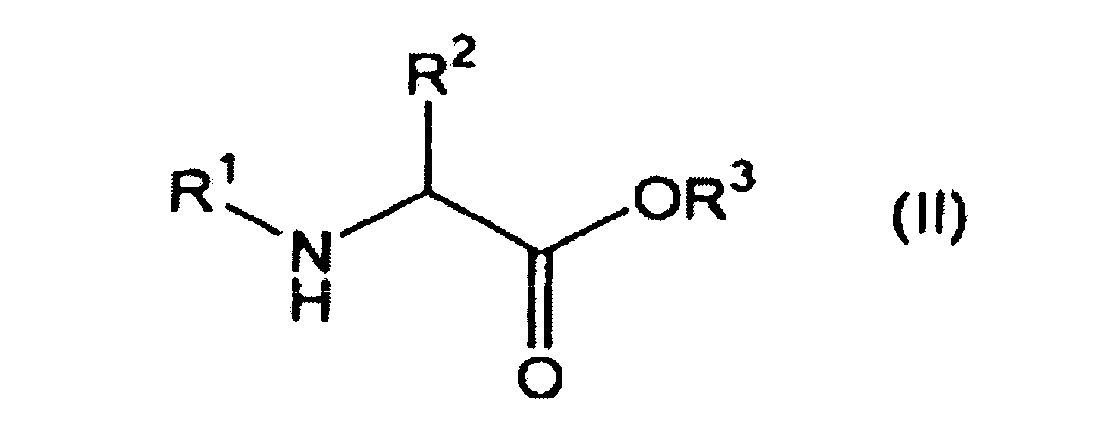
und einem Chlorofomylierungsmittel in Gegenwart einer Base (1), in einem Lösungsmittel, um sie zu einer Verbindung umzusetzen, welche durch die Formel (III) dargestellt wird:
und dann Unterziehen einer intramolekularen Zyklisierungsreaktion in Gegenwart einer Base (2). - Verfahren nach Anspruch 6, wobei das Chlorofomylierungsmittel Phosgen, Trichloromethylchloroformiat oder Bistrichloromethylcarbonat ist.
Applications Claiming Priority (3)
| Application Number | Priority Date | Filing Date | Title |
|---|---|---|---|
| JP30493096 | 1996-11-15 | ||
| JP30493096 | 1996-11-15 | ||
| PCT/JP1997/004157 WO1998022449A1 (en) | 1996-11-15 | 1997-11-14 | 5-alkoxy-2(3h)-oxazolone compounds and process for the preparation thereof |
Publications (3)
| Publication Number | Publication Date |
|---|---|
| EP0945448A1 EP0945448A1 (de) | 1999-09-29 |
| EP0945448A4 EP0945448A4 (de) | 2002-10-30 |
| EP0945448B1 true EP0945448B1 (de) | 2008-11-26 |
Family
ID=17939033
Family Applications (1)
| Application Number | Title | Priority Date | Filing Date |
|---|---|---|---|
| EP97912464A Expired - Lifetime EP0945448B1 (de) | 1996-11-15 | 1997-11-14 | 5-alkoxy-2(3h)-oxazolonderivate und verfahren zu ihrer herstellung |
Country Status (4)
| Country | Link |
|---|---|
| US (1) | US6020496A (de) |
| EP (1) | EP0945448B1 (de) |
| DE (1) | DE69739130D1 (de) |
| WO (1) | WO1998022449A1 (de) |
Families Citing this family (2)
| Publication number | Priority date | Publication date | Assignee | Title |
|---|---|---|---|---|
| EP1000937A4 (de) * | 1997-07-10 | 2003-02-05 | Ube Industries | Verfahren zur herstellung von 4-alkoxycarbonyl-2-oxazolidinon-verbindungen |
| US6894133B2 (en) * | 2002-12-11 | 2005-05-17 | 3M Innovative Properties Company | Azlactone initiators for atom transfer radical polymerization |
Family Cites Families (2)
| Publication number | Priority date | Publication date | Assignee | Title |
|---|---|---|---|---|
| FR2206321B1 (de) * | 1972-11-13 | 1976-06-25 | Kyowa Hakko Kogyo Kk | |
| JPS49100077A (de) * | 1973-01-31 | 1974-09-20 |
-
1997
- 1997-11-14 EP EP97912464A patent/EP0945448B1/de not_active Expired - Lifetime
- 1997-11-14 US US09/308,018 patent/US6020496A/en not_active Expired - Fee Related
- 1997-11-14 DE DE69739130T patent/DE69739130D1/de not_active Expired - Lifetime
- 1997-11-14 WO PCT/JP1997/004157 patent/WO1998022449A1/ja not_active Ceased
Also Published As
| Publication number | Publication date |
|---|---|
| US6020496A (en) | 2000-02-01 |
| DE69739130D1 (de) | 2009-01-08 |
| EP0945448A4 (de) | 2002-10-30 |
| EP0945448A1 (de) | 1999-09-29 |
| WO1998022449A1 (en) | 1998-05-28 |
Similar Documents
| Publication | Publication Date | Title |
|---|---|---|
| JP2020524158A (ja) | Ssao阻害剤 | |
| US6025516A (en) | Resolution of 2-hydroxy-3-amino-3-phenylpropionamide and its conversion to C-13 sidechain of taxanes | |
| JP2024511507A (ja) | 6-カルバメート置換複素芳香環誘導体 | |
| CN1072213C (zh) | 胍衍生物的制备方法及其中间体 | |
| Hashem et al. | Synthesis and reactions of some 2 (3h) and 2 (5h) furanone derivatives: a comparative study | |
| JP2009530273A (ja) | スルホニルクロライド誘導体の製造方法 | |
| KR960000048B1 (ko) | 베타-락탐 항생제의 제조에 유용한 키랄 아제티디논 중간체 및 이의 제조방법 | |
| US6020496A (en) | 5-alkoxy-2(3H)-oxazolone compounds and process for preparing the same | |
| Haung et al. | One-pot synthesis of 4-arylidene imidazolin-5-ones by reaction of amino acid esters with isocyanates and α-bromoketones | |
| Cremonesi et al. | Asymmetric synthesis of 1, 3-thiazolidine-derived spiro-β-lactams via a Staudinger reaction between chiral ketenes and imines | |
| JP3674269B2 (ja) | 5−アルコキシ−2(3h)−オキサゾロン類及びその製造方法 | |
| JP6239113B2 (ja) | N型カルシウムチャネル拮抗薬としての置換イミダゾール | |
| Ella-Menye et al. | Synthesis of chiral 2-oxazolidinones, 2-oxazolines, and their analogs | |
| US6320057B1 (en) | Intermediates for the preparation of 2-imidazoline-5-ones | |
| JPS6332073B2 (de) | ||
| KR870000230B1 (ko) | N-(치환된-메틸)-아제티딘-2-온의 제조방법 | |
| AU746588B2 (en) | Stereoisomeric indole compounds, process for the preparation of the same, and use thereof | |
| JP2995293B1 (ja) | 1,6‐ジ置換‐1,3,5‐トリアジン‐2,4(1h,3h)‐ジオン化合物の製造方法 | |
| WO2001074795A1 (en) | Process for preparing amic acid esters | |
| CA1272213A (en) | Process for inverting the configuration of optically active compounds, and optically active intermediates produced in this process | |
| KR100546992B1 (ko) | 4,5-다이아미노 피리미딘 유도체 및 이의 제조방법 | |
| FR2581062A1 (fr) | Acides b-lactame hydroxamiques o-sulfates, a action therapeutique | |
| Dyachenko et al. | Synthesis and some properties of 4-alkyl-5-cyano-6-mercapto-3, 4-dihydropyridin-2 (1 H)-ones | |
| WO2002002538A1 (en) | Amino acid-n-carboxy anhydrides hvaing substituent at nitrogen | |
| JPS6019763A (ja) | アゼチジノンチオエステル類の製造法 |
Legal Events
| Date | Code | Title | Description |
|---|---|---|---|
| PUAI | Public reference made under article 153(3) epc to a published international application that has entered the european phase |
Free format text: ORIGINAL CODE: 0009012 |
|
| 17P | Request for examination filed |
Effective date: 19990614 |
|
| AK | Designated contracting states |
Kind code of ref document: A1 Designated state(s): CH DE FR GB IT LI |
|
| A4 | Supplementary search report drawn up and despatched |
Effective date: 20020916 |
|
| AK | Designated contracting states |
Kind code of ref document: A4 Designated state(s): CH DE FR GB IT LI |
|
| 17Q | First examination report despatched |
Effective date: 20031006 |
|
| GRAP | Despatch of communication of intention to grant a patent |
Free format text: ORIGINAL CODE: EPIDOSNIGR1 |
|
| GRAS | Grant fee paid |
Free format text: ORIGINAL CODE: EPIDOSNIGR3 |
|
| GRAA | (expected) grant |
Free format text: ORIGINAL CODE: 0009210 |
|
| AK | Designated contracting states |
Kind code of ref document: B1 Designated state(s): CH DE FR GB IT LI |
|
| REG | Reference to a national code |
Ref country code: GB Ref legal event code: FG4D |
|
| REG | Reference to a national code |
Ref country code: CH Ref legal event code: EP |
|
| REF | Corresponds to: |
Ref document number: 69739130 Country of ref document: DE Date of ref document: 20090108 Kind code of ref document: P |
|
| REG | Reference to a national code |
Ref country code: CH Ref legal event code: NV Representative=s name: BUECHEL, KAMINSKI & PARTNER PATENTANWAELTE ESTABLI |
|
| REG | Reference to a national code |
Ref country code: CH Ref legal event code: PFA Owner name: UBE INDUSTRIES, LTD. Free format text: UBE INDUSTRIES, LTD.#12-32, NISHIHONMACHI 1-CHOME#UBE-SHI, YAMAGUCHI-KEN 755-0052 (JP) -TRANSFER TO- UBE INDUSTRIES, LTD.#12-32, NISHIHONMACHI 1-CHOME#UBE-SHI, YAMAGUCHI-KEN 755-0052 (JP) |
|
| PLBE | No opposition filed within time limit |
Free format text: ORIGINAL CODE: 0009261 |
|
| STAA | Information on the status of an ep patent application or granted ep patent |
Free format text: STATUS: NO OPPOSITION FILED WITHIN TIME LIMIT |
|
| 26N | No opposition filed |
Effective date: 20090827 |
|
| PGFP | Annual fee paid to national office [announced via postgrant information from national office to epo] |
Ref country code: DE Payment date: 20091112 Year of fee payment: 13 Ref country code: CH Payment date: 20091113 Year of fee payment: 13 |
|
| PGFP | Annual fee paid to national office [announced via postgrant information from national office to epo] |
Ref country code: GB Payment date: 20091111 Year of fee payment: 13 Ref country code: FR Payment date: 20091123 Year of fee payment: 13 |
|
| REG | Reference to a national code |
Ref country code: CH Ref legal event code: PL |
|
| GBPC | Gb: european patent ceased through non-payment of renewal fee |
Effective date: 20101114 |
|
| PG25 | Lapsed in a contracting state [announced via postgrant information from national office to epo] |
Ref country code: CH Free format text: LAPSE BECAUSE OF NON-PAYMENT OF DUE FEES Effective date: 20101130 Ref country code: LI Free format text: LAPSE BECAUSE OF NON-PAYMENT OF DUE FEES Effective date: 20101130 |
|
| REG | Reference to a national code |
Ref country code: FR Ref legal event code: ST Effective date: 20110801 |
|
| REG | Reference to a national code |
Ref country code: DE Ref legal event code: R119 Ref document number: 69739130 Country of ref document: DE Effective date: 20110601 Ref country code: DE Ref legal event code: R119 Ref document number: 69739130 Country of ref document: DE Effective date: 20110531 |
|
| PG25 | Lapsed in a contracting state [announced via postgrant information from national office to epo] |
Ref country code: DE Free format text: LAPSE BECAUSE OF NON-PAYMENT OF DUE FEES Effective date: 20110531 |
|
| PG25 | Lapsed in a contracting state [announced via postgrant information from national office to epo] |
Ref country code: FR Free format text: LAPSE BECAUSE OF NON-PAYMENT OF DUE FEES Effective date: 20101130 |
|
| PG25 | Lapsed in a contracting state [announced via postgrant information from national office to epo] |
Ref country code: GB Free format text: LAPSE BECAUSE OF NON-PAYMENT OF DUE FEES Effective date: 20101114 |
|
| PG25 | Lapsed in a contracting state [announced via postgrant information from national office to epo] |
Ref country code: IT Free format text: LAPSE BECAUSE OF NON-PAYMENT OF DUE FEES Effective date: 20101114 |