EP0944732B1 - Messung des substratverbrauchs in mikrobiell katalysierten reaktionen - Google Patents
Messung des substratverbrauchs in mikrobiell katalysierten reaktionen Download PDFInfo
- Publication number
- EP0944732B1 EP0944732B1 EP97946176A EP97946176A EP0944732B1 EP 0944732 B1 EP0944732 B1 EP 0944732B1 EP 97946176 A EP97946176 A EP 97946176A EP 97946176 A EP97946176 A EP 97946176A EP 0944732 B1 EP0944732 B1 EP 0944732B1
- Authority
- EP
- European Patent Office
- Prior art keywords
- substrate
- mediator
- reduction
- bod
- sample
- Prior art date
- Legal status (The legal status is an assumption and is not a legal conclusion. Google has not performed a legal analysis and makes no representation as to the accuracy of the status listed.)
- Expired - Lifetime
Links
- 239000000758 substrate Substances 0.000 title claims description 88
- 238000000034 method Methods 0.000 title claims description 49
- 238000006555 catalytic reaction Methods 0.000 title description 2
- 238000006243 chemical reaction Methods 0.000 claims description 35
- 230000009467 reduction Effects 0.000 claims description 27
- 244000005700 microbiome Species 0.000 claims description 25
- 241000588724 Escherichia coli Species 0.000 claims description 13
- AWDBHOZBRXWRKS-UHFFFAOYSA-N tetrapotassium;iron(6+);hexacyanide Chemical compound [K+].[K+].[K+].[K+].[Fe+6].N#[C-].N#[C-].N#[C-].N#[C-].N#[C-].N#[C-] AWDBHOZBRXWRKS-UHFFFAOYSA-N 0.000 claims description 7
- 230000003287 optical effect Effects 0.000 claims description 6
- 230000008859 change Effects 0.000 claims description 5
- 238000002848 electrochemical method Methods 0.000 claims description 4
- AZQWKYJCGOJGHM-UHFFFAOYSA-N 1,4-benzoquinone Chemical compound O=C1C=CC(=O)C=C1 AZQWKYJCGOJGHM-UHFFFAOYSA-N 0.000 claims description 3
- RBTBFTRPCNLSDE-UHFFFAOYSA-N 3,7-bis(dimethylamino)phenothiazin-5-ium Chemical compound C1=CC(N(C)C)=CC2=[S+]C3=CC(N(C)C)=CC=C3N=C21 RBTBFTRPCNLSDE-UHFFFAOYSA-N 0.000 claims description 3
- RXGJTUSBYWCRBK-UHFFFAOYSA-M 5-methylphenazinium methyl sulfate Chemical compound COS([O-])(=O)=O.C1=CC=C2[N+](C)=C(C=CC=C3)C3=NC2=C1 RXGJTUSBYWCRBK-UHFFFAOYSA-M 0.000 claims description 3
- FBWADIKARMIWNM-UHFFFAOYSA-N N-3,5-dichloro-4-hydroxyphenyl-1,4-benzoquinone imine Chemical compound C1=C(Cl)C(O)=C(Cl)C=C1N=C1C=CC(=O)C=C1 FBWADIKARMIWNM-UHFFFAOYSA-N 0.000 claims description 3
- 238000005842 biochemical reaction Methods 0.000 claims description 3
- YYGBVRCTHASBKD-UHFFFAOYSA-M methylene green Chemical compound [Cl-].C1=CC(N(C)C)=C([N+]([O-])=O)C2=[S+]C3=CC(N(C)C)=CC=C3N=C21 YYGBVRCTHASBKD-UHFFFAOYSA-M 0.000 claims description 3
- 229960000907 methylthioninium chloride Drugs 0.000 claims description 3
- HSSLDCABUXLXKM-UHFFFAOYSA-N resorufin Chemical compound C1=CC(=O)C=C2OC3=CC(O)=CC=C3N=C21 HSSLDCABUXLXKM-UHFFFAOYSA-N 0.000 claims description 3
- ANRHNWWPFJCPAZ-UHFFFAOYSA-M thionine Chemical compound [Cl-].C1=CC(N)=CC2=[S+]C3=CC(N)=CC=C3N=C21 ANRHNWWPFJCPAZ-UHFFFAOYSA-M 0.000 claims description 3
- 230000001988 toxicity Effects 0.000 claims description 3
- 231100000419 toxicity Toxicity 0.000 claims description 3
- 244000063299 Bacillus subtilis Species 0.000 claims description 2
- 235000014469 Bacillus subtilis Nutrition 0.000 claims description 2
- 241000222120 Candida <Saccharomycetales> Species 0.000 claims description 2
- 241000223233 Cutaneotrichosporon cutaneum Species 0.000 claims description 2
- 241000588767 Proteus vulgaris Species 0.000 claims description 2
- 229940007042 proteus vulgaris Drugs 0.000 claims description 2
- 238000004445 quantitative analysis Methods 0.000 claims description 2
- 240000004808 Saccharomyces cerevisiae Species 0.000 claims 1
- 235000014680 Saccharomyces cerevisiae Nutrition 0.000 claims 1
- QVGXLLKOCUKJST-UHFFFAOYSA-N atomic oxygen Chemical compound [O] QVGXLLKOCUKJST-UHFFFAOYSA-N 0.000 description 33
- 239000001301 oxygen Substances 0.000 description 33
- 229910052760 oxygen Inorganic materials 0.000 description 33
- 238000011534 incubation Methods 0.000 description 27
- WQZGKKKJIJFFOK-GASJEMHNSA-N Glucose Natural products OC[C@H]1OC(O)[C@H](O)[C@@H](O)[C@@H]1O WQZGKKKJIJFFOK-GASJEMHNSA-N 0.000 description 26
- WQZGKKKJIJFFOK-VFUOTHLCSA-N beta-D-glucose Chemical compound OC[C@H]1O[C@@H](O)[C@H](O)[C@@H](O)[C@@H]1O WQZGKKKJIJFFOK-VFUOTHLCSA-N 0.000 description 25
- 239000008103 glucose Substances 0.000 description 24
- 230000003647 oxidation Effects 0.000 description 23
- 238000007254 oxidation reaction Methods 0.000 description 23
- 238000005259 measurement Methods 0.000 description 22
- 238000006758 bulk electrolysis reaction Methods 0.000 description 20
- 230000000813 microbial effect Effects 0.000 description 20
- 230000000694 effects Effects 0.000 description 11
- VTLYFUHAOXGGBS-UHFFFAOYSA-N Fe3+ Chemical compound [Fe+3] VTLYFUHAOXGGBS-UHFFFAOYSA-N 0.000 description 9
- 230000004044 response Effects 0.000 description 9
- 240000005809 Prunus persica Species 0.000 description 8
- 239000000203 mixture Substances 0.000 description 8
- 238000005868 electrolysis reaction Methods 0.000 description 6
- 239000000243 solution Substances 0.000 description 6
- 230000001413 cellular effect Effects 0.000 description 5
- 239000007788 liquid Substances 0.000 description 5
- XLYOFNOQVPJJNP-UHFFFAOYSA-N water Substances O XLYOFNOQVPJJNP-UHFFFAOYSA-N 0.000 description 5
- IJGRMHOSHXDMSA-UHFFFAOYSA-N Atomic nitrogen Chemical compound N#N IJGRMHOSHXDMSA-UHFFFAOYSA-N 0.000 description 4
- 241000894006 Bacteria Species 0.000 description 4
- WHUUTDBJXJRKMK-UHFFFAOYSA-N Glutamic acid Natural products OC(=O)C(N)CCC(O)=O WHUUTDBJXJRKMK-UHFFFAOYSA-N 0.000 description 4
- 239000000370 acceptor Substances 0.000 description 4
- 239000012491 analyte Substances 0.000 description 4
- 238000003869 coulometry Methods 0.000 description 4
- 230000027721 electron transport chain Effects 0.000 description 4
- 230000006870 function Effects 0.000 description 4
- 235000013922 glutamic acid Nutrition 0.000 description 4
- 239000004220 glutamic acid Substances 0.000 description 4
- 239000012086 standard solution Substances 0.000 description 4
- 239000000126 substance Substances 0.000 description 4
- 239000000725 suspension Substances 0.000 description 4
- 238000010790 dilution Methods 0.000 description 3
- 239000012895 dilution Substances 0.000 description 3
- ZPWVASYFFYYZEW-UHFFFAOYSA-L dipotassium hydrogen phosphate Chemical compound [K+].[K+].OP([O-])([O-])=O ZPWVASYFFYYZEW-UHFFFAOYSA-L 0.000 description 3
- 229910000396 dipotassium phosphate Inorganic materials 0.000 description 3
- LOKCTEFSRHRXRJ-UHFFFAOYSA-I dipotassium trisodium dihydrogen phosphate hydrogen phosphate dichloride Chemical compound P(=O)(O)(O)[O-].[K+].P(=O)(O)([O-])[O-].[Na+].[Na+].[Cl-].[K+].[Cl-].[Na+] LOKCTEFSRHRXRJ-UHFFFAOYSA-I 0.000 description 3
- 239000003344 environmental pollutant Substances 0.000 description 3
- 238000001914 filtration Methods 0.000 description 3
- 239000011368 organic material Substances 0.000 description 3
- 239000002953 phosphate buffered saline Substances 0.000 description 3
- 231100000719 pollutant Toxicity 0.000 description 3
- 230000008569 process Effects 0.000 description 3
- 238000010405 reoxidation reaction Methods 0.000 description 3
- 230000000241 respiratory effect Effects 0.000 description 3
- 238000012360 testing method Methods 0.000 description 3
- 108010050327 trypticase-soy broth Proteins 0.000 description 3
- WHUUTDBJXJRKMK-VKHMYHEASA-N L-glutamic acid Chemical compound OC(=O)[C@@H](N)CCC(O)=O WHUUTDBJXJRKMK-VKHMYHEASA-N 0.000 description 2
- 229910021607 Silver chloride Inorganic materials 0.000 description 2
- 239000007864 aqueous solution Substances 0.000 description 2
- 239000000872 buffer Substances 0.000 description 2
- 230000003247 decreasing effect Effects 0.000 description 2
- YAGKRVSRTSUGEY-UHFFFAOYSA-N ferricyanide Chemical compound [Fe+3].N#[C-].N#[C-].N#[C-].N#[C-].N#[C-].N#[C-] YAGKRVSRTSUGEY-UHFFFAOYSA-N 0.000 description 2
- 239000011521 glass Substances 0.000 description 2
- XLYOFNOQVPJJNP-ZSJDYOACSA-N heavy water Substances [2H]O[2H] XLYOFNOQVPJJNP-ZSJDYOACSA-N 0.000 description 2
- 239000000463 material Substances 0.000 description 2
- 230000007246 mechanism Effects 0.000 description 2
- 229910052757 nitrogen Inorganic materials 0.000 description 2
- 235000015097 nutrients Nutrition 0.000 description 2
- 239000005416 organic matter Substances 0.000 description 2
- BASFCYQUMIYNBI-UHFFFAOYSA-N platinum Chemical compound [Pt] BASFCYQUMIYNBI-UHFFFAOYSA-N 0.000 description 2
- 239000011148 porous material Substances 0.000 description 2
- 239000000376 reactant Substances 0.000 description 2
- 230000027756 respiratory electron transport chain Effects 0.000 description 2
- HKZLPVFGJNLROG-UHFFFAOYSA-M silver monochloride Chemical compound [Cl-].[Ag+] HKZLPVFGJNLROG-UHFFFAOYSA-M 0.000 description 2
- 241000894007 species Species 0.000 description 2
- 238000010561 standard procedure Methods 0.000 description 2
- LKDRXBCSQODPBY-VRPWFDPXSA-N D-fructopyranose Chemical compound OCC1(O)OC[C@@H](O)[C@@H](O)[C@@H]1O LKDRXBCSQODPBY-VRPWFDPXSA-N 0.000 description 1
- 102000004190 Enzymes Human genes 0.000 description 1
- 108090000790 Enzymes Proteins 0.000 description 1
- CWYNVVGOOAEACU-UHFFFAOYSA-N Fe2+ Chemical compound [Fe+2] CWYNVVGOOAEACU-UHFFFAOYSA-N 0.000 description 1
- 239000007836 KH2PO4 Substances 0.000 description 1
- 125000000899 L-alpha-glutamyl group Chemical group [H]N([H])[C@]([H])(C(=O)[*])C([H])([H])C([H])([H])C(O[H])=O 0.000 description 1
- 229910019142 PO4 Inorganic materials 0.000 description 1
- 241000235070 Saccharomyces Species 0.000 description 1
- FAPWRFPIFSIZLT-UHFFFAOYSA-M Sodium chloride Chemical compound [Na+].[Cl-] FAPWRFPIFSIZLT-UHFFFAOYSA-M 0.000 description 1
- 230000008901 benefit Effects 0.000 description 1
- 238000010170 biological method Methods 0.000 description 1
- 239000003054 catalyst Substances 0.000 description 1
- 239000003153 chemical reaction reagent Substances 0.000 description 1
- 238000004737 colorimetric analysis Methods 0.000 description 1
- 150000001875 compounds Chemical class 0.000 description 1
- 238000010276 construction Methods 0.000 description 1
- 238000007796 conventional method Methods 0.000 description 1
- 230000001419 dependent effect Effects 0.000 description 1
- 238000001514 detection method Methods 0.000 description 1
- 238000003113 dilution method Methods 0.000 description 1
- 230000003292 diminished effect Effects 0.000 description 1
- 238000000835 electrochemical detection Methods 0.000 description 1
- 238000006056 electrooxidation reaction Methods 0.000 description 1
- 239000000706 filtrate Substances 0.000 description 1
- 239000012530 fluid Substances 0.000 description 1
- 238000005558 fluorometry Methods 0.000 description 1
- 125000002791 glucosyl group Chemical group C1([C@H](O)[C@@H](O)[C@H](O)[C@H](O1)CO)* 0.000 description 1
- 239000001963 growth medium Substances 0.000 description 1
- 239000004615 ingredient Substances 0.000 description 1
- 229910010272 inorganic material Inorganic materials 0.000 description 1
- 239000011147 inorganic material Substances 0.000 description 1
- 230000010354 integration Effects 0.000 description 1
- 230000003993 interaction Effects 0.000 description 1
- 150000002500 ions Chemical class 0.000 description 1
- 239000012035 limiting reagent Substances 0.000 description 1
- 238000012423 maintenance Methods 0.000 description 1
- 230000001404 mediated effect Effects 0.000 description 1
- 239000002609 medium Substances 0.000 description 1
- 238000012544 monitoring process Methods 0.000 description 1
- 229910000402 monopotassium phosphate Inorganic materials 0.000 description 1
- 231100000956 nontoxicity Toxicity 0.000 description 1
- 150000002894 organic compounds Chemical class 0.000 description 1
- 239000002957 persistent organic pollutant Substances 0.000 description 1
- 229910052697 platinum Inorganic materials 0.000 description 1
- GNSKLFRGEWLPPA-UHFFFAOYSA-M potassium dihydrogen phosphate Chemical compound [K+].OP(O)([O-])=O GNSKLFRGEWLPPA-UHFFFAOYSA-M 0.000 description 1
- 238000004313 potentiometry Methods 0.000 description 1
- 235000018102 proteins Nutrition 0.000 description 1
- 108090000623 proteins and genes Proteins 0.000 description 1
- 102000004169 proteins and genes Human genes 0.000 description 1
- 230000005180 public health Effects 0.000 description 1
- 238000006479 redox reaction Methods 0.000 description 1
- 230000035806 respiratory chain Effects 0.000 description 1
- 239000012465 retentate Substances 0.000 description 1
- 239000011780 sodium chloride Substances 0.000 description 1
- 238000010530 solution phase reaction Methods 0.000 description 1
- 238000003756 stirring Methods 0.000 description 1
- 150000003568 thioethers Chemical class 0.000 description 1
- 238000012546 transfer Methods 0.000 description 1
- 239000002351 wastewater Substances 0.000 description 1
Images
Classifications
-
- G—PHYSICS
- G01—MEASURING; TESTING
- G01N—INVESTIGATING OR ANALYSING MATERIALS BY DETERMINING THEIR CHEMICAL OR PHYSICAL PROPERTIES
- G01N33/00—Investigating or analysing materials by specific methods not covered by groups G01N1/00 - G01N31/00
- G01N33/18—Water
- G01N33/1806—Biological oxygen demand [BOD] or chemical oxygen demand [COD]
-
- G—PHYSICS
- G01—MEASURING; TESTING
- G01N—INVESTIGATING OR ANALYSING MATERIALS BY DETERMINING THEIR CHEMICAL OR PHYSICAL PROPERTIES
- G01N33/00—Investigating or analysing materials by specific methods not covered by groups G01N1/00 - G01N31/00
- G01N33/18—Water
- G01N33/186—Water using one or more living organisms, e.g. a fish
- G01N33/1866—Water using one or more living organisms, e.g. a fish using microorganisms
Definitions
- This invention relates to a method of measuring a reactant consumed in a biological reaction. More particular, it relates to a quantitative method for the measurement of the consumption of a substrate in a microbially catalysed reaction. Preferably, it relates to the measurement of biochemical oxygen demand (BOD) of a sample by determining the equivalent mediator demand or alternatively the measurement of the biological toxicity of a sample by the perturbation in quantity of mediator conversion induced by the presence of the sample.
- BOD biochemical oxygen demand
- Biochemical oxygen demand is the amount of oxygen taken up owing to the respiratory activity of microorganisms growing on organic compounds present in a water sample when incubated at 20°C for a fixed period (usually five days). It is a measure of the degree of organic pollution of water.
- a disadvantage in the conventional method of measuring BOD is that it can take up to five days to do so partly because of the low level of solubility of oxygen in water and partly because of the low microbial concentration in the seed material.
- Non-biological methods for rapidly determining the BOD of a sample are described in US 3,725,236 and US 3,857,761 . These patents relate to substantially exhaustive electrochemical oxidation of an aqueous sample in an apparatus for forming oxygen which is measured to calculate BOD.
- US Patent 5,085,757 describes another apparatus for rapidly determining BOD of a liquid at an on-site location.
- the apparatus is a very elaborate one.
- the method of determining BOD involves a biochemical reaction using a culture medium and measuring the change in the dissolved oxygen content over a period of time and calibrating to determine BOD.
- US 5,518,893 is directed to a rapid method of determining BOD.
- a known microorganism culture is aerated to exhaust the organic matter available to the microorganisms.
- a sample of liquid to be tested is added and the amount of oxygen consumed by the microorganisms is determined and from this the BOD is calculated.
- An apparatus for conducting the measurement is described.
- GB 2,189,605 describes a method for detecting pollution in a continuous liquid flow. The method involves taking a portion of the flowing liquid and adding it to a compatible electron transfer mediator. The mixture is fed into a sensor cell containing bacteria. An activity of the bacteria is stimulated and the level of activity at an electrode in the cell is measured by electron transfer from the mediator.
- EP 255291 and EP 470649 both describe methods and an apparatus for making electrochemical measurements or detection of a component of an aqueous liquid sample.
- the sample containing the component to be analysed is allowed to produce a corresponding quantity of an electrochemically oxidisable or reducible substance.
- This is then electrochemically oxidised or reduced and the quantity of oxidisable or reduceable substance in the cell is measured as an index of the quantity of the substance.
- US 5,413,690 relates to a potentiometric biosensor test strip and a method for detection or measurement of an analyte from a fluid sample. This is done by measuring the change in potential of the system as a result of the chemical reaction of analyte, enzyme and mediator.
- the invention may be said broadly to consist of a method of measuring the consumption of a sample substrate in a microbially catalysed biochemical reaction which comprises incubating said substrate with an excess of a microorganism and an excess of a co-substrate until said substrate is oxidised to a predetermined end point and measuring the quantity of reduction of said co-substrate.
- the method is used to determine the BOD of said sample substrate.
- the method is used to determine the biological toxicity of said sample substrate.
- reaction is conducted under anaerobic conditions.
- said predetermined end point is reached when the rate of change in the reduced co-substrate to oxidised substrate ratio is no longer significant.
- sample substrate and said co-substrate are separated from said microorganism before measuring the quantity of reduction of said co-substrate.
- said quantity of reduction of said co-substrate is measured by an electrochemical method.
- said quantity of reduction of said co-substrate is measured by an optical method.
- said electrochemical method is either bulk electrolysis or potentiometry
- said optical method is either colorimetry or fluorometry.
- said quantity of reduction of said co-substrate is measured by reoxidising said mediator and measuring the charge for doing so.
- said sample substrate contains an organic pollutant.
- said sample substrate contains a nutrient pollutant.
- said micro-organism is any one of Escherichia coli, Proteus vulgaris, Torulopsis candida, Bacillus subtilis, Trichosporon cutaneum and Saccharomyces cerevisrae.
- said microorganism is E. coli.
- said microorganism is P. vulgaris.
- said co-substrate is any one of benzoquinone, dichlorophenolindophenol, methylene green, methylene blue, phenazine methosulphate, potassium hexacyanoferrate (III), resorufin, thionine and toluidene-blue-O.
- said anaerobic conditions are maintained by sparging the incubation container in which said incubation is carried out with oxygen free nitrogen.
- said reoxidation of co-substrate and measurement of charge are carried out in a bulk electrolysis cell.
- the measured charge is converted to a standard BOD measurement.
- said incubation is terminated by filtering said co-substrate, sample substrate and microorganism through a filter whose pore size is such that the co-substrate is in the filtrate and substantially all of the microorganism is in the retentate.
- the pore size of said filter is 0.45 ⁇ m.
- said co-substrate is a mediator.
- the invention may also be said broadly to consist in a method of measuring biochemical oxygen demand substantially as herein described with reference to the examples and Figure 1.
- This invention may also be said broadly to consist in the parts, elements and features referred to or indicated in the specification of the application, individually or collectively, and any or all combinations of any two or more of said parts, elements or features, and where specific integers are mentioned herein which have known equivalents in the art to which this invention relates, such known equivalents are deemed to be incorporated herein as if individually set forth.
- BOD is a measurement of the amount of oxygen, expressed in mg/l or parts per million (ppm), required in the biological oxidation of nutrients or other pollutants by micro-organisms.
- the amount of oxygen consumed in the biological oxidation process is calculated by comparing the amount of residual oxygen left after five days of microbial oxidation with the amount measured in the sample at the beginning.
- the micro-organisms oxidise mainly the soluble organic matter present in the sample.
- the traditional BOD method consists of placing a sample in a full airtight bottle under specified conditions for a specified time. Dissolved oxygen is measured initially and after incubation. The BOD is computed from the difference between the initial and final dissolved oxygen.
- the test measures the oxygen required for the biological oxidation of organic material (carbonaceous demand) and the oxygen used to oxidise inorganic material such as sulphides and ferrous iron.
- the pollutant whose BOD is being measured is referred to as the substrate.
- a generalised reaction equation for the oxidation of organic material can be written as: C x H y O z + nO 2 ⁇ xCO 2 + y/2H 2 O (1) or substrate red + nO 2 ⁇ substrate ox + H 2 O (2)
- n thus represents the oxygen demand and this quantity is calculated from the measurement of initial and final dissolved oxygen.
- the mechanism which micro-organisms use to perform the biological oxidation is known as the respiratory chain or the electron transport chain. The function of this sequence is to accept electrons from reduced compounds and transfer them ultimately to oxygen. Oxygen therefore behaves as the terminal electron acceptor in the electron transport chain of micro-organisms.
- Mediators are typically low molecular weight substances that function as alternative electron acceptors to the co-substrate oxygen. Some mediators have the ability to interact within the micro-organism's electron transport chain and the progress of a biological oxidation should be able to be followed by monitoring the status of the mediator rather than oxygen. Previous work (Baronian and Pasco, 1993) and others (Ramsey and Turner, 1988) has demonstrated the ability of the mediator hexacyanoferrate(III) to act as an electron acceptor in the microbial oxidation of glucose by the bacterium E. Coli. It is believed that the mediator is reduced by one of the redox proteins in the respiratory cycle of E. Coli, with hexacyanoferrate(III) replacing oxygen in the respiratory cycle. Mediators have the ability to reversibly react at the electrode and at a lower anodic potential than oxygen, reducing the possibility of interference by other easily oxidised species. The reaction is completely independent of oxygen, permitting the sensor to function in anaerobic environments.
- an analyte is either completely or partially electrolysed by applying either a fixed potential or a fixed current to an electrode.
- the current is integrated during the course of the electrolysis and the total charge is used to calculate the amount of material electrolysed.
- Reduced mediator, generated in the microbial oxidation stage is the analyte and is quantitatively converted back to its oxidised form at the anode of a bulk electrolysis cell.
- the total charge is a measure of the amount of mediator electrolysed at the anode.
- the method is absolute, no standard reagents are required.
- the electrolysis can be performed very rapidly by using electrodes with high surface area, separate anolyte and catholyte compartments, and maintenance of stirring.
- the quantity of reduced mediator produced by the biological oxidation of mediator (Equation 3) can be determined at any stage by bulk electrolysing the mediator back to its oxidised form.
- the quantity of charge for the reoxidation of the mediator (Equation 4) is a direct measure of the amount of oxidation deriving from the microbially catalysed process (Equation 3) and this quantity is obtained from integration of the current (coulometry) during the course of the electrolysis.
- the mediated biological reaction (Equation 3) is a solution phase reaction and can occur quite independently of the electrolysis reaction. The extent of the microbial oxidation can be measured at any time by electrolysing the reduced mediator. Both the microbial conversion and the electrolytic reconversion can take place in the same vessel if desired.
- the bulk electrolysis method avoids the necessity of immobilising either the micro-organisms or the mediator and the amount of biologically reduced mediator can be quantitatively determined by measuring the charge to electrolyse it back to the oxidised state. This technique therefore provides an alternative measurement of the oxygen demand by measuring the equivalent mediator demand.
- Preferred mediators for use in the method of the invention have:
- mediators fulfil all these requirements, some partially.
- the following non-exhaustive list includes mediators that have been used in conjunction with micro-organisms: benzoquinone, dichlorophenolindophenol, methylene green, methylene blue, phenazine methosulphate, potassium hexacyanoferrate (III), resorufin, thionine, toluidene-blue-O.
- mediators that have been used in conjunction with micro-organisms: benzoquinone, dichlorophenolindophenol, methylene green, methylene blue, phenazine methosulphate, potassium hexacyanoferrate (III), resorufin, thionine, toluidene-blue-O.
- Other suitable mediators will be known to those skilled in the art.
- the measurement is carried out by measuring the quantity of mediator converted in a microbially catalysed redox reaction where the quantities of microbial cells and mediator are in excess relative to the sample.
- the time taken for sample conversion is minimised by the initial conditions and the sample becomes the rate limiting reagent.
- the amount of mediator converted is readily determined (for example using electrochemical or optical techniques) and is a measure of the substrate converted which in turn is related to the microbial activity.
- the short duration required for a substantial conversion of substrate brought about by the use of a high initial concentrations of microbial cells and mediator provides a very rapid method for the determination of the quantity of sample present.
- E. coli cells were cultured overnight in a trypticase soy growth broth, harvested and resuspended in a phosphate buffered saline solution (0.05M KH 2 PO 4 /K 2 HPO 4 pH7 and 0.1M KCl) to an optical density (OD 600 ) of 0.380.
- a phosphate buffered saline solution 0.05M KH 2 PO 4 /K 2 HPO 4 pH7 and 0.1M KCl
- Fresh microbial cells have the facility to reduce redox mediators in the absence of exogenous substrates, such as glucose or glutamic acid but this endogenous response decays as the cells age if they are maintained in a minimal medium.
- a mixture made up from 18ml of an E.coli suspension and 5.4ml of potassium hexacyanoferrate (III), was incubated for 30 minutes. Microbial action was terminated by filtering the mixture through a 0.45 ⁇ m filter to separate the E.coli from the mixture.
- a mixture made up from 18ml of resuspended E. coli, 5.4ml of 0.25M potassium hexacyanoferrate (III) and 0.9ml of 0.025M glucose, was incubated for 30 minutes. Microbial action was terminated by filtering the mixture through a 0.45 ⁇ m filter.
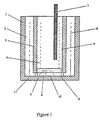
- Reduced mediator generated by cellular reduction as described in examples 2 and 3, was quantitatively reoxodised using a bulk electrolysis with coulometry method. This is described with reference to the electrolysis cell in Figure 1.
- the bulk electrolysis apparatus used in the method of this invention comprises an outer vessel, 1 (glass), to contain the reaction ingredients.
- the vessel is separated into anolyte compartment 6, and catholyte compartment 2 by an inner vessel 3.
- Interchange of soluble species and ions can take place via a sintered glass disk 5 forming the bottom of inner vessel 3.
- Cylindrical platinum gauze electrodes are used for both the anode 4 and the cathode 8.
- An Ag/AgCl reference electrode 7 is provided within anolyte compartment 6 in inner vessel 3.
- the inner vessel 3 has a series of semi-circular feet 9 which space it vertically from the bottom 11 of vessel 1. There are gaps 10 between these feet so that catholyte can flow freely through the area between the bottom of disk 5 and the top of bottom 11.
- the potential of the anode 8 was set at +400mV relative to the Ag/AgCl reference electrode 7 during bulk electrolysis. Rest potentials were measured prior to and at the completion of each bulk electrolysis.
- the anolyte comprises the reduced mediator from the incubation reaction (examples 2 and 3).
- the composition of the catholyte is not critical. Aqueous solutions of buffer or oxidised mediator as described for the anolyte were used.
- the BOD of the substrate solution was determined independently using a Hach Manometric BOD apparatus.
- the standard procedure outlined in the Hach Manometric BOD apparatus Model 2173A manual and Hach BOD Technical Information Series (Booklet 7), were followed.
- E. coli suspension (OD 600 0.380) was used as seed bacteria.
- Glucose (0.9ml, 0.025M) in a total volume of 24.4ml is equivalent to a concentration of 165mg/l and a BOD demand of 121mg/l.
- Standard solutions of BOD 200 (glucose 150mg/l, glutamic acid 150mg/l) and BOD 100 (glucose 150mg/l) were prepared and duplicate BOD measurements taken along with the BOD of the seed E. coli suspension.
- Tables 1 and 2 show that the microbially catalysed reduction of mediator is increased in the presence of substrate.
- the mean of the four endogenous responses in Table 1 is 0.276 coulomb while the mean of the measurements of Table 2 with added substrate is 0.731 coulomb. The difference is significant but much less than what would be expected on the basis of complete conversion of the substrate.
- Stoichiometric oxidation of 1 ⁇ mol of glucose produces 24 ⁇ mol of reduced mediator (potassium hexacyanoferrate (II)) and is equivalent to 2.316 coulomb.
- the theoretical charge required for the complete oxidation of 22.5 ⁇ mol of glucose is 52.1 coulomb.
- BOD 200mg/l standard solutions (glucose 150mg/l, glutamic acid 150mg/l) were used as substrate and the effects of varying microbial incubation times were evaluated.
- the suspension of cells and mediator matched that used in examples 1 to 8.
- the effect of variation of incubation time is shown in Table 4.
- Table 4 Effect of Incubation Time Run # OD 600 Glu / ⁇ mol Gla / ⁇ mol Time / min Q 1% / coulomb 54 0.401 22.500 0 30 0.732 55 0.401 0.507 0.621 30 0.488 56 0.401 0.507 0.621 60 0.595 57 0.401 0.507 0.621 120 1.242 58 0.401 0.507 0.621 240 1.430 59 0.401 0.507 0.621 1260 1.895
- the cells used in this example were the same batch of cells used in example 8, except that they were one day older. Run 54 replicates the conditions of example 7 and the good agreement between the measurements in tables 2, 3 and 4 demonstrates that the method is not sensitive to cell age in the short term.
- the total charge for the complete conversion of the amount of glucose and glutamic acid available in Runs 55 through 59 is calculated to be 2.67 coulomb.
- the oxidation of glucose by microbial cells has been reported as having a coulombic efficiency of about 50% (Thurston et al., 1985).
- the results in Table 4, using cells at OD 600 0.401, demonstrate that an incubation period between 2 and 4 hours is required to generate an amount of reduced mediator equivalent to a 50% conversion.
- the results set out in Tables 3 and 4 suggest that to attain a 100% microbial conversion of the substrate in less than 60 minutes a 1000-fold increase in the concentration of microbial cells was necessary.
- E.coli cells were cultured overnight in a Trypticase soy growth broth, harvested and resuspended in a phosphate buffered saline solution (0.05M KH 2 PO/K 2 HPO 4 pH7 and 0.1M KCl) to an OD 600 of around 5.5.
- Table 5 Effect of Incubation Time at High Cell Concentration. Substrate Response Run # OD 600 Fe(III) / ⁇ mol Glucose / ⁇ mol Time Q 1% / coulomb 60 5.720 830 1.522 30 2.913 61 5.720 830 1.522 60 5.774 62 5.720 830 1.522 120 7.926 63 5.720 830 1.522 240 9.761
- the biological oxygen demand equates to 1.875 mmol of O 2 , which is equivalent to 7.50 mFaraday of charge or 724 coulomb.
- the BOD can be expressed as an equivalent of charge and in the method of this invention this quantity is experimentally determined from bulk electrolysis of the reduced mediator or from the potentiometric shift.
- P. vulgaris cells were cultured overnight in a trypticase soy growth broth, harvested and resuspended in a phosphate buffered saline solution (0.05M KH 2 -PO 4 /K 2 HPO 4 pH7 and 0.1M KCl) to an optical density (OD 600 ) of 5.62.
- a phosphate buffered saline solution 0.05M KH 2 -PO 4 /K 2 HPO 4 pH7 and 0.1M KCl
- Table 8 Response with P.vulgaris Run # OD 600 Fe(III) / ⁇ mol Q sub Time Q 1% / coulomb pv08 5.620 523 1.683 60 1.473 pv09 5.620 523 1.683 60 1.464 pv10 5.620 523 1.683 60 1.548 pv05 5.620 523 0 60 0.473 pv06 5.620 523 0 60 0.500 pv07 5.620 523 0 60 0.567
- Example 13 The measurements described in Example 13 were repeated except that a higher cell concentration was used.
- P. vulgaris cells were grown, harvested and resuspended in saline buffer at an OD 600 25.2.
- BOD, 45mg/l standard solutions were used as substrate and the results from this trial are set out in Table 10.
- Table 10 Ultra-high Cell Concentration and Anaerobic Conditions Run # OD 600 Fe(III)/ ⁇ mol Q sub /coulomb Time Q 1% /coulomb 163 25.2 533 8.904 60 9.717 162 25.2 533 0.000 60 2.271
Landscapes
- Life Sciences & Earth Sciences (AREA)
- Health & Medical Sciences (AREA)
- Chemical & Material Sciences (AREA)
- Engineering & Computer Science (AREA)
- General Health & Medical Sciences (AREA)
- Pathology (AREA)
- Medicinal Chemistry (AREA)
- Physics & Mathematics (AREA)
- Analytical Chemistry (AREA)
- Biochemistry (AREA)
- Food Science & Technology (AREA)
- General Physics & Mathematics (AREA)
- Immunology (AREA)
- Microbiology (AREA)
- Biodiversity & Conservation Biology (AREA)
- Biomedical Technology (AREA)
- Emergency Medicine (AREA)
- Molecular Biology (AREA)
- Measuring Or Testing Involving Enzymes Or Micro-Organisms (AREA)
- Micro-Organisms Or Cultivation Processes Thereof (AREA)
- Preparation Of Compounds By Using Micro-Organisms (AREA)
- Apparatus Associated With Microorganisms And Enzymes (AREA)
Claims (11)
- Quantitatives Verfahren zur Messung des Verbrauchs eines Probensubstrats in einer mikrobiell katalysierten biochemischen Reaktion, das das Inkubieren des Substrats mit einem Überschuss eines Mikroorganismus und einem Überschuss eines Co-Substrats bis zur Oxidation des Substrats auf einen vorbestimmten Endpunkt und das Messen des Ausmaßes der Reduktion des Co-Substrats umfasst.
- Verfahren nach Anspruch 1, das angewandt wird, um den BSB des Probensubstrats zu bestimmen.
- Verfahren nach Anspruch 1, das angewandt wird, um die biologische Toxizität des Probensubstrats zu bestimmen.
- Verfahren nach einem der vorangegangenen Ansprüche, worin die Reaktion unter anaeroben Bedingungen durchgeführt wird.
- Verfahren nach einem der vorangegangenen Ansprüche, worin der vorbestimmte Endpunkt erreicht wird, wenn die Veränderungsrate im Verhältnis zwischen reduziertem Co-Substrat und oxidiertem Substrat nicht mehr signifikant ist.
- Verfahren nach einem der vorangegangenen Ansprüche, worin das Probensubstrat und das Co-Substrat vor dem Messen des Ausmaßes der Reduktion des Co-Substrats aus dem Mikroorganismus entfernt werden.
- Verfahren nach einem der vorangegangenen Ansprüche, worin das Ausmaß der Reduktion des Co-Substrats mittels eines elektrochemischen Verfahrens gemessen wird.
- Verfahren nach einem der Ansprüche 1 bis 6, worin das Ausmaß der Reduktion des Co-Substrats mittels eines optischen Verfahrens gemessen wird.
- Verfahren nach einem der Ansprüche 1 bis 6, worin das Ausmaß der Reduktion des Co-Substrats gemessen wird, indem das Co-Substrat reoxidiert und die dafür erforderliche Ladung gemessen wird.
- Verfahren nach einem der vorangegangenen Ansprüche, worin der Mikroorganismus ein beliebiger aus Escherichia coli, Proteus vulgaris, Torulopsis candida, Bacillus subtilis, Trichosporon cutaneum und Saccharomyces cerevisiae ist.
- Verfahren nach einem der vorangegangenen Ansprüche, worin das Co-Substrat ein beliebiges aus Benzochinon, Dichlorphenolindophenol, Methylengrün, Methylenblau, Phenazinmethosulfat, Kaliumhexacyanoferrat(III), Resorufin, Thionin und Toluidinblau-O ist.
Applications Claiming Priority (3)
| Application Number | Priority Date | Filing Date | Title |
|---|---|---|---|
| NZ29982796 | 1996-11-26 | ||
| NZ29982796 | 1996-11-26 | ||
| PCT/NZ1997/000158 WO1998023770A1 (en) | 1996-11-26 | 1997-11-26 | Method and apparatus for measuring use of a substrate in a microbially catalysed reaction |
Publications (3)
| Publication Number | Publication Date |
|---|---|
| EP0944732A1 EP0944732A1 (de) | 1999-09-29 |
| EP0944732A4 EP0944732A4 (de) | 2004-06-23 |
| EP0944732B1 true EP0944732B1 (de) | 2007-07-18 |
Family
ID=19926034
Family Applications (1)
| Application Number | Title | Priority Date | Filing Date |
|---|---|---|---|
| EP97946176A Expired - Lifetime EP0944732B1 (de) | 1996-11-26 | 1997-11-26 | Messung des substratverbrauchs in mikrobiell katalysierten reaktionen |
Country Status (7)
| Country | Link |
|---|---|
| US (1) | US6379914B1 (de) |
| EP (1) | EP0944732B1 (de) |
| JP (1) | JP3479085B2 (de) |
| AU (1) | AU717224B2 (de) |
| CA (1) | CA2307603C (de) |
| DE (1) | DE69737938T2 (de) |
| WO (1) | WO1998023770A1 (de) |
Families Citing this family (5)
| Publication number | Priority date | Publication date | Assignee | Title |
|---|---|---|---|---|
| DE69905051T2 (de) * | 1998-07-09 | 2004-01-22 | Michigan State University, East Lansing | Elektrochemisches verfahren zum erzeugen einer biologischen protontriebkraft und regenerierung des pyridin-nucleotid cofaktors |
| DE10035911A1 (de) * | 2000-07-21 | 2002-02-07 | Abb Research Ltd | Verfahren und Sensor zum Überwachen von Flüssigkeiten |
| CN1914332A (zh) * | 2003-12-15 | 2007-02-14 | 快速实验室微系统公司 | 用于鉴定微生物的电化学分析 |
| EP2264448B1 (de) * | 2009-06-19 | 2016-11-09 | B. Braun Melsungen AG | Verwendung einer Zusammensetzung als Sauerstoffindikator für parenterale und enterale Applikationsformen |
| CN107462556B (zh) * | 2017-07-26 | 2020-01-21 | 广东省生态环境技术研究所 | 一种直观的生物膜电活性检测方法 |
Family Cites Families (14)
| Publication number | Priority date | Publication date | Assignee | Title |
|---|---|---|---|---|
| US3857761A (en) | 1970-07-27 | 1974-12-31 | Honeywell Inc | Exhaustive electrolysis method for determination of oxygen demand |
| US3725236A (en) | 1970-09-24 | 1973-04-03 | Honeywell Inc | Electrochemical oxygen demand apparatus |
| JPS58129994A (ja) * | 1982-01-27 | 1983-08-03 | Toyo Jozo Co Ltd | 高感度測定法 |
| US4476224A (en) | 1982-05-10 | 1984-10-09 | Adler Howard I | Material and method for promoting the growth of anaerobic bacteria |
| EP0136362B1 (de) | 1983-03-11 | 1990-12-19 | Matsushita Electric Industrial Co., Ltd. | Biosensor |
| FR2576318B1 (fr) | 1985-01-18 | 1987-09-04 | Centre Nat Rech Scient | Dispositif pour le dosage des effecteurs de la chaine d'oxydation cellulaire et procedes de dosage de ces effecteurs |
| JPS62160193A (ja) | 1986-01-07 | 1987-07-16 | Ebara Res Co Ltd | 有機性水溶液のメタン発酵法 |
| GB8609273D0 (en) * | 1986-04-16 | 1986-05-21 | Water Res Centre | Pollutant detector |
| GB8618022D0 (en) | 1986-07-23 | 1986-08-28 | Unilever Plc | Electrochemical measurements |
| US5085759A (en) | 1989-11-13 | 1992-02-04 | Duncan Instrument Company | Apparatus for rapid biological oxidation demand of liquids |
| JPH0634596A (ja) | 1992-07-20 | 1994-02-08 | Fujitsu Ltd | 酸素電極、バイオセンサ、及び、その製造方法 |
| KR960016715B1 (ko) | 1993-04-16 | 1996-12-20 | 주식회사 유공 | 신속 생화학적 산소요구량(bod) 측정방법 및 그 장치 |
| US5413690A (en) | 1993-07-23 | 1995-05-09 | Boehringer Mannheim Corporation | Potentiometric biosensor and the method of its use |
| JP3382719B2 (ja) | 1994-06-28 | 2003-03-04 | マルハ株式会社 | 総ビタミンb6 計測用バイオセンサ |
-
1997
- 1997-11-26 US US09/308,628 patent/US6379914B1/en not_active Expired - Lifetime
- 1997-11-26 AU AU51405/98A patent/AU717224B2/en not_active Ceased
- 1997-11-26 EP EP97946176A patent/EP0944732B1/de not_active Expired - Lifetime
- 1997-11-26 DE DE69737938T patent/DE69737938T2/de not_active Expired - Lifetime
- 1997-11-26 WO PCT/NZ1997/000158 patent/WO1998023770A1/en not_active Ceased
- 1997-11-26 CA CA002307603A patent/CA2307603C/en not_active Expired - Fee Related
- 1997-11-26 JP JP52457898A patent/JP3479085B2/ja not_active Expired - Fee Related
Also Published As
| Publication number | Publication date |
|---|---|
| JP3479085B2 (ja) | 2003-12-15 |
| AU5140598A (en) | 1998-06-22 |
| JP2000515767A (ja) | 2000-11-28 |
| DE69737938D1 (de) | 2007-08-30 |
| DE69737938T2 (de) | 2008-04-03 |
| WO1998023770A1 (en) | 1998-06-04 |
| US6379914B1 (en) | 2002-04-30 |
| EP0944732A1 (de) | 1999-09-29 |
| AU717224B2 (en) | 2000-03-23 |
| EP0944732A4 (de) | 2004-06-23 |
| CA2307603A1 (en) | 1998-06-04 |
| CA2307603C (en) | 2009-03-17 |
Similar Documents
| Publication | Publication Date | Title |
|---|---|---|
| Morris et al. | Ferricyanide mediated biochemical oxygen demand–development of a rapid biochemical oxygen demand assay | |
| Pasco et al. | Biochemical mediator demand–a novel rapid alternative for measuring biochemical oxygen demand | |
| JP3557528B2 (ja) | 微生物の電気化学的濃化培養方法、並びに有機物質およびbod分析用バイオセンサー | |
| Baronian et al. | Detection of two distinct substrate-dependent catabolic responses in yeast cells using a mediated electrochemical method | |
| US3506544A (en) | Method of determining microbial populations,enzyme activities,and substrate concentrations by electrochemical analysis | |
| Wang et al. | A polishable amperometric biosensor for bilirubin | |
| Tizzard et al. | MICREDOX: application for rapid biotoxicity assessment | |
| Catterall et al. | The use of microorganisms with broad range substrate utilisation for the ferricyanide-mediated rapid determination of biochemical oxygen demand | |
| EP1996520B1 (de) | Bakterienkonsortium, bioelektrochemische vorrichtung und verfahren zur schnellen und zügigen abschätzung des biologischen sauerstoffbedarfs | |
| Mak et al. | Biosensor for rapid phosphate monitoring in a sequencing batch reactor (SBR) system | |
| EP0326421A2 (de) | Elektroanalytisches Verfahren | |
| EP0944732B1 (de) | Messung des substratverbrauchs in mikrobiell katalysierten reaktionen | |
| Katrlı́k et al. | Mediator type of glucose microbial biosensor based on Aspergillus niger | |
| Han et al. | Voltammetric measurement of microorganism populations | |
| Kim et al. | Microbial fuel cell-type biochemical oxygen demand sensor | |
| Liu et al. | A new mediator method for BOD measurement under non-deaerated condition | |
| Lisdat et al. | Recycling Systems Based on Screen‐Printed Electrodes | |
| RU205304U1 (ru) | Устройство для экспресс-анализа загрязненности воды биоразлогаемыми органическими соединениями | |
| ERDEM et al. | Electrochemical biosensor based on horseradish peroxidase for the determination of oxidizable drugs | |
| Pandey et al. | Peroxidase-and tetracyanoquinodimethane-modified graphite paste electrode for the measurement of glucose/lactate/glutamate using enzyme-packed bed reactor | |
| Katrlik et al. | Whole cell amperometric biosensor based on Aspergillus niger for determination of glucose with enhanced upper linearity limit | |
| Boero et al. | Sensitivity enhancement by carbon nanotubes: applications to stem cell cultures monitoring | |
| JP2890128B2 (ja) | 酵母の生菌数測定法 | |
| JP2007513636A (ja) | 微生物の同定の電気化学的検定法 | |
| DE60028201T2 (de) | Überwachung von genexpression |
Legal Events
| Date | Code | Title | Description |
|---|---|---|---|
| PUAI | Public reference made under article 153(3) epc to a published international application that has entered the european phase |
Free format text: ORIGINAL CODE: 0009012 |
|
| 17P | Request for examination filed |
Effective date: 19990617 |
|
| AK | Designated contracting states |
Kind code of ref document: A1 Designated state(s): BE CH DE ES FI FR GB IT LI NL SE |
|
| RAP3 | Party data changed (applicant data changed or rights of an application transferred) |
Owner name: LINCOLN VENTURES LIMITED |
|
| A4 | Supplementary search report drawn up and despatched |
Effective date: 20040510 |
|
| 17Q | First examination report despatched |
Effective date: 20040812 |
|
| GRAP | Despatch of communication of intention to grant a patent |
Free format text: ORIGINAL CODE: EPIDOSNIGR1 |
|
| GRAS | Grant fee paid |
Free format text: ORIGINAL CODE: EPIDOSNIGR3 |
|
| GRAA | (expected) grant |
Free format text: ORIGINAL CODE: 0009210 |
|
| AK | Designated contracting states |
Kind code of ref document: B1 Designated state(s): BE CH DE ES FI FR GB IT LI NL SE |
|
| REG | Reference to a national code |
Ref country code: GB Ref legal event code: FG4D |
|
| REG | Reference to a national code |
Ref country code: CH Ref legal event code: EP |
|
| REF | Corresponds to: |
Ref document number: 69737938 Country of ref document: DE Date of ref document: 20070830 Kind code of ref document: P |
|
| ET | Fr: translation filed | ||
| PG25 | Lapsed in a contracting state [announced via postgrant information from national office to epo] |
Ref country code: NL Free format text: LAPSE BECAUSE OF FAILURE TO SUBMIT A TRANSLATION OF THE DESCRIPTION OR TO PAY THE FEE WITHIN THE PRESCRIBED TIME-LIMIT Effective date: 20070718 Ref country code: FI Free format text: LAPSE BECAUSE OF FAILURE TO SUBMIT A TRANSLATION OF THE DESCRIPTION OR TO PAY THE FEE WITHIN THE PRESCRIBED TIME-LIMIT Effective date: 20070718 Ref country code: ES Free format text: LAPSE BECAUSE OF FAILURE TO SUBMIT A TRANSLATION OF THE DESCRIPTION OR TO PAY THE FEE WITHIN THE PRESCRIBED TIME-LIMIT Effective date: 20071029 |
|
| REG | Reference to a national code |
Ref country code: CH Ref legal event code: PL |
|
| NLV1 | Nl: lapsed or annulled due to failure to fulfill the requirements of art. 29p and 29m of the patents act | ||
| PG25 | Lapsed in a contracting state [announced via postgrant information from national office to epo] |
Ref country code: LI Free format text: LAPSE BECAUSE OF FAILURE TO SUBMIT A TRANSLATION OF THE DESCRIPTION OR TO PAY THE FEE WITHIN THE PRESCRIBED TIME-LIMIT Effective date: 20070718 Ref country code: CH Free format text: LAPSE BECAUSE OF FAILURE TO SUBMIT A TRANSLATION OF THE DESCRIPTION OR TO PAY THE FEE WITHIN THE PRESCRIBED TIME-LIMIT Effective date: 20070718 |
|
| PG25 | Lapsed in a contracting state [announced via postgrant information from national office to epo] |
Ref country code: BE Free format text: LAPSE BECAUSE OF FAILURE TO SUBMIT A TRANSLATION OF THE DESCRIPTION OR TO PAY THE FEE WITHIN THE PRESCRIBED TIME-LIMIT Effective date: 20070718 |
|
| PLBE | No opposition filed within time limit |
Free format text: ORIGINAL CODE: 0009261 |
|
| STAA | Information on the status of an ep patent application or granted ep patent |
Free format text: STATUS: NO OPPOSITION FILED WITHIN TIME LIMIT |
|
| 26N | No opposition filed |
Effective date: 20080421 |
|
| PG25 | Lapsed in a contracting state [announced via postgrant information from national office to epo] |
Ref country code: SE Free format text: LAPSE BECAUSE OF FAILURE TO SUBMIT A TRANSLATION OF THE DESCRIPTION OR TO PAY THE FEE WITHIN THE PRESCRIBED TIME-LIMIT Effective date: 20071018 |
|
| PG25 | Lapsed in a contracting state [announced via postgrant information from national office to epo] |
Ref country code: IT Free format text: LAPSE BECAUSE OF NON-PAYMENT OF DUE FEES Effective date: 20071130 |
|
| PGFP | Annual fee paid to national office [announced via postgrant information from national office to epo] |
Ref country code: DE Payment date: 20141114 Year of fee payment: 18 Ref country code: FR Payment date: 20141107 Year of fee payment: 18 Ref country code: GB Payment date: 20141105 Year of fee payment: 18 |
|
| REG | Reference to a national code |
Ref country code: DE Ref legal event code: R119 Ref document number: 69737938 Country of ref document: DE |
|
| GBPC | Gb: european patent ceased through non-payment of renewal fee |
Effective date: 20151126 |
|
| REG | Reference to a national code |
Ref country code: FR Ref legal event code: ST Effective date: 20160729 |
|
| PG25 | Lapsed in a contracting state [announced via postgrant information from national office to epo] |
Ref country code: DE Free format text: LAPSE BECAUSE OF NON-PAYMENT OF DUE FEES Effective date: 20160601 Ref country code: GB Free format text: LAPSE BECAUSE OF NON-PAYMENT OF DUE FEES Effective date: 20151126 |
|
| PG25 | Lapsed in a contracting state [announced via postgrant information from national office to epo] |
Ref country code: FR Free format text: LAPSE BECAUSE OF NON-PAYMENT OF DUE FEES Effective date: 20151130 |