EP0924787A2 - Nonaqueous electrolytic secondary battery and method of making the same - Google Patents
Nonaqueous electrolytic secondary battery and method of making the same Download PDFInfo
- Publication number
- EP0924787A2 EP0924787A2 EP98124346A EP98124346A EP0924787A2 EP 0924787 A2 EP0924787 A2 EP 0924787A2 EP 98124346 A EP98124346 A EP 98124346A EP 98124346 A EP98124346 A EP 98124346A EP 0924787 A2 EP0924787 A2 EP 0924787A2
- Authority
- EP
- European Patent Office
- Prior art keywords
- nonaqueous electrolytic
- secondary battery
- battery
- polymer
- nonaqueous
- Prior art date
- Legal status (The legal status is an assumption and is not a legal conclusion. Google has not performed a legal analysis and makes no representation as to the accuracy of the status listed.)
- Granted
Links
Images

Classifications
-
- H—ELECTRICITY
- H01—ELECTRIC ELEMENTS
- H01M—PROCESSES OR MEANS, e.g. BATTERIES, FOR THE DIRECT CONVERSION OF CHEMICAL ENERGY INTO ELECTRICAL ENERGY
- H01M10/00—Secondary cells; Manufacture thereof
- H01M10/05—Accumulators with non-aqueous electrolyte
- H01M10/056—Accumulators with non-aqueous electrolyte characterised by the materials used as electrolytes, e.g. mixed inorganic/organic electrolytes
- H01M10/0564—Accumulators with non-aqueous electrolyte characterised by the materials used as electrolytes, e.g. mixed inorganic/organic electrolytes the electrolyte being constituted of organic materials only
- H01M10/0566—Liquid materials
- H01M10/0567—Liquid materials characterised by the additives
-
- H—ELECTRICITY
- H01—ELECTRIC ELEMENTS
- H01M—PROCESSES OR MEANS, e.g. BATTERIES, FOR THE DIRECT CONVERSION OF CHEMICAL ENERGY INTO ELECTRICAL ENERGY
- H01M10/00—Secondary cells; Manufacture thereof
- H01M10/05—Accumulators with non-aqueous electrolyte
- H01M10/052—Li-accumulators
- H01M10/0525—Rocking-chair batteries, i.e. batteries with lithium insertion or intercalation in both electrodes; Lithium-ion batteries
-
- H—ELECTRICITY
- H01—ELECTRIC ELEMENTS
- H01M—PROCESSES OR MEANS, e.g. BATTERIES, FOR THE DIRECT CONVERSION OF CHEMICAL ENERGY INTO ELECTRICAL ENERGY
- H01M10/00—Secondary cells; Manufacture thereof
- H01M10/05—Accumulators with non-aqueous electrolyte
- H01M10/056—Accumulators with non-aqueous electrolyte characterised by the materials used as electrolytes, e.g. mixed inorganic/organic electrolytes
- H01M10/0564—Accumulators with non-aqueous electrolyte characterised by the materials used as electrolytes, e.g. mixed inorganic/organic electrolytes the electrolyte being constituted of organic materials only
- H01M10/0565—Polymeric materials, e.g. gel-type or solid-type
-
- H—ELECTRICITY
- H01—ELECTRIC ELEMENTS
- H01M—PROCESSES OR MEANS, e.g. BATTERIES, FOR THE DIRECT CONVERSION OF CHEMICAL ENERGY INTO ELECTRICAL ENERGY
- H01M10/00—Secondary cells; Manufacture thereof
- H01M10/42—Methods or arrangements for servicing or maintenance of secondary cells or secondary half-cells
- H01M10/4235—Safety or regulating additives or arrangements in electrodes, separators or electrolyte
-
- H—ELECTRICITY
- H01—ELECTRIC ELEMENTS
- H01M—PROCESSES OR MEANS, e.g. BATTERIES, FOR THE DIRECT CONVERSION OF CHEMICAL ENERGY INTO ELECTRICAL ENERGY
- H01M10/00—Secondary cells; Manufacture thereof
- H01M10/42—Methods or arrangements for servicing or maintenance of secondary cells or secondary half-cells
- H01M10/44—Methods for charging or discharging
- H01M10/446—Initial charging measures
-
- H—ELECTRICITY
- H01—ELECTRIC ELEMENTS
- H01M—PROCESSES OR MEANS, e.g. BATTERIES, FOR THE DIRECT CONVERSION OF CHEMICAL ENERGY INTO ELECTRICAL ENERGY
- H01M4/00—Electrodes
- H01M4/02—Electrodes composed of, or comprising, active material
- H01M4/36—Selection of substances as active materials, active masses, active liquids
- H01M4/58—Selection of substances as active materials, active masses, active liquids of inorganic compounds other than oxides or hydroxides, e.g. sulfides, selenides, tellurides, halogenides or LiCoFy; of polyanionic structures, e.g. phosphates, silicates or borates
- H01M4/583—Carbonaceous material, e.g. graphite-intercalation compounds or CFx
- H01M4/587—Carbonaceous material, e.g. graphite-intercalation compounds or CFx for inserting or intercalating light metals
-
- H—ELECTRICITY
- H01—ELECTRIC ELEMENTS
- H01M—PROCESSES OR MEANS, e.g. BATTERIES, FOR THE DIRECT CONVERSION OF CHEMICAL ENERGY INTO ELECTRICAL ENERGY
- H01M6/00—Primary cells; Manufacture thereof
- H01M6/04—Cells with aqueous electrolyte
- H01M6/06—Dry cells, i.e. cells wherein the electrolyte is rendered non-fluid
- H01M6/10—Dry cells, i.e. cells wherein the electrolyte is rendered non-fluid with wound or folded electrodes
-
- Y—GENERAL TAGGING OF NEW TECHNOLOGICAL DEVELOPMENTS; GENERAL TAGGING OF CROSS-SECTIONAL TECHNOLOGIES SPANNING OVER SEVERAL SECTIONS OF THE IPC; TECHNICAL SUBJECTS COVERED BY FORMER USPC CROSS-REFERENCE ART COLLECTIONS [XRACs] AND DIGESTS
- Y02—TECHNOLOGIES OR APPLICATIONS FOR MITIGATION OR ADAPTATION AGAINST CLIMATE CHANGE
- Y02E—REDUCTION OF GREENHOUSE GAS [GHG] EMISSIONS, RELATED TO ENERGY GENERATION, TRANSMISSION OR DISTRIBUTION
- Y02E60/00—Enabling technologies; Technologies with a potential or indirect contribution to GHG emissions mitigation
- Y02E60/10—Energy storage using batteries
-
- Y—GENERAL TAGGING OF NEW TECHNOLOGICAL DEVELOPMENTS; GENERAL TAGGING OF CROSS-SECTIONAL TECHNOLOGIES SPANNING OVER SEVERAL SECTIONS OF THE IPC; TECHNICAL SUBJECTS COVERED BY FORMER USPC CROSS-REFERENCE ART COLLECTIONS [XRACs] AND DIGESTS
- Y02—TECHNOLOGIES OR APPLICATIONS FOR MITIGATION OR ADAPTATION AGAINST CLIMATE CHANGE
- Y02P—CLIMATE CHANGE MITIGATION TECHNOLOGIES IN THE PRODUCTION OR PROCESSING OF GOODS
- Y02P70/00—Climate change mitigation technologies in the production process for final industrial or consumer products
- Y02P70/50—Manufacturing or production processes characterised by the final manufactured product
-
- Y—GENERAL TAGGING OF NEW TECHNOLOGICAL DEVELOPMENTS; GENERAL TAGGING OF CROSS-SECTIONAL TECHNOLOGIES SPANNING OVER SEVERAL SECTIONS OF THE IPC; TECHNICAL SUBJECTS COVERED BY FORMER USPC CROSS-REFERENCE ART COLLECTIONS [XRACs] AND DIGESTS
- Y10—TECHNICAL SUBJECTS COVERED BY FORMER USPC
- Y10T—TECHNICAL SUBJECTS COVERED BY FORMER US CLASSIFICATION
- Y10T29/00—Metal working
- Y10T29/49—Method of mechanical manufacture
- Y10T29/49002—Electrical device making
- Y10T29/49108—Electric battery cell making
Definitions
- the present invention relates to a nonaqueous electrolytic secondary battery and a method of making the same, and, more particularly, to the improvement in charge and discharge cycling characteristics.
- a nonaqueous electrolytic secondary battery that uses a light metal such as lithium, sodium, or aluminum as an active material for the negative electrode is expected as a secondary battery to meet the demand described above.
- a nonaqueous electrolytic secondary battery can generate a high voltage and can have high energy density.
- Research and development have been active, in particular, on a nonaqueous electrolytic secondary battery using lithium as an active material for the negative electrode because of its high output and high energy density.
- the light metal when a light metal such as lithium is used for a negative electrode as it is, the light metal is easily precipitated dendritically from the negative electrode during charging. Since the tip of the dendrite crystal has significantly high electric current density, the nonaqueous electrolytic solution decomposes, resulting in a decrease in cycling life, or the dendrite crystal precipitated from the negative electrode reaches the positive electrode, resulting in an internal short circuit of the battery.
- a carbonaceous material capable of being doped and undoped with light metal ions is used as a material for the negative electrode after the carbonaceous material is doped with the light metal ions.
- carbonaceous material graphite, cokes (e.g., pitch coke, needle coke, and petroleum coke), organic polymeric compounds (e.g., phenolic resin or furan resin that is at an appropriate temperature for carbonization), or the like is mainly used.
- cokes e.g., pitch coke, needle coke, and petroleum coke
- organic polymeric compounds e.g., phenolic resin or furan resin that is at an appropriate temperature for carbonization
- one of the known factors which shorten the charge and discharge cycling life is decomposition of an electrolytic solution caused by direct contact between the electrode and the electrolytic solution.
- Japanese Patent Laid-Open Nos. 4-22072, 7-134989, and 6-22282 disclose batteries, in which negative electrodes are coated with polymeric materials so that the electrodes and the electrolytic solutions do not come into direct contact with each other.
- a conductive polymer is coated on the surface of the negative electrode, or carbonaceous particles as a material for a negative electrode are treated with a solution in which a polymer is dissolved to coat the surface of the particles and a negative electrode is fabricated using the carbonaceous particles.
- the fabrication process of the negative electrode becomes complex, resulting in low productivity of a battery. Also, in accordance with the methods described above, it is difficult to control the volume of the polymer to be coated, and if the volume of the polymer to be coated is too high, load characteristics and capacity characteristics of the battery are damaged.
- the volume occupied by the core is not involved in the battery reaction, and thus the energy density per battery volume decreases.
- the present invention has been made in view of the situation described above, and it is an object of this invention to provide a nonaqueous electrolytic secondary battery, in which charge and discharge cycling characteristics are improved without damaging load characteristics or capacity characteristics, and a temperature rise owing to an external short circuit can be suppressed, and to provide a method of making such a nonaqueous electrolytic secondary battery.
- a nonaqueous electrolytic secondary battery in accordance with the present invention includes a negative electrode, a positive electrode, and a nonaqueous electrolytic solution in which an electrolytic salt is dissolved in a nonaqueous solvent, and a polymer is added to the nonaqueous electrolytic solution.
- a method of making a nonaqueous electrolytic secondary battery in accordance with the present invention includes the steps of placing a negative electrode, a positive electrode, and a nonaqueous electrolytic solution in which an electrolytic salt is dissolved in a nonaqueous solvent, in a battery housing to assemble the battery, and charging and discharging the battery under overcharge conditions.
- a method of making a nonaqueous electrolytic secondary battery in accordance with the present invention includes the steps of placing a negative electrode, a positive electrode, and a nonaqueous electrolytic solution in which an electrolytic salt is dissolved in a nonaqueous solvent, in a battery housing to assemble the battery, and applying a pulse voltage to the battery.
- nonaqueous electrolytic secondary battery by adding the polymer to the nonaqueous electrolytic solution, decomposition of the nonaqueous electrolytic solution during charging and discharging is suppressed, and thus charge and discharge cycling characteristics are improved. Also, when the battery temperature is rapidly raised by an external short circuit, the polymer in the nonaqueous electrolytic solution decomposes by absorbing heat, and thus the temperature rise of the battery is relieved.
- a reaction occurs among a portion of the components in the nonaqueous electrolytic solution to generate a polymer.
- the polymer is generated in the nonaqueous electrolytic solution in such a manner, decomposition of the nonaqueous electrolytic solution is suppressed during subsequent charging and discharging, and thus charge and discharge cycling characteristics are improved.
- the battery temperature is rapidly raised by an external short circuit, the polymer in the nonaqueous electrolytic solution decomposes by absorbing heat, and thus the temperature rise of the battery is relieved.
- a nonaqueous electrolytic secondary battery in the present invention includes a negative electrode, a positive electrode, and a nonaqueous electrolytic solution in which an electrolytic salt is dissolved in a nonaqueous solvent.
- nonaqueous electrolytic secondary battery in particular, a polymer is added to the nonaqueous electrolytic solution, and thus charge and discharge cycling characteristics are improved and the rapid rise of the battery temperature is suppressed when an external short circuit or the like occurs.
- the polymer When the polymer is added to the nonaqueous electrolytic solution, the polymer precipitates as a coating layer on the surfaces of the negative electrode and the positive electrode by repeated charge and discharge cycling.
- the coating layer prevents a contact between the electrodes and the nonaqueous electrolytic solution, and decomposition of the nonaqueous electrolytic solution is suppressed.
- the coating layer precipitated has a smaller thickness than that of a coating layer formed by coating or by treatment with a polymer solution, there is no adverse effect on the battery characteristics. In such a case, since the coating layer is formed without introducing a special process, the production efficiency of the battery is not decreased.
- the polymer in the nonaqueous electrolytic solution decomposes by absorbing heat, and thus the temperature rise of the battery is relieved.
- the nonaqueous electrolytic solution when a portion of the nonaqueous electrolytic solution is composed of a polymer, even if the battery is damaged, the electrolytic solution does not easily leak. Therefore, the safety of the battery increases.
- a polymer to be added to the nonaqueous electrolytic solution for example, a polymer containing oxygen is used.
- a polymer having a molecular weight ranging from 500 to 500,000 be used.
- a polymer molecule having a carbonyl group such as ester or ketone may be referred to, for example, polyester represented by Chemical formula 1, a diester polymer represented by Chemical formula 2, and a copolymer of ester and ketone represented by Chemical formula 3.
- R 1 -COO-R 2 k (where R 1 and R 2 are hydrocarbon groups.)
- R 3 -COO-R 4 -OCO-R 5 m (where R 3 , R 4 , and R 5 are hydrocarbon groups.)
- R 6 -COO-R 7 -CO-R 8 n (where R 6 , R 7 , and R 8 are hydrocarbon groups.)
- diester polymer represented by Chemical formula 2 include the ones represented by Chemical formula 4 and Chemical formula 5. (COO-CH 2 CH 2 -OCO-CH 2 CH 2 ) m (COO-CH(CH 3 )CH 2 -OCO-CH 2 CH(CH 3 )) m
- a polymer molecule having an ether linkage or a polymer molecule having both a carbonyl group and an ether group as represented by Chemical formula 6 may be used.
- (R 9 -COO-R 10 -O-R 11 ) g (where R 9 , R 10 , and R 11 are hydrocarbon groups.)
- the amount of the polymer to be added is preferably in a range from 2 to 5 percent by weight relative to the nonaqueous electrolytic solution. If the amount of the polymer to be added is less than 2 percent by weight, there will be insufficient effects in improving charge and discharge cycling characteristics, or suppressing the rise of the battery temperature by an external short circuit. Also, if the amount of the polymer to be added is more than 5 percent by weight, the battery characteristics may be adversely affected.
- the present invention is characterized by adding a polymer in the nonaqueous electrolytic solution, and, for the other components of the nonaqueous electrolytic solution, any of those generally used may be usable.
- a polymer in the nonaqueous electrolytic solution, and, for the other components of the nonaqueous electrolytic solution, any of those generally used may be usable.
- materials described below are used.
- a carbonate-based solvent such as propylene carbonate (PC), ethylene carbonate (EC), or dimethyl carbonate (DMC) is preferably used.
- PC propylene carbonate
- EC ethylene carbonate
- DMC dimethyl carbonate
- a lithium salt such as LiPF 6 or LiBF 4 is used.
- any of those generally used in a nonaqueous electrolytic secondary battery may be usable.
- a material for the negative electrode a carbonaceous material or the like is used.
- a graphite material in which carbon hexagonal layers are regularly placed substantially in parallel may be used, or a non-graphitizing carbon material in which crystallites are randomly oriented may be used.
- the non-graphitizing carbon material has physical properties such as that a space between (002) planes is 0.37 nm or more, the true density is less than 1.70 g/cm 3 , and exothermic heat does not have a peak at 700°C or more in a differential thermal analysis (DTA) in air.
- DTA differential thermal analysis
- the non-graphitizing carbon material having the physical properties described above can be obtained, for example, by burning, at 900°C to 1,300°C, a conjugated system resin such as a furan resin, a phenolic resin, an acrylic resin, a vinyl halide resin, a polyimide resin, a polyamide-imide resin, a polyamide resin, polyacetylene, or poly (p-phenylene), or an organic polymeric compound such as cellulose and its derivative.
- a conjugated system resin such as a furan resin, a phenolic resin, an acrylic resin, a vinyl halide resin, a polyimide resin, a polyamide-imide resin, a polyamide resin, polyacetylene, or poly (p-phenylene), or an organic polymeric compound such as cellulose and its derivative.
- a conjugated system resin such as a furan resin, a phenolic resin, an acrylic resin, a vinyl halide resin, a polyimide resin, a polyamide-imide
- a lithium-transition metal double oxide such as lithium cobaltate or lithium manganate, or the like is used.
- the secondary battery may be a cylindrical battery having a wound electrode member, a laminated battery having a laminated electrode member in which plate electrodes are laminated interposed with separators, or a coin-type battery having a pellet electrode mold.
- FIG. 1 shows an example of a cylindrical nonaqueous electrolytic secondary battery.
- a negative electrode 1 including a negative charge collector 9 coated with a negative electrode mixture and a positive electrode 2 including a positive charge collector 10 coated with a positive electrode mixture are wound up with a separator 3 therebetween, and the wound member is packed in a battery can 5 with an insulator 4 being placed on each of the upper and lower ends of the wound member.
- a battery cap 7 is mounted on the battery can 5 by caulking joints with a sealing gasket 6 being interposed, and is electrically connected to the negative electrode 1 or the positive electrode 2 through a negative electrode lead 11 or a positive electrode lead 12 for functioning as a negative electrode or a positive electrode of the battery.
- the positive electrode lead 12 is welded to a sheet 8 for breaking a current, and is electrically connected to the battery cap 7 through the sheet 8 for breaking a current.
- the sheet 8 for breaking a current In the battery, when the internal pressure of the battery increases, the sheet 8 for breaking a current is pushed up and is deformed. Thereby, the positive electrode lead 12 is disconnected from the sheet 8 for breaking a current except at the welded portion, and an electric current is broken.
- the negative electrode 1 is fabricated by forming a negative electrode mixture layer containing a negative electrode material on the surface of the negative charge collector 9, and the positive electrode 2 is fabricated by forming a positive electrode mixture layer containing a positive electrode material on the surface of the positive charge collector 10.
- the negative electrode 1 and the positive electrode 2 fabricated as described above are wound up with the separator 3 therebetween, and the wound electrode member along with the insulator 4 is placed in the battery can 5.
- the negative electrode lead 11 drawn from the negative electrode 1 is connected to the battery can 5, and the positive electrode lead 12 drawn from the positive electrode 2 is connected to the battery cap 7.
- a nonaqueous electrolytic solution prepared by dissolving an electrolytic salt in a nonaqueous solvent is poured into the battery can 5.
- the battery cap 7 is placed on the opening of the battery can 5, and the battery can 5 is sealed by caulking joints with the sealing gasket 6 being interposed.
- the sheet 8 for breaking a current described above may be placed under the battery cap 7 as required.
- the battery voltage be set at 4.2 V or more.
- the voltage be set in a range from 4.2 V to less than 4.8 V.
- the frequency be set at 10 to 100 KHz.
- the polymer generated depends on the components of the nonaqueous electrolytic solution. For example, if a carbonate-based solvent such as propylene carbonate, ethylene carbonate, or dimethyl carbonate is used, a polymer having a molecular weight of 3,000 or more is generated. Also, by adding a methoxybenzene-based compound to the nonaqueous electrolytic solution, a polymer having a molecular weight of several hundreds of thousands may be generated.
- a carbonate-based solvent such as propylene carbonate, ethylene carbonate, or dimethyl carbonate
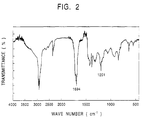
- the nonaqueous electrolytic solution includes LiPF 6 dissolved in a mixed solvent of propylene carbonate, dimethyl carbonate, and methoxybenzene.
- FIG. 2 confirms that a polymer having an ester linkage is generated.
- the nonaqueous electrolytic secondary battery was fabricated in a manner described below.
- a strip negative electrode was fabricated as follows.
- PVDF polyvinylidene fluoride
- a strip copper foil having a thickness of 10 ⁇ m was prepared as a negative charge collector.
- the negative electrode mixture slurry was uniformly applied to both surfaces of the negative charge collector and dried, and then, compression molding was performed at constant pressure to fabricate a strip negative electrode.
- a strip positive electrode was fabricated as follows.
- a positive electrode mixture slurry 91 parts by weight of lithium cobaltate, 6 parts by weight of carbon powder, and 3 parts by weight of polyvinylidene fluoride as a binder were mixed and dispersed in N-methyl-2-pyrrolidone as a solvent.
- a strip aluminum foil having a thickness of 20 ⁇ m was prepared as a positive charge collector.
- the positive electrode mixture slurry was uniformly applied to both surfaces of the positive charge collector and dried, and then, compression molding was performed to fabricate a strip positive electrode.
- the strip negative electrode and the strip positive electrode fabricated as described above were laminated with separators composed of a microporous polypropylene film, in the order of the negative electrode, the separator, the positive electrode, and the separator, and were wound up many times to form a wound electrode member.
- the wound electrode member fabricated as described above was placed in an iron battery can plated with nickel.
- the top and bottom of the coiled-type electrode were provided with an insulator, an aluminum positive electrode lead drawn from the positive charge collector was welded to a sheet for breaking a current, and a nickel negative electrode drawn from the negative charge collector was welded to the battery can.
- a nonaqueous electrolytic secondary battery in this comparative example was similar to that in Example 1 except that no polymer was added to a nonaqueous electrolytic solution.
- the nonaqueous electrolyte secondary batteries of examples 1 through 4 in which polymers are added to the nonaqueous electrolytic solutions, have larger capacity retainability in comparison with the nonaqueous electrolytic secondary battery of comparative example 1 in which no polymer is added. Also, as shown in Table 2, the nonaqueous electrolyte secondary batteries of examples 1 through 4 have significantly smaller temperature rises in comparison with the nonaqueous electrolytic secondary battery of comparative example 1.
- charging was performed at a charging voltage of 4.3 V after a battery was assembled.
- a nonaqueous electrolytic secondary battery was assembled in a manner similar to that in example 1 except that no polyester was added to a nonaqueous electrolytic solution.
- Charging was performed at a charging voltage of 4.3 V to the nonaqueous electrolytic secondary battery, and then, 500 cycles of charging and discharging were performed under the conditions described above.
- the charging voltage is preferably set in a range from 4.3 V to less than 4.8 V.
- a voltage of 4.8 V was applied as a pulse after a battery was assembled.
- a nonaqueous electrolytic secondary battery was assembled in a manner similar to that in example 1 except that no polyester was added to a nonaqueous electrolytic solution.
- a voltage of 4.8 V was applied as a pulse at 100 kHz to the nonaqueous electrolytic secondary battery, and then, 500 cycles of charging and discharging were performed under the conditions described above.
- nonaqueous electrolytic secondary battery of the present invention since a polymer is added to a nonaqueous electrolytic solution, charge and discharge cycling characteristics are improved without damaging load characteristics or capacity characteristics, and a temperature rise by an external short circuit can be suppressed.
- a nonaqueous electrolytic secondary battery of the present invention since charging and discharging are performed under overcharge conditions or a pulse voltage is applied to the battery, after the battery is assembled, a nonaqueous electrolytic secondary battery which has excellent charging and discharging characteristics and a small temperature rise by an external short circuit can be manufactured.
Landscapes
- Chemical & Material Sciences (AREA)
- Engineering & Computer Science (AREA)
- Manufacturing & Machinery (AREA)
- Chemical Kinetics & Catalysis (AREA)
- Electrochemistry (AREA)
- General Chemical & Material Sciences (AREA)
- General Physics & Mathematics (AREA)
- Inorganic Chemistry (AREA)
- Condensed Matter Physics & Semiconductors (AREA)
- Physics & Mathematics (AREA)
- Materials Engineering (AREA)
- Dispersion Chemistry (AREA)
- Secondary Cells (AREA)
Abstract
Description
| Capacity retainability (After 500 cycles) | |
| Example 1 | 87% |
| Example 2 | 88% |
| Example 3 | 86% |
| Example 4 | 86% |
| Comparative Example 1 | 85% |
| Highest temperature reached during external short circuit | |
| Example 1 | 55°C |
| Example 2 | 52°C |
| Example 3 | 53°C |
| Example 4 | 53°C |
| Comparative Example 1 | 65°C |
Claims (12)
- A nonaqueous electrolytic secondary battery comprising:a negative electrode;a positive electrode; anda nonaqueous electrolytic solution comprising an electrolytic salt dissolved in a nonaqueous solvent;
wherein a polymer is added to said nonaqueous electrolytic solution. - A nonaqueous electrolytic secondary battery according to Claim 1, wherein said polymer has a molecular weight ranging from 500 to 500,000.
- A nonaqueous electrolytic secondary battery according to Claim 1, wherein said polymer is an oxygen-containing polymer.
- A nonaqueous electrolytic secondary battery according to Claim 3, wherein said polymer has at least one of a carbonyl group and an ether group.
- A nonaqueous electrolytic secondary battery according to Claim 4, wherein said polymer is represented by any one of the following general formulae:
- A nonaqueous electrolytic secondary battery according to Claim 1, wherein said negative electrode comprises a carbonaceous material.
- A nonaqueous electrolytic secondary battery according to Claim 1, wherein said positive electrode comprises a lithium-transition metal double oxide.
- A nonaqueous electrolytic secondary battery according to Claim 1, wherein the nonaqueous solvent of said nonaqueous electrolytic solution comprises a carbonate-based solvent.
- A nonaqueous electrolytic secondary battery according to Claim 1, wherein the electrolytic salt of said nonaqueous electrolytic solution is a lithium salt.
- A method of making a nonaqueous electrolytic secondary battery, comprising the steps of:assembling a battery by placing a negative electrode, a positive electrode, and a nonaqueous electrolytic solution comprising an electrolytic salt dissolved in a nonaqueous solvent, in a battery housing; andcharging and discharging said battery under overcharge conditions.
- A method of making a nonaqueous electrolytic secondary battery, according to Claim 10, wherein a charging voltage during charging and discharging under overcharge conditions is set at 4.2 V or more.
- A method of making a nonaqueous electrolytic secondary battery, comprising the steps of:assembling a battery by placing a negative electrode, a positive electrode, and a nonaqueous electrolytic solution comprising an electrolytic salt dissolved in a nonaqueous solvent, in a battery housing; andapplying a pulse voltage to said battery.
Applications Claiming Priority (2)
| Application Number | Priority Date | Filing Date | Title |
|---|---|---|---|
| JP35345597 | 1997-12-22 | ||
| JP35345597A JP3921768B2 (en) | 1997-12-22 | 1997-12-22 | Non-aqueous electrolyte secondary battery |
Publications (3)
| Publication Number | Publication Date |
|---|---|
| EP0924787A2 true EP0924787A2 (en) | 1999-06-23 |
| EP0924787A3 EP0924787A3 (en) | 2004-05-26 |
| EP0924787B1 EP0924787B1 (en) | 2006-07-05 |
Family
ID=18430972
Family Applications (1)
| Application Number | Title | Priority Date | Filing Date |
|---|---|---|---|
| EP98124346A Expired - Lifetime EP0924787B1 (en) | 1997-12-22 | 1998-12-21 | Method of making a nonaqueous electrolytic secondary battery |
Country Status (5)
| Country | Link |
|---|---|
| US (2) | US6423452B1 (en) |
| EP (1) | EP0924787B1 (en) |
| JP (1) | JP3921768B2 (en) |
| KR (1) | KR100572951B1 (en) |
| DE (1) | DE69835134T2 (en) |
Families Citing this family (6)
| Publication number | Priority date | Publication date | Assignee | Title |
|---|---|---|---|---|
| TW595035B (en) * | 2000-08-30 | 2004-06-21 | Sumitomo Chemical Co | Separator for non-aqueous electrolyte secondary battery, and non-aqueous electrolyte secondary battery |
| JP5455889B2 (en) * | 2010-12-28 | 2014-03-26 | 株式会社日立製作所 | Non-aqueous electrolyte and secondary battery |
| JP5893935B2 (en) * | 2012-01-27 | 2016-03-23 | トヨタ自動車株式会社 | Sealed battery |
| JP2015026589A (en) * | 2013-07-29 | 2015-02-05 | 富士フイルム株式会社 | Electrolytic solution for nonaqueous secondary batteries, and nonaqueous secondary battery |
| CN109309184A (en) * | 2018-08-17 | 2019-02-05 | 佛山市东航光电科技股份有限公司 | A kind of preparation method of phenolic resin microspheres coating diaphragm |
| JP7124793B2 (en) * | 2019-06-17 | 2022-08-24 | トヨタ自動車株式会社 | Method for manufacturing all-solid-state battery |
Family Cites Families (20)
| Publication number | Priority date | Publication date | Assignee | Title |
|---|---|---|---|---|
| US4367266A (en) * | 1979-06-28 | 1983-01-04 | Union Carbide Corporation | Cathode collectors for nonaqueous cell having a metal oxide catalyst |
| US4925751A (en) * | 1989-04-26 | 1990-05-15 | Shackle Dale R | High power solid state electrochemical laminar cell |
| DE4128569C1 (en) * | 1991-08-28 | 1992-12-24 | Mira Dr.Rer.Nat. Josowicz | |
| US5500583A (en) * | 1993-04-19 | 1996-03-19 | Buckley; James | Methods for extending the cycle life of solid, secondary electrolytic cells during recharge of the electrolytic cells |
| US5549987A (en) * | 1994-07-22 | 1996-08-27 | Motorola, Inc. | Polyurethane based electrolytes for electrochemical cells and electrochemical cells using same |
| FR2724490B1 (en) * | 1994-09-09 | 1996-10-25 | Lorraine Carbone | CARBON / POLYMER COMPOSITE ELECTRODE FOR LITHIUM RECHARGEABLE ELECTROCHEMICAL GENERATOR |
| JP3359164B2 (en) * | 1994-10-19 | 2002-12-24 | キヤノン株式会社 | Rechargeable battery |
| US5686201A (en) * | 1994-11-23 | 1997-11-11 | Polyplus Battery Company, Inc. | Rechargeable positive electrodes |
| JP3475595B2 (en) * | 1995-08-03 | 2003-12-08 | 日清紡績株式会社 | Ion conductive polymer solid electrolyte battery |
| US5609974A (en) * | 1995-08-04 | 1997-03-11 | Battery Engineering, Inc. | Rechargeable battery polymeric electrolyte |
| CA2163187C (en) * | 1995-11-17 | 2003-04-15 | Huanyu Mao | Aromatic monomer gassing agents for protecting non-aqueous lithium batteries against overcharge |
| US20020071992A1 (en) * | 1995-12-11 | 2002-06-13 | Denis G. Fauteux | Electrolytic cell having an intermediate sub-component connecting layer and process for fabricating the same |
| US5639577A (en) * | 1996-04-16 | 1997-06-17 | Wilson Greatbatch Ltd. | Nonaqueous electrochemical cell having a mixed cathode and method of preparation |
| JPH10112334A (en) * | 1996-10-03 | 1998-04-28 | Hitachi Maxell Ltd | Organic electrolyte secondary battery |
| WO1998028812A1 (en) * | 1996-12-20 | 1998-07-02 | Danionics A/S | Lithium secondary battery |
| WO1998031064A1 (en) * | 1997-01-10 | 1998-07-16 | Motorola Inc. | Polymer electrolyte solvent for electrochemical cell |
| US5705084A (en) * | 1997-01-31 | 1998-01-06 | Kejha; Joseph B. | Polymer alloy electrolytes for electrochemical devices |
| US5910381A (en) * | 1997-04-17 | 1999-06-08 | Barker; Jeremy | Chlorinated diethyl carbonate solvent for battery |
| US5871865A (en) * | 1997-05-15 | 1999-02-16 | Valence Technology, Inc. | Methods of fabricating electrochemical cells |
| US5965299A (en) * | 1997-06-23 | 1999-10-12 | North Carolina State University | Composite electrolyte containing surface modified fumed silica |
-
1997
- 1997-12-22 JP JP35345597A patent/JP3921768B2/en not_active Expired - Fee Related
-
1998
- 1998-12-17 US US09/215,459 patent/US6423452B1/en not_active Expired - Fee Related
- 1998-12-21 DE DE69835134T patent/DE69835134T2/en not_active Expired - Lifetime
- 1998-12-21 EP EP98124346A patent/EP0924787B1/en not_active Expired - Lifetime
- 1998-12-22 KR KR1019980057195A patent/KR100572951B1/en not_active Expired - Fee Related
-
2002
- 2002-04-18 US US10/125,201 patent/US20020152608A1/en not_active Abandoned
Also Published As
| Publication number | Publication date |
|---|---|
| US20020152608A1 (en) | 2002-10-24 |
| DE69835134D1 (en) | 2006-08-17 |
| KR19990063320A (en) | 1999-07-26 |
| JPH11185803A (en) | 1999-07-09 |
| EP0924787A3 (en) | 2004-05-26 |
| JP3921768B2 (en) | 2007-05-30 |
| US6423452B1 (en) | 2002-07-23 |
| DE69835134T2 (en) | 2007-06-06 |
| EP0924787B1 (en) | 2006-07-05 |
| KR100572951B1 (en) | 2006-06-21 |
Similar Documents
| Publication | Publication Date | Title |
|---|---|---|
| EP1766717B1 (en) | Additives for lithium secondary battery | |
| CN1316670C (en) | Lithium polymer cell | |
| KR101676085B1 (en) | Silicon based anode active material and lithium secondary battery comprising the same | |
| KR20070100957A (en) | Lithium ion secondary battery | |
| JP2008059999A (en) | Negative electrode and nonaqueous electrolyte secondary battery using the same | |
| JP2002280079A (en) | Battery | |
| KR20100066026A (en) | Anode active material for lithium rechargeable battery, its preparation and lithium battery using same | |
| JP2011508956A (en) | Pouch-type lithium secondary battery | |
| KR20010062467A (en) | Nonaqueous Secondary Battery and Method of Manufacturing Thereof | |
| JP4848577B2 (en) | Non-aqueous electrolyte battery | |
| KR101017305B1 (en) | Non-aqueous electrolyte cell | |
| JP2005209411A (en) | Nonaqueous electrolyte secondary battery | |
| JPH07153488A (en) | Method for manufacturing cylindrical non-aqueous electrolyte battery | |
| JPH09320568A (en) | Non-aqueous electrolyte secondary battery | |
| US6423452B1 (en) | Hydrocarbon polymer based nonaqueous electrolytic secondary battery and method of making the same | |
| JP2001283861A (en) | Battery electrode and non-aqueous electrolyte battery | |
| JP2008159419A (en) | Non-aqueous electrolyte secondary battery | |
| JP2002270159A (en) | Battery | |
| JP2002270231A (en) | Battery | |
| JP4085481B2 (en) | battery | |
| JP3794283B2 (en) | Non-aqueous electrolyte battery | |
| JP2002270229A (en) | Battery | |
| JP4938923B2 (en) | Secondary battery | |
| KR100606487B1 (en) | Lithium secondary battery | |
| JP2004200122A (en) | Manufacturing method of non-aqueous electrolyte secondary battery |
Legal Events
| Date | Code | Title | Description |
|---|---|---|---|
| PUAI | Public reference made under article 153(3) epc to a published international application that has entered the european phase |
Free format text: ORIGINAL CODE: 0009012 |
|
| AK | Designated contracting states |
Kind code of ref document: A2 Designated state(s): AT BE CH CY DE DK ES FI FR GB GR IE IT LI LU MC NL PT SE |
|
| AX | Request for extension of the european patent |
Free format text: AL;LT;LV;MK;RO;SI |
|
| PUAL | Search report despatched |
Free format text: ORIGINAL CODE: 0009013 |
|
| AK | Designated contracting states |
Kind code of ref document: A3 Designated state(s): AT BE CH CY DE DK ES FI FR GB GR IE IT LI LU MC NL PT SE |
|
| AX | Request for extension of the european patent |
Extension state: AL LT LV MK RO SI |
|
| RIC1 | Information provided on ipc code assigned before grant |
Ipc: 7H 01M 10/40 A |
|
| 17P | Request for examination filed |
Effective date: 20041110 |
|
| 17Q | First examination report despatched |
Effective date: 20041217 |
|
| AKX | Designation fees paid |
Designated state(s): DE FR GB |
|
| RTI1 | Title (correction) |
Free format text: METHOD OF MAKING A NONAQUEOUS ELECTROLYTIC SECONDARY BATTERY |
|
| GRAP | Despatch of communication of intention to grant a patent |
Free format text: ORIGINAL CODE: EPIDOSNIGR1 |
|
| GRAS | Grant fee paid |
Free format text: ORIGINAL CODE: EPIDOSNIGR3 |
|
| GRAA | (expected) grant |
Free format text: ORIGINAL CODE: 0009210 |
|
| AK | Designated contracting states |
Kind code of ref document: B1 Designated state(s): DE FR GB |
|
| REG | Reference to a national code |
Ref country code: GB Ref legal event code: FG4D |
|
| REF | Corresponds to: |
Ref document number: 69835134 Country of ref document: DE Date of ref document: 20060817 Kind code of ref document: P |
|
| ET | Fr: translation filed | ||
| PLBE | No opposition filed within time limit |
Free format text: ORIGINAL CODE: 0009261 |
|
| STAA | Information on the status of an ep patent application or granted ep patent |
Free format text: STATUS: NO OPPOSITION FILED WITHIN TIME LIMIT |
|
| 26N | No opposition filed |
Effective date: 20070410 |
|
| REG | Reference to a national code |
Ref country code: GB Ref legal event code: 746 Effective date: 20091130 |
|
| PGFP | Annual fee paid to national office [announced via postgrant information from national office to epo] |
Ref country code: GB Payment date: 20121220 Year of fee payment: 15 |
|
| PGFP | Annual fee paid to national office [announced via postgrant information from national office to epo] |
Ref country code: FR Payment date: 20130130 Year of fee payment: 15 Ref country code: DE Payment date: 20121220 Year of fee payment: 15 |
|
| REG | Reference to a national code |
Ref country code: DE Ref legal event code: R119 Ref document number: 69835134 Country of ref document: DE |
|
| REG | Reference to a national code |
Ref country code: DE Ref legal event code: R079 Ref document number: 69835134 Country of ref document: DE Free format text: PREVIOUS MAIN CLASS: H01M0010400000 Ipc: H01M0010050000 |
|
| GBPC | Gb: european patent ceased through non-payment of renewal fee |
Effective date: 20131221 |
|
| REG | Reference to a national code |
Ref country code: FR Ref legal event code: ST Effective date: 20140829 |
|
| REG | Reference to a national code |
Ref country code: DE Ref legal event code: R119 Ref document number: 69835134 Country of ref document: DE Effective date: 20140701 Ref country code: DE Ref legal event code: R079 Ref document number: 69835134 Country of ref document: DE Free format text: PREVIOUS MAIN CLASS: H01M0010400000 Ipc: H01M0010050000 Effective date: 20140822 |
|
| PG25 | Lapsed in a contracting state [announced via postgrant information from national office to epo] |
Ref country code: DE Free format text: LAPSE BECAUSE OF NON-PAYMENT OF DUE FEES Effective date: 20140701 |
|
| PG25 | Lapsed in a contracting state [announced via postgrant information from national office to epo] |
Ref country code: FR Free format text: LAPSE BECAUSE OF NON-PAYMENT OF DUE FEES Effective date: 20131231 Ref country code: GB Free format text: LAPSE BECAUSE OF NON-PAYMENT OF DUE FEES Effective date: 20131221 |