EP0915418A2 - Méthode et dispositif pour l' utilisation commune de processeurs - Google Patents
Méthode et dispositif pour l' utilisation commune de processeurs Download PDFInfo
- Publication number
- EP0915418A2 EP0915418A2 EP98120193A EP98120193A EP0915418A2 EP 0915418 A2 EP0915418 A2 EP 0915418A2 EP 98120193 A EP98120193 A EP 98120193A EP 98120193 A EP98120193 A EP 98120193A EP 0915418 A2 EP0915418 A2 EP 0915418A2
- Authority
- EP
- European Patent Office
- Prior art keywords
- tickets
- processes
- thread
- processor
- threaded
- Prior art date
- Legal status (The legal status is an assumption and is not a legal conclusion. Google has not performed a legal analysis and makes no representation as to the accuracy of the status listed.)
- Withdrawn
Links
Images







Classifications
-
- G—PHYSICS
- G06—COMPUTING OR CALCULATING; COUNTING
- G06F—ELECTRIC DIGITAL DATA PROCESSING
- G06F9/00—Arrangements for program control, e.g. control units
- G06F9/06—Arrangements for program control, e.g. control units using stored programs, i.e. using an internal store of processing equipment to receive or retain programs
- G06F9/46—Multiprogramming arrangements
- G06F9/48—Program initiating; Program switching, e.g. by interrupt
- G06F9/4806—Task transfer initiation or dispatching
- G06F9/4843—Task transfer initiation or dispatching by program, e.g. task dispatcher, supervisor, operating system
- G06F9/4881—Scheduling strategies for dispatcher, e.g. round robin, multi-level priority queues
Definitions
- This application relates to operating systems and, specifically, to a method and apparatus that allows processes to share one or more processors in a proportional manner.
- Job A might be twice as urgent as Job B.
- User X and User Y share a computer system and User X pays a fee three times as much as User Y pays, then User X wants to be allocated three times more processor resources than User Y.
- Multi-threading adds an extra note of complexity to the operating system and to processor sharing.
- many conventional operating systems use a priority-based approach to allocate jobs, threads, users, or processes to one or more processors.
- jobs having the highest priority execute before jobs having a lower priority.
- a high priority job will run until it is done before a lower priority job gets to run.
- a highest priority job will run for a period of time and then its priority is redetermined.
- RT Real Time
- SYS System
- IA Interactive
- TS Timesharing
- a first preferred embodiment of the present invention provides a method and apparatus for implementing proportional sharing among single-threaded applications in a single processor system and/or in a multi-processor system.
- a second preferred embodiment of the present invention provides a method and apparatus that implements proportional sharing among multi-threaded applications in a single processor system and/or a multiple processor system.
- a third preferred embodiment of the present invention provides a method and apparatus that implements hierarchical sharing among the jobs of users in a single processor system and/or a multiple processor system.
- each process in the system has a number of tickets and each ticket entitles a thread of the process to use a processor for a period of a time ( a "time quantum").
- the operating system allocates processor time first to a thread of the process having the highest number of tickets. As each thread (or process) finishes being executed for a predetermined amount of time, the tickets of that process to which the thread belongs are adjusted accordingly and a new thread is chosen for execution
- process A is given x tickets and process B is given y tickets.
- the priority of a process is calculated based on the number of tickets that the process currently has. The more tickets a process currently has, the higher the priority of its threads.
- the operating system picks for execution the waiting thread that has the highest priority. Each time a thread is picked for execution, the number of tickets that its process currently has is reduced. If the number of tickets held by a process falls to zero, the number of tickets is reset to its initial number of tickets. Tickets can be allocated to each process in the system. Alternatively, tickets can be allocated to each process and shared by all threads of the process. Alternatively, tickets can be allocated to a group of processes and shared by all processes within the group.
- tickets can be assigned at the user level and shared by all jobs of a particular user.
- the invention relates to a method of sharing at least one processor in a data processing system between a plurality of processes, including the steps, performed by the data processing system, of: initially assigning a number of tickets to each of the plurality of processes; assigning an initial priority to a thread of each of the plurality of processes in accordance with the number of tickets assigned to the process associated with the thread; and executing the respective threads of the plurality of processes in an order indicated by the tickets assigned to the plurality of processes, so that the proportion of execution time between any two of the threads is the same as the proportion between the number of tickets of the two processes associated with the threads.
- the invention relates to a method of sharing a processor between a plurality of threads of a plurality of multi-threaded applications in a data processing system, including the steps, performed by the data processing system, of: initially assigning respective numbers of tickets to each of the plurality of multi-threaded applications; assigning a priority to each of the plurality of multi-threaded applications in accordance with a number of tickets assigned to each multi-threaded application; adding a thread of at least one of the plurality of multi-threaded applications to a ticket queue, when there is not room for another process on a dispatch queue; and adding a thread of at least one of the plurality of multi-threaded applications to a dispatch queue when room becomes available for another thread on a dispatch queue.
- the invention relates to a method of sharing at least one processor between a plurality of threads of a first multi-threaded process and a plurality of threads of a second multi-threaded process in a data processing system, including the steps, performed by the data processing system, of: initially assigning a respective numbers of tickets to the first and second multi-threaded processes; assigning a priority to at least one thread of each of the first and second multi-threaded processes in accordance with the number of tickets assigned to each multi-threaded process; and executing the threads of the first and second multi-threaded processes in an order indicated by the tickets assigned to their respective multi-threaded process, so that the proportion of execution time between any two of the processes is the same as the proportion between the number of tickets of the two multi-threaded processes.
- the invention relates to a data structure stored in a memory storage area of a data processing system, comprising: a data structure representing a first thread of a multi-threaded process; a data structure representing a second thread of a multi-threaded process; and a ticket queue data structure, that is pointed to by the data structures representing the first and second threads, where the ticket queue data structure stores a value indicating an initial number of tickets for the multi-threaded process to which the first and second threads belong and further storing a value indicating a current number of tickets for the multi-threaded process.
- the present invention can be implemented on a wide variety of data processing systems, including systems that execute single-threaded applications and/or multi-threaded applications and that include a single processor or multiple processors.
- Figs. 1-4 show respective examples of each of these systems.
- each process in the system has a number of tickets and each ticket entitles a thread of the process to use a processor for a period of a time (a "time quantum").
- the operating system allocates processor time first to a thread of the process having the highest number of tickets.
- the tickets of that process to which the thread belongs are adjusted accordingly and a new thread is chosen for execution.
- a ticket owner can only have numbers of tickets that are positive integer values. In an alternate embodiment, a ticket owner can have fractional or negative numbers of tickets.
- each process in the system has a number of tickets and each ticket entitles a thread of the process to use a processor for a period of a time (a "time quantum").
- Fig. 1 is a block diagram of a data processing system 100 having a single processor 102; a memory 104; input/output lines 105; an input device 150, such as a keyboard, a mouse, or a voice input device; and a display device 160, such as a display terminal.
- Data processing system 100 also includes an input device 161, such as a floppy disk drive, CD ROM reader, or DVD reader, that reads computer instructions stored on computer readable medium 162, such as a floppy disk, a CD ROM, or a DVD drive. These computer instructions are the instructions of e.g., process scheduler software 109.
- Memory 104 includes one or more single-threaded applications (also called “processes”) 106, each of which contains a thread 107.
- Memory 104 also includes an operating system (OS) 108, which includes process scheduler software 109. The steps of the described embodiment of the present invention are performed when instructions in process scheduler software 109 are performed by processor 102.
- Data processing system 100 (and other data processing system discussed herein) can be, for example, a SPARC chip based system, an Ultra server, or an Enterprise server (all of which are available from Sun Microsystems, Inc.). Data processing system 100 can also be any other appropriate data processing system.
- Operating system 108 can be, for example, a variation of the Unix operating system that has been modified to incorporate the present invention.
- UNIX is a registered trademark in the United States and other countries and is exclusively licensed by X/Open Company Ltd.
- Operating system 108 can be, for example, a variation of the Solaris operating system, available from Sun Microsystems, Inc. that incorporates the functionality of the present invention.
- the present invention can also be performed in a distributed data processing system, where the processor(s) and memory are located in different machines. It will also be understood that the present invention can also be implemented in a distributed system, where the processes, threads, and/or processors are not all in the same computer. The present invention allows processes 106 to proportionally share processor 102, as will be described below.
- memory 104 also contains additional information, such as application programs, operating systems, data, etc., which are not shown in the figure for the sake of clarity. It also will be understood that data processing system 100 (or any other data processing system described herein) can also include numerous elements not shown, such as disk drives, keyboards, display devices, network connections, additional memory, additional CPUs, LANs, input/output lines, etc.
- Fig. 2 is a block diagram of a data processing system 200 having multiple processors 102' and a memory 104.
- Memory 104 includes one or more single-threaded applications (also called “processes") 106, each of which contains a thread 107.
- Memory 104 also includes an operating system (OS) 108, which includes process scheduler software 109.
- OS operating system
- the steps of the described embodiment of the present invention are performed when instructions in process scheduler software 109 are executed by one or more of processors 102'.
- the present invention allows applications 106 to proportionally share processors 102', as will be described below.
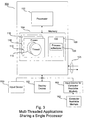
- Fig. 3 is a block diagram of a data processing system 300 having a single processor 102 and a memory 104.
- Memory 104 includes one or more multi-threaded applications (also called “processes””) 110, at least one of which contains a plurality of threads 112.
- Memory 104 also includes an operating system (OS) 108, which includes process scheduler software 109.
- OS operating system
- the steps of the described embodiment of the present invention are performed when instructions in process scheduler software 109 are executed by processor 102.
- the present invention allows the threads 112 of each multi-threaded application/process 110 to proportionally share processor 102, as described below.
- Fig. 4 is a block diagram of a data processing system 400 having multiple processors 102' and a memory 104.
- Memory 104 includes one or more multi-threaded applications 110 (also called a "process"), at least one of which contains a plurality of threads 112.
- Memory 104 also includes an operating system (OS) 108, which includes process scheduler software 109.
- OS operating system
- the steps of the described embodiment of the present invention are performed when instructions in process scheduler software 109 are executed by one or more of processors 102'.
- the present invention allows the threads 112 of each multi-threaded application/process 110 to proportionally share processors 102', as described below.
- Figs. 5 and 6 relate to single-threaded applications.
- Figs. 7 and 8 relate to multi-threaded applications.
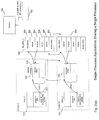
- FIG. 5(a) shows an example of a data structure used to implement a preferred embodiment of the present invention in a system where single-threaded applications share a single processor (such as the system of Fig. 1).
- Fig.5(b) shows a data structure used in a system where single-threaded applications share multiple processors 102'.
- Both Figures show data structures for two single-threaded applications (Process A and Process B), although it should be understood that any appropriate number of processes/applications can be executing in the system.
- Fig. 5(a) shows a proc_t data structure 501 for each process 106 being executed by the system and a thread_t data structure 502 for each thread being executed by the system.
- Each proc_t data structure 501 points to the thread_t data structure 502 of its thread via a thread list pointer 511.
- Each single-threaded application will have only one thread.
- Each thread_t data structure 502 points to a ps_proc_t data structure 504 via a thread data pointer in field 510.
- Each ps_proc_t data structure 504 preferably includes a time quantum field 520, a time left field 522, a thread pointer field 524, a priority field 526 (containing a priority for the process/thread), a #tickets field 528 (containing an initial number of tickets assigned to the process/thread), and a #current tickets field 530 (containing a number of tickets currently held by the process/thread).
- Processes/threads waiting to be executed by processor 102 are temporarily placed in dispatch queue 103.
- Processes/threads are executed by processor 102 for a preferred time quantum 520.
- the amount of time remaining of a current time quantum is stored in timeleft field 522.
- the timeleft field 522 of the thread/process is set to equal its time quantum. For example, if a time quantum is 100 milliseconds (10 clock ticks), timeleft field 522 is initially set to 10 ticks.
- Timeleft field 522 is decremented by OS 108 for every clock tick that a processor executes the thread/process.
- Timeleft field 522 is needed because every so often the processor is interrupted during execution of the thread/process to perform some other function.
- the timeleft field 522 is used to keep track of how much of a time quantum is used up for a thread/process. When timeleft field 522 is zero, it is time for the thread/process to give up the processor and recalculate its priority.
- Fig. 5(b) shows an example of a data structure used to implement a preferred embodiment of the present invention in a system where single-threaded applications share multiple processors 102' (such as the system of Fig. 2).
- the Figure shows data structures for two single-threaded applications (Process A and Process B), although it should be understood that any appropriate number of processes can be executing in the system.
- Figs. 6(a) and 6(b) are flow charts showing steps performed in the data processing system of Figs. 5(a) or 5(b). It will be understood that, in the example, the steps of Figs. 6(a) and 6(b) are performed by process scheduling software 109 being executed by processor 102, 102', or some other appropriate processor.
- operating system 108 is based on the Solaris operating system, which is available from Sun Microsystems, Inc.
- the steps of Figs. 6(a) and 6(b) preferably are implemented by modifying the RT scheduling class of Solaris.
- rt_proc_t two new fields (#tickets and #current tickets) are preferably added to the rt_proc structure (here called ps_proc_t).
- the Solaris function rt_tick is also preferably modified, as described below, to calculate the new priority in accordance with a number of tickets held, to reduce the number of tickets after a process/thread has executed for a predetermined time quantum, and to decide whether the current thread should continue to use the processor(s).
- Process A Process B Time #Tkts State Priority #Tkts State Priority 0 2 52 1 51 1 1 Run 52 1 51 2 1 51 1 Run 51 3 2 Run 51 1 51 4 1 Run 52 1 51 5 1 51 1 Run 51 6 2 Run 52 1 51
- Process A is assigned 2 tickets and Process B is assigned 1 ticket.
- These values are stored in #tickets field 528 and #current tickets field 530 for each process.
- the proportion of execution time between any threads of the two processes is to be 2:1 because that is the ratio between the number of tickets assigned to the two processes.
- the thread of Process A is assigned an initial priority of 52 (50 + 2) and the thread of Process B is assigned an initial priority of 51 (50 + 1).
- the initial priority of "50" is arbitrary in the example, and can be any appropriate value in an implementation of the invention.
- These priorities are stored in field 526 for each process.
- step 654 it is determined that a thread of Process A is ready to run.
- a priority for the thread of Process A is calculated in step 658 based on a number of tickets of Process A.
- the thread of Process A is placed in dispatch queue 103 (or 103') in step 660.
- step 674 the thread of Process A is eventually removed from the dispatch queue for execution by a processor when it has a highest priority in the dispatch queue.
- the thread of Process A is executed by one of processors 102, 102' for a predetermined time quantum (for example, 100 milliseconds, although any appropriate time quantum can be used).
- timeleft field 522 is decremented while the thread of the process is executed during its time quantum. At the end of execution, timeleft field 522 is zero.
- the number of tickets held by Process A is decremented by a predetermined number (such as "1") in step 676. If the number of tickets held by the process is "0" in step 678, the number of tickets for the process is reset to the initial value for the process in step 680 and control passes to step 690. Otherwise, control passes to step 690. In the example, the number of tickets is decremented from 2 to 1. This value is stored in #current tickets field 530 for Process A.
- step 690 the priority of the thread of Process A is recalculated.
- the priority of the thread of Process A is 51, since the number of current tickets held by Process A is 1.
- step 692 the thread is placed back on the dispatch queue (since, of course it has not completed execution).
- control then passes to the step 674 of Fig. 6(b), where it is determined that, since the thread of Process B has the same priority as the thread of Process A, the thread of Process A will wait and the thread of Process B will execute. (The thread of process B was previously placed on the dispatch queue). After the thread of Process B executes for the predetermined amount of time, the number of tickets that Process B has is reduced by "1," giving Process B zero tickets. In step 680, the #current tickets 530 held by Process B is set back to its initial value "1". The priority for the thread of Process B is then recalculated, still yielding a priority' of "51". Since the thread of Process A has the same priority, the thread of Process A executes next. After the thread of Process A executes, the number of current tickets of process A is reduced to "0" and reset back to "2".
- Process A is a process or application having a short execution time and Process B has a long execution time (and assuming that there are only two executing processes)
- Process B will have all the execution time after Process A is done executing.
- the described embodiment of the present invention preserves proportionality whenever both applications are competing for the processor.
- Processes A and B are both long-running applications, but process A stops in the middle to wait for some inputs from the user, Processes A and B will have a ratio of 2:1 until Process A stops. Then Process B will have all the processor time while Process A is waiting for inputs. After the user enters his input, Processes A and B will have a ratio of 2:1 again. However, the ratio between the total processor time spent on each job is skewed by how long the wait time is for Process A. Again, the described embodiment of the present invention preserves proportionality whenever both applications are competing for the processor.
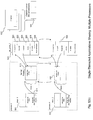
- Fig. 7(a) shows an example of a data structure used to implement a preferred embodiment of the present invention in a single processor system capable of executing multi-threaded applications (such as the system of Fig. 3).
- Fig. 7(b) shows an example of a data structure used to implement a preferred embodiment of the present invention in a multi-processor system capable of executing multi-threaded applications (such as the system of Fig. 4).
- Figs. 8(a) and 8(b) are flow charts showing steps using the data structure of Figs. 7(a) or 7(b).
- Figs. 7(a) and 7(b) are similar to the data structures of Figs. 5(a) and 5(b), except that, in a system capable of executing multi-threaded applications, multiple threads in each application/process "share" the tickets of their process between them via a ticket data structure 705. It should be understood that the systems of Fig. 7(a) and 7(b) can also include single-threaded applications (not shown), in addition to the multi-threaded applications. While each thread has its own priority 726, the tickets are held at the process level in fields 740 and 742 of ticket structure 705. Ticket data structure 705 also includes a ticket queue pointer 748 and a #slots field 746.
- the #slots field 746 indicates a number of processor slots assigned to each process. In the case of a single processor system, the number of slots is always "1". A multiple processor system can have any number of slots less than or equal to the number of processors 102'.
- Ticket queue pointer 748 points to a ticket queue 750, whose function is to hold threads of a process that are waiting for a processor slot to become available. Threads to be executed are taken off ticket queue 750 and placed on dispatch queue 103 (or 103') for execution by processor 102 (or 102').
- Fig. 8(a) show steps performed in connection with the multi-threaded applications of Figs. 7(a) and 7(b) sharing single processor 102 or multiple processors 102'.
- step 852 of Fig. 8(a) a number of tickets and a number of slots are assigned to each process.
- the priority of a thread is assigned based on the number of current tickets in the ticket structure 705 of its process when the priority is assigned. Thus, threads of a same process can have different priorities.
- a thread When a thread wants to use a processor 102, 102', it first checks to determine whether there is an available processor slot (step 856). If there is an available slot (i.e., no other thread is waiting in ticket queue 750), a priority is determined for the thread in step 858. This priority is placed in field 726 of the thread's ps_proc_t data structure 504' and the thread is placed in dispatch queue 103 for execution in step 860. Otherwise (if there are no available processor slots), the thread is placed in ticket queue 750 for this process (step 862). When a slot becomes available in step 864, a thread is taken off ticket queue 750 and its priority 726 is calculated based on the current number of tickets held by its process. The thread is then placed in dispatch queue 103 for execution.
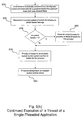
- Fig. 8(b) shows the steps for executing a thread after the thread is put on the system dispatch queue for execution by processor 102.
- the #current tickets 742 for its process is reduced by "1" in step 876. If the number of tickets held is "0" in step 878, the number of tickets is reset to the initial value for the process in step 880 and control passes to step 882. Otherwise control passes directly to step 882
- step 882 if other threads are on the ticket queue 750 for this process, the current thread gives up its slot in step 884 and is put back on ticket queue 750. Its slot is given to the thread at the head of ticket queue 750 and a new priority is calculated for this new thread based on the number of current tickets 742 for the process in step 886. This new thread (with its newly assigned priority) is placed on dispatch queue 103 for execution in step 888.
- step 882 If, on the other hand, in step 882 there are no threads waiting in the ticket queue 750 when the current thread finishes execution, the priority of the current thread is recalculated based on the number of current tickets for the process in step 890 and the current thread is placed back on dispatch queue 103 in step 892 for execution. Note that steps 886 and 890 recalculate a priority of a thread based on the number of tickets currently held by the process to which the thread belongs
- each process is assigned a number 746 of "slots" equal, for example, to the number of processors in the system.
- Other implementations of the present invention may use other numbers of slots.
- the number of slots could be smaller than the number of processors in the system in order to reduce the concurrency of execution of processes.
- the number of slots would be "2".
- tickets are assigned to processes, which are either a single thread application or a multi-threaded application.
- the processes can be executed by either a single-processor or a multi-processor system.
- the system determines which threads to execute next based on a priority of the thread, which is determined in accordance with a current number of tickets held by the process to which the thread belongs.
- the system keeps tracks of the number of open processor slots and queues the waiting threads in a ticket queue if all processor slots are being used.
- the ticket queue is a FIFO.
- Fig. 9 shows another variation of the present invention, called “hierarchical proportional sharing.”
- various users are preassigned proportional shares of system resources. Assume, for example, that users A and B share the system in an x:y ratio and that User A has three jobs, while User B has one job. User A can spread his share of the system among user A's three jobs in, for example, a 1:2:4 ratio. User B has only one job, so user B's job gets all of user B's share of system resources.
- Fig. 9 shows multiple processors, this embodiment can also be implemented in a single processor system.
- Fig. 9 The data structure of Fig. 9 is similar to the data structures of Figs. 5-8, except that tickets are assigned to each user and are then shared by the jobs of the user.
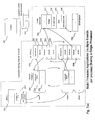
- Fig. 9(a) shows a multiple processor system
- hierarchical proportional sharing can also be implemented for a single processor system. While each job has its own priority 928, the tickets are held at the user level in fields 940 and 942 of ticket structure 905.
- Ticket structure 905 also includes a ticket queue pointer 948 and a #slots field 946.
- the #slots field indicates a number of slots assigned to each user. In the case of a single processor system, the number of slots is always "1".
- a multi-processor system can have a number of slots less than or equal to the number of processors.
- Ticket queue pointer 948 points to a ticket queue 950, whose function is to hold jobs of a user that are waiting for a processor slot to become available. Jobs to be executed are taken off ticket queue 950 and placed on dispatch queue 103' for execution by one of processors 102'.
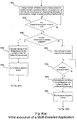
- Fig. 10(a) show steps performed in connection with the hierarchical process sharing between users sharing multiple processors 102'.
- step 1052 of Fig. 10(a) a number of tickets are assigned to each user.
- the priority of a job is based on the number of current tickets in the ticket structure 905 of its user when the priority is assigned.
- jobs of a same user can have different priorities.
- a job When a job wants to use a processor 102', it first checks to determine whether there is an available processor slot (step 1056). If there is an available slot (i.e., no other job is waiting in ticket queue 950 of the job's user), a priority is determined for the job in step 1058 and the job is placed in dispatch queue 103' in step 1060 for execution. Otherwise (if there are no available processor slots), the job is placed in ticket queue 950 for this user (step 1062). When a slot becomes available in step 1064, a job is taken off ticket queue 950 and placed in dispatch queue 103' for execution.
- Fig. 10(b) shows the steps for executing a job after the job is put on the system dispatch queue for execution by one of processors 102'.
- the #current tickets 942 is reduced by "1" in step 1076. If the number of tickets held is "0" in step 1078, the number of tickets is reset to the initial value for the user in step 1080 and control passes to step 1082. Otherwise control passes directly to step 1082
- step 1082 if other jobs are on the ticket queue of this user, the current job gives up its slot in step 1084 and is put back on ticket queue 950. Its slot is given to the job at the head of ticket queue 950 and a new priority is calculated for this new job based on the number of current tickets 942 for the user in step 1086. This new job (with its newly assigned priority) is placed on dispatch queue 103' in step 1086 for execution.
- step 1082 If, on the other hand, in step 1082 there are no jobs waiting in the ticket queue 950 when the current job finishes execution, the priority of the current job is recalculated based on the number of current tickets for the user in step 1090 and the current job is placed back on dispatch queue 103' in step 1092 for execution. Note that steps 1086 and 1090 recalculate a priority of a job based on the number of tickets currently held by the user to which the job belongs
- multiple processes can share a single pool of tickets (e.g., they may have a common ticket structure).
- the threads in multiple processes can all share a single pool of tickets.
- a process can transfer some of its tickets to another process.
Landscapes
- Engineering & Computer Science (AREA)
- Software Systems (AREA)
- Theoretical Computer Science (AREA)
- Physics & Mathematics (AREA)
- General Engineering & Computer Science (AREA)
- General Physics & Mathematics (AREA)
- Debugging And Monitoring (AREA)
- General Factory Administration (AREA)
- Management, Administration, Business Operations System, And Electronic Commerce (AREA)
- Multi Processors (AREA)
Applications Claiming Priority (2)
| Application Number | Priority Date | Filing Date | Title |
|---|---|---|---|
| US962140 | 1997-10-31 | ||
| US08/962,140 US5987492A (en) | 1997-10-31 | 1997-10-31 | Method and apparatus for processor sharing |
Publications (2)
| Publication Number | Publication Date |
|---|---|
| EP0915418A2 true EP0915418A2 (fr) | 1999-05-12 |
| EP0915418A3 EP0915418A3 (fr) | 2003-10-29 |
Family
ID=25505477
Family Applications (1)
| Application Number | Title | Priority Date | Filing Date |
|---|---|---|---|
| EP98120193A Withdrawn EP0915418A3 (fr) | 1997-10-31 | 1998-10-30 | Méthode et dispositif pour l' utilisation commune de processeurs |
Country Status (4)
| Country | Link |
|---|---|
| US (2) | US5987492A (fr) |
| EP (1) | EP0915418A3 (fr) |
| JP (1) | JPH11212809A (fr) |
| CA (1) | CA2252106A1 (fr) |
Cited By (1)
| Publication number | Priority date | Publication date | Assignee | Title |
|---|---|---|---|---|
| US8904399B2 (en) | 2010-03-15 | 2014-12-02 | Qualcomm Incorporated | System and method of executing threads at a processor |
Families Citing this family (63)
| Publication number | Priority date | Publication date | Assignee | Title |
|---|---|---|---|---|
| US5987492A (en) | 1997-10-31 | 1999-11-16 | Sun Microsystems, Inc. | Method and apparatus for processor sharing |
| US6374285B1 (en) * | 1998-05-15 | 2002-04-16 | Compaq Computer Corporation | Method for mutual exclusion of locks in a remote-write globally ordered network of processors |
| US7805724B1 (en) * | 1998-05-27 | 2010-09-28 | Arc International I.P., Inc. | Apparatus, method and computer program for dynamic slip control in real-time scheduling |
| US6952827B1 (en) | 1998-11-13 | 2005-10-04 | Cray Inc. | User program and operating system interface in a multithreaded environment |
| US7035997B1 (en) | 1998-12-16 | 2006-04-25 | Mips Technologies, Inc. | Methods and apparatus for improving fetching and dispatch of instructions in multithreaded processors |
| US7257814B1 (en) | 1998-12-16 | 2007-08-14 | Mips Technologies, Inc. | Method and apparatus for implementing atomicity of memory operations in dynamic multi-streaming processors |
| US7020879B1 (en) * | 1998-12-16 | 2006-03-28 | Mips Technologies, Inc. | Interrupt and exception handling for multi-streaming digital processors |
| US7529907B2 (en) | 1998-12-16 | 2009-05-05 | Mips Technologies, Inc. | Method and apparatus for improved computer load and store operations |
| US6477562B2 (en) * | 1998-12-16 | 2002-11-05 | Clearwater Networks, Inc. | Prioritized instruction scheduling for multi-streaming processors |
| US7237093B1 (en) | 1998-12-16 | 2007-06-26 | Mips Technologies, Inc. | Instruction fetching system in a multithreaded processor utilizing cache miss predictions to fetch instructions from multiple hardware streams |
| US6389449B1 (en) * | 1998-12-16 | 2002-05-14 | Clearwater Networks, Inc. | Interstream control and communications for multi-streaming digital processors |
| US6438704B1 (en) * | 1999-03-25 | 2002-08-20 | International Business Machines Corporation | System and method for scheduling use of system resources among a plurality of limited users |
| US6964048B1 (en) * | 1999-04-14 | 2005-11-08 | Koninklijke Philips Electronics N.V. | Method for dynamic loaning in rate monotonic real-time systems |
| US7518993B1 (en) * | 1999-11-19 | 2009-04-14 | The United States Of America As Represented By The Secretary Of The Navy | Prioritizing resource utilization in multi-thread computing system |
| US6757897B1 (en) * | 2000-02-29 | 2004-06-29 | Cisco Technology, Inc. | Apparatus and methods for scheduling and performing tasks |
| US7856633B1 (en) * | 2000-03-24 | 2010-12-21 | Intel Corporation | LRU cache replacement for a partitioned set associative cache |
| US6931641B1 (en) | 2000-04-04 | 2005-08-16 | International Business Machines Corporation | Controller for multiple instruction thread processors |
| DE60143896D1 (de) | 2000-07-14 | 2011-03-03 | Mips Tech Inc | Anweisungsabruf und -absendung in einem multi-thread-system |
| US7155717B2 (en) * | 2001-01-26 | 2006-12-26 | Intel Corporation | Apportioning a shared computer resource |
| US20020103990A1 (en) * | 2001-02-01 | 2002-08-01 | Hanan Potash | Programmed load precession machine |
| EP1377903A2 (fr) * | 2001-03-05 | 2004-01-07 | Koninklijke Philips Electronics N.V. | Procede et systeme servant a retirer un budget d'une tache bloquante |
| US7509671B1 (en) * | 2001-06-20 | 2009-03-24 | Microstrategy Incorporated | Systems and methods for assigning priority to jobs in a reporting system |
| US7086059B2 (en) * | 2001-06-26 | 2006-08-01 | Intel Corporation | Throttling queue |
| US8015567B2 (en) | 2002-10-08 | 2011-09-06 | Netlogic Microsystems, Inc. | Advanced processor with mechanism for packet distribution at high line rate |
| US7627721B2 (en) | 2002-10-08 | 2009-12-01 | Rmi Corporation | Advanced processor with cache coherency |
| US8478811B2 (en) | 2002-10-08 | 2013-07-02 | Netlogic Microsystems, Inc. | Advanced processor with credit based scheme for optimal packet flow in a multi-processor system on a chip |
| US7346757B2 (en) * | 2002-10-08 | 2008-03-18 | Rmi Corporation | Advanced processor translation lookaside buffer management in a multithreaded system |
| US8037224B2 (en) | 2002-10-08 | 2011-10-11 | Netlogic Microsystems, Inc. | Delegating network processor operations to star topology serial bus interfaces |
| US7924828B2 (en) | 2002-10-08 | 2011-04-12 | Netlogic Microsystems, Inc. | Advanced processor with mechanism for fast packet queuing operations |
| US7334086B2 (en) | 2002-10-08 | 2008-02-19 | Rmi Corporation | Advanced processor with system on a chip interconnect technology |
| US9088474B2 (en) | 2002-10-08 | 2015-07-21 | Broadcom Corporation | Advanced processor with interfacing messaging network to a CPU |
| US7961723B2 (en) | 2002-10-08 | 2011-06-14 | Netlogic Microsystems, Inc. | Advanced processor with mechanism for enforcing ordering between information sent on two independent networks |
| US8176298B2 (en) | 2002-10-08 | 2012-05-08 | Netlogic Microsystems, Inc. | Multi-core multi-threaded processing systems with instruction reordering in an in-order pipeline |
| US7984268B2 (en) * | 2002-10-08 | 2011-07-19 | Netlogic Microsystems, Inc. | Advanced processor scheduling in a multithreaded system |
| US7603664B2 (en) * | 2002-10-22 | 2009-10-13 | Sun Microsystems, Inc. | System and method for marking software code |
| US7765532B2 (en) * | 2002-10-22 | 2010-07-27 | Oracle America, Inc. | Inducing concurrency in software code |
| US7222218B2 (en) * | 2002-10-22 | 2007-05-22 | Sun Microsystems, Inc. | System and method for goal-based scheduling of blocks of code for concurrent execution |
| US7346902B2 (en) * | 2002-10-22 | 2008-03-18 | Sun Microsystems, Inc. | System and method for block-based concurrentization of software code |
| GB2453284A (en) * | 2004-04-02 | 2009-04-01 | Symbian Software Ltd | Mechanism for notifying a kernel of a thread entering a critical section. |
| US7770172B2 (en) * | 2004-09-01 | 2010-08-03 | Microsoft Corporation | Conditional variables without spinlocks |
| US7525962B2 (en) * | 2004-12-27 | 2009-04-28 | Intel Corporation | Reducing memory access bandwidth consumption in a hierarchical packet scheduler |
| US8195922B2 (en) * | 2005-03-18 | 2012-06-05 | Marvell World Trade, Ltd. | System for dynamically allocating processing time to multiple threads |
| US20060212853A1 (en) * | 2005-03-18 | 2006-09-21 | Marvell World Trade Ltd. | Real-time control apparatus having a multi-thread processor |
| US7606363B1 (en) | 2005-07-26 | 2009-10-20 | Rockwell Collins, Inc. | System and method for context switching of a cryptographic engine |
| US7395418B1 (en) * | 2005-09-22 | 2008-07-01 | Sun Microsystems, Inc. | Using a transactional execution mechanism to free up processor resources used by a busy-waiting thread |
| US8832705B1 (en) * | 2005-12-28 | 2014-09-09 | Emc Corporation | Ordered mutual exclusion |
| US9703285B2 (en) | 2006-04-27 | 2017-07-11 | International Business Machines Corporation | Fair share scheduling for mixed clusters with multiple resources |
| JP2007317171A (ja) * | 2006-04-27 | 2007-12-06 | Matsushita Electric Ind Co Ltd | マルチスレッド計算機システム、マルチスレッド実行制御方法 |
| US8087026B2 (en) | 2006-04-27 | 2011-12-27 | International Business Machines Corporation | Fair share scheduling based on an individual user's resource usage and the tracking of that usage |
| US8001549B2 (en) * | 2006-04-27 | 2011-08-16 | Panasonic Corporation | Multithreaded computer system and multithread execution control method |
| US8468532B2 (en) * | 2006-06-21 | 2013-06-18 | International Business Machines Corporation | Adjusting CPU time allocated to next thread based on gathered data in heterogeneous processor system having plurality of different instruction set architectures |
| JP2008123045A (ja) * | 2006-11-08 | 2008-05-29 | Matsushita Electric Ind Co Ltd | プロセッサ |
| US8136113B2 (en) * | 2006-12-20 | 2012-03-13 | International Business Machines Corporation | Method and apparatus for adjusting sleep time of fixed high-priority threads |
| US8024739B2 (en) * | 2007-01-09 | 2011-09-20 | International Business Machines Corporation | System for indicating and scheduling additional execution time based on determining whether the execution unit has yielded previously within a predetermined period of time |
| US8789052B2 (en) * | 2007-03-28 | 2014-07-22 | BlackBery Limited | System and method for controlling processor usage according to user input |
| JP4448163B2 (ja) * | 2007-11-21 | 2010-04-07 | レノボ・シンガポール・プライベート・リミテッド | コンピュータ・システムおよびプロセスに対するデバイスの管理方法 |
| US8806491B2 (en) | 2007-12-31 | 2014-08-12 | Intel Corporation | Thread migration to improve power efficiency in a parallel processing environment |
| US7930574B2 (en) * | 2007-12-31 | 2011-04-19 | Intel Corporation | Thread migration to improve power efficiency in a parallel processing environment |
| US9596324B2 (en) | 2008-02-08 | 2017-03-14 | Broadcom Corporation | System and method for parsing and allocating a plurality of packets to processor core threads |
| JP4996519B2 (ja) * | 2008-03-27 | 2012-08-08 | パナソニック株式会社 | 仮想マルチプロセッサ、システムlsi、携帯電話機器、及び仮想マルチプロセッサの制御方法 |
| EP2477112A1 (fr) | 2010-12-29 | 2012-07-18 | Basque Center for Applied Mathematics | Procédé de programmation efficace dans un système de partage des ressources |
| US9542236B2 (en) | 2011-12-29 | 2017-01-10 | Oracle International Corporation | Efficiency sequencer for multiple concurrently-executing threads of execution |
| CN103246552B (zh) * | 2012-02-14 | 2018-03-09 | 腾讯科技(深圳)有限公司 | 防止线程出现阻塞的方法和装置 |
Family Cites Families (12)
| Publication number | Priority date | Publication date | Assignee | Title |
|---|---|---|---|---|
| US5012409A (en) * | 1988-03-10 | 1991-04-30 | Fletcher Mitchell S | Operating system for a multi-tasking operating environment |
| DE69032418T2 (de) * | 1989-09-08 | 1999-02-25 | Digital Equipment Corp., Maynard, Mass. | Privatspeicher für Fäden in einem multifaden digitalen Datenverarbeitungssystem |
| US5421014A (en) * | 1990-07-13 | 1995-05-30 | I-Tech Corporation | Method for controlling multi-thread operations issued by an initiator-type device to one or more target-type peripheral devices |
| US5506987A (en) * | 1991-02-01 | 1996-04-09 | Digital Equipment Corporation | Affinity scheduling of processes on symmetric multiprocessing systems |
| US5500890A (en) * | 1993-08-19 | 1996-03-19 | Exxon Research And Engineering Company | Point-of-sale system using multi-threaded transactions and interleaved file transfer |
| US5586318A (en) | 1993-12-23 | 1996-12-17 | Microsoft Corporation | Method and system for managing ownership of a released synchronization mechanism |
| NZ281276A (en) * | 1994-02-28 | 1998-07-28 | British Telecomm | Communications networks service delivery infrastructure interacting with billing and network management systems |
| US5822588A (en) * | 1995-06-09 | 1998-10-13 | Sun Microsystem, Inc. | System and method for checking the use of synchronization locks in a multi-threaded target program |
| US5687390A (en) * | 1995-11-14 | 1997-11-11 | Eccs, Inc. | Hierarchical queues within a storage array (RAID) controller |
| US5699428A (en) * | 1996-01-16 | 1997-12-16 | Symantec Corporation | System for automatic decryption of file data on a per-use basis and automatic re-encryption within context of multi-threaded operating system under which applications run in real-time |
| US5937187A (en) | 1996-07-01 | 1999-08-10 | Sun Microsystems, Inc. | Method and apparatus for execution and preemption control of computer process entities |
| US5987492A (en) | 1997-10-31 | 1999-11-16 | Sun Microsystems, Inc. | Method and apparatus for processor sharing |
-
1997
- 1997-10-31 US US08/962,140 patent/US5987492A/en not_active Expired - Lifetime
-
1998
- 1998-06-30 US US09/107,690 patent/US6272517B1/en not_active Expired - Lifetime
- 1998-10-28 CA CA002252106A patent/CA2252106A1/fr not_active Abandoned
- 1998-10-30 EP EP98120193A patent/EP0915418A3/fr not_active Withdrawn
- 1998-11-02 JP JP10311865A patent/JPH11212809A/ja active Pending
Cited By (1)
| Publication number | Priority date | Publication date | Assignee | Title |
|---|---|---|---|---|
| US8904399B2 (en) | 2010-03-15 | 2014-12-02 | Qualcomm Incorporated | System and method of executing threads at a processor |
Also Published As
| Publication number | Publication date |
|---|---|
| US6272517B1 (en) | 2001-08-07 |
| CA2252106A1 (fr) | 1999-04-30 |
| JPH11212809A (ja) | 1999-08-06 |
| US5987492A (en) | 1999-11-16 |
| EP0915418A3 (fr) | 2003-10-29 |
Similar Documents
| Publication | Publication Date | Title |
|---|---|---|
| US5987492A (en) | Method and apparatus for processor sharing | |
| US6269391B1 (en) | Multi-processor scheduling kernel | |
| US5586318A (en) | Method and system for managing ownership of a released synchronization mechanism | |
| US7650601B2 (en) | Operating system kernel-assisted, self-balanced, access-protected library framework in a run-to-completion multi-processor environment | |
| US20060130062A1 (en) | Scheduling threads in a multi-threaded computer | |
| Sha et al. | Real-time scheduling theory and Ada | |
| JP2866241B2 (ja) | コンピュータシステムおよびスケジューリング方法 | |
| US6658448B1 (en) | System and method for assigning processes to specific CPU's to increase scalability and performance of operating systems | |
| US5339415A (en) | Dual level scheduling of processes to multiple parallel regions of a multi-threaded program on a tightly coupled multiprocessor computer system | |
| US5247671A (en) | Scalable schedules for serial communications controller in data processing systems | |
| US5515538A (en) | Apparatus and method for interrupt handling in a multi-threaded operating system kernel | |
| US7752620B2 (en) | Administration of locks for critical sections of computer programs in a computer that supports a multiplicity of logical partitions | |
| US5666523A (en) | Method and system for distributing asynchronous input from a system input queue to reduce context switches | |
| US20020198925A1 (en) | System and method for robust time partitioning of tasks in a real-time computing environment | |
| US6587865B1 (en) | Locally made, globally coordinated resource allocation decisions based on information provided by the second-price auction model | |
| JPH1063519A (ja) | 資源を予約するための方法及びシステム | |
| JPH05189251A (ja) | 多重タスク処理オペレーティング・システム及びそのコンピュータの動作方法 | |
| US7975269B2 (en) | Parallel processor methods and apparatus | |
| EP0913770A2 (fr) | Procédé et appareil de partage d'une tranche de temps | |
| Atlas et al. | Design and Implementation of Statistical Rate Monotonic Scheduling in KURT Linux. | |
| Bunt | Scheduling techniques for operating systems | |
| EP0544822B1 (fr) | Organisation de processus s'effectuant a deux niveaux | |
| Pujiyanta et al. | Advance Reservation for Parametric Job on Grid Computing | |
| Harbour et al. | An application-level implementation of the sporadic server | |
| JPS63301332A (ja) | ジョブ実行方式 |
Legal Events
| Date | Code | Title | Description |
|---|---|---|---|
| PUAI | Public reference made under article 153(3) epc to a published international application that has entered the european phase |
Free format text: ORIGINAL CODE: 0009012 |
|
| AK | Designated contracting states |
Kind code of ref document: A2 Designated state(s): AT BE CH CY DE DK ES FI FR GB GR IE IT LI LU MC NL PT SE |
|
| AX | Request for extension of the european patent |
Free format text: AL;LT;LV;MK;RO;SI |
|
| PUAL | Search report despatched |
Free format text: ORIGINAL CODE: 0009013 |
|
| AK | Designated contracting states |
Kind code of ref document: A3 Designated state(s): AT BE CH CY DE DK ES FI FR GB GR IE IT LI LU MC NL PT SE |
|
| AX | Request for extension of the european patent |
Extension state: AL LT LV MK RO SI |
|
| 17P | Request for examination filed |
Effective date: 20040305 |
|
| AKX | Designation fees paid |
Designated state(s): DE FR GB |
|
| 17Q | First examination report despatched |
Effective date: 20041124 |
|
| GRAP | Despatch of communication of intention to grant a patent |
Free format text: ORIGINAL CODE: EPIDOSNIGR1 |
|
| STAA | Information on the status of an ep patent application or granted ep patent |
Free format text: STATUS: THE APPLICATION IS DEEMED TO BE WITHDRAWN |
|
| 18D | Application deemed to be withdrawn |
Effective date: 20070503 |