EP0908071B1 - Procede de commande de l'etablissement et de l'exploitation de voies de transmission (supports) dans des systemes de telecommunications radiotelephoniques, notamment dans un systeme rll/wll de type dect qui forme une boucle locale de transmission d'informations liee a un systeme rnis - Google Patents
Procede de commande de l'etablissement et de l'exploitation de voies de transmission (supports) dans des systemes de telecommunications radiotelephoniques, notamment dans un systeme rll/wll de type dect qui forme une boucle locale de transmission d'informations liee a un systeme rnis Download PDFInfo
- Publication number
- EP0908071B1 EP0908071B1 EP97930303A EP97930303A EP0908071B1 EP 0908071 B1 EP0908071 B1 EP 0908071B1 EP 97930303 A EP97930303 A EP 97930303A EP 97930303 A EP97930303 A EP 97930303A EP 0908071 B1 EP0908071 B1 EP 0908071B1
- Authority
- EP
- European Patent Office
- Prior art keywords
- transmission
- transmission path
- channel
- dect
- paths
- Prior art date
- Legal status (The legal status is an assumption and is not a legal conclusion. Google has not performed a legal analysis and makes no representation as to the accuracy of the status listed.)
- Expired - Lifetime
Links
- 230000005540 biological transmission Effects 0.000 title claims abstract description 135
- 238000000034 method Methods 0.000 title claims description 24
- 101000946124 Homo sapiens Lipocalin-1 Proteins 0.000 claims description 14
- 102100034724 Lipocalin-1 Human genes 0.000 claims description 14
- 101001023833 Homo sapiens Neutrophil gelatinase-associated lipocalin Proteins 0.000 claims description 13
- 102100035405 Neutrophil gelatinase-associated lipocalin Human genes 0.000 claims description 13
- 238000004891 communication Methods 0.000 description 7
- 230000011664 signaling Effects 0.000 description 4
- 238000012545 processing Methods 0.000 description 3
- 238000010586 diagram Methods 0.000 description 2
- 239000008186 active pharmaceutical agent Substances 0.000 description 1
- 238000010276 construction Methods 0.000 description 1
- 238000011161 development Methods 0.000 description 1
- 230000018109 developmental process Effects 0.000 description 1
- 238000005516 engineering process Methods 0.000 description 1
- 230000010354 integration Effects 0.000 description 1
- 238000012552 review Methods 0.000 description 1
- 238000004088 simulation Methods 0.000 description 1
- 238000012546 transfer Methods 0.000 description 1
Images




Classifications
-
- H—ELECTRICITY
- H04—ELECTRIC COMMUNICATION TECHNIQUE
- H04W—WIRELESS COMMUNICATION NETWORKS
- H04W28/00—Network traffic management; Network resource management
- H04W28/16—Central resource management; Negotiation of resources or communication parameters, e.g. negotiating bandwidth or QoS [Quality of Service]
- H04W28/26—Resource reservation
-
- H—ELECTRICITY
- H04—ELECTRIC COMMUNICATION TECHNIQUE
- H04W—WIRELESS COMMUNICATION NETWORKS
- H04W84/00—Network topologies
- H04W84/02—Hierarchically pre-organised networks, e.g. paging networks, cellular networks, WLAN [Wireless Local Area Network] or WLL [Wireless Local Loop]
- H04W84/10—Small scale networks; Flat hierarchical networks
- H04W84/14—WLL [Wireless Local Loop]; RLL [Radio Local Loop]
Definitions
- the invention relates to a method for controlling the construction of transmission paths (bearers) in wireless telecommunication systems, in particular in a DECT-specific RLL / WLL system (radio local.) Integrated as a local message transmission loop in an ISDN system L oop / W ireless L ocal L oop) - according to the preamble of claim 1.
- FIGURE 1 shows, starting from the publications "Kommunikationstechnik Electronics, Berlin 45 (1995) Issue 1, Pages 21 to 23 and Issue 3 Pages 29 and 30" and IEE Colloquium 1993, 173; (1993), pp. 29/1 - 29/7 ; W. Hing, F.
- Halsall "Cordless access to the ISDN basic rate service" on the basis of a D ECT / I SDN I ntermediate S ystem DIIS according to ETSI publication prETS 300xxx, Version 1.10 September 1996 "I SDN ⁇ D ECT specific R LL / LL W "- T elekommunikations s ystem IDRW-TS (Integrated Services Digital Network ⁇ R adio in the L ocal L oop / W ireless in the L ocal L oop) with an ISDN telecommunications t ecause s ystem I-TTS [compare.
- the DECT / ISDN intermediate system DIIS or the RLL / WLL telecommunication subsystem RW-TTS is based preferably on a D ECT / G AP S ystem DGS [D igital E nhanced (formerly E uropean) Cordless Telecommunication; see. (1): Communications Engineering Electronics 42 (1992) Jan./Feb. No. 1, Berlin, DE; U. Pilger "Structure of the DECT standard", pages 23 to 29 in connection with the ETSI publication ETS 300175-1 ... 9, October 1992; (2): Telcom Report 16 (1993), No.
- the DECT / ISDN Intermediate System DIIS or the RLL / WLL telecommunications subsystem RW-TTS can alternatively also be based on a GSM system ( G roupe S fugciale M obile or G lobal S ystem for M obile Communication; cf. 1991) June, No. 3, Berlin, DE; A.Mann: "The GSM standard - basis for digital European mobile radio networks", pages 137 to 152).
- GSM G roupe S fuge M obile or G lobal S ystem for M obile Communication; cf. 1991
- radio channels e.g. DECT channels
- the wireless connection technology RLL / WLL R adio in the L ocal L oop / W ireless in the L ocal L oop
- the ISDN subscriber ISDN services are made available on standard ISDN interfaces (see FIGURE 1).
- IDRW-TS "ISDN ⁇ RLL / WLL DECT-specific" of FIGURE 1 is a telecommunication subscriber (user) TCU (T ele- C ommunication U ser) ndpoint with his terminal TE (T erminal E; T erminal E quipment ) z. B.
- S-BUS S-interface
- RLL / WLL telecommunications subsystem RW-TTS - DECT / ISDN Intermediate System DIIS first telecommunications subsystem
- S-BUS S-BUS
- network termination NT N etwork T ermination
- I-TTS second telecommunication subsystem
- the first telecommunication subsystem DIIS consists essentially of two telecommunications interfaces, a first telecommunications interface DIFS (D ECT I ntermediate F ixed S ystem) and a second telecommunications interface DIPS (D ECT I ntermediate P ortable S ystem) that wirelessly, for example via a DECT air interface , are connected. Because of the quasi-localized first telecommunication interface DIFS, the first telecommunication subsystem DIFS forms the local message transmission loop defined above in this context.
- the first telecommunication interface DIFS a radio fixed part RFP (R adio F ixed P art), an interworking unit IWU 1 (I nter W orking U nit) and an interface circuit INC1 (IN terface C ircuitry) to the S-interface.
- the second telecommunication interface DIPS contains a radio portable part RPP (R adio P ortable P art) and an interworking unit IWU 2 (I nter W orking U nit) and an interface circuit INC2 (IN terface C ircuitry) to the S-interface.
- the RFP fixed part and the RPP radio handset form the well-known DECT / GAP system DGS.
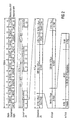
- FIGURE 2 shows, based on the publication "communications engineering Elektronik 42 (1992) Jan./Feb., No. 1, Berlin, DE; U. Pilger: "Structure of the DECT standard", pages 23 to 29 in Connection with ETS 300 175-1 ... October 9, 1992 "the TDMA structure of the DECT / GAP system DGS.
- the DECT / GAP system is a hybrid system with regard to multiple access methods, in accordance with the FDMA principle on ten frequencies in the frequency band between 1.88 and 1.90 GHz radio messages after the TDMA principle according to FIG 2 in a predetermined time Sequence from the base station RFP to the handset RPP and from Handset RPP sent to the base station RFP (duplex operation) can be.
- the time sequence is one Multi-time frame MZR determined that occurs every 160 ms and the 16 time frames ZR, each with a duration of 10 ms having.
- this time frame ZR will be by base station RFP and handset RPP transmit information separately relate to a C, M, N, P, Q channel defined in the DECT standard. Will ZR information for several in a timeframe transmit these channels, the transmission takes place according to a priority list with M> C> N and P> N.
- time slots ZS time slots 12 ... 23
- time slots 12 ... 23 time slots 12 ... 23
- time slots 12 ... 23 time slots 12 ... 23
- ZS is information with a bit length according to the DECT standard transferred from 480 bits. 32 of these 480 bits become 32 Bit as synchronization information in a SYNC field and 388 bits transmitted as useful information in a D field. The remaining 60 bits are used as additional information in a Z field and as protection information in a "Guard-Time" field transfer.
- the 388 bits transmitted as user information of the D field are subdivided into a 64 bit long A field, a 320 bit long B field and a 4 bit long "X-CRC" word.
- the 64 bit long A field consists of an 8 bit long data header with a 40 bit data record Data for the C, Q, M, N, P channels and a 16 bit long "A-CRC" word together.
- FIG. 3 shows on the basis of the OSI / ISO layer model [cf. (1): confirmsability - Irish Weg Fix Jg. 48, 2/1995, pages 102 to 111; (2): ETSI publication ETS 300175-1.9, October 1992; (3) : ETSI publication ETS 300102, February 1992; (4): ETSI publication ETS 300125, September 1991; ( 5): ETSI publication ETS 300012, April 1992] a model of the C level of the "ISDN ⁇ DECT-specific RLL / WLL" telecommunications system IDRW-TS according to FIGURE 1.
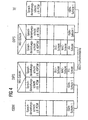
- FIG. 4 shows on the basis of the OSI / ISO layer model [cf. (1): confirmsability - Irish Weglim Jg. 48, 2/1995, pages 102 to 111; (2): ETSI publication ETS 300175-1.9, October 1992; (3) : ETSI publication ETS 300102, February 1992; (4): ETSI publication ETS 300125, September 1991; (5) : ETSI publication ETS 300012, April 1992] a U-level model for voice data transmission of the "ISDN ⁇ DECT-specific RLL / WLL" telecommunication system IDRW-TS according to FIG. 1.
- the C s channel structure offers an optimal bandwidth economy for a standard voice connection, since according to FIGURE 5 starting from FIGURES 3 and 4 and taking into account the ETSI publications (ETS 300175-1, 10/1992, Chapter 7; ETS 300175 -3, 10/1992, chapter 4.1; ETS 300175-4, 10/1992, chapter 4) only one transmission path (bearer) - e.g. MBC with the LCNy, LCN1 according to FIGURE 5 - or a connection or a time slot is required becomes.
- ETSI publications ETS 300175-1, 10/1992, Chapter 7; ETS 300175 -3, 10/1992, chapter 4.1; ETS 300175-4, 10/1992, chapter 4
- only one transmission path (bearer) - e.g. MBC with the LCNy, LCN1 according to FIGURE 5 - or a connection or a time slot is required becomes.
- the use of the C f channel leads from FIGURES 3 and 4 and taking into account the ETSI publications (ETS 300175-1, 10/1992, chapter 7; ETS 300175-3, 10/1992, chapter 4.1 ; ETS 300175-4, 10/1992, Chapter 4) to a lower bandwidth economy, since the U-plane (U-plane) itself requires a further transmission path (bearer) or a further connection or a further time slot; ie two transmission paths (bearer) - for example MBC with the LCN2, LCNz and MBC with the LCNy, LCN1 according to FIGURE 5 - or two connections or two time slots are required for a simple voice connection.
- ETSI publications ETS 300175-1, 10/1992, chapter 7
- ETS 300175-3, 10/1992, chapter 4.1 ETS 300175-4, 10/1992, Chapter 4
- ETS 300175-4 10/1992, Chapter 4
- the U-plane itself requires a further transmission path (bearer)
- three transmission paths e.g. MBC with the LCNx, LCN0, MBC with the LCNy, LCN1 and MBC with the LCNz, LCN2 according to FIGURE 5 - or three connection or three time slots required.
- the object underlying the invention is in wireless telecommunications systems, especially in one as a local message transmission loop in an ISDN system integrated DECT-specific RLL / WLL system, the Structure and use of transmission paths regarding the Number of transmission paths for wireless message transmission to optimize.
- This task is based on that in the preamble of Claim 1 defined method by the in the Characteristic of claim 1 specified features solved.
- the idea underlying the invention is that Structure and use of transmission paths (bearer) between Radio transmitters / receivers in wireless telecommunication systems of the aforementioned and outlined Art by assigning transmission route numbers to the To control transmission paths so that a collision when building and the use of the transmission paths (connections) avoided and at the same time the resources of the air interface be used efficiently. This will reduce the effort in the telecommunications systems and the susceptibility to errors minimized when establishing a connection (establishment of transmission paths).
- a first embodiment of the invention is based on the FIGURES 6 and 7 explained.
- FIGURE 6 shows an incentive state diagram of how a change of channel from the C f channel to the C s channel can be achieved by controlling the transmission path numbers with minimal expenditure on transmission paths (saving resources of the air interface).
- the first telecommunication interface DIFS (radio transceiver) is connected on a first transmission path with a first transmission path number LCNx (Logical Connection Number; identifier) through the first transmission channel C f to the second telecommunication interface DIPS (radio transceiver).
- LCNx Logical Connection Number; identifier
- the first telecommunication interface DIFS requests the U level at the second telecommunication interface DIPS on.
- FIGURE 7 shows another incentive state diagram, such as by controlling the transmission path numbers one from the second Telecommunications interface DIPS (radio transceiver) desired channel change of the first Telecommunication interface DIFS (radio transmission / reception device) can be signaled and this then initiates the channel change and together with the second Telecommunications interface performs DIPS.
- DIPS radio transceiver
- DIFS radio transmission / reception device
- the second transmission channel C s is used for message transmission on the C level.
- the U level is also used.
- a transmission path with a transmission path number LCN (identifier) for using the first transmission channel C f has not yet been set up.
- the second transmission channel C s has a smaller transmission capacity than the first transmission channel C f .
- the second telecommunication interface DIPS recognizes that the first transmission channel C f is necessary. However, since there is still no transmission path with the identifier LCN, for example the identifier LCN0, for the first transmission channel C f , this is set up by it.
- the choice of the identifier LCN - in the present case the LCN0 - as The transmission path to be set up is not identified arbitrary, but again specifically according to a given one Selection criterion.
- This criterion is very general formulates that as the identifier LCN the identifier of the possible Identifiers LCN0, LCN1, LCN2 is still used is not used for another transmission path, so free is.
- selection criterion Is an alternative to the selection criterion mentioned above it is also possible to have special characteristics of the selection criterion to be used for the identification assignment. For example, - like in present case - always the smallest free identifier of the identifiers LCN0, LCN1, LCN2 or the largest free identifier of the Identifiers LCN0, LCN1, LCN2 can be used.
- the second telecommunications interface sends for the establishment of the transmission path DIPS according to the ETSI publication ETS 300175-3, October 1992, chap. 10.5.1.2 and 10.5.1.3 preferably for the establishment of a transmission path is responsible for the first telecommunications interface DIFS a DECT-specific first B-field message "BEARER_REQUEST" (cf. ETSI publication ETS 300175-3, October 1992, chap. 7.3.3.2) as a command (COMMAND).
- the first telecommunication interface DIFS then sends a DECT-specific after receiving the first B-field message second B-field message "BEARER_CONFIRM" (cf. ETSI publication ETS 300175-3, October 1992, chap. 7.3.3.3) in response (RESPONSE) to the second telecommunications interface DIPS.
- BEARER_CONFIRM cf. ETSI publication ETS 300175-3, October 1992, chap. 7.3.3.3
- the second telecommunications interface DIPS confirms the first MAC message "ATTRIBUTES_T._REQUEST” by sending the second MAC message "ATTRIBUTES_T._CONFIRM" to the first telecommunications interface DIFS.
- the first transmission channel C f is then used for message transmission at the C level.
Landscapes
- Engineering & Computer Science (AREA)
- Quality & Reliability (AREA)
- Computer Networks & Wireless Communication (AREA)
- Signal Processing (AREA)
- Mobile Radio Communication Systems (AREA)
- Data Exchanges In Wide-Area Networks (AREA)
- Small-Scale Networks (AREA)
Abstract
Claims (15)
- Procédé de commande de l'établissement et de l'exploitation de voies de transmission (bearer) entre dispositifs radio émetteurs / radio récepteurs dans des systèmes de télécommunications sans fil, notamment dans un système RLL/WLL spécifique au DECT et intégré dans un système RNIS sous la forme d'une boucle locale de transmission d'informations, dans lequela) il est procédé à l'établissement des voies de transmission entre un premier dispositif radio émetteur / radio récepteur (DIFS) et un deuxième dispositif radio émetteur / radio récepteur (DIPS) dans un système de télécommunications (DIIS);b) des numéros de voies de transmission (LCNx, LCNy, LCNz, LCN0, LCN1, LCN2) sont affectés aux voies de transmission;c) des messages système spécifiques au système sont transmis sur les voies de transmission dans des canaux de transmission (Cs, Cf) avec des capacités de transmission spécifiques aux canaux,
caractérisé en ce qued) les dispositifs radio émetteurs / radio récepteurs (DIFS, DIPS) établissent une première voie de transmission pour la transmission des messages système dans un premier canal de transmission (Cf) avec une première capacité de transmission spécifique au canal de manière telle qu'est affecté à la première voie de transmission un premier numéro de voie de transmission (LCNx, LCN0) qui n'a pas encore été affecté à d'autres voies de transmission. - Procédé selon la revendication 1, caractérisé en ce que
le premier numéro de voie de transmission (LCNx, LCN0) est réservé à la première voie de transmission pour la transmission des messages système dans le premier canal de transmission (Cf) avec la première capacité de transmission spécifique au canal. - Procédé selon la revendication 2, caractérisé en ce que
la réservation du premier numéro de voie de transmission (LCNx, LCN0) pour la première voie de transmission pour la transmission des messages système dans le premier canal de transmission (Cf) avec la première capacité de transmission spécifique au canal est annulée et en ce qu'un deuxième numéro de voie de transmission (LCNy, LCNz, LCN1, LCN2) est affecté à une deuxième voie de transmission pour la transmission des messages système dans le premier canal de transmission (Cf) avec la première capacité de transmission spécifique au canal et est réservé lors de l'établissement de la première voie de transmission pour la transmission des messages système dans un deuxième canal de transmission (Cs) avec une deuxième capacité de transmission spécifique au canal. - Procédé selon l'une des revendications 1 à 3, caractérisé en ce que le premier numéro de voie de transmission (LCNx, LCN0) affecté à la première voie de transmission et le deuxième numéro de voie transmission (LCNy, LCNz, LCN1, LCN2) affecté à la deuxième voie de transmission est le plus petit numéro de voie de transmission des numéros de voies de transmission affectables aux voies de transmission (LCNx, LCNy, LCNz, LCN0, LCN1, LCN2) qui n'a pas encore été affecté aux autres voies de transmission.
- Procédé selon l'une des revendications 1 à 3, caractérisé en ce que le premier numéro de voie de transmission (LCNx, LCN0) affecté à la première voie de transmission et le deuxième numéro de voie transmission (LCNy, LCNz, LCN1, LCN2) affecté à la deuxième voie de transmission est le plus grand numéro de voie de transmission des numéros de voies de transmission affectables aux voies de transmission (LCNx, LCNy, LCNz, LCN0, LCN1, LCN2) qui n'a pas encore été affecté aux autres voies de transmission.
- Procédé selon l'une des revendications 1 à 5, caractérisé en ce qu'il est procédé à l'établissement d'une troisième voie de transmission avec un numéro de voie de transmission affecté (LCNx, LCNy, LCNz, LCN0, LCN1, LCN2) pour la transmission de messages système dans un deuxième canal de transmission (Cs) avec une deuxième capacité de transmission spécifique au canal et en ce qu'il est procédé à l'établissement de la première voie de transmission avec le premier numéro de voie de transmission (LCNx, LCN0) resp. le deuxième numéro de voie de transmission (LCNy, LCNz, LCN1, LCN2) avec lequel un dispositif radio émetteur / radio récepteur (DIFS, DIPS) des dispositifs radio émetteurs / radio récepteurs (DIFS, DIPS) signale à un autre dispositif radio émetteur / radio récepteur (DIFS, DIPS) qu'il faut transmettre les messages système sur la première voie de transmission dans le premier canal de transmission (Cf) avec la première capacité de transmission spécifique au canal.
- Procédé selon l'une des revendications 1 à 6, caractérisé en ce que
le système de télécommunications (DIIS) est un système DECT. - Procédé selon l'une des revendications 1 à 6, caractérisé en ce que
le système de télécommunications (DIIS) est un système GSM. - Procédé selon l'une des revendications 1 à 6, caractérisé en ce que
le système de télécommunications (DIIS) est un système PHS, un système WACS ou un système PACS. - Procédé selon l'une des revendications 1 à 6, caractérisé en ce que
le système de télécommunications (DIIS) est un système «IS-54» ou un système PDC. - Procédé selon l'une des revendications 1 à 6, caractérisé en ce que
le système de télécommunications (DIIS) est un système CDMA, un système TDMA, un système FDMA ou un système hybride par rapport auxdites normes de transmission. - Procédé selon la revendication 7, caractérisé en ce que
le système de télécommunications (DIIS) est un système RLL/WLL spécifique au DECT, lequel est intégré dans un système RNIS sous la forme d'une boucle locale de transmission de messages et en ce que le premier dispositif radio émetteur / radio récepteur (DIFS) est un DECT INTERMEDIATE FIXED SYSTEM (DIFS) et le deuxième dispositif radio émetteur / radio récepteur (DIPS) est un DECT INTERMEDIATE PORTABLE SYSTEM (DIPS). - Procédé selon la revendication 7, caractérisé en ce que
le premier canal de transmission (Cf) est le canal Cf du système DECT. - Procédé selon la revendication 4, caractérisé en ce que
le deuxième canal de transmission (Cs) est le canal Cs du système DECT. - Procédé selon la revendication 7, caractérisé en ce que
les numéros de voies de transmission sont les numéros LC (Logical Connection) de la norme DECT.
Applications Claiming Priority (3)
| Application Number | Priority Date | Filing Date | Title |
|---|---|---|---|
| DE19625161 | 1996-06-24 | ||
| DE19625161A DE19625161C2 (de) | 1996-06-24 | 1996-06-24 | Verfahren zum Steuern des Aufbaus und der Nutzung von Übertragungswegen (Bearer) zwischen Funksende-/Funkempfangseinrichtungen in drahtlosen Telekommunikationssystemen, insbesondere in einem als lokale Nachrichtenübertragungsschleife in einem ISDN-System eingebundenen DECT-spezifischen RLL-WLL-System |
| PCT/DE1997/001144 WO1997050273A1 (fr) | 1996-06-24 | 1997-06-06 | Procede de commande de l'etablissement et de l'exploitation de voies de transmission (supports) dans des systemes de telecommunications radiotelephoniques, notamment dans un systeme rll/wll de type dect qui forme une boucle locale de transmission d'informations liee a un systeme rnis |
Publications (2)
| Publication Number | Publication Date |
|---|---|
| EP0908071A1 EP0908071A1 (fr) | 1999-04-14 |
| EP0908071B1 true EP0908071B1 (fr) | 2004-10-06 |
Family
ID=7797804
Family Applications (1)
| Application Number | Title | Priority Date | Filing Date |
|---|---|---|---|
| EP97930303A Expired - Lifetime EP0908071B1 (fr) | 1996-06-24 | 1997-06-06 | Procede de commande de l'etablissement et de l'exploitation de voies de transmission (supports) dans des systemes de telecommunications radiotelephoniques, notamment dans un systeme rll/wll de type dect qui forme une boucle locale de transmission d'informations liee a un systeme rnis |
Country Status (16)
| Country | Link |
|---|---|
| US (1) | US6332080B1 (fr) |
| EP (1) | EP0908071B1 (fr) |
| JP (1) | JP3099969B2 (fr) |
| CN (1) | CN1098013C (fr) |
| AR (1) | AR013310A1 (fr) |
| AT (1) | ATE279084T1 (fr) |
| AU (1) | AU3432897A (fr) |
| BR (1) | BR9709980A (fr) |
| CA (1) | CA2259035C (fr) |
| DE (2) | DE19625161C2 (fr) |
| ES (1) | ES2229369T3 (fr) |
| ID (1) | ID17408A (fr) |
| PL (1) | PL183447B1 (fr) |
| RU (1) | RU2198478C2 (fr) |
| WO (1) | WO1997050273A1 (fr) |
| ZA (1) | ZA975539B (fr) |
Families Citing this family (11)
| Publication number | Priority date | Publication date | Assignee | Title |
|---|---|---|---|---|
| DE19636744C2 (de) * | 1996-09-10 | 1998-09-17 | Siemens Ag | Verfahren zum Übertragen von Daten in einem hybriden Telekommunikationssystem, insbesondere einem "ISDN - DECT-spezifischen RLL/WLL"-System |
| DE29805424U1 (de) | 1998-03-19 | 1998-06-10 | Schnoor, Wolfgang, 24782 Büdelsdorf | Anschalteinrichtung für eine Funkstelle an ein Fernsprechnetz |
| US6625128B1 (en) * | 1999-06-28 | 2003-09-23 | Legerity, Inc. | Method and apparatus for prioritizing packet data transmission and reception |
| US7574233B2 (en) * | 2002-12-30 | 2009-08-11 | Intel Corporation | Sharing a radio frequency interface resource |
| CN1754340B (zh) * | 2003-02-28 | 2010-07-14 | 汤姆森许可贸易公司 | 用于wlan专用下行链路信道的方法 |
| US8126477B2 (en) | 2005-07-07 | 2012-02-28 | Qualcomm Incorporated | Methods and devices for interworking of wireless wide area networks and wireless local area networks or wireless personal area networks |
| US8364148B2 (en) | 2005-07-07 | 2013-01-29 | Qualcomm Incorporated | Methods and devices for interworking of wireless wide area networks and wireless local area networks or wireless personal area networks |
| RU2417539C2 (ru) * | 2005-07-07 | 2011-04-27 | Квэлкомм Инкорпорейтед | Способ и устройство для межсетевого взаимодействия беспроводных глобальных сетей и беспроводных локальных сетей или беспроводных персональных локальных сетей |
| US8311543B2 (en) | 2005-07-07 | 2012-11-13 | Qualcomm Incorporated | Methods and devices for interworking of wireless wide area networks and wireless local area networks or wireless personal area networks |
| RU2380839C2 (ru) * | 2007-03-21 | 2010-01-27 | Общество с ограниченной ответственностью "Линкстрим" | Способ адаптивного управления передачей потоковых медиаданных |
| US20140241406A1 (en) * | 2013-02-27 | 2014-08-28 | Mediatek Inc. | Wireless communications system performing transmission and reception according to operational states of co-located interface apparatus and related wireless communications method there of |
Family Cites Families (7)
| Publication number | Priority date | Publication date | Assignee | Title |
|---|---|---|---|---|
| SU1243160A1 (ru) * | 1984-07-31 | 1986-07-07 | Предприятие П/Я Г-4677 | Устройство магистральной межприборной св зи |
| JPH0388534A (ja) | 1989-08-31 | 1991-04-12 | Hitachi Ltd | パケット交換方式 |
| GB2236454A (en) * | 1989-09-01 | 1991-04-03 | Philips Electronic Associated | Communications system for radio telephones |
| EP0635185A1 (fr) * | 1992-04-09 | 1995-01-25 | Siemens Aktiengesellschaft | Procede de structuration d'un format de champ b en norme dect |
| SE500830C2 (sv) * | 1993-05-17 | 1994-09-12 | Ericsson Telefon Ab L M | Förfarande och anordning vid kanalutnyttjandet i ett radiokommunikationssystem |
| DE4330704A1 (de) * | 1993-09-10 | 1995-03-16 | Sel Alcatel Ag | Telepoint-System |
| DE19625141C2 (de) * | 1996-04-04 | 1998-12-03 | Siemens Ag | Verfahren zur Steuerung des Wechsels von Telekommunikationskanälen eines in einem Telekommunikationssystem als lokale Nachrichtenübertragungsschleife eingebundenen Telekommunikationsteilsystems, insbesondere eines in einem ISDN-System eingebundenen DECT-spezifischen RLL/WLL-Teilsystems |
-
1996
- 1996-06-24 DE DE19625161A patent/DE19625161C2/de not_active Expired - Fee Related
-
1997
- 1997-06-06 PL PL97330428A patent/PL183447B1/pl not_active IP Right Cessation
- 1997-06-06 US US09/202,165 patent/US6332080B1/en not_active Expired - Fee Related
- 1997-06-06 AT AT97930303T patent/ATE279084T1/de not_active IP Right Cessation
- 1997-06-06 ES ES97930303T patent/ES2229369T3/es not_active Expired - Lifetime
- 1997-06-06 EP EP97930303A patent/EP0908071B1/fr not_active Expired - Lifetime
- 1997-06-06 RU RU99101113/09A patent/RU2198478C2/ru not_active IP Right Cessation
- 1997-06-06 CA CA002259035A patent/CA2259035C/fr not_active Expired - Fee Related
- 1997-06-06 WO PCT/DE1997/001144 patent/WO1997050273A1/fr not_active Ceased
- 1997-06-06 AU AU34328/97A patent/AU3432897A/en not_active Abandoned
- 1997-06-06 BR BR9709980A patent/BR9709980A/pt not_active IP Right Cessation
- 1997-06-06 JP JP10502061A patent/JP3099969B2/ja not_active Expired - Fee Related
- 1997-06-06 DE DE59711996T patent/DE59711996D1/de not_active Expired - Fee Related
- 1997-06-06 CN CN97194935A patent/CN1098013C/zh not_active Expired - Fee Related
- 1997-06-20 AR ARP970102704A patent/AR013310A1/es unknown
- 1997-06-23 ZA ZA9705539A patent/ZA975539B/xx unknown
- 1997-06-24 ID IDP972171A patent/ID17408A/id unknown
Also Published As
| Publication number | Publication date |
|---|---|
| ZA975539B (en) | 1997-12-24 |
| BR9709980A (pt) | 1999-08-10 |
| CN1098013C (zh) | 2003-01-01 |
| DE59711996D1 (de) | 2004-11-11 |
| ES2229369T3 (es) | 2005-04-16 |
| DE19625161C2 (de) | 1998-08-06 |
| CN1220073A (zh) | 1999-06-16 |
| ID17408A (id) | 1997-12-24 |
| DE19625161A1 (de) | 1998-01-02 |
| ATE279084T1 (de) | 2004-10-15 |
| PL183447B1 (pl) | 2002-06-28 |
| AR013310A1 (es) | 2000-12-27 |
| US6332080B1 (en) | 2001-12-18 |
| PL330428A1 (en) | 1999-05-10 |
| HK1018873A1 (en) | 2000-01-07 |
| RU2198478C2 (ru) | 2003-02-10 |
| CA2259035C (fr) | 2002-11-19 |
| EP0908071A1 (fr) | 1999-04-14 |
| JP2000507782A (ja) | 2000-06-20 |
| JP3099969B2 (ja) | 2000-10-16 |
| AU3432897A (en) | 1998-01-14 |
| WO1997050273A1 (fr) | 1997-12-31 |
| CA2259035A1 (fr) | 1997-12-31 |
Similar Documents
| Publication | Publication Date | Title |
|---|---|---|
| EP0947059B1 (fr) | Procede d'etablissement de liaisons de telecommunication entre des appareils de telecommunication dans des systemes de telecommunication sans fil, en particulier entre des appareils dect d'un systeme dect | |
| EP0935895B1 (fr) | Procede et interface de telecommunications pour la transmission de trains de donnees continus et/ou discontinus dans un systeme de telecommunications hybride, notamment un systeme "rll/wll specifique isdn - dect" | |
| EP0712561B1 (fr) | System local de radiotransmission a rnis | |
| DE19625161C2 (de) | Verfahren zum Steuern des Aufbaus und der Nutzung von Übertragungswegen (Bearer) zwischen Funksende-/Funkempfangseinrichtungen in drahtlosen Telekommunikationssystemen, insbesondere in einem als lokale Nachrichtenübertragungsschleife in einem ISDN-System eingebundenen DECT-spezifischen RLL-WLL-System | |
| WO1994013112A1 (fr) | Installation et procede de commutation pour systeme de radiotelephonie du genre a central local ou a commutateur prive | |
| EP0925707B1 (fr) | Procedes pour transmettre des donnees dans un systeme de telecommunication hybride, notamment un systeme "isdn -- rll/wll specifique-dect" | |
| EP0891680B1 (fr) | Attribution de canaux de differentes capacites dans un systeme hybride de telecommunications rnis-dect | |
| DE19625142C2 (de) | Verfahren zum Zuweisen von Telekommunikationskanälen unterschiedlicher Kanalkapazität in einem hybriden Telekommunikationssystem, insbesondere einem "ISDN <--> DECT-spezifischen RLL/WLL"-System | |
| DE19625141C2 (de) | Verfahren zur Steuerung des Wechsels von Telekommunikationskanälen eines in einem Telekommunikationssystem als lokale Nachrichtenübertragungsschleife eingebundenen Telekommunikationsteilsystems, insbesondere eines in einem ISDN-System eingebundenen DECT-spezifischen RLL/WLL-Teilsystems | |
| EP0965236B1 (fr) | Procede pour piloter l'etablissement de liaisons de telecommunications avec des terminaux de reseau differents en termes de demandes de voie de transmission | |
| WO1997038546A1 (fr) | Commande du changement des canaux de telecommunications dans un systeme partiel de type 'rll/wll specifique dect' lie a un systeme rnis | |
| EP0934675B1 (fr) | Procede pour transmettre des donnees utilisateur dans un systeme de telecommunications hybride, notamment un systeme "rll/wll specifique isdn -- dect" | |
| EP1013129B1 (fr) | Itinerance de parties mobiles dans des reseaux de telecommunications dans fil au moins partiellement asynchrones, notamment des reseaux dect | |
| EP0993753B1 (fr) | Procede permettant de former des unites fonctionnelles entre des premiers appareils de telecommunication et des deuxiemes appareils de telecommunication dans des systemes de telecommunication sans fil | |
| EP1068751A1 (fr) | Procede et element mobile destines a l'etablissement de liaisons de telecommunication dans des systemes de telecommunication radio, notamment les systemes dect/gap et systeme de telecommunication radio, notamment un systeme dect/gap |
Legal Events
| Date | Code | Title | Description |
|---|---|---|---|
| PUAI | Public reference made under article 153(3) epc to a published international application that has entered the european phase |
Free format text: ORIGINAL CODE: 0009012 |
|
| AK | Designated contracting states |
Kind code of ref document: A1 Designated state(s): AT BE CH DE ES FR GB IT LI NL SE |
|
| 17P | Request for examination filed |
Effective date: 19981217 |
|
| GRAP | Despatch of communication of intention to grant a patent |
Free format text: ORIGINAL CODE: EPIDOSNIGR1 |
|
| GRAS | Grant fee paid |
Free format text: ORIGINAL CODE: EPIDOSNIGR3 |
|
| GRAA | (expected) grant |
Free format text: ORIGINAL CODE: 0009210 |
|
| AK | Designated contracting states |
Kind code of ref document: B1 Designated state(s): AT BE CH DE ES FR GB IT LI NL SE |
|
| PG25 | Lapsed in a contracting state [announced via postgrant information from national office to epo] |
Ref country code: NL Free format text: LAPSE BECAUSE OF FAILURE TO SUBMIT A TRANSLATION OF THE DESCRIPTION OR TO PAY THE FEE WITHIN THE PRESCRIBED TIME-LIMIT Effective date: 20041006 |
|
| REG | Reference to a national code |
Ref country code: GB Ref legal event code: FG4D Free format text: NOT ENGLISH |
|
| REG | Reference to a national code |
Ref country code: CH Ref legal event code: EP |
|
| REF | Corresponds to: |
Ref document number: 59711996 Country of ref document: DE Date of ref document: 20041111 Kind code of ref document: P |
|
| PG25 | Lapsed in a contracting state [announced via postgrant information from national office to epo] |
Ref country code: SE Free format text: LAPSE BECAUSE OF FAILURE TO SUBMIT A TRANSLATION OF THE DESCRIPTION OR TO PAY THE FEE WITHIN THE PRESCRIBED TIME-LIMIT Effective date: 20050106 |
|
| GBT | Gb: translation of ep patent filed (gb section 77(6)(a)/1977) |
Effective date: 20050124 |
|
| NLV1 | Nl: lapsed or annulled due to failure to fulfill the requirements of art. 29p and 29m of the patents act | ||
| REG | Reference to a national code |
Ref country code: ES Ref legal event code: FG2A Ref document number: 2229369 Country of ref document: ES Kind code of ref document: T3 |
|
| PG25 | Lapsed in a contracting state [announced via postgrant information from national office to epo] |
Ref country code: AT Free format text: LAPSE BECAUSE OF NON-PAYMENT OF DUE FEES Effective date: 20050606 |
|
| PG25 | Lapsed in a contracting state [announced via postgrant information from national office to epo] |
Ref country code: LI Free format text: LAPSE BECAUSE OF NON-PAYMENT OF DUE FEES Effective date: 20050630 Ref country code: CH Free format text: LAPSE BECAUSE OF NON-PAYMENT OF DUE FEES Effective date: 20050630 Ref country code: BE Free format text: LAPSE BECAUSE OF NON-PAYMENT OF DUE FEES Effective date: 20050630 |
|
| ET | Fr: translation filed | ||
| PLBE | No opposition filed within time limit |
Free format text: ORIGINAL CODE: 0009261 |
|
| STAA | Information on the status of an ep patent application or granted ep patent |
Free format text: STATUS: NO OPPOSITION FILED WITHIN TIME LIMIT |
|
| 26N | No opposition filed |
Effective date: 20050707 |
|
| REG | Reference to a national code |
Ref country code: CH Ref legal event code: PL |
|
| BERE | Be: lapsed |
Owner name: *SIEMENS A.G. Effective date: 20050630 |
|
| PGFP | Annual fee paid to national office [announced via postgrant information from national office to epo] |
Ref country code: ES Payment date: 20090623 Year of fee payment: 13 |
|
| PGFP | Annual fee paid to national office [announced via postgrant information from national office to epo] |
Ref country code: IT Payment date: 20090625 Year of fee payment: 13 Ref country code: FR Payment date: 20090615 Year of fee payment: 13 |
|
| PGFP | Annual fee paid to national office [announced via postgrant information from national office to epo] |
Ref country code: GB Payment date: 20090618 Year of fee payment: 13 Ref country code: DE Payment date: 20090622 Year of fee payment: 13 |
|
| REG | Reference to a national code |
Ref country code: GB Ref legal event code: 732E Free format text: REGISTERED BETWEEN 20101028 AND 20101103 |
|
| GBPC | Gb: european patent ceased through non-payment of renewal fee |
Effective date: 20100606 |
|
| REG | Reference to a national code |
Ref country code: FR Ref legal event code: ST Effective date: 20110228 |
|
| PG25 | Lapsed in a contracting state [announced via postgrant information from national office to epo] |
Ref country code: IT Free format text: LAPSE BECAUSE OF NON-PAYMENT OF DUE FEES Effective date: 20100606 |
|
| PG25 | Lapsed in a contracting state [announced via postgrant information from national office to epo] |
Ref country code: DE Free format text: LAPSE BECAUSE OF NON-PAYMENT OF DUE FEES Effective date: 20110101 |
|
| PG25 | Lapsed in a contracting state [announced via postgrant information from national office to epo] |
Ref country code: FR Free format text: LAPSE BECAUSE OF NON-PAYMENT OF DUE FEES Effective date: 20100630 |
|
| REG | Reference to a national code |
Ref country code: ES Ref legal event code: FD2A Effective date: 20110718 |
|
| PG25 | Lapsed in a contracting state [announced via postgrant information from national office to epo] |
Ref country code: GB Free format text: LAPSE BECAUSE OF NON-PAYMENT OF DUE FEES Effective date: 20100606 Ref country code: ES Free format text: LAPSE BECAUSE OF NON-PAYMENT OF DUE FEES Effective date: 20110706 |
|
| PG25 | Lapsed in a contracting state [announced via postgrant information from national office to epo] |
Ref country code: ES Free format text: LAPSE BECAUSE OF NON-PAYMENT OF DUE FEES Effective date: 20100607 |