EP0823857B1 - Biological adsorption supports - Google Patents
Biological adsorption supports Download PDFInfo
- Publication number
- EP0823857B1 EP0823857B1 EP96912525A EP96912525A EP0823857B1 EP 0823857 B1 EP0823857 B1 EP 0823857B1 EP 96912525 A EP96912525 A EP 96912525A EP 96912525 A EP96912525 A EP 96912525A EP 0823857 B1 EP0823857 B1 EP 0823857B1
- Authority
- EP
- European Patent Office
- Prior art keywords
- nanostructured
- coated
- whiskers
- protein
- conformal
- Prior art date
- Legal status (The legal status is an assumption and is not a legal conclusion. Google has not performed a legal analysis and makes no representation as to the accuracy of the status listed.)
- Expired - Lifetime
Links
Images


Classifications
-
- B—PERFORMING OPERATIONS; TRANSPORTING
- B01—PHYSICAL OR CHEMICAL PROCESSES OR APPARATUS IN GENERAL
- B01D—SEPARATION
- B01D15/00—Separating processes involving the treatment of liquids with solid sorbents; Apparatus therefor
-
- G—PHYSICS
- G01—MEASURING; TESTING
- G01N—INVESTIGATING OR ANALYSING MATERIALS BY DETERMINING THEIR CHEMICAL OR PHYSICAL PROPERTIES
- G01N33/00—Investigating or analysing materials by specific methods not covered by groups G01N1/00 - G01N31/00
- G01N33/48—Biological material, e.g. blood, urine; Haemocytometers
- G01N33/50—Chemical analysis of biological material, e.g. blood, urine; Testing involving biospecific ligand binding methods; Immunological testing
- G01N33/53—Immunoassay; Biospecific binding assay; Materials therefor
-
- B—PERFORMING OPERATIONS; TRANSPORTING
- B01—PHYSICAL OR CHEMICAL PROCESSES OR APPARATUS IN GENERAL
- B01J—CHEMICAL OR PHYSICAL PROCESSES, e.g. CATALYSIS OR COLLOID CHEMISTRY; THEIR RELEVANT APPARATUS
- B01J20/00—Solid sorbent compositions or filter aid compositions; Sorbents for chromatography; Processes for preparing, regenerating or reactivating thereof
- B01J20/30—Processes for preparing, regenerating, or reactivating
- B01J20/32—Impregnating or coating ; Solid sorbent compositions obtained from processes involving impregnating or coating
- B01J20/3202—Impregnating or coating ; Solid sorbent compositions obtained from processes involving impregnating or coating characterised by the carrier, support or substrate used for impregnation or coating
- B01J20/3204—Inorganic carriers, supports or substrates
-
- B—PERFORMING OPERATIONS; TRANSPORTING
- B01—PHYSICAL OR CHEMICAL PROCESSES OR APPARATUS IN GENERAL
- B01J—CHEMICAL OR PHYSICAL PROCESSES, e.g. CATALYSIS OR COLLOID CHEMISTRY; THEIR RELEVANT APPARATUS
- B01J20/00—Solid sorbent compositions or filter aid compositions; Sorbents for chromatography; Processes for preparing, regenerating or reactivating thereof
- B01J20/30—Processes for preparing, regenerating, or reactivating
- B01J20/32—Impregnating or coating ; Solid sorbent compositions obtained from processes involving impregnating or coating
- B01J20/3202—Impregnating or coating ; Solid sorbent compositions obtained from processes involving impregnating or coating characterised by the carrier, support or substrate used for impregnation or coating
- B01J20/3206—Organic carriers, supports or substrates
- B01J20/3208—Polymeric carriers, supports or substrates
- B01J20/3212—Polymeric carriers, supports or substrates consisting of a polymer obtained by reactions otherwise than involving only carbon to carbon unsaturated bonds
-
- B—PERFORMING OPERATIONS; TRANSPORTING
- B01—PHYSICAL OR CHEMICAL PROCESSES OR APPARATUS IN GENERAL
- B01J—CHEMICAL OR PHYSICAL PROCESSES, e.g. CATALYSIS OR COLLOID CHEMISTRY; THEIR RELEVANT APPARATUS
- B01J20/00—Solid sorbent compositions or filter aid compositions; Sorbents for chromatography; Processes for preparing, regenerating or reactivating thereof
- B01J20/30—Processes for preparing, regenerating, or reactivating
- B01J20/32—Impregnating or coating ; Solid sorbent compositions obtained from processes involving impregnating or coating
- B01J20/3231—Impregnating or coating ; Solid sorbent compositions obtained from processes involving impregnating or coating characterised by the coating or impregnating layer
- B01J20/3234—Inorganic material layers
- B01J20/3236—Inorganic material layers containing metal, other than zeolites, e.g. oxides, hydroxides, sulphides or salts
-
- B—PERFORMING OPERATIONS; TRANSPORTING
- B01—PHYSICAL OR CHEMICAL PROCESSES OR APPARATUS IN GENERAL
- B01J—CHEMICAL OR PHYSICAL PROCESSES, e.g. CATALYSIS OR COLLOID CHEMISTRY; THEIR RELEVANT APPARATUS
- B01J20/00—Solid sorbent compositions or filter aid compositions; Sorbents for chromatography; Processes for preparing, regenerating or reactivating thereof
- B01J20/30—Processes for preparing, regenerating, or reactivating
- B01J20/32—Impregnating or coating ; Solid sorbent compositions obtained from processes involving impregnating or coating
- B01J20/3231—Impregnating or coating ; Solid sorbent compositions obtained from processes involving impregnating or coating characterised by the coating or impregnating layer
- B01J20/3289—Coatings involving more than one layer of same or different nature
-
- B—PERFORMING OPERATIONS; TRANSPORTING
- B01—PHYSICAL OR CHEMICAL PROCESSES OR APPARATUS IN GENERAL
- B01J—CHEMICAL OR PHYSICAL PROCESSES, e.g. CATALYSIS OR COLLOID CHEMISTRY; THEIR RELEVANT APPARATUS
- B01J20/00—Solid sorbent compositions or filter aid compositions; Sorbents for chromatography; Processes for preparing, regenerating or reactivating thereof
- B01J20/30—Processes for preparing, regenerating, or reactivating
- B01J20/32—Impregnating or coating ; Solid sorbent compositions obtained from processes involving impregnating or coating
- B01J20/3291—Characterised by the shape of the carrier, the coating or the obtained coated product
- B01J20/3293—Coatings on a core, the core being particle or fiber shaped, e.g. encapsulated particles, coated fibers
-
- B—PERFORMING OPERATIONS; TRANSPORTING
- B82—NANOTECHNOLOGY
- B82Y—SPECIFIC USES OR APPLICATIONS OF NANOSTRUCTURES; MEASUREMENT OR ANALYSIS OF NANOSTRUCTURES; MANUFACTURE OR TREATMENT OF NANOSTRUCTURES
- B82Y30/00—Nanotechnology for materials or surface science, e.g. nanocomposites
-
- Y—GENERAL TAGGING OF NEW TECHNOLOGICAL DEVELOPMENTS; GENERAL TAGGING OF CROSS-SECTIONAL TECHNOLOGIES SPANNING OVER SEVERAL SECTIONS OF THE IPC; TECHNICAL SUBJECTS COVERED BY FORMER USPC CROSS-REFERENCE ART COLLECTIONS [XRACs] AND DIGESTS
- Y10—TECHNICAL SUBJECTS COVERED BY FORMER USPC
- Y10T—TECHNICAL SUBJECTS COVERED BY FORMER US CLASSIFICATION
- Y10T428/00—Stock material or miscellaneous articles
- Y10T428/29—Coated or structually defined flake, particle, cell, strand, strand portion, rod, filament, macroscopic fiber or mass thereof
- Y10T428/2913—Rod, strand, filament or fiber
- Y10T428/2933—Coated or with bond, impregnation or core
- Y10T428/2938—Coating on discrete and individual rods, strands or filaments
-
- Y—GENERAL TAGGING OF NEW TECHNOLOGICAL DEVELOPMENTS; GENERAL TAGGING OF CROSS-SECTIONAL TECHNOLOGIES SPANNING OVER SEVERAL SECTIONS OF THE IPC; TECHNICAL SUBJECTS COVERED BY FORMER USPC CROSS-REFERENCE ART COLLECTIONS [XRACs] AND DIGESTS
- Y10—TECHNICAL SUBJECTS COVERED BY FORMER USPC
- Y10T—TECHNICAL SUBJECTS COVERED BY FORMER US CLASSIFICATION
- Y10T428/00—Stock material or miscellaneous articles
- Y10T428/29—Coated or structually defined flake, particle, cell, strand, strand portion, rod, filament, macroscopic fiber or mass thereof
- Y10T428/2913—Rod, strand, filament or fiber
- Y10T428/2933—Coated or with bond, impregnation or core
- Y10T428/294—Coated or with bond, impregnation or core including metal or compound thereof [excluding glass, ceramic and asbestos]
- Y10T428/2942—Plural coatings
Definitions
- This invention relates to biological adsorption supports, and more particularly to biological adsorption supports based on a nanostructured surface morphology.
- biomolecule adsorption supports consist of polymers, copolymers or chemically-functionalized polymer surfaces with no overt physical microstructure, that is, the surface area is defined by the average geometric shape of the support.
- the polymer surfaces offer a heterogeneous mixture of hydrophobic and hydrophilic sites, producing a range of different levels of affinity of the biomolecule for the sorbent substrate.
- the biomolecules diffuse towards and away from the substrate with equal probability.
- the rate of adsorption is enhanced by vortexing and rocking of the solutions.
- a biological adsorption support as a separation device according to claim 1 is provided.
- the physical morphology of the nanostructured surface provides high specific surface area within short diffusional path lengths to biomolecules in solutions brought into contact with the surface.
- the coating material of the nanostructured whiskers onto which the biomolecules adsorb is easily varied, but simple metals such as the noble metals are preferred.
- the substrate carrying the nanostructured surtace is typically flexible, inert and easily cut or formed. Biomolecule adsorption onto the support is rapid, results in high (85-90%) levels of tight binding, produces large absolute binding quantities ( ⁇ 10 ⁇ g/cm 2 ), and requires no vortexing or agitation. Furthermore, the tightly bound biomolecule is shown to retain its biological activity.
- Nanostructured surfaces of the present invention have a high aspect ratio, an areal number density, preferably in the range of 40-50/ ⁇ m 2 , and can offer 10-15 times the planar surface area for biomolecule adsorption over other art known adsorption support. Pure metal coatings, such as Pt on the nanostructured whiskers, produce a uniformly sorbent surface. Furthermore, the large aspect ratio of the oriented elements and their large packing densities (that is, areal number density) may permit temporary entrapment of the biomolecules as they diffuse into the nanostructured layer, allowing multiple opportunities for biomolecule/sorbent surface collisions, without the need for vortexing or rocking.
- the biological adsorption support is used as a separation device, such as a filter, sensor and the like.
- a fluid stream containing a biologically active material can be passed over or through the biological adsorption support such that one or more biologically active materials in the fluid stream will be extracted or separated from the fluid.
- the extracted or separated biologically active material adheres to the nanostructure elements as a monolayer.
- Biologically active material can be removed in such a fashion to any arbitrary end-point, for example until a predetermined level of material is adsorbed, for a predetermined period of time, or until the support is saturated with biologically active material.
- the biological adsorption supports are provided with a further coating according to claim 3. They can be used in a steady-state biological process for conversion of one species to another, for example, as a catalyst.
- Another advantageous characteristic of the present invention is the tightness of biomolecule binding as illustrated by its resistance to desorption upon treatment with sodium dodecylsulfate (SDS). Such high residual binding is generally only observed with covalent coupling of such biomolecules to a surface. It is also surprising that such tenacious binding can be present simultaneously with retention of biological activity.
- SDS sodium dodecylsulfate
- a composite article can be made comprising (a) a biological adsorption support, comprised of an inert substrate supporting a nanostructured surface comprising metal-coated, oriented, discrete submicron-size elements having a high aspect ratio and an areal number density in the range of 1-200/ ⁇ m 2 and (b) a monolayer of biologically active material adhered to the metal-coated elements, wherein the adhered layer is biologically active.
- the composite article according to claim 3 can also be used as a separative device, wherein the biologically active material adhered onto the metal coated elements is specific to a particular biologically active material.
- a further embodiment of the present invention is the composite article of claim 3 comprising a second monolayer of biologically active material adhered to the first monolayer of biologically active material.
- the first composite article could be coated with a first monolayer of biologically active material that will bind, either temporarily or permanently, a pharmaceutical (the second monolayer of biologically active material), such that the pharmaceutical can be coated onto the composite article, either to saturation or to a predeteremined dose.
- This pharmaceutical-coated composite can then be used in such a fashion as to permit timed desorption of the pharmaceutical or sustained retention of a pharmaceutical in a given location that would traditionally be adsorbed or transported away from the area of interest.
- Nanostructured as used in this application means the surface region contains a compositional inhomogeneity with a spatial scale on the order of tens of nanometers in at least one dimension.
- An example of such a nanostructured surface region with a spatial inhomogeneity in two dimensions is one comprised of elongated metal coated elements (nanostructured elements) uniformly oriented on the surface of the substrate, without touching each other, with sufficient numbers per unit area to achieve the desired properties, such as rapid and tight binding.
- a two-dimensional spatially inhomogenous nanostructured surface region can be one such that translating through the region along any two of three orthogonal directions, at least two different materials will be observed, for example, the nanostructured elements and voids.
- Such nanostructured materials have been described, for example in U.S.-A-4,812,352 or US-A-5 338 430.
- an organic material having substantially planar shaped molecules and delocalized ⁇ -electron density such as the pigment N,N'-di(3,5-xylyl)perylene-3,4:9,10 bis(dicarboximide), hereafter referred to as PR149
- PR149 the pigment N,N'-di(3,5-xylyl)perylene-3,4:9,10 bis(dicarboximide)
- PR149 is vacuum vapor-deposited onto a flexible substrate such as a polyimide web, near room temperature, to a thickness on the order of 0.15 micrometers.
- the substrate and PR 149 coating is annealed in a vacuum sufficient to cause the initially uniform pigment film to convert to highly nanostructured whiskers.
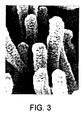
- the nanostructured surface (10) consists of discrete, uniformly oriented, crystalline whiskers (12), 1 to 2 micrometers tall, with high aspect (length to width) ratios, large areal number densities (1-200/ ⁇ m 2 ), diameters approximately 0.05 micrometers and whisker-to-whisker spacings on the order of 0.05 micrometers or less supported by a substrate (11).
- the resulting geometric surface area of the crystalline whiskers (12) thus can increase the planar surface area (10) by a factor of 10 to 15.
- the crystalline whiskers (12) attached to the original substrate (11) can then be conformally coated with metals, semi-metals, semi-conductors, dielectrics or organic materials.
- metal coatings especially platinum, are shown to be a desirable surface for direct adsorption of the biomolecules.
- Metal coating (13) also helps strengthen coated whiskers (14) and maintain their attachment to substrate (11) sufficient to withstand immersion into solutions.
- the coated nanostructured elements described above may be further conformally coated with an organic material so as to apply a thin conformal coating that has a biological functionality around each nanostructured element.
- Methods for applying this coating include, for example, self-assembled monolayers.
- Preferred substrate materials include organic or inorganic materials, such as polymers, metals, ceramics, glasses, and semiconductors.
- the preferred organic substrate is metal-coated polyimide film (commercially available from DuPont Corp. under the trade designation KAPTONTM). Additional examples of substrate materials appropriate for the present invention can be found in US-A-4,812,352.
- Other means for generating the nanostructured surface include (1) vacuum deposition of organic pigments onto heated substrates, (2) use of physical vapor transport growth instead of vacuum vapor deposition, (3) vacuum deposition of inorganic materials at high incidence angles, (4) ion or rf sputter etching of polymers, semiconductors or alloys having differential sputtering rates, (5) sputter etching of polymers using microisland masking, (6) photolithography (UV and X-ray), and electron beam lithography, (7) hydrolysis of aluminum to produce boehmite, (8) electrochemical etching of metals and electroplating of roughened metals, (9) photofabrication on photopolymer surfaces, (10) directional solidification and etching of eutectics, and (11) vapor liquid solid (VLS) crystal growth.
- VLS vapor liquid solid
- any of these methods may be able to produce a nanostructured surface.
- Several techniques or methods are useful for producing the whisker-like configurations. Methods for making inorganic-, metallic-, or semiconductor-based microstructured-layers or microstructures are described in J. Vac. Sci. Tech. 1983 , 1(3) , 1398-1402 and US-A-4,812,352, 5,039,561 and 5,238,729.
- Starting materials useful in preparing whiskers include organic and inorganic compounds.
- the whiskers are essentially a non-reactive or passive matrix for subsequent thin metal coating and optional conformal coating.
- Preferred organic materials can be broadly classified as polynuclear aromatic hydrocarbons and heterocyclic aromatic compounds.
- Particularly useful polynuclear aromatic hydrocarbons include, for example, naphthalenes, phenanthrenes, perylenes, anthracenes, coronenes, and pyrenes.
- a preferred polynuclear aromatic hydrocarbon is N,N'-di(3,5-xylyl)perylene-3,4:9,10 bis(dicarboximide) (commercially available from Hoechst-Celanese Corp. under the trade designation of "C.I. Pigment Red 149", also referred to as "PR149").
- the organic material used to produce whiskers may be coated onto a substrate using well-known techniques in the art for applying a layer of an organic material onto a substrate including but not limited to vacuum evaporation, sputter coating, chemical vapor deposition, spray coating, solution adsorption, Langmuir-Blodgett, or blade coating.
- the organic layer is applied by physical vacuum vapor deposition (i.e., sublimation of the organic material under an applied vacuum).
- the preferred temperature of the substrate during deposition is dependent on the organic material selected. For PR149, a substrate temperature near room temperature (that is, about 25°C) is satisfactory.
- the thickness of the deposited organic layer will determine the major dimension of the microstructures that form during an annealing step.
- This preferred process includes depositing the whisker-generating material at or near room temperature and then elevating the substrate temperature to anneal the whisker generating material in a vacuum below approximately 130 Pascals, and preferably below 10 -2 Pascals. Whiskers are grown on a substrate with the characteristics and process described in US-A-5,039,561. This process for obtaining the whiskers is also described in comparative example 1 herein below.
- An alternative process for generating the whiskers includes depositing a whisker-generating material on a substrate wherein the whisker-generating material and the substrate are at an elevated temperature. Material is vacuum-deposited, at vacuums below approximately 130 Pascals until high aspect ratio randomly-oriented whiskers are obtained. This alternative method is also described in US-A-5,352,651.
- PR149 is the organic material preferred.
- the thickness of the PR149 layer, prior to annealing is typically in the range from about 0.05 to about 0.3 ⁇ m, preferably in the range of 0.05 to 0.15 ⁇ m, and most preferably in the range of 0.1 to 0.15 ⁇ m.
- whiskers are produced.
- the whiskers are monocrystalline or polycrystalline rather than amorphous.
- the properties, both chemical and physical, of the layer of whiskers are anisotropic due to the crystalline nature and uniform orientation of the microstructures. Typically, orientation of the whiskers is uniformly perpendicular relative to the substrate surface.
- each whisker is in the range of 0.1 to 3 ⁇ m, more preferably in the range of 0.5 to 2.5 ⁇ m.
- the cross-sectional width of each whisker is preferably less than 0.1 ⁇ m.
- the whiskers have a high aspect ratio, (i.e., length of whisker to diameter of whisker ratio is in the range from about 3:1 to about 100:1).
- the areal number densities of the conformally coated nanostructured elements are in the range of 1-200/ ⁇ m 2 , preferably in the range of 5-50/ ⁇ m 2 .
- nanostructured elements are uniaxially-oriented or randomly-oriented, it is preferred that at least one point of each nanostructured element contact a two-dimensional surface common to all of the nanostructured elements.
- nanostructured elements (14), submicrometer in width and a few micrometers in length, are composites comprising the organic core whisker (12) and at least one conformal coating (13).
- Conformal coating materials are selected from the group consisting of biomaterials, organic materials, such as self-assembled monolayers, organic pigments, such as phthalocyanines or heterocyclic aromatic compounds, or an inorganic material.
- the conformal coating material is selected to optimize biomolecule adsorption and binding.
- the inorganic coating material is selected from the group consisting of conducting metals, semi-metals, dielectrics and semiconductors.
- Preferred metallic conformal coating materials include Pt, Pd, Ag, Cu, Au, and alloys, such as CrCo, NiCr, and PtIr.
- the wall thickness of the conformal coating material surrounding the whiskers is in the range from about 0.5 nm to about 50 nm.
- the conformal coating may be deposited onto the whiskers using conventional techniques, including, for example, those described in U.S. Patent No. 5,039,561.
- the conformal coating is deposited by a method that avoids disturbance of the nanostructured surface region by mechanical or mechanical-like forces.
- inorganic conformal coatings are deposited by vacuum deposition methods, such as, vacuum sublimation, sputtering, vapor transport, and chemical vapor deposition.
- a second, third or more conformal coating can be applied to the nanostructured elements.
- a particularly useful method of applying an additional conformal coating is by adsorption of an organic material from solution, for example, a thio-terminated oligomer.
- single component nanostructured elements are also contemplated by this invention.
- the single component elements have dimensions similar to the multicomponent elements, however, the single component elements consist only of a single material, such as a metal, as described above in reference to the metal conformal coating.
- Bio adsorption supports are produced in large area sheets, on substrates that are typically 25-50 ⁇ m thick, suitable for cutting or punching out many small sample pieces.
- small diameter discs ⁇ 6 mm
- ⁇ 6 mm small diameter discs may be punched out and placed in the bottom of microtitration wells such that the nanostructured surface faces the interior of the well.
- the high surface area and small size scale of the nanostructured surfaces are not compromised by incorporation of chemical and biological functionality into the conformal coatings of the whiskers, thereby increasing the usefulness and specificity for biological activity of the nanostructured surfaces.
- the approximate order of magnitude increase of bound protein on the biological adsorption supports of the present invention results from the 10- to 15-fold increase in surface area of the nanostructured surfaces shown in the Examples.
- the proportion of tightly bound biomolecules measured by SDS resistances is uniformly high, especially for Pt, and represents improvement over conventional supports. While not intending to be bound by theory and compared to conventional biological adsorption supports, the homogeneity of small scale hydrophobic and hydrophilic areas might be expected to be better on a naturally oxidized pure metal substrate, and explain in part the higher SDS resistances as well as the mass binding levels.
- the biological adsorption support of the present invention may be used wherever the binding of biomolecules is useful.
- the supports are particularly advantageous where it is necessary to have biomolecules bound more tightly, or at a greater density, or at a greater rate of adsorption; for example, where the amount of bound biomolecules limits a reaction rate. Such situations typically occur in enzyme reactors, where generally, the reaction rate is first order in enzyme concentration.
- purification systems where the capacity of the system is typically proportional to the amount of some functionality, such as a bound biomolecule in an affinity purification system.
- Another example is an analytical test wherein the sensitivity of the test is proportional to the amount of detector molecule (ligand) sensitivity and is often limited by the number of detector molecules.
- the slide with the organic pigment layer was then vacuum annealed to a maximum temperature of 200°C to convert the organic pigment layer to a nanostructured layer of discrete, perpendicularly oriented crystalline whiskers, as described in US-A-4,812,352.
- whiskered organic pigment layer was then rf-sputter coated with copper to provide a conformal coating on the whiskers having a planar equivalent thickness of about 100 nm.
- the effective thickness of the copper coating was significantly less than 100 nm due to the much larger surface area of the whiskers relative to a flat surface.
- Approximately one-third of the whiskers was sputter-coated with platinum to provide a conformal platinum coating having an equivalent planar thickness of about 100 nanometers. The remaining approximately one-sixth of the slide area was left as prepared above with bare PR149 whiskers.
- a conventional air pressurized paint sprayer was used to spray a layer of an encapsulating Latex precursor (commercially available under the trade designation "STRIPPABLE MASKANT YR-43" from 3M Co.) over the conformal coated nanostructured layer to provide a wet thickness of about 0.157 to 0.165 mm.
- the encapsulating layer was then dried in a conventional air oven at a temperature of about 66°C for approximately 20 minutes.
- the first sample set contained Cu-conformally coated whiskers, encapsulated in the strippable maskant (Comparative Example 1).
- the second set of three samples contained Pt-conformally coated whiskers, encapsulated in the strippable maskant (Comparative Example 2).
- a first control was a set of 5 mm squares containing bare whiskers (not conformally coated) encapsulated in the strippable maskant.
- As a second control a set of three 5 mm squares were cut from a dried layer of the strippable maskant which had been sprayed on a steel plate, producing a surface with no encapsulated nanostructure.
- the nanostructured surfaces of the sample pieces having the metal coated whiskers appeared very black due to their high light trapping efficiency.
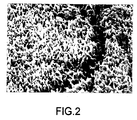
- the surface of the Pt-conformally coated whiskers partially embedded in the strippable maskant appeared more textured than that of the Cu-conformally coated whiskers and is respresented in the SEM photograph of Figure 2.
- each individual sample square was incubated with rocking for 18 hours in 250 ⁇ g/mL, 125 I-radiolabeled solution of Protein A (Genzyme Corp., Boston, MA) in phosphate-buffered saline (0.15 M NaCl in 25 mM sodium phosphate), hereinafter referred to as PBS, pH 7.5 J. Chromatog., vol. 512, p. 345-363 (1990) Surfaces were then treated with 3.0 M ethanolamine, pH 9.0 for 1 hour, and given four rinses in PBS.
- PBS phosphate-buffered saline
- the initial bound protein level was determined by measuring the residual radioactivity in a Packard auto-gamma radiation counter Model 5230 (Canberra Industries Inc./Packard Instrument Co., Meriden, CT) Each set of samples, Pt-coated, Cu-coated and uncoated were prepared and analyzed in triplicate. A latex control was also prepared and analyzed in triplicate. Sample averages and mean deviations of protein mass per unit area uptake for the three uncoated, Pt and Cu conformally-coated whisker samples, as well as the latex control are summarized in Table 1.
- the Pt-conformally coated whisker sample had significantly higher binding and SDS resistance compared to the other sample types.
- sulfate buffer 1.5 molar sodium sulfate in sodium phosphate buffer, hereinafter referred to as "sulfate buffer,” at pH 7.5.
- the three 5 mm squares from the encapsulated bare whisker sample area were coated only with Protein A in the PBS buffer. All samples were rinsed three times with the PBS buffer after inactivation with ethanolamine.
- Table 2 summarizes the initial binding, SDS resistance and tightly bound protein densities for the triplicate samples with standard deviations, for each sample type and buffer condition.
- the results in Table 2 corroborate the results in Comparative Examples 1 and 2, that the Pt-coated samples show considerably better protein adsorption than either the Cu-coated or bare whisker types, and continue the trend of very high SDS resistance.
- the sulfate buffer produced more bound protein. (PBS) Ex.
- Examples 5-8 demonstrate that the nanostructured surface area of non-encapsulated whiskers adsorb far larger quantities of protein in much shorter exposure times, and reveal the relative effect of the various metals, independent of the surface morphology.
- a polyimide sheet 0.050 mm (2 mil) thick (ICI Films) was stretch-mounted between two stainless steel rings to form a disc 8.3 cm in diameter. Copper was rf sputter coated onto this polyimide substrate disc to an approximate thickness of 180 nm.
- PR149 red pigment was vacuum vapor deposited onto the copper-coated polyimide as described in Examples 1-2, to an approximate thickness of 150 nm and annealed in vacuum (base pressure 2.5 x 10 -5 Pascals) at a temperature of 280°C for 40 minutes. The red pigment coated polyimide was converted into the 1-2 ⁇ m tall oriented crystalline whiskers.
- the whiskers were conformally coated by sequentially sputter depositing Cu (Example 5), CoCr (86:14) (Example 6), and Fe (Example 7) separately onto each of three quadrants, through a metal mask exposing only one quadrant of the substrate disc at a time.
- the 20 cm target was 10 cm above the sample, the substrate was water-cooled and the sputtering was done in 3.2 Pascals of Ar at 500 Watts forward power and 1200-1600 volts target bias for 10 minutes.
- the mass equivalent thickness of the Cu, CoCr and Fe were, respectively, approximately 350 nm, 250 nm and 250 nm.
- Pt was sputtered to a mass equivalent thickness of 120 nm onto the fourth quadrant of the disc (Example 8).
- a second Cu-coated polyimide disc was vapor coated with PR149, but not annealed (that is, there were no whiskers).
- Fe, Cu, CoCr and Pt coatings were sputter deposited onto this unconverted pigment layer in the same manner as for Examples 5-8.
- Table 3 summarizes for each buffer solution the initial binding, SDS resistance, and tightly bound protein mass for the four metal-coated whisker sample types. No data were obtained from the control samples since all the metal coated PR 149 reference samples, which did not have the whisker structure, fell apart after the rinses or SDS treatment. That is, the perylene coating with its metal overlayer delaminated from the polyimide substrate. All the metal-coated whiskered samples remained intact throughout the experiment. (PBS) Ex.
- Tables 3a and 3b show exceptionally high mass densities of Protein A were tightly adsorbed on the nonencapsulated, metal coated whiskers in only two hours, without rocking or vortexing the samples at any stage. These quantities were an order of magnitude greater than obtained with the encapsulated whiskers in Comparative Examples 3-4.
- the chloride concentration was 0.15 M, pH 7.5, for all three proteins.
- the sulfate concentration was 1.5 M, pH 7.5 for Protein A and BSA, and 0.75 M, pH 7.5 for human IgG.
- Tables 4 and 6 summarize the initial binding mass densities, SDS resistance and tightly bound mass densities, with standard deviations for the triplicate measurements, listed according to protein type and exposure time, for the two buffer systems, respectively.
- Tables 5 and 7 summarize the initial binding mass densities, SDS resistance and tightly bound mass densities from the bare polyimide controls for the three proteins and two buffer solutions, as a function of time.
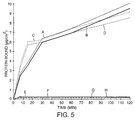
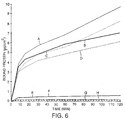
- Figures 4-6 curves A-D are graphs of the initial and tightly bound protein, respectively, as a function of adsorption time for the two buffers.
- the binding levels are again very high, consistent with Examples 5-8, and higher for hIgG and BSA than Protein A.
- the binding levels are nearly plateaued by 15 minutes, and may be significantly high at times less than the minimum observed 7.5 minutes.
- the binding levels in PBS are higher than those in the sulfate buffer for human IgG (hIgG) and Protein A.
- the SDS resistances are again very high and remarkably uniform. Summary of the average and standard deviation of protein binding and SDS resistance on Pt-coated whiskers as a function of exposure time for each of three proteins, in PBS.
- Protein (Examples 9-11) Control/ PBS Time (min.) Initial Binding ( ⁇ g/cm 2 ) Tightly Bound ( ⁇ g/cm 2 ) SDS Resistance (%) Protein A 7.5 0.44 ⁇ 0.02 0.16 ⁇ 0.01 34 ⁇ 2 " 30.0 0.48 ⁇ 0.02 0.18 ⁇ 0.02 35 ⁇ 3 " 120.0 0.64 ⁇ 0.04 0.24 ⁇ 0.01 37 ⁇ 1 human IgG 7.5 0.78 ⁇ 0.04 0.28 ⁇ 0.01 36 ⁇ 3 " 15.0 0.78 ⁇ 0.04 0.30 ⁇ 0.01 38 ⁇ 2 " 30.0 0.94 ⁇ 0.08 0.36 ⁇ 0.03 37 ⁇ 2 " 60.0 1.02 ⁇ 0.06 0.38 ⁇ 0.01 37 ⁇ 2 " 120.0 1.04 ⁇ 0.03 0.42 ⁇ 0.02 36 ⁇ 1 BSA 7.5 0.50 ⁇ 0.07 0.26 ⁇ 0.03 50 ⁇ 3 " 30.0 0.42 ⁇ 0.03 0.22 ⁇ 0.02 50 ⁇ 1 " 120.0 0.48 ⁇ 0.03
- Protein (Examples 12-14) Sulfate Buffer Time (min.) Initial Binding ( ⁇ g/cm 2 ) Tightly Bound ( ⁇ g/cm 2 ) SDS Resistance (%) Protein A 7.5 1.96 ⁇ 0.05 1.71 ⁇ 0.10 87 ⁇ 3 " 15.0 2.51 ⁇ 0.25 2.23 ⁇ 0.21 89 ⁇ 2 " 30.0 2.58 ⁇ 0.11 2.27 ⁇ 0.06 88 ⁇ 2 " 60.0 3.16 ⁇ 0.32 2.84 ⁇ 0.19 90 ⁇ 4 " 120.0 4.06 ⁇ 0.04 3.60 ⁇ 0.04 89 ⁇ 2 human IgG 8.0 3.48 ⁇ 0.14 2.99 ⁇ 0.14 86 ⁇ 3 " 15.0 4.30 ⁇ 0.64 3.45 ⁇ 0.40 81 ⁇ 2 " 30.0 4.83 ⁇ 0.69 4.14 ⁇ 0.60 86 ⁇ 4 " 60.0 5.85 ⁇ 0.96 4.84 ⁇ 0.90 82 ⁇ 2 " 120.0 7.02 ⁇ 0.74 6.09 ⁇ 0.95 86 ⁇
- Protein (Examples 12-14) Control/Sulfate Buffer Time (min.) Initial Binding ( ⁇ g/cm 2 ) Tightly Bound ( ⁇ g/cm 2 ) SDS Resistance (%) Protein A 7.5 0.28 ⁇ 0.09 0.06 ⁇ 0.02 19 ⁇ 1 " 30.0 0.30 ⁇ 0.04 0.06 ⁇ 0.01 21 ⁇ 2 " 120.0 0.24 ⁇ 0.09 0.07 ⁇ 0.01 27 ⁇ 2 human IgG 7.5 0.35 ⁇ 0.04 0.14 ⁇ 0.02 40 ⁇ 2 " 15.0 0.35 ⁇ 0.04 0.14 ⁇ 0.02 39 ⁇ 1 " 30.0 0.42 ⁇ 0.02 0.16 ⁇ 0.02 38 ⁇ 2 " 60.0 0.51 ⁇ 0.05 0.18 ⁇ 0.02 35 ⁇ 2 " 120.0 0.52 ⁇ 0.07 0.17 ⁇ 0.02 32 ⁇ 2 BSA 7.5 0.22 ⁇ 0.04 0.11 ⁇ 0.02 47 ⁇ 1 " 30.0 0.24 ⁇ 0.05 0.11 ⁇ 0.02 46 ⁇ 1 " 120.0 0.28
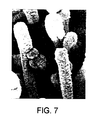
- Figure 7 shows a high resolution scanning electron micrograph, 150,000 magnification, of the same Pt-coated whisker sample after adsorption of Protein A (250 ⁇ g/mL) in PBS for 1 hour, without rocking, followed by three 10 minute rinses in water.
- One set (Set I) was reacted with 300 ⁇ L of a 125 I Protein A at a concentration of 250 ⁇ g/mL in PBS, pH 7.5 for 60 minutes at ambient temperature.
- the second set (Set II) was reacted with an identical but unlabeled Protein A solution under identical conditions. Both sets were then treated with 500 ⁇ L of 2.5 mg/mL BSA in PBS, pH 7.5, for 19 hours at ambient temperature. The lengthened time was necessary to insure complete blocking of the surface. As in earlier examples no vortexing or rocking was done, only gentle swirling until the sample was immersed. Both sets were rinsed four times with 500 ⁇ L of purified water (available from Millipore under the commercial tradename Milli-Q water) for 15 minutes each.
- purified water available from Millipore under the commercial tradename Milli-Q water
- Set I was measured for radioactivity while Set II was dried for 5 hours in an ambient vacuum oven.
- Set II was incubated with 300 ⁇ L of a 250 ⁇ g/mL 125 I- human IgG in PBS, pH 7.5, at ambient temperature for 18 hours. This set was then rinsed four times with 500 ⁇ L PBS for 15 minutes each prior to radioactive determination.
- Table 8 summarizes the amount of Protein A bound to the surfaces, the ratio of antibody bound per Protein A bound, and the amount of antibody bound per unit surface area. Summary of the binding of human IgG antibody to Protein A which was immobilized on the Pt coated nanostructured whiskers.
- Sample Type Bound Protein A ⁇ g/cm 2
- Bound hIgG ⁇ g/cm 2
- hIgG/Protein A ratio hIgG ⁇ moles/ cm 2
- Nanostructured 5.75 ⁇ 0.38 25.9 ⁇ 11.5 1.34 1.72 x 10⁻⁴ Control 0.12 ⁇ 0.01 0.79 ⁇ 0.17 1.95 0.05 x 10⁻⁴
- Table 8 shows a fifty-fold greater Protein A binding to the nanostructured surface than to the polyimide control film per unit area.
- the amount of human IgG that binds was increased 33-fold, indicating a substantial retention of its biological activity.
Landscapes
- Chemical & Material Sciences (AREA)
- Analytical Chemistry (AREA)
- Health & Medical Sciences (AREA)
- Chemical Kinetics & Catalysis (AREA)
- Life Sciences & Earth Sciences (AREA)
- Organic Chemistry (AREA)
- Engineering & Computer Science (AREA)
- Immunology (AREA)
- Hematology (AREA)
- Molecular Biology (AREA)
- Biomedical Technology (AREA)
- Urology & Nephrology (AREA)
- Inorganic Chemistry (AREA)
- Medicinal Chemistry (AREA)
- General Health & Medical Sciences (AREA)
- Cell Biology (AREA)
- Food Science & Technology (AREA)
- Biotechnology (AREA)
- Physics & Mathematics (AREA)
- Biochemistry (AREA)
- Microbiology (AREA)
- General Physics & Mathematics (AREA)
- Pathology (AREA)
- Solid-Sorbent Or Filter-Aiding Compositions (AREA)
- Physical Or Chemical Processes And Apparatus (AREA)
- Treatment Of Liquids With Adsorbents In General (AREA)
- Catalysts (AREA)
Applications Claiming Priority (3)
| Application Number | Priority Date | Filing Date | Title |
|---|---|---|---|
| US08/434,930 US5709943A (en) | 1995-05-04 | 1995-05-04 | Biological adsorption supports |
| US434930 | 1995-05-04 | ||
| PCT/US1996/004485 WO1996034670A1 (en) | 1995-05-04 | 1996-04-01 | Biological adsorption supports |
Publications (2)
| Publication Number | Publication Date |
|---|---|
| EP0823857A1 EP0823857A1 (en) | 1998-02-18 |
| EP0823857B1 true EP0823857B1 (en) | 2002-07-17 |
Family
ID=23726290
Family Applications (1)
| Application Number | Title | Priority Date | Filing Date |
|---|---|---|---|
| EP96912525A Expired - Lifetime EP0823857B1 (en) | 1995-05-04 | 1996-04-01 | Biological adsorption supports |
Country Status (9)
| Country | Link |
|---|---|
| US (1) | US5709943A (enExample) |
| EP (1) | EP0823857B1 (enExample) |
| JP (1) | JPH11504852A (enExample) |
| KR (1) | KR19990008299A (enExample) |
| CN (1) | CN1100582C (enExample) |
| AU (1) | AU5531396A (enExample) |
| CA (1) | CA2218888A1 (enExample) |
| DE (1) | DE69622395T2 (enExample) |
| WO (1) | WO1996034670A1 (enExample) |
Families Citing this family (45)
| Publication number | Priority date | Publication date | Assignee | Title |
|---|---|---|---|---|
| US6322859B1 (en) * | 1998-11-06 | 2001-11-27 | Riverwind, Llc. | Aesthetic enhancement of substrates |
| US6504292B1 (en) * | 1999-07-15 | 2003-01-07 | Agere Systems Inc. | Field emitting device comprising metallized nanostructures and method for making the same |
| US6692952B1 (en) * | 1999-11-10 | 2004-02-17 | Massachusetts Institute Of Technology | Cell analysis and sorting apparatus for manipulation of cells |
| US6521324B1 (en) | 1999-11-30 | 2003-02-18 | 3M Innovative Properties Company | Thermal transfer of microstructured layers |
| US6913697B2 (en) * | 2001-02-14 | 2005-07-05 | Science & Technology Corporation @ Unm | Nanostructured separation and analysis devices for biological membranes |
| CA2442985C (en) | 2001-03-30 | 2016-05-31 | The Regents Of The University Of California | Methods of fabricating nanostructures and nanowires and devices fabricated therefrom |
| WO2003021268A1 (en) * | 2001-08-30 | 2003-03-13 | Hrl Laboratories, Llc | Addressable concentrators |
| EP2359689B1 (en) * | 2002-09-27 | 2015-08-26 | The General Hospital Corporation | Microfluidic device for cell separation and use thereof |
| US6913931B2 (en) * | 2002-10-03 | 2005-07-05 | 3M Innovative Properties Company | Devices, methods and systems for low volume microarray processing |
| EP1604184A4 (en) * | 2003-02-27 | 2010-10-27 | Stephen A Lesko | STANDARDIZED EVALUATION OF THERAPEUTIC EFFICIENCY BASED ON CELLULAR BIOMARKERS |
| JPWO2004109281A1 (ja) * | 2003-06-05 | 2006-07-20 | 旭硝子株式会社 | バイオチップ用基板 |
| AU2004250131A1 (en) * | 2003-06-13 | 2004-12-29 | The General Hospital Corporation | Microfluidic systems for size based removal of red blood cells and platelets from blood |
| US20050130177A1 (en) * | 2003-12-12 | 2005-06-16 | 3M Innovative Properties Company | Variable valve apparatus and methods |
| US7727710B2 (en) * | 2003-12-24 | 2010-06-01 | 3M Innovative Properties Company | Materials, methods, and kits for reducing nonspecific binding of molecules to a surface |
| US7939249B2 (en) * | 2003-12-24 | 2011-05-10 | 3M Innovative Properties Company | Methods for nucleic acid isolation and kits using a microfluidic device and concentration step |
| JP4789055B2 (ja) * | 2004-06-23 | 2011-10-05 | 日産自動車株式会社 | 機能性糸状物の製造方法 |
| US20070026414A1 (en) * | 2005-07-29 | 2007-02-01 | Martin Fuchs | Devices and methods for enrichment and alteration of circulating tumor cells and other particles |
| US20070026417A1 (en) * | 2005-07-29 | 2007-02-01 | Martin Fuchs | Devices and methods for enrichment and alteration of circulating tumor cells and other particles |
| US20070196820A1 (en) | 2005-04-05 | 2007-08-23 | Ravi Kapur | Devices and methods for enrichment and alteration of cells and other particles |
| US20070026415A1 (en) * | 2005-07-29 | 2007-02-01 | Martin Fuchs | Devices and methods for enrichment and alteration of circulating tumor cells and other particles |
| US20070026413A1 (en) * | 2005-07-29 | 2007-02-01 | Mehmet Toner | Devices and methods for enrichment and alteration of circulating tumor cells and other particles |
| US8921102B2 (en) * | 2005-07-29 | 2014-12-30 | Gpb Scientific, Llc | Devices and methods for enrichment and alteration of circulating tumor cells and other particles |
| US20090181421A1 (en) * | 2005-07-29 | 2009-07-16 | Ravi Kapur | Diagnosis of fetal abnormalities using nucleated red blood cells |
| US20070059680A1 (en) * | 2005-09-15 | 2007-03-15 | Ravi Kapur | System for cell enrichment |
| US20070026416A1 (en) * | 2005-07-29 | 2007-02-01 | Martin Fuchs | Devices and methods for enrichment and alteration of circulating tumor cells and other particles |
| US20070059716A1 (en) * | 2005-09-15 | 2007-03-15 | Ulysses Balis | Methods for detecting fetal abnormality |
| US20070059781A1 (en) * | 2005-09-15 | 2007-03-15 | Ravi Kapur | System for size based separation and analysis |
| US20070059718A1 (en) * | 2005-09-15 | 2007-03-15 | Mehmet Toner | Systems and methods for enrichment of analytes |
| US20070059719A1 (en) * | 2005-09-15 | 2007-03-15 | Michael Grisham | Business methods for prenatal Diagnosis |
| US20070059683A1 (en) * | 2005-09-15 | 2007-03-15 | Tom Barber | Veterinary diagnostic system |
| US20070059774A1 (en) * | 2005-09-15 | 2007-03-15 | Michael Grisham | Kits for Prenatal Testing |
| US8137912B2 (en) | 2006-06-14 | 2012-03-20 | The General Hospital Corporation | Methods for the diagnosis of fetal abnormalities |
| EP2589668A1 (en) | 2006-06-14 | 2013-05-08 | Verinata Health, Inc | Rare cell analysis using sample splitting and DNA tags |
| US20080050739A1 (en) | 2006-06-14 | 2008-02-28 | Roland Stoughton | Diagnosis of fetal abnormalities using polymorphisms including short tandem repeats |
| US20080070792A1 (en) | 2006-06-14 | 2008-03-20 | Roland Stoughton | Use of highly parallel snp genotyping for fetal diagnosis |
| US20080007838A1 (en) * | 2006-07-07 | 2008-01-10 | Omnitech Partners, Inc. | Field-of-view indicator, and optical system and associated method employing the same |
| IL178239A (en) * | 2006-09-21 | 2012-02-29 | Eduard Bormashenko | Method of manufacturing superhydrophobic nanotextured polymer or metal surfaces |
| CN1987454B (zh) * | 2006-10-31 | 2011-01-12 | 成都夸常医学工业有限公司 | 含定向纳米结构功能化区的纳米结构组成及其制备和应用方法 |
| WO2008134470A2 (en) * | 2007-04-25 | 2008-11-06 | 3M Innovative Properties Company | Methods for nucleic acid amplification |
| US8115920B2 (en) * | 2007-11-14 | 2012-02-14 | 3M Innovative Properties Company | Method of making microarrays |
| PL2562268T3 (pl) | 2008-09-20 | 2017-06-30 | The Board Of Trustees Of The Leland Stanford Junior University | Nieinwazyjna diagnostyka aneuploidii płodu za pomocą sekwencjonowania |
| US8187979B2 (en) * | 2009-12-23 | 2012-05-29 | Varian Semiconductor Equipment Associates, Inc. | Workpiece patterning with plasma sheath modulation |
| JP6493448B2 (ja) * | 2017-05-22 | 2019-04-03 | セイコーエプソン株式会社 | センサー基板、検出装置及び電子機器 |
| JP7525479B2 (ja) | 2018-10-05 | 2024-07-30 | 三星ディスプレイ株式會社 | 表示装置 |
| JP7307917B2 (ja) * | 2019-04-26 | 2023-07-13 | 国立大学法人群馬大学 | 生体高分子の濃縮化方法、結晶化方法およびナノ構造基板 |
Family Cites Families (11)
| Publication number | Priority date | Publication date | Assignee | Title |
|---|---|---|---|---|
| US4169790A (en) * | 1975-05-02 | 1979-10-02 | South African Inventions Development Corporation | Solid surface texture suitable for a stationary phase for chromatography |
| JPS56144085A (en) * | 1980-04-08 | 1981-11-10 | Shimadzu Corp | Column containing whisker-type immobilized enzyme |
| JPS6221769A (ja) * | 1985-07-17 | 1987-01-30 | 日本特殊陶業株式会社 | 多孔質磁器構造体の製造方法 |
| US4812352A (en) * | 1986-08-25 | 1989-03-14 | Minnesota Mining And Manufacturing Company | Article having surface layer of uniformly oriented, crystalline, organic microstructures |
| DK249990D0 (da) * | 1990-10-17 | 1990-10-17 | Novo Nordisk As | Fremgangsmaade til enzymatisk pulpbehandling |
| US5238729A (en) * | 1991-04-05 | 1993-08-24 | Minnesota Mining And Manufacturing Company | Sensors based on nanosstructured composite films |
| DE4228408A1 (de) * | 1992-08-26 | 1994-03-03 | Stoll & Co H | Verfahren zur Herstellung eines formgerechten, einstückigen Flachgestricks, für ein mit Ärmeln versehenes Kleidungsstück |
| US5352651A (en) * | 1992-12-23 | 1994-10-04 | Minnesota Mining And Manufacturing Company | Nanostructured imaging transfer element |
| US5338430A (en) * | 1992-12-23 | 1994-08-16 | Minnesota Mining And Manufacturing Company | Nanostructured electrode membranes |
| JPH0731875A (ja) * | 1993-07-19 | 1995-02-03 | Mitsubishi Materials Corp | TGF−▲β1▼の吸着剤及びTGF−▲β1▼の検査方法 |
| JPH0747268A (ja) * | 1993-08-05 | 1995-02-21 | Nikon Corp | 吸着剤又は充填剤、及びその製造方法 |
-
1995
- 1995-05-04 US US08/434,930 patent/US5709943A/en not_active Expired - Fee Related
-
1996
- 1996-04-01 CA CA002218888A patent/CA2218888A1/en not_active Abandoned
- 1996-04-01 AU AU55313/96A patent/AU5531396A/en not_active Abandoned
- 1996-04-01 EP EP96912525A patent/EP0823857B1/en not_active Expired - Lifetime
- 1996-04-01 KR KR1019970707825A patent/KR19990008299A/ko not_active Abandoned
- 1996-04-01 WO PCT/US1996/004485 patent/WO1996034670A1/en not_active Ceased
- 1996-04-01 DE DE69622395T patent/DE69622395T2/de not_active Expired - Fee Related
- 1996-04-01 JP JP8533302A patent/JPH11504852A/ja not_active Ceased
- 1996-04-01 CN CN96193700A patent/CN1100582C/zh not_active Expired - Fee Related
Also Published As
| Publication number | Publication date |
|---|---|
| DE69622395D1 (de) | 2002-08-22 |
| CN1100582C (zh) | 2003-02-05 |
| US5709943A (en) | 1998-01-20 |
| DE69622395T2 (de) | 2003-04-10 |
| KR19990008299A (ko) | 1999-01-25 |
| CN1183735A (zh) | 1998-06-03 |
| AU5531396A (en) | 1996-11-21 |
| WO1996034670A1 (en) | 1996-11-07 |
| JPH11504852A (ja) | 1999-05-11 |
| CA2218888A1 (en) | 1996-11-07 |
| EP0823857A1 (en) | 1998-02-18 |
Similar Documents
| Publication | Publication Date | Title |
|---|---|---|
| US5709943A (en) | Biological adsorption supports | |
| Kirsch et al. | Three-dimensional metallization of microtubules | |
| Gole et al. | On the preparation, characterization, and enzymatic activity of fungal protease− gold colloid bioconjugates | |
| JP3900289B2 (ja) | マス輸送補助光学アッセイのための方法及び装置 | |
| JP4433100B2 (ja) | チップ及びライブラリの大量製造における物質溶液の静電噴霧 | |
| Uyen et al. | Amount and surface structure of albumin adsorbed to solid substrata with different wettabilities in a parallel plate flow cell | |
| EP2329270B1 (en) | Methods for screening and arraying microrganisms such as viruses using subtractive contact printing background | |
| KR20010090881A (ko) | 광학 회절에 기초한 생체감응장치용 기능화 미소구의패턴화 결합 | |
| CN102341524A (zh) | 金属膜中高度有序的纳米孔阵列及其制作方法 | |
| JP2007535666A (ja) | 大気圧プラズマ技術を用いる生体分子固定化 | |
| HU226820B1 (en) | Process for modification of surfaces in order to increase surface tension and for using such a surface | |
| Lohmüller et al. | Nano-porous electrode systems by colloidal lithography for sensitive electrochemical detection: fabrication technology and properties | |
| JP5046210B2 (ja) | 微粒子を形成する方法およびこの微粒子を利用した生体物質の検査法 | |
| WO2008045114B1 (en) | Method for fabricating nanostructures | |
| Stahl et al. | Enhanced bioadsorption characteristics of a uniquely nanostructured thin film | |
| EP0362339B1 (de) | Verwendung einer mit immobilisierten Molekülen bzw. Substanzen versehenen Membrane | |
| Heckl et al. | Fluorescence and electron microscopic study of lectin-polysaccharide and immunochemical aggregation at phospholipid Langmuir-Blodgett monolayers | |
| EP2739565B1 (en) | Method for producing particulate clusters | |
| US20190252171A1 (en) | Sample holder for mass spectrometry analysis in maldi mode, production and use of the sample holder | |
| IL100105A (en) | Supported microspheres | |
| Wigenius et al. | Protein biochips patterned by microcontact printing or by adsorption-soft lithography in two modes | |
| Pompe et al. | Functionalized biomolecular membranes for microreactors | |
| WO1987001120A1 (en) | Method of attaching biological substances to solid substrates | |
| CN101273156B (zh) | 具有空间选择性金属镀层的衬底及其制造方法以及应用 | |
| JPH1190213A (ja) | 無機微粒子超薄膜の製造方法 |
Legal Events
| Date | Code | Title | Description |
|---|---|---|---|
| PUAI | Public reference made under article 153(3) epc to a published international application that has entered the european phase |
Free format text: ORIGINAL CODE: 0009012 |
|
| 17P | Request for examination filed |
Effective date: 19971120 |
|
| AK | Designated contracting states |
Kind code of ref document: A1 Designated state(s): DE FR GB IT |
|
| 17Q | First examination report despatched |
Effective date: 19990820 |
|
| GRAG | Despatch of communication of intention to grant |
Free format text: ORIGINAL CODE: EPIDOS AGRA |
|
| GRAG | Despatch of communication of intention to grant |
Free format text: ORIGINAL CODE: EPIDOS AGRA |
|
| GRAH | Despatch of communication of intention to grant a patent |
Free format text: ORIGINAL CODE: EPIDOS IGRA |
|
| GRAG | Despatch of communication of intention to grant |
Free format text: ORIGINAL CODE: EPIDOS AGRA |
|
| GRAH | Despatch of communication of intention to grant a patent |
Free format text: ORIGINAL CODE: EPIDOS IGRA |
|
| GRAG | Despatch of communication of intention to grant |
Free format text: ORIGINAL CODE: EPIDOS AGRA |
|
| GRAG | Despatch of communication of intention to grant |
Free format text: ORIGINAL CODE: EPIDOS AGRA |
|
| GRAH | Despatch of communication of intention to grant a patent |
Free format text: ORIGINAL CODE: EPIDOS IGRA |
|
| GRAH | Despatch of communication of intention to grant a patent |
Free format text: ORIGINAL CODE: EPIDOS IGRA |
|
| GRAA | (expected) grant |
Free format text: ORIGINAL CODE: 0009210 |
|
| AK | Designated contracting states |
Kind code of ref document: B1 Designated state(s): DE FR GB IT |
|
| REG | Reference to a national code |
Ref country code: GB Ref legal event code: FG4D |
|
| REF | Corresponds to: |
Ref document number: 69622395 Country of ref document: DE Date of ref document: 20020822 |
|
| ET | Fr: translation filed | ||
| PGFP | Annual fee paid to national office [announced via postgrant information from national office to epo] |
Ref country code: GB Payment date: 20030326 Year of fee payment: 8 |
|
| PGFP | Annual fee paid to national office [announced via postgrant information from national office to epo] |
Ref country code: FR Payment date: 20030418 Year of fee payment: 8 |
|
| PGFP | Annual fee paid to national office [announced via postgrant information from national office to epo] |
Ref country code: DE Payment date: 20030430 Year of fee payment: 8 |
|
| PLBE | No opposition filed within time limit |
Free format text: ORIGINAL CODE: 0009261 |
|
| STAA | Information on the status of an ep patent application or granted ep patent |
Free format text: STATUS: NO OPPOSITION FILED WITHIN TIME LIMIT |
|
| 26N | No opposition filed |
Effective date: 20030422 |
|
| PG25 | Lapsed in a contracting state [announced via postgrant information from national office to epo] |
Ref country code: GB Free format text: LAPSE BECAUSE OF NON-PAYMENT OF DUE FEES Effective date: 20040401 |
|
| PG25 | Lapsed in a contracting state [announced via postgrant information from national office to epo] |
Ref country code: DE Free format text: LAPSE BECAUSE OF NON-PAYMENT OF DUE FEES Effective date: 20041103 |
|
| GBPC | Gb: european patent ceased through non-payment of renewal fee | ||
| PG25 | Lapsed in a contracting state [announced via postgrant information from national office to epo] |
Ref country code: FR Free format text: LAPSE BECAUSE OF NON-PAYMENT OF DUE FEES Effective date: 20041231 |
|
| REG | Reference to a national code |
Ref country code: FR Ref legal event code: ST |
|
| PG25 | Lapsed in a contracting state [announced via postgrant information from national office to epo] |
Ref country code: IT Free format text: LAPSE BECAUSE OF NON-PAYMENT OF DUE FEES Effective date: 20050401 |
|
| REG | Reference to a national code |
Ref country code: HK Ref legal event code: WD Ref document number: 1009103 Country of ref document: HK |