EP0819667A2 - Verfahren zur Herstellung von Mono- und/oder Di-sec.-Butylbiphenyl, sowie daraus zu erhaltene Produkte - Google Patents
Verfahren zur Herstellung von Mono- und/oder Di-sec.-Butylbiphenyl, sowie daraus zu erhaltene Produkte Download PDFInfo
- Publication number
- EP0819667A2 EP0819667A2 EP97305380A EP97305380A EP0819667A2 EP 0819667 A2 EP0819667 A2 EP 0819667A2 EP 97305380 A EP97305380 A EP 97305380A EP 97305380 A EP97305380 A EP 97305380A EP 0819667 A2 EP0819667 A2 EP 0819667A2
- Authority
- EP
- European Patent Office
- Prior art keywords
- sec
- butylbiphenyl
- biphenyl
- butene
- catalyst
- Prior art date
- Legal status (The legal status is an assumption and is not a legal conclusion. Google has not performed a legal analysis and makes no representation as to the accuracy of the status listed.)
- Withdrawn
Links
- 238000000034 method Methods 0.000 title claims abstract description 103
- 238000004519 manufacturing process Methods 0.000 title claims abstract description 26
- RMSGQZDGSZOJMU-UHFFFAOYSA-N 1-butyl-2-phenylbenzene Chemical group CCCCC1=CC=CC=C1C1=CC=CC=C1 RMSGQZDGSZOJMU-UHFFFAOYSA-N 0.000 title description 6
- ZUOUZKKEUPVFJK-UHFFFAOYSA-N diphenyl Chemical compound C1=CC=CC=C1C1=CC=CC=C1 ZUOUZKKEUPVFJK-UHFFFAOYSA-N 0.000 claims abstract description 260
- 239000003054 catalyst Substances 0.000 claims abstract description 154
- 235000010290 biphenyl Nutrition 0.000 claims abstract description 131
- 239000004305 biphenyl Substances 0.000 claims abstract description 130
- VXNZUUAINFGPBY-UHFFFAOYSA-N 1-Butene Chemical compound CCC=C VXNZUUAINFGPBY-UHFFFAOYSA-N 0.000 claims abstract description 86
- IAQRGUVFOMOMEM-UHFFFAOYSA-N butene Natural products CC=CC IAQRGUVFOMOMEM-UHFFFAOYSA-N 0.000 claims abstract description 78
- 239000010457 zeolite Substances 0.000 claims abstract description 75
- 238000005804 alkylation reaction Methods 0.000 claims abstract description 58
- 230000029936 alkylation Effects 0.000 claims abstract description 53
- WFOQXUOOXMEVQB-UHFFFAOYSA-N 1-butan-2-yl-2-phenylbenzene Chemical group CCC(C)C1=CC=CC=C1C1=CC=CC=C1 WFOQXUOOXMEVQB-UHFFFAOYSA-N 0.000 claims abstract description 44
- 229910021536 Zeolite Inorganic materials 0.000 claims abstract description 42
- 150000004945 aromatic hydrocarbons Chemical class 0.000 claims abstract description 42
- HNPSIPDUKPIQMN-UHFFFAOYSA-N dioxosilane;oxo(oxoalumanyloxy)alumane Chemical compound O=[Si]=O.O=[Al]O[Al]=O HNPSIPDUKPIQMN-UHFFFAOYSA-N 0.000 claims abstract description 42
- GBWGKFFUMJXHST-UHFFFAOYSA-N 1-butan-2-yl-4-(4-butan-2-ylphenyl)benzene Chemical group C1=CC(C(C)CC)=CC=C1C1=CC=C(C(C)CC)C=C1 GBWGKFFUMJXHST-UHFFFAOYSA-N 0.000 claims abstract description 41
- 239000002841 Lewis acid Substances 0.000 claims abstract description 27
- 150000007517 lewis acids Chemical class 0.000 claims abstract description 27
- 239000002904 solvent Substances 0.000 claims abstract description 23
- 125000002496 methyl group Chemical group [H]C([H])([H])* 0.000 claims abstract description 19
- 150000001350 alkyl halides Chemical class 0.000 claims abstract description 9
- 229910000039 hydrogen halide Inorganic materials 0.000 claims abstract description 7
- 239000012433 hydrogen halide Substances 0.000 claims abstract description 7
- 229910052680 mordenite Inorganic materials 0.000 claims abstract description 6
- 238000010555 transalkylation reaction Methods 0.000 claims description 67
- VSCWAEJMTAWNJL-UHFFFAOYSA-K aluminium trichloride Chemical compound Cl[Al](Cl)Cl VSCWAEJMTAWNJL-UHFFFAOYSA-K 0.000 claims description 42
- NEHMKBQYUWJMIP-UHFFFAOYSA-N chloromethane Chemical compound ClC NEHMKBQYUWJMIP-UHFFFAOYSA-N 0.000 claims description 20
- XECKTNQAABHDFZ-UHFFFAOYSA-N 1-(2-methylpropyl)-2-phenylbenzene Chemical group CC(C)CC1=CC=CC=C1C1=CC=CC=C1 XECKTNQAABHDFZ-UHFFFAOYSA-N 0.000 claims description 19
- 239000003085 diluting agent Substances 0.000 claims description 19
- RWGFKTVRMDUZSP-UHFFFAOYSA-N cumene Chemical class CC(C)C1=CC=CC=C1 RWGFKTVRMDUZSP-UHFFFAOYSA-N 0.000 claims description 17
- 229940050176 methyl chloride Drugs 0.000 claims description 10
- NAVQADRRVSDPJJ-UHFFFAOYSA-N 1,2,3-tri(butan-2-yl)-4-phenylbenzene Chemical group CCC(C)C1=C(C(C)CC)C(C(C)CC)=CC=C1C1=CC=CC=C1 NAVQADRRVSDPJJ-UHFFFAOYSA-N 0.000 claims description 9
- WTEOIRVLGSZEPR-UHFFFAOYSA-N boron trifluoride Chemical compound FB(F)F WTEOIRVLGSZEPR-UHFFFAOYSA-N 0.000 claims description 6
- 239000003094 microcapsule Substances 0.000 claims description 6
- 125000002914 sec-butyl group Chemical group [H]C([H])([H])C([H])([H])C([H])(*)C([H])([H])[H] 0.000 claims description 6
- IAQRGUVFOMOMEM-ARJAWSKDSA-N cis-but-2-ene Chemical group C\C=C/C IAQRGUVFOMOMEM-ARJAWSKDSA-N 0.000 claims description 4
- IAQRGUVFOMOMEM-ONEGZZNKSA-N trans-but-2-ene Chemical compound C\C=C\C IAQRGUVFOMOMEM-ONEGZZNKSA-N 0.000 claims description 4
- 229910015900 BF3 Inorganic materials 0.000 claims description 3
- HPGGPRDJHPYFRM-UHFFFAOYSA-J tin(iv) chloride Chemical compound Cl[Sn](Cl)(Cl)Cl HPGGPRDJHPYFRM-UHFFFAOYSA-J 0.000 claims description 3
- XJDNKRIXUMDJCW-UHFFFAOYSA-J titanium tetrachloride Chemical compound Cl[Ti](Cl)(Cl)Cl XJDNKRIXUMDJCW-UHFFFAOYSA-J 0.000 claims description 3
- VIDOPANCAUPXNH-UHFFFAOYSA-N 1,2,3-triethylbenzene Chemical class CCC1=CC=CC(CC)=C1CC VIDOPANCAUPXNH-UHFFFAOYSA-N 0.000 claims description 2
- OKIRBHVFJGXOIS-UHFFFAOYSA-N 1,2-di(propan-2-yl)benzene Chemical class CC(C)C1=CC=CC=C1C(C)C OKIRBHVFJGXOIS-UHFFFAOYSA-N 0.000 claims description 2
- QUBBAXISAHIDNM-UHFFFAOYSA-N 1-ethyl-2,3-dimethylbenzene Chemical class CCC1=CC=CC(C)=C1C QUBBAXISAHIDNM-UHFFFAOYSA-N 0.000 claims description 2
- 150000005195 diethylbenzenes Chemical class 0.000 claims description 2
- 150000005194 ethylbenzenes Chemical class 0.000 claims description 2
- 150000005201 tetramethylbenzenes Chemical class 0.000 claims description 2
- 238000012546 transfer Methods 0.000 claims description 2
- 150000005199 trimethylbenzenes Chemical class 0.000 claims description 2
- 239000008096 xylene Substances 0.000 claims description 2
- 150000003738 xylenes Chemical class 0.000 claims description 2
- PQLAYKMGZDUDLQ-UHFFFAOYSA-K aluminium bromide Chemical compound Br[Al](Br)Br PQLAYKMGZDUDLQ-UHFFFAOYSA-K 0.000 claims 2
- 150000004996 alkyl benzenes Chemical class 0.000 claims 1
- 125000000383 tetramethylene group Chemical group [H]C([H])([*:1])C([H])([H])C([H])([H])C([H])([H])[*:2] 0.000 claims 1
- 239000011968 lewis acid catalyst Substances 0.000 abstract description 16
- 239000000203 mixture Substances 0.000 description 102
- 239000000047 product Substances 0.000 description 89
- 235000019645 odor Nutrition 0.000 description 60
- 238000006243 chemical reaction Methods 0.000 description 48
- 238000004231 fluid catalytic cracking Methods 0.000 description 40
- 125000000217 alkyl group Chemical group 0.000 description 36
- 239000011541 reaction mixture Substances 0.000 description 18
- HEMHJVSKTPXQMS-UHFFFAOYSA-M Sodium hydroxide Chemical compound [OH-].[Na+] HEMHJVSKTPXQMS-UHFFFAOYSA-M 0.000 description 15
- 238000004821 distillation Methods 0.000 description 15
- 239000012535 impurity Substances 0.000 description 15
- 239000004927 clay Substances 0.000 description 14
- HKTCLPBBJDIBGF-UHFFFAOYSA-N 1-phenyl-2-propan-2-ylbenzene Chemical group CC(C)C1=CC=CC=C1C1=CC=CC=C1 HKTCLPBBJDIBGF-UHFFFAOYSA-N 0.000 description 13
- 239000000975 dye Substances 0.000 description 13
- 241000196324 Embryophyta Species 0.000 description 12
- 238000004817 gas chromatography Methods 0.000 description 11
- 238000004458 analytical method Methods 0.000 description 10
- 238000006555 catalytic reaction Methods 0.000 description 10
- YMWUJEATGCHHMB-UHFFFAOYSA-N Dichloromethane Chemical compound ClCCl YMWUJEATGCHHMB-UHFFFAOYSA-N 0.000 description 9
- VLKZOEOYAKHREP-UHFFFAOYSA-N n-Hexane Chemical compound CCCCCC VLKZOEOYAKHREP-UHFFFAOYSA-N 0.000 description 9
- 230000000704 physical effect Effects 0.000 description 9
- KAKZBPTYRLMSJV-UHFFFAOYSA-N Butadiene Chemical compound C=CC=C KAKZBPTYRLMSJV-UHFFFAOYSA-N 0.000 description 8
- 125000001495 ethyl group Chemical group [H]C([H])([H])C([H])([H])* 0.000 description 8
- 239000007789 gas Substances 0.000 description 8
- XLYOFNOQVPJJNP-UHFFFAOYSA-N water Substances O XLYOFNOQVPJJNP-UHFFFAOYSA-N 0.000 description 8
- 230000015572 biosynthetic process Effects 0.000 description 7
- 238000003786 synthesis reaction Methods 0.000 description 7
- IJGRMHOSHXDMSA-UHFFFAOYSA-N Atomic nitrogen Chemical compound N#N IJGRMHOSHXDMSA-UHFFFAOYSA-N 0.000 description 6
- 239000002253 acid Substances 0.000 description 6
- 125000001449 isopropyl group Chemical group [H]C([H])([H])C([H])(*)C([H])([H])[H] 0.000 description 6
- 125000001436 propyl group Chemical group [H]C([*])([H])C([H])([H])C([H])([H])[H] 0.000 description 6
- 239000000243 solution Substances 0.000 description 6
- 101100004297 Caenorhabditis elegans bet-1 gene Proteins 0.000 description 5
- 150000001336 alkenes Chemical class 0.000 description 5
- 239000012467 final product Substances 0.000 description 5
- 230000008014 freezing Effects 0.000 description 5
- 238000007710 freezing Methods 0.000 description 5
- 239000000463 material Substances 0.000 description 5
- 238000010791 quenching Methods 0.000 description 5
- 230000000171 quenching effect Effects 0.000 description 5
- 235000011121 sodium hydroxide Nutrition 0.000 description 5
- 239000007787 solid Substances 0.000 description 5
- VQTUBCCKSQIDNK-UHFFFAOYSA-N Isobutene Chemical group CC(C)=C VQTUBCCKSQIDNK-UHFFFAOYSA-N 0.000 description 4
- UFWIBTONFRDIAS-UHFFFAOYSA-N Naphthalene Chemical compound C1=CC=CC2=CC=CC=C21 UFWIBTONFRDIAS-UHFFFAOYSA-N 0.000 description 4
- 230000000694 effects Effects 0.000 description 4
- 229930195733 hydrocarbon Natural products 0.000 description 4
- 150000002430 hydrocarbons Chemical class 0.000 description 4
- JRZJOMJEPLMPRA-UHFFFAOYSA-N olefin Natural products CCCCCCCC=C JRZJOMJEPLMPRA-UHFFFAOYSA-N 0.000 description 4
- 239000002245 particle Substances 0.000 description 4
- QBYPSSMUKCERJK-UHFFFAOYSA-N 1-(2-methylpropyl)-3-phenylbenzene Chemical group CC(C)CC1=CC=CC(C=2C=CC=CC=2)=C1 QBYPSSMUKCERJK-UHFFFAOYSA-N 0.000 description 3
- XEMJQYWESBPBLL-UHFFFAOYSA-N 1-(2-methylpropyl)-4-phenylbenzene Chemical group C1=CC(CC(C)C)=CC=C1C1=CC=CC=C1 XEMJQYWESBPBLL-UHFFFAOYSA-N 0.000 description 3
- QTBSBXVTEAMEQO-UHFFFAOYSA-N Acetic acid Chemical compound CC(O)=O QTBSBXVTEAMEQO-UHFFFAOYSA-N 0.000 description 3
- 238000007171 acid catalysis Methods 0.000 description 3
- 239000011230 binding agent Substances 0.000 description 3
- 239000001273 butane Substances 0.000 description 3
- 125000000484 butyl group Chemical group [H]C([*])([H])C([H])([H])C([H])([H])C([H])([H])[H] 0.000 description 3
- 239000006227 byproduct Substances 0.000 description 3
- 238000011161 development Methods 0.000 description 3
- MTHSVFCYNBDYFN-UHFFFAOYSA-N diethylene glycol Chemical compound OCCOCCO MTHSVFCYNBDYFN-UHFFFAOYSA-N 0.000 description 3
- XNMQEEKYCVKGBD-UHFFFAOYSA-N dimethylacetylene Natural products CC#CC XNMQEEKYCVKGBD-UHFFFAOYSA-N 0.000 description 3
- 238000001035 drying Methods 0.000 description 3
- 239000011521 glass Substances 0.000 description 3
- 239000007788 liquid Substances 0.000 description 3
- 230000014759 maintenance of location Effects 0.000 description 3
- 239000011159 matrix material Substances 0.000 description 3
- 229910052751 metal Inorganic materials 0.000 description 3
- 239000002184 metal Substances 0.000 description 3
- IJDNQMDRQITEOD-UHFFFAOYSA-N n-butane Chemical compound CCCC IJDNQMDRQITEOD-UHFFFAOYSA-N 0.000 description 3
- OFBQJSOFQDEBGM-UHFFFAOYSA-N n-pentane Natural products CCCCC OFBQJSOFQDEBGM-UHFFFAOYSA-N 0.000 description 3
- 229910052757 nitrogen Inorganic materials 0.000 description 3
- 239000003921 oil Substances 0.000 description 3
- 239000003208 petroleum Substances 0.000 description 3
- 239000011148 porous material Substances 0.000 description 3
- 239000000376 reactant Substances 0.000 description 3
- 238000000926 separation method Methods 0.000 description 3
- 239000011973 solid acid Substances 0.000 description 3
- 239000000725 suspension Substances 0.000 description 3
- PUGUQINMNYINPK-UHFFFAOYSA-N tert-butyl 4-(2-chloroacetyl)piperazine-1-carboxylate Chemical compound CC(C)(C)OC(=O)N1CCN(C(=O)CCl)CC1 PUGUQINMNYINPK-UHFFFAOYSA-N 0.000 description 3
- 238000012360 testing method Methods 0.000 description 3
- NWZSZGALRFJKBT-KNIFDHDWSA-N (2s)-2,6-diaminohexanoic acid;(2s)-2-hydroxybutanedioic acid Chemical compound OC(=O)[C@@H](O)CC(O)=O.NCCCC[C@H](N)C(O)=O NWZSZGALRFJKBT-KNIFDHDWSA-N 0.000 description 2
- WSLDOOZREJYCGB-UHFFFAOYSA-N 1,2-Dichloroethane Chemical compound ClCCCl WSLDOOZREJYCGB-UHFFFAOYSA-N 0.000 description 2
- JMEAQNQEOMCBGB-UHFFFAOYSA-N 1-(2-methylpropyl)-4-[4-(2-methylpropyl)phenyl]benzene Chemical group C1=CC(CC(C)C)=CC=C1C1=CC=C(CC(C)C)C=C1 JMEAQNQEOMCBGB-UHFFFAOYSA-N 0.000 description 2
- KJNBFYKXXCCVDN-UHFFFAOYSA-N 1-butan-2-yl-3-phenylbenzene Chemical group CCC(C)C1=CC=CC(C=2C=CC=CC=2)=C1 KJNBFYKXXCCVDN-UHFFFAOYSA-N 0.000 description 2
- IRUFLAAZAAOXHM-UHFFFAOYSA-N 1-tert-butyl-2-phenylbenzene Chemical group CC(C)(C)C1=CC=CC=C1C1=CC=CC=C1 IRUFLAAZAAOXHM-UHFFFAOYSA-N 0.000 description 2
- DGMOBVGABMBZSB-UHFFFAOYSA-N 2-methylpropanoyl chloride Chemical compound CC(C)C(Cl)=O DGMOBVGABMBZSB-UHFFFAOYSA-N 0.000 description 2
- QGZKDVFQNNGYKY-UHFFFAOYSA-N Ammonia Chemical compound N QGZKDVFQNNGYKY-UHFFFAOYSA-N 0.000 description 2
- QGZKDVFQNNGYKY-UHFFFAOYSA-O Ammonium Chemical compound [NH4+] QGZKDVFQNNGYKY-UHFFFAOYSA-O 0.000 description 2
- WSFSSNUMVMOOMR-UHFFFAOYSA-N Formaldehyde Chemical compound O=C WSFSSNUMVMOOMR-UHFFFAOYSA-N 0.000 description 2
- UFHFLCQGNIYNRP-UHFFFAOYSA-N Hydrogen Chemical compound [H][H] UFHFLCQGNIYNRP-UHFFFAOYSA-N 0.000 description 2
- IMNFDUFMRHMDMM-UHFFFAOYSA-N N-Heptane Chemical compound CCCCCCC IMNFDUFMRHMDMM-UHFFFAOYSA-N 0.000 description 2
- VYPSYNLAJGMNEJ-UHFFFAOYSA-N Silicium dioxide Chemical compound O=[Si]=O VYPSYNLAJGMNEJ-UHFFFAOYSA-N 0.000 description 2
- 239000004809 Teflon Substances 0.000 description 2
- 229920006362 Teflon® Polymers 0.000 description 2
- 238000013019 agitation Methods 0.000 description 2
- PNEYBMLMFCGWSK-UHFFFAOYSA-N aluminium oxide Inorganic materials [O-2].[O-2].[O-2].[Al+3].[Al+3] PNEYBMLMFCGWSK-UHFFFAOYSA-N 0.000 description 2
- 125000003118 aryl group Chemical group 0.000 description 2
- QVGXLLKOCUKJST-UHFFFAOYSA-N atomic oxygen Chemical compound [O] QVGXLLKOCUKJST-UHFFFAOYSA-N 0.000 description 2
- 238000010923 batch production Methods 0.000 description 2
- 230000009286 beneficial effect Effects 0.000 description 2
- 150000001768 cations Chemical class 0.000 description 2
- MVPPADPHJFYWMZ-UHFFFAOYSA-N chlorobenzene Chemical compound ClC1=CC=CC=C1 MVPPADPHJFYWMZ-UHFFFAOYSA-N 0.000 description 2
- 230000000052 comparative effect Effects 0.000 description 2
- 238000010924 continuous production Methods 0.000 description 2
- 239000000706 filtrate Substances 0.000 description 2
- 238000013467 fragmentation Methods 0.000 description 2
- 238000006062 fragmentation reaction Methods 0.000 description 2
- IKDUDTNKRLTJSI-UHFFFAOYSA-N hydrazine monohydrate Substances O.NN IKDUDTNKRLTJSI-UHFFFAOYSA-N 0.000 description 2
- 239000001257 hydrogen Substances 0.000 description 2
- 229910052739 hydrogen Inorganic materials 0.000 description 2
- 239000005457 ice water Substances 0.000 description 2
- 150000002576 ketones Chemical class 0.000 description 2
- 238000002156 mixing Methods 0.000 description 2
- QJGQUHMNIGDVPM-UHFFFAOYSA-N nitrogen group Chemical group [N] QJGQUHMNIGDVPM-UHFFFAOYSA-N 0.000 description 2
- 239000001301 oxygen Substances 0.000 description 2
- 229910052760 oxygen Inorganic materials 0.000 description 2
- 230000035484 reaction time Effects 0.000 description 2
- 238000013341 scale-up Methods 0.000 description 2
- ZJMWRROPUADPEA-UHFFFAOYSA-N sec-butylbenzene Chemical compound CCC(C)C1=CC=CC=C1 ZJMWRROPUADPEA-UHFFFAOYSA-N 0.000 description 2
- 239000002002 slurry Substances 0.000 description 2
- 238000007619 statistical method Methods 0.000 description 2
- 239000003930 superacid Substances 0.000 description 2
- 238000013022 venting Methods 0.000 description 2
- 238000005406 washing Methods 0.000 description 2
- GKBBQSONORTNLZ-UHFFFAOYSA-N (2,4-dimethyl-3-propan-2-ylpentan-3-yl)benzene Chemical class CC(C)C(C(C)C)(C(C)C)C1=CC=CC=C1 GKBBQSONORTNLZ-UHFFFAOYSA-N 0.000 description 1
- OGJCIAFFKGRGJC-UHFFFAOYSA-N 1,2-bis(chloranyl)ethane Chemical compound ClCCCl.ClCCCl OGJCIAFFKGRGJC-UHFFFAOYSA-N 0.000 description 1
- QYMCPOVYKKLNTJ-UHFFFAOYSA-N 1-butan-2-yl-2-(2-methylpropyl)-3-phenylbenzene Chemical group CCC(C)C1=CC=CC(C=2C=CC=CC=2)=C1CC(C)C QYMCPOVYKKLNTJ-UHFFFAOYSA-N 0.000 description 1
- PHGFRSRGDKKOPP-UHFFFAOYSA-N 1-butan-2-yl-4-phenylbenzene Chemical group C1=CC(C(C)CC)=CC=C1C1=CC=CC=C1 PHGFRSRGDKKOPP-UHFFFAOYSA-N 0.000 description 1
- PMPBFICDXLLSRM-UHFFFAOYSA-N 1-propan-2-ylnaphthalene Chemical compound C1=CC=C2C(C(C)C)=CC=CC2=C1 PMPBFICDXLLSRM-UHFFFAOYSA-N 0.000 description 1
- XWKSDIKXCDIUCQ-UHFFFAOYSA-N 2-butan-2-yl-1-(2-methylpropyl)-3-phenylbenzene Chemical group CCC(C)C1=C(CC(C)C)C=CC=C1C1=CC=CC=C1 XWKSDIKXCDIUCQ-UHFFFAOYSA-N 0.000 description 1
- 239000005995 Aluminium silicate Substances 0.000 description 1
- 239000004215 Carbon black (E152) Substances 0.000 description 1
- XDTMQSROBMDMFD-UHFFFAOYSA-N Cyclohexane Chemical compound C1CCCCC1 XDTMQSROBMDMFD-UHFFFAOYSA-N 0.000 description 1
- 239000001828 Gelatine Substances 0.000 description 1
- 229920000084 Gum arabic Polymers 0.000 description 1
- DGAQECJNVWCQMB-PUAWFVPOSA-M Ilexoside XXIX Chemical group C[C@@H]1CC[C@@]2(CC[C@@]3(C(=CC[C@H]4[C@]3(CC[C@@H]5[C@@]4(CC[C@@H](C5(C)C)OS(=O)(=O)[O-])C)C)[C@@H]2[C@]1(C)O)C)C(=O)O[C@H]6[C@@H]([C@H]([C@@H]([C@H](O6)CO)O)O)O.[Na+] DGAQECJNVWCQMB-PUAWFVPOSA-M 0.000 description 1
- 229920006068 Minlon® Polymers 0.000 description 1
- 241000978776 Senegalia senegal Species 0.000 description 1
- 101710104074 Spermidine/putrescine-binding periplasmic protein Proteins 0.000 description 1
- 102100033142 Transcription factor 20 Human genes 0.000 description 1
- 235000010489 acacia gum Nutrition 0.000 description 1
- 239000000205 acacia gum Substances 0.000 description 1
- 230000002378 acidificating effect Effects 0.000 description 1
- 230000010933 acylation Effects 0.000 description 1
- 238000005917 acylation reaction Methods 0.000 description 1
- 229910001420 alkaline earth metal ion Inorganic materials 0.000 description 1
- 235000012211 aluminium silicate Nutrition 0.000 description 1
- 229910021529 ammonia Inorganic materials 0.000 description 1
- 239000007864 aqueous solution Substances 0.000 description 1
- 150000001491 aromatic compounds Chemical class 0.000 description 1
- 239000003849 aromatic solvent Substances 0.000 description 1
- 150000004074 biphenyls Chemical class 0.000 description 1
- 238000003965 capillary gas chromatography Methods 0.000 description 1
- 239000002775 capsule Substances 0.000 description 1
- 239000007795 chemical reaction product Substances 0.000 description 1
- 238000005336 cracking Methods 0.000 description 1
- 239000010779 crude oil Substances 0.000 description 1
- 238000002425 crystallisation Methods 0.000 description 1
- 230000008025 crystallization Effects 0.000 description 1
- 238000001514 detection method Methods 0.000 description 1
- 230000001627 detrimental effect Effects 0.000 description 1
- 230000008030 elimination Effects 0.000 description 1
- 238000003379 elimination reaction Methods 0.000 description 1
- 238000002474 experimental method Methods 0.000 description 1
- 239000012013 faujasite Substances 0.000 description 1
- 230000002349 favourable effect Effects 0.000 description 1
- 239000012530 fluid Substances 0.000 description 1
- 239000008098 formaldehyde solution Substances 0.000 description 1
- 238000004508 fractional distillation Methods 0.000 description 1
- 229920000159 gelatin Polymers 0.000 description 1
- 235000019322 gelatine Nutrition 0.000 description 1
- 239000008187 granular material Substances 0.000 description 1
- 150000004820 halides Chemical class 0.000 description 1
- 229910000040 hydrogen fluoride Inorganic materials 0.000 description 1
- KXUHSQYYJYAXGZ-UHFFFAOYSA-N isobutylbenzene Chemical compound CC(C)CC1=CC=CC=C1 KXUHSQYYJYAXGZ-UHFFFAOYSA-N 0.000 description 1
- NLYAJNPCOHFWQQ-UHFFFAOYSA-N kaolin Chemical compound O.O.O=[Al]O[Si](=O)O[Si](=O)O[Al]=O NLYAJNPCOHFWQQ-UHFFFAOYSA-N 0.000 description 1
- 125000000468 ketone group Chemical group 0.000 description 1
- 238000010667 large scale reaction Methods 0.000 description 1
- 239000010410 layer Substances 0.000 description 1
- 238000004811 liquid chromatography Methods 0.000 description 1
- 238000005259 measurement Methods 0.000 description 1
- 238000002844 melting Methods 0.000 description 1
- 230000008018 melting Effects 0.000 description 1
- 230000004048 modification Effects 0.000 description 1
- 238000012986 modification Methods 0.000 description 1
- SYSQUGFVNFXIIT-UHFFFAOYSA-N n-[4-(1,3-benzoxazol-2-yl)phenyl]-4-nitrobenzenesulfonamide Chemical class C1=CC([N+](=O)[O-])=CC=C1S(=O)(=O)NC1=CC=C(C=2OC3=CC=CC=C3N=2)C=C1 SYSQUGFVNFXIIT-UHFFFAOYSA-N 0.000 description 1
- TVMXDCGIABBOFY-UHFFFAOYSA-N octane Chemical compound CCCCCCCC TVMXDCGIABBOFY-UHFFFAOYSA-N 0.000 description 1
- 239000012044 organic layer Substances 0.000 description 1
- 238000012856 packing Methods 0.000 description 1
- 239000008188 pellet Substances 0.000 description 1
- 230000008092 positive effect Effects 0.000 description 1
- 239000000843 powder Substances 0.000 description 1
- 230000001376 precipitating effect Effects 0.000 description 1
- 238000002360 preparation method Methods 0.000 description 1
- 238000012545 processing Methods 0.000 description 1
- 238000000746 purification Methods 0.000 description 1
- 239000012264 purified product Substances 0.000 description 1
- 238000010992 reflux Methods 0.000 description 1
- 229920005989 resin Polymers 0.000 description 1
- 239000011347 resin Substances 0.000 description 1
- 239000000377 silicon dioxide Substances 0.000 description 1
- 229910052708 sodium Inorganic materials 0.000 description 1
- 239000011734 sodium Substances 0.000 description 1
- -1 sodium cations Chemical class 0.000 description 1
- 230000003381 solubilizing effect Effects 0.000 description 1
- 238000010561 standard procedure Methods 0.000 description 1
- 238000006467 substitution reaction Methods 0.000 description 1
- 238000005303 weighing Methods 0.000 description 1
Images

Classifications
-
- C—CHEMISTRY; METALLURGY
- C07—ORGANIC CHEMISTRY
- C07C—ACYCLIC OR CARBOCYCLIC COMPOUNDS
- C07C15/00—Cyclic hydrocarbons containing only six-membered aromatic rings as cyclic parts
- C07C15/12—Polycyclic non-condensed hydrocarbons
- C07C15/14—Polycyclic non-condensed hydrocarbons all phenyl groups being directly linked
-
- B—PERFORMING OPERATIONS; TRANSPORTING
- B41—PRINTING; LINING MACHINES; TYPEWRITERS; STAMPS
- B41M—PRINTING, DUPLICATING, MARKING, OR COPYING PROCESSES; COLOUR PRINTING
- B41M5/00—Duplicating or marking methods; Sheet materials for use therein
- B41M5/124—Duplicating or marking methods; Sheet materials for use therein using pressure to make a masked colour visible, e.g. to make a coloured support visible, to create an opaque or transparent pattern, or to form colour by uniting colour-forming components
- B41M5/165—Duplicating or marking methods; Sheet materials for use therein using pressure to make a masked colour visible, e.g. to make a coloured support visible, to create an opaque or transparent pattern, or to form colour by uniting colour-forming components characterised by the use of microcapsules; Special solvents for incorporating the ingredients
- B41M5/1655—Solvents
-
- C—CHEMISTRY; METALLURGY
- C07—ORGANIC CHEMISTRY
- C07C—ACYCLIC OR CARBOCYCLIC COMPOUNDS
- C07C2/00—Preparation of hydrocarbons from hydrocarbons containing a smaller number of carbon atoms
- C07C2/54—Preparation of hydrocarbons from hydrocarbons containing a smaller number of carbon atoms by addition of unsaturated hydrocarbons to saturated hydrocarbons or to hydrocarbons containing a six-membered aromatic ring with no unsaturation outside the aromatic ring
- C07C2/64—Addition to a carbon atom of a six-membered aromatic ring
- C07C2/66—Catalytic processes
- C07C2/68—Catalytic processes with halides
-
- C—CHEMISTRY; METALLURGY
- C07—ORGANIC CHEMISTRY
- C07C—ACYCLIC OR CARBOCYCLIC COMPOUNDS
- C07C2/00—Preparation of hydrocarbons from hydrocarbons containing a smaller number of carbon atoms
- C07C2/54—Preparation of hydrocarbons from hydrocarbons containing a smaller number of carbon atoms by addition of unsaturated hydrocarbons to saturated hydrocarbons or to hydrocarbons containing a six-membered aromatic ring with no unsaturation outside the aromatic ring
- C07C2/64—Addition to a carbon atom of a six-membered aromatic ring
- C07C2/66—Catalytic processes
- C07C2/70—Catalytic processes with acids
-
- C—CHEMISTRY; METALLURGY
- C07—ORGANIC CHEMISTRY
- C07C—ACYCLIC OR CARBOCYCLIC COMPOUNDS
- C07C2/00—Preparation of hydrocarbons from hydrocarbons containing a smaller number of carbon atoms
- C07C2/86—Preparation of hydrocarbons from hydrocarbons containing a smaller number of carbon atoms by condensation between a hydrocarbon and a non-hydrocarbon
- C07C2/861—Preparation of hydrocarbons from hydrocarbons containing a smaller number of carbon atoms by condensation between a hydrocarbon and a non-hydrocarbon the non-hydrocarbon contains only halogen as hetero-atoms
-
- C—CHEMISTRY; METALLURGY
- C07—ORGANIC CHEMISTRY
- C07C—ACYCLIC OR CARBOCYCLIC COMPOUNDS
- C07C2527/00—Catalysts comprising the elements or compounds of halogens, sulfur, selenium, tellurium, phosphorus or nitrogen; Catalysts comprising carbon compounds
- C07C2527/06—Halogens; Compounds thereof
- C07C2527/125—Compounds comprising a halogen and scandium, yttrium, aluminium, gallium, indium or thallium
- C07C2527/126—Aluminium chloride
-
- C—CHEMISTRY; METALLURGY
- C07—ORGANIC CHEMISTRY
- C07C—ACYCLIC OR CARBOCYCLIC COMPOUNDS
- C07C2529/00—Catalysts comprising molecular sieves
- C07C2529/04—Catalysts comprising molecular sieves having base-exchange properties, e.g. crystalline zeolites, pillared clays
- C07C2529/06—Crystalline aluminosilicate zeolites; Isomorphous compounds thereof
- C07C2529/08—Crystalline aluminosilicate zeolites; Isomorphous compounds thereof of the faujasite type, e.g. type X or Y
-
- C—CHEMISTRY; METALLURGY
- C07—ORGANIC CHEMISTRY
- C07C—ACYCLIC OR CARBOCYCLIC COMPOUNDS
- C07C2531/00—Catalysts comprising hydrides, coordination complexes or organic compounds
- C07C2531/02—Catalysts comprising hydrides, coordination complexes or organic compounds containing organic compounds or metal hydrides
-
- C—CHEMISTRY; METALLURGY
- C07—ORGANIC CHEMISTRY
- C07C—ACYCLIC OR CARBOCYCLIC COMPOUNDS
- C07C2531/00—Catalysts comprising hydrides, coordination complexes or organic compounds
- C07C2531/26—Catalysts comprising hydrides, coordination complexes or organic compounds containing in addition, inorganic metal compounds not provided for in groups C07C2531/02 - C07C2531/24
Definitions
- This invention relates in general to processes for producing solvents such as for use in solubilizing dyes used in the production of carbonless paper.
- the invention also relates to the solvents produced by such processes, microcapsules containing a dye solubilized by such solvents, and pressure sensitive marking and recording material coated with such microcapsules.
- Butenylated biphenyl products comprising primarily sec-butylbiphenyl and di-sec-butybiphenyl and produced by alkylation of biphenyl with butene are used as dye solvents in carbonless paper systems and in other functional fluid areas.
- One physical property of butenylated biphenyl which has sometimes limited its use is its odor.
- butenylated biphenyl has a low odor, somewhat lower than existing dye solvents for carbonless paper systems at the time of its development, it nonetheless has an odor. Because of the subsequent development of lower odor dye solvents, butenylated biphenyl products are now less favorable choices as dye solvents despite their other beneficial physical properties such as dye solvency and viscosity.
- the invention is directed to a process for production of sec-butylbiphenyl and/or di-sec-butylbiphenyl comprising contacting butene and biphenyl in the presence of a catalyst complex under alkylation conditions effective to form sec-butylbiphenyl and/or di-sec-butylbiphenyl as an alkylation product of the butene and said biphenyl.
- the catalyst complex comprises a Lewis acid, an aromatic hydrocarbon and a hydrogen halide or alkyl halide, wherein more than about 50 mole % of the alkyl group substituents on said aromatic hydrocarbon are methyl groups.
- the alkylation product can be held at the reaction temperature or further Lewis acid catalyst complex can added to transalkylate the alkylation product.
- the alkylation process may alternatively be carried out in the presence of a zeolite catalyst selected from one or more of Y zeolites, USY zeolites, mordenite zeolites, ZSM-12 zeolites, and FCC catalysts.
- the invention is directed to a process for preparing a sec-butylbiphenyl and/or di-sec-butylbiphenyl product comprising contacting a feedstock containing two or more of biphenyl, sec-butylbiphenyl, di-sec-butylbiphenyl and tri-sec-butylbiphenyl with a Lewis acid catalyst complex under transalkylation conditions effective to transfer sec-butyl groups between said two or more of said biphenyl, sec-butylbiphenyl, di-sec-butylbiphenyl and tri-sec-butylbiphenyl and form said sec-butylbiphenyl and/or di-sec-butylbiphenyl product.
- the zeolite catalyst can be used in place of the Lewis acid catalyst complex.
- the invention is directed to products made from the foregoing processes, such products including microcapsules containing solubilized dye for use in carbonless paper systems.
- alkylation of biphenyl by butene when carried out under specific conditions, produces a product, which, after distillation, has a lower odor than butenylated biphenyl produced under previously disclosed conditions.
- Alkylation can occur using either Lewis acid catalysis or solid acid catalysis.
- the process of the present invention produces higher yields of sec-butylbiphenyl and di-sec-butylbiphenyl than the process of the prior art. It has also been discovered that the process of the present invention produces sec-butylbiphenyl and di-sec-butylbiphenyl products which contain fewer minor impurities.
- Lewis acid catalysts such as aluminum chloride, aluminum bromide, tin chloride, titanium chloride, boron trifluoride, and the like are useful in the present invention for the production of butenylated biphenyl by alkylation of biphenyl by butene include.
- These complexes sometimes called “red oils” or “catalyst sludges", are well known in the art and are formed when the Lewis Acid is suspended in aromatic hydrocarbons while a hydrogen halide or alkyl halide is added.
- the mole ratio of Lewis acid:aromatic hydrocarbon:hydrogen or alkyl halide is typically 2:1:0.5.
- a catalyst complex is formed which acts as a "super acid”.
- These catalyst complexes are one preferred catalyst in the inventive process.
- the aluminum chloride aromatic hydrocarbon methyl chloride catalyst complex is most preferred.
- the aromatic hydrocarbon in the preferred catalyst complex can be an alkyl- or polyalkylbenzene such as cumene (isopropylbenzene), xylenes (pure isomers or mixtures), trimethylbenzenes, tetramethylbenzenes, mixtures of ethylbenzenes, diethylbenzenes, triethylbenzenes, dimethylethylbenzenes, diisopropylbenzenes, triisopropylbenzenes, or mixtures of some, most, or all of the above, along with other similar aromatic and alkylaromatic hydrocarbons, including those containing more than 1 aromatic ring, such as biphenyl, naphthalene, or the like.
- alkyl- or polyalkylbenzene such as cumene (isopropylbenzene), xylenes (pure isomers or mixtures), trimethylbenzenes, tetramethylbenzenes
- Propyl (or isopropyl) alkylbiphenyls are difficult to separate from the butylbiphenyl components and have a more intense odor than the butylbiphenyl components.
- Ethylbiphenyls are not as difficult to separate from butylbiphenyl as the propyl (or isopropyl) biphenyls, but they none-the-less can cause odor and purity problems.
- the aromatic hydrocarbon used in the catalyst complex have ⁇ 50 mole % methyl groups, based on total moles of alkyl groups in the aromatic hydrocarbon. It is more preferred that the aromatic hydrocarbon used in the catalyst complex have ⁇ 70 mole % methyl groups, based on the total moles of alkyl groups in the aromatic hydrocarbon. It is most preferred that the aromatic hydrocarbon have ⁇ 80 mole % methyl groups, based on the total moles of alkyl groups in the aromatic hydrocarbon.
- the amount of catalyst complex can vary widely, from about 0.01 wt % of the parent Lewis acid (based on the weight of the biphenyl) to about 10 wt % of the parent Lewis acid, with 0.1 to 5 wt % of the parent Lewis acid more preferred, with about 0.5 to 2 wt% of the parent Lewis acid being most preferred.
- the temperature of the alkylation reaction using the Lewis acid can vary from about 0°C to 115°C, with 25°C to 100°C being more preferred and 40°C to 90°C being most preferred. Below about 70°C to about 75°C special steps need to be taken to keep the biphenyl from freezing out of the reaction, at least during the early part of the alkylation. Pure biphenyl has a freezing point of 69-72°C; the 95% biphenyl used in most of the experimental has a freezing point of about 66°C. Introduction of the catalyst complex into the molten biphenyl lowers its freezing point to 60°C to 50°C or lower depending on the catalyst complex and how much is used.
- reactants which can be added to lower the freezing point of the mixture are sec-butylbiphenyl, di-sec-butylbiphenyl, tri-sec-butylbiphenyl, or mixtures of two or more of these by themselves or with biphenyl, such as would be obtained from a previous alkylation.
- the alkylation can begin at 70°C or lower and the reaction temperature can be lowered gradually to 40°C or lower. If solid biphenyl is observed precipitating out on the walls of the reaction vessel, the temperature of the mixture can be raised slightly to dissolve the solids or the alkylation can be held at that temperature as eventually the solids will dissolve.
- Non-reactive diluents such as solvents can be added to the reaction mixture to allow the alkylation to be carried out a low temperatures.
- Solvents such as methylene chloride (dichloromethane), ethylene dichloride (1,2-dichloroethane), chlorobenzene, hexane, cyclohexane, heptane, octane, and the like can be used, along with mixtures of two or more of these solvents.
- Methylene chloride or ethylene dichloride are the preferred solvents.
- a reactive diluent is added, it is added in the amount of 1 wt % to about 20 wt % based on the weight of the biphenyl.
- the amount of Lewis acid catalyst complex used is then based on the combination of the weight of the reactive diluent + the weight of the biphenyl.
- the Lewis acid catalyst complex is used in the same proportions as stated above.
- a non-reactive diluent is added, it is added in the amount of 1 volume % to about 100 volume %, based on the volume of the biphenyl (or the volume of the biphenyl + reactive diluent), with about 10 volume % to about 50 volume % preferred.
- the color of the reaction mixture at the lower temperatures of the present invention is deep dark red or purple rather than the black color that is typical when the reaction is carried out at 120°C or higher.
- the quenched alkylate is usually colorless to light yellow rather than the dark yellow to black which is obtained when the reaction is carried out at 120°C temperature or higher.
- the olefin used is butene, which can be in the form of 1- or 2-butene (either cis or trans -2-butene) or mixtures of two or more of these butene isomers. Either pure butene can be used or a mixture of butene with non-reactive diluents such as butane, nitrogen, or the like, such as is obtained from a petroleum refinery stream. Commercially available butene sometimes has small amounts of butadiene, isobutylene, and the like. These do not interfere with the inventive process as long as they do not represent too high a proportion of the mixture. Isobutylene produces t-butylbiphenyl in the product. Butadiene produces heavy by-products.
- the butene is introduced as a gas below the surface of the reaction mixture using a glass tube, metal cannula, teflon coated pipe, or a similar gas/liquid contact method, as is known in the art.
- the pressure of the preferred reaction process can vary anywhere from sub ambient pressure to 100 lbs per square inch gauge (psig), with 0 to 20 psig being more preferred, with 0 to 10 psig being most preferred. If non-reactive diluents are present in the butene, provisions may be made for venting excess non-reactive diluent, and the reaction is usually run under a moderate amount of pressure, about 10-20 psig.
- the amount of butene added is enough to provide from about 0.2 mole equivalent, based on biphenyl, to about 2.6 mole equivalents.
- the preferred amount of butene added is from about 0.4 to about 1.0 mole equivalents.
- the higher range of about 1.0 to about 2.6 mole equivalents is used when a heavier product, composed of mostly the di-sec-butylbiphenyl, is being produced in addition to the one containing mostly sec-butylbiphenyl herein described. If the only product being produced is the one containing mostly sec-butylbiphenyl, then the lower range of about 0.4 to about 1.0 mole equivalents butene is preferred.
- the time of the reaction can vary from about 0.5 hr to about 24 hr. Preferred times are whatever is necessary to allow the butene to be added while still controlling the temperature of the process. Preferred times are from about 1 hr to about 12 hr, with about 2 hr to about 8 hr being more preferred.
- reaction can be quenched, or the reaction can be allowed to reach "thermodynamic equilibrium". If the reaction is quenched without any further treatment or hold time, it is generally said to be a kinetic product rather than a thermodynamic product.
- a kinetic product is one in which the various isomers are the ones which are formed first.
- a thermodynamic product is one in which the various isomers are the ones which are more stable. A thermodynamic product is preferred.
- thermodynamic equilibrium There are generally two methods which are used to insure that the reaction has reached thermodynamic equilibrium.
- the reaction mixture is held at a certain temperature until it has been deemed to have completed.
- the temperature at which the reaction mixture is held is generally the same temperature at which the butene has been added.
- This hold time allows the reaction mixture to reach a thermodynamic equilibrium through transalkylation of the alkyl groups, a process well known in the art. Hold times can vary from 0.5 hr to 12 hr, with 1 hr to 3 hr being more preferred.
- Another method which is used to drive the reaction mixture toward thermodynamic equilibrium is to add another portion of catalyst complex.
- the amount of catalyst complex added is about the same as was added for the initial alkylation (although more or less can be used, depending on the activity of the catalyst), and the temperature is about the same as for the initial alkylation.
- Transalkylation times vary from about 0.25 hr to about 12 hr, with 1.0 hr to about 3.0 hr being more preferred.
- the sec-butyl substituents are rearranged until thermodynamic equilibrium is reached. In general, this may involve substitution of a sec-butyl group on a biphenyl and removal of a sec-butyl group from di-sec-butylbiphenyl to form sec-butylbiphenyl.
- reaction is quenched using methods well known in the art, such as addition of aqueous sodium hydroxide (caustic soda).
- aqueous sodium hydroxide caustic soda
- the quenched alkylate is separated from the aqueous layer, sometimes washed again with water, then it is distilled using methods well known in the art.
- the final product is that which contains about 100% to about 0% sec-butylbiphenyl with about 0% to about 100% di-sec-butylbiphenyl.
- a preferred composition for use as a dye solvent for use in carbonless paper systems contains about from 50% to 100% sec-butylbiphenyl range with about 45% to about 0% di-sec-butylbiphenyl range. Other minor components are present in amounts ranging from about 10% to about 0%.
- a preferred composition contains about from 80% to 84% sec-butylbiphenyl with about 10% to 14% di-sec-butylbiphenyl.
- This preferred composition for use as a dye solvent contains from about 10% to about 0% isobutylbiphenyl. All percentages are by weight.
- capillary columns such as the 60 meter DB®-1 column and the 100 m Petrocol® column enables the separation of these isomers.
- Temperature programs such as an initial temperature of 150°C, ramping 3°C/min to 215°C, ramping 30°C per minute to 320°C, with a hold at 320°C, allow the separation of the isomers on a DB®-1 column.
- a similar program is used on the 100 m Petrocol® column, with a lower initial temperature of 125°C with a 2°C/min ramp to 215°C.
- the di-sec-butylbiphenyl isomers are also separated from the diisobutylbiphenyl and the sec-butyl-isobutylbiphenyl isomers under these conditions.
- Authentic 4-isobutylbiphenyl was produced by acylation of biphenyl by isobutyryl chloride followed by reduction of the ketone group, a process known in the art.
- the identity of the 3-isobutylbiphenyl was determined by a process of elimination, and was based on its gas chromatographic retention time compared to the 3-sec-butylbiphenyl.
- the reduced odor of the products produced in the inventive process is due to the lower amount of isobutylbiphenyl isomers present in the product.
- the prior art process produces a product which contains greater than about 12% 3-isobutylbiphenyl + 4-isobutylbiphenyl. This was not apparent at the time of the disclosure of the prior art due to the ineffectiveness of the analytical technique used.
- the product produced using the inventive process has an isobutylbiphenyl content of 10% or less, preferably 6% or less, more preferably 3% or less, and it has a discernibly lower, less intense odor than the product produced using the prior art process described in U.S. Patent No. 4,287,074.
- Another reason for the reduced odor of the product from the inventive process is that fewer impurities are produced at the lower temperature of the inventive process compared to the conditions of the prior art.
- the higher temperatures of the prior art are used, fragmentation of the alkyl groups occurs, producing C 3 , C 2 , and C 1 alkyl groups.
- the lower temperatures of the inventive process avoid such fragmentation.
- aromatic hydrocarbon used in the catalyst complex is important.
- cumene is used in the catalyst complex
- a small amount of isopropylbiphenyl impurity about 2% of the alkylate, is produced due to transalkylation of the isopropyl group from the cumene to the biphenyl.
- the isopropylbiphenyl impurity is difficult to purify away from the sec-butylbiphenyl.
- the isopropylbiphenyl has a high odor and is detrimental to the odor of the product. Therefore it is preferable to use aromatic hydrocarbons in the catalyst complex which do not have propyl or isopropyl groups.
- it has been determined that even the use of cumene in the catalyst complex for the inventive process will still lead to a purified product which has a lower odor than the prior art product.
- Aromatic hydrocarbons containing ethyl alkyl groups are also not preferred for use in the catalyst complex since the ethyl alkyl groups will transalkylate onto the biphenyl and cause impurity and odor problems.
- Ethylbiphenyls are easier to purify away from the sec-butylbiphenyl than are isopropylbiphenyl, so the presence or absence of ethyl groups in the aromatic hydrocarbon is not as important as is the absence of propyl and isopropyl groups.
- the highest quality of product will be produced from the inventive process when the aromatic hydrocarbon used in the catalyst complex does not contain appreciable amounts of ethyl alkyl groups.
- the aromatic hydrocarbon used in the catalyst complex have ⁇ 50 mole % methyl groups, based on total moles of alkyl groups in the aromatic hydrocarbon. It is more preferred that the aromatic hydrocarbon used in the catalyst complex have ⁇ 70 mole % methyl groups, based on the total moles of alkyl groups in the aromatic hydrocarbon. It is most preferred that the aromatic hydrocarbon have ⁇ 80 mole % methyl groups, based on the total moles of alkyl groups in the aromatic hydrocarbon.
- Zeolites are well known in the art; they are solid acid catalysts composed of mixtures of silica and alumina which have caged structures. The pores of the caged structures allow molecules to enter the catalyst where reactions take place.
- Typical zeolites are faujasites, of which Y zeolites are a member, mordenite zeolites, and pentasil zeolites such as ZSM-5, ZSM-12, and so on. These zeolites can exist in a form, such as a sodium form, in which they are relatively inactive for the inventive process. When the zeolites are "acid exchanged" by methods known in the art they become active for the inventive process.
- the acid form of the Y zeolite for instance, is called the HY form.
- the HY zeolite is also called the "ultra stable Y", or USY, because removal of the sodium cations produces a more stable structure.
- USY zeolites are the most heavily industrially used catalysts for hydrocarbon conversions. For example, USY catalysts are used in fluid catalytic cracking units (FCC units) to produce short chain hydrocarbons from the long chain hydrocarbons found in crude oil. FCC catalysts are usually not pure Y zeolites, but are mixtures of Y zeolite and a binder and matrix.
- Octacat® FCC catalyst is a mixture of about 15 to 60 wt % USY, with the remainder being silica-alumina sol binder and kaolin matrix.
- the binder serves to increase the strength of the catalyst particle.
- the matrix is the material throughout which the zeolite is spread. It may or may not have any activity of its own. Since the exact composition of FCC catalysts is proprietary to each company making the catalysts, the present inventors do not know the exact composition of the FCC catalysts of the present application. Millions of lbs of USY catalysts are used in FCC units every year.
- zeolite catalysts can be used in the inventive process to produce a product which has a lower odor than the product produced using the prior art process.
- the zeolites used in the inventive process include Y zeolites, USY zeolites, mordenite zeolites, ZSM-12 zeolites, FCC catalysts, and spent FCC catalysts.
- Spent FCC catalysts have been discharged from FCC units because they are no longer highly active in the FCC unit and/or their particle size has been degraded in the FCC unit so that processing them is difficult.
- spent FCC catalysts often retain enough of their activity so that they can be used in other FCC units or in other processes such as the inventive process.
- the Y zeolites preferably have a pore size of about 0.7 to 0.9 nm while the mordenite zeolites preferably have a pore size of about 0.6 to 0.9 nm.
- a drying stage is often necessary to remove water from the zeolites before they have substantial activity in the inventive process. This is known in the prior art. Drying of the zeolites in an oven or furnace at 300°C to 600°C, preferably from 350°C to 550°C, more preferably from 450°C to 550°C, produces catalysts which might still contain water but which are quite active in the inventive process.
- the preferred catalyst in the inventive process is a Y zeolite, either fresh or in the form of spent FCC catalyst.
- the more preferred catalyst is a USY, either fresh or in the form of a spent FCC catalyst.
- the most preferred catalyst is an FCC catalyst, either fresh or spent.
- Catalysts such as the Y zeolites from Conteka (now PQ): CBV 760, CBV 720, and CBV 500; the Y zeolites from UOP: Y-84, LZY-15; FCC catalysts such as Octacat®, Octacat +®, Super Octacat®, or Orion® from Grace-Davison; FCC catalysts such as Horizon®, KOB®, Horizon/Vision®, or Eclipse® from Akzo; FCC catalysts such as Reduxion®, Precision®, or Vektor® from Engelhard; or spent FCC catalysts such as any of those FCC catalysts previously named which have been obtained in their spent form from FCC units.
- One source of the spent FCC catalysts is the Rocky Mountain Salvage Company.
- Preferred temperatures for the zeolite catalyzed reaction are from about 50°C to about 300°C ; the more preferred range is from about 120°C to about 260°C; the most preferred range is from about 140°C to about 200°C.
- the olefin used for the aklylation of biphenyl is butene, which can be in the form of 1- or 2-butene (either cis or trans -2-butene) or mixtures of two or more butene isomers. Either pure butene can be used or a mixture of butene with non-reactive diluents such as butane, nitrogen, or the like, such as is obtained from a petroleum refinery stream. Commercially available butene sometimes has small amounts of butadiene, isobutylene, and the like. These do not interfere with the inventive process as long as they do not represent too high a proportion of the mixture.
- the butene is introduced as a gas below the surface of the reaction mixture using a glass tube, metal cannula, or liquid/gas contacting method, known in the art.
- the pressure of the preferred reaction process can vary anywhere from the ambient pressure to about 100 lbs per square inch gauge (psig), with 0 to 20 psig being more preferred, with 0 to 10 psig being most preferred. If non-reactive diluents are present in the butene, means for gassing them off must be provided, and the reaction is usually run under a moderate amount of pressure, about 10-20 psig.
- the amount of butene added is enough to provide from about 0.2 mole equivalent, based on biphenyl, to about 2.6 mole equivalents.
- the preferred amount of butene added is from about 0.4 to about 1.0 mole equivalents.
- the higher range of about 1.0 to about 2.6 mole equivalents is used when another product, composed of mostly the di-sec-butylbiphenyl, is being produced in addition to the CPS containing mostly sec-butylbiphenyl herein described. If the only product being produced is the one containing mostly sec-butylbiphenyl, then the lower range of about 0.4 to about 1.0 mole equivalents butene is preferred.
- the time of the reaction can vary from about 0.1 hr to about 24 hr. Preferred times are whatever is necessary to allow the butene to be added while still controlling the temperature of the process. Preferred times are from about 1 hr to about 12 hr, with about 2 hr to about 8 hr being more preferred.
- the preferred zeolite catalyst dose is from about 1 wt % based on biphenyl to about 20 wt % based on biphenyl.
- the more preferred zeolite catalyst dose is from about 5 wt % to about 15 wt % based on biphenyl.
- the most preferred zeolite catalyst dose is from about 7.5 wt % to about 12.5 wt % based on biphenyl.
- the catalyst is filtered from the reaction mixture using any means as is known in the art.
- the filtered alkylate can be directly distilled, without the necessity for water quenching or washing.
- such continuous or semi-continuous reactors could be in the form of a fixed bed, such as with a tube packed with a stationary portion of catalyst particles, or the continuous or semi-continuous reactor could be in the form of a tank containing a slurry bed of catalyst or the like, or the continuous or semi-continuous reactor could be in the form of a fluidized bed reactor.
- reaction conditions such as the temperature, pressure, and average time in the reaction zone, would be the same as in the batch processes previously described.
- the product alkylate from the zeolite cataylzed process is distilled using methods well known in the art.
- the final product for use as a carbonless paper solvent is that which contains about 50% to about 100% sec-butylbiphenyl with about 45% to about 0% di-sec-butylbiphenyl.
- a preferred composition contains about from 80% to 84% sec-butylbiphenyl with about 10% to about 14% di-sec-butylbiphenyl. Other minor components are present in amounts ranging from about 10% to about 0%.
- This preferred composition for use as a dye solvent contains from about 10% to about 0% isobutylbiphenyl. All percentages are by weight.
- the final product from the zeolite catalyzed process has a reduced amount of isobutylbiphenyl as compared to the product from the previously disclosed process of the existing art. It has a lower odor but retains the other positive physical properties of the butenylated biphenyl products.
- Another process of the present invention which can be used to produce butenylated biphenyl is to carry out a transalkylation of certain types of feedstocks rather than an alkylation.
- a transalkylation of certain types of feedstocks rather than an alkylation.
- the unreacted excess biphenyl is distilled away from the alkylate. Since the separation by distillation is not perfect, the distilled biphenyl often contains portions of the desired sec-butylbiphenyl. In addition, when all of the butenylated biphenyl product is distilled overhead, there often remains a heavier material, a mixture of di-sec-butylbiphenyl and possibly tri-sec-butylbiphenyl, which can also be distilled overhead or, as is sometimes the case, it can be drained out of the still as "still bottoms". This heavier material has value.
- a transalkylate which contains a mole ratio butene:biphenyl of 1.00 will have approximately the same composition as an alkylate which contains a mole ratio butene:biphenyl of 1.00, as long as they have both reached a thermodynamic equilibrium. It does not matter if, at the beginning of the transalkylation, all of the butyl groups in a mixture of biphenyl and di-sec-butylbiphenyl are contained in the di-sec-butylbiphenyl component of the mixture.
- the butyl groups will have spread throughout the mixture and a mixture of biphenyl, sec-butylbiphenyl, di-sec-butylbiphenyl and possibly tri-sec-butylbiphenyl will be obtained.
- the average alkyl group (AAG) content of the transalkylation feedstock is calculated using equation 1: where
- the feedstock for such transalkylations can be mixtures of products from Lewis acid catalyzed reactions, from zeolite catalyzed reactions, or from clay or other solid acid catalyzed reactions, alone or from two or more of these reactions.
- One of the key factors in determining whether or not the feedstock is a good feedstock for transalkylation is how much isobutylbiphenyl it contains, with no or low amounts of isobutylpiphenyl being preferred.
- those feedstocks which are used to produce low odor butenylated biphenyl (LOBBP) are good feedstocks for the transalkylation.
- the preferred Lewis acid catalysts for production of transalkylation feedstocks are the same as those detailed above.
- the preferred reaction conditions for production of these transalkylation feedstocks when using Lewis acid catalysts are the same as those detailed above.
- the important factor is that the isobutylbiphenyl content is low in the feedstock.
- the preferred zeolite catalysts for production of transalkylation feedstocks are the same as those detailed above, as are the reaction conditions.
- the preferred clay catalysts for production of these transalkylation feedstocks include acid treated clays such as Harshaw-Filtrol® 13LM or Grade 24. Other clays with similar properties can be used (Harshaw-Filtrol® 13LM is no longer made and Ingelhard® Grade F-20XLM).
- Preferred temperatures for the clay catalyzed alkylations are from about 80°C to about 300°C, with a more preferred range of from about 100°C to about 250°C, with a most preferred range of about from 120°C to 200°C.
- the amount of clay catalyst used in the reaction is from about 1 wt % based on the biphenyl feedstock to about 20 wt % based on the biphenyl feedstock, with a more preferred range of about 5 wt % to about 15 wt %, with a most preferred range of about 7 wt % to about 12 wt %.
- the clay can be in the form of a powder or in granules, pellets, spheroids, etc.
- the olefin used is butene, which can be in the form of 1- or 2-butene (either cis or trans -2-butene) or mixtures of two or more of these butene isomers.
- butene can be in the form of 1- or 2-butene (either cis or trans -2-butene) or mixtures of two or more of these butene isomers.
- Either pure butene can be used or a mixture of butene with non-reactive diluents such as butane, nitrogen, or the like, such as is obtained from a petroleum refinery stream.
- Commercially available butene sometimes has small amounts of butadiene, isobutylene, and the like. These do not interfere with the inventive process as long as they do not represent too high a proportion of the mixture.
- the butene is introduced as a gas below the surface of the reaction mixture using a glass tube, metal cannula, teflon coated pipe, or a similar gas/liquid contact method, many of which are known in the art.
- the pressure of the preferred reaction process can vary anywhere from sub ambient pressure to 100 lbs per square inch gauge (psig), with 0 to 20 psig being more preferred, with 0 to 10 psig being most preferred. If non-reactive diluents are present in the butene, provisions may be made for venting excess non-reactive diluent, and the reaction is usually run under a moderate amount of pressure, about 10-20 psig.
- the amount of butene added is enough to provide from about 0.2 mole equivalent, based on biphenyl, to about 2.6 mole equivalents.
- the preferred amount of butene added is from about 0.4 to about 1.0 mole equivalents.
- alkylation of biphenyl by butene catalyzed by these clay catalysts produces very little isobutylbiphenyl, often less than 10% total isobutylbiphenyl, preferably less than 5% isobutylbiphenyl, more preferably less than 3% isobutylbiphenyl, most preferably less than 1% isobutylbiphenyl.
- the preferred Lewis acid catalysts for the transalkylation include aluminum chloride, aluminum bromide, tin chloride, titanium chloride, boron trifluoride, and the like.
- Complexes of Lewis acids are active in the inventive process. These complexes, sometimes called “red oils” or “catalyst sludges", are well known in the art and are formed when aluminum chloride, aluminum bromide or the like are suspended in aromatic hydrocarbons while a hydrogen halide or alkyl halide is added.
- the mole ratio of Lewis acid:aromatic hydrocarbon hydrogen or alkyl halide is typically 2:1:0.5.
- a catalyst complex is formed which acts as a "super acid”. These catalyst complexes are one preferred catalyst in the inventive process.
- the aluminum chloride aromatic hydrocarbon methyl chloride catalyst complex is most preferred.
- the aromatic hydrocarbon used in the catalyst complex have ⁇ 50 mole % methyl groups, based on total moles of alkyl groups in the aromatic hydrocarbon. It is more preferred that the aromatic hydrocarbon used in the catalyst complex have ⁇ 70 mole % methyl groups, based on the total moles of alkyl groups in the aromatic hydrocarbon. It is most preferred that the aromatic hydrocarbon have ⁇ 80 mole % methyl groups, based on the total moles of alkyl groups in the aromatic hydrocarbon.
- the average alkyl group (AAG) content of the transalkylation mixture before addition of the catalyst can vary from about 0.2 to 2.6, preferably from about 0.4 to 1.5, most preferably from about 0.6 to 1.2 average alkyl groups per biphenyl molecule.
- the amount of catalyst complex can vary widely, from about 0.01 wt % of the parent Lewis acid (based on the weight of the total feedstock) to about 10 wt % of the parent Lewis acid, with 0.1 to 5 wt % of the parent Lewis acid more preferred, with about 0.5 to 2 wt % of the parent Lewis acid being most preferred.
- the temperature of the transalkylation reaction using the Lewis acid can vary from about 0°C to 90°C, with 25°C to 80°C being more preferred and 50°C to 70°C being most preferred.
- the pressure of the preferred transalkylation reaction process can vary anywhere from sub ambient pressure to 100 lbs per square inch gauge (psig), with 0 to 20 psig being more preferred, with 0 to 10 psig being most preferred.
- the time of the transalkylation reaction can vary from about 0.25 hr to about 12 hr. Preferred times are whatever is necessary to allow the transalkylation to come to equilibrium, or from about 0.5 hr to about 12 hr, with about 1 hr to about 3 hr being more preferred.
- the preferred catalyst in the transalkylation process is a Y zeolite, either fresh or in the form of spent FCC catalyst.
- the more preferred catalyst is a USY, either fresh or in the form of a spent FCC catalyst.
- the most preferred catalyst is an FCC catalyst, either fresh or spent.
- Catalysts such as the Y zeolites from Conteka (now PQ): CBV 760, CBV 720, and CBV 500; the Y zeolites from UOP: Y-84, LZY-15; FCC catalysts such as Octacat®, Octacat +®, Super Octacat®, or Orion® from Grace-Davison; FCC catalysts such as Horizon®, KOB®, Horizon/Vision®, or Eclipse® from Akzo; FCC catalysts such as Reduxion®, Precision®, or Vektor® from Engelhard; or spent FCC catalysts such as any of those FCC catalysts previously named which have been obtained in their spent form from FCC units.
- One source of the spent FCC catalysts is the Rocky Mountain Salvage Company.
- Preferred temperatures for the zeolite catalyzed transalkylation are from about 50°C to about 300°C; the more preferred range is from about 120°C to about 260°C; the most preferred range is from about 140°C to about 200°C.
- the time of the transalkylation can vary from about 0.1 hr to about 24 hr, with about 1 hr to about 12 hr being more preferred, and from about 3 hr to about 8 hr being most preferred.
- the average alkyl group (AAG) content of the transalkylation mixture before addition of the catalyst can vary from about 0.2 to 2.6, preferably from about 0.4 to 1.5, most preferably from about 0.6 to 1.2 average alkyl groups per biphenyl molecule.
- the preferred zeolite catalyst dose is from about 1 wt % based on total feedstock to about 20 wt % based on total feedstock.
- the more preferred zeolite catalyst dose is from about 5 wt % to about 15 wt % based on total feedstock.
- the most preferred zeolite catalyst dose is from about 7.5 wt % to about 12.5 wt % based on total feedstock.
- the catalyst is filtered from the reaction mixture using any means as is known in the art.
- the filtered transalkylate can be directly distilled, without the necessity for water quenching or washing.
- reaction conditions as far as temperature, pressure, average time in the reaction zone, etc. are concerned would be the same as in the batch processes previously described.
- the product alkylate is distilled using methods well known in the art.
- the final product for use as a carbonless paper solvent is that which contains about 50% to about 100% sec-butylbiphenyl range components with about 45% to about 0% di-sec-butylbiphenyl range components.
- a more preferred composition contains about from 80% to 84% sec-butylbiphenyl range components with about 10% to about 14% di-sec-butylbiphenyl range components. Other minor components are present in amounts ranging from about 5% to about 10%.
- This preferred composition for use as a dye solvent contains from about 10% to about 0% isobutylbiphenyl. All percentages are by weight.
- the final product from the Lewis acid or zeolite catalyzed transalkylation process has a reduced amount of isobutylbiphenyl as compared to the product from the previously disclosed process of the existing art. It has a lower odor but retains the other positive physical properties of the butenylated biphenyl products.
- LOBBP Products produced at the conditions of the inventive process are designated as LOBBP when they are intended for use as a carbonless paper solvent.
- a number is appended in parentheses which indicates the temperature in °C at which the LOBBP was produced. Using this nomenclature, LOBBP(60) for example was produced at 60°C using the inventive process.
- Sure Sol®-125 (Koch Chemical Co.) is an aromatic solvent containing about 46% by weight C9's and C10's which only contain methyl alkyl groups and 27% by weight C9's and C10's which contain mixtures of one methyl alkyl group and one ethyl alkyl group or two methyl alkyl groups and one ethyl alkyl group. Another way of classifying Sure Sol®-125 is to say that it contains about 80 mole % methyl groups (based on total moles of alkyl groups), 15 mole % ethyl groups, and only 4 mole % propyl groups. Thus, Sure Sol®-125 does not contain many alkyl groups which can transalkylate onto biphenyl under the reaction conditions and cause impurity problems.
- Molten Koch 95% biphenyl (154.3g, 1.00 mole) was added to 15.7g of Sure Sol®-290.
- To the mixture was added 4.5g of an aluminum chloride catalyst complex made using Sure Sol®-125 as the aromatic hydrocarbon and HCl gas as the source of halide.
- the clear red solution (62°C) was sparged with 1-butene as it was cooled in ice water. When solids formed, the ice bath was removed to allow the reaction temperature to warm and melt the solids. The ice bath was then reapplied. As the butene addition proceeded, the temperature was lowered to 46°C, then to 40°C, then to 35°C.
- a total of 58.3g of butene (1.04 mole) was added over 45 minutes, following the course of the reaction by periodically weighing the apparatus and taking samples of the reaction mixtures. When quenched into water, the samples were almost colorless.
- a 23.4g sample was withdrawn from the transalkylate.
- the small sample was heated to 120°C for 1 hr, then was quenched into aqueous sodium hydroxide.
- the large-scale transalkylate was also quenched with aqueous sodium hydroxide. Both reaction products were analyzed for IBBP content by GC.
- the low temperature transalkylate had 0.066% 3-IBBP and 0.047% 4-IBBP (total 0.133%) while the high temperature transalkylate had 4.833% 3-IBBP and 3.637% 4-IBBP (total 8.470%). Raising the temperature of the transalkylation by 90°C produced 80 times more IBBP.
- the transalkylate from the large scale reaction was distilled using a 35 theoretical stage distillation column packed with Heli-Pak® B packing at 100 mm Hg. Due to air leakage into the system most of the fractions had a "burnt" odor. A blend of fractions which represented a 43% distillation yield was made and passed through a bed of Floridan® clay to remove the burnt odor. Odor panel results showed that this blend had a lower, less intense odor than regular Sure Sol®-290.
- a second batch of LOBBP(60) was made, using some of the LOBBP(60) blend from the first batch as the diluent in the alkylation.
- Table 1 contains the properties of the two blends.
- Table 1 Physical Properties of LOBBP Compared to Normal Sure Sol®-290 Property Sure Sol®-290 LOBBP(60), Batch #1 LOBBP(60), Batch #2 MAP, °F (°C) 54.0 (12.2) 55.5 (13.1) 52.5 (11.4) K. Vis., 100°F, cSt 7.20 7.01 7.08 S.G.(60°F/60°F) 0.9725 0.9762 0.9771 R.I., 25°C 1.5709 1.5724 1.5731 Pour point, °F -57 not determined -65
- Table 2 compares the compositions of regular Sure Sol®-290 with the composition of the first batch of LOBBP(60).
- Table 2 Comparative GC Composition of Sure Sol®-290 and LOBBP(60) Component Region Normal Sure Sol®-290 LOBBP(60), Batch #1 Lights region 0.00 0.00 Biphenyl 0.00 0.00 Betweens-1 region 3.46 0.07 SBBP region 79.26 85.51 Betweens-2 region 2.17 1.75 DSBBP region 14.41 12.53 Heavies region 0.70 0.13
- the GC chromatogram was divided into regions according to retention time. Note that the SBBP component region includes the IBBP isomers and the di-sec-butylbiphenyl (DSBBP) region includes some of the diisobutylbiphenyl (DIBBP) and the isobutyl-sec-butylbiphenyl (IBSBBP) isomers.
- DBIBBP di-sec-butylbiphenyl
- IBSBBP isobutyl-sec-butylbiphenyl
- the physical properties of the two LOBBP(60) blends are very similar to the physical properties of regular Sure Sol®-290.
- Table 2 it can be seen that the compositions are very similar except that the normal Sure Sol®-290 betweens-1 region is larger than the betweens-1 region of the LOBBP(60). This is partially due to the higher temperature at which the regular Sure Sol®-290 is produced, making more impurities, and it is partially due to the use of aromatic hydrocarbons in the catalyst complex which make distillation of the regular Sure Sol®-290 more difficult, leading to inclusion of more impurities in order to achieve higher yields of product.
- the transalkylation at low temperature produces an acceptable amount of SBBP and the transalkylate would serve as a good source of LOBBP(50) product.
- Vektor® 70 FCC catalyst is made by Engelhard and is an ultrastable Y (USY) acidic zeolite used in fluid catalytic cracking (FCC) units in refineries.
- USY ultrastable Y
- the zeolite is supported on an inert support.
- the catalyst was calcined at 550°C to remove most of the water contained in the catalyst.
- LOBBP(80) The synthesis of LOBBP(80) was scaled up to produce enough material for a distillation and blend production. Molten biphenyl was alkylated at 80°C using the AlCl 3 / Sure Sol®-125/methyl chloride catalyst complex, adding about 0.70 mole equivalent butene. The reaction mixture was transalkylated with a second dose of the same catalyst complex. Distillation and blending of certain fractions gave an LOBBP(80) product with the following properties as detailed in Table 6.
- the LOBBP(80) had properties very similar to the properties of regular Sure Sol®-290 and LOBBP(60).
- Odor panel testing of the LOBBP(80) showed that it had a lower, less intense odor than regular Sure Sol®-290 even with its relatively high betweens-1 content.
- the ratios of the 3-SBBP and 4-SBBP isomers in the various products was determined by GC analysis. Table 8 contains the results of these analyses. Table 8 Ratio of SBBP Isomers in the Products, GC Area % Normalized Product, Conditions 3-SBBP 4-SBBP Ratio LOBBP(60) product 23.53% 76.39% 1.00:3.25 LOBBP(80) alkylate 61.29% 36.59% 1.68:1.00 LOBBP(Vektor®) product 51.40% 45.74% 1.12:1.00 LOBBP(100) alkylate 56.08% 32.98% 1.70:1.00 Sure Sol®-290 54.96% 32.64% 1.68:1.00
- LOBBP(60) contains more 4-SBBP than 3-SBBP and has an isomer ratio which is reversed when compared to the other products. While LOBBP(60) has a lower, less intense odor than regular Sure Sol®-290, it is also a "different” odor; some have described it as a "sweeter” odor than regular Sure Sol®-290. It would be best if any new product had a lower but similar odor to regular Sure Sol®-290 in order to serve as a replacement for Sure Sol®-290. The ratio of 3-SBBP to 4-SBBP in the LOBBP(60) may be one of the reasons for its perceived different odor.
- LOBBP products with a 3-SBBP:4-SBBP ratios similar to regular Sure Sol®-290 are preferable, and thus the LOBBP(80) is a preferable product for replacement of Sure Sol®-290 in the marketplace.
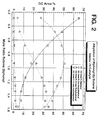
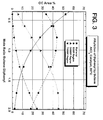
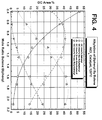
- One way to optimize a process which involves alkylation is to construct alkylation curves in which the composition of the alkylate is determined at various mole ratios of butene:biphenyl. In that way, the mole ratio butene:biphenyl at which the yield is maximized can be determined.
- Fig. 2 contains the results of determining alkylation curves at 80°C.
- Fig. 3 is similarly constructed using the data from the Vektor 70 catalyzed reaction. Note that the maximum concentration of SBBP is over 50%. Again, the yield of LOBBP product from the inventive process is higher than the yield of product from the process of the prior art.
- the ketone oxygen was removed using the classical Wang-Minlon modification of the Wolf-Kishner reduction in diethylene glycol with excess KOH and hydrazine hydrate.
- the product was fractionally distilled.
- a blend of 4-IBBP was made from fractions which were greater than 99% pure.
- the blend had an odor pronounced of hydrazine hydrate, apparently due to impurities produced by cracking of nitrogenous heavy components at the high temperatures of the fractional distillation.
- the blend was taken up in hexane and was washed at reflux for a short time with 2N HCl.
- the acid wash was repeated at room temperature then the organic layer was filtered through a bed of Floridan® clay to insure removal of all polar nitrogenous compounds.
- the filtrate was concentrated in vacuo then short path distilled to remove all traces of hexane.
- the product was 100% by GC analysis.
- a blend of 90:10: :4-SBBP:4-IBBP was made in order to simulate the ratio of SBBP:IBBP in regular Sure Sol®-290.
- Blind odor panel analysis found that the 90:10 blend of 4-SBBP:4-IBBP had a higher, more intense odor than the pure 98% 4-SBBP, thus establishing that the IBBP is one reason for the higher odor of regular Sure Sol®-290.
- Table 11 details the IBBP content of the plant trial. Because the average temperature of the plant trial batch was a little higher than the lab alkylations, the IBBP content of the alkylate was a little higher. Table 11 SBBP and IBBP Content of Sure Sol®-290 Alkylates and Products, GC Area % Normalized Product, Conditions 3-SBBP 3-IBBP 4-IBBP 4-SBBP LOBBP(80) alkylate, lab 61.29% 1.10% 1.02% 36.59% LOBBP(80) alkylate, plant trial 60.27% 1.39% 1.57% 36.77%
- the alkylate contained isopropylbiphenyl (IPBP) impurities, as shown in Table 12.
- IPBP isopropylbiphenyl
- Table 12 The column in Table 12 labeled "(IPBP)" shows the amount of IPBP in the betweens-1 region in both the lab LOBBP(80) alkylate and the plant trial LOBBP(80) alkylate.
- (IPBP) shows the amount of IPBP in the betweens-1 region in both the lab LOBBP(80) alkylate and the plant trial LOBBP(80) alkylate.
- the lower IBBP content of the LOBBP(80) broad blend is what differentiated its odor from that of regular Sure Sol®-290.
- Biphenyl was alkylated with 0.943 mole equivalent butene at 120-130°C in the presence of 10 wt % Harshaw-Filtrol® 13LM. After the butene addition the alkylate was filtered to remove the catalyst and the filtrate was distilled using the 35 theoretical stage column. A blend of fractions was made; the blend had the composition as shown in the first row of Table 15 and was transalkylated using an Sure Sol®-125/AlCl 3 /methyl chloride catalyst complex at 80°C. The results are shown in Table 15.
- Figs. 1 and 2 it can be seen that the process of the present invention produces a higher concentration of DSBBP than does the prior art process.
- the highest concentration of DSBBP produced by alkylation of biphenyl by butene at 120+°C is about 43% while the highest concentration of DSBBP produced by alkylation of biphenyl by butene at 80°C is 45%.
- the DSBBP produced at 80°C has fewer minor impurities also.
- Molten biphenyl is alkylated by 1.8 mole equivalent butene at 80°C using the AlCl 3 / Sure Sol®-125/methyl chloride catalyst complex. After a 1 hr transalkylation, catalyzed by a second dose of catalyst, the reaction is quenched and the alkylate is distilled. Fractions containing a high purity of DSBBP are combined to give DSBBP with acceptable physical properties and a very low odor.
- microcapsules when applied by standard techniques to paper at a rate of about 5 gm/m 2 , and dried, produced paper ready for acid development by clays or by acid resins, when broken by pressure from a stylus.
Landscapes
- Chemical & Material Sciences (AREA)
- Organic Chemistry (AREA)
- Chemical Kinetics & Catalysis (AREA)
- Organic Low-Molecular-Weight Compounds And Preparation Thereof (AREA)
- Low-Molecular Organic Synthesis Reactions Using Catalysts (AREA)
Applications Claiming Priority (2)
| Application Number | Priority Date | Filing Date | Title |
|---|---|---|---|
| US68450096A | 1996-07-19 | 1996-07-19 | |
| US684500 | 1996-07-19 |
Publications (2)
| Publication Number | Publication Date |
|---|---|
| EP0819667A2 true EP0819667A2 (de) | 1998-01-21 |
| EP0819667A3 EP0819667A3 (de) | 1998-03-11 |
Family
ID=24748299
Family Applications (1)
| Application Number | Title | Priority Date | Filing Date |
|---|---|---|---|
| EP97305380A Withdrawn EP0819667A3 (de) | 1996-07-19 | 1997-07-18 | Verfahren zur Herstellung von Mono- und/oder Di-sec.-Butylbiphenyl, sowie daraus zu erhaltene Produkte |
Country Status (2)
| Country | Link |
|---|---|
| EP (1) | EP0819667A3 (de) |
| ID (1) | ID19537A (de) |
Cited By (1)
| Publication number | Priority date | Publication date | Assignee | Title |
|---|---|---|---|---|
| US10889534B2 (en) | 2015-07-10 | 2021-01-12 | Uop Llc | Alkylation processes using liquid Lewis acid catalysts |
Family Cites Families (1)
| Publication number | Priority date | Publication date | Assignee | Title |
|---|---|---|---|---|
| US4287074A (en) * | 1980-04-28 | 1981-09-01 | Sun Oil Company Of Pennsylvania | Sec-ylbiphenyl composition and process for preparing the same |
-
1997
- 1997-07-18 EP EP97305380A patent/EP0819667A3/de not_active Withdrawn
- 1997-07-21 ID IDP972529A patent/ID19537A/id unknown
Cited By (1)
| Publication number | Priority date | Publication date | Assignee | Title |
|---|---|---|---|---|
| US10889534B2 (en) | 2015-07-10 | 2021-01-12 | Uop Llc | Alkylation processes using liquid Lewis acid catalysts |
Also Published As
| Publication number | Publication date |
|---|---|
| EP0819667A3 (de) | 1998-03-11 |
| ID19537A (id) | 1998-07-16 |
Similar Documents
| Publication | Publication Date | Title |
|---|---|---|
| US5191131A (en) | Process for preparation of lower aliphatic hydrocarbons | |
| US5276231A (en) | Alkylaromatic process with removal of aromatic by-products | |
| US5434326A (en) | Discrete molecular sieve and use in aromatic-olefin alkylation | |
| EP1062193B1 (de) | Verfahren zur herstellung von di-methyl-naphthalinen | |
| US20070173675A1 (en) | Reduction of the Bromine Index of linear alkylbenzenes | |
| EP0571701A1 (de) | Verfahren zur Alkylierung von Aromaten | |
| US20050074376A1 (en) | Process and apparatus for ethylbenzene production and transalkylation to xylene | |
| US6225516B1 (en) | Process for the production of linear alkylaromatic hydrocarbons | |
| BG61806B1 (bg) | Метод за получаване на линейни алкилбензени | |
| US4503269A (en) | Isomerization of cresols | |
| EP0895977B1 (de) | Verfahren zur Verminderung des Olefingehaltes eines Alkylierungsproduktes | |
| JP2887011B2 (ja) | 接触的アルケニルベンゼン環化 | |
| EP0819667A2 (de) | Verfahren zur Herstellung von Mono- und/oder Di-sec.-Butylbiphenyl, sowie daraus zu erhaltene Produkte | |
| CN1147496A (zh) | 二芳基乙烷的制备 | |
| US3691247A (en) | Selectively removing monoalkylbenzenes from mixtures thereof with dialkylbenzenes | |
| US4691063A (en) | Isomerization of cresols | |
| EP0564724B1 (de) | Verfahren zur Herstellung von unverzweigten Alkylbenzolen | |
| EP0790224B1 (de) | Mehrstufenalkylierungsverfahren | |
| KR100470807B1 (ko) | 2,6-디알킬나프탈렌의 제조방법 | |
| US2881227A (en) | Production of dhsopropyl benzenes | |
| KR950008881B1 (ko) | 촉매 슬러리의 존재하에서의 알킬기 전이반응 | |
| JPS61183240A (ja) | クレゾ−ルの異性化方法 | |
| JPS60255742A (ja) | 2、4−ジ−tert−ブチルフェノ−ルの製造方法 | |
| EP0924287B1 (de) | Entfernung von Alkylhalogeniden aus Kohlenwasserstoffströmen | |
| US5073654A (en) | Synthesis of the 5- and 6- methyltetralins by continuous methylation of tetralin |
Legal Events
| Date | Code | Title | Description |
|---|---|---|---|
| PUAI | Public reference made under article 153(3) epc to a published international application that has entered the european phase |
Free format text: ORIGINAL CODE: 0009012 |
|
| AK | Designated contracting states |
Kind code of ref document: A2 Designated state(s): AT BE CH DE DK ES FI FR GB GR IE IT LI NL PT SE |
|
| AX | Request for extension of the european patent |
Free format text: AL;LT;LV;RO;SI |
|
| PUAL | Search report despatched |
Free format text: ORIGINAL CODE: 0009013 |
|
| AK | Designated contracting states |
Kind code of ref document: A3 Designated state(s): AT BE CH DE DK ES FI FR GB GR IE IT LI LU MC NL PT SE |
|
| AX | Request for extension of the european patent |
Free format text: AL;LT;LV;RO;SI |
|
| 17P | Request for examination filed |
Effective date: 19980703 |
|
| AKX | Designation fees paid |
Free format text: AT BE CH DE DK ES FI FR GB GR IE IT LI NL PT SE |
|
| RBV | Designated contracting states (corrected) |
Designated state(s): AT BE CH DE DK ES FI FR GB GR IE IT LI NL PT SE |
|
| 17Q | First examination report despatched |
Effective date: 19981201 |
|
| STAA | Information on the status of an ep patent application or granted ep patent |
Free format text: STATUS: THE APPLICATION IS DEEMED TO BE WITHDRAWN |
|
| 18D | Application deemed to be withdrawn |
Effective date: 19990413 |