EP0805084A2 - Verfahren zum kontrollierten Bremsen eines Kraftfahrzeuges - Google Patents
Verfahren zum kontrollierten Bremsen eines Kraftfahrzeuges Download PDFInfo
- Publication number
- EP0805084A2 EP0805084A2 EP97106867A EP97106867A EP0805084A2 EP 0805084 A2 EP0805084 A2 EP 0805084A2 EP 97106867 A EP97106867 A EP 97106867A EP 97106867 A EP97106867 A EP 97106867A EP 0805084 A2 EP0805084 A2 EP 0805084A2
- Authority
- EP
- European Patent Office
- Prior art keywords
- brake
- distribution key
- force distribution
- braking
- motor vehicle
- Prior art date
- Legal status (The legal status is an assumption and is not a legal conclusion. Google has not performed a legal analysis and makes no representation as to the accuracy of the status listed.)
- Granted
Links
Images


Classifications
-
- B—PERFORMING OPERATIONS; TRANSPORTING
- B60—VEHICLES IN GENERAL
- B60T—VEHICLE BRAKE CONTROL SYSTEMS OR PARTS THEREOF; BRAKE CONTROL SYSTEMS OR PARTS THEREOF, IN GENERAL; ARRANGEMENT OF BRAKING ELEMENTS ON VEHICLES IN GENERAL; PORTABLE DEVICES FOR PREVENTING UNWANTED MOVEMENT OF VEHICLES; VEHICLE MODIFICATIONS TO FACILITATE COOLING OF BRAKES
- B60T8/00—Arrangements for adjusting wheel-braking force to meet varying vehicular or ground-surface conditions, e.g. limiting or varying distribution of braking force
- B60T8/18—Arrangements for adjusting wheel-braking force to meet varying vehicular or ground-surface conditions, e.g. limiting or varying distribution of braking force responsive to vehicle weight or load, e.g. load distribution
-
- B—PERFORMING OPERATIONS; TRANSPORTING
- B60—VEHICLES IN GENERAL
- B60T—VEHICLE BRAKE CONTROL SYSTEMS OR PARTS THEREOF; BRAKE CONTROL SYSTEMS OR PARTS THEREOF, IN GENERAL; ARRANGEMENT OF BRAKING ELEMENTS ON VEHICLES IN GENERAL; PORTABLE DEVICES FOR PREVENTING UNWANTED MOVEMENT OF VEHICLES; VEHICLE MODIFICATIONS TO FACILITATE COOLING OF BRAKES
- B60T13/00—Transmitting braking action from initiating means to ultimate brake actuator with power assistance or drive; Brake systems incorporating such transmitting means, e.g. air-pressure brake systems
- B60T13/10—Transmitting braking action from initiating means to ultimate brake actuator with power assistance or drive; Brake systems incorporating such transmitting means, e.g. air-pressure brake systems with fluid assistance, drive, or release
- B60T13/66—Electrical control in fluid-pressure brake systems
-
- B—PERFORMING OPERATIONS; TRANSPORTING
- B60—VEHICLES IN GENERAL
- B60T—VEHICLE BRAKE CONTROL SYSTEMS OR PARTS THEREOF; BRAKE CONTROL SYSTEMS OR PARTS THEREOF, IN GENERAL; ARRANGEMENT OF BRAKING ELEMENTS ON VEHICLES IN GENERAL; PORTABLE DEVICES FOR PREVENTING UNWANTED MOVEMENT OF VEHICLES; VEHICLE MODIFICATIONS TO FACILITATE COOLING OF BRAKES
- B60T13/00—Transmitting braking action from initiating means to ultimate brake actuator with power assistance or drive; Brake systems incorporating such transmitting means, e.g. air-pressure brake systems
- B60T13/74—Transmitting braking action from initiating means to ultimate brake actuator with power assistance or drive; Brake systems incorporating such transmitting means, e.g. air-pressure brake systems with electrical assistance or drive
-
- B—PERFORMING OPERATIONS; TRANSPORTING
- B60—VEHICLES IN GENERAL
- B60T—VEHICLE BRAKE CONTROL SYSTEMS OR PARTS THEREOF; BRAKE CONTROL SYSTEMS OR PARTS THEREOF, IN GENERAL; ARRANGEMENT OF BRAKING ELEMENTS ON VEHICLES IN GENERAL; PORTABLE DEVICES FOR PREVENTING UNWANTED MOVEMENT OF VEHICLES; VEHICLE MODIFICATIONS TO FACILITATE COOLING OF BRAKES
- B60T7/00—Brake-action initiating means
- B60T7/02—Brake-action initiating means for personal initiation
- B60T7/04—Brake-action initiating means for personal initiation foot actuated
- B60T7/042—Brake-action initiating means for personal initiation foot actuated by electrical means, e.g. using travel or force sensors
-
- B—PERFORMING OPERATIONS; TRANSPORTING
- B60—VEHICLES IN GENERAL
- B60T—VEHICLE BRAKE CONTROL SYSTEMS OR PARTS THEREOF; BRAKE CONTROL SYSTEMS OR PARTS THEREOF, IN GENERAL; ARRANGEMENT OF BRAKING ELEMENTS ON VEHICLES IN GENERAL; PORTABLE DEVICES FOR PREVENTING UNWANTED MOVEMENT OF VEHICLES; VEHICLE MODIFICATIONS TO FACILITATE COOLING OF BRAKES
- B60T8/00—Arrangements for adjusting wheel-braking force to meet varying vehicular or ground-surface conditions, e.g. limiting or varying distribution of braking force
- B60T8/17—Using electrical or electronic regulation means to control braking
- B60T8/176—Brake regulation specially adapted to prevent excessive wheel slip during vehicle deceleration, e.g. ABS
- B60T8/1764—Regulation during travel on surface with different coefficients of friction, e.g. between left and right sides, mu-split or between front and rear
-
- B—PERFORMING OPERATIONS; TRANSPORTING
- B60—VEHICLES IN GENERAL
- B60T—VEHICLE BRAKE CONTROL SYSTEMS OR PARTS THEREOF; BRAKE CONTROL SYSTEMS OR PARTS THEREOF, IN GENERAL; ARRANGEMENT OF BRAKING ELEMENTS ON VEHICLES IN GENERAL; PORTABLE DEVICES FOR PREVENTING UNWANTED MOVEMENT OF VEHICLES; VEHICLE MODIFICATIONS TO FACILITATE COOLING OF BRAKES
- B60T8/00—Arrangements for adjusting wheel-braking force to meet varying vehicular or ground-surface conditions, e.g. limiting or varying distribution of braking force
- B60T8/17—Using electrical or electronic regulation means to control braking
- B60T8/176—Brake regulation specially adapted to prevent excessive wheel slip during vehicle deceleration, e.g. ABS
- B60T8/1766—Proportioning of brake forces according to vehicle axle loads, e.g. front to rear of vehicle
-
- B—PERFORMING OPERATIONS; TRANSPORTING
- B60—VEHICLES IN GENERAL
- B60T—VEHICLE BRAKE CONTROL SYSTEMS OR PARTS THEREOF; BRAKE CONTROL SYSTEMS OR PARTS THEREOF, IN GENERAL; ARRANGEMENT OF BRAKING ELEMENTS ON VEHICLES IN GENERAL; PORTABLE DEVICES FOR PREVENTING UNWANTED MOVEMENT OF VEHICLES; VEHICLE MODIFICATIONS TO FACILITATE COOLING OF BRAKES
- B60T8/00—Arrangements for adjusting wheel-braking force to meet varying vehicular or ground-surface conditions, e.g. limiting or varying distribution of braking force
- B60T8/24—Arrangements for adjusting wheel-braking force to meet varying vehicular or ground-surface conditions, e.g. limiting or varying distribution of braking force responsive to vehicle inclination or change of direction, e.g. negotiating bends
-
- B—PERFORMING OPERATIONS; TRANSPORTING
- B60—VEHICLES IN GENERAL
- B60T—VEHICLE BRAKE CONTROL SYSTEMS OR PARTS THEREOF; BRAKE CONTROL SYSTEMS OR PARTS THEREOF, IN GENERAL; ARRANGEMENT OF BRAKING ELEMENTS ON VEHICLES IN GENERAL; PORTABLE DEVICES FOR PREVENTING UNWANTED MOVEMENT OF VEHICLES; VEHICLE MODIFICATIONS TO FACILITATE COOLING OF BRAKES
- B60T8/00—Arrangements for adjusting wheel-braking force to meet varying vehicular or ground-surface conditions, e.g. limiting or varying distribution of braking force
- B60T8/26—Arrangements for adjusting wheel-braking force to meet varying vehicular or ground-surface conditions, e.g. limiting or varying distribution of braking force characterised by producing differential braking between front and rear wheels
- B60T8/266—Arrangements for adjusting wheel-braking force to meet varying vehicular or ground-surface conditions, e.g. limiting or varying distribution of braking force characterised by producing differential braking between front and rear wheels using valves or actuators with external control means
-
- B—PERFORMING OPERATIONS; TRANSPORTING
- B60—VEHICLES IN GENERAL
- B60T—VEHICLE BRAKE CONTROL SYSTEMS OR PARTS THEREOF; BRAKE CONTROL SYSTEMS OR PARTS THEREOF, IN GENERAL; ARRANGEMENT OF BRAKING ELEMENTS ON VEHICLES IN GENERAL; PORTABLE DEVICES FOR PREVENTING UNWANTED MOVEMENT OF VEHICLES; VEHICLE MODIFICATIONS TO FACILITATE COOLING OF BRAKES
- B60T8/00—Arrangements for adjusting wheel-braking force to meet varying vehicular or ground-surface conditions, e.g. limiting or varying distribution of braking force
- B60T8/32—Arrangements for adjusting wheel-braking force to meet varying vehicular or ground-surface conditions, e.g. limiting or varying distribution of braking force responsive to a speed condition, e.g. acceleration or deceleration
- B60T8/321—Arrangements for adjusting wheel-braking force to meet varying vehicular or ground-surface conditions, e.g. limiting or varying distribution of braking force responsive to a speed condition, e.g. acceleration or deceleration deceleration
-
- B—PERFORMING OPERATIONS; TRANSPORTING
- B60—VEHICLES IN GENERAL
- B60T—VEHICLE BRAKE CONTROL SYSTEMS OR PARTS THEREOF; BRAKE CONTROL SYSTEMS OR PARTS THEREOF, IN GENERAL; ARRANGEMENT OF BRAKING ELEMENTS ON VEHICLES IN GENERAL; PORTABLE DEVICES FOR PREVENTING UNWANTED MOVEMENT OF VEHICLES; VEHICLE MODIFICATIONS TO FACILITATE COOLING OF BRAKES
- B60T8/00—Arrangements for adjusting wheel-braking force to meet varying vehicular or ground-surface conditions, e.g. limiting or varying distribution of braking force
- B60T8/32—Arrangements for adjusting wheel-braking force to meet varying vehicular or ground-surface conditions, e.g. limiting or varying distribution of braking force responsive to a speed condition, e.g. acceleration or deceleration
- B60T8/321—Arrangements for adjusting wheel-braking force to meet varying vehicular or ground-surface conditions, e.g. limiting or varying distribution of braking force responsive to a speed condition, e.g. acceleration or deceleration deceleration
- B60T8/3255—Systems in which the braking action is dependent on brake pedal data
-
- B—PERFORMING OPERATIONS; TRANSPORTING
- B60—VEHICLES IN GENERAL
- B60T—VEHICLE BRAKE CONTROL SYSTEMS OR PARTS THEREOF; BRAKE CONTROL SYSTEMS OR PARTS THEREOF, IN GENERAL; ARRANGEMENT OF BRAKING ELEMENTS ON VEHICLES IN GENERAL; PORTABLE DEVICES FOR PREVENTING UNWANTED MOVEMENT OF VEHICLES; VEHICLE MODIFICATIONS TO FACILITATE COOLING OF BRAKES
- B60T2270/00—Further aspects of brake control systems not otherwise provided for
- B60T2270/82—Brake-by-Wire, EHB
Definitions
- the invention relates to a method for controlled braking of a motor vehicle with a brake system, which contains, inter alia, a brake pedal for generating a pedal signal, a brake actuator for each wheel of the motor vehicle and a central unit which is connected to the brake actuators and can transmit information to them , in which each brake actuator is subjected to a previously calculated braking force during a braking operation.
- the invention further relates to a brake system for a motor vehicle.
- brake systems of the brake-by-wire type have been developed for motor vehicles, in particular for passenger cars.
- a brake system is known for example from DE 40 22 671 A1 and has a brake value transmitter which is connected to two central modules, which in turn are each connected to two wheel modules via a data bus.
- the central modules and the wheel modules assigned to them can exchange data in serial operation via the data buses.
- a braking process is carried out essentially as follows.
- the braking value specified by a driver is fed to the central modules via the braking value transmitter and here initially converted into individual braking values for the individual wheel modules.
- the individual braking values are then forwarded from the central modules to the wheel modules via the data buses, and on the basis of the individual braking values, the braking process on the respective wheel of the motor vehicle is initiated by the wheel modules.
- the different wheel loads for example due to cornering and / or loading or the different temperatures of the brakes, can be taken into account, for example, so that an overheated brake is recognized and corrected and yaw moments of the motor vehicle can be compensated.
- data must be transmitted from the individual wheel modules to the central units via the data buses. As a result, the data buses are temporarily "occupied" and then no data for initiating a braking process can be transmitted from the central modules to the wheel modules. There is then an undesirable deceleration of the braking process.
- EP 0 439 559 B1 discloses a system with distributed modules which communicate with one another via a serial data bus and with which commands can be executed in individual modules without delay. For this purpose, commands are transmitted from a central module via the data bus to the other modules at any time, where they are stored. The request to carry out the stored command is fed to the modules via separate data lines and the stored command is executed immediately after the request is received.
- EP 0 439 559 B1 is not suitable for use in brake systems of the brake-by-wire type, since the command generation in the central module, the command transmission between the central module and the other modules and the storage of the fixed commands in the Modules runs automatically and is not influenced by the driver of a motor vehicle.
- a braking process is precisely a process that is to be influenced by the driver by suitable actuation of the brake pedal depending on the situation.
- the invention has for its object to provide a method for controlled braking of a motor vehicle, in which on the one hand the braking process is initiated as soon as possible after the brake pedal is actuated and on the other hand a safe emergency braking of the motor vehicle is still possible even if the central unit or units the brake system fail.
- the invention is also based on the object of providing a brake system for carrying out the method.
- a relative brake force distribution key is calculated in the central unit, which is possible at any time regardless of the actuation of the brake system by the driver of the motor vehicle.
- This relative brake force distribution key is transmitted to the individual computing units of the brake actuators and stored there, so that there is a brake force distribution key at all times regardless of a braking operation.
- the pedal signal and the corresponding component of the relative Brake force distribution key calculates the absolute braking force for the corresponding brake actuator.
- Another advantage of the invention can be seen in the fact that a pulling of the motor vehicle is effectively prevented, since the signal path of the pedal signal to all brake actuators is the same and the calculation of the braking force in the individual brake actuators takes the same time and thus activates all brake actuators simultaneously will. Furthermore, the brake system is very fail-safe, since even if the central unit fails, a braking process "of reduced quality" can be initiated on the basis of the pedal signal sent directly to the brake actuators.
- the brake force distribution key is calculated periodically in the central unit and transmitted to the individual computing units of the brake actuators.
- the frequency of the calculation of the brake force distribution key is preferably in a frequency range from approximately 100 to 1000 Hertz.
- a new brake force distribution key is always calculated and transmitted to the individual computing units of the brake actuators when a change in the driving situation of the motor vehicle is determined, for example when the speed, the steering angle, the lateral acceleration, etc. of the motor vehicle change Change the specified dimension.
- the last stored braking force distribution key or the last stored component of the braking force distribution key which is assigned to the computing unit of the brake actuator, is replaced in the respective computing unit of the respective brake actuator by a fixed predetermined value, if not within a predetermined period a new brake force distribution key or the corresponding component has been transmitted to each brake actuator.
- a brake force distribution key can be stored in the computing units of the individual brake actuators, which still permits "high quality" emergency braking.
- a braking force distribution key can be stored, which provides 35/100 of the braking force to be regulated for the two front wheels and 15/100 of the braking force for the two rear wheels. In this case, 70% of the braking force is applied to the front wheels and only 30% of the braking force to the rear wheels, so that premature locking of the rear wheels, which usually leads to a dangerous "breakaway" of the motor vehicle, is effectively prevented.
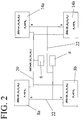
- the brake system has a brake pedal 2 with a sensor 4, which converts the braking request, which is made known by a driver through a foot force acting on the brake pedal 2, into an electric pedal signal S.
- the brake system has a central unit 6, computing units 8a and 8b of the brake actuators 10a and 10b, which are assigned to the front axle wheels 12a and 12b.
- the brake system has computing units 14a and 14b of the brake actuators 16a and 16b, which are assigned to the rear axle wheels 18a and 18b.
- the brake system has a serial data bus 20, via which the central unit 6 can exchange data with the computing units 8a, 8b, 14a and 14b.
- the brake system has a signal line 22, via which the pedal signal S can be transmitted from the sensor 4 to the computing units 8a, 8b, 14a and 14b.
- the function of the brake system shown in FIG. 1 is explained in more detail below in connection with FIG. 2.
- the pedal signal S generated in the sensor 4 becomes via the separate signal line 22 Computing units 8a, 8b, 14a and 14b transmitted.
- the "simultaneous" arrival of the pedal signal S at the computing units 8a, 8b, 14a and 14b is ensured by an analog or quasi-analog signal path between the sensor 4 and the individual computing units 8a, 8b, 14a and 14b.
- a braking force distribution key BS consisting of the components K 1 to K 4, is already stored in the individual computing units 8a, 8b, 14a and 14b.
- the individual components of the brake force distribution key BS indicate the relative braking force that would have to be applied to the corresponding brake actuator in the event of a braking process triggered by actuation of the brake pedal 2.
- a brake force distribution key could, for example, look like this: [45/100; 25/100; 20/100, 10/100]. This would mean that 45% on the wheel 12a and 25% on the wheel 12b on 20% of the total braking force represented by the pedal signal S would be adjusted to the wheel 18a and 10% to the wheel 18b.
- the braking force F to be controlled on the assigned brake actuators 10a, 10b, 16a and 16b is calculated from the product of the pedal signal S and the corresponding component of the brake force distribution key.
- the absolute braking force F 1 is thus calculated from the product S and the component K 1 of the braking force distribution key BS, etc.
- the braking force distribution key BS stored in the computing units 8a, 8b, 14a and 14b is replaced at intervals by a new braking force distribution key BS '.
- the new brake force distribution key BS ' is based on the most varied in the central unit 6 Information is calculated and simultaneously transmitted via the serial data bus 20 to the computing units 8a, 8b, 14a and 14b, where it replaces the old brake force distribution key BS.
- the new brake force distribution key BS ' has been stored, the calculation of the individual brake forces is carried out on the basis of the new brake force distribution key BS'.
- the brake distribution key [45/100; 25/100; 20/100; 10/100] mentioned by way of example is replaced, for example, by the new brake force distribution key [20/100; 40/100; 15/100; 25/100] so that the wheels 12a and 18a on the right side of the motor vehicle would no longer be braked more than the wheels 12b and 18b on the left side of the motor vehicle, but vice versa.
- Such a change in the brake force distribution key can be caused, for example, by a change in the road surface.
- a new brake force distribution key BS ' consisting of the components K 1 ' to K 4 ', is also calculated at intervals and the individual components of the brake force distribution key are now sent to the corresponding computing units via the corresponding signal lines 24a, 24b, 24c and 24d 8a, 8b, 14a and 14b transmitted.
- the simultaneous arrival of the components is ensured by the type of signal transmission on the signal lines 24a, 24b, 24c and 24d.
- the new components K 1 'to K 4 ' replace in the corresponding components 8a, 8b, 14a and 14b the stored components K1 to K4 of the old brake force distribution key BS, and from the time of replacement the new brake forces F are calculated on the basis of the new components K 1 'to K 4 '.
Landscapes
- Engineering & Computer Science (AREA)
- Transportation (AREA)
- Mechanical Engineering (AREA)
- Braking Systems And Boosters (AREA)
- Regulating Braking Force (AREA)
Abstract
Description
- Die Erfindung betrifft ein Verfahren zum kontrollierten Bremsen eines Kraftfahrzeuges mit einer Bremsanlage, die unter anderem ein Bremspedal zur Erzeugung eines Pedalsignals, jeweils einen Bremsaktuator für jedes Rad des Kraftfahrzeuges und eine Zentraleinheit, die mit den Bremsaktuatoren verbunden ist und Informationen an diese übermitteln kann, enthält, bei dem jeder Bremsaktuator bei einem Bremsvorgang mit einer zuvor berechneten Bremskraft beaufschlagt wird. Die Erfindung betrifft ferner eine Bremsanlage für ein Kraftfahrzeug.
- In jüngster Vergangenheit sind für Kraftfahrzeuge, insbesondere für Personenkraftwagen, Bremsanlagen vom Brake-by-Wire Typ entwickelt worden. Eine derartige Bremsanlage ist beispielsweise aus der DE 40 22 671 A1 bekannt und verfügt über einen Bremswertgeber, der mit zwei Zentralmodulen verbunden ist, die ihrerseits über jeweils einen Datenbus mit zwei Radmodulen verbunden sind. Über die Datenbusse können die Zentralmodule und die ihnen zugeordneten Radmodule Daten im seriellen Betrieb austauschen.
- Mit Hilfe der aus der DE 40 22 671 A1 bekannten Bremsanlage wird ein Bremsvorgang im wesentlichen wie folgt durchgeführt. Der von einem Fahrer vorgegebene Bremswert wird über den Bremswertgeber den Zentralmodulen zugeleitet und hier zunächst in individuelle Bremswerte für die einzelnen Radmodule umgewandelt. Daraufhin werden die individuellen Bremswerte über die Datenbusse von den Zentralmodulen an die Radmodule weitergeleitet und auf Basis der individuellen Bremswerte wird von den Radmodulen der Bremsvorgang an dem jeweiligen Rad des Kraftfahrzeuges eingeleitet.
- Durch die Erzeugung individueller Bremswerte können beispielsweise die unterschiedlichen Radlasten, z.B. durch Kurvenfahrt und/oder Belastung oder die unterschiedlichen Temperaturen der Bremsen berücksichtigt werden, so daß eine überhitzte Bremse erkannt und ausgeregelt wird und Giermomente des Kraftfahrzeuges ausgeglichen werden können. Zur Berücksichtigung der Betriebsparameter der einzelnen Radbremsen müssen jedoch über die Datenbusse Daten von den einzelnen Radmodulen zu den Zentraleinheiten übertragen werden. Infolgedessen sind die Datenbusse zeitweise "belegt" und es können dann keine Daten für die Einleitung eines Bremsvorganges von den Zentralmodulen zu den Radmodulen übertragen werden. Es kommt dann zu einer unerwünschten Verzögerung des Bremsvorganges. Darüber hinaus ist nicht immer gewährleistet, daß die von den Zentralmodulen "abgeschickten" individuellen Bremswerte gleichzeitig an allen vier Radmodulen ankommen, so daß es aufgrund von Ungleichzeitigkeiten zu einem unerwünschten Schiefziehen des Kraftfahrzeuges kommen kann. Schließlich ist die aus der DE 40 22 671 A1 bekannte Bremsanlage insofern als unsicher zu bezeichnen, als das es bei einem Ausfall der Zentralmodule zu einem Totalausfall der Bremsanlage kommt, da in diesem Fall der vorgegebene Bremswert von den Zentralmodulen nicht mehr registriert und die individuellen Bremswerte von den Zentralmodulen nicht mehr an die einzelnen Radmodule weitergegeben werden.
- Aus der EP 0 439 559 B1 ist eine Anlage mit verteilten, untereinander über einen seriellen Datenbus kommunizierenden Modulen bekannt, mit der in einzelnen Modulen Befehle ohne Zeitverzug ausführbar sind. Dazu werden von einem Zentralmodul über den Datenbus zu einem beliebigen Zeitpunkt Befehle zu den anderen Modulen übermittelt, wo diese gespeichert werden. Die Aufforderung zur Durchführung des gespeicherten Befehls wird den Modulen über separate Datenleitungen zugeführt und der gespeicherte Befehl wird unmittelbar nach Empfang der Aufforderung ausgeführt.
- Die aus der EP 0 439 559 B1 bekannte Anlage ist jedoch zur Verwendung in Bremsanlagen vom Brake-by-Wire Typ nicht geeignet, da die Befehlsgenerierung in dem Zentralmodul, die Befehlsübermittlung zwischen dem Zentralmodul und den anderen Modulen und die Speicherung der festen Befehle in den Modulen automatisch abläuft und von dem Fahrer eines Kraftfahrzeuges nicht beeinflußbar ist. Bei einem Bremsvorgang handelt es sich aber gerade um einen Vorgang, der vom Fahrer durch geeignete Betätigung des Bremspedals situationsbedingt beeinflußt werden soll.
- Der Erfindung liegt die Aufgabe zugrunde, ein Verfahren zum kontrollierten Bremsen eines Kraftfahrzeuges zu schaffen, bei dem einerseits der Bremsvorgang möglichst unmittelbar nach Betätigung des Bremspedals eingeleitet wird und bei dem andererseits eine sichere Notbremsung des Kraftfahrzeuges auch dann noch möglich ist, wenn das oder die Zentraleinheiten der Bremsanlage ausfallen. Der Erfindung liegt ferner die Aufgabe zugrunde, eine Bremsanlage zur Durchführung des Verfahrens zu schaffen.
- Gemäß den kennzeichnenden Merkmalen des Anspruchs 1 wird die Aufgabe durch folgende Verfahrensschritte gelöst:
- jedem Bremsaktuator (10a, 10b), (16a, 16b) ist eine Recheneinheit zugeordnet (8a, 8b), (14a, 14b) zugeordnet, in der zu jedem Zeitpunkt ein aktueller Bremskraftverteilungsschlüssel (BS) bzw. zumindest eine Komponente (Ki) aus dem Bremskraftverteilungsschlüssel (BS), die dem entsprechenden Bremsaktuator (10a, 10b), (16a, 16b) aus dem Bremskraftverteilungsschlüssel (BS) zugeordnet wird, vorliegt und
- das Pedalsignal (S) wird direkt an die Recheneinheiten (8a, 8b), (14a, 14b) der Bremsaktuatoren (10a, 10b), (16a, 16b) geleitet und
- die Bremskraft wird in jeder der Recheneinheiten (8a, 8b), (14a, 14b) der einzelnen Bremsaktuatoren (10a, 10b), (16a und 16b) aus der Komponente (Ki) und einer Information (S), die dem Pedalsignal entspricht, berechnet und daß
- in zeitlichen Abständen in der Zentraleinheit (6) ein neuer Bremskraftverteilungsschlüssel (BS') berechnet wird und zumindest die einem bestimmten Bremsaktuator (10a, 10b), (16a, 16b) zugeordnete neue Komponente (Ki') an die entsprechende Recheneinheit (8a, 8b), (14a, 14b) des jeweiligen Bremsaktuators (10a, 10b), (16a, 16b) übermittelt wird und dort die alte Komponente (Ki) ersetzt.
- Gemäß den kennzeichnenden Merkmalen des nebengeordneten Anspruchs 5 wird die Aufgabe bei einer Bremsanlage der eingangs genannten Art wie folgt gelöst:
- Jeder Bremsaktuator enthält unter anderem:
- einen überschreibbaren Speicher, in dem zu jedem Zeitpunkt ein aktueller Bremskraftverteilungsschlüssel (BS1) bzw. zumindest eine Komponente (Ki) aus dem Bremskraftverteilungsschlüssel (BS), die dem entsprechenden Bremsaktuator aus dem Bremskraftverteilungsschlüssel (BS1) zugeordnet ist, gespeichert ist und
- eine Recheneinheit, in der die Bremskraft an dem Bremsaktuator aus dem Produkt der Komponente (Ki) und einer Information (S), die dem Pedalsignal entspricht, berechenbar ist.
Ferner ist die Zentraleinheit derart ausgebildet, daß in ihr ein neuer Bremskraftverteilungsschlüssel (BS') berechenbar ist, von dem zumindest die einem bestimmten Bremsaktuator zugeordnete neue Komponente (Ki') an den jeweiligen Bremsaktuator übermittelt wird und dort die gespeicherte Komponente (Ki) ersetzt. - Der Grundgedanke der Erfindung ist darin zu sehen, daß in der Zentraleinheit ein relativer Bremskraftverteilungsschlüssel berechnet wird, was zu jedem beliebigen Zeitpunkt unabhängig von der Betätigung der Bremsanlage durch den Fahrer des Kraftfahrzeuges möglich ist. Dieser relative Bremskraftverteilungsschlüssel wird an die einzelnen Recheneinheiten der Bremsaktuatoren übermittelt und dort gespeichert, so daß dort zu jedem Zeitpunkt unabhängig von einem Bremsvorgang ein Bremskraftverteilungsschlüssel vorliegt. Bei einem Bremsvorgang wird aus dem Pedalsignal und der entsprechenden Komponente des relativen Bremskraftverteilungsschlüssels die absolute Bremskraft für den entsprechenden Bremsaktuator berechnet.
- Die mit der Erfindung erzielten Vorteile sind insbesondere darin zu sehen, daß Verzögerungen bei der Einleitung des Bremsvorganges vermieden werden, da das Pedalsignal über separate Signalleitungen direkt an die Bremsaktuatoren geleitet wird, und somit Verzögerung durch eine Überlastungdes Datenbusses etc. ausgeschlossen sind. Ferner liegt bei "Ankunft" des Pedalsignals immer ein aktueller Bremskraftverteilungsschlüssel in den Bremsaktuatoren vor, so daß die Berechnung unmittelbar erfolgen kann.
- Ein weiterer Vorteil der Erfindung ist darin zu sehen, daß einem Schiefziehen des Kraftfahrzeuges wirksam vorgebeugt ist, da der Signalweg des Pedalsignals zu allen Bremsaktuatoren gleich ist und die Berechnung der Bremskraft in den einzelnen Bremsaktuatoren die gleiche Zeit in Anspruch nimmt und somit alle Bremsaktuatoren gleichzeitig aktiviert werden. Ferner ist die Bremsanlage sehr ausfallsicher, da auch bei einem Ausfall der Zentraleinheit ein Bremsvorgang "mit verminderter Qualität" auf Basis des direkt an die Bremsaktuatoren geleiteten Pedalsignals eingeleitet werden kann.
- Gemäß einem Ausführungsbeispiel der Erfindung wird der Bremskraftverteilungsschlüssel in der Zentraleinheit periodisch berechnet und an die einzelnen Recheneinheiten der Bremsaktuatoren übermittelt. Die Frequenz der Berechnung des Bremskraftverteilungsschlüssels liegt vorzugsweise in einem Frequenzbereich von ca. 100 bis 1000 Hertz. Der Vorteil dieses Ausführungsbeispiels ist darin zu sehen, daß - insbesondere bei einer hohen Frequenz - immer ein sehr aktueller Bremskraftverteilungsschlüssel bzw. die entsprechende Komponente in den Bremsaktuatoren vorliegt.
- Gemäß einem alternativen Ausführungsbeispiel der Erfindung wird ein neuer Bremskraftverteilungsschlüssel immer dann berechnet und an die einzelnen Recheneinheiten der Bremsaktuatoren übermittelt, wenn eine Änderung der Fahrsituation des Kraftfahrzeuges festgestellt wird, wenn sich also beispielsweise die Geschwindigkeit, der Lenkwinkel, die Querbeschleunigung etc. des Kraftfahrzeuges über ein vorgegebenes Maß hinaus verändern.
- Gemäß einer Weiterbildung der Erfindung nach Anspruch 4 wird in der jeweiligen Recheneinheit des jeweiligen Bremsaktuator der zuletzt gespeicherte Bremskraftverteilungsschlüssel bzw. die zuletzt gespeicherte Komponente des Bremskraftverteilungsschlüssels, die der Recheneinheit des Bremsaktuators zugeordnet ist, durch einen festen vorgegebenen Wert ersetzt, wenn nicht innerhalb eines vorgegebenen Zeitraums ein neuer Bremskraftverteilungsschlüssel bzw. die entsprechende Komponente an jeden Bremsaktuator übermittelt worden ist. Diese Weiterbildung der Erfindung hat den Vorteil, daß auch bei einem Ausfall der Zentraleinheit ein Bremskraftverteilungsschlüssel in den Recheneinheiten der einzelnen Bremsaktuatoren gespeichert werden kann, der noch eine "qualitativ hochwertige" Notbremsung zuläßt. Beispielsweise kann ein Bremskraftverteilungsschlüssel gespeichert werden, der für die beiden Vorderräder jeweils 35/100 der einzuregelnden Bremskraft und die beiden Hinterräder jeweils 15/100 der einzuregelnden Bremskraft vorsieht. In diesem Fall entfallen 70 % der Bremskraft auf die Vorderräder und nur 30 % der Bremskraft auf die Hinterräder, so daß einem frühzeitigen Blockieren der Hinterräder, das in der Regel zu einem gefährlichen "Ausbrechen" des Kraftfahrzeuges führt, wirksam vorgebeugt ist.
- Weitere Vorteile und ein Ausführungsbeispiel der Erfindung werden im Zusammenhang mit den nachstehenden Figuren erläutert, darin zeigt:
- Fig. 1 eine Bremsanlage in schematischer Darstellung,
- Fig. 2 ein Blockschaubild,
- Fig. 3 ein Blockschaubild.
- Fig. 1 zeigt in schematischer Darstellung eine Bremsanlage vom Brake-by-Wire Typ, wobei in der Figur nur die für die nachfolgenden Erläuterungen notwendigen Bestandteile dargestellt sind. Die Bremsanlage verfügt über ein Bremspedal 2 mit einem Sensor 4, der den von einem Fahrer durch eine auf das Bremspedal 2 einwirkende Fußkraft kundgetanen Bremswunschin ein elektrisches Pedalsignal S umwandelt. Darüber hinaus verfügt die Bremsanlage über eine Zentraleinheit 6, über Recheneinheiten 8a und 8b der Bremsaktuatoren 10a und 10b, die den Vorderachsrädern 12a und 12b zugeordnet sind. Entsprechend verfügt die Bremsanlage über Recheneinheiten 14a und 14b der Bremsaktuatoren 16a und 16b, die den Hinterachsrädern 18a und 18b zugeordnet sind. Schließlich verfügt die Bremsanlage über einen seriellen Datenbus 20, über den die Zentraleinheit 6 mit den Recheneinheiten 8a, 8b, 14a und 14b Daten austauschen kann. Darüber hinaus verfügt die Bremsanlage über eine Signalleitung 22, über die von dem Sensor 4 das Pedalsignal S zu den Recheneinheiten 8a, 8b, 14a und 14b übertragbar ist.
- Die Funktion die in der Fig. 1 gezeigten Bremsanlage wird im folgenden im Zusammenhang mit der Figur 2 näher erläutert. Bei einem Bremsvorgang wird das in dem Sensor 4 erzeugte Pedalsignal S über die separate Signalleitung 22 zu den Recheneinheiten 8a, 8b, 14a und 14b übertragen. Die "gleichzeitige" Ankunft des Pedalsignals S an den Recheneinheiten 8a, 8b, 14a und 14b wird durch eine analoge bzw. quasianaloge Signalstrecke zwischen dem Sensor 4 und den einzelnen Recheneinheiten 8a, 8b, 14a und 14b sichergestellt. In den einzelnenen Recheneinheiten 8a, 8b, 14a und 14b ist bereits ein Bremskraftverteilungsschlüssel BS, bestehend aus den Komponenten K1 bis K4 gespeichert. Die einzelnen Komponenten des Bremskraftverteilungsschlüssels BS geben die relative Bremskraft an, die bei einem durch Betätigung des Bremspedals 2 ausgelösten Bremsvorgang an dem entsprechenden Bremsaktuator einzusteuern wäre. (Ein Bremskraftverteilungsschlüssel könnte beispielsweise wie folgt aussehen: [45/100; 25/100; 20/100, 10/100]. Dies würde bedeuten, daß bei einem Bremsvorgang an dem Rad 12a 45%, an dem Rad 12b 25%, an dem Rad 18a 20% und an dem Rad 18b 10% der gesamten durch das Pedalsignal S dargestellten Bremskraft eingeregelt würden.)
- In den einzelnen Recheneinheiten 8a, 8b, 14a und 14b wird die an den zugeordneten Bremsaktuatoren 10a, 10b, 16a und 16b einzusteuernde Bremskraft F aus dem Produkt des Pedalsignals S und der entsprechenden Komponente des Bremskraftverteilungsschlüssels berechnet. In der Recheneinheit 8a, die dem Bremsaktuator 10a zugeordnet ist, der das Vorderrad 12a bremst (siehe Fig. 1), wird die absolute Bremskraft F1 also aus dem Produkt S und der Komponente K1 des Bremskraftverteilungsschlüssels BS berechnet, usw.
- Der in den Recheneinheiten 8a, 8b, 14a und 14b gespeicherte Bremskraftverteilungsschlüssel BS wird in zeitlichen Abständen durch einen neuen Bremskraftverteilungsschlüssel BS' ersetzt. Der neue Bremskraftverteilungsschlüssel BS' wird in der Zentraleinheit 6 auf Basis der unterschiedlichsten Informationen berechnet und über den seriellen Datenbus 20 gleichzeitig an die Recheneinheiten 8a, 8b, 14a und 14b übermittelt, wo er den alten Bremskraftverteilungsschlüssel BSersetzt. Nach Speicherung des neuen Bremskraftverteilungsschlüssels BS' wird die Berechnung der einzelnen Bremskräfte auf Basis des neuen Bremskraftverteilungsschlüssels BS' vorgenommen. (Der beispielhaft genannte Bremsverteilungsschlüssel [45/100; 25/100; 20/100; 10/100] wird, z.B. durch den neuen Bremskraftverteilungsschlüssel [20/100; 40/100; 15/100; 25/100] ersetzt, so daß nicht mehr die Räder 12a und 18a der rechten Kraftfahrzeugseite stärker gebremst würden als die Räder 12b und 18b der linken Kraftfahrzeugseite, sondern umgekehrt. Eine solche Änderung des Bremskraftverteilungsschlüssels kann z.B. durch eine Änderung der Fahrbahnoberfläche bedingt sein.)
- Bei der in der Fig. 3 dargestellten Bremsanlage erfolgt die Berechnung der einzelnen Bremskräfte F in den Recheneinheiten 8a, 8b, 14a und 14b genauso wie es bereits im Zusammenhang mit der Fig. 2 erläutert worden ist. Der einzige Unterschied zu der Fig. 2 besteht darin, daß die Zentraleinheit 6 nicht, wie in der Fig. 2 gezeigt, über einen seriellen Datenbus 20, sondern über einzelne Signalleitungen 24a, 24b, 24c und 24d mit den entsprechenden Recheneinheiten 8a, 8b, 14a und 14b verbunden ist. In der Zentraleinheit 6 wird ebenfalls in zeitlichen Abständen ein neuer Bremskraftverteilungsschlüssel BS', bestehend aus den Komponenten K1' bis K4' berechnet und die einzelnen Komponenten des Bremskraftverteilungsschlüssels werden nun über die entsprechenden Signalleitungen 24a, 24b, 24c und 24d an die entsprechenden Recheneinheiten 8a, 8b, 14a und 14b übermittelt. Die gleichzeitige Ankunft der Komponenten wird durch die Art der Signalübertragung auf den Signalleitungen 24a, 24b, 24c und 24d sichergestellt. Die neuen Komponenten K1' bis K4' ersetzen in den entsprechenden Recheneinheiten 8a, 8b, 14a und 14b die gespeicherten Komponenten K1 bis K4 des alten Bremskraftverteilungsschlüssels BS, und ab dem Zeitpunkt der Ersetzung werden die neuen Bremskräfte F auf Basis der neuen Komponenten K1' bis K4' berechnet.
-
- 2
- Bremspedal
- 4
- Sensor
- 6
- Zentraleinheit
- 8a, 8b
- Recheneinheiten der Bremsaktuatoren 10a, 10b
- 10a, 10b
- Bremsaktuatoren der Vorderachsräder 12a, 12b
- 12a, 12b
- Vorderachsräder
- 14a, 14b
- Recheneinheiten der Bremsaktuatoren 16a, 16b
- 16a, 16b
- Bremsaktuatoren der Hinterachsräder
- 18a, 18b
- Hinterachsräder
- 20
- serieller Datenbus
- 22
- Signalleitung von Sensor 4 zu Recheneinheiten 8a, 8b, 14a, 14b
- 24a, 24b,
- 24c, 24d,
- Signalleitungen von der Zentraleinheit 6 zu den Recheneinheiten 8a, 8b, 14a, 14b
Claims (5)
- Verfahren zum kontrollierten Bremsen eines Kraftfahrzeuges mit einer Bremsanlage, die unter anderem ein Bremspedal (2) zur Erzeugung eines Pedalsignals (S), jeweils einen Bremsaktuator (10a, 10b), (16a, 16b) für jedes Rad (12a, 12b), (18a, 18b) des Kraftfahrzeuges und eine Zentraleinheit (6), die mit den Bremsaktuatoren (10a, 10b), (16a, 16b) verbunden ist und Informationen an diese übermitteln kann, enthält, bei dem jeder Bremsaktuator (10a, 10b), (16a, 16b) mit einer zuvor berechneten Bremskraft beaufschlagt wird,
dadurch gekennzeichnet, daß- jedem Bremsaktuator (10a, 10b), (16a, 16b) eine Recheneinheit (8a, 8b), (14a, 14b) zugeordnet ist, in der zu jedem Zeitpunkt ein aktueller Bremskraftverteilungsschlüssel (BS) bzw. zumindest eine Komponente (Ki) aus dem Bremskraftverteilungsschlüssel (BS), die dem entsprechenden Bremsaktuator (10a, 10b), (16a, 16b) aus dem Bremskraftverteilungsschlüssel (BS) zugeordnet wird, vorliegt und- das Pedalsignal (S) direkt an die Recheneinheiten (8a, 8b), (14a, 14b) der Bremsaktuatoren (10a, 10b), (16a, 16b) geleitet wird und- die Bremskraft in jeder der Recheneinheiten (8a, 8b), (14a, 14b) der einzelnen Bremsaktuatoren (10a, 10b), (16a und 16b) aus der Komponente (Ki) und einer Information (S), die dem Pedalsignal entspricht, berechnet wird und daß- in zeitlichen Abständen in der Zentraleinheit (6) ein neuer Bremskraftverteilungsschlüssel (BS') berechnet und zumindest die einem bestimmten Bremsaktuator (10a, 10b), (16a, 16b) zugeordnete neue Komponente (Ki') an die entsprechende Recheneinheit (8a, 8b), (14a, 14b) des jeweiligen Bremsaktuators (10a, 10b), (16a, 16b) übermittelt wird und dort die alte Komponente (Ki) ersetzt. - Verfahren zum kontrollierten Bremsen eines Kraftfahrzeugs nach Anspruch 1, dadurch gekennzeichnet, daß ein neuer Bremskraftverteilungsschlüssel (BS') periodisch berechnet wird.
- Verfahren zum kontrollierten Bremsen eines Kraftfahrzeuges nach Anspruch 1, dadurch gekennzeichnet, daß ein neuer Bremskraftverteilungsschlüssel (BS') berechnet wird, wenn eine Änderung der Fahrsituation des Kraftfahrzeuges festgestellt wird.
- Verfahren zum kontrollierten Bremsen eines Kraftfahrzeuges nach einem der Ansprüche 1 bis 3, dadurch gekennzeichnet, daß, wenn nicht innerhalb eines vorgegebenen Zeitraums zumindest die neue Komponente Ki' an die jeweilige Recheneinheit (8a, 8b), (14a, 14b) des jeweiligen Bremsaktuators (10a, 10b), (16a, 16b) übermittelt wird, in der Recheneinheit die zuletzt gespeicherte Komponente (Ki) durch einen fest vorgegebenen Wert ersetzt wird.
- Elektrische Bremsanlage für ein Kraftfahrzeug, die unter anderem ein Bremspedal (2), jeweils einen Bremsaktuator (10a, 10b), (16a, 16b) für jedes Rad (12a, 12b), (18a, 18b) des Kraftfahrzeuges, der bei einem Bremsvorgang mit einer zuvor berechneten Bremskraft beaufschlagt wird, und eine Zentraleinheit (6) enthält, die mit den Bremsaktuatoren(10a, 10b), (16a, 16b) verbunden ist und Informationen an diese übermitteln kann, enthält, dadurch gekennzeichnet, daß jeder Bremsaktuator (10a, 10b), (16a, 16b) unter anderem enthält:- einen überschreibbaren Speicher, in dem zu jedem Zeitpunkt ein aktueller Bremskraftverteilungsschlüssel (BS) bzw. zumindest eine Komponente (Ki) aus dem Bremskraftverteilungsschlüsse (BS), die dem entsprechenden Bremsaktuator (10a, 10b), (16a, 16b) aus dem Bremskraftverteilungsschlüssel (BS) zugeordnet ist, gespeichert ist und- eine Recheneinheit (8a, 8b), (14a, 14b), in der die Bremskraft an dem Bremsaktuator (10a, 10b), (16a, 16b) aus dem Produkt der Komponente (Ki) und einer Information (S), die einem Pedalsignal entspricht, berechenbar ist
und die Zentraleinheit derart ausgebildet ist, daß- in ihr ein neuer Bremskraftverteilungsschlüssel (BS') berechenbar ist, von dem zumindest der einem bestimmten Bremsaktuator (10a, 10b), (16a, 16b) zugeordnete neue Wert (Ki') an den jeweiligen Bremsaktuator (10a, 10b), (16a, 16b) übermittelt wird und dort den gespeicherten Wert (Ki) ersetzt.
Applications Claiming Priority (2)
| Application Number | Priority Date | Filing Date | Title |
|---|---|---|---|
| DE19617285A DE19617285C1 (de) | 1996-04-30 | 1996-04-30 | Verfahren zum Betreiben einer elektrischen Bremsanlage eines Kraftfahrzeuges |
| DE19617285 | 1996-04-30 |
Publications (3)
| Publication Number | Publication Date |
|---|---|
| EP0805084A2 true EP0805084A2 (de) | 1997-11-05 |
| EP0805084A3 EP0805084A3 (de) | 1998-05-20 |
| EP0805084B1 EP0805084B1 (de) | 2003-03-26 |
Family
ID=7792891
Family Applications (1)
| Application Number | Title | Priority Date | Filing Date |
|---|---|---|---|
| EP97106867A Expired - Lifetime EP0805084B1 (de) | 1996-04-30 | 1997-04-25 | Verfahren zum kontrollierten Bremsen eines Kraftfahrzeuges |
Country Status (3)
| Country | Link |
|---|---|
| US (1) | US5902019A (de) |
| EP (1) | EP0805084B1 (de) |
| DE (2) | DE19617285C1 (de) |
Cited By (1)
| Publication number | Priority date | Publication date | Assignee | Title |
|---|---|---|---|---|
| EP1972514A1 (de) * | 2007-03-21 | 2008-09-24 | Audi Ag | Kraftahrzeug mit einem X-by-wire-System und Verfahren zum Betreiben eines X-by-wire-Systems eines Kraftfahrzeugs |
Families Citing this family (14)
| Publication number | Priority date | Publication date | Assignee | Title |
|---|---|---|---|---|
| DE19733379B4 (de) * | 1997-08-01 | 2005-03-10 | Bosch Gmbh Robert | Vorrichtung zur Steuerung einer Bremsanlage |
| EP1024983A1 (de) * | 1997-10-29 | 2000-08-09 | Continental Teves AG & Co. oHG | Vorrichtung und verfahren zur steuerung einer bremsanlage |
| US6317675B1 (en) * | 1997-11-22 | 2001-11-13 | Continental Teves Ag & Co., Ohg | Electromechanical brake system |
| DE19828331C1 (de) * | 1998-06-25 | 2000-03-02 | Continental Ag | Verfahren zum Betreiben einer elektromechanischen Bremsanlage |
| JP2000225935A (ja) * | 1999-02-03 | 2000-08-15 | Toyota Motor Corp | 電気制御ブレーキシステム |
| SE516469C2 (sv) * | 2000-02-14 | 2002-01-15 | Scania Cv Ab | Anordning för att säkerställa funktionen hos en bromsinrättning för ett fordon |
| DE10154425A1 (de) * | 2001-11-06 | 2003-05-15 | Continental Teves Ag & Co Ohg | Verfahren zur Bremskraftregelung von Fahrzeugbremsanlagen vom Typ brake-by-wire |
| FR2867435B1 (fr) * | 2004-03-09 | 2007-11-09 | Peugeot Citroen Automobiles Sa | Systeme de freinage actif pour vehicule automobile |
| JP6565388B2 (ja) * | 2015-07-02 | 2019-08-28 | 三菱自動車工業株式会社 | 電動ブレーキ装置 |
| JP6605248B2 (ja) | 2015-07-27 | 2019-11-13 | Ntn株式会社 | 摩擦ブレーキシステム |
| GB201515813D0 (en) * | 2015-09-07 | 2015-10-21 | Jaguar Land Rover Ltd | Controller for a braking system |
| US10131336B2 (en) | 2016-09-26 | 2018-11-20 | Bendix Commercial Vehicle Systems Llc | System and method for braking a vehicle |
| DE102022209930A1 (de) * | 2022-09-21 | 2024-03-21 | Continental Automotive Technologies GmbH | Bremssystem mit flexibler Architektur und Verfahren zum Betreiben eines derartigen Bremssystems |
| DE102023210218A1 (de) * | 2023-10-18 | 2025-04-24 | Robert Bosch Gesellschaft mit beschränkter Haftung | Bremssystem für ein Kraftfahrzeug sowie ein entsprechendes Verfahren zum Betreiben eines Bremssystems |
Family Cites Families (9)
| Publication number | Priority date | Publication date | Assignee | Title |
|---|---|---|---|---|
| DE3927968A1 (de) * | 1989-08-24 | 1991-02-28 | Bosch Gmbh Robert | Verfahren zur datenuebertragung ueber einen seriellen datenbus in verteilten systemen |
| DE4022671A1 (de) * | 1990-07-17 | 1992-01-23 | Wabco Westinghouse Fahrzeug | Elektronisches bremssystem fuer stassenfahrzeuge |
| DE4030724B4 (de) * | 1990-09-28 | 2005-05-04 | Robert Bosch Gmbh | Antiblockierregelsystem |
| DE69431862T2 (de) * | 1993-09-22 | 2003-07-10 | Aisin Seiki K.K., Kariya | Radbremsdrucksteuergerät |
| DE4339570B4 (de) * | 1993-11-19 | 2004-03-04 | Robert Bosch Gmbh | Elektronisches Bremssystem |
| US5772289A (en) * | 1994-10-11 | 1998-06-30 | Nissan Diesel Co., Ltd. | Vehicle braking force controller |
| US5732379A (en) * | 1994-11-25 | 1998-03-24 | Itt Automotive Europe Gmbh | Brake system for a motor vehicle with yaw moment control |
| US5694321A (en) * | 1994-11-25 | 1997-12-02 | Itt Automotive Europe Gmbh | System for integrated driving stability control |
| DE19500837C2 (de) * | 1995-01-13 | 1999-10-14 | Continental Ag | Raddrehzahlbedingter Bremskraftverteiler |
-
1996
- 1996-04-30 DE DE19617285A patent/DE19617285C1/de not_active Expired - Fee Related
-
1997
- 1997-04-25 EP EP97106867A patent/EP0805084B1/de not_active Expired - Lifetime
- 1997-04-25 DE DE59709593T patent/DE59709593D1/de not_active Expired - Lifetime
- 1997-04-30 US US08/841,379 patent/US5902019A/en not_active Expired - Lifetime
Cited By (1)
| Publication number | Priority date | Publication date | Assignee | Title |
|---|---|---|---|---|
| EP1972514A1 (de) * | 2007-03-21 | 2008-09-24 | Audi Ag | Kraftahrzeug mit einem X-by-wire-System und Verfahren zum Betreiben eines X-by-wire-Systems eines Kraftfahrzeugs |
Also Published As
| Publication number | Publication date |
|---|---|
| US5902019A (en) | 1999-05-11 |
| DE19617285C1 (de) | 1997-08-21 |
| EP0805084B1 (de) | 2003-03-26 |
| DE59709593D1 (de) | 2003-04-30 |
| EP0805084A3 (de) | 1998-05-20 |
Similar Documents
| Publication | Publication Date | Title |
|---|---|---|
| EP4048565B1 (de) | Bremssystem für ein kraftfahrzeug | |
| EP3600994B1 (de) | Elektronisch steuerbares bremssystem sowie verfahren zum steuern des elektronisch steuerbaren bremssystems mit rein elektrischem bremswertgeber | |
| EP3529117B2 (de) | System mit getrennten steuereinheiten für die stelleinheiten einer elektrischen parkbremse | |
| EP0805084B1 (de) | Verfahren zum kontrollierten Bremsen eines Kraftfahrzeuges | |
| EP0426959B1 (de) | Verfahren zur Abbremsung eines mit druckbetätigten Bremsen ausgerüsteten Fahrzeugzuges | |
| DE19526250B4 (de) | Brems- und Lenksystem für ein Fahrzeug | |
| EP0922618B1 (de) | Fahrzeugbremsanlage | |
| EP0467112B2 (de) | Elektronisches Bremssystem für Strassenfahrzeuge | |
| EP3802244B1 (de) | Steuereinrichtung und verfahren für die ansteuerung eines aktuators zur betätigung von bremsmitteln eines fahrzeuges, insbesondere eines schienenfahrzeugs | |
| EP2162328B2 (de) | Automatische feststellbremse mit schlupfregler | |
| EP2183136A1 (de) | Bremssystem für ein fahrzeug und ein verfahren zum betreiben eines bremssystems für ein fahrzeug | |
| WO2005082694A1 (de) | Redundantes bremssteuerungssystem für ein fahrzeug | |
| DE19733379A1 (de) | Verfahren und Vorrichtung zur Steuerung einer Bremsanlage | |
| DE10301096A1 (de) | Verfahren zur Fahrdynamikregelung für einen Fahrzeugzug | |
| EP4288311B1 (de) | Verfahren zum betreiben eines steuerungssystems eines fahrzeugs mit lenkbremsfunktion und antriebsschlupfregelung | |
| EP0700822B1 (de) | Verfahren zur Begrenzung des Knickwinkels zwischen dem Vorderwagen und dem Nachläufer eines Gelenkomnibusses | |
| DE102023122197A1 (de) | Dezentrales Steuersystem für eine Kraftfahrzeug-Bremsanlage, Kraftfahrzeug-Bremsanlage und Kraftfahrzeug | |
| EP1259861B1 (de) | Vorrichtung und verfahren zum elektromotorischen verstellen einer betätigungsvorrichtung | |
| DE102019108620B4 (de) | Verfahren und Steuereinheit zum Steuern einer Lenkbremsfunktion für ein Fahrzeug und Bremssystem für ein Fahrzeug | |
| DE19500063A1 (de) | Verfahren zum Steuern eines Antiblockiersystems mit einem Modulator und zwei Raddrehzahlfühlern für jede Achse | |
| DE19835352C1 (de) | Brems- und/oder Fahrwerkregelvorrichtung | |
| EP4396064B1 (de) | Verfahren zum automatisierten fahren eines kraftfahrzeugs und automatisiert fahrendes kraftfahrzeug | |
| EP1006032A2 (de) | Radmodul für ein Fahrzeug | |
| WO2024061418A1 (de) | Bremssystem mit flexibler architektur und verfahren zum betreiben eines derartigen bremssystems | |
| EP3419872B1 (de) | Verfahren und vorrichtung zur steuerung oder regelung einer bremsanlage |
Legal Events
| Date | Code | Title | Description |
|---|---|---|---|
| PUAI | Public reference made under article 153(3) epc to a published international application that has entered the european phase |
Free format text: ORIGINAL CODE: 0009012 |
|
| AK | Designated contracting states |
Kind code of ref document: A2 Designated state(s): DE FR GB IT |
|
| PUAL | Search report despatched |
Free format text: ORIGINAL CODE: 0009013 |
|
| AK | Designated contracting states |
Kind code of ref document: A3 Designated state(s): DE FR GB IT |
|
| 17P | Request for examination filed |
Effective date: 19981120 |
|
| GRAG | Despatch of communication of intention to grant |
Free format text: ORIGINAL CODE: EPIDOS AGRA |
|
| 17Q | First examination report despatched |
Effective date: 20020605 |
|
| RAP1 | Party data changed (applicant data changed or rights of an application transferred) |
Owner name: CONTINENTAL TEVES AG & CO. OHG |
|
| GRAG | Despatch of communication of intention to grant |
Free format text: ORIGINAL CODE: EPIDOS AGRA |
|
| GRAH | Despatch of communication of intention to grant a patent |
Free format text: ORIGINAL CODE: EPIDOS IGRA |
|
| GRAH | Despatch of communication of intention to grant a patent |
Free format text: ORIGINAL CODE: EPIDOS IGRA |
|
| GRAA | (expected) grant |
Free format text: ORIGINAL CODE: 0009210 |
|
| AK | Designated contracting states |
Designated state(s): DE FR GB IT |
|
| PG25 | Lapsed in a contracting state [announced via postgrant information from national office to epo] |
Ref country code: GB Free format text: LAPSE BECAUSE OF FAILURE TO SUBMIT A TRANSLATION OF THE DESCRIPTION OR TO PAY THE FEE WITHIN THE PRESCRIBED TIME-LIMIT Effective date: 20030326 |
|
| REG | Reference to a national code |
Ref country code: GB Ref legal event code: FG4D Free format text: NOT ENGLISH |
|
| REF | Corresponds to: |
Ref document number: 59709593 Country of ref document: DE Date of ref document: 20030430 Kind code of ref document: P |
|
| GBV | Gb: ep patent (uk) treated as always having been void in accordance with gb section 77(7)/1977 [no translation filed] |
Effective date: 20030326 |
|
| ET | Fr: translation filed | ||
| PLBE | No opposition filed within time limit |
Free format text: ORIGINAL CODE: 0009261 |
|
| STAA | Information on the status of an ep patent application or granted ep patent |
Free format text: STATUS: NO OPPOSITION FILED WITHIN TIME LIMIT |
|
| 26N | No opposition filed |
Effective date: 20031230 |
|
| PGFP | Annual fee paid to national office [announced via postgrant information from national office to epo] |
Ref country code: FR Payment date: 20140422 Year of fee payment: 18 Ref country code: IT Payment date: 20140430 Year of fee payment: 18 Ref country code: DE Payment date: 20140430 Year of fee payment: 18 |
|
| REG | Reference to a national code |
Ref country code: DE Ref legal event code: R119 Ref document number: 59709593 Country of ref document: DE |
|
| PG25 | Lapsed in a contracting state [announced via postgrant information from national office to epo] |
Ref country code: IT Free format text: LAPSE BECAUSE OF NON-PAYMENT OF DUE FEES Effective date: 20150425 Ref country code: DE Free format text: LAPSE BECAUSE OF NON-PAYMENT OF DUE FEES Effective date: 20151103 |
|
| REG | Reference to a national code |
Ref country code: FR Ref legal event code: ST Effective date: 20151231 |
|
| PG25 | Lapsed in a contracting state [announced via postgrant information from national office to epo] |
Ref country code: FR Free format text: LAPSE BECAUSE OF NON-PAYMENT OF DUE FEES Effective date: 20150430 |