EP0793978B1 - Therapiegerät - Google Patents
Therapiegerät Download PDFInfo
- Publication number
- EP0793978B1 EP0793978B1 EP97250056A EP97250056A EP0793978B1 EP 0793978 B1 EP0793978 B1 EP 0793978B1 EP 97250056 A EP97250056 A EP 97250056A EP 97250056 A EP97250056 A EP 97250056A EP 0793978 B1 EP0793978 B1 EP 0793978B1
- Authority
- EP
- European Patent Office
- Prior art keywords
- therapy
- value
- memory
- variable
- range
- Prior art date
- Legal status (The legal status is an assumption and is not a legal conclusion. Google has not performed a legal analysis and makes no representation as to the accuracy of the status listed.)
- Expired - Lifetime
Links
- 238000002560 therapeutic procedure Methods 0.000 title claims description 168
- 208000001871 Tachycardia Diseases 0.000 claims description 31
- 230000006794 tachycardia Effects 0.000 claims description 26
- 238000011156 evaluation Methods 0.000 claims description 21
- 239000003814 drug Substances 0.000 claims description 16
- 238000012545 processing Methods 0.000 claims description 16
- 229940079593 drug Drugs 0.000 claims description 15
- 208000006218 bradycardia Diseases 0.000 claims description 13
- 230000000694 effects Effects 0.000 claims description 13
- 230000036471 bradycardia Effects 0.000 claims description 11
- 230000006870 function Effects 0.000 claims description 10
- 230000000747 cardiac effect Effects 0.000 claims description 9
- 206010061592 cardiac fibrillation Diseases 0.000 claims description 5
- 230000002600 fibrillogenic effect Effects 0.000 claims description 5
- 230000000213 tachycardiac effect Effects 0.000 claims description 4
- 230000000059 bradycardiac effect Effects 0.000 claims description 3
- 210000000056 organ Anatomy 0.000 claims description 3
- 230000001419 dependent effect Effects 0.000 claims description 2
- 238000004886 process control Methods 0.000 claims 2
- 230000003440 anti-fibrillation Effects 0.000 claims 1
- 239000003795 chemical substances by application Substances 0.000 claims 1
- 230000000638 stimulation Effects 0.000 description 14
- 238000012937 correction Methods 0.000 description 8
- 238000011282 treatment Methods 0.000 description 8
- 230000009471 action Effects 0.000 description 7
- 230000007704 transition Effects 0.000 description 7
- 206010003119 arrhythmia Diseases 0.000 description 6
- 238000011161 development Methods 0.000 description 6
- 230000018109 developmental process Effects 0.000 description 6
- 238000010586 diagram Methods 0.000 description 6
- 230000008859 change Effects 0.000 description 5
- 230000035939 shock Effects 0.000 description 5
- 230000006793 arrhythmia Effects 0.000 description 4
- 238000005259 measurement Methods 0.000 description 4
- 230000003288 anthiarrhythmic effect Effects 0.000 description 3
- 239000003416 antiarrhythmic agent Substances 0.000 description 3
- 238000013507 mapping Methods 0.000 description 3
- 238000001208 nuclear magnetic resonance pulse sequence Methods 0.000 description 3
- 230000001225 therapeutic effect Effects 0.000 description 3
- 238000012549 training Methods 0.000 description 3
- 230000002861 ventricular Effects 0.000 description 3
- 230000001133 acceleration Effects 0.000 description 2
- 239000000654 additive Substances 0.000 description 2
- 230000000996 additive effect Effects 0.000 description 2
- 238000013194 cardioversion Methods 0.000 description 2
- 230000000052 comparative effect Effects 0.000 description 2
- 238000010276 construction Methods 0.000 description 2
- 238000001514 detection method Methods 0.000 description 2
- 238000000034 method Methods 0.000 description 2
- 230000037081 physical activity Effects 0.000 description 2
- 230000034225 regulation of ventricular cardiomyocyte membrane depolarization Effects 0.000 description 2
- 239000000725 suspension Substances 0.000 description 2
- 230000002123 temporal effect Effects 0.000 description 2
- 206010063080 Postural orthostatic tachycardia syndrome Diseases 0.000 description 1
- 230000036982 action potential Effects 0.000 description 1
- 230000004913 activation Effects 0.000 description 1
- 239000004480 active ingredient Substances 0.000 description 1
- 230000000903 blocking effect Effects 0.000 description 1
- 230000036772 blood pressure Effects 0.000 description 1
- 238000004364 calculation method Methods 0.000 description 1
- 238000013461 design Methods 0.000 description 1
- 201000010099 disease Diseases 0.000 description 1
- 208000037265 diseases, disorders, signs and symptoms Diseases 0.000 description 1
- 238000012377 drug delivery Methods 0.000 description 1
- 238000004049 embossing Methods 0.000 description 1
- 230000003203 everyday effect Effects 0.000 description 1
- 210000005003 heart tissue Anatomy 0.000 description 1
- 230000000004 hemodynamic effect Effects 0.000 description 1
- 238000002513 implantation Methods 0.000 description 1
- 230000003993 interaction Effects 0.000 description 1
- 238000012423 maintenance Methods 0.000 description 1
- 238000013160 medical therapy Methods 0.000 description 1
- 230000005055 memory storage Effects 0.000 description 1
- 238000012544 monitoring process Methods 0.000 description 1
- 230000007935 neutral effect Effects 0.000 description 1
- 230000008520 organization Effects 0.000 description 1
- 230000001766 physiological effect Effects 0.000 description 1
- 230000008672 reprogramming Effects 0.000 description 1
- 230000033764 rhythmic process Effects 0.000 description 1
- 238000002633 shock therapy Methods 0.000 description 1
- 230000002269 spontaneous effect Effects 0.000 description 1
- 208000003663 ventricular fibrillation Diseases 0.000 description 1
- 206010047302 ventricular tachycardia Diseases 0.000 description 1
Images



Classifications
-
- A—HUMAN NECESSITIES
- A61—MEDICAL OR VETERINARY SCIENCE; HYGIENE
- A61M—DEVICES FOR INTRODUCING MEDIA INTO, OR ONTO, THE BODY; DEVICES FOR TRANSDUCING BODY MEDIA OR FOR TAKING MEDIA FROM THE BODY; DEVICES FOR PRODUCING OR ENDING SLEEP OR STUPOR
- A61M5/00—Devices for bringing media into the body in a subcutaneous, intra-vascular or intramuscular way; Accessories therefor, e.g. filling or cleaning devices, arm-rests
- A61M5/14—Infusion devices, e.g. infusing by gravity; Blood infusion; Accessories therefor
- A61M5/168—Means for controlling media flow to the body or for metering media to the body, e.g. drip meters, counters ; Monitoring media flow to the body
- A61M5/172—Means for controlling media flow to the body or for metering media to the body, e.g. drip meters, counters ; Monitoring media flow to the body electrical or electronic
- A61M5/1723—Means for controlling media flow to the body or for metering media to the body, e.g. drip meters, counters ; Monitoring media flow to the body electrical or electronic using feedback of body parameters, e.g. blood-sugar, pressure
-
- A—HUMAN NECESSITIES
- A61—MEDICAL OR VETERINARY SCIENCE; HYGIENE
- A61N—ELECTROTHERAPY; MAGNETOTHERAPY; RADIATION THERAPY; ULTRASOUND THERAPY
- A61N1/00—Electrotherapy; Circuits therefor
- A61N1/18—Applying electric currents by contact electrodes
- A61N1/32—Applying electric currents by contact electrodes alternating or intermittent currents
- A61N1/36—Applying electric currents by contact electrodes alternating or intermittent currents for stimulation
- A61N1/362—Heart stimulators
- A61N1/3621—Heart stimulators for treating or preventing abnormally high heart rate
-
- A—HUMAN NECESSITIES
- A61—MEDICAL OR VETERINARY SCIENCE; HYGIENE
- A61N—ELECTROTHERAPY; MAGNETOTHERAPY; RADIATION THERAPY; ULTRASOUND THERAPY
- A61N1/00—Electrotherapy; Circuits therefor
- A61N1/18—Applying electric currents by contact electrodes
- A61N1/32—Applying electric currents by contact electrodes alternating or intermittent currents
- A61N1/36—Applying electric currents by contact electrodes alternating or intermittent currents for stimulation
- A61N1/362—Heart stimulators
- A61N1/365—Heart stimulators controlled by a physiological parameter, e.g. heart potential
- A61N1/36585—Heart stimulators controlled by a physiological parameter, e.g. heart potential controlled by two or more physical parameters
-
- A—HUMAN NECESSITIES
- A61—MEDICAL OR VETERINARY SCIENCE; HYGIENE
- A61N—ELECTROTHERAPY; MAGNETOTHERAPY; RADIATION THERAPY; ULTRASOUND THERAPY
- A61N1/00—Electrotherapy; Circuits therefor
- A61N1/18—Applying electric currents by contact electrodes
- A61N1/32—Applying electric currents by contact electrodes alternating or intermittent currents
- A61N1/38—Applying electric currents by contact electrodes alternating or intermittent currents for producing shock effects
- A61N1/39—Heart defibrillators
- A61N1/3956—Implantable devices for applying electric shocks to the heart, e.g. for cardioversion
- A61N1/3962—Implantable devices for applying electric shocks to the heart, e.g. for cardioversion in combination with another heart therapy
- A61N1/39622—Pacing therapy
-
- A—HUMAN NECESSITIES
- A61—MEDICAL OR VETERINARY SCIENCE; HYGIENE
- A61M—DEVICES FOR INTRODUCING MEDIA INTO, OR ONTO, THE BODY; DEVICES FOR TRANSDUCING BODY MEDIA OR FOR TAKING MEDIA FROM THE BODY; DEVICES FOR PRODUCING OR ENDING SLEEP OR STUPOR
- A61M2230/00—Measuring parameters of the user
- A61M2230/04—Heartbeat characteristics, e.g. ECG, blood pressure modulation
- A61M2230/06—Heartbeat rate only
Definitions
- the invention relates to a therapy device in the preamble of claim 1 specified Art.
- Automatically working medical therapy devices are - especially and for a long time as implantable pacemakers for the treatment of brady cards and / or tachycardia arrhythmia, but also increasingly as automatic defibrillators or cardioverters, as combined Pacemaker / cardioverter or as implanted drug metering pumps etc. - generally known and in everyday life medical use.
- Devices of the generic type are known, in particular one or more sensors for recording diagnostic relevant signals in the patient's body and associated Signal processing and processing facilities and an evaluation and control unit, which according to an algorithm stored in the device of the value (s) of the recorded size (s) from the set of programmed operating parameters or Therapy parameters each have a current parameter or parameter set calculated.
- pacemakers where the stimulation rate depends on the physical Activity of the carrier is controlled.
- Farther Therapy devices are known that lead to automatic activation or - especially also preprogrammed - Switching from one operating mode to another depending of the value of one recorded in the patient's body Size are trained. These include the well-known demand pacemakers or automatic defibrillators and the combination devices developed in recent times.
- More modern devices of this type are microprocessor-controlled and offer the possibility of individual, on a specific Disease-tailored programming of a of a number of pre-installed operating modes with which a given therapy is realized, and associated Operating parameters (hereinafter also referred to as therapy parameters, insofar as they are therapeutically relevant).
- Devices of the type mentioned are used accordingly during implantation the clinical picture and possibly the living conditions (e.g. average physical activity) programmed by the patient, including the one to be used Algorithm for determining therapy or therapy size (s) depending on the value of those recorded in the body Size (s) is set.
- Algorithm for determining therapy or therapy size (s) depending on the value of those recorded in the body Size (s) is set.
- follow-up examinations can be carried out by a Reprogramming both the operating mode and parameter set as well - if the therapy device has several stored Algorithms - the control algorithm to be used be changed
- the device in a particular Range of values of the measured variable recorded in (or on) the body provides - for example, at which limit heart rates a given stimulation to treat bradycardia or tachycardia or from a pacing mode is switched to another.
- This one specific time and due to a specific physical The patient's condition must be assigned however, by no means be strictly valid.
- a previous therapy or a (also ostensibly unsuccessful) Therapy attempt the physical condition of the patient have already changed latently.
- the invention is therefore based on the object of a therapy device to further develop the genus mentioned at the beginning, that this is based on a predetermined evaluation and Control algorithm taking into account the therapy history one as gentle as possible on the one hand, but on the other deliver effective therapy as quickly as possible can do without the device much more complex and expensive becomes.
- This task is accomplished by a therapy device with the characteristics of claim 1 solved.
- the invention includes the idea of a device with means to create the previous solutions own strict Determination of therapy or therapy size by the position of a measured variable in an area with clearly defined Relationalize borders in that overlap zones be defined between the areas in which Different depending on the therapy history Therapies or therapy sizes can be realized.
- Such an area overlap in connection with a ambiguous assignment of therapies or therapy sizes especially requires additional storage and advanced Processing means, however, the additional effort is given the low specific cost of storage and processing capacity unproblematic.
- sequence control points this one timer and one clocked by it, via a first input with the sensor for the currently in Body-to-body values of the measurand and over a second input connected to the area limit memory Measured value comparator unit.
- the current value of the measured variable then periodically becomes the timer queried and compared with the stored limits and an access control characterizing the comparison result and output address signal that a readout of the value of the therapy tax figure from the first Therapy memory, with the one that applies Therapy or therapy size assigned to the measuring range is controlled is - or that prevents reading at all. in the the latter case becomes the last valid value of the therapy tax amount, i.e. maintain ongoing therapy.
- the Sequence control can also be designed so that an access control signal for reading from the first therapy memory only after determining that the limit has been exceeded a value range limit is output.
- the measured value memory can - with a little more effort - also as a trend memory carried out for a chronological sequence of previous measured values be, then instead of the comparator means for Execution of a trend calculation for the measured values is provided are.
- an implantable pacemaker In a special version as an implantable pacemaker is the therapy device with an area limit memory equipped to store at least a boundary between a normal and a bradycardia rate range as well as two borders and thus an overlap zone between the normal and a tachycardia rate range is provided, as well as a first therapy memory, the one for storing at least one (per se known) bradycardia and tachycardia therapy is.
- an implantable Antitachycardia pacemaker / defibrillator is the area limit memory to store at least one Border between a normal and a tachycardia rate range as well as two borders and thus an overlap zone between the tachycardia rate range and one Fibrillation area formed.
- the area limit memory each two memory areas for storing two limits each between the normal and tachycardia rate range as well the tachycardia rate area and the fibrillation area include, of course, then the therapy assignment accordingly ambiguous in the two overlap zones is.
- This also applies to a more refined version for differentiated treatment of qualitatively different Tachycardia, in which the area limit memory storage areas for two, one between two borders Zone of overlap adjacent to each other, tachycardia rate areas having.
- An embodiment line of the invention with which special sensitive and flexible to changes in therapy needs Having appealing devices implemented closes the thought one to create a device with means that meet the strict Determination of the therapy or therapy size by the Relative to the measured variable (s) in that the latter (the latter) an arbitrary fluctuation in time in the course of the evaluation is imprinted.
- This variation the therapy enables a comparative success control, based on this (without changing the algorithm) the therapy can be optimized.
- Success monitoring can be carried out in particular by means of an additional the physical condition of the patient, how the therapy device is used to influence it will be done as accurately as possible. Alternatively, it can also be used to obtain the primary measured variable used sensor - in each case with the help of prior assignment stored measured values and evaluation criteria. The more successful or most successful of the varied therapy (s) is then set as the currently valid one. You can - depending on the specific task and training of the therapy device - pursued different strategies and corresponding ones technical means are used, whereupon is discussed in more detail below.
- special means are to be compared Success control even dispensable, be it because the effect of a one-time varied therapy is a (at least temporarily) automatic suspension of anyone Therapy results - think of one due to the output fluctuating measured value of the heart rate, effective pulse sequence for ending a just accelerating Tachycardia or one controlled in an analog manner Cardioversion impulse when fibrillation begins or because of a continued slight fluctuation in the Therapy size based on the measured size Fluctuation from basic considerations as advantageous can be viewed as under certain circumstances a drug dispenser.
- the output of the first Sensor of the fluctuation value generator is assigned such that measured values of the first corrected with the fluctuation value Sensor based on the variation of therapy or therapy size be while the output of the second sensor at least indirectly with an input of the time control unit is connected such that the embossing of the Fluctuation size depending on the measured values of the first sensor controlled by the measured values of the second sensor, in particular, optionally prevented.
- the above-mentioned sensor or first sensor can be used for detection an activity size or an organ function characteristic of the patient and / or for recording the therapy size - for example as an intracardiac electrode downstream sense amplifier for electrical activity of the heart, especially with an assigned device for determination the period of heart electrical activity as Measured value - be trained.
- the second sensor is preferred one for recording an organ function or depending on the therapy size, rather the physical or characteristic of the overall hemodynamic condition of the patient Size of trained sensor, for example a blood pressure sensor, his.
- the fluctuation value processing of the measured variable can - depending after concrete application - appropriately by addition / subtraction or by multiplication / division.
- the fluctuation value generator is accordingly Output of at least one increment or decrement value and the mathematical processing unit as an addition stage or the fluctuation value generator for output at least a correction factor and the mathematical processing unit trained as a multiplication level.
- the fluctuation value generator comprises a fluctuation value memory for several fluctuation values and optionally a random generator to select one of the saved ones Fluctuation values for impressing on the measured value.
- Cardioverter can expediently the the first sensor with an intracardiac electrode downstream sensing amplifier and be formed Device for determining the period of electrical Have cardiac activity as a measured value.
- the evaluation and The control device is used to define at least one predetermined sequence of electrical stimulation pulses and / or an energy-rich individual pulse and the therapy device to generate and deliver the corresponding electrical stimulation pulses.
- Training is a completely different kind of realization as, in particular implantable, drug dosing device represents, in which the or the first sensor for detecting the Level of an active ingredient or a dependent size in the patient's body, the evaluation and control device to set a drug dose per Unit of time and the therapy facility for delivering the fixed dose per unit of time trained on the body are.
- the evaluation and control device to set a drug dose per Unit of time and the therapy facility for delivering the fixed dose per unit of time trained on the body are.
- medicinal Treatment of cardiac arrhythmias can be measured value acquisition in this case too, in particular via an intracardiac electrode, since the heart actions, of course, the arrhythmia to be treated reflect as well as the success of the treatment.
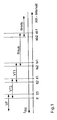
- the RR interval or (with values increasing to the left) is on the x-axis (with values increasing to the right).
- the heart rate f RR is plotted.
- VF denotes the area of more ventricular fibrillation
- VT2 and "VT1” denote two adjacent areas of ventricular tachycardia with different diagnostic and therapeutic relevance
- Stinus denotes the area of normal cardiac activity
- Brain the area inadmissibly lower Heart rate, ie (ventricular) bradycardia.
- measuring a value of f RR outside the "sinus” range requires specific stimulation of the heart to return it to the normal range, the type of stimulation and its physiological effects on the patient differing considerably.
- FIG. 2 In the simplified block diagram of a combined Pacemaker / defibrillator 101 according to FIG. 2 is - in a manner known per se - via an electrode line 102 connected to a ventricularly fixed heart electrode 103.
- the proximal end of the electrode line 102 is connected to an input amplifier stage 104, which (in a construction known per se from pacemakers) has filter and amplifier stages for signal processing and at whose output a largely interference-free, level-adapted heart signal is present.
- the output of the input stage 104 is connected to the signal input of a counter stage 105, the clock input of which is connected to a clock or timer 106 and in which the rate f RR of the detected cardiac actions (ventricular depolarizations or R-waves) is determined.
- the output of the counter stage 105 is via a measurement signal input 107a connected to an addition stage 107, and it is an incremental / decrement memory 108 for additive or to be considered subtractively (i.e. positive or negative) heart rate correction values are provided.
- an incremental / decrement memory 108 for additive or to be considered subtractively (i.e. positive or negative) heart rate correction values are provided.
- Under time control or timing by the timer 106 are off correction values stored randomly in memory 108 for the current value of the heart rate fRR above whose second input 107b is read into the addition stage 107 and there to correct the over their first input 107a current measured value used.
- the sum or difference (or in the meantime also the uncorrected Measured value) is output at output 107c.
- the memory 108 has a number of memory areas 108a to 108n in which Increment / decrement values within a range of, for example, +/- 25 ms are stored, and that their addressing in a statistical manner using a random number generator 109.1 takes place.
- the range of the increment / decrement values can, for example, also as a fraction of the measured RR interval defined or patient-specific be programmed; however, it is important that basically the control of the therapy with reference takes place on a measured value specifically recorded in or on the body.
- the use of a random generator ensures if the addressable increment and decrement values are evenly distributed in the scattering area, that the temporal mean of the correction amount is zero is.
- the output 107c of the addition stage 107 is via a signal input 110a of a therapy preselection unit 110 on the one hand with a control input of a pacemaker stage 111 and on the other hand with a control input of a cardioverter stage 112 connected so that at the exit of stage 107 applied RR interval measured value or total value either to control a pacemaker for the output of anitbradycard or antitachycardia pulse sequences or for triggering of a high-energy shock pulse (Defibrillation or cardioversion pulse) can serve.
- a high-energy shock pulse Defibrillation or cardioversion pulse
- pacemaker stage 111 The output of pacemaker stage 111 is via the electrode lead 102 connected to the ventricular electrode 103, which therefore has a double function as a sensing electrode of the combination device 101 and as its stimulation electrode Pacemaker level 111 has.
- the output of the cardioverter stage 112 is laid over a second, intrathoracically Electrode line 113 with an epicardial heart H. Defibrillation surface electrode 114 connected, about the high energy of a defibrillation shock if necessary on the irritable heart tissue with even more tissue-compatible Energy density is transmitted.
- Therapy preselector 110 includes a comparator 110.1, which has a first data input with the addition stage 107 and via a second data input 110b two separately addressable memory areas 115a, 115b an area boundary memory 115 is connected.
- the area boundary memory 115 is assigned an address selector or memory 116 which - like is explained in more detail below - depending on an internal reflection of the therapy history Control signal one of the two memory areas 115a, 115b connects to the comparator 110.1, the other but locks.
- the comparator 110.1 is also on the output side a switch 110.2 connected, depending on the Result of the comparison of the current initial value of the Addition stage 107 with the stored range limit tf or tt3 the pacemaker stage 111 or the cardioverter stage 112 activated and, if necessary, at the same time the said initial value to pacemaker level 111.
- the pacemaker stage 111 has a multi-stage comparator unit 111.1 on the - in a similar way to that Therapy preselection unit 110 - via second inputs with Storage areas 115c to 115h of the area limit memory 115 is connected, again depending here from the therapy history to the address selector 116 an addressing or blocking one of the Ranges 115c (value tt2) or 115d (value tt1), 115e (value ts2) or 115f (value ts1) or 115g (value sb2) or 115h (Value sb1).
- the output value of the addition stage 107 becomes sequential compared with the different range boundaries and depending on the comparison result at the output of the comparator unit 111.1 issued a signal indicating the assignment the output signal of stage 107 to one of the above Expresses heart rate or RR interval ranges.
- This signal is used to address a pulse train control signal memory 111.2 supplied, whereupon from each addressed memory location a pre-stored pulse train pattern (which is particularly a predetermined Stimulation rate, but possibly also by a certain one Structure and other parameters) to a pacemaker pulse generator 111.3 is output.
- a pre-stored pulse train pattern which is particularly a predetermined Stimulation rate, but possibly also by a certain one Structure and other parameters
- a pacemaker pulse generator 111.3 is output.
- Both the output of the comparator 110.1 in the therapy preselection unit 110 as well as that of the multi-stage comparator unit 111.1 are also equipped with a measured value memory 117 connected to each at the comparative levels 110.1 or 111.1 determined - change in assignment of the output value of the addition stage 107 to one of the Areas of the heart rate or RR interval continuum mentioned above to save the current assignment is addressed and in which thus a predetermined Number of (in a sense the therapy history reflective) assignments of the heart rate or: the RR interval saved from the past. simplest case only the assignment before the last one Changes saved, in a more elaborate, according to the LI-FO (last-in-first-out) principle organized, execution with memory 117 works as a plurality of memory areas real trend memory.
- the measured value memory 117 has an input of a trend evaluation stage 118 connected via another Input also connected to the output of addition stage 107 and its output with the address selector 116 in Connection is established.
- the trend evaluation level 118 delivers in Result of the evaluation of the temporal development of the Heart rate or RR interval assignment - based on the current one Value across at least one change level - the control signal for the address selector or Pointer 116.
- each of the areas above the RR axis is in Figure 1 shows specific electrostimulation therapy (i.e. a set of stimulation parameters) - assigned to note that under "RR rate” or "RR interval” corrected with a fluctuation increment or decrement Measured value should be understood. If the changes with the Fluctuated measurement value (the output signal of the Addition level 107) within a range, the Therapy did not change. However, if it exceeds a range limit, switches the one shown schematically in FIG Pacemaker / cardioverter basically on one others of a plurality of predetermined therapies. As a result the interference with the statistical fluctuation variable occurs for measured values in the border areas of the areas lie, occasionally switching between different Therapies, in other words: the fluctuation magnitude enables different therapies to be "tried out” or therapy sizes.
- electrostimulation therapy i.e. a set of stimulation parameters
- the heart rate jumps from the sinus area into the same area Overlap region tt2-tt1 of the areas VT1, VT2, see above will not be for the VT2 area, but for the area VT1 valid therapy (pulse train) switched on.
- This procedure is based on the consideration that with this Development of the patient's body is not seamless with the "more aggressive" therapy for the VT2 area should be as long as not tentative for the area VT1 valid therapy has been applied. With that also the risk can be minimized by the therapy itself to induce further acceleration of tachycardia.
- the therapy valid for the VT2 area is only applied if if the heart rate continues to increase so that it leaves the region of overlap.
- the valid therapy is differentiated accordingly with either a slow or erratic transition the heart rate in the overlap region tf-tt3 between the areas VT2 and VF selected.
- the regions of overlap ts1-ts2 between the areas Sin and VT1 and sb1-sb2 between the areas of Brady and Sinus can, however, as "classic" hysteresis areas are treated in which hence the choice of therapy only from the direction of Entry into the overlap region depends.
- Figure 4 is a - as already the Fig. 2 - greatly simplified Function block diagram of a medication dosing device 201, especially for medicines for the correction of cardiac arrhythmias.
- the version described below is suitable fundamentally to control an automatic medicinal Treatment of sudden life-threatening Bradycardia or tachycardia using suitable Antiarrhythmics.
- the device 201 is connected via an electrode line 202 to an intracardiac cardiac electrode 203 positioned in the ventricle V of a heart H for recording cardiac action potentials.
- the proximal end of the electrode line 202 is connected to an input amplifier stage 204 which (in a construction known per se from pacemakers) has filter and amplifier stages for signal processing and at whose output there is a largely interference-free, level-adapted heart signal.
- the output of the input stage 204 is connected to the signal input of a counter stage 205, the clock input of which is connected to a clock or.
- Timer 206 is connected and in which the rate f RR of the detected heart actions (ventricular depolarizations or R-waves) is determined.
- the output is similar to the arrangement according to FIG. 2 the counter stage 205 via a measurement signal input 207a an addition stage 207, and it is an increment / decrement memory 208 for additive or subtractive too Considering (i.e. positive or negative) heart rate correction values intended.
- a program control unit 209 connected to clock 206 and is explained in more detail below, a basically corresponding to the arrangement according to FIG. 2 (and therefore processing of fluctuation values not explained here again the measured heart rate.
- the output 207c is with a first signal input 210a an evaluation and pump control unit 210 connected, via a second signal input 210b with a dosing data memory 211 communicates. Structure and organization of this memory essentially correspond to those of the memory 111.2 from FIG. 2, in the present example a mapping table heart rate area drug dose is saved. The one from the addressed Dose value read out of memory is used to determine a the associated device-internal control variable, that at output 210c of the evaluation and pump control unit 210 is provided. This is with a dosing pump 212 connected via the one in a drug tank 213 stored antiarrhythmic with the calculated dosage be released into the patient's body P. can.
- the dosing device 201 is intended to effect emergency therapy, i.e. the dosing pump 212 should normally be out of order.
- the pre-stored increment or. decrement and the mapping table for heart rate and drug dose to vote in coordination with each other such that a Drug delivery only for those who are measured as well as those who require correction Heart rate values are given to the patient assign a critical area with a high probability are.
- Increment or decrement values are dispensable here, because emergency therapy is less important, whether the original or one (and which one) of the varied Heart rate readings are the starting point for effective drug treatment was, rather, crucial that it was efficient.
- up to a possible new attack of bradycardia or tachycardia significantly change patient conditions, so that the variation of the therapy control then, if necessary. expediently from the same "neutral" starting point - namely the current measured value - should take place.
- FIG. 4a is a simplified functional block diagram an embodiment of the evaluation and Control unit 209 of the drug dosing device 201 Fig. 4 shown. It should be noted that - as in the essentially the function groups for controlling the in Fig. 2 shown device - in practice essentially as a microcontroller with a close link between hardware and software Realization will be carried out.
- the evaluation and control unit includes an internal sequence control 209.1, which is clocked via the timer 206 becomes and in turn periodically a multi-stage Comparator unit 209.2 activated via an input connected to the output of addition stage 207 and via another input sequentially with the memory areas a measuring range memory designed as an EPROM 209.3 is connectable.
- the comparator unit 209.2 is on the output side on the one hand connected to an address pointer 209.4, in which the output signal of the comparator unit in an address signal for the dosing value memory 211 is implemented becomes.
- it has a digital filter 209.5 connected, the only predetermined output signals of the comparator unit get to an input of an AND gate 209.6 leaves, at its other input the clock signal of the sequential control system 209.1 is present.
- the output of the AND gate 209.6 is connected to a random generator 209.7 whose output is finally an address signal for the increment / decrement memory 208 is ready.
- the output of the comparator unit 209.2 is still with an area allocation memory 209.8 and an allocation comparison unit 209.9 connected through their second input with the area allocation memory and on the output side is connected to the address selector 209.4.
- the comparator unit 209.2 they are at their one Input pending (potentially corrected, i.e. periodically fluctuating heart rate values sequentially with the preprogrammed ones in the area limit memory stored limit values of several heart rate zones with each compared specific therapeutic relevance and determines who belongs to one of the areas. This is about the type of output signal from the comparator unit 209.2 expressed which one hand directly the address selector or pointer 209.3 and on the other hand to Comparison of the current with the previous value range assignment the measured value of the assignment comparator unit 209.9 is fed.
- the outputs of both Comparators 209.2 and 209.9 address the address selector 209.3, for example a two-dimensional mapping table from dosing value memory addresses to output value pairs of the two comparators.
- the Address selector effects addressing according to this table a certain area of the dose value memory 211, i.e. the output of a certain tax variable to the Metering pump.
- the fluctuation value processing of the measured variable takes place at the arrangement shown also based on the output signal the comparator unit 209.2. This determines by - depending on the signal characteristics - filter 209.5 happened or not happened and via the AND gate 209.6 the output of a control signal to the random generator 209.7 enables or blocks by the sequence control 209.1, whether the measured heart rate impressed a fluctuation value will or not.
- the invention is not limited in its implementation the preferred embodiments given above. Rather, a number of other variants are conceivable which makes use of the solution presented.
Landscapes
- Health & Medical Sciences (AREA)
- Cardiology (AREA)
- Heart & Thoracic Surgery (AREA)
- Life Sciences & Earth Sciences (AREA)
- Public Health (AREA)
- Engineering & Computer Science (AREA)
- Biomedical Technology (AREA)
- Veterinary Medicine (AREA)
- Animal Behavior & Ethology (AREA)
- General Health & Medical Sciences (AREA)
- Nuclear Medicine, Radiotherapy & Molecular Imaging (AREA)
- Radiology & Medical Imaging (AREA)
- Diabetes (AREA)
- Vascular Medicine (AREA)
- Anesthesiology (AREA)
- Hematology (AREA)
- Biophysics (AREA)
- Physiology (AREA)
- Electrotherapy Devices (AREA)
- Measuring Pulse, Heart Rate, Blood Pressure Or Blood Flow (AREA)
Description
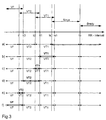
- Zeile a) zeigt, daß, wenn sich in einer ersten Phase die Herzrate in einem der Bereiche Brady oder Sinus befindet und keine Therapie bzw. eine Bradykardie-Stimulation angewandt wird, bei einer anschließenden Beschleunigung in den Raten-Bereich zwischen ts2 und tt1 die Therapie "VT1", zwischen tt2 und tf die Therapie "VT2" und oberhalb von tf die Therapie "VF" angewandt wird.
- Zeile b) zeigt, daß, wenn anfänglich die Rate im Gebiet zwischen ts1 und tt1 war und mit VT1 therapiert wurde (was für RR-Werte zwischen ts1 und ts2 nach obigem übrigens nur dann zutrifft, wenn diese Region im Zuge der Verlangsamung einer Tachykardie erreicht worden war), ein anschließender Übergang in das Gebiet zwischen tt1 und tf zur Anwendung der Therapie "VT2", ein Übergang auf einen Wert oberhalb tf aber zur Anwendung der Therapie "VF" führt. Eine Verlangsamung in den Bereich zwischen tb und ts1 hinein führt zum Aussetzen jeglicher Therapie und eine solche unter tb zu einer Bradykardie-Stimulation was auch für die folgenden Zeilen gilt.
- Zeile c) zeigt, daß, wenn anfänglich die Rate im Gebiet zwischen tt1 und tt2 war und entsprechend die Therapie "VT1" angewandt worden war (was nach obigem nur dann der Fall sein wird, wenn die Region im Zuge einer sich schnell beschleunigenden Tachykardie erreicht wurde), ein anschließender Übergang in das Gebiet zwischen tt2 und tf zur Anwendung der Therapie "VT2", ein Übergang auf einen Wert oberhalb tf zur Anwendung der Therapie "VF", eine Verlangsamung der Tachykardie in das Gebiet zwischen ts1 und tt1 aber zur Beibehaltung der Therapie "VT1" führt.
- Zeile d) zeigt, daß, wenn anfänglich die Rate im Gebiet zwischen tt1 und tt3 war und die Therapie "VT2" angewandt worden war, ein anschließender Übergang auf einen Wert oberhalb tt3 zur Anwendung der Therapie "VF" führt. Eine Verlangsamung in den Bereich zwischen ts1 und tt1 hinein führt zur Umschaltung auf die Therapie "VT1". Letzteres gilt auch für die Zeilen e) und f).
- Zeile e) zeigt, daß, wenn anfänglich die Rate im Gebiet zwischen tt3 und tf war und entsprechend die Therapie "VT2" angewandt worden war, ein anschließender Übergang auf einen Wert oberhalb tf zur Anwendung der Therapie "VF", eine Verlangsamung in das Gebiet zwischen tt1 und tt3 jedoch zur Beibehaltung der Therapie "VT2" führt.
- Zeile f) schließlich zeigt, daß ausgehend von einer Rate oberhalb von tt3, bei der die Therapie VF angewandt wurde, eine Verlangsamung in das Gebiet zwischen tt1 und tt3 hinein zur Umschaltung auf die Therapie "VT2" führt.
Claims (15)
- Therapiegerät, insbesondere implantierbarer Herzschrittmacher, Kardioverter, kombinierter Herzschrittmacher/Kardioverter (101) oder Medikamentendosiergerät (201), mit mindestens einem Sensor (103; 203) zum Erfassen einer bei Anwendung einer vorbestimmten Therapie im oder am Körper eines Patienten (P) meßbaren, insbesondere dessen körperlichen Zustand kennzeichnenden, Größe und zur Ausgabe eines entsprechenden Meßwertes, einer mindestens mittelbar mit dem Ausgang des Sensors verbundenen Auswertungs- und Steuereinrichtung (110, 111; 209) zur Auswertung des Meßwertes einschließlich seiner Zuordnung zu einem von mindestens zwei vorbestimmten Wertebereichen und zur Bestimmung einer Therapiesteuergröße in Abhängigkeit hiervon und einer mit dem Ausgang der Auswertungs-und Steuereinrichtung verbundenen Therapieeinrichtung (111.3, 111.4, 112; 212), die zur Realisierung verschiedener Therapien oder Therapiegrößen in Abhängigkeit von der Zugehörigkeit des Wertes der Meßgröße zu einem der Wertebereiche ausgebildet ist,
dadurch gekennzeichnet, daß die Auswertungs- und Steuereinrichtungaufweist.einen Bereichsgrenzenspeicher (115; 209.3) zur Speicherung mindestens zweier verschiedener Grenzen zwischen zwei Wertebereichen der Meßgröße und damit mindestens einer Überlappungszone zwischen den Wertebereichen,eine über einen Eingang mindestens mittelbar mit dem Sensor (103; 203) und über einen weiteren Eingang mit dem Bereichsgrenzenspeicher (115; 209.3) verbundene erste Vergleichereinheit (110.1; 209.2) zur Zuordnung des Meßwertes der Größe zu einem der Wertebereiche,einen Therapiespeicher (111.2; 211) mit mindestens zwei separat adressierbaren Speicherbereichen zur Speicherung mindestens zweier verschiedener Werte der Therapiesteuergröße in Zuordnung zu den Werten der Meßgröße innerhalb einer Überlappungszone jeweils zusammen mit einer eine Meßgrößen- oder Therapie-Vorgeschichte repräsentierenden vorgegebenen Bedingungsgröße und weiteren Speicherbereichen zur Speicherung jeweils eines Wertes der Therapiesteuergröße in Zuordnung zu einem Wert der Meßgröße außerhalb einer Überlappungszone,einen Vorgeschichte-Speicher (117; 209.8) zur Speicherung der Bereichszuordnung des jeweils vorhergehenden Wertes der Meßgröße oder der Therapiesteuergröße einer vorher angewandten Therapie als Bedingungsgröße undVorgeschichte-Auswertungsmittel (118; 209.9) zur Auswertung des gespeicherten Wertes mit den vorgegebenen Werten der Bedingungsgröße und zur Ausgabe von das Auswertungsergebnis ausdrückenden Adreßdaten an den Therapiespeicher zum Auslesen genau eines Wertes der Therapiesteuergröße - Therapiegerät nach Anspruch 1, dadurch gekennzeichnet, daß eine Ablaufsteuerung vorgesehen ist, die einen Zeitgeber (106; 206) aufweist derart, daß unter Steuerung durch den Zeitgeber periodisch der aktuelle Wert der Meßgröße abgefragt und mit den gespeicherten Grenzen verglichen und ein das Vergleichsergebnis kennzeichnendes Zugriffssteuer- und Adreßsignal ausgegeben wird, das ein Auslesen aus dem Therapiespeicher (111.2; 211) bewirkt oder unterbindet.
- Therapiegerät nach Anspruch 1 oder 2 gekennzeichnet durch eine Ausbildung der Ablaufsteuerung derart, daß ein Zugriffssteuersignal zum Auslesen aus dem Therapiespeicher (111.2; 211) nach Feststellung der Überschreitung einer Wertebereichsgrenze ausgegeben wird.
- Therapiegerät nach einem der vorangehenden Ansprüche, dadurch gekennzeichnet, daß eine eingangsseitig mit der ersten Vergleichereinheit (110.1; 209.2) und dem Vorgeschichte-Speicher (117; 209.8) sowie ausgangsseitig mit einem dem Bereichsgrenzenspeicher (115) oder Therapiespeicher (111.2; 211) zugeordneten Adreßwähler (116; 209.4) verbundene zweite Vergleichereinheit (118; 209.9) zum Vergleich der aktuellen mit der gespeicherten Wertebereichszuordnung der Größe vorgesehen ist.
- Therapiegerät nach einem der vorangehenden Ansprüche, gekennzeichnet durch die Ausführung als implantierbarer Bedarfsschrittmacher (111) mit einem Bereichsgrenzenspeicher (115), der zur Speicherung mindestens einer Grenze zwischen einem Normal- und einem Bradykardie-Ratenbereich sowie zweier Grenzen und somit einer Überlappungszone zwischen dem Normal- und einem Tachykardie-Ratenbereich, sowie einem Therapiespeicher (111.2), der zur Speicherung mindestens einer Bradykardie- und einer Tachykardie-Therapie ausgebildet ist.
- Therapiegerät nach einem der vorangehenden Ansprüche, gekennzeichnet durch die Ausführung als implantierbares Antitachykardie-/-fibrillationsgerät, insbesondere Antitachykardie-Schrittmacher/Defibrillator (101), mit einem Bereichsgrenzenspeicher (115), der zur Speicherung mindestens einer Grenze zwischen einem Normal-und einem Tachykardie-Ratenbereich sowie zweier Grenzen und somit einer Überlappungszone zwischen dem Tachykardie-Ratenbereich und einem Fibrillationsbereich ausgebildet ist.
- Therapiegerät nach Anspruch 5 und 6 gekennzeichnet durch die Ausbildung des Bereichsgrenzenspeichers (115) mit je zwei Speicherbereichen zur Speicherung je zweier Grenzen zwischen dem Normal- und dem Tachykardie-Ratenbereich sowie dem Tachykardie-Ratenbereich und dem Fibrillationsbereich.
- Therapiegerät nach Anspruch 6 oder 7, dadurch gekennzeichnet, daß der Bereichsgrenzenspeicher (115) Speicherbereiche für zwei, vorzugsweise über eine zwischen zwei Grenzen liegende Überlappungszone aneinander angrenzende, Tachykardie-Ratenbereiche aufweist.
- Therapiegerät nach einem der vorangehenden Ansprüche, dadurch gekennzeichnet, daß der Bereichsgrenzenspeicher (115) zwei Speicherbereiche zur Speicherung zweier Grenzen und somit einer Überlappungszone zwischen dem Normal- und dem Bradykardie-Ratenbereich aufweist.
- Therapiegerät nach einem der vorangehenden Ansprüche, dadurch gekennzeichnet, daß zwischen den Ausgang des Sensors (103; 203) und den Eingang der Auswertungs- und Steuereinrichtung (110, 111.1, 111.2, 115; 209) eine eingangsseitig mit dem Ausgang eines Schwankungswertgenerators (108, 108.1; 208, 209.7) verbundene mathematische Verarbeitungseinheit (107; 207) geschaltet ist, in der unter Steuerung durch eine Zeitsteuereinheit (106; 206) dem Sensor-Meßwert zu mindestens einem Zeitpunkt mindestens ein Schwankungswert aufgeprägt wird derart, daß nach Auswertung des mit dem oder einem der Schwankungswert(e) korrigierten Meßwertes ein gegenüber der Auswertung des ursprünglichen Meßwertes und/oder des mit einem anderen Schwankungswert korrigierten Meßwertes veränderter Wert der Therapiesteuergröße erhalten wird.
- Therapiegerät nach einem der vorangehenden Ansprüche, dadurch gekennzeichnet, daß der Sensor (103; 203) zur Erfassung einer Aktivitätsgröße oder einer eine Organfunktion des Patienten (P) kennzeichnenden Größe ausgebildet ist.
- Therapiegerät nach Anspruch 11 gekennzeichnet durch die Ausbildung des bzw. des ersten Sensors als intrakardiale Elektrode (203) mit nachgeschaltetem Abfühlverstärker (204) für elektrische Aktivität des Herzens mit zugeordneter Einrichtung zur Bestimmung der Periode der elektrischen Herzaktivität als Meßwert.
- Therapiegerät nach einem der vorangehenden Ansprüche, dadurch gekennzeichnet, daß der Sensor (103) zur Erfassung der Therapiegröße ausgebildet ist.
- Therapiegerät nach einem der Ansprüche 10 bis 13, dadurch gekennzeichnet, daß der Schwankungswertgenerator einen Schwankungswertspeicher (108) für mehrere Schwankungswerte und wahlweise einen Zufallsgenerator (108.1) zur Auswahl je eines der gespeicherten Schwankungswerte zur Aufprägung auf den Meßwert aufweist.
- Therapiegerät nach einem der Ansprüche 1 bis 4 oder 7 bis 14, gekennzeichnet durch die Ausbildung als, insbesondere implantierbares, Medikamentendosiergerät (201) derart, daß der bzw. der erste Sensor (203) zur Erfassung des Pegels eines Wirkstoffes oder einer davon abhängigen Größe im Körper des Patienten (P) als Meßwert, die Auswertungs- und Steuereinrichtung (209, 210) zur Festlegung einer Medikamentendosis pro Zeiteinheit und die Therapieeinrichtung (212) zur Abgabe der festgelegten Dosis pro Zeiteinheit an den Körper ausgestaltet sind.
Applications Claiming Priority (2)
| Application Number | Priority Date | Filing Date | Title |
|---|---|---|---|
| DE19609362 | 1996-03-04 | ||
| DE19609362A DE19609362C1 (de) | 1996-03-04 | 1996-03-04 | Therapiegerät |
Publications (3)
| Publication Number | Publication Date |
|---|---|
| EP0793978A2 EP0793978A2 (de) | 1997-09-10 |
| EP0793978A3 EP0793978A3 (de) | 1999-04-21 |
| EP0793978B1 true EP0793978B1 (de) | 2003-12-10 |
Family
ID=7787848
Family Applications (1)
| Application Number | Title | Priority Date | Filing Date |
|---|---|---|---|
| EP97250056A Expired - Lifetime EP0793978B1 (de) | 1996-03-04 | 1997-03-04 | Therapiegerät |
Country Status (3)
| Country | Link |
|---|---|
| US (1) | US5843134A (de) |
| EP (1) | EP0793978B1 (de) |
| DE (2) | DE19609362C1 (de) |
Families Citing this family (14)
| Publication number | Priority date | Publication date | Assignee | Title |
|---|---|---|---|---|
| EP0947216B1 (de) * | 1998-03-31 | 2004-12-22 | BIOTRONIK Mess- und Therapiegeräte GmbH & Co Ingenieurbüro Berlin | Vorrichtung zur Herzstimulation |
| US6386985B1 (en) * | 1999-07-26 | 2002-05-14 | Guy Jonathan James Rackham | Virtual Staging apparatus and method |
| DE10008324A1 (de) * | 2000-02-17 | 2001-08-23 | Biotronik Mess & Therapieg | Vorrichtung zur Detektion tachykarder Herzrhythmusstörungen |
| US6458118B1 (en) * | 2000-02-23 | 2002-10-01 | Medtronic, Inc. | Drug delivery through microencapsulation |
| US7463922B1 (en) * | 2000-07-13 | 2008-12-09 | Koninklijke Philips Electronics, N.V. | Circuit and method for analyzing a patient's heart function using overlapping analysis windows |
| DE10064597A1 (de) | 2000-12-18 | 2002-06-27 | Biotronik Mess & Therapieg | Vorrichtung zur Behandlung einer Fibrillation mindestens einer Kammer eines Herzens |
| EP1232762A1 (de) * | 2001-02-19 | 2002-08-21 | Akzo Nobel N.V. | Methode und Gerät zur Verabreichung einer muskelrelaxierende Arznei an Patienten |
| US6671547B2 (en) * | 2001-06-13 | 2003-12-30 | Koninklijke Philips Electronics N.V. | Adaptive analysis method for an electrotherapy device and apparatus |
| US6748267B2 (en) | 2001-07-25 | 2004-06-08 | Biotronik Mess-Und Therapiegeraete Gmbh & Co. | Heart therapy device |
| US7706883B1 (en) * | 2006-04-06 | 2010-04-27 | Pacesetter, Inc. | Efficient data retrieval for implantable medical devices |
| DE102008002331A1 (de) * | 2008-06-10 | 2009-12-17 | Biotronik Crm Patent Ag | Elektrotherapieeinrichtung zur Behandlung tachykarder Rythmusstörungen eines Herzens |
| ES2938044T3 (es) | 2013-06-24 | 2023-04-04 | Univ Ramot | Estructura a base de epiplón y sistema de suministro |
| US10987059B2 (en) * | 2013-11-17 | 2021-04-27 | Ramot At Tel-Aviv University Ltd. | Electronic scaffold and uses thereof |
| ES2924732T3 (es) | 2015-12-16 | 2022-10-10 | Univ Ramot | Partículas que comprenden epiplón descelularizado |
Family Cites Families (6)
| Publication number | Priority date | Publication date | Assignee | Title |
|---|---|---|---|---|
| US4181133A (en) * | 1978-05-22 | 1980-01-01 | Arco Medical Products Company | Programmable tachycardia pacer |
| US4300567A (en) * | 1980-02-11 | 1981-11-17 | Mieczyslaw Mirowski | Method and apparatus for effecting automatic ventricular defibrillation and/or demand cardioversion through the means of an implanted automatic defibrillator |
| WO1994010922A1 (en) * | 1992-11-13 | 1994-05-26 | Ep Technologies, Inc. | Cardial ablation systems using temperature monitoring |
| US5342402A (en) * | 1993-01-29 | 1994-08-30 | Medtronic, Inc. | Method and apparatus for detection and treatment of tachycardia and fibrillation |
| US5379776A (en) * | 1993-04-01 | 1995-01-10 | Telectronics Pacing Systems, Inc. | Heart rhythm classification method, and implantable dual chamber cardioverter/defibrillator employing the same |
| US5474552A (en) * | 1994-06-27 | 1995-12-12 | Cb-Carmel Biotechnology Ltd. | Implantable drug delivery pump |
-
1996
- 1996-03-04 DE DE19609362A patent/DE19609362C1/de not_active Expired - Fee Related
-
1997
- 1997-03-03 US US08/810,014 patent/US5843134A/en not_active Expired - Lifetime
- 1997-03-04 DE DE59711085T patent/DE59711085D1/de not_active Expired - Lifetime
- 1997-03-04 EP EP97250056A patent/EP0793978B1/de not_active Expired - Lifetime
Also Published As
| Publication number | Publication date |
|---|---|
| US5843134A (en) | 1998-12-01 |
| EP0793978A3 (de) | 1999-04-21 |
| EP0793978A2 (de) | 1997-09-10 |
| DE19609362C1 (de) | 1997-06-19 |
| DE59711085D1 (de) | 2004-01-22 |
Similar Documents
| Publication | Publication Date | Title |
|---|---|---|
| EP1016434B1 (de) | Herztherapiegerät | |
| DE69326623T2 (de) | Apparat zur detektion und therapie von tachykardie und herzflimmern | |
| DE69127984T2 (de) | Gerät zur Antitachykardiereizung beim Zweikammer-Arrhythmienkontrollsystem | |
| DE69819526T2 (de) | Herzreizung mit mehrfachen reizungstherapiemerkmalen | |
| DE69115973T2 (de) | Schrittmacher Gerät und Verfahren für Antitachykardien in einem Arrythmiesteuersystem | |
| DE69324265T2 (de) | Apparat zur detektion und therapie von tachykardie und herzflimmern | |
| DE69328881T2 (de) | Telemetriesystem für eine Vorrichtung zum Erkennen und Behandeln von Tachyarrhythmien | |
| EP0422271B1 (de) | In den Körper eines Lebewesens implantierbares medizinisches Gerät mit Mitteln zur Stimulation von Gewebekontraktionen | |
| DE69732105T2 (de) | Programmerweiterbare, implantierbare, medizinische vorrichtung | |
| DE60108780T2 (de) | Automatische erzeugung von mustern | |
| DE69727063T2 (de) | Implantierbares gerät | |
| DE69323989T2 (de) | Vorhof-Defibrillator mit Prüfmodus | |
| DE69917629T2 (de) | Vorrichtung zum speichern von physiologischen signalen | |
| DE69222362T3 (de) | Implantierbare Vorrichtung zur Herzrhythmuskorrektur, Herzreizung und Defibrillation mit unterschiedlichen Stimulationsfrequenzen zum unterstützen von Bradykardien | |
| DE69732553T2 (de) | Herzschrittmacher mit verbesserter Erfassung von atrialer Fibrillation | |
| DE60108230T2 (de) | Vorrichtung für diagnose und behandlung von arrhytmien | |
| DE69633957T2 (de) | Implantierbares Gerät zur Antitachykardierierung | |
| DE69619190T2 (de) | Implantierbarer Vorhof-Defibrillator und System mit mehrkanaliger Telemetrie von Elektrogrammen | |
| DE69103431T2 (de) | Cardioverter mit schrittmacherpulsen. | |
| DE69836304T2 (de) | Vorrichtung zur Vermeidung von Vorhof-Fibrillation | |
| DE69625925T2 (de) | Vorrichtung zur hämodynamischen stimulation bei einer ventrikulären tachykardie | |
| DE60022754T2 (de) | Diagnose und behandlung von arrhythmien | |
| DE69314747T2 (de) | Vorrichtung zum beenden einer tachycardie | |
| EP0532144A1 (de) | Herztherapiesystem | |
| DE19609362C1 (de) | Therapiegerät |
Legal Events
| Date | Code | Title | Description |
|---|---|---|---|
| PUAI | Public reference made under article 153(3) epc to a published international application that has entered the european phase |
Free format text: ORIGINAL CODE: 0009012 |
|
| AK | Designated contracting states |
Kind code of ref document: A2 Designated state(s): DE FR GB IT NL SE |
|
| PUAL | Search report despatched |
Free format text: ORIGINAL CODE: 0009013 |
|
| AK | Designated contracting states |
Kind code of ref document: A3 Designated state(s): DE FR GB IT NL SE |
|
| 17P | Request for examination filed |
Effective date: 19991014 |
|
| GRAH | Despatch of communication of intention to grant a patent |
Free format text: ORIGINAL CODE: EPIDOS IGRA |
|
| GRAS | Grant fee paid |
Free format text: ORIGINAL CODE: EPIDOSNIGR3 |
|
| GRAA | (expected) grant |
Free format text: ORIGINAL CODE: 0009210 |
|
| AK | Designated contracting states |
Kind code of ref document: B1 Designated state(s): DE FR GB IT NL SE |
|
| REG | Reference to a national code |
Ref country code: GB Ref legal event code: FG4D Free format text: NOT ENGLISH |
|
| GBT | Gb: translation of ep patent filed (gb section 77(6)(a)/1977) |
Effective date: 20031210 |
|
| REF | Corresponds to: |
Ref document number: 59711085 Country of ref document: DE Date of ref document: 20040122 Kind code of ref document: P |
|
| REG | Reference to a national code |
Ref country code: SE Ref legal event code: TRGR |
|
| ET | Fr: translation filed | ||
| PLBE | No opposition filed within time limit |
Free format text: ORIGINAL CODE: 0009261 |
|
| STAA | Information on the status of an ep patent application or granted ep patent |
Free format text: STATUS: NO OPPOSITION FILED WITHIN TIME LIMIT |
|
| 26N | No opposition filed |
Effective date: 20040913 |
|
| PGFP | Annual fee paid to national office [announced via postgrant information from national office to epo] |
Ref country code: NL Payment date: 20070319 Year of fee payment: 11 |
|
| PGFP | Annual fee paid to national office [announced via postgrant information from national office to epo] |
Ref country code: GB Payment date: 20070323 Year of fee payment: 11 |
|
| PGFP | Annual fee paid to national office [announced via postgrant information from national office to epo] |
Ref country code: IT Payment date: 20070605 Year of fee payment: 11 |
|
| PGFP | Annual fee paid to national office [announced via postgrant information from national office to epo] |
Ref country code: FR Payment date: 20070321 Year of fee payment: 11 |
|
| GBPC | Gb: european patent ceased through non-payment of renewal fee |
Effective date: 20080304 |
|
| PG25 | Lapsed in a contracting state [announced via postgrant information from national office to epo] |
Ref country code: NL Free format text: LAPSE BECAUSE OF NON-PAYMENT OF DUE FEES Effective date: 20081001 |
|
| NLV4 | Nl: lapsed or anulled due to non-payment of the annual fee |
Effective date: 20081001 |
|
| REG | Reference to a national code |
Ref country code: FR Ref legal event code: ST Effective date: 20081125 |
|
| PG25 | Lapsed in a contracting state [announced via postgrant information from national office to epo] |
Ref country code: FR Free format text: LAPSE BECAUSE OF NON-PAYMENT OF DUE FEES Effective date: 20080331 |
|
| PG25 | Lapsed in a contracting state [announced via postgrant information from national office to epo] |
Ref country code: GB Free format text: LAPSE BECAUSE OF NON-PAYMENT OF DUE FEES Effective date: 20080304 |
|
| PG25 | Lapsed in a contracting state [announced via postgrant information from national office to epo] |
Ref country code: IT Free format text: LAPSE BECAUSE OF NON-PAYMENT OF DUE FEES Effective date: 20080304 |
|
| REG | Reference to a national code |
Ref country code: DE Ref legal event code: R082 Ref document number: 59711085 Country of ref document: DE |
|
| REG | Reference to a national code |
Ref country code: DE Ref legal event code: R081 Ref document number: 59711085 Country of ref document: DE Owner name: BIOTRONIK SE & CO. KG, DE Free format text: FORMER OWNER: BIOTRONIK MESS- UND THERAPIEGERAETE GMBH & CO. INGENIEURBUERO BERLIN, 12359 BERLIN, DE Effective date: 20111219 |
|
| PGFP | Annual fee paid to national office [announced via postgrant information from national office to epo] |
Ref country code: SE Payment date: 20120322 Year of fee payment: 16 |
|
| PGFP | Annual fee paid to national office [announced via postgrant information from national office to epo] |
Ref country code: DE Payment date: 20130408 Year of fee payment: 17 |
|
| REG | Reference to a national code |
Ref country code: SE Ref legal event code: EUG |
|
| PG25 | Lapsed in a contracting state [announced via postgrant information from national office to epo] |
Ref country code: SE Free format text: LAPSE BECAUSE OF NON-PAYMENT OF DUE FEES Effective date: 20130305 |
|
| REG | Reference to a national code |
Ref country code: DE Ref legal event code: R119 Ref document number: 59711085 Country of ref document: DE |
|
| REG | Reference to a national code |
Ref country code: DE Ref legal event code: R119 Ref document number: 59711085 Country of ref document: DE Effective date: 20141001 |
|
| PG25 | Lapsed in a contracting state [announced via postgrant information from national office to epo] |
Ref country code: DE Free format text: LAPSE BECAUSE OF NON-PAYMENT OF DUE FEES Effective date: 20141001 |