EP0777685B1 - Antigene peptide abgeleitet vom g-protein des rsv (respiratorisches synzytialvirus) für die typen- und subtypen spezifische diagnose einer rsv-infektionen - Google Patents
Antigene peptide abgeleitet vom g-protein des rsv (respiratorisches synzytialvirus) für die typen- und subtypen spezifische diagnose einer rsv-infektionen Download PDFInfo
- Publication number
- EP0777685B1 EP0777685B1 EP95944704A EP95944704A EP0777685B1 EP 0777685 B1 EP0777685 B1 EP 0777685B1 EP 95944704 A EP95944704 A EP 95944704A EP 95944704 A EP95944704 A EP 95944704A EP 0777685 B1 EP0777685 B1 EP 0777685B1
- Authority
- EP
- European Patent Office
- Prior art keywords
- peptide
- respiratory syncytial
- syncytial virus
- amino acid
- protein
- Prior art date
- Legal status (The legal status is an assumption and is not a legal conclusion. Google has not performed a legal analysis and makes no representation as to the accuracy of the status listed.)
- Expired - Lifetime
Links
Images



Classifications
-
- C—CHEMISTRY; METALLURGY
- C07—ORGANIC CHEMISTRY
- C07K—PEPTIDES
- C07K14/00—Peptides having more than 20 amino acids; Gastrins; Somatostatins; Melanotropins; Derivatives thereof
- C07K14/005—Peptides having more than 20 amino acids; Gastrins; Somatostatins; Melanotropins; Derivatives thereof from viruses
-
- A—HUMAN NECESSITIES
- A61—MEDICAL OR VETERINARY SCIENCE; HYGIENE
- A61P—SPECIFIC THERAPEUTIC ACTIVITY OF CHEMICAL COMPOUNDS OR MEDICINAL PREPARATIONS
- A61P31/00—Antiinfectives, i.e. antibiotics, antiseptics, chemotherapeutics
- A61P31/12—Antivirals
-
- C—CHEMISTRY; METALLURGY
- C07—ORGANIC CHEMISTRY
- C07K—PEPTIDES
- C07K16/00—Immunoglobulins [IG], e.g. monoclonal or polyclonal antibodies
- C07K16/08—Immunoglobulins [IG], e.g. monoclonal or polyclonal antibodies against material from viruses
- C07K16/10—RNA viruses
- C07K16/11—Paramyxoviridae (F); Pneumoviridae (F), e.g. respiratory syncytial virus [RSV]
-
- A—HUMAN NECESSITIES
- A61—MEDICAL OR VETERINARY SCIENCE; HYGIENE
- A61K—PREPARATIONS FOR MEDICAL, DENTAL OR TOILETRY PURPOSES
- A61K38/00—Medicinal preparations containing peptides
-
- A—HUMAN NECESSITIES
- A61—MEDICAL OR VETERINARY SCIENCE; HYGIENE
- A61K—PREPARATIONS FOR MEDICAL, DENTAL OR TOILETRY PURPOSES
- A61K39/00—Medicinal preparations containing antigens or antibodies
-
- C—CHEMISTRY; METALLURGY
- C12—BIOCHEMISTRY; BEER; SPIRITS; WINE; VINEGAR; MICROBIOLOGY; ENZYMOLOGY; MUTATION OR GENETIC ENGINEERING
- C12N—MICROORGANISMS OR ENZYMES; COMPOSITIONS THEREOF; PROPAGATING, PRESERVING, OR MAINTAINING MICROORGANISMS; MUTATION OR GENETIC ENGINEERING; CULTURE MEDIA
- C12N2760/00—MICROORGANISMS OR ENZYMES; COMPOSITIONS THEREOF; PROPAGATING, PRESERVING, OR MAINTAINING MICROORGANISMS; MUTATION OR GENETIC ENGINEERING; CULTURE MEDIA ssRNA viruses negative-sense
- C12N2760/00011—Details
- C12N2760/18011—Paramyxoviridae
- C12N2760/18511—Pneumovirus, e.g. human respiratory syncytial virus
- C12N2760/18522—New viral proteins or individual genes, new structural or functional aspects of known viral proteins or genes
Definitions
- This invention relates to the fields of peptide-based diagnostics and vaccines in connection with diseases caused by or related with respiratory syncytial virus (RSV) infection.
- RSV respiratory syncytial virus
- the invention involves a so far unidentified small, independently folding, globular protein module between mucin-like regions in the attachment protein G of RSV, and its use. More specifically, the invention relates to the design of an antigenic substance, preferably peptide-based, corresponding to said protein module in the attachment protein G of RSV, that can be used as a basis for e.g. a diagnostic assay. Peptides corresponding to this independently folding globular protein can also be incorporated in vaccines along with other peptides to induce protective immune responses to the virus.
- RSV infections are a major cause of respiratory tract disease in humans, cattle, sheep and goats (Stott and Taylor, 1985).
- the virus is classified within the Pneumovirus genus of the Paramyxoviridae.
- Human respiratory syncytial virus (HRSV) is the most important causative agent of bronchiolitis and pneumonia in infants and young children. Approximately 100,000 children are hospitalized each year in the USA as a result of RSV infection.
- a vaccine against the virus is not available and development of a vaccine is third - subsequent to Malaria and Human Immunodeficiency Virus - on the priority list of the World Health Organization.
- respiratory disease is one of the most frequently recorded diseases.
- BRSV Bovine respiratory syncytial virus
- the virus has two major surface glycoproteins: the attachment protein G and the fusion protein F.
- the G protein is unique for RSV, it is highly variable between HRSV subgroups (53% amino acid homology; Johnson et al., 1987), or between HRSV and ungulate RSV (30% amino acid homology; Lerch et al., 1990). However, within the subgroups the amino acid homology is much larger (80% or more within several HRSV-A strains; Cane et al., 1991), 90% or more within several HRSV-B strains (Sullender et al., 1991) and 90% or more within four BRSV strains (Mallipeddi and Samal, 1993a).
- the G protein shares neither sequence nor structural homology with other attachment proteins of other Paramyxoviruses (Satake et al., 1985, Wertz et al., 1985). In contrast to the attachment proteins of other paramyxoviruses, G is shorter and lacks hemagglutination or neuraminidase activity.
- RSV-G is a type II membrane protein and contains about 60% carbohydrate by weight. Approximately 20% of the carbohydrate moieties are N-linked carbohydrates and 80% are O-linked carbohydrates which are linked to the unusually high number of hydroxy amino acids in the protein.
- a number of diagnostic assays (reviewed by Welliver, 1988) are available for the detection of RSV. However, these assays are based on whole virus or complete proteins that do not (effectively) discriminate between subgroups of HRSV nor between different RSV types. Because the F protein is highly conserved between all RSV types, a discriminating assay is hard to design based on protein F and should therefore include at least a part of the more variable G protein.
- Empirical methods to determine the immunodominant site on BRSV-G and HRSV-G showed that the immunodominant site of the peptide was located within the C-terminal half of this peptide (residues 174-188; Norrby et al., 1987). It has been suggested that a 15-residue peptide (residues 174-188) could be used for subtype-specific site-directed serology ( ⁇ kerlind-Stopner et al., 1990, Norrby et al., 1987).
- the invention provides a peptide comprising an amino acid sequence derived from protein G of a respiratory syncytial virus, wherein said amino acid sequence has a length of from about 28 to about 37 amino acid residues and is derived from a region of said protein G which is located between two mucin-like regions.
- said amino acid sequence comprises at least the amino acid residues Nos. 159-186, such as comprising the amino acid residues Nos. 158-189 or Nos. 157-193 of protein G (according to the numbering of protein G of bovine respiratory syncytial virus) and has at most 4 amino acid differences therewith.
- said respiratory syncytial virus is selected from the group consisting of bovine respiratory syncytial virus (BRSV), human respiratory syncytial virus A (HRSV-A), human respiratory syncytial virus B (HRSV-B), and ovine respiratory syncytial virus (ORSV).
- BRSV bovine respiratory syncytial virus
- HRSV-A human respiratory syncytial virus A
- HRSV-B human respiratory syncytial virus B
- ORSV ovine respiratory syncytial virus
- Said amino acid sequence preferably comprises a member selected from the group consisting of more preferably a member selected from the group consisting of such as a member selected from the group consisting of
- the peptide is capable of adopting the tertiary structure of its counterpart in the corresponding G protein.
- This invention also relates to an antigenic substance, or a precursor thereof, which allows discrimination between or identification of different RSV types or subtypes, or allows discrimination between or identification of antibodies against different RSV types or subtypes, which antigenic substance or precursor thereof comprises a peptide as defined herein.
- a peptide, antigenic substance or precursor thereof as defined herein may be used in diagnosis of RSV infections; or in the prophylaxis of respiratory syncytial virus infections.
- This invention also provides a diagnostic testkit for the detection or identification of RSV types or subtypes, or antibodies against RSV types or subtypes, which testkit comprises a peptide, antigenic substance or precursor thereof as defined herein, together with suitable means for detection.
- the testkit preferably provides for an enzyme linked immunosorbent assay, e.g. a blocking ELISA.
- the invention also provides a method for the detection of (antibodies against) RSV comprising contacting a sample of a body fluid with a peptide, antigenic substance or precursor thereof as defined herein, in a manner such that a complex comprising said peptide, antigenic substance or precursor, and an antibody directed against said peptide, substance or precursor can be formed, followed by detection of said complex.
- the invention provides a pharmaceutical composition for the prophylaxis of RSV infections comprising a peptide, antigenic substance or precursor thereof as defined herein, together with a suitable adjuvant or excipient for administration to a mammal.
- the invention also provides a method for the prophylaxis of RSV infections comprising administering to a mammal a composition as defined above, in an amount sufficient to elicit an immune response against respiratory syncytial virus.
- the invention provides a peptidomimeticum which mimics a peptide as defined herein.
- Another aspect of this invention is a method for inducing antibodies against RSV types or subtypes comprising administering to a mammalian host an antigenic substance or precursor thereof as defined herein, together with a suitable adjuvant and harvesting resulting antibodies or antibody producing cells from said mammalian host.
- an antibody directed against a type or subtype of RSV obtainable by the above method is also part of the invention.
- the antibody is a monoclonal antibody.
- the invention provides a diagnostic testkit for the detection of or the discrimination between (antibodies against) subtypes or types of RSV comprising the above antibody and suitable means for detection.
- RSV-G contains an unusual high amount of hydroxy amino acids which are acceptor sites for O-glycosylation (Johnson et al., 1987).
- hydroxy amino acids like Serine (S) and Threonine (T) are clustered together with Proline (P) in two discrete regions of the G protein of RSV.
- STP serines, threonines and prolines
- STP serines, threonines and prolines
- mucin-like regions comprise 25-40% of serine or threonine residues (Jentoft, 1990).
- Tests with a low sensitivity, as obtained when using the 15-residue peptide of Norrby et al., are not suitable for performing sensitive sero-epidemiological studies which is very important when trying to discriminate between types or subtypes of RSV.
- the invention provides an antigenic substance for discrimination between individuals infected with different subtypes of RSV.
- the antigenic substance is a peptide which corresponds to an amino acid sequence of RSV-G, which is located between the two mucin-like regions.
- An antigenic substance according to this invention is to be interpreted as any peptide-like or peptide-based substance capable of inducing an immune response against RSV or recognized by a serum containing antibodies against RSV. Precursors of such antigenic substances are meant to read on comparable peptide-like or peptide-based substances, which are not immunogenic themselves but need for instance to be coupled to a carrier to be able to induce an immune response or to be recognized. Peptide-based or peptide-like substances are intended to include anything with the function of the peptides according to the present invention. This means that these substances may be peptides themselves in which a number of amino acid residues have been replaced or modified. It also means that they may be fusion proteins for instance designed to present the amino acid sequence of the peptides of the invention on their surface. The definition also includes peptidomimetics and anti-idiotype antibodies derived from the peptides according to the invention.
- the invention provides peptides that can be used in diagnostic assays for detection of antibodies directed against specific RSV types and subtypes (HRSV and subtypes, BRSV and subtypes, ORSV and subtypes). Furthermore, these peptides can be incorporated in RSV vaccines.
- the invention of the independently folding region in the G-protein relates to all types of RSV.
- the invention is not limited to the peptides specifically disclosed herein, but extends to analogous peptides and their derivatives in all types of RSV and all subtypes of these viruses.
- Preferred peptides to be used according to the invention comprise at least the antigenic parts of the peptides given in table 1 or derivatives thereof, their length being from about 28 residues up to about 37 residues.
- Assays can be performed in solution on solid phases, they can be performed using any kind of label, such as enzymes, solid particles, such as metal sols, or other sols, latex particles, dyes, fluorescent substances or radioactive materials. They even may be performed without labels, as can be done by agglutination assays.
- the peptides can be used to detect antibodies in for instance a fluid from a mammal, such as blood, serum, urine, milk. Usually the antibody is bound by a peptide according to the invention, which may be present on a solid phase. Afterwards the complex of peptide and antibody may be detected by a labelled reagent, which can be a labelled antibody directed against human or bovine antibodies.
- the peptides can also be used to obtain antibodies which are specific for RSV types and/or subtypes.
- the peptides are administered to a mammal, usually a rodent, in an immunogenic form and after one or more booster administrations the serum from the animal is harvested and antibodies can be purified therefrom.
- the spleen of such animals may be removed to obtain antibody producing cells. These can be changed, by fusion or transformation, into cell lines producing monoclonal antibodies.
- Assays based on (monoclonal) antibodies directed to RSV and induced by the peptides according to the invention are therefore also a part of the invention.
- the peptides according to the invention can of course also be used in vaccines to prevent infections with RSV. They may be used in conjunction with other antigens or alone to elicit an immune response against RSV. Usually the peptide has to be coupled to a carrier to be presented in an immunogenic form before administration to a host. Other ways of rendering a peptide sufficiently immunogenic are known to the person skilled in the art. Adjuvants are usually added to vaccines to boost the immune response in a more aspecific manner.
- the invention relates to a set of RSV diagnostic assays based on peptides corresponding to the central region of the RSV G protein.
- the regions are listed in Table 1 for BRSV, ORSV, HRSV-B and HRSV-A.
- the length of the peptide to be used in a diagnostic assay preferably is from about 28 to about 37 residues (Table 1).
- the minimal length of a suitable peptide is dictated by the length of the module which lies between His 159 and Cys 186 .
- the maximal length of a suitable peptide is dictated by the length of the module which lies between Pro 156 and Pro 194 .
- the region corresponds to a relatively conserved region in a highly variable protein.
- an amino acid homology of 90% or more is observed, both in the sequences corresponding to the underlined 32-mer peptide shown in Table 1, and in the sequences of the 28-residue module consisting of residues Nos. 159-186. Therefore the invention relates to all peptides listed in Table 1 and all analogous peptides with at most 4 amino acid differences within the 32-mer or within the 28-residue module.
- peptides corresponding to yet to be sequenced subgroups of BRSV or ORSV and their analogues with at most 4 amino acid differences are also part of this invention.
- the diagnostic assays based on the peptides can be used to determine antibody levels in blood, serum, milk or other body fluids.
- the materials according to the invention can also be used for incorporation in a vaccine.
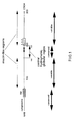
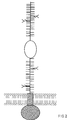
- the protein comprises a cytoplasmic region, a transmembrane region, an elongated mucin-like region (37% Ser and Thr), a central hydrophobic globular region, and a short positively charged region within a second elongated mucin-like region (38% Ser, Thr).
- the modular architecture demonstrates that the central hydrophobic globular region is positioned between two mucin-like stalks, and limited approximately by an N-terminal conserved double Pro 155,156 and a C-terminal conserved Pro 194 (Figure 1, 2).
- This schematic model suggests a very important functional role for the central hydrophobic region in protein binding because it may be the only exposed protein domain.
- the rest of the ectodomain of RSV-G is mainly mucin-like.
- the dense carbohydrate coat of the mucin-like regions is added to the envelope protein by cellular enzyme systems and for that reason the mucin-like regions are probably not very antigenic.
- Peptides were selected from the central hydrophobic region of RSV-G that is located between the two mucin-like regions.
- the central hydrophobic regions (residues 158 - 189) of all cloned RSV types and subtypes were synthesized: BRSV-G (Lerch et al., 1990; WO 92/01471); ORSV-G (Mallipeddi and Samal 1993b); HRSV-G type A (Wertz et al., 1985); and HRSV-G type B (Johnson et al., 1987). Additionally, a peptide corresponding to the immunodominant peptide (residues 174-189) of HRSV-G type A was synthesized.
- SPF specific-pathogen-free
- PI-3 parainfluenza virus type 3
- BHV1 bovine herpesvirus 1
- BVDV bovine viral diarrhea virus
- iG-ELISA indirect peptide-based ELISA
- bG-ELISA blocking peptide-based ELISA
- FCA Freund's complete adjuvant
- BRSV-G specific monoclonal antibody (MAb 20) was performed as described (Wensvoort et al., 1986). Balb/c mice were immunized intraperitoneally with 100 ⁇ g BRSV (Lelystad strain), grown on embryonic bovine tracheal cells, mixed with FCA. The RSV-specificity of MAb 20 was determined using an immunoperoxidase monolayer assay (IPMA) as described (Wensvoort et al., 1986). In this assay Vero cells infected with BRSV (strain Lelystad) were used. Additionally, MAb 20 reacted in the BRSV-G peptide-based iG- and bG-ELISA.
- IPMA immunoperoxidase monolayer assay
- MAbs 2G and 19G specific for the G protein of HRSV A were obtained from Dr. J.A. Melero, National Centre for Microbiology (Madrid, Spain).
- MAbs 26 and 30, specific for the G protein of HRSV B and A, respectively, were a kind gift of Drs. J. Furze and G. Taylor, AFRC Institute for Animal Health, Compton, UK.
- both peptides were tested for their antigenicity in an iG-ELISA using the G-peptide of HRSV subtype A as antigen.
- iG-ELISA indirect G-peptide ELISA
- test sera and reagents were made in "high-salt" ELISA-buffer (8.1 mM Na 2 HPO 4 , 2.79 mM KH 2 PO 4 , 0.8 M NaCl, 2.68 mM KCl, lmM EDTA, 0.05% Tween 80, pH 7.2) containing 4% horse serum.
- BRSV antigen stock solution (N° 88915, ID-DLO, Lelystad) was diluted 1:2 (100 ul/well) and incubated during two hours at 37°C.
- Test sera were diluted 1:80 (100 ul/well) and incubated for one hour at 37°C.
- Horseradish peroxidase (HRPO) conjugated rabbit anti-bovine immunoglobulin (Dakopatts, P159) was diluted 1:2000 (100 ul/well) and incubated for one hour at 37°C.
- the substrate chromogen solution consisted of 10 mM sodium-phosphate buffer (pH 6.8), 0.1 mM EDTA, 0.1% w/v 5-aminosalicylic acid, and freshly added 0.005% v/v H 2 O 2 . Incubation with substrate solution was performed overnight at 4°C. Colour development was measured at 450 nm (Titertek Multiscan). Absorbance values higher than two times the average background value of testsera in control wells without antigen, were considered positive. Although the test has been developed for the detection of antibodies specific for BRSV, antibodies against all other RSV types can be detected with the test due to extensive F protein immune-crossreactivity between RSV types and subtypes.
- the iG-ELISA was based on the test procedure of the F-ELISA as described above with the following modifications.
- the antigen was not caught but directly coated to the plate.
- One hundred and fifty ng of crude oxidized peptide was coated per well (high binding capacity flat bottom microplate, Greiner) in 100 ⁇ l carbonate buffer pH 9.0, 4°C, overnight.
- the optimal dilution of the peptide to coat the ELISA plates was chosen in such a manner that maximum binding was obtained as determined in a checkerboard titration.
- Test sera, diluted 1:5, and conjugate were incubated for one hour at 37°C in "low-salt" ELISA buffer (8.1 mM Na 2 HPO 4 , 2.79 mM KH 2 PO 4 , 0.5 M NaCl, 2.68 mM KCl, 1 mM Na 2 EDTA, 0.05% v/v Tween 80, pH 7.2) containing 4% horse serum. Subsequently, the test was performed as described above.
- the conjugates used in the test were anti-bovine (1:2000), anti-sheep (1:1000), and antihuman HRPO (1:1000) (Dakopatts). Absorbance values higher than two times the average background value of testsera in control wells without antigen, were considered positive.
- the low sensitivity compared to the routine F-ELISA may be due to (i) a relative low antigenicity of BRSV-G in comparison to that of BRSV-F, (ii) low antibody titers of some animals, or (iii) some sera may be directed to another, yet uncharacterized, subtype.
- This ELISA for measuring BRSV-specific antibodies is based on blocking of the interaction of a BRSV-G specific monoclonal antibody (MAb 20) with the coated peptide by peptide-specific antibodies that may be present in the test sample.
- ELISA plates were coated with 30 ng crude oxidized peptide per well in 100 ⁇ l carbonate buffer pH 9.0, 4°C, overnight. The optimal dilution of the peptide to coat the ELISA plates was chosen in such a manner that a near maximum binding was obtained as determined in a checkerboard titration and that the sensitivity of the test was maintained high. Before use, and after each incubation step, plates were rinsed six times with deionised water containing 0.05% Tween 80.
- Plates were subsequently incubated with test serum diluted 1:2, a HRPO-conjugated monoclonal antibody specific for the G-peptide (bovine RSV-MAb 20, ID-DLO, Lelystad) diluted 1:5000, and substrate chromogen solution. Incubation with substrate solution was performed overnight at 4°C. Test sera and conjugate were incubated for one hour at 37°C in "low-salt" ELISA buffer containing 4% horse serum.
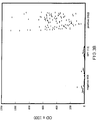
- Blocking percentages of different panels of bovine sera were compared in the bG-ELISA (Fig. 4).
- the relative specificity was found to be 0.98.
- Sera containing antibodies against other microorganisms (BHV-1, BVDV, PI-3, mycoplasma) were all negative in the bG-ELISA (data not shown).
- the six sera that reacted non-specifically in the routine F-ELISA and in the iG-ELISA were tested in the bG-ELISA. One of these sera blocked significantly (75%), suggesting that this serum was positive for BRSV antibodies.
- An antibody titer rise ( ⁇ 4x) in paired sera is normally regarded as being the result of an infection or reinfection.
- seroconversion or at least a fourfold titer rise was detected 42 times in the iG-ELISA and 32 times in the routine F-ELISA (Table 3).
- the difference in frequency of titer rise seems to be related to the age of the animals (Table 3).
- the BRSV iG-ELISA was more sensitive in detecting reinfections than the F-ELISA.
- the difference in frequency of titer increases seemed to be associated with the age of the animal.
- the iG-ELISA and the routine F-ELISA were equally sensitive for detection of seroconversion in young calves (age ⁇ 1 year).
- RSV ELISAs based on whole virus contain antigenic proteins which are very conserved. Therefore, such ELISAs are not type- or subtype-specific, which means that these assays do not distinguish between human RSV and ungulate RSV, and certainly not between HRSV-A and HRSV-B or between BRSV and ORSV.
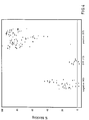
- a dendogram was calculated based on the phylogenetic relationship of RSV according to the amino acid sequence of RSV-G and on the central hydrophobic region of RSV-G (Fig. 5). Because RSV-G is highly variable between RSV types and subtypes, we investigated whether peptide-based iG-ELISAs were able to recognize type-, or subtype-specific antibodies.
- ORSV and BRSV are two ungulate RSV types which are genetically equally distant compared to the distance between HRSV subtype A and HRSV subtype B (Fig. 5).
- the genetic distance based on the amino acid sequence of the central hydrophobic region is slightly longer between ORSV and BRSV than between HRSV-A and HRSV-B. Therefore, the subtype-specificity of the RSV iG-ELISA can also be checked with RSV-positive sera of sheep and cattle, which most likely can only be infected with ORSV and BRSV, respectively.
- three RSV-positive ovine sera reacted only in the ORSV iG-ELISA and not in the BRSV iG-ELISA (Table 5).
- Two peptide vaccines were used to test the immunogenicity of the peptide in calves and to examine whether vaccination with the peptide could reduce or inhibit virus infection.
- One calf was vaccinated once with the 32-residue BRSV-G peptide in Freund's complete adjuvant (FCA)
- one calf was vaccinated once with the 32-residue BRSV-G peptide coupled to Keyhole Limpet Haemocyanin (KLH) in FCA, and a control calf was not vaccinated.
- KLH Keyhole Limpet Haemocyanin
- RSV-G Schematic structural model of RSV-G.
- the central hydrophobic region (residues 158-189) is shown as a grey ellipse.
- Mucin-like regions are shown with potential O-linked glycosylation sites (short horizontal lines) and potential N-linked glycosylation sites (branched lines). Hatched regions correspond to the transmembrane region and the cytoplasmic region.
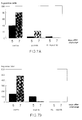
- Blocking percentages of different sera in the BRSV bG-ELISA as described in the test procedure Note that some negative sera have blocking percentages below zero.
Landscapes
- Chemical & Material Sciences (AREA)
- Life Sciences & Earth Sciences (AREA)
- Health & Medical Sciences (AREA)
- Organic Chemistry (AREA)
- Virology (AREA)
- Medicinal Chemistry (AREA)
- General Health & Medical Sciences (AREA)
- Genetics & Genomics (AREA)
- Molecular Biology (AREA)
- Proteomics, Peptides & Aminoacids (AREA)
- Biophysics (AREA)
- Biochemistry (AREA)
- Gastroenterology & Hepatology (AREA)
- Immunology (AREA)
- Chemical Kinetics & Catalysis (AREA)
- Veterinary Medicine (AREA)
- Public Health (AREA)
- Animal Behavior & Ethology (AREA)
- Pharmacology & Pharmacy (AREA)
- Nuclear Medicine, Radiotherapy & Molecular Imaging (AREA)
- General Chemical & Material Sciences (AREA)
- Oncology (AREA)
- Communicable Diseases (AREA)
- Peptides Or Proteins (AREA)
- Medicines Containing Antibodies Or Antigens For Use As Internal Diagnostic Agents (AREA)
- Preparation Of Compounds By Using Micro-Organisms (AREA)
- Measuring Or Testing Involving Enzymes Or Micro-Organisms (AREA)
Claims (20)
- Peptid mit einer Aminosäuresequenz, die vom G-Protein eines respiratorischen Syncytialvirus abgeleitet ist, worin die Aminosaurefrequenz eine Länge von 28 bis 37 Aminosäurereste hat und von einer Region des G-Proteins abgeleitet ist, das aus einem unabhängig faltenden, globularen Proteinmodul besteht, das zwischen zwei mucinartigen Bereichen gelegen ist.
- Peptid, bestehend aus einer Aminosäuresequenz, die vom G-Protein eines respiratorischen Syncytialvirus abgeleitet ist, wobei die Aminosäurasequenz eine Länge von 28 bis 37 Aminosäurereste aufweist und von einer Region des G-Proteins abgeleitet ist, das ein unabhängig faltendes, globulares Proteinmodul aufweist, welches zwischen zwei mucinartigen Bereichen gelegen ist.
- Peptid nach Anspruch 1 oder 2,
worin die Aminosäuresequenz aus den Aminosäureresten Nr. 159-186 des G-Proteins (gemäß der Bezifferung des G-proteins des respiratorischen Syncytialvirus des Rindes) besteht und zu diesem höchstens vier Aminosauredifferenzen aufweist. - Peptid nach Anspruch 1 oder 2,
worin die Aminosäuresequenz aus den Aminosäureresten Nr. 158-189 des G-Proteins (gemäß der Bezifferung des G-Proteins des respiratorischen Syncytialvirus des Rindes) besteht und zu diesem hochstens vier Aminosäuredifferenzen aufweist. - Peptid nach Anspruch 1 oder 2, worin die Aminosäuresequenz aus den Aminosäureresten Nr. 157-193 des G-Proteins (gemäß der Bezifferung des G-Proteins des respiratorischen Syncytialvirus des Rindes) besteht und zu diesem hochstens vier Aminosäuredifferenzen aufweist.
- Peptid nach Anspruch 1 oder 2, worin das respiratorische Syncytialvirus aus der Gruppe bestehend aus dem respiratorischen Syncytialvirus des Rindes, dem respiratorischen Syncytialvirus A des Menschen, dem respiratorischen Syncytialvirus B des Menschen und dem respiratorischen Syncytialvirus des Rindes besteht.
- Peptid nach Anspruch 1, worin die Aminosäuresequenz ein Glied aus folgender Gruppe umfaßt:

- Peptid nach Anspruch 1, worin die Aminosäuresequenz ein Glied aus folgender Gruppe umfaßt:

- Peptid nach Anspruch 1, worin die Aminosäuresequenz ein Glied aus folgender Gruppe umfaßt:

- Antigensubstanz, welche die Auslösung von schützenden Immunreaktionen ermöglicht, und zwar gegenüber oder zur Unterscheidung zwischen unterschiedlichen Typen oder Subtypen von respiratorischen Syncytialviren bzw. Zur Identifizierung von Antikörpern gegenüber diesen unterschiedlichen Typen oder Subtypen, umfassend die Peptide des Anspruchs 1 oder 2.
- Anwendung des Peptids nach Anspruch 1 oder 2 oder der Antigensubstanz des Anspruchs 10 bei der Diagnose von respiratorischen Syncytialvirusinfektionen.
- Peptid nach Anspruch 1 oder 2 oder Antigensubstanz nach Anspruch 10 zur Anwendung in der Prophylaxe von respiratorischen Syncytialvirusinfektionen.
- Diagnostisches Testkit zur Feststellung oder Identifizierung von respiratorischen Syncytialvirustypen oder Subtypen bzw. von Antikörpern gegen diese Typen oder Subtypen, umfassend das Peptid des Anspruchs 1 oder 2 oder die Anitgensubstanz des Anspruchs 10 zusammen mit geeigneten Mitteln zur Feststellung.
- Testkit nach Anspruch 13, welcher eine enzymverbundene Immunanalyse darstellt, z. B. ein blockierendes ELISA.
- Verfahren zur Feststellung des respiratorischen Syncytialvirus oder Antikörpern gegen diesen mit Inkontaktbringen einer Probe einer Körperflüssigkeit mit dem Peptid des Anspruchs 1 oder 2 oder der Antigensubstanz des Anspruchs 10 in solcher Weise, daß ein Komplex gebildet werden kann, der das Peptid, die Antigensubstanz und einen gegen das Peptid gerichteten Antikörper umfaßt, mit nachfolgender Feststellung des Komplexes.
- Pharmazeutische Zusammensetzung zur Prophylaxe von respiratorsischen Syncytialvirusinfektionen, umfassend das Peptid des Anspruchs 1 oder 2 oder die Antigensubstanz des Anspruchs 10 zusammen mit einem geeigneten Hilfsstoff oder Arzneimittelträger zur Verabreichung an ein Säugetier.
- Verfahren zum Auslösen von Antikörpern gegen respiratorische Syncytialvirustypen oder -subtypen mit Verabreichung an einen Saugetierwirt, die Antigensubstanz des Anspruchs 10 zusammen mit einem geeigneten Hilfsmittel und Ernten der erhaltenen Antikörper oder der Antikörper produzierenden Zellen von dem Säugetierwirt.
- Antikörper, der gegen einen Typ oder Subtyp des respiratorischen Syncytialvirus gerichtet ist, erhältlich durch das Verfahren des Anspruchs 17.
- Antikörper nach Anspruch 18, der einen monoklonalen Antikörper darstellt.
- Diagnostisches Testkit zur Feststellung von Subtypen oder Typen des respiratorischen Syncytialvirus bzw. die Unterscheidung zwischen Subtypen oder Typen, gegebenenfalls mit Antikörpern gegen die Substypen oder Typen, umfassend den Antikörper des Anspruchs 18 und geeignete Feststellmittel.
Priority Applications (1)
| Application Number | Priority Date | Filing Date | Title |
|---|---|---|---|
| EP95944704A EP0777685B1 (de) | 1994-08-25 | 1995-08-22 | Antigene peptide abgeleitet vom g-protein des rsv (respiratorisches synzytialvirus) für die typen- und subtypen spezifische diagnose einer rsv-infektionen |
Applications Claiming Priority (4)
| Application Number | Priority Date | Filing Date | Title |
|---|---|---|---|
| EP94202440 | 1994-08-25 | ||
| EP94202440 | 1994-08-25 | ||
| PCT/NL1995/000279 WO1996006112A1 (en) | 1994-08-25 | 1995-08-22 | Antigenic peptides derived from the g protein of rsv for type- and subtype-specific diagnosis of respiratory syncytial virus (rsv) infection |
| EP95944704A EP0777685B1 (de) | 1994-08-25 | 1995-08-22 | Antigene peptide abgeleitet vom g-protein des rsv (respiratorisches synzytialvirus) für die typen- und subtypen spezifische diagnose einer rsv-infektionen |
Publications (2)
| Publication Number | Publication Date |
|---|---|
| EP0777685A1 EP0777685A1 (de) | 1997-06-11 |
| EP0777685B1 true EP0777685B1 (de) | 1999-04-14 |
Family
ID=8217137
Family Applications (1)
| Application Number | Title | Priority Date | Filing Date |
|---|---|---|---|
| EP95944704A Expired - Lifetime EP0777685B1 (de) | 1994-08-25 | 1995-08-22 | Antigene peptide abgeleitet vom g-protein des rsv (respiratorisches synzytialvirus) für die typen- und subtypen spezifische diagnose einer rsv-infektionen |
Country Status (10)
| Country | Link |
|---|---|
| US (1) | US6077511A (de) |
| EP (1) | EP0777685B1 (de) |
| JP (1) | JPH10512846A (de) |
| AT (1) | ATE178906T1 (de) |
| AU (1) | AU710713B2 (de) |
| CA (1) | CA2198279A1 (de) |
| DE (1) | DE69509103T2 (de) |
| NO (1) | NO970829L (de) |
| NZ (1) | NZ291243A (de) |
| WO (1) | WO1996006112A1 (de) |
Families Citing this family (13)
| Publication number | Priority date | Publication date | Assignee | Title |
|---|---|---|---|---|
| AUPO026596A0 (en) * | 1996-06-05 | 1996-06-27 | Biomolecular Research Institute Limited | Viral peptide |
| FR2766192B1 (fr) * | 1997-07-17 | 2001-07-13 | Pf Medicament | Epitopes du vrs et anticorps les comportant, utiles dans le diagnostic et la therapie |
| AU2002210384B2 (en) * | 2000-10-17 | 2006-10-19 | Besst-Test Aps | Assay for directly detecting a RS virus related biological cell in a body fluid sample |
| ATE412666T1 (de) | 2000-10-18 | 2008-11-15 | Us Gov Health & Human Serv | Zusammensetzungen und verfahren zur modulierung von rsv-infektionen und -immunität |
| US6605283B1 (en) | 2002-11-01 | 2003-08-12 | The United States Of America As Represented By The Secretary Of Agriculture | Nucleotide sequence for the Avian Metapneumovirus (Colorado) attachment glycoprotein gene |
| EA200501285A1 (ru) * | 2003-02-11 | 2006-02-24 | Неофарм, Инк. | Способ получения липосомальных препаратов |
| AU2007222798A1 (en) * | 2006-03-06 | 2007-09-13 | Symphogen A/S | Recombinant polyclonal antibody for treatment of respiratory syncytial virus infections |
| CA2678628A1 (en) * | 2007-03-06 | 2008-09-12 | Symphogen A/S | Recombinant antibodies for treatment of respiratory syncytial virus infections |
| CN102711818B (zh) * | 2009-08-04 | 2014-09-24 | 美利坚合众国政府疾病控制和预防中心,健康和公共事业部 | 抗rsv免疫原和免疫方法 |
| CN106008716B (zh) | 2010-07-07 | 2019-08-13 | 人工细胞科技公司 | 呼吸道合胞病毒抗原组合物和方法 |
| WO2014019718A1 (en) | 2012-08-01 | 2014-02-06 | Bavarian Nordic A/S | Recombinant modified vaccinia virus ankara (mva) respiratory syncytial virus (rsv) vaccine |
| CA3107037A1 (en) * | 2018-08-08 | 2020-02-13 | Trellis Bioscience, Llc | Improved rsv passive and active vaccines |
| JP7657727B2 (ja) | 2019-04-02 | 2025-04-07 | サノフイ | 抗原性多量体呼吸器合胞体ウイルスポリペプチド |
Family Cites Families (2)
| Publication number | Priority date | Publication date | Assignee | Title |
|---|---|---|---|---|
| EP0540645A4 (en) * | 1990-07-24 | 1993-12-29 | The Uab Research Foundation | Methods of use of bovine respiratory syncytial virus recombinant dna, proteins vaccines, antibodies, and transformed cells |
| FR2718452B1 (fr) * | 1994-04-06 | 1996-06-28 | Pf Medicament | Elément d'immunogène, agent immunogène, composition pharmaceutique et procédé de préparation. |
-
1995
- 1995-08-22 AT AT95944704T patent/ATE178906T1/de not_active IP Right Cessation
- 1995-08-22 CA CA002198279A patent/CA2198279A1/en not_active Abandoned
- 1995-08-22 DE DE69509103T patent/DE69509103T2/de not_active Expired - Fee Related
- 1995-08-22 WO PCT/NL1995/000279 patent/WO1996006112A1/en not_active Ceased
- 1995-08-22 US US08/793,792 patent/US6077511A/en not_active Expired - Fee Related
- 1995-08-22 EP EP95944704A patent/EP0777685B1/de not_active Expired - Lifetime
- 1995-08-22 JP JP8507962A patent/JPH10512846A/ja not_active Ceased
- 1995-08-22 AU AU32316/95A patent/AU710713B2/en not_active Ceased
- 1995-08-23 NZ NZ291243A patent/NZ291243A/xx unknown
-
1997
- 1997-02-24 NO NO970829A patent/NO970829L/no not_active Application Discontinuation
Also Published As
| Publication number | Publication date |
|---|---|
| US6077511A (en) | 2000-06-20 |
| AU710713B2 (en) | 1999-09-30 |
| EP0777685A1 (de) | 1997-06-11 |
| CA2198279A1 (en) | 1996-02-29 |
| DE69509103T2 (de) | 1999-09-30 |
| NZ291243A (en) | 1998-10-28 |
| NO970829D0 (no) | 1997-02-24 |
| AU3231695A (en) | 1996-03-14 |
| NO970829L (no) | 1997-04-18 |
| ATE178906T1 (de) | 1999-04-15 |
| WO1996006112A1 (en) | 1996-02-29 |
| DE69509103D1 (de) | 1999-05-20 |
| JPH10512846A (ja) | 1998-12-08 |
Similar Documents
| Publication | Publication Date | Title |
|---|---|---|
| JP3288692B2 (ja) | レスピラトリイ・シンシチアル・ウイルス:ワクチンおよび診断法 | |
| US8114408B2 (en) | Peptide fragments reacting specifically with antibodies against highly pathogenic newcastle disease virus and uses thereof | |
| ES2550997T3 (es) | Anticuerpos monoclonales anti-Chikungunya y usos de los mismos | |
| EP0777685B1 (de) | Antigene peptide abgeleitet vom g-protein des rsv (respiratorisches synzytialvirus) für die typen- und subtypen spezifische diagnose einer rsv-infektionen | |
| Mitchell et al. | Characterization of rubella virus-specific antibody responses by using a new synthetic peptide-based enzyme-linked immunosorbent assay | |
| CN118772250B (zh) | 一种rsv f蛋白突变体及其制法与应用 | |
| US20140377740A1 (en) | Soluble and membrane-anchored forms of lassa virus subunit proteins | |
| CN103476788A (zh) | 免疫原性屈曲病毒肽 | |
| CN114276422A (zh) | 新型冠状病毒s蛋白多肽抗原及其应用 | |
| Langedijk et al. | Type-specific serologic diagnosis of respiratory syncytial virus infection, based on a synthetic peptide of the attachment protein G | |
| Atabani et al. | Identification of an immunodominant neutralizing and protective epitope from measles virus fusion protein by using human sera from acute infection | |
| Wagner et al. | The serologic response of horses to equine arteritis virus as determined by competitive enzyme-linked immunosorbent assays (c-ELISAs) to structural and non-structural viral proteins | |
| CN101726593A (zh) | 一种检测登革病毒ns1抗原的免疫诊断试剂盒及其应用 | |
| Yoder et al. | Role of complement in neutralization of respiratory syncytial virus | |
| Popow‐Kraupp et al. | Immunoglobulin‐class‐specific immune response to respiratory syncytial virus structural proteins in infants, children, and adults | |
| US20230192813A1 (en) | Antibody that binds specifically to the sars cov 2 spike protein, and methods for its manufacture | |
| RU2142817C1 (ru) | Инактивированные вакцины респираторно-синцитиального вируса | |
| Langedijk et al. | A subtype-specific peptide-based enzyme immunoassay for detection of antibodies to the G protein of human respiratory syncytial virus is more sensitive than routine serological tests | |
| Marx et al. | Diagnostic immunoassays for tick-borne encephalitis virus based on recombinant baculovirus protein expression | |
| Langedijk et al. | Identification of a conserved neutralization site in the first heptad repeat of the fusion protein of respiratory syncytial virus | |
| CN115850394B (zh) | 一种塞内卡病毒vp2结构蛋白的b细胞表位肽及应用 | |
| CN114605506B (zh) | 冠状病毒m蛋白胞外域多肽及其应用 | |
| Abd-Eldaim et al. | Amino acid variations of the immuno-dominant domain of respiratory syncytial virus attachment glycoprotein (G) affect the antibody responses In BALB/c mice | |
| Henrickson et al. | Neutralizing epitopes of human parainfluenza virus type 3 are conformational and cannot be imitated by synthetic peptides | |
| Choi et al. | Characterization of Antigenic Sites on the Rinderpest Virus N Protein Uusing Monoclonal Antibodies |
Legal Events
| Date | Code | Title | Description |
|---|---|---|---|
| PUAI | Public reference made under article 153(3) epc to a published international application that has entered the european phase |
Free format text: ORIGINAL CODE: 0009012 |
|
| 17P | Request for examination filed |
Effective date: 19970225 |
|
| AK | Designated contracting states |
Kind code of ref document: A1 Designated state(s): AT BE CH DE DK ES FR GB GR IE IT LI LU MC NL PT SE |
|
| 17Q | First examination report despatched |
Effective date: 19970528 |
|
| GRAG | Despatch of communication of intention to grant |
Free format text: ORIGINAL CODE: EPIDOS AGRA |
|
| GRAG | Despatch of communication of intention to grant |
Free format text: ORIGINAL CODE: EPIDOS AGRA |
|
| GRAH | Despatch of communication of intention to grant a patent |
Free format text: ORIGINAL CODE: EPIDOS IGRA |
|
| RAP1 | Party data changed (applicant data changed or rights of an application transferred) |
Owner name: STICHTING INSTITUUT VOOR DIERHOUDERIJ EN DIERGEZON |
|
| GRAH | Despatch of communication of intention to grant a patent |
Free format text: ORIGINAL CODE: EPIDOS IGRA |
|
| GRAA | (expected) grant |
Free format text: ORIGINAL CODE: 0009210 |
|
| AK | Designated contracting states |
Kind code of ref document: B1 Designated state(s): AT BE CH DE DK ES FR GB GR IE IT LI LU MC NL PT SE |
|
| PG25 | Lapsed in a contracting state [announced via postgrant information from national office to epo] |
Ref country code: SE Free format text: THE PATENT HAS BEEN ANNULLED BY A DECISION OF A NATIONAL AUTHORITY Effective date: 19990414 Ref country code: IT Free format text: LAPSE BECAUSE OF FAILURE TO SUBMIT A TRANSLATION OF THE DESCRIPTION OR TO PAY THE FEE WITHIN THE PRE;WARNING: LAPSES OF ITALIAN PATENTS WITH EFFECTIVE DATE BEFORE 2007 MAY HAVE OCCURRED AT ANY TIME BEFORE 2007. THE CORRECT EFFECTIVE DATE MAY BE DIFFERENT FROM THE ONE RECORDED.SCRIBED TIME-LIMIT Effective date: 19990414 Ref country code: GR Free format text: LAPSE BECAUSE OF NON-PAYMENT OF DUE FEES Effective date: 19990414 Ref country code: ES Free format text: THE PATENT HAS BEEN ANNULLED BY A DECISION OF A NATIONAL AUTHORITY Effective date: 19990414 Ref country code: BE Free format text: LAPSE BECAUSE OF FAILURE TO SUBMIT A TRANSLATION OF THE DESCRIPTION OR TO PAY THE FEE WITHIN THE PRESCRIBED TIME-LIMIT Effective date: 19990414 Ref country code: AT Free format text: LAPSE BECAUSE OF FAILURE TO SUBMIT A TRANSLATION OF THE DESCRIPTION OR TO PAY THE FEE WITHIN THE PRESCRIBED TIME-LIMIT Effective date: 19990414 |
|
| REF | Corresponds to: |
Ref document number: 178906 Country of ref document: AT Date of ref document: 19990415 Kind code of ref document: T |
|
| REG | Reference to a national code |
Ref country code: CH Ref legal event code: EP |
|
| REG | Reference to a national code |
Ref country code: IE Ref legal event code: FG4D |
|
| REF | Corresponds to: |
Ref document number: 69509103 Country of ref document: DE Date of ref document: 19990520 |
|
| RAP2 | Party data changed (patent owner data changed or rights of a patent transferred) |
Owner name: PEPSCAN SYSTEMS B.V. |
|
| PG25 | Lapsed in a contracting state [announced via postgrant information from national office to epo] |
Ref country code: PT Free format text: LAPSE BECAUSE OF FAILURE TO SUBMIT A TRANSLATION OF THE DESCRIPTION OR TO PAY THE FEE WITHIN THE PRESCRIBED TIME-LIMIT Effective date: 19990714 Ref country code: DK Free format text: LAPSE BECAUSE OF FAILURE TO SUBMIT A TRANSLATION OF THE DESCRIPTION OR TO PAY THE FEE WITHIN THE PRESCRIBED TIME-LIMIT Effective date: 19990714 |
|
| REG | Reference to a national code |
Ref country code: CH Ref legal event code: NV Representative=s name: E. BLUM & CO. PATENTANWAELTE |
|
| ET | Fr: translation filed | ||
| NLT2 | Nl: modifications (of names), taken from the european patent patent bulletin |
Owner name: PEPSCAN SYSTEMS B.V/ |
|
| PG25 | Lapsed in a contracting state [announced via postgrant information from national office to epo] |
Ref country code: LU Free format text: LAPSE BECAUSE OF NON-PAYMENT OF DUE FEES Effective date: 19990822 |
|
| PLBE | No opposition filed within time limit |
Free format text: ORIGINAL CODE: 0009261 |
|
| STAA | Information on the status of an ep patent application or granted ep patent |
Free format text: STATUS: NO OPPOSITION FILED WITHIN TIME LIMIT |
|
| PG25 | Lapsed in a contracting state [announced via postgrant information from national office to epo] |
Ref country code: MC Free format text: LAPSE BECAUSE OF NON-PAYMENT OF DUE FEES Effective date: 20000229 |
|
| 26N | No opposition filed | ||
| REG | Reference to a national code |
Ref country code: GB Ref legal event code: IF02 |
|
| PGFP | Annual fee paid to national office [announced via postgrant information from national office to epo] |
Ref country code: IE Payment date: 20040630 Year of fee payment: 10 |
|
| PGFP | Annual fee paid to national office [announced via postgrant information from national office to epo] |
Ref country code: CH Payment date: 20040707 Year of fee payment: 10 |
|
| PGFP | Annual fee paid to national office [announced via postgrant information from national office to epo] |
Ref country code: GB Payment date: 20040818 Year of fee payment: 10 |
|
| PGFP | Annual fee paid to national office [announced via postgrant information from national office to epo] |
Ref country code: FR Payment date: 20040824 Year of fee payment: 10 |
|
| PGFP | Annual fee paid to national office [announced via postgrant information from national office to epo] |
Ref country code: NL Payment date: 20040831 Year of fee payment: 10 |
|
| PGFP | Annual fee paid to national office [announced via postgrant information from national office to epo] |
Ref country code: DE Payment date: 20040913 Year of fee payment: 10 |
|
| PG25 | Lapsed in a contracting state [announced via postgrant information from national office to epo] |
Ref country code: IE Free format text: LAPSE BECAUSE OF NON-PAYMENT OF DUE FEES Effective date: 20050822 Ref country code: GB Free format text: LAPSE BECAUSE OF NON-PAYMENT OF DUE FEES Effective date: 20050822 |
|
| PG25 | Lapsed in a contracting state [announced via postgrant information from national office to epo] |
Ref country code: LI Free format text: LAPSE BECAUSE OF NON-PAYMENT OF DUE FEES Effective date: 20050831 Ref country code: CH Free format text: LAPSE BECAUSE OF NON-PAYMENT OF DUE FEES Effective date: 20050831 |
|
| PG25 | Lapsed in a contracting state [announced via postgrant information from national office to epo] |
Ref country code: NL Free format text: LAPSE BECAUSE OF NON-PAYMENT OF DUE FEES Effective date: 20060301 Ref country code: DE Free format text: LAPSE BECAUSE OF NON-PAYMENT OF DUE FEES Effective date: 20060301 |
|
| REG | Reference to a national code |
Ref country code: CH Ref legal event code: PL |
|
| GBPC | Gb: european patent ceased through non-payment of renewal fee |
Effective date: 20050822 |
|
| PG25 | Lapsed in a contracting state [announced via postgrant information from national office to epo] |
Ref country code: FR Free format text: LAPSE BECAUSE OF NON-PAYMENT OF DUE FEES Effective date: 20060428 |
|
| NLV4 | Nl: lapsed or anulled due to non-payment of the annual fee |
Effective date: 20060301 |
|
| REG | Reference to a national code |
Ref country code: IE Ref legal event code: MM4A |
|
| REG | Reference to a national code |
Ref country code: FR Ref legal event code: ST Effective date: 20060428 |