EP0763136B1 - Verfahren und proben zum nachweis von mit dem locus der infantilen spinalamyotrophien verbundenen markern - Google Patents
Verfahren und proben zum nachweis von mit dem locus der infantilen spinalamyotrophien verbundenen markern Download PDFInfo
- Publication number
- EP0763136B1 EP0763136B1 EP95921878A EP95921878A EP0763136B1 EP 0763136 B1 EP0763136 B1 EP 0763136B1 EP 95921878 A EP95921878 A EP 95921878A EP 95921878 A EP95921878 A EP 95921878A EP 0763136 B1 EP0763136 B1 EP 0763136B1
- Authority
- EP
- European Patent Office
- Prior art keywords
- sequence
- sequences
- region
- markers
- dna
- Prior art date
- Legal status (The legal status is an assumption and is not a legal conclusion. Google has not performed a legal analysis and makes no representation as to the accuracy of the status listed.)
- Expired - Lifetime
Links
- 238000000034 method Methods 0.000 title claims abstract description 22
- 239000000523 sample Substances 0.000 title claims abstract description 16
- 208000002320 spinal muscular atrophy Diseases 0.000 title abstract description 31
- 241000282414 Homo sapiens Species 0.000 claims abstract description 38
- 238000001514 detection method Methods 0.000 claims abstract description 11
- 230000003321 amplification Effects 0.000 claims abstract description 10
- 230000002759 chromosomal effect Effects 0.000 claims abstract description 10
- 238000003199 nucleic acid amplification method Methods 0.000 claims abstract description 10
- 150000007523 nucleic acids Chemical class 0.000 claims abstract description 5
- 108020004414 DNA Proteins 0.000 claims description 44
- 239000003550 marker Substances 0.000 claims description 30
- 239000012634 fragment Substances 0.000 claims description 23
- 239000002773 nucleotide Substances 0.000 claims description 18
- 125000003729 nucleotide group Chemical group 0.000 claims description 18
- 108090000623 proteins and genes Proteins 0.000 claims description 14
- 210000003754 fetus Anatomy 0.000 claims description 11
- 108091028043 Nucleic acid sequence Proteins 0.000 claims description 8
- 230000000295 complement effect Effects 0.000 claims description 8
- 239000013611 chromosomal DNA Substances 0.000 claims description 5
- 108091081062 Repeated sequence (DNA) Proteins 0.000 claims description 4
- 238000009396 hybridization Methods 0.000 claims description 4
- 238000013508 migration Methods 0.000 claims description 4
- 230000005012 migration Effects 0.000 claims description 4
- 238000002360 preparation method Methods 0.000 claims description 3
- 102000053602 DNA Human genes 0.000 claims 6
- 239000013615 primer Substances 0.000 abstract description 10
- 108020004707 nucleic acids Proteins 0.000 abstract description 3
- 102000039446 nucleic acids Human genes 0.000 abstract description 3
- 230000004075 alteration Effects 0.000 abstract 1
- 230000004077 genetic alteration Effects 0.000 abstract 1
- 231100000118 genetic alteration Toxicity 0.000 abstract 1
- 239000000203 mixture Substances 0.000 abstract 1
- 239000002987 primer (paints) Substances 0.000 abstract 1
- 230000037430 deletion Effects 0.000 description 26
- 238000012217 deletion Methods 0.000 description 26
- 210000000349 chromosome Anatomy 0.000 description 16
- 230000008520 organization Effects 0.000 description 15
- 238000012408 PCR amplification Methods 0.000 description 14
- 230000000692 anti-sense effect Effects 0.000 description 13
- 108700028369 Alleles Proteins 0.000 description 12
- 208000037265 diseases, disorders, signs and symptoms Diseases 0.000 description 12
- 201000010099 disease Diseases 0.000 description 11
- 230000002068 genetic effect Effects 0.000 description 10
- 238000004458 analytical method Methods 0.000 description 8
- 108091092878 Microsatellite Proteins 0.000 description 5
- 108091034117 Oligonucleotide Proteins 0.000 description 5
- 238000003556 assay Methods 0.000 description 5
- 238000010276 construction Methods 0.000 description 5
- 102000054766 genetic haplotypes Human genes 0.000 description 5
- 230000008707 rearrangement Effects 0.000 description 5
- 238000007894 restriction fragment length polymorphism technique Methods 0.000 description 5
- LFQSCWFLJHTTHZ-UHFFFAOYSA-N Ethanol Chemical compound CCO LFQSCWFLJHTTHZ-UHFFFAOYSA-N 0.000 description 4
- 208000032225 Proximal spinal muscular atrophy type 1 Diseases 0.000 description 4
- 238000002105 Southern blotting Methods 0.000 description 4
- 208000003954 Spinal Muscular Atrophies of Childhood Diseases 0.000 description 4
- 239000000499 gel Substances 0.000 description 4
- 238000012252 genetic analysis Methods 0.000 description 4
- 239000012528 membrane Substances 0.000 description 4
- 230000036961 partial effect Effects 0.000 description 4
- 238000005215 recombination Methods 0.000 description 4
- 230000006798 recombination Effects 0.000 description 4
- 230000009467 reduction Effects 0.000 description 4
- 238000012216 screening Methods 0.000 description 4
- 238000005204 segregation Methods 0.000 description 4
- 239000004677 Nylon Substances 0.000 description 3
- JLCPHMBAVCMARE-UHFFFAOYSA-N [3-[[3-[[3-[[3-[[3-[[3-[[3-[[3-[[3-[[3-[[3-[[5-(2-amino-6-oxo-1H-purin-9-yl)-3-[[3-[[3-[[3-[[3-[[3-[[5-(2-amino-6-oxo-1H-purin-9-yl)-3-[[5-(2-amino-6-oxo-1H-purin-9-yl)-3-hydroxyoxolan-2-yl]methoxy-hydroxyphosphoryl]oxyoxolan-2-yl]methoxy-hydroxyphosphoryl]oxy-5-(5-methyl-2,4-dioxopyrimidin-1-yl)oxolan-2-yl]methoxy-hydroxyphosphoryl]oxy-5-(6-aminopurin-9-yl)oxolan-2-yl]methoxy-hydroxyphosphoryl]oxy-5-(6-aminopurin-9-yl)oxolan-2-yl]methoxy-hydroxyphosphoryl]oxy-5-(6-aminopurin-9-yl)oxolan-2-yl]methoxy-hydroxyphosphoryl]oxy-5-(6-aminopurin-9-yl)oxolan-2-yl]methoxy-hydroxyphosphoryl]oxyoxolan-2-yl]methoxy-hydroxyphosphoryl]oxy-5-(5-methyl-2,4-dioxopyrimidin-1-yl)oxolan-2-yl]methoxy-hydroxyphosphoryl]oxy-5-(4-amino-2-oxopyrimidin-1-yl)oxolan-2-yl]methoxy-hydroxyphosphoryl]oxy-5-(5-methyl-2,4-dioxopyrimidin-1-yl)oxolan-2-yl]methoxy-hydroxyphosphoryl]oxy-5-(5-methyl-2,4-dioxopyrimidin-1-yl)oxolan-2-yl]methoxy-hydroxyphosphoryl]oxy-5-(6-aminopurin-9-yl)oxolan-2-yl]methoxy-hydroxyphosphoryl]oxy-5-(6-aminopurin-9-yl)oxolan-2-yl]methoxy-hydroxyphosphoryl]oxy-5-(4-amino-2-oxopyrimidin-1-yl)oxolan-2-yl]methoxy-hydroxyphosphoryl]oxy-5-(4-amino-2-oxopyrimidin-1-yl)oxolan-2-yl]methoxy-hydroxyphosphoryl]oxy-5-(4-amino-2-oxopyrimidin-1-yl)oxolan-2-yl]methoxy-hydroxyphosphoryl]oxy-5-(6-aminopurin-9-yl)oxolan-2-yl]methoxy-hydroxyphosphoryl]oxy-5-(4-amino-2-oxopyrimidin-1-yl)oxolan-2-yl]methyl [5-(6-aminopurin-9-yl)-2-(hydroxymethyl)oxolan-3-yl] hydrogen phosphate Polymers Cc1cn(C2CC(OP(O)(=O)OCC3OC(CC3OP(O)(=O)OCC3OC(CC3O)n3cnc4c3nc(N)[nH]c4=O)n3cnc4c3nc(N)[nH]c4=O)C(COP(O)(=O)OC3CC(OC3COP(O)(=O)OC3CC(OC3COP(O)(=O)OC3CC(OC3COP(O)(=O)OC3CC(OC3COP(O)(=O)OC3CC(OC3COP(O)(=O)OC3CC(OC3COP(O)(=O)OC3CC(OC3COP(O)(=O)OC3CC(OC3COP(O)(=O)OC3CC(OC3COP(O)(=O)OC3CC(OC3COP(O)(=O)OC3CC(OC3COP(O)(=O)OC3CC(OC3COP(O)(=O)OC3CC(OC3COP(O)(=O)OC3CC(OC3COP(O)(=O)OC3CC(OC3COP(O)(=O)OC3CC(OC3COP(O)(=O)OC3CC(OC3CO)n3cnc4c(N)ncnc34)n3ccc(N)nc3=O)n3cnc4c(N)ncnc34)n3ccc(N)nc3=O)n3ccc(N)nc3=O)n3ccc(N)nc3=O)n3cnc4c(N)ncnc34)n3cnc4c(N)ncnc34)n3cc(C)c(=O)[nH]c3=O)n3cc(C)c(=O)[nH]c3=O)n3ccc(N)nc3=O)n3cc(C)c(=O)[nH]c3=O)n3cnc4c3nc(N)[nH]c4=O)n3cnc4c(N)ncnc34)n3cnc4c(N)ncnc34)n3cnc4c(N)ncnc34)n3cnc4c(N)ncnc34)O2)c(=O)[nH]c1=O JLCPHMBAVCMARE-UHFFFAOYSA-N 0.000 description 3
- 210000001106 artificial yeast chromosome Anatomy 0.000 description 3
- 238000003745 diagnosis Methods 0.000 description 3
- 239000003814 drug Substances 0.000 description 3
- 230000021121 meiosis Effects 0.000 description 3
- 229920001778 nylon Polymers 0.000 description 3
- 102000054765 polymorphisms of proteins Human genes 0.000 description 3
- 230000008569 process Effects 0.000 description 3
- 108091008146 restriction endonucleases Proteins 0.000 description 3
- 238000012360 testing method Methods 0.000 description 3
- FWMNVWWHGCHHJJ-SKKKGAJSSA-N 4-amino-1-[(2r)-6-amino-2-[[(2r)-2-[[(2r)-2-[[(2r)-2-amino-3-phenylpropanoyl]amino]-3-phenylpropanoyl]amino]-4-methylpentanoyl]amino]hexanoyl]piperidine-4-carboxylic acid Chemical compound C([C@H](C(=O)N[C@H](CC(C)C)C(=O)N[C@H](CCCCN)C(=O)N1CCC(N)(CC1)C(O)=O)NC(=O)[C@H](N)CC=1C=CC=CC=1)C1=CC=CC=C1 FWMNVWWHGCHHJJ-SKKKGAJSSA-N 0.000 description 2
- 206010013801 Duchenne Muscular Dystrophy Diseases 0.000 description 2
- 108090000790 Enzymes Proteins 0.000 description 2
- 102000004190 Enzymes Human genes 0.000 description 2
- 101000702488 Rattus norvegicus High affinity cationic amino acid transporter 1 Proteins 0.000 description 2
- 229920000147 Styrene maleic anhydride Polymers 0.000 description 2
- 239000011543 agarose gel Substances 0.000 description 2
- 238000012790 confirmation Methods 0.000 description 2
- 230000029087 digestion Effects 0.000 description 2
- 238000001962 electrophoresis Methods 0.000 description 2
- 230000035772 mutation Effects 0.000 description 2
- 229920002401 polyacrylamide Polymers 0.000 description 2
- 208000022074 proximal spinal muscular atrophy Diseases 0.000 description 2
- 230000003252 repetitive effect Effects 0.000 description 2
- 230000000392 somatic effect Effects 0.000 description 2
- 208000024891 symptom Diseases 0.000 description 2
- 208000032471 type 1 spinal muscular atrophy Diseases 0.000 description 2
- 208000032521 type II spinal muscular atrophy Diseases 0.000 description 2
- 208000032527 type III spinal muscular atrophy Diseases 0.000 description 2
- 229920000936 Agarose Polymers 0.000 description 1
- 206010003694 Atrophy Diseases 0.000 description 1
- 201000006935 Becker muscular dystrophy Diseases 0.000 description 1
- 201000003883 Cystic fibrosis Diseases 0.000 description 1
- 239000003155 DNA primer Substances 0.000 description 1
- 101100536354 Drosophila melanogaster tant gene Proteins 0.000 description 1
- 241000702224 Enterobacteria phage M13 Species 0.000 description 1
- 101000740205 Homo sapiens Sal-like protein 1 Proteins 0.000 description 1
- 206010033799 Paralysis Diseases 0.000 description 1
- 208000033522 Proximal spinal muscular atrophy type 2 Diseases 0.000 description 1
- 208000033526 Proximal spinal muscular atrophy type 3 Diseases 0.000 description 1
- 108020004511 Recombinant DNA Proteins 0.000 description 1
- 240000004808 Saccharomyces cerevisiae Species 0.000 description 1
- 102100037204 Sal-like protein 1 Human genes 0.000 description 1
- 108091035242 Sequence-tagged site Proteins 0.000 description 1
- 241000607056 Stenodus leucichthys Species 0.000 description 1
- 240000008042 Zea mays Species 0.000 description 1
- 230000002159 abnormal effect Effects 0.000 description 1
- 108010045649 agarase Proteins 0.000 description 1
- 230000037444 atrophy Effects 0.000 description 1
- 239000000969 carrier Substances 0.000 description 1
- 238000003759 clinical diagnosis Methods 0.000 description 1
- 238000009223 counseling Methods 0.000 description 1
- 230000007850 degeneration Effects 0.000 description 1
- 238000004925 denaturation Methods 0.000 description 1
- 230000036425 denaturation Effects 0.000 description 1
- 238000000326 densiometry Methods 0.000 description 1
- 230000006866 deterioration Effects 0.000 description 1
- 238000002567 electromyography Methods 0.000 description 1
- 238000003205 genotyping method Methods 0.000 description 1
- 210000003917 human chromosome Anatomy 0.000 description 1
- 238000009399 inbreeding Methods 0.000 description 1
- 201000004815 juvenile spinal muscular atrophy Diseases 0.000 description 1
- 210000000265 leukocyte Anatomy 0.000 description 1
- 230000000670 limiting effect Effects 0.000 description 1
- 238000013507 mapping Methods 0.000 description 1
- 239000000463 material Substances 0.000 description 1
- 230000008774 maternal effect Effects 0.000 description 1
- 238000012986 modification Methods 0.000 description 1
- 230000004048 modification Effects 0.000 description 1
- 230000002969 morbid Effects 0.000 description 1
- 210000002161 motor neuron Anatomy 0.000 description 1
- 238000001964 muscle biopsy Methods 0.000 description 1
- 230000003387 muscular Effects 0.000 description 1
- 230000008775 paternal effect Effects 0.000 description 1
- 239000008188 pellet Substances 0.000 description 1
- 238000003752 polymerase chain reaction Methods 0.000 description 1
- 230000000750 progressive effect Effects 0.000 description 1
- 238000001853 pulsed-field electrophoresis Methods 0.000 description 1
- 230000002829 reductive effect Effects 0.000 description 1
- 230000008439 repair process Effects 0.000 description 1
- 230000000717 retained effect Effects 0.000 description 1
- 238000005070 sampling Methods 0.000 description 1
- 210000000278 spinal cord Anatomy 0.000 description 1
- 238000007619 statistical method Methods 0.000 description 1
- 241001515965 unidentified phage Species 0.000 description 1
- 238000012795 verification Methods 0.000 description 1
- 230000003313 weakening effect Effects 0.000 description 1
Images


Classifications
-
- C—CHEMISTRY; METALLURGY
- C12—BIOCHEMISTRY; BEER; SPIRITS; WINE; VINEGAR; MICROBIOLOGY; ENZYMOLOGY; MUTATION OR GENETIC ENGINEERING
- C12Q—MEASURING OR TESTING PROCESSES INVOLVING ENZYMES, NUCLEIC ACIDS OR MICROORGANISMS; COMPOSITIONS OR TEST PAPERS THEREFOR; PROCESSES OF PREPARING SUCH COMPOSITIONS; CONDITION-RESPONSIVE CONTROL IN MICROBIOLOGICAL OR ENZYMOLOGICAL PROCESSES
- C12Q1/00—Measuring or testing processes involving enzymes, nucleic acids or microorganisms; Compositions therefor; Processes of preparing such compositions
- C12Q1/68—Measuring or testing processes involving enzymes, nucleic acids or microorganisms; Compositions therefor; Processes of preparing such compositions involving nucleic acids
- C12Q1/6876—Nucleic acid products used in the analysis of nucleic acids, e.g. primers or probes
-
- C—CHEMISTRY; METALLURGY
- C07—ORGANIC CHEMISTRY
- C07K—PEPTIDES
- C07K14/00—Peptides having more than 20 amino acids; Gastrins; Somatostatins; Melanotropins; Derivatives thereof
- C07K14/435—Peptides having more than 20 amino acids; Gastrins; Somatostatins; Melanotropins; Derivatives thereof from animals; from humans
- C07K14/475—Growth factors; Growth regulators
-
- C—CHEMISTRY; METALLURGY
- C12—BIOCHEMISTRY; BEER; SPIRITS; WINE; VINEGAR; MICROBIOLOGY; ENZYMOLOGY; MUTATION OR GENETIC ENGINEERING
- C12Q—MEASURING OR TESTING PROCESSES INVOLVING ENZYMES, NUCLEIC ACIDS OR MICROORGANISMS; COMPOSITIONS OR TEST PAPERS THEREFOR; PROCESSES OF PREPARING SUCH COMPOSITIONS; CONDITION-RESPONSIVE CONTROL IN MICROBIOLOGICAL OR ENZYMOLOGICAL PROCESSES
- C12Q1/00—Measuring or testing processes involving enzymes, nucleic acids or microorganisms; Compositions therefor; Processes of preparing such compositions
- C12Q1/68—Measuring or testing processes involving enzymes, nucleic acids or microorganisms; Compositions therefor; Processes of preparing such compositions involving nucleic acids
- C12Q1/6844—Nucleic acid amplification reactions
- C12Q1/6858—Allele-specific amplification
-
- C—CHEMISTRY; METALLURGY
- C12—BIOCHEMISTRY; BEER; SPIRITS; WINE; VINEGAR; MICROBIOLOGY; ENZYMOLOGY; MUTATION OR GENETIC ENGINEERING
- C12Q—MEASURING OR TESTING PROCESSES INVOLVING ENZYMES, NUCLEIC ACIDS OR MICROORGANISMS; COMPOSITIONS OR TEST PAPERS THEREFOR; PROCESSES OF PREPARING SUCH COMPOSITIONS; CONDITION-RESPONSIVE CONTROL IN MICROBIOLOGICAL OR ENZYMOLOGICAL PROCESSES
- C12Q1/00—Measuring or testing processes involving enzymes, nucleic acids or microorganisms; Compositions therefor; Processes of preparing such compositions
- C12Q1/68—Measuring or testing processes involving enzymes, nucleic acids or microorganisms; Compositions therefor; Processes of preparing such compositions involving nucleic acids
- C12Q1/6876—Nucleic acid products used in the analysis of nucleic acids, e.g. primers or probes
- C12Q1/6883—Nucleic acid products used in the analysis of nucleic acids, e.g. primers or probes for diseases caused by alterations of genetic material
-
- C—CHEMISTRY; METALLURGY
- C12—BIOCHEMISTRY; BEER; SPIRITS; WINE; VINEGAR; MICROBIOLOGY; ENZYMOLOGY; MUTATION OR GENETIC ENGINEERING
- C12Q—MEASURING OR TESTING PROCESSES INVOLVING ENZYMES, NUCLEIC ACIDS OR MICROORGANISMS; COMPOSITIONS OR TEST PAPERS THEREFOR; PROCESSES OF PREPARING SUCH COMPOSITIONS; CONDITION-RESPONSIVE CONTROL IN MICROBIOLOGICAL OR ENZYMOLOGICAL PROCESSES
- C12Q2600/00—Oligonucleotides characterized by their use
- C12Q2600/156—Polymorphic or mutational markers
-
- C—CHEMISTRY; METALLURGY
- C12—BIOCHEMISTRY; BEER; SPIRITS; WINE; VINEGAR; MICROBIOLOGY; ENZYMOLOGY; MUTATION OR GENETIC ENGINEERING
- C12Q—MEASURING OR TESTING PROCESSES INVOLVING ENZYMES, NUCLEIC ACIDS OR MICROORGANISMS; COMPOSITIONS OR TEST PAPERS THEREFOR; PROCESSES OF PREPARING SUCH COMPOSITIONS; CONDITION-RESPONSIVE CONTROL IN MICROBIOLOGICAL OR ENZYMOLOGICAL PROCESSES
- C12Q2600/00—Oligonucleotides characterized by their use
- C12Q2600/172—Haplotypes
Definitions
- SMA Infantile spinal muscular atrophies
- I, II and III Infantile spinal muscular atrophies
- Type II spinal muscular atrophies also manifest from the first year of life of affected children but after they acquire the sitting station. Then they can hardly lift and reach the stage of adolescence.
- the invention is based more particularly on the discovery that the 5q13 region comprised several loci which, apart from repetitive sequences in variable number, had substantially identical nucleotide sequences and formed as many polymorphic markers characteristic of this region.
- the polymorphism of these markers is at the source of our ability to discriminate them, to sometimes correlate them with those worn by the parents of the subjects studied, or on the contrary, to identify the de novo nature of the mutations or deletions of which they can be the object.
- microsatellites were identified by screening for fragments, contained in the above interval of two cM identified by (7) and contained in a 4 Mb YAC. This screening was carried out by implementing a bank of YACs of the Center for Polymorphism Studies Human (CEPH), Paris, France, using the First generation YACs 755B12 (containing the AFM265wf5) and 751E3 (containing the marker AFM 281yh9), by PCR amplification between the primers specific to each marker according to the method three-dimensional (3d) previously described (8).
- a chromosome step according to a method previously described (12), allowed the identification of new YACs overlapping previous YACs, and containing the new polymorphic DNA markers (microsatellites).
- the high-resolution genetic map beforehand carried out allowed to recognize events of recombination between the SMA locus and the loci nearest flanking polymorphs (D5S629 and D5S637) (7).
- the CEPH YAC libraries were screened by PCR amplification between the primers specific for each marker according to the three-dimensional method (3d) previously described (8).
- the genotype of the YACs containing the microsatellite markers was established by electrophoresis of the PCR products on denaturing polyacrylamide gel, transferred onto a charged nylon membrane and hybridized with an oligonucleotide (CA) n or (CT) n labeled with 32 P. Detection dinucleotide repeats were performed by a method described (9). The size of the YACs was estimated after pulsed field electrophoresis.
- YAC DNA has been separated from the chromosomes of yeast after electrophoresis in pulsed field on gel of agarose, known under the brand "SEAPLAQUE GTG 1%". After treatment with b agarase, the DNA was precipitated in ethanol. A total of 300 ng of YAC has been digested with the restriction enzyme Sau 3A, then partially repaired, before being cloned into the bacteriophage M13 at the Sal 1 site partially repaired.
- the M13 clones containing repeats (CA) or (CT) were detected by screening with oligonucleotides (CA) 20 or (CT) 20 labeled with 32 P. The positive matrices were then sequenced (10). Oligonucleotide primers flanking the (CA) or (CT) repeats were chosen.
- the chromosomal location of the markers was determined after PCR amplification of the DNAs of a panel of somatic hybrids of chromosome 5. This panel comprises the line HHW105 containing as unique human chromosome the entire chromosome 5, the line HHW1064 containing the chromosome 5 deleted in the 5q11-q14 region and the HHW213 line containing chromosome 5p (11). Polymorphic loci were recognized by testing 5 unrelated control individuals. Non-polymorphic markers have been used as STS (abbreviation of the English expression "Sequence Tagged Site").
- This chromosomal walk allowed the identification of new YACs overlapping the previous ones, and new DNA markers then been isolated. Of the 28 markers identified, 9 were excluded from the study because they were also present on the short arm of chromosome 5, demonstrating the existence a partial duplication of the 5q13 region on the chromosome 5p (table 1).
- the 19 specific markers of the 5q13 region have been selected to select YACs potentially overlapping. Nine of them detect more than one locus in the 5q13 region (table 1). Indeed, four microsatellite markers polymorphs [C212 (D5F149S1-S2), C271 (D5F148S1-S2), C272 (D5F150S1-S2), C171 (D5F151S1-S2)] revealed the presence of two amplification products and one marker [C161 (D5F153S1-S2-S3)] found 3 products amplification on the somatic hybrid HHW105. No of them was not located outside of region 5q13. These results demonstrate that the markers C212, C272, C271, C171 detect 2 loci and the marker C161 detects three loci in the 5q13 region. These results indicate the presence of repeated elements on the chromosome 5q13 (Table 1).
- the invention relates more particularly to means (nucleic acids and methods) allowing the detection and, where applicable, discrimination of several of these polymorphic markers.
- strands of DNA can be used as direct probes, for example example for the presence or not of a deletion in the corresponding marker.
- the invention then relates also in this case recombinant DNAs (simple strands or double strands) containing this recombinant strand to a non-human and non-susceptible nucleic acid to hybridize with a fragment of human DNA.
- the preferred strands are those that can be used in a process amplification of chains, in particular of PCR type (abbreviation of the English expression "Polymerase Chain Reaction "or chain reaction in presence of a polymerase).
- the invention naturally also relates to strands of DNA that can be thought of as whole replicas of the corresponding markers, these strands (which then also include the sequences repeated), which can also be used as marker specific probes correspondents, for example for the purposes of verification of the existence or not of this marker specific on one of the alleles of a chromosome studied.
- the invention also relates to a method for the study of the chromosomal region deemed to contain at minus one of the genes involved, either by its presence, either by its absence, in the SMA and coming from a subject (patient or fetus) affected or susceptible to be achieved, this process including setting contact of a chromosomal DNA sample of this subject or fetus with at least one strand of DNA such as defined above, in particular under conditions amplifiers authorizing, as soon as it would hybridize to corresponding markers of this Chromosomal DNA, the elongation of its chains towards and beyond the repeated sequences of these markers and then to be placed in conditions allowing discriminate between the elongation chains obtained according to their respective lengths, to obtain information representative of the number of these markers.
- the process according to the invention will also be and for comparison implemented on chromosomal preparations from parents or other related persons.
- the invention makes it possible to obtain, at least in a certain number of cases, if only to ensure, in neonatal medicine, lack of potential genetics of the disease in the fetus or for confirm a negative diagnosis in children below age, when some clinical signs appeared to predict otherwise.
- the DNA of the different individuals was extracted at from leukocyte pellets or lines lymphoblastoids. It was then digested by different restriction enzymes then set to migrate on 0.8% agarose gel, before being transferred to charged nylon membrane.
- a PCR amplification was between the specific primers of C212 markers (D5F149S1 and S2), C272 markers (D5F150S1 and S2) and C161 (D5F153S1, S2 and S3).
- Conditions amplification are as follows: denaturation at 94 ° C for 1 min., Hybridization at 55 ° C for 1 min. and extension at 72 ° C for 1 min. for 30 cycles.
- the PCR products are then put to migrate on gel denaturing polyacrylamide, transferred to a positively charged nylon membrane which is hybridized with a probe recognizing repetitions of CA dinucleotides (20).
- the DNA of clone 595C11 was deposited and allowed to migrate to agarose gel (known as "SEAPLAQUE" GTG 0.5% "). After migration, the fragments, of a size from 12 to 23 Kb, are cut out, digested by b-agarase then precipitated in ethanol. After partial repair of the Sau 3A site, the DNA is subcloned at the Xho 1 site partially repaired from bacteriophage FIX II (Stratagene).
- Lambda clones containing the markers C212 (L-51), C272 (L-51, L-132) and C171 (L-5, L-13) were used as probes to look for polymorphisms of restriction (RFLP) with restriction enzymes EcoR I, Bgl II, Hind III and Xba I.
- the JK53 probe (D5S112) was used as internal control for the gene assay analyzes. Autoradiographs have were examined by densitometry at 600 nm (Hoefer Scientific Instruments, San Francisco).
- clone L-132 which contains the marker C272 was used as a probe for the Southern blot analysis of families of SMA showing an abnormal parental contribution. Analysis of the RFLPs and the gene assay then confirmed the presence of inherited or de novo deletions (Figure 5).
- the present study provides direct genetic and physical evidence of the existence of deletions encompassing the disease locus in 10 affected children belonging to 9 unrelated families.
- the presence of deletions from the 5q13 region is strongly supported by the observation of an allelic reduction statistically associated with the severe form of the disease (type I). Deletions are also occasionally encountered in type II or III patients. Distinct allelic mutations could therefore explain the variable clinical expression of the disease.
- These results also confirm that the gene or genes responsible for the three types of SMA are located in the same region. Duchenne or Becker muscular dystrophies can also result from deletions but, in this case, there is a mechanistic difference between the types of deletions (24) when such an analysis is not yet made possible in ADS.
- deletions can occur de novo, a characteristic which could explain the low coefficient of segregation previously reported by several authors in the SMA (25, 26) and so far rather poorly understood.
- De novo deletions from the 5q13 region may also explain the apparent genetic heterogeneity of ADMs (18, 27) when, in the same family, a healthy child has the same haplotype as the affected child with flanking markers. This observation is also important for genetic counseling. Indeed, the apparent haplo-identity between a fetus and the child affected by the same family determined using flanking markers can lead to prenatal diagnostic errors when a de novo deletion occurs.
- the presence of repeated elements in the 5q13 region may explain the instability of this region, thus contributing to the appearance of deletions in subjects suffering from SMA by unequal crossing-over events.
- sequence C272 is apparently contained in a DNA fragment (called L132) capable of revealing the presence, either of inherited deletions, or of de novo deletions by the analysis in "Southern blot" of the polymorphisms of lengths restriction fragments or by analysis of the genetic assay (assay of a certain rate of deterioration of a gene due to the weakening of a hybridization signal given by a probe capable of recognizing it).
- L132 DNA fragment capable of revealing the presence, either of inherited deletions, or of de novo deletions by the analysis in "Southern blot" of the polymorphisms of lengths restriction fragments or by analysis of the genetic assay (assay of a certain rate of deterioration of a gene due to the weakening of a hybridization signal given by a probe capable of recognizing it).
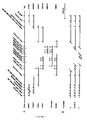
- FIG. 2 Contribution of parental alleles in patients with SMA determined by the markers C212 and C272.
- the figure shows the study of families either with the marker C272 (families 1, 2, 5 and 7b) or with the marker C212 (families 3, 4, 6 and 7a). Patients have type I (families 3, 5, 6 and 7), type II (families 1 and 2) or type III (family 4).
- the construction of the haplotypes with the markers flanking the SMA locus (11) enabled us to determine that the healthy children of families 4 and 5 had received the mutated allele from their mother.
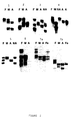
- Figure 3 Number of distinct PCR amplification products revealed by the C272 marker in patients, their parents and controls.
- Figure 5 Analysis of the restriction fragment length polymorphism (RFLP) and of the gene assay at the locus detected by phage L-132 in patients with type I SMA.
- the genetic analysis was carried out after digestion of DNA either with EcoR I (families 6 and 7) or with Xba I (families 3 and 5).
- the membranes were hybridized with the clone L-132 5a and the probe JK53 5b.
- the gene dosage was determined by densitometric examination of the hybridization signal for families 3, 6 and 7.
- family 6 the intensity of the band is reduced by 50% in the mother and the affected child, which indicates that it is an inherited deletion.
- families 7 and 3 the intensity of the band of affected children is significantly lower than that of the parents suggesting that the deletion occurred de novo.
- family 5 the analysis of the RFLP detected by the enzyme Xba I shows that the affected child has not received an allele from its mother.
Landscapes
- Chemical & Material Sciences (AREA)
- Life Sciences & Earth Sciences (AREA)
- Organic Chemistry (AREA)
- Health & Medical Sciences (AREA)
- Proteomics, Peptides & Aminoacids (AREA)
- Zoology (AREA)
- Wood Science & Technology (AREA)
- Engineering & Computer Science (AREA)
- Analytical Chemistry (AREA)
- Genetics & Genomics (AREA)
- Biophysics (AREA)
- Biochemistry (AREA)
- Molecular Biology (AREA)
- General Health & Medical Sciences (AREA)
- Microbiology (AREA)
- Bioinformatics & Cheminformatics (AREA)
- General Engineering & Computer Science (AREA)
- Biotechnology (AREA)
- Immunology (AREA)
- Physics & Mathematics (AREA)
- Toxicology (AREA)
- Medicinal Chemistry (AREA)
- Gastroenterology & Hepatology (AREA)
- Pathology (AREA)
- Chemical Kinetics & Catalysis (AREA)
- Measuring Or Testing Involving Enzymes Or Micro-Organisms (AREA)
- Cable Transmission Systems, Equalization Of Radio And Reduction Of Echo (AREA)
- Measurement Of The Respiration, Hearing Ability, Form, And Blood Characteristics Of Living Organisms (AREA)
- Saccharide Compounds (AREA)
Claims (20)
- DNA-Strang, dadurch gekennzeichnet, daß dessen eigene Nukleotidsequenz:in der Nukleinsequenz von einem der Stränge eines polymorphen Markers des menschlichen Chromosomenbereichs 5q13, der einen SMA-Locus umfaßt und repetitive Sequenzen, insbesondere Dinukleotidsequenzen, in variabler Anzahl enthält, enthalten ist,selbst eine charakteristische Sequenz enthält, die in diesem polymorphen Marker vorliegt, jedoch außerhalb von dessen Bereich, der die genannten repetitiven Sequenzen enthält, wobei diese charakteristische Sequenz eine ausreichende Größe, insbesondere von mindestens 12 und vorzugsweise mindestens 20 Nukleotiden aufweist, damit ein Fragment dieser Sequenz als Primer für den PCR-Nachweis entsprechender Marker in einer DNA-Präparation menschlichen Ursprungs eingesetzt werden kann.
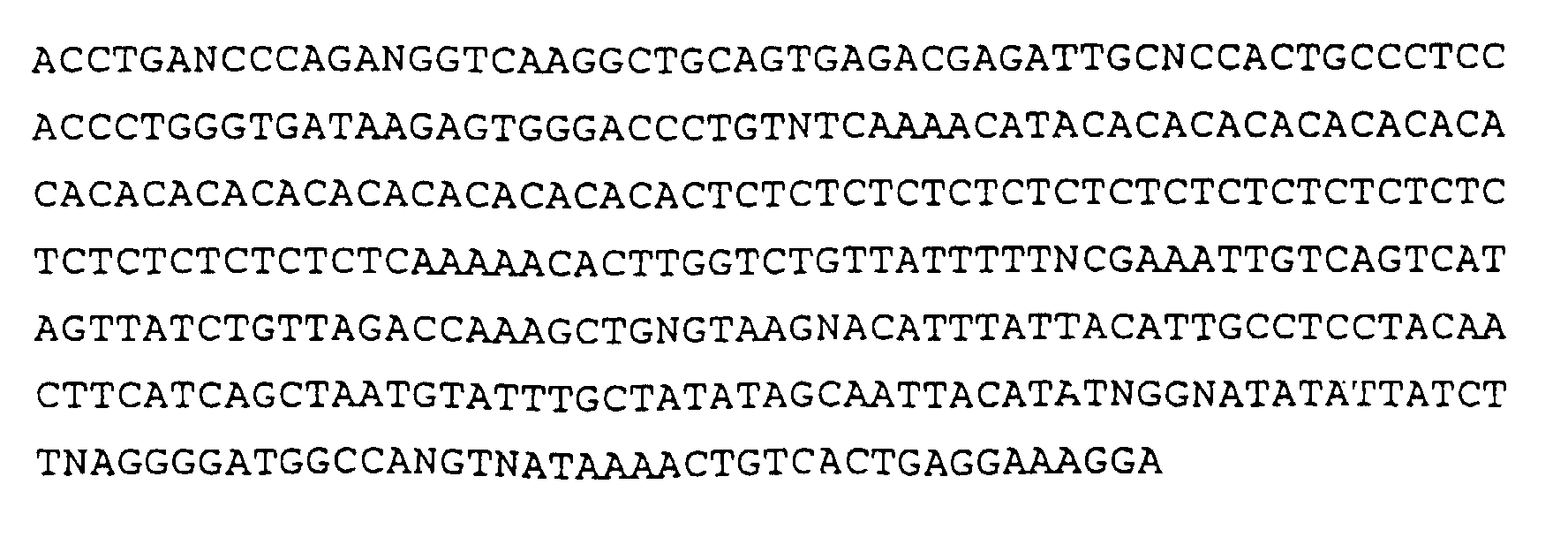
- DNA-Strang nach Anspruch 1, dadurch gekennzeichnet, daß mindestens ein Teil von dessen eigener Sequenz oder der Sequenz, die dazu komplementär ist, in einem Bereich außerhalb des Bereichs, der die Dinukleotid-Wiederholungen oder -Repeats dieses letzteren enthält, innerhalb der folgenden Sequenz C212 (SEQ ID NO. 1) enthalten ist:
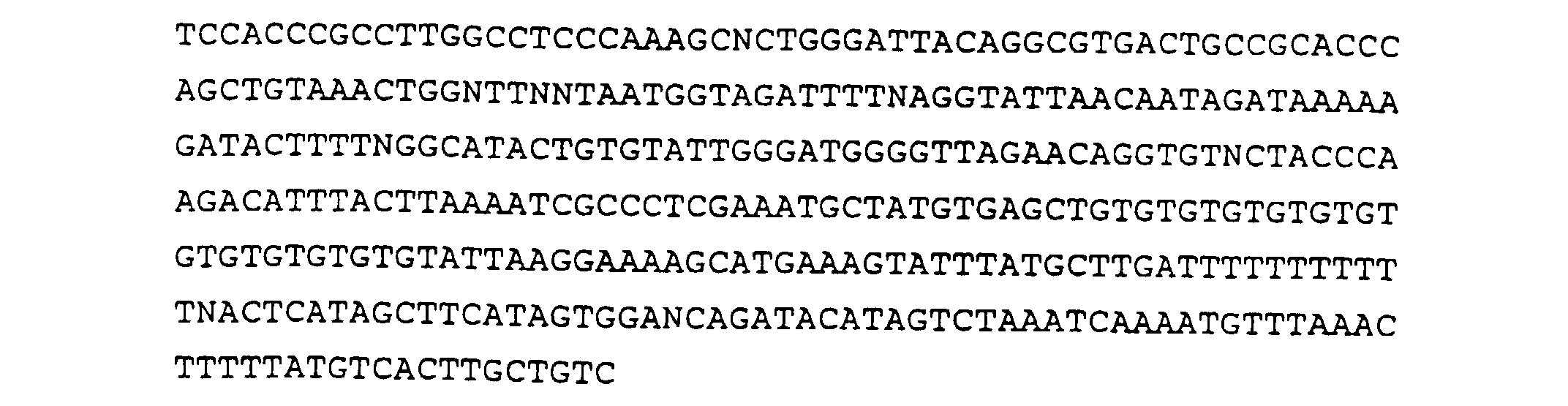
- DNA-Strang nach Anspruch 1, dadurch gekennzeichnet, daß mindestens ein Teil von dessen eigener Sequenz oder der Sequenz, die dazu komplementär ist, in einem Bereich außerhalb des Bereichs, der die Dinukleotid-Wiederholungen oder -Repeats dieses letzteren enthält, innerhalb der folgenden Sequenz C272 (SEQ ID NO. 2) enthalten ist:

- DNA-Strang nach Anspruch 1, dadurch gekennzeichnet, daß mindestens ein Teil von dessen eigener Sequenz oder der Sequenz, die dazu komplementär ist, in einem Bereich außerhalb des Bereichs, der die Dinukleotid-Wiederholungen oder -Repeats dieses letzteren enthält, innerhalb der folgenden Sequenz AFM157xd10 (SEQ ID NO. 3) enthalten ist:

- DNA-Strang nach Anspruch 1, dadurch gekennzeichnet, daß mindestens ein Teil von dessen eigener Sequenz oder der Sequenz, die dazu komplementär ist, in einem Bereich außerhalb des Bereichs, der die Dinukleotid-Wiederholungen oder -Repeats dieses letzteren enthält, innerhalb der folgenden Sequenz C161 (SEQ ID NO. 4) enthalten ist:

- DNA-Strang nach Anspruch 1, dadurch gekennzeichnet, daß mindestens ein Teil von dessen eigener Sequenz oder der Sequenz, die dazu komplementär ist, in einem Bereich außerhalb des Bereichs, der die Dinukleotid-Wiederholungen oder -Repeats dieses letzteren enthält, innerhalb der folgenden Sequenz C171 (SEQ ID NO. 5) enthalten ist:
- Paar von Primern, insbesondere für die PCR, dadurch gekennzeichnet, daß deren eigene Sequenzen in den folgenden zwei Sequenzen enthalten sind:
 oder umgekehrt.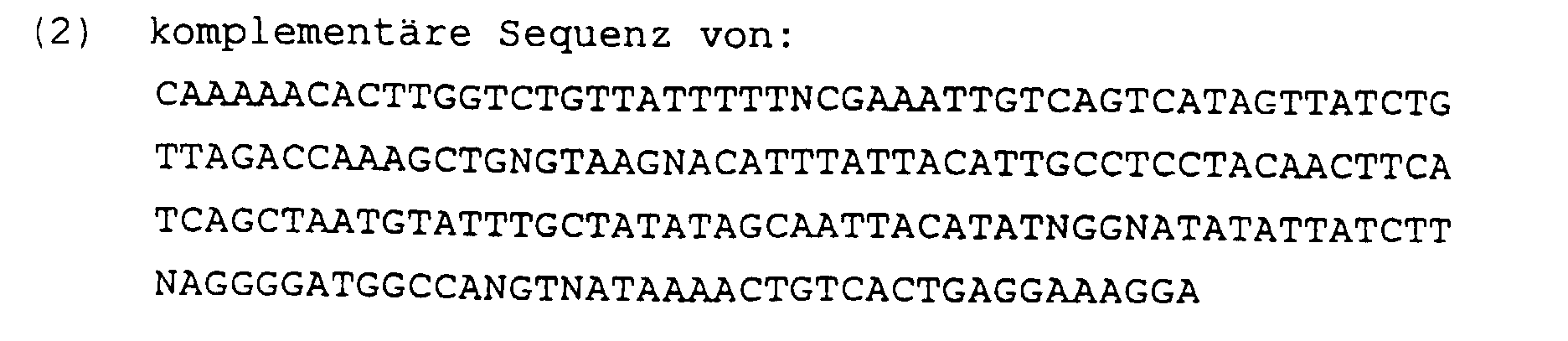
- Paar von Primern gemäß Anspruch 7, dadurch gekennzeichnet, daß die zwei Primer jeweils die folgenden Nukleotidsequenzen aufweisen:

- Paar von Primern, insbesondere für die PCR, dadurch gekennzeichnet, daß deren eigene Sequenzen in den folgenden zwei Sequenzen enthalten sind:
 oder umgekehrt.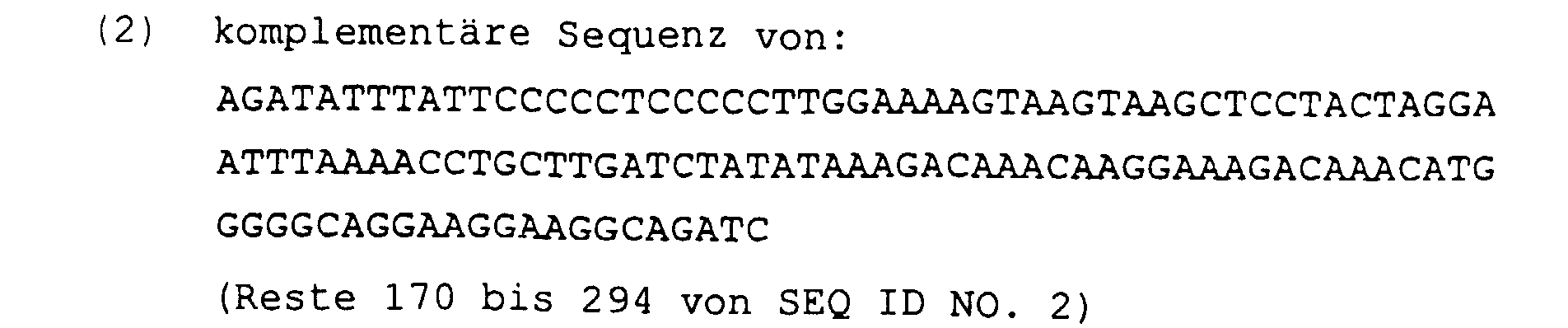
- Paar von Primern gemäß Anspruch 9, dadurch gekennzeichnet, daß die zwei Primer jeweils die folgenden Nukleotidsequenzen aufweisen:

- Paar von Primern, insbesondere für die PCR, dadurch gekennzeichnet, daß deren eigene Sequenzen in den folgenden zwei Sequenzen enthalten sind:
 oder umgekehrt.
- Paar von Primern gemäß Anspruch 11, dadurch gekennzeichnet, daß die zwei Primer jeweils die folgenden Nukleotidsequenzen aufweisen:

- Paar von Primern, insbesondere für die PCR:
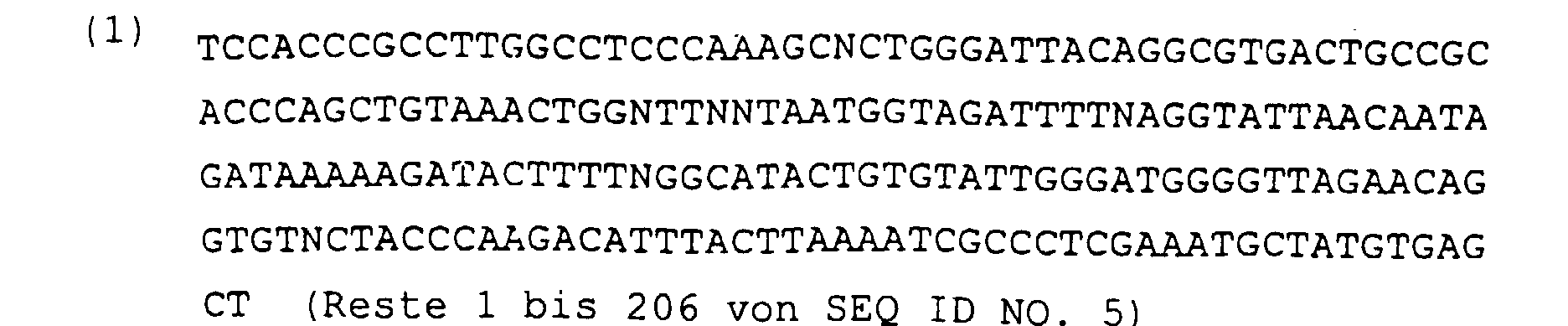 oder umgekehrt.
- Paar von Primern gemäß Anspruch 13, dadurch gekennzeichnet, daß die zwei Primer jeweils die folgenden Nukleotidsequenzen aufweisen:

- Paar von Primern, insbesondere für die PCR, dadurch gekennzeichnet, daß deren eigene Sequenzen in den folgenden zwei Sequenzen enthalten sind:
AFM268xd20
- Fragment von DNAs, dadurch gekennzeichnet, daß deren Sequenzen ausgewählt sind aus den vollständigen Sequenzen, die in einem der Ansprüche 2 bis 6 definiert sind, oder den Sequenzen, die zu diesen jeweils komplementär sind.
- Fragment, das das DNA-Fragment von Anspruch 16 oder einen Teil dieses Fragments mit einem nicht-menschlichen Fragment rekombiniert.
- Verwendung eines Fragments nach Anspruch 17 als Hybridisierungssonde für den direkten Nachweis des diesem Fragment entsprechenden Markers oder des Bereichs, der diesen enthält.
- Verfahren zur Untersuchung des menschlichen Chromosomenbereichs 5q13, welcher mindestens eines der Gene enthält, die entweder durch ihre Anwesenheit oder durch ihre Abwesenheit in Zusammenhang mit SMA stehen, und von einem Individuum (Patient oder Foetus) stammt, das daran erkrankt ist oder eine Anfälligkeit aufweist, daran zu erkranken, wobei dieses Verfahren umfaßt, eine Probe von chromosomaler DNA dieses Individuums oder Foetus in Kontakt zu bringen mit mindestens einem der DNA-Stränge nach einem der Ansprüche 1 bis 17, insbesondere unter Amplifikationsbedingungen, welche die Verlängerung dieser Ketten von da ab, wo dieser mit entsprechenden Markern dieser chromosomalen DNA hybridisiert, in Richtung der wiederholten Sequenzen dieser Marker und darüber hinaus begünstigen, dann sich Bedingungen auszusetzen, die es ermöglichen, zwischen den erhaltenen Ketten aus der Verlängerung entsprechend ihrer jeweiligen Längen zu unterscheiden, um für die Anzahl dieser Marker repräsentative Informationen zu erhalten.
- Verfahren nach Anspruch 19, dadurch gekennzeichnet, daß es umfaßt, die chromosomale Probe mit einem Paar von Primern entsprechend einem der Ansprüche 7 bis 15 in Kontakt zu bringen, und daß die Unterscheidung zwischen den Ketten aus der Verlängerung insbesondere durch elektrophoretische Wanderungen in einem Gel erzielt wird.
Applications Claiming Priority (3)
| Application Number | Priority Date | Filing Date | Title |
|---|---|---|---|
| FR9406856A FR2720757B1 (fr) | 1994-06-03 | 1994-06-03 | Procédé et sondes pour la détection de marqueurs liés au locus des amyotrophies spinales infantiles. |
| FR9406856 | 1994-06-03 | ||
| PCT/FR1995/000722 WO1995033852A1 (fr) | 1994-06-03 | 1995-06-02 | Procede et sondes pour la detection de marqueurs lies au locus des amyotrophies spinales infantiles |
Publications (2)
| Publication Number | Publication Date |
|---|---|
| EP0763136A1 EP0763136A1 (de) | 1997-03-19 |
| EP0763136B1 true EP0763136B1 (de) | 1998-12-16 |
Family
ID=9463885
Family Applications (1)
| Application Number | Title | Priority Date | Filing Date |
|---|---|---|---|
| EP95921878A Expired - Lifetime EP0763136B1 (de) | 1994-06-03 | 1995-06-02 | Verfahren und proben zum nachweis von mit dem locus der infantilen spinalamyotrophien verbundenen markern |
Country Status (9)
| Country | Link |
|---|---|
| US (1) | US6040142A (de) |
| EP (1) | EP0763136B1 (de) |
| JP (1) | JPH10500860A (de) |
| AT (1) | ATE174634T1 (de) |
| AU (1) | AU693562B2 (de) |
| CA (1) | CA2191880A1 (de) |
| DE (1) | DE69506704T2 (de) |
| FR (1) | FR2720757B1 (de) |
| WO (1) | WO1995033852A1 (de) |
Families Citing this family (10)
| Publication number | Priority date | Publication date | Assignee | Title |
|---|---|---|---|---|
| EP0711833B1 (de) * | 1994-10-19 | 2005-08-03 | Institut National De La Sante Et De La Recherche Medicale (Inserm) | Motorneuronlebenserhaltungsgen: ein Gen für spinale Muskelatrophie |
| US9920317B2 (en) | 2010-11-12 | 2018-03-20 | The General Hospital Corporation | Polycomb-associated non-coding RNAs |
| AU2011325956B2 (en) | 2010-11-12 | 2016-07-14 | The General Hospital Corporation | Polycomb-associated non-coding RNAs |
| US10837014B2 (en) | 2012-05-16 | 2020-11-17 | Translate Bio Ma, Inc. | Compositions and methods for modulating SMN gene family expression |
| KR20150030205A (ko) | 2012-05-16 | 2015-03-19 | 라나 테라퓨틱스, 인크. | Smn 유전자 패밀리 발현을 조절하기 위한 조성물 및 방법 |
| AU2013262709A1 (en) | 2012-05-16 | 2015-01-22 | Rana Therapeutics, Inc. | Compositions and methods for modulating MECP2 expression |
| EP3033422A4 (de) | 2013-08-16 | 2017-08-02 | Rana Therapeutics Inc. | Oligonukleotide zum targeting von euchromatinregionen von genen |
| JP2016534035A (ja) | 2013-10-04 | 2016-11-04 | ラナ セラピューティクス インコーポレイテッド | 筋萎縮性側索硬化症を治療するための組成物及び方法 |
| US10858650B2 (en) | 2014-10-30 | 2020-12-08 | The General Hospital Corporation | Methods for modulating ATRX-dependent gene repression |
| WO2016149455A2 (en) | 2015-03-17 | 2016-09-22 | The General Hospital Corporation | The rna interactome of polycomb repressive complex 1 (prc1) |
Family Cites Families (1)
| Publication number | Priority date | Publication date | Assignee | Title |
|---|---|---|---|---|
| WO1992000386A1 (en) * | 1990-06-27 | 1992-01-09 | The Trustees Of Columbia University In The City Of New York | Methods for detecting spinal muscular atrophy type i and types ii/iii and marker therefor |
-
1994
- 1994-06-03 FR FR9406856A patent/FR2720757B1/fr not_active Expired - Fee Related
-
1995
- 1995-06-02 EP EP95921878A patent/EP0763136B1/de not_active Expired - Lifetime
- 1995-06-02 CA CA002191880A patent/CA2191880A1/fr not_active Abandoned
- 1995-06-02 WO PCT/FR1995/000722 patent/WO1995033852A1/fr not_active Ceased
- 1995-06-02 US US08/750,064 patent/US6040142A/en not_active Expired - Fee Related
- 1995-06-02 AT AT95921878T patent/ATE174634T1/de not_active IP Right Cessation
- 1995-06-02 DE DE69506704T patent/DE69506704T2/de not_active Expired - Fee Related
- 1995-06-02 JP JP8500453A patent/JPH10500860A/ja active Pending
- 1995-06-02 AU AU26766/95A patent/AU693562B2/en not_active Ceased
Also Published As
| Publication number | Publication date |
|---|---|
| AU2676695A (en) | 1996-01-04 |
| DE69506704T2 (de) | 1999-07-22 |
| FR2720757B1 (fr) | 1996-08-02 |
| AU693562B2 (en) | 1998-07-02 |
| CA2191880A1 (fr) | 1995-12-14 |
| FR2720757A1 (fr) | 1995-12-08 |
| JPH10500860A (ja) | 1998-01-27 |
| EP0763136A1 (de) | 1997-03-19 |
| US6040142A (en) | 2000-03-21 |
| WO1995033852A1 (fr) | 1995-12-14 |
| ATE174634T1 (de) | 1999-01-15 |
| DE69506704D1 (de) | 1999-01-28 |
Similar Documents
| Publication | Publication Date | Title |
|---|---|---|
| Rabbani et al. | Next-generation sequencing: impact of exome sequencing in characterizing Mendelian disorders | |
| EP0672172B1 (de) | Bestimmung von mutationen im zusammenhang mit dem digeorge-syndrom | |
| US5714319A (en) | Method for the screening of familial hemiplegic migraine (FHM) | |
| US20040023277A1 (en) | Large scale genotyping of diseases and a diagnostic test for spinocerebellar ataxia type 6 | |
| JP3662585B2 (ja) | アルツハイマー病の診断のための共同で用いられる遺伝標識形質、並びに診断方法及びキット | |
| US20090111976A1 (en) | Identification of the gene and mutation responsible for progressive rod-cone degeneration in dog and a method for testing same | |
| EP0763136A1 (de) | Verfahren und proben zum nachweis von kinder amyotrophen wirbelsaeulemarker | |
| US6660477B2 (en) | Method for the determination of data for the preparation of the diagnosis of phakomatosis | |
| US5753438A (en) | Method to diagnose hereditary hemochromatosis | |
| CA2220293C (en) | Method to diagnose hereditary hemochromatosis | |
| KR101667189B1 (ko) | 실시간 중합효소연쇄반응을 이용한 atp7b 유전자의 돌연변이 검출 | |
| US20020025528A1 (en) | Use of genetic markers to diagnose familial dysautonomia | |
| EP0843737A1 (de) | Ko-dominanter genetischer diagnosetest | |
| Eng et al. | Prenatal diagnosis of familial dysautonomia by analysis of linked CA‐repeat polymorphisms on chromosome 9q31–q33 | |
| Morgan et al. | The high frequency of the—6G→ A factor IX promoter mutation is the result both of a founder effect and recurrent mutation at a CpG dinucleotide | |
| JP7602893B2 (ja) | イヌ白内障の検査方法、イヌ白内障の検査をするための試薬、及びイヌ白内障の検査キット | |
| Asaka et al. | Homozygosity and linkage disequilibrium mapping of autosomal recessive distal myopathy (Nonaka distal myopathy) | |
| CN113637739B (zh) | 一种SCN5A突变基因、应用以及Brugada综合征检测试剂盒 | |
| US7638308B2 (en) | Diagnosis method and kits for inherited neuropathies caused by duplication or deletion of chromosome 17p11.2-p12 region | |
| KR20140094675A (ko) | 루이소체 치매 진단용 유전자 마커 | |
| US20120237934A1 (en) | Methods of detecting mutations associated with ataxia-ocular apraxia 2 (aoa2) | |
| CA2116633A1 (en) | Method for the diagnosis of familial hemiplegic migraine (fhm) | |
| EP0983390A1 (de) | Diagnostisches verfahren zur genotypisierung familiärer hemiplegischer migräne vom typ 2 | |
| JP2002355049A (ja) | 循環器疾患の遺伝的要因を判定するための方法及びこれに使用されるオリゴヌクレオチド |
Legal Events
| Date | Code | Title | Description |
|---|---|---|---|
| PUAI | Public reference made under article 153(3) epc to a published international application that has entered the european phase |
Free format text: ORIGINAL CODE: 0009012 |
|
| 17P | Request for examination filed |
Effective date: 19961129 |
|
| AK | Designated contracting states |
Kind code of ref document: A1 Designated state(s): AT BE CH DE DK ES FR GB GR IE IT LI LU MC NL PT SE |
|
| 17Q | First examination report despatched |
Effective date: 19970429 |
|
| GRAG | Despatch of communication of intention to grant |
Free format text: ORIGINAL CODE: EPIDOS AGRA |
|
| GRAG | Despatch of communication of intention to grant |
Free format text: ORIGINAL CODE: EPIDOS AGRA |
|
| GRAH | Despatch of communication of intention to grant a patent |
Free format text: ORIGINAL CODE: EPIDOS IGRA |
|
| GRAH | Despatch of communication of intention to grant a patent |
Free format text: ORIGINAL CODE: EPIDOS IGRA |
|
| GRAA | (expected) grant |
Free format text: ORIGINAL CODE: 0009210 |
|
| AK | Designated contracting states |
Kind code of ref document: B1 Designated state(s): AT BE CH DE DK ES FR GB GR IE IT LI LU MC NL PT SE |
|
| PG25 | Lapsed in a contracting state [announced via postgrant information from national office to epo] |
Ref country code: IT Free format text: LAPSE BECAUSE OF FAILURE TO SUBMIT A TRANSLATION OF THE DESCRIPTION OR TO PAY THE FEE WITHIN THE PRE;WARNING: LAPSES OF ITALIAN PATENTS WITH EFFECTIVE DATE BEFORE 2007 MAY HAVE OCCURRED AT ANY TIME BEFORE 2007. THE CORRECT EFFECTIVE DATE MAY BE DIFFERENT FROM THE ONE RECORDED.SCRIBED TIME-LIMIT Effective date: 19981216 Ref country code: GR Free format text: LAPSE BECAUSE OF NON-PAYMENT OF DUE FEES Effective date: 19981216 Ref country code: ES Free format text: THE PATENT HAS BEEN ANNULLED BY A DECISION OF A NATIONAL AUTHORITY Effective date: 19981216 Ref country code: AT Free format text: LAPSE BECAUSE OF FAILURE TO SUBMIT A TRANSLATION OF THE DESCRIPTION OR TO PAY THE FEE WITHIN THE PRESCRIBED TIME-LIMIT Effective date: 19981216 |
|
| REF | Corresponds to: |
Ref document number: 174634 Country of ref document: AT Date of ref document: 19990115 Kind code of ref document: T |
|
| REG | Reference to a national code |
Ref country code: CH Ref legal event code: EP |
|
| REF | Corresponds to: |
Ref document number: 69506704 Country of ref document: DE Date of ref document: 19990128 |
|
| REG | Reference to a national code |
Ref country code: IE Ref legal event code: FG4D Free format text: FRENCH |
|
| PG25 | Lapsed in a contracting state [announced via postgrant information from national office to epo] |
Ref country code: SE Free format text: LAPSE BECAUSE OF FAILURE TO SUBMIT A TRANSLATION OF THE DESCRIPTION OR TO PAY THE FEE WITHIN THE PRESCRIBED TIME-LIMIT Effective date: 19990316 Ref country code: PT Free format text: LAPSE BECAUSE OF FAILURE TO SUBMIT A TRANSLATION OF THE DESCRIPTION OR TO PAY THE FEE WITHIN THE PRESCRIBED TIME-LIMIT Effective date: 19990316 Ref country code: DK Free format text: LAPSE BECAUSE OF FAILURE TO SUBMIT A TRANSLATION OF THE DESCRIPTION OR TO PAY THE FEE WITHIN THE PRESCRIBED TIME-LIMIT Effective date: 19990316 |
|
| GBT | Gb: translation of ep patent filed (gb section 77(6)(a)/1977) |
Effective date: 19990224 |
|
| PG25 | Lapsed in a contracting state [announced via postgrant information from national office to epo] |
Ref country code: LU Free format text: LAPSE BECAUSE OF NON-PAYMENT OF DUE FEES Effective date: 19990602 |
|
| PG25 | Lapsed in a contracting state [announced via postgrant information from national office to epo] |
Ref country code: LI Free format text: LAPSE BECAUSE OF NON-PAYMENT OF DUE FEES Effective date: 19990630 Ref country code: CH Free format text: LAPSE BECAUSE OF NON-PAYMENT OF DUE FEES Effective date: 19990630 Ref country code: BE Free format text: LAPSE BECAUSE OF NON-PAYMENT OF DUE FEES Effective date: 19990630 |
|
| PG25 | Lapsed in a contracting state [announced via postgrant information from national office to epo] |
Ref country code: IE Free format text: LAPSE BECAUSE OF NON-PAYMENT OF DUE FEES Effective date: 19990820 |
|
| REG | Reference to a national code |
Ref country code: IE Ref legal event code: FD4D |
|
| PLBE | No opposition filed within time limit |
Free format text: ORIGINAL CODE: 0009261 |
|
| STAA | Information on the status of an ep patent application or granted ep patent |
Free format text: STATUS: NO OPPOSITION FILED WITHIN TIME LIMIT |
|
| 26N | No opposition filed | ||
| BERE | Be: lapsed |
Owner name: INSTITUT NATIONAL DE LA SANTE ET DE LA RECHERCHE M Effective date: 19990630 |
|
| PG25 | Lapsed in a contracting state [announced via postgrant information from national office to epo] |
Ref country code: MC Free format text: LAPSE BECAUSE OF NON-PAYMENT OF DUE FEES Effective date: 19991231 |
|
| REG | Reference to a national code |
Ref country code: CH Ref legal event code: PL |
|
| REG | Reference to a national code |
Ref country code: GB Ref legal event code: IF02 |
|
| PGFP | Annual fee paid to national office [announced via postgrant information from national office to epo] |
Ref country code: NL Payment date: 20050511 Year of fee payment: 11 |
|
| PGFP | Annual fee paid to national office [announced via postgrant information from national office to epo] |
Ref country code: GB Payment date: 20050520 Year of fee payment: 11 |
|
| PGFP | Annual fee paid to national office [announced via postgrant information from national office to epo] |
Ref country code: DE Payment date: 20050608 Year of fee payment: 11 |
|
| PGFP | Annual fee paid to national office [announced via postgrant information from national office to epo] |
Ref country code: FR Payment date: 20050630 Year of fee payment: 11 |
|
| PG25 | Lapsed in a contracting state [announced via postgrant information from national office to epo] |
Ref country code: GB Free format text: LAPSE BECAUSE OF NON-PAYMENT OF DUE FEES Effective date: 20060602 |
|
| PG25 | Lapsed in a contracting state [announced via postgrant information from national office to epo] |
Ref country code: NL Free format text: LAPSE BECAUSE OF NON-PAYMENT OF DUE FEES Effective date: 20070101 |
|
| PG25 | Lapsed in a contracting state [announced via postgrant information from national office to epo] |
Ref country code: DE Free format text: LAPSE BECAUSE OF NON-PAYMENT OF DUE FEES Effective date: 20070103 |
|
| GBPC | Gb: european patent ceased through non-payment of renewal fee |
Effective date: 20060602 |
|
| NLV4 | Nl: lapsed or anulled due to non-payment of the annual fee |
Effective date: 20070101 |
|
| REG | Reference to a national code |
Ref country code: FR Ref legal event code: ST Effective date: 20070228 |
|
| PG25 | Lapsed in a contracting state [announced via postgrant information from national office to epo] |
Ref country code: FR Free format text: LAPSE BECAUSE OF NON-PAYMENT OF DUE FEES Effective date: 20060630 |