EP0760657B1 - Neue starke induktoren der terminalen differenzierung und verfahren für ihre verwendung - Google Patents
Neue starke induktoren der terminalen differenzierung und verfahren für ihre verwendung Download PDFInfo
- Publication number
- EP0760657B1 EP0760657B1 EP95921378A EP95921378A EP0760657B1 EP 0760657 B1 EP0760657 B1 EP 0760657B1 EP 95921378 A EP95921378 A EP 95921378A EP 95921378 A EP95921378 A EP 95921378A EP 0760657 B1 EP0760657 B1 EP 0760657B1
- Authority
- EP
- European Patent Office
- Prior art keywords
- pharmaceutically acceptable
- difluoro
- compound
- acceptable salt
- trifluoro
- Prior art date
- Legal status (The legal status is an assumption and is not a legal conclusion. Google has not performed a legal analysis and makes no representation as to the accuracy of the status listed.)
- Expired - Lifetime
Links
- 230000011712 cell development Effects 0.000 title claims abstract description 22
- 238000000034 method Methods 0.000 title claims abstract description 10
- 239000000411 inducer Substances 0.000 title description 7
- 230000003389 potentiating effect Effects 0.000 title 1
- 150000001875 compounds Chemical class 0.000 claims abstract description 75
- -1 pyridineamino Chemical group 0.000 claims abstract description 46
- 210000004027 cell Anatomy 0.000 claims abstract description 40
- 210000005170 neoplastic cell Anatomy 0.000 claims abstract description 21
- 239000008194 pharmaceutical composition Substances 0.000 claims abstract description 21
- 230000035755 proliferation Effects 0.000 claims abstract description 16
- 230000001939 inductive effect Effects 0.000 claims abstract description 8
- 239000003937 drug carrier Substances 0.000 claims abstract description 6
- 230000002401 inhibitory effect Effects 0.000 claims abstract description 4
- 150000003839 salts Chemical class 0.000 claims description 26
- 206010028980 Neoplasm Diseases 0.000 claims description 21
- 125000001997 phenyl group Chemical group [H]C1=C([H])C([H])=C(*)C([H])=C1[H] 0.000 claims description 21
- 239000002246 antineoplastic agent Substances 0.000 claims description 16
- JUJWROOIHBZHMG-UHFFFAOYSA-N Pyridine Chemical class C1=CC=NC=C1 JUJWROOIHBZHMG-UHFFFAOYSA-N 0.000 claims description 15
- NQRYJNQNLNOLGT-UHFFFAOYSA-N tetrahydropyridine hydrochloride Natural products C1CCNCC1 NQRYJNQNLNOLGT-UHFFFAOYSA-N 0.000 claims description 13
- 239000002253 acid Substances 0.000 claims description 12
- 239000012730 sustained-release form Substances 0.000 claims description 9
- 238000011282 treatment Methods 0.000 claims description 9
- FZWLAAWBMGSTSO-UHFFFAOYSA-N Thiazole Chemical group C1=CSC=N1 FZWLAAWBMGSTSO-UHFFFAOYSA-N 0.000 claims description 8
- NEAQRZUHTPSBBM-UHFFFAOYSA-N 2-hydroxy-3,3-dimethyl-7-nitro-4h-isoquinolin-1-one Chemical compound C1=C([N+]([O-])=O)C=C2C(=O)N(O)C(C)(C)CC2=C1 NEAQRZUHTPSBBM-UHFFFAOYSA-N 0.000 claims description 6
- 238000000338 in vitro Methods 0.000 claims description 6
- 231100000419 toxicity Toxicity 0.000 claims description 6
- 230000001988 toxicity Effects 0.000 claims description 6
- 125000003178 carboxy group Chemical group [H]OC(*)=O 0.000 claims description 5
- 125000004093 cyano group Chemical group *C#N 0.000 claims description 5
- 125000002887 hydroxy group Chemical group [H]O* 0.000 claims description 5
- 125000002496 methyl group Chemical group [H]C([H])([H])* 0.000 claims description 5
- 125000004458 methylaminocarbonyl group Chemical group [H]N(C(*)=O)C([H])([H])[H] 0.000 claims description 5
- 238000002360 preparation method Methods 0.000 claims description 5
- 125000000999 tert-butyl group Chemical group [H]C([H])([H])C(*)(C([H])([H])[H])C([H])([H])[H] 0.000 claims description 5
- 125000002023 trifluoromethyl group Chemical group FC(F)(F)* 0.000 claims description 5
- 125000003386 piperidinyl group Chemical group 0.000 claims description 3
- UMJSCPRVCHMLSP-UHFFFAOYSA-N pyridine Natural products COC1=CC=CN=C1 UMJSCPRVCHMLSP-UHFFFAOYSA-N 0.000 claims description 3
- 125000002147 dimethylamino group Chemical group [H]C([H])([H])N(*)C([H])([H])[H] 0.000 claims 1
- 125000001769 aryl amino group Chemical group 0.000 abstract 1
- 125000006310 cycloalkyl amino group Chemical group 0.000 abstract 1
- 125000000587 piperidin-1-yl group Chemical group [H]C1([H])N(*)C([H])([H])C([H])([H])C([H])([H])C1([H])[H] 0.000 abstract 1
- 239000003795 chemical substances by application Substances 0.000 description 14
- 230000004069 differentiation Effects 0.000 description 11
- 239000000243 solution Substances 0.000 description 10
- OKKJLVBELUTLKV-UHFFFAOYSA-N Methanol Chemical compound OC OKKJLVBELUTLKV-UHFFFAOYSA-N 0.000 description 9
- ZMANZCXQSJIPKH-UHFFFAOYSA-N Triethylamine Chemical compound CCN(CC)CC ZMANZCXQSJIPKH-UHFFFAOYSA-N 0.000 description 9
- 201000011510 cancer Diseases 0.000 description 9
- OGWKCGZFUXNPDA-XQKSVPLYSA-N vincristine Chemical compound C([N@]1C[C@@H](C[C@]2(C(=O)OC)C=3C(=CC4=C([C@]56[C@H]([C@@]([C@H](OC(C)=O)[C@]7(CC)C=CCN([C@H]67)CC5)(O)C(=O)OC)N4C=O)C=3)OC)C[C@@](C1)(O)CC)CC1=C2NC2=CC=CC=C12 OGWKCGZFUXNPDA-XQKSVPLYSA-N 0.000 description 9
- OGWKCGZFUXNPDA-UHFFFAOYSA-N vincristine Natural products C1C(CC)(O)CC(CC2(C(=O)OC)C=3C(=CC4=C(C56C(C(C(OC(C)=O)C7(CC)C=CCN(C67)CC5)(O)C(=O)OC)N4C=O)C=3)OC)CN1CCC1=C2NC2=CC=CC=C12 OGWKCGZFUXNPDA-UHFFFAOYSA-N 0.000 description 9
- IAKHMKGGTNLKSZ-INIZCTEOSA-N (S)-colchicine Chemical compound C1([C@@H](NC(C)=O)CC2)=CC(=O)C(OC)=CC=C1C1=C2C=C(OC)C(OC)=C1OC IAKHMKGGTNLKSZ-INIZCTEOSA-N 0.000 description 8
- 229960004528 vincristine Drugs 0.000 description 8
- XEKOWRVHYACXOJ-UHFFFAOYSA-N Ethyl acetate Chemical compound CCOC(C)=O XEKOWRVHYACXOJ-UHFFFAOYSA-N 0.000 description 6
- WTDHULULXKLSOZ-UHFFFAOYSA-N Hydroxylamine hydrochloride Chemical compound Cl.ON WTDHULULXKLSOZ-UHFFFAOYSA-N 0.000 description 6
- HEMHJVSKTPXQMS-UHFFFAOYSA-M Sodium hydroxide Chemical compound [OH-].[Na+] HEMHJVSKTPXQMS-UHFFFAOYSA-M 0.000 description 6
- 239000000203 mixture Substances 0.000 description 5
- RTZKZFJDLAIYFH-UHFFFAOYSA-N Diethyl ether Chemical compound CCOCC RTZKZFJDLAIYFH-UHFFFAOYSA-N 0.000 description 4
- 229940122803 Vinca alkaloid Drugs 0.000 description 4
- 229960001338 colchicine Drugs 0.000 description 4
- 239000003814 drug Substances 0.000 description 4
- 238000009472 formulation Methods 0.000 description 4
- 238000003756 stirring Methods 0.000 description 4
- 238000013268 sustained release Methods 0.000 description 4
- XLYOFNOQVPJJNP-UHFFFAOYSA-N water Substances O XLYOFNOQVPJJNP-UHFFFAOYSA-N 0.000 description 4
- QTBSBXVTEAMEQO-UHFFFAOYSA-N Acetic acid Chemical compound CC(O)=O QTBSBXVTEAMEQO-UHFFFAOYSA-N 0.000 description 3
- 229940079593 drug Drugs 0.000 description 3
- 238000010348 incorporation Methods 0.000 description 3
- 230000006698 induction Effects 0.000 description 3
- 238000001819 mass spectrum Methods 0.000 description 3
- 238000000655 nuclear magnetic resonance spectrum Methods 0.000 description 3
- 239000000047 product Substances 0.000 description 3
- 239000007787 solid Substances 0.000 description 3
- 102100025573 1-alkyl-2-acetylglycerophosphocholine esterase Human genes 0.000 description 2
- VSNHCAURESNICA-NJFSPNSNSA-N 1-oxidanylurea Chemical compound N[14C](=O)NO VSNHCAURESNICA-NJFSPNSNSA-N 0.000 description 2
- NMIZONYLXCOHEF-UHFFFAOYSA-N 1h-imidazole-2-carboxamide Chemical compound NC(=O)C1=NC=CN1 NMIZONYLXCOHEF-UHFFFAOYSA-N 0.000 description 2
- SLXKOJJOQWFEFD-UHFFFAOYSA-N 6-aminohexanoic acid Chemical compound NCCCCCC(O)=O SLXKOJJOQWFEFD-UHFFFAOYSA-N 0.000 description 2
- XDOLZJYETYVRKV-UHFFFAOYSA-N 7-Aminoheptanoic acid Chemical compound NCCCCCCC(O)=O XDOLZJYETYVRKV-UHFFFAOYSA-N 0.000 description 2
- 108010024976 Asparaginase Proteins 0.000 description 2
- 108091003079 Bovine Serum Albumin Proteins 0.000 description 2
- 0 C(C1)C2C1C*CC2 Chemical compound C(C1)C2C1C*CC2 0.000 description 2
- JWBOIMRXGHLCPP-UHFFFAOYSA-N Chloditan Chemical compound C=1C=CC=C(Cl)C=1C(C(Cl)Cl)C1=CC=C(Cl)C=C1 JWBOIMRXGHLCPP-UHFFFAOYSA-N 0.000 description 2
- IAZDPXIOMUYVGZ-UHFFFAOYSA-N Dimethylsulphoxide Chemical compound CS(C)=O IAZDPXIOMUYVGZ-UHFFFAOYSA-N 0.000 description 2
- 208000031637 Erythroblastic Acute Leukemia Diseases 0.000 description 2
- 208000036566 Erythroleukaemia Diseases 0.000 description 2
- LFQSCWFLJHTTHZ-UHFFFAOYSA-N Ethanol Chemical compound CCO LFQSCWFLJHTTHZ-UHFFFAOYSA-N 0.000 description 2
- 241001529936 Murinae Species 0.000 description 2
- 238000005481 NMR spectroscopy Methods 0.000 description 2
- 102000004243 Tubulin Human genes 0.000 description 2
- 108090000704 Tubulin Proteins 0.000 description 2
- JXLYSJRDGCGARV-WWYNWVTFSA-N Vinblastine Natural products O=C(O[C@H]1[C@](O)(C(=O)OC)[C@@H]2N(C)c3c(cc(c(OC)c3)[C@]3(C(=O)OC)c4[nH]c5c(c4CCN4C[C@](O)(CC)C[C@H](C3)C4)cccc5)[C@@]32[C@H]2[C@@]1(CC)C=CCN2CC3)C JXLYSJRDGCGARV-WWYNWVTFSA-N 0.000 description 2
- 208000021841 acute erythroid leukemia Diseases 0.000 description 2
- 229940100198 alkylating agent Drugs 0.000 description 2
- 239000002168 alkylating agent Substances 0.000 description 2
- SHGAZHPCJJPHSC-YCNIQYBTSA-N all-trans-retinoic acid Chemical compound OC(=O)\C=C(/C)\C=C\C=C(/C)\C=C\C1=C(C)CCCC1(C)C SHGAZHPCJJPHSC-YCNIQYBTSA-N 0.000 description 2
- 150000001408 amides Chemical class 0.000 description 2
- 229960002684 aminocaproic acid Drugs 0.000 description 2
- 239000003242 anti bacterial agent Substances 0.000 description 2
- 230000000340 anti-metabolite Effects 0.000 description 2
- 229940100197 antimetabolite Drugs 0.000 description 2
- 239000002256 antimetabolite Substances 0.000 description 2
- 229940045719 antineoplastic alkylating agent nitrosoureas Drugs 0.000 description 2
- HFACYLZERDEVSX-UHFFFAOYSA-N benzidine Chemical compound C1=CC(N)=CC=C1C1=CC=C(N)C=C1 HFACYLZERDEVSX-UHFFFAOYSA-N 0.000 description 2
- 230000003115 biocidal effect Effects 0.000 description 2
- PFKFTWBEEFSNDU-UHFFFAOYSA-N carbonyldiimidazole Chemical compound C1=CN=CN1C(=O)N1C=CN=C1 PFKFTWBEEFSNDU-UHFFFAOYSA-N 0.000 description 2
- 238000004113 cell culture Methods 0.000 description 2
- 230000002492 cytodifferentiating effect Effects 0.000 description 2
- 230000001419 dependent effect Effects 0.000 description 2
- 230000000694 effects Effects 0.000 description 2
- 230000000925 erythroid effect Effects 0.000 description 2
- 239000012894 fetal calf serum Substances 0.000 description 2
- 238000001914 filtration Methods 0.000 description 2
- 229940125697 hormonal agent Drugs 0.000 description 2
- 125000001165 hydrophobic group Chemical group 0.000 description 2
- 230000001404 mediated effect Effects 0.000 description 2
- 230000028161 membrane depolarization Effects 0.000 description 2
- 229960000350 mitotane Drugs 0.000 description 2
- 239000012044 organic layer Substances 0.000 description 2
- 238000009520 phase I clinical trial Methods 0.000 description 2
- 239000002244 precipitate Substances 0.000 description 2
- 125000002924 primary amino group Chemical group [H]N([H])* 0.000 description 2
- CPTBDICYNRMXFX-UHFFFAOYSA-N procarbazine Chemical compound CNNCC1=CC=C(C(=O)NC(C)C)C=C1 CPTBDICYNRMXFX-UHFFFAOYSA-N 0.000 description 2
- 229960000624 procarbazine Drugs 0.000 description 2
- 230000002035 prolonged effect Effects 0.000 description 2
- 229930002330 retinoic acid Natural products 0.000 description 2
- 239000000126 substance Substances 0.000 description 2
- 229960001727 tretinoin Drugs 0.000 description 2
- 210000004881 tumor cell Anatomy 0.000 description 2
- AVWRKZWQTYIKIY-UHFFFAOYSA-N ureidocarboxylic acid Natural products NC(=O)NC(O)=O AVWRKZWQTYIKIY-UHFFFAOYSA-N 0.000 description 2
- 229960003048 vinblastine Drugs 0.000 description 2
- JXLYSJRDGCGARV-XQKSVPLYSA-N vincaleukoblastine Chemical compound C([C@@H](C[C@]1(C(=O)OC)C=2C(=CC3=C([C@]45[C@H]([C@@]([C@H](OC(C)=O)[C@]6(CC)C=CCN([C@H]56)CC4)(O)C(=O)OC)N3C)C=2)OC)C[C@@](C2)(O)CC)N2CCC2=C1NC1=CC=CC=C21 JXLYSJRDGCGARV-XQKSVPLYSA-N 0.000 description 2
- HHIRBXHEYVDUAM-UHFFFAOYSA-N 1-chloro-3-isocyanatobenzene Chemical compound ClC1=CC=CC(N=C=O)=C1 HHIRBXHEYVDUAM-UHFFFAOYSA-N 0.000 description 1
- 125000004105 2-pyridyl group Chemical group N1=C([*])C([H])=C([H])C([H])=C1[H] 0.000 description 1
- 125000004179 3-chlorophenyl group Chemical group [H]C1=C([H])C(*)=C([H])C(Cl)=C1[H] 0.000 description 1
- 125000003349 3-pyridyl group Chemical group N1=C([H])C([*])=C([H])C([H])=C1[H] 0.000 description 1
- NUKYPUAOHBNCPY-UHFFFAOYSA-N 4-aminopyridine Chemical compound NC1=CC=NC=C1 NUKYPUAOHBNCPY-UHFFFAOYSA-N 0.000 description 1
- 125000000339 4-pyridyl group Chemical group N1=C([H])C([H])=C([*])C([H])=C1[H] 0.000 description 1
- QZAHTTVBLTUQLJ-UHFFFAOYSA-N 6-[(3-chlorophenyl)carbamoylamino]-n-hydroxyhexanamide Chemical compound ONC(=O)CCCCCNC(=O)NC1=CC=CC(Cl)=C1 QZAHTTVBLTUQLJ-UHFFFAOYSA-N 0.000 description 1
- NAHZFKSAEXCXOW-UHFFFAOYSA-N 7-anilinoheptanoic acid Chemical compound OC(=O)CCCCCCNC1=CC=CC=C1 NAHZFKSAEXCXOW-UHFFFAOYSA-N 0.000 description 1
- 206010000830 Acute leukaemia Diseases 0.000 description 1
- 206010006187 Breast cancer Diseases 0.000 description 1
- 208000026310 Breast neoplasm Diseases 0.000 description 1
- 206010009944 Colon cancer Diseases 0.000 description 1
- 208000001333 Colorectal Neoplasms Diseases 0.000 description 1
- IVOMOUWHDPKRLL-KQYNXXCUSA-N Cyclic adenosine monophosphate Chemical compound C([C@H]1O2)OP(O)(=O)O[C@H]1[C@@H](O)[C@@H]2N1C(N=CN=C2N)=C2N=C1 IVOMOUWHDPKRLL-KQYNXXCUSA-N 0.000 description 1
- 230000006820 DNA synthesis Effects 0.000 description 1
- 102000001554 Hemoglobins Human genes 0.000 description 1
- 108010054147 Hemoglobins Proteins 0.000 description 1
- 206010058467 Lung neoplasm malignant Diseases 0.000 description 1
- 241000124008 Mammalia Species 0.000 description 1
- 201000003793 Myelodysplastic syndrome Diseases 0.000 description 1
- BNQSTAOJRULKNX-UHFFFAOYSA-N N-(6-acetamidohexyl)acetamide Chemical compound CC(=O)NCCCCCCNC(C)=O BNQSTAOJRULKNX-UHFFFAOYSA-N 0.000 description 1
- 102000035195 Peptidases Human genes 0.000 description 1
- 108091005804 Peptidases Proteins 0.000 description 1
- 206010035226 Plasma cell myeloma Diseases 0.000 description 1
- 239000004365 Protease Substances 0.000 description 1
- 102000003923 Protein Kinase C Human genes 0.000 description 1
- 108090000315 Protein Kinase C Proteins 0.000 description 1
- 230000006819 RNA synthesis Effects 0.000 description 1
- 206010038389 Renal cancer Diseases 0.000 description 1
- 208000006265 Renal cell carcinoma Diseases 0.000 description 1
- IVOMOUWHDPKRLL-UHFFFAOYSA-N UNPD107823 Natural products O1C2COP(O)(=O)OC2C(O)C1N1C(N=CN=C2N)=C2N=C1 IVOMOUWHDPKRLL-UHFFFAOYSA-N 0.000 description 1
- 229930003316 Vitamin D Natural products 0.000 description 1
- QYSXJUFSXHHAJI-XFEUOLMDSA-N Vitamin D3 Natural products C1(/[C@@H]2CC[C@@H]([C@]2(CCC1)C)[C@H](C)CCCC(C)C)=C/C=C1\C[C@@H](O)CCC1=C QYSXJUFSXHHAJI-XFEUOLMDSA-N 0.000 description 1
- 238000009825 accumulation Methods 0.000 description 1
- USZYSDMBJDPRIF-SVEJIMAYSA-N aclacinomycin A Chemical compound O([C@H]1[C@@H](O)C[C@@H](O[C@H]1C)O[C@H]1[C@H](C[C@@H](O[C@H]1C)O[C@H]1C[C@]([C@@H](C2=CC=3C(=O)C4=CC=CC(O)=C4C(=O)C=3C(O)=C21)C(=O)OC)(O)CC)N(C)C)[C@H]1CCC(=O)[C@H](C)O1 USZYSDMBJDPRIF-SVEJIMAYSA-N 0.000 description 1
- 229960004176 aclarubicin Drugs 0.000 description 1
- 230000009471 action Effects 0.000 description 1
- 230000001154 acute effect Effects 0.000 description 1
- 150000001412 amines Chemical class 0.000 description 1
- 230000003698 anagen phase Effects 0.000 description 1
- 229940045799 anthracyclines and related substance Drugs 0.000 description 1
- 238000003556 assay Methods 0.000 description 1
- PASDCCFISLVPSO-UHFFFAOYSA-N benzoyl chloride Chemical compound ClC(=O)C1=CC=CC=C1 PASDCCFISLVPSO-UHFFFAOYSA-N 0.000 description 1
- 125000003236 benzoyl group Chemical group [H]C1=C([H])C([H])=C(C([H])=C1[H])C(*)=O 0.000 description 1
- 230000000903 blocking effect Effects 0.000 description 1
- 230000036765 blood level Effects 0.000 description 1
- 201000008275 breast carcinoma Diseases 0.000 description 1
- 239000012267 brine Substances 0.000 description 1
- 150000001732 carboxylic acid derivatives Chemical class 0.000 description 1
- 231100000504 carcinogenesis Toxicity 0.000 description 1
- 230000032823 cell division Effects 0.000 description 1
- 230000004663 cell proliferation Effects 0.000 description 1
- 230000006041 cell recruitment Effects 0.000 description 1
- 230000000973 chemotherapeutic effect Effects 0.000 description 1
- 239000012829 chemotherapy agent Substances 0.000 description 1
- 238000010367 cloning Methods 0.000 description 1
- 201000010989 colorectal carcinoma Diseases 0.000 description 1
- 238000001816 cooling Methods 0.000 description 1
- 239000012043 crude product Substances 0.000 description 1
- 239000013078 crystal Substances 0.000 description 1
- 210000004748 cultured cell Anatomy 0.000 description 1
- 229940095074 cyclic amp Drugs 0.000 description 1
- 231100000433 cytotoxic Toxicity 0.000 description 1
- 230000001472 cytotoxic effect Effects 0.000 description 1
- 238000000921 elemental analysis Methods 0.000 description 1
- 238000001704 evaporation Methods 0.000 description 1
- 230000008020 evaporation Effects 0.000 description 1
- 238000002474 experimental method Methods 0.000 description 1
- 229960004979 fampridine Drugs 0.000 description 1
- 239000003163 gonadal steroid hormone Substances 0.000 description 1
- 239000003102 growth factor Substances 0.000 description 1
- 239000001963 growth medium Substances 0.000 description 1
- 230000036541 health Effects 0.000 description 1
- 239000005556 hormone Substances 0.000 description 1
- 229940088597 hormone Drugs 0.000 description 1
- 239000000017 hydrogel Substances 0.000 description 1
- 230000002209 hydrophobic effect Effects 0.000 description 1
- 238000002513 implantation Methods 0.000 description 1
- 238000001802 infusion Methods 0.000 description 1
- 239000003112 inhibitor Substances 0.000 description 1
- 238000001990 intravenous administration Methods 0.000 description 1
- 239000003456 ion exchange resin Substances 0.000 description 1
- 229920003303 ion-exchange polymer Polymers 0.000 description 1
- 239000010410 layer Substances 0.000 description 1
- 201000005202 lung cancer Diseases 0.000 description 1
- 208000020816 lung neoplasm Diseases 0.000 description 1
- 238000004519 manufacturing process Methods 0.000 description 1
- 238000004949 mass spectrometry Methods 0.000 description 1
- 239000000463 material Substances 0.000 description 1
- 230000007246 mechanism Effects 0.000 description 1
- 239000002609 medium Substances 0.000 description 1
- 201000001441 melanoma Diseases 0.000 description 1
- 229920000609 methyl cellulose Polymers 0.000 description 1
- 150000004702 methyl esters Chemical class 0.000 description 1
- 239000001923 methylcellulose Substances 0.000 description 1
- 125000001570 methylene group Chemical group [H]C([H])([*:1])[*:2] 0.000 description 1
- 239000004005 microsphere Substances 0.000 description 1
- 201000000050 myeloid neoplasm Diseases 0.000 description 1
- 230000001613 neoplastic effect Effects 0.000 description 1
- 230000010309 neoplastic transformation Effects 0.000 description 1
- PUIBKAHUQOOLSW-UHFFFAOYSA-N octanedioyl dichloride Chemical compound ClC(=O)CCCCCCC(Cl)=O PUIBKAHUQOOLSW-UHFFFAOYSA-N 0.000 description 1
- 238000011275 oncology therapy Methods 0.000 description 1
- 230000020477 pH reduction Effects 0.000 description 1
- 230000037361 pathway Effects 0.000 description 1
- 230000002093 peripheral effect Effects 0.000 description 1
- DGTNSSLYPYDJGL-UHFFFAOYSA-N phenyl isocyanate Chemical compound O=C=NC1=CC=CC=C1 DGTNSSLYPYDJGL-UHFFFAOYSA-N 0.000 description 1
- 230000008569 process Effects 0.000 description 1
- 230000000750 progressive effect Effects 0.000 description 1
- 201000010174 renal carcinoma Diseases 0.000 description 1
- 230000003362 replicative effect Effects 0.000 description 1
- 230000004044 response Effects 0.000 description 1
- HPALAKNZSZLMCH-UHFFFAOYSA-M sodium;chloride;hydrate Chemical compound O.[Na+].[Cl-] HPALAKNZSZLMCH-UHFFFAOYSA-M 0.000 description 1
- 238000000638 solvent extraction Methods 0.000 description 1
- 239000003270 steroid hormone Substances 0.000 description 1
- 230000001629 suppression Effects 0.000 description 1
- 230000001225 therapeutic effect Effects 0.000 description 1
- 230000004797 therapeutic response Effects 0.000 description 1
- 125000001544 thienyl group Chemical group 0.000 description 1
- 231100000331 toxic Toxicity 0.000 description 1
- 230000002588 toxic effect Effects 0.000 description 1
- 239000000717 tumor promoter Substances 0.000 description 1
- 235000019166 vitamin D Nutrition 0.000 description 1
- 239000011710 vitamin D Substances 0.000 description 1
- 150000003710 vitamin D derivatives Chemical class 0.000 description 1
- 229940046008 vitamin d Drugs 0.000 description 1
- 229920003176 water-insoluble polymer Polymers 0.000 description 1
- 229920001285 xanthan gum Polymers 0.000 description 1
Classifications
-
- C—CHEMISTRY; METALLURGY
- C07—ORGANIC CHEMISTRY
- C07D—HETEROCYCLIC COMPOUNDS
- C07D295/00—Heterocyclic compounds containing polymethylene-imine rings with at least five ring members, 3-azabicyclo [3.2.2] nonane, piperazine, morpholine or thiomorpholine rings, having only hydrogen atoms directly attached to the ring carbon atoms
- C07D295/16—Heterocyclic compounds containing polymethylene-imine rings with at least five ring members, 3-azabicyclo [3.2.2] nonane, piperazine, morpholine or thiomorpholine rings, having only hydrogen atoms directly attached to the ring carbon atoms acylated on ring nitrogen atoms
- C07D295/18—Heterocyclic compounds containing polymethylene-imine rings with at least five ring members, 3-azabicyclo [3.2.2] nonane, piperazine, morpholine or thiomorpholine rings, having only hydrogen atoms directly attached to the ring carbon atoms acylated on ring nitrogen atoms by radicals derived from carboxylic acids, or sulfur or nitrogen analogues thereof
- C07D295/182—Radicals derived from carboxylic acids
- C07D295/185—Radicals derived from carboxylic acids from aliphatic carboxylic acids
-
- A—HUMAN NECESSITIES
- A61—MEDICAL OR VETERINARY SCIENCE; HYGIENE
- A61K—PREPARATIONS FOR MEDICAL, DENTAL OR TOILETRY PURPOSES
- A61K31/00—Medicinal preparations containing organic active ingredients
- A61K31/16—Amides, e.g. hydroxamic acids
-
- A—HUMAN NECESSITIES
- A61—MEDICAL OR VETERINARY SCIENCE; HYGIENE
- A61K—PREPARATIONS FOR MEDICAL, DENTAL OR TOILETRY PURPOSES
- A61K31/00—Medicinal preparations containing organic active ingredients
- A61K31/16—Amides, e.g. hydroxamic acids
- A61K31/164—Amides, e.g. hydroxamic acids of a carboxylic acid with an aminoalcohol, e.g. ceramides
-
- A—HUMAN NECESSITIES
- A61—MEDICAL OR VETERINARY SCIENCE; HYGIENE
- A61K—PREPARATIONS FOR MEDICAL, DENTAL OR TOILETRY PURPOSES
- A61K31/00—Medicinal preparations containing organic active ingredients
- A61K31/185—Acids; Anhydrides, halides or salts thereof, e.g. sulfur acids, imidic, hydrazonic or hydroximic acids
- A61K31/19—Carboxylic acids, e.g. valproic acid
- A61K31/195—Carboxylic acids, e.g. valproic acid having an amino group
- A61K31/197—Carboxylic acids, e.g. valproic acid having an amino group the amino and the carboxyl groups being attached to the same acyclic carbon chain, e.g. gamma-aminobutyric acid [GABA], beta-alanine, epsilon-aminocaproic acid or pantothenic acid
-
- A—HUMAN NECESSITIES
- A61—MEDICAL OR VETERINARY SCIENCE; HYGIENE
- A61K—PREPARATIONS FOR MEDICAL, DENTAL OR TOILETRY PURPOSES
- A61K31/00—Medicinal preparations containing organic active ingredients
- A61K31/21—Esters, e.g. nitroglycerine, selenocyanates
- A61K31/215—Esters, e.g. nitroglycerine, selenocyanates of carboxylic acids
- A61K31/22—Esters, e.g. nitroglycerine, selenocyanates of carboxylic acids of acyclic acids, e.g. pravastatin
- A61K31/221—Esters, e.g. nitroglycerine, selenocyanates of carboxylic acids of acyclic acids, e.g. pravastatin with compounds having an amino group, e.g. acetylcholine, acetylcarnitine
-
- A—HUMAN NECESSITIES
- A61—MEDICAL OR VETERINARY SCIENCE; HYGIENE
- A61K—PREPARATIONS FOR MEDICAL, DENTAL OR TOILETRY PURPOSES
- A61K31/00—Medicinal preparations containing organic active ingredients
- A61K31/275—Nitriles; Isonitriles
- A61K31/277—Nitriles; Isonitriles having a ring, e.g. verapamil
-
- A—HUMAN NECESSITIES
- A61—MEDICAL OR VETERINARY SCIENCE; HYGIENE
- A61K—PREPARATIONS FOR MEDICAL, DENTAL OR TOILETRY PURPOSES
- A61K31/00—Medicinal preparations containing organic active ingredients
- A61K31/33—Heterocyclic compounds
- A61K31/395—Heterocyclic compounds having nitrogen as a ring hetero atom, e.g. guanethidine or rifamycins
- A61K31/41—Heterocyclic compounds having nitrogen as a ring hetero atom, e.g. guanethidine or rifamycins having five-membered rings with two or more ring hetero atoms, at least one of which being nitrogen, e.g. tetrazole
- A61K31/425—Thiazoles
- A61K31/427—Thiazoles not condensed and containing further heterocyclic rings
-
- A—HUMAN NECESSITIES
- A61—MEDICAL OR VETERINARY SCIENCE; HYGIENE
- A61K—PREPARATIONS FOR MEDICAL, DENTAL OR TOILETRY PURPOSES
- A61K31/00—Medicinal preparations containing organic active ingredients
- A61K31/33—Heterocyclic compounds
- A61K31/395—Heterocyclic compounds having nitrogen as a ring hetero atom, e.g. guanethidine or rifamycins
- A61K31/435—Heterocyclic compounds having nitrogen as a ring hetero atom, e.g. guanethidine or rifamycins having six-membered rings with one nitrogen as the only ring hetero atom
- A61K31/44—Non condensed pyridines; Hydrogenated derivatives thereof
- A61K31/445—Non condensed piperidines, e.g. piperocaine
- A61K31/4453—Non condensed piperidines, e.g. piperocaine only substituted in position 1, e.g. propipocaine, diperodon
-
- A—HUMAN NECESSITIES
- A61—MEDICAL OR VETERINARY SCIENCE; HYGIENE
- A61P—SPECIFIC THERAPEUTIC ACTIVITY OF CHEMICAL COMPOUNDS OR MEDICINAL PREPARATIONS
- A61P35/00—Antineoplastic agents
-
- A—HUMAN NECESSITIES
- A61—MEDICAL OR VETERINARY SCIENCE; HYGIENE
- A61P—SPECIFIC THERAPEUTIC ACTIVITY OF CHEMICAL COMPOUNDS OR MEDICINAL PREPARATIONS
- A61P35/00—Antineoplastic agents
- A61P35/02—Antineoplastic agents specific for leukemia
-
- A—HUMAN NECESSITIES
- A61—MEDICAL OR VETERINARY SCIENCE; HYGIENE
- A61P—SPECIFIC THERAPEUTIC ACTIVITY OF CHEMICAL COMPOUNDS OR MEDICINAL PREPARATIONS
- A61P43/00—Drugs for specific purposes, not provided for in groups A61P1/00-A61P41/00
-
- C—CHEMISTRY; METALLURGY
- C07—ORGANIC CHEMISTRY
- C07C—ACYCLIC OR CARBOCYCLIC COMPOUNDS
- C07C233/00—Carboxylic acid amides
- C07C233/01—Carboxylic acid amides having carbon atoms of carboxamide groups bound to hydrogen atoms or to acyclic carbon atoms
- C07C233/02—Carboxylic acid amides having carbon atoms of carboxamide groups bound to hydrogen atoms or to acyclic carbon atoms having nitrogen atoms of carboxamide groups bound to hydrogen atoms or to carbon atoms of unsubstituted hydrocarbon radicals
- C07C233/04—Carboxylic acid amides having carbon atoms of carboxamide groups bound to hydrogen atoms or to acyclic carbon atoms having nitrogen atoms of carboxamide groups bound to hydrogen atoms or to carbon atoms of unsubstituted hydrocarbon radicals with carbon atoms of carboxamide groups bound to acyclic carbon atoms of an acyclic saturated carbon skeleton
- C07C233/05—Carboxylic acid amides having carbon atoms of carboxamide groups bound to hydrogen atoms or to acyclic carbon atoms having nitrogen atoms of carboxamide groups bound to hydrogen atoms or to carbon atoms of unsubstituted hydrocarbon radicals with carbon atoms of carboxamide groups bound to acyclic carbon atoms of an acyclic saturated carbon skeleton having the nitrogen atoms of the carboxamide groups bound to hydrogen atoms or to acyclic carbon atoms
-
- C—CHEMISTRY; METALLURGY
- C07—ORGANIC CHEMISTRY
- C07C—ACYCLIC OR CARBOCYCLIC COMPOUNDS
- C07C233/00—Carboxylic acid amides
- C07C233/01—Carboxylic acid amides having carbon atoms of carboxamide groups bound to hydrogen atoms or to acyclic carbon atoms
- C07C233/02—Carboxylic acid amides having carbon atoms of carboxamide groups bound to hydrogen atoms or to acyclic carbon atoms having nitrogen atoms of carboxamide groups bound to hydrogen atoms or to carbon atoms of unsubstituted hydrocarbon radicals
- C07C233/04—Carboxylic acid amides having carbon atoms of carboxamide groups bound to hydrogen atoms or to acyclic carbon atoms having nitrogen atoms of carboxamide groups bound to hydrogen atoms or to carbon atoms of unsubstituted hydrocarbon radicals with carbon atoms of carboxamide groups bound to acyclic carbon atoms of an acyclic saturated carbon skeleton
- C07C233/06—Carboxylic acid amides having carbon atoms of carboxamide groups bound to hydrogen atoms or to acyclic carbon atoms having nitrogen atoms of carboxamide groups bound to hydrogen atoms or to carbon atoms of unsubstituted hydrocarbon radicals with carbon atoms of carboxamide groups bound to acyclic carbon atoms of an acyclic saturated carbon skeleton having the nitrogen atom of at least one of the carboxamide groups bound to a carbon atom of a ring other than a six-membered aromatic ring
-
- C—CHEMISTRY; METALLURGY
- C07—ORGANIC CHEMISTRY
- C07C—ACYCLIC OR CARBOCYCLIC COMPOUNDS
- C07C233/00—Carboxylic acid amides
- C07C233/01—Carboxylic acid amides having carbon atoms of carboxamide groups bound to hydrogen atoms or to acyclic carbon atoms
- C07C233/02—Carboxylic acid amides having carbon atoms of carboxamide groups bound to hydrogen atoms or to acyclic carbon atoms having nitrogen atoms of carboxamide groups bound to hydrogen atoms or to carbon atoms of unsubstituted hydrocarbon radicals
- C07C233/04—Carboxylic acid amides having carbon atoms of carboxamide groups bound to hydrogen atoms or to acyclic carbon atoms having nitrogen atoms of carboxamide groups bound to hydrogen atoms or to carbon atoms of unsubstituted hydrocarbon radicals with carbon atoms of carboxamide groups bound to acyclic carbon atoms of an acyclic saturated carbon skeleton
- C07C233/07—Carboxylic acid amides having carbon atoms of carboxamide groups bound to hydrogen atoms or to acyclic carbon atoms having nitrogen atoms of carboxamide groups bound to hydrogen atoms or to carbon atoms of unsubstituted hydrocarbon radicals with carbon atoms of carboxamide groups bound to acyclic carbon atoms of an acyclic saturated carbon skeleton having the nitrogen atom of at least one of the carboxamide groups bound to a carbon atom of a six-membered aromatic ring
-
- C—CHEMISTRY; METALLURGY
- C07—ORGANIC CHEMISTRY
- C07C—ACYCLIC OR CARBOCYCLIC COMPOUNDS
- C07C233/00—Carboxylic acid amides
- C07C233/01—Carboxylic acid amides having carbon atoms of carboxamide groups bound to hydrogen atoms or to acyclic carbon atoms
- C07C233/12—Carboxylic acid amides having carbon atoms of carboxamide groups bound to hydrogen atoms or to acyclic carbon atoms having the nitrogen atom of at least one of the carboxamide groups bound to a carbon atom of a hydrocarbon radical substituted by halogen atoms or by nitro or nitroso groups
- C07C233/15—Carboxylic acid amides having carbon atoms of carboxamide groups bound to hydrogen atoms or to acyclic carbon atoms having the nitrogen atom of at least one of the carboxamide groups bound to a carbon atom of a hydrocarbon radical substituted by halogen atoms or by nitro or nitroso groups with the substituted hydrocarbon radical bound to the nitrogen atom of the carboxamide group by a carbon atom of a six-membered aromatic ring
-
- C—CHEMISTRY; METALLURGY
- C07—ORGANIC CHEMISTRY
- C07C—ACYCLIC OR CARBOCYCLIC COMPOUNDS
- C07C233/00—Carboxylic acid amides
- C07C233/01—Carboxylic acid amides having carbon atoms of carboxamide groups bound to hydrogen atoms or to acyclic carbon atoms
- C07C233/16—Carboxylic acid amides having carbon atoms of carboxamide groups bound to hydrogen atoms or to acyclic carbon atoms having the nitrogen atom of at least one of the carboxamide groups bound to a carbon atom of a hydrocarbon radical substituted by singly-bound oxygen atoms
- C07C233/24—Carboxylic acid amides having carbon atoms of carboxamide groups bound to hydrogen atoms or to acyclic carbon atoms having the nitrogen atom of at least one of the carboxamide groups bound to a carbon atom of a hydrocarbon radical substituted by singly-bound oxygen atoms with the substituted hydrocarbon radical bound to the nitrogen atom of the carboxamide group by a carbon atom of a six-membered aromatic ring
- C07C233/25—Carboxylic acid amides having carbon atoms of carboxamide groups bound to hydrogen atoms or to acyclic carbon atoms having the nitrogen atom of at least one of the carboxamide groups bound to a carbon atom of a hydrocarbon radical substituted by singly-bound oxygen atoms with the substituted hydrocarbon radical bound to the nitrogen atom of the carboxamide group by a carbon atom of a six-membered aromatic ring having the carbon atom of the carboxamide group bound to a hydrogen atom or to a carbon atom of an acyclic saturated carbon skeleton
-
- C—CHEMISTRY; METALLURGY
- C07—ORGANIC CHEMISTRY
- C07C—ACYCLIC OR CARBOCYCLIC COMPOUNDS
- C07C233/00—Carboxylic acid amides
- C07C233/01—Carboxylic acid amides having carbon atoms of carboxamide groups bound to hydrogen atoms or to acyclic carbon atoms
- C07C233/34—Carboxylic acid amides having carbon atoms of carboxamide groups bound to hydrogen atoms or to acyclic carbon atoms having the nitrogen atom of at least one of the carboxamide groups bound to a carbon atom of a hydrocarbon radical substituted by amino groups
- C07C233/35—Carboxylic acid amides having carbon atoms of carboxamide groups bound to hydrogen atoms or to acyclic carbon atoms having the nitrogen atom of at least one of the carboxamide groups bound to a carbon atom of a hydrocarbon radical substituted by amino groups with the substituted hydrocarbon radical bound to the nitrogen atom of the carboxamide group by an acyclic carbon atom
- C07C233/36—Carboxylic acid amides having carbon atoms of carboxamide groups bound to hydrogen atoms or to acyclic carbon atoms having the nitrogen atom of at least one of the carboxamide groups bound to a carbon atom of a hydrocarbon radical substituted by amino groups with the substituted hydrocarbon radical bound to the nitrogen atom of the carboxamide group by an acyclic carbon atom having the carbon atom of the carboxamide group bound to a hydrogen atom or to a carbon atom of an acyclic saturated carbon skeleton
-
- C—CHEMISTRY; METALLURGY
- C07—ORGANIC CHEMISTRY
- C07C—ACYCLIC OR CARBOCYCLIC COMPOUNDS
- C07C233/00—Carboxylic acid amides
- C07C233/01—Carboxylic acid amides having carbon atoms of carboxamide groups bound to hydrogen atoms or to acyclic carbon atoms
- C07C233/34—Carboxylic acid amides having carbon atoms of carboxamide groups bound to hydrogen atoms or to acyclic carbon atoms having the nitrogen atom of at least one of the carboxamide groups bound to a carbon atom of a hydrocarbon radical substituted by amino groups
- C07C233/42—Carboxylic acid amides having carbon atoms of carboxamide groups bound to hydrogen atoms or to acyclic carbon atoms having the nitrogen atom of at least one of the carboxamide groups bound to a carbon atom of a hydrocarbon radical substituted by amino groups with the substituted hydrocarbon radical bound to the nitrogen atom of the carboxamide group by a carbon atom of a six-membered aromatic ring
- C07C233/43—Carboxylic acid amides having carbon atoms of carboxamide groups bound to hydrogen atoms or to acyclic carbon atoms having the nitrogen atom of at least one of the carboxamide groups bound to a carbon atom of a hydrocarbon radical substituted by amino groups with the substituted hydrocarbon radical bound to the nitrogen atom of the carboxamide group by a carbon atom of a six-membered aromatic ring having the carbon atom of the carboxamide group bound to a hydrogen atom or to a carbon atom of a saturated carbon skeleton
-
- C—CHEMISTRY; METALLURGY
- C07—ORGANIC CHEMISTRY
- C07C—ACYCLIC OR CARBOCYCLIC COMPOUNDS
- C07C233/00—Carboxylic acid amides
- C07C233/01—Carboxylic acid amides having carbon atoms of carboxamide groups bound to hydrogen atoms or to acyclic carbon atoms
- C07C233/45—Carboxylic acid amides having carbon atoms of carboxamide groups bound to hydrogen atoms or to acyclic carbon atoms having the nitrogen atom of at least one of the carboxamide groups bound to a carbon atom of a hydrocarbon radical substituted by carboxyl groups
- C07C233/53—Carboxylic acid amides having carbon atoms of carboxamide groups bound to hydrogen atoms or to acyclic carbon atoms having the nitrogen atom of at least one of the carboxamide groups bound to a carbon atom of a hydrocarbon radical substituted by carboxyl groups with the substituted hydrocarbon radical bound to the nitrogen atom of the carboxamide group by a carbon atom of a six-membered aromatic ring
- C07C233/54—Carboxylic acid amides having carbon atoms of carboxamide groups bound to hydrogen atoms or to acyclic carbon atoms having the nitrogen atom of at least one of the carboxamide groups bound to a carbon atom of a hydrocarbon radical substituted by carboxyl groups with the substituted hydrocarbon radical bound to the nitrogen atom of the carboxamide group by a carbon atom of a six-membered aromatic ring having the carbon atom of the carboxamide group bound to a hydrogen atom or to a carbon atom of a saturated carbon skeleton
-
- C—CHEMISTRY; METALLURGY
- C07—ORGANIC CHEMISTRY
- C07C—ACYCLIC OR CARBOCYCLIC COMPOUNDS
- C07C233/00—Carboxylic acid amides
- C07C233/90—Carboxylic acid amides having nitrogen atoms of carboxamide groups further acylated
- C07C233/92—Carboxylic acid amides having nitrogen atoms of carboxamide groups further acylated with at least one carbon atom of the carboxamide groups bound to a carbon atom of a six-membered aromatic ring
-
- C—CHEMISTRY; METALLURGY
- C07—ORGANIC CHEMISTRY
- C07C—ACYCLIC OR CARBOCYCLIC COMPOUNDS
- C07C237/00—Carboxylic acid amides, the carbon skeleton of the acid part being further substituted by amino groups
- C07C237/28—Carboxylic acid amides, the carbon skeleton of the acid part being further substituted by amino groups having the carbon atom of at least one of the carboxamide groups bound to a carbon atom of a non-condensed six-membered aromatic ring of the carbon skeleton
- C07C237/42—Carboxylic acid amides, the carbon skeleton of the acid part being further substituted by amino groups having the carbon atom of at least one of the carboxamide groups bound to a carbon atom of a non-condensed six-membered aromatic ring of the carbon skeleton having nitrogen atoms of amino groups bound to the carbon skeleton of the acid part, further acylated
-
- C—CHEMISTRY; METALLURGY
- C07—ORGANIC CHEMISTRY
- C07C—ACYCLIC OR CARBOCYCLIC COMPOUNDS
- C07C255/00—Carboxylic acid nitriles
- C07C255/01—Carboxylic acid nitriles having cyano groups bound to acyclic carbon atoms
- C07C255/32—Carboxylic acid nitriles having cyano groups bound to acyclic carbon atoms having cyano groups bound to acyclic carbon atoms of a carbon skeleton containing at least one six-membered aromatic ring
- C07C255/42—Carboxylic acid nitriles having cyano groups bound to acyclic carbon atoms having cyano groups bound to acyclic carbon atoms of a carbon skeleton containing at least one six-membered aromatic ring the carbon skeleton being further substituted by singly-bound nitrogen atoms, not being further bound to other hetero atoms
-
- C—CHEMISTRY; METALLURGY
- C07—ORGANIC CHEMISTRY
- C07C—ACYCLIC OR CARBOCYCLIC COMPOUNDS
- C07C255/00—Carboxylic acid nitriles
- C07C255/01—Carboxylic acid nitriles having cyano groups bound to acyclic carbon atoms
- C07C255/32—Carboxylic acid nitriles having cyano groups bound to acyclic carbon atoms having cyano groups bound to acyclic carbon atoms of a carbon skeleton containing at least one six-membered aromatic ring
- C07C255/42—Carboxylic acid nitriles having cyano groups bound to acyclic carbon atoms having cyano groups bound to acyclic carbon atoms of a carbon skeleton containing at least one six-membered aromatic ring the carbon skeleton being further substituted by singly-bound nitrogen atoms, not being further bound to other hetero atoms
- C07C255/44—Carboxylic acid nitriles having cyano groups bound to acyclic carbon atoms having cyano groups bound to acyclic carbon atoms of a carbon skeleton containing at least one six-membered aromatic ring the carbon skeleton being further substituted by singly-bound nitrogen atoms, not being further bound to other hetero atoms at least one of the singly-bound nitrogen atoms being acylated
-
- C—CHEMISTRY; METALLURGY
- C07—ORGANIC CHEMISTRY
- C07C—ACYCLIC OR CARBOCYCLIC COMPOUNDS
- C07C255/00—Carboxylic acid nitriles
- C07C255/49—Carboxylic acid nitriles having cyano groups bound to carbon atoms of six-membered aromatic rings of a carbon skeleton
- C07C255/58—Carboxylic acid nitriles having cyano groups bound to carbon atoms of six-membered aromatic rings of a carbon skeleton containing cyano groups and singly-bound nitrogen atoms, not being further bound to other hetero atoms, bound to the carbon skeleton
- C07C255/60—Carboxylic acid nitriles having cyano groups bound to carbon atoms of six-membered aromatic rings of a carbon skeleton containing cyano groups and singly-bound nitrogen atoms, not being further bound to other hetero atoms, bound to the carbon skeleton at least one of the singly-bound nitrogen atoms being acylated
-
- C—CHEMISTRY; METALLURGY
- C07—ORGANIC CHEMISTRY
- C07C—ACYCLIC OR CARBOCYCLIC COMPOUNDS
- C07C259/00—Compounds containing carboxyl groups, an oxygen atom of a carboxyl group being replaced by a nitrogen atom, this nitrogen atom being further bound to an oxygen atom and not being part of nitro or nitroso groups
- C07C259/04—Compounds containing carboxyl groups, an oxygen atom of a carboxyl group being replaced by a nitrogen atom, this nitrogen atom being further bound to an oxygen atom and not being part of nitro or nitroso groups without replacement of the other oxygen atom of the carboxyl group, e.g. hydroxamic acids
- C07C259/06—Compounds containing carboxyl groups, an oxygen atom of a carboxyl group being replaced by a nitrogen atom, this nitrogen atom being further bound to an oxygen atom and not being part of nitro or nitroso groups without replacement of the other oxygen atom of the carboxyl group, e.g. hydroxamic acids having carbon atoms of hydroxamic groups bound to hydrogen atoms or to acyclic carbon atoms
-
- C—CHEMISTRY; METALLURGY
- C07—ORGANIC CHEMISTRY
- C07C—ACYCLIC OR CARBOCYCLIC COMPOUNDS
- C07C259/00—Compounds containing carboxyl groups, an oxygen atom of a carboxyl group being replaced by a nitrogen atom, this nitrogen atom being further bound to an oxygen atom and not being part of nitro or nitroso groups
- C07C259/04—Compounds containing carboxyl groups, an oxygen atom of a carboxyl group being replaced by a nitrogen atom, this nitrogen atom being further bound to an oxygen atom and not being part of nitro or nitroso groups without replacement of the other oxygen atom of the carboxyl group, e.g. hydroxamic acids
- C07C259/08—Compounds containing carboxyl groups, an oxygen atom of a carboxyl group being replaced by a nitrogen atom, this nitrogen atom being further bound to an oxygen atom and not being part of nitro or nitroso groups without replacement of the other oxygen atom of the carboxyl group, e.g. hydroxamic acids having carbon atoms of hydroxamic groups bound to carbon atoms of rings other than six-membered aromatic rings
-
- C—CHEMISTRY; METALLURGY
- C07—ORGANIC CHEMISTRY
- C07C—ACYCLIC OR CARBOCYCLIC COMPOUNDS
- C07C259/00—Compounds containing carboxyl groups, an oxygen atom of a carboxyl group being replaced by a nitrogen atom, this nitrogen atom being further bound to an oxygen atom and not being part of nitro or nitroso groups
- C07C259/04—Compounds containing carboxyl groups, an oxygen atom of a carboxyl group being replaced by a nitrogen atom, this nitrogen atom being further bound to an oxygen atom and not being part of nitro or nitroso groups without replacement of the other oxygen atom of the carboxyl group, e.g. hydroxamic acids
- C07C259/10—Compounds containing carboxyl groups, an oxygen atom of a carboxyl group being replaced by a nitrogen atom, this nitrogen atom being further bound to an oxygen atom and not being part of nitro or nitroso groups without replacement of the other oxygen atom of the carboxyl group, e.g. hydroxamic acids having carbon atoms of hydroxamic groups bound to carbon atoms of six-membered aromatic rings
-
- C—CHEMISTRY; METALLURGY
- C07—ORGANIC CHEMISTRY
- C07C—ACYCLIC OR CARBOCYCLIC COMPOUNDS
- C07C275/00—Derivatives of urea, i.e. compounds containing any of the groups, the nitrogen atoms not being part of nitro or nitroso groups
- C07C275/28—Derivatives of urea, i.e. compounds containing any of the groups, the nitrogen atoms not being part of nitro or nitroso groups having nitrogen atoms of urea groups bound to carbon atoms of six-membered aromatic rings of a carbon skeleton
-
- C—CHEMISTRY; METALLURGY
- C07—ORGANIC CHEMISTRY
- C07D—HETEROCYCLIC COMPOUNDS
- C07D211/00—Heterocyclic compounds containing hydrogenated pyridine rings, not condensed with other rings
- C07D211/04—Heterocyclic compounds containing hydrogenated pyridine rings, not condensed with other rings with only hydrogen or carbon atoms directly attached to the ring nitrogen atom
- C07D211/06—Heterocyclic compounds containing hydrogenated pyridine rings, not condensed with other rings with only hydrogen or carbon atoms directly attached to the ring nitrogen atom having no double bonds between ring members or between ring members and non-ring members
- C07D211/08—Heterocyclic compounds containing hydrogenated pyridine rings, not condensed with other rings with only hydrogen or carbon atoms directly attached to the ring nitrogen atom having no double bonds between ring members or between ring members and non-ring members with hydrocarbon or substituted hydrocarbon radicals directly attached to ring carbon atoms
- C07D211/18—Heterocyclic compounds containing hydrogenated pyridine rings, not condensed with other rings with only hydrogen or carbon atoms directly attached to the ring nitrogen atom having no double bonds between ring members or between ring members and non-ring members with hydrocarbon or substituted hydrocarbon radicals directly attached to ring carbon atoms with substituted hydrocarbon radicals attached to ring carbon atoms
- C07D211/30—Heterocyclic compounds containing hydrogenated pyridine rings, not condensed with other rings with only hydrogen or carbon atoms directly attached to the ring nitrogen atom having no double bonds between ring members or between ring members and non-ring members with hydrocarbon or substituted hydrocarbon radicals directly attached to ring carbon atoms with substituted hydrocarbon radicals attached to ring carbon atoms with hydrocarbon radicals, substituted by doubly bound oxygen or sulfur atoms or by two oxygen or sulfur atoms singly bound to the same carbon atom
- C07D211/32—Heterocyclic compounds containing hydrogenated pyridine rings, not condensed with other rings with only hydrogen or carbon atoms directly attached to the ring nitrogen atom having no double bonds between ring members or between ring members and non-ring members with hydrocarbon or substituted hydrocarbon radicals directly attached to ring carbon atoms with substituted hydrocarbon radicals attached to ring carbon atoms with hydrocarbon radicals, substituted by doubly bound oxygen or sulfur atoms or by two oxygen or sulfur atoms singly bound to the same carbon atom by oxygen atoms
-
- C—CHEMISTRY; METALLURGY
- C07—ORGANIC CHEMISTRY
- C07D—HETEROCYCLIC COMPOUNDS
- C07D213/00—Heterocyclic compounds containing six-membered rings, not condensed with other rings, with one nitrogen atom as the only ring hetero atom and three or more double bonds between ring members or between ring members and non-ring members
- C07D213/02—Heterocyclic compounds containing six-membered rings, not condensed with other rings, with one nitrogen atom as the only ring hetero atom and three or more double bonds between ring members or between ring members and non-ring members having three double bonds between ring members or between ring members and non-ring members
- C07D213/04—Heterocyclic compounds containing six-membered rings, not condensed with other rings, with one nitrogen atom as the only ring hetero atom and three or more double bonds between ring members or between ring members and non-ring members having three double bonds between ring members or between ring members and non-ring members having no bond between the ring nitrogen atom and a non-ring member or having only hydrogen or carbon atoms directly attached to the ring nitrogen atom
- C07D213/60—Heterocyclic compounds containing six-membered rings, not condensed with other rings, with one nitrogen atom as the only ring hetero atom and three or more double bonds between ring members or between ring members and non-ring members having three double bonds between ring members or between ring members and non-ring members having no bond between the ring nitrogen atom and a non-ring member or having only hydrogen or carbon atoms directly attached to the ring nitrogen atom with hetero atoms or with carbon atoms having three bonds to hetero atoms with at the most one bond to halogen, e.g. ester or nitrile radicals, directly attached to ring carbon atoms
- C07D213/72—Nitrogen atoms
- C07D213/75—Amino or imino radicals, acylated by carboxylic or carbonic acids, or by sulfur or nitrogen analogues thereof, e.g. carbamates
-
- C—CHEMISTRY; METALLURGY
- C07—ORGANIC CHEMISTRY
- C07D—HETEROCYCLIC COMPOUNDS
- C07D277/00—Heterocyclic compounds containing 1,3-thiazole or hydrogenated 1,3-thiazole rings
- C07D277/02—Heterocyclic compounds containing 1,3-thiazole or hydrogenated 1,3-thiazole rings not condensed with other rings
- C07D277/20—Heterocyclic compounds containing 1,3-thiazole or hydrogenated 1,3-thiazole rings not condensed with other rings having two or three double bonds between ring members or between ring members and non-ring members
- C07D277/32—Heterocyclic compounds containing 1,3-thiazole or hydrogenated 1,3-thiazole rings not condensed with other rings having two or three double bonds between ring members or between ring members and non-ring members with hetero atoms or with carbon atoms having three bonds to hetero atoms with at the most one bond to halogen, e.g. ester or nitrile radicals, directly attached to ring carbon atoms
- C07D277/38—Nitrogen atoms
- C07D277/44—Acylated amino or imino radicals
- C07D277/46—Acylated amino or imino radicals by carboxylic acids, or sulfur or nitrogen analogues thereof
-
- C—CHEMISTRY; METALLURGY
- C07—ORGANIC CHEMISTRY
- C07C—ACYCLIC OR CARBOCYCLIC COMPOUNDS
- C07C2601/00—Systems containing only non-condensed rings
- C07C2601/12—Systems containing only non-condensed rings with a six-membered ring
- C07C2601/14—The ring being saturated
Definitions
- Cancer is a discrder in which a population of cells has become, in varying degrees, unresponsive to the control mechanisms which normally govern proliferation and differentiation.
- chemotherapeutic treatment of cancer a) blocking hormone-dependent tumor cell proliferation by interference with the production or peripheral action of sex hormones; and b) killing cancer cells directly by exposing them to cytotoxic substances, which injure both neoplastic and normal cell populations.
- cancer therapy is also being attempted by the induction of terminal differentiation of the neoplastic cells (1).
- differentiation has been reported by exposure of cells to a variety of stimuli, including: cyclic AMP and retinoic acid (2,3), aclarubicin and other anthracyclines (4).
- neoplastic transformation does not necessarily destroy the potential of cancer cells to differentiate (1,5,6).
- tumor cells which do not respond to the normal regulators of proliferation and appear to be blocked in the expression of their differentiation program, and yet can be induced to differentiate and cease replicating.
- agents including some relatively simple polar compounds (5,7-9), derivatives of vitamin D and retinoic acid (10-12), steroid hormones (13), growth factors (6,14), proteases (15,16), tumor promoters (17,18), and inhibitors of DNA or RNA synthesis (4,19-24), can induce various transformed cell lines and primary human tumor explants to express more differentiated characteristics.
- HMBA human erythroleukemia cells
- Commitment is defined as the capacity of cells to express terminal differentiation despite removal of inducer (25). Upon continued exposure to HMBA there is progressive recruitment of cells to differentiate. The present inventors have reported that MELC cell lines made resistant to relatively low levels of vincristine become markedly more sensitive to the inducing action of HMBA and can be induced to differentiate with little or no latent period (26).
- HMBA is capable of inducing phenotypic changes consistent with differentiation in a broad variety of cells lines (5).
- the characteristics of the drug induced effect have been most extensively studied in the murine erythroleukemia cell system (MELC) (5,25,27,28).
- MELC induction of differentiation is both time and concentration dependent.
- the minimum concentration required to demonstrate an effect in vitro in most strains is 2 to 3 mM; the minimum duration of continuous exposure generally required to induce differentiation in a substantial portion (>20%) of the population without continuing drug exposure is about 36 hours.
- HMBA protein kinase C is involved in the pathway of inducer-mediated differentiation (29).
- the in vitro studies provided a basis for evaluating the potential of HMBA as a cytodifferentiation agent in the treatment of human cancers (30).
- phase I clinical trials with HMBA have been completed (31-36). Clinical trials have shown that this compound can induce a therapeutic response in patients with cancer (35,36).
- phase I clinical trials also have demonstrated that the potential efficacy of HMBA is limited, in part, by dose-related toxicity which prevents achieving optimal blood levels and by the need for intravenous administration of large quantities of the agent, over prolonged periods.
- EP-A-0 576 941 discloses the compound 5- ⁇ N-[2,5-di(benzyloxy)benzoyl]amino ⁇ pentylcarbohydroxamic acid and its use as a medicament.
- WO 93/07/48 describes compounds which induce terminal differentiation having the structure
- cytodifferentiating agents which are bishydroxamic acid derivatives.
- the best compounds comprise two polar end groups separated by a flexible chain of methylene groups, wherein one or both of the polar end groups is a large hydrophobic group.
- the polar end groups are different and only one is a large hydrophobic group.
- This new class of compounds of the present invention may be useful for selectively inducing terminal differentiation of neoplastic cells and therefore aid in treatment of tumors in patients.
- the present invention provides a compound having the structure: wherein R is a piperidine, thiazole or phenyl, group which is substituted with a methyl, cyano, nitro, thio, trifluoromethyl, amino, aminocarbonyl, methylcyano, chloro, fluoro, bromo iodo, 2,3-difluoro, 2,4-difluoro, 2,5-difluoro, 3,4-difluoro, 3,5-difluoro, 2,6-difluoro, 1,2,3-trifluoro, 2,3,6-trifluoro, 2,4,8-trifluoro, 3,4,5-trifluoro, 2,3,5,6-tetrafluoro, 2,3,4,5,6-pentafluoro, azido, hexyl, t-butyl, phenyl, carboxyl, hydroxyl, methyoxy, phenyloxy, phenylaminooxy, phenylamin
- the present invention also provides a compound having the structure: wherein R is a substituted or unsubstitued 2-pyridine, 3-pyridine, or 4-pyridine and n is an integer from 4 to 8 or a pharmaceutically acceptable salt thereof.
- the present invention further provides a compound having the structure: wherein R is a substituted or unsubstituted phenyl, pyridine, piperidine or thiazole group and n is an integer from 4 to 8 or a pharmaceutically acceptable salt thereof.
- the present invention provides an in vitro method of selectively inducing terminal differentiation of neoplastic cells and thereby inhibiting proliferation of such cells which comprises contacting the cells under suitable conditions with an effective amount of any of the compounds above, effective to selectively induce terminal differentiation.
- the present invention also provides the use of the compounds above, for the preparation of a phamaceutical composition effective to selectively induce terminal differentiation of such neoplastic cells and thereby inhibit their proliferation for the treatment of patients having a tumor characterized by proliferation of neoplastic cells.
- the present invention also provides a pharmaceutical composition
- a pharmaceutical composition comprising a therapeutically acceptable amount of any of the compounds above, or pharmaceutically acceptable salts thereof, and a pharmaceutically acceptable carrier.
- the present invention provides the pharmaceutical composition defined above, alone or in combination with an antitumor agent, in sustained release form.
- the present invention provides a compound having the structure: wherein R is a piperidine or thiazole or phenyl, group which is substituted with a methyl, cyano, nitro, thio, trifluoromethyl, amino, aminocarbonyl, methylcyano, chloro, fluoro, bromo, iodo, 2,3-difluoro, 2,4-difluoro, 2,5-difluoro, 3,4-difluoro, 3,5-difluoro, 2,6-difluoro, 1,2,3-trifluoro, 2,3,6-trifluoro, 2,4,6-trifluoro, 3,4,5-trifluoro, 2,3,5,6-tetrafluoro, 2,3,4,5,6-pentafluoro, azido, hexyl, t-butyl, phenyl, carboxyl, hydroxyl, methyoxy, phenyloxy, phenylaminooxy, phenyla
- the present invention also provides a compound having the structure: wherein R is a substituted or unsubstitued 2-pyridine, 3-pyridine, or 4-pyridine and n is an integer from 4 to 8 or a pharmaceutically acceptable salt thereof.
- the present invention further provides a compound having the structure: wherein R is a substituted or unsubstituted phenyl, pyridine, piperidine or thiazole group and n is an integer from about 4 to about 8 or a pharmaceutically acceptable salt thereof.
- R is a substituted phenyl group.
- the phenyl group is substituted with a methyl, cyano, nitro, thio, trifluoromethyl, amino, aminocarbonyi, methylcyano, chloro, fluoro, bromo, iodo, 2,3-difluoro, 2,4-difluoro, 2,5-difluoro, 3,4-difluoro, 3,5-difluoro, 2,6-difluoro, 1,2,3-trifluoro, 2,3,6-trifluoro, 2,4,6-trifluoro, 3,4,5-trifluoro, 2,3,5,6-tetrafluoro, 2,3,4,5,6-pentafluoro, azido, hexyl, t-butyl, phenyl, carboxyl, hydroxyl, methyoxy, phenyloxy, benzyloxy, phenyla
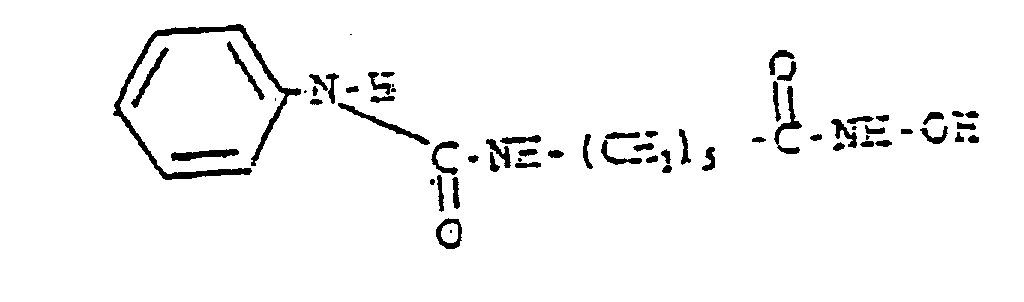
- the compound defined above has the structure: or a pharmaceutically acceptable salt thereof.
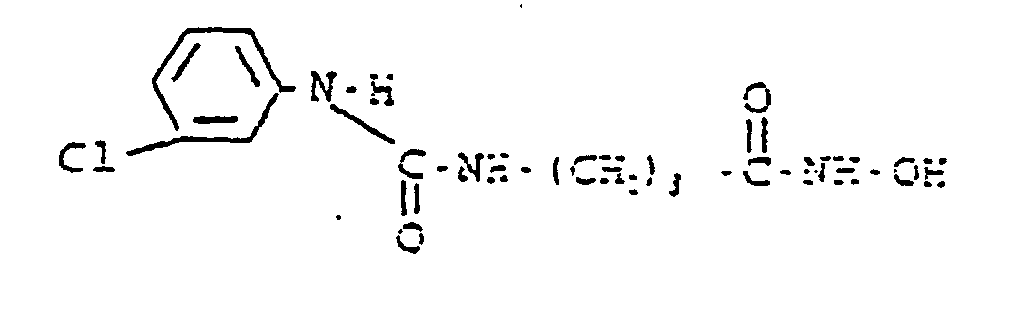
- the compound defined above has the structure: or a pharmaceutically acceptable salt thereof.
- the present invention further provides an in vitro method of selectively inducing terminal differentiation of neoplastic cells and thereby inhibiting proliferation of such cells which comprises contacting the cells under suitable conditions with an effective amount of any of the compounds above, effective to selectively induce terminal differentiation.
- the contacting must be performed continuously for a prolonged period of time, i.e. for at least 49 hours, preferably for about 4-5 days or longer.
- contacting may be effected by incubating the cells with the compound.
- concentration of the compound in contact with the cells should be from about 1 ⁇ M to about 25 mM, preferably from 4 ⁇ M to about 5 mM. The concentration depends upon the individual compound and the state of the neoplastic cells.
- the method may also comprise initially treating the cells with an antitumor agent so as to render them resistant to an antitumor agent and subsequently contacting the resulting resistant cells under suitable conditions with an effective amount of any of the compounds above, effective to selectively induce terminal differentiation of such cells.
- the antitumor agent may be one of numerous themotherapy agents such as an alkylating agent, an antimetabolite, a hormonal agent, an antibiotic, colchicine, a vinca alkaloid, L-asparaginase, procarbazine, hydroxyurea, mitotane, nitrosoureas or an imidazole carboxamide. Suitable agents are those agents which promote depolarization of tubulin.
- the antitumor agent is colchicine or a vinca alkaloid; especially preferred are vinblastine and vincristine.
- the cells preferably are treated so that they are resistant to vincristine at a concentration of about 5 mg/ml.
- the treating of the cells to render them resistant to an antitumor agent may be effected by contacting the cells with the agent for a period of at least 3-5 days. The contacting of the resulting cells with any of the compounds above is performed as described previously.
- the present invention also provides the use of any of the compounds above, or pharmaceutically acceptable salts thereof for the preparation of a pharmaceutical composition of effective to selectively induce terminal differentiation of such neoplastic cells and thereby inhibit their proliferation treating a patient having a tumor characterized by proliferation of neoplastic cells. More over the invention also provides use of compound having the structure: wherein R is a substituted or unsubstituted phenyl, piperidine or thiazole group and n is an integer from 4 to 8 or a pharmaceutically acceptable salt thereof for the preparation of a pharmaceutical composition for selectively inducing terminal differentiation in neoplastic cells.
- the selective induction inhibits the proliferation of the neoplastic cells in the treatment of patients having a tumor characterized by proliferation of the neoplastic cells.
- the use of the present invention is intended for the treatment of human patients with tumors. However, it is also likely that the use would be effective in the treatment of tumors in other mammals.
- the term tumor is intended to include any cancer caused by the proliferation of neoplastic cells, such as lung cancer, acute lymphoid myeloma, bladder melanoma, renal carcinoma, breast carcinoma, or colorectal carcinoma.
- the administration of the compound to the patient may be effected orally or parenterally. To date, administration intravenously has proven to be effective.
- the administration of the compound must be performed continuously for a prolonged period of time, such as for at least 3 days and preferably more than 5 days.
- the administration is effected continuously for at least 10 days and is repeated at intervals wherein at each interval the administration is continuously effected for at least 10 days.
- the administration may be effected at intervals as short as 5-10 days, up to about 25-35 days and continuously for at least 10 days during each such interval.
- the optimal interval period will vary depending on the type of patient and tumor. For example, in the incidence of acute leukemia, the so called myelodysplastic syndrome, continuous infusion would seem to be indicated so long as the patient tolerated the drug without toxicity and there was a positive response.
- the amount of the compound administered to the patient is less than an amount which would cause toxicity in the patient.
- the amount of the compound which is administered to the patient is less than the amount which causes a concentration of the compound in the patient's plasma to equal or exceed the toxic level of the compound.
- the concentration of the compound in the patient's plasma is maintained at about 1.0 mM. It has been found with HMBA that administration of the compound in an amount from about 5 gm/m 2 /day to about 30 gm/m 2 /day, particularly about 20 gm/m 2 /day, is effective without producing toxicity in the patient.
- the optimal amount of the compound which should be administered to the patient in the practice of the present invention will depend on the particular compound used and the type of cancer being treated.
- homologs are molecules having substantial structural similarities to the above-described compounds and analogs are molecules having substantial biological similarities regardless of structural similarities.
- the use may also comprise initially administering to the patient an amount of an antitumor agent to render the cells resistant to an antitumor agent and subsequently administering to the patient an effective amount of any of the compounds above, or pharmaceutically acceptable salts thereof, effective to selectively induce terminal differentiation of such neoplastic cells and thereby inhibit their proliferation.
- the antitumor agent may be one of numerous chemotherapy agents such as an alkylating agent, an antimetabolite, a hormonal agent, an antibiotic, colchicine, a vinca alkaloid, L-asparaginase, procarbazine, hydroxyurea, mitotane, nitrosoureas or an imidazole carboxamide. Suitable agents are those agents which promote depolarization of tubulin.
- the antitumor agent is colchicine or a vinca alkaloid; especially preferred are vinblastine and vincristine.
- an amount is administered to render the cells are resistant to vincristine at a concentration of about 5 mg/ml.
- the administration of the agent is performed essentially as described above for the administration of any of the compounds.
- the administration of the agent is for a period of at least 3-5 days.
- the administration of any of the compounds above is performed as described previously.
- the present invention also provides a pharmaceutical composition
- a pharmaceutical composition comprising a therapeutically acceptable amount of any of the compounds above, or pharmaceutically acceptable salts thereof, and a pharmaceutically acceptable carrier, such as sterile pyrogen-free water.
- the therapeutically acceptable amount is an amount effective to selectively induce terminal differentiation of suitable neoplastic cells and less than an amount which causes toxicity in a patient.
- the present invention also provides a pharmaceutical composition comprising a pharmaceutically acceptable carrier and a therapeutically effective amount of a compound having the structure
- the present invention provides the pharmaceutical composition above in combination with an antitumor agent.
- the antitumor agent may be any of the agents previously described.
- the present invention provides the pharmaceutical composition above, alone or in combination with an antitumor agent, in sustained release form.
- sustained release form applicants mean incorporation of the pharmaceutical compositions in a pharmaceutically acceptable formulation which provides for the sustained release of a therapeutically effective amount of the compounds of this invention over a period of time necessary to derive the intended therapeutic effect.
- Sustained release formulations of pharmaceutical compositions allow for less frequent administration of the compound and provide for administration of the pharmaceutical composition at or near the target area in a subject's system.
- Sustained release formulations and methods of incorporating pharmaceutical compositions therein are well known to those of ordinary skill in the
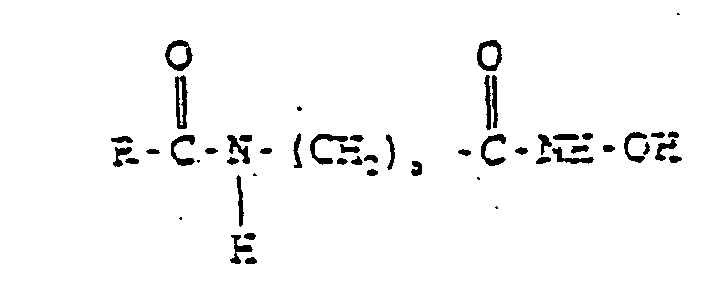
- R is an unsubstituted phenyl and n is an integer from 4 to 8 or a pharmaceutically acceptable salt thereof.
- examples include, but are not limited to such formulations as incorporation into ion exchange resins (U.S. Patent No. 5,296,228 to Chang et al.), xanthan gums (U.S. Patent No. 5,292,534 to Valentine et al., microspheres (U.S. Patent No. 5,288,502 to McGinity et al.) hydrogels (U.S. Patent No. 5,266,325 to Kuzma et al.) and solid forms such as wax-like or fat-like hydrophobic substances containing water insoluble polymers (U.S. Patent No.
- Methods of administering compounds for sustained release include, but are not limited to, surgical implantation of microencapsulated pharmaceutical compounds near the intended target site (U.S. Patent No. 5,290,271 to Jernberg) and incorporation of compound into transdermal patches (U.S. Patent No. 5,298,256 to Flockhart et al. and U.S. Patent No. 5,290,561 to Farhadieh et al.).
- surgical implantation of microencapsulated pharmaceutical compounds near the intended target site U.S. Patent No. 5,290,271 to Jernberg
- incorporation of compound into transdermal patches U.S. Patent No. 5,298,256 to Flockhart et al. and U.S. Patent No. 5,290,561 to Farhadieh et al.
- the text of the above cited patents and the references disclosed therein are hereby encorporated by reference in their entirety into this disclosure.
- MELC 745A-DS19 cells and the variants of MELC derived from this cell line namely, the vincristine-resistant MELC V3.17 and VCR.C(2)15 cell lines (26), and the dimethylsulfoxide-resistant cell line, DR10 (39), were maintained in alpha minimal essential medium containing 10% fetal calf serum (16).
- Cell cultures for all experiments were initiated with cells in logarithmic growth phase (day 2 cultured cells) at a density of 10 5 cells/ml. Inducer compounds were added in the final concentrations indicated below, dissolved in culture medium without fetal calf serum unless otherwise indicated. Cell density and benzidine reactively were determined as described (16).
Landscapes
- Chemical & Material Sciences (AREA)
- Organic Chemistry (AREA)
- Health & Medical Sciences (AREA)
- Veterinary Medicine (AREA)
- Medicinal Chemistry (AREA)
- Pharmacology & Pharmacy (AREA)
- Life Sciences & Earth Sciences (AREA)
- Animal Behavior & Ethology (AREA)
- General Health & Medical Sciences (AREA)
- Public Health (AREA)
- Epidemiology (AREA)
- Chemical Kinetics & Catalysis (AREA)
- General Chemical & Material Sciences (AREA)
- Nuclear Medicine, Radiotherapy & Molecular Imaging (AREA)
- Emergency Medicine (AREA)
- Engineering & Computer Science (AREA)
- Bioinformatics & Cheminformatics (AREA)
- Hematology (AREA)
- Oncology (AREA)
- Pharmaceuticals Containing Other Organic And Inorganic Compounds (AREA)
- Acyclic And Carbocyclic Compounds In Medicinal Compositions (AREA)
- Organic Low-Molecular-Weight Compounds And Preparation Thereof (AREA)
- Magnetic Ceramics (AREA)
Claims (18)
- Verbindung mit der Struktur:wobei R eine Piperidin- oder Thiazolgruppe oder eine Phenylgruppe ist, die mit einer Methyl-, Cyano-, Nitro-, Thio-, Trifluormethyl-, Amino-, Aminocarbonyl-, Methylcyano-, Chlor-, Fluor-, Brom-, Iod-, 2,3-Difluor-, 2,4-Difluor-, 2,5-Difluor-, 3,4-Difluor-, 3,5-Difluor-, 2,6-Difluor-, 1,2,3-Trifluor-, 2,3,6-Trifluor-, 2,4,6-Trifluor-, 3,4,5-Trifluor-, 2,3,5,6-Tetrafluor-, 2,3,4,5,6-Pentafluor-, Azid-, Hexyl-, t-Butyl-, Phenyl-, Carboxyl-, Hydroxyl-, Methyloxy-, Phenyloxy-, Phenylaminooxy-, Phenylaminocarbonyl-, Methyloxycarbonyl-, Methylaminocarbonyl-, Dimethylamino-, Dimethylaminocarbonyl- oder Hydroxylaminocarbonylgruppe substituiert ist, und n eine ganze Zahl von 4 bis 8 ist, oder ein pharmazeutisch verträgliches Salz davon.

- 7-Benzoylamidoheptanoyl-hydroxamsäure oder ein pharmazeutisch verträgliches Salz davon.
- Verbindung mit der Struktur:wobei R ein substituiertes oder unsubstituiertes 2-Pyridin, 3-Pyridin oder 4-Pyridin und n eine ganze Zahl von 4 bis 8 ist, oder ein pharmazeutisch verträgliches Salz davon.
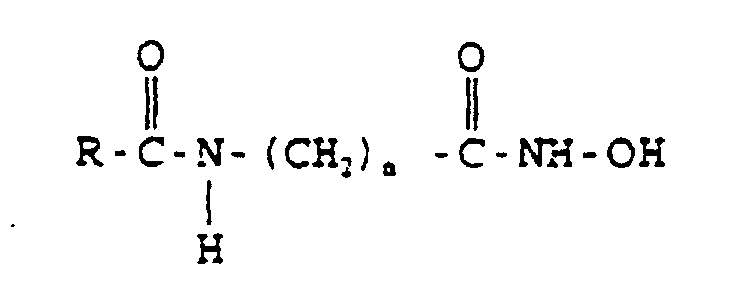
- Verbindung mit der Struktur:wobei R eine substituierte oder unsubstituierte Phenyl-, Pyridin-, Piperidin- oder Thiazolgruppe und n eine ganze Zahl von 4 bis 8 ist, oder ein pharmazeutisch verträgliches Salz davon.

- Verbindung nach Anspruch 4, wobei R eine substituierte Phenylgruppe ist.
- Verbindung nach Anspruch 5, wobei die Phenylgruppe mit einer Methyl-, Cyano-, Nitro-, Thio-, Trifluormethyl-, Amino-, Aminocarbonyl-, Methylcyano-, Chlor-, Fluor-, Brom-, Iod-, 2,3-Difluor-, 2,4-Difluor-, 2,5-Difluor-, 3,4-Difluor-, 3,5-Difluor-, 2,6-Difluor-, 1,2,3-Trifluor-, 2,3,6-Trifluor-, 2,4,6-Trifluor-, 3,4,5-Trifluor-, 2,3,5,6-Tetrafluor-, 2,3,4,5,6-Pentafluor-, Azid-, Hexyl-, t-Butyl-, Phenyl-, Carboxyl-, Hydroxyl-, Methyloxy-, Phenyloxy-, Benzyloxy-, Phenylaminooxy-, Phenylaminocarbonyl-, Methyloxycarbonyl-, Methylaminocarbonyl-, Dimethylamino-, Dimethylaminocarbonyl- oder Hydroxylaminocarbonylgruppe substituiert ist.
- Verbindung nach Anspruch 4 mit der Struktur:oder ein pharmazeutisch verträgliches Salz davon.
- Verbindung nach Anspruch 7 mit der Struktur:oder ein pharmazeutisch verträgliches Salz davon.
- In-vitro-Verfahren zur selektiven Induktion der terminalen Differenzierung von neoplastischen Zellen und damit zur Hemmung der Proliferation derartiger Zellen, umfassend das Inkontaktbringen der Zellen unter geeigneten Bedingungen mit einer wirksamen Menge der Verbindungen nach einem der Ansprüche 1 bis 8 oder eines pharmazeutisch verträglichen Salzes davon, wirksam zur selektiven Induktion der terminalen Differenzierung.
- Verwendung der Verbindungen nach einem der Ansprüche 1 bis 8 oder eines pharmazeutisch verträglichen Salzes davon für die Herstellung eines Arzneimittels, das zur Behandlung von Patienten mit einem Tumor wirksam ist, wobei der Tumor durch die Proliferation neoplastischer Zellen gekennzeichnet ist.
- Arzneimittel, umfassend einen pharmazeutisch verträglichen Träger und eine therapeutisch wirksame Menge der Verbindungen nach einem der Ansprüche 1 bis 8 oder eines pharmazeutisch verträglichen Salzes davon.
- Arzneimittel, umfassend einen pharmazeutisch verträglichen Träger und eine therapeutisch wirksame Menge einer Verbindung mit der Struktur:wobei R eine unsubstituierte Phenylgruppe und n eine ganze Zahl von 4 bis 8 ist, oder ein pharmazeutisch verträgliches Salz davon.
- Arzneimittel nach Anspruch 11 oder 12, wobei die wirksame Menge eine Menge ist, die zur selektiven Induktion der terminalen Differenzierung von geeigneten neoplastischen Zellen wirksam ist und geringer ist als eine Menge, die Toxizität in einem Patienten verursacht.
- Arzneimittel nach Anspruch 11 oder 12 in Kombination mit einem Antitumormittel.
- Arzneimittel nach Anspruch 12 in langzeitwirkender Form.
- Arzneimittel nach Anspruch 14 in langzeitwirkender Form.
- Verwendung der Verbindung mit der Struktur:wobei R eine substituierte oder unsubstituierte Phenyl-, Piperidin- oder Thiazolgruppe und n eine ganze Zahl von 4 bis 8 ist, oder eines pharmazeutisch verträglichen Salzes davon für die Herstellung eines Arzneimittels, das zur Behandlung von Patienten mit einem Tumor wirksam ist, wobei der Tumor durch die Proliferation neoplastischer Zellen gekennzeichnet ist.

- Verwendung nach Anspruch 17, wobei die neoplastischen Zellen für eine terminale Differenzierung selektiv induziert sind.
Applications Claiming Priority (3)
| Application Number | Priority Date | Filing Date | Title |
|---|---|---|---|
| US08/246,363 US5700811A (en) | 1991-10-04 | 1994-05-19 | Potent inducers of terminal differentiation and method of use thereof |
| US246363 | 1994-05-19 | ||
| PCT/US1995/006554 WO1995031977A1 (en) | 1994-05-19 | 1995-05-19 | Novel potent inducers of terminal differentiation and methods of use thereof |
Publications (4)
| Publication Number | Publication Date |
|---|---|
| EP0760657A1 EP0760657A1 (de) | 1997-03-12 |
| EP0760657A4 EP0760657A4 (de) | 1998-08-05 |
| EP0760657B1 true EP0760657B1 (de) | 2003-11-12 |
| EP0760657B9 EP0760657B9 (de) | 2004-08-11 |
Family
ID=22930349
Family Applications (1)
| Application Number | Title | Priority Date | Filing Date |
|---|---|---|---|
| EP95921378A Expired - Lifetime EP0760657B9 (de) | 1994-05-19 | 1995-05-19 | Neue starke induktoren der terminalen differenzierung und verfahren für ihre verwendung |
Country Status (8)
| Country | Link |
|---|---|
| US (1) | US5700811A (de) |
| EP (1) | EP0760657B9 (de) |
| AT (1) | ATE253906T1 (de) |
| AU (1) | AU692561B2 (de) |
| CA (1) | CA2190765C (de) |
| DE (1) | DE69532118T2 (de) |
| ES (1) | ES2210293T3 (de) |
| WO (1) | WO1995031977A1 (de) |
Families Citing this family (105)
| Publication number | Priority date | Publication date | Assignee | Title |
|---|---|---|---|---|
| US6777217B1 (en) | 1996-03-26 | 2004-08-17 | President And Fellows Of Harvard College | Histone deacetylases, and uses related thereto |
| AUPO721997A0 (en) * | 1997-06-06 | 1997-07-03 | Queensland Institute Of Medical Research, The | Anticancer compounds |
| MXPA02002505A (es) | 1999-09-08 | 2004-09-10 | Sloan Kettering Inst Cancer | Nueva clase de agentes de citodiferenciacion e inhibidores de histona desacetilasa y metodos de utilizacion de los mismos. |
| WO2001018045A1 (en) * | 1999-09-08 | 2001-03-15 | Sloan-Kettering Institute For Cancer Research | Crystal structure of a deacetylase and inhibitors thereof |
| CA2391952C (en) | 1999-11-23 | 2012-01-31 | Methylgene Inc. | Inhibitors of histone deacetylase |
| US20030129724A1 (en) | 2000-03-03 | 2003-07-10 | Grozinger Christina M. | Class II human histone deacetylases, and uses related thereto |
| PE20020354A1 (es) | 2000-09-01 | 2002-06-12 | Novartis Ag | Compuestos de hidroxamato como inhibidores de histona-desacetilasa (hda) |
| JP4975941B2 (ja) * | 2000-09-29 | 2012-07-11 | トポターゲット ユーケー リミテッド | (e)−n−ヒドロキシ−3−(3−スルファモイル−フェニル)アクリルアミド化合物及びその治療用途 |
| GB0023983D0 (en) * | 2000-09-29 | 2000-11-15 | Prolifix Ltd | Therapeutic compounds |
| WO2002026696A1 (en) | 2000-09-29 | 2002-04-04 | Prolifix Limited | Carbamic acid compounds comprising an amide linkage as hdac inhibitors |
| US20050227915A1 (en) * | 2001-05-02 | 2005-10-13 | Steffan Joan S | Methods and reagents for treating neurodegenerative diseases and motor deficit disorders |
| US20040142859A1 (en) * | 2002-05-02 | 2004-07-22 | Steffan Joan S. | Method for treating neurodegenerative, psychiatric, and other disorders with deacetylase inhibitors |
| US7244853B2 (en) * | 2001-05-09 | 2007-07-17 | President And Fellows Of Harvard College | Dioxanes and uses thereof |
| US6784173B2 (en) | 2001-06-15 | 2004-08-31 | Hoffmann-La Roche Inc. | Aromatic dicarboxylic acid derivatives |
| ITMI20011733A1 (it) | 2001-08-07 | 2003-02-07 | Italfarmaco Spa | Derivati dell'acido idrossamico inibitori degli enzimi istone deacetilasi, quali nuovi farmaci antiinfiammatori inibenti la sintesi di citoc |
| WO2003032921A2 (en) * | 2001-10-16 | 2003-04-24 | Sloan-Kettering Institute For Cancer Research | Treatment of neurodegenerative diseases and cancer of the brain |
| EP1482962A4 (de) * | 2002-02-15 | 2009-12-23 | Sloan Kettering Inst Cancer | Verfahren zur behandlung von trx-vermittelten erkrankungen |
| US20050288227A1 (en) * | 2002-02-15 | 2005-12-29 | Marks Paul A | Use of thioredoxin measurements for diagnostics and treatments |
| US20060276547A1 (en) * | 2002-03-04 | 2006-12-07 | Bacopoulos Nicholas G | Methods of treating cancer with HDAC inhibitors |
| US20040132825A1 (en) * | 2002-03-04 | 2004-07-08 | Bacopoulos Nicholas G. | Methods of treating cancer with HDAC inhibitors |
| NZ550185A (en) | 2002-03-04 | 2008-10-31 | Merck Hdac Res Llc | Methods of inducing terminal differentiation Methods of inducing terminal differentiation |
| US7456219B2 (en) * | 2002-03-04 | 2008-11-25 | Merck Hdac Research, Llc | Polymorphs of suberoylanilide hydroxamic acid |
| US7148257B2 (en) * | 2002-03-04 | 2006-12-12 | Merck Hdac Research, Llc | Methods of treating mesothelioma with suberoylanilide hydroxamic acid |
| US20070060614A1 (en) * | 2002-03-04 | 2007-03-15 | Bacopoulos Nicholas G | Methods of treating cancer with hdac inhibitors |
| WO2003088954A1 (en) * | 2002-04-15 | 2003-10-30 | Sloan-Kettering Institute For Cancer Research | Combination therapy for the treatment of cancer |
| US6719310B1 (en) * | 2002-10-17 | 2004-04-13 | Teng Hsiang Lin | Self-movable vehicle |
| TW200418825A (en) * | 2002-12-16 | 2004-10-01 | Hoffmann La Roche | Novel (R)-and (S) enantiomers of thiophene hydroxamic acid derivatives |
| US20040235733A1 (en) * | 2003-02-27 | 2004-11-25 | Steffan Joan S. | Methods and reagents for reducing polyglutamine toxicity |
| JP2006523693A (ja) * | 2003-04-01 | 2006-10-19 | メモリアル スローン−ケタリング キャンサー センター | ヒドロキサム酸化合物およびその使用方法 |
| DK2238982T3 (da) | 2003-06-27 | 2013-01-28 | Astellas Pharma Inc | Terapeutisk middel til blødt væv-sarcom |
| EP1644323B1 (de) * | 2003-07-07 | 2015-03-18 | Georgetown University | Histondeacetylaseinhibitoren und verfahren zu deren anwendung |
| US7842835B2 (en) * | 2003-07-07 | 2010-11-30 | Georgetown University | Histone deacetylase inhibitors and methods of use thereof |
| EP1663194B1 (de) * | 2003-08-26 | 2010-03-31 | Merck HDAC Research, LLC | Verwendung von SAHA zur Behandlung von Mesotheliom |
| KR100629712B1 (ko) * | 2003-08-26 | 2006-09-29 | (주)아모레퍼시픽 | 항노화 효과를 나타내는 히드록삼산 유도체 및 이의제조방법 |
| WO2005019162A1 (en) * | 2003-08-26 | 2005-03-03 | Amorepacific Corporation | Hydroxamic acid derivatives and the method for preparing thereof |
| JP2007504131A (ja) * | 2003-08-29 | 2007-03-01 | エートン ファーマ インコーポレーティッド | 癌の組み合わせ処置法 |
| US7935724B2 (en) * | 2003-10-09 | 2011-05-03 | Merck Hdac Research, Llc | Thiophene and benzothiophene hydroxamic acid derivatives |
| CN1905881A (zh) * | 2003-11-26 | 2007-01-31 | 阿托恩药品公司 | 二胺和亚氨二醋酸异羟肟酸衍生物 |
| WO2005070020A2 (en) * | 2004-01-23 | 2005-08-04 | The Regents Of The University Of Colorado | Gefitinib sensitivity-related gene expression and products and methods related thereto |
| US20080113874A1 (en) * | 2004-01-23 | 2008-05-15 | The Regents Of The University Of Colorado | Gefitinib sensitivity-related gene expression and products and methods related thereto |
| US20050197336A1 (en) * | 2004-03-08 | 2005-09-08 | Miikana Therapeutics Corporation | Inhibitors of histone deacetylase |
| US7345043B2 (en) * | 2004-04-01 | 2008-03-18 | Miikana Therapeutics | Inhibitors of histone deacetylase |
| EP1745022B1 (de) * | 2004-04-05 | 2014-08-13 | Aton Pharma, Inc. | Prodrugs von histondeacetylaseinhibitoren |
| EP2527460B1 (de) | 2004-05-27 | 2014-12-24 | The Regents of The University of Colorado | Verfahren zur Vorhersage der klinischen Resultate in Bezug auf epidermale Wachstumsfaktor-Rezeptorhemmer von Krebspatienten |
| JP2008505971A (ja) * | 2004-07-12 | 2008-02-28 | メルク エンド カムパニー インコーポレーテッド | ヒストン脱アセチル化酵素阻害剤 |
| WO2006017215A2 (en) * | 2004-07-12 | 2006-02-16 | Merck & Co., Inc. | Histone deacetylase inhibitors |
| EP1771167A4 (de) * | 2004-07-19 | 2010-04-21 | Merck Sharp & Dohme | Histondeacetylase-inhibitoren: |
| CA2596015A1 (en) | 2005-02-14 | 2006-08-24 | Sampath K. Anandan | Fused heterocyclic compounds useful as inhibitors of histone deacetylase |
| WO2006094068A2 (en) * | 2005-03-01 | 2006-09-08 | The Regents Of The University Of Michigan | Hdac inhibitors that promote brm expression and brm related diagnostics |
| US20100087328A1 (en) * | 2005-03-01 | 2010-04-08 | The Regents Of The University Of Michigan | Brm expression and related diagnostics |
| KR20080003334A (ko) * | 2005-03-11 | 2008-01-07 | 더 리젠트스 오브 더 유니버시티 오브 콜로라도 | 암 세포를 표피 성장 인자 억제제에 대해 감작화시키는히스톤 데아세틸라제 억제제 |
| US8999289B2 (en) | 2005-03-22 | 2015-04-07 | President And Fellows Of Harvard College | Treatment of protein degradation disorders |
| CN101163690A (zh) * | 2005-04-20 | 2008-04-16 | 默克公司 | 苯并噻吩异羟肟酸衍生物 |
| EP1874294A4 (de) | 2005-04-20 | 2010-12-01 | Merck Sharp & Dohme | Benzothiophen-hydroxamidsäurederivate mit carbamat-, harnstoff-, amid- und sulfonamidsubstitutionen |
| EP1874295A4 (de) * | 2005-04-20 | 2009-08-12 | Merck & Co Inc | Benzothiophenderivate |
| KR100844277B1 (ko) * | 2005-04-29 | 2008-07-07 | (주)아모레퍼시픽 | 히드록삼산 유도체 및 이의 제조방법 |
| TWI415603B (zh) | 2005-05-20 | 2013-11-21 | Merck Sharp & Dohme | 1,8-辛二醯基苯胺羥胺酸(suberoylanilide hydroxamic acid)之調配物及其製配方法 |
| JP2008546793A (ja) * | 2005-06-24 | 2008-12-25 | メルク エンド カムパニー インコーポレーテッド | 修飾マロン酸誘導体 |
| WO2007055942A2 (en) * | 2005-11-03 | 2007-05-18 | Merck & Co., Inc. | Substituted nicotinamide compounds |
| US8026260B2 (en) | 2005-11-03 | 2011-09-27 | Merck Sharp & Dohme Corp. | Histone deacetylase inhibitors with aryl-pyrazolyl-motifs |
| JP2009514889A (ja) * | 2005-11-04 | 2009-04-09 | メルク エンド カムパニー インコーポレーテッド | 癌を治療するためにsaha及びボルテゾミブを用いる方法 |
| AU2006311820A1 (en) * | 2005-11-04 | 2007-05-18 | Merck Sharp & Dohme Corp. | Methods of using SAHA and erlotinib for treating cancer |
| AR057579A1 (es) | 2005-11-23 | 2007-12-05 | Merck & Co Inc | Compuestos espirociclicos como inhibidores de histona de acetilasa (hdac) |
| CA2635210A1 (en) * | 2006-01-12 | 2007-08-02 | Merck & Co., Inc. | Hydroxyalkylarylamide derivatives |
| US20090012075A1 (en) * | 2006-01-12 | 2009-01-08 | Miller Thomas A | Fluorinated Arylamide Derivatives |
| US8222423B2 (en) * | 2006-02-14 | 2012-07-17 | Dana-Farber Cancer Institute, Inc. | Bifunctional histone deacetylase inhibitors |
| CA2642813A1 (en) * | 2006-02-28 | 2007-09-07 | Merck & Co., Inc. | Inhibitors of histone deacetylase |
| CA2649877A1 (en) * | 2006-04-24 | 2007-12-21 | Gloucester Pharmaceuticals | Gemcitabine combination therapy |
| CA2649861A1 (en) | 2006-04-26 | 2007-11-08 | Merck & Co., Inc. | Disubstituted aniline compounds |
| AU2007248656B2 (en) | 2006-05-03 | 2013-04-04 | Dana-Farber Cancer Institute, Inc. | Histone deacetylase and tubulin deacetylase inhibitors |
| JP2009537529A (ja) * | 2006-05-18 | 2009-10-29 | メルク エンド カムパニー インコーポレーテッド | アリール縮合スピロ環化合物 |
| WO2007146730A2 (en) * | 2006-06-08 | 2007-12-21 | Gloucester Pharmaceuticals | Deacetylase inhibitor therapy |
| JP2009544611A (ja) * | 2006-07-20 | 2009-12-17 | メルク エンド カムパニー インコーポレーテッド | ヒストン脱アセチル化酵素阻害剤としてのリン誘導体 |
| CA2663569A1 (en) | 2006-09-28 | 2008-04-03 | Merck & Co., Inc. | Pharmaceutical compositions of hdac inhibitors and chelatable metal compounds, and metal-hdac inhibitor chelate complexes |
| CA2667348A1 (en) * | 2006-11-03 | 2008-05-15 | University Of Maryland, Baltimore | Methods of using saha and bortezomib for treating multiple myeloma |
| WO2008097654A1 (en) * | 2007-02-08 | 2008-08-14 | Merck & Co., Inc. | Methods of using saha for treating hiv infection |
| CA2726734C (en) | 2007-06-06 | 2014-10-07 | University Of Maryland, Baltimore | Hdac inhibitor ms-275 and aromatase inhibitors for the treatment of cancer |
| AU2008269154B2 (en) | 2007-06-27 | 2014-06-12 | Merck Sharp & Dohme Llc | 4-carboxybenzylamino derivatives as histone deacetylase inhibitors |
| US8461189B2 (en) * | 2007-06-27 | 2013-06-11 | Merck Sharp & Dohme Corp. | Pyridyl derivatives as histone deacetylase inhibitors |
| WO2009067543A2 (en) * | 2007-11-19 | 2009-05-28 | The Regents Of The University Of Colorado | Treatment of histone deacetylase mediated disorders |
| EP2133334A1 (de) | 2008-06-09 | 2009-12-16 | DAC S.r.l. | Heterozyklische Derivate als HDAC-Hemmer |
| US8440716B2 (en) * | 2008-07-23 | 2013-05-14 | President And Fellows Of Harvard College | Deacetylase inhibitors and uses thereof |
| AU2009313491A1 (en) * | 2008-11-05 | 2011-06-30 | University Of Southern California | Small molecule modulators of epigenetic regulation and their therapeutic applications |
| KR101168801B1 (ko) | 2009-03-27 | 2012-07-25 | 주식회사종근당 | 신규한 하이드록사메이트 유도체, 이의 제조방법, 및 이를 함유하는 약제학적 조성물 |
| US8716344B2 (en) | 2009-08-11 | 2014-05-06 | President And Fellows Of Harvard College | Class- and isoform-specific HDAC inhibitors and uses thereof |
| CL2011000716A1 (es) | 2010-03-31 | 2012-04-20 | Gilead Pharmasset Llc | Formas cristalinas 1 6 de (s)-isopropil-2-(((s)-(((2r.3r.4r.5r)-5-(2,4-dioxo-3,4-dihidropirimidin-1(2h)-il)-4-fluoro-3-hidroxi-4-metil tetrahidrofuran-2-il)metoxi)(fenoxi)fosforil)amino)propanoato; composicion y combinacion farmaceutica; y su uso para tratar una infeccion por el virus de la hepatitis c. |
| US8921533B2 (en) | 2011-07-25 | 2014-12-30 | Chromatin Technologies | Glycosylated valproic acid analogs and uses thereof |
| EP2837681B1 (de) | 2012-04-06 | 2018-02-21 | Kyoto University | Verfahren zur induzierung erythropoietinproduzierender zellen |
| WO2014015235A2 (en) * | 2012-07-20 | 2014-01-23 | Academia Sinica | 3,5,n-trihydroxy-alkanamide and derivatives: method for making same and use thereof |
| US20140256776A1 (en) | 2013-03-06 | 2014-09-11 | C & C Biopharma, Llc | Treatment of cancer and other conditions using a transcription factor modulator |
| US9636298B2 (en) | 2014-01-17 | 2017-05-02 | Methylgene Inc. | Prodrugs of compounds that enhance antifungal activity and compositions of said prodrugs |
| CN103922967B (zh) * | 2014-04-15 | 2016-06-01 | 北京化工大学 | 一种异羟肟酸类化合物及其在制备抑制癌细胞增殖和/或治疗癌症的药物中的应用 |
| WO2015184260A2 (en) | 2014-05-30 | 2015-12-03 | The Johns Hopkins University | Methods for treating mendelian disorders of the epigenetic machinery |
| CN104292134B (zh) * | 2014-10-10 | 2016-06-22 | 广东药学院 | 异羟肟酸类化合物及其制备方法和应用 |
| US20180134662A1 (en) * | 2015-11-17 | 2018-05-17 | Thomas Daly | Aminopyridine Based Buffers with Wide Buffering Ranges Antibiotics and Myelin Disease Therapy |
| CN106397102A (zh) * | 2016-08-29 | 2017-02-15 | 山东同成医药股份有限公司 | 卤代烃产品及其密封保温增压式生产方法 |
| CN106905191B (zh) * | 2017-03-05 | 2019-03-29 | 北京化工大学 | 一种含有羟肟酸基团的氮芥类化合物及其制备方法和用途 |
| EP3461488A1 (de) | 2017-09-27 | 2019-04-03 | Onxeo | Kombination aus einem dbait-molekül und einem hdac-inhibitor zur behandlung von krebs |
| EP3461480A1 (de) | 2017-09-27 | 2019-04-03 | Onxeo | Kombination von checkpoint-hemmern des dna-schädigungsantwort-zellzyklus und belinostat zur behandlung von krebs |
| WO2019140417A1 (en) * | 2018-01-15 | 2019-07-18 | Daly Thomas P | Aminopyridine based buffers with wide buffering ranges antibiotics and myelin disease therapy |
| CN110790686B (zh) * | 2019-10-08 | 2022-03-08 | 南开大学 | 一种化合物及其在制备抗炎以及治疗急性肺损伤、慢阻肺、哮喘或肺纤维化药物中的应用 |
| WO2021148581A1 (en) | 2020-01-22 | 2021-07-29 | Onxeo | Novel dbait molecule and its use |
| EP4405680A1 (de) | 2021-09-20 | 2024-07-31 | Institut National de la Santé et de la Recherche Médicale (INSERM) | Verfahren zur verbesserung der wirksamkeit einer hdac-hemmertherapie und vorhersage der reaktion auf die behandlung mit hdac-hemmer |
| EP4504165A1 (de) | 2022-04-05 | 2025-02-12 | Istituto Nazionale Tumori IRCCS - Fondazione G. Pascale | Kombination von hdac-hemmern und statinen zur verwendung bei der behandlung von bauchspeicheldrüsenkrebs |
| WO2025026925A1 (en) | 2023-07-28 | 2025-02-06 | Ospedale San Raffaele S.R.L. | Gtf2i inhibitors and uses thereof |
Family Cites Families (21)
| Publication number | Priority date | Publication date | Assignee | Title |
|---|---|---|---|---|
| US2895991A (en) * | 1959-07-21 | New chloromethylated amlides | ||
| US2346665A (en) * | 1940-05-08 | 1944-04-18 | Du Pont | Acid |
| US2279973A (en) * | 1940-05-08 | 1942-04-14 | Du Pont | Stabilization of organic substances |
| US2279560A (en) * | 1940-05-08 | 1942-04-14 | Du Pont | Viscous hydrocarbon oil |
| US3450673A (en) * | 1965-09-07 | 1969-06-17 | Ashland Oil Inc | Polyurethane compositions from diaminimides |
| US3632783A (en) * | 1969-05-27 | 1972-01-04 | Hall Co C P | Treatment of mosquito bites employing certain tetraalkyl diamides |
| US4056524A (en) * | 1974-04-09 | 1977-11-01 | Stauffer Chemical Company | Bis-substituted succinamides and their utility as herbicides |
| US3875301A (en) * | 1974-04-30 | 1975-04-01 | Interx Research Corp | Useful tetraalkyl diamides in the treatment of poison ivy |
| IT1123574B (it) * | 1979-09-10 | 1986-04-30 | Anic Spa | Processo per la produzione di diesterediammidi |
| US4442305A (en) * | 1981-08-24 | 1984-04-10 | The United States Of America As Represented By The United States Department Of Energy | Polycatecholamide chelating agents |
| US4480125A (en) * | 1981-11-16 | 1984-10-30 | Polaroid Corporation | Itaconamide compounds and method of preparation |
| US4537781A (en) * | 1983-09-16 | 1985-08-27 | Research Corporation | Pharmaceutically useful malonamides |
| US4611053A (en) * | 1985-02-15 | 1986-09-09 | Sasa Michiyuki Mitch | Polyhydroxamide polymer |
| JPS61205221A (ja) * | 1985-03-08 | 1986-09-11 | Univ Osaka | ニトリルとアミンからのアミドの製造方法 |
| US4863967A (en) * | 1986-06-16 | 1989-09-05 | Research Corporation | N,N-diaminophthalamides |
| US4882346A (en) * | 1987-06-16 | 1989-11-21 | The United States Of America As Reprsented By The Department Of Health And Human Services | Chemical differentiating agents |
| US5330744A (en) * | 1988-11-14 | 1994-07-19 | Sloan-Kettering Institute For Cancer Research | Method for increasing sensitivity to chemically induced terminal differentiation |
| US5175191A (en) * | 1988-11-14 | 1992-12-29 | Sloan-Kettering Institute For Cancer Research | Potent inducers of terminal differentiation and methods of use thereof |
| US5055608A (en) * | 1988-11-14 | 1991-10-08 | Sloan-Kettering Institute For Cancer Research | Novel potent inducers of thermal differentiation and method of use thereof |
| US5369108A (en) * | 1991-10-04 | 1994-11-29 | Sloan-Kettering Institute For Cancer Research | Potent inducers of terminal differentiation and methods of use thereof |
| HU211995B (en) * | 1992-06-30 | 1996-01-29 | Gyogyszerkutato Intezet | Process to prepare novel benzoyl amino acid derivs. and pharmaceutical compns. contg.them |
-
1994
- 1994-05-19 US US08/246,363 patent/US5700811A/en not_active Expired - Lifetime
-
1995
- 1995-05-19 ES ES95921378T patent/ES2210293T3/es not_active Expired - Lifetime
- 1995-05-19 AT AT95921378T patent/ATE253906T1/de not_active IP Right Cessation
- 1995-05-19 DE DE69532118T patent/DE69532118T2/de not_active Expired - Fee Related
- 1995-05-19 AU AU26474/95A patent/AU692561B2/en not_active Ceased
- 1995-05-19 EP EP95921378A patent/EP0760657B9/de not_active Expired - Lifetime
- 1995-05-19 WO PCT/US1995/006554 patent/WO1995031977A1/en not_active Ceased
- 1995-05-19 CA CA002190765A patent/CA2190765C/en not_active Expired - Fee Related
Also Published As
| Publication number | Publication date |
|---|---|
| CA2190765A1 (en) | 1995-11-30 |
| EP0760657B9 (de) | 2004-08-11 |
| AU692561B2 (en) | 1998-06-11 |
| WO1995031977A1 (en) | 1995-11-30 |
| CA2190765C (en) | 2007-04-17 |
| ES2210293T3 (es) | 2004-07-01 |
| DE69532118D1 (de) | 2003-12-18 |
| EP0760657A1 (de) | 1997-03-12 |
| US5700811A (en) | 1997-12-23 |
| EP0760657A4 (de) | 1998-08-05 |
| DE69532118T2 (de) | 2004-07-22 |
| ATE253906T1 (de) | 2003-11-15 |
| AU2647495A (en) | 1995-12-18 |
Similar Documents
| Publication | Publication Date | Title |
|---|---|---|
| EP0760657B9 (de) | Neue starke induktoren der terminalen differenzierung und verfahren für ihre verwendung | |
| EP0642509B1 (de) | Neue potente induktoren der terminalen differenzierung und methoden ihrer verwendung | |
| KR100892016B1 (ko) | 말단 분화의 유도 방법 | |
| DE69309094T2 (de) | Hemmung der TNF - Bildung | |
| USRE38506E1 (en) | Potent inducers of terminal differentiation and methods of use thereof | |
| US5055608A (en) | Novel potent inducers of thermal differentiation and method of use thereof | |
| WO1991008191A1 (en) | Novel potent inducers of terminal differentiation and method of use thereof | |
| AU708115B2 (en) | Novel potent inducers of terminal differentiation and methods of use thereof | |
| WO1990009092A2 (en) | Novel potent inducers of terminal differentiation and method of use thereof | |
| CA2574103A1 (en) | Novel potent inducers of terminal differentiation and methods of use thereof | |
| KR20050020760A (ko) | 말단 분화의 유도 방법 | |
| HK1072362B (en) | Methods of inducing terminal differentiation | |
| HK1131065A (en) | Methods of inducing terminal differentiation | |
| HK1158082A (en) | Methods of inducing terminal differentiation | |
| NZ568678A (en) | Methods of inducing terminal differentiation using suberoylanilide hydroxamic acid (SAHA) |
Legal Events
| Date | Code | Title | Description |
|---|---|---|---|
| PUAI | Public reference made under article 153(3) epc to a published international application that has entered the european phase |
Free format text: ORIGINAL CODE: 0009012 |
|
| 17P | Request for examination filed |
Effective date: 19961209 |
|
| AK | Designated contracting states |
Kind code of ref document: A1 Designated state(s): AT BE CH DE DK ES FR GB GR IE IT LI LU MC NL PT SE |
|
| A4 | Supplementary search report drawn up and despatched |
Effective date: 19980622 |
|
| AK | Designated contracting states |
Kind code of ref document: A4 Designated state(s): AT BE CH DE DK ES FR GB GR IE IT LI LU MC NL PT SE |
|
| 17Q | First examination report despatched |
Effective date: 20001215 |
|
| GRAH | Despatch of communication of intention to grant a patent |
Free format text: ORIGINAL CODE: EPIDOS IGRA |
|
| GRAS | Grant fee paid |
Free format text: ORIGINAL CODE: EPIDOSNIGR3 |
|
| GRAA | (expected) grant |
Free format text: ORIGINAL CODE: 0009210 |
|
| AK | Designated contracting states |
Kind code of ref document: B1 Designated state(s): AT BE CH DE DK ES FR GB GR IE IT LI LU MC NL PT SE |
|
| PG25 | Lapsed in a contracting state [announced via postgrant information from national office to epo] |
Ref country code: BE Free format text: LAPSE BECAUSE OF FAILURE TO SUBMIT A TRANSLATION OF THE DESCRIPTION OR TO PAY THE FEE WITHIN THE PRESCRIBED TIME-LIMIT Effective date: 20031112 Ref country code: AT Free format text: LAPSE BECAUSE OF FAILURE TO SUBMIT A TRANSLATION OF THE DESCRIPTION OR TO PAY THE FEE WITHIN THE PRESCRIBED TIME-LIMIT Effective date: 20031112 |
|
| REG | Reference to a national code |
Ref country code: GB Ref legal event code: FG4D |
|
| REG | Reference to a national code |
Ref country code: CH Ref legal event code: EP |
|
| REF | Corresponds to: |
Ref document number: 69532118 Country of ref document: DE Date of ref document: 20031218 Kind code of ref document: P |
|
| REG | Reference to a national code |
Ref country code: IE Ref legal event code: FG4D |
|
| REG | Reference to a national code |
Ref country code: SE Ref legal event code: TRGR |
|
| PG25 | Lapsed in a contracting state [announced via postgrant information from national office to epo] |
Ref country code: GR Free format text: LAPSE BECAUSE OF FAILURE TO SUBMIT A TRANSLATION OF THE DESCRIPTION OR TO PAY THE FEE WITHIN THE PRESCRIBED TIME-LIMIT Effective date: 20040212 Ref country code: DK Free format text: LAPSE BECAUSE OF FAILURE TO SUBMIT A TRANSLATION OF THE DESCRIPTION OR TO PAY THE FEE WITHIN THE PRESCRIBED TIME-LIMIT Effective date: 20040212 |
|
| REG | Reference to a national code |
Ref country code: CH Ref legal event code: NV Representative=s name: E. BLUM & CO. PATENTANWAELTE |
|
| PG25 | Lapsed in a contracting state [announced via postgrant information from national office to epo] |
Ref country code: LU Free format text: LAPSE BECAUSE OF NON-PAYMENT OF DUE FEES Effective date: 20040519 Ref country code: IE Free format text: LAPSE BECAUSE OF NON-PAYMENT OF DUE FEES Effective date: 20040519 |
|
| PG25 | Lapsed in a contracting state [announced via postgrant information from national office to epo] |
Ref country code: MC Free format text: LAPSE BECAUSE OF NON-PAYMENT OF DUE FEES Effective date: 20040531 |
|
| REG | Reference to a national code |
Ref country code: ES Ref legal event code: FG2A Ref document number: 2210293 Country of ref document: ES Kind code of ref document: T3 |
|
| ET | Fr: translation filed | ||
| PLBE | No opposition filed within time limit |
Free format text: ORIGINAL CODE: 0009261 |
|
| STAA | Information on the status of an ep patent application or granted ep patent |
Free format text: STATUS: NO OPPOSITION FILED WITHIN TIME LIMIT |
|
| 26N | No opposition filed |
Effective date: 20040813 |
|
| REG | Reference to a national code |
Ref country code: IE Ref legal event code: MM4A |
|
| REG | Reference to a national code |
Ref country code: CH Ref legal event code: PFA Owner name: SLOAN-KETTERING INSTITUTE FOR CANCER RESEARCH Free format text: SLOAN-KETTERING INSTITUTE FOR CANCER RESEARCH#1275 YORK AVENUE#NEW YORK, NEW YORK 10021 (US) $ THE TRUSTEES OF COLUMBIA UNIVERSITY IN THE CITY OF NEW YORK#WEST 116TH STREET AND BROADWAY#NEW YORK, NEW YORK 10027 (US) -TRANSFER TO- SLOAN-KETTERING INSTITUTE FOR CANCER RESEARCH#1275 YORK AVENUE#NEW YORK, NEW YORK 10021 (US) $ THE TRUSTEES OF COLUMBIA UNIVERSITY IN THE CITY OF NEW YORK#WEST 116TH STREET AND BROADWAY#NEW YORK, NEW YORK 10027 (US) |
|
| PG25 | Lapsed in a contracting state [announced via postgrant information from national office to epo] |
Ref country code: PT Free format text: LAPSE BECAUSE OF NON-PAYMENT OF DUE FEES Effective date: 20040412 |
|
| PGFP | Annual fee paid to national office [announced via postgrant information from national office to epo] |
Ref country code: NL Payment date: 20090524 Year of fee payment: 15 Ref country code: ES Payment date: 20090526 Year of fee payment: 15 |
|
| PGFP | Annual fee paid to national office [announced via postgrant information from national office to epo] |
Ref country code: SE Payment date: 20090528 Year of fee payment: 15 Ref country code: IT Payment date: 20090528 Year of fee payment: 15 Ref country code: FR Payment date: 20090518 Year of fee payment: 15 Ref country code: DE Payment date: 20090528 Year of fee payment: 15 |
|
| PGFP | Annual fee paid to national office [announced via postgrant information from national office to epo] |
Ref country code: CH Payment date: 20090526 Year of fee payment: 15 |
|
| PGFP | Annual fee paid to national office [announced via postgrant information from national office to epo] |
Ref country code: GB Payment date: 20090528 Year of fee payment: 15 |
|
| REG | Reference to a national code |
Ref country code: NL Ref legal event code: V1 Effective date: 20101201 |
|
| REG | Reference to a national code |
Ref country code: CH Ref legal event code: PL |
|
| GBPC | Gb: european patent ceased through non-payment of renewal fee |
Effective date: 20100519 |
|
| EUG | Se: european patent has lapsed | ||
| REG | Reference to a national code |
Ref country code: FR Ref legal event code: ST Effective date: 20110131 |
|
| PG25 | Lapsed in a contracting state [announced via postgrant information from national office to epo] |
Ref country code: LI Free format text: LAPSE BECAUSE OF NON-PAYMENT OF DUE FEES Effective date: 20100531 Ref country code: CH Free format text: LAPSE BECAUSE OF NON-PAYMENT OF DUE FEES Effective date: 20100531 |
|
| PG25 | Lapsed in a contracting state [announced via postgrant information from national office to epo] |
Ref country code: SE Free format text: LAPSE BECAUSE OF NON-PAYMENT OF DUE FEES Effective date: 20100520 Ref country code: NL Free format text: LAPSE BECAUSE OF NON-PAYMENT OF DUE FEES Effective date: 20101201 Ref country code: IT Free format text: LAPSE BECAUSE OF NON-PAYMENT OF DUE FEES Effective date: 20100519 |
|
| PG25 | Lapsed in a contracting state [announced via postgrant information from national office to epo] |
Ref country code: DE Free format text: LAPSE BECAUSE OF NON-PAYMENT OF DUE FEES Effective date: 20101201 |
|
| PG25 | Lapsed in a contracting state [announced via postgrant information from national office to epo] |
Ref country code: FR Free format text: LAPSE BECAUSE OF NON-PAYMENT OF DUE FEES Effective date: 20100531 |
|
| REG | Reference to a national code |
Ref country code: ES Ref legal event code: FD2A Effective date: 20110715 |
|
| PG25 | Lapsed in a contracting state [announced via postgrant information from national office to epo] |
Ref country code: ES Free format text: LAPSE BECAUSE OF NON-PAYMENT OF DUE FEES Effective date: 20110705 Ref country code: GB Free format text: LAPSE BECAUSE OF NON-PAYMENT OF DUE FEES Effective date: 20100519 |
|
| PG25 | Lapsed in a contracting state [announced via postgrant information from national office to epo] |
Ref country code: ES Free format text: LAPSE BECAUSE OF NON-PAYMENT OF DUE FEES Effective date: 20100520 |