EP0757360A1 - Verfahren zur Milderung der Spannungskorrosionsrissbildung von Metallen in Wasser hoher Temperatur durch Kontrolle des pH an der Rissspitze - Google Patents
Verfahren zur Milderung der Spannungskorrosionsrissbildung von Metallen in Wasser hoher Temperatur durch Kontrolle des pH an der Rissspitze Download PDFInfo
- Publication number
- EP0757360A1 EP0757360A1 EP96305302A EP96305302A EP0757360A1 EP 0757360 A1 EP0757360 A1 EP 0757360A1 EP 96305302 A EP96305302 A EP 96305302A EP 96305302 A EP96305302 A EP 96305302A EP 0757360 A1 EP0757360 A1 EP 0757360A1
- Authority
- EP
- European Patent Office
- Prior art keywords
- crack
- water
- crevice
- predetermined
- range
- Prior art date
- Legal status (The legal status is an assumption and is not a legal conclusion. Google has not performed a legal analysis and makes no representation as to the accuracy of the status listed.)
- Granted
Links
- XLYOFNOQVPJJNP-UHFFFAOYSA-N water Substances O XLYOFNOQVPJJNP-UHFFFAOYSA-N 0.000 title claims abstract description 138
- 238000000034 method Methods 0.000 title claims abstract description 26
- 229910052751 metal Inorganic materials 0.000 title claims abstract description 22
- 239000002184 metal Substances 0.000 title claims abstract description 22
- 230000000116 mitigating effect Effects 0.000 title claims abstract description 7
- 238000005260 corrosion Methods 0.000 title description 64
- 230000007797 corrosion Effects 0.000 title description 64
- 238000005336 cracking Methods 0.000 title description 14
- 150000002739 metals Chemical class 0.000 title description 4
- 150000001875 compounds Chemical class 0.000 claims abstract description 15
- 230000000977 initiatory effect Effects 0.000 claims abstract description 10
- 238000009835 boiling Methods 0.000 claims abstract description 9
- 230000008859 change Effects 0.000 claims abstract description 9
- QGZKDVFQNNGYKY-UHFFFAOYSA-N Ammonia Chemical group N QGZKDVFQNNGYKY-UHFFFAOYSA-N 0.000 claims description 56
- NHNBFGGVMKEFGY-UHFFFAOYSA-N Nitrate Chemical compound [O-][N+]([O-])=O NHNBFGGVMKEFGY-UHFFFAOYSA-N 0.000 claims description 27
- 229910021529 ammonia Inorganic materials 0.000 claims description 25
- 229910002651 NO3 Inorganic materials 0.000 claims description 24
- 239000000872 buffer Substances 0.000 claims description 18
- 230000009467 reduction Effects 0.000 claims description 10
- 230000007935 neutral effect Effects 0.000 claims description 6
- 239000004327 boric acid Substances 0.000 claims description 5
- RMAQACBXLXPBSY-UHFFFAOYSA-N silicic acid Chemical compound O[Si](O)(O)O RMAQACBXLXPBSY-UHFFFAOYSA-N 0.000 claims description 3
- 125000005619 boric acid group Chemical group 0.000 claims 1
- 239000000725 suspension Substances 0.000 abstract description 3
- HEMHJVSKTPXQMS-UHFFFAOYSA-M Sodium hydroxide Chemical compound [OH-].[Na+] HEMHJVSKTPXQMS-UHFFFAOYSA-M 0.000 description 26
- QVGXLLKOCUKJST-UHFFFAOYSA-N atomic oxygen Chemical compound [O] QVGXLLKOCUKJST-UHFFFAOYSA-N 0.000 description 26
- 239000001301 oxygen Substances 0.000 description 26
- 229910052760 oxygen Inorganic materials 0.000 description 26
- 239000012535 impurity Substances 0.000 description 25
- 239000000243 solution Substances 0.000 description 25
- 230000000694 effects Effects 0.000 description 24
- 239000010963 304 stainless steel Substances 0.000 description 18
- 229910000589 SAE 304 stainless steel Inorganic materials 0.000 description 18
- 150000001450 anions Chemical class 0.000 description 17
- WMFOQBRAJBCJND-UHFFFAOYSA-M Lithium hydroxide Chemical compound [Li+].[OH-] WMFOQBRAJBCJND-UHFFFAOYSA-M 0.000 description 15
- 238000007792 addition Methods 0.000 description 15
- 230000001590 oxidative effect Effects 0.000 description 14
- QAOWNCQODCNURD-UHFFFAOYSA-N Sulfuric acid Chemical compound OS(O)(=O)=O QAOWNCQODCNURD-UHFFFAOYSA-N 0.000 description 13
- 239000000463 material Substances 0.000 description 13
- 239000001257 hydrogen Substances 0.000 description 12
- 229910052739 hydrogen Inorganic materials 0.000 description 12
- UFHFLCQGNIYNRP-UHFFFAOYSA-N Hydrogen Chemical compound [H][H] UFHFLCQGNIYNRP-UHFFFAOYSA-N 0.000 description 10
- QAOWNCQODCNURD-UHFFFAOYSA-L Sulfate Chemical compound [O-]S([O-])(=O)=O QAOWNCQODCNURD-UHFFFAOYSA-L 0.000 description 10
- 238000012360 testing method Methods 0.000 description 10
- 125000000129 anionic group Chemical group 0.000 description 9
- 229910001220 stainless steel Inorganic materials 0.000 description 9
- 239000010935 stainless steel Substances 0.000 description 9
- 229910045601 alloy Inorganic materials 0.000 description 8
- 239000000956 alloy Substances 0.000 description 8
- 238000013459 approach Methods 0.000 description 8
- KGBXLFKZBHKPEV-UHFFFAOYSA-N boric acid Chemical group OB(O)O KGBXLFKZBHKPEV-UHFFFAOYSA-N 0.000 description 8
- 230000001276 controlling effect Effects 0.000 description 8
- MHAJPDPJQMAIIY-UHFFFAOYSA-N Hydrogen peroxide Chemical compound OO MHAJPDPJQMAIIY-UHFFFAOYSA-N 0.000 description 7
- 230000002378 acidificating effect Effects 0.000 description 7
- QGZKDVFQNNGYKY-UHFFFAOYSA-O Ammonium Chemical compound [NH4+] QGZKDVFQNNGYKY-UHFFFAOYSA-O 0.000 description 6
- 150000001768 cations Chemical class 0.000 description 6
- VHUUQVKOLVNVRT-UHFFFAOYSA-N Ammonium hydroxide Chemical compound [NH4+].[OH-] VHUUQVKOLVNVRT-UHFFFAOYSA-N 0.000 description 5
- UCKMPCXJQFINFW-UHFFFAOYSA-N Sulphide Chemical compound [S-2] UCKMPCXJQFINFW-UHFFFAOYSA-N 0.000 description 5
- 238000005273 aeration Methods 0.000 description 5
- 230000008901 benefit Effects 0.000 description 5
- 230000003139 buffering effect Effects 0.000 description 5
- 239000012141 concentrate Substances 0.000 description 5
- 238000004090 dissolution Methods 0.000 description 5
- 230000007613 environmental effect Effects 0.000 description 5
- XLYOFNOQVPJJNP-UHFFFAOYSA-M hydroxide Chemical compound [OH-] XLYOFNOQVPJJNP-UHFFFAOYSA-M 0.000 description 5
- 229910001055 inconels 600 Inorganic materials 0.000 description 5
- 230000007246 mechanism Effects 0.000 description 5
- 230000005855 radiation Effects 0.000 description 5
- VWDWKYIASSYTQR-UHFFFAOYSA-N sodium nitrate Chemical compound [Na+].[O-][N+]([O-])=O VWDWKYIASSYTQR-UHFFFAOYSA-N 0.000 description 5
- 239000000126 substance Substances 0.000 description 5
- BTBUEUYNUDRHOZ-UHFFFAOYSA-N Borate Chemical compound [O-]B([O-])[O-] BTBUEUYNUDRHOZ-UHFFFAOYSA-N 0.000 description 4
- VEXZGXHMUGYJMC-UHFFFAOYSA-M Chloride anion Chemical compound [Cl-] VEXZGXHMUGYJMC-UHFFFAOYSA-M 0.000 description 4
- 239000002253 acid Substances 0.000 description 4
- 230000009471 action Effects 0.000 description 4
- 230000003247 decreasing effect Effects 0.000 description 4
- 238000002474 experimental method Methods 0.000 description 4
- 238000011068 loading method Methods 0.000 description 4
- 239000010964 304L stainless steel Substances 0.000 description 3
- DGAQECJNVWCQMB-PUAWFVPOSA-M Ilexoside XXIX Chemical compound C[C@@H]1CC[C@@]2(CC[C@@]3(C(=CC[C@H]4[C@]3(CC[C@@H]5[C@@]4(CC[C@@H](C5(C)C)OS(=O)(=O)[O-])C)C)[C@@H]2[C@]1(C)O)C)C(=O)O[C@H]6[C@@H]([C@H]([C@@H]([C@H](O6)CO)O)O)O.[Na+] DGAQECJNVWCQMB-PUAWFVPOSA-M 0.000 description 3
- 239000007832 Na2SO4 Substances 0.000 description 3
- 229910019142 PO4 Inorganic materials 0.000 description 3
- KWYUFKZDYYNOTN-UHFFFAOYSA-M Potassium hydroxide Chemical compound [OH-].[K+] KWYUFKZDYYNOTN-UHFFFAOYSA-M 0.000 description 3
- PMZURENOXWZQFD-UHFFFAOYSA-L Sodium Sulfate Chemical compound [Na+].[Na+].[O-]S([O-])(=O)=O PMZURENOXWZQFD-UHFFFAOYSA-L 0.000 description 3
- 239000006172 buffering agent Substances 0.000 description 3
- 239000002826 coolant Substances 0.000 description 3
- 150000002431 hydrogen Chemical class 0.000 description 3
- 230000000670 limiting effect Effects 0.000 description 3
- 239000000203 mixture Substances 0.000 description 3
- 229910000069 nitrogen hydride Inorganic materials 0.000 description 3
- 230000020477 pH reduction Effects 0.000 description 3
- 230000002829 reductive effect Effects 0.000 description 3
- 239000011734 sodium Substances 0.000 description 3
- 229910052938 sodium sulfate Inorganic materials 0.000 description 3
- -1 78 ppb H2 Chemical class 0.000 description 2
- 229910000851 Alloy steel Inorganic materials 0.000 description 2
- ZOXJGFHDIHLPTG-UHFFFAOYSA-N Boron Chemical compound [B] ZOXJGFHDIHLPTG-UHFFFAOYSA-N 0.000 description 2
- 229910000975 Carbon steel Inorganic materials 0.000 description 2
- XEEYBQQBJWHFJM-UHFFFAOYSA-N Iron Chemical compound [Fe] XEEYBQQBJWHFJM-UHFFFAOYSA-N 0.000 description 2
- PXHVJJICTQNCMI-UHFFFAOYSA-N Nickel Chemical compound [Ni] PXHVJJICTQNCMI-UHFFFAOYSA-N 0.000 description 2
- XLOMVQKBTHCTTD-UHFFFAOYSA-N Zinc monoxide Chemical compound [Zn]=O XLOMVQKBTHCTTD-UHFFFAOYSA-N 0.000 description 2
- 239000007864 aqueous solution Substances 0.000 description 2
- 229910052796 boron Inorganic materials 0.000 description 2
- 239000008364 bulk solution Substances 0.000 description 2
- 230000015556 catabolic process Effects 0.000 description 2
- 230000003197 catalytic effect Effects 0.000 description 2
- 230000002596 correlated effect Effects 0.000 description 2
- 238000000354 decomposition reaction Methods 0.000 description 2
- 238000006731 degradation reaction Methods 0.000 description 2
- 238000010494 dissociation reaction Methods 0.000 description 2
- 230000005593 dissociations Effects 0.000 description 2
- 238000006056 electrooxidation reaction Methods 0.000 description 2
- 150000002500 ions Chemical class 0.000 description 2
- IIPYXGDZVMZOAP-UHFFFAOYSA-N lithium nitrate Chemical compound [Li+].[O-][N+]([O-])=O IIPYXGDZVMZOAP-UHFFFAOYSA-N 0.000 description 2
- 238000012986 modification Methods 0.000 description 2
- 230000004048 modification Effects 0.000 description 2
- 239000003002 pH adjusting agent Substances 0.000 description 2
- 230000004044 response Effects 0.000 description 2
- WBHQBSYUUJJSRZ-UHFFFAOYSA-M sodium bisulfate Chemical compound [Na+].OS([O-])(=O)=O WBHQBSYUUJJSRZ-UHFFFAOYSA-M 0.000 description 2
- 229910000342 sodium bisulfate Inorganic materials 0.000 description 2
- 238000011282 treatment Methods 0.000 description 2
- 238000003466 welding Methods 0.000 description 2
- 239000004254 Ammonium phosphate Substances 0.000 description 1
- GRYLNZFGIOXLOG-UHFFFAOYSA-N Nitric acid Chemical compound O[N+]([O-])=O GRYLNZFGIOXLOG-UHFFFAOYSA-N 0.000 description 1
- NBIIXXVUZAFLBC-UHFFFAOYSA-N Phosphoric acid Chemical compound OP(O)(O)=O NBIIXXVUZAFLBC-UHFFFAOYSA-N 0.000 description 1
- ZLMJMSJWJFRBEC-UHFFFAOYSA-N Potassium Chemical compound [K] ZLMJMSJWJFRBEC-UHFFFAOYSA-N 0.000 description 1
- 229910007156 Si(OH)4 Inorganic materials 0.000 description 1
- 229910000831 Steel Inorganic materials 0.000 description 1
- LSNNMFCWUKXFEE-UHFFFAOYSA-N Sulfurous acid Chemical compound OS(O)=O LSNNMFCWUKXFEE-UHFFFAOYSA-N 0.000 description 1
- HCHKCACWOHOZIP-UHFFFAOYSA-N Zinc Chemical compound [Zn] HCHKCACWOHOZIP-UHFFFAOYSA-N 0.000 description 1
- QCWXUUIWCKQGHC-UHFFFAOYSA-N Zirconium Chemical compound [Zr] QCWXUUIWCKQGHC-UHFFFAOYSA-N 0.000 description 1
- YCANCZRRZBHLEN-UHFFFAOYSA-N [N].O Chemical compound [N].O YCANCZRRZBHLEN-UHFFFAOYSA-N 0.000 description 1
- 239000006096 absorbing agent Substances 0.000 description 1
- 238000010521 absorption reaction Methods 0.000 description 1
- 239000000908 ammonium hydroxide Substances 0.000 description 1
- 235000019289 ammonium phosphates Nutrition 0.000 description 1
- 239000003957 anion exchange resin Substances 0.000 description 1
- 230000015572 biosynthetic process Effects 0.000 description 1
- 239000010962 carbon steel Substances 0.000 description 1
- BVKZGUZCCUSVTD-UHFFFAOYSA-N carbonic acid Chemical compound OC(O)=O BVKZGUZCCUSVTD-UHFFFAOYSA-N 0.000 description 1
- 238000006243 chemical reaction Methods 0.000 description 1
- 239000003638 chemical reducing agent Substances 0.000 description 1
- 239000003795 chemical substances by application Substances 0.000 description 1
- 238000000576 coating method Methods 0.000 description 1
- 229910017052 cobalt Inorganic materials 0.000 description 1
- 239000010941 cobalt Substances 0.000 description 1
- GUTLYIVDDKVIGB-UHFFFAOYSA-N cobalt atom Chemical compound [Co] GUTLYIVDDKVIGB-UHFFFAOYSA-N 0.000 description 1
- 238000010276 construction Methods 0.000 description 1
- 239000000498 cooling water Substances 0.000 description 1
- 230000002939 deleterious effect Effects 0.000 description 1
- 230000001419 dependent effect Effects 0.000 description 1
- 238000010586 diagram Methods 0.000 description 1
- 238000009792 diffusion process Methods 0.000 description 1
- URSLCTBXQMKCFE-UHFFFAOYSA-N dihydrogenborate Chemical compound OB(O)[O-] URSLCTBXQMKCFE-UHFFFAOYSA-N 0.000 description 1
- HRKQOINLCJTGBK-UHFFFAOYSA-N dihydroxidosulfur Chemical compound OSO HRKQOINLCJTGBK-UHFFFAOYSA-N 0.000 description 1
- 238000001983 electron spin resonance imaging Methods 0.000 description 1
- 230000003628 erosive effect Effects 0.000 description 1
- 230000004907 flux Effects 0.000 description 1
- 239000000446 fuel Substances 0.000 description 1
- 238000010438 heat treatment Methods 0.000 description 1
- 230000003993 interaction Effects 0.000 description 1
- 238000004255 ion exchange chromatography Methods 0.000 description 1
- UQSXHKLRYXJYBZ-UHFFFAOYSA-N iron oxide Inorganic materials [Fe]=O UQSXHKLRYXJYBZ-UHFFFAOYSA-N 0.000 description 1
- IPJKJLXEVHOKSE-UHFFFAOYSA-L manganese dihydroxide Chemical compound [OH-].[OH-].[Mn+2] IPJKJLXEVHOKSE-UHFFFAOYSA-L 0.000 description 1
- 238000004519 manufacturing process Methods 0.000 description 1
- 238000005259 measurement Methods 0.000 description 1
- 230000005012 migration Effects 0.000 description 1
- 238000013508 migration Methods 0.000 description 1
- 229910052759 nickel Inorganic materials 0.000 description 1
- 229910000480 nickel oxide Inorganic materials 0.000 description 1
- 150000002823 nitrates Chemical class 0.000 description 1
- 229910017604 nitric acid Inorganic materials 0.000 description 1
- 229910000510 noble metal Inorganic materials 0.000 description 1
- 239000007800 oxidant agent Substances 0.000 description 1
- GNRSAWUEBMWBQH-UHFFFAOYSA-N oxonickel Chemical compound [Ni]=O GNRSAWUEBMWBQH-UHFFFAOYSA-N 0.000 description 1
- 239000006174 pH buffer Substances 0.000 description 1
- 230000021962 pH elevation Effects 0.000 description 1
- NBIIXXVUZAFLBC-UHFFFAOYSA-K phosphate Chemical compound [O-]P([O-])([O-])=O NBIIXXVUZAFLBC-UHFFFAOYSA-K 0.000 description 1
- 239000010452 phosphate Substances 0.000 description 1
- 235000021317 phosphate Nutrition 0.000 description 1
- 150000003013 phosphoric acid derivatives Chemical class 0.000 description 1
- 239000011591 potassium Substances 0.000 description 1
- FGIUAXJPYTZDNR-UHFFFAOYSA-N potassium nitrate Inorganic materials [K+].[O-][N+]([O-])=O FGIUAXJPYTZDNR-UHFFFAOYSA-N 0.000 description 1
- 238000010248 power generation Methods 0.000 description 1
- 230000000644 propagated effect Effects 0.000 description 1
- 238000003608 radiolysis reaction Methods 0.000 description 1
- 230000006798 recombination Effects 0.000 description 1
- 238000005215 recombination Methods 0.000 description 1
- 230000001105 regulatory effect Effects 0.000 description 1
- 238000011160 research Methods 0.000 description 1
- 150000003839 salts Chemical class 0.000 description 1
- 230000035945 sensitivity Effects 0.000 description 1
- 229910052708 sodium Inorganic materials 0.000 description 1
- 230000003068 static effect Effects 0.000 description 1
- 239000010959 steel Substances 0.000 description 1
- 238000005482 strain hardening Methods 0.000 description 1
- 230000008719 thickening Effects 0.000 description 1
- 229910052725 zinc Inorganic materials 0.000 description 1
- 239000011701 zinc Substances 0.000 description 1
- 229910052726 zirconium Inorganic materials 0.000 description 1
Images







Classifications
-
- G—PHYSICS
- G21—NUCLEAR PHYSICS; NUCLEAR ENGINEERING
- G21C—NUCLEAR REACTORS
- G21C17/00—Monitoring; Testing ; Maintaining
- G21C17/02—Devices or arrangements for monitoring coolant or moderator
- G21C17/022—Devices or arrangements for monitoring coolant or moderator for monitoring liquid coolants or moderators
- G21C17/0225—Chemical surface treatment, e.g. corrosion
-
- C—CHEMISTRY; METALLURGY
- C23—COATING METALLIC MATERIAL; COATING MATERIAL WITH METALLIC MATERIAL; CHEMICAL SURFACE TREATMENT; DIFFUSION TREATMENT OF METALLIC MATERIAL; COATING BY VACUUM EVAPORATION, BY SPUTTERING, BY ION IMPLANTATION OR BY CHEMICAL VAPOUR DEPOSITION, IN GENERAL; INHIBITING CORROSION OF METALLIC MATERIAL OR INCRUSTATION IN GENERAL
- C23F—NON-MECHANICAL REMOVAL OF METALLIC MATERIAL FROM SURFACE; INHIBITING CORROSION OF METALLIC MATERIAL OR INCRUSTATION IN GENERAL; MULTI-STEP PROCESSES FOR SURFACE TREATMENT OF METALLIC MATERIAL INVOLVING AT LEAST ONE PROCESS PROVIDED FOR IN CLASS C23 AND AT LEAST ONE PROCESS COVERED BY SUBCLASS C21D OR C22F OR CLASS C25
- C23F15/00—Other methods of preventing corrosion or incrustation
-
- G—PHYSICS
- G21—NUCLEAR PHYSICS; NUCLEAR ENGINEERING
- G21C—NUCLEAR REACTORS
- G21C13/00—Pressure vessels; Containment vessels; Containment in general
- G21C13/08—Vessels characterised by the material; Selection of materials for pressure vessels
- G21C13/087—Metallic vessels
-
- G—PHYSICS
- G21—NUCLEAR PHYSICS; NUCLEAR ENGINEERING
- G21C—NUCLEAR REACTORS
- G21C19/00—Arrangements for treating, for handling, or for facilitating the handling of, fuel or other materials which are used within the reactor, e.g. within its pressure vessel
- G21C19/28—Arrangements for introducing fluent material into the reactor core; Arrangements for removing fluent material from the reactor core
-
- Y—GENERAL TAGGING OF NEW TECHNOLOGICAL DEVELOPMENTS; GENERAL TAGGING OF CROSS-SECTIONAL TECHNOLOGIES SPANNING OVER SEVERAL SECTIONS OF THE IPC; TECHNICAL SUBJECTS COVERED BY FORMER USPC CROSS-REFERENCE ART COLLECTIONS [XRACs] AND DIGESTS
- Y02—TECHNOLOGIES OR APPLICATIONS FOR MITIGATION OR ADAPTATION AGAINST CLIMATE CHANGE
- Y02E—REDUCTION OF GREENHOUSE GAS [GHG] EMISSIONS, RELATED TO ENERGY GENERATION, TRANSMISSION OR DISTRIBUTION
- Y02E30/00—Energy generation of nuclear origin
- Y02E30/30—Nuclear fission reactors
Definitions
- high-temperature water means water having a temperature of about 150°C or greater.
- High-temperature water can be found in a variety of known apparatus, such as water deaerators, nuclear reactors, and steam-driven power plants.
- a reactor pressure vessel contains the reactor coolant, i.e. water, which removes heat from the nuclear core.
- Respective piping circuits carry the heated water or steam to the steam generators or turbines and carry circulated water or feedwater back to the vessel.
- Operating pressures and temperatures for the reactor pressure vessel are about 7 MPa and 288°C for a boiling water reactor (BWR), and about 15 MPa and 320°C for a pressurized water reactor (PWR).
- BWR boiling water reactor
- PWR pressurized water reactor
- Some of the materials exposed to high-temperature water include carbon steel, alloy steel, stainless steel, and nickel-based, cobalt-based and zirconium-based alloys.
- corrosion occurs on the materials exposed to the high-temperature water.
- problems e.g., stress corrosion cracking, crevice corrosion, erosion corrosion, sticking of pressure relief valves and buildup of the gamma radiation-emitting Co-60 isotope.
- SCC Stress corrosion cracking
- reactor components such as structural members, piping, fasteners, and welds
- SCC refers to cracking propagated by static or dynamic tensile stressing in combination with corrosion at the crack tip.
- the reactor components are subject to a variety of stresses associated with, e.g., differences in thermal expansion, the operating pressure needed for the containment of the reactor cooling water, and other sources such as residual stress from welding, cold working and other asymmetric metal treatments.
- water chemistry, welding, crevice geometry, heat treatment, and radiation can increase the susceptibility of metal in a component to SCC.
- SCC occurs at higher rates when oxygen is present in the reactor water in concentrations of about 1 ppb or greater.
- SCC is further increased in a high radiation flux where oxidizing species, such as oxygen, hydrogen peroxide, and short-lived radicals, are produced from radiolytic decomposition of the reactor water.
- oxidizing species such as oxygen, hydrogen peroxide, and short-lived radicals
- ECP electrochemical corrosion potential
- Electrochemical corrosion is caused by a flow of electrons from anodic to cathodic areas on metallic surfaces.
- the ECP is a measure of the thermodynamic tendency for corrosion phenomena to occur, and is a fundamental parameter in determining rates of, e.g., SCC, corrosion fatigue, corrosion film thickening, and general corrosion.
- the radiolysis of the primary water coolant in the reactor core causes the net decomposition of a small fraction of the water to the chemical products H 2 , H 2 O 2 , O 2 and oxidizing and reducing radicals.
- H 2 , H 2 O 2 , O 2 oxidizing and reducing radicals.
- equilibrium concentrations of O 2 , H 2 O 2 , and H 2 are established in both the water which is recirculated and the steam going to the turbine. This concentration of O 2 , H 2 O 2 , and H 2 is oxidizing and results in conditions that can promote intergranular stress corrosion cracking (IGSCC) of susceptible materials of construction.
- IGSCC intergranular stress corrosion cracking
- HWC hydrogen water chemistry
- the injected hydrogen reduces the level of oxidizing species in the water, such as dissolved oxygen, and as a result lowers the ECP of metals in the water.
- factors such as variations in water flow rates and the time or intensity of exposure to neutron or gamma radiation result in the production of oxidizing species at different levels in different reactors.
- varying amounts of hydrogen have been required to reduce the level of oxidizing species sufficiently to maintain the ECP below a critical potential required for protection from IGSCC in high-temperature water.
- critical potential means a corrosion potential at or below a range of values of about -230 to -300 mV based on the standard hydrogen electrode (SHE) scale.
- IGSCC proceeds at an accelerated rate in systems in which the ECP is above the critical potential, and at a substantially lower or zero rate in systems in which the ECP is below the critical potential.
- Water containing oxidizing species such as oxygen increases the ECP of metals exposed to the water above the critical potential, whereas water with little or no oxidizing species present results in an ECP below the critical potential.
- FIG. 1 shows the observed and predicted crack growth rate as a function of corrosion potential for furnace-sensitized Type 304 stainless steel at 27.5 to 30 MPa ⁇ m in 288°C water over the range of solution conductivities from 0.1 to 0.5 ⁇ S/cm.
- Data points at elevated corrosion potentials and growth rates correspond to irradiated water chemistry conditions in test or commercial reactors.
- Reduction of the corrosion potential is the most widely pursued approach for mitigating SCC in existing plants.
- the fundamental importance of corrcsion potential versus, e.g., the dissolved oxygen concentration per se is shown in FIG.
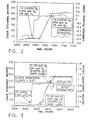
- FIG. 2 is a plot of crack length vs. time for a Pd-coated CT specimen of sensitized Type 304 stainless steel showing accelerated crack growth at ⁇ 0.1 ⁇ M H 2 SO 2 in 288°C water containing about 400 ppb oxygen. Because the CT specimen was Pd-coated, the cnange to excess hydrogen caused the corrosion potential and crack growth rate to drop.
- the present invention is a method for controlling stress corrosion cracking of metal components by identifying and acting on the fundamental cause of accelerated environmental crack growth in high-temperature water, i.e., the solution pH in the crack.
- the evolution of our understanding of SCC has shifted from an emphasis on dissolved oxygen per se to corrosion potential, which controls susceptibility to SCC.
- high flow rate tends to increase, while noble metal coatings can decrease the corrosion potential.
- Elevated corrosion potential causes a concentration of anions as well as shifts the pH in the crack.
- experiments have shown that it is not the corrosion potential per se which enhances SCC, but rather the effect of corrosion potential on crack tip pH.
- methods to limit the shift in pH in the crack can greatly decrease SCC completely independent of the dissolved oxygen concentration or the corrosion potential.
- propagation of a surface-connected crack or initiation of a crack at a crevice submerged in high-temperature bulk water is mitigated by managing the pH of the high-temperature water inside the crack or crevice.
- the method for mitigating propagation of a crack in a surface of a metal component submerged in high-temperature bulk water comprises the step of injecting a solution of pH-adjusting compound into the bulk water.
- the pH-adjusting compound has the ability to change the pH of high-temperature water inside the crack from a pH which produces a relatively high rate of crack growth to a pH which produces a relatively low rate of crack growth, without causing any significant change of the bulk water pH.
- the advantages of this overall approach could include: (1) lack of concern for corrosion potential or the associated oxidizing species; (2) decreased emphasis on anionic impurities, since their effect on crack chemistry (pH) would be directly controlled; and (3) possible reduction in the flow through the reactor water cleanup system, which typically represents 1-3% of reactor water flow and has an impact on the overall thermal efficiency.
- the special characteristics of the differential aeration crevice I.e., anion concentration and low internal corrosion potential, can be used as the basis of the solution to the problem of controlling the crack pH.
- a nitrate solution can be injected into the reactor bulk water to achieve a desired pH in the high-temperature water inside a crack in a reactor component.
- the nitrate anion (No 3 - ) will be acted on by the potential gradient along the crack, causing an elevation of its concentration in the crack.
- Ammonia is itself a buffer whose pH in 250 to 300°C water is about 6.2 for a 25 ppm concentration.
- the nitrate concentration could be varied over a significant range, e.g., from ⁇ 0.1 to >10 ppm. This would have a much lower than proportional effect on pH, because ammonia is a buffer (that is, any increase in the total ammonia concentration raises the ammonium cation and hydroxyl anion concentration by a much smaller amount, since not all ammonia dissociates to form those ions).
- FIG. 1 shows the observed and predicted crack growth rate as a function of corrosion potential for furnace-sensitized Type 304 stainless steel in 288°C water.
- FIG. 2 is a plot of crack length vs. time for a Pd-coated CT specimen of sensitized Type 304 stainless steel in 288°C water containing about 400 ppb oxygen and 0.1 ⁇ M H 2 SO 4 .
- FIG. 3 is a plot of crack length vs. time for a Pd-coated CT specimen of sensitized Type 304 stainless steel.
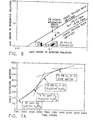
- FIG. 4 shows the effect of H 2 SO 4 additions on the crack growth rate of sensitized Type 304 stainless steel tested in deaerated, 289°C water.
- FIG. 5 shows the influence of the borate:sulfate mole ratio on the crack growth rate of sensitized Type 304 stainless steel tested in deaerated, 289°C water with H 2 SO 4 .
- FIG. 6 shows the interrelationship between corrosion potential and solution conductivity in establishing a crack tip anion activity by comparing crack growth rates in aerated vs. deaerated solutions.
- FIGS. 7A and 7B are respectively plots of the crack extension vs. time response of non-sensitized Type 304L stainless steel and Alloy 82 weld metal to changes in water chemistry.
- FIG. 7C is a plot of crack length vs. time for a Pd-coated CT specimen of sensitized Type 304 stainless steel showing that accelerated crack growth can be achieved at the thermodynamically lowest potentials provided that sufficient H 2 SO 4 is added.
- FIG. 8 is a plot of crack extension vs. time for sensitized Type 304 stainless steel in 288°C water showing the effect of various concentrations of OH - as NaOH.
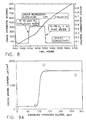
- FIGS. 9A and 9B respectively show the effects of sulfide concentration on the excess anodic current density (metal dissolution rate) and slow strain rate behavior of Alloy 600.
- FIG. 10 shows the effect of impurities on crack initiation as measured during slow strain rate testing of sensitized Type 304 stainless steel in 288°C water with 200 ppb O 2 .
- FIG. 11 is a graph showing crack growth and crack chemistry for low alloy steel in external water having ⁇ 1 ppb sulfate.
- FIG. 12 is a graph showing changes in the interior crevice chemistry vs. distance into a 1-mm-inside diameter tube of as-received Alloy 600 initially filled with a high concentration (0.2 N ) of Na 2 SO 4 and exposed to 288°C aerated water.
- the line denotes the predicted value of pH.
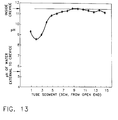
- FIG. 13 is a graph showing changes in the interior crevice chemistry vs. distance into a 1-mm-inside diameter tube of solution annealed Alloy 600 initially filled with a high concentration (0.2 N) of NaNO 3 and exposed to 288°C deaerated ( ⁇ 40 ppb oxygen) pure water.
- FIG. 14 is a potential vs. pH "Pourbaix" diagram of the nitrogen-water system at 250°C showing the thermodynamic stability of ammonia over nitrate at low potentials.
- FIG. 15 is a graph showing changes in the interior crevice chemistry vs. distance into a 1-mm-inside diameter tube of solution annealed Type 304 stainless steel initially filled with a high concentration (0.2 N) of NaNO 3 and exposed to 288°C deaerated ( ⁇ 40 ppb oxygen) pure water.
- the pH of aqueous solutions can change dramatically with temperature.
- the pH of high-temperature water is generally quite different than that at low temperature.
- the pH of an aqueous solution is not solely a function of temperature, but also other variables such as the composition of species dissolved in the solution. Even the direction of pH change varies from species to species.
- the pH of neutral (e.g., ultra high purity) water is 7.0 at 25°C, about 6.2 at 100°C, and about 5.63 at 288°C, an overall change in [H + ] of 25 times (pH is -log [H + ]).
- the variation of pH in pure water is not even monotonic, but reaches a minimum at about 270°C and then begins to increase again.
- pH vs. temperature a significant increase in pH vs. temperature occurs for some species.
- H + + SO 4 2- the poor second ionization of sulfate
- pH vs. temperature for a NaHSO 4 solution is opposite to that of pure water.
- Other species, including some buffers shift acidic with temperature.
- the pH of low concentrations of ammonia (e.g., 40 ppm) at low temperature is about 10.3, but is about 6.2 at 288°C.
- the concentration of species and pH of solution would be constant everywhere in water were it not for concentrating mechanisms.
- the pH inside a crack tip may vary markedly from the pH in the bulk reactor coolant.
- the simplest conceptual mechanism is localized dissolution in an occluded region (crack/crevice), which occurs in low alloy and carbon steels as a result of dissolution of MnS inclusion.
- the slightly elevated crack/crevice chemistry (to several ppm S) is sufficient to create conditions that increase stress corrosion crack growth rates by up to several orders of magnitude (see FIG. 11).
- Another common mechanism is boiling, which can produce huge differences in chemistry in regions where mass transport is restricted. Thermal gradients (non-boiling conditions) can also produce very large changes in chemistry in occluded regions.
- a factor of 30 ⁇ is not huge, particularly when the relevant impurity levels are low to begin with (e.g., 10 -7 M), and can give rise to pH shifts inside the crack that are less than about 1.5 units away from the bulk, essentially neutral water. However, this difference is sufficient to induce huge changes in crack growth rate, e.g., by a factor of more than 100-1000 times. It is this condition (pH) within the crack that the method of the present invention seeks to control (see FIG. 11).
- propagation of a crack in a metal component immersed in high-temperature water can be mitigated by controlling the solution pH inside the crack.
- the pH inside the crack can be controlled by adding a pH-adjusting agent to the circulating water, e.g., by injecting a solution or suspension of the agent into the feedwater.
- the pH-adjusting agent can take the form of a chemical buffering agent or an acid or base, depending on the magnitude and direction of the required shift in pH.
- solution means a solution or a suspension.
- FIGS. 1 and 3 show examples of differing sensitivity to, e.g., conductivity as a function of corrosion potential.
- FIG. 3 is a plot of crack length vs. time for a Pd-coated CT specimen of sensitized Type 304 stainless steel showing the increased tolerance to high impurity levels (0.1 ⁇ M H 2 SO 4 , or 0.863 ⁇ S/cm) at 33 MPa ⁇ m when a low corrosion potential (which results from stoichiometric excess hydrogen, i.e., 78 ppb H 2 ) is maintained on a catalytic surface, despite the presence of 400 ppb oxygen.
- a low corrosion potential which results from stoichiometric excess hydrogen, i.e., 78 ppb H 2
- the corrosion potential and growth rate increase dramatically; returning to excess hydrogen at 6244 hr causes the corrosion potential and growth rate to again drop.
- FIG. 3 shows that at low potential (generated under excess hydrogen, but moderately high oxygen, conditions on a Pd-coated CT specimen), the tolerance to impurities is dramatically higher than at elevated corrosion potentials. However, even at low potential, the addition of sufficient impurity causes an increase in crack growth rate (see FIGS. 4 to 6).
- FIG. 5 shows the influence of the borate:sulfate mole ratio on the crack growth rate of sensitized Type 304 stainless steel tested in deaerated, 289°C water with 0.3-10 ppm H 2 SO 4 in slow strain rate experiments at 1 ⁇ 10 -6 sec -1 .
- FIG. 6 shows the interrelationship between corrosion potential and solution conductivity in establishing a crack tip anion activity by comparing crack growth rates in aerated vs. deaerated solutions for stainless steel and Alloy 82 at 288°C. If the growth rates under two conditions are similar, then it is inferred that the crack tip chemistries are similar. Each point represents a pair of datum obtained at similar crack growth rates and loading conditions for stainless steel and Alloy 82 in 288°C water.
- the labels (e.g., 2.9 ⁇ ) indicate the ratio of the crack growth rate in aerated vs. deaerated solutions.
- the arrows indicate where points would shift if the growth rate match were perfect.
- the ppm of anion is about equal in the bulk solution and at the crack tip.
- FIGS. 7A and 7B are respectively plots of the crack extension vs. time response of non-sensitized Type 304L stainless steel and Alloy 82 weld metal to changes in water chemistry showing elevated crack growth rates in the non-sensitized material in deaerated water at high conductivities. This illustrates the interrelationship between solution conductivity and corrosion potential in creating a specific crack tip solution chemistry and thus a specific crack growth rate. The straight line segments represent predictions of crack growth rate behavior for the various conditions shown.
- FIG. 7C is a plot of crack length vs.
- FIG. 8 is a plot of crack extension vs. time for sensitized Type 304 stainless steel in 288°C water showing the effect of various concentrations of OH - as NaOH.
- 9A and 9B respectively show the effects of sulfide concentration on the excess anodic current density (metal dissolution rate) and slow strain rate behavicr of Alloy 600. A steep threshold at 100 ppm sulfide is shown.
- the strain rate was 2 ⁇ 10 -3 sec -1 .
- the applied potential was -720 mV SHE .
- FIG. 10 shows the effect of 10 ⁇ S/cm of impurities on crack initiation as measured by repeated interruption during slow strain rate testing (3.3 ⁇ 10 -7 sec -1 ) of sensitized Type 304 stainless steel in 288°C water with 200 ppb O 2 .
- management cf pH in the crack can be achieved by four related techniques (some of which rely on the presence of a gradient in corrosion potential):
- a nitrate salt to BWR water would not significantly shift the pH of the bulk water, although it could be combined with small additions of a strong base (e.g., sodium hydroxide) or weak base (e.g., zinc or manganese hydroxide) to cause a slight alkaline shift in pH.
- a strong base e.g., sodium hydroxide
- weak base e.g., zinc or manganese hydroxide
- a slight increase in ph in the bulk water is desirable because it shifts the system toward a minimum in solubility for many oxides, which, in turn, can decrease the formation and release of crud deposits on the fuel.
- the success of this approach depends on: (1) the reduction of nitrate to ammonia in the crack; (2) the presence of a concentration of nitrate/ammonia that is sufficiently in excess of other deleterious impurities (e.g., chloride and sulfate) so that the crack pH is maintained in the desired region; (3) stability of nitrate in bulk oxygenated BWR water, so that relatively little ammonia is lost to the steam phase; (4) the ability to measure/regulate the nitrate concentration, e,g., using anion exchange resins that are partially converted to a nitrate base (this maintains the nitrate concentration in the reactor water clean-up system).
- other deleterious impurities e.g., chloride and sulfate
- ammonia is the most stable species.
- the kinetics of nitrate reduction to ammonia are not very rapid, since it has been observed in "open" autoclaves that, following moderate exposures (average residence time of 20 to 30 minutes) in high-temperature deaerated water (containing 95 ppb hydrogen), little or no ammonia was formed.
- Taylor observed the nearly complete reduction of nitrate to ammonia, with an associated increase in pH (see FIG. 15).
- the concept of the present invention involves control of SCC by limiting shifts in crack pH in high-temperature water, i.e., within a range of about 6.0 to 8.0. This appears to correspond to the minimum in iron and nickel oxide solubility vs. pH in high-temperature water.
- the invention addresses a more fundamental issue in SCC than controlling dissolved oxygen or corrosion potential, since these latter items interact with the impurities in the bulk solution to generate a pH-shifted crack chemistry. If the pH is controlled, SCC can be greatly decreased completely independent of the dissolved oxygen concentration or the corrosion potential.
Landscapes
- Engineering & Computer Science (AREA)
- Physics & Mathematics (AREA)
- Plasma & Fusion (AREA)
- General Engineering & Computer Science (AREA)
- High Energy & Nuclear Physics (AREA)
- Chemical & Material Sciences (AREA)
- Materials Engineering (AREA)
- Mechanical Engineering (AREA)
- Metallurgy (AREA)
- Organic Chemistry (AREA)
- Preventing Corrosion Or Incrustation Of Metals (AREA)
- Monitoring And Testing Of Nuclear Reactors (AREA)
Applications Claiming Priority (2)
| Application Number | Priority Date | Filing Date | Title |
|---|---|---|---|
| US509280 | 1990-04-16 | ||
| US08/509,280 US5673297A (en) | 1994-04-08 | 1995-07-31 | Method of mitigating stress corrosion cracking of metals in high-temperature water by control of crack tip pH |
Publications (2)
| Publication Number | Publication Date |
|---|---|
| EP0757360A1 true EP0757360A1 (de) | 1997-02-05 |
| EP0757360B1 EP0757360B1 (de) | 2001-10-17 |
Family
ID=24025984
Family Applications (1)
| Application Number | Title | Priority Date | Filing Date |
|---|---|---|---|
| EP96305302A Expired - Lifetime EP0757360B1 (de) | 1995-07-31 | 1996-07-19 | Verfahren zur Milderung der Spannungskorrosionsrissbildung von Metallen in Wasser hoher Temperatur durch Kontrolle des pH an der Rissspitze |
Country Status (7)
| Country | Link |
|---|---|
| US (1) | US5673297A (de) |
| EP (1) | EP0757360B1 (de) |
| JP (1) | JP3524276B2 (de) |
| DE (1) | DE69615963T2 (de) |
| ES (1) | ES2164214T3 (de) |
| MX (1) | MX9603099A (de) |
| TW (1) | TW293125B (de) |
Families Citing this family (8)
| Publication number | Priority date | Publication date | Assignee | Title |
|---|---|---|---|---|
| US7031779B2 (en) * | 2000-06-14 | 2006-04-18 | General Electric Company | Method and apparatus for automated crack behavior prediction determination |
| US6891912B1 (en) * | 2002-06-26 | 2005-05-10 | Pinnacle West Capital Corporation | Fuel assemblies in a reactor core and method of designing and arranging same |
| US7013224B2 (en) * | 2002-07-15 | 2006-03-14 | General Electric Company | Method and apparatus to perform crack estimations for nuclear reactor |
| US6724854B1 (en) | 2003-06-16 | 2004-04-20 | General Electric Company | Process to mitigate stress corrosion cracking of structural materials in high temperature water |
| US20040258192A1 (en) * | 2003-06-16 | 2004-12-23 | General Electric Company | Mitigation of steam turbine stress corrosion cracking |
| KR100609590B1 (ko) * | 2005-03-10 | 2006-08-08 | 한국원자력연구소 | 니켈보라이드를 포함하는 원자력발전소 증기발생기 전열관2차측의 부식 및 응력부식균열 억제제 및 억제 방법 |
| US7264770B2 (en) * | 2005-05-02 | 2007-09-04 | General Electric Company | Mitigation of stress corrosion cracking of structural materials exposed to a high temperature water |
| JP6794669B2 (ja) * | 2016-06-10 | 2020-12-02 | 東京電力ホールディングス株式会社 | ステンレス鋼の局部腐食抑制方法及び金属容器の保管方法 |
Citations (3)
| Publication number | Priority date | Publication date | Assignee | Title |
|---|---|---|---|---|
| JPS6280285A (ja) * | 1985-10-04 | 1987-04-13 | Sumitomo Metal Ind Ltd | 高温高圧水環境におけるNi基合金の粒界損傷防止法 |
| US5108697A (en) * | 1990-10-19 | 1992-04-28 | Westinghouse Electric Corp. | Inhibiting stress corrosion cracking in the primary coolant circuit of a nuclear reactor |
| DE19512918A1 (de) * | 1994-04-08 | 1995-10-12 | Gen Electric | Verfahren zum Mildern der Spannungsrißkorrosion von Metallen in Wasser hoher Temperatur durch Kontrolle des pH an der Rißspitze |
Family Cites Families (3)
| Publication number | Priority date | Publication date | Assignee | Title |
|---|---|---|---|---|
| US4992232A (en) * | 1987-08-31 | 1991-02-12 | General Electric Company | Method to control N-16 radiation levels in steam phase BWRs |
| US4926449A (en) * | 1988-02-22 | 1990-05-15 | Burda Paul A | Corrosion inhibition of closed cooling water auxiliary system for nuclear power plants |
| JP2687780B2 (ja) * | 1991-10-14 | 1997-12-08 | 株式会社日立製作所 | 原子炉の水素注入設備 |
-
1995
- 1995-07-31 US US08/509,280 patent/US5673297A/en not_active Expired - Fee Related
-
1996
- 1996-02-23 TW TW085102072A patent/TW293125B/zh active
- 1996-07-19 EP EP96305302A patent/EP0757360B1/de not_active Expired - Lifetime
- 1996-07-19 ES ES96305302T patent/ES2164214T3/es not_active Expired - Lifetime
- 1996-07-19 DE DE69615963T patent/DE69615963T2/de not_active Expired - Fee Related
- 1996-07-30 MX MX9603099A patent/MX9603099A/es unknown
- 1996-07-31 JP JP20088296A patent/JP3524276B2/ja not_active Expired - Fee Related
Patent Citations (3)
| Publication number | Priority date | Publication date | Assignee | Title |
|---|---|---|---|---|
| JPS6280285A (ja) * | 1985-10-04 | 1987-04-13 | Sumitomo Metal Ind Ltd | 高温高圧水環境におけるNi基合金の粒界損傷防止法 |
| US5108697A (en) * | 1990-10-19 | 1992-04-28 | Westinghouse Electric Corp. | Inhibiting stress corrosion cracking in the primary coolant circuit of a nuclear reactor |
| DE19512918A1 (de) * | 1994-04-08 | 1995-10-12 | Gen Electric | Verfahren zum Mildern der Spannungsrißkorrosion von Metallen in Wasser hoher Temperatur durch Kontrolle des pH an der Rißspitze |
Non-Patent Citations (2)
| Title |
|---|
| PATENT ABSTRACTS OF JAPAN vol. 011, no. 282 (C - 446) 11 September 1987 (1987-09-11) * |
| SZKLARSKA-SMIALOWSKA ET AL.: "Mechanism of crack growth in alloy 600 in high-temperature deaerated water", CORROSION, vol. 50, no. 9, September 1994 (1994-09-01), HOUSTON US, pages 676 - 681, XP002017410 * |
Also Published As
| Publication number | Publication date |
|---|---|
| DE69615963D1 (de) | 2001-11-22 |
| JPH09264988A (ja) | 1997-10-07 |
| MX9603099A (es) | 1998-04-30 |
| TW293125B (en) | 1996-12-11 |
| EP0757360B1 (de) | 2001-10-17 |
| US5673297A (en) | 1997-09-30 |
| ES2164214T3 (es) | 2002-02-16 |
| DE69615963T2 (de) | 2002-04-11 |
| JP3524276B2 (ja) | 2004-05-10 |
Similar Documents
| Publication | Publication Date | Title |
|---|---|---|
| Andresen | Emerging issues and fundamental processes in environmental cracking in hot water | |
| Was et al. | Irradiation-assisted stress-corrosion cracking in austenitic alloys | |
| Chopra et al. | Review of the margins for ASME code fatigue design curve-effects of surface roughness and material variability. | |
| US5602888A (en) | Radiation-induced palladium doping of metals to protect against stress corrosion cracking | |
| Chopra et al. | Effects of alloy chemistry, cold work, and water chemistry on corrosion fatigue and stress corrosion cracking of nickel alloys and welds. | |
| Kim et al. | Crevice chemistry and corrosion in high temperature water: A review | |
| EP0515112A1 (de) | Korrosionsbeständige rostfreie Stahllegierung mit hohem Chromgehalt und Verfahren zur Verminderung der Spannungsrisskorrosion | |
| US6606368B2 (en) | Method of operating nuclear power plant, nuclear power plant, and method of controlling water chemistry of nuclear power plant | |
| EP0757360B1 (de) | Verfahren zur Milderung der Spannungskorrosionsrissbildung von Metallen in Wasser hoher Temperatur durch Kontrolle des pH an der Rissspitze | |
| Irisawa et al. | Estimating the corrosion rate of stainless steel R-SUS304ULC in nitric acid media under concentrating operation | |
| KR20020050741A (ko) | 귀금속 촉매를 사용하여, 가압수 반응기 및 관련된 고온수환경에서 부식, 침식 및 응력 부식 균열을 경감시키는 방법 | |
| Was et al. | Effect of irradiation on stress-corrosion cracking and corrosion in light water reactors | |
| MXPA96003099A (en) | Method for attenuating the corrosion cracking by metal efforts in high temperature water through the control of the gri punta | |
| Scott et al. | Corrosion in pressurized water reactors | |
| US4759902A (en) | Use of electrochemical potential to predict radiation buildup on nuclear reactor coolant piping | |
| Almarshad et al. | A model for waterside oxidation of Zircaloy fuel cladding in pressurized water reactors | |
| Stobbs et al. | Effects of radiation on metallic corrosion | |
| CA2145897A1 (en) | Method of mitigating stress corrosion cracking of metals in high-temperature water by control of crack tip ph | |
| Das et al. | Stress corrosion cracking in austenitic stainless steels in reactor primary water–high purity oxidizing and in supercritical conditions | |
| Chopra et al. | Crack growth rates of irradiated austenitic stainless steel weld heat affected zone in BWR environments. | |
| EP0338769A2 (de) | Verfahren zur Korrosionsverhinderung in einem Druckwasserkernreaktor | |
| US5307391A (en) | Method for treatment of primary coolant medium of a pressurized water nuclear reactor | |
| Newman et al. | Evaluation of SCC Test Methods for Inconel 600 in Low-Temperature Aqueous Solutions | |
| Martin et al. | Insights into prospective fusion reactor cooling systems from fission reactor cooling circuits | |
| Molinari | Activated corrosion products: experimental and numerical investigations for Tokamak-type fusion plants applications |
Legal Events
| Date | Code | Title | Description |
|---|---|---|---|
| PUAI | Public reference made under article 153(3) epc to a published international application that has entered the european phase |
Free format text: ORIGINAL CODE: 0009012 |
|
| AK | Designated contracting states |
Kind code of ref document: A1 Designated state(s): CH DE ES FI LI SE |
|
| 17P | Request for examination filed |
Effective date: 19970805 |
|
| 17Q | First examination report despatched |
Effective date: 19980609 |
|
| GRAG | Despatch of communication of intention to grant |
Free format text: ORIGINAL CODE: EPIDOS AGRA |
|
| GRAG | Despatch of communication of intention to grant |
Free format text: ORIGINAL CODE: EPIDOS AGRA |
|
| GRAH | Despatch of communication of intention to grant a patent |
Free format text: ORIGINAL CODE: EPIDOS IGRA |
|
| GRAH | Despatch of communication of intention to grant a patent |
Free format text: ORIGINAL CODE: EPIDOS IGRA |
|
| GRAA | (expected) grant |
Free format text: ORIGINAL CODE: 0009210 |
|
| AK | Designated contracting states |
Kind code of ref document: B1 Designated state(s): CH DE ES FI LI SE |
|
| REG | Reference to a national code |
Ref country code: CH Ref legal event code: NV Representative=s name: RITSCHER & SEIFERT Ref country code: CH Ref legal event code: EP |
|
| REF | Corresponds to: |
Ref document number: 69615963 Country of ref document: DE Date of ref document: 20011122 |
|
| REG | Reference to a national code |
Ref country code: ES Ref legal event code: FG2A Ref document number: 2164214 Country of ref document: ES Kind code of ref document: T3 |
|
| PLBE | No opposition filed within time limit |
Free format text: ORIGINAL CODE: 0009261 |
|
| STAA | Information on the status of an ep patent application or granted ep patent |
Free format text: STATUS: NO OPPOSITION FILED WITHIN TIME LIMIT |
|
| 26N | No opposition filed | ||
| PGFP | Annual fee paid to national office [announced via postgrant information from national office to epo] |
Ref country code: CH Payment date: 20030721 Year of fee payment: 8 |
|
| PGFP | Annual fee paid to national office [announced via postgrant information from national office to epo] |
Ref country code: FI Payment date: 20030722 Year of fee payment: 8 |
|
| PGFP | Annual fee paid to national office [announced via postgrant information from national office to epo] |
Ref country code: ES Payment date: 20030807 Year of fee payment: 8 |
|
| PG25 | Lapsed in a contracting state [announced via postgrant information from national office to epo] |
Ref country code: FI Free format text: LAPSE BECAUSE OF NON-PAYMENT OF DUE FEES Effective date: 20040719 |
|
| PG25 | Lapsed in a contracting state [announced via postgrant information from national office to epo] |
Ref country code: ES Free format text: LAPSE BECAUSE OF NON-PAYMENT OF DUE FEES Effective date: 20040720 |
|
| PG25 | Lapsed in a contracting state [announced via postgrant information from national office to epo] |
Ref country code: LI Free format text: LAPSE BECAUSE OF NON-PAYMENT OF DUE FEES Effective date: 20040731 Ref country code: CH Free format text: LAPSE BECAUSE OF NON-PAYMENT OF DUE FEES Effective date: 20040731 |
|
| REG | Reference to a national code |
Ref country code: CH Ref legal event code: PL |
|
| REG | Reference to a national code |
Ref country code: ES Ref legal event code: FD2A Effective date: 20040720 |
|
| PGFP | Annual fee paid to national office [announced via postgrant information from national office to epo] |
Ref country code: SE Payment date: 20070727 Year of fee payment: 12 |
|
| EUG | Se: european patent has lapsed | ||
| PGFP | Annual fee paid to national office [announced via postgrant information from national office to epo] |
Ref country code: DE Payment date: 20090729 Year of fee payment: 14 |
|
| PG25 | Lapsed in a contracting state [announced via postgrant information from national office to epo] |
Ref country code: SE Free format text: LAPSE BECAUSE OF NON-PAYMENT OF DUE FEES Effective date: 20080720 |
|
| PG25 | Lapsed in a contracting state [announced via postgrant information from national office to epo] |
Ref country code: DE Free format text: LAPSE BECAUSE OF NON-PAYMENT OF DUE FEES Effective date: 20110201 |
|
| REG | Reference to a national code |
Ref country code: DE Ref legal event code: R119 Ref document number: 69615963 Country of ref document: DE Effective date: 20110201 |