EP0338769A2 - Verfahren zur Korrosionsverhinderung in einem Druckwasserkernreaktor - Google Patents
Verfahren zur Korrosionsverhinderung in einem Druckwasserkernreaktor Download PDFInfo
- Publication number
- EP0338769A2 EP0338769A2 EP89303816A EP89303816A EP0338769A2 EP 0338769 A2 EP0338769 A2 EP 0338769A2 EP 89303816 A EP89303816 A EP 89303816A EP 89303816 A EP89303816 A EP 89303816A EP 0338769 A2 EP0338769 A2 EP 0338769A2
- Authority
- EP
- European Patent Office
- Prior art keywords
- zinc
- reactor
- water
- corrosion
- coolant water
- Prior art date
- Legal status (The legal status is an assumption and is not a legal conclusion. Google has not performed a legal analysis and makes no representation as to the accuracy of the status listed.)
- Granted
Links
Images
Classifications
-
- G—PHYSICS
- G21—NUCLEAR PHYSICS; NUCLEAR ENGINEERING
- G21C—NUCLEAR REACTORS
- G21C17/00—Monitoring; Testing ; Maintaining
- G21C17/02—Devices or arrangements for monitoring coolant or moderator
- G21C17/022—Devices or arrangements for monitoring coolant or moderator for monitoring liquid coolants or moderators
- G21C17/0225—Chemical surface treatment, e.g. corrosion
-
- Y—GENERAL TAGGING OF NEW TECHNOLOGICAL DEVELOPMENTS; GENERAL TAGGING OF CROSS-SECTIONAL TECHNOLOGIES SPANNING OVER SEVERAL SECTIONS OF THE IPC; TECHNICAL SUBJECTS COVERED BY FORMER USPC CROSS-REFERENCE ART COLLECTIONS [XRACs] AND DIGESTS
- Y02—TECHNOLOGIES OR APPLICATIONS FOR MITIGATION OR ADAPTATION AGAINST CLIMATE CHANGE
- Y02E—REDUCTION OF GREENHOUSE GAS [GHG] EMISSIONS, RELATED TO ENERGY GENERATION, TRANSMISSION OR DISTRIBUTION
- Y02E30/00—Energy generation of nuclear origin
- Y02E30/30—Nuclear fission reactors
Definitions
- the invention relates to a process for inhibiting corrosion in a pressurized water nuclear reactor, and more particularly for inhibiting corrosion within the primary circuit of a pressurized water nuclear reactor.
- Corrosion is a particular concern for nuclear reactors in which water is present as a coolant.
- Several methods have been proposed to deal with the problem, including dissolving oxide scale from the structure of the nuclear reactor, as disclosed in U.S. Patent No. 3,664,870 to Oberhofer et al. and U.S. Patent No. 4,042,455 to Brown.
- Burrill adds from about 120 to about 200 milligrams of ammonia per kilogram of coolant water to reduce crevice corrosion in the core of pressurized water nuclear reactors.
- Zinc ions are thought to inhibit corrosion within boiling water nuclear reactors, and such ions from zinc oxide and zinc chloride have been described for use in boiling water nuclear reactors.
- Zinc introduced in the form of zinc chloride (ZnCL2) was also laboratory tested as a corrosion inhibitor under power plant operating conditions, as discussed by L. W. Niedrach and W. H. Stoddard in "Effect of Zinc on Corrosion Films that Form on Stainless Steel", Corrosion 42, 546 (1986).
- zinc oxide as a source of zinc ions has the drawback that zinc oxide is not particularly soluble in water, and, therefore, the zinc oxide must be added to the coolant as a slurry or suspension, rather than as a solution.
- Pressurized water nuclear reactors are thermal reactors in which water is used as the coolant and as the moderator.
- the water is circulated by pumps throughout a primary circuit, that includes a pressure vessel, which houses the heat generating reactor core, and a plurality of flow loops.
- the heat absorbed by the water as it passes through the reactor core is transferred by means of a heat exchanger to a readily vaporizable liquid (water) in a secondary circuit in which the thermal energy is used to produce electricity.
- the water is then returned to the pressure vessel.
- the water in the primary circuit which normally contains boric acid as a moderator, passes through numerous metal, generally stainless steel and Alloy 600, conduits, all of which are subject to corrosion. Further, some radioactive cobalt from the reactor core is dissolved in the water as the metal ion and transported throughout the primary circuit. The transport of radioactive cobalt throughout the primary circuit results in a level of residual radioactivity throughout the primary circuit that is not desired.
- An object of the invention is to provide a process for inhibiting corrosion in a nuclear reactor by the addition of zinc to the coolant water flowing therethrough in a soluble form.
- the present invention provides a process for inhibiting corrosion caused by the presence of coolant water passing through a pressurized water nuclear reactor.
- An effective amount of an aqueous solution of zinc borate is added to the reactor coolant water.
- the aqueous solution of zinc borate is preferivelyably an aqueous solution of zinc borate in boric acid, with the zinc borate preferably added to the reactor coolant water so that zinc ions are present in the reactor coolant water in an amount of from about 10 to about 200 parts per billion.
- This invention has the advantage of inhibiting corrosion of the primary circuit of a pressurized water reactor and the resultant transport of resultant corrosion products through the system in a way that has no deleterious effects.
- the process of the present invention involves the addition of an effective amount of an aqueous solution of zinc borate, Zn(BO2)2, to the reactor coolant water of a pressurized water reactor.
- the zinc ions which are thereby added to the reactor coolant water serve to inhibit corrosion within the pressurized water nuclear reactor system, and more specifically, within the primary circuit of a pressurized water nuclear reactor system.
- zinc borate is sufficiently soluble in water.
- the zinc ions can be added to the reactor coolant water as an aqueous solution, rather than as a slurry.
- the aqueous solution of zinc borate is an aqueous solution of zinc borate in aqueous boric acid.
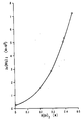
- Zinc borate as shown in the drawing is sufficiently soluble in a boric acid solution so as to provide a solution thereof for addition to the reactor coolant water.
- An important advantage of using an aqueous solution of zinc borate in boric acid is that boric acid is often conventionally added to the coolant water of pressurized water nuclear reactors as a neutron absorber or "chemical shim".
- the concentration of boric acid in the coolant water of pressurized water reactors for such a purpose is up to about 0.1 molar (M).
- M 0.1 molar
- the aqueous solution of zinc borate can be prepared by adding a 0.1N (normal) zinc nitrate solution, which has been heated, to a 0.15 normal solution of borax while stirring.
- the resulting white flocculent precipitate is dried, washed with water, washed with alcohol, and dried again at a temperature of between about 60°C and about 70°C, to form a fine powder which is readily dissolved in boric acid solutions.
- An alternative method of preparing the aqueous solution of zinc borate is to at an elevated temperature.
- An equal volume of a 96 percent, by weight, alcohol is added to the aqueous solution of boric acid and zinc oxide to cause the formation of a white gelatinous precipitate of the general composition Zn(BO2) ⁇ H2O.
- Zinc borate identified as ZN3B4O9 ⁇ 5H2O, may also be purchased commercially from Alpha Products of Danvers, Massachusetts.
- the aqueous solution of zinc borate is preferivelyably added to the reactor coolant water so that the concentration of zinc ions in the coolant water is from about 10 to about 200 parts per billion (ppb), more preferably, from about 10 to about 50 ppb, and, most preferably, from about 10 to about 20 ppb.
- the first test had the "middle-of-life" (MOL) primary chemistry (500 ppm boron as boric acid and 1.1 ppm lithium as lithium hydroxide) and served as a reference.
- the second test had the MOL chemistry + 100 ppb zinc as borate.
- the initial and final solutions for each of the two tests were analyzed for lithium and boron.
- analyses were performed for zinc before, during, and after the test. Zinc additions, when needed, were made shortly after the analysis to compensate for zinc depletion. The duration of each of the two tests was 300 hours.
- Photographs of the four specimen surfaces exposed to normal and zinc added coolant showed slightly darker surfaces for 304, 600 and 690 specimens while there was not much difference between the Zirc-4 specimens. Since darker oxides on specimens exposed under the same conditions are generally thicker, the lighter oxide on the three materials suggest that the zinc borate addition has produced a thinner oxide than was produced without the addition.
- the corrosion within the reactor is inhibited.
- the transport of corrosion products and radioactive cobalt ions through the reactor, as well as levels of radioactivity within the reactor, are reduced.
Landscapes
- Physics & Mathematics (AREA)
- Engineering & Computer Science (AREA)
- Plasma & Fusion (AREA)
- General Engineering & Computer Science (AREA)
- High Energy & Nuclear Physics (AREA)
- Preventing Corrosion Or Incrustation Of Metals (AREA)
Applications Claiming Priority (2)
| Application Number | Priority Date | Filing Date | Title |
|---|---|---|---|
| US18455788A | 1988-04-20 | 1988-04-20 | |
| US184557 | 1988-04-20 |
Publications (3)
| Publication Number | Publication Date |
|---|---|
| EP0338769A2 true EP0338769A2 (de) | 1989-10-25 |
| EP0338769A3 EP0338769A3 (en) | 1990-05-30 |
| EP0338769B1 EP0338769B1 (de) | 1994-09-21 |
Family
ID=22677396
Family Applications (1)
| Application Number | Title | Priority Date | Filing Date |
|---|---|---|---|
| EP89303816A Expired - Lifetime EP0338769B1 (de) | 1988-04-20 | 1989-04-18 | Verfahren zur Korrosionsverhinderung in einem Druckwasserkernreaktor |
Country Status (3)
| Country | Link |
|---|---|
| EP (1) | EP0338769B1 (de) |
| JP (1) | JPH0213894A (de) |
| ES (1) | ES2063816T3 (de) |
Cited By (3)
| Publication number | Priority date | Publication date | Assignee | Title |
|---|---|---|---|---|
| US5108697A (en) * | 1990-10-19 | 1992-04-28 | Westinghouse Electric Corp. | Inhibiting stress corrosion cracking in the primary coolant circuit of a nuclear reactor |
| WO1999013476A3 (de) * | 1997-09-09 | 1999-05-27 | Siemens Ag | Verfahren zum einbringen von zink in ein wasser enthaltendes bauteil des primärsystems eines kernkraftwerkes |
| CN111551482A (zh) * | 2020-05-15 | 2020-08-18 | 中国核动力研究设计院 | 高温高压一、二回路联动运行的综合动水腐蚀试验装置 |
Families Citing this family (2)
| Publication number | Priority date | Publication date | Assignee | Title |
|---|---|---|---|---|
| JP5118576B2 (ja) | 2008-08-12 | 2013-01-16 | 三菱重工業株式会社 | 原子力プラントの運転方法 |
| CA2954684C (en) * | 2014-07-30 | 2023-10-17 | Westinghouse Electric Company Llc | Chemical process for primary system material passivation during hot functional testing of nuclear power plants |
Family Cites Families (1)
| Publication number | Priority date | Publication date | Assignee | Title |
|---|---|---|---|---|
| US4759900A (en) * | 1986-08-27 | 1988-07-26 | General Electric Company | Inhibition of radioactive cobalt deposition in water-cooled nuclear reactors |
-
1989
- 1989-04-14 JP JP1093238A patent/JPH0213894A/ja active Pending
- 1989-04-18 EP EP89303816A patent/EP0338769B1/de not_active Expired - Lifetime
- 1989-04-18 ES ES89303816T patent/ES2063816T3/es not_active Expired - Lifetime
Cited By (4)
| Publication number | Priority date | Publication date | Assignee | Title |
|---|---|---|---|---|
| US5108697A (en) * | 1990-10-19 | 1992-04-28 | Westinghouse Electric Corp. | Inhibiting stress corrosion cracking in the primary coolant circuit of a nuclear reactor |
| WO1999013476A3 (de) * | 1997-09-09 | 1999-05-27 | Siemens Ag | Verfahren zum einbringen von zink in ein wasser enthaltendes bauteil des primärsystems eines kernkraftwerkes |
| US6314153B1 (en) | 1997-09-09 | 2001-11-06 | Siemens Aktiengesellschaft | Process for introducing zinc into a water-containing component of the primary system of a nuclear power plant |
| CN111551482A (zh) * | 2020-05-15 | 2020-08-18 | 中国核动力研究设计院 | 高温高压一、二回路联动运行的综合动水腐蚀试验装置 |
Also Published As
| Publication number | Publication date |
|---|---|
| ES2063816T3 (es) | 1995-01-16 |
| EP0338769A3 (en) | 1990-05-30 |
| JPH0213894A (ja) | 1990-01-18 |
| EP0338769B1 (de) | 1994-09-21 |
Similar Documents
| Publication | Publication Date | Title |
|---|---|---|
| Johnson Jr | Behavior of spent nuclear fuel in water pool storage | |
| JP3164611B2 (ja) | 原子炉の一次冷却材回路における応力腐食割れを抑制する方法 | |
| US5171515A (en) | Process for inhibiting corrosion in a pressurized water nuclear reactor | |
| US4476047A (en) | Process for treatment of oxide films prior to chemical cleaning | |
| EP0338769B1 (de) | Verfahren zur Korrosionsverhinderung in einem Druckwasserkernreaktor | |
| US4759902A (en) | Use of electrochemical potential to predict radiation buildup on nuclear reactor coolant piping | |
| JP3524276B2 (ja) | 亀裂先端のpHを制御することによって高温水中での金属の応力腐食割れを低減させる方法 | |
| JP3069787B2 (ja) | 原子力発電プラントにおける一次冷却水配管表面への放射性腐食生成物付着抑制方法 | |
| Lister et al. | Effects of magnesium and zinc additives on corrosion and cobalt contamination of stainless steels in simulated BWR coolant | |
| Stobbs et al. | Effects of radiation on metallic corrosion | |
| Indig et al. | Investigation of the protection potential against IASCC | |
| Weeks et al. | Effects of high thermal and high fast fluences on the mechanical properties of type 6061 aluminum in the HFBR | |
| JPS6179194A (ja) | 炉水給水装置 | |
| US5307391A (en) | Method for treatment of primary coolant medium of a pressurized water nuclear reactor | |
| Volkov et al. | Use of burnable poisons in nuclear reactors | |
| JPH0424434B2 (de) | ||
| US3663218A (en) | Burnable poison for nuclear reactor | |
| US3832439A (en) | Method for the suppression of hydrogen during the dissolution of zirconium and zirconium alloys | |
| Jenks et al. | WATER CHEMISTRY IN PRESSURIZED AND BOILING WATER POWER REACTORS. | |
| Smykov et al. | Possibility of improving the corrosion properties of the alloy É-110 by surface implantation of Zn+ | |
| EP2833366A1 (de) | System zur strahlungsquellenreduzierung und verfahren für atomkraftwerk | |
| Saji | A Root Cause Study on AOA-PWR and CDA-VVER: A Point of View of “Long-Cell Action” Corrosion Mechanism | |
| ACTIVITIESREPORT | " HANFORD LABORATORIES | |
| Wells et al. | Out-of-reactor test of corrosion and hydrogen pickup in fuel cladding materials in contact with nickel metal | |
| Interrante et al. | Evaluation and compilation of DOE waste package test data |
Legal Events
| Date | Code | Title | Description |
|---|---|---|---|
| PUAI | Public reference made under article 153(3) epc to a published international application that has entered the european phase |
Free format text: ORIGINAL CODE: 0009012 |
|
| AK | Designated contracting states |
Kind code of ref document: A2 Designated state(s): BE ES FR GB IT |
|
| PUAL | Search report despatched |
Free format text: ORIGINAL CODE: 0009013 |
|
| AK | Designated contracting states |
Kind code of ref document: A3 Designated state(s): BE ES FR GB IT |
|
| 17P | Request for examination filed |
Effective date: 19901128 |
|
| 17Q | First examination report despatched |
Effective date: 19930429 |
|
| GRAA | (expected) grant |
Free format text: ORIGINAL CODE: 0009210 |
|
| AK | Designated contracting states |
Kind code of ref document: B1 Designated state(s): BE ES FR GB IT |
|
| ET | Fr: translation filed | ||
| ITF | It: translation for a ep patent filed | ||
| REG | Reference to a national code |
Ref country code: ES Ref legal event code: FG2A Ref document number: 2063816 Country of ref document: ES Kind code of ref document: T3 |
|
| PLBE | No opposition filed within time limit |
Free format text: ORIGINAL CODE: 0009261 |
|
| STAA | Information on the status of an ep patent application or granted ep patent |
Free format text: STATUS: NO OPPOSITION FILED WITHIN TIME LIMIT |
|
| 26N | No opposition filed | ||
| PGFP | Annual fee paid to national office [announced via postgrant information from national office to epo] |
Ref country code: GB Payment date: 19960318 Year of fee payment: 8 |
|
| PGFP | Annual fee paid to national office [announced via postgrant information from national office to epo] |
Ref country code: FR Payment date: 19960412 Year of fee payment: 8 Ref country code: ES Payment date: 19960412 Year of fee payment: 8 |
|
| PGFP | Annual fee paid to national office [announced via postgrant information from national office to epo] |
Ref country code: BE Payment date: 19960510 Year of fee payment: 8 |
|
| PG25 | Lapsed in a contracting state [announced via postgrant information from national office to epo] |
Ref country code: GB Effective date: 19970418 |
|
| PG25 | Lapsed in a contracting state [announced via postgrant information from national office to epo] |
Ref country code: ES Free format text: LAPSE BECAUSE OF NON-PAYMENT OF DUE FEES Effective date: 19970419 |
|
| PG25 | Lapsed in a contracting state [announced via postgrant information from national office to epo] |
Ref country code: BE Effective date: 19970430 |
|
| BERE | Be: lapsed |
Owner name: WESTINGHOUSE ELECTRIC CORP. Effective date: 19970430 |
|
| GBPC | Gb: european patent ceased through non-payment of renewal fee |
Effective date: 19970418 |
|
| PG25 | Lapsed in a contracting state [announced via postgrant information from national office to epo] |
Ref country code: FR Free format text: LAPSE BECAUSE OF NON-PAYMENT OF DUE FEES Effective date: 19971231 |
|
| REG | Reference to a national code |
Ref country code: FR Ref legal event code: ST |
|
| REG | Reference to a national code |
Ref country code: ES Ref legal event code: FD2A Effective date: 19990503 |
|
| PG25 | Lapsed in a contracting state [announced via postgrant information from national office to epo] |
Ref country code: IT Free format text: LAPSE BECAUSE OF NON-PAYMENT OF DUE FEES;WARNING: LAPSES OF ITALIAN PATENTS WITH EFFECTIVE DATE BEFORE 2007 MAY HAVE OCCURRED AT ANY TIME BEFORE 2007. THE CORRECT EFFECTIVE DATE MAY BE DIFFERENT FROM THE ONE RECORDED. Effective date: 20050418 |