EP0732310B1 - Céramique à fritter à base d'alumine, procédé de fabrication et pièces de frottement ainsi obtenues - Google Patents
Céramique à fritter à base d'alumine, procédé de fabrication et pièces de frottement ainsi obtenues Download PDFInfo
- Publication number
- EP0732310B1 EP0732310B1 EP19960400476 EP96400476A EP0732310B1 EP 0732310 B1 EP0732310 B1 EP 0732310B1 EP 19960400476 EP19960400476 EP 19960400476 EP 96400476 A EP96400476 A EP 96400476A EP 0732310 B1 EP0732310 B1 EP 0732310B1
- Authority
- EP
- European Patent Office
- Prior art keywords
- weight
- content
- oxide
- friction
- oxides
- Prior art date
- Legal status (The legal status is an assumption and is not a legal conclusion. Google has not performed a legal analysis and makes no representation as to the accuracy of the status listed.)
- Expired - Lifetime
Links
- PNEYBMLMFCGWSK-UHFFFAOYSA-N aluminium oxide Inorganic materials [O-2].[O-2].[O-2].[Al+3].[Al+3] PNEYBMLMFCGWSK-UHFFFAOYSA-N 0.000 title claims description 33
- 239000000919 ceramic Substances 0.000 title claims description 18
- 238000004519 manufacturing process Methods 0.000 title claims description 16
- 239000000203 mixture Substances 0.000 claims description 71
- 239000011572 manganese Substances 0.000 claims description 24
- VYPSYNLAJGMNEJ-UHFFFAOYSA-N Silicium dioxide Chemical compound O=[Si]=O VYPSYNLAJGMNEJ-UHFFFAOYSA-N 0.000 claims description 22
- GWEVSGVZZGPLCZ-UHFFFAOYSA-N Titan oxide Chemical compound O=[Ti]=O GWEVSGVZZGPLCZ-UHFFFAOYSA-N 0.000 claims description 21
- 230000007704 transition Effects 0.000 claims description 21
- 238000005245 sintering Methods 0.000 claims description 19
- 229910052742 iron Inorganic materials 0.000 claims description 17
- 150000004645 aluminates Chemical class 0.000 claims description 16
- 229910052802 copper Inorganic materials 0.000 claims description 14
- CRHLEZORXKQUEI-UHFFFAOYSA-N dialuminum;cobalt(2+);oxygen(2-) Chemical compound [O-2].[O-2].[O-2].[O-2].[O-2].[Al+3].[Al+3].[Co+2].[Co+2] CRHLEZORXKQUEI-UHFFFAOYSA-N 0.000 claims description 14
- 229910052759 nickel Inorganic materials 0.000 claims description 14
- 229910052804 chromium Inorganic materials 0.000 claims description 13
- AMWRITDGCCNYAT-UHFFFAOYSA-L manganese oxide Inorganic materials [Mn].O[Mn]=O.O[Mn]=O AMWRITDGCCNYAT-UHFFFAOYSA-L 0.000 claims description 12
- 229910052748 manganese Inorganic materials 0.000 claims description 11
- 239000000377 silicon dioxide Substances 0.000 claims description 11
- 239000005995 Aluminium silicate Substances 0.000 claims description 10
- 235000012211 aluminium silicate Nutrition 0.000 claims description 10
- 229910052681 coesite Inorganic materials 0.000 claims description 10
- 229910052906 cristobalite Inorganic materials 0.000 claims description 10
- 239000012535 impurity Substances 0.000 claims description 10
- NLYAJNPCOHFWQQ-UHFFFAOYSA-N kaolin Chemical compound O.O.O=[Al]O[Si](=O)O[Si](=O)O[Al]=O NLYAJNPCOHFWQQ-UHFFFAOYSA-N 0.000 claims description 10
- 238000000034 method Methods 0.000 claims description 10
- 229910052682 stishovite Inorganic materials 0.000 claims description 10
- 229910052905 tridymite Inorganic materials 0.000 claims description 10
- -1 manganese aluminate Chemical class 0.000 claims description 9
- IVMYJDGYRUAWML-UHFFFAOYSA-N cobalt(ii) oxide Chemical compound [Co]=O IVMYJDGYRUAWML-UHFFFAOYSA-N 0.000 claims description 8
- 239000000454 talc Substances 0.000 claims description 5
- 229910052623 talc Inorganic materials 0.000 claims description 5
- PWHULOQIROXLJO-UHFFFAOYSA-N Manganese Chemical compound [Mn] PWHULOQIROXLJO-UHFFFAOYSA-N 0.000 claims description 4
- 229910000428 cobalt oxide Inorganic materials 0.000 claims description 4
- 238000010304 firing Methods 0.000 claims 2
- 230000005484 gravity Effects 0.000 claims 2
- 238000010438 heat treatment Methods 0.000 claims 1
- XEEYBQQBJWHFJM-UHFFFAOYSA-N iron Substances [Fe] XEEYBQQBJWHFJM-UHFFFAOYSA-N 0.000 description 18
- 239000000463 material Substances 0.000 description 17
- 229910004298 SiO 2 Inorganic materials 0.000 description 16
- 229910010413 TiO 2 Inorganic materials 0.000 description 15
- PXHVJJICTQNCMI-UHFFFAOYSA-N nickel Substances [Ni] PXHVJJICTQNCMI-UHFFFAOYSA-N 0.000 description 12
- 239000010949 copper Substances 0.000 description 11
- 239000011651 chromium Substances 0.000 description 10
- 239000000843 powder Substances 0.000 description 10
- 229910018072 Al 2 O 3 Inorganic materials 0.000 description 8
- HIGRAKVNKLCVCA-UHFFFAOYSA-N alumine Chemical compound C1=CC=[Al]C=C1 HIGRAKVNKLCVCA-UHFFFAOYSA-N 0.000 description 8
- 230000015572 biosynthetic process Effects 0.000 description 8
- 238000002441 X-ray diffraction Methods 0.000 description 7
- 238000004458 analytical method Methods 0.000 description 7
- 239000010941 cobalt Substances 0.000 description 6
- 229910017052 cobalt Inorganic materials 0.000 description 6
- 229910016583 MnAl Inorganic materials 0.000 description 5
- 238000007792 addition Methods 0.000 description 5
- GUTLYIVDDKVIGB-UHFFFAOYSA-N cobalt atom Chemical compound [Co] GUTLYIVDDKVIGB-UHFFFAOYSA-N 0.000 description 5
- 238000005498 polishing Methods 0.000 description 5
- 238000001238 wet grinding Methods 0.000 description 5
- 238000010586 diagram Methods 0.000 description 4
- 239000000126 substance Substances 0.000 description 4
- 229910002515 CoAl Inorganic materials 0.000 description 3
- 229920000297 Rayon Polymers 0.000 description 3
- 230000008901 benefit Effects 0.000 description 3
- 239000003245 coal Substances 0.000 description 3
- 238000000227 grinding Methods 0.000 description 3
- 239000000314 lubricant Substances 0.000 description 3
- 238000005461 lubrication Methods 0.000 description 3
- 239000002964 rayon Substances 0.000 description 3
- 229910052596 spinel Inorganic materials 0.000 description 3
- 239000011029 spinel Substances 0.000 description 3
- XLYOFNOQVPJJNP-UHFFFAOYSA-N water Substances O XLYOFNOQVPJJNP-UHFFFAOYSA-N 0.000 description 3
- UQSXHKLRYXJYBZ-UHFFFAOYSA-N Iron oxide Chemical compound [Fe]=O UQSXHKLRYXJYBZ-UHFFFAOYSA-N 0.000 description 2
- 239000012925 reference material Substances 0.000 description 2
- VYZAMTAEIAYCRO-UHFFFAOYSA-N Chromium Chemical compound [Cr] VYZAMTAEIAYCRO-UHFFFAOYSA-N 0.000 description 1
- RYGMFSIKBFXOCR-UHFFFAOYSA-N Copper Chemical compound [Cu] RYGMFSIKBFXOCR-UHFFFAOYSA-N 0.000 description 1
- BPQQTUXANYXVAA-UHFFFAOYSA-N Orthosilicate Chemical compound [O-][Si]([O-])([O-])[O-] BPQQTUXANYXVAA-UHFFFAOYSA-N 0.000 description 1
- 241000287107 Passer Species 0.000 description 1
- 239000000654 additive Substances 0.000 description 1
- 230000000996 additive effect Effects 0.000 description 1
- 230000000903 blocking effect Effects 0.000 description 1
- 230000015556 catabolic process Effects 0.000 description 1
- 230000008859 change Effects 0.000 description 1
- 239000000470 constituent Substances 0.000 description 1
- 238000010411 cooking Methods 0.000 description 1
- 238000006731 degradation reaction Methods 0.000 description 1
- 238000007688 edging Methods 0.000 description 1
- 230000002349 favourable effect Effects 0.000 description 1
- 230000004907 flux Effects 0.000 description 1
- 230000006872 improvement Effects 0.000 description 1
- 239000011159 matrix material Substances 0.000 description 1
- 239000002245 particle Substances 0.000 description 1
- 230000002688 persistence Effects 0.000 description 1
- 238000002360 preparation method Methods 0.000 description 1
- 238000011002 quantification Methods 0.000 description 1
- 150000004760 silicates Chemical class 0.000 description 1
- 229910052710 silicon Inorganic materials 0.000 description 1
- 239000010703 silicon Substances 0.000 description 1
- 239000007787 solid Substances 0.000 description 1
- OGIDPMRJRNCKJF-UHFFFAOYSA-N titanium oxide Inorganic materials [Ti]=O OGIDPMRJRNCKJF-UHFFFAOYSA-N 0.000 description 1
- 238000011282 treatment Methods 0.000 description 1
Images




Classifications
-
- F—MECHANICAL ENGINEERING; LIGHTING; HEATING; WEAPONS; BLASTING
- F16—ENGINEERING ELEMENTS AND UNITS; GENERAL MEASURES FOR PRODUCING AND MAINTAINING EFFECTIVE FUNCTIONING OF MACHINES OR INSTALLATIONS; THERMAL INSULATION IN GENERAL
- F16K—VALVES; TAPS; COCKS; ACTUATING-FLOATS; DEVICES FOR VENTING OR AERATING
- F16K25/00—Details relating to contact between valve members and seats
- F16K25/005—Particular materials for seats or closure elements
-
- C—CHEMISTRY; METALLURGY
- C04—CEMENTS; CONCRETE; ARTIFICIAL STONE; CERAMICS; REFRACTORIES
- C04B—LIME, MAGNESIA; SLAG; CEMENTS; COMPOSITIONS THEREOF, e.g. MORTARS, CONCRETE OR LIKE BUILDING MATERIALS; ARTIFICIAL STONE; CERAMICS; REFRACTORIES; TREATMENT OF NATURAL STONE
- C04B35/00—Shaped ceramic products characterised by their composition; Ceramics compositions; Processing powders of inorganic compounds preparatory to the manufacturing of ceramic products
- C04B35/01—Shaped ceramic products characterised by their composition; Ceramics compositions; Processing powders of inorganic compounds preparatory to the manufacturing of ceramic products based on oxide ceramics
- C04B35/10—Shaped ceramic products characterised by their composition; Ceramics compositions; Processing powders of inorganic compounds preparatory to the manufacturing of ceramic products based on oxide ceramics based on aluminium oxide
- C04B35/111—Fine ceramics
Definitions
- Alumina ceramics are very widely used in many applications of friction due to their high hardness, their good wear resistance, and their low cost in comparison with other ceramics (for example carbide silicon is about twice as expensive).
- mixer discs see mixers
- sanitary tapware One of their most important applications in friction is the manufacture of the mixer discs (see mixers) for sanitary tapware.
- alumina-based ceramics currently have friction performance which show significant variations over time, with degradations which could lead to risks of blocking well before the end of life for valve discs made with these ceramics.
- the invention however relates to the composition even of these alumina-based ceramics.
- the object of the invention is thus a composition alumina ceramic having a sintering temperature moderate (therefore moderate cost) which lends itself well to the state sintered to conventional rectification and polishing and which has a low coefficient of friction intrinsic in the absence of lubricant.
- the concept of coefficient of intrinsic friction is not a real property intrinsic of a material. : the coefficient of friction between two moving parts depends on the nature physical and chemical of each of the two parts, but also respective geometries of these parts and their state of surface, the nature of the lubrication (even if it does not only water, cold or hot) and finally conditions procedures for determining this coefficient of friction. In the remainder of the presentation, the concept of coefficient of friction will presuppose the prior choice of geometries and operating conditions, lubrication by water herself. The word intrinsic will mean that the two discs friction are made in the material considered. The concept of coefficient of friction also exists for discs made of different materials (we speak of couple of materials, this couple being homogeneous when the two materials are identical).
- the invention also relates to a ceramic composition based on alumina having a moderate sintering temperature, which easily lends itself to conventional grinding and polishing treatments and which has a low coefficient of friction, in l absence of lubricant, with itself, and with certain other ceramic compositions based on alumina, for example a known ceramic with approximately 1 to 2% MgO and 3 to 4% of SiO 2 (% by weight), the rest being formed essentially by alumina, with a few conventional impurities for less than 1%.
- the invention is based on the assumption that the friction coefficient of an alumina / alumina couple can be lowered by incorporating phases into this sintered alumina likely to come off through wear and then constitute a layer of solid lubricant between the moving bodies.
- phase MnTiO 3 of lamellar structure is obtained after sintering an alumina-based composition containing essentially manganese oxide and titanium oxide in stoichiometric proportions (ratio of about 2: 1).
- SiO 2 alone appeared to favor the formation of a vitreous flux which reinforces the mechanical strength of the grain boundaries of the alumina matrix.
- a clear improvement was noted after the operations of grinding and polishing. However, this material has microcracks around the alumina grains, which seem to be attributable to the presence of the MnTiO 3 phase.
- the invention teaches ranges of contents for the additive constituents.
- Too high an amount of SiO 2 (greater than 1.5%) appeared to lead to the presence of a too large vitreous phase embrittling the material.
- oxides transition elements Co, Ni, Fe, Cu or Cr
- MgO seems favorable because it promotes formation of spinel phases.
- impurities or additions can be tolerated, for a maximum content of 0.5%.
- impurities or additions can be tolerated, for a maximum content of 0.5%.
- These are for example CaO, Na 2 O, K 2 O, usual impurities in alumina.
- the invention also relates to a method of manufacture of friction parts having the properties mentioned above.
- a friction part comprising the preparation step of a composition in accordance with the above, the step of production of a raw piece having this composition, and the baking step under sintering conditions specific to generate phases of manganese and / or cobalt aluminates.
- the invention also relates to a couple of friction parts which can be used in taps sanitary ware, the manufacturing of which is economical and the friction coefficient is as low and regular as possible in service.
- this density is understood, depending on sintering conditions and composition exact, between 3.79 and 3.86 ⁇ 0.03.
- the friction characteristics will be in the sequence expressed in terms of measured friction couples with discs as defined in FIGS. 1A, 1B and 1C, subjected to an alternating rotary movement in water (cold, that is to say less than 20 ° C.) under a pressure of 4 bars, with an angular amplitude of ⁇ 55 °, for 200,000 cycles at the speed of about 5 cycles per minute (which corresponds at a trial period of around one month).
- FIG. 1A The lower part of FIG. 1A is fixed while the upper part remains concentric with it during its reciprocating movement.
- This part is circumferentially continuous while the upper part is radially narrower (which explains the existence in FIG. 1B of gray edging bordering the rubbing zone) and comprises radial grooves or grooves.
- the contact area is 4.6 cm 2 which is quite comparable to the contact area between real discs of discs of sanitary taps.
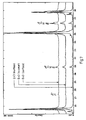
- An atomized powder is obtained by wet grinding of three oxides Al 2 O 3 , Mn 3 O 4 and TiO 2 in respective proportions of 97.5%, 1.7% and 0.8%. This powder is then compressed and sintered for one hour in a temperature range between 1350 ° C and 1580 ° C (here around 1350 ° C) in the form of test pieces intended for friction tests ( Figures 1A, 1B and 1C). Analysis by X-ray diffraction of the sintered product (see FIG. 6) clearly reveals the presence of the MnTiO 3 phase; manganese aluminate formation could not be detected by this analysis.
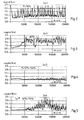
- Evolution of the friction torque shown in Figure 2 (with a lift rate P of 36%) is unstable, with a value average which exceeds the threshold of 0.5 N.m. and very peaks frequent which reach 1.5 or even 2 N.m.
- An atomized powder is obtained by wet grinding of three oxides Al 2 O 3 , Mn 3 O 4 , TiO 2 and kaolin (to bring SiO 2 ) in the respective proportions of 96.7%, 1.7%, 0, 8% and 0.8%, which corresponds to the composition of Example 2 in the table since the kaolin is formed of approximately 2/3 of silica and 1/3 of alumina.
- This powder is then compressed and sintered for one hour in a temperature range between 1350 ° C and 1580 ° C (here 1350 ° C) in the form of test pieces intended for friction tests.
- X-ray diffraction analysis of the sintered product clearly reveals the presence of the MnTiO 3 phase; manganese aluminate formation could not be detected by this analysis.
- the evolution of the couple friction (see figure 3) is unstable, with a value mean which significantly exceeds the threshold (see Figure 3) of 0.5 N.m and has many peaks.
- This powder is then compressed and sintered for one hour in a temperature range between 1480 ° C and 1580 ° C (1520 ° C in the example considered) in the form of test pieces intended for friction tests.
- X-ray diffraction analysis of the sintered product see FIG.
- the evolution of the couple friction in this case (see figure 4) is stable, the value average is around 0.5 N.m.
- This powder is then compressed and sintered for one hour in a temperature range between 1480 ° C and 1580 ° C (here 1480 ° C) in the form of test pieces intended for friction tests.
- the evolution of the couple friction as shown in Figure 5 is unstable beyond 50,000 cycles; the average value significantly exceeds the threshold of 0.5 N.m.
- This powder is then compressed and sintered in a temperature range between 1480 ° C and 1580 ° C (here 1535 ° C) in the form of test pieces intended for friction tests. X-ray diffraction analysis of the sintered product (see FIG.
- the evolution of the couple friction in this case is stable, the average value is around 0.4 N.m.
- compositions contemplated above have also tested for "heterogeneous" friction, that is to say with a disc made of a different material.
- composition 3 we observe also significant progress compared to the homogeneous case of Figure 4, to an average of less than 0.4 N.m.
- composition 4 When we take composition 4, we observe progress, with however the persistence of peaks and a mean value greater than 0.5 N.m.
- Examples 3 and 5 mark a progress towards the reference material and lead, in combination therewith, to friction couples lower than those found under similar conditions with known aluminas.
- examples 1, 2 and 4 are less interesting.
- the comparison of these two groups of examples leads to the definition given at the bottom of the table concerning the chemical analysis of a composition according to the invention, and certain features of the sintered product obtained from this composition (there is is no significant change from chemical analysis to sintering). Quantification of aluminate phases is difficult ; however, it appears that when the quantity of these phases is significant (visible peaks in diffraction X, for example) in combination with meeting the conditions chemical analysis (in particular regarding the oxide content of iron) one takes advantage of the advantages of the invention.
Landscapes
- Engineering & Computer Science (AREA)
- Chemical & Material Sciences (AREA)
- General Engineering & Computer Science (AREA)
- Ceramic Engineering (AREA)
- Mechanical Engineering (AREA)
- Manufacturing & Machinery (AREA)
- Materials Engineering (AREA)
- Structural Engineering (AREA)
- Organic Chemistry (AREA)
- Compositions Of Oxide Ceramics (AREA)
- Sliding-Contact Bearings (AREA)
Description
- au moins 90 % en poids d'alumine,
- de 1,7 % à 2 % en poids de Mn3O4
- de 0,6 % à 1 % en poids de TiO2
- de 0,5 % à 1,5 % en poids de SiO2
- au plus 1 % en poids de MgO
- de 0,8 % à 1,6 % en poids d'un oxyde ou mélange d'oxydes d'éléments de transition pris dans le groupe Ni, Co, Fe, Cu, Cr,
- le reste, d'au plus 0,5 % au total étant formé d'impuretés.
- la teneur en alumine est d'au moins 94 %,
- la teneur en Mn3O4 est sensiblement comprise entre 1,7 % et 1,8 % et la teneur en TiO2 est sensiblement comprise entre 0,8 et 0,9 %,
- la teneur en MgO est comprise entre 0,6 et 0,7 %,
- le SiO2 est introduit sous forme de kaolin ou de talc,
- la teneur en oxydes d'éléments de transition est comprise entre 0,8 % et 1,6 % en poids,
- les oxydes de transition sont au moins en partie introduits sous forme d'aluminates,
- lesdits oxydes comportent des oxydes ou aluminates de cobalt.
- la composition comporte au moins 94 % d'alumine,
- la teneur en Mn3O4 est sensiblement comprise entre 1,7 % et 1,8 % et la teneur en TiO2 est sensiblement comprise entre 0,8 et 0,9 %,
- l'étape de cuisson consiste à faire passer la pièce crue à une température comprise entre 1510 et 1540°C pendant une heure environ,
- du SiO2 est introduit par exemple sous forme de kaolin,
- la teneur en oxydes d'éléments de transition (Ni, Co, Cu, Fe, Cr) est comprise entre 0,8 % et 1,6 % (de préférence de moins de 1,2 %) en poids, cet oxyde ou mélange d'oxydes étant introduits par exemple sous forme d'aluminates,
- la teneur en MgO est comprise entre 0,6 et 0,7 % en poids,
- les oxydes ou mélange d'oxydes comportent des oxydes ou aluminates de cobalt.
- au moins 90 % en poids d'alumine,
- de 1,7 % à 2 % en poids de Mn3O4
- de 0,8 % à 1 % en poids de TiO2
- de 0,5 % à 1,5 % en poids de SiO2
- au plus 1 % en poids de MgO
- de 0,6 % à 1,6 % en poids d'un oxyde ou mélange d'oxydes d'éléments de transition tels que Ni, Co, Fe, Cu, Cr,
- le reste, d'au plus 0,5 % au total étant formé
d'impuretés,
ladite pièce ayant une densité d'au moins 90 % de la densité théorique maximale et comportant une proportion détectable en rayons X de phases d'aluminates de manganèse et/ou de cobalt.
- la teneur en alumine est d'au moins 94 %,
- la teneur en Mn3O4 est sensiblement comprise entre 1,7 % et 1,8 % et la teneur en TiO2 est sensiblement comprise entre 0,7 et 0,9 %,
- la teneur en oxyde ou mélange d'oxydes d'éléments de transition (Ni, Co, Fe, Cu, Cr) est comprise entre 0,8 % et 1,6 % (de préférence moins de 1,2 %),
- la teneur en MgO est comprise entre 0,6 et 0,7 %,
- les deux pièces de frottement ont sensiblement la même composition,
- l'autre pièce de frottement comporte essentiellement entre 1 et 2 % (de préférence entre 1 et 1,5 %) de MgO et 3 % à 4 % (de préférence de 3 % à 3,5 %) de SiO2, le reste étant de l'alumine à des impuretés près,
- les oxydes ou mélange d'oxydes comportent des oxydes ou aluminates de cobalt.
- la figure 1A est une vue en coupe axiale de deux pièces sur le point d'être affrontées pour un test de frottement,
- la figure 1B est une vue de dessus de la pièce du dessous,
- la figure 1C est une vue de dessous de la pièce de dessus,
- la figure 2 est un graphe montrant l'évolution au cours du temps du couple de frottement entre deux disques conformes à la composition de l'exemple 1,
- la figure 3 est un graphe correspondant à l'exemple 2 du tableau,
- la figure 4 est un graphe similaire correspondant à l'exemple 3,
- la figure 5 est un graphe similaire correspondant à l'exemple 4,
- la figure 6 montre des diagrammes de diffraction en rayons X de matériaux conformes ou semblables aux exemples 1 et 2,
- la figure 7 montre des diagrammes de diffraction en rayons X pour un matériau conforme à l'exemple 3, pris en surface ou à coeur,
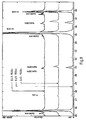
- la figure 8 montre des diagrammes de diffraction pour des matériaux conformes aux exemples 3 et 5,
- la figure 9 montre des diagrammes de diffraction pour le matériau de l'exemple 5 pour différentes températures de frittage,
- la figure 10 est un graphe montrant l'évolution au cours du temps du couple de frottement entre un disque réalisé en une céramique commune à base d'alumine et un disque conforme à la composition de l'exemple 1,
- la figure 11 est un graphe similaire, pour la composition de l'exemple 3,
- la figure 12 est un graphe similaire, pour la composition de l'exemple 4, et
- la figure 13 est un graphe similaire, pour la composition de l'exemple 5.
- 1,35 % de MgO,
- 3,5 % de SiO2,
- le reste étant de l'alumine à des impuretés près.

Claims (26)
- Composition céramique à fritter pour pièce de frottement comportant :au moins 90 % en poids d'alumine,de 1,7 % à 2 % en poids de Mn3O4de 0,8 % à 1 % en poids de TiO2de 0,5 % à 1,5 % en poids de SiO2au plus 1 % en poids de MgOde 0,6 % à 1,6 % en poids d'oxyde ou de mélange d'oxydes d'éléments de transition, tels que Ni, Co, Fe, Cu, Cr,le reste, d'au plus 0,5 % au total étant formé d'impuretés.
- Composition céramique selon la revendication 1, caractérisée en ce que la teneur en alumine est d'au moins 94 %.
- Composition céramique selon la revendication 1 ou la revendication 2, caractérisée en ce que la teneur en Mn3O4 est sensiblement comprise entre 1,7 % et 1,8 % et la teneur en TiO2 est sensiblement comprise entre 0,8 et 0,9 %.
- Composition céramique selon l'une quelconque des revendications 1 à 3, caractérisée en ce que la teneur en MgO est comprise entre 0,6 et 0,7 %
- Composition céramique selon l'une quelconque des revendications 1 à 4, caractérisée en ce que le SiO2 est introduit sous forme de kaolin ou de talc.
- Composition selon l'une quelconque des revendications 1 à 5, caractérisée en ce que la teneur en oxyde ou mélange d'oxydes d'éléments de transition est comprise entre 0,8 % et 1,6 % en poids, de préférence au moins 1,2 % en poids.
- Composition céramique selon l'une quelconque des revendications 1 à 6, caractérisée en ce que l'oxyde ou le mélange d'oxydes d'éléments de transition est introduit sous forme d'oxydes ou d'aluminates.
- Composition selon l'une quelconque des revendications 1 à 7, caractérisé en ce que ledit oxyde contient un oxyde ou aluminate de cobalt.
- Procédé de fabrication d'une pièce de frottement comportant l'étape de préparation d'une composition conforme à la revendication 1, l'étape de réalisation d'une pièce crue ayant cette composition, et l'étape de cuisson dans des conditions de frittage propres à générer des phases d'aluminates de manganèse et/ou de cobalt.
- Procédé de fabrication selon la revendication 9, caractérisé en ce que la composition comporte au moins 94 % d'alumine.
- Procédé de fabrication selon la revendication 9 ou la revendication 10, caractérisé en ce que la teneur en Mn3O4 est sensiblement comprise entre 1,7 % et 1,8 % et la teneur en TiO2 est sensiblement comprise entre 0,8 et 0,9 %.
- Procédé de fabrication selon la revendication 11, caractérisé en ce que l'étape de cuisson consiste à faire passer la pièce crue à une température comprise entre 1510 et 1540°C pendant une heure environ.
- Procédé de fabrication selon l'une quelconque des revendications 9 à 12, caractérisé en ce que du SiO2 est introduit sous forme de kaolin ou de talc.
- Procédé selon l'une quelconque des revendications 9 à 13, caractérisé en ce que la teneur en oxyde ou mélange d'oxydes d'éléments de transition est comprise entre 0,8 % et 1,6 %, de préférence moins de 1,2 %.
- Procédé de fabrication selon l'une quelconque des revendications 9 à 14, caractérisé en ce que l'oxyde ou mélange d'oxydes d'éléments de transition est introduit sous forme d'aluminates ou d'oxydes.
- Procédé de fabrication selon l'une quelconque des revendications 9 à 15, caractérisé en ce que la teneur en MgO est comprise entre 0,6 et 0,7 % en poids.
- Procédé de fabrication selon l'une quelconque des revendications 9 à 16, caractérisé en ce que ledit oxyde contient un oxyde ou un aluminate de cobalt.
- Couple de pièces de frottement dont l'une au moins comporte :au moins 90 % en poids d'alumine,de 1,7 % à 2 % en poids de Mn3O4de 0,8 % à 1 % en poids de TiO2de 0,5 % à 1,5 % en poids de SiO2au plus 1 % en poids de MgOde 0,6 % à 1,6 % en poids d'oxyde ou mélange d'oxydes d'élément de transition, tels que Ni, Co, Cr, Fe, Cu,le reste, d'au plus 0,5 % au total étant formé d'impuretés,
ladite pièce ayant une densité d'au moins 90 % de la densité théorique maximale et comportant une proportion détectable en rayons X de phases d'aluminates de manganèse et/ou de cobalt. - Couple de pièces de frottement selon la revendication 18, caractérisé en ce que la teneur en alumine est d'au moins 94 %.
- Couple de pièces de frottement selon la revendication 18 ou la revendication 19, caractérisé en ce que la teneur en Mn3O4 est sensiblement comprise entre 1,7 % et 1,8 % et la teneur en TiO2 est sensiblement comprise entre 0,8 et 0,9 %.
- Couple de pièces de frottement selon l'une quelconque des revendications 18 à 20, caractérisé en ce que la teneur en oxyde ou mélange d'oxydes d'élément de transition, tels que Ni, Co, Fe, Cu, Cr, est comprise entre 0,8 % et 1,6 %, de préférence moins de 1,2 % en poids.
- Couple de pièces de frottement selon l'une quelconque des revendications 18 à 21, caractérisé en ce que la teneur en MgO est comprise entre 0,6 et 0,7 %.
- Couple de pièces de frottement selon l'une quelconque des revendications 18 à 22, caractérisé en ce que les deux pièces de frottement ont sensiblement la même composition.
- Couple de pièces de frottement selon l'une quelconque des revendications 20 à 22, caractérisé en ce que l'autre pièce de frottement comporte essentiellement entre 1 et 2 % de MgO et 3 % à 4 % de SiO2, le reste étant de l'alumine à des impuretés près.
- Couple de pièces de frottement selon la revendication 24, caractérisé en ce que la teneur en MgO est comprise entre 1 et 1,5 % et la teneur en SiO2 est comprise entre 3 et 3,5 %.
- Couple de pièces de frottement selon l'une quelconque des revendications 18 à 25, caractérisé en ce que ledit oxyde contient un oxyde ou un aluminate de cobalt.
Applications Claiming Priority (4)
| Application Number | Priority Date | Filing Date | Title |
|---|---|---|---|
| FR9503130 | 1995-03-17 | ||
| FR9503130A FR2731700B1 (fr) | 1995-03-17 | 1995-03-17 | Ceramique a fritter a base d'alumine, procede de fabrication et pieces de frottement ainsi obtenues |
| FR9507482 | 1995-06-22 | ||
| FR9507482A FR2735768B1 (fr) | 1995-06-22 | 1995-06-22 | Ceramique a fritter a base d'alumine, procede de fabrication et pieces de frottement ainsi obtenues |
Publications (2)
| Publication Number | Publication Date |
|---|---|
| EP0732310A1 EP0732310A1 (fr) | 1996-09-18 |
| EP0732310B1 true EP0732310B1 (fr) | 1999-07-07 |
Family
ID=26231822
Family Applications (1)
| Application Number | Title | Priority Date | Filing Date |
|---|---|---|---|
| EP19960400476 Expired - Lifetime EP0732310B1 (fr) | 1995-03-17 | 1996-03-06 | Céramique à fritter à base d'alumine, procédé de fabrication et pièces de frottement ainsi obtenues |
Country Status (5)
| Country | Link |
|---|---|
| EP (1) | EP0732310B1 (fr) |
| JP (1) | JPH08277160A (fr) |
| CN (1) | CN1138565A (fr) |
| DE (1) | DE69603104D1 (fr) |
| TW (1) | TW327149B (fr) |
Families Citing this family (17)
| Publication number | Priority date | Publication date | Assignee | Title |
|---|---|---|---|---|
| JP3217696B2 (ja) * | 1996-04-26 | 2001-10-09 | 京セラ株式会社 | ディスクバルブ |
| EP1006090A1 (fr) * | 1998-12-01 | 2000-06-07 | Isuzu Ceramics Research Co., Ltd. | Elément coulissant céramique hautement hydrophile et à faible frottement |
| JP3562454B2 (ja) * | 2000-09-08 | 2004-09-08 | 株式会社村田製作所 | 高周波用磁器、誘電体アンテナ、支持台、誘電体共振器、誘電体フィルタ、誘電体デュプレクサおよび通信機装置 |
| US6904935B2 (en) * | 2002-12-18 | 2005-06-14 | Masco Corporation Of Indiana | Valve component with multiple surface layers |
| JP4714922B2 (ja) * | 2005-03-25 | 2011-07-06 | 独立行政法人産業技術総合研究所 | 自己潤滑性複合材料及びその製造方法 |
| FR2918135B1 (fr) * | 2007-06-29 | 2009-09-04 | Snr Roulements Sa | Palier a roulement et joint d'etancheite a comportement dynamique ameliore. |
| CN101842332B (zh) * | 2007-10-29 | 2014-05-21 | 京瓷株式会社 | 耐磨损性陶瓷及滑动部件以及泵 |
| WO2009057603A1 (fr) * | 2007-10-29 | 2009-05-07 | Kyocera Corporation | Céramique résistant à l'abrasion, élément coulissant et pompe |
| JP5188225B2 (ja) * | 2007-10-29 | 2013-04-24 | 京セラ株式会社 | 快削性磁器および摺動部材ならびにポンプ |
| JP5188226B2 (ja) * | 2007-10-29 | 2013-04-24 | 京セラ株式会社 | 耐摩耗性磁器および摺動部材ならびにポンプ |
| CN103189329B (zh) * | 2010-11-01 | 2015-08-19 | 昭和电工株式会社 | 氧化铝质烧结体、磨粒和砂轮 |
| JP4976602B2 (ja) * | 2010-11-01 | 2012-07-18 | 昭和電工株式会社 | アルミナ質焼結体、砥粒、及び砥石 |
| JP4989792B2 (ja) * | 2010-11-01 | 2012-08-01 | 昭和電工株式会社 | アルミナ質焼結体の製造方法、アルミナ質焼結体、砥粒、及び砥石 |
| JP5998787B2 (ja) * | 2011-12-02 | 2016-09-28 | Toto株式会社 | 半導電性セラミックス焼結体 |
| JP5902292B2 (ja) * | 2012-03-29 | 2016-04-13 | 日本碍子株式会社 | セラミック素地及びその製造方法 |
| CN106458762B (zh) * | 2014-03-19 | 2019-07-30 | 日本碍子株式会社 | 陶瓷基体及其制造方法 |
| DE102016224443A1 (de) * | 2016-12-08 | 2018-06-14 | Siemens Aktiengesellschaft | Erosionsbeständiger keramischer Werkstoff, Pulver, Schlicker und Bauteil |
Family Cites Families (6)
| Publication number | Priority date | Publication date | Assignee | Title |
|---|---|---|---|---|
| DE1671095A1 (de) * | 1968-02-12 | 1971-09-09 | Schneider & Co | Oxidkeramisches Produkt mit hoher mechanischer Festigkeit |
| DE2834146A1 (de) * | 1978-08-03 | 1980-02-21 | Siemens Ag | Keramische werkstoffe fuer verschleissteile, insbesondere fuer ventilsitze |
| JPS60176966A (ja) * | 1984-02-20 | 1985-09-11 | 日本特殊陶業株式会社 | 着色アルミナ磁器組成物 |
| US4714640A (en) * | 1986-02-04 | 1987-12-22 | General Electric Co. | (Alumina electrically conductive) guide article |
| JP2814104B2 (ja) * | 1989-06-19 | 1998-10-22 | 京セラ株式会社 | セラミック基板およびその製造方法 |
| DE4102667A1 (de) * | 1991-01-30 | 1992-08-06 | Hoechst Ceram Tec Ag | Brauner aluminiumoxid-formkoerper und verfahren zu seiner herstellung |
-
1995
- 1995-07-05 TW TW084106916A patent/TW327149B/zh active
-
1996
- 1996-03-06 DE DE69603104T patent/DE69603104D1/de not_active Expired - Lifetime
- 1996-03-06 EP EP19960400476 patent/EP0732310B1/fr not_active Expired - Lifetime
- 1996-03-15 JP JP8059631A patent/JPH08277160A/ja active Pending
- 1996-03-15 CN CN 96103605 patent/CN1138565A/zh active Pending
Also Published As
| Publication number | Publication date |
|---|---|
| CN1138565A (zh) | 1996-12-25 |
| EP0732310A1 (fr) | 1996-09-18 |
| DE69603104D1 (de) | 1999-08-12 |
| TW327149B (en) | 1998-02-21 |
| JPH08277160A (ja) | 1996-10-22 |
Similar Documents
| Publication | Publication Date | Title |
|---|---|---|
| EP0732310A1 (fr) | Céramique à fritter à base d'alumine, procédé de fabrication et pièces de frottement ainsi obtenues | |
| KR100423457B1 (ko) | 마찰재및그의제조방법 | |
| US6638600B2 (en) | Ceramic substrate for nonstick coating | |
| EP1986532B1 (fr) | Article culinaire anodise et procede de fabrication d'un tel article | |
| US5337872A (en) | Synchronizer ring | |
| EP0021936A1 (fr) | Nouvelles compositions réfractaires non façonnées utiles comme compositions de jointoiement et à mouler | |
| TW201144468A (en) | Sputtering target and process for producing the same | |
| EP2008552A1 (fr) | Article culinaire émaillé anti-rayures et procédé de fabrication d'un tel article | |
| JPH04320494A (ja) | 自己潤滑性材料及びその製造方法 | |
| JP2010533756A (ja) | 無鉛焼結潤滑材料及びその製造のための焼結粉末 | |
| US5249661A (en) | Synchronizer ring | |
| FR2731700A1 (fr) | Ceramique a fritter a base d'alumine, procede de fabrication et pieces de frottement ainsi obtenues | |
| JPH01252745A (ja) | Cu系焼結合金製変速機同期リング | |
| FR2735768A1 (fr) | Ceramique a fritter a base d'alumine, procede de fabrication et pieces de frottement ainsi obtenues | |
| US5658838A (en) | Alumina-based ceramic for sintering, method of manufacture and sliding parts obtained thereby | |
| JPS58136737A (ja) | アルミニウム系軸受合金 | |
| FR2897252A1 (fr) | Article culinaire emaille et anodise et procede de fabrication d'un tel article | |
| KR20160067892A (ko) | 증가된 인성을 갖는 용융된 산화알루미늄에 기반한 다결정질 다공성 al2o3 체 및 그의 용도 | |
| JP2623777B2 (ja) | Cu系焼結合金製変速機用同期リング | |
| FR2576038A1 (fr) | Revetement d'email applique sur un support metallique, et ustensile culinaire comportant ce revetement | |
| CN100467648C (zh) | 耐磨耗腐蚀的氮化物金属陶瓷 | |
| JPH10120460A (ja) | 高親水性低摩擦セラミツク摺動部材 | |
| JP2605813B2 (ja) | Cu系焼結合金製変速機同期リング | |
| EP0947486B1 (fr) | Procédé de fabrication d'un article coloré, en particulier de couleur orange/rouge, à base de zircone et article décoratif coloré à base de zircone obtenu selon ce procédé | |
| JPH051723A (ja) | シンクロナイザーリング |
Legal Events
| Date | Code | Title | Description |
|---|---|---|---|
| PUAI | Public reference made under article 153(3) epc to a published international application that has entered the european phase |
Free format text: ORIGINAL CODE: 0009012 |
|
| AK | Designated contracting states |
Kind code of ref document: A1 Designated state(s): DE ES FR GB IT |
|
| 17P | Request for examination filed |
Effective date: 19970219 |
|
| RAP1 | Party data changed (applicant data changed or rights of an application transferred) |
Owner name: NORTON DESMARQUEST FINE CERAMICS |
|
| GRAG | Despatch of communication of intention to grant |
Free format text: ORIGINAL CODE: EPIDOS AGRA |
|
| 17Q | First examination report despatched |
Effective date: 19980629 |
|
| GRAG | Despatch of communication of intention to grant |
Free format text: ORIGINAL CODE: EPIDOS AGRA |
|
| GRAH | Despatch of communication of intention to grant a patent |
Free format text: ORIGINAL CODE: EPIDOS IGRA |
|
| GRAH | Despatch of communication of intention to grant a patent |
Free format text: ORIGINAL CODE: EPIDOS IGRA |
|
| GRAA | (expected) grant |
Free format text: ORIGINAL CODE: 0009210 |
|
| AK | Designated contracting states |
Kind code of ref document: B1 Designated state(s): DE ES FR GB IT |
|
| PG25 | Lapsed in a contracting state [announced via postgrant information from national office to epo] |
Ref country code: GB Free format text: LAPSE BECAUSE OF FAILURE TO SUBMIT A TRANSLATION OF THE DESCRIPTION OR TO PAY THE FEE WITHIN THE PRESCRIBED TIME-LIMIT Effective date: 19990707 Ref country code: ES Free format text: THE PATENT HAS BEEN ANNULLED BY A DECISION OF A NATIONAL AUTHORITY Effective date: 19990707 |
|
| REF | Corresponds to: |
Ref document number: 69603104 Country of ref document: DE Date of ref document: 19990812 |
|
| ITF | It: translation for a ep patent filed | ||
| PG25 | Lapsed in a contracting state [announced via postgrant information from national office to epo] |
Ref country code: DE Free format text: LAPSE BECAUSE OF FAILURE TO SUBMIT A TRANSLATION OF THE DESCRIPTION OR TO PAY THE FEE WITHIN THE PRESCRIBED TIME-LIMIT Effective date: 19991008 |
|
| GBV | Gb: ep patent (uk) treated as always having been void in accordance with gb section 77(7)/1977 [no translation filed] |
Effective date: 19990707 |
|
| PGFP | Annual fee paid to national office [announced via postgrant information from national office to epo] |
Ref country code: FR Payment date: 20000209 Year of fee payment: 5 |
|
| PLBE | No opposition filed within time limit |
Free format text: ORIGINAL CODE: 0009261 |
|
| STAA | Information on the status of an ep patent application or granted ep patent |
Free format text: STATUS: NO OPPOSITION FILED WITHIN TIME LIMIT |
|
| 26N | No opposition filed | ||
| PG25 | Lapsed in a contracting state [announced via postgrant information from national office to epo] |
Ref country code: FR Free format text: LAPSE BECAUSE OF NON-PAYMENT OF DUE FEES Effective date: 20020628 |
|
| REG | Reference to a national code |
Ref country code: FR Ref legal event code: ST |
|
| PG25 | Lapsed in a contracting state [announced via postgrant information from national office to epo] |
Ref country code: FR Free format text: LAPSE BECAUSE OF NON-PAYMENT OF DUE FEES Effective date: 20010331 |
|
| PGFP | Annual fee paid to national office [announced via postgrant information from national office to epo] |
Ref country code: IT Payment date: 20090319 Year of fee payment: 14 |
|
| PG25 | Lapsed in a contracting state [announced via postgrant information from national office to epo] |
Ref country code: IT Free format text: LAPSE BECAUSE OF NON-PAYMENT OF DUE FEES Effective date: 20100306 |