EP0723947B1 - Verfahren zur Regenerierung und Schutz von bewehrtem Beton - Google Patents
Verfahren zur Regenerierung und Schutz von bewehrtem Beton Download PDFInfo
- Publication number
- EP0723947B1 EP0723947B1 EP96400134A EP96400134A EP0723947B1 EP 0723947 B1 EP0723947 B1 EP 0723947B1 EP 96400134 A EP96400134 A EP 96400134A EP 96400134 A EP96400134 A EP 96400134A EP 0723947 B1 EP0723947 B1 EP 0723947B1
- Authority
- EP
- European Patent Office
- Prior art keywords
- concrete
- electrolytic solution
- process according
- reinforcements
- outer electrode
- Prior art date
- Legal status (The legal status is an assumption and is not a legal conclusion. Google has not performed a legal analysis and makes no representation as to the accuracy of the status listed.)
- Expired - Lifetime
Links
Images
Classifications
-
- C—CHEMISTRY; METALLURGY
- C04—CEMENTS; CONCRETE; ARTIFICIAL STONE; CERAMICS; REFRACTORIES
- C04B—LIME, MAGNESIA; SLAG; CEMENTS; COMPOSITIONS THEREOF, e.g. MORTARS, CONCRETE OR LIKE BUILDING MATERIALS; ARTIFICIAL STONE; CERAMICS; REFRACTORIES; TREATMENT OF NATURAL STONE
- C04B41/00—After-treatment of mortars, concrete, artificial stone or ceramics; Treatment of natural stone
- C04B41/009—After-treatment of mortars, concrete, artificial stone or ceramics; Treatment of natural stone characterised by the material treated
-
- C—CHEMISTRY; METALLURGY
- C04—CEMENTS; CONCRETE; ARTIFICIAL STONE; CERAMICS; REFRACTORIES
- C04B—LIME, MAGNESIA; SLAG; CEMENTS; COMPOSITIONS THEREOF, e.g. MORTARS, CONCRETE OR LIKE BUILDING MATERIALS; ARTIFICIAL STONE; CERAMICS; REFRACTORIES; TREATMENT OF NATURAL STONE
- C04B41/00—After-treatment of mortars, concrete, artificial stone or ceramics; Treatment of natural stone
- C04B41/45—Coating or impregnating, e.g. injection in masonry, partial coating of green or fired ceramics, organic coating compositions for adhering together two concrete elements
- C04B41/4505—Coating or impregnating, e.g. injection in masonry, partial coating of green or fired ceramics, organic coating compositions for adhering together two concrete elements characterised by the method of application
- C04B41/4564—Electrolytic or electrophoretic processes, e.g. electrochemical re-alkalisation of reinforced concrete
- C04B41/4566—Electrochemical re-alcalisation
-
- C—CHEMISTRY; METALLURGY
- C04—CEMENTS; CONCRETE; ARTIFICIAL STONE; CERAMICS; REFRACTORIES
- C04B—LIME, MAGNESIA; SLAG; CEMENTS; COMPOSITIONS THEREOF, e.g. MORTARS, CONCRETE OR LIKE BUILDING MATERIALS; ARTIFICIAL STONE; CERAMICS; REFRACTORIES; TREATMENT OF NATURAL STONE
- C04B41/00—After-treatment of mortars, concrete, artificial stone or ceramics; Treatment of natural stone
- C04B41/53—After-treatment of mortars, concrete, artificial stone or ceramics; Treatment of natural stone involving the removal of at least part of the materials of the treated article, e.g. etching, drying of hardened concrete
- C04B41/5369—Desalination, e.g. of reinforced concrete
- C04B41/5376—Electrochemical desalination
-
- C—CHEMISTRY; METALLURGY
- C04—CEMENTS; CONCRETE; ARTIFICIAL STONE; CERAMICS; REFRACTORIES
- C04B—LIME, MAGNESIA; SLAG; CEMENTS; COMPOSITIONS THEREOF, e.g. MORTARS, CONCRETE OR LIKE BUILDING MATERIALS; ARTIFICIAL STONE; CERAMICS; REFRACTORIES; TREATMENT OF NATURAL STONE
- C04B41/00—After-treatment of mortars, concrete, artificial stone or ceramics; Treatment of natural stone
- C04B41/60—After-treatment of mortars, concrete, artificial stone or ceramics; Treatment of natural stone of only artificial stone
- C04B41/61—Coating or impregnation
-
- C—CHEMISTRY; METALLURGY
- C04—CEMENTS; CONCRETE; ARTIFICIAL STONE; CERAMICS; REFRACTORIES
- C04B—LIME, MAGNESIA; SLAG; CEMENTS; COMPOSITIONS THEREOF, e.g. MORTARS, CONCRETE OR LIKE BUILDING MATERIALS; ARTIFICIAL STONE; CERAMICS; REFRACTORIES; TREATMENT OF NATURAL STONE
- C04B41/00—After-treatment of mortars, concrete, artificial stone or ceramics; Treatment of natural stone
- C04B41/60—After-treatment of mortars, concrete, artificial stone or ceramics; Treatment of natural stone of only artificial stone
- C04B41/72—After-treatment of mortars, concrete, artificial stone or ceramics; Treatment of natural stone of only artificial stone involving the removal of part of the materials of the treated articles, e.g. etching
-
- C—CHEMISTRY; METALLURGY
- C23—COATING METALLIC MATERIAL; COATING MATERIAL WITH METALLIC MATERIAL; CHEMICAL SURFACE TREATMENT; DIFFUSION TREATMENT OF METALLIC MATERIAL; COATING BY VACUUM EVAPORATION, BY SPUTTERING, BY ION IMPLANTATION OR BY CHEMICAL VAPOUR DEPOSITION, IN GENERAL; INHIBITING CORROSION OF METALLIC MATERIAL OR INCRUSTATION IN GENERAL
- C23F—NON-MECHANICAL REMOVAL OF METALLIC MATERIAL FROM SURFACE; INHIBITING CORROSION OF METALLIC MATERIAL OR INCRUSTATION IN GENERAL; MULTI-STEP PROCESSES FOR SURFACE TREATMENT OF METALLIC MATERIAL INVOLVING AT LEAST ONE PROCESS PROVIDED FOR IN CLASS C23 AND AT LEAST ONE PROCESS COVERED BY SUBCLASS C21D OR C22F OR CLASS C25
- C23F2201/00—Type of materials to be protected by cathodic protection
- C23F2201/02—Concrete, e.g. reinforced
Definitions
- Concrete normally constitutes an alkaline medium which protects its metal reinforcements against corrosion.
- the object of the present invention is in particular to overcome these drawbacks by proposing a method of regeneration and protection of reinforced concrete which is effective, non-aggressive and easy to use.
- the method according to the invention therefore implements on the one hand an electric current and on the other hand a current osmotic diffusion which is the predominant phenomenon.
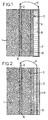
- the wire 6 is preferably made of a material whose electropositivity is between electropositivity of electrode 5 and the electropositivity of the armatures 2, which includes the material of electrode 5 and the material reinforcements 2: this prevents the wire 6 from participating redox reactions in contact with concrete or electrolytic solution.
- the electrolytic solution and electrode 5 can be contained in a formwork or box 7 which has an open face applied tightly to the surface 3 concrete.
- electrode 5 this can be present in the form of a metal sheet, or in the form of braids, bands, wire networks, fences, grids or the like.
- This electrode can be produced for example by magnesium, aluminum, manganese, zinc, iron (if the steel of the reinforcements 2 has an electropositivity sufficiently different from that of iron), copper or in cash.
- the material of the electrode 5 is chosen so that the electrical voltage existing between electrode 5 and armatures 2 is less than 2.3 volts. Indeed, we could see that beyond 2.3 volts, the frames 2 risk being damaged by a phenomenon of sting.
- the surface of the electrode 5 which is in contact with reserve 4 of electrolytic solution is preferably much larger than the outside surface of fittings 2 to which it is connected (for example more 10 times higher), so that the electrical voltage between this electrode and the armatures 2 hardly decreases not during the implementation of the process.
- this can be an aqueous NaOH sodium hydroxide solution or a aqueous CaOH lime solution.
- the electrolytic solution should preferably be whitewash.
- the electrolytic solution contains preferably a wetting product.
- This wetting product can be a surfactant (detergent), for example phosphate-based surfactant marketed under the brand "P 90" by the company COATEX, 35 rue Ampère, 69730 GENAY (FRANCE), or an alcohol, for example methyl alcohol.
- a surfactant for example phosphate-based surfactant marketed under the brand "P 90" by the company COATEX, 35 rue Ampère, 69730 GENAY (FRANCE)
- an alcohol for example methyl alcohol.
- the electrolytic solution can further contain a hydrophilic agent such as glycerin, to avoid or limit evaporation of the solution electrolytic, especially when the process must be carried out implemented in hot countries or when it must be implemented works for an extended period of time to provide lasting protection concrete against carbonation.
- a hydrophilic agent such as glycerin
- the electrolytic solution can be in the form liquid, but it can also be impregnated in a porous material such as sand, car or cardboard, or it can be thickened to form a gel, in particular by adding methylcellulose.
- the provisions which have just been described may, depending on the case, be used either to increase the pH of the concrete, which is generally the aim, i.e. lower this pH if it is too high.
- the pH of the solution electrolytic when it is necessary to raise the pH of the concrete, we generally choose the pH of the solution electrolytic at a value greater than 9.5 (limit above from which the steel is in a passivating environment), this value can even go beyond 12, especially if concrete is not at all reactive towards reactions alkali-aggregates.
- the external electrode 5 will be produced in one more electropositive material than steel, for example aluminum or possibly magnesium (in both cases, the voltage between electrode 5 and armatures 2 does not exceed not in practice the value of 2.3 volts).
- the pH of the basic electrolytic solution is chosen at a value lower than the initial value of the pH of the concrete, and moreover, the material constituting the electrode 5 is a material less electropositive than steel, that is to say less reducing than steel, this material can for example be silver.
- the material constituting the electrode 5 is a material less electropositive than steel, that is to say less reducing than steel, this material can for example be silver.
- the second embodiment of the invention differs from the first embodiment of the invention only by the fact that the reserve 4 of electrolytic solution consists of a substantially sticky paste.
- This paste can consist for example of a mixture cellulose fibers, chalk powder and if necessary bentonite powder, this mixture being impregnated with saturation with the described liquid electrolyte solution above.
Landscapes
- Chemical & Material Sciences (AREA)
- Engineering & Computer Science (AREA)
- Ceramic Engineering (AREA)
- Materials Engineering (AREA)
- Structural Engineering (AREA)
- Organic Chemistry (AREA)
- Electrochemistry (AREA)
- Chemical Kinetics & Catalysis (AREA)
- Water Supply & Treatment (AREA)
- Working Measures On Existing Buildindgs (AREA)
- Electrolytic Production Of Non-Metals, Compounds, Apparatuses Therefor (AREA)
- Aftertreatments Of Artificial And Natural Stones (AREA)
Claims (15)
- Verfahren zum Regenerieren und Schützen eines Mauerwerkes (1) aus Beton mit metallischen Bewehrungen (2), bestehend aus:Anlegen gegen die Außenfläche des Mauerwerkes eines Vorrats (4) einer basischen elektrolytischen Lösung, die dazu geeignet ist, in das Innere des Betons abzuwandern, bis sie auf das im Beton enthaltene Porenwasser trifft, und somit einen osmotischen Diffusionsstrom zwischen dem Vorrat (4) an elektrolytischer Lösung und dem Porenwasser des Betons zu erzeugen,Anschließen einer elektrisch leitenden Verbindung (6) zwischen einerseits zumindest bestimmten der Bewehrungen (2) des Betons und andererseits einer externen Elektrode (5), die in Kontakt mit dem Vorrat (4) an elektrolytischer Lösung angeordnet ist, wobei diese leitende Verbindung an keinerlei äußere Stromquelle angeschlossen ist, und die externe Elektrode (5) aus einem Material mit einer Elektropositivität ausgebildet ist, die von derjenigen der Bewehrungen (2) des Betons verschieden ist, so daß ein elektrischer Strom spontan in der genannten leitenden Verbindung (6) fließt,daraufhin, nach einer vorgegebenen Behandlungsdauer, Entfernen des Vorrats (4) an elektrolytischer Lösung und der externen Elektrode (5).
- Verfahren nach Anspruch 1, bei dem das die externe Elektrode (5) bildende Material derart gewählt wird, daß die elektrische Spannung zwischen dieser externen Elektrode und den Betonbewehrungen weniger als 2,3 Volt beträgt.
- Verfahren nach einem der vorhergehenden Ansprüche, bei dem die externe Elektrode aus einem Metall mit einer Elektropositivität ausgebildet ist, die höher als diejenige der Betonbewehrungen ist.
- Verfahren nach Anspruch 3, bei dem die Betonbewehrungen aus Stahl und die externe Elektrode auf Aluminium- oder Magnesiumbasis hergestellt sind.
- Verfahren nach einem der vorhergehenden Ansprüche, bei dem die externe Elektrode (5) mit dem Vorrat (4) an elektrolytischer Lösung über eine Oberfläche in Verbindung steht, die weit größer als die Außenfläche der Bewehrungen ist, an die sie angeschlossen ist.
- Verfahren nach einem der vorhergehenden Ansprüche, bei dem die elektrolytische Lösung einen pH-Wert von mehr als 9,5 aufweist.
- Verfahren nach einem der vorhergehenden Ansprüche, bei dem der Beton im Hinblick auf Alkali/Zuschlagstoffe-Reaktionen potentiell reaktionsfähig ist, und bei dem die elektrolytische Lösung auf der Basis von Kalkmilch ist.
- Verfahren nach einem der vorhergehenden Ansprüche, bei dem die elektrolytische Lösung ein hydrophiles Produkt enthält.
- Verfahren nach einem der vorhergehenden Ansprüche, bei dem die elektrolytische Lösung ein benetzendes Produkt enthält.
- Verfahren nach einem der vorhergehenden Ansprüche, welches des weiteren einen vorausgehenden Schritt aufweist, der darin besteht, eine Mischung aus Wasser und benetzendem Produkt bzw. eine Mischung aus Wasser und der elektrolytischen Lösung unter Hochdruck auf die Außenfläche (3) des Mauerwerkes aufzuspritzen.
- Verfahren nach einem der vorhergehenden Ansprüche, bei dem die leitende Verbindung (6) für den Anschluß der externen Elektrode an die Bewehrungen (2) des Betons eine Elektropositivität aufweist, die zwischen einschließlich der Elektropositivität der Bewehrungen und der Elektropositivität der externen Elektrode liegt.
- Verfahren nach einem der vorhergehenden Ansprüche, bei dem die elektrolytische Lösung in einem Kasten (7) enthalten ist, der eine dichtend an die Außenfläche (3) des Mauerwerkes angelegte offene Seite aufweist.
- Verfahren nach einem der Ansprüche 1 bis 11, bei dem die elektrolytische Lösung in eine Klebepaste imprägniert ist, die auf die Außenfläche (3) des Mauerwerkes aufgespritzt wird und den genannten Vorrat (4) an elektrolytischer Lösung darstellt.
- Verfahren nach Anspruch 13, bei dem die Klebepaste mindestens eine Mischung aus Cellulosefasern, Kreidepulver und gegebenenfalls Bentonitpulver aufweist.
- Verwendung eines Verfahrens nach einem der vorhergehenden Ansprüche zum Eliminieren der in dem Beton enthaltenen aggressiven Schadstoffe.
Applications Claiming Priority (2)
| Application Number | Priority Date | Filing Date | Title |
|---|---|---|---|
| FR9500998 | 1995-01-24 | ||
| FR9500998A FR2729694B1 (fr) | 1995-01-24 | 1995-01-24 | Procede de regeneration et de protection du beton |
Publications (2)
| Publication Number | Publication Date |
|---|---|
| EP0723947A1 EP0723947A1 (de) | 1996-07-31 |
| EP0723947B1 true EP0723947B1 (de) | 1999-08-04 |
Family
ID=9475597
Family Applications (1)
| Application Number | Title | Priority Date | Filing Date |
|---|---|---|---|
| EP96400134A Expired - Lifetime EP0723947B1 (de) | 1995-01-24 | 1996-01-19 | Verfahren zur Regenerierung und Schutz von bewehrtem Beton |
Country Status (4)
| Country | Link |
|---|---|
| EP (1) | EP0723947B1 (de) |
| DE (1) | DE69603511T2 (de) |
| ES (1) | ES2136371T3 (de) |
| FR (1) | FR2729694B1 (de) |
Families Citing this family (2)
| Publication number | Priority date | Publication date | Assignee | Title |
|---|---|---|---|---|
| EP0962432A1 (de) * | 1998-05-30 | 1999-12-08 | General Coatings NV | Methode und Vorrichtung zur Beseitigung ionischer Verunreinigungen von bewehrtem Beton |
| EP2108633A1 (de) * | 2008-04-08 | 2009-10-14 | Technical University of Denmark | Verfahren und Vorrichtung zur Entfernung von ionischen Unreinheiten aus Baustrukturen |
Citations (2)
| Publication number | Priority date | Publication date | Assignee | Title |
|---|---|---|---|---|
| NL7608443A (en) * | 1976-07-29 | 1978-01-31 | Drs P J H Willems En H K M Bus | Combating rust formation in reinforced concrete - by drilling and inserting a metal, esp. aluminium, which is more electropositive than the reinforcement |
| WO1994029496A1 (en) * | 1993-06-16 | 1994-12-22 | Aston Material Services Limited | Cathodic protection of reinforced concrete |
Family Cites Families (6)
| Publication number | Priority date | Publication date | Assignee | Title |
|---|---|---|---|---|
| JPS62267485A (ja) * | 1986-05-14 | 1987-11-20 | Nakagawa Boshoku Kogyo Kk | コンクリ−ト構造物の電気防食法 |
| US5198082A (en) * | 1987-09-25 | 1993-03-30 | Norwegian Concrete Technologies A/S | Process for rehabilitating internally reinforced concrete by removal of chlorides |
| JP3449625B2 (ja) * | 1991-11-25 | 2003-09-22 | 電気化学工業株式会社 | 中性化したコンクリートの補修方法 |
| GB9126899D0 (en) * | 1991-12-19 | 1992-02-19 | Aston Material Services Ltd | Improvements in and relating to treatments for concrete |
| US5341562A (en) * | 1992-04-27 | 1994-08-30 | Dai Nippon Toryo Co., Ltd. | Method for preventing corrosion of a reinforced concrete structure |
| US5422141A (en) * | 1993-03-12 | 1995-06-06 | W. R. Grace & Co.-Conn. | Corrosion inhibiting composition for reinforced concrete and method of applying same |
-
1995
- 1995-01-24 FR FR9500998A patent/FR2729694B1/fr not_active Expired - Lifetime
-
1996
- 1996-01-19 ES ES96400134T patent/ES2136371T3/es not_active Expired - Lifetime
- 1996-01-19 EP EP96400134A patent/EP0723947B1/de not_active Expired - Lifetime
- 1996-01-19 DE DE1996603511 patent/DE69603511T2/de not_active Expired - Lifetime
Patent Citations (2)
| Publication number | Priority date | Publication date | Assignee | Title |
|---|---|---|---|---|
| NL7608443A (en) * | 1976-07-29 | 1978-01-31 | Drs P J H Willems En H K M Bus | Combating rust formation in reinforced concrete - by drilling and inserting a metal, esp. aluminium, which is more electropositive than the reinforcement |
| WO1994029496A1 (en) * | 1993-06-16 | 1994-12-22 | Aston Material Services Limited | Cathodic protection of reinforced concrete |
Also Published As
| Publication number | Publication date |
|---|---|
| FR2729694A1 (fr) | 1996-07-26 |
| DE69603511T2 (de) | 2000-04-13 |
| DE69603511D1 (de) | 1999-09-09 |
| FR2729694B1 (fr) | 1997-04-04 |
| ES2136371T3 (es) | 1999-11-16 |
| EP0723947A1 (de) | 1996-07-31 |
Similar Documents
| Publication | Publication Date | Title |
|---|---|---|
| EP2839057B1 (de) | Verfahren zum galvanischen schutz einer verstärkten betonstruktur | |
| EP2334619B1 (de) | Verfahren zur elektrokinetischen dekontamination eines porösen festen mediums | |
| FR2643005A1 (fr) | Procede d'usinage electrochimique evitant l'erosion et dispositif pour la mise en oeuvre du procede | |
| CA2504882C (fr) | Structure et revetement auto-reparables pour milieu corrosif | |
| EP0723947B1 (de) | Verfahren zur Regenerierung und Schutz von bewehrtem Beton | |
| EP1357206A2 (de) | Verfahren zur Anodisation eines Aluminiumlegierungelements | |
| EP2350350B1 (de) | Verfahren zur herstellung einer elektrode zur erzeugung von wasserstoff | |
| EP0274329B1 (de) | Verfahren zur Dekontamination einer mit Tritium kontaminierten metallischen Oberfläche und Vorrichtung zur Verwendung desselben | |
| CA2129162C (fr) | Procede pour ameliorer la resistance a l'usure et a la corrosion de pieces en metaux ferreux | |
| BE1000432A6 (fr) | Procede pour ameliorer la resistance a la corrosion d'une barre d'armature en acier trempe et auto-revenu. | |
| EP0154572B1 (de) | Verfahren zum Herstellen von elektrischen Dünnschichtschaltkreisen, Gerät zum Ausführen dieses Verfahrens und hergestellte Produkte | |
| EP1137613B1 (de) | Verfahren zur behandlung eines werkstoffs auf der basis von beton, mörtel und dergleichen | |
| LU88716A1 (fr) | Procédé pour protéger des armamtures en acier de structures en béton armé | |
| EP2531672B1 (de) | Verfahren und System zur Einspritzung einer Flüssigkeit in ein poröses Material | |
| FR2606794A1 (fr) | Electrode remplacable pour cellules electrochimiques | |
| EP1942240A2 (de) | Verfahren zur Behandlung einer Betonstruktur und entsprechende Vorrichtung | |
| EP2693447B1 (de) | Verfahren zur Herstellung eines Elektrokabels mit wasserabweisender Ummantelung | |
| EP3559321B1 (de) | Verfahren zur chemischen wandbehandlung zur verringerung von koksbildung | |
| FR2556137A1 (fr) | Procede de fabrication d'une electrode dont la matiere active est a base de polypyrrole, electrode ainsi obtenue, et generateur electrochimique faisant application d'une telle electrode | |
| WO2000008237A1 (fr) | Films contenant des vesicules lamellaires, materiaux recouverts de ces films et leur procede d'obtention par voie electrochimique | |
| EP0321536B1 (de) | Verfahren zur anodischen passivierung von kupfer in einer umgebung von geschmolzenen fluoriden, anwendung zum schutz von kupferteilen von fluor-elektrolyseanlagen | |
| EP4547894A1 (de) | Aluminiumlegierungsteil und zugehöriges herstellungsverfahren | |
| FR3059681A1 (fr) | Procede de decontamination d'une surface a decontaminer par electrolyse | |
| FR2933721A1 (fr) | Procede de traitement de sel dans une structure poreuse et dispositif correspondant | |
| FR2548818A1 (fr) | Procede pour la fixation de krypton radioactif et dispositif pour la mise en oeuvre du procede |
Legal Events
| Date | Code | Title | Description |
|---|---|---|---|
| PUAI | Public reference made under article 153(3) epc to a published international application that has entered the european phase |
Free format text: ORIGINAL CODE: 0009012 |
|
| AK | Designated contracting states |
Kind code of ref document: A1 Designated state(s): DE ES FR GB IT |
|
| 17P | Request for examination filed |
Effective date: 19960816 |
|
| 17Q | First examination report despatched |
Effective date: 19971105 |
|
| GRAG | Despatch of communication of intention to grant |
Free format text: ORIGINAL CODE: EPIDOS AGRA |
|
| GRAG | Despatch of communication of intention to grant |
Free format text: ORIGINAL CODE: EPIDOS AGRA |
|
| GRAH | Despatch of communication of intention to grant a patent |
Free format text: ORIGINAL CODE: EPIDOS IGRA |
|
| GRAH | Despatch of communication of intention to grant a patent |
Free format text: ORIGINAL CODE: EPIDOS IGRA |
|
| GRAA | (expected) grant |
Free format text: ORIGINAL CODE: 0009210 |
|
| AK | Designated contracting states |
Kind code of ref document: B1 Designated state(s): DE ES FR GB IT |
|
| REF | Corresponds to: |
Ref document number: 69603511 Country of ref document: DE Date of ref document: 19990909 |
|
| ITF | It: translation for a ep patent filed | ||
| REG | Reference to a national code |
Ref country code: ES Ref legal event code: FG2A Ref document number: 2136371 Country of ref document: ES Kind code of ref document: T3 |
|
| GBT | Gb: translation of ep patent filed (gb section 77(6)(a)/1977) |
Effective date: 19991028 |
|
| PLBE | No opposition filed within time limit |
Free format text: ORIGINAL CODE: 0009261 |
|
| STAA | Information on the status of an ep patent application or granted ep patent |
Free format text: STATUS: NO OPPOSITION FILED WITHIN TIME LIMIT |
|
| 26N | No opposition filed | ||
| REG | Reference to a national code |
Ref country code: GB Ref legal event code: IF02 |
|
| PGFP | Annual fee paid to national office [announced via postgrant information from national office to epo] |
Ref country code: GB Payment date: 20101230 Year of fee payment: 16 |
|
| PGFP | Annual fee paid to national office [announced via postgrant information from national office to epo] |
Ref country code: DE Payment date: 20111227 Year of fee payment: 17 |
|
| PGFP | Annual fee paid to national office [announced via postgrant information from national office to epo] |
Ref country code: IT Payment date: 20111223 Year of fee payment: 17 |
|
| PGFP | Annual fee paid to national office [announced via postgrant information from national office to epo] |
Ref country code: FR Payment date: 20130305 Year of fee payment: 18 |
|
| PGFP | Annual fee paid to national office [announced via postgrant information from national office to epo] |
Ref country code: ES Payment date: 20120105 Year of fee payment: 17 |
|
| GBPC | Gb: european patent ceased through non-payment of renewal fee |
Effective date: 20130119 |
|
| PG25 | Lapsed in a contracting state [announced via postgrant information from national office to epo] |
Ref country code: DE Free format text: LAPSE BECAUSE OF NON-PAYMENT OF DUE FEES Effective date: 20130801 |
|
| REG | Reference to a national code |
Ref country code: DE Ref legal event code: R119 Ref document number: 69603511 Country of ref document: DE Effective date: 20130801 |
|
| PG25 | Lapsed in a contracting state [announced via postgrant information from national office to epo] |
Ref country code: GB Free format text: LAPSE BECAUSE OF NON-PAYMENT OF DUE FEES Effective date: 20130119 |
|
| PG25 | Lapsed in a contracting state [announced via postgrant information from national office to epo] |
Ref country code: IT Free format text: LAPSE BECAUSE OF NON-PAYMENT OF DUE FEES Effective date: 20130119 |
|
| REG | Reference to a national code |
Ref country code: ES Ref legal event code: FD2A Effective date: 20140321 |
|
| PG25 | Lapsed in a contracting state [announced via postgrant information from national office to epo] |
Ref country code: ES Free format text: LAPSE BECAUSE OF NON-PAYMENT OF DUE FEES Effective date: 20130120 |
|
| REG | Reference to a national code |
Ref country code: FR Ref legal event code: ST Effective date: 20140930 |
|
| PG25 | Lapsed in a contracting state [announced via postgrant information from national office to epo] |
Ref country code: FR Free format text: LAPSE BECAUSE OF NON-PAYMENT OF DUE FEES Effective date: 20140131 |