EP0721465B1 - Durch glutathion-s-transferase aktivierte verbindungen - Google Patents
Durch glutathion-s-transferase aktivierte verbindungen Download PDFInfo
- Publication number
- EP0721465B1 EP0721465B1 EP94930535A EP94930535A EP0721465B1 EP 0721465 B1 EP0721465 B1 EP 0721465B1 EP 94930535 A EP94930535 A EP 94930535A EP 94930535 A EP94930535 A EP 94930535A EP 0721465 B1 EP0721465 B1 EP 0721465B1
- Authority
- EP
- European Patent Office
- Prior art keywords
- compound
- formula
- gst
- amides
- ter
- Prior art date
- Legal status (The legal status is an assumption and is not a legal conclusion. Google has not performed a legal analysis and makes no representation as to the accuracy of the status listed.)
- Expired - Lifetime
Links
Images



Classifications
-
- A—HUMAN NECESSITIES
- A61—MEDICAL OR VETERINARY SCIENCE; HYGIENE
- A61K—PREPARATIONS FOR MEDICAL, DENTAL OR TOILETRY PURPOSES
- A61K38/00—Medicinal preparations containing peptides
- A61K38/04—Peptides having up to 20 amino acids in a fully defined sequence; Derivatives thereof
- A61K38/06—Tripeptides
-
- A—HUMAN NECESSITIES
- A61—MEDICAL OR VETERINARY SCIENCE; HYGIENE
- A61P—SPECIFIC THERAPEUTIC ACTIVITY OF CHEMICAL COMPOUNDS OR MEDICINAL PREPARATIONS
- A61P31/00—Antiinfectives, i.e. antibiotics, antiseptics, chemotherapeutics
- A61P31/12—Antivirals
-
- A—HUMAN NECESSITIES
- A61—MEDICAL OR VETERINARY SCIENCE; HYGIENE
- A61P—SPECIFIC THERAPEUTIC ACTIVITY OF CHEMICAL COMPOUNDS OR MEDICINAL PREPARATIONS
- A61P35/00—Antineoplastic agents
-
- A—HUMAN NECESSITIES
- A61—MEDICAL OR VETERINARY SCIENCE; HYGIENE
- A61P—SPECIFIC THERAPEUTIC ACTIVITY OF CHEMICAL COMPOUNDS OR MEDICINAL PREPARATIONS
- A61P43/00—Drugs for specific purposes, not provided for in groups A61P1/00-A61P41/00
-
- C—CHEMISTRY; METALLURGY
- C07—ORGANIC CHEMISTRY
- C07K—PEPTIDES
- C07K5/00—Peptides containing up to four amino acids in a fully defined sequence; Derivatives thereof
- C07K5/02—Peptides containing up to four amino acids in a fully defined sequence; Derivatives thereof containing at least one abnormal peptide link
- C07K5/0215—Peptides containing up to four amino acids in a fully defined sequence; Derivatives thereof containing at least one abnormal peptide link containing natural amino acids, forming a peptide bond via their side chain functional group, e.g. epsilon-Lys, gamma-Glu
-
- C—CHEMISTRY; METALLURGY
- C12—BIOCHEMISTRY; BEER; SPIRITS; WINE; VINEGAR; MICROBIOLOGY; ENZYMOLOGY; MUTATION OR GENETIC ENGINEERING
- C12N—MICROORGANISMS OR ENZYMES; COMPOSITIONS THEREOF; PROPAGATING, PRESERVING, OR MAINTAINING MICROORGANISMS; MUTATION OR GENETIC ENGINEERING; CULTURE MEDIA
- C12N9/00—Enzymes; Proenzymes; Compositions thereof; Processes for preparing, activating, inhibiting, separating or purifying enzymes
- C12N9/10—Transferases (2.)
- C12N9/1085—Transferases (2.) transferring alkyl or aryl groups other than methyl groups (2.5)
- C12N9/1088—Glutathione transferase (2.5.1.18)
-
- G—PHYSICS
- G01—MEASURING; TESTING
- G01N—INVESTIGATING OR ANALYSING MATERIALS BY DETERMINING THEIR CHEMICAL OR PHYSICAL PROPERTIES
- G01N33/00—Investigating or analysing materials by specific methods not covered by groups G01N1/00 - G01N31/00
- G01N33/48—Biological material, e.g. blood, urine; Haemocytometers
- G01N33/50—Chemical analysis of biological material, e.g. blood, urine; Testing involving biospecific ligand binding methods; Immunological testing
- G01N33/53—Immunoassay; Biospecific binding assay; Materials therefor
- G01N33/573—Immunoassay; Biospecific binding assay; Materials therefor for enzymes or isoenzymes
-
- G01N33/57595—
-
- G—PHYSICS
- G01—MEASURING; TESTING
- G01N—INVESTIGATING OR ANALYSING MATERIALS BY DETERMINING THEIR CHEMICAL OR PHYSICAL PROPERTIES
- G01N2333/00—Assays involving biological materials from specific organisms or of a specific nature
- G01N2333/90—Enzymes; Proenzymes
- G01N2333/91—Transferases (2.)
- G01N2333/9116—Transferases (2.) transferring alkyl or aryl groups other than methyl groups (2.5)
- G01N2333/91165—Transferases (2.) transferring alkyl or aryl groups other than methyl groups (2.5) general (2.5.1)
- G01N2333/91171—Transferases (2.) transferring alkyl or aryl groups other than methyl groups (2.5) general (2.5.1) with definite EC number (2.5.1.-)
- G01N2333/91177—Glutathione transferases (2.5.1.18)
-
- G—PHYSICS
- G01—MEASURING; TESTING
- G01N—INVESTIGATING OR ANALYSING MATERIALS BY DETERMINING THEIR CHEMICAL OR PHYSICAL PROPERTIES
- G01N30/00—Investigating or analysing materials by separation into components using adsorption, absorption or similar phenomena or using ion-exchange, e.g. chromatography or field flow fractionation
- G01N30/02—Column chromatography
Definitions
- the invention relates to glutathione S-transferase-activated compounds.
- the compounds include glutathione or an analog thereof coupled to a leaving moiety, such as an indicator or a drug moiety, which is released from the glutathione or analog when the compounds are reacted with glutathione S-transferase (GST).
- GST glutathione S-transferase
- Glutathione in its reduced form, is a tripeptide of the formula: ⁇ -Glu-Cys-Gly.
- Reduced glutathione has a central role in maintaining the redox condition in cells and is also an essential substrate for glutathione S-transferase (GST).
- GST exists in mammals as a superfamily of isoenzymes which regulate the metabolism and detoxification of foreign substances introduced into cells. In general, GST can facilitate detoxification of foreign substances by a number of mechanisms and can also convert certain precursors into toxic substances.
- GSTs can detoxify lipophilic substances which contain an electrophile by catalyzing the coupling of the electrophilic portion to GSH, thus rendering a significant portion of the molecule more polar and susceptible to clearance.
- a number of the drugs used in cancer chemotherapy are susceptible to this type of detoxification, including, for example, various nitrogen mustards.
- a second mechanism, which also uses GSH as a substrate, resides in the reduction of peroxides with the concomitant oxidation of GSH; a third simply involves the association of a ligand with the GST in a noncovalent association.
- GSTs also catalyze some reactions which convert nontoxic precursors to toxic agents. For example, GSTs are capable of converting 1,2-dibromoethane and azathiophine to toxins.
- the various GST isoenzymes are dimeric proteins formed by binary combinations of monomers encoded by at least fifteen known genes in four gene families, resulting in the theoretical possibility of several dozen different dimers even allowing for the preferential dimerization of monomers from the same gene family.
- the GST isoenzyme subunits are polymorphic in the human population and have been considered to be subject to additional variation due to gene conversion events among the tandemly repeated members of the family. Posttranslational modifications add further to this variability.
- the GSTs obtained from tissue samples of a given individual may not necessarily exactly match those of any previously known GST. Particular cell types typically express only a few of these many forms.
- GST represents a family of isoenzymes which differ in quantity and enzymatic and physical properties in various cell types and in various individuals.
- each tissue or cell type can be characterized by a particular GST complement -- i.e. a set of concentrations of particular GST isoenzymes which is present in the cell or tissue.
- a particular GST complement i.e. a set of concentrations of particular GST isoenzymes which is present in the cell or tissue.
- This is illustrated in Castro et al ., Carcinogenesis (1990) 11 :1569-1596, which describes the results of SDS gel electrophoretic separations of soluble GSTs that had been purified on an S-hexylglutathione Sepharose column. Complements of isoenzymes in various tumor cell lines are compared with purified representatives of the major GST gene families.
- the GST ⁇ isotype has also been associated with tumors, including cancers of the colon, stomach, pancreas, uterine cervix, renal cortex, adenocarcinoma of the breast and lung, nodular small cell lymphoma, mesothelioma, small cell and nonsmall cell lung carcinoma and EJB bladder carcinoma as well as in CLL (Ketterer, B. et al . in "Glutathione Conjugation: Mechanisms and Biological Significance”; Sies, H., et al . eds. (1988) Academic Press, London, pp. 74-137; Schisselbauer, J.C., et al ., Cancer Res (1990) 50 :3562-3568). It is not considered that the ⁇ class of GST is a marker for particular carcinomas or tumors; however antibodies to ⁇ GST said to be useful for detecting cancer are disclosed in PCT application WO90/12088.
- GST Ya conferred the greatest increase in resistance to chlorambucil and melphalan
- Yb 1 conferred the greatest increase in resistance to cisplatin
- ⁇ conferred the greatest increase in resistance to racemic benzopyrene mixtures and to doxorubicin. None of these conferred resistance to vinblastine.
- a particular class of toxic compounds used in chemotherapy, and used for purposes of illustration hereinbelow, are the mustard compounds.
- the prodrugs described below may utilize glutathione or its analogs to couple with the drug, rendering the prodrug subject to activation by GST. Some relevant analogs are known in the art.
- the present invention is directed to GST-activated compounds comprising glutathione (GSH) or an analog thereof coupled to a leaving moiety, such as an indicator or a drug moiety, which is released from the glutathione or analog when the compounds are reacted with GST.
- GSH glutathione
- a leaving moiety such as an indicator or a drug moiety
- the compounds of the invention are most importantly prodrugs, for instance for a cytotoxic drug intended to destroy tumor cells.
- These prodrugs may be substrates only for selected GST isoenzymes, and are capable, for example, of selectively killing cells with particular complements of GST isoenzymes where at least one isoenzyme of GST is elevated or with elevated GST levels in general. This is particularly important in the design of chemotherapeutic treatment since drug resistance by tumor cells is often characterized by elevated levels of one or more GSTs. Thus, the very cells which are most refractory to conventional treatment are the most susceptible to attack by the cytotoxic agents included in the prodrugs of the invention.
- the elevated levels of GST present in these cells enables them to facilitate the release of the cytotoxic agent intracellularly in the tumor, as compared to the capability of normal cells.
- the present invention provides glutathione or an analog coupled to cytotoxic phosphorodiamidate mustard moieties. When reacted with GST, the prodrugs will liberate the phosphorodiamidate mustard. This provides a method for delivering this cytotoxic agent only to selected tissue or cells, such as tumor cells.
- the compounds of the invention have also been shown to stimulate the production of granulocyte macrophage (GM) progenitors in bone marrow of animals to which the compounds are administered. It is unclear whether the prodrug-type compound itself or its metabolic products are responsible for this effect.
- GM granulocyte macrophage
- the leaving moiety of a compound of the invention may comprise an indicator, which when released from a compound of the invention can be readily detected and conveniently used to monitor the extent of such cleavage reaction, e.g., colorimetrically.
- a compound of the invention comprising an indicator moiety, such as p-nitrophenol which is colorless when coupled in the prodrug but develops a color on release by GST, is a useful reagent in a method of assaying GST activity. This includes GST isoenzyme-specific assays using reagents comprising certain GSH analogs that are substrates only for selected GST isoenzymes.
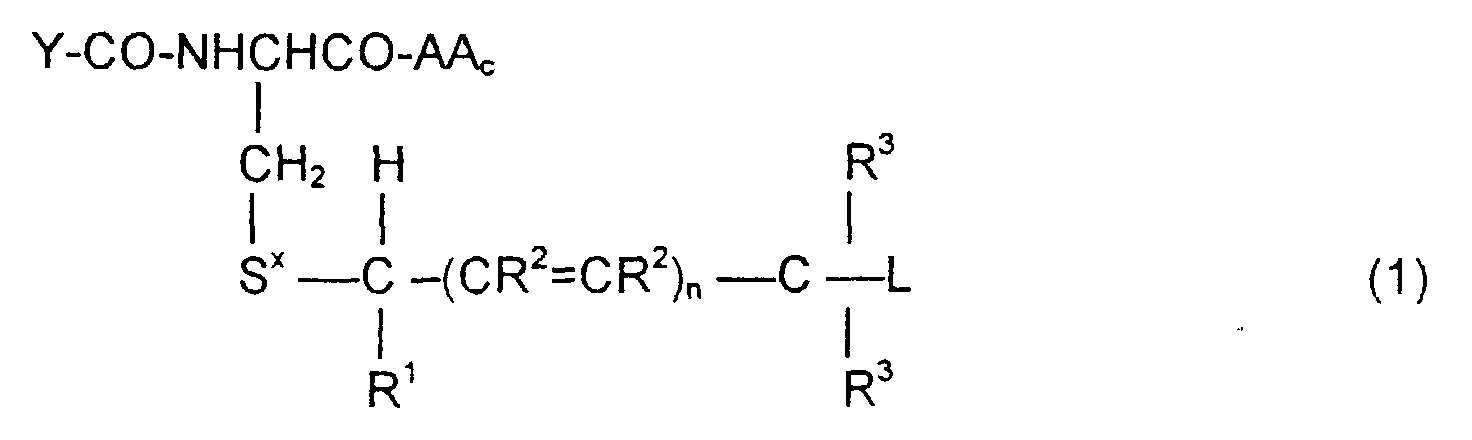
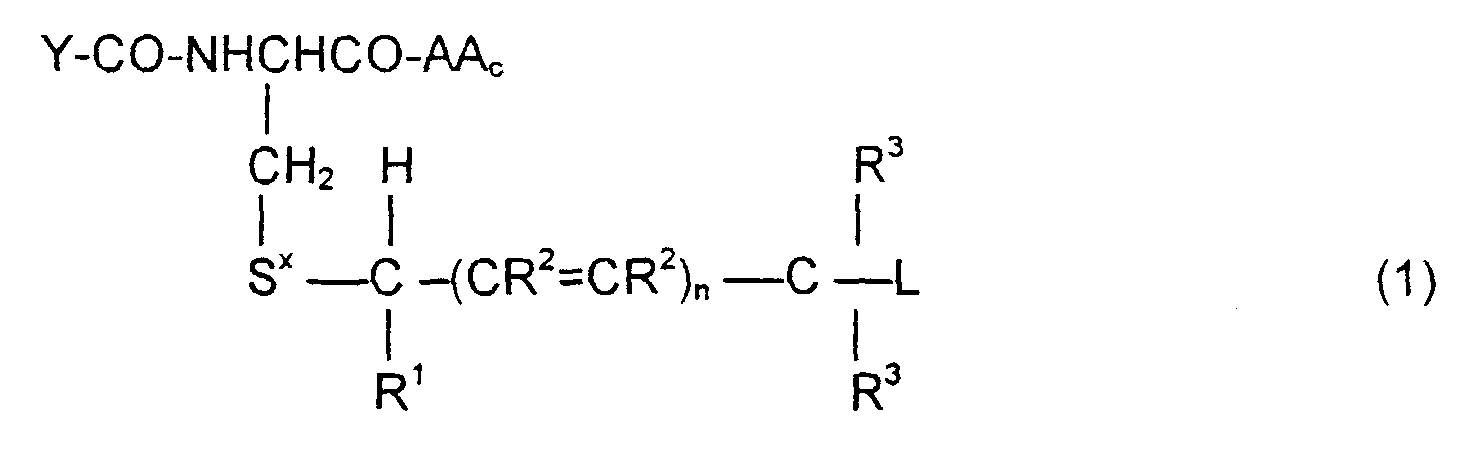
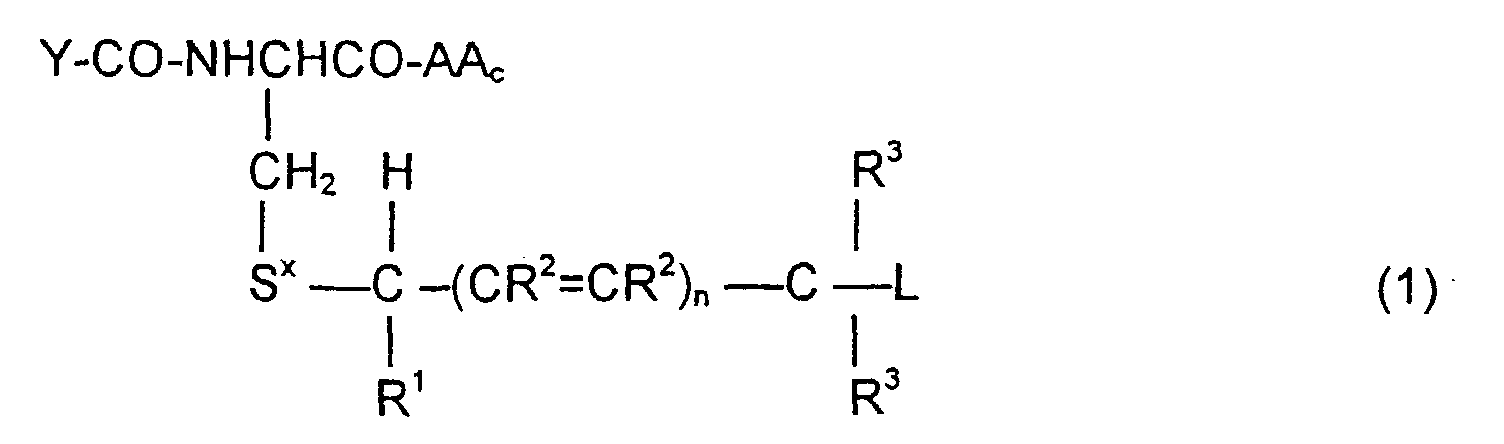
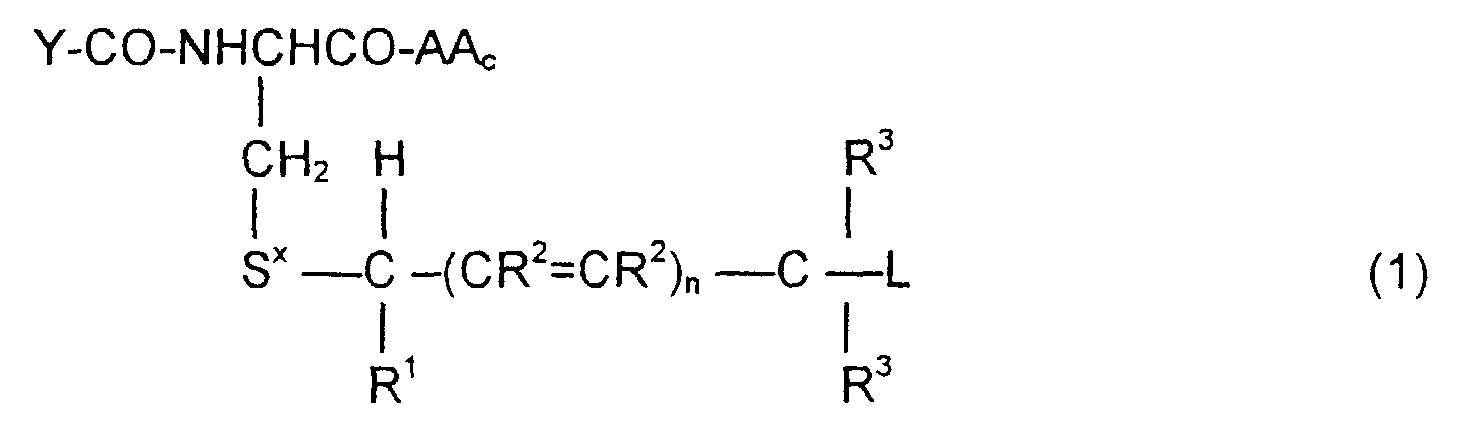
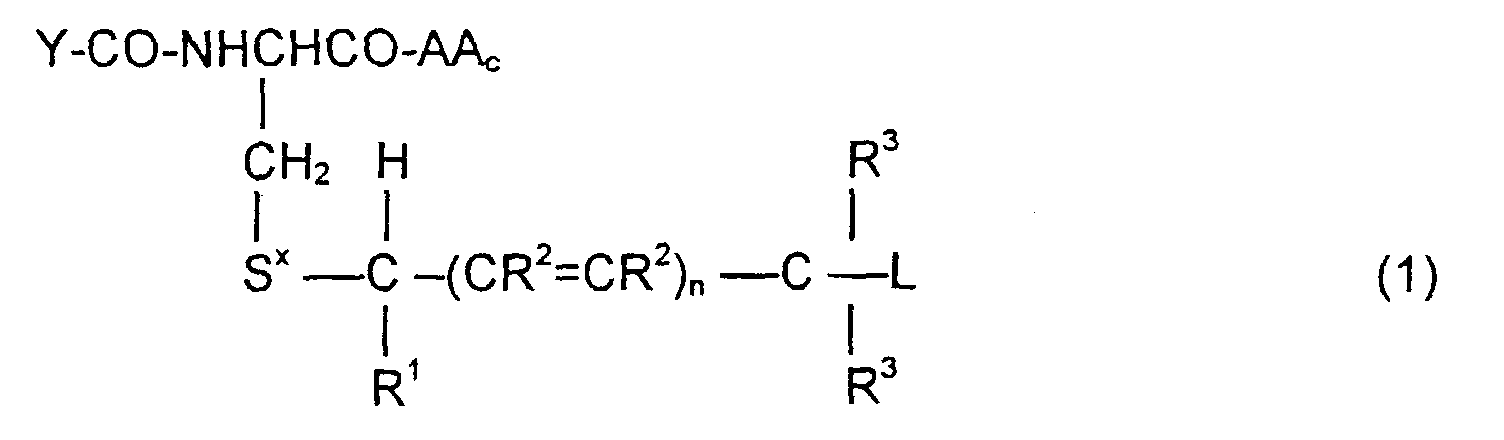
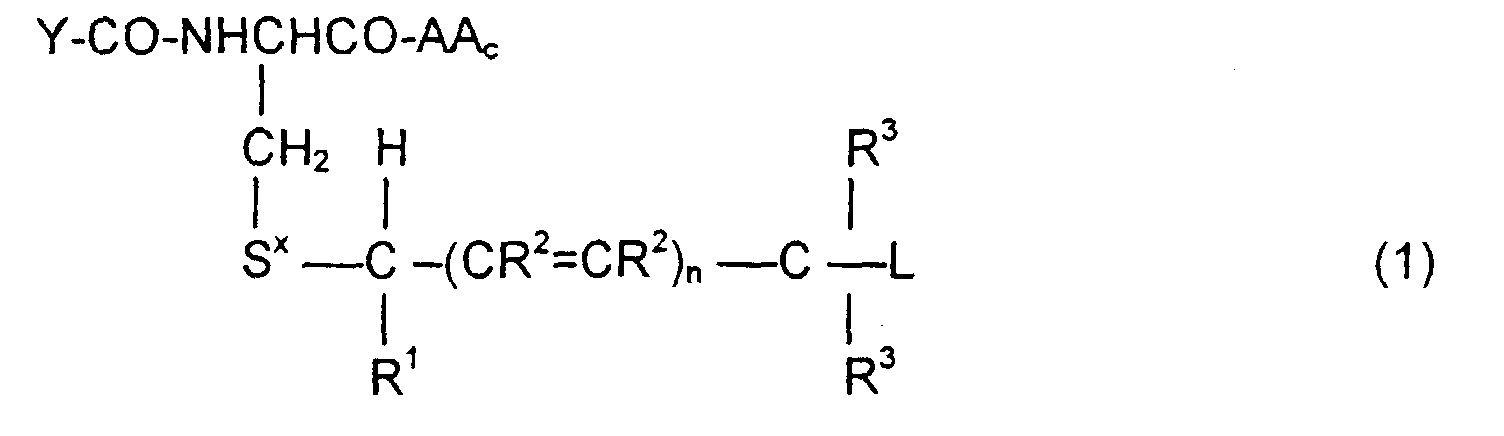
- the invention is directed to a compound of the formula: or the amides, esters, mixed ester/amides or salts thereof, wherein:
- the invention is directed to methods of synthesizing the compounds of Formula (1), to pharmaceutical compositions containing these compounds, and to methods to treat tumor cells by administering the compounds of Formula (1) in context where the prodrugs are selectively cleaved by the tumor cells to release the cytotoxic agent.
- the invention is directed to methods of providing chemotherapeutic agents while protecting the function of bone marrow in vertebrate subjects by administering the prodrugs of the invention and to methods selectively to treat tumor cells with characterized GST contents by selectively administering the prodrugs of the invention that are sensitive to cleavage with a GST that shows an elevated level in the target cells.
- the invention is also directed to intermediates in the synthesis of the compounds of Formula (1) and to methods of synthesis.
- the oxidized sulfur or selenium shown is obtained from the corresponding sulfide or selenide.
- the tripeptide glutathione or analog can be coupled through the sulfur or selenium atom to the remainder of the molecule either as the completed tripeptide or as an intermediate dipeptides of the formula wherein S ⁇ is S or Se.
- the third amino acid can then be coupled to the remainder of the molecule.
- the invention is also directed to these intermediates including compounds of the formulas wherein Y, AA C , R 1 , R 2 , R 3 , n, S x , S ⁇ and L are defined as for Formula (1), and S* is S x or S ⁇ .
- the compounds of Formula (1) are prodrugs which can be used selectively to target tissues having GST complements which are elevated or which are peculiar in specificity to the prodrug provided.
- the prodrugs prepared for illustration, TER 230, as a model compound, and TER 231, TER 286, TER 296 and TER 303 as effective prodrugs are differentially activated by GST enzymes of the ⁇ , ⁇ and ⁇ classes.
- These prodrugs in addition to being selective for cells with elevated GST complements per se , can be used in a finely tuned protocol to target cells which have elevated levels of a particular isoenzyme of the GST group.
- the prodrugs of the invention have an additional advantage -- they are protective of bone marrow and thus permit higher or more intensive dosages to be used.
- the compounds of the invention are able to potentiate the function of bone marrow as measured by the ability of these compounds to stimulate the production of GM progenitor cells by bone marrow, thus enhancing protection of normal tissue.
- the mechanism of this potentiation manifested by an increase in the production of granulocyte macrophages, is unclear. This potentiation may be useful in the treatment of anemia. It is at present also unclear whether the prodrug itself or its metabolic products, for example, the glutathione analog which is generated by cleavage of the parent compound, is responsible for this effect.
- the compounds of Formula (1) can be used as analytical reagents for GST activity by employing as "L" an indicator group which is detectable when liberated from the compound of Formula (1).
- Such a reagent is suitable for determining the concentration of GST of known substrate specificity, or analyzing the specificity of particular GSTs by varying the glutathione analog component of the compound of Formula (1).
- the compounds of the invention of Formula (1) are comprised of a tripeptide which is glutathione or an analog thereof coupled to a leaving group through a molecular system which permits release of the leaving group L when the compound of Formula (1) is treated with the appropriate GST.
- the release of the leaving group occurs through a " ⁇ -elimination" -- i.e., the removal of the proton on the carbon ⁇ to the electron-poor carbon, sulfur or selenium releases electrons which are ultimately absorbed by the leaving group and result in its release. This can be shown schematically as follows:
- n may be 0, 1 or 2; theoretically n can be any integer but the efficacy of the electron transport is believed to decline as n increases.
- the substituents R 1 , R 2 and R 3 play no direct part in the release of substituent L and simply must be noninterfering substituents.
- the rate of ⁇ -elimination can be controlled by the nature of these R groups; by choosing electron withdrawing or electron donating substituents the rate of elimination can be accelerated or decreased.
- Suitable substituents for R 1 and R 3 include H, substituted or unsubstituted alkyl (1-6C) substituted or unsubstituted aryl (6-12C), substituted or unsubstituted aryl alkyl (7-12C), cyano, halo, substituted or unsubstituted alkoxy (1-6C), substituted or unsubstituted aryloxy (6-12C) or substituted or unsubstituted arylalkyloxy (7-12C).
- Alkyl, aryl, and arylalkyl have their conventional meanings; alkyl groups are straight, branched chain or cyclic saturated hydrocarbon moieties such as methyl, tert-butyl, cyclohexyl, and the like.
- Aryl groups include aromatic systems such as phenyl, naphthyl, pyridyl and the like.
- Arylalkyl substituents contain an aryl moiety coupled to the remainder of the molecule through an alkylene moiety. Such groups include, most commonly benzyl, phenylethyl, 2-pyridylethyl, and the like.
- Suitable substituents in the substituted forms include halo, SR, OR, and NR 2 wherein R is H or lower alkyl (1-4C).
- R 1 and R 3 independently are H, lower alkyl (1-4C) and phenyl.
- R 2 may preferably be H or alkyl (1-6C).
- any noninterfering substituents may be used as R 1 , R 2 and R 3 . These substituents are independently embodied.
- Y-CO and -AA C determine the nature of the glutathione-like tripeptide.
- a preferred embodiment is that wherein Y-CO is ⁇ -glutamic and AA C is glycine, phenylglycine, ⁇ -alanine, alanine or phenylalanine, resulting in the tripeptide glutathione or a close analog.
- alternative embodiments of Y-CO include ⁇ -Asp, Glu, Asp, ⁇ -GluGly, ⁇ -AspGly, GluGly and AspGly.
- Alternative embodiments of AA C are, along with the preferred glycine, phenylglycine, ⁇ -alanine, alanine: valine, 4-aminobutyric acid, aspartic, phenylglycine, histidine, tryptophan and tyrosine.
- Suitable phenylalanine substituents are as described above for the substituted forms of R 1 through R 3 .
- Suitable embodiments for L include those which generate drugs which may be cytotoxic to unwanted cells.
- drugs include the phosphoramidate mustards, the phosphorodiamidate mustards, the chemotherapeutic agents adriamycin and daunorubicin, toxins such as ricin toxin or diphtheria toxin, antiinflammatory or steroid-based drugs and the like, and other metabolic modulators such as 2,3-di-t-butyl-4-hydroxyanisole.
- Preferred forms of the phosphorodiamidate mustards are -OP(O)(N(CH 2 CH 2 Cl) 2 ) 2 , -OP(O)(N(CH 2 CH 2 Br) 2 ) 2 , -OP(O)(NHCH 2 CH 2 Cl) 2 and -OP(O)(NHCH 2 CH 2 Br) 2 .
- Any biologically active moiety, provided with an electron adsorbing linkage to the remainder of the compound so that "L" released by ⁇ -elimination may be used.
- an important class of leaving group comprises a urethane moiety wherein upon ⁇ -elimination, CO 2 is liberated and a moiety containing a primary or secondary amine is released.
- These released compounds then include the nitrogen mustards such as bis(2-chloroethyl)amine; uracil mustards wherein the bis (2-chloroethyl)amine is a substituent at the 5 position of the uracil ring and other mustards which include primary or secondary amines; various antibiotics which contain suitable amino groups to participate in the urethane linkage such as mitomycin C, actinomycin D, and the vinca alkaloids vincristine and vinblastine, and a dynemycin analog which subsequently follows a reaction path leading to a benzenoid diradical capable of effecting DNA inactivation by hydrogen atom abstraction.
- nitrogen mustards such as bis(2-chloroethyl)amine
- uracil mustards wherein the bis (2-chloroethyl)amine is a substituent at the 5 position of the uracil ring and other mustards which include primary or secondary amines
- various antibiotics which contain suitable amino groups to participate in the urethan
- the released primary or secondary amine is liberated using the same ⁇ -elimination mechanism through the urethane, concommitantly liberting CO 2 .
- This can be shown schematically as follows:
- the phosphoramidate is coupled through a methylene linkage to a para-nitrobenzene moiety and the conjugate is reduced under hypoxic conditions present in some cells to liberate the phosphoramidate mustard OP(O)(N(CH 2 CH 2 Cl) 2 ) 2 leaving behind a para-phenylene monoamine.
- compounds similar liberation of the phosphoramidate mustard through the mediation of the para-nitrogen is effected by electron donation through the urethane moiety to the aromatic ring, again resulting in the para-phenylene monamine and phosphoramidate mustard.
- indicator molecules such as p-nitrophenol can be used when the compound of Formula (1) is intended as a reagent.
- Such moieties can also be released through the medium of a urethane linkage with liberation of CO 2 .
- ⁇ -elimination with respect to the urethane formed from para-nitroaniline generates the para-nitroaniline product.
- Particularly preferred compounds of the invention are:
- the compounds of the invention may also be prepared in the forms of their esters or amides, mixed ester/amides or as the salts.
- the esters, amides or salts are formed with any or all carboxyl groups present in the molecule; hence, included in this group are monoesters, diesters, and, it applicable; triesters. Similarly, monoamides, diamides, or, it applicable, triamides are included.
- Mixed ester/amides are also part of the invention.
- the esters or amides may be alkyl (1-6C), alkenyl (1-6C) or arylalkyl (7-12C).
- Alkyl esters of the free carboxyls are esters of the straight- and branched-chain alkyl alcohols (1-6C) such as methanol, ethanol, isopropanol, t-butanol, n-hexanol and the like.
- Suitable alkyl (1-6C) amides are those of primary straight- or branched-chain alkyl amines, such as methylamine, ethylamine, n-propylamine, isopentylamine, and isohexylamine.
- Alkenyl esters are similar, but contain at least one double bond.
- Arylalkyl is as detined above.
- the alcohols or amines may also carry noninterfering substituents such as halo, alkoxy, or alkyl amines.
- the esters and amides are prepared using conventional techniques, with suitable protection of any alcohol or amino functional groups in the compound of Formula (1).
- the salts of the compounds of the invention may be formed of inorganic or organic bases to form the basic salts of the free carboxyl groups or may be formed from organic or inorganic acids to obtain the acid addition salts of free amino groups.
- the salts may be of inorganic bases such as sodium hydroxide, potassium hydroxide, calcium hydroxide, ammonium hydroxide, magnesium hydroxide, and the like, or of organic bases such as trimethylamine, pyridine, pyrimidine, piperidine, lysine, caffeine, and the like.
- the acid addition salts may be formed from inorganic acids such as hydrochloric acid, hydrobromic acid, sulfuric acid, phosphoric acid, and the like, or from organic acids such as acetic acid, propionic acid, glycolic acid, pyruvic acid, oxalic acid, malic acid, tartaric acid, citric acid, benzoic acid, cinnamic acid, mandelic acid, salicylic acid, and the like. Salts of citric acid are preferred.
- the salts of the compounds of Formula (1) are formed in standard protocols by treating with the appropriate base or acid at a temperature of from about 0°C to about 100°C, preferably at room temperature either in water alone or in combination with an inert water-miscible organic solvent such as methanol, ethanol, or dioxane.
- the invention provides a general vehicle for delivering drugs to tissues specifically based on their GST content.
- the leaving group when released in the target tissue, will exert its desired effects selectively in that target tissue.
- the released moiety may have other regulatory features.
- "L" is 2,3-di-t-butyl-4-hydroxyanisole
- this compound is known to induce the synthesis of GSTs in mice.
- Administration of the compound of Formula (1) wherein "L” will release this moiety may result in concomitant increase in GSTs.
- the target cells where release will occur can be regulated by manipulating the nature of the glutathione analog portion of the molecule. It may be desirable to enhance the GST component of the tumor cells concomitantly with supplying a compound of Formula (1) containing a cytotoxin.
- the various prodrugs of the invention are selective for the various isozymes of GST whose levels may be elevated in tumor cells.
- maximum effectiveness against the tumor cell will be obtained and maximum selectivity for the tumor cell as opposed to normal tissue can be achieved.
- the selectivity of the prodrug depends on the choice of the glutathione analog used as a component of the drug.
- TER 231 is especially susceptible to cleavage by GST M1a-1a; TER 303 is especially susceptible to cleavage by A1-1; TER 286 is particularly susceptible to cleavage by P1-1 and A1-1, while TER 296 is selectively cleaved by P1-1.
- the prodrugs of the invention are particularly favored for treatment of subjects since in addition to cytotoxicity to the tumor, they appear to stimulate GM progenitors in bone marrow. There is relatively little organ toxicity and no evidence of leukocytosis.
- GST P1-1 is elevated in more than 75% of human tumor specimens from breast, lung, liver and colon.
- prodrug is also facilitated by determining the GST complement of the cells to be treated in comparison with normal tissues. Detailed instructions for obtaining such complements are found in PCT application U.S. 92/03537 published in October of 1992. The description in this PCT application sets forth methods for determining which GST isoenzymes are elevated in particular tissues.
- the compounds of Formula (1) are administered as pharmaceutical compositions in usual formulations such as those outlined in Remington's Pharmaceutical Sciences , Mack Publishing Company, Easton, PA, latest edition. Typical formulations will include those for injection, for transdermal and transmucosal administration, and for oral administration.
- the formulations depending on the intended mode, may be liquids, syrups, powders, capsules, suppositories, and the like.
- the compounds of the invention may be included in liposomes, or in other emulsified forms. Protocols for administration and suitable formulations are subject to optimization using standard procedures known to those in the art.
- the antitumor activity of the invention compounds coupled with phosphorodiamidate mustard or other toxins can be assessed using a number of human tumor xenographs to determine tumor growth inhibition or a B16 mouse melanoma and measuring the prolongation of survival to determine the efficacy of particular compounds.
- an alternative use for the compound of Formula (1) is as a reagent in assays where the moiety "L", when released from the compound can be readily detected.
- the compounds of Formula (1) can thus conveniently be used to monitor the extent of the GST cleavage reaction, e.g., colorimetrically.
- an indicator moiety such as p-nitrophenol, which is colorless when coupled to GSH or a GSH analog but develops a color on release from the compound by GST, offers an improved method of assaying GST activity.
- GST isoenzyme-specific assays using compounds comprising certain GSH analogs that are substrates only for selected GST isoenzymes can be used to determine substrate specificity.
- the compounds comprising glutathione or its analogs described above coupled to a desirable leaving group can be synthesized using means generally known in the art.
- Sx is an oxidized form of S or Se
- the methods illustrated below can be used, incorporating modifications which render them applicable to desired compounds of the invention.
- the compounds of formulas 2, 11 and 12 can serve as intermediate compounds in the synthesis of compounds of Formula (1).
- the method of Whitehead, J.K. et al ., J Chem Soc (1952) 1572-1574 may be used.
- Compounds of Formula (1)1 or Formula (1)2 can be converted to the compound of Formula (1) by coupling the Y-CO moiety through a peptide linkage to the compound of Formula (1)2 or the AAC amino acid to the compound of Formula (1)1 using standard peptide coupling techniques.
- S* is S or Se in reduced form in the compounds of formulas 11 and 12, these compounds may, similarly, be converted to compounds of formula 2.
- Compounds of Formula (1) wherein S* is a sulfonium ion, i.e., is S + ; may be synthesized by treating compounds of formula 2 with alkyl halides under suitable conditions to alkylate the sulfide, or intermediates can be synthesized from corresponding compounds of Formula (1)1 or 12.
- R 4 is alkyl (1-6C) as defined above.
- Preferred alkyl halides for reaction to form, ultimately, compounds of Formula (1) in this embodiment are the iodides.
- TER 230 is thus made by alkylating GSH with 2-bromoethyl-N,N,N,N,-tetraethyl phosphorodiamidite. Two equivalents of diethylamine are added to phosphorus oxychloride to give compound 3 , following the procedure of Borch, et al ., J Med Chem (1991) 34 :3052-3058. 3 is then alkylated with monotetrahydropyranyl ethylene glycol (prepared as described by Satyam, A. and Narang, S.
- Reaction Scheme 2 summarizes the manner in which the synthesis of TER 231 is exemplified below.
- TER 231 is a prodrug of the invention which, when activated with GST, releases a cytotoxic mustard.
- the crucial intermediate 6b is synthesized in a simplified manner by the reaction of phosphorus oxychloride with 2-bromoethyl alcohol and bis-(2-chloroethyl) amine hydrochloride. Appropriate conditions for this reaction are described in Example 2 below. The remaining steps in the synthesis are analogous to those in Reaction Scheme 1.
- the coupled compound of Formula (1) is first synthesized as a reduced form of formula 2 to prevent elimination of phosphate.
- the compound of formula 2 is thus oxidized in the final step of the synthetic process to prevent decomposition of the molecule.
- At least one proton positioned alpha to the electron-deprived atom of S x and effectively beta to the phosphate oxygen must be sufficiently acidic to be removed by the basic moiety believed to reside in the GST active site to allow release of the phosphorodiamidate mustard.
- the electron withdrawing or donating nature of R 1 can be used to regulate the rate of reaction by affecting the acidity of this proton.
- the nature of R 3 is also significant. For example an embodiment wherein both R 3 are methyl lowers the energy of the transition state for the enzyme-catalyzed ⁇ -elimination.
- Diethylamine (33.72 ml, 360 mM) was added dropwise with stirring to a cooled (0 - 5°C) solution of phosphorus oxychloride (15.2 ml, 160 mM) in 1 L CH 2 Cl 2 to which triethylamine (50 ml, 360 mM) had been previously added dropwise.
- the solution was allowed to warm to rt. and stirred for three days.
- the reaction was quenched by cooling to 0° and adding 10 % KH 2 PO 4 in water, 200 ml.
- the mixture was warmed to room temperature.
- the mixture was poured into a sep. funnel, and separated.
- Dihydropyran (18.25 ml, 200 mM) was added dropwise to a cold (0°) mixture of ethylene glycol (55.92 ml, 1 mol) in 500 ml CH 2 Cl 2 containing 3.8 g (20 mM) of dissolved p-toluene sulfonic acid monohydrate over 2 hrs. The mixture was allowed to stir for an additional 2 hrs at this temperature, and then was allowed to warm to rt. Stirring continued for 2 days, after which the mixture was poured into a separating funnel and allowed to separate. The lower organic layer was removed and saved, and the upper layer was extracted with 100 ml CH 2 Cl 2 .
- the material was lyophilized to a white solid and purified by HPLC: A 1" column packed with 5 m C-18 functionalized silica (YMC Corp.) was flushed with 90% CH 3 CN in 0.2% HOAc (B) water followed by equilibration with 300 ml of 0.2% HOAc (A) at 12 ml/min flow rate.
- the crude sulfone was dissolved in 10 ml of HOAC and diluted with 150 ml of water before being loaded onto the column and followed by 100 ml of A. A gradient to 100% B was run over 60 min, and fractions which appeared clean by analytical HPLC were pooled and lyophilized.
- TER 231 is of the formula
- TER 231 was synthesized according to Reaction Scheme 2, set forth above.
- the compound to be tested was dissolved in 0.2M phosphate buffer and a solution of GST was added. The final concentration was 0.3 mM test compound and 0.006 mM GST, pH 7. for TER 230; for TER 231 GST was 0.003 mM, pH 7.1. The solution was incubated at 37°. Decomposition was followed by HPLC. The column was J.T. Baker C 18 250 x 4.6 mm with 5 ⁇ particles. The A buffer was 0.05 M ammonium acetate, pH 5.5; 5% CH 3 CN; B buffer was 70% CH 3 CN in A.
- M1a decomposes TER 230 about 4 times faster than background and P1 decomposes TER 230 about 2 times faster than background. Both of these isoenzymes are predominantly expressed in many tumors.
- the isoenzyme A1 usually associated with healthy tissues, does not accelerate the decomposition of TER 230 above background within experimental error.
- M1a decomposes TER 231 about 12 times faster than background; and P1 and A1 decompose TER 231 5 times faster than background.
- TER 231 in general decomposes more quickly than TER 230, probably due to the electron withdrawing effect of the four chlorines.
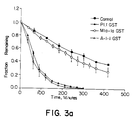
- TER 286 was similarly tested with the results shown in Figure 3a. Both P1-1 and A1-1 accelerate the cleavage of TER 286 roughly six times faster than background; there is negligible acceleration of cleavage with M1a-1a.
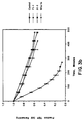
- TER 322 was tested as described above and showed high selectivity for activation by P1-1.
- the GST isoenzymes A1-1 and M1-1 exhibited negligible activation of the prodrug above background at standard conditions of 37°C and pH 7.1. These results are shown in Figure 3b.
- TER 296 is selectively cleaved by P1-1; TER 286 is selectively cleaved by P1-1 and A1-1; TER 303 is selectively cleaved by A1-1; and TER 231 by M1a-1a.
- the decomposition will result in a cytotoxic effect due to the liberation of the phosphorodiamidate mustard.
- This is similar to the biologically active species responsible for action of cyclophosphamide, a widely used chemotherapy drug as activated by cytochrome P450 or mixed function oxidases.
- Activity results from attack of the N on the C-Cl bond leading to formation of a positively charged aziridine ring, stabilized as a zwitterion with the free phosphate.
- the aziridinium species reacts as an alkylating agent with nucleophilic moieties on DNA and results in crosslinking when multiple alkylation occurs. Such crosslinking permanently disables the reproductive mechanism of the cells.
- Those compounds which demonstrate release of phosphoramide type mustard moieties when reacted with GST can then be screened for in vitro cytotoxicity according to methods known in the art (see, for example, Borch II).
- Preliminary results using HT29 human cancer cells show that TER 231 is toxic to these cells, while TER 230 is not. This is the expected result as the moiety released from TER 230 is nontoxic.
- Results with MCF-7 cancer cells and a corresponding ⁇ -transfect containing elevated levels of P1 GST also show the desired results.
- the ⁇ -transfected MCF-7 cells are more sensitive to TER 231 than are the untransfected cells.
- MCF-7 cells transfected either with a vector for generation of additional levels of GST P1-1 or a vector containing only the selection marker.
- P1-1 transfection resulted in a 13-fold elevation of this enzyme.
- MCF-7 cells selected for cyclophosphamide resistance (MCF-CTX) and its wild-type counterpart. Cyclophosphamide resistance has been associated with elevated levels of aldehyde dehydrogenase; however, MCF-CTX also has a 3-fold elevation of GST activity compared to wild type. These cells were obtained from Dr. Beverly Teicher, Dana Farber Cancer Institute.
- the assays were conducted by treating a suspension of 2 x 10 5 cells/ml for two hours with varying concentrations of the prodrug. The cells were then plated at 1,000-2,000 per well in 96-well plates and assayed on day 5 by a modified methylene blue assay described by Oliver, M.H. et al . J Cell Science (1989) 92 :513-518.
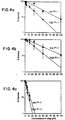
- Figures 4a, 4b and 4c show the results obtained when MCF-7 tumor cells transfected by P1-1 were compared to cells transfected only with the control vector.
- Figure 4a when TER 286 is employed, cells containing high P1-1 enzyme levels are sensitized 4-fold to the prodrug compared to controls;
- Figure 4b shows a 2-fold sensitization with respect to TER 231.
- a standard toxic agent such as mafosfamide
- CTX-resistant cells which are sensitive to CTX as compared to CTX-resistant forms.
- the CTX-resistant cells were more sensitive to TER 286 by a factor of 1.8 as compared to cells sensitive to CTX in a standard clonogenic assay.
- TER 325 was twice as toxic to MCF-7 expressing P1-1 then to MCF-7-neo.
- the prodrugs of the invention were tested in Balb/C nu/nv mice.
- the mice were implanted subcutaneously with MX-1 tumor pieces and then treated with a single intraperitoneal injection once tumors reached an average of 100 mm 3 (which is at approximately day 18 post-implant). Tumor growth and body weight were monitored for one month following treatment.
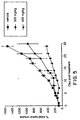
- the results are shown in Figure 5.
- the tumor volume in the treated mice as compared to controls is greatly diminished.
- the squares represent controls; circles represent 300 mg/kg of TER 286; triangles represent 400 mg/kg of the same drug.
- the points shown are the mean ⁇ SEM of 5-7 mice per group.
- the optimum dosage range appears to be in this region of 100-200 mg/kg for TER 286. This result is especially remarkable since the prodrug is capable of generating cytotoxicity per se ; the results with melphalan shown in the figure indicate extreme toxicity for chemotherapeutic agents with respect to bone marrow.
Landscapes
- Health & Medical Sciences (AREA)
- Life Sciences & Earth Sciences (AREA)
- Chemical & Material Sciences (AREA)
- Engineering & Computer Science (AREA)
- Medicinal Chemistry (AREA)
- Organic Chemistry (AREA)
- General Health & Medical Sciences (AREA)
- Molecular Biology (AREA)
- Immunology (AREA)
- Bioinformatics & Cheminformatics (AREA)
- Biochemistry (AREA)
- Genetics & Genomics (AREA)
- Biomedical Technology (AREA)
- Animal Behavior & Ethology (AREA)
- Veterinary Medicine (AREA)
- Public Health (AREA)
- Pharmacology & Pharmacy (AREA)
- Wood Science & Technology (AREA)
- Microbiology (AREA)
- Zoology (AREA)
- Urology & Nephrology (AREA)
- Hematology (AREA)
- Proteomics, Peptides & Aminoacids (AREA)
- Biotechnology (AREA)
- Nuclear Medicine, Radiotherapy & Molecular Imaging (AREA)
- Chemical Kinetics & Catalysis (AREA)
- General Chemical & Material Sciences (AREA)
- Cell Biology (AREA)
- General Physics & Mathematics (AREA)
- Epidemiology (AREA)
- Gastroenterology & Hepatology (AREA)
- Biophysics (AREA)
- General Engineering & Computer Science (AREA)
- Food Science & Technology (AREA)
- Physics & Mathematics (AREA)
- Analytical Chemistry (AREA)
- Pathology (AREA)
- Oncology (AREA)
- Virology (AREA)
- Communicable Diseases (AREA)
Claims (14)
- Verbindung der Formelund die Amide, Ester, gemischten Ester/Amide und Salze davon, worin:
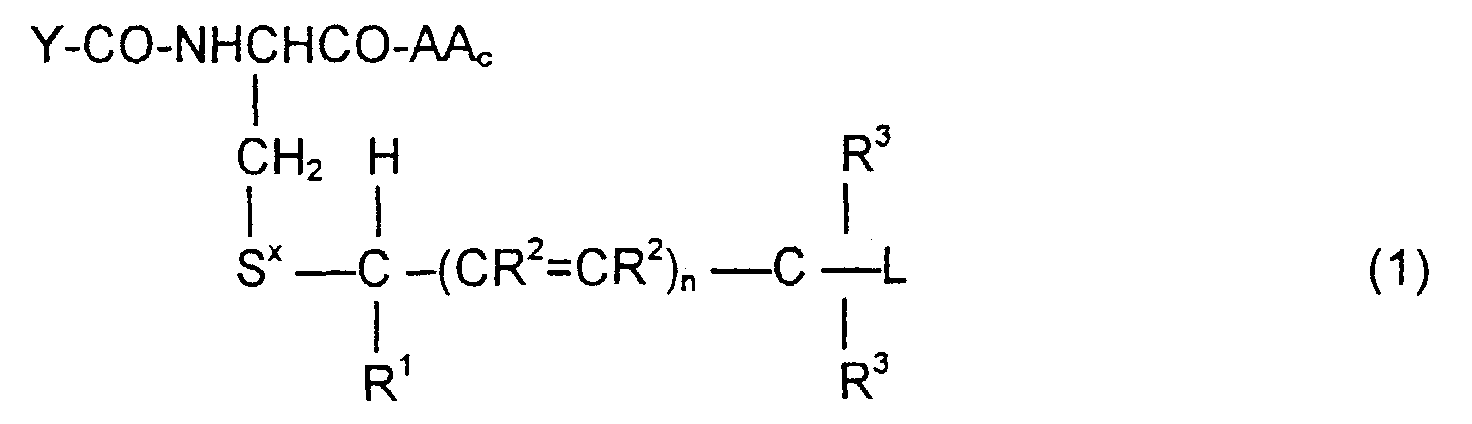 L eine elektronenziehende Austrittsgruppe ist;Sx S=O, O=S=O, S=NH, HN=S=O, Se=O, O=Se=O, Se=NH, HN=Se=O, S+R4, worin R4 Alkyl (1-6C) ist, oder O-C=O oder HN-C=O bedeutet;jedes R von R1, R2 und R3 unabhängig H oder ein nichtstörender Substituent ist;n 0, 1 oder 2 ist;Y-CO aus der Gruppe, bestehend aus γ-Gly, β-Asp, Glu, Asp, γ-GluGly, β-AspGly, GluGly und AspGly, ausgewählt ist; undAAc Glycin, Phenylglycin, β-Alanin, Alanin, Phenylalanin, Valin, 4-Aminobuttersäure, Asparaginsäure, Histidin, Tryptophan oder Tyrosin, über eine Peptidbindung mit dem Rest der Verbindung der Formel (1) verknüpft, darstellt.
 - Verbindung nach Anspruch 1, worin L eine biologisch aktive Gruppierung ist, wenn sie von der Verbindung der Formel (1) freigesetzt wird.
- Verbindung nach Anspruch 2, worin die biologisch aktive Gruppierung ein Phosphoramid-Senfgas oder Phosphorodiamidat-Senfgas ist.
- Verbindung nach irgendeinem der Ansprüche 1-3, worin n=0; und/oder
worin Y-CO γ-Glutaminsäure ist; und/oder
worin AAc Alanin, Phenylalanin, Glycin oder Phenylglycin ist; und/oder
worin jedes R3 unabhängig H, Niederalkyl (1-4C) oder Phenyl ist; und/oder
worin L -OP(O)(N(CH2CH3)2)2,-OP(O)(N(CH2CH2Cl)2)2, -OP(O)(NHCH2CH2Cl)2, -OP(O)(N(CH2CH2Br)2)2, -OP(O)(NHCH2CH2Br)2 oder 4-Methoxy-2,3-di-t-butylphenoxy- ist; und/oder
worin L eine Urethan-Verknüpfung umfaßt; und/oder
worin Sx O=S=O ist. - Verbindung nach Anspruch 1, welche eine Formel aufweist, die aus der Gruppe, bestehend aus:worin jedes Y unabhängig H oder Phenyl ist, Z 0 oder 1 ist und X H, Cl oder Br ist, einschließlich der Amide, Ester, gemischten Ester/Amide oder Salze davon;
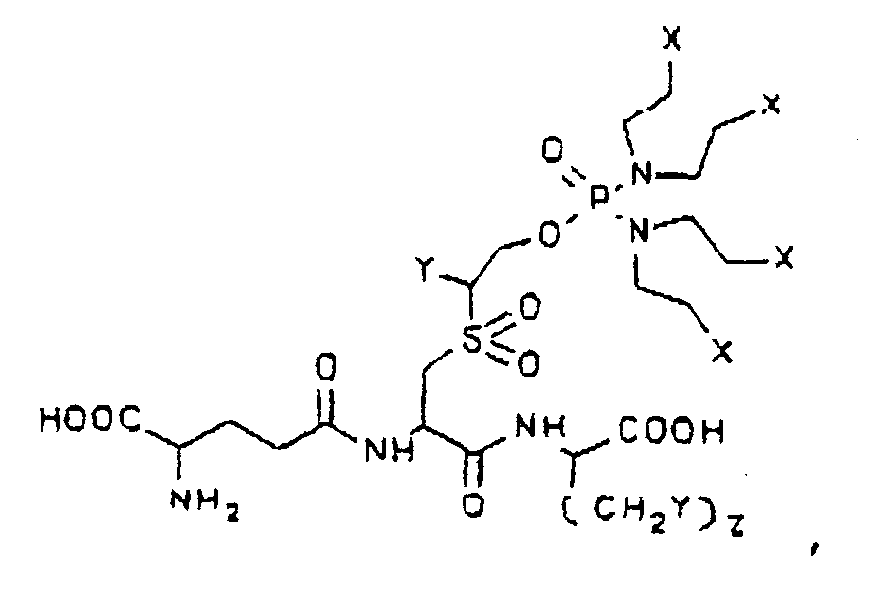 worin jedes Y unabhängig H oder Phenyl ist, Z 0 oder 1 ist und X H, Cl oder Br ist, einschließlich der Amide, Ester, gemischten Ester/Amide oder Salze davon; und
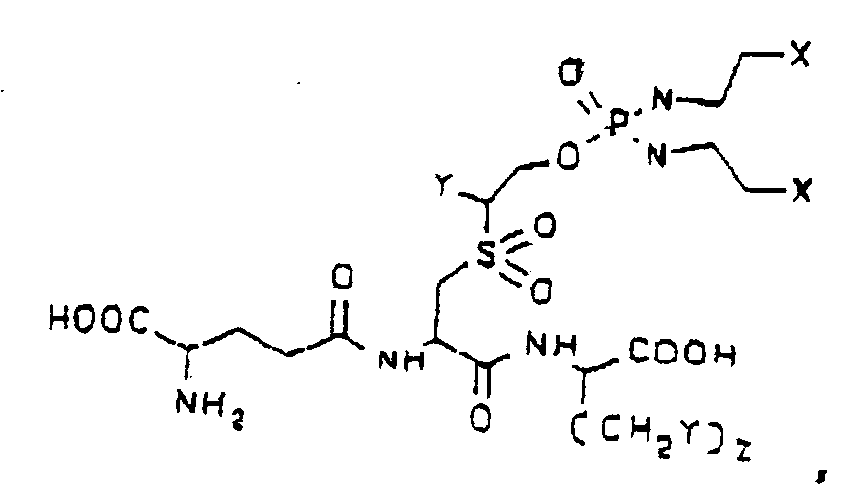 worin jedes Y unabhängig H oder Phenyl ist, Z 0 oder 1 ist und X H, Cl oder Br ist, einschließlich der Amide, Ester, gemischten Ester/Amide oder Salze davon, ausgewählt ist.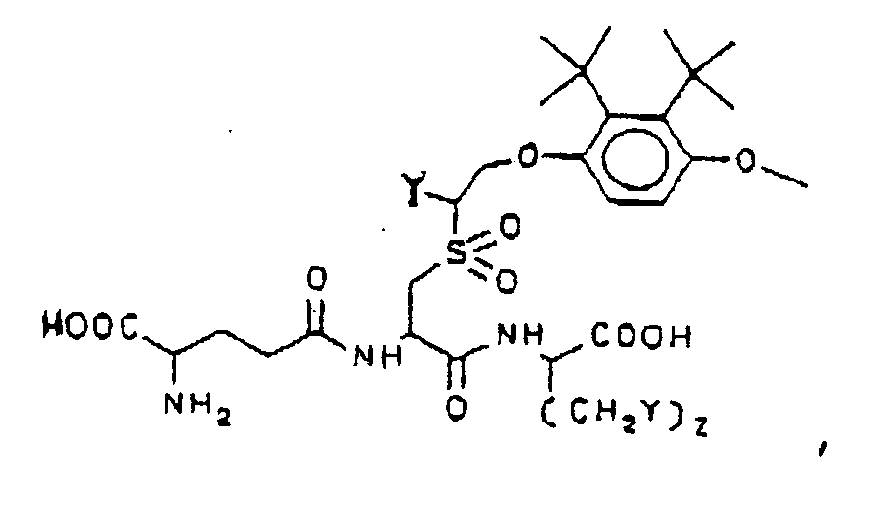
- Pharmazeutische Zusammensetzung, die bei der selektiven Behandlung von Zielzellen in Säugern wirksam ist, welche Zusammensetzung mindestens eine Verbindung nach irgendeinem der Ansprüche 1-5 in Mischung mit einem pharmazeutisch annehmbaren Exzipienten umfaßt, wobei die Zellen ein Komplement von GST-Isoenzymen aufweisen, worin mindestens ein GST-Isoenzym erhöht ist, wobei die Verbindung so ausgewählt wurde, daß sie für eine Spaltung durch das GST-Isoenzym, welches in dem GST-Komplement der Zielzellen erhöht ist, anfällig ist.
- Pharmazeutische Zusammensetzung zur Erhöhung der Granulozyten-Makrophagen (GM)-Vorläuferzellen-Stimulation in Knochenmark, welche mindestens eine Verbindung nach irgendeinem der Ansprüche 1-5 in Mischung mit einem pharmazeutisch annehmbaren Exzipienten umfaßt.
- Verbindung der Formel, welche aus der Gruppe, bestehend aus:oder den Amiden, Estern, gemischten Estern/Amiden oder Salzen davon, worin:
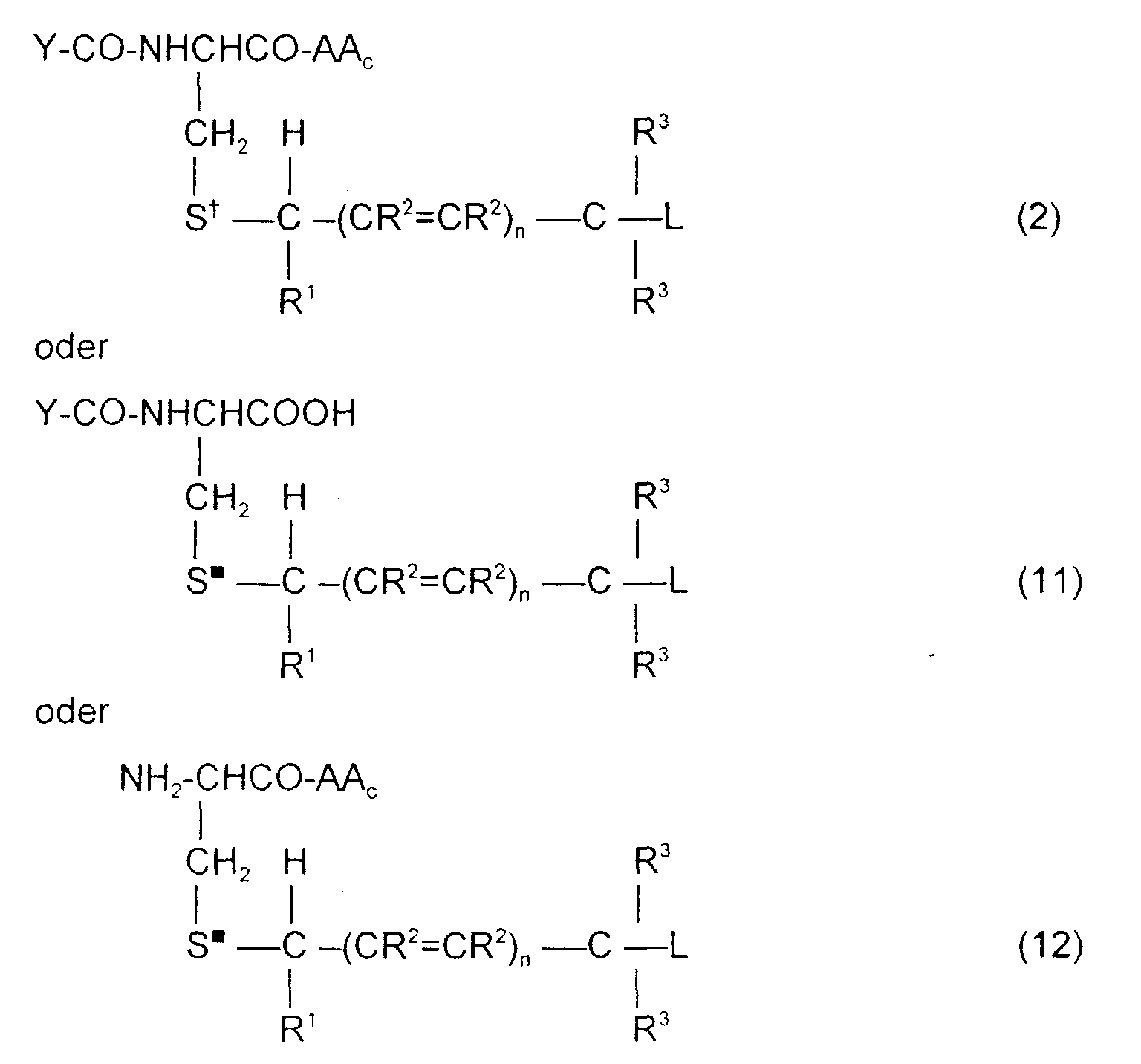 L eine elektronenziehende Austrittsgruppe ist;S▪ S† oder Sx ist;S† S oder Se ist;Sx S=O, O=S=O, S=NH, HN=S=O, Se=O, O=Se=O, Se=NH, HN=Se=O, S†R4, worin R4 Alkyl (1-6C) ist, oder O-C=O oder HN-C=O bedeutet;jedes R von R1, R2 und R3 unabhängig H oder ein nichtstörender Substituent ist;n 0, 1 oder 2 ist;Y aus der Gruppe, bestehend aus γ-Glu, β-Asp, Glu, Asp, γ-GluGly, β-AspGly, GluGly und AspGly, ausgewählt ist; undAAc Glycin, Phenylglycin, β-Alanin, Alanin, Phenylalanin, Valin, 4-Aminobuttersäure, Asparaginsäure, Histidin, Tryptophan oder Tyrosin, über eine Peptidbindung mit dem Rest der Verbindung der Formel (1) verknüpft, darstellt,
ausgewählt ist, zur Herstellung der Verbindung nach Anspruch 1. - Verfahren zur Herstellung der Verbindung der Formel:worin Y-CO, AAc, n, L und R1, R2 und R3 wie in Anspruch 1 definiert sind, und Sx S=O, O=S=O, Se=O oder O=Se=O darstellt;
welches Verfahren umfaßt, daß die Verbindung der Formel (2) von Anspruch 8 mit einem Oxidationsmittel behandelt wird. - Verfahren zur Herstellung der Verbindung der Formelworin Y-CO, AAc, n, L und R1, R2 und R3 wie in Anspruch 1 definiert sind, und Sx S=NH oder Se=NH ist;
welches Verfahren umfaßt, daß die Verbindung der Formel (2) von Anspruch 8 mit Chloramin T behandelt wird. - Verfahren zur Herstellung einer Verbindung der Formelworin Y-CO, AAc, n, L und R1, R2 und R3 wie in Anspruch 1 definiert sind, und Sx O=S=NH oder O=Se=NH ist;
welches Verfahren umfaßt, daß die Verbindung der Formel (2) von Anspruch 8 mit einem Oxidationsmittel und Chloramin T behandelt wird. - Verfahren zur Herstellung der Verbindung der Formelworin Y-CO, AAc, n, L und R1, R2 und R3 wie in Anspruch 1 definiert sind und Sx O-C=O ist;
welches Verfahren umfaßt, daß die Verbindung der Formelmit einer Verbindung, welche eine Gruppierung der Formel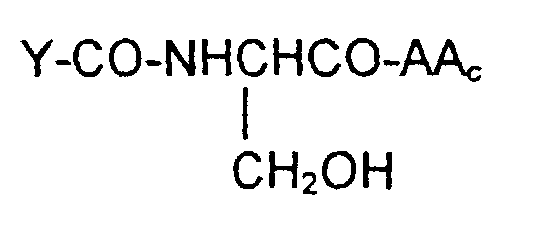 abgibt, behandelt wird.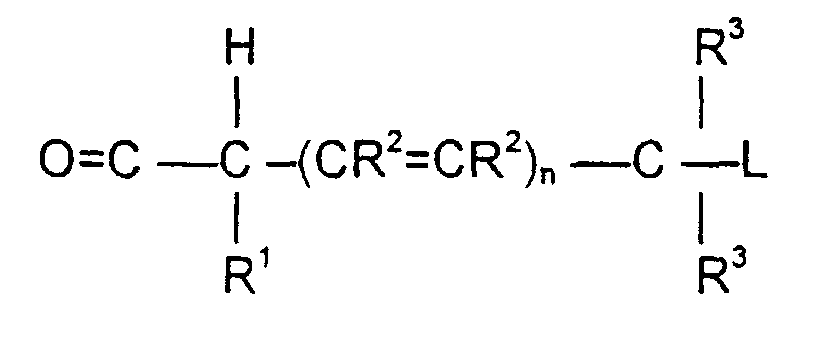
- Verfahren zur Herstellung der Verbindung der Formelworin Y-CO, AAc, n, L und R1, R2 und R3 wie in Anspruch 1 definiert sind und Sx HN-C=O ist;
welches Verfahren umfaßt, daß die Verbindung der Formelmit einer Verbindung, welche eine Gruppierung der Formel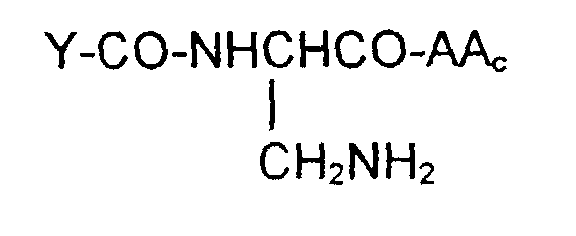 abgibt, behandelt wird.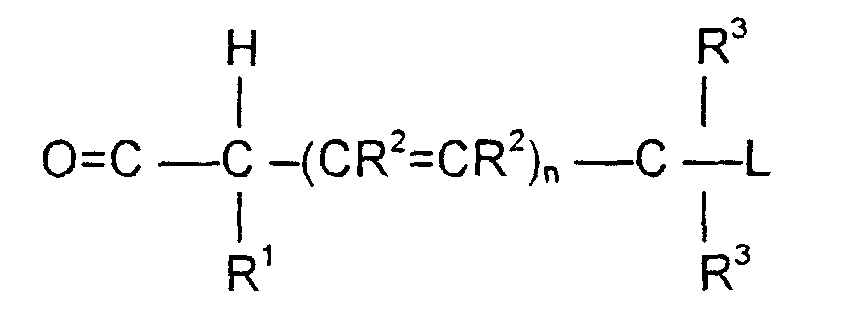
- Verfahren zur Herstellung der Verbindung der Formelworin Y-CO, AAc, n, L und R1, R2 und R3 wie in Anspruch 1 definiert sind, und Sx S+R4 ist, worin R4 Alkyl (1-6C) bedeutet;
welches Verfahren umfaßt, daß die Verbindung der Formel (2) von Anspruch 8 mit dem Halogenid von R4 behandelt wird.
Applications Claiming Priority (5)
| Application Number | Priority Date | Filing Date | Title |
|---|---|---|---|
| US08/130,736 US5545621A (en) | 1991-04-29 | 1993-10-01 | Glutathione S-transferase-activated compounds |
| US130736 | 1993-10-01 | ||
| US08/309,005 US5556942A (en) | 1991-04-29 | 1994-09-19 | Glutathione S-transferase-activated compounds |
| US309005 | 1994-09-19 | ||
| PCT/US1994/011109 WO1995009866A1 (en) | 1993-10-01 | 1994-09-30 | Glutathione s-transferase-activated compounds |
Publications (2)
| Publication Number | Publication Date |
|---|---|
| EP0721465A1 EP0721465A1 (de) | 1996-07-17 |
| EP0721465B1 true EP0721465B1 (de) | 2000-05-03 |
Family
ID=26828755
Family Applications (1)
| Application Number | Title | Priority Date | Filing Date |
|---|---|---|---|
| EP94930535A Expired - Lifetime EP0721465B1 (de) | 1993-10-01 | 1994-09-30 | Durch glutathion-s-transferase aktivierte verbindungen |
Country Status (12)
| Country | Link |
|---|---|
| US (1) | US5556942A (de) |
| EP (1) | EP0721465B1 (de) |
| JP (3) | JP3989534B2 (de) |
| AT (1) | ATE192455T1 (de) |
| AU (1) | AU676618C (de) |
| CA (1) | CA2173130E (de) |
| DE (1) | DE69424298T2 (de) |
| DK (1) | DK0721465T3 (de) |
| ES (1) | ES2147244T3 (de) |
| GR (1) | GR3033226T3 (de) |
| PT (1) | PT721465E (de) |
| WO (2) | WO1995009865A1 (de) |
Families Citing this family (32)
| Publication number | Priority date | Publication date | Assignee | Title |
|---|---|---|---|---|
| US5679643A (en) * | 1987-10-13 | 1997-10-21 | Terrapin Technologies, Inc. | Glutathione analogs and paralog panels comprising glutathione mimics |
| US5599903A (en) * | 1992-04-03 | 1997-02-04 | Terrapin Technologies, Inc. | Glutathione analogs and paralog panels comprising glutathione mimics |
| US5908919A (en) * | 1993-10-01 | 1999-06-01 | Terrapin Technologies | Urethane mediated, GST specific molecular release systems |
| WO1996040205A1 (en) * | 1995-06-07 | 1996-12-19 | Terrapin Technologies, Inc. | Metabolic effects of certain glutathione analogs |
| US5880097A (en) * | 1996-01-04 | 1999-03-09 | Terrapin Techologies, Inc. | Tethered prodrugs |
| JP2001512830A (ja) * | 1997-08-08 | 2001-08-28 | ニューバイオティックス インコーポレイテッド | 生物療法耐性および化学療法耐性を克服するための方法および組成物 |
| WO1999037802A1 (en) * | 1998-01-21 | 1999-07-29 | Telik, Inc. | Methods to identify myelostimulants |
| US6339151B1 (en) * | 1998-01-23 | 2002-01-15 | Newbiotics, Inc. | Enzyme catalyzed therapeutic agents |
| US7462605B2 (en) * | 1998-01-23 | 2008-12-09 | Celmed Oncology (Usa), Inc. | Phosphoramidate compounds and methods of use |
| US6683061B1 (en) | 1999-07-22 | 2004-01-27 | Newbiotics, Inc. | Enzyme catalyzed therapeutic activation |
| AU774492B2 (en) | 1999-07-22 | 2004-07-01 | Celmed Oncology (Usa) Inc. | Methods for treating therapy-resistant tumors |
| US6783929B1 (en) * | 1999-11-02 | 2004-08-31 | Chiron Corporation | Biological sample component purification and differential display |
| US20030212037A1 (en) * | 2000-12-21 | 2003-11-13 | Christopher Boyer | Use of bvdu for inhibiting the growth of hyperproliferative cells |
| UA74574C2 (en) * | 2000-05-02 | 2006-01-16 | Telik Inc | Bis (n,n'-bis(2-halogenethyl)amino)phosphodiamates, a method for producing thereof (variants), a pharmaceutical composition containing them, and a method for the treatment of tumors |
| US7153682B2 (en) * | 2000-06-05 | 2006-12-26 | Chiron Corporation | Microarrays on mirrored substrates for performing proteomic analyses |
| US7148058B2 (en) * | 2000-06-05 | 2006-12-12 | Chiron Corporation | Protein microarrays on mirrored surfaces for performing proteomic analyses |
| US6506739B1 (en) | 2001-05-01 | 2003-01-14 | Telik, Inc. | Bis-(N,N'-bis-(2-haloethyl)amino)phosphoramidates as antitumor agents |
| US7172905B2 (en) * | 2001-08-07 | 2007-02-06 | The University Of Chicago | Polypeptide immobilization |
| AU2003247907A1 (en) * | 2002-07-05 | 2004-01-23 | University Of Chicago | Characterization of biochips containing self-assembled monolayers with maldi-tof-ms |
| TWI323662B (en) * | 2002-11-15 | 2010-04-21 | Telik Inc | Combination cancer therapy with a gst-activated anticancer compound and another anticancer therapy |
| TW200538149A (en) * | 2004-05-20 | 2005-12-01 | Telik Inc | Sensitization to another anticancer therapy and/or amelioration of a side effect of another anticancer therapy by treatment with a GST-activated anticancer compound |
| TW200600091A (en) * | 2004-05-21 | 2006-01-01 | Telik Inc | Sulfonylethyl phosphorodiamidates |
| US8198247B2 (en) | 2004-12-21 | 2012-06-12 | Telik, Inc. | Process for and intermediates in the preparation of canfosfamide and its salts |
| ES2314890T3 (es) * | 2005-01-06 | 2009-03-16 | Telik, Inc. | Tioeteres tripeptidicos y tetrapeptidicos. |
| WO2008056207A1 (en) * | 2006-11-08 | 2008-05-15 | Chongxi Yu | Transdermal delivery systems of peptides and related compounds |
| US20080125397A1 (en) * | 2006-11-28 | 2008-05-29 | Telik, Inc. | 2 (SULFONYL)ETHYL N,N,N',N' tetrakis(2 chloroethyl)phosphorodia |
| US7655799B2 (en) * | 2006-11-29 | 2010-02-02 | Telik, Inc. | 2{[2-(substituted amino)ethyl]sulfonyl}ethyl N,N,N',N'-tetrakis(2-chloroethyl)phosphorodiamidates |
| US7872134B2 (en) * | 2007-12-12 | 2011-01-18 | Telik, Inc. | 2-{[2-(substituted amino)ethyl]sulfonyl}ethyl N,N-bis(2-chloroethyl)phosphorodiamidates |
| CN109232716A (zh) | 2009-05-08 | 2019-01-18 | 上海泰飞尔生化技术有限公司 | 多肽和多肽相关化合物的高穿透力前药组合物 |
| US9803694B2 (en) | 2010-01-11 | 2017-10-31 | Siemens Aktiengesellschaft | Direct drive wind turbine with a cooling system |
| JP5970439B2 (ja) * | 2013-09-20 | 2016-08-17 | チョンシー ユー | ペプチド及び関連化合物の経皮送達システム |
| CN113087765B (zh) * | 2021-04-02 | 2022-10-11 | 中国人民解放军军事科学院军事医学研究院 | 一种芥子气肽类加合物的制备方法 |
Family Cites Families (3)
| Publication number | Priority date | Publication date | Assignee | Title |
|---|---|---|---|---|
| JPS60255789A (ja) * | 1984-06-01 | 1985-12-17 | Kyowa Hakko Kogyo Co Ltd | マイトマイシン誘導体,その製造法および抗腫瘍剤 |
| WO1990012088A1 (en) * | 1989-04-13 | 1990-10-18 | The United States Of America, As Represented By The Secretary, U.S. Department Of Commerce | MONOCLONAL ANTIBODIES TO HUMAN GLUTATHIONE S TRANSFERASE Pi |
| JP2919867B2 (ja) * | 1989-09-27 | 1999-07-19 | 千寿製薬株式会社 | 抗腫瘍剤 |
-
1994
- 1994-09-19 US US08/309,005 patent/US5556942A/en not_active Expired - Lifetime
- 1994-09-23 WO PCT/US1994/010796 patent/WO1995009865A1/en not_active Ceased
- 1994-09-30 DK DK94930535T patent/DK0721465T3/da active
- 1994-09-30 CA CA2173130A patent/CA2173130E/en not_active Expired - Fee Related
- 1994-09-30 JP JP51091895A patent/JP3989534B2/ja not_active Expired - Fee Related
- 1994-09-30 ES ES94930535T patent/ES2147244T3/es not_active Expired - Lifetime
- 1994-09-30 DE DE69424298T patent/DE69424298T2/de not_active Expired - Lifetime
- 1994-09-30 AT AT94930535T patent/ATE192455T1/de active
- 1994-09-30 EP EP94930535A patent/EP0721465B1/de not_active Expired - Lifetime
- 1994-09-30 PT PT94930535T patent/PT721465E/pt unknown
- 1994-09-30 WO PCT/US1994/011109 patent/WO1995009866A1/en not_active Ceased
- 1994-09-30 AU AU79623/94A patent/AU676618C/en not_active Ceased
-
2000
- 2000-05-04 GR GR20000400321T patent/GR3033226T3/el unknown
-
2005
- 2005-12-21 JP JP2005368891A patent/JP4025343B2/ja not_active Expired - Fee Related
-
2007
- 2007-09-03 JP JP2007228392A patent/JP2008056678A/ja not_active Withdrawn
Also Published As
| Publication number | Publication date |
|---|---|
| ATE192455T1 (de) | 2000-05-15 |
| ES2147244T3 (es) | 2000-09-01 |
| JP3989534B2 (ja) | 2007-10-10 |
| JP4025343B2 (ja) | 2007-12-19 |
| WO1995009866A1 (en) | 1995-04-13 |
| CA2173130E (en) | 2010-05-25 |
| US5556942A (en) | 1996-09-17 |
| GR3033226T3 (en) | 2000-08-31 |
| JP2008056678A (ja) | 2008-03-13 |
| DK0721465T3 (da) | 2000-08-14 |
| JPH09506074A (ja) | 1997-06-17 |
| AU7962394A (en) | 1995-05-01 |
| PT721465E (pt) | 2000-10-31 |
| DE69424298T2 (de) | 2000-08-31 |
| EP0721465A1 (de) | 1996-07-17 |
| DE69424298D1 (de) | 2000-06-08 |
| JP2006169254A (ja) | 2006-06-29 |
| WO1995009865A1 (en) | 1995-04-13 |
| AU676618C (en) | 2003-06-12 |
| CA2173130C (en) | 2001-04-17 |
| AU676618B2 (en) | 1997-03-13 |
| CA2173130A1 (en) | 1995-04-13 |
Similar Documents
| Publication | Publication Date | Title |
|---|---|---|
| EP0721465B1 (de) | Durch glutathion-s-transferase aktivierte verbindungen | |
| Lyttle et al. | Glutathione-S-transferase activates novel alkylating agents | |
| EP0873355B1 (de) | Gebundene vorstufen von arztneimitteln aufgrund kovalenter verknüpfung mit glutathionanalogen | |
| Burg et al. | Peptidomimetic glutathione analogues as novel γGT stable GST inhibitors | |
| MC1465A1 (fr) | Procede et dispositif integres de mise en place,de blocage et de traitement des cartes magnetiques et/ou a memoire | |
| Neuburger et al. | Interaction between the lipoamide‐containing H‐protein and the lipoamide dehydrogenase (L‐protein) of the glycine decarboxylase multienzyme system: 1. Biochemical studies | |
| EP0832101B1 (de) | Uber urethangruppen gebundene, gst-spezifische freisetzungssysteme für moleküle | |
| US5545621A (en) | Glutathione S-transferase-activated compounds | |
| US7700560B2 (en) | Inactivators and bivalent inhibitors of glyoxalase I and methods of inhibiting tumor growth | |
| De Craecker et al. | Characterization of the peptide substrate specificity of glutathionylspermidine synthetase from Crithidia fasciculata | |
| EP0426467B1 (de) | Pro-drugs von 6-Mercaptopurin und 6-Thioguanin | |
| US6747009B2 (en) | Peptidomimetic glutathione analogs | |
| US8044101B2 (en) | Nitrosation-inducible inhibitors biological macromolecules | |
| Kumar | Design and synthesis of glutathione analogues |
Legal Events
| Date | Code | Title | Description |
|---|---|---|---|
| PUAI | Public reference made under article 153(3) epc to a published international application that has entered the european phase |
Free format text: ORIGINAL CODE: 0009012 |
|
| 17P | Request for examination filed |
Effective date: 19960325 |
|
| AK | Designated contracting states |
Kind code of ref document: A1 Designated state(s): AT BE CH DE DK ES FR GB GR IE IT LI LU MC NL PT SE |
|
| 17Q | First examination report despatched |
Effective date: 19980602 |
|
| RAP1 | Party data changed (applicant data changed or rights of an application transferred) |
Owner name: TELIK, INC. |
|
| GRAG | Despatch of communication of intention to grant |
Free format text: ORIGINAL CODE: EPIDOS AGRA |
|
| GRAG | Despatch of communication of intention to grant |
Free format text: ORIGINAL CODE: EPIDOS AGRA |
|
| GRAH | Despatch of communication of intention to grant a patent |
Free format text: ORIGINAL CODE: EPIDOS IGRA |
|
| GRAH | Despatch of communication of intention to grant a patent |
Free format text: ORIGINAL CODE: EPIDOS IGRA |
|
| GRAA | (expected) grant |
Free format text: ORIGINAL CODE: 0009210 |
|
| AK | Designated contracting states |
Kind code of ref document: B1 Designated state(s): AT BE CH DE DK ES FR GB GR IE IT LI LU MC NL PT SE |
|
| REF | Corresponds to: |
Ref document number: 192455 Country of ref document: AT Date of ref document: 20000515 Kind code of ref document: T |
|
| REG | Reference to a national code |
Ref country code: CH Ref legal event code: NV Representative=s name: A. BRAUN, BRAUN, HERITIER, ESCHMANN AG PATENTANWAE Ref country code: CH Ref legal event code: EP |
|
| ITF | It: translation for a ep patent filed | ||
| REG | Reference to a national code |
Ref country code: IE Ref legal event code: FG4D |
|
| REF | Corresponds to: |
Ref document number: 69424298 Country of ref document: DE Date of ref document: 20000608 |
|
| ET | Fr: translation filed | ||
| REG | Reference to a national code |
Ref country code: DK Ref legal event code: T3 |
|
| REG | Reference to a national code |
Ref country code: ES Ref legal event code: FG2A Ref document number: 2147244 Country of ref document: ES Kind code of ref document: T3 |
|
| REG | Reference to a national code |
Ref country code: PT Ref legal event code: SC4A Free format text: AVAILABILITY OF NATIONAL TRANSLATION Effective date: 20000710 |
|
| PLBE | No opposition filed within time limit |
Free format text: ORIGINAL CODE: 0009261 |
|
| STAA | Information on the status of an ep patent application or granted ep patent |
Free format text: STATUS: NO OPPOSITION FILED WITHIN TIME LIMIT |
|
| 26N | No opposition filed | ||
| REG | Reference to a national code |
Ref country code: GB Ref legal event code: IF02 |
|
| REG | Reference to a national code |
Ref country code: GB Ref legal event code: 727 |
|
| REG | Reference to a national code |
Ref country code: GB Ref legal event code: 711G |
|
| REG | Reference to a national code |
Ref country code: CH Ref legal event code: PFA Owner name: TELIK, INC. Free format text: TELIK, INC.#750-H GATEWAY BOULEVARD#SOUTH SAN FRANCISCO, CA 94080 (US) -TRANSFER TO- TELIK, INC.#750-H GATEWAY BOULEVARD#SOUTH SAN FRANCISCO, CA 94080 (US) |
|
| PGFP | Annual fee paid to national office [announced via postgrant information from national office to epo] |
Ref country code: IT Payment date: 20100920 Year of fee payment: 17 |
|
| PGFP | Annual fee paid to national office [announced via postgrant information from national office to epo] |
Ref country code: DK Payment date: 20110926 Year of fee payment: 18 Ref country code: MC Payment date: 20110914 Year of fee payment: 18 Ref country code: IE Payment date: 20110923 Year of fee payment: 18 Ref country code: CH Payment date: 20110923 Year of fee payment: 18 |
|
| PGFP | Annual fee paid to national office [announced via postgrant information from national office to epo] |
Ref country code: AT Payment date: 20110914 Year of fee payment: 18 Ref country code: GB Payment date: 20110920 Year of fee payment: 18 Ref country code: GR Payment date: 20110923 Year of fee payment: 18 Ref country code: SE Payment date: 20110923 Year of fee payment: 18 Ref country code: PT Payment date: 20110921 Year of fee payment: 18 Ref country code: DE Payment date: 20110923 Year of fee payment: 18 Ref country code: ES Payment date: 20110926 Year of fee payment: 18 Ref country code: FR Payment date: 20110928 Year of fee payment: 18 |
|
| PGFP | Annual fee paid to national office [announced via postgrant information from national office to epo] |
Ref country code: NL Payment date: 20110929 Year of fee payment: 18 |
|
| PGFP | Annual fee paid to national office [announced via postgrant information from national office to epo] |
Ref country code: LU Payment date: 20111005 Year of fee payment: 18 Ref country code: BE Payment date: 20110914 Year of fee payment: 18 |
|
| BERE | Be: lapsed |
Owner name: *TELIK INC. Effective date: 20120930 |
|
| REG | Reference to a national code |
Ref country code: PT Ref legal event code: MM4A Free format text: LAPSE DUE TO NON-PAYMENT OF FEES Effective date: 20130401 |
|
| REG | Reference to a national code |
Ref country code: NL Ref legal event code: V1 Effective date: 20130401 |
|
| PG25 | Lapsed in a contracting state [announced via postgrant information from national office to epo] |
Ref country code: MC Free format text: LAPSE BECAUSE OF NON-PAYMENT OF DUE FEES Effective date: 20120930 |
|
| REG | Reference to a national code |
Ref country code: CH Ref legal event code: PL |
|
| REG | Reference to a national code |
Ref country code: AT Ref legal event code: MM01 Ref document number: 192455 Country of ref document: AT Kind code of ref document: T Effective date: 20120930 |
|
| REG | Reference to a national code |
Ref country code: GR Ref legal event code: ML Ref document number: 20000400321 Country of ref document: GR Effective date: 20130404 |
|
| GBPC | Gb: european patent ceased through non-payment of renewal fee |
Effective date: 20120930 |
|
| REG | Reference to a national code |
Ref country code: DK Ref legal event code: EBP |
|
| REG | Reference to a national code |
Ref country code: FR Ref legal event code: ST Effective date: 20130531 |
|
| REG | Reference to a national code |
Ref country code: IE Ref legal event code: MM4A |
|
| REG | Reference to a national code |
Ref country code: DE Ref legal event code: R119 Ref document number: 69424298 Country of ref document: DE Effective date: 20130403 |
|
| PG25 | Lapsed in a contracting state [announced via postgrant information from national office to epo] |
Ref country code: CH Free format text: LAPSE BECAUSE OF NON-PAYMENT OF DUE FEES Effective date: 20120930 Ref country code: BE Free format text: LAPSE BECAUSE OF NON-PAYMENT OF DUE FEES Effective date: 20120930 Ref country code: GB Free format text: LAPSE BECAUSE OF NON-PAYMENT OF DUE FEES Effective date: 20120930 Ref country code: DE Free format text: LAPSE BECAUSE OF NON-PAYMENT OF DUE FEES Effective date: 20130403 Ref country code: AT Free format text: LAPSE BECAUSE OF NON-PAYMENT OF DUE FEES Effective date: 20120930 Ref country code: LI Free format text: LAPSE BECAUSE OF NON-PAYMENT OF DUE FEES Effective date: 20120930 Ref country code: SE Free format text: LAPSE BECAUSE OF NON-PAYMENT OF DUE FEES Effective date: 20121001 Ref country code: IE Free format text: LAPSE BECAUSE OF NON-PAYMENT OF DUE FEES Effective date: 20120930 |
|
| PG25 | Lapsed in a contracting state [announced via postgrant information from national office to epo] |
Ref country code: GR Free format text: LAPSE BECAUSE OF NON-PAYMENT OF DUE FEES Effective date: 20130404 Ref country code: PT Free format text: LAPSE BECAUSE OF NON-PAYMENT OF DUE FEES Effective date: 20130401 Ref country code: IT Free format text: LAPSE BECAUSE OF NON-PAYMENT OF DUE FEES Effective date: 20120930 Ref country code: FR Free format text: LAPSE BECAUSE OF NON-PAYMENT OF DUE FEES Effective date: 20121001 Ref country code: NL Free format text: LAPSE BECAUSE OF NON-PAYMENT OF DUE FEES Effective date: 20130401 |
|
| REG | Reference to a national code |
Ref country code: ES Ref legal event code: FD2A Effective date: 20131018 |
|
| PG25 | Lapsed in a contracting state [announced via postgrant information from national office to epo] |
Ref country code: ES Free format text: LAPSE BECAUSE OF NON-PAYMENT OF DUE FEES Effective date: 20121001 Ref country code: DK Free format text: LAPSE BECAUSE OF NON-PAYMENT OF DUE FEES Effective date: 20121001 |
|
| PG25 | Lapsed in a contracting state [announced via postgrant information from national office to epo] |
Ref country code: LU Free format text: LAPSE BECAUSE OF NON-PAYMENT OF DUE FEES Effective date: 20120930 |