EP0712442B1 - Vaccine compositions - Google Patents
Vaccine compositions Download PDFInfo
- Publication number
- EP0712442B1 EP0712442B1 EP94921762A EP94921762A EP0712442B1 EP 0712442 B1 EP0712442 B1 EP 0712442B1 EP 94921762 A EP94921762 A EP 94921762A EP 94921762 A EP94921762 A EP 94921762A EP 0712442 B1 EP0712442 B1 EP 0712442B1
- Authority
- EP
- European Patent Office
- Prior art keywords
- dna construct
- dna
- bacterium
- tetc
- fusion protein
- Prior art date
- Legal status (The legal status is an assumption and is not a legal conclusion. Google has not performed a legal analysis and makes no representation as to the accuracy of the status listed.)
- Expired - Lifetime
Links
Images


Classifications
-
- C—CHEMISTRY; METALLURGY
- C12—BIOCHEMISTRY; BEER; SPIRITS; WINE; VINEGAR; MICROBIOLOGY; ENZYMOLOGY; MUTATION OR GENETIC ENGINEERING
- C12N—MICROORGANISMS OR ENZYMES; COMPOSITIONS THEREOF; PROPAGATING, PRESERVING, OR MAINTAINING MICROORGANISMS; MUTATION OR GENETIC ENGINEERING; CULTURE MEDIA
- C12N9/00—Enzymes; Proenzymes; Compositions thereof; Processes for preparing, activating, inhibiting, separating or purifying enzymes
- C12N9/10—Transferases (2.)
- C12N9/1085—Transferases (2.) transferring alkyl or aryl groups other than methyl groups (2.5)
- C12N9/1088—Glutathione transferase (2.5.1.18)
-
- C—CHEMISTRY; METALLURGY
- C12—BIOCHEMISTRY; BEER; SPIRITS; WINE; VINEGAR; MICROBIOLOGY; ENZYMOLOGY; MUTATION OR GENETIC ENGINEERING
- C12N—MICROORGANISMS OR ENZYMES; COMPOSITIONS THEREOF; PROPAGATING, PRESERVING, OR MAINTAINING MICROORGANISMS; MUTATION OR GENETIC ENGINEERING; CULTURE MEDIA
- C12N15/00—Mutation or genetic engineering; DNA or RNA concerning genetic engineering, vectors, e.g. plasmids, or their isolation, preparation or purification; Use of hosts therefor
- C12N15/09—Recombinant DNA-technology
- C12N15/11—DNA or RNA fragments; Modified forms thereof; Non-coding nucleic acids having a biological activity
- C12N15/62—DNA sequences coding for fusion proteins
-
- A—HUMAN NECESSITIES
- A61—MEDICAL OR VETERINARY SCIENCE; HYGIENE
- A61K—PREPARATIONS FOR MEDICAL, DENTAL OR TOILETRY PURPOSES
- A61K39/00—Medicinal preparations containing antigens or antibodies
-
- C—CHEMISTRY; METALLURGY
- C07—ORGANIC CHEMISTRY
- C07K—PEPTIDES
- C07K2319/00—Fusion polypeptide
- C07K2319/01—Fusion polypeptide containing a localisation/targetting motif
- C07K2319/02—Fusion polypeptide containing a localisation/targetting motif containing a signal sequence
-
- C—CHEMISTRY; METALLURGY
- C07—ORGANIC CHEMISTRY
- C07K—PEPTIDES
- C07K2319/00—Fusion polypeptide
- C07K2319/20—Fusion polypeptide containing a tag with affinity for a non-protein ligand
- C07K2319/23—Fusion polypeptide containing a tag with affinity for a non-protein ligand containing a GST-tag
-
- C—CHEMISTRY; METALLURGY
- C07—ORGANIC CHEMISTRY
- C07K—PEPTIDES
- C07K2319/00—Fusion polypeptide
- C07K2319/40—Fusion polypeptide containing a tag for immunodetection, or an epitope for immunisation
-
- C—CHEMISTRY; METALLURGY
- C07—ORGANIC CHEMISTRY
- C07K—PEPTIDES
- C07K2319/00—Fusion polypeptide
- C07K2319/55—Fusion polypeptide containing a fusion with a toxin, e.g. diphteria toxin
-
- C—CHEMISTRY; METALLURGY
- C07—ORGANIC CHEMISTRY
- C07K—PEPTIDES
- C07K2319/00—Fusion polypeptide
- C07K2319/70—Fusion polypeptide containing domain for protein-protein interaction
- C07K2319/74—Fusion polypeptide containing domain for protein-protein interaction containing a fusion for binding to a cell surface receptor
- C07K2319/75—Fusion polypeptide containing domain for protein-protein interaction containing a fusion for binding to a cell surface receptor containing a fusion for activation of a cell surface receptor, e.g. thrombopoeitin, NPY and other peptide hormones
-
- Y—GENERAL TAGGING OF NEW TECHNOLOGICAL DEVELOPMENTS; GENERAL TAGGING OF CROSS-SECTIONAL TECHNOLOGIES SPANNING OVER SEVERAL SECTIONS OF THE IPC; TECHNICAL SUBJECTS COVERED BY FORMER USPC CROSS-REFERENCE ART COLLECTIONS [XRACs] AND DIGESTS
- Y02—TECHNOLOGIES OR APPLICATIONS FOR MITIGATION OR ADAPTATION AGAINST CLIMATE CHANGE
- Y02A—TECHNOLOGIES FOR ADAPTATION TO CLIMATE CHANGE
- Y02A50/00—TECHNOLOGIES FOR ADAPTATION TO CLIMATE CHANGE in human health protection, e.g. against extreme weather
- Y02A50/30—Against vector-borne diseases, e.g. mosquito-borne, fly-borne, tick-borne or waterborne diseases whose impact is exacerbated by climate change
Definitions
- This invention relates to DNA constructs, replicable expression vectors containing the constructs, bacteria containing the constructs and vaccines containing the bacteria or fusion proteins expressed therefrom. More particularly, the invention relates to novel DNA constructs encoding the C-fragment of tetanus toxin, and to fusion proteins containing tetanus toxin C-fragment.
- TetC-P28 fusion protein was capable of being affinity purified by a glutathione agarose matrix, suggesting that the P28 had folded correctly to adopt a conformation still capable of binding to its natural substrate. It was previously considered that a hinge region, which typically is a sequence encoding a high proportion of proline and/or glycine amino acids, is essential for promoting the independent folding of both the TetC and the antigenic protein fused thereto.
- the invention provides a DNA construct comprising a DNA sequence encoding a fusion protein of the formula TetC-(Z) a -Het, wherein TetC is the C fragment of tetanus toxin; Het is a heterologous protein; Z is an amino acid, and a is less than 4, provided that (Z) a does not include the sequence Gly-Pro.
- (Z) a is a chain of two or three amino acids, the DNA sequence for which defines a restriction endonuclease cleavage site.
- a is zero.
- the group (Z) a will not contain either glycine or proline at all.
- the group (Z) a may be a chain of amino acids substantially devoid of biological activity.
- the invention provides a replicable expression vector, for example suitable for use in bacteria, containing a DNA construct as hereinbefore defined.
- the invention provides a host (e.g. a bacterium) containing a DNA construct as hereinbefore defined, the DNA construct being present in the host either in the form of a replicable expression vector such as a plasmid, or being present as part of the host chromosome, or both.
- a host e.g. a bacterium
- the DNA construct being present in the host either in the form of a replicable expression vector such as a plasmid, or being present as part of the host chromosome, or both.
- the invention provides a fusion protein of the form TetC-(Z) a -Het as hereinbefore defined, preferably in substantially pure form, said fusion protein being expressible by a replicable expression vector as hereinbefore defined.
- the invention provides a process for the preparation of a bacterium (preferably an attenuated bacterium) which process comprises transforming a bacterium (e.g. an attenuated bacterium) with a DNA construct as hereinbefore defined.
- the invention also provides a vaccine composition comprising an attenuated bacterium, or a fusion protein, as hereinbefore defined, and a pharmaceutically acceptable carrier.
- heterologous protein "Het” may for example be a heterologous antigenic sequence, e.g. an antigenic sequence derived from a virus, bacterium, fungus, yeast or parasite.
- viral antigenic sequences are sequences derived from a type of human immunodeficiency virus (HIV) such as HIV-1 or HIV-2, the CD4 receptor binding site from HIV, for example from HIV-1 or -2., hepatitis A, B or C virus, human rhinovirus such as type 2 or type 14, Herpes simplex virus, poliovirus type 2 or 3, foot-and-mouth disease virus (FMDV), rabies virus, rotavirus, influenza virus, coxsackie virus, human papilloma virus (HPV), for example the type 16 papilloma virus, the E7 protein thereof, and fragments containing the E7 protein or its epitopes; and simian immunodeficiency virus (SIV).
- HAV human immunodeficiency virus
- SIV simian immunodeficiency virus
- antigens derived from bacteria are those derived from Bordetella pertussis (e.g. P69 protein and filamentous haemagglutinin (FHA) antigens), Vibrio cholerae , Bacillus anthracis, and E.coli antigens such as E.coli heat Labile toxin B subunit (LT-B), E.coli K88 antigens, and enterotoxigenic E.coli antigens.
- antigens include the cell surface antigen CD4, Schistosoma mansoni P28 glutathione S -transferase antigens (P28 antigens) and antigens of flukes, mycoplasma, roundworms, tapeworms, Chlamydia trachomatis, and malaria parasites, eg. parasites of the genus plasmodium or babesia, for example Plasmodium falciparum, and peptides encoding immunogenic epitopes from the aforementioned antigens.
- CD4 Schistosoma mansoni P28 glutathione S -transferase antigens
- antigens of flukes eg. parasites of the genus plasmodium or babesia, for example Plasmodium falciparum, and peptides encoding immunogenic epitopes from the aforementioned antigens.
- Particular antigens include the full length Schistosoma mansoni P28, and oligomers (e.g. 2, 4 and 8-mers) of the immunogenic P28 aa 115-131 peptide (which contains both a B and T cell epitope), and human papilloma virus E7 protein, Herpes simplex antigens, foot and mouth disease virus antigens and simian immunodeficiency virus antigens.
- the DNA constructs of the present invention may contain a promoter whose activity is induced in response to a change in the surrounding environment.
- a promoter sequence is one which has activity which is induced by anaerobic conditions.
- a particular example of such a promoter sequence is the nirB promoter which has been described, for example in International Patent Application PCT/GB92/00387.
- the nirB promoter has been isolated from E.coli, where it directs expression of an operon which includes the nitrite reductase gene nirB (Jayaraman et al, J. Mol. Biol.
- references to the nirB promoter refer to the promoter itself or a part or derivative thereof which is capable of promoting expression of a coding sequence under anaerobic conditions.
- the preferred sequence, and which contains the nirB promoter is:
- the present invention provides a DNA molecule comprising the nirB promoter operably linked to a DNA sequence encoding a fusion protein as hereinbefore defined.
- a replicable expression vector suitable for use in bacteria, containing the nirB promoter sequence operably linked to a DNA sequence encoding a fusion protein as hereinbefore defined.
- the DNA molecule or construct may be integrated into the bacterial chromosome, e.g. by methods known per se , and thus in a further aspect, the invention provides a bacterium having in its chromosome, a DNA sequence or construct as hereinbefore defined.
- the fusion protein can be expressed in an attenuated bacterium which can thus be used as a vaccine.
- the attenuated bacterium may be selected from the genera Salmonella, Bordetella, Vibrio, Haemophilus, Neisseria and Yersinia. Alternatively, the attenuated bacterium may be an attenuated strain of enterotoxigenic Escherichia coli .
- S.typhi the cause of human typhoid
- S.typhimurium the cause of salmonellosis in several animal species
- S.enteritidis a cause of food poisoning in humans
- S.choleraesuis a cause of salmonellosis in pigs
- Bordetella pertussis the cause of whooping cough
- Neisseria gonorrhoea the cause of gonorrhoea
- Attenuated bacteria examples are disclosed in, for example EP-A-0322237 and EP-A-0400958, the disclosures in which are incorporated by reference herein.
- an attenuated bacterium containing a DNA construct according to the invention can be used as a vaccine.
- Fusion proteins (preferably in substantially pure form) expressed by the bacteria can also be used in the preparation of vaccines.
- a purified TetC-P28 fusion protein in which the TetC protein is linked via its C-terminus to the P28 protein with no intervening hinge region has been found to be immunogenic on its own.
- the invention provides a vaccine composition comprising a pharmaceutically acceptable carrier or diluent and, as active ingredient, an attenuated bacterium or fusion protein as hereinbefore defined.
- the vaccine may comprise one or more suitable adjuvants.
- the vaccine is advantageously presented in a lyophilised form, for example in a capsular form, for oral administration to a patient.
- Such capsules may be provided with an enteric coating comprising, for example, Eudragit "S”, Eudragit "L”, Cellulose acetate, Cellulose acetate phthalate or Hydroxypropylmethyl Cellulose.
- the lyophilised material may be reconstituted prior to administration, e.g. as a suspension. Reconstitution is advantageously effected in buffer at a suitable pH to ensure the viability of the organisms.
- a sodium bicarbonate preparation is advantageously administered before each administration of the vaccine.
- the vaccine may be prepared for parenteral administration, intranasal administration or intramammary administration.
- the attenuated bacterium containing the DNA construct or fusion protein of the invention may be used in the prophylactic treatment of a host, particularly a human host but also possibly an animal host.
- An infection caused by a microorganism, especially a pathogen, may therefore be prevented by administering an effective dose of an attenuated bacterium according to the invention.
- the bacterium then expresses the fusion protein which is capable of raising antibody to the micro-organism.
- the dosage employed will be dependent on various factors including the size and weight of the host, the type of vaccine formulated and the nature of the fusion protein.
- An attenuated bacterium according to the present invention may be prepared by transforming an attenuated bacterium with a DNA construct as hereinbefore defined. Any suitable transformation technique may be employed, such as electroporation. In this way, an attenuated bacterium capable of expressing a protein or proteins heterologous to the bacterium may be obtained. A culture of the attenuated bacterium may be grown under aerobic conditions. A sufficient amount of the bacterium is thus prepared for formulation as a vaccine, with minimal expression of the fusion protein occurring.
- the DNA construct may be a replicable expression vector comprising the nirB promoter operably linked to a DNA sequence encoding the fusion protein.
- the nirB promoter may be inserted in an expression vector, which already incorporates a gene encoding one of the heterologous proteins (e.g. the tetanus toxin C fragment), in place of the existing promoter controlling expression of the protein.
- the gene encoding the other heterologous protein e.g. an antigenic sequence
- the expression vector should, of course, be compatible with the attenuated bacterium into which the vector is to be inserted.
- the expression vector is provided with appropriate transcriptional and translational control elements including, besides the nirB promoter, a transcriptional termination site and translational start and stop codons.
- An appropriate ribosome binding site is provided.
- the vector typically comprises an origin of replication and, if desired, a selectable marker gene such as an antibiotic resistance gene.
- the vector may be a plasmid.
- a vector was constructed to allow genetic fusions to the C-terminus of the highly immunogenic C fragment of tetanus toxin, without the use of a heterologous hinge domain.
- a fusion was constructed, with the gene encoding the protective 28kDa glutathione S -transferase from Schistosoma mansoni.
- the recombinant vector was transformed into Salmonella typhimurium (SL338; rm + ).
- the resulting chimeric protein was stably expressed in a soluble form in salmonella as assessed by western blotting with fragment C and glutathione S -transferase antisera. Furthermore it was found that the P28 component of the fusion retains the capacity to bind glutathione.
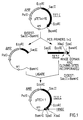
- FIG. 1 The preparation of pTECH1, a plasmid incorporating the nirB promoter and TetC gene, and a DNA sequence encoding a hinge region and containing restriction endonuclease sites to allow insertion of a gene coding for a second or guest protein, is illustrated in Figure 1.
- Expression plasmid pTETnir15 the starting material shown in Figure 1, was constructed from pTETtac115 (Makoff et al, Nucl. Acids Res. 17 10191-10202, 1989); by replacing the EcoRI-ApaI region (1354bp) containing the lac I gene and tac promoter with the following pair of oligos 1 and 2:
- oligonucleotides were synthesised on a Pharmacia Gene Assembler and the resulting plasmids confirmed by sequencing (Makoff et al, Bio/Technology 7 , 1043-1046, 1989).
- pTETnir15 was then used for construction of the pTECH1 plasmid incorporating a polylinker region suitable as a site for insertion of heterologous DNA to direct the expression of fragment C fusion proteins.
- pTETnir15 is a known pAT153-based plasmid which directs the expression of fragment C.
- target sites preceded by a hinge region, were introduced at the 3'-end of the TetC coding region by means of primers SEQ ID NO: 4 and SEQ ID NO: 5 tailored with "add-on" adapter sequences (Table 1), using the polymerase chain reaction (PCR) [K.
- pTETnir15 was used as a template in a PCR reaction using primers corresponding to regions covering the SacII and BamHI sites.
- the anti-sense primer in this amplification was tailored with a 38 base 5'-adaptor sequence.
- the anti-sense primer was designed so that a sequence encoding novel XbaI , Spe I and Bam HI sites were incorporated into the PCR product.
- DNA sequences encoding additional extra amino acids including proline were incorporated (the hinge regions) and a translation stop codon signal in frame with the fragment C open reading frame.
- the PCR product was gel-purified and digested with SacII and Bam HI, and cloned into the residual 2.8 kb vector pTETnir15 which had previously been digested by SacII and Bam HI.
- the resulting plasmid purified from transformed colonies and named pTECH 1 is shown in Figure 1.
- Heterologous sequences such as the sequence encoding the Schistosoma mansoni P28 glutathione S -transferase (P28) were cloned into the XbaI S pe I and Bam HI sites in accordance with known methods.
- the DNA sequence of the plasmid pTECH1 is shown in the sequence listing as SEQ ID NO: 6.
- a P28 gene expression cassette was produced by PCR using pUC19-P28 DNA (a kind gift from Dr R Pierce, Pasteur Institute, Lille) as template. Oligonucleotide primers were designed to amplify the full length P28 gene beginning with the start codon and terminating with the stop codon. In addition, the sense and antisense primers were tailored with the restriction sites for XbaI and Bam HI respectively. The primers are shown in the sequence listing as SEQ ID NO: 7 and SEQ ID NO: 8. The product was gel-purified and digested with XbaI and Bam HI and then cloned into pTECH1 which had previously been digested with these enzymes and subsequently gel-purified. The DNA sequence of pTECH1 - P28 is shown in sequence listing as SEQ ID NO: 9.
- SL3261 and E. coli were transformed with pTECH1-P28 by means of electroporation.
- SL3261 strains harbouring the pTECH1-P28 plasmid have been deposited at the National Collection of Type Cultures, 61 Colindale Avenue, London, NW9 5HT, UK under the accession number NCTC 12833.
- a strain of SL3261 containing the pTECH1 plasmid has been deposited under accession number NCTC 12831.
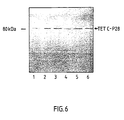
- TetC-P28 fusion protein The identity of recombinants was verified by restriction mapping of the plasmid DNA harboured by the cells. Further expression of the TetC-P28 fusion protein was then evaluated by SDS-PAGE and western blotting of bacterial cells harbouring the construct It was found that the fusion protein remains soluble, cross-reacts with antisera to both TetC and P28, and is also of the expected molecular weight, 80kDa1, for a full length fusion.
- the fusion protein was stably expressed in E.coli (TG2) and S. typhimurium (SL5338,SL3261) as judged by SDS-PAGE and western blotting.
- TG2 E.coli
- S. typhimurium S. typhimurium
- Western blotting Of interest was a band of 50kDal which co-migrates with the TetC-Hinge protein alone and cross-reacts exclusively with the anti-TetC sera is visible in a western blot.
- the codon selection in the hinge region has been designed to be suboptimal, the rare codons may cause pauses during translation which may occasionally lead to the premature termination of translation, thus accounting for this band.
- Glutathione is the natural substrate for P28, a glutathione S -transferase.
- the amino acid residues involved in binding glutathione are thought to be spatially separated in the primary structure of the polypeptide and brought together to form a glutathione binding pocket in the tertiary structure (P. Reinemer et al. EMBO, J8, 1997-2005, 1991).
- P28 component of the fusion has folded correctly to adopt a conformation capable of binding glutathione, its ability to be affinity purified on a glutathione-agarose matrix was tested.
- the results obtained (not shown) demonstrated that TetC-P28 can indeed bind to the matrix and the binding is reversible, as the fusion can be competitively eluted with free glutathione.
- the plasmid pTECH1-P28 directs the expression of the S. mansoni P28 protein as a C-terminal fusion to fragment C from tetanus toxin separated by a heterologous hinge domain. Expression of the fusion protein is under the control of the nirB promoter.
- the vector pTECH3-P28 was in part constructed from the plasmid pTETnir15 by the polymerase chain reaction (PCR) using the high fidelity thermostable DNA polymerase from Pyrococcus fusorius, which possesses an associated 3'5' exonuclease proofreading activity. The sequence of steps is summarised in Figure 5.
- the segment of DNA from the unique SacII site within the TetC gene to the final codon was amplified by means of the PCR reaction, using pTETnir15 as template DNA.
- the primers used in the PCR amplification are shown in the sequence listing as SEQ ID NO: 10 and SEQ ID NO: 11.
- the antisense primer in this amplification reaction was tailored with an XbaI recognition sequence.
- the amplification reaction was performed according to the manufacturer's instructions (Stratagene, La Jolla, CA, USA).
- the product was gel-purified, digested with SacII and XbaI , and then cloned into the residual pTECH1-P28 vector which had been previously digested with the respective enzymes SacII and XbaI .
- the resulting vector was designated pTECH3-P28.
- the DNA sequence of pTECH3-P28 is shown in the sequenc listing as SEQ ID NO: 12.
- S. typhimurium SL5338 (galE r - m + ) were cultured in either L or YT broth and on L-agar with ampicillin (50 g/ml) if appropriate and were transformed with the pTECH3-P28 plasmid.
- the transformation protocol was based on the method described by MacLachlan and Sanderson. (MacLachlan PR and Sanderson KE, 1985. Transformation of Salmonella typhimurium with plasmid DNA : differences between rough and smooth strains. J. Bacteriology 161, 442-445).
- This step was repeated once more and the cells resuspended in 1 ml of 0.1M CaCl 2 to which was added 50 ⁇ l of TES (50 mM Tris, 10 mM EDTA, 50 mM NaCl, pH 8.0). The cells were incubated on ice for 45 to 90 minutes. To 150 ⁇ l of cells was added 100ng of plasmid DNA in 1 - 2 ⁇ l. The mixture was incubated on ice for 30 minutes prior to heat-shock at 42°C for 2 minutes, and immediate reincubation on ice for 1 minute. To the transformed mixture was added 2 ml of LB broth and incubated for 1.5 hours to allow expression of the ampicillin drug resistance gene, B-lactamase. Following incubation 20 ⁇ l and 200 ⁇ l of cells were spread on to LB agar plates containing 50 ⁇ g/ml of ampicillin. The plates were dried and incubated at 37°C overnight.
- TES 50 mM Tris, 10 mM EDTA,
- TetC fusions were tested by SDS-PAGE and western blotting.
- Glutathione is the natural substrate for P28, a glutathione S -transferase.
- the amino acid residues involved in binding glutathione are thought to be spatially separated in the primary structure of the polypeptide and brought together to form a glutathione binding pocket in the tertiary structure.
- Bacterial cells containing pTECH3-P28 and expressing the TetC full length P28 gene fusion were grown to log phase, chilled on ice, and harvested by centrifugation at 2500 x g for 15 min at 4C.
- the cells were resuspended in 1/15th the original volume of ice-cold phosphate buffered saline (PBS) and lysed by sonication in a MSE Soniprep 150 (Gallenkamp, Leicester, UK).
- the insoluble material was removed by centrifugation and to the supernatant was added 1/6 volume of a 50% slurry of pre-swollen glutathione-agarose beads (Sigma, Poole, Dorset, UK).
- TetC-P28 fusion protein can indeed bind to the matrix and the binding is reversible regardless of the absence of a heterologous hinge domain (data not shown) It is possible that a peptide sequence present at the C-terminus of TetC may in fact impart flexibility to this particular region.
Landscapes
- Health & Medical Sciences (AREA)
- Life Sciences & Earth Sciences (AREA)
- Genetics & Genomics (AREA)
- Engineering & Computer Science (AREA)
- Chemical & Material Sciences (AREA)
- Zoology (AREA)
- Biomedical Technology (AREA)
- Bioinformatics & Cheminformatics (AREA)
- Wood Science & Technology (AREA)
- Organic Chemistry (AREA)
- General Engineering & Computer Science (AREA)
- Biotechnology (AREA)
- Molecular Biology (AREA)
- Microbiology (AREA)
- Biochemistry (AREA)
- General Health & Medical Sciences (AREA)
- Medicinal Chemistry (AREA)
- Physics & Mathematics (AREA)
- Biophysics (AREA)
- Plant Pathology (AREA)
- Medicines Containing Antibodies Or Antigens For Use As Internal Diagnostic Agents (AREA)
- Micro-Organisms Or Cultivation Processes Thereof (AREA)
- Peptides Or Proteins (AREA)
- Preparation Of Compounds By Using Micro-Organisms (AREA)
- Saccharide Compounds (AREA)
Applications Claiming Priority (5)
| Application Number | Priority Date | Filing Date | Title |
|---|---|---|---|
| WOPCT/GB93/01617 | 1993-07-30 | ||
| PCT/GB1993/001617 WO1994003615A1 (en) | 1992-07-31 | 1993-07-30 | Expression of recombinant fusion proteins in attenuated bacteria |
| GB9401787A GB9401787D0 (en) | 1994-01-31 | 1994-01-31 | Vaccine compositions |
| GB9401787 | 1994-01-31 | ||
| PCT/GB1994/001647 WO1995004151A2 (en) | 1993-07-30 | 1994-07-29 | Vaccine compositions containing recombinant tetc-fusion proteins |
Publications (2)
| Publication Number | Publication Date |
|---|---|
| EP0712442A1 EP0712442A1 (en) | 1996-05-22 |
| EP0712442B1 true EP0712442B1 (en) | 2002-03-27 |
Family
ID=26302349
Family Applications (1)
| Application Number | Title | Priority Date | Filing Date |
|---|---|---|---|
| EP94921762A Expired - Lifetime EP0712442B1 (en) | 1993-07-30 | 1994-07-29 | Vaccine compositions |
Country Status (7)
| Country | Link |
|---|---|
| EP (1) | EP0712442B1 (enExample) |
| JP (1) | JPH09500540A (enExample) |
| AT (1) | ATE215124T1 (enExample) |
| AU (1) | AU7235794A (enExample) |
| CA (1) | CA2168459C (enExample) |
| DE (1) | DE69430246T2 (enExample) |
| WO (1) | WO1995004151A2 (enExample) |
Families Citing this family (35)
| Publication number | Priority date | Publication date | Assignee | Title |
|---|---|---|---|---|
| ES2255181T3 (es) * | 1997-08-05 | 2006-06-16 | Vlaams Interuniversitair Instituut Voor Biotechnologie Vzw. | Antigeno inmunoprotector contra la gripe y su uso en vacunacion. |
| US7923015B2 (en) | 1997-08-14 | 2011-04-12 | Institut Pasteur | Methods for direct visualization of active synapses |
| EP1681300A1 (en) * | 1997-08-14 | 2006-07-19 | Institut Pasteur | Hybrid tetanus toxoid proteins that migrate retrogradely and transynaptically into the CNS |
| US7923216B2 (en) | 1997-08-14 | 2011-04-12 | Institut Pasteur | In vivo modulation of neuronal transport |
| GB9720033D0 (en) * | 1997-09-19 | 1997-11-19 | Medeva Plc | Hepatitis B virus polypeptides |
| US6923964B1 (en) | 1997-12-02 | 2005-08-02 | Neuralab Limited | Active immunization of AScr for prion disorders |
| US6750324B1 (en) | 1997-12-02 | 2004-06-15 | Neuralab Limited | Humanized and chimeric N-terminal amyloid beta-antibodies |
| US7179892B2 (en) | 2000-12-06 | 2007-02-20 | Neuralab Limited | Humanized antibodies that recognize beta amyloid peptide |
| US6710226B1 (en) | 1997-12-02 | 2004-03-23 | Neuralab Limited | Transgenic mouse assay to determine the effect of Aβ antibodies and Aβ Fragments on alzheimer's disease characteristics |
| US6787523B1 (en) | 1997-12-02 | 2004-09-07 | Neuralab Limited | Prevention and treatment of amyloidogenic disease |
| US20080050367A1 (en) | 1998-04-07 | 2008-02-28 | Guriq Basi | Humanized antibodies that recognize beta amyloid peptide |
| US6913745B1 (en) | 1997-12-02 | 2005-07-05 | Neuralab Limited | Passive immunization of Alzheimer's disease |
| US6743427B1 (en) | 1997-12-02 | 2004-06-01 | Neuralab Limited | Prevention and treatment of amyloidogenic disease |
| US7588766B1 (en) | 2000-05-26 | 2009-09-15 | Elan Pharma International Limited | Treatment of amyloidogenic disease |
| TWI239847B (en) | 1997-12-02 | 2005-09-21 | Elan Pharm Inc | N-terminal fragment of Abeta peptide and an adjuvant for preventing and treating amyloidogenic disease |
| US7790856B2 (en) | 1998-04-07 | 2010-09-07 | Janssen Alzheimer Immunotherapy | Humanized antibodies that recognize beta amyloid peptide |
| US6761888B1 (en) | 2000-05-26 | 2004-07-13 | Neuralab Limited | Passive immunization treatment of Alzheimer's disease |
| US20030147882A1 (en) | 1998-05-21 | 2003-08-07 | Alan Solomon | Methods for amyloid removal using anti-amyloid antibodies |
| US6787637B1 (en) | 1999-05-28 | 2004-09-07 | Neuralab Limited | N-Terminal amyloid-β antibodies |
| UA81216C2 (en) | 1999-06-01 | 2007-12-25 | Prevention and treatment of amyloid disease | |
| GB9916363D0 (en) * | 1999-07-13 | 1999-09-15 | Univ Bristol | Methods of suppressing cell growth |
| PE20020574A1 (es) | 2000-12-06 | 2002-07-02 | Wyeth Corp | Anticuerpos humanizados que reconocen el peptido amiloideo beta |
| US7700751B2 (en) | 2000-12-06 | 2010-04-20 | Janssen Alzheimer Immunotherapy | Humanized antibodies that recognize β-amyloid peptide |
| MY139983A (en) | 2002-03-12 | 2009-11-30 | Janssen Alzheimer Immunotherap | Humanized antibodies that recognize beta amyloid peptide |
| EP1356820A1 (en) * | 2002-04-26 | 2003-10-29 | Institut National De La Sante Et De La Recherche Medicale (Inserm) | DNA vaccine combined with an inducer of tumor cell apoptosis |
| TWI374893B (en) | 2003-05-30 | 2012-10-21 | Janssen Alzheimer Immunotherap | Humanized antibodies that recognize beta amyloid peptide |
| ATE414535T1 (de) | 2003-06-23 | 2008-12-15 | Baxter Int | Trägerproteine für impfstoffe |
| TW200636066A (en) | 2004-12-15 | 2006-10-16 | Elan Pharm Inc | Humanized antibodies that recognize beta amyloid peptide |
| ES2434732T3 (es) | 2004-12-15 | 2013-12-17 | Janssen Alzheimer Immunotherapy | Anticuerpos para beta-amiloide humanizados para su uso en mejorar la cognición |
| US8784810B2 (en) | 2006-04-18 | 2014-07-22 | Janssen Alzheimer Immunotherapy | Treatment of amyloidogenic diseases |
| US8003097B2 (en) | 2007-04-18 | 2011-08-23 | Janssen Alzheimer Immunotherapy | Treatment of cerebral amyloid angiopathy |
| DK2182983T3 (da) | 2007-07-27 | 2014-07-14 | Janssen Alzheimer Immunotherap | Behandling af amyloidogene sygdomme med humaniserede anti-abeta antistoffer |
| JO3076B1 (ar) | 2007-10-17 | 2017-03-15 | Janssen Alzheimer Immunotherap | نظم العلاج المناعي المعتمد على حالة apoe |
| US9067981B1 (en) | 2008-10-30 | 2015-06-30 | Janssen Sciences Ireland Uc | Hybrid amyloid-beta antibodies |
| WO2013083254A1 (en) | 2011-12-09 | 2013-06-13 | Bavarian Nordic A/S | Poxvirus vector for the expression of bacterial antigens linked to tetanus toxin fragment c |
Family Cites Families (6)
| Publication number | Priority date | Publication date | Assignee | Title |
|---|---|---|---|---|
| DE68917126T2 (de) * | 1988-02-01 | 1995-02-02 | Praxis Biolog Inc | T-zellen-epitope als träger für einen konjugierten impfstoff. |
| CA2031468A1 (en) * | 1989-12-08 | 1991-06-09 | Mitchell S. Gross | Malaria vaccine |
| FR2656626B1 (fr) * | 1989-12-29 | 1994-08-12 | Pasteur Institut | Fragment peptidique comprenant une sequence issue de la proteine 28 kda de schistosoma mansoni et compositions vaccinantes et/ou therapeutiques comprenant ledit fragment. |
| HU219535B (hu) * | 1991-03-05 | 2001-05-28 | Wellcome Foundation Ltd. | Rekombináns proteineket expresszáló, attenuált baktériumokat tartalmazó vakcinák |
| WO1993008290A1 (en) * | 1991-10-16 | 1993-04-29 | University Of Saskatchewan | Enhanced immunogenicity using leukotoxin chimeras |
| EP0652962B1 (en) * | 1992-07-31 | 1998-12-16 | Medeva Holdings B.V. | Expression of recombinant fusion proteins in attenuated bacteria |
-
1994
- 1994-07-29 DE DE69430246T patent/DE69430246T2/de not_active Expired - Fee Related
- 1994-07-29 WO PCT/GB1994/001647 patent/WO1995004151A2/en not_active Ceased
- 1994-07-29 AT AT94921762T patent/ATE215124T1/de not_active IP Right Cessation
- 1994-07-29 EP EP94921762A patent/EP0712442B1/en not_active Expired - Lifetime
- 1994-07-29 AU AU72357/94A patent/AU7235794A/en not_active Abandoned
- 1994-07-29 JP JP7505668A patent/JPH09500540A/ja active Pending
- 1994-07-29 CA CA002168459A patent/CA2168459C/en not_active Expired - Fee Related
Also Published As
| Publication number | Publication date |
|---|---|
| WO1995004151A3 (en) | 1995-03-16 |
| ATE215124T1 (de) | 2002-04-15 |
| EP0712442A1 (en) | 1996-05-22 |
| DE69430246T2 (de) | 2002-12-12 |
| JPH09500540A (ja) | 1997-01-21 |
| CA2168459C (en) | 2002-10-01 |
| CA2168459A1 (en) | 1995-02-09 |
| WO1995004151A2 (en) | 1995-02-09 |
| AU7235794A (en) | 1995-02-28 |
| DE69430246D1 (de) | 2002-05-02 |
Similar Documents
| Publication | Publication Date | Title |
|---|---|---|
| CA2168459C (en) | Fusion proteins containing the c-terminal of tetanus toxin linked to a heterologous protein | |
| EP0652962B1 (en) | Expression of recombinant fusion proteins in attenuated bacteria | |
| US5601827A (en) | Diphtheria toxin vaccines | |
| US7115725B2 (en) | Multi-mutant diphtheria toxin vaccines | |
| AU664360B2 (en) | Expression of recombinant proteins in attenuated bacteria | |
| US6040427A (en) | Vaccine | |
| KR100338894B1 (ko) | 백신조성물 | |
| US6841358B1 (en) | Recombinant proteins of filamentous haemagglutinin of bordetella, particularly bordetella pertussis, method for producing same, and uses thereof for producing foreign proteins of vaccinating active principles | |
| CA2323634A1 (en) | Lactobacilli harboring aggregation and mucin binding genes as vaccine delivery vehicles | |
| NO325016B1 (no) | Fremgangsmate for fremstilling av en proteinanalog til Bordetella-eksotoksin, polypeptidanalog av S1-subenhet fra Bordetella pertussis-toksin og vaksine mot pertussis. | |
| US6610300B1 (en) | Clostridium perfringens vaccine | |
| NZ258684A (en) | Vaccine against group b streptococcus comprising a group b streptococcus polysaccharide conjugated to a functional derivative of group b streptococcus c protein alpha antigen | |
| AU743165B2 (en) | Live attenuated bacteria of the species Actinobacillus pleuropneumoniae | |
| EP0352250B1 (en) | Bordetella pertussis vaccine | |
| JP2903414B2 (ja) | 抗酸菌分泌発現ベクター及び抗酸菌 | |
| HK1004568B (en) | Bordetella pertussis vaccine | |
| EP0813603A1 (en) | Expression of gene products from genetically manipulated strains of bordetella | |
| EP0742829B1 (en) | Expression of heterologous proteins in attenuated bacteria using the htra-promoters | |
| NZ530979A (en) | Recombinant haemophilus influenzae adhesin proteins | |
| IE904274A1 (en) | Novel vaccine | |
| WO1997016207A1 (en) | Peptide expression and delivery system |
Legal Events
| Date | Code | Title | Description |
|---|---|---|---|
| PUAI | Public reference made under article 153(3) epc to a published international application that has entered the european phase |
Free format text: ORIGINAL CODE: 0009012 |
|
| 17P | Request for examination filed |
Effective date: 19960221 |
|
| AK | Designated contracting states |
Kind code of ref document: A1 Designated state(s): AT BE CH DE DK ES FR GB GR IE IT LI LU MC NL PT SE |
|
| 17Q | First examination report despatched |
Effective date: 19991025 |
|
| GRAG | Despatch of communication of intention to grant |
Free format text: ORIGINAL CODE: EPIDOS AGRA |
|
| GRAG | Despatch of communication of intention to grant |
Free format text: ORIGINAL CODE: EPIDOS AGRA |
|
| GRAH | Despatch of communication of intention to grant a patent |
Free format text: ORIGINAL CODE: EPIDOS IGRA |
|
| GRAH | Despatch of communication of intention to grant a patent |
Free format text: ORIGINAL CODE: EPIDOS IGRA |
|
| REG | Reference to a national code |
Ref country code: GB Ref legal event code: IF02 |
|
| GRAA | (expected) grant |
Free format text: ORIGINAL CODE: 0009210 |
|
| AK | Designated contracting states |
Kind code of ref document: B1 Designated state(s): AT BE CH DE DK ES FR GB GR IE IT LI LU MC NL PT SE |
|
| PG25 | Lapsed in a contracting state [announced via postgrant information from national office to epo] |
Ref country code: NL Free format text: LAPSE BECAUSE OF FAILURE TO SUBMIT A TRANSLATION OF THE DESCRIPTION OR TO PAY THE FEE WITHIN THE PRESCRIBED TIME-LIMIT Effective date: 20020327 Ref country code: LI Free format text: LAPSE BECAUSE OF FAILURE TO SUBMIT A TRANSLATION OF THE DESCRIPTION OR TO PAY THE FEE WITHIN THE PRESCRIBED TIME-LIMIT Effective date: 20020327 Ref country code: IT Free format text: LAPSE BECAUSE OF FAILURE TO SUBMIT A TRANSLATION OF THE DESCRIPTION OR TO PAY THE FEE WITHIN THE PRE;WARNING: LAPSES OF ITALIAN PATENTS WITH EFFECTIVE DATE BEFORE 2007 MAY HAVE OCCURRED AT ANY TIME BEFORE 2007. THE CORRECT EFFECTIVE DATE MAY BE DIFFERENT FROM THE ONE RECORDED.SCRIBED TIME-LIMIT Effective date: 20020327 Ref country code: GR Free format text: LAPSE BECAUSE OF FAILURE TO SUBMIT A TRANSLATION OF THE DESCRIPTION OR TO PAY THE FEE WITHIN THE PRESCRIBED TIME-LIMIT Effective date: 20020327 Ref country code: CH Free format text: LAPSE BECAUSE OF FAILURE TO SUBMIT A TRANSLATION OF THE DESCRIPTION OR TO PAY THE FEE WITHIN THE PRESCRIBED TIME-LIMIT Effective date: 20020327 Ref country code: BE Free format text: LAPSE BECAUSE OF FAILURE TO SUBMIT A TRANSLATION OF THE DESCRIPTION OR TO PAY THE FEE WITHIN THE PRESCRIBED TIME-LIMIT Effective date: 20020327 Ref country code: AT Free format text: LAPSE BECAUSE OF FAILURE TO SUBMIT A TRANSLATION OF THE DESCRIPTION OR TO PAY THE FEE WITHIN THE PRESCRIBED TIME-LIMIT Effective date: 20020327 |
|
| REF | Corresponds to: |
Ref document number: 215124 Country of ref document: AT Date of ref document: 20020415 Kind code of ref document: T |
|
| REG | Reference to a national code |
Ref country code: CH Ref legal event code: EP |
|
| REF | Corresponds to: |
Ref document number: 69430246 Country of ref document: DE Date of ref document: 20020502 |
|
| REG | Reference to a national code |
Ref country code: IE Ref legal event code: FG4D |
|
| PG25 | Lapsed in a contracting state [announced via postgrant information from national office to epo] |
Ref country code: SE Free format text: LAPSE BECAUSE OF FAILURE TO SUBMIT A TRANSLATION OF THE DESCRIPTION OR TO PAY THE FEE WITHIN THE PRESCRIBED TIME-LIMIT Effective date: 20020627 Ref country code: PT Free format text: LAPSE BECAUSE OF FAILURE TO SUBMIT A TRANSLATION OF THE DESCRIPTION OR TO PAY THE FEE WITHIN THE PRESCRIBED TIME-LIMIT Effective date: 20020627 Ref country code: DK Free format text: LAPSE BECAUSE OF FAILURE TO SUBMIT A TRANSLATION OF THE DESCRIPTION OR TO PAY THE FEE WITHIN THE PRESCRIBED TIME-LIMIT Effective date: 20020627 |
|
| PG25 | Lapsed in a contracting state [announced via postgrant information from national office to epo] |
Ref country code: LU Free format text: LAPSE BECAUSE OF NON-PAYMENT OF DUE FEES Effective date: 20020729 Ref country code: IE Free format text: LAPSE BECAUSE OF NON-PAYMENT OF DUE FEES Effective date: 20020729 |
|
| NLV1 | Nl: lapsed or annulled due to failure to fulfill the requirements of art. 29p and 29m of the patents act | ||
| ET | Fr: translation filed | ||
| PG25 | Lapsed in a contracting state [announced via postgrant information from national office to epo] |
Ref country code: ES Free format text: LAPSE BECAUSE OF FAILURE TO SUBMIT A TRANSLATION OF THE DESCRIPTION OR TO PAY THE FEE WITHIN THE PRESCRIBED TIME-LIMIT Effective date: 20020925 |
|
| REG | Reference to a national code |
Ref country code: CH Ref legal event code: PL |
|
| PLBE | No opposition filed within time limit |
Free format text: ORIGINAL CODE: 0009261 |
|
| STAA | Information on the status of an ep patent application or granted ep patent |
Free format text: STATUS: NO OPPOSITION FILED WITHIN TIME LIMIT |
|
| PG25 | Lapsed in a contracting state [announced via postgrant information from national office to epo] |
Ref country code: MC Free format text: LAPSE BECAUSE OF NON-PAYMENT OF DUE FEES Effective date: 20030201 |
|
| 26N | No opposition filed |
Effective date: 20021230 |
|
| REG | Reference to a national code |
Ref country code: IE Ref legal event code: MM4A |
|
| PGFP | Annual fee paid to national office [announced via postgrant information from national office to epo] |
Ref country code: DE Payment date: 20080814 Year of fee payment: 15 |
|
| PGFP | Annual fee paid to national office [announced via postgrant information from national office to epo] |
Ref country code: FR Payment date: 20080718 Year of fee payment: 15 |
|
| PGFP | Annual fee paid to national office [announced via postgrant information from national office to epo] |
Ref country code: GB Payment date: 20080806 Year of fee payment: 15 |
|
| GBPC | Gb: european patent ceased through non-payment of renewal fee |
Effective date: 20090729 |
|
| REG | Reference to a national code |
Ref country code: FR Ref legal event code: ST Effective date: 20100331 |
|
| PG25 | Lapsed in a contracting state [announced via postgrant information from national office to epo] |
Ref country code: FR Free format text: LAPSE BECAUSE OF NON-PAYMENT OF DUE FEES Effective date: 20090731 |
|
| PG25 | Lapsed in a contracting state [announced via postgrant information from national office to epo] |
Ref country code: GB Free format text: LAPSE BECAUSE OF NON-PAYMENT OF DUE FEES Effective date: 20090729 |
|
| PG25 | Lapsed in a contracting state [announced via postgrant information from national office to epo] |
Ref country code: DE Free format text: LAPSE BECAUSE OF NON-PAYMENT OF DUE FEES Effective date: 20100202 |