EP0691157B1 - Verfahren zur Herstellung von Aminen - Google Patents
Verfahren zur Herstellung von Aminen Download PDFInfo
- Publication number
- EP0691157B1 EP0691157B1 EP95109869A EP95109869A EP0691157B1 EP 0691157 B1 EP0691157 B1 EP 0691157B1 EP 95109869 A EP95109869 A EP 95109869A EP 95109869 A EP95109869 A EP 95109869A EP 0691157 B1 EP0691157 B1 EP 0691157B1
- Authority
- EP
- European Patent Office
- Prior art keywords
- weight
- butyl
- iso
- alkyl
- und
- Prior art date
- Legal status (The legal status is an assumption and is not a legal conclusion. Google has not performed a legal analysis and makes no representation as to the accuracy of the status listed.)
- Expired - Lifetime
Links
- 150000001412 amines Chemical class 0.000 title claims description 8
- 238000004519 manufacturing process Methods 0.000 title claims description 6
- 239000003054 catalyst Substances 0.000 claims description 46
- QPLDLSVMHZLSFG-UHFFFAOYSA-N Copper oxide Chemical compound [Cu]=O QPLDLSVMHZLSFG-UHFFFAOYSA-N 0.000 claims description 21
- RVTZCBVAJQQJTK-UHFFFAOYSA-N oxygen(2-);zirconium(4+) Chemical compound [O-2].[O-2].[Zr+4] RVTZCBVAJQQJTK-UHFFFAOYSA-N 0.000 claims description 20
- 239000001257 hydrogen Substances 0.000 claims description 19
- 229910052739 hydrogen Inorganic materials 0.000 claims description 19
- 239000005751 Copper oxide Substances 0.000 claims description 18
- 229910000431 copper oxide Inorganic materials 0.000 claims description 18
- 229910001928 zirconium oxide Inorganic materials 0.000 claims description 18
- 229910044991 metal oxide Inorganic materials 0.000 claims description 16
- 150000004706 metal oxides Chemical class 0.000 claims description 16
- 238000000034 method Methods 0.000 claims description 16
- 125000002496 methyl group Chemical group [H]C([H])([H])* 0.000 claims description 16
- 230000000737 periodic effect Effects 0.000 claims description 16
- UFHFLCQGNIYNRP-UHFFFAOYSA-N Hydrogen Chemical compound [H][H] UFHFLCQGNIYNRP-UHFFFAOYSA-N 0.000 claims description 13
- 150000002825 nitriles Chemical class 0.000 claims description 13
- 150000002431 hydrogen Chemical class 0.000 claims description 8
- 239000001301 oxygen Substances 0.000 claims description 8
- 229910052760 oxygen Inorganic materials 0.000 claims description 8
- QVGXLLKOCUKJST-UHFFFAOYSA-N atomic oxygen Chemical group [O] QVGXLLKOCUKJST-UHFFFAOYSA-N 0.000 claims description 7
- 150000003335 secondary amines Chemical class 0.000 claims description 5
- 125000003118 aryl group Chemical group 0.000 claims description 4
- 229910017464 nitrogen compound Inorganic materials 0.000 claims description 4
- 150000002830 nitrogen compounds Chemical class 0.000 claims description 4
- 150000003141 primary amines Chemical class 0.000 claims description 4
- 230000007704 transition Effects 0.000 claims 5
- 125000003837 (C1-C20) alkyl group Chemical group 0.000 claims 2
- 125000004178 (C1-C4) alkyl group Chemical group 0.000 claims 1
- QGZKDVFQNNGYKY-UHFFFAOYSA-O Ammonium Chemical compound [NH4+] QGZKDVFQNNGYKY-UHFFFAOYSA-O 0.000 claims 1
- -1 sec.-Pentyl Chemical group 0.000 description 112
- 238000006243 chemical reaction Methods 0.000 description 17
- 238000001556 precipitation Methods 0.000 description 13
- BAVYZALUXZFZLV-UHFFFAOYSA-N Methylamine Chemical compound NC BAVYZALUXZFZLV-UHFFFAOYSA-N 0.000 description 10
- 239000003795 chemical substances by application Substances 0.000 description 10
- 125000001495 ethyl group Chemical group [H]C([H])([H])C([H])([H])* 0.000 description 10
- 125000001449 isopropyl group Chemical group [H]C([H])([H])C([H])(*)C([H])([H])[H] 0.000 description 10
- 239000000243 solution Substances 0.000 description 9
- 125000000959 isobutyl group Chemical group [H]C([H])([H])C([H])(C([H])([H])[H])C([H])([H])* 0.000 description 8
- 125000004108 n-butyl group Chemical group [H]C([H])([H])C([H])([H])C([H])([H])C([H])([H])* 0.000 description 8
- 125000004123 n-propyl group Chemical group [H]C([H])([H])C([H])([H])C([H])([H])* 0.000 description 8
- 125000002924 primary amino group Chemical group [H]N([H])* 0.000 description 7
- XLYOFNOQVPJJNP-UHFFFAOYSA-N water Substances O XLYOFNOQVPJJNP-UHFFFAOYSA-N 0.000 description 7
- 125000000217 alkyl group Chemical group 0.000 description 6
- 125000002147 dimethylamino group Chemical group [H]C([H])([H])N(*)C([H])([H])[H] 0.000 description 6
- 125000000250 methylamino group Chemical group [H]N(*)C([H])([H])[H] 0.000 description 6
- 239000000203 mixture Substances 0.000 description 6
- 125000001997 phenyl group Chemical group [H]C1=C([H])C([H])=C(*)C([H])=C1[H] 0.000 description 6
- CDBYLPFSWZWCQE-UHFFFAOYSA-L Sodium Carbonate Chemical compound [Na+].[Na+].[O-]C([O-])=O CDBYLPFSWZWCQE-UHFFFAOYSA-L 0.000 description 5
- 239000002585 base Substances 0.000 description 5
- 125000002887 hydroxy group Chemical group [H]O* 0.000 description 5
- 239000012266 salt solution Substances 0.000 description 5
- 150000003839 salts Chemical class 0.000 description 5
- JQCSUVJDBHJKNG-UHFFFAOYSA-N 1-methoxy-ethyl Chemical group C[CH]OC JQCSUVJDBHJKNG-UHFFFAOYSA-N 0.000 description 4
- RDHNFSNXWLWMIX-UHFFFAOYSA-N 1-n,2-n-dimethylpropane-1,2-diamine Chemical compound CNCC(C)NC RDHNFSNXWLWMIX-UHFFFAOYSA-N 0.000 description 4
- WJVAPEMLIPHCJB-UHFFFAOYSA-N 1-n-methylpropane-1,2-diamine Chemical compound CNCC(C)N WJVAPEMLIPHCJB-UHFFFAOYSA-N 0.000 description 4
- 125000001637 1-naphthyl group Chemical group [H]C1=C([H])C([H])=C2C(*)=C([H])C([H])=C([H])C2=C1[H] 0.000 description 4
- 125000004200 2-methoxyethyl group Chemical group [H]C([H])([H])OC([H])([H])C([H])([H])* 0.000 description 4
- 125000003229 2-methylhexyl group Chemical group [H]C([H])([H])C([H])([H])C([H])([H])C([H])([H])C([H])(C([H])([H])[H])C([H])([H])* 0.000 description 4
- 125000001622 2-naphthyl group Chemical group [H]C1=C([H])C([H])=C2C([H])=C(*)C([H])=C([H])C2=C1[H] 0.000 description 4
- 125000003542 3-methylbutan-2-yl group Chemical group [H]C([H])([H])C([H])(*)C([H])(C([H])([H])[H])C([H])([H])[H] 0.000 description 4
- QGZKDVFQNNGYKY-UHFFFAOYSA-N Ammonia Chemical compound N QGZKDVFQNNGYKY-UHFFFAOYSA-N 0.000 description 4
- QUSNBJAOOMFDIB-UHFFFAOYSA-N Ethylamine Chemical compound CCN QUSNBJAOOMFDIB-UHFFFAOYSA-N 0.000 description 4
- QCWXUUIWCKQGHC-UHFFFAOYSA-N Zirconium Chemical compound [Zr] QCWXUUIWCKQGHC-UHFFFAOYSA-N 0.000 description 4
- 125000001797 benzyl group Chemical group [H]C1=C([H])C([H])=C(C([H])=C1[H])C([H])([H])* 0.000 description 4
- 125000000113 cyclohexyl group Chemical group [H]C1([H])C([H])([H])C([H])([H])C([H])(*)C([H])([H])C1([H])[H] 0.000 description 4
- 125000000640 cyclooctyl group Chemical group [H]C1([H])C([H])([H])C([H])([H])C([H])([H])C([H])(*)C([H])([H])C([H])([H])C1([H])[H] 0.000 description 4
- 125000001511 cyclopentyl group Chemical group [H]C1([H])C([H])([H])C([H])([H])C([H])(*)C1([H])[H] 0.000 description 4
- 125000005745 ethoxymethyl group Chemical group [H]C([H])([H])C([H])([H])OC([H])([H])* 0.000 description 4
- 229910052500 inorganic mineral Inorganic materials 0.000 description 4
- 125000004491 isohexyl group Chemical group C(CCC(C)C)* 0.000 description 4
- 125000001972 isopentyl group Chemical group [H]C([H])([H])C([H])(C([H])([H])[H])C([H])([H])C([H])([H])* 0.000 description 4
- 125000004184 methoxymethyl group Chemical group [H]C([H])([H])OC([H])([H])* 0.000 description 4
- 239000011707 mineral Substances 0.000 description 4
- 125000003136 n-heptyl group Chemical group [H]C([H])([H])C([H])([H])C([H])([H])C([H])([H])C([H])([H])C([H])([H])C([H])([H])* 0.000 description 4
- 125000001280 n-hexyl group Chemical group C(CCCCC)* 0.000 description 4
- 125000000740 n-pentyl group Chemical group [H]C([H])([H])C([H])([H])C([H])([H])C([H])([H])C([H])([H])* 0.000 description 4
- 125000001971 neopentyl group Chemical group [H]C([*])([H])C(C([H])([H])[H])(C([H])([H])[H])C([H])([H])[H] 0.000 description 4
- 239000000843 powder Substances 0.000 description 4
- 239000000047 product Substances 0.000 description 4
- 125000002914 sec-butyl group Chemical group [H]C([H])([H])C([H])([H])C([H])(*)C([H])([H])[H] 0.000 description 4
- 239000002002 slurry Substances 0.000 description 4
- 125000000999 tert-butyl group Chemical group [H]C([H])([H])C(*)(C([H])([H])[H])C([H])([H])[H] 0.000 description 4
- 229910052726 zirconium Inorganic materials 0.000 description 4
- 150000003755 zirconium compounds Chemical class 0.000 description 4
- WEVYAHXRMPXWCK-UHFFFAOYSA-N Acetonitrile Chemical compound CC#N WEVYAHXRMPXWCK-UHFFFAOYSA-N 0.000 description 3
- 239000005749 Copper compound Substances 0.000 description 3
- KWYUFKZDYYNOTN-UHFFFAOYSA-M Potassium hydroxide Chemical compound [OH-].[K+] KWYUFKZDYYNOTN-UHFFFAOYSA-M 0.000 description 3
- HEMHJVSKTPXQMS-UHFFFAOYSA-M Sodium hydroxide Chemical compound [OH-].[Na+] HEMHJVSKTPXQMS-UHFFFAOYSA-M 0.000 description 3
- 150000001875 compounds Chemical class 0.000 description 3
- 150000001880 copper compounds Chemical class 0.000 description 3
- UAOMVDZJSHZZME-UHFFFAOYSA-N diisopropylamine Chemical compound CC(C)NC(C)C UAOMVDZJSHZZME-UHFFFAOYSA-N 0.000 description 3
- 238000001035 drying Methods 0.000 description 3
- 238000000227 grinding Methods 0.000 description 3
- 239000007788 liquid Substances 0.000 description 3
- 229910052751 metal Inorganic materials 0.000 description 3
- 239000002184 metal Substances 0.000 description 3
- 150000002739 metals Chemical class 0.000 description 3
- 238000000465 moulding Methods 0.000 description 3
- 125000002560 nitrile group Chemical group 0.000 description 3
- 125000002347 octyl group Chemical group [H]C([*])([H])C([H])([H])C([H])([H])C([H])([H])C([H])([H])C([H])([H])C([H])([H])C([H])([H])[H] 0.000 description 3
- 239000002244 precipitate Substances 0.000 description 3
- 238000002360 preparation method Methods 0.000 description 3
- 239000002904 solvent Substances 0.000 description 3
- MNCMBBIFTVWHIP-UHFFFAOYSA-N 1-anthracen-9-yl-2,2,2-trifluoroethanone Chemical group C1=CC=C2C(C(=O)C(F)(F)F)=C(C=CC=C3)C3=CC2=C1 MNCMBBIFTVWHIP-UHFFFAOYSA-N 0.000 description 2
- 125000004066 1-hydroxyethyl group Chemical group [H]OC([H])([*])C([H])([H])[H] 0.000 description 2
- 125000000954 2-hydroxyethyl group Chemical group [H]C([*])([H])C([H])([H])O[H] 0.000 description 2
- 125000003890 2-phenylbutyl group Chemical group [H]C1=C([H])C([H])=C(C([H])=C1[H])C([H])(C([H])([H])*)C([H])([H])C([H])([H])[H] 0.000 description 2
- 125000006201 3-phenylpropyl group Chemical group [H]C1=C([H])C([H])=C(C([H])=C1[H])C([H])([H])C([H])([H])C([H])([H])* 0.000 description 2
- 125000004860 4-ethylphenyl group Chemical group [H]C1=C([H])C(=C([H])C([H])=C1*)C([H])([H])C([H])([H])[H] 0.000 description 2
- 125000000590 4-methylphenyl group Chemical group [H]C1=C([H])C(=C([H])C([H])=C1*)C([H])([H])[H] 0.000 description 2
- OKTJSMMVPCPJKN-UHFFFAOYSA-N Carbon Chemical compound [C] OKTJSMMVPCPJKN-UHFFFAOYSA-N 0.000 description 2
- RYGMFSIKBFXOCR-UHFFFAOYSA-N Copper Chemical compound [Cu] RYGMFSIKBFXOCR-UHFFFAOYSA-N 0.000 description 2
- XTHFKEDIFFGKHM-UHFFFAOYSA-N Dimethoxyethane Chemical compound COCCOC XTHFKEDIFFGKHM-UHFFFAOYSA-N 0.000 description 2
- ROSDSFDQCJNGOL-UHFFFAOYSA-N Dimethylamine Chemical compound CNC ROSDSFDQCJNGOL-UHFFFAOYSA-N 0.000 description 2
- KDLHZDBZIXYQEI-UHFFFAOYSA-N Palladium Chemical compound [Pd] KDLHZDBZIXYQEI-UHFFFAOYSA-N 0.000 description 2
- WYURNTSHIVDZCO-UHFFFAOYSA-N Tetrahydrofuran Chemical compound C1CCOC1 WYURNTSHIVDZCO-UHFFFAOYSA-N 0.000 description 2
- MCMNRKCIXSYSNV-UHFFFAOYSA-N ZrO2 Inorganic materials O=[Zr]=O MCMNRKCIXSYSNV-UHFFFAOYSA-N 0.000 description 2
- 238000005576 amination reaction Methods 0.000 description 2
- 229910021529 ammonia Inorganic materials 0.000 description 2
- 125000002078 anthracen-1-yl group Chemical group [H]C1=C([H])C([H])=C2C([H])=C3C([*])=C([H])C([H])=C([H])C3=C([H])C2=C1[H] 0.000 description 2
- 125000000748 anthracen-2-yl group Chemical group [H]C1=C([H])C([H])=C2C([H])=C3C([H])=C([*])C([H])=C([H])C3=C([H])C2=C1[H] 0.000 description 2
- 239000012298 atmosphere Substances 0.000 description 2
- HQABUPZFAYXKJW-UHFFFAOYSA-N butan-1-amine Chemical compound CCCCN HQABUPZFAYXKJW-UHFFFAOYSA-N 0.000 description 2
- 239000006227 byproduct Substances 0.000 description 2
- 150000004649 carbonic acid derivatives Chemical class 0.000 description 2
- 229910052802 copper Inorganic materials 0.000 description 2
- 239000010949 copper Substances 0.000 description 2
- 125000001995 cyclobutyl group Chemical group [H]C1([H])C([H])([H])C([H])(*)C1([H])[H] 0.000 description 2
- 125000000582 cycloheptyl group Chemical group [H]C1([H])C([H])([H])C([H])([H])C([H])([H])C([H])(*)C([H])([H])C1([H])[H] 0.000 description 2
- PAFZNILMFXTMIY-UHFFFAOYSA-N cyclohexylamine Chemical compound NC1CCCCC1 PAFZNILMFXTMIY-UHFFFAOYSA-N 0.000 description 2
- 125000001559 cyclopropyl group Chemical group [H]C1([H])C([H])([H])C1([H])* 0.000 description 2
- 239000012153 distilled water Substances 0.000 description 2
- 238000004817 gas chromatography Methods 0.000 description 2
- 239000010439 graphite Substances 0.000 description 2
- 229910002804 graphite Inorganic materials 0.000 description 2
- 150000004679 hydroxides Chemical class 0.000 description 2
- 125000002768 hydroxyalkyl group Chemical group 0.000 description 2
- 125000004029 hydroxymethyl group Chemical group [H]OC([H])([H])* 0.000 description 2
- 125000000040 m-tolyl group Chemical group [H]C1=C([H])C(*)=C([H])C(=C1[H])C([H])([H])[H] 0.000 description 2
- 125000003261 o-tolyl group Chemical group [H]C1=C([H])C(*)=C(C([H])=C1[H])C([H])([H])[H] 0.000 description 2
- GGROONUBGIWGGS-UHFFFAOYSA-N oxygen(2-);zirconium(4+);hydrate Chemical compound O.[O-2].[O-2].[Zr+4] GGROONUBGIWGGS-UHFFFAOYSA-N 0.000 description 2
- 238000012856 packing Methods 0.000 description 2
- DPBLXKKOBLCELK-UHFFFAOYSA-N pentan-1-amine Chemical compound CCCCCN DPBLXKKOBLCELK-UHFFFAOYSA-N 0.000 description 2
- BWHMMNNQKKPAPP-UHFFFAOYSA-L potassium carbonate Chemical compound [K+].[K+].[O-]C([O-])=O BWHMMNNQKKPAPP-UHFFFAOYSA-L 0.000 description 2
- WGYKZJWCGVVSQN-UHFFFAOYSA-N propylamine Chemical compound CCCN WGYKZJWCGVVSQN-UHFFFAOYSA-N 0.000 description 2
- 229910000029 sodium carbonate Inorganic materials 0.000 description 2
- 238000003756 stirring Methods 0.000 description 2
- 238000005496 tempering Methods 0.000 description 2
- 238000005406 washing Methods 0.000 description 2
- 150000003754 zirconium Chemical class 0.000 description 2
- RYHBNJHYFVUHQT-UHFFFAOYSA-N 1,4-Dioxane Chemical compound C1COCCO1 RYHBNJHYFVUHQT-UHFFFAOYSA-N 0.000 description 1
- BMVXCPBXGZKUPN-UHFFFAOYSA-N 1-hexanamine Chemical compound CCCCCCN BMVXCPBXGZKUPN-UHFFFAOYSA-N 0.000 description 1
- DUFCMRCMPHIFTR-UHFFFAOYSA-N 5-(dimethylsulfamoyl)-2-methylfuran-3-carboxylic acid Chemical compound CN(C)S(=O)(=O)C1=CC(C(O)=O)=C(C)O1 DUFCMRCMPHIFTR-UHFFFAOYSA-N 0.000 description 1
- MYMOFIZGZYHOMD-UHFFFAOYSA-N Dioxygen Chemical compound O=O MYMOFIZGZYHOMD-UHFFFAOYSA-N 0.000 description 1
- JGFZNNIVVJXRND-UHFFFAOYSA-N N,N-Diisopropylethylamine (DIPEA) Chemical compound CCN(C(C)C)C(C)C JGFZNNIVVJXRND-UHFFFAOYSA-N 0.000 description 1
- 239000007868 Raney catalyst Substances 0.000 description 1
- NPXOKRUENSOPAO-UHFFFAOYSA-N Raney nickel Chemical compound [Al].[Ni] NPXOKRUENSOPAO-UHFFFAOYSA-N 0.000 description 1
- 229910000564 Raney nickel Inorganic materials 0.000 description 1
- 235000021355 Stearic acid Nutrition 0.000 description 1
- 125000001931 aliphatic group Chemical group 0.000 description 1
- 229910052783 alkali metal Inorganic materials 0.000 description 1
- 150000001340 alkali metals Chemical class 0.000 description 1
- 150000001447 alkali salts Chemical class 0.000 description 1
- 125000002877 alkyl aryl group Chemical group 0.000 description 1
- 125000005037 alkyl phenyl group Chemical group 0.000 description 1
- 230000029936 alkylation Effects 0.000 description 1
- 238000005804 alkylation reaction Methods 0.000 description 1
- 150000001450 anions Chemical class 0.000 description 1
- 238000000137 annealing Methods 0.000 description 1
- 125000003710 aryl alkyl group Chemical group 0.000 description 1
- 150000001642 boronic acid derivatives Chemical class 0.000 description 1
- 238000001354 calcination Methods 0.000 description 1
- 239000007795 chemical reaction product Substances 0.000 description 1
- 229910017052 cobalt Inorganic materials 0.000 description 1
- 239000010941 cobalt Substances 0.000 description 1
- GUTLYIVDDKVIGB-UHFFFAOYSA-N cobalt atom Chemical compound [Co] GUTLYIVDDKVIGB-UHFFFAOYSA-N 0.000 description 1
- 230000009918 complex formation Effects 0.000 description 1
- 230000001143 conditioned effect Effects 0.000 description 1
- XTVVROIMIGLXTD-UHFFFAOYSA-N copper(II) nitrate Chemical compound [Cu+2].[O-][N+]([O-])=O.[O-][N+]([O-])=O XTVVROIMIGLXTD-UHFFFAOYSA-N 0.000 description 1
- 238000002425 crystallisation Methods 0.000 description 1
- 230000008025 crystallization Effects 0.000 description 1
- 125000005265 dialkylamine group Chemical group 0.000 description 1
- HPNMFZURTQLUMO-UHFFFAOYSA-N diethylamine Chemical compound CCNCC HPNMFZURTQLUMO-UHFFFAOYSA-N 0.000 description 1
- 229940043279 diisopropylamine Drugs 0.000 description 1
- 238000004821 distillation Methods 0.000 description 1
- DQYBDCGIPTYXML-UHFFFAOYSA-N ethoxyethane;hydrate Chemical compound O.CCOCC DQYBDCGIPTYXML-UHFFFAOYSA-N 0.000 description 1
- 150000003947 ethylamines Chemical group 0.000 description 1
- 238000000605 extraction Methods 0.000 description 1
- 230000002349 favourable effect Effects 0.000 description 1
- 239000002816 fuel additive Substances 0.000 description 1
- 229940083124 ganglion-blocking antiadrenergic secondary and tertiary amines Drugs 0.000 description 1
- 238000010438 heat treatment Methods 0.000 description 1
- 238000005984 hydrogenation reaction Methods 0.000 description 1
- 239000000543 intermediate Substances 0.000 description 1
- 150000002736 metal compounds Chemical class 0.000 description 1
- 238000002156 mixing Methods 0.000 description 1
- XRKQMIFKHDXFNQ-UHFFFAOYSA-N n-cyclohexyl-n-ethylcyclohexanamine Chemical compound C1CCCCC1N(CC)C1CCCCC1 XRKQMIFKHDXFNQ-UHFFFAOYSA-N 0.000 description 1
- QIQXTHQIDYTFRH-UHFFFAOYSA-N octadecanoic acid Chemical compound CCCCCCCCCCCCCCCCCC(O)=O QIQXTHQIDYTFRH-UHFFFAOYSA-N 0.000 description 1
- OQCDKBAXFALNLD-UHFFFAOYSA-N octadecanoic acid Natural products CCCCCCCC(C)CCCCCCCCC(O)=O OQCDKBAXFALNLD-UHFFFAOYSA-N 0.000 description 1
- 150000002927 oxygen compounds Chemical class 0.000 description 1
- 229910052763 palladium Inorganic materials 0.000 description 1
- 229940100684 pentylamine Drugs 0.000 description 1
- 125000003884 phenylalkyl group Chemical group 0.000 description 1
- 239000004476 plant protection product Substances 0.000 description 1
- 229910000027 potassium carbonate Inorganic materials 0.000 description 1
- 230000001376 precipitating effect Effects 0.000 description 1
- 238000003825 pressing Methods 0.000 description 1
- 239000000376 reactant Substances 0.000 description 1
- 230000000630 rising effect Effects 0.000 description 1
- 150000004760 silicates Chemical class 0.000 description 1
- 239000007787 solid Substances 0.000 description 1
- 239000007858 starting material Substances 0.000 description 1
- 239000008117 stearic acid Substances 0.000 description 1
- 239000000126 substance Substances 0.000 description 1
- 125000001424 substituent group Chemical group 0.000 description 1
- 239000004094 surface-active agent Substances 0.000 description 1
- YLQBMQCUIZJEEH-UHFFFAOYSA-N tetrahydrofuran Natural products C=1C=COC=1 YLQBMQCUIZJEEH-UHFFFAOYSA-N 0.000 description 1
- 125000005270 trialkylamine group Chemical group 0.000 description 1
- 238000004073 vulcanization Methods 0.000 description 1
- LEHFSLREWWMLPU-UHFFFAOYSA-B zirconium(4+);tetraphosphate Chemical class [Zr+4].[Zr+4].[Zr+4].[O-]P([O-])([O-])=O.[O-]P([O-])([O-])=O.[O-]P([O-])([O-])=O.[O-]P([O-])([O-])=O LEHFSLREWWMLPU-UHFFFAOYSA-B 0.000 description 1
Classifications
-
- B—PERFORMING OPERATIONS; TRANSPORTING
- B01—PHYSICAL OR CHEMICAL PROCESSES OR APPARATUS IN GENERAL
- B01J—CHEMICAL OR PHYSICAL PROCESSES, e.g. CATALYSIS OR COLLOID CHEMISTRY; THEIR RELEVANT APPARATUS
- B01J23/00—Catalysts comprising metals or metal oxides or hydroxides, not provided for in group B01J21/00
- B01J23/70—Catalysts comprising metals or metal oxides or hydroxides, not provided for in group B01J21/00 of the iron group metals or copper
- B01J23/72—Copper
-
- B—PERFORMING OPERATIONS; TRANSPORTING
- B01—PHYSICAL OR CHEMICAL PROCESSES OR APPARATUS IN GENERAL
- B01J—CHEMICAL OR PHYSICAL PROCESSES, e.g. CATALYSIS OR COLLOID CHEMISTRY; THEIR RELEVANT APPARATUS
- B01J23/00—Catalysts comprising metals or metal oxides or hydroxides, not provided for in group B01J21/00
- B01J23/70—Catalysts comprising metals or metal oxides or hydroxides, not provided for in group B01J21/00 of the iron group metals or copper
- B01J23/76—Catalysts comprising metals or metal oxides or hydroxides, not provided for in group B01J21/00 of the iron group metals or copper combined with metals, oxides or hydroxides provided for in groups B01J23/02 - B01J23/36
-
- C—CHEMISTRY; METALLURGY
- C07—ORGANIC CHEMISTRY
- C07C—ACYCLIC OR CARBOCYCLIC COMPOUNDS
- C07C209/00—Preparation of compounds containing amino groups bound to a carbon skeleton
- C07C209/44—Preparation of compounds containing amino groups bound to a carbon skeleton by reduction of carboxylic acids or esters thereof in presence of ammonia or amines, or by reduction of nitriles, carboxylic acid amides, imines or imino-ethers
- C07C209/48—Preparation of compounds containing amino groups bound to a carbon skeleton by reduction of carboxylic acids or esters thereof in presence of ammonia or amines, or by reduction of nitriles, carboxylic acid amides, imines or imino-ethers by reduction of nitriles
-
- C—CHEMISTRY; METALLURGY
- C07—ORGANIC CHEMISTRY
- C07C—ACYCLIC OR CARBOCYCLIC COMPOUNDS
- C07C209/00—Preparation of compounds containing amino groups bound to a carbon skeleton
- C07C209/60—Preparation of compounds containing amino groups bound to a carbon skeleton by condensation or addition reactions, e.g. Mannich reaction, addition of ammonia or amines to alkenes or to alkynes or addition of compounds containing an active hydrogen atom to Schiff's bases, quinone imines, or aziranes
-
- Y—GENERAL TAGGING OF NEW TECHNOLOGICAL DEVELOPMENTS; GENERAL TAGGING OF CROSS-SECTIONAL TECHNOLOGIES SPANNING OVER SEVERAL SECTIONS OF THE IPC; TECHNICAL SUBJECTS COVERED BY FORMER USPC CROSS-REFERENCE ART COLLECTIONS [XRACs] AND DIGESTS
- Y02—TECHNOLOGIES OR APPLICATIONS FOR MITIGATION OR ADAPTATION AGAINST CLIMATE CHANGE
- Y02P—CLIMATE CHANGE MITIGATION TECHNOLOGIES IN THE PRODUCTION OR PROCESSING OF GOODS
- Y02P20/00—Technologies relating to chemical industry
- Y02P20/50—Improvements relating to the production of bulk chemicals
- Y02P20/582—Recycling of unreacted starting or intermediate materials
Definitions
- the present invention relates to the use of catalysts, which essentially consist of copper oxide and zirconium oxide and optionally Metal oxides of sub-groups Ib to VIIb and VIII of the periodic table of the elements exist for the production of amines from nitriles and nitrogen compounds at elevated temperatures and press.
- the present invention was therefore based on the object remedied disadvantages.
- the copper oxide / zirconium oxide catalysts used in the process according to the invention consist of 85 to 100 wt .-% copper oxide and Zirconium oxide and 15 to 0 wt .-% metal oxides of subgroups Ib to VIIb and VIII of the Periodic Table of the Elements, preferably from 90 to 100% by weight copper oxide and zirconium oxide and 10 to 0% by weight Metal oxides of sub-groups Ib to VIIb and VIII of the periodic table of the elements, particularly preferably from 95 to 100% by weight Copper oxide and zirconium oxide and 5 to 0 wt .-% metal oxides Subgroups Ib to VIIb and VIII of the Periodic Table of the Elements, in particular from 98 to 100% by weight of copper oxide and zirconium oxide and 2 to 0 % By weight of metal oxides of subgroups Ib to VIIb and VIII of Periodic table of the elements, especially from 99.5 to 100% by weight copper oxide and zirconium oxide and 0.5 to 0% by weight metal oxides of subgroup
- the method according to the invention can be carried out as follows become:
- the reaction is generally carried out without an additional solvent.
- an inert under the reaction conditions Solvents such as tetrahydrofuran, dioxane, water or ethylene glycol dimethyl ether share.
- reaction is carried out at temperatures of 80 to 230 ° C, preferably 90 to 170 ° C, particularly preferably 100 to 140 ° C.
- the reaction is carried out at a pressure of 1 to 400 bar executed.
- pressures from 10 to are preferred 250 bar, in particular from 30 to 200 bar applied.
- the use of higher temperatures and a higher total pressure is possible.
- the total pressure in the reaction vessel which is the sum of the partial pressures of the aminating agent, the Nitrile and the reaction products formed and, if appropriate, the co-used Solvent at the specified temperatures, is expediently by pressing on hydrogen set the desired reaction pressure.
- the hydrogen will generally react in an amount from 5 to 400Nl, preferably in an amount of 50 to 200Nl per Mole of nitrile component supplied.
- the shaped catalyst bodies in the reactor with inert packing to mix, to "dilute" them, so to speak.
- the amount the packing in such catalyst preparations can be 20 to 80, especially 30 to 60 and in particular 40 to 50 parts by volume be.
- the procedure is generally as follows: that the catalyst, which is usually preferred in one externally heated fixed bed reactor is located at the desired one Reaction temperature and the desired pressure Nitrile and the aminating agent are fed simultaneously. Burdened the catalyst is generally 0.02 to 2, preferably 0.05 up to 1 and particularly preferably with 0.1 to 0.8 l nitrile per liter Catalyst and hour.
- the reactor can be used both in the bottom and in the trickle mode operated, i.e. one can get the reactants from both bottom up as well as top down through the reactor conduct. It goes without saying that the procedure perform both discontinuously and continuously leaves. In both cases, the excess aminating agent are circulated together with the hydrogen. Is the Sales in the reaction are not complete, so the unreacted Starting material is also returned to the reaction zone become.
- an aminating agent in the hydrogenating amination of Nitriles can be ammonia, preferably primary or secondary, aliphatic or cycloaliphatic amines can be used.
- aminating agents are preferably unsymmetrical for the preparation substituted di- or trialkylamines, such as ethyldiisopropylamine and ethyldicyclohexylamine used.
- di- or trialkylamines such as ethyldiisopropylamine and ethyldicyclohexylamine used.
- mono- and dialkylamines as aminating agents uses: methylamine, dimethylamine, ethylamine, Diethylamine, propylamine, diisopropylamine, butylamine, pentylamine, Hexylamine and cyclohexylamine.
- the aminating agent can with respect to the nitrile group to be aminated be used in a stoichiometric amount.
- an excess of aminating agent is used generally with a more than 2 molar excess per mole of nitrile group to be aminated. It is generally associated with a 2 to 50 times, preferably 5 to 25 times, in particular 10 up to 20 times the molar excess per mole of nitrile groups to be reacted used. Higher excesses of primary or secondary Amines are possible.
- the catalysts of the invention are preferred used in the form of full catalysts.
- Full catalyst is a catalyst that, in contrast to a supported catalyst only from a catalytically active mass consists.
- Full catalysts can be used in such a way that the catalytically active, ground powder into the Introduces the reaction vessel or that the catalytically active Mass after grinding, mixing with molding aids, molding and Tempering as shaped catalyst bodies - for example as spheres, Cylinders, rings, spirals - arranged in the reactor.
- the concentration information is different - if not different indicated - refer to the catalytically active mass of the catalyst
- the catalytically active mass of the catalyst in following as the sum of the masses of the catalytically active components in the catalyst, calculated in each case as oxides its last heat treatment and before its reduction with Hydrogen, defined.
- catalysts used precipitation methods can for example by jointly precipitating the elements, aqueous salt solution using mineral bases in the presence a slurry of a poorly soluble, oxygenated Zirconium compound and subsequent washing, drying and Calcining the precipitate obtained can be obtained.
- Poorly soluble, oxygenated zirconium compounds can for example zirconium dioxide, zirconium oxide hydrate, zirconium phosphates, borates and silicates are used.
- the slurries of the poorly soluble zirconium compounds by suspending fine grain powder of these compounds in Water are prepared with vigorous stirring, advantageous these slurries become precipitated due to the sparingly soluble Zirconium compounds from aqueous zirconium salt solutions Preserve mineral bases.
- the catalysts of the invention are preferred over a common precipitation (mixed precipitation) of all its components.
- the catalyst components are expediently used containing, aqueous salt solution in the heat and under Stir for so long with an aqueous mineral base, especially an alkali metal base - for example sodium carbonate, sodium hydroxide, Potassium carbonate or potassium hydroxide - added until the Precipitation is complete.
- an alkali metal base for example sodium carbonate, sodium hydroxide, Potassium carbonate or potassium hydroxide - added until the Precipitation is complete.
- the type of salts used is in general not critical - since it is primarily with this approach the water-solubility of the salts is important Criterion for making them relatively concentrated Salt solutions required, good water solubility. It it is taken for granted that when selecting the Salts of the individual components, of course, only salts with such Anions are chosen that do not lead to interference, be it by causing unwanted precipitation or by Complex formation complicates or prevents
- Catalysts according to the invention with particularly advantageous properties are obtainable by adding a part of the zirconium component of the catalyst, advantageously from a aqueous zirconium salt solution, separately in a precipitation apparatus by adding aqueous mineral bases.
- the so obtained preferably freshly precipitated zirconium oxide hydrate, then the remaining part of the zirconium component of the catalyst together with the other catalytically active components in a mixed precipitation be felled as described above.
- catalysts consisting of 95 to 100 % By weight of copper oxide and zirconium oxide and 5 to 0% by weight of metal oxides of subgroups Ib to VIIb and VIII of the periodic table of the Elements, preferably made of 98 to 100 wt .-% copper oxide and zirconium oxide and 2 to 0% by weight of metal oxides from sub-groups Ib to VIIb and VIII of the Periodic Table of the Elements, particularly preferred from 99.5 to 100% by weight of copper oxide and zirconium oxide and 0.5 to 0 % By weight of metal oxides of subgroups Ib to VIIb and VIII of the periodic table of the elements, in particular from 100% by weight of copper oxide and zirconium oxide.
- the internal ratio of copper oxide to zirconium oxide usually contains 30 to 70% by weight of oxygen-containing copper compounds, preferably 40 to 60% by weight of oxygen-containing copper compounds, particularly preferably 45 to 55% by weight of oxygen-containing copper compounds, very particularly preferably 49 to 53% by weight of oxygen Copper compounds.
- the precipitates contained in these precipitation reactions are generally chemically non-uniform and exist among other things out Mixtures of oxides, hydrated oxides, hydroxides, carbonates and insoluble ones and basic salts of the metals mentioned. It can prove to be favorable for the filterability of the precipitation, when they age, i.e. if you look at them for a while the precipitation, if necessary in heat or with passage of Air left to itself.
- the precipitates obtained after these precipitation processes are processed as usual to give the catalysts of the invention. After washing, they are generally 80 to 200 ° C, preferably at 100 to 150 ° C, dried.
- the catalyst is expediently conditioned, be it by grinding it to a specific one Sets grain size or that you can use it after grinding Molding aids such as graphite or stearic acid mixed, by means of a tablet press to form and heat.
- the Annealing temperatures generally correspond to the temperatures during drying.
- the catalysts prepared in this way contain the catalytically active metals in the form of a mixture of their oxygen-containing Connections, i.e. especially as oxides and Mixed oxides.
- the catalysts produced in this way are as such stored and traded if necessary.
- catalysts for the production of amines from nitriles usually pre-reduced. However, you can also without pre-reduction be used, then under the conditions the hydrogenating amination by the hydrogen present in the reactor be reduced.
- the Catalysts generally first at 150 to 200 ° C over a Period of 12 to 20 hours in a nitrogen-hydrogen atmosphere exposed and then up to about 24 hours treated at 200 ° C in a hydrogen atmosphere. At this Pre-reduction becomes part of that present in the catalysts metal compounds containing oxygen to the corresponding metals reduced so that these together with the various Oxygen compounds in the active form of the catalyst available.
- the amines obtainable according to the invention are suitable inter alia. as intermediates in the production of fuel additives (US-A-3 275 554; DE-A-21 25 039 and DE-A-36 11 230), surfactants, Medicinal and plant protection products as well as vulcanization accelerators.
- fuel additives US-A-3 275 554; DE-A-21 25 039 and DE-A-36 11 230
- surfactants Medicinal and plant protection products as well as vulcanization accelerators.
- Solution 1 Zirconium acetate and copper nitrate are dissolved in distilled water to give 27.4 liters of a solution containing 2.4 kg of zirconium (calculated as ZrO 2 ) and 5.25 kg of copper (calculated as CuO). The pH of the solution is adjusted to approximately 1 by HNO 3 .
- Solution 2 Sodium carbonate is dissolved in distilled water that a solution containing 20% by weight of soda is formed.
- the precipitation mash obtained in this way is washed on a filter press and drained.
- the resulting powder is at 120 ° C Dried for 20 hours.
- the powder thus obtained is mixed with 3% graphite and added Tablets with a diameter of 5 mm pressed.
- the resulting tablets have a chemical composition of 52.6% by weight of CuO and 47.4% by weight of ZrO 2 .
Landscapes
- Chemical & Material Sciences (AREA)
- Organic Chemistry (AREA)
- Chemical Kinetics & Catalysis (AREA)
- Engineering & Computer Science (AREA)
- Materials Engineering (AREA)
- Organic Low-Molecular-Weight Compounds And Preparation Thereof (AREA)
- Low-Molecular Organic Synthesis Reactions Using Catalysts (AREA)
- Catalysts (AREA)
- Exhaust Gas Treatment By Means Of Catalyst (AREA)
Description
- Wasserstoff, bevorzugt R1 Wasserstoff, wenn R2 ungleich Wasserstoff ist,
- C1- bis C200-Alkyl, bevorzugt C1- bis C8-Alkyl, wie Methyl, Ethyl, n-Propyl, iso-Propyl, n-Butyl, iso-Butyl, sec.-Butyl, tert.-Butyl, n-Pentyl, iso-Pentyl, sec.-Pentyl, neo-Pentyl, 1,2-Dimethylpropyl, n-Hexyl, iso-Hexyl, sec.-Hexyl, n-Heptyl, iso-Heptyl, n-Octyl, iso-Octyl, 2-Ethylhexyl, n-Decyl, 2-n-Propyl-n-heptyl, n-Tridecyl, 2-n-Butyl-n-nonyl und 3-n-Butyl-n-nonyl, besonders bevorzugt iso-Propyl, 2-Ethylhexyl, n-Decyl, 2-n-Propyl-n-heptyl, n-Tridecyl, 2-n-Butyl-n-nonyl und 3-n-Butyl-n-nonyl sowie bevorzugt C40- bis C200-Alkyl wie Polybutyl, Polyisobutyl, Polypropyl, Polyisopropyl und Polyethyl, besonders bevorzugt Polybutyl und Polyisobutyl,
- C3- bis C12-Cycloalkyl, bevorzugt C3- bis C8-Cycloalkyl, wie Cyclopropyl, Cyclobutyl, Cyclopentyl, Cyclohexyl, Cycloheptyl und Cyclooctyl, besonders bevorzugt Cyclopentyl, Cyclohexyl und Cyclooctyl,
- Aryl, wie Phenyl, 1-Naphthyl, 2-Naphthyl, 1-Anthryl, 2-Anthryl und 9-Anthryl, bevorzugt Phenyl, 1-Naphthyl und 2-Naphthyl, besonders bevorzugt Phenyl,
- C7- bis C20-Alkylaryl, bevorzugt C7- bis C12-Alkylphenyl, wie 2-Methylphenyl, 3-Methylphenyl, 4-Methylphenyl, 2,4-Dimethylphenyl, 2,5-Dimethylphenyl, 2,6-Dimethylphenyl, 3,4-Dimethylphenyl, 3,5-Dimethylphenyl, 2,3,4-Trimethylphenyl, 2,3,5-Trimethylphenyl, 2,3,6-Trimethylphenyl, 2,4,6-Trimethylphenyl, 2-Ethylphenyl, 3-Ethylphenyl, 4-Ethylphenyl, 2-n-Propylphenyl, 3-n-Propylphenyl und 4-n-Propylphenyl,
- C7- bis C20-Aralkyl, bevorzugt C7- bis C12-Phenylalkyl, wie Benzyl, 1-Phenethyl, 2-Phenethyl, 1-Phenyl-propyl, 2-Phenyl-propyl, 3-Phenyl-propyl, 1-Phenyl-butyl, 2-Phenyl-butyl, 3-Phenyl-butyl und 4-Phenyl-butyl, besonders bevorzugt Benzyl, 1-Phenethyl und 2-Phenethyl,
- C1- bis C20-Hydroxyalkyl, bevorzugt C1- bis C8-Hydroxyalkyl, besonders bevorzugt C1- bis C4-Hydroxyalkyl, wie Hydroxymethyl, 1-Hydroxyethyl, 2-Hydroxyethyl, 1-Hydroxy-n-propyl, 2-Hydroxy-n-propyl, 3-Hydroxy-n-propyl und 1-Hydroxy-methyl-ethyl,
- durch Amino und/oder Methylamino und/oder Dimethylamino und Hydroxy substituiertes C1- bis C20-Alkyl, bevorzugt durch Amino und/oder Methylamino und/oder Dimethylamino und/oder Hydroxy substituiertes C1- bis C8-Alkyl, besonders bevorzugt durch Amino und/oder Methylamino und/oder Dimethylamino und/oder Hydroxy substituiertes C1- bis C4-Alkyl, wie N-(Hydroxyethyl)aminoethyl und N-(Aminoethyl)aminoethyl,
- C2- bis C30-Alkoxyalkyl, bevorzugt C2- bis C20-Alkoxyalkyl, besonders bevorzugt C2- bis C8-Alkoxyalkyl, wie Methoxymethyl, Ethoxymethyl, n- Propoxymethyl, iso-Propoxymethyl, n-Butoxymethyl, iso-Butoxymethyl, sec.-Butoxymethyl, tert.-Butoxymethyl, 1-Methoxy-ethyl und 2-Methoxy-ethyl, besonders bevorzugt C2- bis C4-Alkoxyalkyl wie Methoxymethyl, Ethoxymethyl, n-Propoxymethyl, iso-Propoxymethyl, n-Butoxymethyl, iso-Butoxymethyl, sec.-Butoxymethyl, tert.-Butoxymethyl, 1-Methoxyethyl und 2-Methoxyethyl,
- R4-(OCHR5CH2)n,
- C1- bis C20-Alkyl, bevorzugt C1- bis C8-Alkyl, wie Methyl, Ethyl, n-Propyl, iso-Propyl, n-Butyl, iso-Butyl, sec.-Butyl, tert.-Butyl, n-Pentyl, iso-Pentyl, sec.-Pentyl, neo-Pentyl, 1,2-Dimethylpropyl, n-Hexyl, iso-Hexyl, sec.-Hexyl, n-Heptyl, iso-Heptyl, n-Octyl, iso-Octyl, besonders bevorzugt C1- bis C4-Alkyl wie Methyl, Ethyl, n-Propyl, iso-Propyl, n-Butyl, iso-Butyl, sec.-Butyl und tert.-Butyl,
- C1- bis C4-Alkyl, wie Methyl, Ethyl, n-Propyl, iso-Propyl, n-Butyl, iso-Butyl, sec.-Butyl und tert.-Butyl, bevorzugt Methyl und Ethyl, besonders bevorzugt Methyl,
- Methyl,
- Sauerstoff,
- N-R5,
- eine ganze Zahl von 2 bis 4 wie 2, 3 und 4, bevorzugt 2 und 3, besonders bevorzugt 2,
- eine ganze Zahl von 1 bis 4 wie 1, 2, 3 und 4, bevorzugt 2, 3 und 4, besonders bevorzugt 2 und 3,
- eine ganze Zahl von 2 bis 10, bevorzugt eine ganze Zahl von 2 bis 8 wie 2, 3, 4, 5, 6, 7 oder 8, besonders bevorzugt eine ganze Zahl von 2 bis 6 wie 2, 3, 4, 5 oder 6.
Claims (6)
- Verfahren zur Herstellung von Aminen aus Nitrilen und Stickstoffverbindungen, ausgewählt aus der Gruppe Ammoniak, primäre und sekundäre Amine, bei Temperaturen von 80 bis 250°C und Drücken von 1 bis 400 bar mit Wasserstoff in Gegenwart eines Katalysators, dadurch gekennzeichnet, daß man einen Katalysator bestehend aus 85 bis 100 Gew.-% Kupferoxid und Zirkonoxid und 15 bis 0 Gew.-% Metalloxide der Nebengruppen Ib bis VIIb und VIII des Periodensystems der Elemente einsetzt.
- Verfahren nach Anspruch 1, dadurch gekennzeichnet, daß der Katalysator aus 90 bis 100 Gew.-% Kupferoxid und Zirkonoxid und 10 bis 0 Gew.-% Metalloxide der Nebengruppen Ib bis VIIb und VIII des Periodensystems der Elemente besteht.
- Verfahren nach Anspruch 1, dadurch gekennzeichnet, daß der Katalysator aus 95 bis 100 Gew.-% Kupferoxid und Zirkonoxid und 5 bis 0 Gew.-% Metalloxide der Nebengruppen Ib bis VIIb und VIII des Periodensystems der Elemente besteht.
- Verfahren nach Anspruch 1, dadurch gekennzeichnet, daß der Katalysator aus 98 bis 100 Gew.-% Kupferoxid und Zirkonoxid und 2 bis 0 Gew.-% Metalloxide der Nebengruppen Ib bis VIIb und VIII des Periodensystems der Elemente besteht.
- Verfahren nach Anspruch 1, dadurch gekennzeichent, daß der Katalysator aus 99,5 bis 100 Gew.-% Kupferoxid und Zirkonoxid und 0,5 bis 0 Gew.-% Metalloxide der Nebengruppen Ib bis VIIb und VIII des Periodensystems der Elemente besteht.
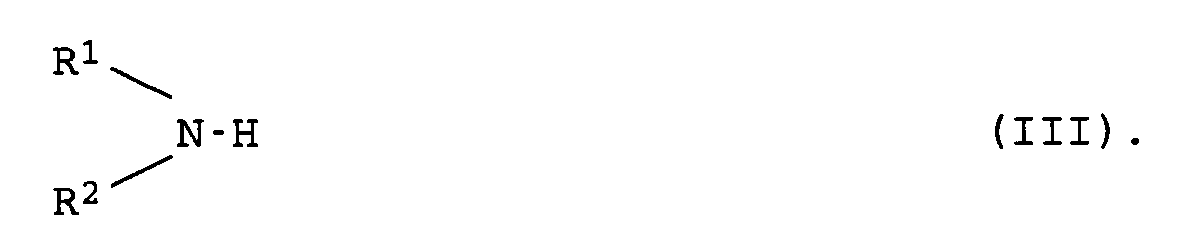
- Verfahren nach den Ansprüchen 1 bis 5 zur Herstellung von Aminen der allgemeinen Formel Iin der

- R1 und R2
- Wasserstoff, C1- bis C20-Alkyl, C3- bis C12-Cycloalkyl, Aryl, C7- bis C20-Aralkyl und C7- bis C20-Alkylaryl,
- R3
- C1- bis C200-Alkyl, C3- bis C12-Cycloalkyl, C1- bis C20-Hydroxyalkyl, durch Amino und/oder Methylamino und/oder Dimethylamino und/oder Hydroxy substituiertes C1- bis C20-Alkyl, C2- bis C30-Alkoxyalkyl, R4-(OCHR5CH2)n, Aryl, C7- bis C20-Aralkyl und C7- bis C20-Alkylaryl,,
- R4
- Wasserstoff, C1- bis C4-Alkyl,
- R5
- Wasserstoff oder Methyl,
- x
- Sauerstoff oder N-R5,
- n
- eine ganze Zahl von 2 bis 30,
- l
- eine ganze Zahl von 2 bis 4,
- m
- eine ganze Zahl von 1 bis 4
Applications Claiming Priority (2)
| Application Number | Priority Date | Filing Date | Title |
|---|---|---|---|
| DE4423346A DE4423346A1 (de) | 1994-07-04 | 1994-07-04 | Kupferoxid/Zirkonoxid-Katalysator |
| DE4423346 | 1994-07-04 |
Publications (2)
| Publication Number | Publication Date |
|---|---|
| EP0691157A1 EP0691157A1 (de) | 1996-01-10 |
| EP0691157B1 true EP0691157B1 (de) | 1999-08-25 |
Family
ID=6522175
Family Applications (1)
| Application Number | Title | Priority Date | Filing Date |
|---|---|---|---|
| EP95109869A Expired - Lifetime EP0691157B1 (de) | 1994-07-04 | 1995-06-24 | Verfahren zur Herstellung von Aminen |
Country Status (5)
| Country | Link |
|---|---|
| US (1) | US5648545A (de) |
| EP (1) | EP0691157B1 (de) |
| JP (1) | JPH0838901A (de) |
| DE (2) | DE4423346A1 (de) |
| ES (1) | ES2136225T3 (de) |
Families Citing this family (11)
| Publication number | Priority date | Publication date | Assignee | Title |
|---|---|---|---|---|
| US5817593A (en) * | 1995-06-02 | 1998-10-06 | The Dow Chemical Company | Catalyst and process for producing amines |
| AU7387896A (en) * | 1995-10-04 | 1997-04-28 | Dow Chemical Company, The | Amine capped polyethers and process for producing same |
| US6455464B1 (en) | 1996-03-21 | 2002-09-24 | Engelhard Corporation | Preparation and use of non-chrome catalysts for Cu/Cr catalyst applications |
| EP0834348B1 (de) * | 1996-10-07 | 2004-03-31 | Kabushiki Kaisha Toyota Chuo Kenkyusho | Verbundoxid, Verbundoxidträger und Katalysator |
| US5874625A (en) * | 1996-11-04 | 1999-02-23 | Henkel Corporation | Process to hydrogenate organic nitriles to primary amines |
| US6248925B1 (en) * | 1999-10-22 | 2001-06-19 | Air Products And Chemicals, Inc. | Selective reductive amination of nitriles |
| US6399830B1 (en) | 2000-12-13 | 2002-06-04 | Air Products And Chemicals, Inc. | Selective reductive amination of nitriles |
| US6600075B1 (en) | 2001-11-13 | 2003-07-29 | E. I. Du Pont De Nemours And Company | Process for the preparation of tertiaŕy amines from primary amines and nitriles |
| US7824455B2 (en) * | 2003-07-10 | 2010-11-02 | General Motors Corporation | High activity water gas shift catalysts based on platinum group metals and cerium-containing oxides |
| US7238333B2 (en) * | 2004-03-18 | 2007-07-03 | General Motors Corporation | High activity water gas shift catalysts with no methane formation |
| EP2035118B1 (de) * | 2006-06-21 | 2017-04-12 | Basf Se | Verfahren zur entfernung von co aus stoffströmen |
Family Cites Families (20)
| Publication number | Priority date | Publication date | Assignee | Title |
|---|---|---|---|---|
| DE1034184B (de) * | 1957-01-23 | 1958-07-17 | Basf Ag | Verfahren zur Herstellung von 1, 3-Propylendiamin |
| US3260752A (en) * | 1963-01-28 | 1966-07-12 | Standard Oil Co | Process for the preparation of diamines from olefinically unsaturated nitriles |
| NL137371C (de) | 1963-08-02 | |||
| US3398196A (en) * | 1964-12-31 | 1968-08-20 | Armour Ind Chem Co | Nu-secondary-alkyl trimethylene diamines |
| DE1543337A1 (de) * | 1966-03-22 | 1969-12-11 | Basf Ag | Verfahren zur Herstellung von 1,3-Propylendiaminen |
| US3673251A (en) * | 1969-04-30 | 1972-06-27 | Nat Distillers Chem Corp | Process for the catalytic reductive amination of nitriles |
| NL169595C (nl) | 1970-05-21 | 1982-08-02 | Shell Int Research | Werkwijze voor de bereiding van aminen en van smeerolien en vloeibare motorbrandstoffen die deze bevatten. |
| JPS5523818B2 (de) | 1973-08-30 | 1980-06-25 | ||
| JPS5735176B2 (de) | 1973-08-30 | 1982-07-27 | ||
| JPS6165840A (ja) * | 1984-09-07 | 1986-04-04 | Nippon Shokubai Kagaku Kogyo Co Ltd | ジグリコ−ル酸塩の製造方法 |
| DE3611230A1 (de) | 1986-04-04 | 1987-10-08 | Basf Ag | Polybutyl- und polyisobutylamine, verfahren zu deren herstellung und diese enthaltende kraft- und schmierstoffzusammensetzungen |
| JPS6448832A (en) * | 1987-08-18 | 1989-02-23 | Shinetsu Chemical Co | Modifier for composite material |
| US5166433A (en) * | 1989-02-04 | 1992-11-24 | Basf Aktiengesellschaft | Catalyst and the amination of alcohols under hydrogenating conditions |
| DE3903367A1 (de) * | 1989-02-04 | 1990-08-16 | Basf Ag | Katalysator und verfahren zur hydrierenden aminierung von alkoholen |
| JPH03128334A (ja) * | 1989-07-04 | 1991-05-31 | Ube Ind Ltd | アルコールの製造方法 |
| US5075506A (en) * | 1990-04-10 | 1991-12-24 | Texaco Chemical Company | Continuous preparation of secondary amines from nitriles using cobalt and zirconium |
| JP2964621B2 (ja) * | 1990-11-06 | 1999-10-18 | 三菱瓦斯化学株式会社 | ネオペンチルグリコールの製造方法 |
| JP3169993B2 (ja) * | 1991-08-19 | 2001-05-28 | 忠弘 大見 | 静電吸着装置 |
| JP2906753B2 (ja) * | 1991-08-21 | 1999-06-21 | 日本電気株式会社 | リードフレーム |
| US5395984A (en) * | 1994-04-20 | 1995-03-07 | Schering Corporation | Process for preparing 2-phenyl-1,3-propanediol |
-
1994
- 1994-07-04 DE DE4423346A patent/DE4423346A1/de not_active Withdrawn
-
1995
- 1995-06-20 JP JP7153362A patent/JPH0838901A/ja not_active Withdrawn
- 1995-06-24 ES ES95109869T patent/ES2136225T3/es not_active Expired - Lifetime
- 1995-06-24 EP EP95109869A patent/EP0691157B1/de not_active Expired - Lifetime
- 1995-06-24 DE DE59506673T patent/DE59506673D1/de not_active Expired - Fee Related
- 1995-07-05 US US08/494,955 patent/US5648545A/en not_active Expired - Fee Related
Also Published As
| Publication number | Publication date |
|---|---|
| ES2136225T3 (es) | 1999-11-16 |
| DE4423346A1 (de) | 1996-01-11 |
| US5648545A (en) | 1997-07-15 |
| JPH0838901A (ja) | 1996-02-13 |
| DE59506673D1 (de) | 1999-09-30 |
| EP0691157A1 (de) | 1996-01-10 |
Similar Documents
| Publication | Publication Date | Title |
|---|---|---|
| EP0697395B1 (de) | Verfahren zur Herstellung von Diaminen durch katalytische Aminierung von Aminoalkoholen | |
| EP0696572B1 (de) | Verfahren zur Herstellung von Aminen | |
| EP0382049B1 (de) | Katalysator und Verfahren zur hydrierenden Aminierung von Alkoholen | |
| EP0905122A2 (de) | Verfahren zur Herstellung von Aminen | |
| EP0963975A1 (de) | Verfahren zur Herstellung von Aminen | |
| EP2197830B1 (de) | Verfahren zur herstellung von aminen aus zuckeralkoholen | |
| EP1487573B1 (de) | Katalysatoren und verfahren zur herstellung von aminen | |
| EP2346602B1 (de) | Verfahren zur kontinuierlichen herstellung eines amins unter verwendung eines aluminium-kupfer-katalysators | |
| EP1106600B1 (de) | Verfahren zur Herstellung von Aminen | |
| EP2061747B1 (de) | Verfahren zur herstellung eines amins | |
| EP1747187A1 (de) | Verfahren zur kontinuierlichen herstellung eines amins | |
| EP2043996A1 (de) | Verfahren zur herstellung eines amins | |
| EP2513036A1 (de) | Umsetzung von glykolaldehyd mit einem aminierungsmittel | |
| EP2185499A1 (de) | Verfahren zur herstellung von aminen aus glycerin | |
| EP0691157A1 (de) | Kupferoxid/Zirkonoxid-Katalysator | |
| EP1097122B1 (de) | Verfahren zur herstellung von aminen | |
| EP1934165B1 (de) | Verfahren zur herstellung von ethylenaminen | |
| EP1106601B1 (de) | Verfahren zur Herstellung von Monoisopropylamin | |
| WO2019105782A1 (de) | Verfahren zur kontinuierlichen herstellung von 1,2-propylendiamin (1,2-pda) und dimethyldiet-hylentriamin (dmdeta) | |
| EP1934166B1 (de) | Verfahren zur herstellung von ethylenaminen | |
| EP0510382A2 (de) | Verfahren zur Herstellung von Alpha-Omega-Aminoalkoholen | |
| EP1971568B1 (de) | Verfahren zur kontinuierlichen herstellung eines primären aromatischen amins | |
| EP2858978A1 (de) | Verfahren zur herstellung von piperazin | |
| WO2008138833A1 (de) | Verfahren zur herstellung von aminen | |
| DE102005052376A1 (de) | Verfahren zur Herstellung von Ethylenaminen |
Legal Events
| Date | Code | Title | Description |
|---|---|---|---|
| PUAI | Public reference made under article 153(3) epc to a published international application that has entered the european phase |
Free format text: ORIGINAL CODE: 0009012 |
|
| 17P | Request for examination filed |
Effective date: 19951115 |
|
| AK | Designated contracting states |
Kind code of ref document: A1 Designated state(s): BE CH DE ES FR GB IT LI |
|
| 17Q | First examination report despatched |
Effective date: 19980602 |
|
| GRAG | Despatch of communication of intention to grant |
Free format text: ORIGINAL CODE: EPIDOS AGRA |
|
| GRAG | Despatch of communication of intention to grant |
Free format text: ORIGINAL CODE: EPIDOS AGRA |
|
| GRAH | Despatch of communication of intention to grant a patent |
Free format text: ORIGINAL CODE: EPIDOS IGRA |
|
| GRAH | Despatch of communication of intention to grant a patent |
Free format text: ORIGINAL CODE: EPIDOS IGRA |
|
| GRAA | (expected) grant |
Free format text: ORIGINAL CODE: 0009210 |
|
| AK | Designated contracting states |
Kind code of ref document: B1 Designated state(s): BE CH DE ES FR GB IT LI |
|
| REG | Reference to a national code |
Ref country code: CH Ref legal event code: EP |
|
| GBT | Gb: translation of ep patent filed (gb section 77(6)(a)/1977) |
Effective date: 19990907 |
|
| REF | Corresponds to: |
Ref document number: 59506673 Country of ref document: DE Date of ref document: 19990930 |
|
| ITF | It: translation for a ep patent filed | ||
| REG | Reference to a national code |
Ref country code: ES Ref legal event code: FG2A Ref document number: 2136225 Country of ref document: ES Kind code of ref document: T3 |
|
| ET | Fr: translation filed | ||
| PLBE | No opposition filed within time limit |
Free format text: ORIGINAL CODE: 0009261 |
|
| STAA | Information on the status of an ep patent application or granted ep patent |
Free format text: STATUS: NO OPPOSITION FILED WITHIN TIME LIMIT |
|
| 26N | No opposition filed | ||
| REG | Reference to a national code |
Ref country code: GB Ref legal event code: IF02 |
|
| PGFP | Annual fee paid to national office [announced via postgrant information from national office to epo] |
Ref country code: IT Payment date: 20080626 Year of fee payment: 14 |
|
| PGFP | Annual fee paid to national office [announced via postgrant information from national office to epo] |
Ref country code: CH Payment date: 20080710 Year of fee payment: 14 Ref country code: ES Payment date: 20080717 Year of fee payment: 14 Ref country code: DE Payment date: 20080703 Year of fee payment: 14 |
|
| PGFP | Annual fee paid to national office [announced via postgrant information from national office to epo] |
Ref country code: FR Payment date: 20080617 Year of fee payment: 14 |
|
| PGFP | Annual fee paid to national office [announced via postgrant information from national office to epo] |
Ref country code: GB Payment date: 20080625 Year of fee payment: 14 |
|
| PGFP | Annual fee paid to national office [announced via postgrant information from national office to epo] |
Ref country code: BE Payment date: 20081204 Year of fee payment: 14 |
|
| BERE | Be: lapsed |
Owner name: *BASF A.G. Effective date: 20090630 |
|
| REG | Reference to a national code |
Ref country code: CH Ref legal event code: PL |
|
| GBPC | Gb: european patent ceased through non-payment of renewal fee |
Effective date: 20090624 |
|
| REG | Reference to a national code |
Ref country code: FR Ref legal event code: ST Effective date: 20100226 |
|
| PG25 | Lapsed in a contracting state [announced via postgrant information from national office to epo] |
Ref country code: LI Free format text: LAPSE BECAUSE OF NON-PAYMENT OF DUE FEES Effective date: 20090630 Ref country code: FR Free format text: LAPSE BECAUSE OF NON-PAYMENT OF DUE FEES Effective date: 20090630 Ref country code: CH Free format text: LAPSE BECAUSE OF NON-PAYMENT OF DUE FEES Effective date: 20090630 |
|
| PG25 | Lapsed in a contracting state [announced via postgrant information from national office to epo] |
Ref country code: GB Free format text: LAPSE BECAUSE OF NON-PAYMENT OF DUE FEES Effective date: 20090624 |
|
| PG25 | Lapsed in a contracting state [announced via postgrant information from national office to epo] |
Ref country code: DE Free format text: LAPSE BECAUSE OF NON-PAYMENT OF DUE FEES Effective date: 20100101 Ref country code: BE Free format text: LAPSE BECAUSE OF NON-PAYMENT OF DUE FEES Effective date: 20090630 |
|
| REG | Reference to a national code |
Ref country code: ES Ref legal event code: FD2A Effective date: 20090625 |
|
| PG25 | Lapsed in a contracting state [announced via postgrant information from national office to epo] |
Ref country code: ES Free format text: LAPSE BECAUSE OF NON-PAYMENT OF DUE FEES Effective date: 20090625 |
|
| PG25 | Lapsed in a contracting state [announced via postgrant information from national office to epo] |
Ref country code: IT Free format text: LAPSE BECAUSE OF NON-PAYMENT OF DUE FEES Effective date: 20090624 |