EP0675729B1 - ACTIVATION DE PROTEINE p53 - Google Patents
ACTIVATION DE PROTEINE p53 Download PDFInfo
- Publication number
- EP0675729B1 EP0675729B1 EP94900267A EP94900267A EP0675729B1 EP 0675729 B1 EP0675729 B1 EP 0675729B1 EP 94900267 A EP94900267 A EP 94900267A EP 94900267 A EP94900267 A EP 94900267A EP 0675729 B1 EP0675729 B1 EP 0675729B1
- Authority
- EP
- European Patent Office
- Prior art keywords
- mutant
- ligand
- terminal
- activated
- amino acids
- Prior art date
- Legal status (The legal status is an assumption and is not a legal conclusion. Google has not performed a legal analysis and makes no representation as to the accuracy of the status listed.)
- Expired - Lifetime
Links
Images

Classifications
-
- C—CHEMISTRY; METALLURGY
- C12—BIOCHEMISTRY; BEER; SPIRITS; WINE; VINEGAR; MICROBIOLOGY; ENZYMOLOGY; MUTATION OR GENETIC ENGINEERING
- C12N—MICROORGANISMS OR ENZYMES; COMPOSITIONS THEREOF; PROPAGATING, PRESERVING, OR MAINTAINING MICROORGANISMS; MUTATION OR GENETIC ENGINEERING; CULTURE MEDIA
- C12N9/00—Enzymes; Proenzymes; Compositions thereof; Processes for preparing, activating, inhibiting, separating or purifying enzymes
- C12N9/10—Transferases (2.)
- C12N9/12—Transferases (2.) transferring phosphorus containing groups, e.g. kinases (2.7)
-
- A—HUMAN NECESSITIES
- A61—MEDICAL OR VETERINARY SCIENCE; HYGIENE
- A61P—SPECIFIC THERAPEUTIC ACTIVITY OF CHEMICAL COMPOUNDS OR MEDICINAL PREPARATIONS
- A61P35/00—Antineoplastic agents
-
- C—CHEMISTRY; METALLURGY
- C07—ORGANIC CHEMISTRY
- C07K—PEPTIDES
- C07K14/00—Peptides having more than 20 amino acids; Gastrins; Somatostatins; Melanotropins; Derivatives thereof
- C07K14/195—Peptides having more than 20 amino acids; Gastrins; Somatostatins; Melanotropins; Derivatives thereof from bacteria
- C07K14/24—Peptides having more than 20 amino acids; Gastrins; Somatostatins; Melanotropins; Derivatives thereof from bacteria from Enterobacteriaceae (F), e.g. Citrobacter, Serratia, Proteus, Providencia, Morganella, Yersinia
- C07K14/245—Escherichia (G)
-
- C—CHEMISTRY; METALLURGY
- C07—ORGANIC CHEMISTRY
- C07K—PEPTIDES
- C07K14/00—Peptides having more than 20 amino acids; Gastrins; Somatostatins; Melanotropins; Derivatives thereof
- C07K14/435—Peptides having more than 20 amino acids; Gastrins; Somatostatins; Melanotropins; Derivatives thereof from animals; from humans
- C07K14/46—Peptides having more than 20 amino acids; Gastrins; Somatostatins; Melanotropins; Derivatives thereof from animals; from humans from vertebrates
- C07K14/47—Peptides having more than 20 amino acids; Gastrins; Somatostatins; Melanotropins; Derivatives thereof from animals; from humans from vertebrates from mammals
- C07K14/4701—Peptides having more than 20 amino acids; Gastrins; Somatostatins; Melanotropins; Derivatives thereof from animals; from humans from vertebrates from mammals not used
- C07K14/4746—Peptides having more than 20 amino acids; Gastrins; Somatostatins; Melanotropins; Derivatives thereof from animals; from humans from vertebrates from mammals not used p53
-
- C—CHEMISTRY; METALLURGY
- C07—ORGANIC CHEMISTRY
- C07K—PEPTIDES
- C07K16/00—Immunoglobulins [IG], e.g. monoclonal or polyclonal antibodies
- C07K16/18—Immunoglobulins [IG], e.g. monoclonal or polyclonal antibodies against material from animals or humans
- C07K16/32—Immunoglobulins [IG], e.g. monoclonal or polyclonal antibodies against material from animals or humans against translation products of oncogenes
-
- A—HUMAN NECESSITIES
- A61—MEDICAL OR VETERINARY SCIENCE; HYGIENE
- A61K—PREPARATIONS FOR MEDICAL, DENTAL OR TOILETRY PURPOSES
- A61K38/00—Medicinal preparations containing peptides
Definitions
- This invention relates to the p53 tumour suppressor protein, and more particularly to mutant forms of the p53 protein which seem to be associated with certain types of tumour, and are usually found at elevated levels in such tumour cells.
- the invention also discloses the conversion of wild type p53 to a constitutively active form.
- Mutation of p53 is a very common genetic alteration in human cancers (1). Loss of the p53 tumour suppressor activity is co-incident with a loss of G1-S checkpoints following DNA damage (2), increases in genomic instability and selectable gene amplication (3,4). Mutant forms of p53 also appear to acquire a dominant growth promoting function (5,6). The region responsible for this transforming activity has been localized to a small C-terminal domain (7). Mice null for the wild type p53 locus develop normally, yet are susceptible to the development of neoplasia at elevated frequencies (8), indicating that wild type p53 is dispensable for the control over normal development and cell differentiation, but is essential to prevent spontaneous tumour formation. Consistent with this data, inherited germline point mutations in p53 lead to a predisposition to cancer in humans (9).
- Biochemical characterization of wild type protein has shown that p53 can function as a sequence-specific DNA binding protein (12,13) and a transcription factor (14-16). These results support a model for wild type p53 in which its function is activated post-translationally after DNA damage to allow DNA repair by controlling the expression of regulatory gene products (18). These may include the DNA damage inducible gene gadd45 (19) and the host protein with oncogenic properties mdm-2 (20).
- p53 Biochemical characterization of p53 has become possible recently owing to the use of protein expression systems which allow for an abundant source of the protein.
- p53 purified using immunoaffinity chromatography has been shown to be a sequence-specific DNA binding protein which recognizes a motif containing two contiguous monomers of the sequence (Pu) 3- C(A/T)(A/T)G(Py), (21).
- Sequence-specific DNA binding activity is manifested in the ability of p53 to bind the SV40 origin of replication (13), and by its ability to activate transcription in vitro from templates harbouring its DNA binding sequence (22).
- Mutant forms of p53 are defective in non-specific DNA binding (23), sequence-specific DNA binding (21) and transcriptional activation (14) suggesting that this activity is normally required to suppress tumour formation.
- Phosphorylation of nuclear DNA binding proteins is an effective mechanism through which gene expression is controlled in response to environmental cues (24). Multi-site phosphorylation of p53 by protein kinases (25-27) suggests its tumour suppressor activity may be tightly coordinated by complex signal transducing pathways.
- Casein kinase II (CasKII) is a highly conserved calcium and nucleotide independent enzyme which phosphorylates broad spectrum of substrates, including transcription factors and DNA binding proteins (28). The activity of the kinase is stimulated in cells exposed to a variety of mutagens and growth factors (29).
- Mouse (25) and human p53 (17) are phosphorylated at the penultimate C-terminal amino acid by Cas KII in vitro. Mutation of this highly conserved C-terminal serine residue of mouse p53 to an alanine abolishes the growth suppressive function of the protein in mammalian cells, suggesting that phosphorylation at this site is one important modification required to activate the tumour suppressor function of p53 (30).
- CasKII is the only known enzyme involved in a direct and positive regulation of the activity of p53.
- sequence specific DNA binding is one activity of p53 required for its tumour suppressor function.
- all mutant forms of p53 eg those encoded by the hotspot alleles, His175, Trp248, and His273, have been shown to be defective in sequence specific DNA binding (21) and in the activation of transcription from templates harbouring its consensus DNA binding site (14).
- Enzymatic modulation of p53 may provide a framework from which to couple signal transducing pathways with the P53 response to DNA damage and ultimately growth control.
- p53 phosphorylation on the activity of the protein, we have purified unmodified recombinant p53 by conventional chromatography from bacteria and shown it to be a multimeric protein which is latent for sequence specific DNA binding (17).
- a motif within the C-terminal 30 amino acids negatively controls p53 function as deletion of this domain constitutively activates p53.
- a set of p53 activating proteins including rabbit muscle casein kinase II, monoclonal antibody PAb421, and E.coli Hsp70, target this C-terminal domain.
- sequence specific DNA binding activity is cryptic, it can be unmasked by enzymes and proteins, including casein kinase II (17). From the observation that p53 is regulated positively by CasKII, we attempted to determine if some mutant forms of p53 are inactive in DNA binding as a result of a defect in conversion from a latent to an activated state.
- Mutant forms of p53 encoded by common 'hotspot' alleles were purified and their activities were characterized at the biochemical level.
- a monoclonal antibody and E.coli DnaK are able to promote sequence-specific DNA binding by these mutant forms of p53, but the most potent physiological activator CasKII is unable to effectively unmask the DNA binding function.
- a new biochemical class of mutant forms of p53 is thus established which is defective in DNA binding after post-translational modification by the growth controlling enzyme CasKII.
- This class of mutant p53 defective in the conversion from the latent to the activated state, was our target for the construction of molecules with the ability to reactivate the tumour suppressor function of mutant p53, and thus potentially lead to selective growth arrest and induction of apoptosis in tumour cells (32,33).
- an in vitro method which comprises activating a mutant p53 protein for specific DNA binding by the action of a ligand which binds to the mutant p53 within the C-terminal 30 amino acids , wherein said mutant has the properties that:
- mutant p53 will be likely to involve amino acid substitution of the wild-type p53 outside the C-terminal 30 amino acids. Examples are mutants in which the substitution is at either or both of positions 273 and 285, typically producing his273 and lys285.
- the activation typically is mediated by the action of a ligand which binds to the mutant p53 within the C-terminal 30 amino acids.
- Suitable such ligands are the monoclonal antibody PAb421 or the bacterial heat shock protein DnaK, but it is contemplated that activation will also be mediated by a ligand which binds effectively to the same site on the mutant p53.
- Such equivalent ligand may comprise a binding peptide fragment of PAb421 or DnaK, or it may be a molecular "mimetic" thereof.
- the designing of mimetics to a known pharmaceutically active compound is a known approach to the development of pharmaceuticals based on a "lead" compound.
- the three-dimensional structure of the ligand and its binding to the receptor is modelled, generally using a computer, and alternative molecules are devised for the ligand which have the same or equivalent binding regions, but which may differ markedly from the original ligand in other respects.
- the original ligand may be a protein or peptide
- the mimetic may be a non-peptide molecule having a quite different skeleton but which has atoms or groups at the receptor binding locations which have the same sort of characteristics, such as size, electric charge, hydrophobicity etc, as the corresponding parts of the original ligand.
- a mimetic can be devised which fulfills the same binding and pharmacologic function as the original ligand, but is for example easier to manufacture and formulate as a pharmaceutical agent.
- a pharmaceutical composition for activating mutant p53 protein for specific DNA binding wherein said mutant p53 has the properties that:
- the ligand used in the composition suitably has the characteristics described above.
- a further aspect of the present invention lies in the use of constitutively activated p53, whether wild type or mutant, for preparing a medicament for therapeutic purposes, as in the tumour or cell growth suppression.
- the present invention provides an activated form of p53 for therapeutic use, in which the activation is obtained by the binding of a ligand within the C-terminal 30 amino acids, or of the p53 molecule deletion within the C-terminal 30 amino acids of the p53 molecule, wherein the activation is effected prior to administration of the p53 activating agent.
- Constitutive activation can be by the binding of a ligand such as PAb421 or DnaK, or the deletion of a C-terminal region, typically within the 30 C-terminal amino acids of the full length molecule; the precise limits of what can be deleted to obtain the effect can of course be determined by routine experimentation.
- the present invention provides the use of an activated form of p53 in the preparation of a medicament for treating conditions ameliorated by activated p53, wherein the activation is obtained by the binding of a ligand to the C-terminal 30 amino acids of the p53 molecule region, or deletion within the C-terminal 30 amino acids of the p53 molecule.
- the present invention provides the use of a ligand in the preparation of a medicament for activating a mutant p53 protein for specific DNA binding by the action of the ligand binding to the mutant p53, wherein said mutant has the properties that:
- PAb421 is a known monoclonal antibody (Harlow et al, J Virol (1981), vol 37, 564-573) and is available from Oncogene Sciences, NY, USA. It has been found to bind the amino acid motif SKKGQSTSRHK in the C-terminal region of p53. Contemplated within the terms of this invention are other antibodies, binding fragments thereof, or non-antibody ligands, natural or synthetic, that are able to compete with PAb421 for binding to that motif and activating mutant p53s.
- PAb122 Another monoclonal antibody that recognises the dame site and can activate mutant p53 is PAb122 (Gurney et al J Virol (1980), vol 34, 752-763), and is available through the ATCC under deposit No ATCC TIB 116.
- DnaK is a known protein (Huang et al, J Biol Chem (1991), vol 266, 7537-7541) and is available from StressGen Biotechnologies Corp, Victoria, BC, Canada. It is a bacterial heat shock protein found in E.coli , and has been found to bind to the amino acid motif RHKKLMFTKTE in the C-terminal region of p53. Contemplated within the terms of this invention are other ligands, natural or synthetic, able to compete with DnaK for binding to that motif and activating mutant p53s.
- DO-1 is a known monoclonal antibody (Vojtisek et al, J Immunol Meth (1992), vol 151, 237-244).
- p53 DNA binding could also be activated by a 30 amino acid C-terminal deletion of p53 (deletion of 90 amino acids inactivated it), mild proteolysis of full length p53 (with trypsin), E coli DnaK (which disrupts protein-protein complexes) or CasKII (and coincident phosphorylation of a C-terminal site on p53). All the foregoing is described in more detail in the Hupp et al paper, to which reference may be made as appropriate.
- the purified mutants encoded by the His 273 and Lys285 alleles (i) appear to exist as latent multi-protein complexes and can be converted to active DNA binding forms by PAb421 and DnaK; (ii) express the N-terminal epitopes recognized by monoclonal antibody DO-1 in the native p53-DNA complex; (iii) require reactive sulfhydryl to promote sequence-specific DNA binding; and (iv) are effectively phosphorylated by CasKII in vitro.
- the E.coli Hsp70 homologue (DnaK) was purified from an overproducing strain by a modification of the published protocol (49). Active fractions of DnaK eluting from MonoQ (49) were applied to an ATP-Agarose column in Buffer P (10% glycerol, 25 mM HEPES (pH 7.6), 0.1 mM EDTA, and 1 mM DTT) containing 10 mM MgCl 2 .
- Buffer P (10% glycerol, 25 mM HEPES (pH 7.6), 0.1 mM EDTA, and 1 mM DTT) containing 10 mM MgCl 2 .
- CasKII from rabbit muscle was purified as described (17) with the following modifications. Muscle from a rabbit was ground in 2 liters of homogenization buffer (4 mM EDTA, 2 mM DTT, 1 mM Benzamidine) and centrifuged at 4000xg for 45 minutes. The soluble supernatant containing 27.5 grams of protein was batch adsorbed to 200 ml of phosphocellulose resin in Buffer P for 2 hours. The column was washed with Buffer P containing 0.35 M KC1, and CasKII activity was step eluted with Buffer P containing 1.2 M KC1 and 0.1% Triton X-100.
- homogenization buffer (4 mM EDTA, 2 mM DTT, 1 mM Benzamidine)
- the soluble supernatant containing 27.5 grams of protein was batch adsorbed to 200 ml of phosphocellulose resin in Buffer P for 2 hours.
- the column was washed with Buffer P containing 0.35 M KC1,
- Oligonucleotides containing the 20-mer p53 consensus DNA binding site (PG) (22) and Hind III compatible ends were: 5' AGC TTA GAC ATG CCT AGA CAT GCC TA 3' and 5' AGC TTA GGC ATG TCT AGG CAT GTC TA 3'.
- Oligonucleotides without the consensus sequence (TL) were: 5' TAT GTC TAA GGG ACC TGC GGT TGG CAT TGA TCT TG 3' and 5' GTG CCA AGA TCA ATG CCA ACC GCA GGT CCC TTA GAC A 3'.
- Complementary oligonucleotides were hybridized and end-labelled with 32 P- ⁇ -ATP as described (Maniatis et al, 1982) and stored at 4°C.
- a 20 ⁇ l reaction volume contained DNA binding buffer (20% glycerol, 25mM HEPES (pH 7.6), 50mM KCl, 1mM DTT, 1mg/ml BSA and 0.1% Triton X-100) and was mixed with PG radiolabelled DNA, unless indicated otherwise (1-5ng), competitor DNA (20-100ng of pBluescript II), the indicated amounts of p53 (Fraction III) and the indicated p53-specific monoclonal antibodies. Incubations followed a 0°C for 30 minutes unless indicated otherwise.
- Reaction products were loaded onto a 4% polyacrylamide gel containing 0.33 X TBE and 0.1% Triton X-100, which had undergone pre-electrophoresis at 100V for 15 minutes at 3°C. Electrophoresis was continued at 200V from 30 to 90 minutes at 3°C. Gels were dried prior to exposure to X-ray film.
- Reactions (10 ⁇ l contained DNA buffer (without DNA) supplemented with 100 ⁇ M ATP containing 32 P- ⁇ -ATP, and 125ng of p53 (Fraction III). CasKII obtained after gel filtration (80ng) was added and after incubations at 30°C for the indicated times, reactions were quenched by the addition of SDS-PAG sample buffer. Products were separated by electrophoresis on a 10% SDS-polyacrylamide gel. p53 was localised by staining with Coomassie Blue and the bands were excised and counted using a liquid scintillation counter (Beckmann LS 1801).
- Reactions (10 ⁇ l) contained DNA binding buffer (without DNA) supplemented with 30ng of p53 (Fraction III), 1mM ATP, and with an ATP regenerating system containing 0.1mg/ml creatine kinase II and 20mM phosphocreatine. After the addition of the indicated amounts of CasKII or purified DnaK, reactions were incubated at 30°C for 30 minutes. A 2-fold concentrated mixture containing radiolabelled DNA, competitor DNA, and the indicated monoclonal antibodies (10 ⁇ l) was added and incubations were continued at 21°C for 10 minutes. Reaction products were analysed as described above.
- the bacterial and mammalian cell expression of p53 exhibiting sequence specific DBA binding, activation of wild-type p53 by Fab421, DnaK or CasKII, and by limited tryptic digestion or by C-terminal deletion.
- mutant forms of p53 in sequence-specific DNA binding assays. Mutant forms of p53 encoded by the His175, Trp248, His273, and Lys285 alleles were purified using Heparin Sepharose and gel filtration chromatography as described for wild type p53. The mutant proteins eluted as a multi-protein complex of approximately 440Kd on gel filtration, similar to that observed with wild type p53 (17). These results indicate that the mutations have not prevented stable associations between monomers.
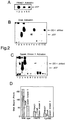
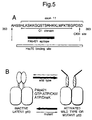
- Wild type p53 did not exhibit sequence-specific DNA binding unless activated by the monoclonal antibody, PAb421 ( Figure 2A, lane 2 vs.lane I). PAb421 binds to the C-terminus of p53 and presumably induces a conformational change that neutralizes the function of a negative regulatory domain ( Figure 5A). Highly purified mutant forms of p53 encoded by the His273 and Lys285 alleles were also unable to bind DNA sequence-specifically, but were effectively activated for DNA binding by PAb421 ( Figure 2A, lanes 4 and 6 vs. lanes 3 and 5). The specific activities for the mutant proteins were 6-8 fold lower than wild types p53 (See Figure 2D and the following Table). Specific activity of activated wild-type and mutant p53s (Fmol DNA bound/ ⁇ g protein) p53 PAb421 DnaK CasKII wild type 166 57 64 His273 55 31 3.8 Lys285 47 14 2.6
- Hsc70 binds to the C-terminus of p53 synthesized in reticulocyte lysates (36), suggesting that this family of proteins targets the same domain as PAb421 and CasKII ( Figure 5A).
- This interaction may have functional significance, since purified recombinant DnaK is able to activate sequence specific DNA binding of wild type P53.
- the His 273 and Lys285 mutant p53s were also activated by DnaK to give rise to products similar in mobility to activated wild type p53 ( Figure 2B, lanes 3, 7, and 11 vs. lanes 1, 5 and 9).
- a monoclonal antibody specific for the N-terminus of p53, DO-1 was able to supershift the DnaK activated wild type and mutant p53s (lanes 4, 8 and 12 vs. lanes 3, 7 and 11).
- DnaK activated mutant p53 bound by DO-1 are 4-6 fold less active than wild type p53 activated by this heat shock protein (Figure 2D).
- the enhancement of DnaK activated mutant p53 DNA binding function was observed upon the inclusion of DO-1 ( Figure 2B).
- the mutant forms of p53, though in an activated state, may yet favour equilibrium towards the latent state ( Figure 5), and the inclusion of DO-1 may help to lock the protein into the high affinity DNA binding conformation.
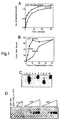
- Covalent modification of wild type p53 by CasKII in vitro is GTP or ATP dependent and activates the cryptic sequence-specific DNA binding function of P53 ( Figure 1).
- wild type p53 was activated very effectively by CasKII, both latent, mutant forms of p53 ( Figure 2C, lanes 3, 7 and 11 vs.
- the constitutively active p53 ⁇ 30 requires a reactive sulfhydryl for DNA binding
- Diamide which unlike NEM, reversibly oxidizes sulfhydryl residues, also inactivated p53 ⁇ 30 activity (lane 6 vs. lanes 2-4).
- the addition of DTT to diamide-oxidized p53 ⁇ 30 reactivated the function of the protein (lane 7).
- Wild type full length p53 also responded similarly to Diamide.
- the inclusion of increasing amounts of Diamide inactivated the DNA binding activity of PAb421-activated full length p53 ( Figure 4B, lanes 1-4).
- the subsequent treatment of the reactions with an excess of DTT reversed the oxidation promoted by Diamide (lanes 5-8).
- the C-terminal 30 amino acid region of p53 is denoted by amino acid residues 363-393.
- peptide C379-393 at concentrations from 500 ⁇ M to 5 ⁇ M blocked DnaK activation.
- the peptide C369-383 inhibited PAb421 activation by p53, while it was ineffective at inhibiting DnaK or CasKII activation of p53 binding.
- the DnaK targets the C-terminal 15 amino acids of p53, flanking the PAb421 epitope and CasKII phosphorylation sites.
- Peptide C374-388 could block DnaK activation as well as peptide C379-393, suggesting that the C-terminal 5 amino acids, containing the CasKII phosphorylation site, are not recognised by DnaK.
- the peptide C369-383 containing the PAb421 epitope removed important determinants of DnaK binding.
- mutant p53 which is defective in a GTP or ATP dependent post-translational activation of its sequence-specific DNA binding function by casein kinase II.
- these mutants can be converted to activated states by a distinct set of proteins, including PAb421 and E.coli Hsp70 (DnaK). Two important criteria appear necessary for this conversion.
- modifications presumably will be relevant in the cell and include: (i) a specific, high affinity binding of an 'activating' polypeptide (or mimetic) involved in neutralization of the C-terminal negative regulatory domain; and (ii) a highly reduced environment which can maintain p53 in an activated state.
- mutant p53 Activation of mutant p53 from its cryptic state by a monoclonal antibody and a heat shock protein has tremendous therapeutic implications. Given the clear association between the DNA binding activity and tumour suppressor functions of p53, these results imply that in many tumour cells there are high levels of mutant p53 that can potentially be activated to restore significant wild type function.
- Therapeutic applications of the present invention include the administration of an activating ligand for p53, or administration of a constitutively active p53, such as p53 having the C-terminal 30 amino acids deleted.
- a constitutively active p53 such as p53 having the C-terminal 30 amino acids deleted.
- the latter is based on our disclosure in Hupp et al (17) on wild-type p53, but a similar effect may be obtained with mutant p53.
- the C-30 deleted form may be even more active in DNA binding than the PAb421 activated full length molecule.
- these agents could be produced in the target cells by expression from an encoding gene introduced into the cells, eg in a viral vector (a variant of the VDEPT technique - see below).
- the vector could be targeted to the specific cells to be treated, or it could contain regulatory elements which are switched on more or less selectively in the target cells.
- the agent (constitutively active p53 or p53-activating ligand) could be administered in a precursor form, for conversion to the active form by an activating agent produced in, or targeted to, the cells to be treated.
- an activating agent produced in, or targeted to, the cells to be treated.
- This type of approach is sometimes known as ADEPT or VDEPT; the former involving targeting the activating agent to the cells by conjugation to a cell-specific antibody or ligand, while the latter involves producing the activating agent, eg an enzyme, in the target cells by expression from encoding DNA in a viral vector (see for example, EP-A-415731 and WO 90/07936).
- administration may be systemic or targeted, the latter employing direct application of the agent to the target cells or the use of targeting systems such as antibody or cell-specific ligands. Targeting may be desirable for a variety of reasons: for example if the agent is unacceptably toxic, or if it would otherwise require too high a dosage, or if it would not otherwise be able to enter the target cells.
- the normal cellular environment is sufficiently reducing for P53 to be active - see (ii) above - but there may be an enhanced effect from the administration of a reducing agent, as we have found that in tissue culture wild-type p53 can be activated by the extracellular addition of a reducing agent (dithiothreitol) to the culture medium.
- a reducing agent dithiothreitol
Landscapes
- Chemical & Material Sciences (AREA)
- Health & Medical Sciences (AREA)
- Organic Chemistry (AREA)
- Life Sciences & Earth Sciences (AREA)
- Genetics & Genomics (AREA)
- Medicinal Chemistry (AREA)
- General Health & Medical Sciences (AREA)
- Molecular Biology (AREA)
- Biochemistry (AREA)
- Proteomics, Peptides & Aminoacids (AREA)
- Biophysics (AREA)
- Zoology (AREA)
- Gastroenterology & Hepatology (AREA)
- Wood Science & Technology (AREA)
- Engineering & Computer Science (AREA)
- Bioinformatics & Cheminformatics (AREA)
- Microbiology (AREA)
- Oncology (AREA)
- Biomedical Technology (AREA)
- Toxicology (AREA)
- General Engineering & Computer Science (AREA)
- Biotechnology (AREA)
- Immunology (AREA)
- Chemical Kinetics & Catalysis (AREA)
- Pharmacology & Pharmacy (AREA)
- Animal Behavior & Ethology (AREA)
- Public Health (AREA)
- Veterinary Medicine (AREA)
- Nuclear Medicine, Radiotherapy & Molecular Imaging (AREA)
- General Chemical & Material Sciences (AREA)
- Peptides Or Proteins (AREA)
- Medicines Containing Antibodies Or Antigens For Use As Internal Diagnostic Agents (AREA)
- Preparation Of Compounds By Using Micro-Organisms (AREA)
- Medicines That Contain Protein Lipid Enzymes And Other Medicines (AREA)
- Eye Examination Apparatus (AREA)
- Micromachines (AREA)
Claims (17)
- Méthode in vitro qui comprend l'activation d'une proteine p53 mutante pour une liaison spécifique d'ADN par l'action d'un ligand qui se lie au mutant p53 dans les 30 acides aminés C-terminaux, où ledit mutant a les propriétés telles que :(i) il se présente à des niveaux élevés dans les tumeurs ;(ii) il ne supprime pas sensiblement la croissance de la tumeur ; et(iii) il n'est pas sensiblement activé par la phosphorylation due à CasKII.
- Méthode de la revendication 1 où le ligand est l'anticorps monoclonal PAb421 ou la protéine bactérienne de choc thermique DnaK ou un ligand qui se lie effectivement au même site sur le mutant p53.
- Méthode de la revendication 1, ou de la revendication 2, où le mutant p53 implique une substitution d'acides aminés de p53 du type sauvage en dehors des 30 acides aminés C-terminaux,
- Méthode de la revendication 3, où la substitution est à l'une ou aux deux positions 273 et 285.
- Méthode de la revendication 4, où la substitution donne soit his273 ou lys285 ou les deux.
- Composition pharmaceutique pour activer la protéine p53 mutante pour une liaison spécifique d'ADN, où ledit p53 mutant a les propriétés telles que :(i) il se présente à des niveaux élevés dans les tumeurs ;(ii) il ne supprime pas sensiblement la croissance de la tumeur ; et(iii) il n'est pas sensiblement activé par la phosphorylation due à CasKII.
la composition comprenant un ligand capable de se lier au mutant p53 dans les 30 acides aminés C-terminaux et un excipient approprié. - Composition de la revendication 6, où le ligand est l'anticorps monoclonal PAb421 ou la protéine DnaK bactérienne de choc thermique ou un ligand qui se lie effectivement au même site sur le mutant p53 ou un fragment de liaison ou son mimétique moléculaire.
- Composition de la revendication 6 ou de la revendication 7, où le mutant p53 implique une substitution d'acides aminés de p53 du type sauvage en dehors des 30 acides aminés C-terminaux.
- Composition de la revendication 8, où la substitution est à l'une des positions 273 ou 285 ou aux deux.
- Composition de la revendication 9, où la substitution donne his273 ou lys285 ou les deux.
- Forme activée de p53 pour un usage thérapeutique, où l'activation est obtenue par la liaison d'un ligand dans les 30 acides aminés C-terminaux de p53 ou une délétion dans les 30 acides aminés C-terminaux de p53, ou l'activation est effectuée avant administration de p53.
- Utilisation d'une forme activée de p53 dans la préparation d'un médicament pour le traitement de conditions améliorées par p53 activé, où l'activation est obtenue par la liaison d'un ligand aux 30 acides aminés C-terminaux de p53 ou une délétion dans les 30 acides aminés C-terminaux de p53.
- Utilisation d'un ligand dans la préparation d'un médicament pour l'activation d'une protéine p53 mutante pour une liaison spécifique d'ADN par l'action du ligand se liant à p53 mutant, où ledit mutant a les propriétés telles que :(i) il se présente à des niveaux élevés dans les tumeurs :(ii) il ne supprime pas sensiblement la croissance de la tumeur ; et(iii) il n'est pas sensiblement activé par la phosphorylation due à CasKII
où le ligand se lie au mutant p53 dans les 30 acides aminés C-terminaux. - Utilisation de la revendication 13, où le ligand est l'anticorps monoclonal PAb421 ou bien la protéine bactérienne DnaK de choc thermique ou un ligand qui se lie effectivement au même site sur le mutant p53, ou un fragment de liaison ou son mimétique moléculaire.
- Utilisation selon l'une des revendications 12 à 14, où le mutant p53 implique une substitution d'acides aminés de p53 du type sauvage en dehors des 30 acides aminés C-terminaux.
- Utilisation de la revendication 15, où la substitution est à l'une des positions 273 et 285 ou aux deux.
- Utilisation de la revendication 16, où la substitution donne his 273 ou lys285 ou les deux.
Applications Claiming Priority (3)
| Application Number | Priority Date | Filing Date | Title |
|---|---|---|---|
| GB9224784 | 1992-11-26 | ||
| GB929224784A GB9224784D0 (en) | 1992-11-26 | 1992-11-26 | Cellular protein |
| PCT/GB1993/002438 WO1994012202A1 (fr) | 1992-11-26 | 1993-11-26 | ACTIVATION DE PROTEINE p53 |
Publications (2)
| Publication Number | Publication Date |
|---|---|
| EP0675729A1 EP0675729A1 (fr) | 1995-10-11 |
| EP0675729B1 true EP0675729B1 (fr) | 1999-06-02 |
Family
ID=10725717
Family Applications (1)
| Application Number | Title | Priority Date | Filing Date |
|---|---|---|---|
| EP94900267A Expired - Lifetime EP0675729B1 (fr) | 1992-11-26 | 1993-11-26 | ACTIVATION DE PROTEINE p53 |
Country Status (13)
| Country | Link |
|---|---|
| US (1) | US6140058A (fr) |
| EP (1) | EP0675729B1 (fr) |
| JP (1) | JPH08505607A (fr) |
| KR (1) | KR100291964B1 (fr) |
| AT (1) | ATE180673T1 (fr) |
| AU (1) | AU680216B2 (fr) |
| CA (1) | CA2150265C (fr) |
| DE (1) | DE69325180T2 (fr) |
| DK (1) | DK0675729T3 (fr) |
| ES (1) | ES2134336T3 (fr) |
| GB (1) | GB9224784D0 (fr) |
| GR (1) | GR3030900T3 (fr) |
| WO (1) | WO1994012202A1 (fr) |
Families Citing this family (24)
| Publication number | Priority date | Publication date | Assignee | Title |
|---|---|---|---|---|
| US5573925A (en) * | 1994-11-28 | 1996-11-12 | The Wistar Institute Of Anatomy And Biology | P53 proteins with altered tetramerization domains |
| US5721340A (en) * | 1994-11-28 | 1998-02-24 | The Wistar Institute Of Anatomy & Biology | p53 proteins with altered tetramerization domains |
| US6169073B1 (en) | 1995-02-16 | 2001-01-02 | Bayer Corporation | Peptides and peptidomimetics with structural similarity to human p53 that activate p53 function |
| FR2732348B1 (fr) * | 1995-03-31 | 1997-04-30 | Rhone Poulenc Rorer Sa | Systeme d'expression conditionnel |
| FR2736915B1 (fr) * | 1995-07-19 | 1997-08-22 | Rhone Poulenc Rorer Sa | Variants de la proteine p53 et utilisations therapeutiques |
| US5847083A (en) * | 1996-08-21 | 1998-12-08 | The Wistar Institute Of Anatomy And Biology | Modified p53 constructs which enhance DNA binding |
| GB9521544D0 (en) * | 1995-10-20 | 1995-12-20 | Univ Dundee | Activation of P53 protein and therapeutic applications thereof |
| FR2755144B1 (fr) * | 1996-10-29 | 1998-11-27 | Rhone Poulenc Rorer Sa | Fragments d'anticorps a chaine unique anti-p53 et utilisation |
| GB9714971D0 (en) * | 1997-07-16 | 1997-09-24 | Cancer Res Campaign Tech | Assays,therapeutic methods and means |
| DE19735221C1 (de) * | 1997-08-14 | 1999-05-06 | Wolfgang Willi Prof Dr Deppert | Beeinflussung der Bindung von p53 an Zielgene |
| DE19802792A1 (de) * | 1998-01-26 | 1999-07-29 | Wolfgang Willi Prof Dr Deppert | Hemmung der durch mutiertes p53 verursachten Modulation von DNA |
| WO2000022115A2 (fr) * | 1998-10-13 | 2000-04-20 | Board Of Regents, The University Of Texas System | Dosages permettant d'identifier des alterations fonctionnelles dans le gene suppresseur de tumeur p53 |
| CN1329493A (zh) * | 1998-12-02 | 2002-01-02 | 辉瑞产品公司 | 恢复p53家族蛋白质的构象稳定性的方法和组合物 |
| EP1480042A3 (fr) * | 1998-12-02 | 2006-06-21 | Pfizer Products Inc. | Méthode de criblage de composés interagisssant avec des protéines de la famille p53 |
| EP1854509A3 (fr) * | 1998-12-02 | 2010-08-18 | Pfizer Products Inc. | Procédés et compositions pour rétablir la stabilité structurelle d'une protéine de la famille p53 |
| AUPP932199A0 (en) * | 1999-03-19 | 1999-04-15 | St Vincent's Hospital Sydney Limited | Anti-p53 antibodies |
| US6989239B2 (en) * | 2001-06-20 | 2006-01-24 | R.E.D. Laboratories, N.V./S.A. | Methods for diagnosis and treatment of chronic immune diseases |
| AU2005276117C1 (en) | 2004-08-23 | 2013-04-18 | Yeda Research And Development Co. Ltd. At The Weizmann Institute Of Science | Peptide inhibitors for mediating stress responses |
| US20070224662A1 (en) * | 2004-12-17 | 2007-09-27 | Jun Luo | Post-translational modification of proteins in cell-free expression systems |
| KR100749858B1 (ko) | 2005-08-12 | 2007-08-16 | 연세대학교 산학협력단 | p53 변이체 및 그의 용도 |
| CA2836503C (fr) | 2011-05-23 | 2020-09-22 | Yeda Research And Development Co. Ltd. | Utilisation de la phosphorylation d'akt en tant que biomarqueur pour le pronostic et le traitement de maladies neurodegeneratives |
| DK3201234T3 (en) * | 2014-09-30 | 2019-02-25 | Diadem S R L | ANTIBODY BINDING A LINEAR EPITOP OF HUMAN P53 AND DIAGNOSTIC APPLICATIONS THEREOF |
| GB201617564D0 (en) * | 2016-10-17 | 2016-11-30 | Agency For Science Technology And Research And National University Of Singapore And Singapore Health | Anti-p53 antibodies |
| WO2019162974A1 (fr) * | 2018-02-23 | 2019-08-29 | Ulisse Biomed S.R.L. | Procédé de diagnostic de la progression du cancer sur la base de biomarqueurs procaryotes et de molécules destinées à être utilisées dans le traitement de la progression du cancer |
Family Cites Families (2)
| Publication number | Priority date | Publication date | Assignee | Title |
|---|---|---|---|---|
| NO312681B1 (no) * | 1990-08-24 | 2002-06-17 | Univ California | Fremgangsmåte for fremstilling av en farmasöytisk blanding med suppresiv virkning/aktivitet |
| CA2118015A1 (fr) * | 1992-04-14 | 1993-10-28 | Jeffrey R. Marks | Methode de detection des tumeurs contenant des complexes de p53 et de hsp70 |
-
1992
- 1992-11-26 GB GB929224784A patent/GB9224784D0/en active Pending
-
1993
- 1993-11-26 AU AU55331/94A patent/AU680216B2/en not_active Ceased
- 1993-11-26 DE DE69325180T patent/DE69325180T2/de not_active Expired - Fee Related
- 1993-11-26 CA CA002150265A patent/CA2150265C/fr not_active Expired - Fee Related
- 1993-11-26 WO PCT/GB1993/002438 patent/WO1994012202A1/fr not_active Ceased
- 1993-11-26 DK DK94900267T patent/DK0675729T3/da active
- 1993-11-26 KR KR1019950702130A patent/KR100291964B1/ko not_active Expired - Fee Related
- 1993-11-26 AT AT94900267T patent/ATE180673T1/de not_active IP Right Cessation
- 1993-11-26 JP JP6512924A patent/JPH08505607A/ja active Pending
- 1993-11-26 ES ES94900267T patent/ES2134336T3/es not_active Expired - Lifetime
- 1993-11-26 US US08/446,668 patent/US6140058A/en not_active Expired - Fee Related
- 1993-11-26 EP EP94900267A patent/EP0675729B1/fr not_active Expired - Lifetime
-
1999
- 1999-08-02 GR GR990401981T patent/GR3030900T3/el unknown
Also Published As
| Publication number | Publication date |
|---|---|
| ATE180673T1 (de) | 1999-06-15 |
| US6140058A (en) | 2000-10-31 |
| AU5533194A (en) | 1994-06-22 |
| DE69325180D1 (de) | 1999-07-08 |
| GR3030900T3 (en) | 1999-11-30 |
| ES2134336T3 (es) | 1999-10-01 |
| CA2150265A1 (fr) | 1994-06-09 |
| GB9224784D0 (en) | 1993-01-13 |
| DE69325180T2 (de) | 1999-12-02 |
| DK0675729T3 (da) | 1999-12-06 |
| AU680216B2 (en) | 1997-07-24 |
| EP0675729A1 (fr) | 1995-10-11 |
| WO1994012202A1 (fr) | 1994-06-09 |
| JPH08505607A (ja) | 1996-06-18 |
| KR100291964B1 (ko) | 2001-10-23 |
| CA2150265C (fr) | 1998-12-29 |
Similar Documents
| Publication | Publication Date | Title |
|---|---|---|
| EP0675729B1 (fr) | ACTIVATION DE PROTEINE p53 | |
| Hupp et al. | Activation of the cryptic DNA binding function of mutant forms of p53 | |
| Schneider et al. | Regulation of CAK kinase activity by p53 | |
| Lane | p53 and human cancers | |
| Xiong et al. | p21 is a universal inhibitor of cyclin kinases | |
| Lu et al. | The CDK7-cycH-p36 complex of transcription factor IIH phosphorylates p53, enhancing its sequence-specific DNA binding activity in vitro | |
| Leveillard et al. | Functional interactions between p53 and the TFIIH complex are affected by tumour‐associated mutations. | |
| Bischoff et al. | Human p53 inhibits growth in Schizosaccharomyces pombe | |
| Meek | Multisite phosphorylation and the integration of stress signals at p53 | |
| US5688665A (en) | Isolated nucleic acid molecules encoding the p27 KIP-1 protein | |
| Shaulian et al. | Tight DNA binding and oligomerization are dispensable for the ability of p53 to transactivate target genes and suppress transformation. | |
| WO1997014794A1 (fr) | ACTIVATION DE LA PROTEINE p53 | |
| Elia et al. | Ribosomal protein L22 inhibits regulation of cellular activities by the Epstein‐Barr virus small RNA EBER‐1 | |
| Götz et al. | Protein kinase CK2 interacts with a multi-protein binding domain of p53 | |
| RU2192431C2 (ru) | Синтетический мутантный ген rb (варианты), синтетический мутантный ген p53, плазмида (варианты), мутантный белок (варианты), способ ингибирования клеточной пролиферации (варианты), способ индуцирования апоптоза | |
| Wagner et al. | Fine mapping and regulation of the association of p53 with p34cdc2 | |
| CA2218327A1 (fr) | Substance se fixant a l'antigene nucleaire des cellules proliferatives | |
| US6635450B1 (en) | Isolated P27 protein, nucleic acid molecules encoding same, methods of identifying agents acting on same, and uses of said agents | |
| Park | Cloning, sequencing, and overexpression of SH2/SH3 adaptor protein Nck from mouse thymus | |
| US6242575B1 (en) | Antibodies for detecting p27 protein | |
| US6355774B1 (en) | Isolated p27 protein | |
| CA2120353C (fr) | Compositions controlant le cycle cellulaire et methodes d'utilisation | |
| Zhang et al. | The DNA-binding and Transcription-Activation Abilities of p53 Are Necessary but not Sufficient for Its Antiproliferation Function’ | |
| US20020110886A1 (en) | Isolated p27 protein and methods for its production and use | |
| Waterman | Functional regulation of thep53 tumor suppressor protein |
Legal Events
| Date | Code | Title | Description |
|---|---|---|---|
| PUAI | Public reference made under article 153(3) epc to a published international application that has entered the european phase |
Free format text: ORIGINAL CODE: 0009012 |
|
| 17P | Request for examination filed |
Effective date: 19950616 |
|
| AK | Designated contracting states |
Kind code of ref document: A1 Designated state(s): AT BE CH DE DK ES FR GB GR IE IT LI LU MC NL PT SE |
|
| 17Q | First examination report despatched |
Effective date: 19970527 |
|
| GRAG | Despatch of communication of intention to grant |
Free format text: ORIGINAL CODE: EPIDOS AGRA |
|
| GRAG | Despatch of communication of intention to grant |
Free format text: ORIGINAL CODE: EPIDOS AGRA |
|
| GRAH | Despatch of communication of intention to grant a patent |
Free format text: ORIGINAL CODE: EPIDOS IGRA |
|
| RAP1 | Party data changed (applicant data changed or rights of an application transferred) |
Owner name: UNIVERSITY OF DUNDEE |
|
| GRAH | Despatch of communication of intention to grant a patent |
Free format text: ORIGINAL CODE: EPIDOS IGRA |
|
| GRAA | (expected) grant |
Free format text: ORIGINAL CODE: 0009210 |
|
| AK | Designated contracting states |
Kind code of ref document: B1 Designated state(s): AT BE CH DE DK ES FR GB GR IE IT LI LU MC NL PT SE |
|
| REF | Corresponds to: |
Ref document number: 180673 Country of ref document: AT Date of ref document: 19990615 Kind code of ref document: T |
|
| REG | Reference to a national code |
Ref country code: CH Ref legal event code: EP |
|
| REF | Corresponds to: |
Ref document number: 69325180 Country of ref document: DE Date of ref document: 19990708 |
|
| REG | Reference to a national code |
Ref country code: IE Ref legal event code: FG4D |
|
| ITF | It: translation for a ep patent filed | ||
| ET | Fr: translation filed | ||
| REG | Reference to a national code |
Ref country code: ES Ref legal event code: FG2A Ref document number: 2134336 Country of ref document: ES Kind code of ref document: T3 |
|
| REG | Reference to a national code |
Ref country code: PT Ref legal event code: SC4A Free format text: AVAILABILITY OF NATIONAL TRANSLATION Effective date: 19990901 |
|
| REG | Reference to a national code |
Ref country code: DK Ref legal event code: T3 |
|
| PLBE | No opposition filed within time limit |
Free format text: ORIGINAL CODE: 0009261 |
|
| STAA | Information on the status of an ep patent application or granted ep patent |
Free format text: STATUS: NO OPPOSITION FILED WITHIN TIME LIMIT |
|
| 26N | No opposition filed | ||
| REG | Reference to a national code |
Ref country code: GB Ref legal event code: IF02 |
|
| PGFP | Annual fee paid to national office [announced via postgrant information from national office to epo] |
Ref country code: PT Payment date: 20020930 Year of fee payment: 10 |
|
| PGFP | Annual fee paid to national office [announced via postgrant information from national office to epo] |
Ref country code: GR Payment date: 20021003 Year of fee payment: 10 |
|
| PGFP | Annual fee paid to national office [announced via postgrant information from national office to epo] |
Ref country code: MC Payment date: 20021031 Year of fee payment: 10 |
|
| PGFP | Annual fee paid to national office [announced via postgrant information from national office to epo] |
Ref country code: LU Payment date: 20021121 Year of fee payment: 10 |
|
| PGFP | Annual fee paid to national office [announced via postgrant information from national office to epo] |
Ref country code: IE Payment date: 20021125 Year of fee payment: 10 |
|
| PGFP | Annual fee paid to national office [announced via postgrant information from national office to epo] |
Ref country code: SE Payment date: 20021126 Year of fee payment: 10 |
|
| PGFP | Annual fee paid to national office [announced via postgrant information from national office to epo] |
Ref country code: NL Payment date: 20021130 Year of fee payment: 10 |
|
| PG25 | Lapsed in a contracting state [announced via postgrant information from national office to epo] |
Ref country code: LU Free format text: LAPSE BECAUSE OF NON-PAYMENT OF DUE FEES Effective date: 20031126 Ref country code: IE Free format text: LAPSE BECAUSE OF NON-PAYMENT OF DUE FEES Effective date: 20031126 |
|
| PG25 | Lapsed in a contracting state [announced via postgrant information from national office to epo] |
Ref country code: SE Free format text: LAPSE BECAUSE OF NON-PAYMENT OF DUE FEES Effective date: 20031127 |
|
| PG25 | Lapsed in a contracting state [announced via postgrant information from national office to epo] |
Ref country code: MC Free format text: LAPSE BECAUSE OF NON-PAYMENT OF DUE FEES Effective date: 20031130 |
|
| PG25 | Lapsed in a contracting state [announced via postgrant information from national office to epo] |
Ref country code: PT Free format text: LAPSE BECAUSE OF NON-PAYMENT OF DUE FEES Effective date: 20040531 |
|
| PG25 | Lapsed in a contracting state [announced via postgrant information from national office to epo] |
Ref country code: NL Free format text: LAPSE BECAUSE OF NON-PAYMENT OF DUE FEES Effective date: 20040601 |
|
| PG25 | Lapsed in a contracting state [announced via postgrant information from national office to epo] |
Ref country code: GR Free format text: LAPSE BECAUSE OF NON-PAYMENT OF DUE FEES Effective date: 20040603 |
|
| EUG | Se: european patent has lapsed | ||
| NLV4 | Nl: lapsed or anulled due to non-payment of the annual fee |
Effective date: 20040601 |
|
| REG | Reference to a national code |
Ref country code: IE Ref legal event code: MM4A |
|
| REG | Reference to a national code |
Ref country code: PT Ref legal event code: MM4A Free format text: LAPSE DUE TO NON-PAYMENT OF FEES Effective date: 20040531 |
|
| PGFP | Annual fee paid to national office [announced via postgrant information from national office to epo] |
Ref country code: ES Payment date: 20061031 Year of fee payment: 14 |
|
| PGFP | Annual fee paid to national office [announced via postgrant information from national office to epo] |
Ref country code: GB Payment date: 20061120 Year of fee payment: 14 |
|
| PGFP | Annual fee paid to national office [announced via postgrant information from national office to epo] |
Ref country code: FR Payment date: 20061124 Year of fee payment: 14 Ref country code: DK Payment date: 20061124 Year of fee payment: 14 Ref country code: CH Payment date: 20061124 Year of fee payment: 14 Ref country code: AT Payment date: 20061124 Year of fee payment: 14 |
|
| PGFP | Annual fee paid to national office [announced via postgrant information from national office to epo] |
Ref country code: DE Payment date: 20061128 Year of fee payment: 14 |
|
| PGFP | Annual fee paid to national office [announced via postgrant information from national office to epo] |
Ref country code: BE Payment date: 20061129 Year of fee payment: 14 |
|
| PGFP | Annual fee paid to national office [announced via postgrant information from national office to epo] |
Ref country code: IT Payment date: 20061130 Year of fee payment: 14 |
|
| BERE | Be: lapsed |
Owner name: *UNIVERSITY OF DUNDEE Effective date: 20071130 |
|
| REG | Reference to a national code |
Ref country code: DK Ref legal event code: EBP |
|
| GBPC | Gb: european patent ceased through non-payment of renewal fee |
Effective date: 20071126 |
|
| PG25 | Lapsed in a contracting state [announced via postgrant information from national office to epo] |
Ref country code: LI Free format text: LAPSE BECAUSE OF NON-PAYMENT OF DUE FEES Effective date: 20071130 Ref country code: CH Free format text: LAPSE BECAUSE OF NON-PAYMENT OF DUE FEES Effective date: 20071130 |
|
| REG | Reference to a national code |
Ref country code: CH Ref legal event code: PL |
|
| PG25 | Lapsed in a contracting state [announced via postgrant information from national office to epo] |
Ref country code: AT Free format text: LAPSE BECAUSE OF NON-PAYMENT OF DUE FEES Effective date: 20071126 |
|
| PG25 | Lapsed in a contracting state [announced via postgrant information from national office to epo] |
Ref country code: BE Free format text: LAPSE BECAUSE OF NON-PAYMENT OF DUE FEES Effective date: 20071130 |
|
| PG25 | Lapsed in a contracting state [announced via postgrant information from national office to epo] |
Ref country code: DK Free format text: LAPSE BECAUSE OF NON-PAYMENT OF DUE FEES Effective date: 20071130 Ref country code: DE Free format text: LAPSE BECAUSE OF NON-PAYMENT OF DUE FEES Effective date: 20080603 |
|
| REG | Reference to a national code |
Ref country code: FR Ref legal event code: ST Effective date: 20080930 |
|
| PG25 | Lapsed in a contracting state [announced via postgrant information from national office to epo] |
Ref country code: GB Free format text: LAPSE BECAUSE OF NON-PAYMENT OF DUE FEES Effective date: 20071126 |
|
| REG | Reference to a national code |
Ref country code: ES Ref legal event code: FD2A Effective date: 20071127 |
|
| PG25 | Lapsed in a contracting state [announced via postgrant information from national office to epo] |
Ref country code: FR Free format text: LAPSE BECAUSE OF NON-PAYMENT OF DUE FEES Effective date: 20071130 Ref country code: ES Free format text: LAPSE BECAUSE OF NON-PAYMENT OF DUE FEES Effective date: 20071127 |
|
| PG25 | Lapsed in a contracting state [announced via postgrant information from national office to epo] |
Ref country code: IT Free format text: LAPSE BECAUSE OF NON-PAYMENT OF DUE FEES Effective date: 20071126 |