EP0666732B1 - Desodorierende kosmetische zubereitungen mit einem gehalt an di- oder triglycerinestern - Google Patents
Desodorierende kosmetische zubereitungen mit einem gehalt an di- oder triglycerinestern Download PDFInfo
- Publication number
- EP0666732B1 EP0666732B1 EP93922925A EP93922925A EP0666732B1 EP 0666732 B1 EP0666732 B1 EP 0666732B1 EP 93922925 A EP93922925 A EP 93922925A EP 93922925 A EP93922925 A EP 93922925A EP 0666732 B1 EP0666732 B1 EP 0666732B1
- Authority
- EP
- European Patent Office
- Prior art keywords
- triglycerol
- monocarboxylic acid
- diglycerol
- weight
- esters
- Prior art date
- Legal status (The legal status is an assumption and is not a legal conclusion. Google has not performed a legal analysis and makes no representation as to the accuracy of the status listed.)
- Expired - Lifetime
Links
Images
Classifications
-
- A—HUMAN NECESSITIES
- A61—MEDICAL OR VETERINARY SCIENCE; HYGIENE
- A61Q—SPECIFIC USE OF COSMETICS OR SIMILAR TOILETRY PREPARATIONS
- A61Q15/00—Anti-perspirants or body deodorants
-
- A—HUMAN NECESSITIES
- A61—MEDICAL OR VETERINARY SCIENCE; HYGIENE
- A61K—PREPARATIONS FOR MEDICAL, DENTAL OR TOILETRY PURPOSES
- A61K8/00—Cosmetics or similar toiletry preparations
- A61K8/18—Cosmetics or similar toiletry preparations characterised by the composition
- A61K8/30—Cosmetics or similar toiletry preparations characterised by the composition containing organic compounds
- A61K8/33—Cosmetics or similar toiletry preparations characterised by the composition containing organic compounds containing oxygen
- A61K8/39—Derivatives containing from 2 to 10 oxyalkylene groups
Definitions
- the present invention relates to cosmetic deodorants.
- Such formulations serve to eliminate body odor that arises when the odorless fresh sweat is decomposed by microorganisms.
- the commercial cosmetic deodorants are based on different active principles.
- astringents primarily aluminum salts such as aluminum hydroxychloride (aluminum chlorohydrate) - can prevent the formation of sweat.
- aluminum salts such as aluminum hydroxychloride (aluminum chlorohydrate)
- the substances used for this depending on their dosage, have a drastic effect on the heat balance of the armpit region and should only be used in exceptional cases.
- the sweat flow itself is not affected by this, in the ideal case only the microbial decomposition of the sweat is temporarily stopped.
- body odor can also be masked by fragrances, a method that least meets the aesthetic needs of the consumer, since the mixture of body odor and perfume smells rather unpleasant.
- liquid deodorants for example aerosol sprays, roll-ons and the like
- solid preparations for example deodorant sticks ("sticks"), powder, powder sprays, intimate cleansing agents, etc. are known and customary.
- the object of the present invention was therefore to develop cosmetic deodorants which do not have the disadvantages of the prior art.
- the deodorants should largely protect the microflora of the skin, but selectively reduce the number of microorganisms that are responsible for body odor.
- a further task was to develop cosmetic deodorants which harmonize with the largest possible number of customary cosmetic auxiliaries and additives, in particular with the perfume components which are particularly important in formulations having a deodorant or antiperspirant effect.
- a still further object of the invention was to provide cosmetic deodorants which are effective over a longer period of time, on the order of at least half a day, without their action noticeably diminishing.
- fatty acid esters of glycerol ie monoglycerol
- monoglycerol fatty acid esters in deodorant cosmetics, in particular glycerol monolaurate. Nevertheless, the effect of these monoglycerol esters lags far behind that of the monocarboxylic acid esters according to the invention.
- EP-A-0 379 658 describes washing, cleaning and / or body cleaning agents containing oligoglycerol esters.
- US Pat. No. 4,704,271 also describes an antiperspirant stick containing certain polyglycerols.
- Step WO 90/10441 describes the use of certain triglycerol esters against pathological skin symptoms.
- the di- or triglycerol units of the monocarboxylic acid esters according to the invention are in the form of linear, unbranched molecules, ie "monoglycerol molecules” etherified via the respective OH groups in the 1- or 3-position.
- a small proportion of cyclic di- or triglycerol units and glycerol molecules etherified via the OH groups in the 2-position can be tolerated. However, it is advantageous to keep such impurities as low as possible.
- the monocarboxylic acid esters of diglycerol are preferably monocarboxylic acid monoesters and are preferably characterized by the following structure (substitution positions indicated): where R 'is a hydrocarbon radical, advantageously a branched or unbranched alkyl or alkenyl radical of 5 to 17 carbon atoms.
- the monocarboxylic acid esters of triglycerol are preferably monocarboxylic acid monoesters and are preferably characterized by the following structure (substitution positions indicated): where R ′′ represents a hydrocarbon radical, advantageously a branched or unbranched alkyl or alkenyl radical of 5 to 17 carbon atoms.
- R 'and R' ' are selected particularly favorably from the group of unbranched alkyl radicals with odd C numbers, in particular with 9, 11 and 13 C atoms.
- esters of diglycerol are preferred to those of triglycerol.
- Diglycerol monocaprinate has proven to be the preferred monocarboxylic acid ester according to the invention.
- the monofatty acid esters of diglycerol are preferably in the 1-position, and the monofatty acid esters of triglycerol according to the invention are preferably esterified in the 2'-position.
- an additional portion of di- or triglycerol esterified in other places is used, as is a portion of the various diesters of di- or triglycerol.
- the diglycerol esters which are distinguished by two, and the triglycerol esters, which are distinguished by three asymmetry centers, are effective according to the invention in all their configurations.
- the diglycerol esters have four, the triglycerol esters eight stereoisomers.
- the 2- and 2'-positions are centers of asymmetry.
- the 2S2'S, the 2R2'S, the 2S2'R and the 2R2'R configurations are active and equally advantageous according to the invention.
- the 2, 2 'and 2' 'positions are centers of asymmetry.
- Active according to the invention and equally advantageous are the 2S2'S2''S-, the 2R2'S2''S-, the 2S2'R2''S-, the 2R2'R2''S-, the 2S2'S2''R , the 2R2'S2''R, the 2S2'R2''R and the 2R2'R2''R configuration.
- mixtures of one or more monocarboxylic acid esters of diglycerol with one or more monocarboxylic acid esters of triglycerol are used.
- one or more monocarboxylic acid esters of diglycerol and / or one or more monocarboxylic acid esters of triglycerol are used in combination with other active ingredients (substitute active ingredients), auxiliaries, blends and / or additives customary in cosmetics.
- the blends and / or substitute active ingredients are then advantageously present in a concentration of up to 50 parts by weight, preferably up to 35 parts by weight, based on the 100 parts by weight of the total amount resulting from the monocarboxylic acid ester or the monocarboxylic acid esters of diglycerol and / or triglycerol and these substitute active substances and / or extender compounds.
- one or more monocarboxylic acid esters of diglycerol and / or one or more monocarboxylic acid esters of triglycerol are used in combination with other substances which deodorize or inhibit the growth of bacteria or kill bacteria.
- one or more monocarboxylic acid esters of diglycerol and / or one or more monocarboxylic acid esters of triglycerol are used in combination with monocarboxylic acid esters of glycerol (ie the "monoglycerol").
- These monocarboxylic acid esters of glycerol take on the role of blending agents and / or substitute agents and are preferably used in a concentration of up to 50 parts by weight, preferably up to 35 parts by weight, based on 100 parts by weight of the total amount composed of the monocarboxylic acid ester or the monocarboxylic acid esters of diglycerol and / or triglycerol and these monocarboxylic acid esters of glycerol.
- Such monocarboxylic acid esters of glycerol are favorably characterized by a structure as follows: where R '''is a hydrocarbon radical, advantageously a branched or unbranched alkyl or alkenyl radical of 5 to 17 carbon atoms.
- the deodorant effect of the esters used according to the invention is based primarily on their selective toxicity for gram-positive, in particular coryneform, bacteria. These are considered to be the main germs responsible for the breakdown of apocrine sweat. Furthermore, the esters according to the invention are effective against staphylococci.
- esters according to the invention are at the same time completely harmless to humans and other warm-blooded animals, they are ideally suited for use in cosmetic deodorants.
- According to the invention is also a method for combating the human body odor caused by microbial decomposition of apocrine sweat, characterized in that an effective amount of monocarboxylic acid esters of di- and / or triglycerol, which may be present in a suitable cosmetic carrier, is applied to the skin.
- monocarboxylic acid esters in particular monocarboxylic acid monoesters, of di- and / or triglycerol to combat gram-positive, in particular coryneform bacteria
- monocarboxylic acid esters of di- and / or triglycerol to prevent the growth of gram-positive, in particular coryneform, bacteria is also according to the invention.
- the deodorants are particularly advantageously characterized in that the monocarboxylic acid ester (s) of di- and / or triglycerol is present in concentrations of 0.01-10.00% by weight, preferably 0.05-5.00% by weight. %, particularly preferably 0.1-3.00% by weight, in each case based on the total weight of the composition, is or are present.
- the monocarboxylic acid ester (s) of di- and / or triglycerol is present in concentrations of 0.01-10.00% by weight, preferably 0.05-5.00% by weight. %, particularly preferably 0.1-3.00% by weight, in each case based on the total weight of the composition, is or are present.
- the cosmetic deodorants can be in the form of aerosols, i.e. from aerosol containers, squeeze bottles or preparations sprayable by a pump device, or in the form of liquid compositions which can be applied by means of roll-on devices, as deodorant sticks and deodorant sticks Form of W / O or O / W emulsions that can be applied from normal bottles and containers, e.g. Creams or lotions.
- the cosmetic deodorants can advantageously be in the form of deodorant tinctures, deodorant intimate cleansers, deodorant shampoos, deodorant shower or bath preparations, deodorant powders or deodorant powder sprays.
- Suitable blowing agents for cosmetic deodorants sprayable from aerosol containers according to the use according to the invention are the customary known volatile, liquefied blowing agents, for example hydrocarbons (propane, butane, isobutane), which can be used alone or as a mixture with one another. Compressed air can also be used advantageously.
- hydrocarbons propane, butane, isobutane
- non-ionic types such as polyoxyethylene fatty alcohol ethers, e.g. Cetostearyl alcohol polyethylene glycol ethers with 12 or 20 attached ethylene oxide units per molecule, cetostearyl alcohol and sorbitan esters and sorbitan ester ethylene oxide compounds (e.g. sorbitan monostearate and polyoxyethylene sorbitan monostearate) and long-chain, higher molecular weight waxy polyglycol ethers have been found to be suitable.
- polyoxyethylene fatty alcohol ethers e.g. Cetostearyl alcohol polyethylene glycol ethers with 12 or 20 attached ethylene oxide units per molecule
- cetostearyl alcohol and sorbitan esters and sorbitan ester ethylene oxide compounds e.g. sorbitan monostearate and polyoxyethylene sorbitan monostearate
- long-chain, higher molecular weight waxy polyglycol ethers have been found to be suitable.
- BHT butylated hydroxytoluene
- the pH of the formulations is advantageously adjusted in the slightly acidic to weakly alkaline range, preferably from 4.0 to 9.0, particularly preferably from 5.0 to 6.5.
- the cosmetic preparations are prepared in a customary manner, usually by simply mixing with stirring, optionally with gentle heating. It has no difficulties.
- fat phase and water phase e.g. prepared separately, optionally with heating and then emulsified.
- the suspension bases for this can advantageously be selected from the group
- Silicic acid gels eg those available under the trade name Aerosil R
- diatomaceous earth e.g., talc
- modified starch titanium dioxide
- silk powder e.g., silk powder, nylon powder, polyethylene powder and related substances.
- the components mentioned under (a) are processed into a homogeneous solution, then slowly filled up with the water phase (b).
- the finished pump spray can then be filled into pump atomizers.
- the constituents mentioned under (a) are dispersed, water (c) is added, left to swell at room temperature, a solution of the constituents mentioned under (b) is added after about 15 minutes. The resulting mixture is homogenized and can be filled.
- the ingredients are melted at approx. 75 ° C, mixed well and poured into suitable molds.
- the components mentioned under (a) are processed into a homogeneous solution, then slowly filled up with the water phase (b).
- the finished pump spray can then be filled into pump atomizers.
- the constituents mentioned under (a) are dispersed, water (c) is added, left to swell at room temperature, a solution of the constituents mentioned under (b) is added after about 15 minutes. The resulting mixture is homogenized and can be filled.
- the ingredients are melted at approx. 75 ° C, mixed well and poured into suitable molds.
- the components mentioned under (a) are processed into a homogeneous solution, then slowly filled up with the water phase (b).
- the finished pump spray can then be filled into pump atomizers.
- the constituents mentioned under (a) are dispersed, water (c) is added, left to swell at room temperature, a solution of the constituents mentioned under (b) is added after about 15 minutes. The resulting mixture is homogenized and can be filled.
- the ingredients are melted at approx. 75 ° C, mixed well and poured into suitable molds.
- the components mentioned under (a) are processed into a homogeneous solution, then slowly filled up with the water phase (b).
- the finished pump spray can then be filled into pump atomizers.
- test substances were weighed out, mixed with 5 ml of AC medium and dissolved by heating to 60 ° C. for about 10 minutes.
Landscapes
- Health & Medical Sciences (AREA)
- Life Sciences & Earth Sciences (AREA)
- Animal Behavior & Ethology (AREA)
- General Health & Medical Sciences (AREA)
- Public Health (AREA)
- Veterinary Medicine (AREA)
- Emergency Medicine (AREA)
- Birds (AREA)
- Epidemiology (AREA)
- Cosmetics (AREA)
- Disinfection, Sterilisation Or Deodorisation Of Air (AREA)
Description
- Die vorliegende Erfindung betrifft kosmetische Desodorantien. Solche Formulierungen dienen dazu, Körpergeruch zu beseitigen, der entsteht, wenn der an sich geruchlose frische Schweiß durch Mikroorganismen zersetzt wird. Den handelsüblichen kosmetischen Desodorantien liegen unterschiedliche Wirkprinzipien zugrunde.
- In sogenannten Antitranspirantien kann durch Adstringentien - vorwiegend Aluminiumsalze wie Aluminiumhydroxychlorid (Aluchlorhydrat) - die Entstehung des Schweißes unterbunden werden. Abgesehen von der Denaturierung der Hautproteine greifen die dafür verwendeten Stoffe aber, abhängig von ihrer Dosierung, drastisch in den Wärmehaushalt der Achselregion ein und sollten allenfalls in Ausnahmefällen angewandt werden.
- Durch die Verwendung antimikrobieller Stoffe in kosmetischen Desodorantien kann die Bakterienflora auf der Haut reduziert werden. Dabei sollten im Idealfalle nur die Geruch verursachenden Mikroorganismen wirksam reduziert werden. In der Praxis hat sich aber herausgestellt, daß die gesamte Mikroflora der Haut beeinträchtigt werden kann.
- Der Schweißfluß selbst wird dadurch nicht beeinflußt, im Idealfalle wird nur die mikrobielle Zersetzung des Schweißes zeitweilig gestoppt.
- Auch die Kombination von Adstringentien mit antimikrobiell wirksamen Stoffen in ein und derselben Zusammensetzung ist gebräuchlich. Die Nachteile beider Wirkstoffklassen lassen sich auf diesem Wege jedoch nicht vollständig beseitigen.
- Schließlich kann Körpergeruch auch durch Duftstoffe überdeckt werden, eine Methode, die am wenigsten den ästhetischen Bedürfnissen des Verbrauchers gerecht wird, da die Mischung aus Körpergeruch und Parfümduft eher unangenehm riecht.
- Allerdings werden die meisten kosmetischen Desodorantien, wie auch die meisten Kosmetika insgesamt, parfümiert, selbst wenn sie desodorierende Wirkstoffe beinhalten. Parfümierung kann auch dazu dienen, die Verbraucherakzeptanz eines kosmetischen Produktes zu erhöhen oder einem Produkt ein bestimmtes Flair zu geben.
- Die Parfümierung wirkstoffhaltiger kosmetischer Zubereitungen, insbesondere kosmetischer Desodorantien, ist allerdings nicht selten problematisch, weil Wirkstoffe und Parfümbestandteile gelegentlich miteinander reagieren und einander unwirksam machen können.
- Desodorantien sollen folgende Bedingungen erfüllen:
- 1) Sie sollen eine zuverlässige Desodorierung bewirken.
- 2) Die natürlichen biologischen Vorgänge der Haut dürfen nicht durch die Desodorantien beeinträchtigt werden.
- 3) Die Desodorantien müssen bei Überdosierung oder sonstiger nicht bestimmungsgemäßer Anwendung unschädlich sein.
- 4) Sie sollen sich nach wiederholter Anwendung nicht auf der Haut anreichern.
- 5) Sie sollen sich gut in übliche kosmetische Formulierungen einarbeiten lassen.
- Bekannt und gebräuchlich sind sowohl flüssige Desodorantien, beispielsweise Aerosolsprays, Roll-ons und dergleichen als auch feste Zubereitungen, beispielsweise Deo-Stifte ("Sticks"), Puder, Pudersprays, Intimreinigungsmittel usw.
- Aufgabe der vorliegenden Erfindung war es also, kosmetische Desodorantien zu entwickeln, die die Nachteile des Standes der Technik nicht aufweisen. Insbesondere sollten die Desodorantien die Mikroflora der Haut weitgehend schonen, die Zahl der Mikroorganismen aber, die für den Körpergeruch verantwortlich sind, selektiv reduzieren.
- Weiterhin war es eine Aufgabe der Erfindung, kosmetische Desodorantien zu entwickeln, die sich durch gute Hautverträglichkeit auszeichnen. Auf keinen Fall sollten die desodorierenden Wirkprinzipien sich auf der Haut anreichern.
- Eine weitere Aufgabe war, kosmetische Desodorantien zu entwickeln, welche mit einer möglichst großen Vielzahl an üblichen kosmetischen Hilfs- und Zusatzstoffen harmonieren, insbesondere mit den gerade in desodorierend oder antitranspirierend wirkenden Formulierungen bedeutenden Parfümbestandteilen.
- Noch eine weitere Aufgabe der Erfindung war, kosmetische Desodorantien zur Verfügung zu stellen, welche über einen längeren Zeitraum, und zwar in der Größenordnung von mindestens einem halben Tag, wirksam sind, ohne daß ihre Wirkung spürbar nachläßt.
- Schließlich war eine Aufgabe der vorliegenden Erfindung, desodorierende kosmetische Prinzipien zu entwickeln, die möglichst universell in die verschiedensten Darreichungsformen kosmetischer Desodorantien eingearbeitet werden können, ohne auf eine oder wenige spezielle Darreichungsformen festgelegt zu sein.
- Es wurde überraschend gefunden, und darin liegt die Lösung all dieser Aufgaben, daß die Verwendung von Monocarbonsäureestern des Di- und/oder Triglycerins zur Bekämpfung grampositiver, insbesondere coryneformer Bakterien oder zur Verhinderung deren Wachstums den Nachteilen des Standes der Technik abhilft.
- Zwar ist bekannt, daß Fettsäureester des Glycerins (also des Monoglycerins) gewisse antimikrobielle Wirkung zeitigen. Bekannt ist ferner, Monoglycerinfettsäureester in desodorierenden Kosmetika einzusetzen, insbesondere das Glycerinmonolaurat. Dennoch bleibt die Wirkung dieser Monoglycerinester weit hinter der der erfindungsgemäßen Monocarbonsäureester zurück.
- Die EP-A-0 379 658 beschreibt Wasch-, Reinigungs- und/oder Körperreinigungsmittel mit einem Gehalt an Oligoglycerinestern. Auch beschreibt die US-A 4,704,271 einen Antitranspirantstift mit einem Gehalt an bestimmten Polyglycerinen. In der Schritt WO 90/10441 wird die Verwendung bestimmter Triglycerinester gegen krankhafte Hauterscheinungen beschreiben.
- Keine dieser Schriften konnte aber den Weg zur vorliegenden Erfindung aufzeigen.
- Erfindungsgemäß liegen die Di- bzw. Triglycerineinheiten der erfindungsgemäßen Monocarbonsäureester als lineare, unverzweigte Moleküle, also über die jeweiligen OH-Gruppen in 1- bzw. 3-Stellung veretherte "Monoglycerinmoleküle" vor.

- Ein geringer Anteil zyklischer Di- bzw. Triglycerineinheiten sowie über die OH-Gruppen in 2-Stellung veretherte Glycerinmoleküle kann geduldet werden. Es ist jedoch von Vorteil, solche Verunreinigungen so gering wie nur möglich zu halten.
- Erfindungsgemäß sind die Monocarbonsäureester des Diglycerins vorzugsweise Monocarbonsäuremonoester und bevorzugt durch folgende Struktur gekennzeichnet (Substitutionspositionen angegeben):

- Erfindungsgemäß sind die Monocarbonsäureester des Triglycerins vorzugsweise Monocarbonsäuremonoester und bevorzugt durch folgende Struktur gekennzeichnet (Substitutionspositionen angegeben):

- Die diesen Estern zugrundeliegenden Säuren sind die
Hexansäure (Capronsäure) (R' bzw. R'' = -C5H11), Heptansäure (Önanthsäure) (R' bzw. R'' = -C6H13), Octansäure (Caprylsäure) (R' bzw. R'' = -C7H15), Nonansäure (Pelargonsäure) (R' bzw. R'' = -C8H17), Decansäure (Caprinsäure) (R' bzw. R'' = -C9H19), Undecansäure (R' bzw. R'' = -C10H21), 10-Undecensäure (Undecylensäure) (R' bzw. R'' = -C10H19), Dodecansäure (Laurinsäure) (R' bzw. R'' = -C11H23), Tridecansäure (R' bzw. R'' = -C12H25), Tetradecansäure (Myristinsäure) (R' bzw. R'' = -C13H27), Pentadecansäure (R' bzw. R'' = -C14H29), Hexadecansäure (Palmitinsäure) (R' bzw. R'' = -C15H31), Heptadecansäure (Margarinsäure) (R' bzw. R'' = -C16H33), Octadecansäure (Stearinsäure) (R' bzw. R'' = -C17H35). - Besonders günstig werden R' und R'' gewählt aus der Gruppe der unverzweigten Alkylreste mit ungeraden C-Zahlen, insbesondere mit 9, 11 und 13 C-Atomen.
- Im allgemeinen sind die Ester des Diglycerins denen des Triglycerins bevorzugt.
- Ganz besonders günstig sind
Diglycerinmonocaprinat (DMC) R' = 9 Triglycerinmonolaurat (TML) R'' = 11 Diglycerinmonolaurat (DML) R' = 11 Triglycerinmonomyristat (TMM) R'' = 13. - Als erfindungsgemäß bevorzugter Monocarbonsäureester hat sich das Diglycerinmonocaprinat (DMC) erwiesen.
- Erfindungsgemäß liegen die Monofettsäureester des Diglycerins bevorzugt in 1-Stellung, die erfindungsgemäßen Monofettsäureester des Triglycerins bevorzugt in 2'-Stellung verestert vor.
- Nach einer vorteilhaften Ausführungsform der vorliegenden Erfindung wird ein zusätzlicher Anteil an in anderen Stellen verestertem Di- oder Triglycerin, ebenso wie gegebenenfalls ein Anteil an den verschiedenen Diestern des Di- bzw. Triglycerins verwendet.
- Insbesondere vorteilhaft sind solche Monocarbonsäureester, welche nach einem Verfahren erhältlich sind, wie es in der DE-OS 38 18 293 beschrieben wird.
- Die Diglycerinester, welche sich durch zwei, und die Triglycerinester, welche sich durch drei Asymmetriezentren auszeichnen, sind in all ihren Konfigurationen erfindungsgemäß wirksam. Die Diglycerinester besitzen vier, die Triglycerinester acht Stereoisomere.
- Bei den Diglycerinestern sind die 2- und die 2'-Position Asymmetriezentren. Erfindungsgemäß aktiv und gleichermaßen von Vorteil sind die 2S2'S-, die 2R2'S-, die 2S2'R- und die 2R2'R-Konfiguration.
- Bei den Triglycerinestern sind die 2-, die 2' und die 2''-Position Asymmetriezentren. Erfindungsgemäß aktiv und gleichermaßen von Vorteil sind die 2S2'S2''S-, die 2R2'S2''S-, die 2S2'R2''S-, die 2R2'R2''S-, die 2S2'S2''R, die 2R2'S2''R-, die 2S2'R2''R- und die 2R2'R2''R-Konfiguration.
- Es hat sich als günstig herausgestellt, racemische Gemische der Stereoisomeren zu verwenden.
- Nach einer vorteilhaften Ausführungsform der vorliegenden Erfindung werden Gemische eines oder mehrerer Monocarbonsäureester des Diglycerins mit einem oder mehreren Monocarbonsäureestern des Triglycerins verwendet.
- Nach einer weiteren vorteilhaften Ausführungsform der vorliegenden Erfindung werden ein oder mehrere Monocarbonsäureester des Diglycerins und/oder ein oder mehrere Monocarbonsäureester des Triglycerins in Kombination mit anderen in Kosmetika üblichen Wirkstoffen (Ersatzwirkstoffe), Hilfs-, Verschnitt- und/oder Zusatzstoffen eingesetzt.
- Vorteilhaft liegen dann die Verschnittstoffe und/oder Ersatzwirkstoffe in einer Konzentration bis zu 50 Gew.-Teilen vor, bevorzugt bis zu 35 Gew.-Teilen, bezogen auf das 100 Gew.-Teile der Gesamtmenge, welche sich aus dem Monocarbonsäureester bzw. den Monocarbonsäureestern des Diglycerins und/oder des Triglycerins und diesen Ersatzwirkstoffen und/oder Verschnittstoffen zusammensetzt.
- Nach einer weiteren vorteilhaften Ausführungsform der vorliegenden Erfindung werden ein oder mehrere Monocarbonsäureester des Diglycerins und/oder ein oder mehrere Monocarbonsäureester des Triglycerins in Kombination mit anderen desodorierend oder das Wachstum von Bakterien hemmend oder Bakterien abtötend wirkenden Stoffen eingesetzt.
- Nach noch einer weiteren vorteilhaften Ausführungsform der vorliegenden Erfindung werden ein oder mehrere Monocarbonsäureester des Diglycerins und/oder ein oder mehrere Monocarbonsäureester des Triglycerins in Kombination mit Monocarbonsäureestern des Glycerins (also des "Monoglycerins") eingesetzt. Dabei übernehmen diese Monocarbonsäureester des Glycerins die Rolle der Verschnittstoffe und/oder Ersatzwirkstoffe und werden vorzugsweise in einer Konzentration bis zu 50 Gew.-Teilen, bevorzugt bis zu 35 Gew.-Teilen eingesetzt, bezogen auf 100 Gew.-Teile der Gesamtmenge, welche sich aus dem Monocarbonsäureester bzw. den Monocarbonsäureestern des Diglycerins und/oder des Triglycerins und diesen Monocarbonsäureestern des Glycerins zusammensetzt.
- Solche Monocarbonsäureester des Glycerins sind günstig gekennzeichnet durch eine Struktur wie folgt:

- Die desodorierende Wirkung der erfindungsgemäß eingesetzten Ester beruht in erster Linie auf deren selektiver Toxizität für grampositive, insbesondere coryneforme Bakterien. Diese werden als die für die Zersetzung des apokrinen Schweißes hauptsächlich verantwortlichen Keime angesehen. Ferner sind die erfindungsgemäßen Ester gut wirksam gegen Staphylococcen.
- Da die erfindungsgemäßen Ester zugleich völlig unschädlich für den Menschen und andere Warmblüter sind, sind sie in idealer Weise für die Verwendung in kosmetischen Desodorantien geeignet.
- Erfindungsgemäß ist demnach auch die Verwendung von Monocarbonsäureestern des Di- und/oder Triglycerins als desodorierend wirkendes Prinzip für kosmetische Desodorantien.
- Erfindungsgemäß ist ferner ein Verfahren zur Bekämpfung des durch mikrobielle Zersetzung apokrinen Schweißes hervorgerufenen menschlichen Körpergeruches, dadurch gekennzeichnet, daß eine wirksame Menge an Monocarbonsäureestern des Di- und/oder Triglycerins, welche gegebenenfalls in einem geeigneten kosmetischen Träger vorliegen können, auf die Haut aufgetragen wird.
- Erfindungsgemäß ist schließlich auch die Verwendung von Monocarbonsäureestern, insbesondere von Monocarbonsäuremonoestern, des Di- und/oder Triglycerins zur Bekämpfung grampositiver, insbesondere coryneformer Bakterien, beziehungsweise die Verwendung von Monocarbonsäureestern des Di- und/oder Triglycerins zur Verhinderung des Wachstums grampositiver, insbesondere coryneformer Bakterien.
- Entsprechend der erfindungsgemäßen Verwendung sind die Desodorantien besonders vorteilhaft dadurch gekennzeichnet, daß der oder die Monocarbonsäureester des Di- und/oder Triglycerins in Konzentrationen von 0,01 - 10,00 Gew.-%, bevorzugt 0,05 - 5,00 Gew.-%, besonders bevorzugt 0,1 - 3,00 Gew.-%, jeweils bezogen auf das Gesamtgewicht der Zusammensetzung, vorliegt oder vorliegen.
- Entsprechend der erfindungsgemäßen Verwendung können die kosmetischen Desodorantien in Form von Aerosolen, also aus Aerosolbehältern, Quetschflaschen oder durch eine Pumpvorrichtung versprühbaren Präparaten vorliegen oder in Form von mittels Roll-on-Vorrichtungen auftragbaren flüssigen Zusammensetzungen, als Deo-Stifte (Deo-Sticks) und in Form von aus normalen Flaschen und Behältern auftragbaren W/O- oder O/W-Emulsionen, z.B. Crèmes oder Lotionen. Weiterhin können die kosmetischen Desodorantien vorteilhaft in Form von desodorierenden Tinkturen, desodorierenden Intimreinigungsmitteln, desodorierenden Shampoos, desodorierenden Dusch- oder Badezubereitungen, desodorierenden Pudern oder desodorierenden Pudersprays vorliegen.
- Als übliche kosmetische Trägerstoffe zur Herstellung der desodorierenden Zubereitungen gemäß der erfindungsgemäßen Verwendung können neben Wasser, Ethanol und Isopropanol, Glycerin und Propylenglykol hautpflegende Fett- oder fettähnliche Stoffe, wie Ölsäuredecylester, Cetylalkohol, Cetylstearylalkohol und 2-Octyldodecanol, in den für solche Präparate üblichen Mengenverhältnissen eingesetzt werden sowie schleimbildende Stoffe und Verdickungsmittel, z.B. Hydroxyethyl- oder Hydroxypropylcellulose, Polyacrylsäure, Polyvinylpyrrolidon, daneben aber auch in kleinen Mengen cyclische Silikonöle (Polydimethylsiloxane) sowie flüssige Polymethylphenylsiloxane niedriger Viskosiät.
- Als Treibmittel für aus Aerosolbehältern versprühbare kosmetische Desodorantien gemäß der erfindungsgemäßen Verwendung sind die üblichen bekannten leichtflüchtigen, verflüssigten Treibmittel, beispielsweise Kohlenwasserstoffe (Propan, Butan, Isobutan) geeignet, die allein oder in Mischung miteinander eingesetzt werden können. Auch Druckluft ist vorteilhaft zu verwenden.
- Natürlich weiß der Fachmann, daß es an sich nichttoxische Treibgase gibt, die grundsätzlich für die vorliegende Erfindung geeignet wären, auf die aber dennoch wegen bedenklicher Wirkung auf die Umwelt oder sonstiger Begleitumstände verzichtet werden sollte, insbesondere Fluorchlorkohlenwasserstoffe (FCKW).
- Als Emulgatoren zur Herstellung der kosmetischen Desodorantien gemäß der erfindungsgemäßen Verwendung, welche vorteilhaft als flüssige Zubereitungen mittels einer Roll-on-Vorrichtung auf die gewünschten Hautbereiche aufgetragen werden sollen, und die in den Zubereitungen in geringer Menge, z.B. 2 bis 5 Gewichts.-%, bezogen auf die Gesamt-Zusammensetzung, verwendet werden können, haben sich nichtionogene Typen, wie Polyoxyethylen-Fettalkoholether, z.B. Cetostearylalkoholpolyethylenglykolether mit 12 bzw. 20 angelagerten Ethylenoxid-Einheiten pro Molekül, Cetostearylalkohol sowie Sorbitanester und Sorbitanester-Ethylenoxid-Verbindungen (z.B. Sorbitanmonostearat und Polyoxyethylensorbitanmonostearat) und langkettige höhermolekulare wachsartige Polyglykolether als geeignet erwiesen.
- Zusätzlich zu den genannten Bestandteilen können den desodorierenden kosmetischen Zubereitungen gemäß der erfindungsgemäßen Verwendung, deren pH-Wert vorzugsweise z.B. durch übliche Puffergemische auf 4,0 bis 9,0 insbesondere 5,0 bis 6,5, eingestellt wird, Parfüm, Farbstoffe, Antioxidantien (z.B. _-Tocopherol und seine Derivate oder Butylhydroxytoluol (BHT = 2,6-Di-Tert.-butyl-4-methylphenol) in Mengen von 0,01 bis 0,03 %, bezogen auf die Gesamtzusammensetzung), Suspendiermittel, Puffergemische oder andere übliche kosmetische Grundstoffe beigemischt werden.
- Vorteilhaft wird der pH-Wert der Formulierungen gemäß der erfindungsgemäßen Verwendung im schwach sauren bis schwach alkalischen Bereich eingestellt, bevorzugt von 4,0 - 9,0 , besonders bevorzugt von 5,0 - 6,5.
- Die jeweils einzusetzenden Mengen an kosmetischen Trägerstoffen und Parfüm können in Abhängigkeit von der Art des jeweiligen Produktes vom Fachmann durch einfaches Ausprobieren leicht ermittelt werden.
- Zur Parfümierung sind gegebenenfalls auch solche Substanzen und Parfümöle geeignet, die stabil sind, die Haut nicht reizen und bereits als solche antibakterielle oder bakteriostatische Eigenschaften besitzen.
- Die Herstellung der kosmetischen Zubereitungen erfolgt abgesehen von speziellen Zubereitungen, die in den Beispielen jeweils gesondert vermerkt sind, in üblicher Weise, zumeist durch einfaches Vermischen unter Rühren, gegebenenfalls unter leichter Erwärmung. Sie bietet keine Schwierigkeiten. Für Emulsionen werden Fettphase und die Wasserphase z.B. separat, gegebenenfalls unter Erwärmen hergestellt und dann emulgiert.
- Ansonsten sind die üblichen Maßregeln für das Zusammenstellen von kosmetischen Formulierungen zu beachten, die dem Fachmann geläufig sind.
- Sollen die Di- und/oder Triglycerinester gemäß der erfindungsgemäßen Verwendung in Pudersprays eingearbeitet werden, so können die Suspensionsgrundlagen dafür vorteilhaft gewählt werden aus der Gruppe
- Kieselsäuregele (z.B. solche die unter dem Handelsnamen AerosilR erhältlich sind), Kieselgur, Talkum, modifizierte Stärke, Titandioxid, Seidenpulver, Nylonpulver, Polyethylenpulver und verwandten Stoffen.
- Es folgen vorteilhafte Ausführungsbeispiele der vorliegenden Erfindung.
-
(a) Flüssige Phase Gew.-% Octyldodecanol 0,50 DMC 0,50 Parfüm q.s. Ethylalkohol ad 100,00 (b) Die unter (a) erhaltene flüssige Phase wird zusammen mit einem Propan/Butan 2,7 - Gemisch im Verhältnis 39 : 61 in Aerosolbehälter abgefüllt. -
(a) Flüssige Phase Gew.-% Octyldodecanol 0,50 DMC 0,20 Parfüm q.s. Isopropylalkohol ad 100,00 (b) Die unter (a) erhaltene flüssige Phase wird zusammen mit einem Propan/Butan 2,7 - Gemisch im Verhältnis 39 : 61 in Aerosolbehälter abgefüllt. -
(a) Gew.-% Ethylalkohol 60,00 Glycerin 1,00 PEG-40-Hydriertes Ricinusöl 2,00 DMC 0,50 Parfum q.s. (b) Wasser auf 100,00 - Die unter (a) genannten Bestandteile werden zu einer homogenen Lösung verarbeitet, sodann langsam mit der Wasserphase (b) aufgefüllt. Der fertige Pumpspray kann sodann in Pumpzerstäuber abgefüllt werden.
-
(a) Gew.-% 1,3-Butylenglycol 2,00 Hydroxyethylcellulose 0,50 (z.B. Tylose 4000, Hoechst) (b) Ethylalkohol 60,00 PEG-40-Hydriertes Ricinusöl 2,00 DMC 0,30 Parfum q.s. (c) Wasser ad 100,00 - Die unter (a) genannten Bestandteile werden dispergiert, Wasser (c) wird zugegeben, bei Raumtemperatur quellen gelassen, eine Lösung der unter (b) genannten Bestandteile wird nach ca. 15 Minuten zugegeben. Die entstanden Mischung wird homogenisiert und kann abgefüllt werden.
-
Gew.-% Hydriertes Ricinusöl 5,00 Bienenwachs 6,00 Ceresin (Hart-Ozokerit) 30,00 C12-15-Alkohol-Benzoate 17,00 DMC 0,40 Parfum q.s. Octyldodecanol ad 100,00 - Die Bestandteile werden bei ca. 75° C aufgeschmolzen, gut vermischt und in geeignete Formen gegossen.
-
(a) Gew.-% Tricetearethphosphat 0,30 Octyldodecanol 2,00 C12-15-Alkohol-Benzoate 2,00 DMC 0,50 C10-30-Alkylacrylate 0,15 (b) Ethylalkohol 10,00 Parfum q.s. (c) NaOH 0,05 Wasser ad 100,00 - Die unter (a) und (c) genannten Bestandteile werden jeweils unter Rühren auf 75° C erwärmt. Sodann werden die Bestandteile (a) zu (c) gegeben. Die Mischung wird auf 35° C abgekühlt. Aus den Bestandteilen (b) wird eine Lösung hergestellt, welche auf 35° C erwärmt wird und unter Rühren zur Mischung aus (a) und (c) gegeben wird.
-
(a) Flüssige Phase Gew.-% Octyldodecanol 0,50 TML 0,20 Parfüm q.s. Isopropylalkohol ad 100,00 (b) Die unter (a) erhaltene flüssige Phase wird zusammen mit einem Propan/Butan 2,7 - Gemisch im Verhältnis 39 : 61 in Aerosolbehälter abgefüllt. -
(a) Gew.-% Ethylalkohol 60,00 Glycerin 1,00 PEG-40-Hydriertes Ricinusöl 2,00 TML 0,50 Parfum q.s. (b) Wasser auf 100,00 - Die unter (a) genannten Bestandteile werden zu einer homogenen Lösung verarbeitet, sodann langsam mit der Wasserphase (b) aufgefüllt. Der fertige Pumpspray kann sodann in Pumpzerstäuber abgefüllt werden.
-
(a) Gew.-% 1,3-Butylenglycol 2,00 Hydroxyethylcellulose (z.B. Tylose 4000, Hoechst) 0,50 (b) Ethylalkohol 60,00 PEG-40-Hydriertes Ricinusöl 2,00 TML 0,30 Parfum q.s. (c) Wasser ad 100,00 - Die unter (a) genannten Bestandteile werden dispergiert, Wasser (c) wird zugegeben, bei Raumtemperatur quellen gelassen, eine Lösung der unter (b) genannten Bestandteile wird nach ca. 15 Minuten zugegeben. Die entstanden Mischung wird homogenisiert und kann abgefüllt werden.
-
Gew.-% Hydriertes Ricinusöl 5,00 Bienenwachs 6,00 Ceresin (Hart-Ozokerit) 30,00 C12-15-Alkohol-Benzoate 17,00 TML 0,40 Parfum q.s. Octyldodecanol ad 100,00 - Die Bestandteile werden bei ca. 75° C aufgeschmolzen, gut vermischt und in geeignete Formen gegossen.
-
(a) Gew.-% Tricetearethphosphat 0,30 Octyldodecanol 2,00 C12-15-Alkohol-Benzoate 2,00 TML 0,50 C10-30-Alkylacrylate 0,15 (b) Ethylalkohol 10,00 Parfum q.s. (c) NaOH 0,05 Wasser ad 100,00 - Die unter (a) und (c) genannten Bestandteile werden jeweils unter Rühren auf 75° C erwärmt. Sodann werden die Bestandteile (a) zu (c) gegeben. Die Mischung wird auf 35° C abgekühlt. Aus den Bestandteilen (b) wird eine Lösung hergestellt, welche auf 35° C erwärmt wird und unter Rühren zur Mischung aus (a) und (c) gegeben wird.
-
(a) Gew.-% Ethylalkohol 60,00 Glycerin 1,00 PEG-40-Hydriertes Ricinusöl 2,00 DML 0,50 Parfum q.s. (b) Wasser auf 100,00 - Die unter (a) genannten Bestandteile werden zu einer homogenen Lösung verarbeitet, sodann langsam mit der Wasserphase (b) aufgefüllt. Der fertige Pumpspray kann sodann in Pumpzerstäuber abgefüllt werden.
-
(a) Gew.-% 1,3-Butylenglycol 2,00 Hydroxyethylcellulose (z.B. Tylose 4000, Hoechst) 0,50 (b) Ethylalkohol 60,00 PEG-40-Hydriertes Ricinusöl 2,00 DML 0,30 Parfum q.s. (c) Wasser ad 100,00 - Die unter (a) genannten Bestandteile werden dispergiert, Wasser (c) wird zugegeben, bei Raumtemperatur quellen gelassen, eine Lösung der unter (b) genannten Bestandteile wird nach ca. 15 Minuten zugegeben. Die entstanden Mischung wird homogenisiert und kann abgefüllt werden.
-
Gew.-% Hydriertes Ricinusöl 5,00 Bienenwachs 6,00 Ceresin (Hart-Ozokerit) 30,00 C12-15-Alkohol-Benzoate 17,00 DML 0,40 Parfum q.s. Octyldodecanol ad 100,00 - Die Bestandteile werden bei ca. 75° C aufgeschmolzen, gut vermischt und in geeignete Formen gegossen.
-
(a) Gew.-% Tricetearethphosphat 0,30 Octyldodecanol 2,00 C12-15-Alkohol-Benzoate 2,00 DML 0,50 C10-30-Alkylacrylate 0,15 (b) Ethylalkohol 10,00 Parfum q.s. (c) NaOH 0,05 Wasser ad 100,00 - Die unter (a) und (c) genannten Bestandteile werden jeweils unter Rühren auf 75° C erwärmt. Sodann werden die Bestandteile (a) zu (c) gegeben. Die Mischung wird auf 35° C abgekühlt. Aus den Bestandteilen (b) wird eine Lösung hergestellt, welche auf 35° C erwärmt wird und unter Rühren zur Mischung aus (a) und (c) gegeben wird.
-
(a) Gew.-% Ethylalkohol 60,00 Glycerin 1,00 PEG-40-Hydriertes Ricinusöl 2,00 DMC 0,20 TML 0,30 Parfum q.s. (b) Wasser auf 100,00 - Die unter (a) genannten Bestandteile werden zu einer homogenen Lösung verarbeitet, sodann langsam mit der Wasserphase (b) aufgefüllt. Der fertige Pumpspray kann sodann in Pumpzerstäuber abgefüllt werden.
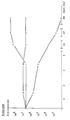
- Der nachfolgend dargestellte Versuch soll die überlegenheit der erfindungsgemäßen Monocarbonsäureester belegen.
-
- Testorganismus:
- Corynebacterium xerosis
- Eingesetzte Lösungen:
- AC-Medium:
- 37 g Brain Heart Infusion, 5 g Glucose, 1 ml Tween 80 ad 1 l H2O
- Testsubstanz 1:
- Glycerinmonolaurat (GML) (Vergleichssubstanz gemäß dem Stande der Technik)
- Testsubstanz 2:
- Diglycerinmonocaprinat (DMC)
- Kontrolle:
- AC-Medium ohne Wirkstoff
- Testlösungen:
- 4 mMol der jeweiligen Testsubstanz in AC-Medium
- 50 ml AC-Medium wurden mit 0,2 ml einer frischen Übernachtkultur des Testorganismus Corynebacterium xerosis (C. xerosis) beimpft. Das Kulturgefäß wurde bei 30° C mit 250 Upm geschüttelt, bis eine Zelldichte von 105 bis 106 Zellen/ml erreicht war.
- Die Testsubstanzen wurden eingewogen, mit 5 ml AC-Medium versetzt und durch ca. 10-minütiges Erwärmen auf 60° C gelöst.
- Anschließend wurden 5 ml-Aliquots der Bakteriensuspension mit den so gewonnenen Testlösungen versetzt und unter Beibehaltung der Wachstumsbedingungen zu verschiedenen Zeitpunkten Proben entnommen und deren Bakterientiter durch Ausplattieren von Verdünnungen auf Nährmedien bestimmt.
- Im Diagramm sind die Wachstumskurven für die vorabbeschriebenen Versuchsansätze aufgezeigt. Es bedeuten
- - o - :
- Testlösung 1
- - * - :
- Testlösung 2
- - + - :
- Kontrolle (Wirkstoff-freies AC-Medium)
Claims (8)
- Verwendung von Monocarbonsäureestern des Di- und/oder Triglycerins als desodorierend wirkendes Prinzip für kosmetische Desodorantien.
- Verwendung von Monocarbonsäureestern des Di-und/oder Triglycerins zur Bekämpfung coryneformer Bakterien, mit Ausnahme der Propionibakterien, oder zur Verhinderung deren Wachstums.
- Verfahren zur Bekämpfung des durch mikrobielle Zersetzung apokrinen Schweißes hervorgerufenen menschlichen Körpergeruches, dadurch gekennzeichnet, daß eine wirksame Menge an Monocarbonsäureestern des Di- und/oder Triglycerins, welche gegebenenfalls in einem geeigneten kosmetischen Träger vorliegen können, auf die Haut aufgetragen wird.
- Verwendung oder Verfahren nach einem der vorhergehenden Ansprüche, daß das Diglycerin in 1-Stellung und/oder das Triglycerin In 2'-Stellung mit Carbonsäuren verestert vorliegt.
- Verwendung oder Verfahren nach einem der vorhergehenden Ansprüche, dadurch gekennzeichnet, daß die Monocarbonsäureester des Diglycerins Monocarbonsäuremonoester darstellen und durch folgende Strukturen gekennzeichnet sind:

- Verwendung oder Verfahren nach einem der vorhergehenden Ansprüche, dadurch gekennzeichnet, daß die Monocarbonsäureester des Triglycerins Monocarbonsäuremonoester darstellen und durch folgende Strukturen gekennzeichnet sind:

- Verwendung oder Verfahren nach Anspruch 5 oder 6, dadurch gekennzeichnet, daß R' und/oder R'' gewählt werden aus der Gruppe der unverzweigten Alkylreste mit ungeraden C-Zahlen, insbesondere mit 9, 11 und 13 C-Atomen, bevorzugt aus der Gruppe
Diglycerinmonocaprinat (DMC) R' = 9 Triglycerinmonolaurat (TML) R'' = 11 Diglycerinmonolaurat (DML) R' = 11 Triglycerinmonomyristat (TMM) R'' = 13, - Verwendung oder Verfahren nach einem der vorhergehenden Ansprüche, dadurch gekennzeichnet, daß der oder die Monocarbonsäureester des Di- und/oder Triglycerins in Konzentrationen von 0,01 - 10,00 Gew.-%, bevorzugt 0,05 - 5,00 Gew.-%, besonders bevorzugt 0,1 - 3,00 Gew.-%, jeweils bezogen auf das Gesamtgewicht der Zusammensetzung, vorliegt oder vorliegen.
Applications Claiming Priority (3)
| Application Number | Priority Date | Filing Date | Title |
|---|---|---|---|
| DE4237081A DE4237081C2 (de) | 1992-11-03 | 1992-11-03 | Verwendung von Di- oder Triglycerinestern als Deowirkstoffe |
| DE4237081 | 1992-11-03 | ||
| PCT/EP1993/002767 WO1994009753A1 (de) | 1992-11-03 | 1993-10-09 | Desodorierende kosmetische zubereitungen mit einem gehalt an di- oder triglycerinestern |
Publications (2)
| Publication Number | Publication Date |
|---|---|
| EP0666732A1 EP0666732A1 (de) | 1995-08-16 |
| EP0666732B1 true EP0666732B1 (de) | 1997-01-29 |
Family
ID=6471988
Family Applications (1)
| Application Number | Title | Priority Date | Filing Date |
|---|---|---|---|
| EP93922925A Expired - Lifetime EP0666732B1 (de) | 1992-11-03 | 1993-10-09 | Desodorierende kosmetische zubereitungen mit einem gehalt an di- oder triglycerinestern |
Country Status (7)
| Country | Link |
|---|---|
| US (1) | US5648067A (de) |
| EP (1) | EP0666732B1 (de) |
| JP (1) | JP3650395B2 (de) |
| AT (1) | ATE148338T1 (de) |
| DE (2) | DE4237081C2 (de) |
| ES (1) | ES2097546T3 (de) |
| WO (1) | WO1994009753A1 (de) |
Cited By (6)
| Publication number | Priority date | Publication date | Assignee | Title |
|---|---|---|---|---|
| US7855265B2 (en) | 2007-08-29 | 2010-12-21 | Evonik Goldschmidt Gmbh | Use of ester-modified organopolysiloxanes for producing cosmetic or pharmaceutical compositions |
| US8420137B2 (en) | 2007-10-17 | 2013-04-16 | Evonik Goldschmidt Gmbh | Bioactive composition for cosmetic applications |
| US8466248B2 (en) | 2008-05-15 | 2013-06-18 | Evonik Goldschmidt Gmbh | Use of emulsifier systems containing organomodified siloxane block copolymers for the preparation of cosmetic or pharmaceutical compositions |
| US8617529B2 (en) | 2008-05-15 | 2013-12-31 | Evonik Goldschmidt Gmbh | Use of organomodified siloxane block copolymers as care active ingredient for the care of human or animal body parts |
| US9011826B2 (en) | 2007-11-21 | 2015-04-21 | Evonik Degussa Gmbh | Cosmetic and dermatological formulations including isononyl benzoate |
| US9109051B2 (en) | 2007-12-19 | 2015-08-18 | Evonik Goldschmidt Gmbh | Crosslinked hyaluronic acid in emulsion |
Families Citing this family (85)
| Publication number | Priority date | Publication date | Assignee | Title |
|---|---|---|---|---|
| DE4407015C2 (de) * | 1994-03-03 | 1996-01-25 | Henkel Kgaa | Kosmetische und/oder pharmazeutische Zubereitungen |
| DE4411899A1 (de) * | 1994-04-07 | 1995-10-12 | Beiersdorf Ag | Gegen Fußgeruch wirksame Zubereitungen mit einem Gehalt an Monoglycerinestern von Fettsäuren |
| DE4423410C2 (de) * | 1994-07-04 | 1996-07-18 | Beiersdorf Ag | Desodorierende Wirkstoffkombinationen auf der Basis von alpha, omega-Alkandicarbonsäuren und Monocarbonsäureestern von Oligoglyceriden |
| DE4427075A1 (de) * | 1994-07-30 | 1996-02-01 | Beiersdorf Ag | Gegen Fußgeruch wirksame Zubereitungen mit einem Gehalt an Oligoglycerinestern von Fettsäuren |
| DE19516702C2 (de) * | 1995-05-06 | 1999-08-19 | Beiersdorf Ag | Gegen Bakterien, Mycota und Viren wirksame Substanzen |
| NL1000681C2 (nl) * | 1995-06-28 | 1996-12-31 | Suiker Unie | Deo-samenstelling. |
| DE19548013A1 (de) | 1995-12-21 | 1997-06-26 | Beiersdorf Ag | Verfahren zur Herstellung von O/W- oder O/W/O-Emulsionen sowie nach solchen Verfahren erhältliche O/W- und O/W/O-Emulsionen |
| DE19631003A1 (de) * | 1996-08-01 | 1998-02-05 | Beiersdorf Ag | Gegen Bakterien, Mycota und Viren wirksame Wirkstoffkombinationen auf der Basis von Partialglyceriden und dialkylsubstituierten Essigsäuren |
| US6809421B1 (en) * | 1996-12-02 | 2004-10-26 | Kabushiki Kaisha Toshiba | Multichip semiconductor device, chip therefor and method of formation thereof |
| DE19844262B4 (de) | 1998-09-26 | 2018-12-06 | Beiersdorf Ag | Kosmetische und dermatologische Zubereitungen in Form von O/W-Emulsionen mit einem Gehalt an niedermolekularen Siliconen |
| US6509284B1 (en) | 1999-02-26 | 2003-01-21 | Kimberly-Clark Worldwide, Inc. | Layer materials treated with surfacant-modified chelating agents |
| US6433243B1 (en) | 1999-02-26 | 2002-08-13 | Kimberly-Clark Worldwide, Inc. | Water permeable porous layer materials treated with surfactant-modified cyclodextrins |
| US6479150B1 (en) | 1999-02-26 | 2002-11-12 | Kimberly-Clark Worldwide, Inc. | Layer materials treated with surfactant-modified hydrophobic odor control agents |
| US6083493A (en) * | 1999-08-24 | 2000-07-04 | The Procter & Gamble Company | Antiperspirant compositions containing isopropyl glycerol ether |
| DE50106562D1 (de) | 2000-02-19 | 2005-07-28 | Goldschmidt Gmbh | Kosmetische und pharmazeutische Öl-in-Wasser-Emulsionen von polyethermodifizierten Polysiloxanen |
| AU766539B2 (en) * | 2001-04-20 | 2003-10-16 | Evonik Goldschmidt Gmbh | Compositions for controlling microorganisms, comprising an effective content of enzymatically prepared esters of polyglycerol |
| AU766418B2 (en) * | 2001-04-20 | 2003-10-16 | Goldschmidt Gmbh | Compositions for controlling microorganisms, comprising primary and secondary esters of polyglycerol in an effective ratio |
| DE10139580A1 (de) * | 2001-08-10 | 2003-02-20 | Beiersdorf Ag | Kosmetische und dermatologische Zubereitungen in Form von O/W-Emulsionen mit einem Gehalt an Sterinen und/oder C12-C40-Fettsäuren |
| DE10143964A1 (de) * | 2001-09-07 | 2003-03-27 | Basf Ag | Emulgatorarme oder emulgatorfreie Systeme vom Typ Öl-in-Wasser mit einem Gehalt an Stabilisatoren und einem aminosubstituierten Hydroxybenzophenon |
| DE10143960A1 (de) * | 2001-09-07 | 2003-03-27 | Basf Ag | Kosmetische und dermatologische Zubereitungen in Stiftform, enthaltend ein aminosubstituiertes Hydroxybenzophenon |
| DE10143963A1 (de) * | 2001-09-07 | 2003-03-27 | Basf Ag | Kosmetische und dermatologische Zubereitungen in Form von W/O-Emulsionen, enthaltend ein aminosubstituiertes Hydroxybenzophenon |
| DE10143962A1 (de) * | 2001-09-07 | 2003-03-27 | Basf Ag | Kosmetische und dermatologische Zubereitungen in Form von O/W-Emulsionen, enthaltend ein aminosubstituiertes Hydroxybenzophenon |
| US6852904B2 (en) | 2001-12-18 | 2005-02-08 | Kimberly-Clark Worldwide, Inc. | Cellulose fibers treated with acidic odor control agents |
| US6767553B2 (en) | 2001-12-18 | 2004-07-27 | Kimberly-Clark Worldwide, Inc. | Natural fibers treated with acidic odor control/binder systems |
| DE10330609A1 (de) | 2003-07-07 | 2005-01-27 | Beiersdorf Ag | Fixierende Mehrfachgestaltung der Frisur erlaubende kosmetische Zubereitung |
| DE10332928A1 (de) | 2003-07-19 | 2005-02-03 | Beiersdorf Ag | Antitranspirantgel |
| DE10333710A1 (de) | 2003-07-23 | 2005-02-24 | Beiersdorf Ag | Kosmetische, dermatologische oder pharmazeutische Zubereitungen auf Basis von Gase enthaltenden Lipid/Wachs-Gemischen |
| RU2335278C2 (ru) | 2004-04-27 | 2008-10-10 | Байерсдорф АГ | Прозрачная косметическая или дерматологическая композиция |
| DE102005017032B4 (de) | 2004-04-27 | 2009-12-17 | Beiersdorf Ag | Kosmetische Formulierung enthaltend Mandelsäure |
| DE102004046603A1 (de) * | 2004-09-25 | 2006-03-30 | Goldschmidt Gmbh | Mittel mit Depotwirkung zur Bekämpfung von Mikroorganismen |
| EP1835812B1 (de) | 2004-12-27 | 2011-08-17 | Beiersdorf AG | Glycopyrrolat in kosmetischen zubereitungen |
| DE102005003164A1 (de) | 2005-01-21 | 2006-07-27 | Goldschmidt Gmbh | Polyglycerinpartialester von Polyricinolsäure und mehrfunktionellen Carbonsäuren und deren Verwendung zur Herstellung von Emulsionen und Dispersionen |
| DE102005011785A1 (de) | 2005-03-11 | 2006-09-21 | Goldschmidt Gmbh | Langzeitstabile kosmetische Emulsionen |
| DE102005055519A1 (de) * | 2005-11-18 | 2007-08-30 | Beiersdorf Ag | Optisch attraktive Antitranspirant Formulierung |
| DE102005056890A1 (de) | 2005-11-28 | 2007-05-31 | Institut für Umweltmedizinische Forschung gGmbH | Kosmetisches Verfahren zur Beeinflussung der Melaninbildung in der Haut |
| DE102006011314A1 (de) | 2006-03-11 | 2007-10-18 | Peter Dr. Engels | Kosmetische Zubereitungen mit einem Zusatz aus der Baobab-Pflanze |
| US7874756B2 (en) | 2006-06-07 | 2011-01-25 | Beiersdorf Ag | Kit for the application of a fluid preparation |
| DE102006053500A1 (de) | 2006-11-14 | 2008-05-15 | Evonik Goldschmidt Gmbh | Antimikrobielle Zusammensetzungen |
| EP1939279B1 (de) | 2006-12-01 | 2012-07-11 | Symrise AG | Hautmodell |
| DE102007003582A1 (de) | 2007-01-24 | 2008-07-31 | Dr. August Wolff Gmbh & Co. Kg Arzneimittel | Verwendung einer kosmetischen Zusammensetzung zur kosmetischen Behandlung der Haut |
| EP2000124A1 (de) | 2007-06-08 | 2008-12-10 | Evonik Goldschmidt GmbH | Kosmetische und pharmazeutische Öl-in-Wasser-Emulsionen mit einem Esterquat |
| DE102007027850A1 (de) | 2007-06-13 | 2008-12-24 | Beiersdorf Ag | Transparente kosmetische Formulierungen |
| DE102007032642B4 (de) | 2007-07-11 | 2011-12-01 | Beiersdorf Ag | Verwendung von kurzkettigen Glykolen als antitranspirantwirksame Mittel |
| DE102007035742A1 (de) | 2007-07-24 | 2009-01-29 | Beiersdorf Ag | Stabilisierung kosmetischer oder dermatologischer Formulierung mit Mandelsäure |
| DE102007035741A1 (de) | 2007-07-24 | 2009-02-05 | Beiersdorf Ag | Stabilisierung kosmetischer oder dermatologischer Formulierung enthaltend Mandelsäure |
| DE102007035139A1 (de) | 2007-07-25 | 2009-01-29 | Symrise Gmbh & Co. Kg | 3-(4-Hydroxy-3-methoxyphenyl)-1-(4-hydroxyphenyl)-1-propanon und dessen Verwendung als antimikrobieller Wirkstoff |
| DE102007040001A1 (de) | 2007-08-23 | 2009-02-26 | Evonik Goldschmidt Gmbh | Neue zwitterionische Verbindungen enthaltende Formulierungen und deren Verwendung |
| DE102008009929A1 (de) | 2008-02-18 | 2009-08-20 | Symrise Gmbh & Co. Kg | 3-(4-Hydroxy-3-methoxyphenyl)-1(4-hydroxphenyl)-1-propanon und deren Verwendung in kosmetischen und pharmazeutischen Zubereitungen |
| DE102009009004A1 (de) | 2008-02-18 | 2009-09-17 | Seaquist Perfect Dispensing Gmbh | Abgabevorrichtung mit einem kosmetischen Fluid |
| DE102008022392A1 (de) | 2008-05-06 | 2009-11-12 | Evonik Goldschmidt Gmbh | Kosmetika enthaltend Zistrosenkraut-Extrakte |
| ATE509095T1 (de) | 2008-05-28 | 2011-05-15 | Symrise Ag | Menschliches ex-vivo-hautmodell |
| DE102008041020A1 (de) | 2008-08-06 | 2010-02-11 | Evonik Goldschmidt Gmbh | Verwendung von Polysiloxanen mit quaternären Ammoniumgruppen zum Schutz von tierischen oder menschlichen Haaren vor Hitzeschädigung |
| DE102008042149A1 (de) | 2008-09-17 | 2010-03-18 | Evonik Goldschmidt Gmbh | Kosmetische und dermatologische Formulierungen enthaltend Phenoxyalkylester |
| US7772181B2 (en) | 2008-10-15 | 2010-08-10 | Danisco Us Inc. | Personal care compositions comprising modified variant Bowman Birk Protease Inhibitors |
| US7803902B2 (en) | 2008-10-15 | 2010-09-28 | Danisco Us Inc. | Modified variant bowman birk protease inhibitors |
| EP2350109A4 (de) | 2008-10-20 | 2015-03-11 | Chemyunion Química Ltda | Xylitester und ether, die als alternative emulgatoren, lösungsmittel, koemulagatoren und konservierungsstoffsysteme für pharmazeutische und kosmetische produkte eingesetzt werden |
| DE102008052341A1 (de) | 2008-10-20 | 2010-04-22 | Evonik Goldschmidt Gmbh | Verwendung von Pflegeformulierungen enthaltend einen Extrakt aus Mangostan |
| DE102008059905A1 (de) | 2008-12-02 | 2010-06-10 | Beiersdorf Ag | Gelförmige Zubereitungen auf der Basis von Alkyl-Lactosiden |
| WO2010078917A2 (en) | 2008-12-15 | 2010-07-15 | Beiersdorf Ag | Inorganic gel and composition and process for the production thereof |
| DE102009004270A1 (de) | 2009-01-07 | 2010-07-08 | Beiersdorf Ag | Aromatische Diole als antitranspirantwirksame Mittel |
| DE102009004269A1 (de) | 2009-01-07 | 2010-07-08 | Beiersdorf Ag | Diole als antitranspirantwirksames Mittel |
| CN102448450B (zh) | 2009-04-09 | 2013-11-20 | 西姆莱斯有限公司 | 包含反式-叔丁基环己醇作为皮肤刺激缓解剂的组合物 |
| DE102009002371A1 (de) | 2009-04-15 | 2010-10-21 | Evonik Goldschmidt Gmbh | Verfahren zur Herstellung von geruchlosen Polyetheralkoholen mittels DMC-Katalysatoren und deren Verwendung in kosmetischen und/oder dermatologischen Zubereitungen |
| WO2011061144A2 (en) | 2009-11-20 | 2011-05-26 | Basf Se | The present invention relates to the use of beta-(1, 3)- beta-(1, 4) glucan with an average molecular weight of from 5.000 to 150.000 da for the increase of synthesis of collagen |
| DE102010002558A1 (de) | 2009-11-20 | 2011-06-01 | Symrise Ag | Verwendung physiologischer Kühlwirkstoffe und Mittel enthaltend solche Wirkstoffe |
| EP2389922A1 (de) | 2010-05-25 | 2011-11-30 | Symrise AG | Cyclohexylcarbamatverbindungen als Anti-ageing-Wirkstoffe |
| EP2540170A1 (de) | 2011-06-29 | 2013-01-02 | Evonik Degussa GmbH | Dermatologisch wirksamer Hefeextrakt |
| WO2013041621A1 (de) | 2011-09-20 | 2013-03-28 | Basf Se | Niedermolekulare modulatoren des kälte-menthol-rezeptors trpm8 und deren verwendung |
| US20150044262A1 (en) * | 2011-12-22 | 2015-02-12 | Givaudan S.A. | Encapsulation of perfumes |
| WO2012143576A2 (en) | 2012-08-23 | 2012-10-26 | Symrise Ag | Compounds for preventing, reducing and/or alleviating itchy skin condition(s) |
| EP2712609A1 (de) | 2012-09-26 | 2014-04-02 | Bayer MaterialScience AG | Polyurethanharnstoff-Mischung für die Haut-, sowie Haarkosmetik |
| DE102015214143A1 (de) | 2015-07-27 | 2017-02-02 | Beiersdorf Ag | Schweiß verringernde kosmetische Zubereitung |
| DE102015214144A1 (de) | 2015-07-27 | 2017-02-02 | Beiersdorf Ag | Schweiß verringernde kosmetische Zubereitung |
| DE102015214137A1 (de) | 2015-07-27 | 2017-02-02 | Beiersdorf Ag | Schweiß verringernde kosmetische Zubereitung |
| DE102015214145A1 (de) | 2015-07-27 | 2017-02-02 | Beiersdorf Ag | Schweiß verringernde kosmetische Zubereitung |
| DE102015214146A1 (de) | 2015-07-27 | 2017-02-02 | Beiersdorf Ag | Schweiß verringernde kosmetische Zubereitung |
| DE102015214140A1 (de) | 2015-07-27 | 2017-02-02 | Beiersdorf Ag | Schweiß verringernde kosmetische Zubereitung |
| DE102015226630A1 (de) | 2015-12-23 | 2017-06-29 | Beiersdorf Ag | Verfahren zur Schweißreduktion |
| DE102016217947A1 (de) | 2016-09-20 | 2018-03-22 | Beiersdorf Ag | Kit mit verbesserten porösen Schwammapplikatoren |
| US11219593B2 (en) | 2017-04-28 | 2022-01-11 | Symrise Ag | Yarrow fresh-plant pressed juice concentrate, production, and use |
| JP7231617B2 (ja) | 2017-08-31 | 2023-03-01 | ビーエーエスエフ ソシエタス・ヨーロピア | 生理学的冷涼活性成分の使用、及びそのような活性成分を含む組成物 |
| JP7104149B2 (ja) * | 2017-10-10 | 2022-07-20 | シムライズ アーゲー | 安息香酸またはフロン酸誘導体を含有する組成物ならびにエマルションおよび泡安定性のための前記誘導体の使用 |
| WO2018154145A2 (en) | 2018-03-29 | 2018-08-30 | Symrise Ag | Compounds for skin improvement / treatment |
| DE102018207702A1 (de) | 2018-05-17 | 2019-11-21 | Beiersdorf Ag | Verfahren zur Schweißreduktion mit Malonsäure |
| WO2023025399A1 (en) * | 2021-08-27 | 2023-03-02 | Symrise Ag | Antimicrobial esters for skin and scalp care |
Citations (1)
| Publication number | Priority date | Publication date | Assignee | Title |
|---|---|---|---|---|
| WO1990010441A1 (en) * | 1989-03-13 | 1990-09-20 | Thornfeldt Carl R | Treatment of skin diseases and tumors |
Family Cites Families (6)
| Publication number | Priority date | Publication date | Assignee | Title |
|---|---|---|---|---|
| US4704271A (en) * | 1984-04-03 | 1987-11-03 | American Cyanamid Company | Water-in-oil emulsion antiperspirant stick |
| DE3818293C2 (de) * | 1988-05-30 | 1997-05-07 | Solvay Werke Gmbh | Verfahren zur Herstellung von nichtionogenen Tensiden, deren Verwendung sowie Zubereitungen unter Verwendung derselben |
| DE3902374A1 (de) * | 1989-01-27 | 1990-08-02 | Solvay Werke Gmbh | Wasch- reinigungs- und/oder koerperreinigungsmittel |
| DE3930193A1 (de) * | 1989-09-09 | 1991-03-21 | Kuerner Rudolf | Mittel zur unterdrueckung unerwuenschter gerueche |
| FR2655542B1 (fr) * | 1989-12-13 | 1994-02-11 | Oreal | Composition cosmetique pour application topique contenant des huiles essentielles. |
| DE4100490C1 (de) * | 1991-01-10 | 1992-03-05 | Goldwell Ag, 6100 Darmstadt, De |
-
1992
- 1992-11-03 DE DE4237081A patent/DE4237081C2/de not_active Expired - Fee Related
-
1993
- 1993-10-09 EP EP93922925A patent/EP0666732B1/de not_active Expired - Lifetime
- 1993-10-09 DE DE59305359T patent/DE59305359D1/de not_active Expired - Lifetime
- 1993-10-09 WO PCT/EP1993/002767 patent/WO1994009753A1/de not_active Ceased
- 1993-10-09 JP JP51060794A patent/JP3650395B2/ja not_active Expired - Fee Related
- 1993-10-09 ES ES93922925T patent/ES2097546T3/es not_active Expired - Lifetime
- 1993-10-09 US US08/428,088 patent/US5648067A/en not_active Expired - Lifetime
- 1993-10-09 AT AT93922925T patent/ATE148338T1/de not_active IP Right Cessation
Patent Citations (1)
| Publication number | Priority date | Publication date | Assignee | Title |
|---|---|---|---|---|
| WO1990010441A1 (en) * | 1989-03-13 | 1990-09-20 | Thornfeldt Carl R | Treatment of skin diseases and tumors |
Cited By (6)
| Publication number | Priority date | Publication date | Assignee | Title |
|---|---|---|---|---|
| US7855265B2 (en) | 2007-08-29 | 2010-12-21 | Evonik Goldschmidt Gmbh | Use of ester-modified organopolysiloxanes for producing cosmetic or pharmaceutical compositions |
| US8420137B2 (en) | 2007-10-17 | 2013-04-16 | Evonik Goldschmidt Gmbh | Bioactive composition for cosmetic applications |
| US9011826B2 (en) | 2007-11-21 | 2015-04-21 | Evonik Degussa Gmbh | Cosmetic and dermatological formulations including isononyl benzoate |
| US9109051B2 (en) | 2007-12-19 | 2015-08-18 | Evonik Goldschmidt Gmbh | Crosslinked hyaluronic acid in emulsion |
| US8466248B2 (en) | 2008-05-15 | 2013-06-18 | Evonik Goldschmidt Gmbh | Use of emulsifier systems containing organomodified siloxane block copolymers for the preparation of cosmetic or pharmaceutical compositions |
| US8617529B2 (en) | 2008-05-15 | 2013-12-31 | Evonik Goldschmidt Gmbh | Use of organomodified siloxane block copolymers as care active ingredient for the care of human or animal body parts |
Also Published As
| Publication number | Publication date |
|---|---|
| JPH08502500A (ja) | 1996-03-19 |
| ES2097546T3 (es) | 1997-04-01 |
| EP0666732A1 (de) | 1995-08-16 |
| JP3650395B2 (ja) | 2005-05-18 |
| US5648067A (en) | 1997-07-15 |
| WO1994009753A1 (de) | 1994-05-11 |
| DE4237081C2 (de) | 1996-05-09 |
| DE4237081A1 (de) | 1994-05-05 |
| ATE148338T1 (de) | 1997-02-15 |
| DE59305359D1 (de) | 1997-03-13 |
Similar Documents
| Publication | Publication Date | Title |
|---|---|---|
| DE4237081C2 (de) | Verwendung von Di- oder Triglycerinestern als Deowirkstoffe | |
| EP0658097B1 (de) | Desodorierende kosmetische mittel mit einem gehalt an fettsäuren | |
| EP0689418B1 (de) | Desodorierende wirkstoffkombinationen auf der basis von wollwachssäuren und partialglyceriden | |
| DE4423410C2 (de) | Desodorierende Wirkstoffkombinationen auf der Basis von alpha, omega-Alkandicarbonsäuren und Monocarbonsäureestern von Oligoglyceriden | |
| EP0636359B1 (de) | Desodorierende Wirkstoffkombinationen auf der Basis von alpha-omega-Alkandicarbonsäuren und Wollwachssäuren | |
| DE4429467C2 (de) | Desodorierende kosmetische Mittel | |
| EP0729345A1 (de) | Desodorienrende wirkstoffkombinationen auf der basis von alpha-omega-alkandicarbonsäuren und fettsäurepartialglyceriden | |
| WO1995026708A2 (de) | Neue desodorierende und antimikrobielle zusammensetzungen zur verwendung in kosmetischen oder topischen zubereitungen | |
| DE19541967A1 (de) | Gegen Bakterien, Mycota und Viren wirksame Zusammensetzungen auf der Basis von Partialglyceriden und Arylverbindungen | |
| DE4305069C3 (de) | Verwendung von Monocarbonsäureestern des Diglycerins als wirksames Prinzip gegen unreine Haut und/oder gegen Propionibacterium acnes | |
| DE19631004A1 (de) | Desodorierende Wirkstoffkombinationen auf der Basis von Wollwsaschsäuren, Partialglyceriden und Arylverbindungen | |
| EP1068862A2 (de) | Desodorierende Wirkstoffkombination und deren Verwendung | |
| DE4319546A1 (de) | Desodorierende kosmetische Zubereitungen mit einem Gehalt an Glycerinmonocaprylat und/oder Glycerinmonocaprinat | |
| EP0129014A1 (de) | Desodorierendes kosmetisches Mittel | |
| EP1438010B1 (de) | Antitranspirantprodukt auf basis von mikroemulsionsgelen | |
| EP0676190A2 (de) | Gegen Fussgeruch wirksame Zubereitungen mit einem Gehalt an Monoglycerinestern von Fettsäuren | |
| DE60001336T2 (de) | Antiseptisches/fungizides Mittel und endermatische Salbe, die es enthalten | |
| DE4305889A1 (de) | Desodorierende Wirkstoffkombinationen auf der Basis von Wollwachssäuren und Monocarbonsäuren | |
| DE19649287A1 (de) | Konservierungsmittel | |
| EP0772433A1 (de) | Gegen fussgeruch wirksame zubereitungen mit einem gehalt an oligoglycerinestern von fettsäuren |
Legal Events
| Date | Code | Title | Description |
|---|---|---|---|
| PUAI | Public reference made under article 153(3) epc to a published international application that has entered the european phase |
Free format text: ORIGINAL CODE: 0009012 |
|
| 17P | Request for examination filed |
Effective date: 19950413 |
|
| AK | Designated contracting states |
Kind code of ref document: A1 Designated state(s): AT BE CH DE DK ES FR GB IT LI NL PT SE |
|
| 17Q | First examination report despatched |
Effective date: 19951130 |
|
| GRAG | Despatch of communication of intention to grant |
Free format text: ORIGINAL CODE: EPIDOS AGRA |
|
| GRAH | Despatch of communication of intention to grant a patent |
Free format text: ORIGINAL CODE: EPIDOS IGRA |
|
| GRAH | Despatch of communication of intention to grant a patent |
Free format text: ORIGINAL CODE: EPIDOS IGRA |
|
| GRAA | (expected) grant |
Free format text: ORIGINAL CODE: 0009210 |
|
| AK | Designated contracting states |
Kind code of ref document: B1 Designated state(s): AT BE CH DE DK ES FR GB IT LI NL PT SE |
|
| PG25 | Lapsed in a contracting state [announced via postgrant information from national office to epo] |
Ref country code: DK Effective date: 19970129 |
|
| REF | Corresponds to: |
Ref document number: 148338 Country of ref document: AT Date of ref document: 19970215 Kind code of ref document: T |
|
| REG | Reference to a national code |
Ref country code: CH Ref legal event code: EP |
|
| REF | Corresponds to: |
Ref document number: 59305359 Country of ref document: DE Date of ref document: 19970313 |
|
| ITF | It: translation for a ep patent filed | ||
| REG | Reference to a national code |
Ref country code: ES Ref legal event code: FG2A Ref document number: 2097546 Country of ref document: ES Kind code of ref document: T3 |
|
| PG25 | Lapsed in a contracting state [announced via postgrant information from national office to epo] |
Ref country code: SE Effective date: 19970429 Ref country code: PT Effective date: 19970429 |
|
| ET | Fr: translation filed | ||
| GBT | Gb: translation of ep patent filed (gb section 77(6)(a)/1977) |
Effective date: 19970416 |
|
| REG | Reference to a national code |
Ref country code: CH Ref legal event code: NV Representative=s name: BOVARD AG PATENTANWAELTE |
|
| PLBE | No opposition filed within time limit |
Free format text: ORIGINAL CODE: 0009261 |
|
| STAA | Information on the status of an ep patent application or granted ep patent |
Free format text: STATUS: NO OPPOSITION FILED WITHIN TIME LIMIT |
|
| 26N | No opposition filed | ||
| REG | Reference to a national code |
Ref country code: CH Ref legal event code: PUEA Free format text: BEIERSDORF AKTIENGESELLSCHAFT;SOLVAY FLUOR UND DERIVATE GMBH TRANSFER- SOLVAY FLUOR UND DERIVATE GMBH |
|
| NLS | Nl: assignments of ep-patents |
Owner name: SOLVAY FLUOR UND DERIVATE GMBH |
|
| REG | Reference to a national code |
Ref country code: CH Ref legal event code: NV Representative=s name: ISLER & PEDRAZZINI AG |
|
| REG | Reference to a national code |
Ref country code: CH Ref legal event code: PUE Owner name: SOLVAY FLUOR UND DERIVATE GMBH TRANSFER- SOLVAY EL |
|
| NLS | Nl: assignments of ep-patents |
Owner name: SOLVAY ELEKTROLYSESPEZIALITAETEN GMBH |
|
| REG | Reference to a national code |
Ref country code: ES Ref legal event code: PC2A |
|
| REG | Reference to a national code |
Ref country code: GB Ref legal event code: 732E |
|
| REG | Reference to a national code |
Ref country code: FR Ref legal event code: TP |
|
| REG | Reference to a national code |
Ref country code: GB Ref legal event code: IF02 |
|
| PGFP | Annual fee paid to national office [announced via postgrant information from national office to epo] |
Ref country code: GB Payment date: 20020925 Year of fee payment: 10 |
|
| PGFP | Annual fee paid to national office [announced via postgrant information from national office to epo] |
Ref country code: FR Payment date: 20021009 Year of fee payment: 10 |
|
| PGFP | Annual fee paid to national office [announced via postgrant information from national office to epo] |
Ref country code: AT Payment date: 20021011 Year of fee payment: 10 |
|
| PGFP | Annual fee paid to national office [announced via postgrant information from national office to epo] |
Ref country code: CH Payment date: 20021016 Year of fee payment: 10 |
|
| PGFP | Annual fee paid to national office [announced via postgrant information from national office to epo] |
Ref country code: ES Payment date: 20021017 Year of fee payment: 10 |
|
| PGFP | Annual fee paid to national office [announced via postgrant information from national office to epo] |
Ref country code: NL Payment date: 20021121 Year of fee payment: 11 |
|
| PGFP | Annual fee paid to national office [announced via postgrant information from national office to epo] |
Ref country code: BE Payment date: 20021205 Year of fee payment: 10 |
|
| REG | Reference to a national code |
Ref country code: ES Ref legal event code: PC2A |
|
| REG | Reference to a national code |
Ref country code: FR Ref legal event code: TQ Ref country code: FR Ref legal event code: TP Free format text: BO 01/43, PAGES: 253, IL Y A LIEU DE REMPLACER: TRANSMISSION TOTALE DE PROPRIETE (TO) PAR: TRANSMISSION PARTIELLE DE PROPRIETE (PT) |
|
| PG25 | Lapsed in a contracting state [announced via postgrant information from national office to epo] |
Ref country code: GB Free format text: LAPSE BECAUSE OF NON-PAYMENT OF DUE FEES Effective date: 20031009 Ref country code: AT Free format text: LAPSE BECAUSE OF NON-PAYMENT OF DUE FEES Effective date: 20031009 |
|
| PG25 | Lapsed in a contracting state [announced via postgrant information from national office to epo] |
Ref country code: ES Free format text: LAPSE BECAUSE OF NON-PAYMENT OF DUE FEES Effective date: 20031010 |
|
| PG25 | Lapsed in a contracting state [announced via postgrant information from national office to epo] |
Ref country code: LI Free format text: LAPSE BECAUSE OF NON-PAYMENT OF DUE FEES Effective date: 20031031 Ref country code: CH Free format text: LAPSE BECAUSE OF NON-PAYMENT OF DUE FEES Effective date: 20031031 Ref country code: BE Free format text: LAPSE BECAUSE OF NON-PAYMENT OF DUE FEES Effective date: 20031031 |
|
| BERE | Be: lapsed |
Owner name: *SOLVAY ELEKTROLYSESPEZIALITAETEN G.M.B.H. Effective date: 20031031 |
|
| PG25 | Lapsed in a contracting state [announced via postgrant information from national office to epo] |
Ref country code: NL Free format text: LAPSE BECAUSE OF NON-PAYMENT OF DUE FEES Effective date: 20040501 |
|
| GBPC | Gb: european patent ceased through non-payment of renewal fee |
Effective date: 20031009 |
|
| REG | Reference to a national code |
Ref country code: CH Ref legal event code: PL |
|
| PG25 | Lapsed in a contracting state [announced via postgrant information from national office to epo] |
Ref country code: FR Free format text: LAPSE BECAUSE OF NON-PAYMENT OF DUE FEES Effective date: 20040630 |
|
| NLV4 | Nl: lapsed or anulled due to non-payment of the annual fee |
Effective date: 20040501 |
|
| REG | Reference to a national code |
Ref country code: FR Ref legal event code: ST |
|
| REG | Reference to a national code |
Ref country code: ES Ref legal event code: FD2A Effective date: 20031010 |
|
| PG25 | Lapsed in a contracting state [announced via postgrant information from national office to epo] |
Ref country code: IT Free format text: LAPSE BECAUSE OF NON-PAYMENT OF DUE FEES;WARNING: LAPSES OF ITALIAN PATENTS WITH EFFECTIVE DATE BEFORE 2007 MAY HAVE OCCURRED AT ANY TIME BEFORE 2007. THE CORRECT EFFECTIVE DATE MAY BE DIFFERENT FROM THE ONE RECORDED. Effective date: 20051009 |
|
| REG | Reference to a national code |
Ref country code: FR Ref legal event code: CJ Ref country code: FR Ref legal event code: CD |
|
| REG | Reference to a national code |
Ref country code: FR Ref legal event code: CD |
|
| PGFP | Annual fee paid to national office [announced via postgrant information from national office to epo] |
Ref country code: DE Payment date: 20121031 Year of fee payment: 20 |
|
| REG | Reference to a national code |
Ref country code: DE Ref legal event code: R071 Ref document number: 59305359 Country of ref document: DE |
|
| REG | Reference to a national code |
Ref country code: DE Ref legal event code: R071 Ref document number: 59305359 Country of ref document: DE |
|
| REG | Reference to a national code |
Ref country code: DE Ref legal event code: R081 Ref document number: 59305359 Country of ref document: DE Owner name: BEIERSDORF AG, DE Free format text: FORMER OWNERS: BEIERSDORF AG, 20253 HAMBURG, DE; EVONIK GOLDSCHMIDT GMBH, 45127 ESSEN, DE Effective date: 20131024 Ref country code: DE Ref legal event code: R081 Ref document number: 59305359 Country of ref document: DE Owner name: EVONIK DEGUSSA GMBH, DE Free format text: FORMER OWNERS: BEIERSDORF AG, 20253 HAMBURG, DE; EVONIK GOLDSCHMIDT GMBH, 45127 ESSEN, DE Effective date: 20131024 Ref country code: DE Ref legal event code: R081 Ref document number: 59305359 Country of ref document: DE Owner name: EVONIK DEGUSSA GMBH, DE Free format text: FORMER OWNER: BEIERSDORF AG, EVONIK GOLDSCHMIDT GMBH, , DE Effective date: 20131024 Ref country code: DE Ref legal event code: R081 Ref document number: 59305359 Country of ref document: DE Owner name: BEIERSDORF AG, DE Free format text: FORMER OWNER: BEIERSDORF AG, EVONIK GOLDSCHMIDT GMBH, , DE Effective date: 20131024 |
|
| PG25 | Lapsed in a contracting state [announced via postgrant information from national office to epo] |
Ref country code: DE Free format text: LAPSE BECAUSE OF EXPIRATION OF PROTECTION Effective date: 20131010 |