EP0660338A1 - Dauermagnetmaterial aus hochkoerzitiven Pr-Co Legierung und dünn-schicht Dauermagnetmaterial und Herstellungsverfahren - Google Patents
Dauermagnetmaterial aus hochkoerzitiven Pr-Co Legierung und dünn-schicht Dauermagnetmaterial und Herstellungsverfahren Download PDFInfo
- Publication number
- EP0660338A1 EP0660338A1 EP94120423A EP94120423A EP0660338A1 EP 0660338 A1 EP0660338 A1 EP 0660338A1 EP 94120423 A EP94120423 A EP 94120423A EP 94120423 A EP94120423 A EP 94120423A EP 0660338 A1 EP0660338 A1 EP 0660338A1
- Authority
- EP
- European Patent Office
- Prior art keywords
- coercive force
- alloy
- permanent magnet
- magnet material
- remainder
- Prior art date
- Legal status (The legal status is an assumption and is not a legal conclusion. Google has not performed a legal analysis and makes no representation as to the accuracy of the status listed.)
- Withdrawn
Links
- 239000000463 material Substances 0.000 title claims abstract description 55
- 229910000531 Co alloy Inorganic materials 0.000 title claims abstract description 49
- 239000010409 thin film Substances 0.000 title claims abstract description 27
- 238000004519 manufacturing process Methods 0.000 title claims abstract description 20
- 229910045601 alloy Inorganic materials 0.000 claims abstract description 40
- 239000000956 alloy Substances 0.000 claims abstract description 40
- 239000012535 impurity Substances 0.000 claims abstract description 30
- 239000000843 powder Substances 0.000 claims abstract description 29
- 229910052802 copper Inorganic materials 0.000 claims abstract description 19
- 229910052772 Samarium Inorganic materials 0.000 claims abstract description 18
- 229910052742 iron Inorganic materials 0.000 claims abstract description 18
- 229910052721 tungsten Inorganic materials 0.000 claims abstract description 18
- 229910052799 carbon Inorganic materials 0.000 claims abstract description 16
- 238000010438 heat treatment Methods 0.000 claims abstract description 16
- 238000005245 sintering Methods 0.000 claims abstract description 10
- 238000001746 injection moulding Methods 0.000 claims abstract description 9
- XKRFYHLGVUSROY-UHFFFAOYSA-N Argon Chemical compound [Ar] XKRFYHLGVUSROY-UHFFFAOYSA-N 0.000 claims description 22
- 239000000758 substrate Substances 0.000 claims description 17
- IJGRMHOSHXDMSA-UHFFFAOYSA-N Atomic nitrogen Chemical compound N#N IJGRMHOSHXDMSA-UHFFFAOYSA-N 0.000 claims description 13
- 239000010408 film Substances 0.000 claims description 13
- 239000007789 gas Substances 0.000 claims description 12
- 229910052786 argon Inorganic materials 0.000 claims description 11
- 238000004544 sputter deposition Methods 0.000 claims description 11
- 239000012298 atmosphere Substances 0.000 claims description 10
- 238000005551 mechanical alloying Methods 0.000 claims description 9
- 238000000227 grinding Methods 0.000 claims description 8
- 229910052760 oxygen Inorganic materials 0.000 claims description 8
- 229910052757 nitrogen Inorganic materials 0.000 claims description 7
- QVGXLLKOCUKJST-UHFFFAOYSA-N atomic oxygen Chemical compound [O] QVGXLLKOCUKJST-UHFFFAOYSA-N 0.000 claims description 6
- 229910052743 krypton Inorganic materials 0.000 claims description 6
- DNNSSWSSYDEUBZ-UHFFFAOYSA-N krypton atom Chemical compound [Kr] DNNSSWSSYDEUBZ-UHFFFAOYSA-N 0.000 claims description 6
- 239000001301 oxygen Substances 0.000 claims description 6
- 229910052724 xenon Inorganic materials 0.000 claims description 6
- FHNFHKCVQCLJFQ-UHFFFAOYSA-N xenon atom Chemical compound [Xe] FHNFHKCVQCLJFQ-UHFFFAOYSA-N 0.000 claims description 6
- 229910052719 titanium Inorganic materials 0.000 claims description 4
- 229910052684 Cerium Inorganic materials 0.000 claims description 3
- 229910052697 platinum Inorganic materials 0.000 claims description 3
- 229910052692 Dysprosium Inorganic materials 0.000 claims description 2
- 229910052771 Terbium Inorganic materials 0.000 claims description 2
- 229910052782 aluminium Inorganic materials 0.000 claims description 2
- 229910052737 gold Inorganic materials 0.000 claims description 2
- 229910052746 lanthanum Inorganic materials 0.000 claims description 2
- 229910052748 manganese Inorganic materials 0.000 claims description 2
- 229910052750 molybdenum Inorganic materials 0.000 claims description 2
- 229910052759 nickel Inorganic materials 0.000 claims description 2
- 229910052710 silicon Inorganic materials 0.000 claims description 2
- 229910052727 yttrium Inorganic materials 0.000 claims description 2
- 239000012190 activator Substances 0.000 claims 1
- 229910052763 palladium Inorganic materials 0.000 claims 1
- 229910052703 rhodium Inorganic materials 0.000 claims 1
- 229910052777 Praseodymium Inorganic materials 0.000 abstract description 5
- 229910052796 boron Inorganic materials 0.000 abstract description 4
- 239000000203 mixture Substances 0.000 description 23
- 150000001875 compounds Chemical class 0.000 description 9
- 230000004907 flux Effects 0.000 description 7
- 229910052751 metal Inorganic materials 0.000 description 5
- 238000002844 melting Methods 0.000 description 4
- 230000008018 melting Effects 0.000 description 4
- 239000002184 metal Substances 0.000 description 4
- 150000002739 metals Chemical class 0.000 description 4
- 238000000034 method Methods 0.000 description 4
- 239000013078 crystal Substances 0.000 description 3
- 230000000694 effects Effects 0.000 description 3
- 230000003247 decreasing effect Effects 0.000 description 2
- 230000005347 demagnetization Effects 0.000 description 2
- 230000001747 exhibiting effect Effects 0.000 description 2
- 230000005415 magnetization Effects 0.000 description 2
- 238000000465 moulding Methods 0.000 description 2
- 229910001172 neodymium magnet Inorganic materials 0.000 description 2
- 239000002994 raw material Substances 0.000 description 2
- VYPSYNLAJGMNEJ-UHFFFAOYSA-N silicon dioxide Inorganic materials O=[Si]=O VYPSYNLAJGMNEJ-UHFFFAOYSA-N 0.000 description 2
- 229910004269 CaCu5 Inorganic materials 0.000 description 1
- 229910001199 N alloy Inorganic materials 0.000 description 1
- 238000005275 alloying Methods 0.000 description 1
- 239000012300 argon atmosphere Substances 0.000 description 1
- 229910002056 binary alloy Inorganic materials 0.000 description 1
- 230000015572 biosynthetic process Effects 0.000 description 1
- 239000003795 chemical substances by application Substances 0.000 description 1
- 239000002131 composite material Substances 0.000 description 1
- 238000005260 corrosion Methods 0.000 description 1
- 230000007797 corrosion Effects 0.000 description 1
- 238000000354 decomposition reaction Methods 0.000 description 1
- 238000010586 diagram Methods 0.000 description 1
- 239000011521 glass Substances 0.000 description 1
- 230000005484 gravity Effects 0.000 description 1
- 238000000265 homogenisation Methods 0.000 description 1
- 230000006698 induction Effects 0.000 description 1
- 238000002347 injection Methods 0.000 description 1
- 239000007924 injection Substances 0.000 description 1
- 238000001755 magnetron sputter deposition Methods 0.000 description 1
- 238000005259 measurement Methods 0.000 description 1
- 238000002156 mixing Methods 0.000 description 1
- QJGQUHMNIGDVPM-UHFFFAOYSA-N nitrogen group Chemical group [N] QJGQUHMNIGDVPM-UHFFFAOYSA-N 0.000 description 1
- 239000002245 particle Substances 0.000 description 1
- 238000010587 phase diagram Methods 0.000 description 1
- 239000010453 quartz Substances 0.000 description 1
- 229910052761 rare earth metal Inorganic materials 0.000 description 1
- 150000002910 rare earth metals Chemical class 0.000 description 1
- 238000007670 refining Methods 0.000 description 1
- 235000012239 silicon dioxide Nutrition 0.000 description 1
Images

Classifications
-
- C—CHEMISTRY; METALLURGY
- C22—METALLURGY; FERROUS OR NON-FERROUS ALLOYS; TREATMENT OF ALLOYS OR NON-FERROUS METALS
- C22C—ALLOYS
- C22C19/00—Alloys based on nickel or cobalt
- C22C19/07—Alloys based on nickel or cobalt based on cobalt
-
- H—ELECTRICITY
- H01—ELECTRIC ELEMENTS
- H01F—MAGNETS; INDUCTANCES; TRANSFORMERS; SELECTION OF MATERIALS FOR THEIR MAGNETIC PROPERTIES
- H01F1/00—Magnets or magnetic bodies characterised by the magnetic materials therefor; Selection of materials for their magnetic properties
- H01F1/01—Magnets or magnetic bodies characterised by the magnetic materials therefor; Selection of materials for their magnetic properties of inorganic materials
- H01F1/03—Magnets or magnetic bodies characterised by the magnetic materials therefor; Selection of materials for their magnetic properties of inorganic materials characterised by their coercivity
- H01F1/032—Magnets or magnetic bodies characterised by the magnetic materials therefor; Selection of materials for their magnetic properties of inorganic materials characterised by their coercivity of hard-magnetic materials
- H01F1/04—Magnets or magnetic bodies characterised by the magnetic materials therefor; Selection of materials for their magnetic properties of inorganic materials characterised by their coercivity of hard-magnetic materials metals or alloys
- H01F1/047—Alloys characterised by their composition
- H01F1/053—Alloys characterised by their composition containing rare earth metals
- H01F1/055—Alloys characterised by their composition containing rare earth metals and magnetic transition metals, e.g. SmCo5
-
- H—ELECTRICITY
- H01—ELECTRIC ELEMENTS
- H01F—MAGNETS; INDUCTANCES; TRANSFORMERS; SELECTION OF MATERIALS FOR THEIR MAGNETIC PROPERTIES
- H01F1/00—Magnets or magnetic bodies characterised by the magnetic materials therefor; Selection of materials for their magnetic properties
- H01F1/01—Magnets or magnetic bodies characterised by the magnetic materials therefor; Selection of materials for their magnetic properties of inorganic materials
- H01F1/03—Magnets or magnetic bodies characterised by the magnetic materials therefor; Selection of materials for their magnetic properties of inorganic materials characterised by their coercivity
- H01F1/032—Magnets or magnetic bodies characterised by the magnetic materials therefor; Selection of materials for their magnetic properties of inorganic materials characterised by their coercivity of hard-magnetic materials
- H01F1/04—Magnets or magnetic bodies characterised by the magnetic materials therefor; Selection of materials for their magnetic properties of inorganic materials characterised by their coercivity of hard-magnetic materials metals or alloys
- H01F1/047—Alloys characterised by their composition
- H01F1/053—Alloys characterised by their composition containing rare earth metals
- H01F1/055—Alloys characterised by their composition containing rare earth metals and magnetic transition metals, e.g. SmCo5
- H01F1/0555—Alloys characterised by their composition containing rare earth metals and magnetic transition metals, e.g. SmCo5 pressed, sintered or bonded together
- H01F1/0556—Alloys characterised by their composition containing rare earth metals and magnetic transition metals, e.g. SmCo5 pressed, sintered or bonded together pressed
-
- H—ELECTRICITY
- H01—ELECTRIC ELEMENTS
- H01F—MAGNETS; INDUCTANCES; TRANSFORMERS; SELECTION OF MATERIALS FOR THEIR MAGNETIC PROPERTIES
- H01F1/00—Magnets or magnetic bodies characterised by the magnetic materials therefor; Selection of materials for their magnetic properties
- H01F1/01—Magnets or magnetic bodies characterised by the magnetic materials therefor; Selection of materials for their magnetic properties of inorganic materials
- H01F1/03—Magnets or magnetic bodies characterised by the magnetic materials therefor; Selection of materials for their magnetic properties of inorganic materials characterised by their coercivity
- H01F1/032—Magnets or magnetic bodies characterised by the magnetic materials therefor; Selection of materials for their magnetic properties of inorganic materials characterised by their coercivity of hard-magnetic materials
- H01F1/04—Magnets or magnetic bodies characterised by the magnetic materials therefor; Selection of materials for their magnetic properties of inorganic materials characterised by their coercivity of hard-magnetic materials metals or alloys
- H01F1/047—Alloys characterised by their composition
- H01F1/053—Alloys characterised by their composition containing rare earth metals
- H01F1/055—Alloys characterised by their composition containing rare earth metals and magnetic transition metals, e.g. SmCo5
- H01F1/0555—Alloys characterised by their composition containing rare earth metals and magnetic transition metals, e.g. SmCo5 pressed, sintered or bonded together
- H01F1/0557—Alloys characterised by their composition containing rare earth metals and magnetic transition metals, e.g. SmCo5 pressed, sintered or bonded together sintered
-
- H—ELECTRICITY
- H01—ELECTRIC ELEMENTS
- H01F—MAGNETS; INDUCTANCES; TRANSFORMERS; SELECTION OF MATERIALS FOR THEIR MAGNETIC PROPERTIES
- H01F10/00—Thin magnetic films, e.g. of one-domain structure
- H01F10/08—Thin magnetic films, e.g. of one-domain structure characterised by magnetic layers
- H01F10/10—Thin magnetic films, e.g. of one-domain structure characterised by magnetic layers characterised by the composition
- H01F10/12—Thin magnetic films, e.g. of one-domain structure characterised by magnetic layers characterised by the composition being metals or alloys
- H01F10/126—Thin magnetic films, e.g. of one-domain structure characterised by magnetic layers characterised by the composition being metals or alloys containing rare earth metals
Definitions
- the present invention relates to a permanent magnet material of an alloy prepared by compacting or injection molding a powder consisting essentially of Pr and Co and inevitable impurities, and further containing as a secondary component selected from the group consisting of B, C, Fe, Cu, W, Ti, Ce and Sm, and thereafter heating and sintering, and of a sputtered thin film consisting of the same components and concentration, and thereafter heating, and a method of manufacturing the same, and aims to provide a small and strong permanent magnet material having extremely large coercive force.
- Fe-Pt Fe-Pt, Nd-Fe-B and Sm-Fe-N alloys, compounds and the like have been discovered and remarkably developed.
- a small permanent magnet material having high coercive force according to the present invention is considered to be applied to magnetic recording media, and bias magnetic field supplying element of minute electromagnetic actuator or magneto-resistant head.
- PrCo5 permanent magnet material has been discovered together with SmCo5 magnet material substantially at the same time in the 1970's, and both crystalline structures belong to a CaCu5 (hexagonal lattice) type.
- SmCo5 compound is extremely well-known by exhibiting excellent properties, while the PrCo5 compound has an advantageous conditions such as high saturation magnetization, but is low in coercive force (J. MMM 94 (1991) 57) such as 590 kA/m at the highest (J. Less-Common Metals 148 (1989) 67) as a rare earth magnet and is not yet practically used.
- coercive force J. MMM 94 (1991) 57
- the cause of low coercive force as understood from the equilibrium diagram of a Pr-Co alloy shown in Fig. 1, is considered that the compound (rhombohedral system) of Pr5Co19 adjacent to PrCo5 has soft magnetic properties,which prevent high coercive force.
- the present invention has been studied over a wide composition range from 15 to 30 at% Pr in the Pr-Co system in which containing compounds of PrCo5, Pr5Co19, Pr2Co7 and PrCo3.
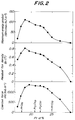
- 2-10 times larger value than the conventional coercive force is obtained by finely grinding these compounds into 1-20 ⁇ m in a ball mill, compacting or injection molding as they are, and further heat treating the resulting molded products (Symposium summary of Nippon Kinzoku Gakkai (1993) 181), and from these results, the relationship between permanent magnet properties and compositions of a Pr-Co alloy is shown in Table 1 and Fig. 2.
- Table 2 Composition at% Heating temperature and time Magnet properties Pr Co iHc (kA/m) Br (T) (BH) max (KJ/m3) 16.7 83.3 compacting 430 0.60 37 850°C 1 h 278 0.54 19 18.5 81.5 compacting 455 0.78 47 850°C 1 h 1220 0.82 110 19.5 80.5 compacting 450 0.70 42 850°C 1 h 1350 0.75 103 21.0 79.0 compacting 450 0.67 39 850°C 1 h 1300 0.70 85 23.0 77.0 compacting 445 0.63 36 850°C 1 h 1270 0.64 72 25.0 75.0 850°C 1 h 955 0.48 27 27.0 73.0 900°C 1 h 635 0.35 9
- Table 2 Composition at% Substrate temperature Heating temperature and duration Magnetic properties Pr Co iHc (kA/m) Br (T) (BH) max (KJ/m
- the present invention is to provide a permanent magnet material having ultrahigh coercive force of higher than 1200 kA/m by compacting or injection molding an alloy powder having a composition from PrCo5 to PrCo3 and heating a thin film having the equal composition formed on a substrate or forming a film on a heated substrate.
- the present invention is to provide a permanent magnet material having a high coercive force which cannot be obtained before, and characteristics of the present invention are as follows.
- An object of the present invention is to provide a permanent magnet material of Pr-Co alloy having a high coercive force, wherein said Pr-Co alloy consists essentially of 15-30 at% of Pr, the remainder Co and inevitable impurities, and have more than 80 kA/m of coercive force.
- Another object of the present invention is to provide a permanent magnet material of Pr-Co alloy having a high coercive force, wherein said Pr-Co alloy consists essentially of 19.5-30 at% of Pr, the remainder Co and inevitable impurities, and have more than 80 kA/m of coercive force.
- a further object of the present invention is to provide a permanent magnet material of Pr-Co alloy having a high coercive force, wherein said Pr-Co alloy consists essentially of 15-30 at% of Pr, the remainder Co and inevitable impurities, and at least one element selected from the groups consisting of 0.1-8 at% of B, C, Si, Mn, Fe, Ni, Cu, Mo, W and Pt and 0.1-5 at% of O, Al, Ti, Y, Ph, Pd, La, Ce, Sm, Tb, Dy and Au as a secondary component, and have more than 80 kA/m of coercive force.
- a still further object of the present invention is to provide a permanent magnet material of Pr-Co alloy having a high coercive force, wherein said Pr-Co alloy consists essentially of 15-30 at% or Pr, the remainder Co and inevitable impurities, and at least one element selected from the groups consisting of 0.1-8 at% of B, C, Fe, Cu and W and 0.1-5 at% of Ti, Ce and Sm as a secondary component, and have more than 80 kA/m of coercive force.
- Another object of the present invention is to provide a permanent magnet material of Pr-Co alloy having a high coercive force, wherein said Pr-Co alloy consists essentially of 15-30 at% of Pr, the remainder Co and inevitable impurities, and at least one element selected from the group consisting of 0.1-8 at% of B, C, Fe, Cu and W and 0.1-5 at% of Ti, Ce and Sm as a secondary component, and have more than 80 kA/m of coercive force.
- a further object of the present invention is to provide a thin film magnet material of Pr-Co alloy having a high coercive force, wherein said thin film of Pr-Co alloy consists essentially of 15-30 at% of Pr and the remainder Co and inevitable impurities, and has more than 80 kA/m of coercive force.
- a still further object of the present invention is to provide a thin film magnet material of Pr-Co alloy having a high coercive force, wherein said thin film of Pr-Co alloy consists essentially of 15-30 at% of Pr and the remainder Co and inevitable impurities, and at least one element of 0.1-8 at% of B, C, Fe, Cu and W and 0.1-5 at% of Ti, Ce and Sm as a secondary component, and has more than 80 kA/m of coercive force.
- Another object of the present invention is to provide a method of manufacturing a permanent magnet material of Pr-Co alloy having a high coercive force, wherein said Pr-Co alloy powder comprises finely grinding an alloy consisting essentially of 15-30 at% and the remainder Co and inevitable impurities into 1-20 ⁇ m in a ball mill for 5-30 hours, and comprises mechanical alloying a blend consisting of the equal components of metals coarse grain, finely powdering the thus ground powder, compacting or pressure molding in a magnetic field or injection molding it, and further heat treating or sintering at 300-1180°C.
- a further object of the present invention is to provide a method of manufacturing a permanent magnet material of Pr-Co alloy having a high coercive force, wherein said Pr-Co alloy powder comprises finely grinding an alloy consisting essentially of 15-30 at% of Pr and the remainder Co and inevitable impurities as main component, and as a secondary component, at least one element selected from the group consisting of 0.1-8 at% of B, C, Fe, Cu and W and 0.1-5 at% of Ti, Ce and Sm into 1-20 ⁇ m in a ball mill for 5-30 hours, and comprises mechanical alloying a blend consisting of the equal components of metals coarse grain, finely powdering the thus ground powder, compacting or pressure molding in a magnetic field or injection molding it, and further heat treating and sintering at 300-1180°C.
- a still further object of the present invention is to provide a method of manufacturing a permanent magnet material of a high coercive force, wherein Pr-Co alloy comprising forming a film of an alloy consisting essentially of 15-30 at% of Pr and the remainder Co and inevitable impurities on a substrate at a room temperature in an atmosphere of at least one sputtering gas of nitrogen, oxygen, argon, krypton and xenon, heating the film to 300-800°C or forming the film onto the substrate heated at 300-800°C, and having more than 80 kA/m of coercive force.
- Pr-Co alloy comprising forming a film of an alloy consisting essentially of 15-30 at% of Pr and the remainder Co and inevitable impurities on a substrate at a room temperature in an atmosphere of at least one sputtering gas of nitrogen, oxygen, argon, krypton and xenon, heating the film to 300-800°C or forming the film onto the substrate heated at 300-800°C, and having
- Another object of the present invention is to provide a method of manufacturing a permanent magnet material of a high coercive force, wherein Pr-Co thin film comprises forming a film of an alloy consisting essentially of 15-30 at% of Pr and the remainder Co and inevitable impurities, as a secondary component, at least one element selected from the group consisting of 0.1-8 at% of B, C,Fe, Cu and W and 0.1-5 at% Ti, Ce and Sm on a substrate at room temperature in an atmosphere of at least one sputtering gas of nitrogen, oxygen, argon, krypton and xenon, heating the film to 300-800°C or forming the film onto the substrate heated at 300-800°C, and having more than 80 kA/m of coercive force.
- Pr-Co thin film comprises forming a film of an alloy consisting essentially of 15-30 at% of Pr and the remainder Co and inevitable impurities, as a secondary component, at least one element selected from the group consisting of 0.1-8 at% of B,
- mechanical alloying means a phenomenon that a blend consisting of coarse grain metallic elements are alloying and changing crystal structure to amorphous or other crystal structure by finely grinding for a long time of about 30-100 hours in a ball mill.
- the present invention relates to a powder permanent magnet of a Pr-Co alloy consisting essentially of 15-30 at% of Pr and the remainder Co and inevitable impurities, and this composition consists essentially of a compound having a crystal structure of hexagonal PrCo5 or Pr2Co7, to which a small amount of a rhombohedral Pr5Co19, PrCo3 phase is added.
- PrCo5 (16.7 at% Pr) does not exhibit high coercive force by mixing a small amount of Pr5Co19 with a PrCo5 phase, but the present invention can obtain superhigh coercive force in the above composition range including an alloy composition of Pr5Co19 (20.8 at% Pr).
- alloys formed by arc melting or high frequency induction melting is roughly ground, thereafter ground in a ball mill for more than 5 hours and finely ground into about 1-20 ⁇ m, or coarse powders of respective metals weighed in an alloy composition aimed at are finely powdered by mechanical alloying and the thus obtained fine powders are compacted under pressure of 1-10 t/cm2 or injection molded in a magnetic field of more than 400 kA/m, or thereafter heated or sintered at 300-1180°C for 10 minutes to 10 hours, thereby obtaining a superhigh coercive permanent magnet material.
- an alloy thin film containing 15-30 at% of Pr and remainder Co and inevitable impurities, and a thin film of an alloy containing as a secondary element 0.1-8 at%, more preferably 0.1-5 at%, of at least one element selected from the group consisting of B, C, Fe, Cu and W or Ti, Ce and Sm and the remainder Co are preferably deposited onto a quartz or glass substrate at room temperature and heated at 300-800°C, or deposited onto a substrate heated to 300-800°C.
- Fig. 1 is a phase diagram of a Pr-Co alloy system.
- Fig. 2 is a graph showing the relationship between properties and compositions of permanent magnet of a Pr-Co alloy and compounds of PrCo5, Pr5Co19, Pr2Co7 and PrCo3.
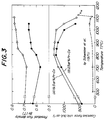
- Fig. 3 is a graph showing the relationship between the high coercive force of alloy obtained by Schweizer et al (1971) and the temperature of heat treatment and comparison with that of the present invention.
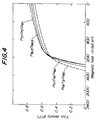
- Fig. 4 is a graph showing the comparison of demagnetization curves of typical 18 at% Pr-2 at% Ti-80 at% Co, 17 at% Pr-3 at% Cu-80 at% Co and 17 at% Pr-3 at% Ce-80 at% Co permanent magnet materials adding 19.5 at% Pr-80.5 at% Co and secondary components thereto.
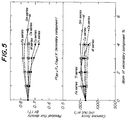
- Fig. 5 is a graph showing the relationship between a secondary component X x in case of (20-x) at% Pr-x at% X-80 at% Co and magnetic properties.
- a permanent magnet material of the composition described in the present invention can easily be obtained by mechanical alloying, and this method does not require to be solubilized.
- the magnet (B) which is 23 at% Pr-Co alloy.
- Pr-Co binary alloy as a main component and typical 18 at% Pr-2 at% Ti-80 at% Co, 17 at% Pr-3 at% Cu-80 at% Co, 17 at% Pr-3 at% Ce-80 at% Co alloys as secondary components were arc melted, charged into a ball mill with argon gas, thereafter finely ground for 10 hours to form fine powder of 1-20 ⁇ m, and compacted under a pressure of 5 t/cm2 in a magnetic field of 800 kA/m, heated at 800-900°C for 1 hour, applied to a pulse magnetic field of 4000 kA/m, then the demagnetization curves thus measured was compared with the result of binary 19.5 at% Pr-80.5 at% Co alloy and shown in Fig. 4.
- Fig. 5 shows the relationship between atomic % of secondary components as (20-x) at% Pr-x at% X-80 at% Co (X is a secondary component) and coercive force and residual flux density, respectively.
- a Pr-Co alloy was formed into a film by rf-magnetron sputtering method.
- a target is a composite type arranged Pr chip on a Co plate.
- the number of the Pr chips were changed to make composition 19.5 at% Pr-80.5 at% Co alloy.
- the chamber was evacuated to high vacuum condition at first, then filled with sputtering gas in atmosphere having a pressure of 5 mTorr. Thereafter, the sputtering was carried out for forming thin films at an applied power of 50 W.
- quartz (SiO2) was used, and substrate temperature was 650-700°C. When it is measured by a micromagnetometer, there was obtained a superhigh coercive force of more than 1200 kA/m in substantially the same manner as in the alloy powder magnet.
- the present invention provides a permanent magnet of Pr-Co alloy having extremely high coercive force, which has never been observed as permanent magnet, obtained by compacting a fine powder of 1-20 ⁇ m of Pr-Co alloy, or by mechanical alloying a fine powder, heat-treating and sintering, or by forming into a thin film having the same component, thereby exhibiting industrially large effects such as extremely high coercive force and improving high efficiency of permanent magnetic properties.
Landscapes
- Chemical & Material Sciences (AREA)
- Engineering & Computer Science (AREA)
- Power Engineering (AREA)
- Crystallography & Structural Chemistry (AREA)
- Inorganic Chemistry (AREA)
- Materials Engineering (AREA)
- Mechanical Engineering (AREA)
- Metallurgy (AREA)
- Organic Chemistry (AREA)
- Hard Magnetic Materials (AREA)
- Manufacturing Cores, Coils, And Magnets (AREA)
Applications Claiming Priority (2)
| Application Number | Priority Date | Filing Date | Title |
|---|---|---|---|
| JP332969/93 | 1993-12-27 | ||
| JP5332969A JPH07192907A (ja) | 1993-12-27 | 1993-12-27 | 高保磁力Pr−Co系合金の永久磁石材料及び薄膜の永久磁石材料並びにその製造方法 |
Publications (1)
| Publication Number | Publication Date |
|---|---|
| EP0660338A1 true EP0660338A1 (de) | 1995-06-28 |
Family
ID=18260849
Family Applications (1)
| Application Number | Title | Priority Date | Filing Date |
|---|---|---|---|
| EP94120423A Withdrawn EP0660338A1 (de) | 1993-12-27 | 1994-12-22 | Dauermagnetmaterial aus hochkoerzitiven Pr-Co Legierung und dünn-schicht Dauermagnetmaterial und Herstellungsverfahren |
Country Status (2)
| Country | Link |
|---|---|
| EP (1) | EP0660338A1 (de) |
| JP (1) | JPH07192907A (de) |
Cited By (3)
| Publication number | Priority date | Publication date | Assignee | Title |
|---|---|---|---|---|
| WO2015054953A1 (zh) * | 2013-10-16 | 2015-04-23 | 中国科学院宁波材料技术与工程研究所 | 稀土永磁体及其制备方法 |
| CN107604211A (zh) * | 2017-09-21 | 2018-01-19 | 桂林电子科技大学 | 一种LaPrCo磁性微波吸波材料及其制备方法 |
| CN113502452A (zh) * | 2021-07-12 | 2021-10-15 | 深圳市阿尔法材料科技有限公司 | 一种TaN-稀土复合涂层及其制备方法 |
Families Citing this family (1)
| Publication number | Priority date | Publication date | Assignee | Title |
|---|---|---|---|---|
| JP4924153B2 (ja) * | 2007-03-30 | 2012-04-25 | Tdk株式会社 | 磁性材料及びこれを用いた磁石 |
Citations (3)
| Publication number | Priority date | Publication date | Assignee | Title |
|---|---|---|---|---|
| JPS5633806A (en) * | 1979-08-29 | 1981-04-04 | Seiko Instr & Electronics Ltd | Preparation of rare-earth magnet |
| JPS60197843A (ja) * | 1984-03-17 | 1985-10-07 | Namiki Precision Jewel Co Ltd | 永久磁石合金 |
| JPH05156397A (ja) * | 1991-12-05 | 1993-06-22 | Mitsubishi Materials Corp | 希土類コバルト1−5系永久磁石合金 |
-
1993
- 1993-12-27 JP JP5332969A patent/JPH07192907A/ja not_active Withdrawn
-
1994
- 1994-12-22 EP EP94120423A patent/EP0660338A1/de not_active Withdrawn
Patent Citations (3)
| Publication number | Priority date | Publication date | Assignee | Title |
|---|---|---|---|---|
| JPS5633806A (en) * | 1979-08-29 | 1981-04-04 | Seiko Instr & Electronics Ltd | Preparation of rare-earth magnet |
| JPS60197843A (ja) * | 1984-03-17 | 1985-10-07 | Namiki Precision Jewel Co Ltd | 永久磁石合金 |
| JPH05156397A (ja) * | 1991-12-05 | 1993-06-22 | Mitsubishi Materials Corp | 希土類コバルト1−5系永久磁石合金 |
Non-Patent Citations (6)
| Title |
|---|
| CHEMICAL ABSTRACTS, vol. 101, no. 12, 17 September 1984, Columbus, Ohio, US; abstract no. 102690w, W.WALLACE ET AL: "praseodymium-cobalt (PrCo5)permanent magnets" page 747; column 2; * |
| DATABASE WPI Week 8121, Derwent World Patents Index; AN 81-37054 * |
| N.TERADA ET AL, JOURNAL OF APPLIED PHYSICS., vol. 57, no. 8, April 1985 (1985-04-01), NEW YORK US, pages 4170 - 4172 * |
| PATENT ABSTRACTS OF JAPAN vol. 10, no. 56 (C - 331) 6 March 1986 (1986-03-06) * |
| PATENT ABSTRACTS OF JAPAN vol. 17, no. 554 (C - 1118) 6 October 1993 (1993-10-06) * |
| PROC.INT.WORKSHOP RARE EARTH-COBALT PERM.MAGNETS THEIR APPL.1983,7TH 239-45(GB) * |
Cited By (4)
| Publication number | Priority date | Publication date | Assignee | Title |
|---|---|---|---|---|
| WO2015054953A1 (zh) * | 2013-10-16 | 2015-04-23 | 中国科学院宁波材料技术与工程研究所 | 稀土永磁体及其制备方法 |
| CN104575920B (zh) * | 2013-10-16 | 2018-01-19 | 中国科学院宁波材料技术与工程研究所 | 稀土永磁体及其制备方法 |
| CN107604211A (zh) * | 2017-09-21 | 2018-01-19 | 桂林电子科技大学 | 一种LaPrCo磁性微波吸波材料及其制备方法 |
| CN113502452A (zh) * | 2021-07-12 | 2021-10-15 | 深圳市阿尔法材料科技有限公司 | 一种TaN-稀土复合涂层及其制备方法 |
Also Published As
| Publication number | Publication date |
|---|---|
| JPH07192907A (ja) | 1995-07-28 |
Similar Documents
| Publication | Publication Date | Title |
|---|---|---|
| JP3143156B2 (ja) | 希土類永久磁石の製造方法 | |
| US4773950A (en) | Permanent magnet | |
| EP0369097B1 (de) | Magnetische Stoffe, enthaltend Seltenerdelemente, Eisen, Stickstoff und Wasserstoff | |
| US4859255A (en) | Permanent magnets | |
| EP0258609B1 (de) | Dauermagnet mit guter thermischer Stabilität | |
| EP0197712A1 (de) | Seltenerd-Eisen-Bor-Dauermagnet | |
| EP0248981B1 (de) | Dauermagnet und Dauermagnetlegierung | |
| US3655464A (en) | Process of preparing a liquid sintered cobalt-rare earth intermetallic product | |
| EP0538058B1 (de) | Magnetisches Material | |
| JP2586198B2 (ja) | 磁気的異方性および耐食性に優れた希土類―Fe―B系永久磁石粉末およびボンド磁石 | |
| JPH04245403A (ja) | 希土類−Fe−Co−B系異方性磁石 | |
| JPH01219143A (ja) | 焼結永久磁石材料とその製造方法 | |
| JP2853838B2 (ja) | 希土類永久磁石の製造方法 | |
| EP0476606A2 (de) | Dauermagnetpulver | |
| JPH0616445B2 (ja) | 永久磁石材料及びその製造方法 | |
| JPH03129702A (ja) | 磁気的異方性および耐食性に優れた希土類―Fe―B系永久磁石粉末およびボンド磁石 | |
| EP0660338A1 (de) | Dauermagnetmaterial aus hochkoerzitiven Pr-Co Legierung und dünn-schicht Dauermagnetmaterial und Herstellungsverfahren | |
| JP3222482B2 (ja) | 永久磁石の製造方法 | |
| JP2000114016A (ja) | 永久磁石およびその製造方法 | |
| US5055129A (en) | Rare earth-iron-boron sintered magnets | |
| EP0597582B1 (de) | Anisotropes R-T-B-M Magnetpulver | |
| JP3143157B2 (ja) | 希土類永久磁石の製造方法 | |
| JPS646267B2 (de) | ||
| JP3072742B2 (ja) | 永久磁石 | |
| CN1235693A (zh) | SE-Fe-B永磁铁及其制造方法 |
Legal Events
| Date | Code | Title | Description |
|---|---|---|---|
| PUAI | Public reference made under article 153(3) epc to a published international application that has entered the european phase |
Free format text: ORIGINAL CODE: 0009012 |
|
| AK | Designated contracting states |
Kind code of ref document: A1 Designated state(s): DE NL |
|
| STAA | Information on the status of an ep patent application or granted ep patent |
Free format text: STATUS: THE APPLICATION HAS BEEN WITHDRAWN |
|
| 18W | Application withdrawn |
Withdrawal date: 19960104 |