EP0649325B1 - Use of substances for the manufacture of medicaments for poultry - Google Patents
Use of substances for the manufacture of medicaments for poultry Download PDFInfo
- Publication number
- EP0649325B1 EP0649325B1 EP93917093A EP93917093A EP0649325B1 EP 0649325 B1 EP0649325 B1 EP 0649325B1 EP 93917093 A EP93917093 A EP 93917093A EP 93917093 A EP93917093 A EP 93917093A EP 0649325 B1 EP0649325 B1 EP 0649325B1
- Authority
- EP
- European Patent Office
- Prior art keywords
- chicks
- chick
- injection
- yolk sac
- vaccine
- Prior art date
- Legal status (The legal status is an assumption and is not a legal conclusion. Google has not performed a legal analysis and makes no representation as to the accuracy of the status listed.)
- Expired - Lifetime
Links
Images




Classifications
-
- A—HUMAN NECESSITIES
- A61—MEDICAL OR VETERINARY SCIENCE; HYGIENE
- A61D—VETERINARY INSTRUMENTS, IMPLEMENTS, TOOLS, OR METHODS
- A61D1/00—Surgical instruments for veterinary use
- A61D1/02—Trocars or cannulas for teats; Vaccination appliances
- A61D1/025—Vaccination appliances
Definitions
- Domestically raised poultry such as chickens, turkeys, ducks, geese, guineas, pheasants, and quail, are subject to a variety of diseases and infections after hatching.
- Some resistance to disease is provided by naturally-occurring antibodies and virus-neutralizing gamma globulins in the yolk of the egg, which is carried by the chick immediately beneath the skin of the abdomen.
- the yolk contents are absorbed into the digestive tract of the chick over a seven to nine day period after hatching. See, e.g., C. R. Parkhurst and G. J. Mountney (1989), Chapter 5, "Incubation and Hatchery Management," in Poultry Meat and Egg Production, Van Nostrand (New York).
- Supplementary medications can be administered to poultry by several methods, including subcutaneous injection and eye drops.
- Subcutaneous injections commonly are performed in the necks of newly hatched chicks on an assembly line basis, and equipment for this purpose is available commercially. In this procedure, the chicks are manually picked up one by one and their necks are placed against an automatic injection device; an injection needle is quickly advanced into the chick's neck, a measured dose of medication is injected, and the needle is withdrawn. The medication injected in this manner diffuses rapidly into the chick's vascular system.
- medication can also be administered before hatching.
- eggs to be treated are placed on end with the air sac at the top; a small hole is formed through the shell at the top, and an injection needle is passed downwardly through the hole, and desirably into the amnion, into which the medication is discharged.
- an injection needle is passed downwardly through the hole, and desirably into the amnion, into which the medication is discharged.
- the embryo itself is unintentionally injected and may die as a result.
- the medication is a soluble vaccine
- unintentional injection of the vaccine into the air sac can be effective, however cell-associated vaccines are typically ineffective if injected into the air sac.
- Egg injection methods and devices are described in Sharma et al., U.S. Patent No. 4,458,630, Christensen, U.S. Patent No. 4,604,968, and Hebrank, U.S. Patent Nos. 4,681,063 and 4,903,635. As described above, injection of medication into the amnion makes the entire quantity of the medication immediately available to the embryo.
- coccidiosis caused by protozoal parasitic organisms of the genus Eimeria . See, generally, "Coccidiosis", pp. 153-157, in Avian Disease Manual , C.E. Whiteman and A.A. Bickford, eds., Kendall/Hunt Publishing Co., 1989. Active and passive immunizations of adult poultry against this disease have been successfully performed on commercial scales for many years. However, only limited success has been achieved in broiler chickens. The reason is that broilers routinely reach market by 6 weeks of age. Using conventional methods of commercial-scale immunization, this is simply not a sufficient time period for the bird's immune system to develop protective immunity.
- trickle vaccination A procedure termed "trickle vaccination” has been used as a possible route by which effective immunity can be achieved in juvenile poultry.
- This procedure as provided in the "Cocci-Vac” product available from Sterwin, Inc., requires that 200 oocysts (a developmental stage in the life-cycle of the Eimeria parasite) be administered per os to each chick within the first 2 days after hatching. When this number of oocysts is ingested during the early neonatal period, the chick typically will immediately develop protective immunity.
- the present invention resides in the use of vaccine, probiotic, growth stimulator or sexual function modifier according to claim 1.
- the present description describes also a device and a method for the delivery of medicaments to newly hatched, domestically raised poultry, which are not part of the present invention.
- the described method comprises the steps of:
- the residual yolk sac of newly hatched poultry provides a desirable and effective site for the injection of medicaments to poultry.
- the yolk sac route allows the administration of medicaments not previously shown to be efficacious by other, traditional, routes of injected administration.
- the administration of oocysts of the parasite Eimeria tenella the causative agent of the common disease coccidiosis, successfully protects broiler chicks against a subsequent challenge with oocysts. Such protection has not been previously achievable by the vaccination of broilers on a commercial scale.
- the yolk sac route has been generally found to be as or more effective as traditional routes of administration, for those medicaments typically administered via such routes.
- the yolk sac route provides the added advantage of allowing the formulation of medicaments in a manner that takes advantage of the gradual absorption of the yolk sac, per se, for example, in order to provide delayed or sustained release of the medicament.
- the residual yolk sac of a newly hatched chick is typically a flattened structure, embedded immediately beneath the skin of the abdomen, and in the chicken, may be two or more centimeters (i.e., approximately 3/4 inch) in diameter, thereby providing a large target for administration by injection on an assembly line basis in the manner described herein.
- the medicament can be administered by any suitable means, e.g., by injecting it via an injection needle through the abdominal skin and into the yolk sac.
- the device described herein concerns a device for the administration of the medicament, the device allowing the rapid orientation of individual poultry in a sequential manner, in order to allow the skin covering the residual yolk sac to be penetrated in a consistent and predetermined manner by an injection needle.
- a preferred device comprises a wall against which the chick's abdomen can be pressed, the wall including a needle for injecting medicament into the abdomen. With the chick oriented and restrained in an upside-down position, with the chick's abdomen at the level of the needle, the injection of the medicament into the yolk sac is thereby facilitated.
- the preferred target of the abdomen is that area just ventral to the navel, i.e., below the navel and above the opening of the vent.
- medicaments include vaccines, nutrients, antibiotics, probiotics, growth stimulators and sexual function modifiers, as represented by the non-limiting list of substances identified below.
- the method provides a particular advantage in the treatment of coccidiosis in poultry.
- the common causative agents for this prevalent and devastating disease in turkeys are E. meleagrimitis , E. adenoeides , and E. gallopavonis .
- the common causative agents in chickens are E. tenella , E . acervulina , E. necatrix , E. brunetti , E. maxima , E. mivati , E. hagani , E. praecox , and E. mitis .
- the present method provides an effective vaccine for the treatment of coccidiosis.
- the word "vaccine”, as used in this sense refers to the administration of any material useful for immunizing the chick against coccidiosis. Such material can be either obtained directly, or derived, as by genetic engineering, from the genus Eimeria . Particularly preferred vaccines for such purposes include oocysts and sporozoites of the genus Eimeria .
- the present method and device can also be used to administer vaccines that are, or may become, available for a variety of poultry diseases, including the following diseases.
- Antibiotics can be used to prevent or retard early bacterial infections, to promote early growth and to reduce post-hatching stress.
- suitable antibiotics include oxytetracycline, chlortetracycline, spectinomycin, cephalosporin, gentamicin, lincomycin, and the quinolones.
- Probiotics can be used for the competitive exclusion of such unwanted organisms as Salmonella , pathogenic E.coli , Listeria organisms , Campylobacter organisms, and for seeding of the gut with desirable organisms.
- Nutrients include vitamins, minerals, amino acids, sugars, and fatty acids, and can be used for growth promotion and to reduce stress.
- Growth promoters are typically endocrine secretions that are used to stimulate growth and feed efficiency. Examples include growth hormone, growth hormone releasing hormone, insulin-like growth factors I and II, avian interleukins (e.g., aIL 2 ), nerve growth factors, thyroxine releasing hormone, thyroxine stimulating hormone, monoiodotyrosine, diiodotyrosine, triiodothyronine, thyroxine and corticosterone.
- growth hormone growth hormone releasing hormone
- insulin-like growth factors I and II avian interleukins (e.g., aIL 2 )
- nerve growth factors e.g., aIL 2
- thyroxine releasing hormone e.g., thyroxine stimulating hormone
- monoiodotyrosine thyroxine stimulating hormone
- diiodotyrosine diiodotyrosine
- triiodothyronine thy
- Sexual function modifiers are typically endocrine secretions that are used to reverse physiological sex, alter time to sexual maturity and/or increase sexual functions in adults. Examples include medullarin inhibitory substance, 17-beta-estradiol, estrone, estrogen, progesterone, testosterone, epiandrostenedione, gonadotropin releasing hormone, follicle stimulating hormone, luteinizing hormone, and prolactin.
- Medicaments such as those exemplified above are desirably compounded with physiologically balanced salt solutions to form injectable liquids that can mix with the yolk for absorption into the body with the rest of the yolk. It has been discovered that the normal phospholipid and lipoprotein constituents of the yolk have excellent carrying capacity; they readily adhere to or tolerate medicaments such as those exemplified above.
- Medicaments can be administered to the yolk sac of a chick using a hypodermic syringe, and 20 gauge beveled needles are appropriate for this purpose.
- Injection volumes of up to about 0.5 ml have been successfully used, this volume being small enough to avoid significant leaking of the injected fluid from the injection site. Injection volumes ranging from about 0.1 ml to about 0.5 ml are preferred.
- the yolk sac of a newly hatched chick is substantially flat, and centered on the navel. It generally covers the entire ventral surface of the abdominal cavity. It is generally oval in shape, being about 2.5 cm to 3 cm in its longer (dorsal to ventral) direction, and about 1.5 cm to about 2 cm in width (ventral direction).
- a smaller circular target area is particularly preferred, in that it provides a region of the yolk sac having sufficient depth for, and easy access to, a needle, and at the same time lessens the chance of the needle hitting undesired organs or tissues.
- the preferred target is a small circular area (having a diameter of about 1 cm, and preferably about 5mm), with the navel being located approximately half-way between the center of the target area and its 12 o'clock position.
- an automatic vaccinator such as a pneumatic vaccinator (as sold by Vineland Laboratories under the trademark "ViMark”) that has been adapted for use in the described method.
- the commercial vaccinator has five main parts (see, e.g., "The ViMark Pneumatic Vaccinator Instruction Manual", Vineland Laboratories, Inc.
- the ViMark device employs a push button slide on the top of the device having a central orifice through which a hypodermic needle can protrude.
- a push button slide on the top of the device having a central orifice through which a hypodermic needle can protrude.
- the syringe on the above-described commercial device is re-positioned such that the needle will protrude from the end, rather than top, of the device.
- Fig. 1 is a perspective view of a preferred device 10, showing aluminum box 12 and steel cover 14, the cover being shown retained in place by a latch 15 and hinges (not shown).
- the device provides a stiff wire bottle holder 16, a manual activator 18, an air pressure gauge 20, and count meter 21.
- the device has been provided with a retention plate 22, shown made of plexiglass, stably positioned over the injector end, which serves to both orient and restrain a chick in the desired position.
- Fig. 2 is a perspective view of the device of Fig. 1, showing the cover and side of the device opened up to reveal inner components.
- the pneumatic control unit 24, the pneumatic drive unit 26, and the syringe assembly 28, which has been repositioned at an angle suitable to allow it to inject through the end of the device, rather than through the top as originally designed.
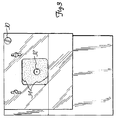
- Fig. 3 is a perspective view of the device of Fig. 1 showing the end at which a chick is vaccinated, including retention plate 22 and manual firing switch 30. Also seen is the injector hole 32, which has been drilled into the end of steel cover 14 and through which the needle will protrude. Surrounding the injector hole is a larger restraining hole 34, that has been cut in retention plate 22, and which is preferably padded with a soft, cushioning material, such as foam rubber. Hole 34 serves to both cushion the chick and restrain its movement when placed against the injector hole.
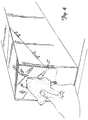
- Fig. 4 is a perspective view showing a chick being vaccinated according to the described method using the device of Fig. 1.
- the chick is held in an upside-down position, with its head between the thumb and fingers of the operator.
- the desired area of the chick is positioned over the injector hole (not seen) and in an axial relationship with the syringe and needle, and the syringe is activated by depressing firing switch 30.
- a pneumatic device can be fitted that allows the syringe to fire automatically at the time the chick is positioned.
- the needle enters the abdominal area at the desired location and to the desired depth.
- the chick can be grasped and positioned with its navel facing the needle and the head in the down position.
- the surface against which the chick is pressed upon injection in this case the plexiglass retention plate
- soft material such as foam rubber
- the injection needle should be cleanly and smoothly inserted and removed from the yolk sac. Unwanted damage to the yolk sac and surrounding tissue, with subsequent infection of the damaged area, may result if sideways movement between the needle and the injection site is allowed to occur.
- the needle is set to protrude a distance of approximately 5 mm from the end of the steel cover.
- the size of the yolk sac remains approximately constant during the 24 hour period following hatching and then loses weight at a fairly uniform rate.
- the body weight of a chick similarly changes little during this 24 hour period, but then increases at a fairly uniform rate.
- injection into the yolk sac occurs within approximately the first 24 hours, since after the first 24 hours the yolk sac becomes narrower and smaller, and accordingly is harder to accurately locate.
- a total of 360 broiler hatching eggs (Arbor Acres X Peterson) were obtained from a commercial broiler hatchery in Mississippi.
- the eggs were incubated in a commercial-style forced-air incubator. Normal incubating temperatures and humidities were maintained throughout the incubation period. Hatchability was excellent, exceeding 95% hatch of fertile eggs. The hatched chicks were in excellent health and signs of disease were absent.
- chicks were selected at random for body weights ("BW”) and yolk sac weights ("YSW”) at 0, 12, and 24 hr post-hatching. These chicks were held in the incubator until the designated sampling time. Additionally, another 125 chicks were removed from the incubator at 12 hours post-hatching and placed in floor pens in a broiler grow-out house. Twenty-five (25) of these chicks were weighed and sacrificed for YSW's at 24, 48, 72, 96, and 120 hours post-hatching.
- BW body weights
- YSW yolk sac weights
- the chicks were fed a conventional corn-soy starter diet containing 1425 kcal/lb (3139 kcal/kg) of metabolizable energy, 20% (by weight) protein and all known nutritional requirements were met or exceeded.
- the chicks were housed at approximately 0.75 ft 2 (0.23 m 2 ) per bird density in floor pens. Pine shavings were used as litter. Lighting was provided by incandescent bulbs and the photoperiod was 23 LID (23 hour light period in a day). Such environmental conditions have consistently resulted in superior production performance in this facility.
- BW's and YSW's are expressed below in grams, and relative YSW's ("RYSW") are calculated as g YS/100 g BW.
- RYSW relative YSW's
- the general appearance of the yolk sacs at necropsies was evaluated. At 0, 12 and 24 hr post-hatching, the yolk sac appeared to fill a large portion of the abdominal cavity. The sac was flat and generally covered the entire ventral surface of the cavity. However, at 48 hr post-hatching, the sac was more elongated. At this time, the most prominent abdominal structure was the gizzard. The yolk sac did not cover the gizzard; rather, the yolk sac was posterior to the gizzard. At this time, the yolk sac had become a more elongated and thicker structure. At later times of necropsy, the yolk sac appeared to become smaller, rounded, and ball-shaped. A final observation, at all times of necropsy, was that the yolk sac was typically streaked with a greenish substance.
- the yolk sac would easily accommodate an injection volume of about 1 ml during the 0 to 24 hr post-hatching period. Based upon the kinetics of absorption, if a medicament is formulated so as to be bound up by the yolk sac, the compound could then be metered into the blood stream for at least five days and possibly for as long as 10 days. This estimate is based upon the finding that only 90% yolk sac absorption was completed at 120 hr (5 days) post-hatching. If this curve was extrapolated, approximately 10 days would be required for complete yolk sac absorption.
- bile may enter the yolk sac from the intestine, where it could emulsify fats, resulting in a vital part of the digestive process occurring within the yolk sac. This reinforces the theory described earlier, regarding the yolk sac as a possible extension of the gastrointestinal tract in neonatal poultry.
- the presently described intra-yolk sac (IYS)
- method of inoculating substances into the yolk sac of newly hatched chicks can be accomplished by slight adaptation of the methods and devices presently used for conventional subcutaneous injection methods, i.e., injection in the back of the neck (SQ).
- IYS injections can be made in commercial hatcheries with minimal changes in existing personnel, equipment or productivity.
- the present Example compares the two methods, using commercially hatched chicks and on-line preparations of Marek's vaccine and antibiotic. Productivity of chicks treated with both methods were compared. Results indicate that the IYS method is indeed commercially feasible.
- a total of 3,000 broiler chicks (Arbor Acres X Arbor Acres) were obtained from a commercial hatchery in Carthage, Mississippi. The chicks were transported to the experiment site in a heated van and treated, approximately 24 hours after hatching.
- Non-Inj chicks were not treated and thus served as controls for the experiment.
- the SQ chicks received 6,000 plaque forming units (p.f.u.) of CEVA strain of HVT-INOVAC® (Marek's vaccine prepared for use in broiler chickens, Sanofi Animal Health, Inc:, Overland Park, KS) plus 0.2 mg of Garasol® (gentamicin, ASL Laboratories, Schering-Plough Animal Health, Inc., Kenilworth, NJ) in 0.20 ml of CEVA diluent for use with injectable vaccines in broilers (Sanofi Animal Health, Inc., Overland Park, KS).
- HVT-INOVAC® Marek's vaccine prepared for use in broiler chickens, Sanofi Animal Health, Inc:, Overland Park, KS
- Garasol® gentamicin, ASL Laboratories, Schering-Plough Animal Health, Inc., Kenilworth, NJ
- Injections were made into the backs of the necks according to common vaccination techniques using the Vineland "ViMark” (model ViMark) automated pneumatic vaccinator.
- a 20 gauge needle was set to extend a distance of 5 mm and 60 ("p.s.i.") pounds per square inch (52.8 kg per square cm) air pressure activated the injection syringe.
- the IYS injected birds were given the same solutions and dosages as the SQ injected chicks.
- the treatment difference was site of injection.
- the 20 gauge needle was set to extend a distance of 5 mm for injection into the navel region. This was accomplished by removing the automatic firing switch and chick-positioning blocks. Thus, the chick's abdomen was placed over the needle entry port on the injection platform.
- the automatic firing switch injection was activated, the needle entered the abdomen and the vaccine plus antibiotic was deposited directly into the yolk sac. Accuracy of injection, i.e. the percentage of all injections actually entering yolk sac, was determined to be approximately 97%.
- chicks were placed in heated floor pens in a broiler grow-out facility. These pens were supplied with fresh pine shavings as litter. Each pen was equipped with an infrared heat lamp as a brooding source of heat. Additionally, the environmental control system of the house insured ambient temperatures of 85 ⁇ 3°F (29.4 ⁇ 1°C) for the first two weeks of the experiment. During weeks 3-5, the house temperature avenged 82°F (27.8°C) and during week six, the house temperature avenge 88°F (31.3°C).
- Coban® which is an jonophore anti-coccidial feed additive of broilers, and identified as "Monensin sodium" (Elanco Production Division, Eli Lily, Co., Indianapolis, IN), was added to both rations at 90 g/ton (99 mg/kg); antibiotics and other medicaments were excluded from the rations.
- Chicks were weighed on Day 43 to determine final body weights. Feed conversion ratios were determined over the entire 43 day grow-out period. These conversions were adjusted for mortalities. Since a majority of the mortalities occurred during the sixth week (due to heat stress) adjustments were made only for mortalities during this time period. All mortalities were necropsied to ascertain cause of death. Body weights and feed conversion ratios at 43 days of age are presented in Table 2. The data indicate that Non-Inj chicks exhibited significantly heavier final body weights than both treated groups (statistical comparisons were made by a one-way analysis of variance which is a part of the General Linear Models Procedures of the Statistical Analysis System, Statistical User's Guide , 1985; SAS Institute, Inc., Cary, NC). Additionally, the IYS injected chicks had body weights which averaged 2. 38% heavier than the SQ injected birds. However, this was not a significant (P ⁇ 5%) difference.
- Feed conversion ratios were not statistically different (P ⁇ 5%) among the three treatment groups. Additionally, the variance in feed conversions among replicate groups composing each treatment was low, suggesting uniform feed conversion.
- Mortality rates are presented in Table 3. The mortality rates were calculated as percentage mortality occurring between Days 0 to 36, and Days 37 to 43 and over the entire 43 day grow-out period. Significant differences (P ⁇ 5%) in mortality rates were not found during any of the periods. Necropsies of mortalities revealed consistent patterns. During the Day 0 trough Day 36 period, the mortalities found in Non-Inj and SQ injected chicks were for various reasons, including accidental deaths, starve-outs, and intestinal strangulations. However, mortalities in the IYS injected group were almost exclusively caused by a trauma-induced infection of the yolk sac. During the Day 37 through 43 period, mortalities in all three groups were generally caused by heat prostration.
- Non-Inj controls would have been susceptible to Marek's disease with accompanying death and minimal productivity would have been expected.
- Body weights and feed conversion ratios at 43 days of age in chicks vaccinated SQ and IYS methods Parameter Non-Inj. Con.
- Mortality rates (%) of 43 day old broilers vaccinated by SQ and IYS methods Period (days) Non-Inj. Con
- the above-described method of injecting the chicks IYS using a conventional chick vaccinator can be improved, for instance, by the use of a cushion prepared from a soft, pliable substance, such as foam-rubber.
- the cushion can be applied in such a manner that when the chicks are positioned over the needle entry port, the cushion will prevent the chicks from moving as the injection is made. It has been observed that trauma was minimized when the chick did not move during needle entry.
- the firing switch can be mounted on the positioning bar, so that injection is triggered by placing the chicks against the positioning bar.
- Chicks One hundred sixty (160) newly hatched male chicks were acquired from Choctaw Maid Hatchery in Carthage, MS. Fifty (50) chicks were assigned to each of three treatment groups. Needles (20, 22, or 25 gauge) were fitted with a cork to regulate injection depth to 1, 3, or 5 mm. Injections were made using the needles attached to disposable plastic syringes into the umbilical (navel) region to determine the desired injection depth which would penetrate the yolk sac. Following this determination, injection of a solution of methylene blue in saline was made. Volume selection was made by determining the volume that would be accepted into the sac with minimal leakage. Chicks were sacrificed, then necropsied post-injection to determine if damage and/or leakage occurs.
- Chicks were fed a standard experimental broiler starter ration (see Example 1) for the first 10 days and a standard experimental broiler grower ration was then fed until termination of the experiment. These rations met or exceeded all known nutritional requirements of the chicks as described by the National Research Council, U.S. Academy of Science, 1985, Washington, DC.
- the bird density was 0.9 ft 2 (0.28 m 2 ) per chick for this experiment, and fifty (50) chicks were placed in each of 3 pens.
- the chicks received the diets described above, as well as water on an ad libitum basis.
- the starter ration was placed in cardboard lids directly on the litter for the first three days. This procedure allowed the newly hatched chicks intimate contact with the feed and the process of establishing uniform feeding behavior by all of the chicks was maximized. Thereafter, rations were available to the chicks in hanging tube feeders. Water was provided in automatic drinking fountains (Plasson® fountains, Diversified Imports, D.I.V. Co., Lakewood, NJ). One feeder and one water fountain was available in each pen.
- the lighting regime consisted of constant light for the first 14 days. Thereafter, the lighting consisted of 23 LID, with the one hour of darkness being from midnight until 1:00 am.
- the light source was one, 40 watt incandescent bulb for each pen.
- Each pen was equipped with an infrared heat lamp as a brooding source of heat.
- the heat lamps were used as needed during the first 14 days to insure maximum chick comfort.
- the house was a steel prefabricated building, situated on a concrete slab.
- Each pen was supplied with fresh pine shavings as litter.
- Exhaust fans, as well as intake fans, for fresh air were located at opposite ends of the building. The intake air was forced through a plenum to condition the air, (auxiliary heater or dehumidifier) before it entered the general circulation.
- the environmental controls systems of the house insured temperature of 85 ⁇ 3°F (29 ⁇ 1°C) for the first 14 days regardless of season of the year and 75 ⁇ 3°F (24 ⁇ 1°C)for the remainder of the 6-week grow-out period, regardless of the season. Regulation of house temperature was always made on the basis of maximum chick comfort.
- the paired intake and outlet fans (at opposing ends of the house) were regulated to operate 15 sec/10 min for the first seven days and for 45 sec/10 min for days 8 through 14; thereafter, ventilating was regarded as a part of the total bird comfort factor.
- Results are summarized in Tables 4-6.
- Body weights of treatments are presented for 2- and 5-week old birds in Table 4.
- An asterisk indicates that the mean weight was statistically different from the other treatment groups of the same age. The upper mean is expressed in grams, while the corresponding mean in parenthesis is expressed in pounds. YSW's are not presented because no statistical differences were found between the groups.
- a comparison of all birds treated with non-sterile versus sterile needles, regardless of individual treatment categories, is provided in TABLE 6.
- the livability of the birds (the number still alive at 2 and 5 weeks, expressed as a percentage of those at day 0), is provided in TABLE 7.
- a preferred procedure for manual injection by the IYS route was determined to be as follows: Grasp the chick in one hand, holding such that the umbilical (navel) region is visible; with the other hand insert a 1-inch (2.5 cm) long, 20 or 22 gauge needle into the abdominal area, with the target being a circle around the umbilicus not to exceed 1 cm in diameter.
- the umbilicus should be between the center and 12 o'clock position of the circle.
- the preferred depth is 3 mm. This can be accomplished by placing a cork stopper over the needle such that only the final 3 mm of the needle is exposed.
- a quick jab is required to puncture the skin and underlying tissues over the yolk sac.
- the desired volume is 0.5 ml of solution. This volume when injected will result in minimal leakage from the sac.
- the needle should be removed and then the next chick should be injected.
- the total time for one hand injection is 2-3 seconds.
- a total of 675 newly hatched broiler chicks were obtained from a hatchery in Philadelphia, MS. These chicks were individually wing-banded to facilitate chick identification. Chicks were assigned in groups of 15 chicks to 45 pens. The pens were located in heated, metal battery cages. The cages were maintained in an environmentally controlled room which insured constant temperatures between 80 and 85°F (27 and 29°C). The battery cages were equipped with thermostatically controlled heaters and brooding temperature was maintained at 90°F (32°C) for days 0-7, 85°F (29°C) for days 8-14, and 75°F (24°C) thereafter. The room was lighted by overhead florescent fixtures and continuous lighting was provided.
- the chicks in treatments 1-8 below were fed ad libitum a standard corn soy diet containing no added fat. This ratio met or exceeded all known nutritional requirements of the chicks as described by the National Research Council, U.S. Academy of Science, Washington, D.C. (1985).
- the diet of treatment 9 was identical to that of the other treatments, with the single exception that BioCox® (an ionophor chemical anti-coccidial with salinomycin sodium as the active ingredient; Agri-Bio Corp., subsidiary of A.H. Robbins Co., Gainesville, GA) was added at 60 grams/ton (66 mg/kg).
- the oocysts for treatments 3-7, as well as oocysts for all challenges were prepared according to accepted experimental procedures. Chickens not used in this study were reared in isolation cages, orally infected with oocysts of Eimeria tenella , and sacrificed 5 days after infection. Their intestines were removed, washed to collect the intestinal contents containing the oocysts, and oocysts were harvested. The oocysts then could serve as vaccines or as infective challenges.
- Vaccinations for treatments 3-6 were given into the yolk sac using the Vineland ViMark automatic injector, modified as described herein. These injections were given on day 0.
- Treatment 7, i.e., trickle vaccination, was accomplished by orally gavaging day 0 chicks with 200 oocysts in 1 ml of distilled water. A gavage needle fitted to a 6 cc syringe was inserted into the esophagus, near the crop and the gavage solution was deposited directly into the crop.
- Treatment 8 i.e., CocciVac® (a vaccine containing oocysts against 4 species of Eimeria which is recommended to be sprayed on the initial feedstuff of chicks, Sterwin Laboratories, Inc., subsidiary of Pitman Moore, Co., Millsboro, DE) was orally gavaged into day 0 chicks at a level of 0.1 ml CocciVac in 0.9 ml of distilled water.
- Treatment 9 did not involve vaccinations, rather the BioCox was added to all feed presented to the chicks at the level previously described.
- Cecal pouch lesion scores indicated that only Treatment 9, i.e., BioCox, protected the gut in a manner equivalent to the non-challenged negative controls. However, all IYS treatments were numerically, but not significantly (P ⁇ 5%) superior in protecting the gut than the commercially available CocciVac coccidiosis vaccine.
- a total of 400 broiler chicks were obtained from a hatchery in Philadelphia, Mississippi. Chicks were transported to the experiment site in a heated van and treatments were conducted within 24 hours post-hatching.
- Chicks were wing banded and then assigned to 8 groups of 50 chicks. Each group was maintained in a pen within the grow-out facility. Two groups were assigned to each of 4 treatments. The treatments were as follows: Treatment Designation Vaccination Challenge 1 Neg. Con. 0 oocystsNone 2 Pos. Con. 0 oocystsYes 3 IYS 200 oocysts Yes 4 per os (oral) 200 oocysts Yes
- Treatments 3 and 4 were administered using a suitably modified Vineland ViMark automated, pneumatic chick vaccinator.
- each day 0 chick was injected IYS with 200 sporulated oocysts (prepared as in Example 4).
- each chick was orally gavaged (as per Example 4) with 200 sporulated oocysts.
- both the IYS and trickle treatments provided useful protection to the chicks.
- the trickle treatment provided somewhat better protection than the IYS treatment, which would be expected, since the administration of 200 oocysts at the preferred time, i.e. early during the post-natal period, is known to provide a high degree of immunity.
- Sporozoites were evaluated as a candidate, in a preferred method, for the active component of a coccidiosis vaccine.
- Sporozoites are the infective stage of the parasite. That is to say, when oocysts are injected, the acidic conditions together with digestive enzymes of the gut excise the oocysts and sporozoites are released. This life form of Eimeria is capable of infecting the target epithelial cells of the gut. Sporozoites may be able to attach to and then enter T-lymphocytes that are intimate with the epithelial lining of the gut. The T-cells would then able to initiate cellular immunity.
- Treatment 3 i.e., the IYS-treated chicks, received 200 sporozoites which were collected by excisting 200 sporozoites.
- the excisting procedure was performed as outlined by Hofmann and Raether (Parasitol. 76:479-486 [1990)).
- a known number of oocysts were placed in a centrifuge tube and spun to form a pellet. The supernatant was decanted and replaced with Hanks balanced salt solution (HBSS). Glass beads, 1 mm in diameter, were placed in the oocyst suspension and spun in a vortex until all oocysts were ruptured.
- HBSS Hanks balanced salt solution
- the released sporozoites were washed free of the glass beads, then spun in a centrifuge tube to form a pellet.
- the sporozoites were then placed into 100 ml HBSS containing 0.25% trypsin and 4% taurodeoxycholic acid. The suspension was incubated in a shaking water bath for 90 min at 41°C. The sporozoites were then spun to form a pellet, resuspended in HBSS and used as the vaccine.
- Treatment 4 i.e., trickle-treated chicks, received 200 sporulated oocysts by oral gavage as described previously (Example 4).
- Treatments 2, 3, and 4 were challenged on Day 21 by oral gavage with 50,000 oocysts/chick.
Landscapes
- Health & Medical Sciences (AREA)
- Veterinary Medicine (AREA)
- Life Sciences & Earth Sciences (AREA)
- General Health & Medical Sciences (AREA)
- Engineering & Computer Science (AREA)
- Wood Science & Technology (AREA)
- Zoology (AREA)
- Animal Behavior & Ethology (AREA)
- Surgery (AREA)
- Public Health (AREA)
- Medicines Containing Antibodies Or Antigens For Use As Internal Diagnostic Agents (AREA)
- Medicines Containing Material From Animals Or Micro-Organisms (AREA)
- Feed For Specific Animals (AREA)
- Coloring Foods And Improving Nutritive Qualities (AREA)
- Meat, Egg Or Seafood Products (AREA)
- Acyclic And Carbocyclic Compounds In Medicinal Compositions (AREA)
- Infusion, Injection, And Reservoir Apparatuses (AREA)
Applications Claiming Priority (3)
| Application Number | Priority Date | Filing Date | Title |
|---|---|---|---|
| US07/911,972 US5311841A (en) | 1992-07-10 | 1992-07-10 | Administration of medicaments of poultry |
| PCT/US1993/006510 WO1994001147A2 (en) | 1992-07-10 | 1993-07-09 | Administration of medicaments to poultry |
| US911972 | 1997-08-15 |
Publications (3)
| Publication Number | Publication Date |
|---|---|
| EP0649325A1 EP0649325A1 (en) | 1995-04-26 |
| EP0649325A4 EP0649325A4 (en) | 1995-08-23 |
| EP0649325B1 true EP0649325B1 (en) | 1999-12-22 |
Family
ID=25431200
Family Applications (1)
| Application Number | Title | Priority Date | Filing Date |
|---|---|---|---|
| EP93917093A Expired - Lifetime EP0649325B1 (en) | 1992-07-10 | 1993-07-09 | Use of substances for the manufacture of medicaments for poultry |
Country Status (10)
| Country | Link |
|---|---|
| US (1) | US5311841A (enExample) |
| EP (1) | EP0649325B1 (enExample) |
| JP (1) | JPH07508905A (enExample) |
| AT (1) | ATE187894T1 (enExample) |
| CA (1) | CA2139772A1 (enExample) |
| DE (1) | DE69327399T2 (enExample) |
| DK (1) | DK0649325T3 (enExample) |
| ES (1) | ES2139668T3 (enExample) |
| PT (1) | PT649325E (enExample) |
| WO (1) | WO1994001147A2 (enExample) |
Families Citing this family (31)
| Publication number | Priority date | Publication date | Assignee | Title |
|---|---|---|---|---|
| EP0831896B1 (en) | 1995-06-07 | 2001-06-27 | Pfizer Inc. | In ovo vaccination against coccidiosis |
| HU223707B1 (hu) * | 1995-06-07 | 2004-12-28 | Pfizer Inc. | Eimeria sporozoiták vagy merozoiták alkalmazása coccidiózis elleni in ovo vakcinázásra szolgáló vakcina előállítására |
| US5965087A (en) * | 1996-02-27 | 1999-10-12 | The Boc Group, Inc. | System and method for controlling microorganisms associated with poultry |
| US6627205B2 (en) | 1997-12-01 | 2003-09-30 | Pfizer Incorporated | Ovo vaccination against coccidiosis |
| US6984378B1 (en) * | 1999-02-26 | 2006-01-10 | Pfizer, Inc. | Method for the purification, recovery, and sporulation of cysts and oocysts |
| US6344340B1 (en) | 1999-03-01 | 2002-02-05 | Novus International, Inc. | Viability assay for sporocyst-forming protozoa |
| US6689103B1 (en) * | 1999-05-07 | 2004-02-10 | Scimed Life System, Inc. | Injection array apparatus and method |
| AU3438701A (en) * | 1999-11-08 | 2001-06-06 | Novus International Inc | Preparation and method for prevention of coccidiosis |
| US20040247607A1 (en) * | 1999-11-08 | 2004-12-09 | Novus International, Inc. | Use of surfactants to stabilize oocysts |
| US6682754B2 (en) * | 1999-11-24 | 2004-01-27 | Willmar Poultry Company, Inc. | Ovo delivery of an immunogen containing implant |
| US6565533B1 (en) * | 2000-01-21 | 2003-05-20 | Novus International, Inc. | Inoculation apparatus and method |
| US20020160022A1 (en) | 2000-11-08 | 2002-10-31 | Schasteen Charles S. | Methods and compositions for the control of coccidiosis |
| US6767546B1 (en) * | 2001-08-17 | 2004-07-27 | The United States Of America As Represented By The Secretary Of Agriculture | Use of echinacea as a feed additive to enhance protection against coccidiosis |
| CN101381681B (zh) * | 2001-08-30 | 2013-08-07 | 恩布里克斯公司 | 制备卵囊的改进方法 |
| US7250286B2 (en) | 2002-05-21 | 2007-07-31 | Schering-Plough Corporation | Methods for the in vitro culture of Sporozoea sp. and uses thereof |
| MXPA02011761A (es) * | 2002-10-30 | 2004-06-03 | Invest Aplic S A De C V | Prevencion y tratamiento del sindrome respiratorio y reproductivo del cerdo (prrs) con el uso de inmunoglobulinas obtenidas de la yema de huevo provenientes de gallinas hiperinmunizada con el virus de prrs. |
| MXPA03003959A (es) * | 2003-03-18 | 2004-09-23 | Invest Aplic S A De C V | Uso de inmunoglobulinas procedentes de yema de huevo, para el tratamiento de infecciones causados por parasitos, tanto en animales como en el humano. |
| US8110188B2 (en) * | 2003-03-18 | 2012-02-07 | Investigacion Aplicada, S.A. De C.V. | Compositions for prevention and treatment of infections caused by coccidia in chickens |
| IL157981A (en) | 2003-09-17 | 2014-01-30 | Elcam Medical Agricultural Cooperative Ass Ltd | Auto-injector |
| IL160891A0 (en) | 2004-03-16 | 2004-08-31 | Auto-mix needle | |
| US20060008512A1 (en) * | 2004-07-07 | 2006-01-12 | Hooge Danny M | Composition and methods for improved animal performance |
| FR2920295B1 (fr) * | 2007-09-05 | 2009-12-11 | Desvac | Dispositif d'injection de produits veterinaires a des volailles, comprenant un element de contention presentant une forme anatomique incluant des moyens de calage d'un os reperable |
| US8087386B2 (en) * | 2010-03-05 | 2012-01-03 | The United States Of America, As Represented By The Secretary Of Agriculture | Automated vaccination method and system |
| US8495972B1 (en) * | 2010-07-28 | 2013-07-30 | The United States Of America As Represented By The Secretary Of Agriculture | Automated injection system |
| CN103930540B (zh) | 2011-08-24 | 2017-05-17 | 杜邦营养生物科学有限公司 | 产酶芽孢杆菌菌株 |
| US10350041B2 (en) | 2013-11-25 | 2019-07-16 | Zoetis Services Llc | Vaccination system for delivering vaccine to avian pullets, and associated methods, devices, and assemblies |
| US9763428B2 (en) | 2013-11-25 | 2017-09-19 | Zoetis Services Llc | Holder apparatus for avian birds, and associated method |
| AR108963A1 (es) * | 2016-04-13 | 2018-10-17 | Merial Inc | Dispositivo de inyección con mecanismo de accionamiento para administrar múltiples formulaciones líquidas, tales como vacunas |
| US20180208885A1 (en) | 2017-01-24 | 2018-07-26 | Mary Ann Pfannenstiel | Antibiotic-free compositions for the prevention or control of coccidiosis |
| CN111587814B (zh) * | 2020-06-09 | 2022-01-14 | 陈金海 | 一种动物疾病防疫装置 |
| IT202100016055A1 (it) * | 2021-06-18 | 2022-12-18 | Univ Degli Studi Di Camerino | Composizione comprendente estratto secco di contenuto intestinale di polli adulti liofilizzato, relativo uso come integratore alimentare e relativo uso per stimolare il sistema immunitario |
Family Cites Families (8)
| Publication number | Priority date | Publication date | Assignee | Title |
|---|---|---|---|---|
| US2824546A (en) * | 1950-10-20 | 1958-02-25 | Klette Hermann | Treating animals with hormone preparation |
| US4108176A (en) * | 1977-02-25 | 1978-08-22 | Agri-Bio Corporation | Automatic injecting apparatus |
| US4177810A (en) * | 1977-12-23 | 1979-12-11 | Damon Corporation | Pneumatic injection apparatus |
| US4458630A (en) * | 1982-06-22 | 1984-07-10 | The United States Of America As Represented By The Secretary Of Agriculture | Disease control in avian species by embryonal vaccination |
| US4604968A (en) * | 1984-07-05 | 1986-08-12 | North Carolina State University | Increasing the efficiency of poultry production |
| US4681063A (en) * | 1986-07-02 | 1987-07-21 | Embrex Inc. | High speed automated injection system for avian embryos |
| US4903635A (en) * | 1986-07-02 | 1990-02-27 | Embrex, Inc. | High speed automated injection system for avian embryos |
| US4935007A (en) * | 1986-08-28 | 1990-06-19 | Eli Lilly And Company | Anticoccidial method |
-
1992
- 1992-07-10 US US07/911,972 patent/US5311841A/en not_active Expired - Lifetime
-
1993
- 1993-07-09 PT PT93917093T patent/PT649325E/pt unknown
- 1993-07-09 DE DE69327399T patent/DE69327399T2/de not_active Expired - Fee Related
- 1993-07-09 EP EP93917093A patent/EP0649325B1/en not_active Expired - Lifetime
- 1993-07-09 ES ES93917093T patent/ES2139668T3/es not_active Expired - Lifetime
- 1993-07-09 CA CA002139772A patent/CA2139772A1/en not_active Abandoned
- 1993-07-09 WO PCT/US1993/006510 patent/WO1994001147A2/en not_active Ceased
- 1993-07-09 DK DK93917093T patent/DK0649325T3/da active
- 1993-07-09 AT AT93917093T patent/ATE187894T1/de active
- 1993-07-09 JP JP6503551A patent/JPH07508905A/ja active Pending
Also Published As
| Publication number | Publication date |
|---|---|
| ATE187894T1 (de) | 2000-01-15 |
| EP0649325A1 (en) | 1995-04-26 |
| EP0649325A4 (en) | 1995-08-23 |
| PT649325E (pt) | 2000-06-30 |
| JPH07508905A (ja) | 1995-10-05 |
| DE69327399D1 (de) | 2000-01-27 |
| WO1994001147A3 (en) | 1994-03-17 |
| CA2139772A1 (en) | 1994-01-20 |
| WO1994001147A2 (en) | 1994-01-20 |
| ES2139668T3 (es) | 2000-02-16 |
| DK0649325T3 (da) | 2000-05-01 |
| DE69327399T2 (de) | 2000-08-31 |
| US5311841A (en) | 1994-05-17 |
Similar Documents
| Publication | Publication Date | Title |
|---|---|---|
| US5311841A (en) | Administration of medicaments of poultry | |
| US11617786B2 (en) | Gel delivery system for treating poultry | |
| US6019985A (en) | Immunostimulation methods for providing disease protection in poultry | |
| US4935007A (en) | Anticoccidial method | |
| Duncan | The domestic fowl | |
| WO2012016328A1 (en) | Portable soft gel droplet delivery device for treating poultry | |
| EP0258045B1 (en) | Method of improving the quality of animals | |
| George et al. | Comparison of therapeutic efficacy of doxycycline, chlortetracycline and lincomycin-spectinomycin on E. coli infection of young chickens | |
| US12605239B2 (en) | Enhancement of hydration and improvement in gut health through cloacal delivery of products | |
| Sizemore et al. | Influence of aureomycin in the chick diet upon subsequent reproductive performance of laying hens | |
| Chapman et al. | Effect of roxarsone and bacitracin methylene disalicylate on the development of immunity to Eimeria in broilers given a live coccidiosis vaccine | |
| Bryant | Biology and diseases of birds | |
| Thaxton et al. | Method for intrayolk sac delivery of biologics | |
| Kolar et al. | The effect of spectinomycin in the drinking water on broiler performance | |
| Leathem | Buquinolate and immunization to Eimeria acervulina | |
| Rojs et al. | Efficacy and benefits of prevention of coccidiosis in broilers by vaccination in comparison to anticoccidial drug program | |
| Lat Lat Htun et al. | The effect of an antibiotic, Norfloxacin on the development of experimental Ascaridia galli infection in chicken. | |
| Yancey Jr | Immunological approaches to enhanced production in food animals | |
| Parkhurst et al. | Diseases and Parasites of Poultry | |
| Bryant | Biology and Diseases of Birds | |
| CN113546169A (zh) | 一种专门用来预防非洲猪瘟方法 |
Legal Events
| Date | Code | Title | Description |
|---|---|---|---|
| PUAI | Public reference made under article 153(3) epc to a published international application that has entered the european phase |
Free format text: ORIGINAL CODE: 0009012 |
|
| 17P | Request for examination filed |
Effective date: 19950206 |
|
| AK | Designated contracting states |
Kind code of ref document: A1 Designated state(s): AT BE CH DE DK ES FR GB GR IE IT LI LU MC NL PT SE |
|
| A4 | Supplementary search report drawn up and despatched | ||
| AK | Designated contracting states |
Kind code of ref document: A4 Designated state(s): AT BE CH DE DK ES FR GB GR IE IT LI LU MC NL PT SE |
|
| 17Q | First examination report despatched |
Effective date: 19970401 |
|
| RAP1 | Party data changed (applicant data changed or rights of an application transferred) |
Owner name: NOVUS INTERNATIONAL, INC. |
|
| GRAG | Despatch of communication of intention to grant |
Free format text: ORIGINAL CODE: EPIDOS AGRA |
|
| GRAG | Despatch of communication of intention to grant |
Free format text: ORIGINAL CODE: EPIDOS AGRA |
|
| GRAH | Despatch of communication of intention to grant a patent |
Free format text: ORIGINAL CODE: EPIDOS IGRA |
|
| GRAH | Despatch of communication of intention to grant a patent |
Free format text: ORIGINAL CODE: EPIDOS IGRA |
|
| GRAA | (expected) grant |
Free format text: ORIGINAL CODE: 0009210 |
|
| AK | Designated contracting states |
Kind code of ref document: B1 Designated state(s): AT BE CH DE DK ES FR GB GR IE IT LI LU MC NL PT SE |
|
| PG25 | Lapsed in a contracting state [announced via postgrant information from national office to epo] |
Ref country code: SE Free format text: THE PATENT HAS BEEN ANNULLED BY A DECISION OF A NATIONAL AUTHORITY Effective date: 19991222 Ref country code: LI Free format text: LAPSE BECAUSE OF FAILURE TO SUBMIT A TRANSLATION OF THE DESCRIPTION OR TO PAY THE FEE WITHIN THE PRESCRIBED TIME-LIMIT Effective date: 19991222 Ref country code: GR Free format text: LAPSE BECAUSE OF NON-PAYMENT OF DUE FEES Effective date: 19991222 Ref country code: CH Free format text: LAPSE BECAUSE OF FAILURE TO SUBMIT A TRANSLATION OF THE DESCRIPTION OR TO PAY THE FEE WITHIN THE PRESCRIBED TIME-LIMIT Effective date: 19991222 Ref country code: AT Free format text: LAPSE BECAUSE OF FAILURE TO SUBMIT A TRANSLATION OF THE DESCRIPTION OR TO PAY THE FEE WITHIN THE PRESCRIBED TIME-LIMIT Effective date: 19991222 |
|
| REF | Corresponds to: |
Ref document number: 187894 Country of ref document: AT Date of ref document: 20000115 Kind code of ref document: T |
|
| REG | Reference to a national code |
Ref country code: CH Ref legal event code: EP |
|
| ITF | It: translation for a ep patent filed | ||
| ET | Fr: translation filed | ||
| REF | Corresponds to: |
Ref document number: 69327399 Country of ref document: DE Date of ref document: 20000127 |
|
| REG | Reference to a national code |
Ref country code: ES Ref legal event code: FG2A Ref document number: 2139668 Country of ref document: ES Kind code of ref document: T3 |
|
| REG | Reference to a national code |
Ref country code: IE Ref legal event code: FG4D |
|
| REG | Reference to a national code |
Ref country code: DK Ref legal event code: T3 |
|
| REG | Reference to a national code |
Ref country code: PT Ref legal event code: SC4A Free format text: AVAILABILITY OF NATIONAL TRANSLATION Effective date: 20000321 Ref country code: CH Ref legal event code: PL |
|
| PG25 | Lapsed in a contracting state [announced via postgrant information from national office to epo] |
Ref country code: LU Free format text: LAPSE BECAUSE OF NON-PAYMENT OF DUE FEES Effective date: 20000709 |
|
| PLBE | No opposition filed within time limit |
Free format text: ORIGINAL CODE: 0009261 |
|
| STAA | Information on the status of an ep patent application or granted ep patent |
Free format text: STATUS: NO OPPOSITION FILED WITHIN TIME LIMIT |
|
| 26N | No opposition filed | ||
| REG | Reference to a national code |
Ref country code: GB Ref legal event code: IF02 |
|
| PGFP | Annual fee paid to national office [announced via postgrant information from national office to epo] |
Ref country code: MC Payment date: 20070620 Year of fee payment: 15 |
|
| PGFP | Annual fee paid to national office [announced via postgrant information from national office to epo] |
Ref country code: PT Payment date: 20070621 Year of fee payment: 15 |
|
| PGFP | Annual fee paid to national office [announced via postgrant information from national office to epo] |
Ref country code: IE Payment date: 20070726 Year of fee payment: 15 Ref country code: ES Payment date: 20070726 Year of fee payment: 15 |
|
| PGFP | Annual fee paid to national office [announced via postgrant information from national office to epo] |
Ref country code: DK Payment date: 20070731 Year of fee payment: 15 |
|
| PGFP | Annual fee paid to national office [announced via postgrant information from national office to epo] |
Ref country code: DE Payment date: 20070831 Year of fee payment: 15 |
|
| PGFP | Annual fee paid to national office [announced via postgrant information from national office to epo] |
Ref country code: GB Payment date: 20070727 Year of fee payment: 15 |
|
| PGFP | Annual fee paid to national office [announced via postgrant information from national office to epo] |
Ref country code: NL Payment date: 20070724 Year of fee payment: 15 Ref country code: IT Payment date: 20070730 Year of fee payment: 15 Ref country code: BE Payment date: 20070816 Year of fee payment: 15 |
|
| PGFP | Annual fee paid to national office [announced via postgrant information from national office to epo] |
Ref country code: FR Payment date: 20070717 Year of fee payment: 15 |
|
| REG | Reference to a national code |
Ref country code: PT Ref legal event code: MM4A Free format text: LAPSE DUE TO NON-PAYMENT OF FEES Effective date: 20090109 |
|
| REG | Reference to a national code |
Ref country code: DK Ref legal event code: EBP |
|
| GBPC | Gb: european patent ceased through non-payment of renewal fee |
Effective date: 20080709 |
|
| PG25 | Lapsed in a contracting state [announced via postgrant information from national office to epo] |
Ref country code: MC Free format text: LAPSE BECAUSE OF NON-PAYMENT OF DUE FEES Effective date: 20080731 |
|
| NLV4 | Nl: lapsed or anulled due to non-payment of the annual fee |
Effective date: 20090201 |
|
| REG | Reference to a national code |
Ref country code: IE Ref legal event code: MM4A |
|
| PG25 | Lapsed in a contracting state [announced via postgrant information from national office to epo] |
Ref country code: DE Free format text: LAPSE BECAUSE OF NON-PAYMENT OF DUE FEES Effective date: 20090203 |
|
| REG | Reference to a national code |
Ref country code: FR Ref legal event code: ST Effective date: 20090331 |
|
| PG25 | Lapsed in a contracting state [announced via postgrant information from national office to epo] |
Ref country code: PT Free format text: LAPSE BECAUSE OF NON-PAYMENT OF DUE FEES Effective date: 20090109 Ref country code: NL Free format text: LAPSE BECAUSE OF NON-PAYMENT OF DUE FEES Effective date: 20090201 |
|
| PG25 | Lapsed in a contracting state [announced via postgrant information from national office to epo] |
Ref country code: GB Free format text: LAPSE BECAUSE OF NON-PAYMENT OF DUE FEES Effective date: 20080709 |
|
| PG25 | Lapsed in a contracting state [announced via postgrant information from national office to epo] |
Ref country code: IE Free format text: LAPSE BECAUSE OF NON-PAYMENT OF DUE FEES Effective date: 20080709 Ref country code: DK Free format text: LAPSE BECAUSE OF NON-PAYMENT OF DUE FEES Effective date: 20080731 |
|
| PG25 | Lapsed in a contracting state [announced via postgrant information from national office to epo] |
Ref country code: IT Free format text: LAPSE BECAUSE OF NON-PAYMENT OF DUE FEES Effective date: 20080709 Ref country code: FR Free format text: LAPSE BECAUSE OF NON-PAYMENT OF DUE FEES Effective date: 20080731 |
|
| REG | Reference to a national code |
Ref country code: ES Ref legal event code: FD2A Effective date: 20080710 |
|
| PG25 | Lapsed in a contracting state [announced via postgrant information from national office to epo] |
Ref country code: ES Free format text: LAPSE BECAUSE OF NON-PAYMENT OF DUE FEES Effective date: 20080710 |
|
| PG25 | Lapsed in a contracting state [announced via postgrant information from national office to epo] |
Ref country code: BE Free format text: LAPSE BECAUSE OF NON-PAYMENT OF DUE FEES Effective date: 20080731 |