EP0614397B1 - Sewage water installation with an incorporated screening unit - Google Patents
Sewage water installation with an incorporated screening unit Download PDFInfo
- Publication number
- EP0614397B1 EP0614397B1 EP93921848A EP93921848A EP0614397B1 EP 0614397 B1 EP0614397 B1 EP 0614397B1 EP 93921848 A EP93921848 A EP 93921848A EP 93921848 A EP93921848 A EP 93921848A EP 0614397 B1 EP0614397 B1 EP 0614397B1
- Authority
- EP
- European Patent Office
- Prior art keywords
- waste water
- plant according
- water plant
- basin
- screening
- Prior art date
- Legal status (The legal status is an assumption and is not a legal conclusion. Google has not performed a legal analysis and makes no representation as to the accuracy of the status listed.)
- Expired - Lifetime
Links
- XLYOFNOQVPJJNP-UHFFFAOYSA-N water Substances O XLYOFNOQVPJJNP-UHFFFAOYSA-N 0.000 title claims abstract description 22
- 238000012216 screening Methods 0.000 title claims abstract description 20
- 239000010865 sewage Substances 0.000 title abstract description 8
- 238000009434 installation Methods 0.000 title abstract 2
- 238000004140 cleaning Methods 0.000 claims abstract description 18
- 238000005192 partition Methods 0.000 claims abstract description 7
- 239000002351 wastewater Substances 0.000 claims description 30
- 230000014759 maintenance of location Effects 0.000 claims description 10
- 239000000463 material Substances 0.000 claims description 6
- 238000007599 discharging Methods 0.000 claims 1
- 239000000126 substance Substances 0.000 description 7
- 230000000149 penetrating effect Effects 0.000 description 5
- 230000004048 modification Effects 0.000 description 3
- 238000012986 modification Methods 0.000 description 3
- 238000011109 contamination Methods 0.000 description 2
- 230000001419 dependent effect Effects 0.000 description 2
- 230000000694 effects Effects 0.000 description 2
- 238000011144 upstream manufacturing Methods 0.000 description 2
- 238000009825 accumulation Methods 0.000 description 1
- 239000000123 paper Substances 0.000 description 1
- 230000002085 persistent effect Effects 0.000 description 1
- 239000004033 plastic Substances 0.000 description 1
- 229920003023 plastic Polymers 0.000 description 1
- 230000000717 retained effect Effects 0.000 description 1
- 239000002023 wood Substances 0.000 description 1
Images

Classifications
-
- E—FIXED CONSTRUCTIONS
- E03—WATER SUPPLY; SEWERAGE
- E03F—SEWERS; CESSPOOLS
- E03F5/00—Sewerage structures
- E03F5/12—Emergency outlets
-
- B—PERFORMING OPERATIONS; TRANSPORTING
- B01—PHYSICAL OR CHEMICAL PROCESSES OR APPARATUS IN GENERAL
- B01D—SEPARATION
- B01D29/00—Filters with filtering elements stationary during filtration, e.g. pressure or suction filters, not covered by groups B01D24/00 - B01D27/00; Filtering elements therefor
- B01D29/01—Filters with filtering elements stationary during filtration, e.g. pressure or suction filters, not covered by groups B01D24/00 - B01D27/00; Filtering elements therefor with flat filtering elements
-
- B—PERFORMING OPERATIONS; TRANSPORTING
- B01—PHYSICAL OR CHEMICAL PROCESSES OR APPARATUS IN GENERAL
- B01D—SEPARATION
- B01D29/00—Filters with filtering elements stationary during filtration, e.g. pressure or suction filters, not covered by groups B01D24/00 - B01D27/00; Filtering elements therefor
- B01D29/44—Edge filtering elements, i.e. using contiguous impervious surfaces
- B01D29/445—Bar screens
-
- B—PERFORMING OPERATIONS; TRANSPORTING
- B01—PHYSICAL OR CHEMICAL PROCESSES OR APPARATUS IN GENERAL
- B01D—SEPARATION
- B01D29/00—Filters with filtering elements stationary during filtration, e.g. pressure or suction filters, not covered by groups B01D24/00 - B01D27/00; Filtering elements therefor
- B01D29/60—Filters with filtering elements stationary during filtration, e.g. pressure or suction filters, not covered by groups B01D24/00 - B01D27/00; Filtering elements therefor integrally combined with devices for controlling the filtration
- B01D29/605—Filters with filtering elements stationary during filtration, e.g. pressure or suction filters, not covered by groups B01D24/00 - B01D27/00; Filtering elements therefor integrally combined with devices for controlling the filtration by level measuring
-
- B—PERFORMING OPERATIONS; TRANSPORTING
- B01—PHYSICAL OR CHEMICAL PROCESSES OR APPARATUS IN GENERAL
- B01D—SEPARATION
- B01D29/00—Filters with filtering elements stationary during filtration, e.g. pressure or suction filters, not covered by groups B01D24/00 - B01D27/00; Filtering elements therefor
- B01D29/62—Regenerating the filter material in the filter
- B01D29/64—Regenerating the filter material in the filter by scrapers, brushes, nozzles, or the like, acting on the cake side of the filtering element
- B01D29/6469—Regenerating the filter material in the filter by scrapers, brushes, nozzles, or the like, acting on the cake side of the filtering element scrapers
- B01D29/6484—Regenerating the filter material in the filter by scrapers, brushes, nozzles, or the like, acting on the cake side of the filtering element scrapers with a translatory movement with respect to the filtering element
-
- B—PERFORMING OPERATIONS; TRANSPORTING
- B01—PHYSICAL OR CHEMICAL PROCESSES OR APPARATUS IN GENERAL
- B01D—SEPARATION
- B01D29/00—Filters with filtering elements stationary during filtration, e.g. pressure or suction filters, not covered by groups B01D24/00 - B01D27/00; Filtering elements therefor
- B01D29/88—Filters with filtering elements stationary during filtration, e.g. pressure or suction filters, not covered by groups B01D24/00 - B01D27/00; Filtering elements therefor having feed or discharge devices
- B01D29/92—Filters with filtering elements stationary during filtration, e.g. pressure or suction filters, not covered by groups B01D24/00 - B01D27/00; Filtering elements therefor having feed or discharge devices for discharging filtrate
- B01D29/925—Filters with filtering elements stationary during filtration, e.g. pressure or suction filters, not covered by groups B01D24/00 - B01D27/00; Filtering elements therefor having feed or discharge devices for discharging filtrate containing liquid displacement elements or cores
-
- B—PERFORMING OPERATIONS; TRANSPORTING
- B01—PHYSICAL OR CHEMICAL PROCESSES OR APPARATUS IN GENERAL
- B01D—SEPARATION
- B01D29/00—Filters with filtering elements stationary during filtration, e.g. pressure or suction filters, not covered by groups B01D24/00 - B01D27/00; Filtering elements therefor
- B01D29/88—Filters with filtering elements stationary during filtration, e.g. pressure or suction filters, not covered by groups B01D24/00 - B01D27/00; Filtering elements therefor having feed or discharge devices
- B01D29/94—Filters with filtering elements stationary during filtration, e.g. pressure or suction filters, not covered by groups B01D24/00 - B01D27/00; Filtering elements therefor having feed or discharge devices for discharging the filter cake, e.g. chutes
- B01D29/945—Filters with filtering elements stationary during filtration, e.g. pressure or suction filters, not covered by groups B01D24/00 - B01D27/00; Filtering elements therefor having feed or discharge devices for discharging the filter cake, e.g. chutes for continuously discharging concentrated liquid
-
- E—FIXED CONSTRUCTIONS
- E03—WATER SUPPLY; SEWERAGE
- E03F—SEWERS; CESSPOOLS
- E03F5/00—Sewerage structures
- E03F5/12—Emergency outlets
- E03F5/125—Emergency outlets providing screening of overflowing water
Definitions
- the invention relates to a wastewater system, consisting of a relief basin connected to at least one inflow line and at least one outflow line and a screen unit arranged therein, which comprises a screen screen consisting of rake bars arranged parallel to one another and a reciprocating cleaning wagon, on which a cleaning comb arranged with teeth between the screen bars of the screen rack is attached.
- Waste water systems with sieve screens installed in appropriately dimensioned channels to retain bulky floating materials, such as pieces of wood, plastics, paper or the like, are generally known.
- so-called flood relief is installed at various points, through which part of the rainwater mixed with dirty water is discharged into a body of water during heavy rainfall.
- so-called relief basins can be assigned, in which the mixed water is stored.
- a sieve screen unit is known from EP-A 0 358 952 which comprises a screen screen consisting essentially of rake bars arranged parallel to one another, between which triangular teeth of a cleaning comb which can be moved back and forth for cleaning the rake bars are arranged .
- the invention has for its object to improve a sewage system of the type mentioned in such a way that avoiding a risk of backing up and without reducing the retention volume even for longer Persistent rainy weather, but especially during thunderstorms, which can absorb mixed water quantities that accumulate in a relatively short time and are heavily contaminated with floating substances and, freed from floating substances, can be discharged as purified waste water.
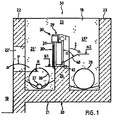
- FIG. 1 shows, as a first exemplary embodiment, a schematic and section view of a section of a sewage system, designated as a whole by 50, which essentially comprises a retention basin 10 partially shown and a relief basin 20 connected thereto via an overflow opening 22 '.
- the relief basin 20 has a bottom 21 and two spaced-apart side walls 22 and 23, a front wall 19 and rear wall 18 and an intermediate wall 24, which in the exemplary embodiment shown is arranged in the longitudinal direction of the relief basin 20.
- a pool space 25 formed by the floor 21 and by the side walls 22 and 23 and by the front and rear walls 19, 18 is divided by the intermediate wall 24 into a storage space (inflow space) 25 'and a discharge space 25' '.
- the overflow opening 22 ' extends largely over the entire length of the side wall 22.
- the storage space 25' is connected to an inflow line 26 penetrating the front wall 19 and an outflow line 27 penetrating the rear wall 18.
- a drain line 28 penetrating the rear wall 18 is assigned to the drain chamber 25 ′′.
- FIG. 1 a sieve screen unit 30 which is arranged on the intermediate wall 24 and is shown schematically and which, together with the upper edge 29, forms an emergency relief from the storage space 25 'to the drainage space 25''.
- the screen rake unit 30 comprises a diagrammatically shown screen rake 30 'with rake bars 31 arranged at a parallel distance from one another.
- the screen rake 30' is a cleaning carriage 35 which can be moved back and forth in the longitudinal direction (Fig. 2) assigned. If the screen rake 30 'is longer, a plurality of cleaning trolleys can also be provided.
- a preferred cleaning trolley which is provided with appropriately designed teeth and is arranged between the rake bars of the sieve rake, is known from EP-A 0 358 952 mentioned at the outset, wherein other cleaning elements which remove the sieve from floating substances can also be installed.
- baffle element 40 On the back or outflow side of the sieve rake 30 'there is a schematically illustrated baffle element 40 which is designed as a weir.
- the damming element 40 protruding into the discharge space 25 ′′ is arranged on the intermediate wall 24 inclined at an angle ⁇ with respect to the sieve ridges 30 ′ lying in the vertical plane and fastened by means not shown.
- a schematically shown holding and fastening device 41 is designed such that the baffle element 40 is adjustable in its relative position to the sieve 30 'and can be locked in the desired position.
- the relative position of the damming element 40 to the sieve screen 30 ' can be set and determined with suitable means, for example sensor-controlled, depending on the load which is dependent on the amount of water which arises.
- the level height N1 of the outflow from the storage space 25 ′ to the outflow space 25 ′′ is increased. This ensures that on the one hand the retention volume is increased and on the other hand the water pressure is largely distributed evenly over the entire surface of the screen. Furthermore, the flow rate of the water through the lower regions of the screen rake 30 'is reduced, as a result of which the floating substances can be retained better by the individual rake bars and an optimal cleaning effect is thus achieved. The reduction in flow rate also causes the existing floating substances are no longer carried away.
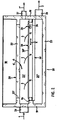
- the sewage system 50 is shown in a top view, and one can see the relief basin 20 arranged next to the partially and schematically shown retention basin 10, which essentially consists of the front wall 19 and the rear wall 18, the two side walls 22 and 23 and the intermediate wall 24 is formed. Furthermore, one can see the diagrammatically shown screen rake 30 'of the screen rake unit 30 as well as the cleaning carriage 35 which can be moved back and forth in the double arrow direction X by means not shown, which is provided with triangular teeth 36 arranged between the rake bars 31 of the screen rake 30'.
- the inflow line 26 is arranged on the front wall 19, through which the waste water or rainwater is supplied to the inflow space 25 'in the direction of the arrow 1.
- the wastewater is discharged through the line 27 in the direction of the arrow 1 ′′ and, at a certain level N, as shown in FIG. 1, through the opening 22 ′ in the direction of the arrow 1 ′ into the retention basin 10.
- a level N2 is reached, the wastewater is directed in the direction of arrow 2 through the sieve rake 30 'and over the upper edge of the damming element 40 into the drainage space 25' 'and discharged via the drain line 28 as water cleaned from floating substances in the direction of the arrow 3.
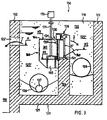
- FIG. 3 shows, as a second exemplary embodiment, a section of a wastewater system, designated schematically and in section, of a whole, designated 150, which essentially comprises a partially illustrated retention basin 110 and a first relief basin 120 connected thereto via an overflow opening 122 '.
- the waste water system 150 essentially corresponds to the waste water system 50 described above in connection with FIGS. 1 and 2.
- the waste water system 150 comprises the relief basin 120 consisting of a floor 121, two side walls 122 and 123, a front wall 119 and a rear wall 118, and an intermediate wall 124 oriented in the longitudinal direction of the relief basin 120.
- the side wall 122 there is a largely the entire length of the Side wall 122 extending overflow opening 122 'is provided.
- a pool space 125 formed by the floor 121 and by the side walls 122 and 123 as well as the front and rear wall 119, 118 is divided by the intermediate wall 124 into a storage space 125 'and a drainage space 125' '.
- FIG. 3 shows a screen screen unit 130, which is shown schematically and is arranged on the intermediate wall 124 and has a screen screen 130 'with rake bars 131 arranged parallel to one another.
- a cleaning carriage 135 (FIG. 4) which can be moved back and forth in the longitudinal direction is assigned to the screen rake 130 '.
- An upper edge of the screen unit 130 designated 129, essentially forms a so-called emergency relief from the storage space 125 'to the drainage space 125' '.
- baffle element 140 On the back or outflow side of the screen rake 130 'there is a schematically illustrated baffle element 140 which is designed as a weir.
- the damming element 140 projecting into the drainage space 125 ′′ is arranged and fastened to the intermediate wall 124 with respect to the screen rake 130 ′, inclined at an angle ⁇ ′.
- a schematically illustrated holding and fastening device 141 is designed such that the baffle element 140 is adjustable in its relative position to the sieve 130 'and in the desired position is noticeable.
- the relative position of the damming element 140 to the sieve screen 130 ' can be set and determined with suitable means, for example sensor-controlled, depending on the load which is dependent on the amount of water occurring.
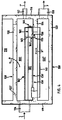
- the sewage system 150 is shown in plan view, and one can see the first relief basin 120 arranged next to the partially and schematically shown retention basin 110, which essentially consists of the front wall 119 and the rear wall 118, the two side walls 122 and 123 and the intermediate wall 124 is formed. Furthermore, one can see the diagrammatically shown sieve rake 130 'of the sieve rake unit 130 and the cleaning carriage 135 which can be moved back and forth in the double-arrow direction X' by means not shown, and which is provided with triangular teeth 136 arranged between the rake bars 131.
- the inflow line 126 is arranged on the front wall 119, through which the waste water is fed to the inflow space 125 ′ in the direction of the arrow 1.
- a second relief basin 160 assigned to the screen unit 130 is provided in the inflow space 125 'of the first relief basin 120.
- the second relief basin 160 forms a prechamber 161 upstream of the screen rake 130 ′, which has an overflow edge 164 in the upper region (FIG. 3).
- the prechamber 161 of the second relief basin 160 is, as shown in FIG. 4, divided to form a screen well 162 by a partition 163, the pre-chamber 161 being connected to the screen well 162 by an opening 162 '.
- the sieve shaft 162 serves to receive the sieve material fed from the sieve screen 130 '.
- a sliding element 165 for draining the sieved material (not shown) is provided for the sieved material shaft 162. To open and close the slide element 165, this is, as shown in FIG. 3, operatively connected to a drive 170 via a tension member 171.
- the wastewater supplied to the inflow space 125 ′ via the line 126 is discharged through the line 127 in the direction of the arrow 1 ′′.
- the waste water as shown in FIG. 3, is conducted into the retention basin 110 in the direction of the arrow 1 ′.
- the waste water reaches the antechamber 161 of the second relief basin 160 and is dammed up there until the level N2 of the additional damming element 140, which is increased in relation to the level N1 (overflow edge of the intermediate wall 124) is reached.
- the water flowing in the direction of the arrow 2 through the sieve rake 130 ′ over the damming element 140 reaches the drainage space 128 and is then discharged as water cleaned of floating substances.
- the baffle element 40 or 140 with respect to the screen unit 30 or 130 at an angle ⁇ or ⁇ 'on the order of 30 ° to 45 ° on the intermediate wall 24 or 124 or possibly also on the screen unit is arranged and fastened.
- the flow rate can be adjusted by the adjustable inclination of the damming element 40 or 140 with respect to the screen unit 30 or 130.
- FIGS. 1 and 2 show a modified embodiment of the exemplary embodiment according to FIGS. 1 and 2.
- This modified embodiment is correct with the exemplary embodiment with the exception of the changes specified below 1 and 2 completely correspond and is therefore not explained again in this respect.
- the embodiment according to FIG. 5 differs from that according to FIG. 1 in that the screen unit 30 is inclined, in such a way that its upper edge is tilted in the direction of the inflow space 25 '.
- the - in the embodiment according to FIG. 1 flat - surface of the intermediate wall 24 is also oriented obliquely, so that the screen unit 30 lies flat with its underside on the top of the intermediate wall 24 .
- the screen rake 30 ' is arranged on the side of the screen rake unit 30 facing the inflow space 25' and its bottom point essentially corresponds to the side face of the intermediate wall 24 facing the inflow area 25 ', the upper edge of the side face facing the drain space 25' 'lies the intermediate wall 24 is significantly higher than the lowest point of the screen rake 30 '.
- the inclined surface 224 of the intermediate wall 24 itself takes over the function of the baffle element 40 according to FIG. forms this dam element.
- a separate damming element can also be positively placed on the surface 224, for example in the form of a thin sheet, in order to protect the top 224 of the intermediate wall 24 against the action of the water flowing over it.
- the holding of the stowage element is thus drastically simplified or, as already stated, it can also be completely on a separate stowage element - with the exception of the inclined surface 224 of the intermediate wall 24 - are dispensed with, so that the effort is reduced accordingly.
- the baffle element can be formed in a particularly simple manner directly through the base plate of the screen unit 30 ', with which the screen unit 30' is mounted on the intermediate wall 24, covering the upper side 224 and possibly pulled down over the edges to the side surfaces of the intermediate wall 24.
- the base plate thus takes on the additional function of damming up the water level on the inflow side.
- tilting the screen unit 30 Another advantage of tilting the screen unit 30 is that the water can flow better out of the screen back to the inlet channel when the water level in the inlet channel begins to drop. In this way, the remaining residual water in the screen unit can be reliably avoided after the water level on the inlet side has dropped to normal level.
- the tilting of the screen rake unit has the advantage that the screenings can be wiped off better in the end positions of the cleaning comb, since the screenings fall better. There is therefore no risk of an undesirably large accumulation of screenings in the edge areas of the screen rack.
- the hydraulic unit mounted on the top of the screen 30 'and driving the cleaning comb (s) is located higher or further away from the drainage level, so that the risk of contamination or contamination of the hydraulic unit is reduced.
- the angle between the horizontal plane and the base plate of the screen unit 30 'or the upper side 224 of the intermediate wall 24 is 30 ° according to FIG. 5.
- the angle of inclination can be varied between 15 ° and 60 °. It is preferably between 30 ° and 40 °, since optimal results are achieved here with regard to the advantages explained above.
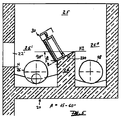
- FIG. 6 shows a modified embodiment of the exemplary embodiment according to FIGS. 3 and 4.
- the screen rake unit 130 is also inclined here as in the embodiment according to FIG. 5. All of the above statements regarding the inclined position of the screen rake unit, the design and arrangement of the damming element, the advantages which can be achieved by the inclined position, etc., which were explained above with reference to FIG. 5, also apply in an identical manner to the embodiment according to FIG. 6, so that reference is made to the above statements in order to avoid repetitions.
Landscapes
- Chemical & Material Sciences (AREA)
- Chemical Kinetics & Catalysis (AREA)
- Public Health (AREA)
- Water Supply & Treatment (AREA)
- Health & Medical Sciences (AREA)
- Life Sciences & Earth Sciences (AREA)
- Engineering & Computer Science (AREA)
- Hydrology & Water Resources (AREA)
- Business, Economics & Management (AREA)
- Emergency Management (AREA)
- Sewage (AREA)
- Filtration Of Liquid (AREA)
- Sampling And Sample Adjustment (AREA)
- Sanitary Device For Flush Toilet (AREA)
- Sink And Installation For Waste Water (AREA)
- Separation Of Suspended Particles By Flocculating Agents (AREA)
- Purification Treatments By Anaerobic Or Anaerobic And Aerobic Bacteria Or Animals (AREA)
- Materials For Photolithography (AREA)
Abstract
Description
Die Erfindung bezieht sich auf eine Abwasseranlage, bestehend aus einem mit mindestens einer Zuflussleitung und mindestens einer Abflussleitung in Verbindung stehenden Entlastungsbecken und einer darin angeordneten Siebrecheneinheit, welche einen aus parallel zueinander angeordneten Rechenstäben bestehenden Siebrechen sowie einen hin- und herbewegbaren Reinigungswagen umfaßt, an welchem ein mit Zähnen zwischen den Rechenstäben des Siebrechens angeordneter Reinigungskamm befestigt ist.The invention relates to a wastewater system, consisting of a relief basin connected to at least one inflow line and at least one outflow line and a screen unit arranged therein, which comprises a screen screen consisting of rake bars arranged parallel to one another and a reciprocating cleaning wagon, on which a cleaning comb arranged with teeth between the screen bars of the screen rack is attached.
Abwasseranlagen mit in entsprechend dimensionierten Kanälen eingebauten Siebrechen zum Zurückhalten sperriger Schwimmstoffe, wie beispielsweise Holzstücke, Kunststoffe, Papier oder dergleichen, sind allgemein bekannt. Bei diesen Anlagen sind an verschiedenen Stellen sogenannte Hochwasserentlastungen eingebaut, durch welche bei stärkeren Niederschlägen ein Teil des mit Schmutzwasser vermischten Regenwassers in ein Gewässer abgeleitet wird. Zur Vermeidung der Ableitung des mit Schwimm- oder Schwebstoffen belasteten Schmutzwassers und des Regenwassers können sogenannte Entlastungsbecken zugeordnet werden, in welchen das Mischwasser gespeichert wird. In Verbindung mit einer Abwasseranlage der genannten Art ist aus der EP-A 0 358 952 eine Siebrecheneinheit bekannt, welche einen im wesentlichen aus parallel zueinander angeordneten Rechenstäben bestehenden Siebrechen umfaßt, zwischen denen dreieckförmige Zähne eines zur Reinigung der Rechenstäbe hin- und herbewegbaren Reinigungskammes angeordnet sind.Waste water systems with sieve screens installed in appropriately dimensioned channels to retain bulky floating materials, such as pieces of wood, plastics, paper or the like, are generally known. In these systems, so-called flood relief is installed at various points, through which part of the rainwater mixed with dirty water is discharged into a body of water during heavy rainfall. To avoid the discharge of the dirty water contaminated with floating or suspended matter and the rainwater, so-called relief basins can be assigned, in which the mixed water is stored. In connection with a wastewater plant of the type mentioned, a sieve screen unit is known from EP-A 0 358 952 which comprises a screen screen consisting essentially of rake bars arranged parallel to one another, between which triangular teeth of a cleaning comb which can be moved back and forth for cleaning the rake bars are arranged .
Der Erfindung liegt die Aufgabe zugrunde, eine Abwasseranlage der genannten Art dahingehend zu verbessern, daß unter Vermeidung einer Rückstaugefahr und ohne Verminderung des Rückhaltevolumens auch bei länger anhaltendem Regenwetter, insbesondere aber bei Gewittern, die in relativ kurzer Zeit anfallenden und stark mit Schwimmstoffen belasteten Mischwassermengen aufgenommen und, von Schwimmstoffen befreit, als gereinigtes Abwasser abgeleitet werden können.The invention has for its object to improve a sewage system of the type mentioned in such a way that avoiding a risk of backing up and without reducing the retention volume even for longer Persistent rainy weather, but especially during thunderstorms, which can absorb mixed water quantities that accumulate in a relatively short time and are heavily contaminated with floating substances and, freed from floating substances, can be discharged as purified waste water.
Diese Aufgabe wird erfindungsgemäß durch die im Patentanspruch 1 angegebenen Merkmale gelöst. Vorteilhafte Ausgestaltungen der Erfindung ergeben sich aus den Unteransprüchen.This object is achieved by the features specified in claim 1. Advantageous refinements of the invention result from the subclaims.
Mit der Erfindung kann unter Beibehaltung einer optimalen Reinigungswirkung in einfacher Weise eine vergleichmäßigte Durchtrittsgeschwindigkeit sowie eine gleichmäßigere Druckverteilung über die gesamte Fläche der Siebrecheneinheit erreicht werden.With the invention, while maintaining an optimal cleaning effect, a uniform passage speed and a more uniform pressure distribution over the entire area of the screen unit can be achieved in a simple manner.
Weitere Merkmale der Erfindung ergeben sich aus der folgenden Beschreibung in Verbindung mit den Zeichnungen. Es zeigen:
- Fig. 1 ein schematisches und in Schnittansicht dargestelltes Teilstück eines ersten Ausführungsbeispiels einer Abwasseranlage mit eingebauter Sierbrecheneinheit;
- Fig. 2 die in Draufsicht dargestellte Abwasseranlage gemäß Fig. 1;
- Fig. 3 ein schematisch und in Schnittansicht dargestelltes Teilstück eines zweiten Ausführungsbeispiels einer Abwasseranlage;
- Fig. 4 die in Draufsicht dargestellte Abwasseranlage gemäß Fig. 3;
- Fig. 5 eine Abwandlung der Ausführungsform gemäß den Fig. 1 und 2; und
- Fig. 6 eine Abwandlung des Ausführungsbeispiels gemäß den Fig. 3 und 4.
- Fig. 1 is a schematic and sectioned section of a first embodiment of a wastewater system with built-in screen unit;
- FIG. 2 shows the waste water system shown in plan view according to FIG. 1;
- Figure 3 is a schematic and sectional view of a portion of a second embodiment of a sewage system.
- FIG. 4 shows the sewage system shown in plan view according to FIG. 3;
- 5 shows a modification of the embodiment according to FIGS. 1 and 2; and
- 6 shows a modification of the exemplary embodiment according to FIGS. 3 and 4.
Fig. 1 zeigt als erstes Ausführungsbeispiel ein schematisches und in Schnittansicht dargestelltes Teilstück einer in der Gesamtheit mit 50 bezeichneten Abwasseranlage, welche im wesentlichen ein teilweise dargestelltes Rückhaltebecken 10 und ein über eine Überlauföffnung 22' damit in Verbindung stehendes Entlastungsbecken 20 umfaßt.1 shows, as a first exemplary embodiment, a schematic and section view of a section of a sewage system, designated as a whole by 50, which essentially comprises a
Das Entlastungsbecken 20 hat einen Boden 21 und zwei im Abstand zueinander angeordnete Seitenwände 22 und 23, eine Vorderwand 19 und Rückwand 18 sowie eine Zwischenwand 24, welche im dargestellten Ausführungsbeispiel in Längsrichtung des Entlastungsbeckens 20 angeordnet ist. Ein durch den Boden 21 und durch die Seitenwände 22 und 23 sowie durch die Vorder- und Rückwand 19, 18 gebildeter Beckenraum 25 ist durch die Zwischenwand 24 in einen Stauraum (Zuflußraum) 25' und einen Abflußraum 25'' unterteilt. Die Überlauföffnung 22' erstreckt sich weitgehend über die gesamte Länge der Seitenwand 22. Der Stauraum 25' steht mit einer die Vorderwand 19 durchdringenden Zuflußleitung 26 und einer die Rückwand 18 durchdringenden Abflußleitung 27 in Verbindung. Dem Abflußraum 25'' ist eine die Rückwand 18 durchdringende Abflußleitung 28 zugeordnet.The
Weiterhin erkennt man in Fig. 1 eine auf der Zwischenwand 24 angeordnete und schematisch dargestellte Siebrecheneinheit 30, welche mit der Oberkante 29 eine Notentlastung vom Stauraum 25' zum Abflußraum 25'' bildet. Die Siebrecheneinheit 30 umfaßt einen schematisch dargestellten Siebrechen 30' mit in parallelem Abstand zueinander angeordneten Rechenstäben 31. Dem Siebrechen 30' ist ein in Längsrichtung hin- und herbewegbarer Reinigungswagen 35 (Fig. 2) zugeordnet. Bei größerer Länge des Siebrechens 30' können auch mehrere Reinigungswagen vorgesehen sein.Furthermore, one can see in FIG. 1 a
Ein bevorzugter und mit entsprechend ausgebildeten und zwischen den Rechenstäben des Siebrechens angeordneten Zähnen versehener Reinigungswagen ist aus der eingangs erwähnten EP-A 0 358 952 bekannt, wobei auch andere den Siebrechen von Schwimmstoffen befreiende Reinigungselemente eingebaut werden können.A preferred cleaning trolley, which is provided with appropriately designed teeth and is arranged between the rake bars of the sieve rake, is known from EP-A 0 358 952 mentioned at the outset, wherein other cleaning elements which remove the sieve from floating substances can also be installed.
An der Rück- oder Abflußseite des Siebrechens 30' ist ein schematisch dargestelltes und als Wehr ausgebildetes Stauelement 40 angeordnet. Das in den Abflußraum 25'' ragende Stauelement 40 ist in bezug auf den in der Vertikalebene liegenden Siebrechen 30' unter einem Winkel α geneigt an der Zwischenwand 24 angeordnet und mit nicht dargestellten Mitteln befestigt. Eine schematisch dargestellte Halte- und Befestigungsvorrichtung 41 ist derart ausgebildet, daß das Stauelement 40 in seiner Relativlage zum Siebrechen 30' verstellbar und in der gewünschten Position feststellbar ist. Die Relativlage des Stauelements 40 zum Siebrechen 30' kann je nach der von der anfallenden Wassermenge abhängigen Belastung mit geeigneten Mitteln, zum Beispiel sensorgesteuert, eingestellt und festgestellt werden.On the back or outflow side of the sieve rake 30 'there is a schematically illustrated
Mit dem zusätzlichen, eine Niveauhöhe N2 bildenden Stauelement 40 wird die Niveauhöhe N1 des Abflusses vom Stauraum 25' zum Abflußraum 25'' erhöht. Hiermit wird erreicht, daß einerseits das Rückhaltevolumen erhöht und andererseits der Wasserdruck weitgehend gleichmäßig auf die gesamte Fläche des Siebrechens verteilt wird. Weiterhin wird die Durchflußgeschwindigkeit des Wassers durch die unteren Bereiche des Siebrechens 30' reduziert, wodurch die Schwimmstoffe besser durch die einzelnen Rechenstäbe zurückgehalten werden können und somit eine optimale Reinigungswirkung erreicht wird. Die Verringerung der Durchflußgeschwindigkeit bewirkt ferner, daß die vorhandenen Schwimmstoffe nicht mehr mitgerissen werden.With the additional
In Fig. 2 ist die Abwasseranlage 50 in Draufsicht dargestellt, und man erkennt das neben dem teilweise und schematisch dargestellten Rückhaltebecken 10 angeordnete Entlastungsbecken 20, welches im wesentlichen aus der Vorderwand 19 und der Rückwand 18, den beiden Seitenwänden 22 und 23 sowie der Zwischenwand 24 gebildet ist. Weiterhin erkennt man den schematisch dargestellten Siebrechen 30' der Siebrecheneinheit 30 sowie den mit nicht dargestellten Mitteln in Doppelpfeilrichtung X hin- und herbewegbaren Reinigungswagen 35, welcher mit zwischen den Rechenstäben 31 des Siebrechens 30' angeordneten, dreieckförmig ausgebildeten Zähnen 36 versehen ist.2, the
An der Vorderwand 19 ist die Zuflußleitung 26 angeordnet, durch welche dem Zuflußraum 25' das Abwasser bzw. Regenwasser in Pfeilrichtung 1 zugeführt wird. Das Abwasser wird einerseits durch die Leitung 27 in Pfeilrichtung 1'' abgeführt und bei bestimmter Niveauhöhe N, wie in Fig. 1 dargestellt, durch die Öffnung 22' in Pfeilrichtung 1' ins Rückhaltebecken 10 geleitet. Beim Erreichen einer Niveauhöhe N2 wird das Abwasser in Pfeilrichtung 2 durch den Siebrechen 30' und über die Oberkante des Stauelements 40 in den Abflußraum 25'' geleitet und über die Abflußleitung 28 als vor Schwimmstoffen gereinigtes Wasser in Pfeilrichtung 3 abgeleitet.The
Fig. 3 zeigt als zweites Ausführungsbeispiel ein schematisch und in Schnittansicht dargestelltes Teilstück einer in der Gesamtheit mit 150 bezeichneten Abwasseranlage, welche im wesentlichen ein teilweise dargestelltes Rückhaltebecken 110 und ein über eine Überlauföffnung 122' damit in Verbindung stehendes erstes Entlastungsbecken 120 umfaßt.FIG. 3 shows, as a second exemplary embodiment, a section of a wastewater system, designated schematically and in section, of a whole, designated 150, which essentially comprises a partially illustrated
Die Abwasseranlage 150 entspricht im wesentlichen der vorstehend in Verbindung mit Fig. 1 und Fig. 2 beschriebenen Abwasseranlage 50.The
Die Abwasseranlage 150 umfaßt das aus einem Boden 121, zwei Seitenwänden 122 und 123, einer Vorderwand 119 und einer Rückwand 118 bestehende Entlastungsbecken 120 sowie eine in Längsrichtung des Entlastungsbeckens 120 orientierte Zwischenwand 124. In der Seitenwand 122 ist eine sich weitgehend über die gesamte Länge der Seitenwand 122 erstreckende Überlauföffnung 122' vorgesehen. Ein durch den Boden 121 und durch die Seitenwände 122 und 123 sowie die Vorder- und Rückwand 119, 118 gebildeter Beckenraum 125 ist durch die Zwischenwand 124 in einen Stauraum 125' und einen Abflußraum 125'' unterteilt. Der Stauraum 125' steht mit einer die Vorderwand 119 durchdringenden Zuflußleitung 126 und einer die Rückwand 118 durchdringenden Abflußleitung 127 in Verbindung. Dem Abflußraum 125'' ist eine Abflußleitung 128 zugeordnet. Weiterhin erkennt man in Fig. 3 eine schematisch dargestellte und an der Zwischenwand 124 angeordnete Siebrecheneinheit 130, welche einen Siebrechen 130' mit in parallelem Abstand zueinander angeordneten Rechenstäben 131 aufweist. Dem Siebrechen 130' ist ein in Längsrichtung hin- und herbewegbarer Reiniungswagen 135 (Fig. 4) zugeordnet. Eine mit 129 bezeichnete Oberkante der Siebrecheneinheit 130 bildet im wesentlichen eine sogenannte Notentlastung vom Stauraum 125' zum Abflußraum 125''.The
An der Rück- oder Abflußseite des Siebrechens 130' ist ein schematisch dargestelltes und als Wehr ausgebildetes Stauelement 140 angeordnet. Das in den Abflußraum 125'' ragende Stauelement 140 ist in bezug auf den Siebrechen 130', unter einem Winkel α' geneigt, an der Zwischenwand 124 angeordnet und befestigt. Eine schematisch dargestellte Halte- und Befestigungsvorrichtung 141 ist derart ausgebildet, daß das Stauelement 140 in seiner Relativlage zum Siebrechen 130' verstellbar und in der gewünschten Position feststellbar ist. Die Relativlage des Stauelements 140 zum Siebrechen 130' kann je nach der von der anfallenden Wassermenge abhängigen Belastung mit geeigneten Mitteln, zum Beispiel sensorgesteuert, eingestellt und festgestellt werden.On the back or outflow side of the screen rake 130 'there is a schematically illustrated
In Fig. 4 ist die Abwasseranlage 150 in Draufsicht dargestellt, und man erkennt das neben dem teilweise und schematisch dargestellten Rückhaltebecken 110 angeordnete erste Entlastungsbecken 120, welches im wesentlichen aus der Vorderwand 119 und der Rückwand 118, den beiden Seitenwänden 122 und 123 sowie der Zwischenwand 124 gebildet ist. Weiterhin erkennt man den schematisch dargestellten Siebrechen 130' der Siebrecheneinheit 130 sowie den mit nicht dargestellten Mitteln in Doppelfpeilrichtung X' hin- und herbewegbaren Reinigungswagen 135, welcher mit zwischen den Rechenstäben 131 angeordneten, dreieckförmig ausgebildeten Zähnen 136 versehen ist. An der Vorderwand 119 ist die Zuflußleitung 126 angeordnet, durch welche dem Zuflußraum 125' das Abwasser in Pfeilrichtung 1 zugeführt wird.In Fig. 4, the
Abweichend von dem ersten Ausführungsbeispiel gemäß Fig. 1 und Fig. 2 ist bei dem zweiten Ausführungsbeispiel gemäß Fig. 3 und Fig. 4 in dem Zuflußraum 125' des ersten Entlastungsbeckens 120 ein der Siebrecheneinheit 130 zugeordnetes zweites Entlastungsbecken 160 vorgesehen. Das zweite Entlastungsbecken 160 bildet eine dem Siebrechen 130' vorgeschaltete Vorkammer 161, welche im oberen Bereich eine Überlaufkante 164 (Fig. 3) aufweist. Die Vorkammer 161 des zweiten Entlastungsbeckens 160 ist, wie in Fig. 4 dargestellt, zur Bildung eines Siebgutschachtes 162 durch eine Trennwand 163 unterteilt, wobei die Vorkammer 161 mit dem Siebgutschacht 162 durch eine Öffnung 162' miteinander verbunden sind.1 and 2, in the second exemplary embodiment according to FIGS. 3 and 4, a
Der Siebautschacht 162 dient zur Aufnahme des vom Siebrechen 130' zugeführten Siebgutes. Im unteren Bereich des zweiten Entlastungsbeckens 160 ist dem Siebgutschacht 162 ein Schieberelement 165 zum Ablassen des Siebgutes (nicht dargestellt) vorgesehen. Zum Öffnen und Schließen des Schieberelements 165 ist dieses, wie in Fig. 3 dargestellt, über ein Zugglied 171 mit einem Antrieb 170 wirkverbunden.The
Bei diesem Ausführungsbeispiel gemäß Fig. 3 und Fig. 4 wird das über die Leitung 126 dem Zuflußraum 125' zugeführte Abwasser durch die Leitung 127 in Pfeilrichtung 1'' abgeführt. Bei Erreichen einer Niveauhöhe N wird das Abwasser, wie in Fig. 3 dargestellt, in Pfeilrichtung 1' in das Rückhaltebecken 110 geleitet. Beim Erreichen einer höher liegenden Niveauhöhe N3 im Zuflußraum 125' gelangt das Abwasser in die Vorkammer 161 des zweiten Entlastungsbeckens 160 und wird darin so lange gestaut, bis die in bezug auf die Niveauhöhe N1 (Überlaufkante der Zwischenwand 124) erhöhte Niveauhöhe N2 des zusätzlichen Stauelements 140 erreicht ist. Das in Pfeilrichtung 2 durch den Siebrechen 130' über das Stauelement 140 fließende Wasser gelangt in den Abflußraum 128 und wird danach als von Schwimmstoffen gereinigtes Wasser abgeleitet.In this exemplary embodiment according to FIGS. 3 and 4, the wastewater supplied to the
An dieser Stelle wird darauf hingewiesen, daß das Stauelement 40 oder 140 in bezug auf die Siebrecheneinheit 30 oder 130 unter einem in der Größenordnung von 30° bis 45° liegenden Winkel α oder α' an der Zwischenwand 24 oder 124 oder gegebenenfalls auch an der Siebrecheneinheit angeordnet und befestigt ist. Durch die verstellbare Neigung des Stauelements 40 oder 140 in bezug auf die Siebrecheneinheit 30 oder 130 kann die Durchflußgeschwindigkeit eingestellt werden.At this point it is pointed out that the
In Fig. 5 ist eine abgewandelte Ausführungsform des Ausführungsbeispiels gemäß den Fig. 1 und 2 dargestellt. Diese abgewandelte Ausführungsform stimmt mit Ausnahme der nachstehend angegebenen Änderungen mit dem Ausführungsbeispiel gemäß den Fig. 1 und 2 vollständig überein und wird somit insoweit nicht nochmals erläutert.5 shows a modified embodiment of the exemplary embodiment according to FIGS. 1 and 2. This modified embodiment is correct with the exemplary embodiment with the exception of the changes specified below 1 and 2 completely correspond and is therefore not explained again in this respect.
Die Ausführungsform gemäß Fig. 5 weicht von derjenigen gemäß Fig. 1 dahingehend ab, daß die Siebrecheneinheit 30 schräggestellt ist, und zwar derart, daß ihre Oberkante in Richtung zum Zuflußraum 25' verkippt ist. Um eine stabile Auflage der verkippten Siebrecheneinheit 30 auf der Zwischenwand 24 zu erreichen, ist die - beim Ausführungsbeispiel gemäß Fig. 1 ebene - Oberfläche der Zwischenwand 24 gleichfalls schräg orientiert, so daß die Siebrecheneinheit 30 mit ihrer Unterseite plan auf der Oberseite der Zwischenwand 24 aufliegt.The embodiment according to FIG. 5 differs from that according to FIG. 1 in that the
Da der Siebrechen 30' an der der dem Zuflußraum 25' zugewandten Seite der Siebrecheneinheit 30 angeordnet ist und mit seinem untersten Punkt im wesentlichen mit der dem Zuflußraum 25' zugewandten Seitenfläche der Zwischenwand 24 übereinstimmt, liegt die Oberkante der dem Abflußraum 25'' zugewandten Seitenfläche der Zwischenwand 24 deutlich höher als der unterste Punkt des Siebrechens 30'. Durch diese Schrägstellung der Siebrecheneinheit in Verbindung mit der schrägen Oberfläche der Zwischenwand 24 läßt sich somit erreichen, daß die geneigte Oberfläche 224 der Zwischenwand 24 selbst die Funktion des Stauelements 40 gemäß Fig. 1 übernimmt, d.h. dieses Stauelement bildet. Alternativ kann auch ein separates Stauelement formschlüssig auf die Oberfläche 224, beispielsweise in Form eines dünnen Blechs, aufgesetzt sein, um die Oberseite 224 der Zwischenwand 24 gegenüber der Einwirkung des über sie fließenden Wassers zu schützen.Since the screen rake 30 'is arranged on the side of the
Bei dieser Ausgestaltung ist die Halterung des Stauelments somit drastisch vereinfacht oder es kann, wie bereits ausgeführt, auch vollständig auf ein separates Stauelement - mit Ausnahme der geneigten Oberfläche 224 der Zwischenwand 24 - verzichtet werden, so daß der Aufwand entsprechend reduziert ist.In this embodiment, the holding of the stowage element is thus drastically simplified or, as already stated, it can also be completely on a separate stowage element - with the exception of the
In besonders einfacher Weise läßt sich das Stauelement direkt durch die Grundplatte der Siebrecheneinheit 30', mit der diese, die Oberseite 224 überdeckend und gegebenenfalls über die Kanten zu den Seitenflächen der Zwischenwand 24 herabgezogen - auf der Zwischenwand 24 montiert ist, bilden. Die Grundplatte übernimmt somit die zusätzliche Funktion der Aufstauung des Wasserniveaus auf der Zuflußseite.The baffle element can be formed in a particularly simple manner directly through the base plate of the screen unit 30 ', with which the screen unit 30' is mounted on the
Ein weiterer Vorteil der Verkippung der Siebrecheneinheit 30 besteht darin, daß das Wasser besser aus dem Sieb zurück zum Zulaufkanal fließen kann, wenn der Wasserspiegel im Zulaufkanal abzusinken beginnt. Damit kann der Verbleib von restlichem Stauwasser in der Siebrecheneinheit nach Absinken des zulaufseitigen Wasserspiegels auf Normalniveau zuverlässig vermieden werden.Another advantage of tilting the
Ferner bringt die Verkippung der Siebrecheneinheit den Vorteil, daß das Siebgut in den Endstellungen des Reinigungskamms besser abgestreift werden kann, da das Siebgut besser herabfällt. Damit besteht keinerlei Gefahr einer unerwünscht großen Ansammlung von Siebgut in den Randbereichen des Siebrechens.Furthermore, the tilting of the screen rake unit has the advantage that the screenings can be wiped off better in the end positions of the cleaning comb, since the screenings fall better. There is therefore no risk of an undesirably large accumulation of screenings in the edge areas of the screen rack.
Ferner befindet sich das oberseitig auf dem Siebrechen 30' montierte, den Antrieb des oder der Reinigungskämme bewirkende Hydraulikaggregat höher bzw. weiter entfernt von dem Abflußniveau, so daß die Gefahr der Verschmutzung oder Verunreinigung des Hydraulikaggregats verringert ist.Furthermore, the hydraulic unit mounted on the top of the screen 30 'and driving the cleaning comb (s) is located higher or further away from the drainage level, so that the risk of contamination or contamination of the hydraulic unit is reduced.
Der Winkel zwischen der Horizontalebene und der Grundplatte der Siebrecheneinheit 30' bzw. der Oberseite 224 der Zwischenwand 24 beträgt gemäß Fig. 5 30°. Der Schrägstellungswinkel kann jedoch zwischen 15° und 60° variiert werden. Vorzugsweise liegt er zwischen 30° und 40°, da hier optimale Ergebnisse im Hinblick auf die vorstehend erläuterten Vorteile erzielt werden.The angle between the horizontal plane and the base plate of the screen unit 30 'or the
In Fig. 6 ist eine abgeänderte Ausführungsform des Ausführungsbeispiels gemäß den Fig. 3 und 4 dargestellt.FIG. 6 shows a modified embodiment of the exemplary embodiment according to FIGS. 3 and 4.
Wie ersichtlich, ist auch hier die Siebrecheneinheit 130 identisch wie bei der Ausführungsform gemäß Fig. 5 schräggestellt. Sämtliche vorstehenden Ausführungen bezüglich der Schrägstellung der Siebrecheneinheit, der Ausgestaltung und Anordnung des Stauelements, der durch die Schrägstellung erzielbaren Vorteile u.s.w., die vorstehend unter Bezugnahme auf Fig. 5 erläutert wurden, treffen auch für die Ausgestaltung gemäß Fig. 6 in identischer Weise zu, so daß zur Vermeidung von Wiederholungen auf die vorstehenden Ausführungen verwiesen wird.As can be seen, the
Wie aus Fig. 6 ersichtlich ist, ist nicht nur die Siebrecheneinheit 130, sondern auch das vorgeschaltete Entlastungsbecken 160 samt allen zugehörigen Komponenten verkippt derart angeordnet, daß es - wie bei Fig. 3 - parallel zur Siebrecheneinheit 130 liegt. Die dem Zuflußraum 125' zugewandte Vorderwand des Entlastungsbeckens 160 ist derart verlängert, daß sich trotz der Schrägstellung ein Überlaufniveau N3 ergibt, das höher liegt als das durch den unteren Rand der Öffnung 122' definierte Niveau N.As can be seen from FIG. 6, not only the
Von den vorstehenden Abänderungen abgesehen, sind alle übrigen Ausgestaltungen der Ausführungsform nach Fig. 6 identisch mit denjenigen gemäß den Fig. 3 und 4, so daß insoweit auf die vorstehenden Ausführungen verwiesen wird.Apart from the above modifications, all other configurations of the embodiment according to FIG. 6 are identical to those according to FIGS. 3 and 4, so that reference is made to the above statements in this respect.
Claims (13)
- Waste water plant, consisting of a spillway basin (20; 120), which is connected to at least one inflow channel (26; 126) and at least one drain channel (28; 128), and of a screening rake unit (30; 130), which is disposed in the basin and comprises a screening rake consisting of parallel rake bars and a reciprocating cleaning carriage to which a cleaning comb is secured, the teeth of which comb are disposed between the rake bars of the screening rake, characterised in that the spillway basin (20; 120) is divided by a partition (24; 124) into an inflow space (25'; 125') and a drain space (25'', 125''), and the screening rake unit (30; 130) is disposed at the partition (24; 124), and that a baffle element (40; 140) is provided to increase the impounded volume, which element is disposed after the screening rake unit (30; 130) in the flow direction and at an angle of inclination (α; α') relative to the vertical plane.
- Waste water plant according to claim 1, characterised in that the baffle element is secured to the partition (24; 124) so as to project into the drain space (25''; 125'').
- Waste water plant according to claim 1 or 2, characterised in that the baffle element is secured to the inclined top edge of the partition (24; 124) or is formed by this.
- Waste water plant according to claim 1, 2 or 3, characterised in that the baffle element (40; 140) is disposed at an angle (α; α') of the order of 30° to 45° with respect to the vertical plane.
- Waste water plant according to one of the preceding claims, characterised in that the baffle element (40; 140) can be adjusted and fixed in terms of its inclination relative to the screening rake unit (30; 130) in accordance with the quantity of water arising.
- Waste water plant according to one of the preceding claims, characterised in that the partition (24) is at a height (N1) which is greater than the height (N) of an overflow opening (22') via which the spillway basin (20) is connected to an associated retention basin (10).
- Waste water plant according to one of claims 1 to 5, characterised in that a spillway basin (160) is disposed in the inflow space (125'), which basin is associated with the screening rake unit (130), is provided with a pre-chamber (161) and comprises an overflow edge (164) lying above the screening rake unit (130).
- Waste water plant according to claim 7, characterised in that the overflow edge (164) of the spillway basin (160) is at a height (N3) which is greater than the height (N) of an overflow opening (122') via which the spillway basin (120) is connected to an associated retention basin (110).
- Waste water plant according to claim 7 or 8, characterised in that the baffle element (140) can be adjusted and fixed in terms of its inclination relative to the screening rake unit (130) under the control of sensors in accordance with the water level in the pre-chamber (161).
- Waste water plant according to claim 7, 8 or 9, characterised in that the pre-chamber (161) of the spillway basin (160) is provided with a screening material shaft (162) which is connected thereto via an opening (162') and with which a slide element (165) is associated for discharging the screening material.
- Waste water plant according to claim 10, characterised in that the slide element (165) can be actuated via a traction member (171) which is operatively connected to a drive (170).
- Waste water plant according to one of the preceding claims, characterised in that the screening rake unit is tilted with its top edge in the direction of the inflow space.
- Waste water plant according to claim 12, characterised in that the angle of tilt of the screening rake unit (30; 130) with respect to the vertical plane is 15° to 60°, preferably 30° to 40°.
Applications Claiming Priority (3)
| Application Number | Priority Date | Filing Date | Title |
|---|---|---|---|
| CH3015/92A CH685554A5 (en) | 1992-09-25 | 1992-09-25 | Sewage system with built-in screening rake. |
| CH3015/92 | 1992-09-25 | ||
| PCT/EP1993/002594 WO1994007585A1 (en) | 1992-09-25 | 1993-09-24 | Sewage water installation with an incorporated screening unit |
Publications (2)
| Publication Number | Publication Date |
|---|---|
| EP0614397A1 EP0614397A1 (en) | 1994-09-14 |
| EP0614397B1 true EP0614397B1 (en) | 1997-02-12 |
Family
ID=4246728
Family Applications (1)
| Application Number | Title | Priority Date | Filing Date |
|---|---|---|---|
| EP93921848A Expired - Lifetime EP0614397B1 (en) | 1992-09-25 | 1993-09-24 | Sewage water installation with an incorporated screening unit |
Country Status (10)
| Country | Link |
|---|---|
| US (1) | US5490922A (en) |
| EP (1) | EP0614397B1 (en) |
| AT (1) | ATE148836T1 (en) |
| CA (1) | CA2124327C (en) |
| CH (1) | CH685554A5 (en) |
| DE (1) | DE59305456D1 (en) |
| DK (1) | DK0614397T3 (en) |
| ES (1) | ES2097543T3 (en) |
| GR (1) | GR3022562T3 (en) |
| WO (1) | WO1994007585A1 (en) |
Cited By (1)
| Publication number | Priority date | Publication date | Assignee | Title |
|---|---|---|---|---|
| DE102004014762A1 (en) * | 2004-03-26 | 2005-10-06 | Hans Huber Ag Maschinen- Und Anlagenbau | Wastewater plant and method for actuating a damming element of a wastewater treatment plant |
Families Citing this family (20)
| Publication number | Priority date | Publication date | Assignee | Title |
|---|---|---|---|---|
| US5849181A (en) * | 1997-06-02 | 1998-12-15 | Stormceptor Corporation | Catch basin |
| DE19801104C2 (en) * | 1998-01-15 | 2000-04-13 | Bormet Maschinenbau Gmbh | They break |
| GB9806071D0 (en) * | 1998-03-20 | 1998-05-20 | Tj Brent Limited | Raked bar screen |
| US6830207B2 (en) * | 2000-02-07 | 2004-12-14 | Franklin Miller, Inc. | Screen cleaning and comminuting system |
| US6311905B1 (en) | 2000-02-07 | 2001-11-06 | Franklin Miller, Inc. | Screen cleaning and comminuting system |
| AU5649701A (en) * | 2000-08-29 | 2002-03-13 | Kier Construction Ltd | Screen assembly for combined sewer overflow weir |
| DE20103875U1 (en) | 2001-03-07 | 2001-08-16 | Vollmar Gmbh | Sewage system with cleaning device |
| KR100429686B1 (en) * | 2001-04-09 | 2004-05-03 | (주) 상원이엔씨 | A storm overflow diverging tank |
| US6616834B2 (en) * | 2001-10-14 | 2003-09-09 | Jim Anderson | Wastewater processor |
| US7582216B2 (en) | 2007-08-22 | 2009-09-01 | Imbrium Systems Corp. | Water treatment and bypass system |
| EP2116649A3 (en) | 2008-05-05 | 2011-07-13 | Jörg-Michael Dipl.-Ing. Steinhardt | Screening device with a device to remove the items being screened |
| AU2010300069B2 (en) * | 2009-09-22 | 2016-01-14 | Water Solutions (Aust) Pty Ltd | Separator |
| IT1398752B1 (en) * | 2010-02-17 | 2013-03-18 | Friulana Costruzioni S R L | FILTERING DEVICE. |
| US8727248B2 (en) | 2010-08-11 | 2014-05-20 | William Galanty | Comminutor with screening conditioner |
| USD715409S1 (en) | 2012-04-05 | 2014-10-14 | Leo Michael Raimondi | Pipe vent fitting |
| CN105863031A (en) * | 2016-04-06 | 2016-08-17 | 重庆大学 | Efficient rainwater hydraulic drop discarding water collecting device |
| CN105888037A (en) * | 2016-04-06 | 2016-08-24 | 重庆大学 | Rainwater drop discarding water collecting device |
| USD853869S1 (en) | 2018-04-13 | 2019-07-16 | Silicon Controls Pty Ltd. | Telemetric device for asset monitoring and reporting |
| CN115544461B (en) * | 2022-11-28 | 2023-04-28 | 成都同飞科技有限责任公司 | Rain and sewage hybrid analysis method, system, equipment and medium |
| CN116556499A (en) * | 2023-06-05 | 2023-08-08 | 江苏全心建设有限公司 | Municipal rainwater collecting system |
Family Cites Families (13)
| Publication number | Priority date | Publication date | Assignee | Title |
|---|---|---|---|---|
| US799829A (en) * | 1905-06-02 | 1905-09-19 | William L Church | Dam. |
| US909484A (en) * | 1907-06-24 | 1909-01-12 | Byron E Van Auken | Water-of-condensation-cleaning apparatus. |
| US1035480A (en) * | 1907-10-09 | 1912-08-13 | Milton Schnaier | Area-drain. |
| US1474938A (en) * | 1919-08-19 | 1923-11-20 | Samuel L Marsh | Grease interceptor |
| US1825169A (en) * | 1928-04-09 | 1931-09-29 | Wyckoff Munro | Fish guard for irrigation ditches |
| US1758743A (en) * | 1929-04-05 | 1930-05-13 | Harman Jay Floyd | Oil and water separator |
| GB487803A (en) * | 1937-11-04 | 1938-06-27 | Claude Suckling | An improved means of safeguarding a water intake against choking by debris |
| DE2743580A1 (en) * | 1977-09-28 | 1979-03-29 | Herbert Reppert | Storm sewage bar screen - with downward inclined bars for self cleaning action |
| US4134833A (en) * | 1977-09-29 | 1979-01-16 | Mccormick Dennis J | Water recycle unit-grey water clearifier |
| US4689145A (en) * | 1986-08-01 | 1987-08-25 | Mathews Lester R | Dry well filtration system |
| CH677001A5 (en) * | 1988-09-05 | 1991-03-28 | Romag Roehren & Masch | |
| WO1992021837A1 (en) * | 1991-05-30 | 1992-12-10 | Kevin John Banner | Debris diverter and filtration method |
| US5277799A (en) * | 1991-09-13 | 1994-01-11 | Bransch Edward J | Pump compartment screening arrangement for a tank |
-
1992
- 1992-09-25 CH CH3015/92A patent/CH685554A5/en not_active IP Right Cessation
-
1993
- 1993-09-24 US US08/240,765 patent/US5490922A/en not_active Expired - Lifetime
- 1993-09-24 CA CA002124327A patent/CA2124327C/en not_active Expired - Fee Related
- 1993-09-24 DK DK93921848.3T patent/DK0614397T3/en active
- 1993-09-24 AT AT93921848T patent/ATE148836T1/en not_active IP Right Cessation
- 1993-09-24 WO PCT/EP1993/002594 patent/WO1994007585A1/en not_active Ceased
- 1993-09-24 DE DE59305456T patent/DE59305456D1/en not_active Expired - Lifetime
- 1993-09-24 ES ES93921848T patent/ES2097543T3/en not_active Expired - Lifetime
- 1993-09-24 EP EP93921848A patent/EP0614397B1/en not_active Expired - Lifetime
-
1997
- 1997-02-13 GR GR970400191T patent/GR3022562T3/en unknown
Cited By (1)
| Publication number | Priority date | Publication date | Assignee | Title |
|---|---|---|---|---|
| DE102004014762A1 (en) * | 2004-03-26 | 2005-10-06 | Hans Huber Ag Maschinen- Und Anlagenbau | Wastewater plant and method for actuating a damming element of a wastewater treatment plant |
Also Published As
| Publication number | Publication date |
|---|---|
| GR3022562T3 (en) | 1997-05-31 |
| CA2124327A1 (en) | 1994-04-14 |
| ATE148836T1 (en) | 1997-02-15 |
| US5490922A (en) | 1996-02-13 |
| CH685554A5 (en) | 1995-08-15 |
| ES2097543T3 (en) | 1997-04-01 |
| DK0614397T3 (en) | 1997-03-17 |
| CA2124327C (en) | 2005-02-15 |
| DE59305456D1 (en) | 1997-03-27 |
| WO1994007585A1 (en) | 1994-04-14 |
| EP0614397A1 (en) | 1994-09-14 |
Similar Documents
| Publication | Publication Date | Title |
|---|---|---|
| EP0614397B1 (en) | Sewage water installation with an incorporated screening unit | |
| DE69420395T2 (en) | DEVICE FOR SEPARATING SOLIDS FROM A FLOWING LIQUID | |
| AT396801B (en) | SCREEN ARRANGEMENT AND USE OF THE SCREEN ARRANGEMENT | |
| DE69401914T2 (en) | DISTRIBUTION AND REGULATION UNIT | |
| EP1366245B1 (en) | Waste water installation with purification device | |
| EP1090664B1 (en) | Discharge of floating sludge | |
| EP0358952B1 (en) | Sieve grid, especially a sieve for rain water | |
| DE2544051A1 (en) | CLEANING DEVICE | |
| AT400599B (en) | SCREEN ARRANGEMENT FOR OVERFLOW POOLS | |
| DE69810267T2 (en) | INCLINED WATER RULES | |
| DE3403985A1 (en) | FILTRATION DRUM OF A FILTRATION SYSTEM FOR METALLURGICAL SLAG | |
| DE4124006A1 (en) | Storage tank for water - is arranged for ease of cleaning coarse filter and tank floor | |
| EP1632619B1 (en) | Water installation with a device for controlling overflow | |
| DE2263549C3 (en) | Device for washing out impurities from granular solids | |
| DE19649814C2 (en) | Sedimentation basin with a rectangular layout for separating sludge from waste water | |
| DE19721629C1 (en) | Upstream sorter | |
| DE19820259C2 (en) | Device for cleaning, rinsing and washing a wastewater stream in an inlet channel of a sewage treatment plant | |
| DE10033484A1 (en) | Outflow from a rain water holding tank has a pipe section leading to a collection tank, with a throttle and a cleaning unit to give a clean flow according to the water level | |
| DE1274044B (en) | Equalization and sedimentation basin for rainwater connected to a sewer with an overflow channel draining into a receiving water channel | |
| DE19618300C2 (en) | Flow-through baffle | |
| DE3821521A1 (en) | Clarifying tank | |
| DE19801104C2 (en) | They break | |
| DE9017739U1 (en) | Device for collecting and discharging solids from flowing water | |
| DE102011107524A1 (en) | Device, useful for retention of solids e.g. toilet papers entrained in effluent of combined sewer system at overflow threshold of rain overflow structure, comprises calculation grid having screen bars, scraper comb, and paddle wheel drive | |
| DE8916132U1 (en) | Sieving, especially rainwater sieve |
Legal Events
| Date | Code | Title | Description |
|---|---|---|---|
| PUAI | Public reference made under article 153(3) epc to a published international application that has entered the european phase |
Free format text: ORIGINAL CODE: 0009012 |
|
| AK | Designated contracting states |
Kind code of ref document: A1 Designated state(s): AT BE CH DE DK ES FR GB GR IE IT LI LU MC NL PT SE |
|
| 17P | Request for examination filed |
Effective date: 19941013 |
|
| GRAG | Despatch of communication of intention to grant |
Free format text: ORIGINAL CODE: EPIDOS AGRA |
|
| 17Q | First examination report despatched |
Effective date: 19951220 |
|
| GRAH | Despatch of communication of intention to grant a patent |
Free format text: ORIGINAL CODE: EPIDOS IGRA |
|
| GRAH | Despatch of communication of intention to grant a patent |
Free format text: ORIGINAL CODE: EPIDOS IGRA |
|
| GRAA | (expected) grant |
Free format text: ORIGINAL CODE: 0009210 |
|
| AK | Designated contracting states |
Kind code of ref document: B1 Designated state(s): AT BE CH DE DK ES FR GB GR IE IT LI LU MC NL PT SE |
|
| REF | Corresponds to: |
Ref document number: 148836 Country of ref document: AT Date of ref document: 19970215 Kind code of ref document: T |
|
| REG | Reference to a national code |
Ref country code: CH Ref legal event code: NV Representative=s name: ISLER & PEDRAZZINI AG Ref country code: CH Ref legal event code: EP |
|
| ITF | It: translation for a ep patent filed | ||
| GBT | Gb: translation of ep patent filed (gb section 77(6)(a)/1977) |
Effective date: 19970214 |
|
| REG | Reference to a national code |
Ref country code: DK Ref legal event code: T3 |
|
| REF | Corresponds to: |
Ref document number: 59305456 Country of ref document: DE Date of ref document: 19970327 |
|
| REG | Reference to a national code |
Ref country code: ES Ref legal event code: FG2A Ref document number: 2097543 Country of ref document: ES Kind code of ref document: T3 |
|
| ET | Fr: translation filed | ||
| REG | Reference to a national code |
Ref country code: GR Ref legal event code: FG4A Free format text: 3022562 |
|
| REG | Reference to a national code |
Ref country code: IE Ref legal event code: FG4D Free format text: 72046 |
|
| REG | Reference to a national code |
Ref country code: PT Ref legal event code: SC4A Free format text: AVAILABILITY OF NATIONAL TRANSLATION Effective date: 19970213 |
|
| PLBE | No opposition filed within time limit |
Free format text: ORIGINAL CODE: 0009261 |
|
| STAA | Information on the status of an ep patent application or granted ep patent |
Free format text: STATUS: NO OPPOSITION FILED WITHIN TIME LIMIT |
|
| 26N | No opposition filed | ||
| PG25 | Lapsed in a contracting state [announced via postgrant information from national office to epo] |
Ref country code: MC Free format text: LAPSE BECAUSE OF NON-PAYMENT OF DUE FEES Effective date: 19980331 |
|
| REG | Reference to a national code |
Ref country code: GB Ref legal event code: IF02 |
|
| PGFP | Annual fee paid to national office [announced via postgrant information from national office to epo] |
Ref country code: PT Payment date: 20020809 Year of fee payment: 10 |
|
| PGFP | Annual fee paid to national office [announced via postgrant information from national office to epo] |
Ref country code: SE Payment date: 20020812 Year of fee payment: 10 |
|
| PGFP | Annual fee paid to national office [announced via postgrant information from national office to epo] |
Ref country code: GR Payment date: 20020816 Year of fee payment: 10 |
|
| PGFP | Annual fee paid to national office [announced via postgrant information from national office to epo] |
Ref country code: BE Payment date: 20020830 Year of fee payment: 10 |
|
| PGFP | Annual fee paid to national office [announced via postgrant information from national office to epo] |
Ref country code: LU Payment date: 20020918 Year of fee payment: 10 |
|
| PGFP | Annual fee paid to national office [announced via postgrant information from national office to epo] |
Ref country code: NL Payment date: 20020930 Year of fee payment: 10 |
|
| PGFP | Annual fee paid to national office [announced via postgrant information from national office to epo] |
Ref country code: IE Payment date: 20030814 Year of fee payment: 11 |
|
| PGFP | Annual fee paid to national office [announced via postgrant information from national office to epo] |
Ref country code: CH Payment date: 20030922 Year of fee payment: 11 |
|
| PG25 | Lapsed in a contracting state [announced via postgrant information from national office to epo] |
Ref country code: LU Free format text: LAPSE BECAUSE OF NON-PAYMENT OF DUE FEES Effective date: 20030924 |
|
| PGFP | Annual fee paid to national office [announced via postgrant information from national office to epo] |
Ref country code: GB Payment date: 20030924 Year of fee payment: 11 |
|
| PG25 | Lapsed in a contracting state [announced via postgrant information from national office to epo] |
Ref country code: SE Free format text: LAPSE BECAUSE OF NON-PAYMENT OF DUE FEES Effective date: 20030925 |
|
| PG25 | Lapsed in a contracting state [announced via postgrant information from national office to epo] |
Ref country code: BE Free format text: LAPSE BECAUSE OF NON-PAYMENT OF DUE FEES Effective date: 20030930 |
|
| BERE | Be: lapsed |
Owner name: ROHREN UND MASCHINEN A.G. *ROMAG Effective date: 20030930 |
|
| PG25 | Lapsed in a contracting state [announced via postgrant information from national office to epo] |
Ref country code: PT Free format text: LAPSE BECAUSE OF NON-PAYMENT OF DUE FEES Effective date: 20040331 |
|
| PG25 | Lapsed in a contracting state [announced via postgrant information from national office to epo] |
Ref country code: NL Free format text: LAPSE BECAUSE OF NON-PAYMENT OF DUE FEES Effective date: 20040401 |
|
| PG25 | Lapsed in a contracting state [announced via postgrant information from national office to epo] |
Ref country code: GR Free format text: LAPSE BECAUSE OF NON-PAYMENT OF DUE FEES Effective date: 20040402 |
|
| EUG | Se: european patent has lapsed | ||
| NLV4 | Nl: lapsed or anulled due to non-payment of the annual fee |
Effective date: 20040401 |
|
| REG | Reference to a national code |
Ref country code: PT Ref legal event code: MM4A Free format text: LAPSE DUE TO NON-PAYMENT OF FEES Effective date: 20040331 |
|
| PGFP | Annual fee paid to national office [announced via postgrant information from national office to epo] |
Ref country code: FR Payment date: 20040830 Year of fee payment: 12 |
|
| PG25 | Lapsed in a contracting state [announced via postgrant information from national office to epo] |
Ref country code: IE Free format text: LAPSE BECAUSE OF NON-PAYMENT OF DUE FEES Effective date: 20040924 Ref country code: GB Free format text: LAPSE BECAUSE OF NON-PAYMENT OF DUE FEES Effective date: 20040924 |
|
| PG25 | Lapsed in a contracting state [announced via postgrant information from national office to epo] |
Ref country code: LI Free format text: LAPSE BECAUSE OF NON-PAYMENT OF DUE FEES Effective date: 20040930 Ref country code: CH Free format text: LAPSE BECAUSE OF NON-PAYMENT OF DUE FEES Effective date: 20040930 |
|
| GBPC | Gb: european patent ceased through non-payment of renewal fee |
Effective date: 20040924 |
|
| REG | Reference to a national code |
Ref country code: CH Ref legal event code: PL |
|
| REG | Reference to a national code |
Ref country code: IE Ref legal event code: MM4A |
|
| PGFP | Annual fee paid to national office [announced via postgrant information from national office to epo] |
Ref country code: ES Payment date: 20050905 Year of fee payment: 13 |
|
| PGFP | Annual fee paid to national office [announced via postgrant information from national office to epo] |
Ref country code: DK Payment date: 20050914 Year of fee payment: 13 Ref country code: AT Payment date: 20050914 Year of fee payment: 13 |
|
| PG25 | Lapsed in a contracting state [announced via postgrant information from national office to epo] |
Ref country code: FR Free format text: LAPSE BECAUSE OF NON-PAYMENT OF DUE FEES Effective date: 20060531 |
|
| REG | Reference to a national code |
Ref country code: FR Ref legal event code: ST Effective date: 20060531 |
|
| PG25 | Lapsed in a contracting state [announced via postgrant information from national office to epo] |
Ref country code: AT Free format text: LAPSE BECAUSE OF NON-PAYMENT OF DUE FEES Effective date: 20060924 |
|
| PGFP | Annual fee paid to national office [announced via postgrant information from national office to epo] |
Ref country code: IT Payment date: 20060930 Year of fee payment: 14 |
|
| PG25 | Lapsed in a contracting state [announced via postgrant information from national office to epo] |
Ref country code: DK Free format text: LAPSE BECAUSE OF NON-PAYMENT OF DUE FEES Effective date: 20061002 |
|
| REG | Reference to a national code |
Ref country code: DK Ref legal event code: EBP |
|
| REG | Reference to a national code |
Ref country code: ES Ref legal event code: FD2A Effective date: 20060925 |
|
| PG25 | Lapsed in a contracting state [announced via postgrant information from national office to epo] |
Ref country code: ES Free format text: LAPSE BECAUSE OF NON-PAYMENT OF DUE FEES Effective date: 20060925 |
|
| PG25 | Lapsed in a contracting state [announced via postgrant information from national office to epo] |
Ref country code: IT Free format text: LAPSE BECAUSE OF NON-PAYMENT OF DUE FEES Effective date: 20070924 |
|
| PGFP | Annual fee paid to national office [announced via postgrant information from national office to epo] |
Ref country code: DE Payment date: 20090916 Year of fee payment: 17 |
|
| REG | Reference to a national code |
Ref country code: DE Ref legal event code: R119 Ref document number: 59305456 Country of ref document: DE Effective date: 20110401 |
|
| PG25 | Lapsed in a contracting state [announced via postgrant information from national office to epo] |
Ref country code: DE Free format text: LAPSE BECAUSE OF NON-PAYMENT OF DUE FEES Effective date: 20110401 |