EP0601542B1 - Granular melamine cyanurate and preparation process thereof - Google Patents
Granular melamine cyanurate and preparation process thereof Download PDFInfo
- Publication number
- EP0601542B1 EP0601542B1 EP93119701A EP93119701A EP0601542B1 EP 0601542 B1 EP0601542 B1 EP 0601542B1 EP 93119701 A EP93119701 A EP 93119701A EP 93119701 A EP93119701 A EP 93119701A EP 0601542 B1 EP0601542 B1 EP 0601542B1
- Authority
- EP
- European Patent Office
- Prior art keywords
- melamine
- powder
- cyanuric acid
- mixture
- reactor
- Prior art date
- Legal status (The legal status is an assumption and is not a legal conclusion. Google has not performed a legal analysis and makes no representation as to the accuracy of the status listed.)
- Expired - Lifetime
Links
Images



Classifications
-
- C—CHEMISTRY; METALLURGY
- C07—ORGANIC CHEMISTRY
- C07D—HETEROCYCLIC COMPOUNDS
- C07D251/00—Heterocyclic compounds containing 1,3,5-triazine rings
- C07D251/02—Heterocyclic compounds containing 1,3,5-triazine rings not condensed with other rings
- C07D251/12—Heterocyclic compounds containing 1,3,5-triazine rings not condensed with other rings having three double bonds between ring members or between ring members and non-ring members
- C07D251/26—Heterocyclic compounds containing 1,3,5-triazine rings not condensed with other rings having three double bonds between ring members or between ring members and non-ring members with only hetero atoms directly attached to ring carbon atoms
- C07D251/40—Nitrogen atoms
- C07D251/54—Three nitrogen atoms
-
- C—CHEMISTRY; METALLURGY
- C07—ORGANIC CHEMISTRY
- C07D—HETEROCYCLIC COMPOUNDS
- C07D251/00—Heterocyclic compounds containing 1,3,5-triazine rings
- C07D251/02—Heterocyclic compounds containing 1,3,5-triazine rings not condensed with other rings
- C07D251/12—Heterocyclic compounds containing 1,3,5-triazine rings not condensed with other rings having three double bonds between ring members or between ring members and non-ring members
- C07D251/26—Heterocyclic compounds containing 1,3,5-triazine rings not condensed with other rings having three double bonds between ring members or between ring members and non-ring members with only hetero atoms directly attached to ring carbon atoms
- C07D251/40—Nitrogen atoms
- C07D251/54—Three nitrogen atoms
- C07D251/70—Other substituted melamines
Definitions
- This invention relates to a process for the preparation of melamine cyanurate. More specifically, the present invention is concerned with a process of preparing melamine cyanurate which is obtained by heating melamine and cyanuric acid without using any liquid medium, especially with a process for the preparation of granular melamine cyanurate.
- Halogen-containing flame retardants have heretofore been used as one type of flame retardants for plastics. People have however become concerned with the noxiousness of their combustion products to the human body, leading to an increasing demand for the change from low-halogen flame retardants to halogen-free flame retardants. Under these circumstances, substances containing a triazine ring, such as melamine and melamine cyanurate, are now under investigation as potential flame retardants. It is known to be possible to impart flame retardancy to urethane resins or polyamide resins by directly mixing melamine with urethane resins or melamine cyanurate with polyamide resins, both to a proportion of from several percent to 30 percent.
- Melamine cyanurate has been prepared generally by separately dissolving melamine and cyanuric acid in water, mixing the resultant aqueous solutions to react them, collecting a precipitate of sparingly-soluble melamine cyanurate so formed, and then drying the melamine cyanurate.
- Japanese Patent Laid-Open No. 125690/1979 discloses the process that urea and melamine, while still in solid forms, are mixed and heated to prepare melamine cyanurate.
- This process requires an expensive corrosion-resistant material for the reactor.
- the mixture of urea and melamine is heated, they react to each other in a turbid melt while undergoing deammoniation. Therefore the resulting melamine cyanurate is in the form of a block and is not easy to handle. Its yield is not sufficient and, to obtain a high-purity product, further purification is indispensable.
- An object of the present invention is to provide a process for the preparation of melamine cyanurate, said process being simpler in production steps and industrially superior compared with the conventional technology.
- Another object of the present invention is to provide powdery or granular melamine cyanurate having excellent properties.
- the present inventors have proceeded with extensive research. As a result, it has been found that the reaction can still proceed even as a solid-solid reaction instead of a so-called solid-liquid reaction in the presence of a liquid medium provided that the reaction is effected under certain particular conditions, leading to the completion of the present invention.
- a process for the preparation of melamine cyanurate characterized in that melamine powder and cyanuric acid powder are heated at 250 to 500°C in the absence of any liquid medium, wherein the melamine powder and the cyanuric acid powder individually have an average particle size not greater than 20 ⁇ m.
- the melamine powder and cyanuric acid powder can be heated after forming the mixture into granules.
- melamine cyanurate can be prepared through steps simplified compared with the conventional processes. Further, the present invention can provide melamine cyanurate in a granular form so that the melamine cyanurate can be handled with ease.
- the melamine powder employed in the present invention is available on the market. Illustrative of such commercial melamine powders include industrial melamine (product of Mitsui Toatsu Chemicals Inc.; melting point: 354°C, sublimation starting temperature: 210°C, average particle size: 20 ⁇ m).
- the cyanuric acid powder is also generally available on the market, including for example that produced by Shikoku Kasei Corp. and available under the trade name of "ICA-P" (melting point: 360°C, sublimation starting temperature: 230°C, average particle size: 80 ⁇ m).
- Cyanuric acid has two tautomers, one being in the enol form and the other in the keto form.
- the enol form is called “cyanuric acid”
- the keto form is called “isocyanuric acid”.
- Cyanuric acid usable in the present invention does not mean only the enol form but include both the enol form and the keto form.
- the melamine powder and the cyanuric acid powder may generally be used at a molar ratio of from 1:0.5 to 1:2.0, To obtain melamine cyanurate of high quality, their molar ratio can range from 1:0.9 to 1:1.1.
- melamine powder and cyanuric acid powder to be supplied to a reactor they may be used in a form mixed in advance before their introduction into the reactor or, after they are introduced into the reactor, they may be reacted under heat while being mixed.
- the resulting mixture consists of particles not greater than 80 ⁇ m in diameter and has an average particle size not greater than 20 ⁇ m.
- melamine powder and cyanuric acid powder prepared in advance to avoid inclusion of particles greater than 80 ⁇ m and to have an average particle size not greater than 20 ⁇ m.
- the melamine powder and cyanuric powder can be mixed beforehand by a Henschel mixer, Nautamixer or the like into a mixture consisting of particles not greater than 80 ⁇ m in diameter and having an average particle size not greater than 20 ⁇ m.
- the mixture can be processed by a grinder such as a jet mill as needed.
- the reaction is considered to take place as a solid-solid or solid-gas reaction. Since the particle size of each solid starting materials affects the reaction velocity, it is suitable to comminute melamine powder and cyanuric acid powder to particles having diameters not greater than 80 ⁇ m and having an average particle size not greater than 20 ⁇ m as described above, preferably to particles having diameters not greater than 60 ⁇ m and an average particle size of from 0.5 to 10 ⁇ m, more preferably to particles having diameters not greater than 30 ⁇ m and having an average particle size of from 0.5 to 5 ⁇ m, before they are subjected to the reaction.
- the melamine powder and the cyanuric acid powder are introduced without any liquid medium into the reactor and then heated at 250-500°C, preferably 250-430°C, more preferably 300-380°. When heated for about 10 minutes to about 4 hours, melamine cyanurate can be obtained readily. If the heating temperature does not reach 250°C, the reaction is extremely slow although it still proceeds. This results in a low yield of melamine cyanurate and the unreacted melamine and cyanuric acid remain to lower the purity.
- reaction product i.e., melamine cyanurate
- N 2 gas instead of air, an inert gas such as N 2 gas can be introduced into the reactor as needed.
- the melamine powder and the cyanuric acid powder which make up a granular mixture of melamine powder and cyanuric acid powder in the present invention, can desirably be in the form of particles having diameters not greater than 80 ⁇ m and an average particle size not greater than 20 ⁇ m, preferably particles having diameters not greater than 60 ⁇ m and an average particle size of from 0.5 to 10 ⁇ m, more preferably particles having diameters not greater than 30 ⁇ m and an average particle size of from 0.5 to 5 ⁇ m.
- a mixture of melamine powder and cyanuric acid powder, which satisfy these requirements, is compressed by a granulator available on the market and, if necessary, ground, thereby preparing a granular mixture having an apparent grain size in a range permitting easy handling, preferably of from about 0.1 to 10 mm.
- the granular mixture may be prepared, for example, by compressing a mixture of melamine powder and cyanuric acid powder in a dry granulator and then grinding the resulting compact or by compressing a mixture of melamine powder and cyanuric acid powder in a semi-dry granulator, extruding the resulting mass through a die, chopping the extrudate at desired lengths and then drying the same.
- Melamine cyanurate can be obtained either continuously or batchwise by heating the granular mixture of the melamine powder and the cyanuric acid powder as the starting materials, said granular mixture having been obtained as described above, at 250-500°C for 10 minutes to 4 hours still in a solid form without using any liquid medium.
- an inert gas such as N 2 gas can be introduced into the reactor as needed during the heating, so that air can be prevented from flowing into the reactor.
- the reactor may be an upright cylindrical reactor equipped with means for permitting heating of a reactor wall and having a cone-shaped lower section and rotary valves, one in a feed port for the starting materials and the other in a port through which the reaction product is withdrawn.
- a heating section inside the cylinder is used as a reaction zone, the reaction product is withdrawn continuously or batchwise from the bottom to achieve a predetermined residence time and the starting materials are fed from the top in amounts commensurate with the withdrawal of the reaction product.
- the reactant mixture when such a reactor is employed, it is particularly preferred to use the reactant mixture in a granular form.
- the granular mixture has good flowability, so that it can freely move or drop at a speed commensurate with the withdrawal and the supply without forming a bridge inside the reactor. As a consequence, the reactor can be operated smoothly without clogging.
- the reactor may internally be provided with such baffles that encourage both downward and sideward movement of the granular mixture.
- the present invention can obtain melamine cyanurate in a high yield at normal pressure without pressurizing the reactor.
- the granular melamine cyanurate as obtained according to the present invention is obtained by heating the above-described granular mixture of the melamine powder and the cyanuric acid powder at 250-500°C, most preferably 300-380°C for 10 minutes to 4 hours.
- the granular melamine cyanurate can be obtained with sufficiently high purity without purifying it specifically.
- the granular melamine cyanurate so obtained can therefore be used as a final product without any further processing. In general, its purity ranges from 98 to 99.9% while its bulk density ranges from 0.3 to 1.4 g/ml.
- the bulk density of the granular melamine cyanurate can be adjusted by changing the degree of compression at the stage of the granulation of the mixture of the starting materials, that is, of the melamine powder and cyanuric acid powder. Namely, the granular melamine cyanurate can be obtained with greater bulk density by increasing the degree of compression of the granular mixture.
- the granular melamine cyanurate may preferably have an apparent grain size of from about 0.1 to 10 mm. Since the granular melamine cyanurate can be obtained while substantially retaining the shape of the granular mixture of the starting materials, it is only necessary to control the apparent particle size to a desired value at the stage of the granular mixture of the starting materials.
- the granular melamine cyanurate can be used as a final product without any further processing, its grain size can be adjusted by conventional grinding means such as a jet mill or a ball mill as needed in accordance with its use, whereby a final product can be provided.
- a flame retardant for a polyamide for example, it is desired to disperse the melamine cyanurate in the polymer as evenly as possible.
- the granular melamine cyanurate obtained in accordance with the process of the present invention can be used desirably in a form comminuted by a jet mill or the like.
- the granular melamine cyanurate as obtained according to the present invention has a greater bulk density, scatters less, and sticks or deposits less on equipments. Therefore it is lost less during preparation and packaging and can be handled with ease. Further, it is more compact than powder so that costs required for transportation, storage and the like can be reduced.
- the average particle size of the comminuted mixture was 3.94 ⁇ m (as determined based on volumes measured by the laser beam diffractometry). After 78.25 g of the comminuted mixture were placed in an evaporating dish, its surface was covered by an aluminum foil. The evaporating dish was then placed in an electric furnace, in which the comminuted mixture was heated at 350°C for 1 hour to obtain 74.99 g of melamine cyanurate. Its yield, purity and average particle size were 95.8%, 99.2% and 4.83 ⁇ m, respectively.
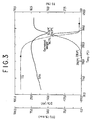
- a differential thermal analysis curve of the melamine cyanurate so obtained is shown in FIG. 1. Incidentally, differential thermal analysis curves of the starting materials, that is, of the melamine and cyanuric acid are illustrated in FIGS. 3 and 4, respectively.
- Example 1 The procedures of Example 1 were repeated except that the reaction was conducted using the mixture obtained after the mixing in the Henschel mixer without using the jet mill. As a result, the yield was 80.7% while the purity was 93.8%. The lower yield than that achieved in Example 1 is believed attributable to a greater particle size of the starting materials.
- Example 2 In a similar manner to Example 1 except for the omission of the grinding by the jet mill, 2.0 kg of industrial melamine (product of Mitsui Toatsu Chemicals Inc., average particle size: 100 ⁇ m) and 2.0 kg of cyanuric acid ("ICA-P", trade name; product of Shikoku Kasei Corp.; average particle size: 80 ⁇ m) were reacted. The yield and purity were 14.2% and 38.7%, respectively.
- industrial melamine product of Mitsui Toatsu Chemicals Inc., average particle size: 100 ⁇ m
- ICA-P cyanuric acid
- Example 2 Using 78.58 g of the comminuted mixture obtained in Example 1, 77.45 g of melamine cyanurate were obtained in a similar manner to Example 1 except that the comminuted mixture was heated at 300°C for 4 hours. The yield, purity and average particle size were 98.6%, 99.1% and 6.21 ⁇ m, respectively.
- Example 3 The procedures of Example 3 were repeated except that 9 g of prilled urea (product of Mitsui Toatsu Chemicals, Inc.; melting point: 132°C; average particle size: 1 mm) were reacted, in place of the cyanuric acid, with 4.5 g of the melamine at 300°C. As a result, melamine cyanurate was obtained in the form of a block. The yield and purity were 93% and 87.2%, respectively.
- prilled urea product of Mitsui Toatsu Chemicals, Inc.; melting point: 132°C; average particle size: 1 mm
- a Nautamixer manufactured by Hosokawa Micron Corporation having an internal capacity of 100 liters, 20.0 kg of industrial melamine (product of Mitsui Toatsu Chemicals Inc., melting point: 354°C, sublimation starting temperature: 210°C, average particle size: 20 ⁇ m) and 20.0 kg of cyanuric acid ("ICA-P", trade name; product of Shikoku Kasei Corp.; melting point: 360°C, sublimation starting temperature: 230°C, average particle size: 80 ⁇ m) were charged, followed by mixing at room temperature for 1 hour.
- industrial melamine product of Mitsui Toatsu Chemicals Inc., melting point: 354°C, sublimation starting temperature: 210°C, average particle size: 20 ⁇ m
- ICA-P trade name; product of Shikoku Kasei Corp.; melting point: 360°C, sublimation starting temperature: 230°C, average particle size: 80 ⁇ m
- the thus comminuted mixture was formed into granules having an average grain size of 1 mm by a dry granulator ("PHARMPACTER L2000/50P MODEL", trade name; manufactured by Hosokawa Micron Corporation).
- the operation was continuously conducted for about 24 hours. During the operation, no trouble such as clogging occurred, thereby obtaining granular melamine cyanurate in a yield of 98.9%. Its purity and average grain size were 98.5% and 1 mm, respectively. After the end of the operation, the interior of the reactor was checked. Stuck or deposited powder was not observed. By grinding the thus-obtained granular product in a jet mill, a powdery product having an average particle size of 4.83 ⁇ m was obtained. As a result of a differential thermal analysis of the melamine cyanurate obtained after the grinding, a single peak was observed like the DTA curve shown in FIG. 1. The sublimation starting temperature was 290°C.
- Example 4 The procedures of Example 4 were repeated except that the granulation was omitted and the powdery mixture was fed to the reactor as was. Withdrawal of the reaction mixture from the bottom of the reactor was not smooth. Six hours later, the bottom of the reactor was clogged so that the continuous operation became no longer feasible. It was caused because the powder formed a bridge inside the reactor.
- Example 4 Five kilograms of the granular mixture obtained in Example 4 were charged in the reactor shown in FIG. 2 and were then heated at 350°C for 2 hours. After completion of the reaction, the reaction mixture was withdrawn so that a granular product was obtained in an amount of 4.95 kg (yield: 99.0%, purity: 98.7%). The granular product was then ground by the jet mill as in Example 4 whereby a powdery product was obtained. The powdery product was subjected to a differential thermal analysis. As a result, the powdery product was found to have a similar peak as the DTA curve shown in FIG. 1.
- Example 4 The procedures of Example 4 were repeated except that the reaction temperature and the residence time were changed to 400°C and 30 minutes. The yield and purity were 95.7% and 99.3%, respectively.
- the product so obtained was subjected to a differential thermal analysis. As a result, the product was found to have a similar peak as the DTA curve shown in FIG. 1.
- the sublimation starting temperature was 295°C.
- Example 4 The procedures of Example 4 were repeated except that the reaction temperature and the residence time were changed to 300°C and 2 hours. The yield and purity were 99.2% and 98.2%, respectively.
- the product so obtained was subjected to a differential thermal analysis. As a result, the product was found to have a similar peak as the DTA curve shown in FIG. 1.
- the sublimation starting temperature was 288°C.
- Example 4 The procedures of Example 4 were repeated except that the reaction temperature and the residence time were changed to 200°C and 4 hours. Melamine cyanurate was not obtained practically. From the bottom of the reactor, the granular mixture of melamine and cyanuric acid as starting materials was discharged from the bottom of the reactor.
- a reaction was continuously conducted in a similar manner to Example 4 except for the use of a heated kneader-type reactor. The operation was carried out continuously for about 24 hours. During the operation, no trouble such as clogging occurred and the operation proceeded smoothly. The yield and purity were 98.5% and 98.3%, respectively.
Landscapes
- Chemical & Material Sciences (AREA)
- Organic Chemistry (AREA)
- Compositions Of Macromolecular Compounds (AREA)
- Phenolic Resins Or Amino Resins (AREA)
Applications Claiming Priority (6)
| Application Number | Priority Date | Filing Date | Title |
|---|---|---|---|
| JP329696/92 | 1992-12-09 | ||
| JP32969692 | 1992-12-09 | ||
| JP236443/93 | 1993-09-22 | ||
| JP23644393 | 1993-09-22 | ||
| JP24783793 | 1993-10-04 | ||
| JP247837/93 | 1993-10-04 |
Publications (2)
| Publication Number | Publication Date |
|---|---|
| EP0601542A1 EP0601542A1 (en) | 1994-06-15 |
| EP0601542B1 true EP0601542B1 (en) | 1996-09-04 |
Family
ID=27332368
Family Applications (1)
| Application Number | Title | Priority Date | Filing Date |
|---|---|---|---|
| EP93119701A Expired - Lifetime EP0601542B1 (en) | 1992-12-09 | 1993-12-07 | Granular melamine cyanurate and preparation process thereof |
Country Status (5)
| Country | Link |
|---|---|
| US (1) | US5493023A (enExample) |
| EP (1) | EP0601542B1 (enExample) |
| KR (1) | KR940014358A (enExample) |
| DE (1) | DE69304496D1 (enExample) |
| TW (1) | TW282462B (enExample) |
Cited By (1)
| Publication number | Priority date | Publication date | Assignee | Title |
|---|---|---|---|---|
| CN101039923B (zh) * | 2004-10-15 | 2010-08-11 | 西巴特殊化学品控股有限公司 | 结晶形态的三聚氰胺氰尿酸酯 |
Families Citing this family (7)
| Publication number | Priority date | Publication date | Assignee | Title |
|---|---|---|---|---|
| JP2751815B2 (ja) * | 1994-02-08 | 1998-05-18 | 日産化学工業株式会社 | 表面処理されたメラミンシアヌレート粉末およびその製造方法 |
| WO2006095337A2 (en) * | 2005-03-07 | 2006-09-14 | Bromine Compounds Ltd. | A process for the preparation of melamine cyanurate |
| RU2292341C1 (ru) * | 2005-05-05 | 2007-01-27 | Институт синтетических полимерных материалов (ИСПМ) им. Н.С. Ениколопова РАН | Способ получения аддукта меламина с кислотой |
| CN102093300B (zh) * | 2010-12-31 | 2012-08-08 | 普塞呋(清远)磷化学有限公司 | 高流散性高纯度结晶片状三聚氰胺氰尿酸酯的制备方法 |
| RU2471788C1 (ru) * | 2011-07-07 | 2013-01-10 | Лев Давидович Раснецов | Способ получения цианурата меламина |
| CN102532604B (zh) * | 2012-01-19 | 2013-05-01 | 北京工商大学 | 一种大粒径三聚氰胺氰脲酸盐的制备方法 |
| US9893287B2 (en) | 2012-12-12 | 2018-02-13 | Empire Technology Development Llc | Nano-encapsulating polymers with high barrier properties |
Family Cites Families (6)
| Publication number | Priority date | Publication date | Assignee | Title |
|---|---|---|---|---|
| DE1179554B (de) * | 1962-07-20 | 1964-10-15 | Badische Anilin- &. Soda-Fabrik Aktiengesellschaft, Ludwigshafen/Rhein | Verfahren zur Herstellung von Cyanursäure. |
| JPS5455588A (en) * | 1977-10-04 | 1979-05-02 | Asahi Chem Ind Co Ltd | Production of melamine cyanurate |
| JPS5455587A (en) * | 1977-10-04 | 1979-05-02 | Asahi Chem Ind Co Ltd | Preparation of melamine cyanurate |
| JPS54125690A (en) * | 1978-03-23 | 1979-09-29 | Mitsui Toatsu Chem Inc | Preparation of melamine cyanurate |
| US4282359A (en) * | 1980-03-31 | 1981-08-04 | Fmc Corporation | Purification of cyanuric acid |
| FR2674852B1 (fr) * | 1991-04-04 | 1993-07-02 | Atochem | Procede de synthese du cyanurate de melamine. |
-
1993
- 1993-12-02 US US08/160,174 patent/US5493023A/en not_active Expired - Fee Related
- 1993-12-04 KR KR1019930026509A patent/KR940014358A/ko not_active Ceased
- 1993-12-07 EP EP93119701A patent/EP0601542B1/en not_active Expired - Lifetime
- 1993-12-07 DE DE69304496T patent/DE69304496D1/de not_active Expired - Lifetime
- 1993-12-09 TW TW082110433A patent/TW282462B/zh active
Cited By (1)
| Publication number | Priority date | Publication date | Assignee | Title |
|---|---|---|---|---|
| CN101039923B (zh) * | 2004-10-15 | 2010-08-11 | 西巴特殊化学品控股有限公司 | 结晶形态的三聚氰胺氰尿酸酯 |
Also Published As
| Publication number | Publication date |
|---|---|
| DE69304496D1 (de) | 1996-10-10 |
| US5493023A (en) | 1996-02-20 |
| TW282462B (enExample) | 1996-08-01 |
| EP0601542A1 (en) | 1994-06-15 |
| KR940014358A (ko) | 1994-07-18 |
Similar Documents
| Publication | Publication Date | Title |
|---|---|---|
| US4830841A (en) | Conversion of uranium hexafluoride to uranium dioxide | |
| EP0576540B1 (en) | Moving bed process for carbothermally synthesizing nonoxide ceramic powders | |
| EP0414803B1 (en) | Method of producing boron carbide | |
| EP0601542B1 (en) | Granular melamine cyanurate and preparation process thereof | |
| JP2874925B2 (ja) | 均一な、微細なホウ素含有セラミツク粉末を製造する装置および方法 | |
| US4986971A (en) | Method for production of trichloromonosilane | |
| EP0597652A1 (en) | Processes of producing potassium fluoroaluminates | |
| US4409193A (en) | Process for preparing cubic boron nitride | |
| JPH0748108A (ja) | 顆粒状リン酸二カルシウム2水和物の製造方法 | |
| JP3142702B2 (ja) | 顆粒状メラミンシアヌレート及びその製造方法 | |
| JPH0535083B2 (enExample) | ||
| US4260592A (en) | Manufacture of water-insoluble ammonium polyphosphate | |
| US4367073A (en) | Preparation of solid, crystalline, substantially anhydrous sodium metasilicate | |
| US4540820A (en) | Production of animal feed grade biuret | |
| JPS6197110A (ja) | 高α相率窒化けい素の製造方法 | |
| CN101774974A (zh) | 制备蜜胺氰尿酸酯的方法 | |
| US20010022987A1 (en) | Flowable pellets containing nicotinamide and process for the production thereof | |
| EP0986546B1 (en) | Crystalline melamine | |
| EP0086362B1 (en) | Granular metal soap product and process for producing metal soap | |
| JP3684585B2 (ja) | メラミンシアヌレート顆粒およびその製造方法 | |
| US5538705A (en) | Carbonitriding of alumina to produce aluminum nitride | |
| JP3118359B2 (ja) | メラミンシアヌレートの製造方法 | |
| EP0434762B1 (en) | Nonpigmentary titanium dioxide powders | |
| US8067587B2 (en) | Process for the production of monoalkali metal cyanurates | |
| JP2518261B2 (ja) | 黒色粉末の製造方法 |
Legal Events
| Date | Code | Title | Description |
|---|---|---|---|
| PUAI | Public reference made under article 153(3) epc to a published international application that has entered the european phase |
Free format text: ORIGINAL CODE: 0009012 |
|
| 17P | Request for examination filed |
Effective date: 19931216 |
|
| AK | Designated contracting states |
Kind code of ref document: A1 Designated state(s): DE FR GB IT |
|
| 17Q | First examination report despatched |
Effective date: 19950309 |
|
| GRAH | Despatch of communication of intention to grant a patent |
Free format text: ORIGINAL CODE: EPIDOS IGRA |
|
| GRAH | Despatch of communication of intention to grant a patent |
Free format text: ORIGINAL CODE: EPIDOS IGRA |
|
| GRAA | (expected) grant |
Free format text: ORIGINAL CODE: 0009210 |
|
| AK | Designated contracting states |
Kind code of ref document: B1 Designated state(s): DE FR GB IT |
|
| PG25 | Lapsed in a contracting state [announced via postgrant information from national office to epo] |
Ref country code: IT Free format text: LAPSE BECAUSE OF FAILURE TO SUBMIT A TRANSLATION OF THE DESCRIPTION OR TO PAY THE FEE WITHIN THE PRE;WARNING: LAPSES OF ITALIAN PATENTS WITH EFFECTIVE DATE BEFORE 2007 MAY HAVE OCCURRED AT ANY TIME BEFORE 2007. THE CORRECT EFFECTIVE DATE MAY BE DIFFERENT FROM THE ONE RECORDED.SCRIBED TIME-LIMIT Effective date: 19960904 Ref country code: FR Effective date: 19960904 |
|
| REF | Corresponds to: |
Ref document number: 69304496 Country of ref document: DE Date of ref document: 19961010 |
|
| PG25 | Lapsed in a contracting state [announced via postgrant information from national office to epo] |
Ref country code: DE Effective date: 19961205 |
|
| EN | Fr: translation not filed | ||
| PLBE | No opposition filed within time limit |
Free format text: ORIGINAL CODE: 0009261 |
|
| STAA | Information on the status of an ep patent application or granted ep patent |
Free format text: STATUS: NO OPPOSITION FILED WITHIN TIME LIMIT |
|
| 26N | No opposition filed | ||
| PG25 | Lapsed in a contracting state [announced via postgrant information from national office to epo] |
Ref country code: GB Free format text: LAPSE BECAUSE OF NON-PAYMENT OF DUE FEES Effective date: 19971207 |
|
| GBPC | Gb: european patent ceased through non-payment of renewal fee |
Effective date: 19971207 |