EP0548200B1 - Cloning and sequencing of allergens of dermatophagoides (house dust mite) - Google Patents
Cloning and sequencing of allergens of dermatophagoides (house dust mite) Download PDFInfo
- Publication number
- EP0548200B1 EP0548200B1 EP91916537A EP91916537A EP0548200B1 EP 0548200 B1 EP0548200 B1 EP 0548200B1 EP 91916537 A EP91916537 A EP 91916537A EP 91916537 A EP91916537 A EP 91916537A EP 0548200 B1 EP0548200 B1 EP 0548200B1
- Authority
- EP
- European Patent Office
- Prior art keywords
- der
- peptide
- amino acid
- protein allergen
- protein
- Prior art date
- Legal status (The legal status is an assumption and is not a legal conclusion. Google has not performed a legal analysis and makes no representation as to the accuracy of the status listed.)
- Revoked
Links
Images



Classifications
-
- C—CHEMISTRY; METALLURGY
- C12—BIOCHEMISTRY; BEER; SPIRITS; WINE; VINEGAR; MICROBIOLOGY; ENZYMOLOGY; MUTATION OR GENETIC ENGINEERING
- C12N—MICROORGANISMS OR ENZYMES; COMPOSITIONS THEREOF; PROPAGATING, PRESERVING, OR MAINTAINING MICROORGANISMS; MUTATION OR GENETIC ENGINEERING; CULTURE MEDIA
- C12N15/00—Mutation or genetic engineering; DNA or RNA concerning genetic engineering, vectors, e.g. plasmids, or their isolation, preparation or purification; Use of hosts therefor
- C12N15/09—Recombinant DNA-technology
- C12N15/11—DNA or RNA fragments; Modified forms thereof; Non-coding nucleic acids having a biological activity
-
- C—CHEMISTRY; METALLURGY
- C07—ORGANIC CHEMISTRY
- C07K—PEPTIDES
- C07K14/00—Peptides having more than 20 amino acids; Gastrins; Somatostatins; Melanotropins; Derivatives thereof
- C07K14/435—Peptides having more than 20 amino acids; Gastrins; Somatostatins; Melanotropins; Derivatives thereof from animals; from humans
- C07K14/43504—Peptides having more than 20 amino acids; Gastrins; Somatostatins; Melanotropins; Derivatives thereof from animals; from humans from invertebrates
- C07K14/43513—Peptides having more than 20 amino acids; Gastrins; Somatostatins; Melanotropins; Derivatives thereof from animals; from humans from invertebrates from arachnidae
- C07K14/43531—Peptides having more than 20 amino acids; Gastrins; Somatostatins; Melanotropins; Derivatives thereof from animals; from humans from invertebrates from arachnidae from mites
-
- A—HUMAN NECESSITIES
- A61—MEDICAL OR VETERINARY SCIENCE; HYGIENE
- A61P—SPECIFIC THERAPEUTIC ACTIVITY OF CHEMICAL COMPOUNDS OR MEDICINAL PREPARATIONS
- A61P37/00—Drugs for immunological or allergic disorders
- A61P37/08—Antiallergic agents
-
- C—CHEMISTRY; METALLURGY
- C07—ORGANIC CHEMISTRY
- C07K—PEPTIDES
- C07K14/00—Peptides having more than 20 amino acids; Gastrins; Somatostatins; Melanotropins; Derivatives thereof
- C07K14/435—Peptides having more than 20 amino acids; Gastrins; Somatostatins; Melanotropins; Derivatives thereof from animals; from humans
- C07K14/52—Cytokines; Lymphokines; Interferons
- C07K14/54—Interleukins [IL]
- C07K14/5403—IL-3
-
- A—HUMAN NECESSITIES
- A61—MEDICAL OR VETERINARY SCIENCE; HYGIENE
- A61K—PREPARATIONS FOR MEDICAL, DENTAL OR TOILETRY PURPOSES
- A61K38/00—Medicinal preparations containing peptides
Definitions
- the present invention relates to the subject matter of the claims. It particularly relates to DNA encoding major allergens of the species D. farinae , designated Der f I or portions of these major allergens (i.e., peptides which include at least one epitope of Der f I).
- the present invention further relates to proteins and peptides as defined in the claims.
- Dermatophagoides DNA, proteins and peptides of the present invention are useful for diagnostic and therapeutic purposes.
- isolated D. farinae protein or peptide can be used to detect sensitivity in an individual to house dust mites and can be used to treat sensitivity (reduce sensitivity or desensitize) in an individual, to whom therapeutically effective quantities of the D. farinae protein or peptide is administered.
- isolated D. farinae protein allergen such as Der f I or Der f II can be administered periodically, using standard techniques, to an individual in order to desensitize the individual.
- a peptide which includes at least one epitope of Der f I or of Der f II can be administered for this purpose.
- a combination of these proteins or peptides can also be administered.
- the use of such isolated proteins or peptides provides a means of desensitizing individuals to important house dust mite allergens.
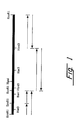
- Figure 1 is a restriction map of the cDNA insert of clone ⁇ gtll f 1, including a schematic representation of the strategy of DNA sequencing. Arrows indicate directions in which sequences were read.
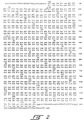
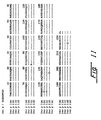
- Figure 2 is the nucleotide sequence and the predicted amino acid sequence of cDNA ⁇ gtll f 1. Numbers above are nucleotide positions; numbers to the left are amino acid positions. Positive amino acid residue numbers correspond to the sequence of the mature excreted Der f I beginning with threonine. Negative sequence numbers refer to the signal peptide and the proenzyme regions of Der f I. The arrows indicate the beginning of the proenzyme sequence and the mature Der f I, respectively. The underlined residues -81 to -78 make up the proposed cleavage site for the proenzyme formation, while the underlined residues 53-55 represent a potential N-glycosylation site. The termination TGA codon and the adjacent polyadenylation signal are also underlined. Amino acid residues 1-28 correspond to a known tryptic peptide sequence determined by conventional amino acid sequencing analysis.
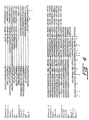
- Figure 3 is a composite alignment of the amino acid sequences of the mature Der p I and Der f I proteins.
- the numbering above the sequence refers to Der p I.
- the asterisk denotes the gap that was introduced for maximal alignment.
- the symbol (.) is used to indicate that the amino acid residue of Der f I at that position is identical to the corresponding amino acid residue of Der p I.
- the arrows indicate those residues making up the active site of Der p I and Der f I.
- Figure 4 is a comparison of the amino acid sequence in the pre- and pro-peptide regions of Der f I with those of rat cathepsin H, rat cathepsin L, papain, aleurain, CP1, CP2, rat cathepsin B, CTLA-2, MCP, Der p I and actinidin. Gaps, denoted by dashes, were added for maximal alignment. Double asterisks, denote conserved amino acid residues which are shared by greater than 80% of the proenzymes; single asterisks show residues which are conserved in greater than 55% of the sequences. The symbol (.) is used to denote semiconserved equivalent amino acids which are shared by greater than 90% of the proenzyme regions.
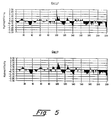
- Figure 5 is a hydrophilicity plot of the Der p I mature protein and a hydrophilicity plot of the Der f I mature protein produced using the Hopp-Woods algorithm computed with the Mac Vector Sequence Analysis Software (IBI, New Haven) using a 6 residue window. Positive values indicate relative hydrophilicity and negative values indicating relative hydrophobicity.
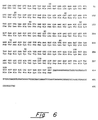
- Figure 6 is the nucleotide sequence and the predicted amino acid sequence of Der f II cDNA. Numbers to the right are nucleotide positions and numbers above are amino acid residues. The stop (TAA) signal is underlined. The first 8 nucleotides are from the oligonucleotide primer used to generate the cDNA, based on the Der p II sequence.
- Figure 7 is the nucleotide sequence and predicted amino acid sequence of cDNA ⁇ gt11 pl(13T). Numbers to the right are nucleotides and numbers above are amino acid positions. Positive amino acids correspond to the sequence of mature excreted Der p I beginning with threonine.
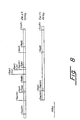
- Figure 8 is a restriction map of Der f II cDNA, which was generated by computer from the sequence data. A map of Der p II similarly generated is shown for comparison. There are few common restriction enzyme sites conserved. Sites marked with an asterisk were introduced by cloning procedures.
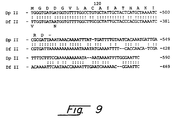
- Figure 9 shows the alignment of Der f II and Der p II cDNA sequences. Numbers to the right are nucleotide position and numbers above and amino acid residues. The top line gives the Der p II nucleotide sequence and the second the Der p II amino acid residues. The next two lines show differences of Der f II to these sequences.
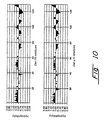
- Figure 10 is a hydrophilicity plot of Der f II and Der p II using the Hopp-Woods algorithm computed with the Mac Vector Sequence Analysis Software (IBI, New Haven) using a 6-residue window.
- Figure 11 is a composite alignment of the amino acid sequences of five Der p I clones (a)-(e) which illustrates polymorphism in the Der p I protein.
- the numbering refers to the sequence of the Der p I(a) clone.
- the symbol (-) is used to indicate that the amino acid residue of a Der p I clone is identical to the corresponding amino acid residue of Der p I(a) at that position.
- the amino acid sequences of these clones indicates that there may be significant variation in Der p I, with five polymorphic amino acid residues found in the five sequences.
- the present invention relates to a nucleotide sequence coding for an allergen from the house dust mice Dermatophagoides and to the encoded Dermatophagoides protein or peptide which includes at least one epitope of the Dermatophagoides allergen. It particularly relates to a nucleotide sequence capable of expression in an appropriate host of Der f I or of a peptide which includes at least one epitope of Der f I.
- the Dermatophagoides nucleotide sequence is useful as a probe for identifying additional nucleotide sequences which hybridize to it and encode other mite allergens, particularly D. farinae or D. pteronyssinus allergens.
- the present invention relates to nucleotide sequences which hybridize to a D. farinae protein-encoding nucleotide sequence but which encode a protein from another species or type of house dust mite, such as D. microceras (e.g., Der m I and Der m II).
- D. microceras e.g., Der m I and Der m II.
- the encoded Dermatophagoides mite allergen or peptide which includes at least one ( Der f I epitope can be used for diagnostic purposes (e.g., as an antigen) and for therapeutic purposes (e.g., to desensitize an individual).
- the encoded house dust mite allergen can be a protein or peptide, such as a D. microceras protein or peptide, which displays the antigenicity of or is cross-reactive with a Der f or a Der p allergen; generally, these have a high degree of amino acid homology.
- the present invention also relates to compositions as defined in the claims.
- DNA coding for major allergens from house dust mites have been isolated and sequenced.
- two cDNA clones, coding, respectively, for Der f I allergen and Der f II allergen have been isolated and sequenced.
- the nucleotide sequences of Der p I and Der p II have also been determined.
- the nucleotide sequence of each of these clones has been compared with that of the homologous allergen from the related mite D. pteronyssinus ( Der p I and Der p II, respectively), as has the predicted amino acid sequence of each.
- This Der f I cDNA clone contains a 1.1-kb cDNA insert encoding a typical signal peptide, a proenzyme region and the mature Der f I protein.
- the product is 321 amino acid residues: a putative 18 residue signal peptide, an 80 residue proenzyme (pro-peptide) region, and a 223 residue mature enzyme region.
- the derived molecular weight is 25,191.
- the nucleotide sequence and the predicted amino acid sequence of the Der f I cDNA are represented in Figure 2.
- the deduced amino acid sequence shows significant homology to other cysteine proteases in the pro-region, as well as in the mature protein.
- Sequence alignment of the mature Der f I protein with the homologous allergen Der p I from the related mite D. pteronyssinus revealed a high degree of homology (81%) between the two proteins, as predicted by previous sequencing at the protein level. In particular, the residues comprising the active site of these enzymes were conserved and a potential N-glycosylation site was present at equivalent positions in both mite allergens.
- the potential N-glycosylation site in Der p I is also present at the equivalent position in Der f I, with conservation of the crucial first and last residues of the tripeptide site.
- the degree of glycosylation of Der f I and Der p I has yet to be determined.
- Carbohydrates, including mannose, galactose, N-acetylglucosamine and N-acetylgalactosamine, have been reported in purified preparations of these mite allergens (Chapman, M.D., J. Immunol. , 125 :587-592 (1980); Wolden, S. et al ., Int. Arch. Allergy Appl. Immunol. , 68 :144-151 (1982)).
- the n-region is extremely variable in length and composition, but its net charge does not vary appreciably with the overall length, and has a mean value of about +1.7.
- the n-region of the Der f I signal peptide with a length of two residues, has a net charge of +2 contributed by the initiator methionine (which is unformylated and hence positively charged in eukaryotes) and the adjacent lysine (Lys) residue.
- the h-region of Der f I is enriched with hydrophobic residues. the characteristic feature of this region, with only one hydrophilic residue serine (Ser) present which can be tolerated.
- the overall amino acid composition of the Der f I c-region is more polar than that of the h-region as is found in signal sequences with the h/c boundary located between residues -6 and -5, which is its mean position in eukaryotes.
- the Der f I pre-peptide sequence appears to fulfill the requirements to which a functional signal sequence must conform.
- B cell (and T cell) epitopes specific for either species can be used to provide useful diagnostic reagents for determining reactivity to the different mite species, while cross-reacting epitopes are candidates for a common immunotherapeutic agent.
- a cDNA clone coding for Der f II a major allergen from the house dust mite D. farinae , has been isolated and sequenced, as described in Example 2.
- the nucleotide sequence and the predicted amino acid sequence of the Der f II cDNA are represented in Figure 6.
- a restriction map of the cDNA insert of a clone coding for Der f II is represented in Figure 8.
- Figure 9 shows the alignment of Der f II and Der p II cDNA sequences.
- the homology of the sequence of Der f II with Der p II (88%) is higher than the 81% homology found with Der p I and Der f I, which is significantly different (p ⁇ 0.05) using the chi 2 distribution.
- the reason for this may simply be that the Group I allergens are larger and each residue may be less critical for the structure and function of the molecule. It is known, for example, that assuming they adopt a similar conformation to other cysteine proteases, many of the amino acid differences in Der p I and Der f I lie in residues linking the two domain structures of the molecules. The 6 cysteine molecules are conserved between the group II allergens, suggesting a similar disulphide bonding, although this may be expected, given the high overall homology.
- the nucleotides encoding the first four residues are from the PCR primer which was designed from the known homology of Der p II and Der f II from N-terminal amino acid sequencing. A primer based on the C-terminal sequence can now be used to determine these bases, as well as the signal sequence.
- the materials resulting from the work described herein, as well as compositions containing these materials, can be used in methods of diagnosing, treating and preventing allergic responses to mice allergens, particularly to mites of the genus Dermatophagoides , such as D. farinae and other species (e.g., D. pteronyssinus and D. microceras ).
- the cDNA or the mRNA from which it was transcribed
- Proteins or peptides encoded by the cDNA of the present invention can be used, for example, as "purified” allergens. Such purified allergens are useful in the standardization of allergen extracts or preparations which can be used as reagents for the diagnosis and treatment of allergy to house dust mites.
- allergen preparations of consistent, well-defined composition and biological activity can be made and administered for therapeutic purposes (e.g., to modify the allergic response of a house dust mite-sensitive individual).
- the peptides or proteins may, for example, modify B-cell response to Der f I, T-cell response to Der f I, or both responses.
- Purified allergens can also be used to study the mechanism of immunotherapy of allergy to house dust mites, and to design modified derivatives or analogues which are more useful in immunotherapy than are the unmodified ("naturally-occurring") peptides.
- the area(s) of the molecule which contain the cross-reactive epitopes can be used as common immunotherapeutic peptides to be administered in treating allergy to the two (or more) mite species which share the epitope.
- the cross-reactive epitopes could be used to induce IgG blocking antibody against both allergens (e.g., Der f I and Der p I allergen).
- a peptide containing a univalent antibody epitope can be used, rather than the entire molecule, and may prove advantagious because the univalent antibody epitope cannot crosslink mast cells and cause adverse reactions during desensitizing treatments. It is also possible to attach a B cell epitope to a carrier molecule to direct T cell control of allergic responses.
- peptides which are specific to a selected Dermatophagoides allergen may be desirable or necessary to have peptides which are specific to a selected Dermatophagoides allergen.
- two epitopes which are apparently Der p I-specific have been identified.
- a similar approach can be used to identify other species-specific epitopes (e.g., Der p I or II, Der f I or II.
- the presence in an individual of antibodies to the species-specific epitopes can be used as a quick serological test to determine which mite species is causing the allergic response. This would make it possible to specifically target therapy provided to an individual to the causative species and, thus, enhance the therapeutic effect.
- Modification of naturally-occurring allergens can be designed in such a manner that modified peptides or modified allergens which have the same or enhanced therapeutic properties as the corresponding naturally-occurring allergen but have reduced side effects (especially, anaphylactic reactions) can be produced.
- modified peptides or modified allergens which have the same or enhanced therapeutic properties as the corresponding naturally-occurring allergen but have reduced side effects (especially, anaphylactic reactions) can be produced.
- These can be, for example, a peptide of the present invention (e.g., one having all or a portion of the amino acid sequence of Der f I or Der f II, Der p I or Der p II).
- a combination of peptides can be administered.
- a modified peptide or peptide analogue e.g., a peptide in which the amino acid sequence has been altered to modify immunogenicity and/or reduce allergenicicy or to which a component has been added for the same purpose
- Administration of the peptides of the present invention to an individual to be desensitized can be carried out using known techniques.
- a peptide or combination of different peptides can be administered to an individual in a composition which includes, for example, an appropriate buffer, a carrier and/or an adjuvant.
- Such compositions will generally be administered by injection, inhalation, transdermal application or rectal administration.
- this can be done by combining blood obtained from an individual to be assessed for sensitivity to one of these allergens with an isolated allergenic peptide of house dust mite, under conditions appropriate for binding of or stimulating components (e.g., antibodies, T cells, B cells) in the blood with the peptide and determining the extent to which such binding occurs.
- or stimulating components e.g., antibodies, T cells, B cells
- an agent or a drug capable of blocking or inhibiting the ability of Der f I to induce an allergic reaction in house dust mite-sensitive individuals Such agents could be designed, for example, in such a manner that they would bind to relevant anti- Der f I IgEs, thus preventing IgE-allergen binding and subsequent mast cell degranulation. Alternatively, such agents could bind to cellular components of the immune system, resulting in suppression or desensitization of the allergic response to these allergens.
- a non-restrictive example of this is the use of appropriate B- and T-cell epitope peptides, or modifications thereof, based on the cDNA/protein structures of the present invention to suppress the allergic response to Der f I allergens. This can be carried out by defining the structures of B- and T-cell epitope peptides which affect B- and T-cell function in in vitro studies with blood cells from Der f I sensitive individuals.
- the cDNA encoding Der f I or peptide including at least one epitope can be used to produce additional peptides, using known techniques such as gene cloning.
- a method of producing a protein or a peptide of the present invention can include, for example, culturing a host cell containing an expression vector which, in turn, contains DNA encoding all or a portion of a selected allergenic protein or peptide. Cells are cultured under conditions appropriate for expression of the DNA insert (production of the encoded protein or peptide). The expressed product is then recovered, using known techniques. Alternatively, the allergen or portion thereof can be synthesized using known mechanical or chemical techniques. As used herein, the term protein or peptide refers to proteins or peptides made by any of these techniques. The resulting peptide can, in turn, be used as described previously.
- DNA to be used in any embodiment of this invention can be cDNA obtained as described herein or, alternatively, can be any oligodeoxynucleocide sequence having all or a portion of the sequence represented in Figures 2 and 6, or their functional equivalent.
- Such oligodeoxynucleotide sequences can be produced chemically or mechanically, using known techniques.
- a functional equivalent of an oligonucleotide sequence is one which is capable of hybridizing to a complementary oligonucleotide sequence to which the sequence (or corresponding sequence portions) of Figures 2 and 6 hybridizes and/or which encodes a product (e.g., a polypeptide or peptide) having the same functional characteristics of the product encoded by the sequence (or corresponding sequence portion) represented in these figures.
- a functional equivalent must meet one or both criteria will depend on its use (e.g., if it is to be used only as an oligoprobe, it need meet only the first criterion and if it is to be used to produce house dust mite allergen, it need only meet the second criterion).
- the structural information now available can also be used to identify or define T cell epitope peptides and/or B cell epitope peptides which are of importance in allergic reactions to D. farinae allergens and to elucidate the mediators or mechanisms (e.g., interleukin-2, interleukin-4, gamma interferon) by which these reactions occur.
- mediators or mechanisms e.g., interleukin-2, interleukin-4, gamma interferon
- Polyadenylated mRNA was isolated from live D. farinae mites and cDNA was synthesized by the RNase H method (Gubler, V. and B.J. Hoffman, Gene , 25 :263-269 (1983)) using a kit (Amersham International, Bucks.). After the addition of EcoRI linkers (New England Biolabs, Beverly, MA) the cDNA was ligated to alkaline phosphatase treated ⁇ gtll arms (Promega, Madison, WI). The ligated DNA was packaged and plated in E. coli Y1090 (r-) to produce a library of 2x10 4 recombinants.
- Phage were plated at 20,000 pfu per 150mm petri dish and plaques were lifted onto nitrocellulose (Schleicher and Schull, Dassel, FRG), denatured and baked (Maniatis, T. et al ., Molecular Cloning: A Laboratory Manual , Cold Spring Harbor Laboratory Press (1982)). Prehybridizations were performed for 2 hours at 42°C in 50% formamide/5 x SSCE/1 x Denhardt's/poly C (0.1mg/ml)/poly U(0.1mg/ml) with hybridization overnight at 42°C at 10 6 cpm/ml.
- Post hybridization washes consisted of 15 min washes at room temperature with 2 x sodium chloride citrate (SSC)/0.1% sodium dodecylsulphate (SDS), 0.5 x SSC/0.1% SDS, 0.1 x SSC/0.1% SDS successively and a final wash at 50°C for 30 min in 0.1 x SSC/1% SDS.
- SSC sodium chloride citrate
- SDS sodium dodecylsulphate
- Phage DNA from ⁇ gt11 f 1 clones was prepared by a rapid isolation procedure. Clarified phage plate lysate (1 ml) was mixed with 270 ⁇ L of 25% wt/vol polyethylene glycol (PEG 6000) in 2.5M NaCl and incubated at room temperature for 15 min. The mixture was then spun for 5 min in a microfuge (Eppendorf, FRG), and the supernatant was removed. The pellet was dissolved in 100 ⁇ L of 10mH Tris/HCl pH8.0 containing 1 mM EDTA and 100 mM NaCl (TE).
- Clarified phage plate lysate (1 ml) was mixed with 270 ⁇ L of 25% wt/vol polyethylene glycol (PEG 6000) in 2.5M NaCl and incubated at room temperature for 15 min. The mixture was then spun for 5 min in a microfuge (Eppendorf, FRG), and the supernatant was removed. The pellet was dissolved in 100 ⁇ L of
- This DNA preparation was extracted, with phenol/TE, the phenol phase was washed with 100 ⁇ l TE, the pooled aqueous phases were then extracted another 2 times with phenol/TE, 2 times with Leder phenol (phenol/chloroform/isoamylalcohol; 25:24:1), once with chloroform and the DNA was precipitated by ethanol.
- the ⁇ gtll f1 phage DNA was digested with EcoRI restriction enzyme (Pharmacia, Uppsala, Sweden) and the DNA insert was ligated to EcoRI-digested M13-derived sequencing vectors mp18 and mp19 (Maniatis, T. et al. , Molecular Cloning: A Laboratory Manual , Cold Spring Harbor Laboratory Press (1982)). Transformation was carried out using E . coli TG-1 and sequencing was performed by the dideoxynucleotide chain termination method (Sanger, F. et al. , Proc. Natl. Acad, Sci. USA , 74 :5463-5467 (1977)) using the Sequenase version 2.0 DNA sequencing kit (U.S.B., Cleveland, Ohio).
- PCR was performed by the Taq DNA polymerase method (Saiki, R.K. et al. , Science , 239 :487-491 (1988)) using the TaqPaq kit (Biotech International, Bentley, WA) and the conditions recommended by the supplier with 10ng of target DNA and 10pmol of ⁇ gt11 primers (New England BioLabs, Beverly, MA).
- the Der f I cDNA insert was also amplified from the phage DNA by the polymerase chain reaction (PCR) resulting in a PCR product of approximately 1.1-kb. Each Der f I cDNA fragment was cloned separately into the M13-derived sequencing vectors mp18 and mp19 and sequenced.
- PCR polymerase chain reaction
- the nucleotide sequence of the Der f I cDNA was determined using the sequencing strategy shown in Figure 1. The complete sequence was shown to be 1084 bases long and included a 335-base long 5' proximal end sequence, a coding region for the entire native Der f I protein of 223 amino acids with a derived molecular weight of 25,191 and an 80-base long 3' noncoding region (Fig. 2). The assignment of the threonine residue at position 1 as the NH 2 -terminal amino acid of Der f I was based on data obtained by NH 2 -terminal amino acid sequencing of the native protein and the predicted amino acid sequence of recombinant Der p I (Chua, K.Y. et al., J. Exp. Med. , 167 :175-182 (1988)). The predicted amino acid sequence of the Der f I cDNA in the NH 2 -terminal region matched completely with that determined at the protein level ( Figure 2).
- the complete mature protein is coded by a single open reading frame terminating at the TGA stop codon at nucleotide position 1007-1009.
- the first ATG codon at nucleotide position 42-44 is presumed to be the translation initiation site since the subsequent sequence codes for a typical signal peptide sequence.
- the residues are glutamine (residue 29), glycine, serine and cysteine (residues 33-35), histidine (residue 171) and asparagine, serine and tryptophan (residues 191-193) where the numbering refers to Der f I.
- the predicted mature Der f I amino acid sequence contains a potential N-glycosylation site (Asn-Thr-Ser) at position 53-55 which is also present as Asn-Gln-Ser at the equivalent position in Der p I.
- D.farinae was purchased from Commonwealth Serum Laboratories, Parkville, Australia, and used to prepare mRNA (polyadenylated RNA) as described (Stewart, G.A. and W.R. Thomas, Int. Arch. Allergy Appl Immunol. , 83 :384-389 (1987)).
- the mRNA was suspended at approximately 0.5 ⁇ g/ ⁇ l and 5 ⁇ g used to prepare cDNA by the RNase H method (Gubler, U. and Hoffman, B.J., Gene , 25 :263-269 (1983)) using a kit (Amersham International, Bucks).
- EcoRI linkers (Amersham, GGAATTCC) were attached according to the method described by Huynh et al.
- an oligonucleotide primer based on the N-terminal sequence of Der p II was made because their amino acid residues are identical in these regions (Heymann, P.W. et al. , J. Allergy Clin. Immunol. , 83 :1055-1087 (1989)).
- the primer GGATCCGATCAACTCGATGC-3' was used.
- the first GGATCC encodes a Bam Hl site and the following sequence GAT... encodes the first 4 residues of Der p II.
- the ⁇ gt11 TTGACACCAGACCAACTGGTAATG-3' reverse primer flanking the EcoRI cloning site was used (New England Biolabs, Beverly, MA).
- the Der p II primer was designed to have approximately 50-60% G-C and to end on the first or second, rather than the third, base of a codon (Gould, S.J. et al ., Proc. Natl. Acad. Sci. , 86 :1934-1938 (1989); Summer, R. and D. Tautz, Nucleic Acid Res. , 17 :6749 (1989)).
- PCR reactions were carried out in a final reaction volume of 25 ⁇ l containing 67mM Tris-HCL (pH8.8 at 25°C), 16.6mM (NH 4 ) 2 SO 4 , 40 ⁇ M dNTPs, 5mM 2-mercaptoethanol, 6 ⁇ M EDTA, 0.2mg/ml gelatin, 2mM MgCl 2 , 10pmoles of each primer and 2 units of Taq polymerase. Approximately 0.001 ⁇ g of target DNA was added and the contents of the tube were mixed and overlayed with paraffin oil. The tubes were initially denatured at 95°C for 6 minutes, then annealed at 55°C for 1 minute and extended at 72°C for 2 minutes.
- the extension reaction was increased to 10 minutes to ensure that all amplified products were full length.
- the annealing temperature was deliberately set slightly lower than the Tm of the oligonucleotide primers (determined by the formula Tm-69.3 + 0.41(G+C%)-650/oligo length) to allow for mismatches in the N-terminal primer.
- the ends of the purified PCR product were filled in a reaction containing 10 mM Tris HCl, 10 mM MgCl 2 , 50 mM NaCl, 0.025 mM dNTP and 1 ⁇ l of Klenow enzyme in a final volume of 100 ⁇ l.
- the reaction was carried out at 37°C for 15 minutes and heat inactivated at 70°C for 10 minutes.
- the mixture was Leder phenol extracted before ethanol precipitation.
- the resulting blunt ended DNA was ligated into H13mp18 digested with Sma I in a reaction containing 0.5H ATP, 1 X ligase buffer and 1 unit of T 4 ligase at 15°C for 24 hrs and transformed into E-coli TG1 made competent by the CaCl 2 method.
- the transformed cells were plated out as a lawn on L + G plates and grown overnight at 37°C.
- Isolated white plaques were picked using an orange stick into 2.5ml of an overnight culture of TG1 cells diluted 1 in 100 in 2 X TY broth, and grown at 37°C for 6 hours. The cultures were pelleted and the supernatant removed to a fresh tube. To a lml aliquot of this supernatant 270 ⁇ l of 20% polyethylene glycol, 2.5M NaCl was added and the tube was vortexed before allowing it to stand at RT for 15 minutes. This was then spun down again and all traces of the supernatant were removed from the tube. The pellet was then resuspended in 100 ⁇ l of 1 X TE buffer. At least 2 phenol:TE extractions were done, followed by 1 Leder phenol extraction and a CHCL 3 extraction. The DNA was precipitated in ethanol and resuspended in a final volume of 20 ⁇ l of TE buffer.
- DNA sequencing was performed with the dideoxynucleotide chain termination (Sanger, F. et al. , Proc. Nat. Acad. Sci. , 74 :5463-5467 (1977)) using DNA produced from M13 derived vectors mp18 and mp19 in E . coli TG1 and T4 DNA polymerase (Sequenase version 2.0, USB Corp., Cleveland, Ohio; Restriction endonucleases were from Toyobo, (Osaka, Japan). All general procedures were by standard techniques (Sambrook, J. et al. , A Laboratory Manual, 2d Ed. Cold Spring Harbor Laboratory Press (1989)). The sequence analysis was performed using the Mac Vector Software (IBI, New Haven, CT).
- D.farinae cDNA ligated in ⁇ gtll was used to amplify a sequence using an oligonucleotide primer with homology to nucleotides coding for the 4 N terminal residues of Der p II and a reverse primer for the ⁇ gt11 sequence flanking the coding site.
- Two major bands of about 500 bp and 300 bp were obtained when the product was gel electrophoresed. These were ligated into M13 mp18 and a number of clones containing the 500 bp fragment were analyzed by DNA sequencing. Three clones produced sequence data from the N-terminal primer end and one from the other orientation. Where the sequence data from the two directions overlapped, a complete match was found.
- One of the clones read from the N-terminal primer contained a one-base deletion which shifted the reading frome. It was deduced to be a copying error, as the translated sequence from the other two clones matched the protein sequence for the first 20 amino acid residues of the allergen.
- nucleic acid sequence coding for Der p I, Der p II, Der f I and Der f II there are sequence polymorphisms in the nucleic acid sequence coding for Der p I, Der p II, Der f I and Der f II, and it will be appreciated by one skilled in the art that one or more nucleotides in the nucleic acid sequences coding for Der p I, Der p II, Der f I and Der f II may vary among individual mites due to natural allelic variation. Any and all such nucleotide variations and resulting amino acid polymorphisms are within the scope of the invention. Amino acid polymorphisms were discovered during the sequencing of different Der p I clones. These polymorphisms are shown in Figure 11.
Landscapes
- Health & Medical Sciences (AREA)
- Life Sciences & Earth Sciences (AREA)
- Chemical & Material Sciences (AREA)
- Organic Chemistry (AREA)
- Genetics & Genomics (AREA)
- Zoology (AREA)
- General Health & Medical Sciences (AREA)
- Molecular Biology (AREA)
- Medicinal Chemistry (AREA)
- Biophysics (AREA)
- Biochemistry (AREA)
- Engineering & Computer Science (AREA)
- Toxicology (AREA)
- Proteomics, Peptides & Aminoacids (AREA)
- Gastroenterology & Hepatology (AREA)
- Insects & Arthropods (AREA)
- Biomedical Technology (AREA)
- Bioinformatics & Cheminformatics (AREA)
- Wood Science & Technology (AREA)
- General Engineering & Computer Science (AREA)
- Biotechnology (AREA)
- Tropical Medicine & Parasitology (AREA)
- Pulmonology (AREA)
- Pharmacology & Pharmacy (AREA)
- Immunology (AREA)
- General Chemical & Material Sciences (AREA)
- Nuclear Medicine, Radiotherapy & Molecular Imaging (AREA)
- Veterinary Medicine (AREA)
- Physics & Mathematics (AREA)
- Chemical Kinetics & Catalysis (AREA)
- Animal Behavior & Ethology (AREA)
- Plant Pathology (AREA)
- Microbiology (AREA)
- Public Health (AREA)
- Peptides Or Proteins (AREA)
- Medicines Containing Antibodies Or Antigens For Use As Internal Diagnostic Agents (AREA)
- Preparation Of Compounds By Using Micro-Organisms (AREA)
- Investigating Or Analysing Biological Materials (AREA)
Applications Claiming Priority (3)
| Application Number | Priority Date | Filing Date | Title |
|---|---|---|---|
| US58065590A | 1990-09-11 | 1990-09-11 | |
| US580655 | 1990-09-11 | ||
| PCT/AU1991/000417 WO1992004445A1 (en) | 1990-09-11 | 1991-09-10 | Cloning and sequencing of allergens of dermatophagoides (house dust mite) |
Publications (3)
| Publication Number | Publication Date |
|---|---|
| EP0548200A1 EP0548200A1 (en) | 1993-06-30 |
| EP0548200A4 EP0548200A4 (enExample) | 1994-04-06 |
| EP0548200B1 true EP0548200B1 (en) | 1999-04-14 |
Family
ID=24321976
Family Applications (1)
| Application Number | Title | Priority Date | Filing Date |
|---|---|---|---|
| EP91916537A Revoked EP0548200B1 (en) | 1990-09-11 | 1991-09-10 | Cloning and sequencing of allergens of dermatophagoides (house dust mite) |
Country Status (11)
| Country | Link |
|---|---|
| US (4) | US6689876B1 (enExample) |
| EP (1) | EP0548200B1 (enExample) |
| JP (1) | JP3592709B2 (enExample) |
| KR (1) | KR100274321B1 (enExample) |
| AT (1) | ATE178940T1 (enExample) |
| AU (1) | AU655599B2 (enExample) |
| CA (1) | CA2091449C (enExample) |
| DE (1) | DE69131131T2 (enExample) |
| DK (1) | DK0548200T3 (enExample) |
| ES (1) | ES2133288T3 (enExample) |
| WO (1) | WO1992004445A1 (enExample) |
Families Citing this family (35)
| Publication number | Priority date | Publication date | Assignee | Title |
|---|---|---|---|---|
| US5547669A (en) * | 1989-11-03 | 1996-08-20 | Immulogic Pharma Corp | Recombinant peptides comprising T cell epitopes of the cat allergen, Fel d I |
| US5433948A (en) * | 1990-02-13 | 1995-07-18 | Thomas; Wayne R. | Cloning and sequencing of allergens of dermatophagoides (house dust mite) |
| NZ299122A (en) * | 1991-10-16 | 2005-02-25 | Immulogic Pharma Corp | Detecting and treating allergies using peptides with T-cell stimulating activity |
| US7288256B1 (en) | 1991-10-16 | 2007-10-30 | Merck Patent Gmbh | T cell epitopes of the major allergens from dermatophagoides (house dust mite) |
| WO1994024281A1 (en) * | 1993-04-14 | 1994-10-27 | Immulogic Pharmaceutical Corporation | T cell epitopes of the major allergens from dermatophagoides (house dust mite) |
| EP0623168B1 (en) * | 1991-10-16 | 2009-09-30 | Merck Patent GmbH | T cell epitopes of the major allergens from dermatophagoides (house dust mite) |
| EP0650976A4 (en) * | 1992-08-14 | 1997-10-01 | Torii & Co Ltd | ALLERGENIC PEPTIDE. |
| EP0714662A4 (en) * | 1993-07-16 | 1997-11-12 | Meiji Milk Prod Co Ltd | ANTIALLERGY AGENT |
| AU1201595A (en) * | 1993-12-22 | 1995-07-10 | Asahi Breweries, Ltd. | Novel recombinant deri allergenic substance, precursor thereof, and process for producing them |
| JPH07215996A (ja) * | 1994-01-31 | 1995-08-15 | Torii Yakuhin Kk | ダニアレルゲンのb細胞エピトープ |
| US5820862A (en) * | 1994-04-14 | 1998-10-13 | Immulogic Pharmaceutical Corporation | T cell epitopes of the major allergens from dermatophagoides (house dust mite) |
| PT755407E (pt) * | 1994-04-14 | 2007-07-20 | Merck Patent Gmbh | Formulações farmacêuticas à base de péptidos para tratamento de alergia aos ácaros do pó |
| SE9403526D0 (sv) | 1994-10-14 | 1994-10-14 | Astra Ab | New Peptides |
| SE9501067D0 (sv) | 1995-03-24 | 1995-03-24 | Astra Ab | New peptides |
| AU689382B2 (en) * | 1995-03-28 | 1998-03-26 | Asahi Breweries, Ltd. | Engineered acarid allergen and process for producing the same |
| WO1997035193A1 (en) | 1996-03-21 | 1997-09-25 | Imperial College Of Science, Technology And Medicine | Cryptic peptides and method for their identification |
| WO2000006603A1 (fr) * | 1998-07-31 | 2000-02-10 | Asahi Kasei Kogyo Kabushiki Kaisha | Anticorps pour la detection de micro-organismes |
| GB9924351D0 (en) | 1999-10-14 | 1999-12-15 | Brennan Frank | Immunomodulation methods and compositions |
| WO2001029078A2 (en) | 1999-10-15 | 2001-04-26 | Heska Corporation | Method for production and use of mite group 1 proteins |
| CN1406248A (zh) * | 2000-01-31 | 2003-03-26 | 旭化成株式会社 | 肺炎衣原体检测用抗体 |
| AU2001230532A1 (en) * | 2000-01-31 | 2001-08-14 | Asahi Kasei Kabushiki Kaisha | Antibody for detecting mycoplasma pneumoniae |
| EP1350111A2 (en) * | 2001-01-03 | 2003-10-08 | Heska Corporation | Detection of allergen-specific ige |
| FR2841906B1 (fr) * | 2002-07-05 | 2006-08-18 | Stallergenes Sa | Molecule d'acide nucleique codant une preproproteine d'allergene d'un acarien du genre dermatophagoides ou euroglyphus et son utilisation pour la production dudit allergene dans les plantes |
| CN1705492A (zh) * | 2002-08-29 | 2005-12-07 | 新加坡国立大学 | 用于诱发抗过敏原保护性免疫应答的重组核酸 |
| GB0304424D0 (en) * | 2003-02-26 | 2003-04-02 | Glaxosmithkline Biolog Sa | Novel compounds |
| EP1602720B1 (en) * | 2003-03-05 | 2010-11-03 | Juridical Foundation The Chemo-Sero-Therapeutic Research Institute | Process for producing heterologous protein in e. coli |
| US20050053615A1 (en) * | 2003-07-16 | 2005-03-10 | Best Elaine A. | Variants of mite group 1 allergens for the treatment of house dust mite allergy |
| JP4733022B2 (ja) | 2004-04-09 | 2011-07-27 | 日本全薬工業株式会社 | 新規ダニアレルゲン |
| ATE462719T1 (de) * | 2004-07-01 | 2010-04-15 | Biomay Ag | Hausstaubmilbenallergen |
| US20060156851A1 (en) * | 2004-12-02 | 2006-07-20 | Jacobsen Stephen C | Mechanical serpentine device |
| AU2008279584A1 (en) * | 2007-04-27 | 2009-01-29 | Dow Global Technologies Inc. | Improved production and in vivo assembly of soluble recombinant icosahedral virus-like particles |
| EA023303B1 (ru) | 2007-08-15 | 2016-05-31 | Сиркейшиа Лимитед | Пептидная композиция для формирования толерантности к клещам домашней пыли и ее применение |
| EP2331124A1 (en) * | 2008-08-15 | 2011-06-15 | Circassia Limited | T-cell antigen peptide from allergen for stimulation of il-10 production |
| NL2014882B1 (en) | 2015-05-29 | 2017-01-31 | Citeq B V | Allergy-specific immunotherapy compositions for use in the treatment of house-dust mite allergy. |
| WO2020046217A1 (en) * | 2018-08-28 | 2020-03-05 | Chulalongkorn University | A nucleic acid construct for inhibiting the house dust mite allergic response |
Family Cites Families (6)
| Publication number | Priority date | Publication date | Assignee | Title |
|---|---|---|---|---|
| AU462407B2 (en) | 1971-07-16 | 1975-06-26 | Mundepharma Ag | Mite antigen and method for manufacture |
| WO1988010297A1 (en) | 1987-06-17 | 1988-12-29 | Princess Margaret Children's Medical Research Foun | Cloning of mite allergens |
| JP2787162B2 (ja) * | 1989-08-24 | 1998-08-13 | フマキラー株式会社 | 精製ダニアレルゲン |
| JP2596466B2 (ja) * | 1990-03-03 | 1997-04-02 | アサヒビール株式会社 | ダニの主要アレルゲンの還伝情報を有するdnaおよび該アレルゲンの製造方法 |
| JP3139777B2 (ja) * | 1990-08-27 | 2001-03-05 | フマキラー株式会社 | 組換えダニアレルゲン |
| AU740450B2 (en) * | 1998-01-05 | 2001-11-01 | Ecolab Inc. | Antimicrobial, beverage compatible conveyor lubricant |
-
1991
- 1991-09-10 EP EP91916537A patent/EP0548200B1/en not_active Revoked
- 1991-09-10 DE DE69131131T patent/DE69131131T2/de not_active Revoked
- 1991-09-10 JP JP51486391A patent/JP3592709B2/ja not_active Expired - Lifetime
- 1991-09-10 ES ES91916537T patent/ES2133288T3/es not_active Expired - Lifetime
- 1991-09-10 KR KR1019930700751A patent/KR100274321B1/ko not_active Expired - Lifetime
- 1991-09-10 CA CA002091449A patent/CA2091449C/en not_active Expired - Lifetime
- 1991-09-10 AT AT91916537T patent/ATE178940T1/de not_active IP Right Cessation
- 1991-09-10 WO PCT/AU1991/000417 patent/WO1992004445A1/en not_active Ceased
- 1991-09-10 AU AU85062/91A patent/AU655599B2/en not_active Expired
- 1991-09-10 DK DK91916537T patent/DK0548200T3/da active
-
1993
- 1993-12-29 US US08/175,071 patent/US6689876B1/en not_active Expired - Lifetime
-
1995
- 1995-06-05 US US08/465,093 patent/US6086897A/en not_active Expired - Lifetime
- 1995-06-05 US US08/460,918 patent/US6060057A/en not_active Expired - Lifetime
-
2003
- 2003-12-23 US US10/746,909 patent/US20060008873A1/en not_active Abandoned
Non-Patent Citations (1)
| Title |
|---|
| INT.ARCH.APPL.IMMUNOL 90: 118-123 (CHUA ET AL 1990) * |
Also Published As
| Publication number | Publication date |
|---|---|
| KR100274321B1 (ko) | 2000-12-15 |
| CA2091449C (en) | 2002-11-05 |
| US6086897A (en) | 2000-07-11 |
| ES2133288T3 (es) | 1999-09-16 |
| JP3592709B2 (ja) | 2004-11-24 |
| KR930702523A (ko) | 1993-09-09 |
| US6060057A (en) | 2000-05-09 |
| JPH06500993A (ja) | 1994-01-27 |
| US6689876B1 (en) | 2004-02-10 |
| EP0548200A1 (en) | 1993-06-30 |
| DK0548200T3 (da) | 1999-10-25 |
| DE69131131D1 (de) | 1999-05-20 |
| AU8506291A (en) | 1992-03-30 |
| CA2091449A1 (en) | 1992-03-12 |
| DE69131131T2 (de) | 1999-10-14 |
| US20060008873A1 (en) | 2006-01-12 |
| EP0548200A4 (enExample) | 1994-04-06 |
| AU655599B2 (en) | 1995-01-05 |
| ATE178940T1 (de) | 1999-04-15 |
| WO1992004445A1 (en) | 1992-03-19 |
Similar Documents
| Publication | Publication Date | Title |
|---|---|---|
| US6060057A (en) | Cloning and sequencing of allergens of Dermatophagoides (house dust mite) | |
| US5770202A (en) | Cloning and sequencing of allergens of dermatophagoides (house dust mite) | |
| Dilworth et al. | Sequence analysis of cDNA coding for a major house dust mite allergen, Der f I | |
| Chua et al. | Sequence analysis of cDNA coding for a major house dust mite allergen, Der p 1. Homology with cysteine proteases. | |
| Takai et al. | Engineering of the major house dust mite allergen Der f 2 for allergen-specific immunotherapy | |
| EP0623168B1 (en) | T cell epitopes of the major allergens from dermatophagoides (house dust mite) | |
| Shen et al. | Molecular cloning and immunological characterization of the house dust mite allergen Der f 7 | |
| AU690900B2 (en) | Allergenic protein and peptides from house dust mite and uses therefor | |
| US6268491B1 (en) | T cell epitopes of the major allergens from dermatophagoides (house dust mite) | |
| WO1993001213A1 (en) | Allergenic proteins and peptides from japanese cedar pollen | |
| CA2148713A1 (en) | Allergenic proteins and peptides from japanese cedar pollen | |
| US6147201A (en) | Cloning and sequencing of allergens of dermatophagoides (house dust mite) | |
| US6423837B1 (en) | Cloning and sequencing of allergens of dermatophagoides house dust mite | |
| ES2260760T3 (es) | Acidos nucleicos que codifican un alergeno contenido en los acaros del polvo domestico (der p iii), y sus usos. | |
| EP0694067B1 (en) | T cell epitopes of the major allergens from dermatophagoides (house dust mite) |
Legal Events
| Date | Code | Title | Description |
|---|---|---|---|
| PUAI | Public reference made under article 153(3) epc to a published international application that has entered the european phase |
Free format text: ORIGINAL CODE: 0009012 |
|
| 17P | Request for examination filed |
Effective date: 19930413 |
|
| AK | Designated contracting states |
Kind code of ref document: A1 Designated state(s): AT BE CH DE DK ES FR GB GR IT LI LU NL SE |
|
| A4 | Supplementary search report drawn up and despatched |
Effective date: 19940215 |
|
| AK | Designated contracting states |
Kind code of ref document: A4 Designated state(s): AT BE CH DE DK ES FR GB GR IT LI LU NL SE |
|
| RAP1 | Party data changed (applicant data changed or rights of an application transferred) |
Owner name: INSTITUTE FOR CHILD HEALTH RESEARCH |
|
| 17Q | First examination report despatched |
Effective date: 19941213 |
|
| GRAG | Despatch of communication of intention to grant |
Free format text: ORIGINAL CODE: EPIDOS AGRA |
|
| GRAG | Despatch of communication of intention to grant |
Free format text: ORIGINAL CODE: EPIDOS AGRA |
|
| GRAH | Despatch of communication of intention to grant a patent |
Free format text: ORIGINAL CODE: EPIDOS IGRA |
|
| GRAH | Despatch of communication of intention to grant a patent |
Free format text: ORIGINAL CODE: EPIDOS IGRA |
|
| GRAA | (expected) grant |
Free format text: ORIGINAL CODE: 0009210 |
|
| AK | Designated contracting states |
Kind code of ref document: B1 Designated state(s): AT BE CH DE DK ES FR GB GR IT LI LU NL SE |
|
| PG25 | Lapsed in a contracting state [announced via postgrant information from national office to epo] |
Ref country code: GR Free format text: LAPSE BECAUSE OF NON-PAYMENT OF DUE FEES Effective date: 19990414 |
|
| REF | Corresponds to: |
Ref document number: 178940 Country of ref document: AT Date of ref document: 19990415 Kind code of ref document: T |
|
| REG | Reference to a national code |
Ref country code: CH Ref legal event code: EP |
|
| REF | Corresponds to: |
Ref document number: 69131131 Country of ref document: DE Date of ref document: 19990520 |
|
| ET | Fr: translation filed | ||
| PG25 | Lapsed in a contracting state [announced via postgrant information from national office to epo] |
Ref country code: LU Free format text: LAPSE BECAUSE OF NON-PAYMENT OF DUE FEES Effective date: 19990910 |
|
| REG | Reference to a national code |
Ref country code: ES Ref legal event code: FG2A Ref document number: 2133288 Country of ref document: ES Kind code of ref document: T3 |
|
| REG | Reference to a national code |
Ref country code: DK Ref legal event code: T3 |
|
| PLBQ | Unpublished change to opponent data |
Free format text: ORIGINAL CODE: EPIDOS OPPO |
|
| PLBI | Opposition filed |
Free format text: ORIGINAL CODE: 0009260 |
|
| PLBF | Reply of patent proprietor to notice(s) of opposition |
Free format text: ORIGINAL CODE: EPIDOS OBSO |
|
| 26 | Opposition filed |
Opponent name: ALK-ABELLO A/S Effective date: 20000114 |
|
| NLR1 | Nl: opposition has been filed with the epo |
Opponent name: ALK-ABELLO A/S |
|
| PLBF | Reply of patent proprietor to notice(s) of opposition |
Free format text: ORIGINAL CODE: EPIDOS OBSO |
|
| PLBF | Reply of patent proprietor to notice(s) of opposition |
Free format text: ORIGINAL CODE: EPIDOS OBSO |
|
| PLBF | Reply of patent proprietor to notice(s) of opposition |
Free format text: ORIGINAL CODE: EPIDOS OBSO |
|
| REG | Reference to a national code |
Ref country code: GB Ref legal event code: IF02 |
|
| RDAH | Patent revoked |
Free format text: ORIGINAL CODE: EPIDOS REVO |
|
| APAC | Appeal dossier modified |
Free format text: ORIGINAL CODE: EPIDOS NOAPO |
|
| APAC | Appeal dossier modified |
Free format text: ORIGINAL CODE: EPIDOS NOAPO |
|
| PGFP | Annual fee paid to national office [announced via postgrant information from national office to epo] |
Ref country code: DE Payment date: 20040902 Year of fee payment: 14 |
|
| PGFP | Annual fee paid to national office [announced via postgrant information from national office to epo] |
Ref country code: NL Payment date: 20040905 Year of fee payment: 14 |
|
| PGFP | Annual fee paid to national office [announced via postgrant information from national office to epo] |
Ref country code: SE Payment date: 20040906 Year of fee payment: 14 |
|
| PGFP | Annual fee paid to national office [announced via postgrant information from national office to epo] |
Ref country code: GB Payment date: 20040908 Year of fee payment: 14 Ref country code: FR Payment date: 20040908 Year of fee payment: 14 |
|
| PGFP | Annual fee paid to national office [announced via postgrant information from national office to epo] |
Ref country code: AT Payment date: 20040913 Year of fee payment: 14 |
|
| PGFP | Annual fee paid to national office [announced via postgrant information from national office to epo] |
Ref country code: CH Payment date: 20040915 Year of fee payment: 14 |
|
| PGFP | Annual fee paid to national office [announced via postgrant information from national office to epo] |
Ref country code: DK Payment date: 20040916 Year of fee payment: 14 |
|
| PGFP | Annual fee paid to national office [announced via postgrant information from national office to epo] |
Ref country code: ES Payment date: 20040929 Year of fee payment: 14 |
|
| PGFP | Annual fee paid to national office [announced via postgrant information from national office to epo] |
Ref country code: BE Payment date: 20041122 Year of fee payment: 14 |
|
| APAA | Appeal reference recorded |
Free format text: ORIGINAL CODE: EPIDOS REFN |
|
| PLAQ | Examination of admissibility of opposition: information related to despatch of communication + time limit deleted |
Free format text: ORIGINAL CODE: EPIDOSDOPE2 |
|
| PLAR | Examination of admissibility of opposition: information related to receipt of reply deleted |
Free format text: ORIGINAL CODE: EPIDOSDOPE4 |
|
| PLBQ | Unpublished change to opponent data |
Free format text: ORIGINAL CODE: EPIDOS OPPO |
|
| PLAB | Opposition data, opponent's data or that of the opponent's representative modified |
Free format text: ORIGINAL CODE: 0009299OPPO |
|
| R26 | Opposition filed (corrected) |
Opponent name: ALK-ABELLO A/S Effective date: 20000114 |
|
| NLR1 | Nl: opposition has been filed with the epo |
Opponent name: ALK-ABELLO A/S |
|
| APBU | Appeal procedure closed |
Free format text: ORIGINAL CODE: EPIDOSNNOA9O |
|
| RDAG | Patent revoked |
Free format text: ORIGINAL CODE: 0009271 |
|
| STAA | Information on the status of an ep patent application or granted ep patent |
Free format text: STATUS: PATENT REVOKED |
|
| APAH | Appeal reference modified |
Free format text: ORIGINAL CODE: EPIDOSCREFNO |
|
| REG | Reference to a national code |
Ref country code: CH Ref legal event code: PL |
|
| 27W | Patent revoked |
Effective date: 20050504 |
|
| GBPR | Gb: patent revoked under art. 102 of the ep convention designating the uk as contracting state |
Free format text: 20050504 |
|
| NLR2 | Nl: decision of opposition |
Effective date: 20050504 |
|
| REG | Reference to a national code |
Ref country code: SE Ref legal event code: ECNC |