EP0541435B1 - System and method of detecting unauthorized use of identifiers for computer access - Google Patents
System and method of detecting unauthorized use of identifiers for computer access Download PDFInfo
- Publication number
- EP0541435B1 EP0541435B1 EP92402977A EP92402977A EP0541435B1 EP 0541435 B1 EP0541435 B1 EP 0541435B1 EP 92402977 A EP92402977 A EP 92402977A EP 92402977 A EP92402977 A EP 92402977A EP 0541435 B1 EP0541435 B1 EP 0541435B1
- Authority
- EP
- European Patent Office
- Prior art keywords
- access
- telephone number
- terminal
- access request
- caller telephone
- Prior art date
- Legal status (The legal status is an assumption and is not a legal conclusion. Google has not performed a legal analysis and makes no representation as to the accuracy of the status listed.)
- Expired - Lifetime
Links
Images


Classifications
-
- G—PHYSICS
- G06—COMPUTING OR CALCULATING; COUNTING
- G06F—ELECTRIC DIGITAL DATA PROCESSING
- G06F1/00—Details not covered by groups G06F3/00 - G06F13/00 and G06F21/00
-
- G—PHYSICS
- G06—COMPUTING OR CALCULATING; COUNTING
- G06F—ELECTRIC DIGITAL DATA PROCESSING
- G06F21/00—Security arrangements for protecting computers, components thereof, programs or data against unauthorised activity
- G06F21/30—Authentication, i.e. establishing the identity or authorisation of security principals
- G06F21/31—User authentication
- G06F21/313—User authentication using a call-back technique via a telephone network
-
- Y—GENERAL TAGGING OF NEW TECHNOLOGICAL DEVELOPMENTS; GENERAL TAGGING OF CROSS-SECTIONAL TECHNOLOGIES SPANNING OVER SEVERAL SECTIONS OF THE IPC; TECHNICAL SUBJECTS COVERED BY FORMER USPC CROSS-REFERENCE ART COLLECTIONS [XRACs] AND DIGESTS
- Y10—TECHNICAL SUBJECTS COVERED BY FORMER USPC
- Y10S—TECHNICAL SUBJECTS COVERED BY FORMER USPC CROSS-REFERENCE ART COLLECTIONS [XRACs] AND DIGESTS
- Y10S379/00—Telephonic communications
- Y10S379/903—Password
Definitions
- the present invention generally relates to systems and methods of detecting unauthorized use of identifiers, and more particularly to a system and a method which enable simple detection of unauthorized use of an identifier so as to improve the system security.
- IDs identifiers
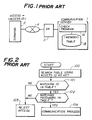
- FIG.1 shows an example of a conventional system for detecting unauthorized use of the ID.
- a personal terminal 2 is coupled to a communication center 1 via a public communication network 4 and a switching system 3.
- the personal terminal 2 is provided with a communication function and may be a personal computer, a word processor and the like.
- the communication center 1 includes an unauthorized use checking program 1A shown in FIG.2, and a management table 1B having a format shown in FIG.3.
- the communication center 1 carries out a registration service in response to an access request from the personal terminal 2, and an ID and a password are stored in the management table 1B in the format shown in FIG.3.
- the management table 1B stores the previous access date and time in addition to the ID and the password.
- a step 100 searches for an ID in the management table 1B which is identical to the ID input with the access request (hereinafter simply referred to as the access ID), and a step 102 decides whether or not the access ID matches an ID in the management table 1B. If the decision result in the step 101 is YES, a step 102 decides whether or not the password input with the access request (hereinafter simply referred to as the access password) matches the password stored in the management table 1B in correspondence with the above ID which matches the access ID.
- step 101 or 102 If the decision result in the step 101 or 102 is NO, it is regarded that the user making the access request is a non-registered user or an unauthorized user, and a step 103 rejects the access request.
- a step 104 carries out the communication process.
- the communication center 1 refers to a timer (not shown) and records the access date and time into the management table 1B within a memory (not shown). Thereafter, if the decision results in the steps 101 and 102 are both YES for a subsequent access request, the communication center 1 refers to the management table 1B and notifies the previous access date and time to the personal terminal 2.
- the authorized user makes an access to the communication center 1 from the personal terminal 2, it is possible to recognize whether or not an unauthorized use of this user's ID has been made by checking the previous access date and time which are received from the communication center 1 at the start of the communication process.
- the communication center 1 notifies the personal terminal 2 of only the previous access date and time. For this reason, there were problems in that it is impossible to specify the unauthorized user who has made the unauthorized access, and that the information supplied to the authorized user is insufficient to more completely check the unauthorized use of the ID.
- the above system can be implemented in an offsite security computer running a security program which is able to detect unsuccessful attempts to contact the communication centre. In case of an unsuccessful access attempt, security personnel are automatically alerted and provided with the telephone number of the unauthorized user.
- Another and more specific object of the present invention is to provide a system for detecting unauthorized use of an identifier in a communication system which includes at least one terminal coupled to a communication center via a communication network.
- Specific features of the system according to the invention are defined in claim 1.
- the invention also relates to a method of detecting an unauthorized use of an identifier in a computer system, as defined in claim 12. According to the present invention, it is possible to notify the terminal user if the present caller telephone number is different from the previous caller telephone number. Thus, an authorized use of the identifier can be detected by the terminal user if the terminal user did not make the previous access from a different telephone number. Furthermore, if the previous telephone number is notified to the terminal user, it is possible to locate the unauthorized user from the previous telephone number.
- the present invention can be developed to provide a control system or method further based on the management of first and second passwords in correspondence with each identifier, as developed in claim 6 and in corresponding method claim 17. According to this variant of the present invention, it is possible to reject the access request if the second access password is incorrect. This access request rejecting function is particularly useful when the user makes the access request from different telephone numbers.
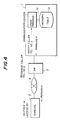
- FIG.4 shows a first embodiment of a system for detecting unauthorized use of ID according to the present invention.
- FIG.4 those parts which are the same as those corresponding parts in FIG.1 are designated by the same reference numerals, and a description thereof will be omitted.
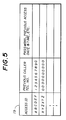
- FIG.5 shows an embodiment of the format of a management table 1b of the communication center 1 in the first embodiment.
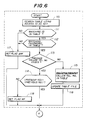
- FIGS.6 and 7 respectively are flow charts for explaining the operation of the first embodiment, that is, a first embodiment of a method of detecting unauthorized use of ID according to the present invention.
- the password, the previous access date and time and the previous caller telephone number are recorded in the management table 1b of the communication center 1 in correspondence with the access ID of an access request a made from the personal terminal 2.
- a recognition b is made of the present caller telephone number, and a comparison is made between the present caller telephone number and the previous caller telephone number in an unauthorized use checking program 1a of the communication center 1 based on a notification c of the present caller telephone number. If the two compared telephone numbers do not match, a warning d is made to the personal terminal 2.
- the previous caller telephone number may be transmitted to the personal terminal 2 together with the warning.
- the communication center 1 has a known construction including a processor and a memory or storage coupled thereto.
- the processor carries out the unauthorized use checking program 1a which is stored in the memory.
- This memory also stores the management table 1b. In FIG.4, only the unauthorized use checking program 1a and the management table 1b are shown within the communication center 1 for the sake of convenience.
- a step 110 searches for an ID in the management table 1b which is identical to the access ID input with the access request a , by using the access ID as the key.
- a step 111 decides whether or not the access ID matches an ID in the management table 1b. If the decision result in the step 111 is YES, a step 112 decides whether or not the access password input with the access request a matches the password stored in the management table 1b in correspondence with the above ID which matches the access ID.
- step 111 or 112 If the decision result in the step 111 or 112 is NO, it is regarded that the user making the access request is a non-registered user or an unauthorized user, and a step 117 sets an access reject flag ARF. The process advances to a step 120 shown in FIG.7 after the step 117.
- a step 113 decides whether or not a previous caller telephone number is stored in column of the management table 1b corresponding to the access ID. For example, if the number stored in this column of the management table 1b consists of all "0"s, for example, the decision result in the step 113 is NO and a step 115 registers the present caller telephone number in the management table 1b. For example, the present caller telephone number is "1234567890" for the access ID "ABCDEF" as shown in FIG.5. Then, a step 116 updates the file of the management table 1b in the communication center 1, and the process advances to the step 120 shown in FIG.7.
- a step 114 decides whether or not the present caller telephone number matches the previous caller telephone number stored in the management table 1b. If the decision result in the step 114 is YES, the present access request a is regarded as a normal access and the process advances to the step 120 shown in FIG.7. But if the decision result in the step 114 is NO, a step 118 sets a warning flag WF before advancing to the step 120 shown in FIG.7.
- warning flag WF When the warning flag WF is set, it means that the present caller telephone number is different from the previous caller telephone number. If the user making the present access request a is an authorized user, this user can recognize whether or not an unauthorized use of his ID has been made.
- the step 120 shown in FIG.7 decides whether or not the access reject flag ARF is set. If the decision result in the step 120 is YES, a step 122 rejects the access request a . On the other hand, if the decision result in the step 120 is NO, a step 121 decides whether or not the warning flag WF is set. If the decision result in the step 121 is NO, a step 104 carries out the communication process.
- a step 123 sends a warning message to the personal terminal 2
- a step 104 sends the previous access date and time to the personal terminal 2 at the start of the communication process.
- the step 104 may also send the previous caller telephone number to the personal terminal 2.
- the information received from the communication center 1 is displayed on a display of the personal terminal 2, for example.
- the authorized user of the personal terminal 2 can recognize from the displayed previous access date and time whether or not the unauthorized use of his ID has occurred, because the authorized user would know the previous access date and time. In addition, if the previous caller telephone number is displayed, it will facilitate the authorized user recognize whether or not the unauthorized use of his ID has occurred. Further, the authorized user will be able to know from the previous caller telephone number the telephone number of the unauthorized user who has made the unauthorized access to the system.
- the previous access date and time are sent to the personal terminal after the warning message.
- the important thing is to notify the authorized user of the warning message which indicates that the present caller telephone number and the previous caller telephone number do not match.
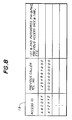
- FIG.8 shows an embodiment of the format of a management table 1b of the communication center 1 in the second embodiment.
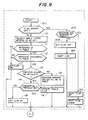
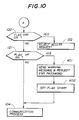
- FIGS.9 and 10 respectively are flow charts for explaining the operation of the second embodiment, that is, a second embodiment of the method of detecting unauthorized use of ID according to the present invention.
- FIGS.9 and 10 those steps which are the same as those corresponding steps in FIGS.6 and 7 are designated by the same reference numerals, and a description thereof will be omitted.
- two passwords are used, so as to further improve the system security compared to the first embodiment.
- a step 301 decides whether or not a second password request flag SPWRF is set. Initially, prior to checking the access ID and the first password in the steps 111 and 112, the second password request flag is reset. Hence, the decision result in the step 301 is NO and the steps 111 through 118 described above are carried out.
- the decision result in the step 121 shown in FIG.10 is YES, and a step 401 is carried out.
- the step 401 sends the warning message to the personal terminal 2 as in the case of the step 123 of the first embodiment, and in addition, sends a message requesting the user of the personal terminal 2 to input a second password.
- a step 402 sets the second password request flag SPWRF, and the process advances to the step 104.
- the decision result in the step 301 becomes YES, and a step 302 decides whether or not the input second password matches a second password which is stored in the management table 1b in correspondence with the access ID.
- the management table 1b stores first and second passwords PW1 and PW2 in correspondence with each access ID as shown in FIG.8. Otherwise, the management table 1b shown in FIG.8 is basically the same as that shown in FIG.5.
- a step 303 sets the access reject flag ARF. Further, a step 303 keeps a log of the information related to this rejected access request.
- the information kept in the log may include the access ID, the caller telephone number of the rejected access request, the date and time of the rejected access request and the like.
- the step 104 in FIG.10 does not send the previous caller telephone number to the personal terminal 2 for privacy reasons and to prevent an unauthorized user from knowing the telephone number of the authorized user, the unauthorized user can still be located from the previous caller telephone number which is in the log at the communication center 1. Therefore, the system security is improved by the use of two passwords and the log which is stored in the communication center 1.
- This log, the unauthorized use checking program 1a and the management table 1b may be stored in the memory or storage within the communication center 1.
- a step 310 resets the warning flag WF and a step 311 resets the second password request flag SPWRF before advancing to the step 120 shown in FIG.10.
- the communication center 1 needs to know the telephone number of the caller who makes the access request from the personal terminal 2. For example, if a telephone switching system employing the known multiple frequency signal (MF) system or an electronic switching system employing the inter-office communication system (for example, the system using the common channel signaling, No.7 signaling system specifications of the CCITT) is used, the caller telephone number can be recognized at the called side switching system 3 by transferring the caller telephone number from the calling side switching system to the called side switching system 3 based on the request from the called side switching system 3 using the multiple frequency signal or the common channel signaling. Hence, the communication center 1 can easily know the caller telephone number by requesting the caller telephone number of the personal terminal 2 from which the access request is made to the switching system 3 which is connected to the communication center 1.
- MF multiple frequency signal
- the inter-office communication system for example, the system using the common channel signaling, No.7 signaling system specifications of the CCITT
- the communication center 1 cannot know the caller telephone number from the switching system 3. But in this case, it is possible to send the caller telephone number together with the access request when making the access from the personal terminal 2.
- the method of recognizing the caller telephone number at the communication center 1 is not limited to a specific method, and any method may be employed as long as the caller telephone number can be recognized at the communication center 1.
- a communication is made between two personal terminals 2 via the communication center 1.
- the present invention is not limited to the communication between personal computers, and is applicable to any kind of communication which is made between two terminals having a communication function via a communication center which controls the communication, where the terminals are connected to a communication network having the function of transferring the caller telephone number from the caller side to the called side.
- the communication may be made between one terminal 2 and the communication center 1 if this one terminal 2 is used to simply make access to a data stored in the communication center 1 such as a database.
Landscapes
- Engineering & Computer Science (AREA)
- Theoretical Computer Science (AREA)
- Computer Security & Cryptography (AREA)
- Physics & Mathematics (AREA)
- General Engineering & Computer Science (AREA)
- General Physics & Mathematics (AREA)
- Computer Hardware Design (AREA)
- Software Systems (AREA)
- Telephonic Communication Services (AREA)
- Data Exchanges In Wide-Area Networks (AREA)
Applications Claiming Priority (2)
| Application Number | Priority Date | Filing Date | Title |
|---|---|---|---|
| JP3291077A JPH0712172B2 (ja) | 1991-11-07 | 1991-11-07 | 通信における識別子盗用検出方法 |
| JP291077/91 | 1991-11-07 |
Publications (2)
| Publication Number | Publication Date |
|---|---|
| EP0541435A1 EP0541435A1 (en) | 1993-05-12 |
| EP0541435B1 true EP0541435B1 (en) | 1995-05-24 |
Family
ID=17764137
Family Applications (1)
| Application Number | Title | Priority Date | Filing Date |
|---|---|---|---|
| EP92402977A Expired - Lifetime EP0541435B1 (en) | 1991-11-07 | 1992-11-03 | System and method of detecting unauthorized use of identifiers for computer access |
Country Status (5)
| Country | Link |
|---|---|
| US (1) | US5365580A (enExample) |
| EP (1) | EP0541435B1 (enExample) |
| JP (1) | JPH0712172B2 (enExample) |
| KR (1) | KR960005440B1 (enExample) |
| DE (1) | DE69202682T2 (enExample) |
Families Citing this family (28)
| Publication number | Priority date | Publication date | Assignee | Title |
|---|---|---|---|---|
| US5469497A (en) * | 1993-01-19 | 1995-11-21 | Teledebit | Networked interactive call management subsystems with prevention of simultaneous use of a single account number |
| US5602906A (en) * | 1993-04-30 | 1997-02-11 | Sprint Communications Company L.P. | Toll fraud detection system |
| US5590181A (en) * | 1993-10-15 | 1996-12-31 | Link Usa Corporation | Call-processing system and method |
| US5996028A (en) * | 1994-07-27 | 1999-11-30 | Casio Computer Co., Ltd. | Communication apparatus containing plurality of identification codes and operable for specific user based on identification code and private information stored in detachable recording medium |
| JP2866310B2 (ja) * | 1994-08-05 | 1999-03-08 | ケイディディ株式会社 | 国際電話着信規制装置 |
| US6327345B1 (en) * | 1994-09-16 | 2001-12-04 | Mci Communications Corporation | Method and system therefor of establishing an acceptance threshold for controlling fraudulent telephone calls |
| US5666405A (en) * | 1995-07-14 | 1997-09-09 | At&T | True family telecommunication service |
| SE9504231L (sv) | 1995-11-27 | 1997-05-28 | Ericsson Telefon Ab L M | Kösystem för överföring av informatonspaket |
| US5729599A (en) * | 1996-06-11 | 1998-03-17 | U S West, Inc. | Method and system of forwarding calls in a remote access call forwarding service of a telephone system |
| US5852653A (en) * | 1996-08-23 | 1998-12-22 | Reel; John Steven | Communications line security device |
| SE9700871L (sv) * | 1997-03-11 | 1998-09-12 | Ericsson Telefon Ab L M | Registration protocol |
| SE520137C2 (sv) | 1997-03-11 | 2003-06-03 | Ericsson Telefon Ab L M | Metod och anordning för att från en Internetansluten dator sända sitt telefonnummer till en uppringd telefon med hjälp av en tjänst i en nod |
| US6018570A (en) * | 1997-05-12 | 2000-01-25 | Nynex Science And Technology Inc. | Methods and apparatus for regulating the remote ordering, authorization, access and control of services and service features associated with a terminal |
| US6738814B1 (en) * | 1998-03-18 | 2004-05-18 | Cisco Technology, Inc. | Method for blocking denial of service and address spoofing attacks on a private network |
| JP2000004307A (ja) * | 1998-06-15 | 2000-01-07 | Sharp Corp | データ通信装置および通信制御プログラムを記憶する媒体 |
| JP3591336B2 (ja) * | 1998-10-30 | 2004-11-17 | 松下電器産業株式会社 | ファクシミリ装置 |
| US6954775B1 (en) | 1999-01-15 | 2005-10-11 | Cisco Technology, Inc. | Parallel intrusion detection sensors with load balancing for high speed networks |
| CN1338078A (zh) * | 1999-03-16 | 2002-02-27 | 富士通株式会社 | 信息处理装置和信息处理装置控制方法及记忆媒体 |
| EP1065581A1 (en) * | 1999-07-02 | 2001-01-03 | BRITISH TELECOMMUNICATIONS public limited company | Password protection |
| WO2000058808A1 (en) * | 1999-03-31 | 2000-10-05 | British Telecommunications Public Limited Company | Password protection |
| JP2001036636A (ja) * | 1999-07-19 | 2001-02-09 | Aiwa Co Ltd | 通信制御方法および通信端末装置 |
| JP2001188738A (ja) * | 1999-10-21 | 2001-07-10 | Vision Arts Kk | 情報提供システム及び情報提供方法、識別情報付加装置及び識別情報付加プログラムを記録したコンピュータ読み取り可能な記録媒体、情報提供サーバ装置及び情報提供プログラムを記録したコンピュータ読み取り可能な記録媒体、情報利用端末及び情報利用プログラムを記録したコンピュータ読み取り可能な記録媒体、課金装置 |
| US6694001B1 (en) * | 2000-11-07 | 2004-02-17 | Agilent Technologies, Inc. | Detection of carrier mis-routing in telephone systems |
| US7325065B1 (en) * | 2001-12-21 | 2008-01-29 | Aol Llc, A Delaware Limited Liability Company | Identifying unauthorized communication systems using a system-specific identifier |
| US8239942B2 (en) | 2002-12-30 | 2012-08-07 | Cisco Technology, Inc. | Parallel intrusion detection sensors with load balancing for high speed networks |
| GB2405287A (en) * | 2003-08-20 | 2005-02-23 | Siemens Ag | A telecommunications service access control method |
| GR1008049B (el) * | 2012-07-19 | 2013-12-03 | Θεοδωρος Παντελη Χατζηπαντελης | Συστημα αναγνωρισης -ανιχνευσης -εντοπισμου και ενημερωσης |
| KR101674566B1 (ko) * | 2015-01-22 | 2016-11-09 | 주식회사 엔씨소프트 | 온라인 서비스에서의 계정 보호 방법 및 그 시스템 |
Family Cites Families (5)
| Publication number | Priority date | Publication date | Assignee | Title |
|---|---|---|---|---|
| US4531023A (en) * | 1982-08-13 | 1985-07-23 | Hlf Corporation | Computer security system for a time shared computer accessed over telephone lines |
| JPS6253063A (ja) * | 1985-09-02 | 1987-03-07 | Nec Corp | 発信端末装置確認方式 |
| JPS6253061A (ja) * | 1985-09-02 | 1987-03-07 | Nec Corp | 不正アクセス防止方法 |
| US5003595A (en) * | 1989-08-29 | 1991-03-26 | At&T Bell Laboratories | Secure dial access to computer systems |
| JPH03238945A (ja) * | 1990-02-16 | 1991-10-24 | Nec Corp | データ通信用変復調装置 |
-
1991
- 1991-11-07 JP JP3291077A patent/JPH0712172B2/ja not_active Expired - Fee Related
-
1992
- 1992-10-30 US US07/968,873 patent/US5365580A/en not_active Expired - Lifetime
- 1992-11-03 EP EP92402977A patent/EP0541435B1/en not_active Expired - Lifetime
- 1992-11-03 DE DE69202682T patent/DE69202682T2/de not_active Expired - Fee Related
- 1992-11-04 KR KR1019920020627A patent/KR960005440B1/ko not_active Expired - Fee Related
Also Published As
| Publication number | Publication date |
|---|---|
| EP0541435A1 (en) | 1993-05-12 |
| US5365580A (en) | 1994-11-15 |
| JPH0712172B2 (ja) | 1995-02-08 |
| DE69202682D1 (de) | 1995-06-29 |
| DE69202682T2 (de) | 1995-09-28 |
| KR960005440B1 (ko) | 1996-04-25 |
| JPH05130096A (ja) | 1993-05-25 |
| KR930011471A (ko) | 1993-06-24 |
Similar Documents
| Publication | Publication Date | Title |
|---|---|---|
| US5365580A (en) | System and method of detecting unauthorized use of identifiers | |
| JP3441726B2 (ja) | 通信装置及び通信方法 | |
| US5896497A (en) | System for securing a computer | |
| EP2302523A2 (en) | Enhanced service platform with secure system and method for subscriber profile customization | |
| US6253236B1 (en) | System and method for serving host computer files to one or more client computer systems | |
| US7472282B1 (en) | Illegal access discriminating apparatus and method | |
| US6381318B1 (en) | Internet telephone system, access point apparatus, and communication system using access point apparatus and broad-range data communication network | |
| CN113301300A (zh) | 基于互联网建筑楼宇智能化监测系统及方法 | |
| JPH08263382A (ja) | 機密保護管理システム | |
| JP2002077450A (ja) | データ通信システム | |
| US6115459A (en) | Telephone switching system for easily implementing modification of connection information and medium storing telephone system control program | |
| KR100898563B1 (ko) | 보안용 전자팩스 제어장치 및 그 제어방법 | |
| SE469707B (sv) | Foerfarande och anordning foer behoerighetskontroll vid teletjaenst | |
| JPH0561834A (ja) | データベースシステムの機密保護方式 | |
| JPH09307643A (ja) | 移動端末の接続制御システム | |
| JP3001501B2 (ja) | 機密情報漏洩防止機能付きコンピュータネットワーク | |
| US20250358144A1 (en) | Method and system for retrieving sanitary device data | |
| EP0511732A2 (en) | Data communication method and a data terminal equipment used therein | |
| KR100208947B1 (ko) | 원격 안전 관리시스템에서 무인 방범단말기의 장애데이터 관리방법 | |
| JPH09160878A (ja) | 不正アクセス防止方式 | |
| JP3446746B2 (ja) | パケット通信システム | |
| KR100535752B1 (ko) | 현금 무단 인출 방지 방법 | |
| JP3551967B2 (ja) | パケット交換装置及びパケット交換システム | |
| KR20000001397A (ko) | 트랜잭션 처리 시스템용 신용 상태 조회 시스템 및 그 조회방법 | |
| JP2000322380A (ja) | 情報通信におけるセキュリティシステム及び通信端末装置 |
Legal Events
| Date | Code | Title | Description |
|---|---|---|---|
| PUAI | Public reference made under article 153(3) epc to a published international application that has entered the european phase |
Free format text: ORIGINAL CODE: 0009012 |
|
| AK | Designated contracting states |
Kind code of ref document: A1 Designated state(s): DE FR GB |
|
| 17P | Request for examination filed |
Effective date: 19930626 |
|
| 17Q | First examination report despatched |
Effective date: 19931119 |
|
| RIN1 | Information on inventor provided before grant (corrected) |
Inventor name: KIKUCHI, TETSUYA, C/O FUJITSU LTD. |
|
| GRAA | (expected) grant |
Free format text: ORIGINAL CODE: 0009210 |
|
| AK | Designated contracting states |
Kind code of ref document: B1 Designated state(s): DE FR GB |
|
| REF | Corresponds to: |
Ref document number: 69202682 Country of ref document: DE Date of ref document: 19950629 |
|
| ET | Fr: translation filed | ||
| PLBE | No opposition filed within time limit |
Free format text: ORIGINAL CODE: 0009261 |
|
| STAA | Information on the status of an ep patent application or granted ep patent |
Free format text: STATUS: NO OPPOSITION FILED WITHIN TIME LIMIT |
|
| 26N | No opposition filed | ||
| REG | Reference to a national code |
Ref country code: GB Ref legal event code: IF02 |
|
| PGFP | Annual fee paid to national office [announced via postgrant information from national office to epo] |
Ref country code: DE Payment date: 20081103 Year of fee payment: 17 |
|
| PGFP | Annual fee paid to national office [announced via postgrant information from national office to epo] |
Ref country code: FR Payment date: 20081112 Year of fee payment: 17 |
|
| PGFP | Annual fee paid to national office [announced via postgrant information from national office to epo] |
Ref country code: GB Payment date: 20081029 Year of fee payment: 17 |
|
| GBPC | Gb: european patent ceased through non-payment of renewal fee |
Effective date: 20091103 |
|
| REG | Reference to a national code |
Ref country code: FR Ref legal event code: ST Effective date: 20100730 |
|
| PG25 | Lapsed in a contracting state [announced via postgrant information from national office to epo] |
Ref country code: FR Free format text: LAPSE BECAUSE OF NON-PAYMENT OF DUE FEES Effective date: 20091130 |
|
| PG25 | Lapsed in a contracting state [announced via postgrant information from national office to epo] |
Ref country code: DE Free format text: LAPSE BECAUSE OF NON-PAYMENT OF DUE FEES Effective date: 20100601 |
|
| PG25 | Lapsed in a contracting state [announced via postgrant information from national office to epo] |
Ref country code: GB Free format text: LAPSE BECAUSE OF NON-PAYMENT OF DUE FEES Effective date: 20091103 |