EP0533907B1 - Elektrische Anordnung zur Umwandlung molekularer Gewichte unter Verwendung von Dynoden - Google Patents
Elektrische Anordnung zur Umwandlung molekularer Gewichte unter Verwendung von Dynoden Download PDFInfo
- Publication number
- EP0533907B1 EP0533907B1 EP92910275A EP92910275A EP0533907B1 EP 0533907 B1 EP0533907 B1 EP 0533907B1 EP 92910275 A EP92910275 A EP 92910275A EP 92910275 A EP92910275 A EP 92910275A EP 0533907 B1 EP0533907 B1 EP 0533907B1
- Authority
- EP
- European Patent Office
- Prior art keywords
- dynodes
- dynode
- substance
- molecules
- molecular weight
- Prior art date
- Legal status (The legal status is an assumption and is not a legal conclusion. Google has not performed a legal analysis and makes no representation as to the accuracy of the status listed.)
- Expired - Lifetime
Links
- 238000006243 chemical reaction Methods 0.000 title claims abstract description 23
- 150000002500 ions Chemical class 0.000 claims abstract description 29
- 230000005684 electric field Effects 0.000 claims abstract description 19
- 239000000126 substance Substances 0.000 claims abstract description 14
- 238000000034 method Methods 0.000 claims description 24
- 239000011521 glass Substances 0.000 claims description 5
- 239000000463 material Substances 0.000 claims description 5
- 230000003116 impacting effect Effects 0.000 claims description 3
- 238000003491 array Methods 0.000 claims 2
- 229910010293 ceramic material Inorganic materials 0.000 claims 2
- 239000004020 conductor Substances 0.000 claims 2
- 239000012799 electrically-conductive coating Substances 0.000 claims 2
- 230000001747 exhibiting effect Effects 0.000 claims 2
- 230000001133 acceleration Effects 0.000 claims 1
- 230000007935 neutral effect Effects 0.000 abstract description 5
- 239000003054 catalyst Substances 0.000 abstract description 4
- VNWKTOKETHGBQD-UHFFFAOYSA-N methane Chemical compound C VNWKTOKETHGBQD-UHFFFAOYSA-N 0.000 description 29
- 229930195733 hydrocarbon Natural products 0.000 description 24
- 239000007789 gas Substances 0.000 description 23
- 239000004215 Carbon black (E152) Substances 0.000 description 19
- 230000008569 process Effects 0.000 description 18
- -1 naptha Substances 0.000 description 17
- 150000002430 hydrocarbons Chemical class 0.000 description 16
- 239000001257 hydrogen Substances 0.000 description 13
- 229910052739 hydrogen Inorganic materials 0.000 description 13
- 229910052751 metal Inorganic materials 0.000 description 8
- 239000002184 metal Substances 0.000 description 8
- 239000010410 layer Substances 0.000 description 7
- GPRLSGONYQIRFK-UHFFFAOYSA-N hydron Chemical compound [H+] GPRLSGONYQIRFK-UHFFFAOYSA-N 0.000 description 6
- 239000000203 mixture Substances 0.000 description 6
- 238000000926 separation method Methods 0.000 description 6
- 230000003993 interaction Effects 0.000 description 5
- 239000004065 semiconductor Substances 0.000 description 5
- UFHFLCQGNIYNRP-UHFFFAOYSA-N Hydrogen Chemical compound [H][H] UFHFLCQGNIYNRP-UHFFFAOYSA-N 0.000 description 4
- 230000015572 biosynthetic process Effects 0.000 description 4
- 239000011203 carbon fibre reinforced carbon Substances 0.000 description 4
- 238000009792 diffusion process Methods 0.000 description 4
- 230000000694 effects Effects 0.000 description 4
- 239000002245 particle Substances 0.000 description 4
- OKKJLVBELUTLKV-UHFFFAOYSA-N Methanol Chemical compound OC OKKJLVBELUTLKV-UHFFFAOYSA-N 0.000 description 3
- PXHVJJICTQNCMI-UHFFFAOYSA-N Nickel Chemical compound [Ni] PXHVJJICTQNCMI-UHFFFAOYSA-N 0.000 description 3
- QVGXLLKOCUKJST-UHFFFAOYSA-N atomic oxygen Chemical compound [O] QVGXLLKOCUKJST-UHFFFAOYSA-N 0.000 description 3
- 239000000919 ceramic Substances 0.000 description 3
- 238000009833 condensation Methods 0.000 description 3
- 230000005494 condensation Effects 0.000 description 3
- 239000012634 fragment Substances 0.000 description 3
- 230000006872 improvement Effects 0.000 description 3
- 239000007788 liquid Substances 0.000 description 3
- 239000001301 oxygen Substances 0.000 description 3
- 229910052760 oxygen Inorganic materials 0.000 description 3
- IJGRMHOSHXDMSA-UHFFFAOYSA-N Atomic nitrogen Chemical compound N#N IJGRMHOSHXDMSA-UHFFFAOYSA-N 0.000 description 2
- LCGLNKUTAGEVQW-UHFFFAOYSA-N Dimethyl ether Chemical compound COC LCGLNKUTAGEVQW-UHFFFAOYSA-N 0.000 description 2
- PNEYBMLMFCGWSK-UHFFFAOYSA-N aluminium oxide Inorganic materials [O-2].[O-2].[O-2].[Al+3].[Al+3] PNEYBMLMFCGWSK-UHFFFAOYSA-N 0.000 description 2
- 230000008901 benefit Effects 0.000 description 2
- 238000000576 coating method Methods 0.000 description 2
- 150000001875 compounds Chemical class 0.000 description 2
- 239000010779 crude oil Substances 0.000 description 2
- 238000010291 electrical method Methods 0.000 description 2
- 230000004907 flux Effects 0.000 description 2
- 239000000295 fuel oil Substances 0.000 description 2
- 239000003502 gasoline Substances 0.000 description 2
- 238000010438 heat treatment Methods 0.000 description 2
- 150000002431 hydrogen Chemical class 0.000 description 2
- 238000004519 manufacturing process Methods 0.000 description 2
- VLKZOEOYAKHREP-UHFFFAOYSA-N n-Hexane Chemical class CCCCCC VLKZOEOYAKHREP-UHFFFAOYSA-N 0.000 description 2
- 239000003345 natural gas Substances 0.000 description 2
- 239000003208 petroleum Substances 0.000 description 2
- 238000005215 recombination Methods 0.000 description 2
- 230000006798 recombination Effects 0.000 description 2
- XLYOFNOQVPJJNP-UHFFFAOYSA-N water Substances O XLYOFNOQVPJJNP-UHFFFAOYSA-N 0.000 description 2
- 229910000952 Be alloy Inorganic materials 0.000 description 1
- WKBOTKDWSSQWDR-UHFFFAOYSA-N Bromine atom Chemical compound [Br] WKBOTKDWSSQWDR-UHFFFAOYSA-N 0.000 description 1
- UGFAIRIUMAVXCW-UHFFFAOYSA-N Carbon monoxide Chemical compound [O+]#[C-] UGFAIRIUMAVXCW-UHFFFAOYSA-N 0.000 description 1
- ZAMOUSCENKQFHK-UHFFFAOYSA-N Chlorine atom Chemical compound [Cl] ZAMOUSCENKQFHK-UHFFFAOYSA-N 0.000 description 1
- VGGSQFUCUMXWEO-UHFFFAOYSA-N Ethene Chemical compound C=C VGGSQFUCUMXWEO-UHFFFAOYSA-N 0.000 description 1
- 239000005977 Ethylene Substances 0.000 description 1
- 229910000861 Mg alloy Inorganic materials 0.000 description 1
- OFBQJSOFQDEBGM-UHFFFAOYSA-N Pentane Chemical class CCCCC OFBQJSOFQDEBGM-UHFFFAOYSA-N 0.000 description 1
- XUIMIQQOPSSXEZ-UHFFFAOYSA-N Silicon Chemical compound [Si] XUIMIQQOPSSXEZ-UHFFFAOYSA-N 0.000 description 1
- NINIDFKCEFEMDL-UHFFFAOYSA-N Sulfur Chemical compound [S] NINIDFKCEFEMDL-UHFFFAOYSA-N 0.000 description 1
- 238000010521 absorption reaction Methods 0.000 description 1
- 230000009471 action Effects 0.000 description 1
- 230000003044 adaptive effect Effects 0.000 description 1
- 150000001336 alkenes Chemical class 0.000 description 1
- 230000004075 alteration Effects 0.000 description 1
- 238000005219 brazing Methods 0.000 description 1
- GDTBXPJZTBHREO-UHFFFAOYSA-N bromine Substances BrBr GDTBXPJZTBHREO-UHFFFAOYSA-N 0.000 description 1
- 229910052794 bromium Inorganic materials 0.000 description 1
- 229910002091 carbon monoxide Inorganic materials 0.000 description 1
- JJWKPURADFRFRB-UHFFFAOYSA-N carbonyl sulfide Chemical compound O=C=S JJWKPURADFRFRB-UHFFFAOYSA-N 0.000 description 1
- 230000003197 catalytic effect Effects 0.000 description 1
- 239000000460 chlorine Substances 0.000 description 1
- 229910052801 chlorine Inorganic materials 0.000 description 1
- 239000011248 coating agent Substances 0.000 description 1
- 238000001816 cooling Methods 0.000 description 1
- 238000005336 cracking Methods 0.000 description 1
- 230000006378 damage Effects 0.000 description 1
- 230000001419 dependent effect Effects 0.000 description 1
- 230000008021 deposition Effects 0.000 description 1
- 239000002283 diesel fuel Substances 0.000 description 1
- 238000010494 dissociation reaction Methods 0.000 description 1
- 230000005593 dissociations Effects 0.000 description 1
- 238000009826 distribution Methods 0.000 description 1
- 238000005315 distribution function Methods 0.000 description 1
- 238000010891 electric arc Methods 0.000 description 1
- 230000002708 enhancing effect Effects 0.000 description 1
- 238000013467 fragmentation Methods 0.000 description 1
- 238000006062 fragmentation reaction Methods 0.000 description 1
- 239000008246 gaseous mixture Substances 0.000 description 1
- 125000004435 hydrogen atom Chemical group [H]* 0.000 description 1
- 150000002605 large molecules Chemical class 0.000 description 1
- 239000010687 lubricating oil Substances 0.000 description 1
- 229920002521 macromolecule Polymers 0.000 description 1
- SJCKRGFTWFGHGZ-UHFFFAOYSA-N magnesium silver Chemical compound [Mg].[Ag] SJCKRGFTWFGHGZ-UHFFFAOYSA-N 0.000 description 1
- 230000007246 mechanism Effects 0.000 description 1
- 238000002156 mixing Methods 0.000 description 1
- 239000002052 molecular layer Substances 0.000 description 1
- 229910052759 nickel Inorganic materials 0.000 description 1
- 229910052757 nitrogen Inorganic materials 0.000 description 1
- 238000005192 partition Methods 0.000 description 1
- 239000003348 petrochemical agent Substances 0.000 description 1
- 238000005504 petroleum refining Methods 0.000 description 1
- 150000004291 polyenes Chemical class 0.000 description 1
- 239000010703 silicon Substances 0.000 description 1
- 229910052710 silicon Inorganic materials 0.000 description 1
- 239000002356 single layer Substances 0.000 description 1
- 150000003384 small molecules Chemical class 0.000 description 1
- 239000011593 sulfur Substances 0.000 description 1
- 229910052717 sulfur Inorganic materials 0.000 description 1
- 230000000153 supplemental effect Effects 0.000 description 1
- 229910052715 tantalum Inorganic materials 0.000 description 1
- GUVRBAGPIYLISA-UHFFFAOYSA-N tantalum atom Chemical compound [Ta] GUVRBAGPIYLISA-UHFFFAOYSA-N 0.000 description 1
- 230000001988 toxicity Effects 0.000 description 1
- 231100000419 toxicity Toxicity 0.000 description 1
- 238000009834 vaporization Methods 0.000 description 1
- 230000008016 vaporization Effects 0.000 description 1
- 239000002699 waste material Substances 0.000 description 1
Images

Classifications
-
- B—PERFORMING OPERATIONS; TRANSPORTING
- B01—PHYSICAL OR CHEMICAL PROCESSES OR APPARATUS IN GENERAL
- B01J—CHEMICAL OR PHYSICAL PROCESSES, e.g. CATALYSIS OR COLLOID CHEMISTRY; THEIR RELEVANT APPARATUS
- B01J19/00—Chemical, physical or physico-chemical processes in general; Their relevant apparatus
- B01J19/08—Processes employing the direct application of electric or wave energy, or particle radiation; Apparatus therefor
- B01J19/087—Processes employing the direct application of electric or wave energy, or particle radiation; Apparatus therefor employing electric or magnetic energy
- B01J19/088—Processes employing the direct application of electric or wave energy, or particle radiation; Apparatus therefor employing electric or magnetic energy giving rise to electric discharges
Definitions
- the present invention relates to an apparatus and a method for the conversion of the size of molecules in a process stream, using an electrical method, and can he used either to combine small molecules into larger molecules or to separate larger molecules into smaller molecules.
- Ion impact, fragmentation and ion emission take place on the interior surfaces of the tubes and also ion recombination into new gas species takes place. It can be said that the device operates using electron and ion impact, an electric field, and a very large interior surface area. This can have applications in the petrochemical process industries.
- the output product is crude methanol containing 17% water.
- An alumina catalyst is then used (at 310°C - 320°C and 26 barg pressure) to create dimethyl ether.
- high operating temperatures, high pressures, and costly equipment are necessary.
- the electrical method briefly described above offers significant improvements in that low pressures (such as 0.001 to 0.1 bar) and room temperatures are involved.
- the use of oxygen is not essential, and water need not be part of the reaction unless specified output products containing oxygen are desired.
- a limitation on the electrical device is that a lower throughput of molecules is inherent at lower pressures, so that an equipment designer will naturally attempt to choose the operation pressure of the electrical device to be as high as possible, consistent with a specific conversion reaction.
- Each impact of ion and electron on the tubular reaction surfaces will result in a portion of the impact energy being converted into thermal energy in the material beneath the surface.
- a large value of pressure implies more ion impacts and more conversion reactions per second, and more heat (random thermal energy) generated in the material.
- the semiconducting material on the inside surfaces of the tubular elements may, in certain cases, have a negative temperature coefficient of resistance, so that high pressure operation would lead to heating, lower resistance, and higher leakage currents through the semiconductor layers.
- the present invention comprises an array of dynodes, made of metal, or of glass or ceramic with metal coatings.
- the term "dynode” is intended to mean any type of electrode which, upon being struck at by a single electron, yields several electrons.
- a source of electrons is located at or just outside of the negatively-connected side of the dynode array, and these electrons are accelerated towards the first dynode, striking its surface with energies which may range from several electron volts to more than a hundred electron volts.
- gas pressures of less than 1 Torr are usually used, although operation at pressures several orders of magnitude higher is possible if volume electron/ion interaction effects are to be used for a supplemental improvement in operation.
- a gas which is to be converted is admitted into the chamber on the side of the dynode array which is opposite the electron source. Diffusion of the source gas into the dynode array takes place, with absorption of the gas molecules on the surfaces of the dynodes. Upon impact of the electrons upon the surfaces of the dynodes, several processes take place, the most obvious of which is the disruption of molecular bonding of the absorbed gas.
- a hydrogen ion is created, H+, which immediately is separated from its parent molecule by the action of the electric field. Hydrogen ions thus created are accelerated away from the dynode upon which they were created, moving towards the adjacent, more negative dynode. Upon impact at the adjacent dynode, the hydrogen ion disrupts the bonding of the methane molecules there, and serves as an additional electron source via ion-induced secondary electron emission. The impact of electrons also creates secondary electron emission, with a net gain in electron flux along the dynode array.
- methane molecules are stripped of one or more hydrogen atoms, and have been released from the dynode surface by the energy associated with electron or ion impact, they are accelerated towards the positive end of the dynode array. In such a state of ionization, they will bond readily to other similar species, and to neutrals, upon collision with them, and the formation of carbon-carbon bonds is probable.
- methane source gas By the repeated application of this process in a methane source gas, formation of higher-order mixtures of paraffins, aromatics, olefins, and polyenes takes place. A physical separation of the available hydrogen from the newly-formed higher-order hydrocarbon products is made possible by the electric field.
- Charge exchange is possible because of the flow of electrons through space, and the flow of electrical current through the metallic surfaces of the dynodes.
- Energy for the dissociation is provided by the electric fields between dynodes, which accelerates electrons, hydrogen ions, and complex hydrocarbon ions. Energy transfer is by direct impact at the surfaces of the dynodes. Volume interaction effects also take place at higher pressures, with similar results. Both chemi-absorbed molecules and physically absorbed molecules at the dynode surfaces are affected and transformed by the electron impact process. The higher-order molecules are electrically moved to the region of higher inlet gas pressure, where they are carried by the inlet gas pressure gradient laterally to an outlet stream.
- a condensation stage then removes the higher-order species and the residual methane may be recirculated through the device.
- the same device if operated in a high electron flux mode, could decompose high-order hydrocarbon molecules deposited on the surfaces of the dynodes and a separate collecting electrode held at a slightly positive voltage would attract such fragments. In this mode, lower molecular weight species could be produced from large molecules. It is clear that the admission of gaseous mixtures into this apparatus would result in a variety of output compounds, with a very large number of possibilities which could be considered. It is also clear that the hydrogen ions emerging from the region of the most negative dynode could be either pumped away or could be used to fragment large-molecular-weight hydrocarbon molecules via either a surface interaction or a volume interaction.
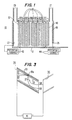
- an electrical device 10 for conversion of hydrocarbon molecular weights using dynodes comprising a chamber 12 with walls constructed of glass, ceramic, or metal, with an inlet gas source 27, an outlet gas port 28, and a hydrogen outlet gas port 29.
- a chamber 12 with walls constructed of glass, ceramic, or metal, with an inlet gas source 27, an outlet gas port 28, and a hydrogen outlet gas port 29.
- an electrode 26 constructed of metal
- another electrode 22 constructed of metal or a suitable semiconducting material, which can serve as an electron source.
- Within the central part of chamber 12 is mounted a plurality of tubular dynode elements 30.
- Each dynode element comprises metallic tubes 32 which are joined together along their outer boundaries in an array so that the axes 33 of the tubes 32 are co-parallel.
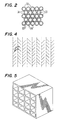
- the tubular elements 32 comprise metal, such as nickel or tantalum, and are bound together by brazing at their boundaries 36, as shown in Figure 2.
- the interior of the tubes 32 are open cylinders 34 with interior surfaces 35 which have secondary-electron-emitting properties. High secondary electron emission yields may be obtained, for example, from layers of a silver-magnesium alloy or a copper-beryllium alloy.
- There is an angle between the tubes' axes 33 and the face 40 of the dynode array which is at least as large as the arc cosine of d/l, where d is the individual tube diameter and l is the individual tube length.
- Each dynode 30 is separated from the adjacent dynodes by a suitable spacing, and each dynode is separately connected electrically to a metallic connection which penetrates the insulating part of the enclosure.
- a potential source 41 is required for each pair of dynodes 30 .
- Each pair of adjacent dynodes 30 has a separate potential source 41 connected between them.
- source 44 is connected from the final dynode 30 to electrode 26, and source 43 is connected from electrode 22 to first dynode 30. Connection of these sources through a glass or ceramic chamber 12 is shown, whereas if a metallic chamber wall is used, separate insulative feed-through connections through the chamber wall would be required.
- the input gas such as methane CH4 is admitted through port 27 into the chamber 10, with an ambient pressure of 10 ⁇ 6 to 1 Torr, for example. Diffusion of the gas into tubes 32 of each dynode occurs, with some of the gas absorbing on the interior walls 35. Electrons originating either from the electron source 22, or from field emission from the metallic coating on face 22, or from cosmic rays, photoemission, or other natural sources, are accelerated along the length of the region from source 22 to first dynode 30, striking the interior walls 35 with substantial energies such as 10 to 100 electron volts. The range of energy values is adjustable with potential source 43.
- a sequence of cascading impacts takes place, which will be described below in detail, which removes hydrogen ions from the absorbed molecules, and allows hydrogen ions to move in the open cylinders 34 towards source 22, while at the same time allows negatively-charged hydrocarbon ions to move in the open cylinders 34 towards the next adjacent dynode 30.
- Subsequent impact of these hydrocarbon ions with other similar charged or neutral species on adjacent dynode 30 causes combination into larger hydrocarbon molecules, which emerge from the face 40 of final dynode 30 and are pumped away into outlet 28.
- the extracted hydrogen ions are carried by the electric field due to potential source 43 towards source 22 where they combine with others of the same species and are pumped away into outlet 29.
- a partition 37 of the chamber 10 prevents mixing of hydrogen with hydrocarbons. Some of the inlet methane will pass, by diffusion, directly into outlet port 28 and will be separated in subsequent condensation stages from the heavier hydrocarbon molecules formed by the device operation, after which the methane may be recirculated back into the inlet stream which feeds port 27.
- the methane molecules 55 may be considered to be absorbed upon the interior walls 35 in a strong, chemi-sorbed bond, which pertains to a surface monolayer, and also in a weaker, multi-molecular-layer bond for additional molecules.
- an incident electron 51 with energy in the range 10 to 100 electron volts, a variety of processes are initiated. Some of the incident electron 51 energy goes to create secondary electrons 57 which are emitted from the wall 35 and which are accelerated in complex trajectories 58 to perpetuate the process at the next impact on the next dynode 30 with wall 35.
- the distorted electric field associated with the presence of the open aperture at the end of the tubes 32 must extend nearly to the region of secondary electron creation, which in turn is within about one to two diameters of the electron-input side of the dynode 30.
- the length l of the tubular elements 32 will be only 2 to perhaps 5 times the diameter d of a tubular element 32.
- the cascading impacts remove hydrogen ion 52 from an absorbed gas molecule 55, also creating a negatively-charged hydrocarbon ion 53, for example CH3 or CH2.
- Some of the incident electron 51 energy imparts sufficient kinetic energy to these ions 52 and 53 so that they depart from their surface creation site and are accelerated along the electric field direction, in complex curved paths.
- the hydrogen ion 52 will subsequently strike an adjacent dynode tube wall 35 with sufficient energy to create secondary electrons which will contribute to the electron cascade required for the process; this is a positive ion feedback effect.
- the same impact of hydrogen ion 52 on wall 35 will also provide sufficient energy to disrupt the bonding of one or several gas molecules 55 absorbed at that site, thus creating more positive hydrogen ions and negative hydrocarbon ions which are released from that site and which are accelerated in opposite directions, thus contributing to the process.
- the hydrocarbon ion 53 acquiring kinetic energy along its path, strikes an adjacent dynode tube wall 35 with energy sufficient to disrupt bonds of molecules 55 at the site of impact, permitting the formation of a carbon-carbon bond at that site, and thus the creation of a higher weight hydrocarbon molecule.
- other processes such as secondary electron production, and hydrogen ion production also may be expected to take place.
- the higher-weight hydrocarbon may not leave the wall 35 immediately upon creation but will be dislodged by a subsequent electron or ion impact.
- the proper amount of charge required for electron current conservation at each impact site is provided by the metal dynodes 30.
- the paths of the electrons and of the ions, as described above, have a length which depends upon the dynode-to-dynode electric field strength, upon the initial kinetic energy of the particles, and their direction of emission from the surface. Inasmuch as the impact-creation of these charged particles involves the combination of many random processes within the wall 35, the direction and initial kinetic energy of the particles will follow a statistical distribution function.
- the alternate orientation of the axes of the tubes in adjacent dynodes is chosen so that ion impact is assured on each dynode, and therefore electrons and ions are not passing through a dynode cylinder without impacting the interior surface 35 of a tubular element 32.
- a dynode may be constructed of an array of flat strips of metal, with the faces co-parallel and inclined at an angle, resembling the well-known "Venetian-blind.” Each such "Venetian-blind" dynode would have the main length direction of the strips oriented orthogonal to the length direction in the adjacent dynodes.
- Other possible dynode shapes include, for example, an array of intersecting strips which form squares (Fig. 5), or plates with an array of connical holes drilled or punched into their surface (Fig. 6).
Landscapes
- Chemical & Material Sciences (AREA)
- Health & Medical Sciences (AREA)
- General Health & Medical Sciences (AREA)
- Toxicology (AREA)
- Organic Chemistry (AREA)
- Chemical Kinetics & Catalysis (AREA)
- Physical Or Chemical Processes And Apparatus (AREA)
- Analogue/Digital Conversion (AREA)
- Organic Low-Molecular-Weight Compounds And Preparation Thereof (AREA)
- Measurement Of Radiation (AREA)
- Compositions Of Macromolecular Compounds (AREA)
- Addition Polymer Or Copolymer, Post-Treatments, Or Chemical Modifications (AREA)
- Networks Using Active Elements (AREA)
- Electrophonic Musical Instruments (AREA)
- Ignition Installations For Internal Combustion Engines (AREA)
- Emergency Protection Circuit Devices (AREA)
- Arrangements For Transmission Of Measured Signals (AREA)
- Electron Tubes For Measurement (AREA)
- Electrolytic Production Of Non-Metals, Compounds, Apparatuses Therefor (AREA)
Claims (15)
- Vorrichtung zur Umwandlung eines Gases, das eine Substanz enthält, die ein erstes Molekulargewicht hat, in ein Gas, das eine Substanz enthält, die ein zweites Molekulargewicht aufweist, mit:a) einer Reaktionskammer (12), diei) einen Gaseinlaß (27) zum Einlassen der das erste Molekulargewicht aufweisenden Substanz in die Kammer undii) wenigstens einen Gasauslaß (28, 29) zum Auslassen der das zweite Molekulargewicht aufweisenden Substanz aus der Kammer hat,b) wenigstens einem Reaktionskanal zum Ionisieren und Umsetzen von Molekülen des Gases durch Elektronen- und Ionen-Aufprall auf seine Innenfläche (35); wobei diese Fläche Sekundärelektronenemissionseigenschaften hat; undc) ein elektrisches Feld erzeugenden Mitteln zum Beschleunigen der Elektronen und Ionen im zumindest einen Reaktionskanal, welche Mitteli) eine Emitterelektrode (22), die ein erstes elektrisches Potential vorsieht,ii) eine Sammelelektrode (26), die ein abschließendes elektrisches Potentiel vorsieht, undiii) zumindest zwei Zwischenelektroden (30), mit einer ersten Zwischenelektrode, die ein erstes elektrisches Zwischenpotential vorsieht, und einer abschließenden Zwischenelektrode, die ein abschließendes elektrisches Zwischenpotential vorsieht, umfassen,
wobei die Zwischenelektroden voneinander durch geeignete Abstände getrennt sind, die elektrische Zwischenpotentiale zwischen dem ersten und dem abschließenden Potential vorsehen; undd) zumindest einer elektrischen Spannungsquelle (43, 44) mit Anschlüssen, die mit der Emitterelektrode (22), den zumindest zwei Zwischenelektroden (30) und der Sammelelektrode (26) zum Vorsehen des ersten elektrischen Potentials, des abschließenden elektrischen Potentials bzw. der elektrischen Zwischenpotentiale verbunden sind;dadurch gekennzeichnet,e) daß die zumindest zwei Zwischenelektroden (30) aus in Reihe angeordneten Dynoden bestehen, wobei jede Dynode aus einem elektrisch leitenden Material, oder entweder einem Glasmaterial oder einem Keramikmaterial mit einer elektrisch leitenden Beschichtung besteht; undf) daß der zumindest eine Reaktionskanal aus einer Reihe von Öffnungen in diesen Dynoden besteht; wobei die Öffnungen derart angeordnet sind, daß die Elektronen und Ionen nicht durch eine Dynode hindurchgeleitet werden, ohne auf deren Innenflächen (35) aufzuprallen. - Vorrichtung nach Anspruch 1, dadurch gekennzeichnet, daß jede der Dynoden zumindest ein rohrförmiges Element aufweist.
- Vorrichtung nach Anspruch 2, dadurch gekennzeichnet, daß die rohrförmigen Elemente eine Länge gleich dem 2-5fachen ihres Durchmessers haben.
- Vorrichtung nach Anspruch 2, dadurch gekennzeichnet, daß jedes der rohrförmigen Elemente eine zentrale Achse hat und daß die Dynoden derart angeordnet sind, daß ihre entsprechenden Achsen unter verschiedenen Ausrichtungen verlaufen.
- Vorrichtung nach Anspruch 4, dadurch gekennzeichnet, daß sich das erzeugte elektrische Feld in zumindest einen Teil jedes rohrförmigen Elements hinein erstreckt.
- Vorrichtung nach Anspruch 1, dadurch gekennzeichnet, daß jede der Dynoden flache Streifen aufweist, die gegenseitig parallel zueinander sowohl in einer Haupt-Längsrichtung als auch in einer Breitenrichtung angeordnet sind.
- Vorrichtung nach Anspruch 1, dadurch gekennzeichnet daß jede der Dynoden flache Streifen aufweist, die angeordnet sind, um zumindest ein rohrförmiges Element mit mehreckigem Querschnitt zu bilden.
- Vorrichtung nach Anspruch 1, dadurch gekennzeichnet, daß jede der Dynoden eine Platte mit zumindest einer hindurchgeformten konischen Öffnung aufweist.
- Vorrichtung nach einem der Ansprüche 1 bis 8, dadurch gekennzeichnet, daß die Dynoden-Reihenanordnung aus zwei Dynoden besteht.
- Vorrichtung nach einem der Ansprüche 1 bis 8, dadurch gekennzeichnet, daß die Dynoden-Reihenanordnung aus vier Dynoden besteht.
- Vorrichtung nach Anspruch 10, dadurch gekennzeichnet, daß zumindest zwei der vier Dynoden (30) flache Streifen aufweisen, die gegenseitig parallel zueinander sowohl in einer Haupt-Längsrichtung als auch in einer Breitenrichtung angeordnet sind.
- Vorrichtung nach einem der Ansprüche 1 bis 11, dadurch gekennzeichnet, daß sie weiter Mittel zur zeitlichen und/oder räumlichen Änderung der elektrischen Potentiale aufweist.
- Vorrichtung nach einem der Ansprüche 1 bis 12, dadurch gekennzeichnet, daß die Dynoden in zwei regelmäßigen Anordnungen angeordnet sind.
- Vorrichtung nach einem der Ansprüche 1 bis 12, dadurch gekennzeichnet, daß die Dynoden in vier regelmäßigen Anordnungen angeordnet sind.
- Verfahren zur Umwandlung einer ersten Substanz, die ein erstes Molekulargewicht hat, in eine zweite Substanz, die ein zweites Molekulargewicht hat, wobei(a) die erste Substanz in eine Reaktionszone eingeführt wird, die(i) zumindest einen Reaktionskanal mit einer Innenfläche, die Sekundärelektronenemissionseigenschaften hat,(ii) in Reihe angeordnete Dynoden, wobei jede Dynode aus einem elektrisch leitenden Material, oder entweder einem Glasmaterial oder einem Keramikmaterial mit einer elektrisch leitenden Beschichtung besteht, und wobei die Dynoden eine Reihe von Öffnungen aufweisen, die den zumindest einen Reaktionskanal bilden; wobei die Öffnungen derart angeordnet sind, daß die Elektronen und Ionen nicht durch eine Dynode hindurchgeleitet werden, ohne auf deren Innenflächen aufzuprallen; und(iii) zumindest eine elektrische Spannungsquelle mit Anschlüssen aufweist, die mit den Dynoden zum Vorsehen elektrischer Potentiale für ein elektrisches Feld zur Beschleunigung von Elektronen und Ionen verbunden sind;(b) die erste Substanz an der Innenfläche des zumindest einen Reaktionskanals adsorbiert wird;(c) die erste Substanz in Reaktion auf durch das elektrische Feld beschleunigte Elektronen und Ionen umgesetzt wird, um die zweite Substanz zu schaffen; und(d) die zweite Substanz gesammelt wird.
Applications Claiming Priority (3)
| Application Number | Priority Date | Filing Date | Title |
|---|---|---|---|
| US682386 | 1991-04-09 | ||
| US07/682,386 US5141715A (en) | 1991-04-09 | 1991-04-09 | Electrical device for conversion of molecular weights using dynodes |
| PCT/US1992/002936 WO1992018241A1 (en) | 1991-04-09 | 1992-04-08 | Electrical device for conversion of molecular weights using dynodes |
Publications (2)
| Publication Number | Publication Date |
|---|---|
| EP0533907A1 EP0533907A1 (de) | 1993-03-31 |
| EP0533907B1 true EP0533907B1 (de) | 1995-03-22 |
Family
ID=24739469
Family Applications (1)
| Application Number | Title | Priority Date | Filing Date |
|---|---|---|---|
| EP92910275A Expired - Lifetime EP0533907B1 (de) | 1991-04-09 | 1992-04-08 | Elektrische Anordnung zur Umwandlung molekularer Gewichte unter Verwendung von Dynoden |
Country Status (14)
| Country | Link |
|---|---|
| US (1) | US5141715A (de) |
| EP (1) | EP0533907B1 (de) |
| JP (1) | JP2592572B2 (de) |
| KR (1) | KR970008683B1 (de) |
| AT (1) | ATE120102T1 (de) |
| AU (1) | AU644331B2 (de) |
| CA (1) | CA2084889C (de) |
| DE (1) | DE69201772T2 (de) |
| DK (1) | DK0533907T3 (de) |
| ES (1) | ES2070000T3 (de) |
| FI (1) | FI925572A7 (de) |
| HU (2) | HU9203886D0 (de) |
| LV (1) | LV10694B (de) |
| WO (1) | WO1992018241A1 (de) |
Families Citing this family (22)
| Publication number | Priority date | Publication date | Assignee | Title |
|---|---|---|---|---|
| US5356524A (en) * | 1993-04-20 | 1994-10-18 | University Of Alaska | Electrical method for conversion of molecular weights of particulates |
| JPH08129007A (ja) * | 1994-10-31 | 1996-05-21 | Sekiyu Sangyo Kasseika Center | 硫黄分析方法 |
| US7318856B2 (en) | 1998-11-05 | 2008-01-15 | Sharper Image Corporation | Air treatment apparatus having an electrode extending along an axis which is substantially perpendicular to an air flow path |
| US7695690B2 (en) | 1998-11-05 | 2010-04-13 | Tessera, Inc. | Air treatment apparatus having multiple downstream electrodes |
| US20030206837A1 (en) | 1998-11-05 | 2003-11-06 | Taylor Charles E. | Electro-kinetic air transporter and conditioner device with enhanced maintenance features and enhanced anti-microorganism capability |
| US7220295B2 (en) | 2003-05-14 | 2007-05-22 | Sharper Image Corporation | Electrode self-cleaning mechanisms with anti-arc guard for electro-kinetic air transporter-conditioner devices |
| US20050210902A1 (en) | 2004-02-18 | 2005-09-29 | Sharper Image Corporation | Electro-kinetic air transporter and/or conditioner devices with features for cleaning emitter electrodes |
| US6176977B1 (en) | 1998-11-05 | 2001-01-23 | Sharper Image Corporation | Electro-kinetic air transporter-conditioner |
| US6544485B1 (en) | 2001-01-29 | 2003-04-08 | Sharper Image Corporation | Electro-kinetic device with enhanced anti-microorganism capability |
| US7405672B2 (en) | 2003-04-09 | 2008-07-29 | Sharper Image Corp. | Air treatment device having a sensor |
| US7517503B2 (en) | 2004-03-02 | 2009-04-14 | Sharper Image Acquisition Llc | Electro-kinetic air transporter and conditioner devices including pin-ring electrode configurations with driver electrode |
| US7077890B2 (en) | 2003-09-05 | 2006-07-18 | Sharper Image Corporation | Electrostatic precipitators with insulated driver electrodes |
| US20050051420A1 (en) | 2003-09-05 | 2005-03-10 | Sharper Image Corporation | Electro-kinetic air transporter and conditioner devices with insulated driver electrodes |
| US7906080B1 (en) | 2003-09-05 | 2011-03-15 | Sharper Image Acquisition Llc | Air treatment apparatus having a liquid holder and a bipolar ionization device |
| US7724492B2 (en) | 2003-09-05 | 2010-05-25 | Tessera, Inc. | Emitter electrode having a strip shape |
| US7767169B2 (en) | 2003-12-11 | 2010-08-03 | Sharper Image Acquisition Llc | Electro-kinetic air transporter-conditioner system and method to oxidize volatile organic compounds |
| US7638104B2 (en) | 2004-03-02 | 2009-12-29 | Sharper Image Acquisition Llc | Air conditioner device including pin-ring electrode configurations with driver electrode |
| US20060018809A1 (en) | 2004-07-23 | 2006-01-26 | Sharper Image Corporation | Air conditioner device with removable driver electrodes |
| US7311762B2 (en) | 2004-07-23 | 2007-12-25 | Sharper Image Corporation | Air conditioner device with a removable driver electrode |
| US7285155B2 (en) | 2004-07-23 | 2007-10-23 | Taylor Charles E | Air conditioner device with enhanced ion output production features |
| US7833322B2 (en) | 2006-02-28 | 2010-11-16 | Sharper Image Acquisition Llc | Air treatment apparatus having a voltage control device responsive to current sensing |
| US10676679B2 (en) | 2016-03-31 | 2020-06-09 | Lteoil Llc | Multispark reactor |
Family Cites Families (11)
| Publication number | Priority date | Publication date | Assignee | Title |
|---|---|---|---|---|
| US1983028A (en) * | 1929-05-06 | 1934-12-04 | Ionizing Corp Of America | Oil cracking apparatus |
| GB472485A (en) * | 1936-03-23 | 1937-09-23 | Baird Television Ltd | Improvements in or relating to electron discharge devices |
| US2821637A (en) * | 1953-11-30 | 1958-01-28 | Westinghouse Electric Corp | Light image reproduction devices |
| GB813581A (en) * | 1956-04-12 | 1959-05-21 | James Dwyer Mcgee | Improvements in or relating to electron image multiplier apparatus |
| GB1064074A (en) * | 1963-04-03 | 1967-04-05 | Mullard Ltd | Improvements in or relating to image intensifiers |
| US3374380A (en) * | 1965-11-10 | 1968-03-19 | Bendix Corp | Apparatus for suppression of ion feedback in electron multipliers |
| GB1306510A (en) * | 1970-02-11 | 1973-02-14 | Emi Ltd | Electron multiplying electrodes |
| US3677931A (en) * | 1970-03-30 | 1972-07-18 | Louis Richard O Hare | Corona cell for nitrogen and other reactions |
| US3942020A (en) * | 1974-12-09 | 1976-03-02 | Cubic Corporation | Corona discharge ozone generator |
| US5019355A (en) * | 1987-09-28 | 1991-05-28 | University Of Alaska | Electrical device for conversion of molecular weights |
| EP0393079B1 (de) * | 1987-09-28 | 1994-04-13 | University Of Alaska | Elektrische anordnung zur umwandlung molekularer gewichte |
-
1991
- 1991-04-09 US US07/682,386 patent/US5141715A/en not_active Expired - Fee Related
-
1992
- 1992-04-08 CA CA002084889A patent/CA2084889C/en not_active Expired - Fee Related
- 1992-04-08 JP JP4509461A patent/JP2592572B2/ja not_active Expired - Lifetime
- 1992-04-08 AU AU17542/92A patent/AU644331B2/en not_active Ceased
- 1992-04-08 DK DK92910275.4T patent/DK0533907T3/da active
- 1992-04-08 DE DE69201772T patent/DE69201772T2/de not_active Expired - Fee Related
- 1992-04-08 AT AT92910275T patent/ATE120102T1/de not_active IP Right Cessation
- 1992-04-08 HU HU9203886A patent/HU9203886D0/hu unknown
- 1992-04-08 WO PCT/US1992/002936 patent/WO1992018241A1/en not_active Ceased
- 1992-04-08 ES ES92910275T patent/ES2070000T3/es not_active Expired - Lifetime
- 1992-04-08 EP EP92910275A patent/EP0533907B1/de not_active Expired - Lifetime
- 1992-04-08 HU HU9203886A patent/HUT65594A/hu unknown
- 1992-12-08 FI FI925572A patent/FI925572A7/fi unknown
- 1992-12-09 KR KR92703160A patent/KR970008683B1/ko not_active Expired - Fee Related
- 1992-12-23 LV LVP-92-413A patent/LV10694B/xx unknown
Also Published As
| Publication number | Publication date |
|---|---|
| JPH05508347A (ja) | 1993-11-25 |
| WO1992018241A1 (en) | 1992-10-29 |
| FI925572A0 (fi) | 1992-12-08 |
| ATE120102T1 (de) | 1995-04-15 |
| DE69201772T2 (de) | 1995-08-31 |
| CA2084889A1 (en) | 1992-10-10 |
| DK0533907T3 (da) | 1995-08-21 |
| LV10694A (lv) | 1995-06-20 |
| EP0533907A1 (de) | 1993-03-31 |
| HU9203886D0 (en) | 1993-03-29 |
| AU1754292A (en) | 1992-11-17 |
| CA2084889C (en) | 1999-02-09 |
| LV10694B (en) | 1995-10-20 |
| US5141715A (en) | 1992-08-25 |
| FI925572A7 (fi) | 1992-12-08 |
| DE69201772D1 (de) | 1995-04-27 |
| JP2592572B2 (ja) | 1997-03-19 |
| HUT65594A (en) | 1994-07-28 |
| AU644331B2 (en) | 1993-12-02 |
| ES2070000T3 (es) | 1995-05-16 |
| KR970008683B1 (en) | 1997-05-28 |
Similar Documents
| Publication | Publication Date | Title |
|---|---|---|
| EP0533907B1 (de) | Elektrische Anordnung zur Umwandlung molekularer Gewichte unter Verwendung von Dynoden | |
| KR950013066B1 (ko) | 분자량 전환 전기장치 | |
| Liu et al. | Photodetachment and photofragmentation studies of semiconductor cluster anions | |
| TWI801894B (zh) | 微波化學處理反應器 | |
| CN1195671C (zh) | 生产氢气的方法和装置 | |
| AU705918B2 (en) | A method for providing an ion beam | |
| US5019355A (en) | Electrical device for conversion of molecular weights | |
| EP0951440A1 (de) | Verfahren und vorrichtung zur herstellung von komplexen kohlenstoffmolekülen | |
| EP1683180A2 (de) | Kohlenstoff-nanoröhren-elektronenionisierungsquellen | |
| US20110011728A1 (en) | System and method for conversion of molecular weights of fluids | |
| EP0393079B1 (de) | Elektrische anordnung zur umwandlung molekularer gewichte | |
| RU2040331C1 (ru) | Устройство для превращения молекул с одной молекулярной массой в молекулы с другой молекулярной массой | |
| Kaiser et al. | The Formation of C5H5 isomers as potential key intermediates to polycyclic aromatic hydrocarbon-like molecules | |
| Delcorte et al. | Energy distributions of hydrocarbon secondary ions from thin organic films under keV ion bombardment: Correlation between kinetic and formation energy of ions sputtered from tricosenoic acid | |
| DE10163475C1 (de) | Verfahren und Vorrichtung zur Behandlung oder Umwandlung von gasförmigen Brennstoffen | |
| DE10162244A1 (de) | Verfahren zur selektiven Erzeugung reaktiver Teilchen | |
| Kiermeier et al. | Dissociation Kinetics of Benzene Van‐der‐Waals Cluster Ions | |
| Xenoulis et al. | Size selection by cluster deflection in an electric field | |
| Ticknor | Photodissociation and photoionization of carbon and carbide clusters | |
| Shen | Novel chemistry using molecular beams | |
| KAISER et al. | THE FORMATION OF ISOMERS AS POTENTIAL KEY INTERMEDIATES C 5 | |
| Geusic et al. | Photofragmentation of Mass-Selected Main Group Element Cations | |
| EP1535660A1 (de) | Vorrichtung zum Erzeugen wenigstens eines fluiden Reaktionsproduktes aus wenigstens einem fluiden Ausgangsstoff mittels chemischer Reaktion im Plasma dielektrisch behinderter Entladungen |
Legal Events
| Date | Code | Title | Description |
|---|---|---|---|
| PUAI | Public reference made under article 153(3) epc to a published international application that has entered the european phase |
Free format text: ORIGINAL CODE: 0009012 |
|
| 17P | Request for examination filed |
Effective date: 19921208 |
|
| AK | Designated contracting states |
Kind code of ref document: A1 Designated state(s): AT BE CH DE DK ES FR GB GR IT LI LU MC NL SE |
|
| 17Q | First examination report despatched |
Effective date: 19931025 |
|
| GRAA | (expected) grant |
Free format text: ORIGINAL CODE: 0009210 |
|
| AK | Designated contracting states |
Kind code of ref document: B1 Designated state(s): AT BE CH DE DK ES FR GB GR IT LI LU MC NL SE |
|
| PG25 | Lapsed in a contracting state [announced via postgrant information from national office to epo] |
Ref country code: GR Free format text: LAPSE BECAUSE OF FAILURE TO SUBMIT A TRANSLATION OF THE DESCRIPTION OR TO PAY THE FEE WITHIN THE PRESCRIBED TIME-LIMIT Effective date: 19950322 |
|
| REF | Corresponds to: |
Ref document number: 120102 Country of ref document: AT Date of ref document: 19950415 Kind code of ref document: T |
|
| REF | Corresponds to: |
Ref document number: 69201772 Country of ref document: DE Date of ref document: 19950427 |
|
| REG | Reference to a national code |
Ref country code: ES Ref legal event code: FG2A Ref document number: 2070000 Country of ref document: ES Kind code of ref document: T3 |
|
| ITF | It: translation for a ep patent filed | ||
| ET | Fr: translation filed | ||
| REG | Reference to a national code |
Ref country code: DK Ref legal event code: T3 |
|
| PLBE | No opposition filed within time limit |
Free format text: ORIGINAL CODE: 0009261 |
|
| STAA | Information on the status of an ep patent application or granted ep patent |
Free format text: STATUS: NO OPPOSITION FILED WITHIN TIME LIMIT |
|
| 26N | No opposition filed | ||
| PGFP | Annual fee paid to national office [announced via postgrant information from national office to epo] |
Ref country code: MC Payment date: 19960416 Year of fee payment: 5 |
|
| REG | Reference to a national code |
Ref country code: GB Ref legal event code: 732E |
|
| PG25 | Lapsed in a contracting state [announced via postgrant information from national office to epo] |
Ref country code: MC Effective date: 19971031 |
|
| REG | Reference to a national code |
Ref country code: CH Ref legal event code: PUE Owner name: UNIVERSITY OF ALASKA TRANSFER- DR. WILLIAM M. SACK |
|
| REG | Reference to a national code |
Ref country code: FR Ref legal event code: TP |
|
| NLS | Nl: assignments of ep-patents |
Owner name: WILLIAM M. SACKINGER |
|
| REG | Reference to a national code |
Ref country code: ES Ref legal event code: PC2A Owner name: WILLIAM M. SACKINGER |
|
| PGFP | Annual fee paid to national office [announced via postgrant information from national office to epo] |
Ref country code: FR Payment date: 19990317 Year of fee payment: 8 |
|
| PGFP | Annual fee paid to national office [announced via postgrant information from national office to epo] |
Ref country code: SE Payment date: 19990318 Year of fee payment: 8 Ref country code: GB Payment date: 19990318 Year of fee payment: 8 Ref country code: DE Payment date: 19990318 Year of fee payment: 8 Ref country code: AT Payment date: 19990318 Year of fee payment: 8 |
|
| PGFP | Annual fee paid to national office [announced via postgrant information from national office to epo] |
Ref country code: DK Payment date: 19990319 Year of fee payment: 8 |
|
| PGFP | Annual fee paid to national office [announced via postgrant information from national office to epo] |
Ref country code: CH Payment date: 19990323 Year of fee payment: 8 |
|
| PGFP | Annual fee paid to national office [announced via postgrant information from national office to epo] |
Ref country code: BE Payment date: 19990329 Year of fee payment: 8 |
|
| PGFP | Annual fee paid to national office [announced via postgrant information from national office to epo] |
Ref country code: NL Payment date: 19990331 Year of fee payment: 8 |
|
| PGFP | Annual fee paid to national office [announced via postgrant information from national office to epo] |
Ref country code: ES Payment date: 19990412 Year of fee payment: 8 |
|
| PGFP | Annual fee paid to national office [announced via postgrant information from national office to epo] |
Ref country code: LU Payment date: 19990416 Year of fee payment: 8 |
|
| PG25 | Lapsed in a contracting state [announced via postgrant information from national office to epo] |
Ref country code: LU Free format text: LAPSE BECAUSE OF NON-PAYMENT OF DUE FEES Effective date: 20000408 Ref country code: GB Free format text: LAPSE BECAUSE OF NON-PAYMENT OF DUE FEES Effective date: 20000408 Ref country code: DK Free format text: LAPSE BECAUSE OF NON-PAYMENT OF DUE FEES Effective date: 20000408 Ref country code: AT Free format text: LAPSE BECAUSE OF NON-PAYMENT OF DUE FEES Effective date: 20000408 |
|
| PG25 | Lapsed in a contracting state [announced via postgrant information from national office to epo] |
Ref country code: SE Free format text: LAPSE BECAUSE OF NON-PAYMENT OF DUE FEES Effective date: 20000409 |
|
| PG25 | Lapsed in a contracting state [announced via postgrant information from national office to epo] |
Ref country code: ES Free format text: THE PATENT HAS BEEN ANNULLED BY A DECISION OF A NATIONAL AUTHORITY Effective date: 20000410 |
|
| PG25 | Lapsed in a contracting state [announced via postgrant information from national office to epo] |
Ref country code: LI Free format text: LAPSE BECAUSE OF NON-PAYMENT OF DUE FEES Effective date: 20000430 Ref country code: CH Free format text: LAPSE BECAUSE OF NON-PAYMENT OF DUE FEES Effective date: 20000430 Ref country code: BE Free format text: LAPSE BECAUSE OF NON-PAYMENT OF DUE FEES Effective date: 20000430 |
|
| BERE | Be: lapsed |
Owner name: WILLIAM M. SACKINGER Effective date: 20000430 |
|
| PG25 | Lapsed in a contracting state [announced via postgrant information from national office to epo] |
Ref country code: NL Free format text: LAPSE BECAUSE OF NON-PAYMENT OF DUE FEES Effective date: 20001101 |
|
| GBPC | Gb: european patent ceased through non-payment of renewal fee |
Effective date: 20000408 |
|
| EUG | Se: european patent has lapsed |
Ref document number: 92910275.4 |
|
| REG | Reference to a national code |
Ref country code: CH Ref legal event code: PL |
|
| PG25 | Lapsed in a contracting state [announced via postgrant information from national office to epo] |
Ref country code: FR Free format text: LAPSE BECAUSE OF NON-PAYMENT OF DUE FEES Effective date: 20001229 |
|
| NLV4 | Nl: lapsed or anulled due to non-payment of the annual fee |
Effective date: 20001101 |
|
| PG25 | Lapsed in a contracting state [announced via postgrant information from national office to epo] |
Ref country code: DE Free format text: LAPSE BECAUSE OF NON-PAYMENT OF DUE FEES Effective date: 20010201 |
|
| REG | Reference to a national code |
Ref country code: FR Ref legal event code: ST |
|
| REG | Reference to a national code |
Ref country code: ES Ref legal event code: FD2A Effective date: 20020204 |
|
| REG | Reference to a national code |
Ref country code: DK Ref legal event code: EBP |
|
| PG25 | Lapsed in a contracting state [announced via postgrant information from national office to epo] |
Ref country code: IT Free format text: LAPSE BECAUSE OF NON-PAYMENT OF DUE FEES;WARNING: LAPSES OF ITALIAN PATENTS WITH EFFECTIVE DATE BEFORE 2007 MAY HAVE OCCURRED AT ANY TIME BEFORE 2007. THE CORRECT EFFECTIVE DATE MAY BE DIFFERENT FROM THE ONE RECORDED. Effective date: 20050408 |